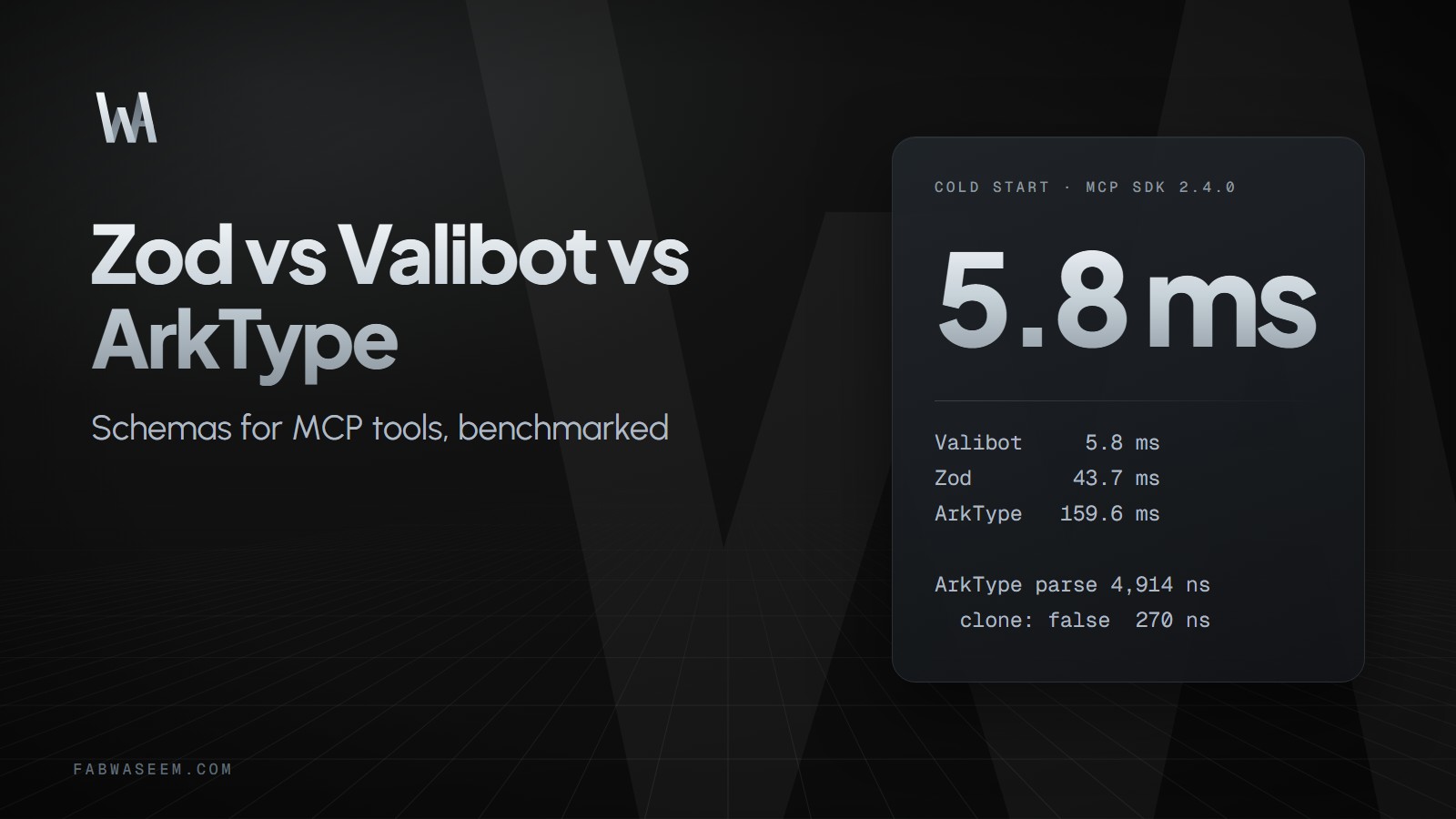
I wrote this (my own blog). I needed a schema lib for MCP tool inputs and kept seeing Zod vs Valibot vs ArkType takes with no numbers, so I timed the same schemas on Node 24 with tinybench and checked bundle size with esbuild.
Numbers and the MCP wiring are in the post. Short version: Valibot won the hot path for the shapes I use, ArkType was close, Zod 4 was fine but heavier. Bundle size mattered more than I expected once the schemas sat behind an MCP server.
Curious what people actually ship for tool schemas in production — Zod by default, or something lighter?
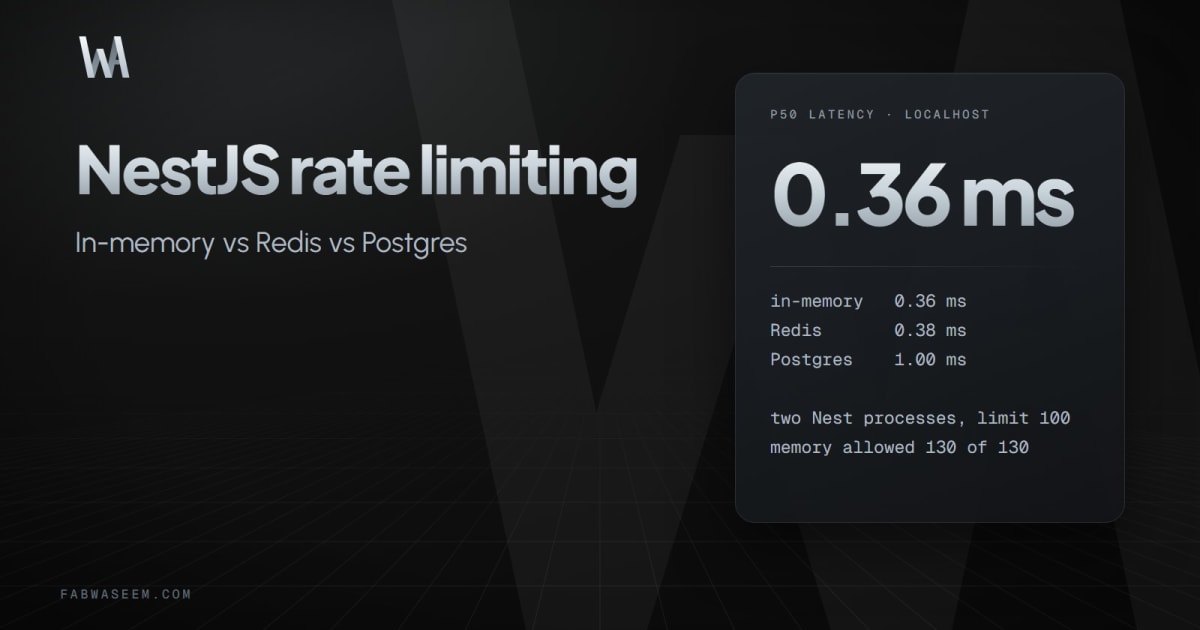
I wrote this (my own blog). I shipped Nest with the default @nestjs/throttler storage and only noticed the hole when a second instance sat behind the load balancer — each process kept its own counter, so a client that should stop at 100/min quietly got closer to 200.
Retested on Nest 12.3 / throttler 6.7 with limit 100/60s on one box. One process: memory, Redis and Postgres all 429 on request 101. Two processes alternating the same IP: memory allowed all 130; Redis and Postgres stopped at 100. Localhost p50 was 0.36 ms memory, 0.38 ms Redis, 1.00 ms Postgres.
Storage code and tables are in the post. Curious what people use in production when they already have Postgres and don’t want Redis just for counters.
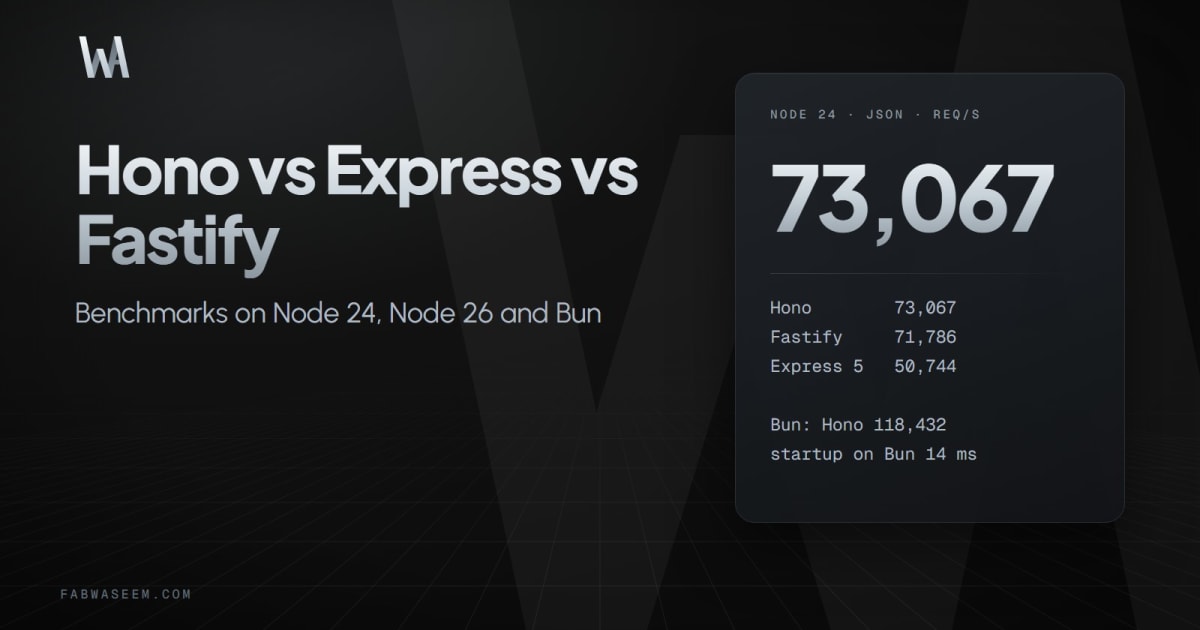
I wrote this (my own blog). I ran the same three routes on one CPU core each, 3 rounds, median, on Node.js 26: Fastify 85k rps GET /json, Hono 83k, NestJS on Fastify 70k, Express 49k, NestJS on Express 44k. Switching NestJS from Express to Fastify gave 60-75% more GET throughput with the same controllers. Hono started in 90 ms; NestJS took 404-486 ms and ~40 MB more RAM. With a real DB call in each handler most of the gap shrinks.
Full tables and how to reproduce are in the post. Curious what people run in production and why.
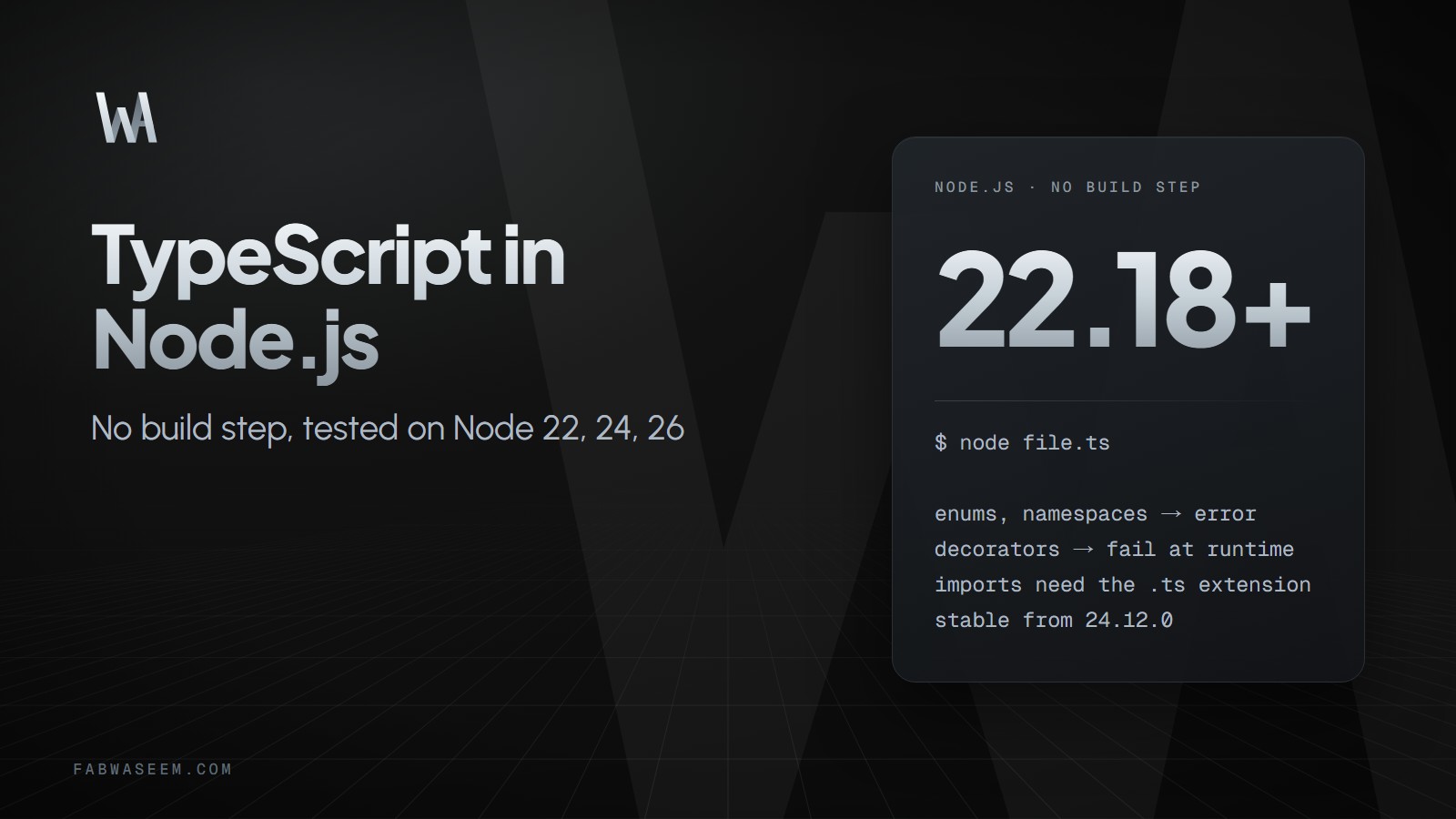
I wrote this one (my own blog). I tested node app.ts with no tsx or build step on Node 22.20, 24.22 and 26.13. Interfaces, generics, as casts and import type just work. Enums, namespaces, parameter properties, decorators, .tsx files and extensionless imports all fail, with the exact errors in the post, plus a tsconfig (erasableSyntaxOnly, verbatimModuleSyntax) that catches them before runtime. Note that –experimental-transform-types is gone in Node 26.
Happy to hear if anyone is running this in production and hit other edges.