0

New motion to pause data centres released by activist group

preview

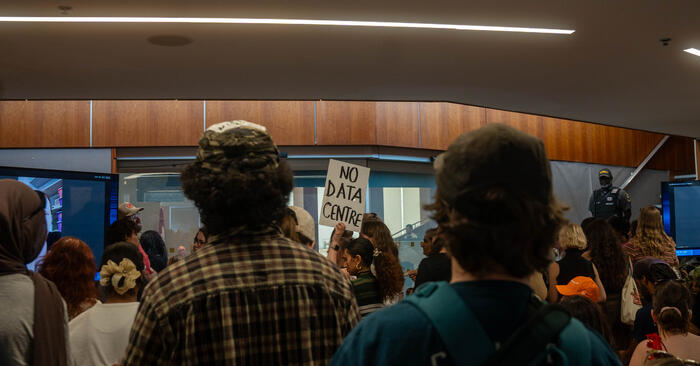
City councillors are considering another motion to regulate future data centre projects nearly two months after rejecting a proposed moratorium, according to an anti-data centre grassroots group.

Over the long weekend, Stop the Datacentre(s) posted the text of a draft motion that would prohibit Hamilton Community Enterprises (HCE) — the city-owned utility company — from developing, constructing or “otherwise participating in any AI data centre project” until the city adopts a regulatory framework for these controversial builds. This includes the proposed publicly-owned facility on the Steelport lands along Hamilton’s waterfront that sparked the city-wide debate over data centres earlier this summer.

While Stop the Datacentre(s) has been part of the motion’s drafting process, Nick Tsergas, one of its six core organizers, told The Spectator that the idea originated from a group of unnamed councillors.

Tsergas wouldn’t reveal the identity of the councillors behind this renewed motion to regulate, but noted they are different than the councillors who brought up the “moratorium” bylaw earlier this summer that would’ve paused data centre construction for a year.

The motion isn’t on any upcoming city council or committee meeting agendas, but Tsergas told The Spectator that it’s been in the works for a couple weeks.

“Conversations around this are ongoing among councillors,” Tsergas said.

To enforce what effectively amounts to a freeze on any participation in data centre projects, the city would rely on its role as the owner of the HCE’s parent company, the Hamilton Enterprise Holding Corporation.

“It would use council’s shareholder authority to restrict the city’s involvement in AI data centre projects,” Tsergas explained.

The motion comes nearly two months after council struck down a then-landmark bylaw that would’ve paused any data centre developments for a year while the city drafted regulations. All but one councillor initially backed the measure, but then several reversed course and voted against it in July.

In the weeks since, both Mississauga and Oakville have passed their own versions of a moratorium bylaw.

For Tsergas, this motion offers a redo to councillors who voted against a widely popular proposal as they prepare to face voters in October’s election. He said he’s optimistic it’ll come up for discussion before election day, though the clock is ticking with only two city council meetings scheduled before Oct. 26.

“At least some of them are going to take a very serious look at this,” Tsergas said, though he fell short of predicting the motion will pass as written.

Whether the city has the legal authority to enforce the motion is unclear.

According to Tsergas, the city’s legal team advised the councillors behind the motion that this use of ownership power was allowed.

But back in June, when council first debated the merits of a potential data centre moratorium, Mayor Andrea Horwath pushed back on Coun. Matt Francis’s suggestion that the city could force HCE to stop any data centre project discussions.

The city, the mayor said at the time, “cannot direct HCE to do or not do, or undertake or not undertake any particular activity or project.”

Though the draft motion would apply to any future data centre project, it specifically takes aim at a proposal from the Digital Research Alliance of Canada (DRAC) and Slate Asset Management. The pair have not submitted a formal application to the city, but they have asked the federal government to fund what it hopes to be a facility to store research data along Hamilton Harbour.

Both DRAC and Slate declined to comment.

City councillors are considering another motion to regulate future data centre projects nearly two months after rejecting a proposed moratorium, according to an anti-data centre grassroots group.

Over the long weekend, Stop the Datacentre(s) posted the text of a draft motion that would prohibit Hamilton Community Enterprises (HCE) — the city-owned utility company — from developing, constructing or “otherwise participating in any AI data centre project” until the city adopts a regulatory framework for these controversial builds. This includes the proposed publicly-owned facility on the Steelport lands along Hamilton’s waterfront that sparked the city-wide debate over data centres earlier this summer.

While Stop the Datacentre(s) has been part of the motion’s drafting process, Nick Tsergas, one of its six core organizers, told The Spectator that the idea originated from a group of unnamed councillors.

Tsergas wouldn’t reveal the identity of the councillors behind this renewed motion to regulate, but noted they are different than the councillors who brought up the “moratorium” bylaw earlier this summer that would’ve paused data centre construction for a year.

The motion isn’t on any upcoming city council or committee meeting agendas, but Tsergas told The Spectator that it’s been in the works for a couple weeks.

“Conversations around this are ongoing among councillors,” Tsergas said.

To enforce what effectively amounts to a freeze on any participation in data centre projects, the city would rely on its role as the owner of the HCE’s parent company, the Hamilton Enterprise Holding Corporation.

“It would use council’s shareholder authority to restrict the city’s involvement in AI data centre projects,” Tsergas explained.

The motion comes nearly two months after council struck down a then-landmark bylaw that would’ve paused any data centre developments for a year while the city drafted regulations. All but one councillor initially backed the measure, but then several reversed course and voted against it in July.

In the weeks since, both Mississauga and Oakville have passed their own versions of a moratorium bylaw.

For Tsergas, this motion offers a redo to councillors who voted against a widely popular proposal as they prepare to face voters in October’s election. He said he’s optimistic it’ll come up for discussion before election day, though the clock is ticking with only two city council meetings scheduled before Oct. 26.

“At least some of them are going to take a very serious look at this,” Tsergas said, though he fell short of predicting the motion will pass as written.

Whether the city has the legal authority to enforce the motion is unclear.

According to Tsergas, the city’s legal team advised the councillors behind the motion that this use of ownership power was allowed.

But back in June, when council first debated the merits of a potential data centre moratorium, Mayor Andrea Horwath pushed back on Coun. Matt Francis’s suggestion that the city could force HCE to stop any data centre project discussions.

The city, the mayor said at the time, “cannot direct HCE to do or not do, or undertake or not undertake any particular activity or project.”

Though the draft motion would apply to any future data centre project, it specifically takes aim at a proposal from the Digital Research Alliance of Canada (DRAC) and Slate Asset Management. The pair have not submitted a formal application to the city, but they have asked the federal government to fund what it hopes to be a facility to store research data along Hamilton Harbour.

Both DRAC and Slate declined to comment.

0

Council won’t learn much about data centres from lobbyists. They should look to other cities instead

The Hamilton Spectator Council won’t learn much about data centres from lobbyists. They should look to other cities instead www.thespec.com
preview

Two weeks have passed since Hamilton councillors voted 10-6 against an interim control bylaw (ICBL), or a moratorium, on AI data centres, while the city updates its rules for the controversial new facilities.

In the days since, Saskatoon, Miramichi, Toronto, Alberta’s Rockyview County, and Mississauga are moving forward with efforts to regulate the industry.

In light of this, Hamilton suddenly looks like a laggard.

Days after Hamilton’s July 15 vote, an incident described as a “chemical spill” was discovered at a data centre in neighbouring Cambridge, which garnered federal funding last year as part of Canada’s Sovereign AI Compute Strategy.

The U.S.-owned, 60-megawatt facility uses closed-loop cooling, often touted as a fix for data centres’ well-known water consumption issues. Ascent TOR1 data centre in Cambridge

A spill at a Cambridge data centre is believed to be a “bacterial bloom” in a retention pond on the property. Mathew McCarthy/Waterloo Region Record

At Mayor Andrea Horwath’s special information session, scheduled the day before councillors voted down a moratorium, data centre proponents referred to the modern water-cooling systems as “industry best practice.”

But experts, along with many Hamilton residents who delegated at city hall weeks earlier, say such systems are associated with leaks of PFAs (a.k.a. “forever chemicals”) into local watersheds.

Earlier this year, data centre operators in Cheyenne, Wyo., flushed a closed-loop system and inadvertently released a rare and deadly bacterium into the town’s wastewater system, which had to be shut down for months.

In Cambridge, after nearly two weeks without identifying the substance that will eventually end up in the Grand River, the data centre’s owner now says the milky-white discharge is a “bacterial bloom.”

The province hasn’t confirmed this, but is telling the public there it has not identified any “contaminants of concern.”

Given the industry’s penchant for signing NDAs with local governments, the secrecy could be a sign of things to come in places that fail to put appropriate guardrails around AI data centres.

In voting down a moratorium, Hamilton councillors claimed to weigh such environmental and health risks against legal and fiscal considerations. But their arguments, questionable at the time, have aged like milk.

Simultaneous — and contradictory — threats were issued by data centre proponents and their apparent allies on council in the days and weeks leading up to the July 15 vote.

Claims abounded that Hamilton would see legal action from developers whose projects are too urgent to be regulated, but also that Hamilton would miss out on investment as those same developers “take their business elsewhere” (like so many Yelp-users of the mid 2010s).

By now it’s clear Hamilton wasn’t out on a limb, as some councillors seemed to fear.

We were leading a national wave of municipal solidarity against an industry out of control and a federal government intent on enabling it.

If developers will take their business elsewhere in response to prudent regulation, it’s worth asking where, exactly, they expect to go.

In Mississauga, developer Prologis openly issued the threat of litigation in council chambers, promising not to proceed so long as the council agreed to an “informal pause” lacking any legal enforcement mechanism.

One councillor brought up a talking point previously heard in both Hamilton and Burlington, framing an ICBL as a drastic, heavy-handed measure, a “blunt instrument” being wielded carelessly.

But others politely listed multiple examples of Mississauga using ICBLs in the recent past, and the sky not falling.

In the end, Mississauga council voted 15-0, directing staff to draft an ICBL for AI data centres.

The following day Toronto passed two unanimous motions, voting 25-0 to slow development and raise scrutiny on planned AI data centres in Scarborough and Etobicoke.

These were treated as routine, even obvious decisions. There was no hand-wringing about overstepping jurisdiction, or pearl-clutching about “reputational risk” that due diligence and good governance will supposedly bring.

Councillors in these cities clearly understand the reality of the situation. There is greater risk in not listening to constituents and experts than in inconveniencing a few monied interests whose incentive is to obfuscate and muddy a full informational picture.

It’s getting tougher to argue that investment will go elsewhere as a flurry of other municipalities move rapidly toward implementing sensible regulation, and threats of legal action or jurisdictional-overstep from the upper levels of government lose potency each time they fail to materialize.

Meanwhile, resident concerns around data centres’ harms are proving to be justified, again and again.

It is deeply embarrassing that Hamilton city council fell for proponents’ empty promises and fear-mongering.

Councillors in Oakville, Cambridge and at least a dozen other Canadian municipalities are now having this conversation. In the U.S., more than 500 places now have moratoria or outright bans on AI data centres.

So what happens now?

Will councillors dig in their heels and defend the corner they and Mayor Horwath have painted themselves into? Or will they learn from this experience and try to rebuild trust with the people who hired them?

0

Why Hamilton councillors voted down a pause on datacentres

Why Hamilton councillors voted down a pause on datacentres blundervalley.ca
preview

In only three weeks, Mayor Andrea Horwath and eight councillors flipped their votes

(link works now. whoops!)

In only three weeks, Mayor Andrea Horwath and eight councillors flipped their votes

(link works now. whoops!)

0

Not Dead Yet: The Steelport Data Centre Fight Continues

Not Dead Yet: The Steelport Data Centre Fight Continues blundervalley.ca
preview

cross-posted from: sh.itjust.works/post/61582484

A crucial first step

On June 4th, Hamilton’s Committee of Adjustment voted to deny a land severance application (pdf) by Slate Asset Management which, if approved, would have accelerated Slate’s plans to build a hyperscale data centre by the waterfront.

The denial was in no small part due to the overwhelming response from Hamiltonians; the Committee member who moved to deny the application even cited the collective effort as the reason for the denial. Residents showed up in large numbers - thousands signed petitions, nearly 1800 sent written submissions to the Committee, and dozens spoke at the meeting itself, for nearly 8 hours in total.1

Perhaps most importantly, around 1000 people showed up physically outside City Hall at 8:30am on a Thursday - on just a few days’ notice - making it absolutely clear that we will not allow those with money and power to unilaterally impose these data centres on our city.

But despite this win, the fight is far from over.

0

The Steelport AI data centre(s): what we know so far

The Steelport AI data centre(s): what we know so far blundervalley.ca
preview

“And the Steelport site is indeed zoned to allow data centres, seemingly of any size; the M5 zoning allows for a “Research and Development Establishment” use case, which, according to its definition, allows for a “Computer, Electronic and Data Processing Establishment” - a definition last updated in 2010, surely never meant to include the massive hyperscale data centres of today.”

“And the Steelport site is indeed zoned to allow data centres, seemingly of any size; the M5 zoning allows for a “Research and Development Establishment” use case, which, according to its definition, allows for a “Computer, Electronic and Data Processing Establishment” - a definition last updated in 2010, surely never meant to include the massive hyperscale data centres of today.”