preview
Pare che l’iniziativa ha più di 5 anni. Qualcuno sa raccontare come sta andando?
[Mahou Shoujo Madoka Magica]
[Mahou Shoujo Madoka Magica]
(Adapted and expanded from Stubsack: weekly thread for sneers not worth an entire post, week ending 23rd August 2026)
You came up with your own calendar system centered around your institution and you want to tell me you’re not a cult??? - istewart
One of the least online TESCRAL groups is the Monastic Academy for the Preservation of Life on Earth in Vermont. They are Buddhist Singularitarians, lead by a guru named Soryu Forall who studied at monasteries in Japan, China, and India from 1998 to 2007. Early on he taught meditation in the local Quaker hall and mindfulness in schools and hospitals and coauthored a book on early Buddhism. Around 2013 money started to come in from people in the California tech industry (per The Atlantic) and Forall started to acquire rural property where he and his disciples could meditate about how AI is going to end the world. Renouncing worldly things like “heating” and “minimum wage laws” probably helps. The umbrella organization seems to be CEDAR, the academy in Vermont is MAPLE, the branch in Berkeley is OAK, and the branch in Canada is WILLOW. The nonprofit is the Center for Mindful Learning. Their Form 990 is here but not very detailed. Many of his disciples are Rationalists and Effective Altruists from the West Coast. As you would expect, some very nasty things seem to happen at these retreats.
Forall is a Rationalist guru out of central casting:
He does not talk to reporters about connections to Rationalism or EA and the two Old Media stories on the Academy did not pull that thread (The Atlantic and Vermont Community News & Citizen). He told one reporter that he admires Yuval Noah Harari (transhumanism-curious historian), Zak Stein (philosopher with many ‘AI safety’ connections who serves on the board of MAPLE), and Tristan Harris (a grad-school dropout turned ‘product philosopher’ at Google). Rationalists and EAs tend to assume everyone knows about him and that living on his compound for a few months or a few years is the kind of thing one does. Several whistleblowers cross-posted to LessWrong and got a lively response where everyone takes for granted that people in their circles have traveled to MAPLE (first whistleblower, second whistleblower).
One of many red flags is that Forall boasts of a long list of spiritual or martial-arts affiliations:
Few Westerners have trained as deeply in traditional wisdom lineages as Forall. As a teenager, he entered a Rinzai monastery, where he was ordained under the renowned Zen Master Shodo Harada Roshi. He spent a decade training in monasteries around Asia in the Zen, Tibetan, Ch’an, and Ambedkar Buddhist traditions. While in India, he led community efforts to combat the caste system’s injustices. Since returning to the United States, he has continued to regularly work with Harada Roshi, while also training in Abenaki, Lakota and Diné Native American traditions. (A local news story claims he also studied in Israel)
Shodo Harada aka. Harada Roshi is Japanese and very old (b. 1940). Dr. Bhimrao Ramji Ambedkar was Indian. Chan Buddhism is Chinese. The Abenaki, Lakota, and Diné live in North America. Greedy teachers often claim a long list of titles to impress young students who have no way to discover that their knowledge is skin-deep or to deflect when students ask questions they can’t answer. Reporters often focus on his time in Japan so may be unsure about his other travels. This academic page on American Buddhists is a bit confused about where he fits too. The Japanese take teachers declaring students authentic heirs to the lineage seriously, and it looks like Forall never received that endorsement. Someone called Gordon Worley explains:
Traditionally, it’s pretty common that anyone leading anything in Zen has dharma transmission. In Japan, even the lowliest temple priest has received transmission, though not permission to teach. Soryu, to the best of my knowledge, is in the opposite situation: he received some limited permission to teach (though the bounds of that permission are unclear to me), but did not receive transmission, so he cannot be said to be fully initiated into the lineage in which he trained and thus can’t pass it on.
What this effectively means is that he teaches based on charismatic authority. This is not unheard of in religions, though it is unusual within Zen. A great many religions rely on charismatic authority in some form, though the strongest version of it I’m familiar with is in Evangelical Christianity.
Charismatic authority is classic rationalism. These people do not like to find a place in existing institutions where people with more skill and experience judge newcomers. They want to impress people who have no technical knowledge or training with their language and physical presence. I don’t think any students can tell if Soryu’s Pali hymns and commentary on ancient texts are correct.
They are connected to a movement called Second Renaissance which uses the same cartographer as Scott Alexander used for his map of the LessWrong blogosphere.
Around 2021 a student said that she was raped by a teacher at OAK then expelled when she reported this and Forall shut down any official response. She said that after she left Soryu Forall started to openly date his current and former students. It appears likely that at least one of the Zizians was in touch with MAPLE because on the same day the first newspaper reported that two of them had got into a gunfight with federal agents in Vermont, the Academy fired up a dormant Twitter account to say that lying about murder was wrong. In 2025 and 2026, more people posted about bad experiences at MAPLE, and British journalist Sam Kriss came by with questions:
The stories have the same themes as stories from CFAR, Leverage Research, Brent Dill, and Ziz Lasota:
Students say they were recruited for a casual meditation retreat, reprogrammed, and pushed to commit their lives or money to the organization, and that criticism is deflected back on them rather than being used to reform the organization. It also mentions that when COVID reached the academy in 2022 Soryu pushed them to ignore it (“Interviews resumed in a 9x9 room with little ventilation while Soryu himself had COVID.”) Rationalists are proud that they took quick action on COVID in 2020, but silent on what to do about it since vaccines arrived. Soryu’s hostility to outside experts and authorities included telling students that “if we study anything from teachers other than Soryu, they must be both Asian and ordained (thus excluding the entire Western world).” One of the reporters noticed that the disciples were overwhelmingly white and mostly male, but Forall does not seem to be keen on race talk. The same report mentions a 2023 exodus by seven people which sent a report which Soryu tossed down the memory hole.
Insiders responded to the allegations by means such as:
Is it true that Soryu is not authorized to teach or run a residential Buddhist training center?
This is false. Before starting MAPLE he was authorized to do so by well-known teachers of the Vipassana and Zen traditions.
Is MAPLE a primarily hierarchical organization?
No. The org chart is quite flat. We regularly have whole-organization meetings in which everybody’s views are taken into account.
…
At another time, while Soryu was away traveling, the leadership team tried to convert the entire organization away from Buddhism. When Soryu returned, he saw this and told the leaders that if they wanted to go in this direction, they could, and that he would go do something else. They were unwilling to take on the financial responsibility of the organization and refused the offer.
In the late spring of the 15th year of training at Monastic Academy (MAPLE), a writer named Sam Kriss came to MAPLE. In the last hours of his visit, Soryu Forall guided the community in a workshop on mindful decision making.
Mid-way through the workshop, Sam Kriss shifted the topic of focus from decision making to structures of domination, e.g. hierarchies, with a particular emphasis given to the lens of Marxism. He asked: “What creates mechanisms of domination?” and “In environments [e.g. MAPLE] where people are trying to clear out the attachment to thinking, are there fewer structures of domination?”
To the first question, the community answered: “Attachment to thinking.” Vimoksha engaged with Sam in detail on this to open a way for him to see how structures of domination are caused by mind.
To the second question, the community answered: “There are fewer structures of domination here than in the mainstream.”
As these points were made and as Sam Kriss was beginning to engage with the points more directly, the community sat in agreement and clarity, happy with these teachings.
As these points were made, I felt a sense of appreciation and celebration for this community of leader-sages-in-training.
Aella pronounced that this sounds bad and abusive and totally unlike Tuesday at Lighthaven. x.com/Aella_Girl/status/2091015022042595743#m archive.ph/fZ0Lc
Ask (Anthropic’s president) Daniela (Amodei) about it and she says, “I’m not the expert on effective altruism. I don’t identify with that terminology. My impression is that it’s a bit of an outdated term”. Yet her husband, Holden Karnofsky, cofounded one of EA’s most conspicuous philanthropy wings, is outspoken about AI safety, and, in January 2025, joined Anthropic. - Wired, March 2025 (more here)
Forall said he was unfamiliar with the Zizians and the January incident (shootout) — as a Buddhist he has taken vows against killing for any reason. … “I’ve heard of The Rationalists, but I’m no expert in that way of looking at things,” Forall said. - Vermont News & Citizen, May 2025
I believe people’s reports that they were abused by OAK and MAPLE staff. People told similar stories about CFAR and Leverage Research and VibeCamp (not to mention Maoism and Scientology). It looks like Forall controls the revenue and the daily lives of people at the academy. I am more interested in MAPLE’s connections to other TESCREAL groups. Some of the Zizians were arrested in Vermont, and the local news story noticed that MAPLE tweeted that killing was wrong on the day the first reporter linked a shooting in Vermont to the Zizians. Bay Area rationalism and postrationalism have Buddhist connections but the leaders of Bay Area Rationalism tend to have Jewish or Christian backgrounds. Did he really fall into the same vices as the rats on his own? It would be typical if the same guru who tells students not to use screens has intense online connections. I would also like to know more about where he fits into Buddhist traditions and practices, because founding your own monastery with eclectic practices is a great way to delete the ‘preventing abuse’ parts of existing Buddhist traditions.
Some EAs share the Buddhist concern about the suffering of wild animals and insects.

(Adapted and expanded from Stubsack: weekly thread for sneers not worth an entire post, week ending 23rd August 2026)
You came up with your own calendar system centered around your institution and you want to tell me you’re not a cult??? - istewart
One of the least online TESCRAL groups is the Monastic Academy for the Preservation of Life on Earth in Vermont. They are Buddhist Singularitarians, lead by a guru named Soryu Forall who studied at monasteries in Japan, China, and India from 1998 to 2007. Early on he taught meditation in the local Quaker hall and mindfulness in schools and hospitals and coauthored a book on early Buddhism. Around 2013 money started to come in from people in the California tech industry (per The Atlantic) and Forall started to acquire rural property where he and his disciples could meditate about how AI is going to end the world. Renouncing worldly things like “heating” and “minimum wage laws” probably helps. The umbrella organization seems to be CEDAR, the academy in Vermont is MAPLE, the branch in Berkeley is OAK, and the branch in Canada is WILLOW. The nonprofit is the Center for Mindful Learning. Their Form 990 is here but not very detailed. Many of his disciples are Rationalists and Effective Altruists from the West Coast. As you would expect, some very nasty things seem to happen at these retreats.
Forall is a Rationalist guru out of central casting:
He does not talk to reporters about connections to Rationalism or EA and the two Old Media stories on the Academy did not pull that thread (The Atlantic and Vermont Community News & Citizen). He told one reporter that he admires Yuval Noah Harari (transhumanism-curious historian), Zak Stein (philosopher with many ‘AI safety’ connections who serves on the board of MAPLE), and Tristan Harris (a grad-school dropout turned ‘product philosopher’ at Google). Rationalists and EAs tend to assume everyone knows about him and that living on his compound for a few months or a few years is the kind of thing one does. Several whistleblowers cross-posted to LessWrong and got a lively response where everyone takes for granted that people in their circles have traveled to MAPLE (first whistleblower, second whistleblower).
One of many red flags is that Forall boasts of a long list of spiritual or martial-arts affiliations:
Few Westerners have trained as deeply in traditional wisdom lineages as Forall. As a teenager, he entered a Rinzai monastery, where he was ordained under the renowned Zen Master Shodo Harada Roshi. He spent a decade training in monasteries around Asia in the Zen, Tibetan, Ch’an, and Ambedkar Buddhist traditions. While in India, he led community efforts to combat the caste system’s injustices. Since returning to the United States, he has continued to regularly work with Harada Roshi, while also training in Abenaki, Lakota and Diné Native American traditions. (A local news story claims he also studied in Israel)
Shodo Harada aka. Harada Roshi is Japanese and very old (b. 1940). Dr. Bhimrao Ramji Ambedkar was Indian. Chan Buddhism is Chinese. The Abenaki, Lakota, and Diné live in North America. Greedy teachers often claim a long list of titles to impress young students who have no way to discover that their knowledge is skin-deep or to deflect when students ask questions they can’t answer. Reporters often focus on his time in Japan so may be unsure about his other travels. This academic page on American Buddhists is a bit confused about where he fits too. The Japanese take teachers declaring students authentic heirs to the lineage seriously, and it looks like Forall never received that endorsement. Someone called Gordon Worley explains:
Traditionally, it’s pretty common that anyone leading anything in Zen has dharma transmission. In Japan, even the lowliest temple priest has received transmission, though not permission to teach. Soryu, to the best of my knowledge, is in the opposite situation: he received some limited permission to teach (though the bounds of that permission are unclear to me), but did not receive transmission, so he cannot be said to be fully initiated into the lineage in which he trained and thus can’t pass it on.
What this effectively means is that he teaches based on charismatic authority. This is not unheard of in religions, though it is unusual within Zen. A great many religions rely on charismatic authority in some form, though the strongest version of it I’m familiar with is in Evangelical Christianity.
Charismatic authority is classic rationalism. These people do not like to find a place in existing institutions where people with more skill and experience judge newcomers. They want to impress people who have no technical knowledge or training with their language and physical presence. I don’t think any students can tell if Soryu’s Pali hymns and commentary on ancient texts are correct.
They are connected to a movement called Second Renaissance which uses the same cartographer as Scott Alexander used for his map of the LessWrong blogosphere.
Around 2021 a student said that she was raped by a teacher at OAK then expelled when she reported this and Forall shut down any official response. She said that after she left Soryu Forall started to openly date his current and former students. It appears likely that at least one of the Zizians was in touch with MAPLE because on the same day the first newspaper reported that two of them had got into a gunfight with federal agents in Vermont, the Academy fired up a dormant Twitter account to say that lying about murder was wrong. In 2025 and 2026, more people posted about bad experiences at MAPLE, and British journalist Sam Kriss came by with questions:
The stories have the same themes as stories from CFAR, Leverage Research, Brent Dill, and Ziz Lasota:
Students say they were recruited for a casual meditation retreat, reprogrammed, and pushed to commit their lives or money to the organization, and that criticism is deflected back on them rather than being used to reform the organization. It also mentions that when COVID reached the academy in 2022 Soryu pushed them to ignore it (“Interviews resumed in a 9x9 room with little ventilation while Soryu himself had COVID.”) Rationalists are proud that they took quick action on COVID in 2020, but silent on what to do about it since vaccines arrived. Soryu’s hostility to outside experts and authorities included telling students that “if we study anything from teachers other than Soryu, they must be both Asian and ordained (thus excluding the entire Western world).” One of the reporters noticed that the disciples were overwhelmingly white and mostly male, but Forall does not seem to be keen on race talk. The same report mentions a 2023 exodus by seven people which sent a report which Soryu tossed down the memory hole.
Insiders responded to the allegations by means such as:
Is it true that Soryu is not authorized to teach or run a residential Buddhist training center?
This is false. Before starting MAPLE he was authorized to do so by well-known teachers of the Vipassana and Zen traditions.
Is MAPLE a primarily hierarchical organization?
No. The org chart is quite flat. We regularly have whole-organization meetings in which everybody’s views are taken into account.
…
At another time, while Soryu was away traveling, the leadership team tried to convert the entire organization away from Buddhism. When Soryu returned, he saw this and told the leaders that if they wanted to go in this direction, they could, and that he would go do something else. They were unwilling to take on the financial responsibility of the organization and refused the offer.
In the late spring of the 15th year of training at Monastic Academy (MAPLE), a writer named Sam Kriss came to MAPLE. In the last hours of his visit, Soryu Forall guided the community in a workshop on mindful decision making.
Mid-way through the workshop, Sam Kriss shifted the topic of focus from decision making to structures of domination, e.g. hierarchies, with a particular emphasis given to the lens of Marxism. He asked: “What creates mechanisms of domination?” and “In environments [e.g. MAPLE] where people are trying to clear out the attachment to thinking, are there fewer structures of domination?”
To the first question, the community answered: “Attachment to thinking.” Vimoksha engaged with Sam in detail on this to open a way for him to see how structures of domination are caused by mind.
To the second question, the community answered: “There are fewer structures of domination here than in the mainstream.”
As these points were made and as Sam Kriss was beginning to engage with the points more directly, the community sat in agreement and clarity, happy with these teachings.
As these points were made, I felt a sense of appreciation and celebration for this community of leader-sages-in-training.
Aella pronounced that this sounds bad and abusive and totally unlike Tuesday at Lighthaven. x.com/Aella_Girl/status/2091015022042595743#m archive.ph/fZ0Lc
Ask (Anthropic’s president) Daniela (Amodei) about it and she says, “I’m not the expert on effective altruism. I don’t identify with that terminology. My impression is that it’s a bit of an outdated term”. Yet her husband, Holden Karnofsky, cofounded one of EA’s most conspicuous philanthropy wings, is outspoken about AI safety, and, in January 2025, joined Anthropic. - Wired, March 2025 (more here)
Forall said he was unfamiliar with the Zizians and the January incident (shootout) — as a Buddhist he has taken vows against killing for any reason. … “I’ve heard of The Rationalists, but I’m no expert in that way of looking at things,” Forall said. - Vermont News & Citizen, May 2025
I believe people’s reports that they were abused by OAK and MAPLE staff. People told similar stories about CFAR and Leverage Research and VibeCamp (not to mention Maoism and Scientology). It looks like Forall controls the revenue and the daily lives of people at the academy. I am more interested in MAPLE’s connections to other TESCREAL groups. Some of the Zizians were arrested in Vermont, and the local news story noticed that MAPLE tweeted that killing was wrong on the day the first reporter linked a shooting in Vermont to the Zizians. Bay Area rationalism and postrationalism have Buddhist connections but the leaders of Bay Area Rationalism tend to have Jewish or Christian backgrounds. Did he really fall into the same vices as the rats on his own? It would be typical if the same guru who tells students not to use screens has intense online connections. I would also like to know more about where he fits into Buddhist traditions and practices, because founding your own monastery with eclectic practices is a great way to delete the ‘preventing abuse’ parts of existing Buddhist traditions.
Some EAs share the Buddhist concern about the suffering of wild animals and insects.

When I visit lemmy.blåhaj.zone I am asked to select an interface, but clicking ‘once’ or ‘always’ for any interface has zero effect. It is as if the buttons have stopped working.
Is there a workaround or fix?
I tried unsuccessfully with and without adblocker. Any ideas what might be interfering?
When I visit lemmy.blåhaj.zone I am asked to select an interface, but clicking ‘once’ or ‘always’ for any interface has zero effect. It is as if the buttons have stopped working.
Is there a workaround or fix?
I tried unsuccessfully with and without adblocker. Any ideas what might be interfering?
cross-posted from: szmer.info/post/15863297
cross-posted from: szmer.info/post/15863296
Argentyńczycy z Patagonii nie mają gdzie mieszkać. W regionie wielkości całej Europy Środkowej, zaludnionym przez niespełna 3 miliony osób i znanym z bezludnych stepów, brakuje miejsca by nauczyciel muzyki, przewodniczka górska czy para rdzennych Mapuczów mogli wznieść własny dach nad głową. Coraz większe połacie ziemi skupione są bowiem w rękach wielkich właścicieli i inwestorów.
Zrealizowany w Junín de los Andes, El Bolsón, we wspinaczkowym raju El Chaltén i na legendarnym “Końcu świata”, Puerto Almanza, film przedstawia walkę o ziemię w jednym z najsłabiej zaludnionych regionów naszej planety, gdzie spekulacja nieruchomościami i masowa turystyka kontynuują proces konkwisty. O twórcy
Wojciech Ganczarek to podróżnik, pisarz i twórca dokumentalny, który spędził dekadę w podróży rowerowej po Ameryce Łacińskiej. Przez kilka lat mieszkał w Argentynie, dokumentując konflikty związane z dostępem do ziemi. Jego najnowszy dokument koncentruje się głównie na El Chaltén, choć zawiera również historie z innych patagońskich miast. „Są ludzie, którzy mieszkają w Chaltén 10, 15, a nawet 20 lat, a mimo to nie mają dostępu do małego skrawka ziemi. To zależy od wielu czynników – historycznych, prawnych, społecznych i ekonomicznych – i te różne historie pokazujemy w tym filmie" — mówi reżyser.
Zapraszamy na pierwszy w Poznaniu pokaz filmu dokumentalnego „Ziemia dla niewielu" Wojciecha Ganczarka oraz rozmowę z reżyserem, w której udział wezmą także działacze i działaczki stowarzyszenia Maltańskie Nasz Dom i Kolektywu Rozbrat.
Wspólnie zastanowimy się, czy Patagonia, Osiedle Maltańskie i Rozbrat to trzy odsłony tego samego procesu. Jak współczesny kapitalizm przekształca ziemię, zasoby i mieszkania w narzędzia akumulacji kapitału? Jak działają mechanizmy wywłaszczenia, wysiedlenia i prywatyzacji wspólnej przestrzeni? Kto zyskuje na tych przemianach, a kto ponosi ich koszty?
Chcemy także porozmawiać o tym, jak odzyskiwać wpływ na miejsca, w których żyjemy, i dlaczego tak ważna jest budowa masowego ruchu i wzajemna solidarność. Przetrwanie miejsc, w których wciąż trwa opór, może bowiem zadecydować o tym, kto będzie miał prawo do ziemi, zasobów i dachu nad głową oraz jak będzie wyglądała przyszłość naszych społeczności.
🔗 Więcej informacji o filmie i autorze: www.wojciechganczarek.pl/ziemia-dla-niewielu
🎬 Zwiastun: www.youtube.com/watch?v=3tpqvVH8-lM
Ziemia dla niewielu film dokumentalny, 105 minut, rok 2025 Tytuł oryginalny: Propiedad Privada Prohibido Pasar Reżyseria, kamera, montaż: Wojciech Ganczarek Asystencja w produkcji: Lucía Gelves Język hiszpański z polskimi napisami
TL; DR: There was the loud static noise coming from my Yaesu FT-2900R rig at full volume when I put it on standby, lasting until I either turn it back on or fully cut the power. To fix it, I replaced a JFET that drives the power MOSFET.
Seems there’s some interest gathered around this, so I figured I’d give an update.
I’d like to give credit to Yaesu’s impeccable documentation. Its circuit diagrams as well as the component maps and list provided me with all the information I needed to gain a complete understanding of this device. I did had to look what some of the components do, but it’s all available out there.
I’ve came to appreciate the simplicity of the design. Save for the microcontroller and an EEPROM, it’s all analog.
Anyway, without further ado…
I seem to have misunderstood some things about the power management. Seems that during the standby mode, everything but the microcontroller gets turned-off. I was right that the microcontroller would enter the low-power mode.
The 13.8v DC main power goes thru only three different paths:
Hence, what signal goes where is completely irrelevant in this state, since they’re all supposed to be off, including the shift register I suspected to be the cause of trouble.
One piece that was key was that the power MOSFET is driven by a JFET (DTC144EE, a p-channel, marked Q1014), which is driven by the microcontroller in a signal line called REG SW (probably means “regulator switch”). The MOSFET’s gate is pulled up to the 13.8v by a 100k ohm.
Contrary to the expected condition, the power MOSFET kept on delivering power even in standby mode. Furthermore, reading the voltage of its gate yielded 5.9v, which contradicted the supposed 0v in the circuit diagram. What’s even weirder was that the voltage at the gate became higher during standby, at 6.4v.
Since the signal comes from the microcontroller itself, I checked the voltage thru-out the path, where I found that the voltage in the entire signal line was the same as the gate, even up to right at the microcontroller pin. This is especially strange, since the signal level is supposed to be 5v at most.
For good measure, I checked that the resistor values are correct.
Last but not least, I checked for continuity between the MOSFET gate and the REG SW line, and they’re indeed connected directly.
My hypothesis was that the weird value on the REG SW signal line was a combination between the current coming from the microcontroller pin and the main DC power.
With the fact that the MOSFET gate and the REG SW line was connected, and that the resistor values were correct, pointed me to the driver JFET.
I cannibalize a spare DTC144EE JFET from a scrap. After unsoldering the old problematic one from my rig, I soldered in the good one.
After cleaning up, I connected the power to my rig and put it on standby. To my surprise, the power MOSFET output 0v. For good measure, I made sure the rig was able to do all its normal function (it did).
I then put the rig back on standby, and left it overnight. So far there’s no static noise coming out of it at all.
I guess my fix really works! Perhaps the shady seller put in a wrong component or something.
This is definitely not the end of the journey. In fact, it may have only just begun.
One question remain on how the clock signal gets generated, since the microcontroller doesn’t seem to be the one doing the generating after all. I don’t really feel the urgency to really loom for an answer, tho. I’m just glad I was able to get my rig to work!
Anywho, thanks for reading so far. There was actually a whole list of fixes I did to this thing if you care to know more about it.
More of his stuff:
www.google.com/search?q=Mitsuki+Nakamura+art&udm=…
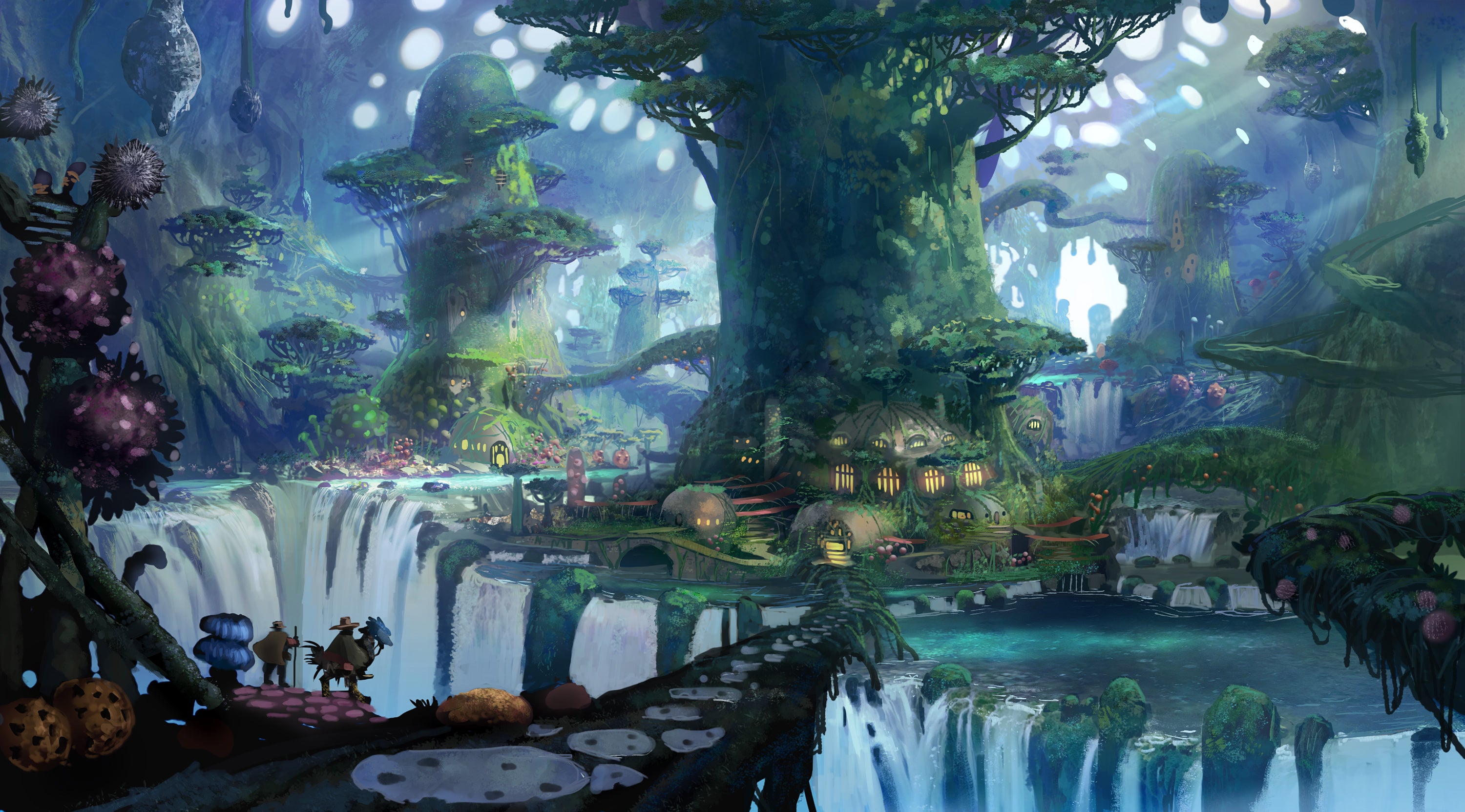
Nakamura worked as art director on a number of anime works and has likewise worked as a mechanical designer.[4]
He is one of the pioneering mecha designers in the Japanese anime industry and was the first to have his name included in the end credits.[3][5][a] His best-known works as a mecha designer include Mach Five from Speed Racer, God Phoenix from Science Ninja Team Gatchaman and Time Mechabuton from Time Bokan.[3][6] Mach Five, in particular, is regarded as a masterpiece of the first Tatsunoko golden age for its outstanding design sense, and its design was so perfect that it was used almost unchanged in the 2008 live-action film Speed Racer by The Wachowskis, 40 years later.[3][7]
However, his speciality was not mecha design, but anime background art.[6] Background art plays a very important role in Japanese-style animation expression techniques. This has become increasingly the case in recent years, and Nakamura’s art was one of the factors to move in this direction.[7] His representative works as an art director include Science Ninja Team Gatchaman, Mobile Suit Gundam, and Nausicaä of the Valley of the Wind.[8][9][10]

en.wikipedia.org/wiki/Mitsuki_Nakamura
More of his stuff:
www.google.com/search?q=Mitsuki+Nakamura+art&udm=…
Nakamura worked as art director on a number of anime works and has likewise worked as a mechanical designer.[4]
He is one of the pioneering mecha designers in the Japanese anime industry and was the first to have his name included in the end credits.[3][5][a] His best-known works as a mecha designer include Mach Five from Speed Racer, God Phoenix from Science Ninja Team Gatchaman and Time Mechabuton from Time Bokan.[3][6] Mach Five, in particular, is regarded as a masterpiece of the first Tatsunoko golden age for its outstanding design sense, and its design was so perfect that it was used almost unchanged in the 2008 live-action film Speed Racer by The Wachowskis, 40 years later.[3][7]
However, his speciality was not mecha design, but anime background art.[6] Background art plays a very important role in Japanese-style animation expression techniques. This has become increasingly the case in recent years, and Nakamura’s art was one of the factors to move in this direction.[7] His representative works as an art director include Science Ninja Team Gatchaman, Mobile Suit Gundam, and Nausicaä of the Valley of the Wind.[8][9][10]

en.wikipedia.org/wiki/Mitsuki_Nakamura
Bandicoots, whilst they look like rats, are NOT rodents but marsupials–meaning they carry their babies in their pouches!
📸 by crimsonbutterfly
Bandicoots, whilst they look like rats, are NOT rodents but marsupials–meaning they carry their babies in their pouches!
📸 by crimsonbutterfly
Hi everyone, as my 64 oz Stanley Quencher broke recently (drink flowed in the insulation layer, handle broke off), I’m looking for a high-quality replacement, of course from the EU instead of the US. Any recommendations are highly welcome!
In last week’s post we showed that a Python for-loop works through the Iterator Protocol.
This same protocol also enables values to be produced lazily.
In this new Lazy Evalution Example we show one sink reading values from five different sources:
The same for-loop consumes all five sources. The eager sources produce all values before the sink starts consuming them. In the lazy sources producer and consumer take turns:
Each value is produced only when the for-loop requests it.
Generator functions and generator expressions are concise, readable ways to create lazy iterables. The final source makes their underlying mechanism explicit:
iter() obtains an iterator.next() requests the next value.StopIteration signals that no values remain.This clearly shows that generators achieve lazy iteration by implementing Python’s Iterator Protocol.
Hallo zusammen, da mein 64 oz Stanley Quencher nun kaputtgegangen ist (Getränk floss durch eine Undichtigkeit in die “Thermoswand” und Griff fiel ab), suche ich nach einem haltbaren(!) Ersatzmodell eines anderen Herstellers. Mir ist Haltbarkeit deutlich wichtiger als ein guter Markenname, vor allem da mich Stanley so enttäuscht hat. Danke für eure Vorschläge!
[un docteur donne une mauvaise nouvelle à quelqu’un d’autre, l’air désemparé]
Nous sommes désolés…
Le traitement a échoué
On a fait tout ce qu’on pouvait, mais le cancer est en train d’empirer
[l’autre personne lui répond, souriant, fier]
Voyez-vous docteur, cet exemple individuel d’échec doit signifier que tous les traitements contre le cancer sont un échec et que nous devrions donc arrêter de traiter les cancers des gens
Haha j’ai gagné la conversation
Je suis très intelligent
thebad.website/comic/terminal_defeatism
[a doctor looks distraught while giving someone bad news]
We are so so sorry…
The treatment failed
We tried our best, but your cancer is getting worse
[the person being given the news smiles smugly and replies]
Well you see, doctor, this individual example of a failure must mean that all cancer treatments fail and therefore we should stop treating cancer as a whole
I am very smart
Gotcha!
thebad.website/comic/terminal_defeatism
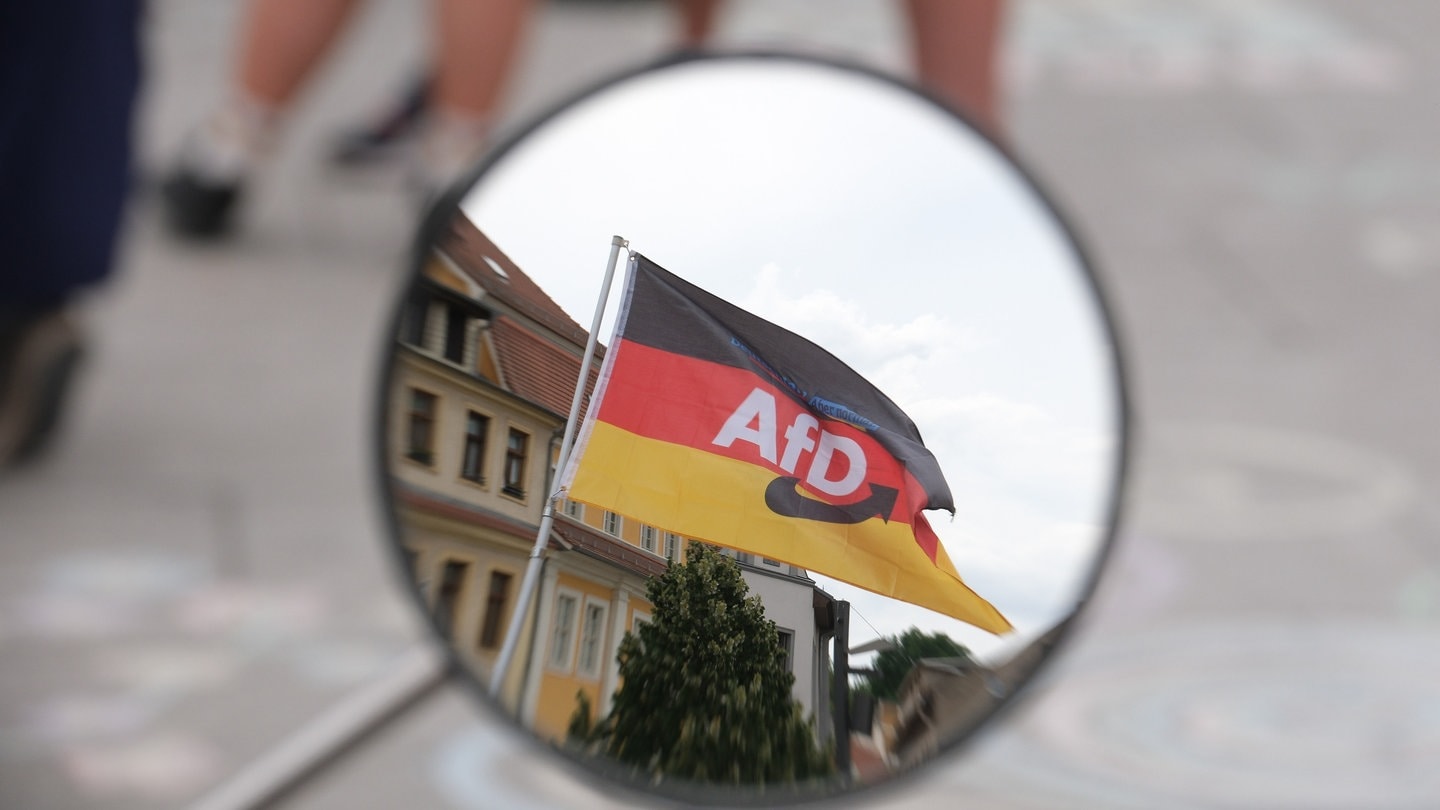
Nach den Landtagswahlen in Sachsen-Anhalt am 6. September könnte die AfD erstmals ein Bundesland regieren. Diese politischen Folgen für Baden-Württemberg wären möglich.
The shell-shocking arcade action returns exclusively on Nintendo Switch 2. 🐢⚡
TMNT Arcade: Wrath of the Mutants - Ninja Edition brings improved graphics, upgraded performance, and new playable fighters Casey Jones and Master Splinter to the battle. 🏒🐀
The Ninja Edition includes TWO NEW PLAYABLE CHARACTERS: • Master Splinter • Casey Jones
The Ninja Edition also includes performance upgrades for Nintendo Switch 2 Resolution and frame rate upgrades Improved graphics quality for richer environments and more detailed visuals Reflection effects enabled for more realistic surfaces and environmental depth Anti-Aliasing enabled for smoother edges and cleaner character models Enhanced lighting system for improved atmosphere and visual realism Dynamic shadows enabled for greater depth and more lifelike scenes Faster loading times for reduced wait times and improved play flow HDR support for expanded color range, brighter highlights, and deeper contrast
A new service offering specialist support to LGBTIQA+ families has launched in Victoria, providing counselling, parenting support and relationship services for rainbow families.
…
A sand mining operation along the coast of central Mozambique’s Zambezia Province decimated hundreds of hectares of mangroves in just a few years, a Mongabay investigation has found.
The area is under the control of Mozambique Heavy Sand Company VIII, part-owned by the Jinan Yuxiao Group, an influential Chinese mining group claiming to hold more than 500,000 hectares (1.24 million acres) of land in mining concessions in Mozambique. That’s an area larger in size than 700,000 soccer fields. These concessions mostly target heavy mineral sands that primarily yield titanium ores that are used in the production of everything from paints to plastics and sunscreen.
Environmental activists are raising the alarm about the risks from heavy minerals mining along Mozambique’s coast and local media has documented the growing threat from it. “All of our coastal zones have these heavy mineral sands projects,” Fatima Mimbire, an advocate for transparency in Mozambique’s mining sector, told Mongabay, adding that. most mineral sand mining companies in Mozambique were Chinese. “These companies are destroying without concern for the environment, without concern for the people.”
…
…
A sand mining operation along the coast of central Mozambique’s Zambezia Province decimated hundreds of hectares of mangroves in just a few years, a Mongabay investigation has found.
The area is under the control of Mozambique Heavy Sand Company VIII, part-owned by the Jinan Yuxiao Group, an influential Chinese mining group claiming to hold more than 500,000 hectares (1.24 million acres) of land in mining concessions in Mozambique. That’s an area larger in size than 700,000 soccer fields. These concessions mostly target heavy mineral sands that primarily yield titanium ores that are used in the production of everything from paints to plastics and sunscreen.
Environmental activists are raising the alarm about the risks from heavy minerals mining along Mozambique’s coast and local media has documented the growing threat from it. “All of our coastal zones have these heavy mineral sands projects,” Fatima Mimbire, an advocate for transparency in Mozambique’s mining sector, told Mongabay, adding that. most mineral sand mining companies in Mozambique were Chinese. “These companies are destroying without concern for the environment, without concern for the people.”
…
Various Welsh legends talk about a shape shifting creature called the Ceffyl Dŵr, some where it turns into mist and others where it dives underwater. I’ve already drawn a misty version so I wanted to do the underwater version now