

0

Prepare for Riots. (click bait title but it applies to you)

play · youtube.com
YouTube Prepare for Riots. www.youtube.com
preview

Cross posted from lemmy.ca/post/74418679

it is not capitalism open your mind

proceeds to describe capitalism… yet I still find value in this take

also just for fun Smedley Butler addressed the Bonus Army

and also that white man broke every treaty even still to this day… fuck genocide day … that is all com_rads

0

EU ‘to close door’ to talks on long-term UK ties until Burnham has decided on Brexit

the Guardian EU ‘to close door’ to talks on long-term UK ties until Burnham has decided on Brexit www.theguardian.com
preview

Diplomats say piecemeal approach of resets is reaching its limits and Europe wants clarity on whether Britain wants to reverse its exit

The EU will shut the door to discussions with Andy Burnham about the UK’s longer-term relationship with the bloc until the government has decided whether it wants to proceed with reversing Brexit, diplomats have said.

European capitals are also warning they have reached the end of the line for piecemeal “reset” summits with the UK and want the prime

0

Who is reducing your privacy? (EU)

Data Privacy Ranking | GDPR OMNIBUS gdpr-omnibus.eu
preview

cross-posted from: feddit.uk/post/58599231

The EU is currently changing its core privacy law, the GDPR. Members of the European Parliament have made more than 1000 amendments. We have analysed all of them and show which of your representatives are the biggest privacy defenders and who is trying to undermine the current privacy protections.

About us

noyb is a donation-funded NGO based in Vienna, Austria working to enforce data protection laws, in particular the GDPR and the ePrivacy Directive. At the present, a team of more than 20 legal and IT experts from all over Europe is working to ensure that the fundamental right to privacy is respected by the private sector. More than 5,000 supporting members support our work.

Methodology

When ranking more than 1,100 amendments1, it is hard to turn the impact in an objective number. We have done our best to have a methodology that is as simple and neutral as possible.

Grading Approach

The scope was limited to GDPR and ePrivacy Articles (Articles 3 and 5) and related Recitals of the proposal for a Digital Omnibus (COM(2025) 837 final). Changes to some horizontal Recitals or Articles were included, if they had a clear link to the GDPR.

By default amendments were ranked without knowing the MEP or political affiliation. This can mean that e.g. moving an element was counted as two separate amendments (e.g. a negative deletion and a positive addition) as reviewers did not know that the same MEP made these two changes. In certain cases, when a larger context was needed, the MEP was identified to see how amendments relate to each other. Amendments were ranked by an expert GDPR lawyer. The results were cross-checked by a second person.

As many amendments were authored by several MEPs, the scores for these amendments are applied to all authors individually.

(1) Privacy Ranking

The privacy ranking counted all amendments with improvements for privacy protections (which counted +1 on the Privacy Score) and all amendments with limitations of the right to privacy (which counted -1 on the Privacy Score). The size of the impact of the amendment was not considered in the grading. Amendments that were not clearly pointing in one or the other direction or where the impact was unclear, were counted as neutral (Privacy Score 0).

The benchmark was the current wording of the GDPR or ePrivacy Directive, given that the official aim of the proposal for a Digital Omnibus was to maintain the current level of protections. Only when the Commission proposal was adding new elements (e.g. Article 88b on privacy signals or Article 88a(4) on dark patterns) the “higher” standard was used as a benchmark.

The overall Privacy Ranking is ordered by the sum of an MEP’s amendment’s Privacy Scores(number of positive amendments minus number of negative Amendments.

While the approach of counting amendments is highly objective, the obvious weakness of this approach is, that an amendment can contain tiny or huge changes. MEPs can also partially change an Article via multiple amendments (per paragraph) or as an entire Article. This can lead to different counts. However, we do not believe that in an overall assessment these factors distorted the results in any significant way.

(2) Pushback Ranking

In the current political reality, replacing problematic proposals by the European Commission with the current text of the GDPR, or simply deleting the change suggested by the Commission is a strong signal in favor of the current standards. However, given the methodology in the privacy ranking, MEPs engaging in such “pushbacks” would largely be ranked “neutral” because they would merely reinstate the current level of protection. Clear “pushbacks” were therefore highlighted and MEPs were ranked according to the most pushbacks.

This ranking is naturally more subjective, as there was no clear threshold if a change constituted a “pushback”. However, our overall impression of the respective MEP’s approach coincides with the results of this ranking.

(3) Charter Violations

The GDPR and the ePrivacy Directive are not isolated laws, but implement Article 7 and 8 of the Charter of Fundamental Rights. Especially Article 8(2) of the Charter includes very specific requirements (e.g. purpose limitation or the right to access). We also highlighted amendments that would likely violate these elements of the Charter.

(4) Simplification & Privacy Ranking

The officially communicated aim of the proposed Digital Omnibus is to maintain the current level of protection, and at the same time achieve simplification. We have hence also graded if an amendment simplifies the law in comparison to the GDPR and the Commission proposal. While simplification mainly concerns businesses, in some cases changes can also shift burdens from users to businesses or between different groups of businesses . We hence looked at likely overall simplification, taking into account the overall business community, users, authorities and courts. When an Amendment is good or neutral on privacy, but good on simplification it was counted as good on both aims (+1). If the amendment is decreasing privacy protection, while also making the law more complex, it got a negative grade (-1).

The overall score was calculated like this:

  • Simplification (+1), while increasing (+1) or maintaining (0) privacy protection was an overall +1
  • Decreases in simplification (-1) and/or in privacy protections (-1) were counted as -1 given that the official aim was not reached
  • Other combinations (e.g. increase in privacy without simplification or neutral on simplification) were counted as 0

The rating of all the amendments lead to the overall score.

Errors?

With more than 1,100 Amendments errors or misunderstandings can always occur. You can click on each Amendment and report an error. We will then reassess the grading as quickly as possible.

0

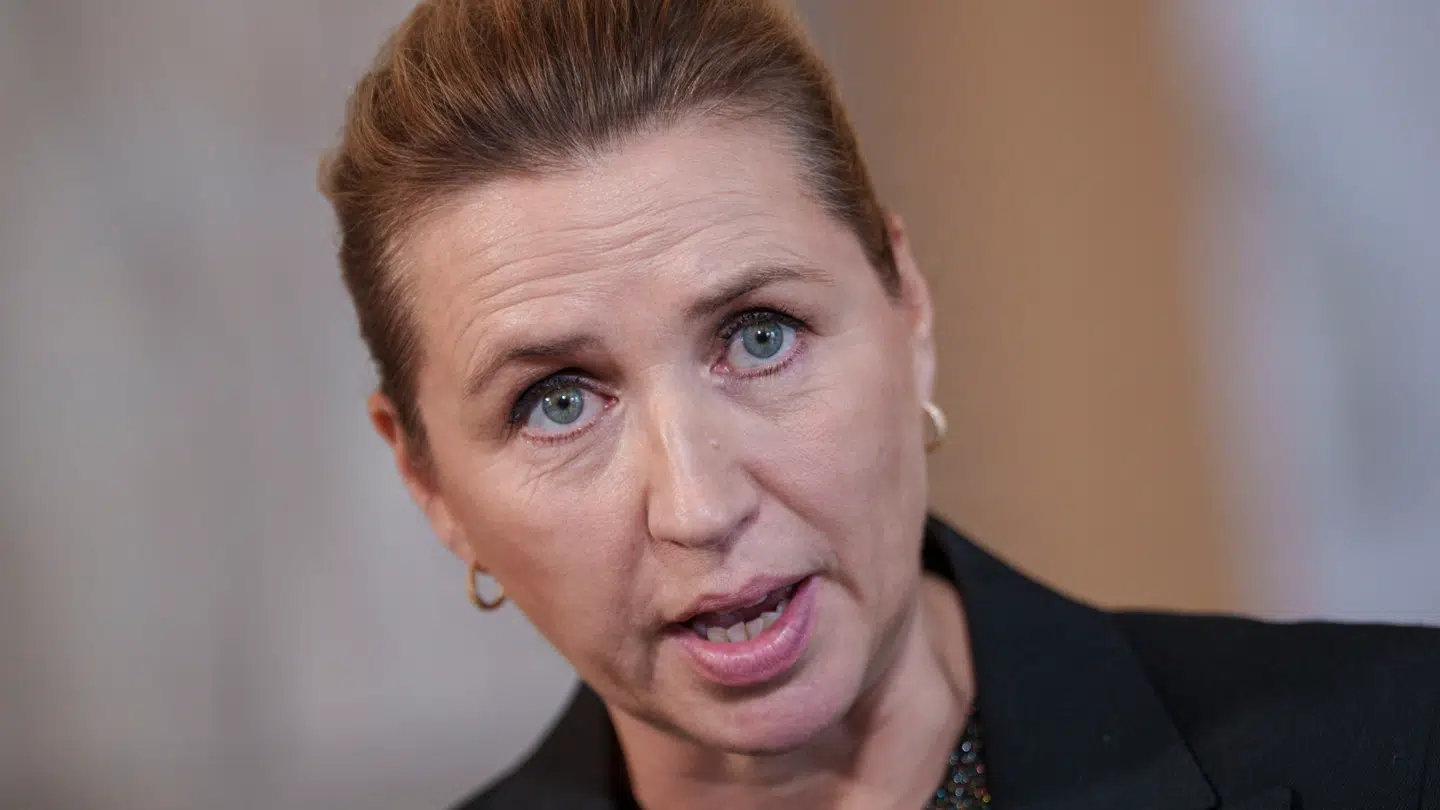
Danish PM Mette Frederiksen: 'I'm not in favour of a population replacement'

B.T. Mette Frederiksen i Borgerlig Tabloid: 'Jeg er ikke tilhænger af en befolkningsudskiftning' www.bt.dk
preview

The Danish Prime Minister now confirms openly that she is a believer in white replacement theory.

Source in Danish. Machine translation follows below:

The theory of a population replacement has been called ‘nonsense’. But now Mette Frederiksen is using the word - and she doesn’t stop there.

There should be no doubt as to which Denmark Mette Frederiksen wants.

The Prime Minister said in Tuesday’s episode of B.T.'s debate podcast, Borgerlig Tabloid, where she is a guest of host Joachim B. Olsen.

She is on the occasion of this on the occasion of her presenting what she herself calls a breakthrough in Danish immigration policy, namely the plans for an exit centre in Rwanda.

And even though the debate about the new exit center takes up a lot of space in the conversation with Joachim B., he is more aware of the Prime Minister’s personal attitudes in the field of foreigners.

When questioned Mette Frederiksen does not hold back:

“I’m not in favour of a multicultural society where you equate cultures.”

“I am a European, Danish and from Aalborg. And I’m also not in favour of a major population change. I believe that there should be a strong majority culture," the PM said.

Despite the fact that Politiken in 2025 released a projection showing that immigrants or descendants may be in the majority in Denmark as early as 2096, the debate about a ‘large population change’ has been written off as extreme and populist by left-wing voices.

Among other things, in this leader from Politiken, where the ‘idea of a replacement’ is called something ‘worse demagogic nonsense’.

But in Borgerlig Tabloid, the prime minister is not afraid to take the floor when she talks about the consequences of immigration from the Middle East and North Africa.
“Well, my own opinion is that I want a Denmark that is Danish. And I stand by that completely.”

What do you mean by Danish?

“There’s a clear majority culture in our society.”

Of ethnic Danes?

“We are a Danish society, and we are an original tribe that is ethnically Danish. That changes when there are people coming here. But it has to be the case that there is also in the future a Denmark where there is a strong majority culture.”

She continues:

“And I think what is the challenge when we talk about the MENAPT countries is the culture of dominance,” the prime minister said, adding that too many people have come here who don’t like homosexuals, are not in favour of women’s equality and who believe that their own religion – Islam – must stand above the law.

She adds that there have also been people here who have made a positive difference.

However, this does not change the diagnosis, says Mette Frederiksen.

“That culture of dominance, it’s dangerous. And I say this as a Social Democrat, as a woman, as a Dane – but also as prime minister of a country where dominance culture is not compatible with the way we have built a society.”

But one thing is the rhetoric. The policy must also follow suit - which Joachim B. Olsen confronted the PM with in Tuesday’s episode of Borgerlig Tabloid.

0

Netizen Voices: “Mbappé Had No Idea That China is Still a Dictatorship”

China Digital Times Netizen Voices: "Mbappé Had No Idea That China is Still a Dictatorship." chinadigitaltimes.net
preview

cross-posted from: lemmy.sdf.org/post/61509469

  • French footballer Kylian Mbappé was widely condemned recently in China over its remarks that former Chinese leader Mao Zedong was "a dictator"
  • The ironic bit with this case is that Chinese media censored the word “dictator"and were just saying that Mbappé made ‘inappropriate remarks about China,’ while people inside China’s “Great Firewall” are unaware what exactly these inappropriate remarks were
  • Chinese AI were not helpful - until maybe Weibo’s “Comment Robot” joined in responding to a post asking “What did Mbappé do? Was what he said wrong?” with: “He told the truth, that’s all. Some people just don’t like to hear it.”

[…]

Archived

Last week saw the eruption of what The New York Times described as “one of the more improbable football-related storylines of recent times.” French footballer Kylian Mbappé was widely condemned in China over a comment from a months-old YouTube video, in which he expressed amusement at a meme featuring his own face superimposed onto that of “a guy—I think it was a Chinese dictator.” The meme is one of many playing on Mbappé’s nickname “the dictator,” bestowed for his allegedly heavy-handed behind-the-scenes behavior. He did not mention Mao Zedong by name, but a combined image of the two men was inserted into the video.

China may be a self-proclaimed people’s democratic dictatorship, but that formulation is conceptually and, in Chinese, terminologically distinct from that of personal dictatorship, and Chinese authorities reject the label’s application to Mao or other top leaders.

[…]

A complicating factor in this case, though, is that many in China did not know what the offending comment actually was. From Rebecca Bailey at The Guardian, on October 28:

[…] The [Chinese] football app Dongqiudi was among the first to release a statement condemning the “inappropriate remarks”, but said: “Because his comments were offensive to China and the Chinese people, we cannot translate them.” Chinese media have reported on reactions such as the brand desertions, and the China Football Association’s lodging of a “stern protest” with Real Madrid – who apologised on Wednesday “to the Chinese people for any offence caused” – but have generally steered clear of outlining Mbappé’s precise offence.

The topic was still trending on Chinese social media on Wednesday morning, with one hashtag relating to the superstar’s apology boasting more than 600m views. Some posts asked variations on a simple question: “What did he actually say?”

Manya Koetse, editor of the Eye on Digital China newsletter, said in a post on X: “Many netizens without a VPN are still left in the dark about why all the talk about boycotting Mbappé is actually happening.” [Koetse examined the controversy at greater length at What’s On Weibo.]

[…] Jennifer Pan, professor of communication at Stanford University, said the difficulty of doing independent social science surveys in the past decade meant “our understanding of what Chinese people actually think is weak”. Pan said: “Social media doesn’t fill that gap. It’s noisy, unrepresentative, and censored … What we see is that companies, platforms, broadcasters and the foreign ministry moved together quickly. Did this follow public anger, or did this produce public anger? Either is possible, and we can’t tell which came first.”

[…]

Recent translations have shown Chinese users turning to AI for help in navigating the mysteries of online censorship, but tests by fact-checkers at France 24 suggested that chatbots were able to offer little clarity on Mbappé’s comments.

The situation was discussed in some of the online commentary compiled by CDT Chinese. ”The funniest thing about this Mbappé situation is that all the media are saying he made ‘inappropriate remarks about China,’ and that a huge mob of people inside the [Great Fire]wall are up in arms,” said one comment. “But as for exactly what these inappropriate remarks actually were, those who don’t know can’t get a straight answer, and those who do know are talking in riddles." These riddles included: “[It’s about] the person on the 100-yuan note," and, “He said Tang Guoqiang was an art student." (Tang Guoqiang is an actor famous for portraying Mao; “an art student” is an apparent reference to Hitler as a symbol of dictatorship in general.)

Weibo’s controversial AI “Comment Robot” joined in, responding to a post asking “What did Mbappé do? Was what he said wrong?" with:

“He told the truth, that’s all. Some people just don’t like to hear it.”

[…]

Other collected social media comments are translated from Chinese:

luzelun134960: He wasn’t wrong! The whole world, apart from mainland China, knows Mao was a dictator.

Jammesavj: I’m not offended. Please don’t presume to speak for the Chinese people.

maihu8964: The pink maggots make memes of other countries’ leaders every day, but they’re not happy when the tables are turned.

Rongshen021116: What Mbappé said is a fact. Of course Mao Zedong was a dictator.

kiligulyanov: Bappé didn’t even say “Mao Zedong,” he just said “a Chinese dictator,” and everyone assumed he meant Mao. Couldn’t he have been talking about Chiang Kai-shek?

xr95718872: Telling the truth is an error these days.

mngshanqi: Milked again? [A pun on “insulted.”] Is it even possible to get through life without “insulting China”?

TENPHOENIX2018: When even the reply-bot Robert dares to say, “He just told the truth,” you know it’s not the algorithm being banned, but truth itself.

gaochao17lngs: Mbappé had no idea that China is still a dictatorship.

TianCai67: Pinks within the [Great Fire]wall amuse themselves Photoshopping gross memes of Takaichi Sanae, “The General,” and Trump all the time, and think they’re being hilarious. Then Mbappé drops one joke in passing, and they go nuts.

Luvsic0929: This Mbappé thing made me realise that Chinese higher education is a total failure, without a doubt.

lilaoshizuikeai: Imagine foreigners who’ve just observed China’s great flame wars with Brazil [over socialist perspectives on LGBT rights and drug policy] and Turkey [over Uyghur identity], and now see the spectacle of little pinks banding together to defend a dictator who killed tens of millions of their own compatriots. The stereotypes runneth over.

huang3feng: So here’s a crazy question: right now the Chinese internet is engulfed in a Cultural Revolution-style struggle session against Mbappé, even X is flooded with little pinks, the whole country’s performing dictatorship, and what Mbappé said was wrong?

ooopqoqjs: The three inevitable experiences in any foreigner’s life: birth, death, and insulting China.

cc14514: You can’t make jokes with insecure clowns around.

liuyifei1065: Doesn’t this just go to prove it’s a dictatorship? No dissenting voices … everyone marching in lockstep.

[Here are all the comment in Chinese.]

There is more in the linked article.

[…]

0

Canada, Japan, New Zealand, UK, EU countries and the US call on China to end 'unjust prosecutions' after sentencing of Hong Kong pro-democracy activist Joshua Wong

CBC Canada joins 9 other countries, calling on China to end 'unjust prosecutions' after Joshua Wong sentencing | CBC News www.cbc.ca
preview

cross-posted from: lemmy.sdf.org/post/61506891

Archived

The Canadian government has joined nine other countries in a joint statement condemning this week’s prison sentence for Hong Kong activist Joshua Wong.

Wong, ‌who became the global face of the financial hub’s pro-democracy movement, was sentenced to 10 years in jail on a charge of collusion with foreign entities under the city’s National Security Law (NSL).

“We call for an immediate end to all unjust prosecutions of individuals charged under the NSL and urge the authorities in China and Hong Kong to uphold their international commitments and honour the rights and freedoms guaranteed to the people of Hong Kong under the Sino-British Joint Declaration (1984),” the statement reads.

[…]

Australia, France, Germany, Italy, Japan, the Netherlands, New Zealand, the United Kingdom and the United States also signed onto the statement, condemning how Hong Kong’s National Security Law “is being used to target individuals for political expression and participation.”

[…]

Hong Kong, a former British colony, returned to Chinese rule in 1997, with the guarantee that its high degree of autonomy and freedoms would be protected under a “one country, two systems” formula.

Between 2014 and 2019, Hong Kong saw a series of pro-democracy protests in response to various Beijing legislative measures — protests which occasionally turned violent.

China responded by passing a new national security law in 2020, alongside other measures, which have expanded the investigatory and extradition powers of Chinese authorities while strengthening the punishments for activities viewed by authorities as subversive or terroristic.

[…]

In February, media tycoon Jimmy Lai, Hong Kong’s most vocal China critic, was jailed for 20 years for collusion with foreign forces and ⁠sedition following a landmark trial ‌that sparked international criticism.

Also on Friday, a leading Macao ‌democrat was jailed for 12.5 years on charges of subversion, in the China-ruled gambling hub’s first known national security trial, local broadcaster TDM reported.

[…]

Au Kam San, 69, was arrested in July 2025 for collusion with foreign forces to endanger national ​security and tried behind closed doors on Sept. 16 and ​18, TDM said.

Human Rights Watch said the proceedings were “marred by violations of ​due process” and the ⁠sentence handed down by the Macao government “sends a chilling message to all peaceful critics in the territory.”

Au is one of Macao’s most prominent democratic campaigners, serving for nearly two decades as a lawmaker in the former Portuguese colony. His lawyer, ​who was appointed by the court, did not immediately respond to a request ⁠for comment.

Through the years, Au had championed democratic ⁠reforms and civil society initiatives in the tiny enclave that returned to Chinese rule in ⁠1999 — ⁠two years after neighbouring Hong Kong was handed back to China.

[…]

0

The Fediverse is at risk by the EU KIDS ACT!

iX Magazin Age verification in the Fediverse: How the KIDS Act challenges Mastodon www.heise.de
preview

cross-posted from: lemmy.world/post/53166284

This law affects everyone, especially people in the EU and is an attempt to implement ID verification on: Video-sharing platforms, #AI chatbots, AI companions, games, software app stores and operating systems. mastodon.social/@madeindex/117285674482286098

We need to: #STOPEUKIDSACT NOW!

0

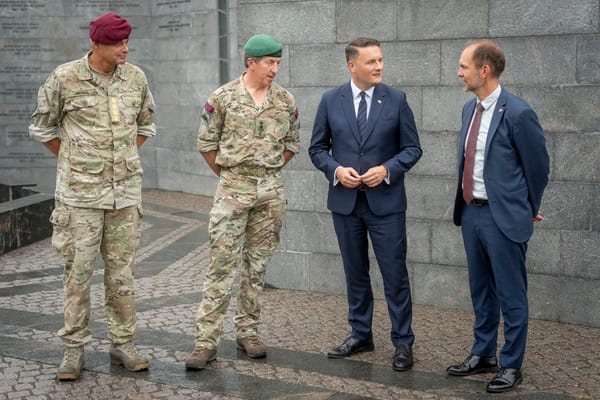
UK: Defence Secretary Streeting warns Britain faces unprecedented risk of war with Russia

London Business News | Londonlovesbusiness.com Streeting warns Britain faces unprecedented risk of war with Russia - London Business News | Londonlovesbusiness.com londonlovesbusiness.com
preview

Britain faces its “greatest risk” of war in decades as Russia continues to test NATO defences, Defence Secretary Wes Streeting has warned, as the government prepares to make the case for a sustained increase in military spending.

Streeting described Russia and Vladimir Putin as the “biggest threat” facing Britain, arguing that the war in Ukraine and Moscow’s broader military posture had fundamentally altered the security environment facing the UK.

“Without a shadow of a doubt, the biggest threat facing Britain is Russia and President Putin,” said Streeting.

“We’ve got war in our continent. We’ve got a Russian president who has imperialist ambitions, who is constantly testing Britain’s defences, NATO defences and testing the strength of our alliances.

“And so, the sobering reality is that we face a greater risk of war than we’ve done at any point in my lifetime.”

…

Archived

0

Russia's education ministry to strengthen state propaganda in kindergartens: teaching the annexation of Crimea and "patriotic feelings" are "more important than letters and numbers"

Русская служба The Moscow Times «Важнее букв и цифр». Глава Минпросвещения анонсировал усиление госпропаганды в детсадах ru.themoscowtimes.com
preview

Archived

[Original in Russian. This is an automated and paraphrased translation with minimal edits.]

Children in Russian kindergartens will be taught more “moral guidelines” than counting and writing, said the head of the Ministry of Education of the Russian Federation Sergey Kravtsov. “Acquaintance with native culture, literature, customs and moral guidelines is more important than “memorizing letters and numbers.”

…

Earlier, Kravtsov said that in Russian kindergartens, the projects “Eagle-Preschool” and “Good Games” were launched, aimed at instilling “traditional spiritual and moral values” in children.

According to the methodical materials of the Good Games, children from the age of 3 should be told about the annexation of Crimea and form their idea of the peninsula as a “region of Russia”. This, according to the Ministry of Education, will cause “patriotic feelings and pride for their country” among preschoolers. Also, the games are designed to educate children “heroism”, which in the materials of the project is defined as “the highest manifestation of love for the Motherland and people” and “willingness to sacrifice themselves for the sake of others.”

…

“Good Games” is an analogue of the propaganda “Talk about the important” that appeared in Russian schools after the invasion of Ukraine. Initially, the project for preschoolers was tested under this name: testing took place from September to December 2025 in 56 kindergartens in 25 regions. In February 2026, it was renamed.

0

European Citizens' Initiative for Right to Housing

preview

If you’re an EU citizen, sign the initiative so that it can be brought before the EU commission. The ECI is legally binding.

Objectives

We, the citizens of Europe, demand access to housing that is affordable, sustainable and fair.

We see and feel it every day: workers who can no longer afford the city they build, young people who cannot leave their parents’ home, tenants pushed out of their neighbourhoods after renovation, empty buildings while people sleep on the street.

The current housing market is putting profit over people and the planet. Europe’s buildings are expensive, empty and broken. But it does not have to be this way: the buildings exist, and so do the approaches to make them affordable. What is missing are the rules:

USE

Regulate short-term rentals and vacancy.
Convert empty buildings, like vacant homes and offices, into housing.
Create incentives and fast permits to make renovation the first choice.

INVEST

Ensure public money serves people not speculation.
Reform fiscal rules so governments can invest more in housing.
Create an EU housing fund.

PROTECT

Set enforceable standards to keep housing affordable and sustainable.
Keep people in their homes during EU-funded renovation.
Establish an EU Housing Agency to govern transparently.

We call on the EU to act and people to sign!

0

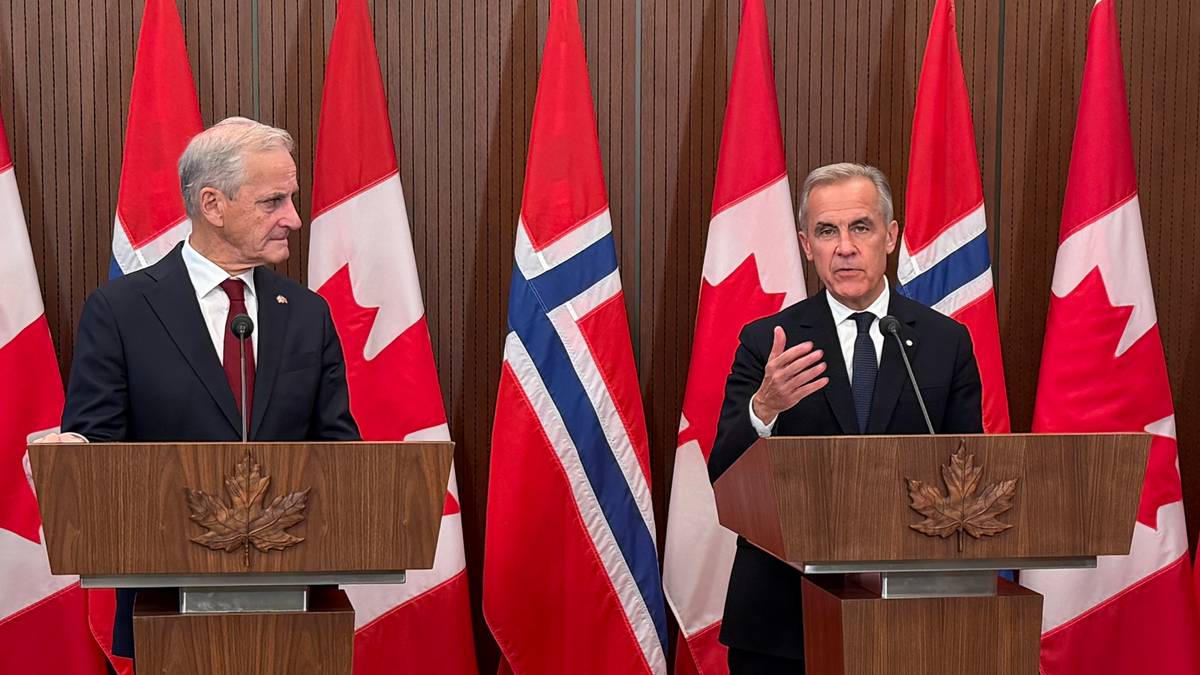
Norway and Canada to strengthen defense cooperation

NRK Tettare forsvarssamarbeid mellom Noreg og Canada www.nrk.no
preview

Norway and Canada have announced that they will strengthen cooperation on defense, especially in the Arctic.

Source in Norwegian. Parts of the article is machine translated below.


– Canada is a close partner for Norway and an important ally in NATO. We share many fundamental values ​​and have common interests in the Arctic. In turbulent times, Norway needs more legs to stand on.
In turbulent times, Norway needs more legs to stand on.

Now we are strengthening cooperation with Canada, says Prime Minister Jonas Gahr Støre (Ap).

On Sunday, he met with Canadian Prime Minister Mark Carney in Ottawa.

Jonas Gahr Støre and Mark Carney have agreed to strengthen cooperation between Norway and Canada.

Arctic and defense

– This is one of the cooperations that is perhaps developing the most in our immediate vicinity, said Prime Minister Jonas Gahr Støre during a meeting with the Norwegian press in Ottawa last night.

It is about, among other things, the Arctic and defense.

– Canada’s choice of German-Norwegian submarines is a very clear anchoring of Canada in industrial cooperation with Norway for many years to come, said Støre.

Identical submarines

Norway, Germany and Canada will get identical submarines.

– This will strengthen our and NATO’s ability to monitor the sea areas in the north. It is very important for the security of both Canada and Norway.

Støre mentioned cooperation between the coast guards, in polar research and cooperation to map critically important minerals. The countries will also cooperate more closely in space and artificial intelligence, according to Støre.

– Within NATO, Norway and Canada are two of seven countries that have set the framework for how we should have an Arctic dimension in NATO, said Støre.

0

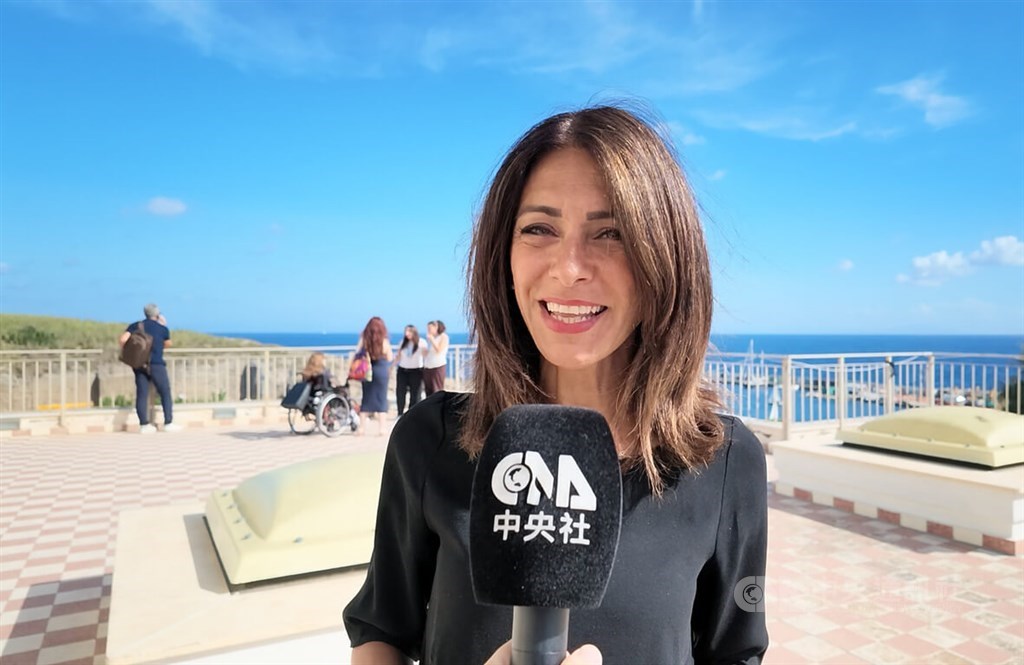
European Parliament vice president praises Taiwan's Hsiao as 'role model' for women

Focus Taiwan - CNA English News European Parliament vice president praises Hsiao as 'role model' for women - Focus Taiwan focustaiwan.tw
preview

cross-posted from: mander.xyz/post/58176978

European Parliament Vice President Pina Picierno on Saturday praised Taiwanese Vice President Hsiao Bi-khim (蕭美琴) as a role model for freedom-loving women around the world and told CNA that she would soon begin planning a trip to Taipei after accepting Hsiao’s invitation to visit.

Hsiao made an unannounced visit to Italy to attend the Second Ventotene European Conference for Freedom and Democracy on the Italian island of Ventotene at the invitation of the event organizers, despite strong protests from Beijing.

In an interview with CNA on the sidelines of the event on Saturday, Picierno, the conference’s main initiator, described Hsiao as a role model.

“I believe the world needs the courage of women; and throughout history, many women have changed the course of history through their determination,” Picierno said.

…

“As authoritarian regimes threaten our democracies, we have an even greater need for courageous women like Vice President Hsiao Bi-khim,” she added.

…

Picierno noted that Hsiao fights for human rights and women’s rights and is a “staunch pro-democracy activist who inspires freedom-loving women across the world.”

,…

The trip was Hsiao’s second visit to a European country that recognizes Beijing instead of Taipei since she took office in May 2024. Her first visit was in November 2025 to Brussels to address a meeting of the Inter-Parliamentary Alliance on China.

…

Web Archive link

0

Chinese workers see an ally in Brussels as EU trade tensions mount

preview

cross-posted from: mander.xyz/post/57287340

  • Chinese workers echo EU concerns over excessive overtime
  • EU-China trade tensions revive complaints about '996 culture’
  • EU’s forced labour rule gains traction on China’s internet
  • Chinese discuss on social media filing complaints with EU

…

The European Union is finding support on an opponent’s turf ahead ​of trade talks with Beijing, as Chinese workers vent on social media about excessive overtime that critics say gives exporters an unfair advantage.

Europe, ‌which last year ran a trade deficit with China of roughly $1 billion a day, has given Beijing until October to address growing imbalances that it says are hollowing out domestic industries and causing mass layoffs.

…

A key EU complaint is China’s weak domestic demand, caused in part by sluggish wages and insufficient labour protection, which is depressing imports - including from Europe - and is forcing Chinese producers to seek overseas ​markets.

Amid those tensions, one of Brussels’ older tools to tackle the issue is drawing greater attention on China’s heavily censored internet. The EU Forced Labour ​Regulation, adopted in 2024 and taking effect in December 2027, bans goods produced with imposed or involuntary work, including excessive overtime.

The ⁠regulation strikes a chord with many Chinese workers, who have long complained about the “996 culture” of 12-hour shifts, six days per week.

“I think the EU is right to ​sanction forced labour. Who agrees and who disagrees?” read a recent post on RedNote, China’s Instagram-like platform, drawing almost 3,000 likes before being removed.

Users in the comments section ​expressed support for sanctions and shared information on filing complaints with EU authorities.

Analysts say the online interest in the topic reflects growing concerns over a weakening labour market and mounting pressure from employers grappling with deflationary price wars fuelled by overcapacity and competition in export markets.

“Some workers have found that while a company may not be particularly concerned about an individual domestic overtime dispute, it may be ​far more concerned about losing access to Western markets,” said Mingwei Liu, director at the Centre for Global Work and Employment at Rutgers University. China’s human resources ministry and ​the cyberspace administration, which oversees online content, did not respond to requests for comment.

…

On Douyin, China’s version of TikTok, videos tagged “EU reporting website” and “EU reporting ‌procedures” received ⁠more than 200,000 views. One video explaining the formal complaints process received 5,442 likes and 714 shares.

…

Xiao Qiang, founder of the U.S.-based China Digital Times, which tracks Chinese censorship, said other platforms appear to be limiting the audience reach of such posts.

Nevertheless, Xiao said the topic’s emergence in spite of that shows many Chinese people do not view exporters’ interests as synonymous with national interest.

“History won’t remember its view count, but this was the first time someone connected domestic labour grievances directly to foreign law ​enforcement mechanisms,” he said.

An EU Commission source ​said its departments have received informal ⁠allegations of labour violations, including excessive overtime, but had not seen a noticeable increase in complaints recently.

Some social media users also suggested complaining to Washington. In July, the U.S. imposed tariffs of up to 12.5% on goods from 60 trading partners, including the ​EU and China, citing failures to screen or curb forced labour.

…

CHINA STRUGGLES TO ENFORCE WORKER PROTECTIONS

Chinese people work more than 48 hours a week on average, versus the legal cap of 44, official figures show, suggesting poor worker rights enforcement.

Last year, some Chinese companies, including appliance maker Midea, announced mandatory clock-off times.

In an article in March, Lu Ming, a member of ⁠the Chinese ​People’s Political Consultative Conference (CPPCC), the country’s top political advisory body, called for stronger labour protections, warning of ​a backlash from trade partners.

“Other countries may view the price competitiveness of Chinese products as being derived from excessively intensive work and a poor quality of life,” Lu was cited by the CPPCC website ​as saying.

“This not only affects China’s image, but could also lead to substantive trade barriers.”

0

EU-banned pesticides found in rice, tea and spices (2026-05-19)

Foodwatch EN EU-banned pesticides found in rice, tea and spices www.foodwatch.org
preview

We ban the pesticides in Europe, but continue producing them and selling them abroad –> then end up back in our food anyway.

foodwatch laboratory tests reveal the presence of pesticide residues in everyday foods — including substances not approved in the EU.

We ban the pesticides in Europe, but continue producing them and selling them abroad –> then end up back in our food anyway.

foodwatch laboratory tests reveal the presence of pesticide residues in everyday foods — including substances not approved in the EU.

0

The Dutch government now hosts its own forgejo instance

code.overheid.nl: Het overheidsbrede codeplatform Explore code.overheid.nl
preview

Forgejo is server software to host code projects. It is a popular alternative to GitHub and GitLab. A popular instance is Codeberg.

Forgejo is on mastodon too! @forgejo@floss.social

Forgejo is server software to host code projects. It is a popular alternative to GitHub and GitLab. A popular instance is Codeberg.

Forgejo is on mastodon too! @forgejo@floss.social

0

German researchers release open-source AI model Soofi S

Soofi S — Sovereign German-English Foundation Model - a Hugging Face Space by Soofi-Project huggingface.co
preview

The scientific publication: A Sovereign, Open-Source Foundation Model for German and English

Soofi S 30B-A3B is a sovereign, open-source Mixture-of-Experts (MoE) hybrid Mamba–Transformer foundation model for German and English. Its hybrid design activates only 3B of 30B parameters per token and keeps the inference cache near-constant as context grows, giving it a decisive throughput advantage over dense models for long-context, high-concurrency deployment.

Pretrained on roughly 27 trillion tokens with deliberately up-weighted German, Soofi S matches dense 14–27B models on aggregate English and German benchmarks, achieves the best code aggregates in both languages among 17 open base models, and outperforms every European sovereign baseline in our comparison — including ones far larger in active parameters. Among fully open models, it obtains the highest English and German evaluation scores, ahead of Olmo 3 32B and Apertus 70B. Soofi S was built end-to-end on the German Industrial AI Cloud, a sovereign HPC-scale AI infrastructure operated by Deutsche Telekom in Munich.

…

0

EU tariffs accelerate Korean tire makers' China exit

The Korea Times EU tariffs accelerate Korean tire makers' China exit - The Korea Times www.koreatimes.co.kr
preview

cross-posted from: lemmy.sdf.org/post/56505692

Archived

The European Union’s latest anti-dumping tariffs on Chinese-made tires are poised to accelerate a strategic realignment across Korea’s tire industry, prompting local manufacturers to curb their production reliance on China as geopolitical risks increasingly reshape global supply chains.

Under the latest regulatory measure, Hankook Tire received an anti-dumping duty of 4.3 percent, while Kumho Tire and Nexen Tire were each hit with a 24.4 percent levy. The effective tariff burden rises to 8.8 percent for Hankook and 28.9 percent for its domestic rivals, after calculating the EU’s existing 4.5 percent import tariff.

The disparity reflects years of divergent manufacturing strategies rather than differences in product competitiveness.

[…]

The tariff decision is widely viewed as a catalyst for broader restructuring across the Korean tire industry, with manufacturers increasingly shifting production closer to major end markets in Europe and North America, as geopolitical uncertainties surrounding China continue to mount.

[…]

0

How does TikTok show China to Polish users? - Content "fully consistent with messages approved by bodies directly subordinate to the Chinese Communist Party"

Manipulacja algorytmami: Chiny w oczach polskich użytkowników platformy TikTok www.nask.pl
preview

Here is the report in Polish (pdf) and the report in English (pdf).

How does TikTok show China to Polish users?

Experts from the Polish NASK Disinformation Analysis Centre examined nearly 10,000 pieces of material on six topics considered particularly sensitive by Beijing (Xinjiang, Tibet, Tiananmen Square massacre, Taiwan, human rights, re-education camps). They show that the way content is recommended may be conducive to building a favourable image of China.

Some key points:

  • Many of the materials classified as „pro-China” based on the adopted criteria contained statements fully consistent with messages approved by the Publicity Department and other bodies directly subordinate to the Chinese Communist Party (CCP).

  • There are at least several English-language accounts on the Tiktok app responsible for spreading pro-Chinese propaganda messages. A few characteristics indicate their direct links to the Chinese propaganda mechanism, including they exclusively discuss topics important to Chinese propaganda message, promote an extremely pro-Chinese message, attempt to discredit individuals criticizing the CCP’s actions, and publish large amounts of professionally prepared content despite posing as, for example, ordinary tourists in China.

  • The Tiktok app does not designate state-owned channels as “state-controlled media as Facebook does. This means that it is impossible to determine which channels on the platform operate directly under government control.

  • The examined material raises legitimate doubts about the impartiality of the TikTok app. It is impossible to definitively answer the question whether this is solely the result of the algorithm itself or the presence of a significant number of propaganda channels on the platform, whose activities are not moderated or labeled in any way.

  • This raises doubts, especially considering the platform’s subordination to a Chinese entity (ByteDance) operating within the Chinese legal system. Therefore, the app has significant potential to become a tool for shaping audience attitudes and views in the event of large scale influence operations.

  • Given the scale of Sino-Russian cooperation in information exchange, the TikTok app may pose a potential threat to the security of Polish users. Therefore, it is recommended not only to approach content appearing on the platform critically, but also to refrain from publishing sensitive data on the platform – this is particularly relevant for government entities and individuals associated with the state apparatus.

[…]

The analysis showed that the way content was presented on TikTok differed significantly depending on the topic. The highest percentage of pro-Chinese content was recorded for Xinjiang (58.7%) and Tibet (44.5%). This also applied to the issue of human rights in China (35%).

In turn, the results that referred to the Tiananmen Square massacre were dominated by content critical of the Chinese authorities (76.6%). “We treat such actions as a so-called “safety valve” – a strategy to create the impression of freedom of speech,” the analysts write.

In the case of Taiwan, neutral materials predominated (92%). The most unusual results were obtained for the topic of re-education camps – as much as 89% of the displayed materials were not related to the searched topic. "The conclusions of the study clearly show that TikTok uses different content selection strategies for different topics.

“However, we should not focus solely on the operation of one algorithm. This is a question about who shapes the image of the world that millions of users see every day, and how they do it,” says Antoni Mazek, an analyst at the NASK Disinformation Analysis Centre and co-author of the report.

[…]

In the flood of information, it is easier to give up further searches In the case of the topic concerning re-education camps, OAD analysts observed a large number of random videos. Unrelated content accounted for as much as 89%. In response to this specific query, several dozen materials appeared praising miraculous methods for weight loss (34% of content on the topic of health/weight loss), and even recordings of Chinese women doing the hula hoop.

"This is intended to discourage users from further searches – explains Dr Agnieszka Lipińska, head of OAD. “It simply causes frustration in the recipient. The search for information on an important topic collides with content that is less intellectually engaging,” she adds.

Western influencers reinforce manipulation The analysed content rarely took the form of official messages. It often took the form of travel advertisements or lifestyle content. There was also material featuring Western influencers who constructed their narratives according to a similar pattern: they presented themselves as people “discovering the truth” about China and criticised Western media coverage. It was their materials that were most often recommended to Polish users. Prolonged exposure to such content may affect the perception of China by the audience, according to the researchers.

[…]

0

Reddit age verification for Europeans

preview

I have just been tossed off Reddit. No bad behaviour but Reddit suspects I am not old enough. I have been an adult for quite a few years. Note that age verification is not (yet) required under EU law.

The age verification on Reddit runs through a third party which is associated with Palantir. I will not do this, and there’s enough data associated with my account to show I’m an adult.
In general I am extremely sceptical of giving this level of personal information to any third party but especially a company that just cannot be trusted and has proven itself to be a destructive force in the world. I would not recommend anyone to use this, even if it may lose you access to platforms.

On Reddit there have been concerns among the various European subs and its community. I have encouraged various mods to collectively search for a solution. A move to Lemmy seems the obvious one - also just for the sake of supporting European tech and platforms. Alas, none have acted. The best I got was ‘good idea, we’ll look into it’.

My guess is I am far from the only one to lose access, if not already than soon the same will happen to other users. It may destroy the community that exists there, and my guess is that it’s the largest online truly pan-European community.

Anyway, I’ve signed up for Lemmy / europe.pub a while ago and am eager to use it instead of Reddit. I just hope this place becomes a little more lively.

0

EU relaxes rules for smart glasses after US pressure

POLITICO EU relaxes rules for smart glasses after US pressure www.politico.eu
preview

Colour me fucking shocked. The EU commission bend over yet again to US big tech. I mean, why have rules or regulations at all if they aren’t going to agree with them… 🙄

Pervert glasses get the green light to expand in Europe.

Commission exempts smart glasses like Meta’s from batteries regulation, clearing a major hurdle to European expansion.


The European Commission on Tuesday exempted wearable tech from rules requiring removable batteries, clearing a major hurdle for Meta’s smart glasses to take on the EU market following pressure from the United States.

Smart glasses are in European regulators’ and lawmakers’ crosshairs over privacy and surveillance concerns. But the bloc’s batteries regulation also held up the EU rollout of Meta’s latest model in recent months because the glasses’ built-in batteries cannot be easily removed and replaced.

U.S. Ambassador to the EU Andrew Puzder came to Meta’s defense at an event in March, where he called the EU’s rules “so broad and so restrictive that it prevents the sale of this wonderful, jointly developed, U.S.-European product from being sold in the European Union” and praised the smart glasses as being “very stylish” and “very wonderful.”

“You have to focus on allowing businesses to grow and allowing businesses to innovate,” Puzder then said about the European hurdles to Meta’s product.

The Commission on Tuesday presented a legislative tweak known as a delegated act that exempts connected products including smartwatches, smart glasses, fitness trackers and electric toys from the batteries regulation.

A Commission spokesperson said in a statement that it “has not given in to anyone’s pressure,” adding that its proposals “follow a broad public consultation with consumer associations, industry stakeholders and the Member States.” The spokesperson added that the proposal for the exemption “is not about regulating one specific product” but “to ensure safer consumer and industrial products in cases where opening a device could create safety risks or where technical limits make consumer access unrealistic.”

The European Parliament and national governments have two months in which to object to the tweak. If there are no objections, the delegated act will then be published in the Official Journal of the EU and after 20 more days the bill should enter into force.

The change is a major boon for Meta, which has bet big on the new spectacle technology but felt held back in reaching European consumers with its eye-catching product. The battery rule exemption may also benefit other companies like Samsung and Google, and Apple which are planning their own smart glasses launches.

Earlier financial results from the French-Italian eyewear company EssilorLuxottica that owns the RayBan brand noted that Meta smart glasses sales are ramping up “exponentially” in the U.S.

While Meta has launched its AI glasses in the EU, the financial results said the distribution rollout is still slow in the EMEA region, with “more than half” of sales points still not served. More than 7 million pairs of Meta smart glasses were sold worldwide in 2025.

The smart glasses still face fierce privacy pushback, regardless of the change in batteries rules.

Cláudio Texeira, the head of digital policy at Europe’s largest consumer protection group BEUC, said: “Europe should not dilute consumer protections. Smart glasses are already raising important concerns about privacy, security and consumer choice. Exemptions from EU battery removability rules should remain exactly that: genuine exceptions based on clear technical and safety evidence, not industry pressure. Exempting these devices … risks setting a dangerous precedent.”

When Meta launched the first iteration of its RayBan smart glasses in Europe in 2021, the product immediately sparked concerns with Irish and Italian privacy watchdogs over whether the specs made it obvious enough to people that they are being filmed.

And earlier this year, concerns peaked again when Swedish media reported that subcontractors for Meta in Kenya were reviewing “deeply private” footage captured by the firm’s smart glasses to help annotate the content to train artificial intelligence models. It included recordings of people’s bathroom visits, banking details, or even them having sex.

The European Data Protection Board, which gathers privacy regulators across Europe, has ordered a report into smart glasses which should be finalized this summer, chair Anu Talus told POLITICO earlier. She added that the board will look at actions from there.

A Meta spokesperson told POLITICO last month that its glasses include built-in privacy safeguards and that the company has “teams dedicated to evolving these measures so that we can continue to deliver safe, secure products that enhance people’s lives.”

“Unlike smartphones, our glasses have an LED light that activates when someone prompts the glasses to take a photo or video that will be saved to their gallery. The glasses feature tamper detection technology to prevent people from covering that light. Unless users choose to share media they’ve captured with Meta, that media also stays on the device," they said.

The U.S. Mission to the EU declined to comment.

Meta didn’t respond to POLITICO’s request for a comment.

0

[Opinion] Covert CCP cops? Paris has seen it all before

Covert CCP cops? Paris has seen it all before - Taipei Times www.taipeitimes.com
preview

[Op-ed by Chu Meng-hsiang, former deputy secretary-general of the Lee Teng-hui Foundation.]

…

Taipei-based Indo-Pacific Strategy Thinktank CEO Akio Yaita, a political commentator and former Taipei bureau chief of the [Japanese daily newspaper] Sankei Shimbun, was allegedly assaulted by a Chinese national in a hotel lobby in Taichung on Monday last week, in the Chinese Communist Party’s (CCP) latest attempt at transnational repression in Taiwan. Yet politicians from the Chinese Nationalist Party (KMT) and Taiwan People’s Party offered no condemnation of the attack, while some of their supporters even cheered it.

A similarly alarming incident occurred at Paris’ Charles de Gaulle International Airport in March 2024, when French border police intervened to stop the abduction of 26-year-old Chinese dissident Ling Huazhan (凌華湛) by Chinese agents. Ling had publicly voiced anti-CCP views and support for democracy in Taiwan and Hong Kong. The group was attempting to force Ling onto a flight bound for China when police and journalists at the scene intervened.

The incident struck a nerve within the French government, sparking concerns about violations of national sovereignty, human rights and freedom, prompting counterintelligence authorities to launch a year-long covert investigation and adopt strong countermeasures aimed directly at China’s secret repression networks. Earlier this year,

…

France’s domestic intelligence agency DGSI dismantled nine clandestine Chinese “police stations,” also known as “110 overseas police service centers.” The “police service stations” were disguised as local Fujian associations, business federations and Chinese restaurants. The outposts, which claimed to provide administrative services for overseas Chinese, were allegedly used to monitor 600,000 Chinese residents in France and gather intelligence on dissidents. The French Ministry of the Interior expelled three Chinese nationals believed to be behind the operation, including Fujian Association of Industrialists and Merchants president Ni Chaowen (倪超文).

…

France has shown it will not tolerate foreign powers illegally enforcing their laws on French soil. Taiwan should look to France and ask what lessons it can learn from the incident.

…

Web Archive link

0

Espionage Against the European Parliament: Member of Committee Investigating Spyware Hacked with Pegasus - The Citizen Lab

The Citizen Lab Espionage Against the European Parliament: Member of Committee Investigating Spyware Hacked with Pegasus - The Citizen Lab citizenlab.ca
preview
  • Former Member of the European Parliament, Stelios Kouloglou, was repeatedly hacked with NSO Group’s Pegasus spyware while on the committee investigating Pegasus spyware abuses.
  • Kouloglou was infected during key periods of PEGA committee activity, and the spyware would have likely captured non-public information about committee activities, possibly breaching EU parliamentary confidentiality and privilege frameworks.
  • We are not attributing these infections to a particular government at this time, and found no indications that the Greek Government is responsible. Instead, we note an overlap between the first infection and a previously identified Pegasus campaign targeting Russian and Belarusian-speaking exiled journalists and activists in Europe, suggesting a Pegasus customer with authorization to spy in multiple European countries is responsible.

…

Whichever entity is responsible for the hacking, the infection could have exposed strictly confidential exchanges among PEGA Committee members and their staff, and other sensitive and confidential parliamentary proceedings, including to parties under investigation by the Committee itself.

The finding that a PEGA Committee member was targeted with Pegasus spyware during the Committee’s work highlights the serious threat that mercenary spyware poses to the integrity of democratic processes.

As outlined above, this case is not the first that a Member of the European Parliament has had their devices either targeted or hacked with mercenary spyware, which illustrates the corrosive nature of unregulated mercenary hacking.

…

Web Archive link

0

How China built a hidden news network in Europe

preview

cross-posted from: mander.xyz/post/54275021

When people talk about foreign influence operations, Russia is usually the first country that comes to mind. We picture troll factories, aggressive TV shows or conspiracy theories spreading on social media.

But a study published this June by Viginum, France’s national agency for countering foreign digital interference, describes a very different approach. At its centre is not loud propaganda, but an entire network of news portals that look like ordinary media outlets and focus mainly on how successful, innovative and essential to the world China supposedly is.

According to Viginum, the network consisted of 13 websites operated by China’s state broadcaster CGTN, or China Global Television Network. The portals published articles in English, French, Spanish and Vietnamese, presenting themselves as independent media outlets. In reality, they were part of a coordinated influence operation, which French authorities named Fawn Mianju.

…

One of the best-known portals in the network was called Actu Méridien. It was a French-language website that looked just like an ordinary news outlet. The same network also included the Spanish-language Amigo News, English-language sites and Vietnamese-language publications.

The content of these sites did not focus on criticising the West. Quite the opposite. Readers were told about China’s achievements in aviation and artificial intelligence, Beijing’s leading role in the Global South, and how European countries could benefit from closer cooperation with China. One article, for example, attacked a programme by the French TV channel France 2 that covered the situation of Uyghurs in Xinjiang.

This is exactly what sets Chinese influence operations apart from Russia’s. While Russian propaganda is often dominated by conflict, threat perception and confrontation, China’s goal is to build a positive image of itself. Freedom House describes this as a long-term strategy aimed at “telling China’s story well”. At its core is the image of China as a successful, trustworthy and indispensable partner.

Freedom House notes that in France, Chinese state media has for years tried to influence public opinion not only through its own channels, but also through partnerships, paid content and social media influencers. These have included both Facebook influencers and traditional media outlets that have published paid supplements from Chinese state media.

…

The most interesting part of the story, however, is the role played by artificial intelligence. According to Viginum’s investigation, since late 2025 CGTN published nearly 3,000 articles, more than 2,300 of which were quickly adapted and republished on other websites in the network. This often happened less than an hour after the original story appeared.

The articles were not copied word for word. The texts were edited, shortened, adapted for different target audiences and rewritten so that they appeared to be original content. Investigators found that the texts showed unusually little natural variation in sentence length and punctuation. This is one of the signs associated with automatically generated or AI-assisted content.

…

One mistake led back to CGTN

The strongest evidence linking the network to China’s state broadcaster came from an unexpected place. The administrator of one portal, Actu Méridien, left behind a login trail that led Viginum investigators to a senior project manager at CGTN Digital.

In addition, investigators found a hidden webpage on Actu Méridien’s server that had been built to resemble CGTN’s official website.

An anonymous Viginum analyst told Le Monde that the portal’s technical setup pointed to “a well-resourced actor”. The website was not running on a single server, but used a distributed architecture, professional SEO tools and several different infrastructure components.

Still, it did not become successful propaganda

Perhaps the most surprising part is that, despite the scale of the effort, the operation was not particularly successful. The network was supported by Facebook and Threads accounts, and advertising campaigns were shown to users in as many as 89 countries. Yet individual articles usually received no more than around 15,000 views.

…

Influence operations no longer have to look like propaganda.

There is no need for loud voices, militant slogans or obvious fake news. A website that resembles an ordinary news portal is enough. An article about China’s green transition or technological success is enough. And so is artificial intelligence that can adapt the same message for dozens of different target audiences within minutes.

The question is no longer only whether a news story is true or false. The question is who is telling stories about the world, what kinds of stories are being told, and whether the reader even notices that the “news” in front of them was not produced in an independent newsroom, but far away in Beijing.

Web Archive link

0

UK, Germany and France express concern over Chinese actions east of Taiwan

preview

cross-posted from: mander.xyz/post/54135854

Great Britain, France and Germany on Wednesday issued a rare joint statement expressing alarm over Chinese activities east of the self-ruled island of Taiwan, where China earlier this month deployed coast guard patrols.

The de-facto embassies of the three European nations in the Taiwanese capital Taipei said the “novel Chinese activity,” which was not specifically identified, endangered regional stability.

China, which claims democratically governed Taiwan as its breakaway province and has not ruled out the use of force to annex the island, called the maneuvers earlier this month a “maritime traffic enforcement and hydrographic survey operation.”

Chinese state media said the activities were “sending a pointed warning” to Japan and the Philippines over an announcement that the countries would discuss their maritime boundaries in waters that Beijing views as its own.

…

“These actions ⁠threaten regional stability and the freedom of navigation and safety of international shipping. We reiterate our opposition to any unilateral change to the status quo, particularly by threat or use of force or coercion,” the [joint European] statement said.

The offices also called for navigational rights and freedoms and respect for the safety of all seafarers.

…

Beijing’s tensions with Tokyo also have increased since Japanese Prime Minister Sanae Takaichi last year suggested the country’s military could get involved if China takes action against Taiwan.

…

Web Archive link

0

France shuts down clandestine Chinese 'police stations' operating on its territory

preview

cross-posted from: lemmy.sdf.org/post/54977089

Archived

France is not only facing the threat of Russian or Iranian interference but China’s growing influence on its territory. Following a year-long investigation, counterintelligence services shut down nine clandestine “police stations” in early 2026 that were operating in France on behalf of Beijing’s interests.

According to the Interior Ministry, three “heads” of these shadow police stations, all Chinese nationals, faced expulsion measures. They were tasked with monitoring the Chinese diaspora and tracking down regime opponents to forcibly return them to China. Two have already been expelled. On June 9, before the Council of State, France’s highest administrative court, the public rapporteur recommended that the third expulsion be confirmed.

Less spectacular than Russian destabilization operations but just as active, Beijing’s clandestine activities abroad have largely relied on Chinese nationals without direct links to the Chinese state. A law passed on June 28, 2017, on intelligence, created legal obligations for Chinese citizens and companies to assist in collecting information as part of the “United Front,” making every Chinese national a potential spy. On June 1, 2023, the European Parliament called on “member states and Union authorities to investigate the alleged existence of these police outposts and to take coordinated action against any illegal activity linked to the Chinese United Front Work Department in Europe.”

[…]

For the Interior Ministry, these undeclared clandestine stations are extensions of Chinese police stations on French territory and operate under the orders of the Ministry of Public Security (MPS), China’s main police authority. Most of these structures that are active in France, especially in the Paris region, were set up within the Chinese community or cultural associations. In addition to hunting dissidents, they provide administrative services such as issuing passports and gathering intelligence to recruit informants, described as “talents.” The Chinese community in France numbers around 600,000 people.

[…]

The case of Ni Chaowen, 57, head of a clandestine police station, was brought before the Council of State on June 9. According to the Interior Ministry, Ni served as president of the Fujian Association of Industrialists and Merchants (FAIM) since 2023, but behind this organization, he was actually running a clandestine police station linked to the Chinese MPS.

[…]

French authorities decided to take a tougher line against these clandestine Chinese police structures after cracking down in 2024 on the activities of intelligence agents officially listed at the Chinese Embassy in Paris. The station chief of China’s Ministry of State Security (MSS, or Guoanbu, China’s intelligence service) and his deputy were asked to leave France after orchestrating, in March 2024, an attempted forced repatriation of a political dissident.

[…]

Apparently displeased with the publicity surrounding these cases, Chinese authorities tried, both in the matter of secret agents assigned to the embassy and in the case of nationals implicated in the “shadow police stations” affair, to plead their case with the French Foreign Ministry. Questioned on the matter, a senior diplomat at the French Foreign Ministry confirmed that Chinese diplomats had come to defend their “good faith” and that of their compatriots. In return, they only obtained a pledge that France would act discreetly regarding the measures taken against them.

0

Dutch defense chief says Chinese naval encounter won’t deter Europe in Indo-Pacific

preview

cross-posted from: mander.xyz/post/53878559

The Netherlands will not back down from regular military deployments to the Indo-Pacific despite a recent tense naval encounter with China, the country’s defense minister said, signaling that the incidents will not deter European engagement in the region.

“We are not here to seek a conflict, but we will keep coming back,” Dilan Yeşilgöz-Zegerius told The Japan Times in an interview Monday following the arrival of Dutch frigate HNLMS De Ruyter in Tokyo for a three-day port call.

The guided-missile frigate was involved in an incident last month near the disputed Paracel Islands in the South China Sea, where the Chinese Navy reportedly subjected it to electronic interference.

The frigate continued its planned mission, later transiting the sensitive Taiwan Strait before arriving in Japan, but the event highlighted ongoing tensions between Chinese forces and foreign militaries operating in waters Beijing claims as its own.

…

Yeşilgöz-Zegerius was unequivocal that such incidents would not prompt the Netherlands to scale back its Indo-Pacific engagement, insisting that Dutch naval operations are conducted in accordance with international law and the principle of freedom of navigation — and that the deployments are far from symbolic.

“For the Netherlands, it’s very important to send a frigate through this region every two years because the safety, security and economy of the Indo-Pacific are closely interlinked with those of the Netherlands and the rest of Europe,” she said.

…

“If something were to happen here [in the Indo-Pacific], the effects would be felt acutely in Europe — even more so than in the Strait of Hormuz,” referring to the crucial Middle Eastern waterway that has remained largely closed amid the U.S. and Israeli war against Iran.

…

The minister confirmed that Chinese officials had raised the naval encounter during bilateral and panel discussions at last month’s Shangri-La Dialogue security forum in Singapore, where Dutch military officials reaffirmed the legal basis for the transit while keeping the door open to dialogue.

…

While encounters between Chinese, U.S. and regional forces in the South China Sea occur regularly, publicly acknowledged incidents involving European warships remain comparatively uncommon, making the De Ruyter episode one of the most visible Chinese-European military interactions in the region so far this year.

…

Archive Today link

0

MEPs urge EU crackdown on transnational repression, calling it threat to democracy

preview

The report was adopted on Tuesday by 434 votes in favour, 128 against and 104 abstentions, the parliamentary press service announced.

Transnational repression was described in the text as deliberate acts or threats by states and authoritarian regimes — or state-linked entities and proxies — to threaten, silence, coerce or harm people living abroad, as well as their support networks and family members.

MEPs said these actions pose a threat to democracy and the protection of human rights, and amount to foreign interference.

…

Targets can include dissidents, journalists, activists, academics and members of diaspora communities, as well as their families, according to the European Parliament.

…

They also called for measures to share best practice between member states and floated the appointment of an EU coordinator to help develop a wider strategy, including action against digital threats, abusive Interpol “red notices” — requests to locate and provisionally arrest people pending extradition — and “consular coercion”, which the report described as pressure from embassies and consulates.

“For many people living in exile in Europe, distance doesn’t guarantee safety. Authoritarian regimes actively seek to silence critics beyond their own borders,” the report’s rapporteur, Hannah Neumann, said in the statement published by the European Parliament.

…

0

EU concludes modernised Economic Partnership Agreement with Sub-Saharan Africa partners

European Commission - European Commission EU concludes modernised Economic Partnership Agreement with Sub-Saharan Africa partners ec.europa.eu
preview

…

The EU and four Eastern and Southern Africa (ESA) States (Comoros, Madagascar, Mauritius, and Seychelles) concluded negotiations on an enhanced Economic Partnership Agreement (EPA).

…

This Agreement will set a new standard for EU-Africa economic relations by providing clear rules and opportunities on:

  • Services and investment: the enhanced EPA improves legal certainty and conditions for companies supplying services in each other’s market. It also provides greater predictability for investors and ensures fair and non-discriminatory treatment.

  • Public procurement: businesses will have access to clear and transparent information on public procurement opportunities. This will make it easier for businesses on both sides to take part in public tendering and will support ESA States’ expected economic growth and modernization plans.

  • Intellectual property: the enhanced EPA establishes a modern and predictable framework covering all major categories of intellectual property and strengthens enforcement tools to support innovative and creative industries in ESA States. It will also protect 135 EU Geographical Indications (GIs) in Madagascar, Mauritius, and Seychelles, after a transition period.

  • Digital trade: the deal will make it easier to carry out digital transactions and trade using electronic means without applying customs duties on electronic transmissions. It will enhance online consumer protection and reduce unnecessary red tape. This allows the EU and the ESA States to promote and support digital trade more widely.

  • Sustainability: the deal contains binding and enforceable commitments, as well as cooperation provisions, in a dedicated Trade and Sustainable Development chapter.

…

The EU is ESA4’s largest trading partner, accounting for 24% of its total trade in goods and for 33% of its total trade in services.

In 2024, total trade in goods and services between the EU and the ESA4 States reached €9.7 billion, comprising €5.2 billion in EU imports and €4.5 billion in EU exports.

…

…

The EU and four Eastern and Southern Africa (ESA) States (Comoros, Madagascar, Mauritius, and Seychelles) concluded negotiations on an enhanced Economic Partnership Agreement (EPA).

…

This Agreement will set a new standard for EU-Africa economic relations by providing clear rules and opportunities on:

  • Services and investment: the enhanced EPA improves legal certainty and conditions for companies supplying services in each other’s market. It also provides greater predictability for investors and ensures fair and non-discriminatory treatment.

  • Public procurement: businesses will have access to clear and transparent information on public procurement opportunities. This will make it easier for businesses on both sides to take part in public tendering and will support ESA States’ expected economic growth and modernization plans.

  • Intellectual property: the enhanced EPA establishes a modern and predictable framework covering all major categories of intellectual property and strengthens enforcement tools to support innovative and creative industries in ESA States. It will also protect 135 EU Geographical Indications (GIs) in Madagascar, Mauritius, and Seychelles, after a transition period.

  • Digital trade: the deal will make it easier to carry out digital transactions and trade using electronic means without applying customs duties on electronic transmissions. It will enhance online consumer protection and reduce unnecessary red tape. This allows the EU and the ESA States to promote and support digital trade more widely.

  • Sustainability: the deal contains binding and enforceable commitments, as well as cooperation provisions, in a dedicated Trade and Sustainable Development chapter.

…

The EU is ESA4’s largest trading partner, accounting for 24% of its total trade in goods and for 33% of its total trade in services.

In 2024, total trade in goods and services between the EU and the ESA4 States reached €9.7 billion, comprising €5.2 billion in EU imports and €4.5 billion in EU exports.

…

0

Italian police dismantle illicit bank used by drug traffickers as global broker

the Guardian Italian police dismantle illicit bank used by drug traffickers as global broker www.theguardian.com
preview

…

The clandestine bank, whose logistical base was located in Prato, north-west of Florence, has been run since 2021 by a Chinese national, officials said.

The operation acted as a “global broker at the service of organised crime, offering secure channels for paying for huge drug consignments without any physical movement of cash and guaranteeing total anonymity of financial flows”, police said on Monday in a statement.

…

Drug cartels, such as Albanian trafficking organisations active in Italy, and the Italian mafia, were clients, it said.

Under-the-radar money transfers run by the Chinese mafia, known as Fei Chien or “flying money”, are used by Italian criminal organisations for drug-related payments.

The hard-to-trace system allows someone to pay a broker in Italy who has an agent in another part of the world who will pay the same amount to the intended recipient.

Police said they had arrested 41 individuals in Italy and Spain linked to the network, with charges ranging from criminal conspiracy and drug trafficking to money laundering and aiding and abetting illegal immigration.

A branch of the organisation managed a “lucrative illegal immigration network from China, which flew migrants to Belgrade before transporting them – or forcing them to march to the Hungarian border through mountainous terrain – to the European Union and the final destination of Italy, police said.

…

[Chinese] migrants were charged up to €9,500 (£8,200) for the journey to Prato, Turin, or the province of Verona.

…

The small city of Prato, the heart of Italy’s textile industry, is home to one of the largest Chinese communities in Europe – and in recent years has been a battleground for rival Chinese mafia groups warring to control the market for clothes hangers and freight transport.

The Chinese mafia, which is also engaged in illegal betting dens, prostitution and drugs, helps supply Prato’s textile industry – primarily the fast-fashion sector – with workers of various nationalities.

They are often exploited, paid about €3 an hour and working 13 hours a day, seven days a week, police investigations have shown.

…

Web Archive link

…

The clandestine bank, whose logistical base was located in Prato, north-west of Florence, has been run since 2021 by a Chinese national, officials said.

The operation acted as a “global broker at the service of organised crime, offering secure channels for paying for huge drug consignments without any physical movement of cash and guaranteeing total anonymity of financial flows”, police said on Monday in a statement.

…

Drug cartels, such as Albanian trafficking organisations active in Italy, and the Italian mafia, were clients, it said.

Under-the-radar money transfers run by the Chinese mafia, known as Fei Chien or “flying money”, are used by Italian criminal organisations for drug-related payments.

The hard-to-trace system allows someone to pay a broker in Italy who has an agent in another part of the world who will pay the same amount to the intended recipient.

Police said they had arrested 41 individuals in Italy and Spain linked to the network, with charges ranging from criminal conspiracy and drug trafficking to money laundering and aiding and abetting illegal immigration.

A branch of the organisation managed a “lucrative illegal immigration network from China, which flew migrants to Belgrade before transporting them – or forcing them to march to the Hungarian border through mountainous terrain – to the European Union and the final destination of Italy, police said.

…

[Chinese] migrants were charged up to €9,500 (£8,200) for the journey to Prato, Turin, or the province of Verona.

…

The small city of Prato, the heart of Italy’s textile industry, is home to one of the largest Chinese communities in Europe – and in recent years has been a battleground for rival Chinese mafia groups warring to control the market for clothes hangers and freight transport.

The Chinese mafia, which is also engaged in illegal betting dens, prostitution and drugs, helps supply Prato’s textile industry – primarily the fast-fashion sector – with workers of various nationalities.

They are often exploited, paid about €3 an hour and working 13 hours a day, seven days a week, police investigations have shown.

…

Web Archive link

0

China attempts to cancel human rights event in Europe

China attempts to cancel SD event safeguarddefenders.com
preview

Archived

On June 16, between 18:00 and 21:00, the rights organization Safeguard Defenders (SD) releases its latest report: Behind Bars - A Survey on Detention Centre Conditions in China.

[…]

The event, at Grémio Literário in Chiado, Lisbon, features direct testimony from two former European detainees: Peter Dahlin (Sweden) and Peter Humphrey (United Kingdom). Joining them is Grace Chen (Canada), former legal adviser to the UN Special Rapporteur on Torture.

In recent days, there have been at least two attempts to cancel or disrupt the Lisbon event.

In a letter dated June 5, the Embassy urged the American Club of Lisbon to reconsider “offering a platform for actions that vilify China”.

[…]

Days later, on June 12, one of the many X accounts impersonating Safeguard Defenders posted a doctored copy of the event poster. The fake changed the date, time, venue and location to mislead potential attendees. The same account pushed the false details to other users in the China human rights space by direct message.

[…]

The move against the Lisbon event is only the latest in a long line of PRC attempts - many of them successful - to suppress information that exposes widespread, systematic human rights abuse in China. Recent examples include pressure on German cities to drop their support for Tibet, and the cancellation of RightsCon in Zambia after sustained PRC pressure on the local government.

The CCP’s “red line” on any public discussion of its rights record - anywhere - is the flip side of its propaganda and influence machine. To advance an increasingly aggressive agenda at home and abroad, the Party works to set and police every narrative about China. Anything that contradicts it must be silenced.

These efforts violate fundamental rights and freedoms enshrined in international treaties, regional instruments, and democratic constitutions. When the PRC suppresses those rights on foreign soil, it commits transnational repression and an unacceptable breach of sovereignty.

[…]

The report

Behind Bars - A Survey on Detention Conditions in China draws on interviews with 84 former detainees. It finds that shocking abuses continue without relent across the country’s 2,600-plus facilities, set for release June 16.

These include police beatings, the illegal denial of access to lawyers, and the use of inmate enforcers to keep order through intimidation and violence.

The report also compares domestic and international law and reviews legal commentary, tracing these abuses to the absence of clear protections for detention centers, exploitable legal loopholes, and weak oversight of detention-center police and practices.

As China’s surveillance state shrinks the pool of public data and makes speaking out riskier, Behind Bars is a vital addition to the evidence on the systematic abuse of detainees - Chinese and foreign alike.

It is the first of two reports. A companion survey on prison conditions in China follows July 18.

[…]

0

Ukraine and Moldova to enter first phase of EU membership negotiations

the Guardian Ukraine and Moldova to enter first phase of EU membership negotiations www.theguardian.com
preview

Ukraine and Moldova will take a decisive step towards joining the EU on Monday, as they embark on the first phase of membership negotiations.

The start of substantive negotiations, launched by senior EU officials and ministers from both countries in Luxembourg on Monday [June 15], will be a highly symbolic moment for the two countries that were both part of the former Soviet Union. It comes after Russia has intensified its bombardment of Ukrainian towns and cities, while sustaining huge losses for little territorial gain.

Ukraine and Moldova were quickly accepted as EU candidate countries in 2022, having filed applications days after Russia’s full-scale invasion. But despite a symbolic decision to open talks in June 2024, substantive negotiations were blocked by Hungary’s pro-Russian president, Viktor Orbán.

…

The election of a new Hungarian government in April paved the way for EU member states to agree unanimously last Friday to open “the first cluster”, the chapters of the EU rulebook covering rule of law and democracy. Launching this cluster opens the door to talks on other areas, such as the single market, the environment, economic and social policy.

…

Web Archive link

0

Canada's PM Carney announces agreement with France to share sensitive defence, AI information

CBC Carney announces agreement with France to share sensitive defence, AI information | CBC News www.cbc.ca
preview

Canadian Prime Minister Mark Carney says Canada and France will deepen their defence and industrial co-operation through a new general security of information agreement.

Carney says the agreement will facilitate the exchange of classified intelligence related to the defence, space, artificial intelligence and aerospace sectors.

Carney made the comments in a joint statement alongside French President Emmanuel Macron at the Palais de l’Élysée in Paris on Friday.

…

0

Russia-Bound Cargo Ship Seized At Rotterdam Port, Captain Arrested On Sanctions Evasion Charge

Marine Insight Russia-Bound Cargo Ship Seized At Rotterdam Port, Captain Arrested On Sanctions Evasion Charge www.marineinsight.com
preview

Dutch customs police at the Port of Rotterdam seized a cargo ship bound for Russia and arrested the captain on charges of evading Western sanctions.

The vessel regularly operated between Rotterdam and St. Petersburg and carried several containers filled with vehicle parts such as doors, air filters and windshields.

A customs officer said that the export of such cargo is banned under European sanctions against Russia over its invasion of Ukraine.

…

Web Archive link

0

How France uncovered a network of propaganda sites linked to Beijing

preview

Thirteen fake news websites launched in 2025 promoted China in a one-sided manner. An investigation by the French government agency Viginum has established that they were directly connected to CGTN, China’s state-run television channel.

…

On Thursday, June 4, Viginum – the French government watchdog against foreign digital interference – revealed the existence of a network of fake news sites in multiple languages, all linked to a state media outlet under the control of the Chinese Communist Party, China Global Television Network (CGTN). This discovery has unveiled a textbook case of a superpower attempting to manipulate public opinion in Western countries.

Nicknamed “Fawn Mianju” by French authorities, the operation was first exposed in the summer of 2025 by the American cybersecurity company Graphika. At that time, Graphika identified 11 websites and 16 English-language social media accounts on Facebook, Instagram, Mastodon, Threads and X, all uncritically relaying CGTN articles and specifically targeting young people. Other sites shared this content in French (“Actu Méridien”), Spanish (“Amigo News”) and Vietnamese.

Mainly published between March 2015 and February 2026, the fake articles posted on “Actu Méridien” promoted Chinese aerospace and artificial intelligence, China as the leader of the “Global South,” and environmental initiatives, as well as the supposed benefits for France in aligning with Chinese interests. Another article, published in several languages, criticized a France 2 television report on the treatment of Uyghurs in China.

…

After several months of online investigation, Viginum experts managed to establish that these sites, which were now numbering 13, were directly linked to the state-run CGTN channel, which is overseen by the Chinese Communist Party.

In addition to the fact that the domain name was registered in Beijing and purchased from Alibaba Cloud, a Chinese digital giant, the site used a distributed architecture – meaning it was simultaneously duplicated across several servers. This more expensive setup, along with the use of paid plug-ins to boost internet search rankings, “suggests an actor with significant resources,” explained a Viginum analyst, who requested anonymity.

…

These sites display two essential characteristics of a digital interference operation: secrecy and coordination. Despite several campaigns to purchase visibility on Facebook and Threads, targeting a total of 89 countries – mainly in French-speaking Africa – they never managed to break through beyond 15,000 views. The most “liked” posts received 39% of their likes from users located in Burundi, whose sole activity was to interact favorably with Chinese pages.

Given the limited visibility of these sites and their associated accounts, this operation can be considered an operational failure; in fact, “Actu Méridien” has been inactive for several months. Nevertheless, Viginum warns that these sites demonstrate China’s determination to promote its narrative to populations in Western countries – including through clandestine means; its growing prowess in using LLMs to automate this kind of production; and, finally, its objective to target both young people and French-speaking Africa.

…

Archive Today link

0

China expands its spy networks across the European Union and beyond

EL PAÍS English China expands its spy networks across the European Union and beyond english.elpais.com
preview

At least 30 agents operating on Beijing’s behalf have been uncovered in the European area over the past two years.

Archived

Chinese espionage in the European Union and neighboring countries reveals its full scope when certain pieces are connected. The May 20 arrest in Germany of a German couple of Chinese origin who were taking military-technology information from universities is a particularly notable case. But it is only one of many. The episode exposes a strategy of large-scale, coordinated infiltration when placed alongside other arrests in EU member states and neighboring countries. In total, around 30 agents and collaborators have been uncovered in Europe and its vicinity in just the past two years; some were arrested, several expelled, and others are awaiting trial.

[…]

The Italian government expelled eight Chinese nationals in March on charges of surveilling and intimidating members of the diaspora. This pattern of harassment, known as China’s “clandestine police stations,” came to light in 2022 when the Dutch government acted against two covert offices in Amsterdam and Rotterdam. The NGO that exposed the case, Safeguards Defenders, reported that Beijing had set up 102 unauthorized security offices in 53 countries, including Spain.

[…]

The MEP Engin Eroglu [chair of the Delegation for Relations with the People’s Republic of China in the European Parliament] provides several figures to illustrate Europe’s “structural vulnerability” to Beijing’s influence and espionage operations: “China’s security and intelligence workforce is estimated at between 100,000 and 800,000 personnel, according to various estimates. By comparison, the United States has about 30,000 intelligence officers, and EU member states collectively have approximately 35,000 to 40,000.”

The MEP believes Beijing is interested in future-facing sectors such as semiconductor technology and artificial intelligence. “And Germany, with its strong industrial and research base, remains a key target.”

It was precisely in the EU’s largest economy that, in April 2024, Jiang G., an assistant to far-right MEP Maximilian Krah of Alternative for Germany (AfD), was arrested for spying for China. Around that time, three German citizens identified as Thomas R., Ina R. (a married couple) and Herwig were accused of illegally transferring military and scientific technological know-how to Beijing. They used publicly funded research projects to gather information useful to China’s maritime combat capabilities.

[…]

Cutting-edge technology is fertile ground for bribery. About 100 Belgian police officers raided the Brussels offices of Chinese tech giant Huawei in March 2025 and more than 20 lobbyists’ homes. At least eight people were charged in Belgium, including a senior European Huawei executive. All are alleged to have been involved in a scheme designed to prevent a ban on Chinese 5G technology in Europe. In addition, the Belgian public prosecutor asked the European Parliament to lift the immunity of five MEPs.

[…]

Belgium already knew how far Beijing could influence local and European politics. In December 2023, an investigation by Le Monde, the Financial Times and Der Spiegel revealed that Frank Creyelman, a veteran politician from the far-right Flemish party Vlaams Belang (VB), had received payments for at least three years (between 2019 and 2022) from China to influence both Belgium and the EU on issues such as the situation of the Uyghur minority and pro-democracy protests in Hong Kong. Creyelman was expelled from the party.

[…]

Traditional espionage that targets scientists and military personnel continues to yield results in the age of artificial intelligence. In Greece, on February 5, Air Force Colonel Christos Flessas, 54, was arrested on accusations of passing information of high strategic interest to China. The officer held a top-level NATO security clearance that allowed him access to highly valuable information.

[…]

On the same day Colonel Flessas was arrested in Greece, France uncovered another case. Two technicians, aged 27 and 29, who entered France to perform legal work as engineers, were detained. Two other men of Chinese origin with residency in France provided the logistics: a house rented via Airbnb in the Gironde department (southwest France, near Bordeaux). The Paris prosecutor’s office said the aim was to intercept Starlink satellite communications and military data to transmit to China. The agents made the mistake of installing a two-meter satellite dish in the rented property’s garden, which caused interference and knocked out internet service in the area. Neighbors alerted the authorities and the two engineers face up to 15 years in prison.

[…]

After Russia’s invasion of neighboring Ukraine, Poland stepped up its counterespionage efforts. And they are paying off. In February, police arrested a 32-year-old Montenegrin citizen at Warsaw’s Chopin Airport who was the subject of a European arrest warrant. The suspect was accused of passing intelligence to China from neighboring Lithuania. That same February, Poland approved restrictions to prevent vehicles made in China from entering protected military facilities.

Henrietta Levin, senior fellow at Spain’s Center for Strategic and International Studies (CSIS) in Washington, says by videoconference that the EU’s priority should be to secure NATO-critical infrastructure such as ports, water systems, power grids, and communications. Beijing acquired 67% of the Piraeus port’s shares in 2016 — the main Greek port and one of eastern Europe’s largest distribution hubs.

[…]

Meanwhile, Beijing has not neglected countries close to the European Union. In Norway, a Chinese woman was arrested on May 8 on the island of Andøya, where a space-launch base is located, on suspicion of complicity in a serious espionage attempt related to state secrets, Efe reported. And on May 17, a Chinese national was detained in the same country on the same charge.

[…]

One of the most decisive and explicit counterespionage battles Beijing is fighting is in the United Kingdom, known for its powerful intelligence services. One of the most recent cases resurfaced this month with a jury verdict finding a former immigration officer and his contact guilty of working for Chinese intelligence. They were accused of using access to immigration databases to track dissidents and pro-democracy activists from Hong Kong who had sought refuge in the U.K. And in March, David Taylor, the husband of Labour MP Joani Reid, was arrested, also accused of spying for China.

[…]

In that complex balance between security and economic benefit, the EU’s major challenge is no longer merely detecting spies but forging a common shield without weakening its considerable commercial muscle.

0

Scientists name Russian early-warning satellites as a source of GPS interference across Europe

The Insider in English Scientists name Russian early-warning satellites as a source of GPS interference across Europe theins.press
preview

Russian Tundra-series satellites belonging to the EKS system are causing brief GPS signal disruptions across Europe, according to the findings of a recent study by scientists at the University of Texas and Spanish technology company GMV.

…

Researchers have recorded at least 75 incidents since 2019 across a territory ranging from Iceland to Italy. In three cases, the scientists reliably identified Russian military satellites designed to give early warning of missile launches as the source of the interference. In the remaining cases, the collected data was insufficient for a definitive attribution, but the signal type was identical across all incidents. Each disruption lasted less than ten seconds and did not lead to serious consequences, as most devices normally switch to a backup signal or the last known location. Nevertheless, the interference has affected the GPS systems of the United States, China, and the European Union, while Russia’s GLONASS is unaffected.

…

Satellite jamming is not the only threat vector. As study co-author Todd Humphreys, director of the Radionavigation Laboratory at the University of Texas, told The Insider, the scale of GPS interference depends significantly on its carrier. For a source installed on an aircraft, the effective range can reach 450 kilometers, while ground-based sources can affect a radius of no more than 50 kilometers. According to Humphreys, Russia can change its strategy from month to month, targeting individual aircraft with precision before switching over to block entire sectors of airspace or create broadband interference. Attributing the source is technically possible to within approximately 100 meters and is generally carried out from space.

Lithuania’s telecommunications regulator previously recorded an increase from three spoofing antennas along the border of Kaliningrad Oblast to 36. It warns that Russia is now capable of falsifying GPS signals up to 450 kilometers deep into European territory.

…

Web Archive link

0

EU pledges aid to Armenia, accuses Russia of economic coercion

EU pledges aid to Armenia, accuses Russia of economic coercion www.intellinews.com
preview

cross-posted from: mander.xyz/post/53107907

The European Union will provide more than €50mn in immediate financial assistance to Armenia and help find alternative markets for Armenian exports after Russia imposed new trade restrictions on the South Caucasus nation, European Commission President Ursula von der Leyen said on June 4.

Following a phone call with Armenian Prime Minister Nikol Pashinyan, von der Leyen accused Moscow of using economic pressure against Yerevan as Armenia continues to deepen ties with the European Union.

“Russia’s recent restrictions targeting Armenia are nothing short of economic coercion, and it is unacceptable,” von der Leyen said.

…

“By extending export restrictions on Armenian products, Moscow is weaponising economic relations for political pressure. We know this playbook all too well. This is why Europe stands firmly with Armenia.”

The support package will include immediate financial assistance worth more than €50mn, measures aimed at easing trade in certain Armenian products, particularly agri-food goods, and practical assistance for sectors affected by the Russian restrictions, the Commission said.

Among the measures announced is support for Armenia’s flower industry after Russia recently restricted imports of Armenian flowers, citing what Armenian officials have described as questionable phytosanitary concerns. Von der Leyen said a shipment of 10,000 Armenian flowers was due to arrive in Latvia on June 5 and that further deliveries would follow.

…

The EU has become one of Armenia’s most important political and economic partners. Brussels launched a Resilience and Growth Plan for Armenia in 2024, and von der Leyen said EU support under the programme had already helped 7,000 businesses and contributed to the creation of more than 20,000 jobs.

…

Looking ahead, the Commission president said the EU remained committed to implementing an ambitious Connectivity Partnership agreed with Armenia. She welcomed the recent reopening of regional trade routes involving Turkey, including railway links through Georgia and Turkey, describing them as “an excellent step forward”.

“Armenia has the potential to become a strategic hub connecting Europe, the South Caucasus and Central Asia,” she said.

…

[Armenians are set to vote on the country’s future geopolitical direction on June 7. The election will be a test of public opinion in the long-standing Russia ally, where the population is increasingly eyeing the EU.]

Web Archive link

0

Taiwan and Poland on the Frontline of Hybrid Conflict

Taiwan and Poland on the Frontline of Hybrid Conflict thediplomat.com
preview

cross-posted from: mander.xyz/post/52984894

An interview with Professor Aleksandra Gasztold of the University of Warsaw in Poland during her visit in Taiwan. She discusses what East Asia and Eastern Europe can learn from one another about democratic resilience, hybrid threats, AI-driven security, and the future of modern conflict.

Question: Taiwan is often described as one of the world’s most resilient democracies under growing external pressure. Arriving in Taipei as a security researcher from Poland, what struck you most immediately about the atmosphere here?

Aleksandra Gasztold: What struck me most in Taiwan was the remarkable sense of normality under constant pressure. Taiwan exists in what could almost be described as a permanent low-intensity siege. It is on the frontline of geopolitical competition in the Indo-Pacific region, yet everyday life continues with extraordinary resilience.

…

To put this into perspective, Taiwan experiences persistent and significant cyberattack attempts targeting government networks and critical infrastructure. While Taiwan recorded an average of 2.63 million cyberattack attempts per day in 2025, Poland’s national CSIRT teams handled roughly 273,000 cybersecurity incidents across the whole year. [Editor’s note: CSIRT (Computer Security Incident Response Team) refers to a national cybersecurity response unit.]

…

This adversarial activity also extends far beyond cyberspace. China regularly conducts gray-zone operations around Taiwan, including airspace incursions, naval intimidation, disinformation campaigns, and pressure on maritime infrastructure and undersea communication systems. Cyberattacks are often coordinated with military exercises or politically sensitive moments. The objective is not necessarily immediate military escalation, but the gradual normalization of psychological pressure and strategic uncertainty.

…

We can observe similar dynamics in NATO’s Eastern Flank in the context of Russian hybrid operations. These include cyberattacks against critical infrastructure, sabotage attempts, disinformation campaigns, manipulation of migration pressures on the border with Belarus, GPS signal interference

…

What Taiwan demonstrates very clearly is that democratic openness does not automatically produce vulnerability. In many Western societies, even limited crises quickly become politically polarized. Every pressing social issue can be politicized. Taiwan, by contrast, has developed strong forms of social coordination and civic resilience that allow society to function under continuous pressure. Resilience is embedded in civic culture.

…

Taiwan is certainly one of the most important contemporary cases for understanding gray-zone conflict. However, I would avoid portraying it as unique.

…

Ukraine is perhaps the clearest contemporary example of how conventional warfare now overlaps with cyber operations, strategic communication, disinformation campaigns, and attacks on civilian morale and critical infrastructure. The Russian invasion demonstrated that the battlefield today extends far beyond territory into digital networks, media ecosystems, and societal cohesion itself.

…

We observe similar dynamics … in the Middle East, particularly in the confrontation involving Iran, Israel, Hezbollah, and Hamas, military operations are deeply intertwined with information warfare, proxy networks, psychological operations, and regional deterrence strategies. In parts of Africa, especially across the Sahel, hybrid forms of violence combine insurgency, foreign influence campaigns, mercenary networks, terrorism, and state fragility.

…

Cognitive warfare, cyber pressure, disinformation, and economic coercion are no longer secondary instruments of conflict. They have become integral components of “grand strategy” pursued by state actors with regional and increasingly global ambitions. We are seeing a return to intense geopolitical rivalry, with states like Russia, China, and Iran competing for “cognitive dominance” over how people perceive reality. This challenges the old idea that the nation-state is declining in a globalized world. Instead, states are back at the center of politics, using cyber tools and economic measures alongside traditional military power.

…

Traditional propaganda tries to persuade individuals. Cognitive warfare seeks to reshape how people interpret and evaluate information. It targets the underlying psychological processes through which individuals interpret and perceive reality. The objective is not merely to disseminate falsehoods but to erode trust in institutions and weaken social unity by exploiting political polarization, economic anxiety, and related societal tensions. This reflects a broader transformation of political conflict itself.

…

In Taiwan, these operations aim to produce what some analysts describe as “information trauma.” Through sustained exposure to uncertainty, manipulation, and informational disruption, an adversary may weaken a democracy without direct military confrontation. I discuss these dynamics in my recent co-authored book, “Humans in the Cyber Loop: Perspectives on Social Cybersecurity” (Domalewska & Gasztold & Wrońska, Brill 2025). The publication examines how digital ecosystems shape political behavior and increase societal vulnerability to such tactics.

…

The parallels [between Poland and Taiwan] are striking and, in many ways, deeply instructive. Both Poland and Taiwan operate under conditions of strategic asymmetry. Both must manage security against much larger neighbors without triggering a full-scale war. The methods are similar: Russia uses energy coercion and historical revisionism in Europe, while China uses economic pressure and “lawfare” in Asia.

…

What is particularly revealing is that both regions experience similar patterns of hybrid interference, although adapted to different geopolitical and cultural contexts.

…

The lesson from Ukraine and Taiwan is that modern war begins long before a border is crossed. It starts with the internal destabilization of society. One important element of this process is the promotion of isolationist narratives, particularly the claim that ‘the United States will abandon its allies.’ What is especially significant today is that such narratives no longer require external amplification alone. They are increasingly reinforced by domestic political rhetoric itself, including rhetoric associated with the current Trump administration.

…

Taiwan shows us that democratic openness is actually a strategic asset. There is a tendency in Western security discourse to assume that effective crisis response requires centralized control. Very often, discussions of emergencies involve the temporary suspension of democratic norms in the name of security or stability. Taiwan demonstrates the opposite: democratic openness can function as a strategic asset rather than a vulnerability.

…

What impressed me was Taiwan’s ability to maintain institutional coordination without sacrificing transparency. The government’s response to crises relies on extensive collaboration with civil society, independent media, and technical communities. This creates a kind of “distributed resilience”: multiple nodes of society capable of detecting, analyzing, and responding to threats without relying solely on state institutions. It is a model that suggests democracies do not need to choose between liberty and security. They can reinforce each other through inclusive, networked approaches to governance.

…

What Taiwan has begun to demonstrate is that the solution lies not in restricting openness but in cultivating cognitive agility. The capacity of citizens to critically evaluate information, recognize manipulation attempts, and maintain trust in democratic institutions despite persistent influence campaigns. This requires investment in civic education, media literacy, and transparent communication from authorities.

…

It also means accepting that complete defense against cognitive warfare is impossible. The goal is resilience rather than immunity. Democracies that recognize this paradox and build societal capacity to navigate it will be better positioned than those that attempt to seal themselves off.

…

Ultimately, what Taiwan and Poland demonstrate together is that democratic resilience is not a static condition but a continuous practice – one that requires learning, adaptation, and solidarity across the global community of democracies facing similar pressures. The dialogue between our two societies, situated on different frontlines of the same struggle, represents precisely the kind of trans-regional cooperation that hybrid adversaries most fear.

…

Archive Today link

0

Viral posts distort EU top diplomat Kaja Kallas’ remarks on China and Russia

euronews Viral posts distort Kaja Kallas’ remarks on China and Russia www.euronews.com
preview

cross-posted from: lemmy.sdf.org/post/53805063

Archived

Posts and headlines circulating online have accused EU foreign policy chief Kaja Kallas of calling China a “cancer” and making warmongering remarks about Russia and Beijing.

One widely shared post claimed that Kallas “just described China as a ‘disease’, specifically ‘cancer’”, whilst a headline from Brussels Signal read, “EU top diplomat Kaja Kallas calls China a ‘cancer’.”

Separate posts on X, one with millions of views, also attributed the quote “If Europe cannot defeat Russia, how then are we supposed to defeat China?” to the EU’s top diplomat.

But a closer examination of Kallas’ remarks shows that, while the comments could be considered controversial, some online users presented them sensationalised and out of context.

[…]

The first comment was made by Kallas on 17 May during the Lennart Meri Conference held in Estonia. The wide-ranging conversation looked at Europe’s response to China’s growing economic influence, industrial competition and trade practices.

During the exchange, the moderator argued that China was increasingly dominating industries, ranging from batteries and electric vehicles to industrial goods. He added he had not yet seen a “coherent European response to the China challenge.”

Kallas replied that countries around the world were increasingly concerned about what she described as China’s “coercive economic practices”, before turning to a medical metaphor to refer to Europe’s response.

“We have a very clear understanding of the diagnosis of the disease, but we don’t have agreement on the cure,” Kallas said.

She continued: “If you have a very, very difficult disease, like you have cancer, then you have two choices — either you increase the morphine or you start chemotherapy.”

Kallas later explained that “morphine” referred to subsidies helping European companies compete against Chinese imports, while “chemotherapy” referred to tougher EU measures that could trigger retaliation from Beijing.

So while critics interpreted the remarks as Kallas portraying China itself as the disease, the bloc’s foreign policy chief did not literally call China a “cancer”, with her comments forming part of a wider discussion about how Europe should respond to Chinese trade pressure and economic competition.

[…]

In separate viral posts, social media users also accused Kallas of “warmongering” by attributing the quote: “If Europe cannot defeat Russia, how then are we supposed to defeat China?” to her.

But a closer inspection of what Kallas said shows she did not use these words.

The comments are actually from a discussion hosted by the Hudson Institute on 27 February 2025, where Kallas discussed transatlantic relationships and the need for Europe to meet current geopolitical challenges with the institute’s senior fellow, Peter Rough.

The full clip of the discussion shows Kallas argued that failing to effectively pressure Russia over its war in Ukraine could weaken Western credibility when signalling support to “Asian counterparts” in the event of a conflict involving China.

“China is so much bigger economy than Russia is with so much bigger military than Russia is. So if you’re saying that we collectively are not able to really pressure Russia so much that it would have an effect, then how do you say that you’re able to take on China risk?" Kallas said in the outdated clip presented as new footage.

[…]

0

Ukraine: EU summons Russian envoy after call to leave Kyiv

dw.com Ukraine: EU summons Russian envoy after call to leave Kyiv www.dw.com
preview

cross-posted from: lemmy.sdf.org/post/53784826

The EU and Germany both summoned Russian diplomats to protest attacks on Kyiv and orders for diplomats to leave the city. The UN secretary-general also rebuked Russia in a session on proliferating conflicts worldwide.

[…]

The EU, Germany, several UN members and Secretary-General Antonio Guterres all rebuked Russia on Tuesday for Sunday’s bombardment of the Ukrainian capital Kyiv and Moscow’s call for foreign diplomats to leave the city for their own safety.

Sunday’s attack was one of the larger bombardments of Kyiv in the four-year Russian invasion. And on Monday, the Kremlin announced that it planned more such attacks that would “systematically” target what it said were defense companies and other military targets in the city.

[…]

Germany’s Foreign Ministry said online that it had summoned Russia’s ambassador and made clear “that we will not be intimidated by threats and will continue to support Ukraine wholeheartedly.”

[…]

The spokeswoman for the EU’s foreign affairs chief Kaja Kallas said Russia’s charge d’affaires was also called in in Brussels on Tuesday.

“Russia’s threat to foreign citizens and diplomats to leave Kyiv is an unacceptable escalation,” Anitta Hipper wrote. " [The EU] summoned the Charge d’Affaires, calling to stop hitting civilians and to engage in genuine peace talks."

She said the EU delegation would not be vacating its Kyiv offices.

[…]

0

Pig heads, 'green synagogues' and inflatable sex dolls: Inside the Russian disinformation operations targeting France

preview

Archived

The 10 pig heads are lying on the table. In the background, one can make out the pot of paint and brushes that had been used to scribble the word “Macron” on them in blue. A few hours later, on the night of September 8, 2025, the pig heads were placed in front of nine mosques and Muslim cultural centers in Paris and its inner suburbs, causing a media and political uproar that lasted for several days. By the end of that month, a sprawling police investigation led to the arrest of 11 people in Serbia and the conviction of three of them for acting on behalf of a Russian intelligence service.

[…]

Internal documents from the SDA [Social Design Agency, a firm active in the Kremlin’s digital interference operations and already under Western sanctions] and its broader Russian ecosystem show that the authorities hoped to multiply such actions to the point of absurdity, sometimes devising convoluted plans. A preparatory note, titled “General – action plan,” is a perfect example. Scheduled for late September 2024, the operation involved vandalizing the statue of General Charles de Gaulle on the Champs-Elysées in Paris, again with paint. The amateur painters were to pose as Ukrainian nationalists protesting Pierre de Gaulle, his grandson, known for his pro-Russian views. The plan was far-fetched, and made even more absurd by the suggested slogans, which included “Pierre de Gaulle, go back to your Russia!” and “Pierre de Gaulle, for heaven’s sake!”

The planned vandals – three Serbs and three Kurds with Danish nationality – were also scheduled to be activated that same month for an operation aimed at launching about 30 inflatable sex dolls (“20 white, 10 black,” according to the documents) and helium balloons painted with anti-immigrant slogans onto the Seine River. The entire scene would be filmed from a bridge in eastern Paris. In another project, also in the French capital, large numbers of stickers produced in Serbia and commemorating the Armenian genocide were to be plastered in April 2025 near the Turkish and Azerbaijani embassies.

[…]

0

Finland's Beijing Ambassador says China’s support for Russia’s war a serious problem

preview

…

According to [Finland’s ambassador to China, Mikko] Kinnunen, China’s perceived support for Russia’s war remains “the most problematic issue in Finnish-Chinese relations.”

The comments come shortly after Finnish Foreign Minister Elina Valtonen warned that China’s relationship with Russia could make future trade agreements between the EU and China more difficult.

…

According to Kinnunen, meetings between top political leaders carry particular importance in China, where high-level political relations play a bigger role than in many European countries.

Finland therefore still sees value in maintaining direct contact with China’s leadership – even as relations between Europe and China become increasingly strained over trade, security and Russia’s war in Ukraine.

“It is important to have solid functioning relations so that you have a possibility to engage,” Kinnunen said.

…

Web Archive link

…

According to [Finland’s ambassador to China, Mikko] Kinnunen, China’s perceived support for Russia’s war remains “the most problematic issue in Finnish-Chinese relations.”

The comments come shortly after Finnish Foreign Minister Elina Valtonen warned that China’s relationship with Russia could make future trade agreements between the EU and China more difficult.

…

According to Kinnunen, meetings between top political leaders carry particular importance in China, where high-level political relations play a bigger role than in many European countries.

Finland therefore still sees value in maintaining direct contact with China’s leadership – even as relations between Europe and China become increasingly strained over trade, security and Russia’s war in Ukraine.

“It is important to have solid functioning relations so that you have a possibility to engage,” Kinnunen said.

…

Web Archive link

0

Netherlands Cracks Down on Russian-Linked Cybercrime with Major Server Seizure

preview

The operation resulted in the seizure of approximately 800 servers and the arrest of two individuals, marking a major milestone in the fight against cyberattacks and digital disinformation campaigns.

[…]

The network, comprising several companies, included Stark Industries, WorkTitans/B.V., and Mirhosting, all of which are suspected of playing key roles in supporting cyberattacks and destabilization campaigns.

[…]

The European Union had previously imposed sanctions on certain entities connected to this network, but investigators found evidence that operations continued through a newly created Dutch entity, suspected of acting as a front company to bypass sanctions and regulatory controls.

FIOD conducted coordinated raids across multiple locations, seizing hundreds of servers, laptops, mobile phones, and extensive administrative records.

[…]

The case underscores the importance of modern cyberattacks relying not only on hacking tools and malicious software but also on highly organized hosting and networking infrastructure that operates across multiple jurisdictions.

[…]

0

Pro-Kremlin actors launch large scale disinformation campaign targeting Armenia's elections

euronews A large scale disinformation campaign is targeting Armenia's election www.euronews.com
preview

Archived

A large-scale pro-Kremlin disinformation campaign is targeting Armenia ahead of its parliamentary elections on 7 June, researchers say.

In total, 343 fake videos were published by early May, prompting analysts to describe the operation as one of the most extensive in recent years — second only to the campaign observed during Moldova’s 2025 election.

According to researchers, the campaign began in early March and was part of “Matryoshka” — a pro-Kremlin disinformation operation that has increasingly used artificial intelligence.

Among the fabricated videos, a central narrative claims that a victory for Prime Minister Nikol Pashinyan, whose campaign focuses on a pro-European direction, could trigger a war between Armenia and Russia.

The collective Antibot4Navalny, which studies bot networks, said it had identified more than a dozen fake videos featuring Pashinyan and French President Emmanuel Macron, which repeatedly promote the false claim that the two leaders struck a “secret deal”: French backing in the election in exchange for Armenia launching a war against Russia after a victory.

[…]The election campaign has unfolded against a backdrop of growing cooperation between the EU and Armenia, highlighted by the first EU–Armenia summit held in the country in early May.

The election campaign has unfolded against a backdrop of growing cooperation between the EU and Armenia, highlighted by the first EU–Armenia summit held in the country in early May.

[…]