
0

preview
The previously unpublished photos emerged in an online auction, sparking outrage
The previously unpublished photos emerged in an online auction, sparking outrage


Not on this instance? Enter your own instance's domain to go straight to following c/belgium@lemmy.world there.

Maxime Prévot, one of Belgium’s deputy leaders and foreign minister, announced he was withdrawing a proposal to evacuate the students. He said it had been “completely rejected” by one coalition partner – understood to be the New Flemish Alliance party – “unless we were prepared to make concessions on returns to Afghanistan and return hubs”.
“Faced with this attempt to hold one issue hostage to another at the expense of people already living in misery I chose to withdraw my proposal. Dignity is not for sale.”

cross-posted from: lemmy.zip/post/67464802
cross-posted from: lemmy.zip/post/67464802

cross-posted from: feddit.org/post/32297564
Ich poste eigentlich keine Sportereignisse, aber das hat im Vorfeld eine politische Dimension bekommen:
Belgien hat gegen USA 4:1 gewonnen.
cross-posted from: feddit.org/post/32297564
Ich poste eigentlich keine Sportereignisse, aber das hat im Vorfeld eine politische Dimension bekommen:
Belgien hat gegen USA 4:1 gewonnen.


I’m ashamed that only now I discovered Hugo Raspoet, and saddened that he died in 2018. A most underrated Belgian forward-thinking artist, bashing the church and media before it was safe to do so, with stunning lyricism.
His song Evviva Il Papa caused such uproar that public media refused to play it and cops removed him from a stage when he disobeyed orders to not perform it.
It’s weird to miss someone you never knew existed a week ago.
“In 1969, his song “Evviva Il Papa” caused controversy because it attacked both the Pope as well as the Vatican. It was banned from radio and TV airplay and Raspoet was often forbidden to perform it on stage. When he ignored the ban and tried to perform it one time in Borgerhout the police forced him to leave the stage . Johan Anthierens, who had a radio show about chanson, protested the ban by not playing the record on the air, but reading its lyrics for the listeners. He was still fired nevertheless.” ―Wikipedia

The previously unpublished photos emerged in an online auction, sparking outrage
The previously unpublished photos emerged in an online auction, sparking outrage


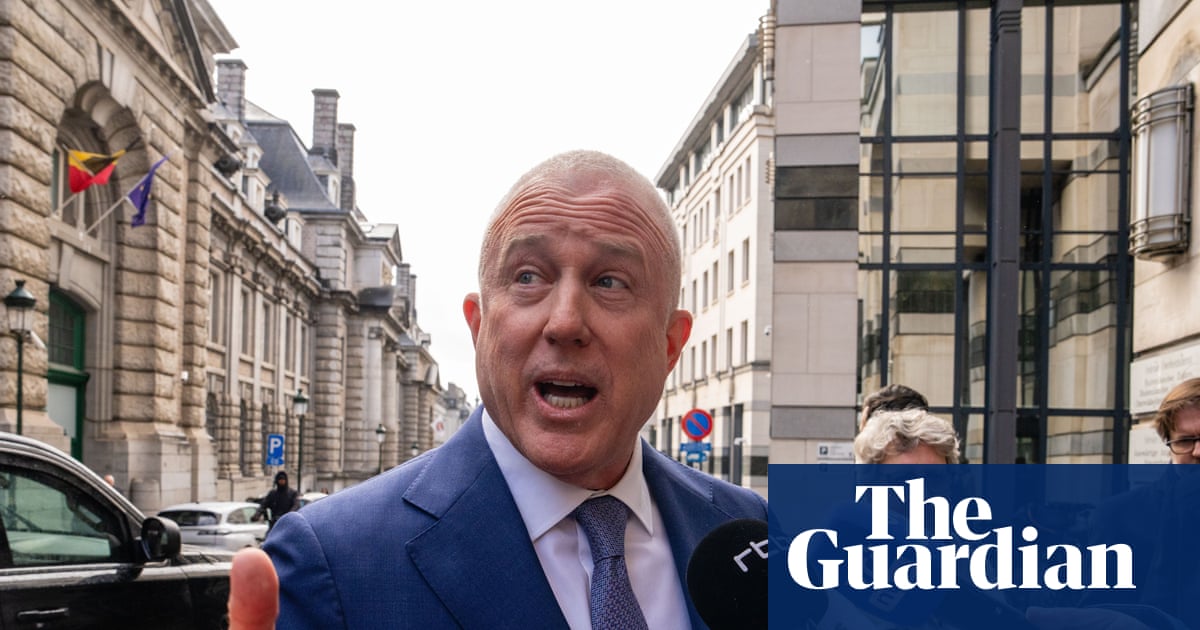
cross-posted from: sh.itjust.works/post/55538640
Naturally the jerk is only doing this for the Homefront, maga couldn’t find Belgium on a map, so now the USA believes all of Europe is anti-Semitic.
cross-posted from: sh.itjust.works/post/55538640
Naturally the jerk is only doing this for the Homefront, maga couldn’t find Belgium on a map, so now the USA believes all of Europe is anti-Semitic.

#KoBold Metals and DR Congo are pushing a Brussels museum to release records that would help map valuable metals
Camilla Hodgson and David Pilling in London Financial Times, 11 February 2026
Millions of records spanning Belgium’s brutal rule in what is now the Democratic Republic of Congo are at the centre of a dispute over who should control data about Africa’s largest copper producer.
The documents, housed at a Brussels museum built to celebrate Belgium’s empire, are being sought by DR Congo and KoBold Metals, a Bill Gates-backed mining and artificial intelligence company that struck a deal last year with Kinshasa to digitise them.
KoBold says it has yet to gain access to the papers, which include geological records. But the museum plans to carry out the digitisation itself, and Belgian officials say they cannot grant exclusive access to an overseas private entity, despite its agreement with the Congolese government.
A Belgian government spokesperson said exchanges between the two countries were “sustained and ongoing”. The records were “federal public archives” and Belgium “cannot grant privileged or exclusive access to a foreign private company with which it has no contractual relationship”.
The case highlights unresolved tensions over colonial accountability in Belgium’s relationship with the DR Congo, whose vast natural resources have become a focus of western efforts to reduce dependence on China for critical minerals.
It also raises questions about the wisdom of the Congolese government in entrusting potentially valuable sovereign information to a single company — though KoBold says it will make the documents freely available.
Belgium’s Royal Museum for Central Africa underwent a dramatic overhaul in 2013 designed to rehabilitate its reputation and break from its controversial colonial legacy.
Louis Watum Kabamba, DR Congo’s minister of mines, told the FT that the Belgians had been “a bit protective” over the records, but that he had instructed officials to engage with Belgian authorities to accelerate the process.
“It’s all going through our Geological Service, but they gave me very positive feedback so there’s no need for me to push any further,” he said.
Belgium said its aim was that the DR Congo and its population should benefit from the archives, with an alternative EU-funded effort to digitise the documents “under way”.
Digitised copies of records would be sent to DR Congo authorities on an ongoing basis, at which point “their use falls fully under the sovereignty” of DR Congo. “Belgium does not intervene in the subsequent choices that may be made on the basis of these data,” the spokesperson said.
At present, “researchers and the general public can have access” to the documents on site at the museum, they added.
The millions of documents are a trove of information about the geology of a country rich in copper, cobalt and lithium — metals that are essential to industrial supply chains. DR Congo is among the world’s largest copper producers and has at least half the globe’s reserves of cobalt, needed for mobile phones and batteries, according to the US Geological Survey.
It is one of the African nations drawing investor attention as western nations race to secure critical raw materials. A US-DR Congo minerals partnership was struck last year, at the same time as a Washington-brokered peace deal between DR Congo and neighbouring Rwanda.
Conditions in many mines remain dire, however. At least 200 people died in a recent tunnel collapse in the Rubaya coltan mine in a region of eastern Congo controlled by Rwanda-backed M23 rebels.
DR Congo’s resources were exploited by King Leopold II, the Belgian King who ruled the country as a personal possession from 1885. He authorised the use of forced labour to extract rubber, ivory and later copper and cobalt. Rubber supplies were maintained by severing the limbs of labourers who failed to meet their quotas.
Leopold II’s “civilising mission” in DR Congo was initially celebrated in the museum in Tervuren, which dates back to 1897. Its early exhibitions included a “human zoo”, a replica of a Congolese village where real Congolese people lived and died. It also displayed statues of Black Congolese depicted as brute barbarians and white colonisers as saviours.
Even after the revamp, the museum has been accused by academics and historians of showcasing stolen artefacts and whitewashing Belgium’s colonial past. Its website now notes that “Leopold II saw the museum as a propaganda tool for his colonial project”.
Bart Ouvry, managing director of the museum, told the FT that the institution had been planning to digitise and make public the geological records when KoBold approached it, adding: “We don’t have any interest in farming [the work] out.”
“It’s important not to let this be done purely from a mining perspective . . . Our position right from the start was very clear that we had a better alternative — not just for our institution but also for the Congolese side,” he said. That included not just digitising the records but collaborating with Congolese authorities on research over the long term.
The museum’s geological archive consists of about 500 metres of files relating mostly to the DR Congo as well as former Belgian colonies Rwanda and Burundi. Belgium’s state archives hold additional colonial-era records.
Much of what the museum holds is documents from private companies and individuals, which it said it planned to make available “as open source material”.
The files have drawn attention as more companies such as KoBold use AI to help discover minerals. Ageing mines are becoming less productive and the easiest-to-exploit deposits have already been tapped.
Among Berkeley-based KoBold’s investors are Gates’s Breakthrough Energy Ventures, whose backers include Amazon founder Jeff Bezos and former New York mayor Michael Bloomberg.
KoBold’s rival EarthAI has sourced huge volumes of data from Australian state and federal archives to feed its algorithms.
In July, KoBold signed an agreement with the DR Congo government to “co-operate to provide free public access to historic geoscientific data”, as part of which the company would “deploy a team to the DR Congo geological records at the Royal Museum of Central Africa to begin digitising records before July 31, 2025”.
KoBold said it would use the information to enrich its database and the records would be made publicly available. The group has also secured eight licences to explore for lithium in the country. KoBold helped digitise Zambia’s geological records, which are accessible for a fee.
Benjamin Katabuka, KoBold’s director-general for the DR Congo, told the FT in January that “we have not, since the agreement was signed, made great progress”. He said that the company was “having a hard time getting access”.
Ouvry said the museum was “not a party to the agreement between KoBold and the DR Congo government”. While private companies could request access to specific records, KoBold wanted access to the entire archive, and “I cannot delegate the management of complete archives to a private company,” he said.


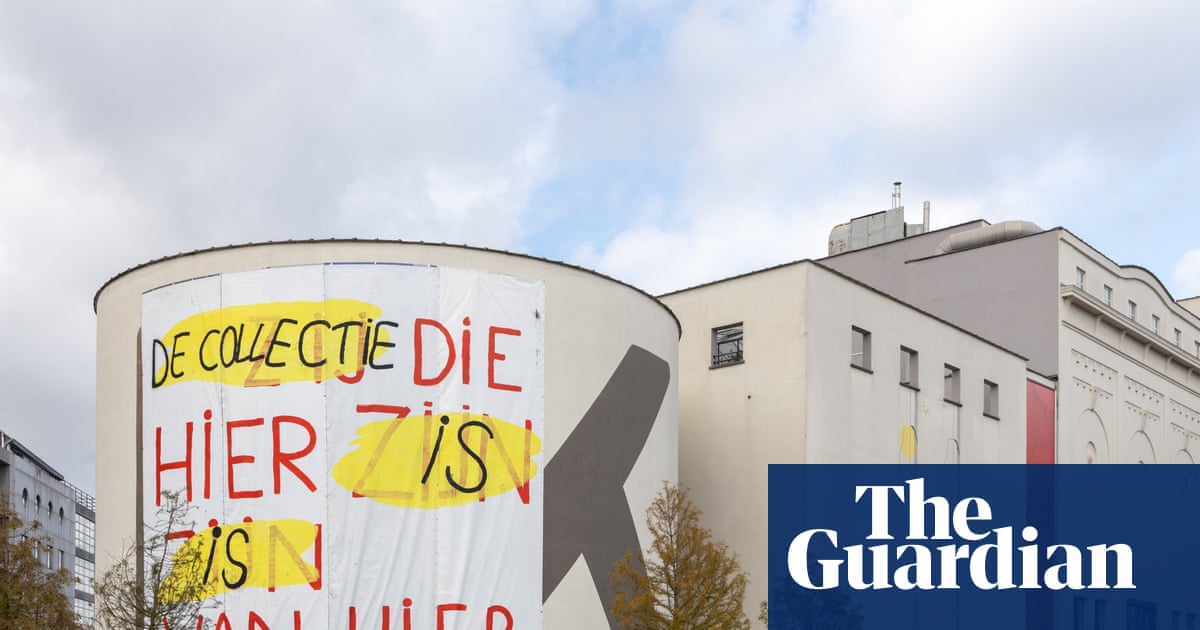
I don’t know enough about the art sector to have an opinion on this, I just thought it interesting that this has become a big enough controversy to be featured in The Guardian.
I don’t know enough about the art sector to have an opinion on this, I just thought it interesting that this has become a big enough controversy to be featured in The Guardian.


“In a document filed on Tuesday in the Federal Register, C.B.P. said it plans to ask applicants for a long list of personal data including social media, email addresses from the last decade, and the names, birth dates, places of residence and birthplaces of parents, spouses, siblings and children.”
“In a document filed on Tuesday in the Federal Register, C.B.P. said it plans to ask applicants for a long list of personal data including social media, email addresses from the last decade, and the names, birth dates, places of residence and birthplaces of parents, spouses, siblings and children.”
Minister claims it to be Dramatic for supporters, but is it, really? Who wins or loses from these contracts?
Minister Rob Beenders: “Dit is dramatisch voor de Belgische voetbalsupporters, zij zijn hier de dupe van” vrtnws.be/p.11amkNj77
Minister claims it to be Dramatic for supporters, but is it, really? Who wins or loses from these contracts?
Minister Rob Beenders: “Dit is dramatisch voor de Belgische voetbalsupporters, zij zijn hier de dupe van” vrtnws.be/p.11amkNj77


“The Brussels Times and De Tijd examine the finances of the Brussels Region. The report raises questions about the true size of the debt.”
Long article, but imo interesting, and also worrisome.
“The Brussels Times and De Tijd examine the finances of the Brussels Region. The report raises questions about the true size of the debt.”
Long article, but imo interesting, and also worrisome.

“Given the inhumanity of the current situation, which is also leading to emotional reactions in our own society, we believe it is undesirable to allow this concert to go ahead,” the organisers said, adding that they had chosen not to collaborate with partners who had not “distanced themselves unequivocally from that regime.”
Also in dutch on VRT.be: vrt.be/…/gent-festival-van-vlaanderen-annuleert-m…
It’s hopeful to see so many of our citizens still believe in something.
It’s hopeful to see so many of our citizens still believe in something.
Belgian non-profit Re-born to be Alive has launched “Virtual Donors”, a campaign aimed at raising awareness of organ donation through popular video games including Minecraft, Fortnite and Baldur’s Gate 3.
The initiative encourages gamers to formally register as donors, despite Belgium’s opt-out system. Registration is crucial, the group says, because family members can still block donation in emotional moments if the deceased’s wishes are unclear.
Currently, 1,470 people in Belgium are waiting for life-saving transplants. In the “Virtual Donors” game mods, players who die in-game grant up to eight friends an extra life, reflecting the fact that one donor can save up to eight lives.
“We want to reach younger audiences through experiences that speak their language”
“Registration is not a formality but a responsibility,” said founder Stephanie Keustermans. “We want to reach younger audiences through experiences that speak their language.”
Professor Eric Hoste, head of the Belgian Transplantation Society, added: “A clear, registered choice gives peace to families, speeds up medical decisions and saves lives.”
Belgians can register their wishes via www.mijngezondheid.be. The game mods are free for registered donors through www.virtualdonors.org.
Non-paywalled version: archive.is/CdeEa
Non-paywalled version: archive.is/CdeEa


The bourgeois will rather dismantle Brussels’s democracy than allow proletarians to have a modicum of power. We need mass protests and strikes against any attempt at annexation of any part of Brussels by Flanders.
The bourgeois will rather dismantle Brussels’s democracy than allow proletarians to have a modicum of power. We need mass protests and strikes against any attempt at annexation of any part of Brussels by Flanders.

Video games have grown into an industry with billions of customers worth hundreds of billions of euros. During this time, a specific business practice in the industry has been slowly emerging that is not only an assault on basic consumer rights but is destroying the medium itself.
An increasing number of publishers are selling video games that are required to connect through the internet to the game publisher, or “phone home” to function. While this is not a problem in itself, when support ends for these types of games, very often publishers simply sever the connection necessary for the game to function, proceed to destroy all working copies of the game, and implement extensive measures to prevent the customer from repairing the game in any way.
This practice is effectively robbing customers of their purchases and makes restoration impossible. Besides being an affront on consumer rights, video games themselves are unique creative works. Like film, or music, one cannot be simply substituted with another. By destroying them, it represents a creative loss for everyone involved and erases history in ways not possible in other mediums.
Existing laws and consumer agencies are ill-prepared to protect customers against this practice. The ability for a company to destroy an item it has already sold to the customer long after the fact is not something that normally occurs in other industries. With license agreements required to simply run the game, many existing consumer protections are circumvented. This practice challenges the concept of ownership itself, where the customer is left with nothing after “buying” a game.
Giant FAQ on The European Initiative to Stop Destroying Games!
Europeans can save gaming!
youtube.com/…/Ugkxly_O-3JxyBULIT283l5A1KOhnNsWC3B…
Remember, what’s the alternative?
Place to sign EU petition:

An interesting video about Carat Duchatelet, a luxury coach builder from Liège with apparently loads of history.
An interesting video about Carat Duchatelet, a luxury coach builder from Liège with apparently loads of history.

cross-posted from: lemmings.world/post/26831727
Belgian security agents bugged a corporate box at the RSC Anderlecht football stadium that was being used by Chinese tech giant Huawei to schmooze members of the European Parliament.
They also listened into other conversations involving one of Huawei’s leading lobbyists, including in his car. The surveillance operations, confirmed by three people with close knowledge of the investigation, formed part of a wide-ranging probe into allegations of corruption that was first revealed in March. They contributed to the Belgian prosecutor’s decision, reported by POLITICO on Monday, to request that a group of MEPs have their immunities lifted so they can be investigated.
Flemish socialist party Vooruit is calling on Flemish public broadcaster VRT to push for an investigation into the televoting system within the EBU (European Broadcasting Union), the organiser of the Eurovision Song Contest. That the Israeli contestant received 12 points from the Belgian public, while the expert jury gave none, raises questions about manipulation – just like in Spain.
Flemish socialist party Vooruit is calling on Flemish public broadcaster VRT to push for an investigation into the televoting system within the EBU (European Broadcasting Union), the organiser of the Eurovision Song Contest. That the Israeli contestant received 12 points from the Belgian public, while the expert jury gave none, raises questions about manipulation – just like in Spain.
**There is a high risk that the payback effects the Belgian government is counting on to reduce its budget deficit have been greatly overestimated, according to the Court of Audit. Opposition parties criticized the government for failing to keep its most important promise. ** The government expects to see a return of 7.9 billion euros from boosting the employment rate, but it is overestimating both the size of the group and the yield per person employed. That is according to the Court of Audit’s opinion on the budget, which was submitted to members of parliament on Friday.
The government expects to create nearly 300,000 additional jobs by the end of the legislative term, yielding 30,000 euros per person. However, according to the Court of Audit, the group has been defined too broadly, leading to an overestimation.
‘Unsubstantiated objective’
Furthermore, the Court of Audit states that it is “highly uncertain” that the government will achieve the additional employment targets set each year. The figures are not based on detailed calculations but rather “an unsubstantiated objective.”
"The government can no longer hide. It has simply failed.”
The Court of Audit also lacks sufficient information to assess the realism of projected revenues or expenditures for other measures, including some tax measures and expenditures outside the defense budget that the government wants to count toward the NATO spending target of 2 per cent of GDP.
Broken promise
The opposition parties did not hold back in their criticism of the government’s budget and its prime minister, Bart De Wever. “Bart De Wever has turned out not to be the responsible accountant he has always claimed to be, but rather a true amateur. The Court of Audit completely demolished his budget,” said Stefaan Van Hecke, leader of the Groen parliamentary faction.
"A balanced budget was this government’s most important promise. And that promise was already broken after 100 days,” said Alexia Bertrand and Vincent Van Quickenborne of the Open VLD party. The PS called the report “deadly” for the government. “The conclusion is unequivocal: the budget does not add up,” said faction leader Pierre-Yves Dermagne. "The government can no longer hide. It has simply failed.”
The Flemish government is introducing stricter labour migration policies aimed at reducing the number of non-EU workers, particularly those with low qualifications. However, a recent OECD report warns that such restrictions could harm Flanders’ economy.
Employment minister Zuhal Demir announced that employers will be required to prioritise hiring from within Flanders before recruiting from outside the EU. While high-skilled migrants will still be welcomed, with faster administrative processing for non-EU work permit applications, the new policy will specifically exclude low-skilled non-EU workers from roles such as cleaners, fast-food staff, and dishwashers. EU workers and seasonal agricultural labourers will remain exempt.
The government thus wants to prioritise local workers to counter rising unemployment and recent collective redundancies. According to Demir, it is essential to “help our own people” before looking abroad. She further emphasised that while Flanders remains open to international top talent, the focus should be on training local workers and utilising the existing regional labour force.
However, the OECD points out that this approach disregards the reality of the Flemish labour market. The report, released in March 2025, highlights that Flanders faces one of the tightest labour markets in Europe and that the region deals with severe shortages across both skilled and unskilled sectors. Despite high employment rates, Flanders is struggling with a mismatch between available jobs and qualified workers, particularly in technical, care, and low-skilled service roles.
The OECD says that improving local employment is important, but stresses that a balanced migration policy is crucial to sustaining Flanders’ economic health. “Given the urgent nature of shortages in the labour market and considering that activation policies and measures encouraging labour mobility take time to have impact, labour migration is expected to become more important over the coming years.”
The OECD recommends that Flanders streamline its migration framework to make it more flexible and efficient, allowing for the faster integration of skilled and unskilled workers alike. Focusing solely on high-skilled migration overlooks the reality that many sectors, such as hospitality and care, continue to face persistent staff shortages and that local recruitment there has already proven insufficient.
As much as 25% to 35% of all Brussels office space is vacant. Millions of square metres are unused, with buildings often even lit up looking like ‘zombie buildings’ from the outside.
…
A prominent Brussels real estate broker, speaking on condition of anonymity, offered a more blunt take: “In large building deals in Brussels, the usual players gather around the table — there’s the smart money, and then there’s the Régie des Bâtiments.”
The court of first instance in Brussels has condemned the Flemish government for failing to adequately protect the wild hamster, reported environmental organisations Dryade and Vogelbescherming Vlaanderen (Bird Protection Flanders). The government must now take measures, including providing a required minimum area of suitable habitat and a sufficiently large hamster population.
The court of first instance in Brussels has condemned the Flemish government for failing to adequately protect the wild hamster, reported environmental organisations Dryade and Vogelbescherming Vlaanderen (Bird Protection Flanders). The government must now take measures, including providing a required minimum area of suitable habitat and a sufficiently large hamster population.

Guess making jokes about being convicted for stalking and harassing women is profitable in Flanders.
Guess making jokes about being convicted for stalking and harassing women is profitable in Flanders.

cross-posted from: feddit.org/post/11547794
cross-posted from: feddit.org/post/11547677
Start der neuen Tram heute in Lüttich!
cross-posted from: feddit.org/post/11547794
cross-posted from: feddit.org/post/11547677
Start der neuen Tram heute in Lüttich!
In an interview with Het Laatste Nieuws on April 14, 2025, Belgium’s Defense Minister, Theo Francken, formally proposed that future F-35 fighter jets ordered by Belgium be assembled in Italy rather than in the United States. The minister also revealed that he had already made the request to his Italian counterpart, Guido Crosetto.
The article also goes into more detail of what’s already been delivered under the program, the underperforming economic returns for Belgium, the bookkeeping shenanigans to take on more debt, and more.