
0

Kia Ora, good bees of the hive 🐝

preview

Kia ora koutou katoa 💚

Some of you may remember me. I took a hiatus due to poor health and technical difficulties, but I’m back and ready to talk about all things community! I still need to catch up on reading everything posted for the last year, so please forgive me (and perhaps link me!) if any of this has already been covered 😅

Over the last year and a bit, I’ve been an elected member of my local community council, office holder of our Toy library, started working in emergency response communications, and helped start a community workshop. It’s been a process learning how to navigate egos and still make progress.

I’ve found I absolutely love consensus decision-making and co-chair structures! Here in Aotearoa, there has been a change to the incorporated societies act. we are all required to rewrite our constitutions, which means we can hardwire more community-minded processes into our organisations. This will be especially handy for limiting the amount of control hostile council members can wield and hopefully lead to a more positive and productive future.

I literally just got a working phone yesterday, but I’m hoping to put together some resource lists for grants and community group structures. I think it would also be great to discuss what an ideal community looks like and what sort of community infrastructure can we implement on an individual level to move us closer to that vision. Think community gardens, free pantries, repair cafes, alternative recycling, co-working space, time banks, community workshops and tool libraries etc etc etc. We could come up with how-to guides to help other get similar things going in their communities making the process more accessible!

I also want to discuss software for community. We are switching our Toy library system in the next year, but the options for small non-profit community groups are limited. I think we’ve found one to handle general catalog with reserves and loans, but there doesn’t seem to be anything out there at the moment to handle our future plans of starting a time bank.

Please TLDR about your lives over the last year. I want to hear about all you amazing people 🥰

Kia ora koutou katoa 💚

Some of you may remember me. I took a hiatus due to poor health and technical difficulties, but I’m back and ready to talk about all things community! I still need to catch up on reading everything posted for the last year, so please forgive me (and perhaps link me!) if any of this has already been covered 😅

Over the last year and a bit, I’ve been an elected member of my local community council, office holder of our Toy library, started working in emergency response communications, and helped start a community workshop. It’s been a process learning how to navigate egos and still make progress.

I’ve found I absolutely love consensus decision-making and co-chair structures! Here in Aotearoa, there has been a change to the incorporated societies act. we are all required to rewrite our constitutions, which means we can hardwire more community-minded processes into our organisations. This will be especially handy for limiting the amount of control hostile council members can wield and hopefully lead to a more positive and productive future.

I literally just got a working phone yesterday, but I’m hoping to put together some resource lists for grants and community group structures. I think it would also be great to discuss what an ideal community looks like and what sort of community infrastructure can we implement on an individual level to move us closer to that vision. Think community gardens, free pantries, repair cafes, alternative recycling, co-working space, time banks, community workshops and tool libraries etc etc etc. We could come up with how-to guides to help other get similar things going in their communities making the process more accessible!

I also want to discuss software for community. We are switching our Toy library system in the next year, but the options for small non-profit community groups are limited. I think we’ve found one to handle general catalog with reserves and loans, but there doesn’t seem to be anything out there at the moment to handle our future plans of starting a time bank.

Please TLDR about your lives over the last year. I want to hear about all you amazing people 🥰

0

kia ora koutou! welcome everyone 🐝

preview

So happy so many of you are also interested in finding, sharing, and discussing new ways to better our communities! I hope everyone finds inspiration here and we all get to brighten up our little corners of the world.

I would love to hear from people about what is working in your community.

What does your community have or do that you think is going well? (Maybe its a neat festival. Maybe it’s a community centre like a workshop or garden. Share the ideas!)

What small things have you done that you would like to do more of? (Cleaned up rubbish on the beach? Planted some trees? Helped with a fundraiser or event? Good on you, we’re all proud! Tell us so we can all get motivated to go out and do the same)

What are you wanting for your community? (Maybe its helping with food insecurity, maybe its cleaning up parks or planting trees, maybe it’s better public transport)

No task is too big or too small to share, this is a place of positivity and celebration ✨️

Here’s an article with links to resources on starting your own library of things. It’s US centric but still has good ideas I’ve been stealing for getting ours organised

0

Struggling to cope with the relentless and bleak news cycle? Go to bed early

the Guardian Struggling to cope with the relentless and bleak news cycle? Go to bed early | Jodie Wilson www.theguardian.com
preview

An early bedtime is my number one prescription when things go awry. It’s a reliable comfort through all life seasons, especially when uncertainty is rife and sleep is disturbed.

I’m not ashamed to admit that I spend a considerable amount of time each day thinking about how nice it would be to get into bed. We’ve just passed the autumn equinox which means we’ll light the first fire soon and “hottie season” will officially commence. Yes, my partner of 20 years is handsome but it’s the hot-water bottle that gets preference when the temperature drops, the world threatens to implode and extra cosiness is required.

The psychology of comfort is worth understanding when we face a barrage of daily stress. According to the generalised unsafety theory of stress (Guts), our baseline state is one of anxiety, where we seek safety signals to feel more settled. We are designed to experience and withstand stress because it moves and motivates us but we also know that the chronic stress of modern life stems, in part, from its ambiguity; very few of us have a resilience to uncertainty.

0

How To Help if You are Outside Minnesota

Will Tell Stories For Food How To Help if You are Outside Minnesota naomikritzer.com
preview

I’m going to assume that if you’re reading this, you more or less understand the situation in Minnesota and I don’t have to explain it to you! That said, I do have a section of local news sources, below. But to answer the question most people want to ask: yes, things are really as bad here as they look in the media. ICE officers are lawless thugs who are kidnapping my neighbors, and the claim that they’re doing us a service by removing violent criminals is a bald-faced lie. You probably knew that already, but just in case, there you go.

I guess I should briefly introduce myself: my name is Naomi Kritzer. I’m a science fiction and fantasy writer. (I have a book coming out in June.) I also write an election guide for Minneapolis and St. Paul, which a lot of people here use when they’re getting ready to vote in local elections. I lived in Minneapolis from 1995 through 2012, and I have lived in St. Paul since 2012. I love my community and also wrote a post of ideas for local people who are looking for things they can do right now.

0

Betterment... A "Mind Dump" of captured Reddit comments during the Venezuela annexation by USA, Reddit California mind-fucking of population under NSA / CIA / Pentagon war secrecy - GitHub ZIP file

GitHub Reddit_Commentary/Piles/Reddit_samples_comments_2026-01-06_afternoon_USA_pile0.zip at main · GreatSealUSA/Reddit_Commentary github.com
preview

cross-posted from: midwest.social/post/41438755

    git clone https://github.com/GreatSealUSA/Reddit_Commentary.git 


Look for the .zip file in the Piles folder, HTML of Reddit commenting to grep and analyze leading up to Pentagon / Department of War annexation of Venezuela. Some comments already removed that are now saved as .html files inside the .zip package. USA mind-fucking of the population via social machine systems.


Betterment and Praxis - what I spent since New Years Eve doing, analyzing the build up to the Department of War annexation. Happy New Year.


Research basis
University of Toronto teachings
www.organism.earth/library/…/mcluhan-mcmanus
MARSHALL MCLUHAN IN CONVERSATION WITH MIKE MCMANUS
September 19, 1977

  • “Yes, all forms of violence are a quest for identity. When you live out on the frontier, you have no identity. You’re a nobody. Therefore, you get very tough. You have to prove that you are somebody. And so you become very violent. And so identity is always accompanied by violence. This seems paradoxical to you? That ordinary, ordinary people find the need for violence as they lose their identities. So it’s only the threat to people’s identity that makes them … — terrorists, hijackers: these are people minus identity. They are determined to make it somehow, to get coverage, to get noticed.”

  • “Everybody tends to merge his identity with other people at the speed of light. It’s called being mass man.”

  • “Invading privacy — in fact, just ignoring it. Everybody has become porous. They got the light and the message to go right through us. By the way, at this moment, we are on the air, and on the air we do not have any physical body. When you’re on the telephone or on radio or on TV, you don’t have a physical body. You’re just an image on the air. When you don’t have a physical body, you’re a discarnate being. You have a very different relation to the world around you. And this, I think, has been one of the big effects of the electric age. It has deprived people, really, of their private identity.”

0

People’s Assembly Toolkit

For The People Resources — For The People www.librariesforthepeople.org
preview

For the People Leftist Library Project (FTP) has developed a toolkit to encourage public library defenders to conduct local People’s Assemblies (PA). A People’s Assembly (PA) involves a facilitated gathering where all community members discuss key community issues and collectively problem-solve and decide how to address them.

In the space created by PAs, everyone’s voice, thinking, experiences, ideas, and visions receive equal hearing and value. The PAs empower every participant to exercise their agency and power. Accordingly, PAs are a form of direct participatory democracy that places unwavering trust in those assembling.

Library defenders can conduct a PA to advocate, organize, and mobilize for their local public library. Ultimately, PAs are effective strategies for identifying and addressing the issues most impacting a library institution, its staff, and—perhaps most importantly—its patrons. For example, PAs can address issues related to hyper-policing in public spaces, book bans, and accessibility. Facilitated properly, PAs can uplift and empower communities to co-create their ideal local library.

0

Inflatables, rainbow crosswalks, flooding snitch lines — creative action was off the charts in 2025

Waging Nonviolence Inflatables, rainbow crosswalks, flooding snitch lines — creative action was off the charts in 2025 wagingnonviolence.org
preview

The rise of authoritarianism in the United States had devastating consequences in 2025. It was a year of unrelenting injustice, maddening and terrifying at once. Amidst the cycles of heartbreak and hope, resistance surged to unprecedented levels. Along with mass demonstrations and powerful boycotts, there were countless acts of creative protest that rekindled spirits, made us laugh out loud, and kept us rising up.

In nonviolent struggle, creativity is an enduring superpower — and we’ve seen it working powerfully for us in 2025. It broke through the stranglehold of fear. It helped us scrape past defeat by the seat of our pants. It tapped into the strategic potential of nonviolent struggle. It gave us a superpower at a time when power seems stacked against us. From Jan. 20 onward, unexpected, unusual and off-the-wall actions kept our movements nimble and courageous.

Here’s a blow-by-blow of how creativity served us well as millions of people moved into action.

0

NYC Directory of Resources + Aid

preview

Welcome to the NYC Directory of Resources and Aid (DORA) — a community-powered map and directory connecting New Yorkers to essential resources across all five boroughs.

What You’ll Find Here

  • Food pantries, community fridges, and food distros
  • Shelter and housing services
  • Medical care, mental health, and safety resources
  • Legal services, immigration support, and more
0

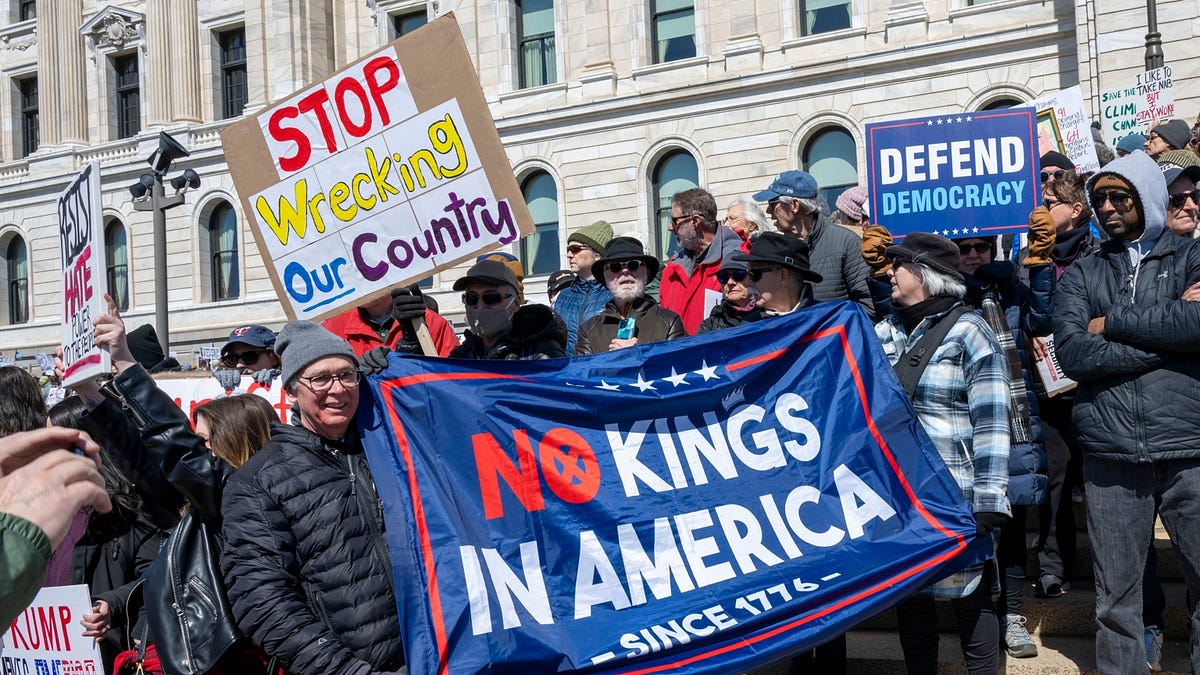
Beyond the March: Strategic Tactics for No Kings Day and Beyond

Beyond the March: Strategic Tactics for No Kings Day and Beyond cmarmitage.substack.com
preview

October 18 stands as a massive organizing opportunity. Bring petition sheets for ballot initiatives and gather signatures while you march. Distribute flyers with specific instructions on contacting state representatives with concrete demands: arrest ICE agents who overstep their authority, fire and criminally charge police officers who fail to prevent abuses of power, pass state laws barring Trump from appearing on ballots if he attempts a third term. Push your state to ban local agencies from cooperating with unconstitutional federal actions, encourage Attorneys General to investigate and charge corrupt politicians, establish state-level safety nets to replace threatened federal benefits, join multi-state compacts for healthcare and civil rights protection, and expand voting rights, voting hours, and ballot access in states like Texas where suppression is systematic. Bring literature explaining these measures and how to pressure legislators to adopt them. The gathering of two million people is wasted if everyone just walks and goes home. Turn the crowd into a recruitment and coordination network for the sustained campaigns that follow.

The day after the protest, join or create a working group focused on economic noncooperation. Strikes and boycotts create costs that force negotiation, but they require preparation. Build strike funds. Establish mutual aid systems for participants. Identify strategic targets: which companies profit from authoritarian governance? Which supply chains can you disrupt? Which elected officials depend on donors you can reach? The forces you’re fighting have billion-dollar budgets and write the laws. They’re betting that protests will be merely symbolic.

Connect beyond your usual circles. Jane McAlevey’s research on successful organizing shows you need 10 committed organizers for every 100 participants. Engage people through their multiple identities as parents concerned about schools, workers seeking dignity, or congregation members following faith. Movements with diverse participants generate more public support and signal broad coalitions. The oligarchs you’re fighting spent 50 years building infrastructure and executing long-term strategy. Match their patience and coordination.

0

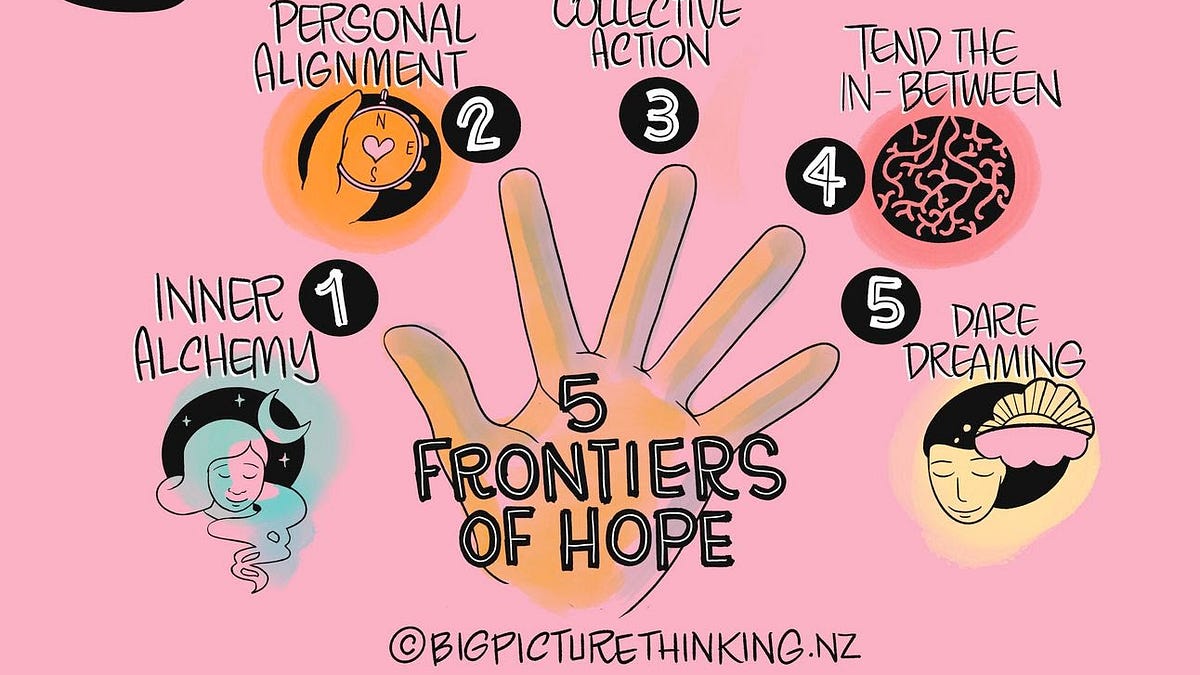
The 5 Frontiers of Hope

The 5 Frontiers of Hope thehopedispatch.substack.com
preview

Hope isn’t passive. It’s not some gauzy filter or fluffy feeling. It’s a lens. A stance. A refusal to let cynicism have the last word.

Hope isn’t passive. It’s not some gauzy filter or fluffy feeling. It’s a lens. A stance. A refusal to let cynicism have the last word.

0

Three Tactics From The Black Panthers' Anti-Autocracy Playbook

Three Tactics From The Black Panthers' Anti-Autocracy Playbook cmarmitage.substack.com
preview

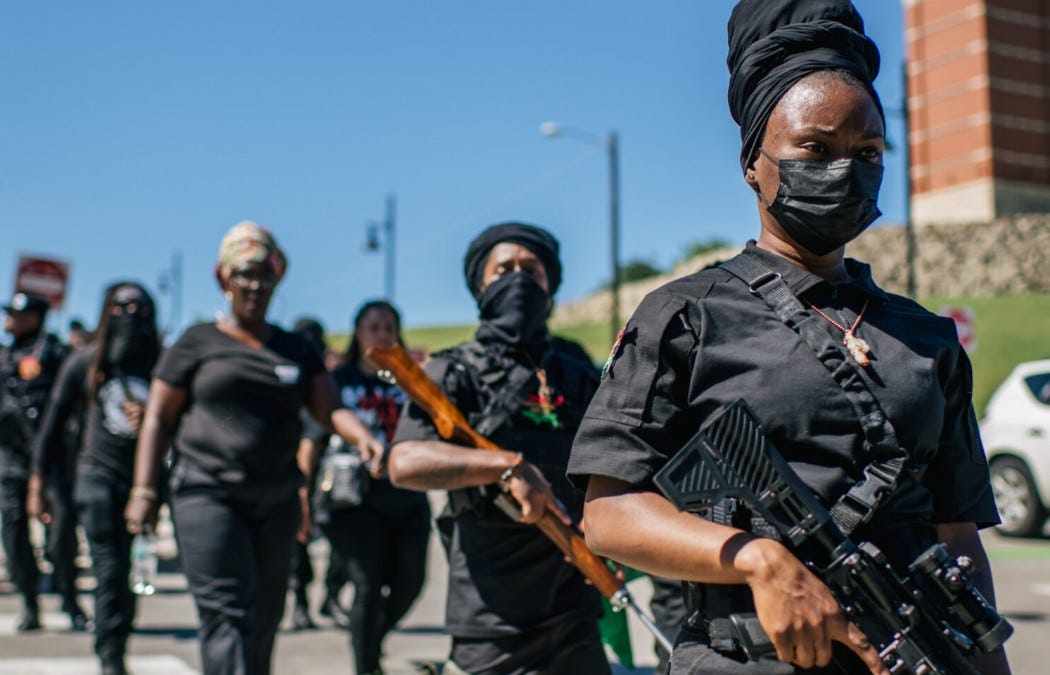
The FBI drugged Fred Hampton, then shot him in the head while he slept. The next morning, Black Panthers served free breakfast to 50,000 children.

While the federal government was assassinating their leaders, the Panthers kept serving eggs, working to survive and organize while being systematically attacked by the U.S government’s law enforcement and intelligence services.

By 1980, the Party was mostly finished, crushed by assassinations, frame-ups, and infiltration. But for a few crucial years, they proved something that matters for us today: even under lethal state repression, communities could coordinate their own survival and influence political machinations. Though the programs didn’t outlast COINTELPRO, they lasted long enough to prove the models worked.

0

Burner Phone 101

Rebecca Williams Burner Phone 101 rebeccawilliams.info
preview

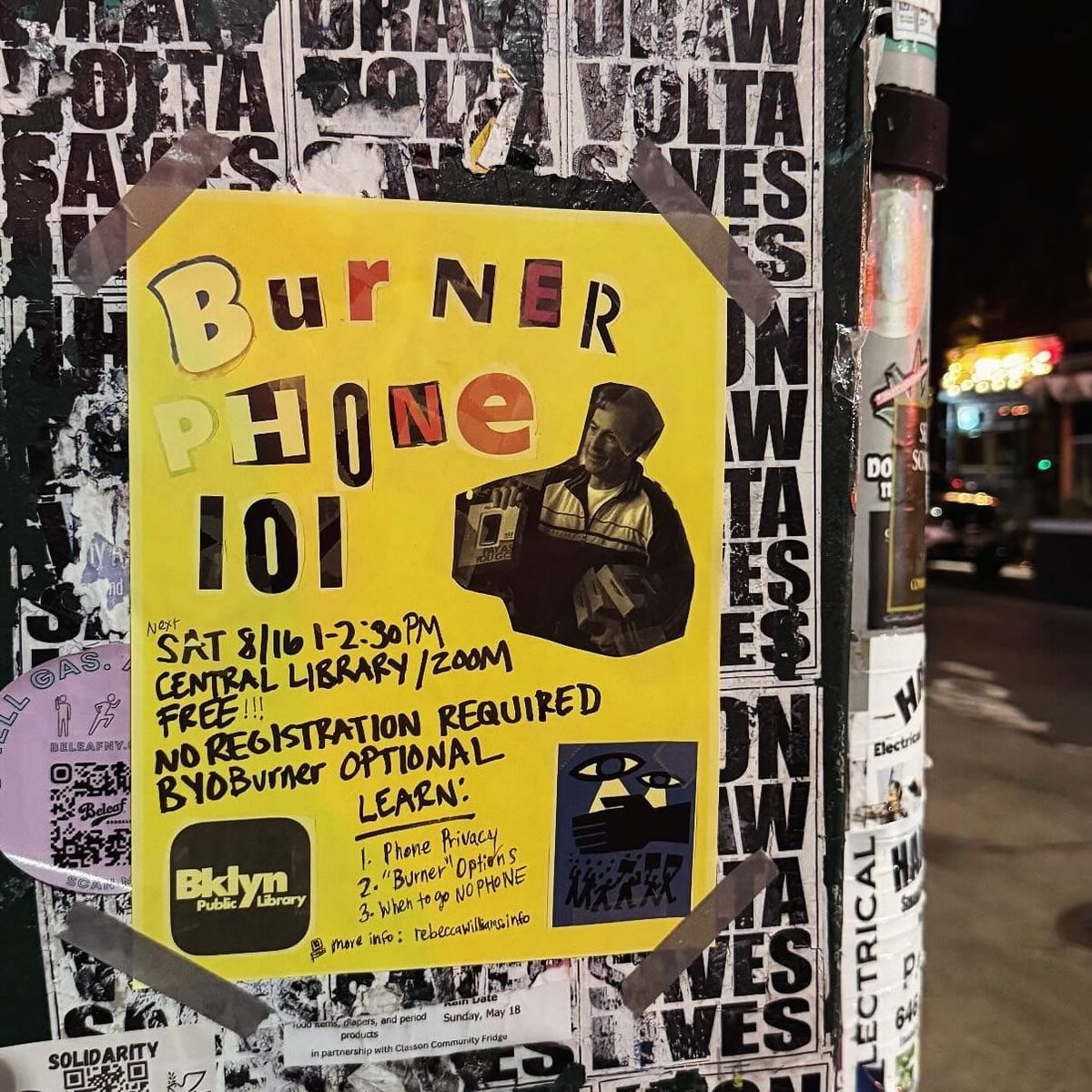
Hosted by the Brooklyn Public Library, this Burner Phone 101 workshop introduced participants to phone-related risk modeling, privacy-protective smartphone practices, the full spectrum of burner phone options, and when to leave phones behind entirely.

In August 2025, I hosted a Burner Phone 101 Workshop at the Brooklyn Public Library. Below is a summary of the workshop with key points in bold and additional resources that participants helped crowdsource.

0

How to Protect People During ICE Raids

Vote Common Good How to Protect People During ICE Raids - Vote Common Good www.votecommongood.com
preview

Faith traditions call us to welcome the stranger, protect the vulnerable, and love our neighbors.

In the face of renewed ICE enforcement actions and immigration raids, we must be ready to act swiftly, courageously, and in solidarity.

This action plan equips faith communities to respond immediately and meaningfully when immigration enforcement threatens the well-being of undocumented individuals and families in our communities.

0

Streetwise & Steady: A Workbook for Action Peacekeepers or Event Marshals

Google Docs Peacekeeper Training Workbook.pdf drive.google.com
preview

This guidebook offers practical tools and principles for peacekeepers, rooted in the belief that nonviolent discipline is not just a tactic — it’s a strategy for resilience. By projecting calm, modeling solidarity, and preparing for the unexpected, peacekeepers help movements withstand pressure without fracturing. If fear is the goal, then solidarity is the antidote.

This guidebook offers practical tools and principles for peacekeepers, rooted in the belief that nonviolent discipline is not just a tactic — it’s a strategy for resilience. By projecting calm, modeling solidarity, and preparing for the unexpected, peacekeepers help movements withstand pressure without fracturing. If fear is the goal, then solidarity is the antidote.

0

How To Build a Voters Guide for Public Library Board Elections

BOOK RIOT How To Build a Voters Guide for Public Library Board Elections: Book Censorship News, May 30, 2025 bookriot.com
preview

For the April 1, 2025, Illinois Consolidated Elections, I created a voters’ guide to contested public library board elections. This wasn’t the initial plan; I intended to cover all the boards with elections. But the effort was Herculean, even with a group of dedicated volunteers, and ultimately, it wasn’t the guide’s goal. So rather than try to cover every public library election on the ballot, I focused exclusively on those elections where there were more candidates than open positions (that is, they were contested elections).

One thing worth emphasizing before diving in, though, is that the goal of this project was fact and information, not perfection or completionism. I knew from the start that I would not have information for every library in the state because Illinois is a big state with many rural communities whose information isn’t as easy to access as suburban or urban areas. Setting aside perfectionism in exchange for accuracy was crucial.


A couple of preliminary steps are worth mentioning since they will impact everything going forward. First: find out when your next library board elections will be held and plan to have your voter guide prepared a couple of weeks in advance. This will give you a personal deadline for when you need your information to be as updated as possible. You don’t want to have your guide available too early, as you’ll miss a lot of information about candidates in the weeks leading up to election day. Groups like the League of Women Voters often hold candidate forums two or three weeks before an election, and local newspapers begin publishing candidate questionnaires then, too–assuming you have local newspapers covering these municipal elections. You can learn a lot from these; providing links to recordings or articles is extremely helpful in your guide.

Then, build your timeline and project around your available time and energy. For the April 1, 2025, election, I began my work in December 2024. Though information about candidates on the ballot wouldn’t be available until late February, this gave me a lot of lead time to do some preliminary research. I did this project in addition to working full time, parenting, and other things, putting in probably 3-5 hours a week at the beginning and closer to 7 or 8 as the election got nearer. Find people to help you with some of these tasks, and/or get more local on your guide to make the lift easier. State library advocates helped me develop a school board election guide similar to Frank’s, while I put together the public library guide myself. Illinois has fewer public libraries than school districts, so this was doable.

0

10 Ways to Get Involved With Food Mutual Aid

Civil Eats 10 Ways to Get Involved With Food Mutual Aid civileats.com
preview

Environmental activist and author Robin Greenfield is known for his fully committed experiments in ecological living. His most recent book, Food Freedom: A Year of Growing and Foraging 100% of My Food, covers his efforts to live entirely independently from the industrial food system. Greenfield succeeded only by relying on others who guided him in his gardening, fishing, and foraging, and came to understand the profound power of community and how naturally that flows through food.

Here are Greenfield’s suggestions for strengthening your own food community.

0

Some Thoughts on "Male Loneliness"

Organizing My Thoughts Must-Reads and Some Thoughts on "Male Loneliness" organizingmythoughts.org
preview

We need more discussion spaces and more spiritual and emotional support groups. While some on the left are dismissive of gatherings and activities that are not grounded in productivity, we must acknowledge that the connective tissue we need to move, build, and care collectively is lacking. In addition to not being bonded to one another, we often lack the skills to build those bonds. Plenty of people and products are primed to exploit those shortcomings. We must present alternatives, issue invitations, and welcome people into the messy process of building relationships.

We need more discussion spaces and more spiritual and emotional support groups. While some on the left are dismissive of gatherings and activities that are not grounded in productivity, we must acknowledge that the connective tissue we need to move, build, and care collectively is lacking. In addition to not being bonded to one another, we often lack the skills to build those bonds. Plenty of people and products are primed to exploit those shortcomings. We must present alternatives, issue invitations, and welcome people into the messy process of building relationships.

0

From Aspiration to Action: Organizing Through Exhaustion, Grief, and Uncertainty

Organizing My Thoughts From Aspiration to Action: Organizing Through Exhaustion, Grief, and Uncertainty organizingmythoughts.org
preview

There is a common admonition that often circulates on social media, especially among leftists, that goes something like: You don’t have to ask what you would’ve done during the Holocaust, or any other historical atrocity. You’re doing it right now. These words are valuable in that they encourage us to abandon fantasies of who we would have been in another context, and to live our values here and now.

As an organizer, I’ve been thinking a lot lately about the gulf between what many people believed they would do in moments of extremity, and what they are actually doing now, as fascism rises, the genocide in Palestine continues, and climate chaos threatens the survival of living beings around the world. Some of these disparities can be chalked up to the simple truth that people often are not who they imagine themselves to be. This truth reminds me of the lyrics of Joe Henry’s “Our Song,” in which Henry refers to the vicarious thrill we derive from watching movies:

We push in line at the picture show / For cool air and a chance to see / A vision of ourselves portrayed as / Younger and braver and humble and free. /

Fantasies about who we would have been—and what we would have done—in moments of profound injustice serve a similar purpose. They allow us to imagine braver, more purposeful versions of ourselves. But when we’re confronted with the reality of catastrophic injustice in the world around us, we are forced to measure those fantasies against reality. The results can be profoundly depressing. Many people have discovered that they have more in common with those who witnessed atrocity and simply went about their lives, perhaps uttering words like, “That’s a shame,” or complaining that someone should do something.

In the rhythm and rhyme of history, we all have historical counterparts. Contemplating who those people are—and how we might judge their actions in parallel with our own—can be daunting, or even devastating.

However, it’s important to remember that such measurements are not fixed. Our lives, our character, our part in history—all of these things are the product of choices we make on a continuous basis. Each day, we make decisions about how to move in the world and how to relate to others. We choose what to extend to others, and what to hold in reserve, in order to sustain ourselves and our loved ones.

It’s easy to pass judgment on ourselves and each other for what we’re “already doing” or failing to do. But as an organizer, I’m concerned with what might motivate or allow people to act differently. After all, the people whose actions we have admired during historical moments of resistance, rebellion, and rescue were not simply born into heroic collective action. Many of them witnessed harm and wickedness for years, or even decades, before something moved or enabled them to participate in constructive moral action. Some were slow to join the struggles they eventually helped to enliven. Some were afraid. Some initially supported moderate, reserved actions. Some were complicit until, one day, they could bear their complicity no more. Others didn’t believe change was possible until they were recruited into strategic projects. Many were moved to action by profound loss or the threat of profound loss. They had to find their way, just as many of us must now find our way through this moment.

So what’s holding us back?

0

Disillusionment Is a Gateway to Infinite Freedom

play · youtube.com
YouTube Disillusionment is a gateway to infinite freedom www.youtube.com
preview

I’m generally hesitant to post ZDoggMD videos and rarely watch them on my subscription feed, as he can get a bit woo-woo. But given the title and the events of the past few months, I decided to give this a watch.

It made me feel less alone in what I’m encountering in middle age. Basically, the knowledge that Carlin was right about everything – and anything else was a lie. There’s still the requisite woo-woo, but it’s minimal.

0

Rise Up: Federal Workers Legal Defense Network

Rise Up: Federal Workers Legal Defense Network Rise Up: Federal Workers Legal Defense Network workerslegaldefense.org
preview

We’re a network of lawyers helping to get workers the justice they deserve.

Hundreds of thousands of federal workers have had their basic rights violated on the job—including tens of thousands who have been fired illegally. Federal workers have an urgent need for legal support.

We’re a network of lawyers helping to get workers the justice they deserve.

Hundreds of thousands of federal workers have had their basic rights violated on the job—including tens of thousands who have been fired illegally. Federal workers have an urgent need for legal support.

0

How to Support Your Local Library by Darling Arlo

preview

an eight page zine about different ways to support your local library! made for adults but is kid/teen friendly as well.

please do not redistribute for profit. please print and share with your friends or library patrons!

thank you for reading!

an eight page zine about different ways to support your local library! made for adults but is kid/teen friendly as well.

please do not redistribute for profit. please print and share with your friends or library patrons!

thank you for reading!

0

Voting "Not Guilty": A Toolkit on Jury Nullification

Beyond Criminal Courts Voting "Not Guilty": A Toolkit on Jury Nullification beyondcourts.org
preview

Jury nullification is a term used to describe a situation when jurors decide to acquit a person of criminal charges even though the person on trial could technically be convicted based on the evidence. Jury nullification is a concrete, practical way that jurors can assert their values and stop people from going to jail or prison, and it is one approach that we can use, alongside many others, to disrupt the carceral state.


It is not unusual for people who are critical of the legal system, especially prison abolitionists, to actively try to avoid jury service and the discomfort of interacting with the criminal legal system. However, we urge people who care about abolition or decarceration to participate as jurors because serving as a juror and deciding to say “not guilty” provides a unique and concrete opportunity to put your values into practice.

As a juror, you have the power to single handedly say “not guilty” and get someone out of the grasp of the legal system. This toolkit offers suggestions of potential actions you can take as a juror to help keep people out of prisons and the carceral system now. One of those actions, and the main focus of this toolkit, is saying “not guilty” as a juror, also known as jury nullification. Jury nullification is a term used to describe a situation when jurors decide to acquit a person of criminal charges—say “not guilty”—even though the person on trial could technically be convicted under existing law, based on the “evidence” presented at trial.

Participating as a juror, and engaging in jury nullification, can prevent people from going to jail or prison. Drawing lessons and inspiration from a long lineage of social movements in support of Black liberation and to abolish the prison industrial complex, we offer this toolkit—and the tool of jury nullification—as one small way among many that individual people can show up for the freedom struggles of people targeted by the legal system.

0

Social Security Works - Fighting to protect and expand Social Security, Medicare, and Medicaid

Social Security Works — Protect & Expand Social Security socialsecurityworks.org
preview

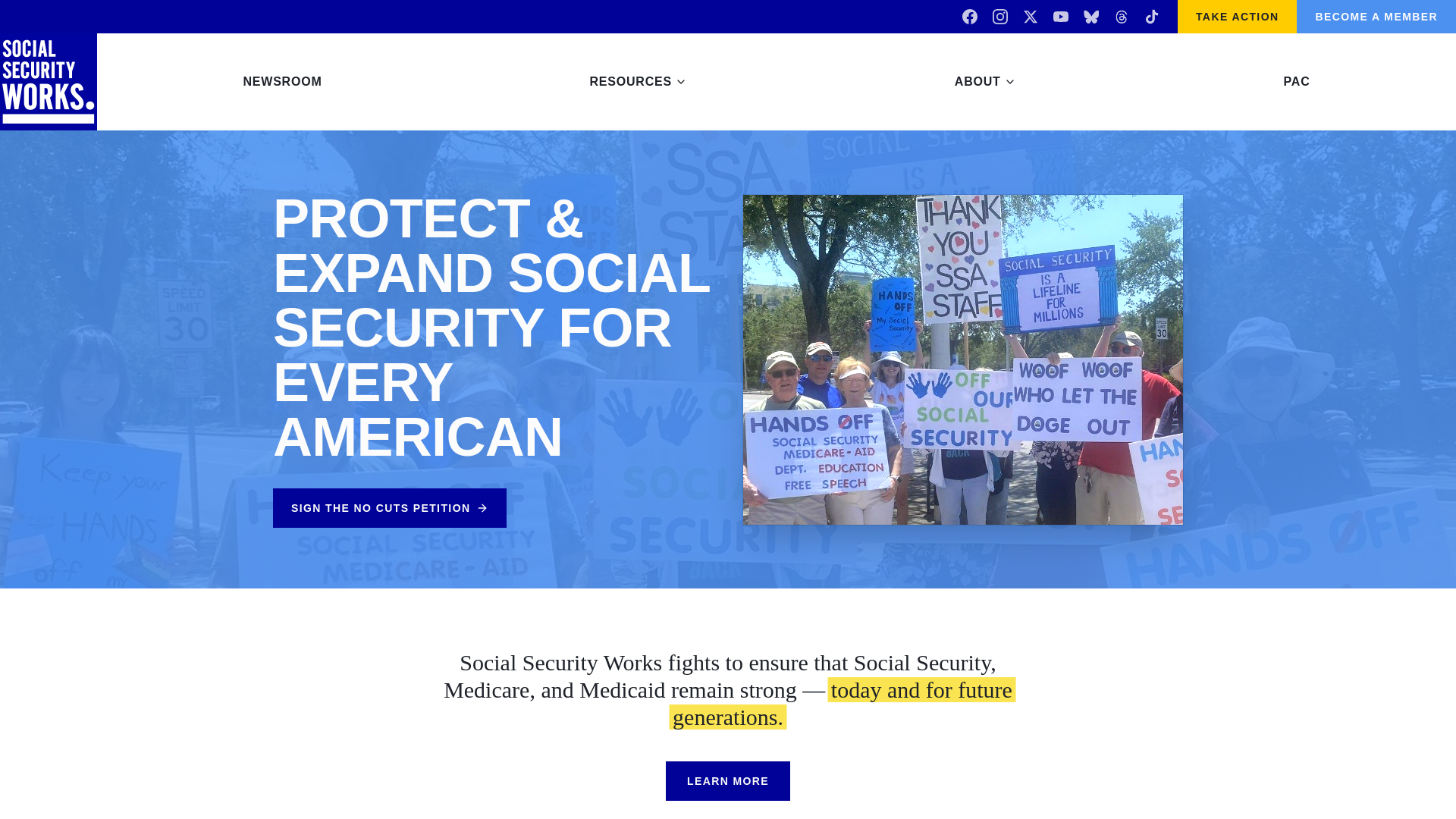
We’re fighting to protect and expand Social Security, Medicare, and Medicaid; lower drug prices; ensure economic justice for all; and guarantee health care as a human right—because everyone deserves to live in dignity.

The mission of Social Security Works is to,

Protect and improve the economic security of disadvantaged and at-risk populations Safeguard the economic security of those dependent, now or in the future, on Social Security Maintain Social Security as a vehicle of social justice

Funding for Social Security Works comes from donations from the public, and grants from foundations including the Open Society Foundations, the Retirement Research Foundation, CREDO, and the Civic Participation Action Fund. Social Security Works was founded with a generous grant from Atlantic Philanthropies.

0

How Federal Workers Can Organize for Defense Against DOGE

EWOC How federal workers can organize for defense against DOGE workerorganizing.org
preview

The Trump administration has placed all federal workers in its crosshairs — from executive orders on DEI and return to office, to mass layoffs, destruction of teams, and shuttering of departments — with more to come. It’s easy to feel demoralized, but many workers just like you are stepping up.

The chaos induced by Musk and friends ripping off essential (often lifesaving) departments and services is already leading to mass popular outrage. Millions of ordinary people know they benefit from the protections and service that DOGE is slashing. All of those people can become allies alongside the power of workers and their unions acting collectively. With those two factors together, the battle may be long, but workers can win. Here are some ways to join the fight.

0

National Labor Relations Act (NLRA) Info

preview

-What is the NLRA: workerorganizing.org/what-is-the-nlra-9318/

-Am I covered by the NLRA: workerorganizing.org/am-i-covered-by-the-nlra-962…

-We can still organize and win under a weakened NLRB: workerorganizing.org/we-can-still-organize-and-wi…

-What is the NLRA: workerorganizing.org/what-is-the-nlra-9318/

-Am I covered by the NLRA: workerorganizing.org/am-i-covered-by-the-nlra-962…

-We can still organize and win under a weakened NLRB: workerorganizing.org/we-can-still-organize-and-wi…

0

Solicited a donation for the seed library

preview

[Image description: a largish cardboard box containing around a hundred packets of vegetable seeds]

Our library is hosting a seed swap tomorrow and, well, we’re friends with folks whose family runs a local business, where they have one of those vegetable seed stands on display. All it took was asking if they had any seeds they would like to donate for the event and seed library and they gave us scores of seeds. My wife and I organized them this evening and I’ll be bringing them to the swap, then sticking whatever’s left in the seed library.

I’m really excited about how many folks in our town this might provide some measure of relief and security - in addition to the seed swap attendees, the library also grows veggies in the plot out back for donation to the local food pantry and involves kids from the nearby schools for some of the garden projects.

If your library runs programs like this (or other local community support groups do), I’d really encourage you to volunteer even just calling some local spots for support or donations. Sometimes you get the chance to make an outsized difference.

0

Gardenfence's Toxic Fedi Server List

GitHub blocklist/gardenfence-mastodon.csv at main · gardenfence/blocklist github.com
preview

Just wanted to share the servers Gardenfence has identified as hate sources so you can curate your fedi experience better.

github.com/gardenfence

Just wanted to share the servers Gardenfence has identified as hate sources so you can curate your fedi experience better.

github.com/gardenfence

0

What's everyone doing with their savings, stocks, 401ks?

preview

Curious what the general consensus is on what we should do with our savings. My friend just liquidated 1/3rd of his portfolio. Wondering what I should consider for my 401k. What are you all doing?

Curious what the general consensus is on what we should do with our savings. My friend just liquidated 1/3rd of his portfolio. Wondering what I should consider for my 401k. What are you all doing?

0

Subscribe to E-Mail Newsletters, RSS, and Alerts | Library of Congress - Bills Watch

The Library of Congress Subscribe to E-Mail Newsletters and Alerts | Library of Congress www.loc.gov
preview

I just signed up for the RSS feeds that tell you what bills are going through the senate, congress, and the oval office. I recommend this subscription.

I just signed up for the RSS feeds that tell you what bills are going through the senate, congress, and the oval office. I recommend this subscription.

0

The Visibility Brigade - Toolkit

Google Docs The Visibility Brigade - Toolkit docs.google.com
preview

Origin and Mission: The Visibility Brigade model was born in 2020 out of a frustration due to the lack of physical messaging in the real world regarding the existential crisis we face as a nation. People need “social proof” to know how best to act and we deliver this weekly. We present our messages at a pedestrian walkway over Route 4 in Paramus, New Jersey. Our goal is to remind folks of this crisis, to suggest simple actions to take and to support pro-democratic state and national candidates. However, perhaps the greatest purpose at present is to comfort heartbroken voters and let them know that they are not alone.

Who We Are And What We Do: as Margaret Meade once wrote, “Never doubt that a small group of thoughtful, committed citizens can change the world, indeed, it’s the only thing that ever has." A Visibility Brigade needs only a handful of dedicated members (5 minimum) to create weekly actions. This requires a weekly dedication of 60-90 minutes a week of placing a simple message in a public location, usually an overpass or other well-trafficked locale.

0

Please leave dissent. Less than 30 days until the National Environmental Policy Act (NEPA) laws are rescinded.

preview

“We have less than 30 days until the National Environmental Policy Act (NEPA) laws are rescinded. This is the 50-year bedrock of American environmental conservation. Normally, these actions take years but the administration has provided 30 days for public comment gutting clean water and clean air. Please stop scrolling for 2 minutes and populate the Federal Register with dissent. The comment period ends on MARCH 27!

A. Go to federalregister.gov/…/removal-of-national-environ…

B. Click on the green rectangle in the upper right corner (“SUBMIT A PUBLIC COMMENT”) .

C. Fill in your comment, and info at the bottom, and SUBMIT COMMENT. All you are required to fill out is first name/last name, your comment, then click the “yes I know this is a public comment” box at the bottom.”

-@dwenius@toot.cat

0

Musk Or Us: The Tesla Town Halls Resource

Google Docs Musk Or Us: The Tesla Town Halls Resource docs.google.com
preview

STATE OF PLAY: WHY WE’RE TAKING ACTION

The Trump-Musk coup is underway, and we’re all paying the price. Through his farce agency DOGE, Elon Musk and Trump are dismantling democracy in real-time and ripping apart the services millions rely on. Here’s what’s happening:

  • 💥 Economic terrorism at OMB: Trump’s Office of Management and Budget (OMB) attempted to cut all federal funding for child nutrition, healthcare, domestic violence shelters, and veterans’ programs. A judge blocked it—for now.
  • 💰 Elon Musk has his hands on U.S. Treasury payments: Trump’s Treasury Secretary secretly gave Musk access to a system that moves trillions of dollars. Will he block payments to safety-net programs? Funnel confidential financial data to his companies? We don’t know—because there is zero oversight.
  • 🏦 The Consumer Financial Protection Bureau (CFPB) was gutted: At Musk’s behest, Trump-installed director Russell Vought ordered all investigations and enforcement actions to stop—allowing banks, payday lenders, and credit card companies to scam Americans with zero consequences.
  • ⚖️ JD Vance declared the courts illegitimate if they try to stop Trump. He openly stated that the judiciary has no right to constrain the president’s power.

And while all of this unfolds, House Republicans are trying to ram through an extremist budget that rips food off tables and puts education and healthcare out of reach—while handing over control of government funding to Elon Musk. They’re slashing programs that help families afford rent, childcare, and healthcare and stripping resources from the very agencies that keep corporations in check. All the while, Musk and Trump tighten their grip on the government, using it as a piggy bank for their own gain. This isn’t governance; it’s outright theft.

They think they can get away with it because people won’t notice. That’s where we come in.

0

Boycott Central

preview

Because knowledge is power, learn about active boycotts right now.

Perhaps you’ve seen dozens a boycotts across your social media feed. Look up what boycotts are happening now and who is organizing them rated by our criteria of what makes a boycott effective.

Because knowledge is power, learn about active boycotts right now.

Perhaps you’ve seen dozens a boycotts across your social media feed. Look up what boycotts are happening now and who is organizing them rated by our criteria of what makes a boycott effective.

0

The Let This Radicalize You Workbook

Interrupting Criminalization Let This Radicalize You Workbook — Interrupting Criminalization www.interruptingcriminalization.com
preview

This workbook is intended as an extension of the book Let This Radicalize You: Organizing and the Revolution of Reciprocal Care by Kelly Hayes and Mariame Kaba. It was created to feature resources that the authors couldn’t fit in the book, including other helpful books, essays, wisdom from veteran organizers, and more. Educator and activist Ursula Wolfe-Rocca drafted the “Souped-Up Study Guide,” which is the core of this workbook. The other components are included as a supplement to the guide. The workbook is designed so that it can be used by independent study groups and individuals outside of group settings.

This workbook is intended as an extension of the book Let This Radicalize You: Organizing and the Revolution of Reciprocal Care by Kelly Hayes and Mariame Kaba. It was created to feature resources that the authors couldn’t fit in the book, including other helpful books, essays, wisdom from veteran organizers, and more. Educator and activist Ursula Wolfe-Rocca drafted the “Souped-Up Study Guide,” which is the core of this workbook. The other components are included as a supplement to the guide. The workbook is designed so that it can be used by independent study groups and individuals outside of group settings.

0

What can I do to fight this administrative coup?

preview

If you look, there are people resisting at every level. Blockades of freeways. American Bar Association urging an end to illegal orders. Past inspector generals penning op-eds, as a current inspector general refuses to accept her illegal firing. The Pope slamming VP Vance’s theology.

We can’t put everything you could do in here — including ways to ground yourself in these times — but here are some starting points on how to orient and help fight the coup.

0

Switching Things Up: Beyond Banner Drops

It's Going Down Switching Things Up: Beyond Banner Drops itsgoingdown.org
preview

Every year, there are constant calls for solidarity actions both nationally and internationally. In recent years, the go to action of choice for many has been banner drops along highly trafficked streets and freeways. We in no way shape or form want to take away from these actions. Banner drops can be seen by potentially thousands of people, photos of the banners can be shared online, and write ups of the action give those behind it a chance to issue a statement of solidarity. Moreover, banner drops are also often easy to carry out and help build trust and confidence between those doing the action.

The point of this column is simply to get people to think about different actions, the logic behind them, and how they can help in accomplishing the goal of letting people know about a struggle or repression that comrades face, expanding that struggle, and aiding materially to that struggle. Beyond that, we hope to create a list of easy, reproducible, and low risk actions that you and your friends can use on top of banner drops – thus expanding the tools in your tool box. Above all, remember that these are just ideas, and we encourage everyone to engage in experimentation to better fit them into your own local context.

In carrying out actions, even small ones, we want to communicate with the wider world that something important is happening and they need to know about it. Also, when comrades face repression, we want to shine a light on that abuse and let people know that it is happening and that we have their backs, just like we hope that they would have ours. Lastly, we also want to experiment with tactics which allow us to meet new people that we could potentially form affinity with.

Towards that end, here are some ideas.