



0

‘Abusive and insulting to Canadians’: campaign to oust US ambassador presented to parliament

the Guardian ‘Abusive and insulting to Canadians’: campaign to oust US ambassador presented to parliament www.theguardian.com
preview

cross-posted from: lemmy.ca/post/74463302

A petition signed by nearly 290,000 Canadians calling on Mark Carney’s government to oust Pete Hoekstra as US ambassador to Canada was formally presented to the House of Commons on Thursday, a sign of the strained relations between the neighboring countries.

0

Florida weighs ditching property taxes and sticking Canadians with the bill

CBC Florida weighs ditching property taxes and sticking Canadians with the bill | CBC News www.cbc.ca
preview

cross-posted from: lemmy.world/post/52717969

cross-posted from: lemmy.world/post/52717966

Republican Gov. Ron DeSantis has railed against property taxes, which fund local governments and the services they provide — law enforcement, fire, EMS, disaster preparation and mosquito control, among many others — equating them to a form of modern-day feudalism where homeowners must “pony up money to the government just for the courtesy of using your own property.”

To end this, DeSantis is pushing Amendment 3, a ballot measure crafted by his Republican statehouse allies that will be put to voters in the midterm election next month.

If passed, Florida “homesteaders,” as permanent residents are called, will see a dramatic increase in an existing property tax exemption.

Any Floridian with a primary residence valued at $250,000 US or less — about 60 per cent of all homesteaders, according to the governor’s office, although that figure has been questioned — would pay nothing and those with a home worth more than that would pay much less than they do now. The measure also calls on the state to eliminate homesteader property taxes entirely over time.

This constitutional amendment requires a 60 per cent supermajority, and at least one recent poll suggests it will easily clear that hurdle.

State economists project such a move will cost about $12 billion US annually, forcing local and county governments that depend on these taxes to make deep cuts, find new revenue elsewhere or both.

That’s where things could get more expensive for the Canadians who own an estimated $60 billion US worth of property in the Sunshine State. DeSantis has explicitly described them as a resource to tap to close expected budget gaps.

0

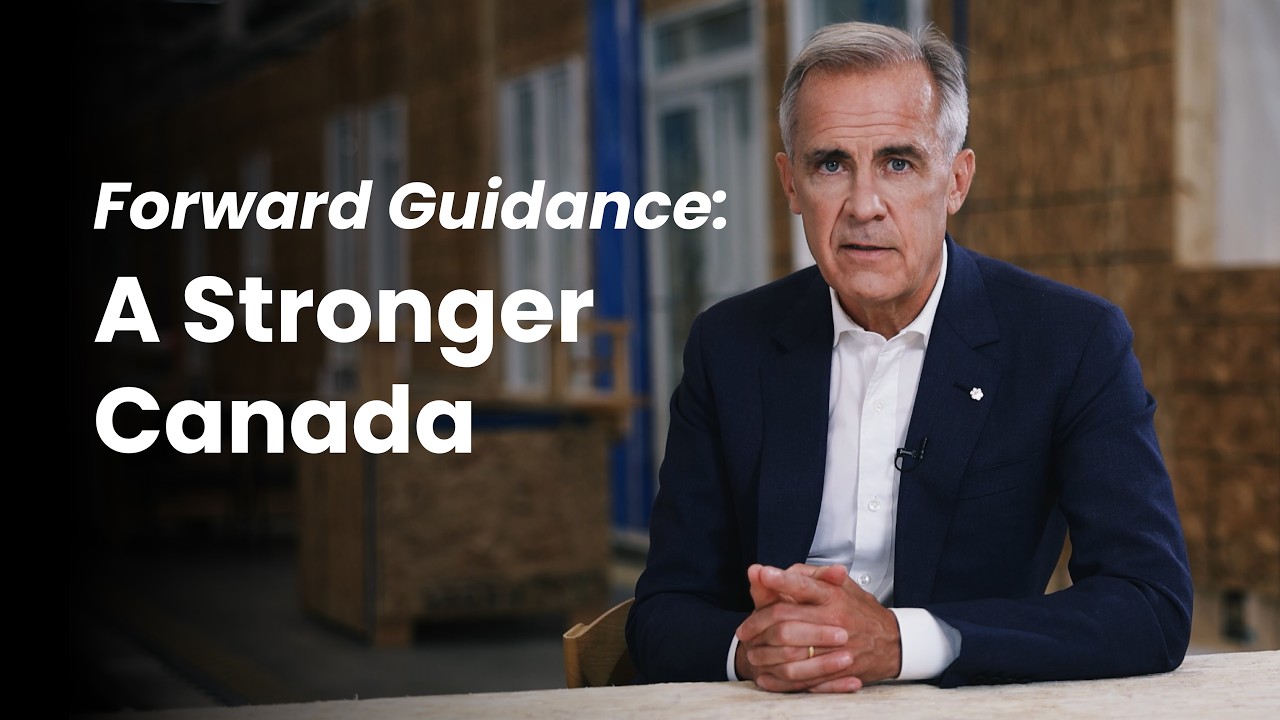
Mark Carney - Forward Guidance: A Stronger Canada

play · youtube.com
YouTube Forward Guidance: A Stronger Canada www.youtube.com
preview

Sept 08, 2026

Canada Strong isn’t about just withstanding this crisis, it’s about coming out of it stronger, more resilient, and more independent.

It’s about ensuring that no other country can determine our future, and that we can live how we want to live.

We have a plan, we’re on track, and we’re just getting started.

0

BYD asked about taking over Canadian Stellantis plant, mayor says

Financial Post BYD asked about taking over Canadian Stellantis plant, mayor says financialpost.com
preview

Personally I’m mixed on the idea. Not a huge fan of BYD as a company, but not really worse than Stellantis at this point and at least they’d be making cars in Canada, so I’d be cautiously for it.

Personally I’m mixed on the idea. Not a huge fan of BYD as a company, but not really worse than Stellantis at this point and at least they’d be making cars in Canada, so I’d be cautiously for it.

0

Canada prepared to halt booze bans, meet other U.S. demands in exchange for tariff relief: sources

CBC Canada prepared to halt booze bans, meet other U.S. demands in exchange for tariff relief: sources | CBC News www.cbc.ca
preview

Personally I do not think appeasing the orange pedophile will do any good. Even if American booze goes back to the shelves, I am not buying it

Personally I do not think appeasing the orange pedophile will do any good. Even if American booze goes back to the shelves, I am not buying it

0

Midnight Madness: The Government Rushes Lawful Access Bill Through the House Without Debate or a Recorded Vote

Michael Geist Midnight Madness: The Government Rushes Lawful Access Bill Through the House Without Debate or a Recorded Vote - Michael Geist www.michaelgeist.ca
preview

cross-posted from: piefed.ca/…/midnight-madness-the-government-rushe…

Rather than use the final days of the House session to answer the privacy, security, and oversight concerns raised by the Privacy Commissioner, academics, technology companies, and civil society groups, the government spent the time ensuring it would not have to

The final days of Bill C-22 in the House marked a genuine abrogation of democratic norms. The government moved a motion to shut down the clause-by-clause study in the Standing Committee on Public Safety and National Security, preventing the committee from adjourning until the bill had been pushed through. That led to a session that stretched past midnight, as MPs were barred from introducing new amendments and left to vote on amendment after amendment without any discussion, debate, or even public disclosure of the contents of the amendments. By the end of the committee session, no one could have known the contents of the bill that MPs had duly approved and sent back to the House for final approval. As noted, once back in the House, there was no further debate, discussion or even a vote. Just a motion that said the deal was done.

The secret ministerial orders survive, the mandatory metadata retention regime survives, the capability requirements survive, the expansive electronic service provider definition survives, and the Privacy Commissioner remains excluded from any oversight role. Google, which warned the committee that the bill would establish a surveillance infrastructure that compromises cybersecurity, said after the amendments that the changes have not eased its concerns, and the Chamber of Progress, an industry coalition, dismissed them as “half measures” and “cosmetic changes to a fundamentally flawed bill.” The companies that have signalled they may limit services or leave Canada are unlikely to read the amendments any differently, and the changes are themselves the clearest evidence that the concerns were serious rather than imagined, since a government does not amend a bill to address tinfoil hats.

The companies that have signalled they may limit services or leave Canada are unlikely to read the amendments any differently, and the changes are themselves the clearest evidence that the concerns were serious rather than imagined, since a government does not amend a bill to address tinfoil hats.