0
0
Google Cloud Blog
GTIG AI Threat Tracker: Agentic Threat Activity Crosses a Significant Threshold | Google Cloud Blog
cloud.google.com


Not on this instance? Enter your own instance's domain to go straight to following c/cybersecurity@sh.itjust.works there.

Cross posted from lemmy.ca/post/74010805
Cross posted from lemmy.ca/post/74010805
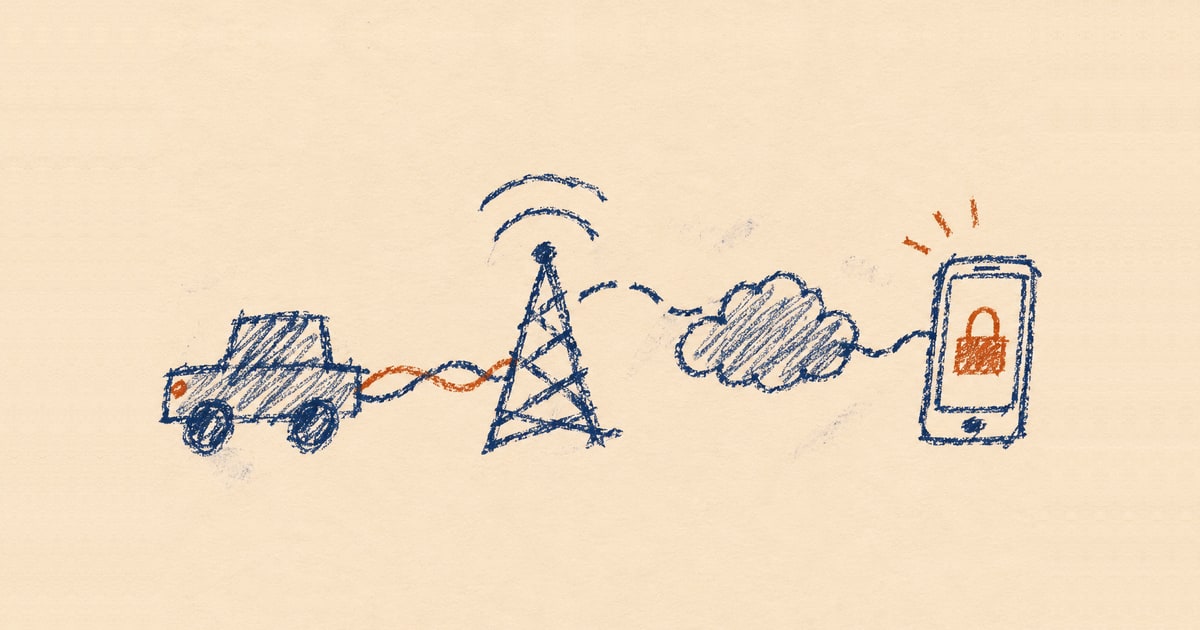
cross-posted from: piefed.world/…/2-carmakers-left-a-hidden-admin-co…
cross-posted from: piefed.world/…/2-carmakers-left-a-hidden-admin-co…

Cross posted from discuss.tchncs.de/post/70438628
Cross posted from discuss.tchncs.de/post/70438628

I work on payments, and I’ve spent the last few months thinking about one specific failure mode: an AI agent that can move money, acting while nobody is watching. The interesting attacks aren’t prompt injection. They’re the three cases below — all of which I’ve now seen in real runs, not just in theory.
The look-alike payee. The agent is told to pay a known provider. The invoice names a payee that differs by one or two characters — same shape, different address. A human reading quickly misses it. A model that compares the payee against a known-recipients list catches it, if it actually checks before signing. In my own test runs this one gets rejected cleanly. In the wild, it’s the oldest trick in payments, and agents fall for it the same way people do.
The reusable approval. The agent signs an approval once — say, an unlimited token approval for a spender — and that approval stays valid. A short expiry doesn’t fix it: the approval can still be reused on a slightly different payment before it expires. What fixes it is binding the approval to the exact payload (amount, payee, currency) and making it single-use. Expiry is the weak version of that control; payload binding is the strong version.
The delegated account. EIP-7702 lets an externally owned account delegate to a smart contract. If the account is already delegated to a contract outside the expected set, the gate is checking the wrong thing — it’s verifying an account that no longer acts alone. The fix is reading the account code first (eth_getCode): if the code is a 0xef0100 delegation to an unexpected delegate, hold. A reader found this gap in my own work in October, and it shipped as a fix — that’s the part of open source that actually works.
The common thread: all three have to be caught before signing. After settlement there is nothing to reverse — stablecoin payments are final. A post-settlement check is an audit trail, not a control. The control has to sit between the agent’s decision and the signature, and it has to be deterministic — a rule that says yes or no for this exact payment — not another judgment call by the same agent that decided to pay.
I’m curious how people here think about this. If you run agents with any ability to act on the world: what actually sits between your agent and the consequential action — a built-in approval step, a human in the loop, or something you built yourself? And when something looks off, should it pause for a human, or refuse outright?
For anyone who wants to see the failure modes with receipts rather than take my word for them — a write-up with a real agent payment, a held unlimited approval, and a rejected look-alike, plus the testnet transaction: dev.to/…/an-agent-paid-and-a-gate-stopped-two-pay… huggingface.co/sriram1983007/SRA-RiskGate-4B
I work on payments, and I’ve spent the last few months thinking about one specific failure mode: an AI agent that can move money, acting while nobody is watching. The interesting attacks aren’t prompt injection. They’re the three cases below — all of which I’ve now seen in real runs, not just in theory.
The look-alike payee. The agent is told to pay a known provider. The invoice names a payee that differs by one or two characters — same shape, different address. A human reading quickly misses it. A model that compares the payee against a known-recipients list catches it, if it actually checks before signing. In my own test runs this one gets rejected cleanly. In the wild, it’s the oldest trick in payments, and agents fall for it the same way people do.
The reusable approval. The agent signs an approval once — say, an unlimited token approval for a spender — and that approval stays valid. A short expiry doesn’t fix it: the approval can still be reused on a slightly different payment before it expires. What fixes it is binding the approval to the exact payload (amount, payee, currency) and making it single-use. Expiry is the weak version of that control; payload binding is the strong version.
The delegated account. EIP-7702 lets an externally owned account delegate to a smart contract. If the account is already delegated to a contract outside the expected set, the gate is checking the wrong thing — it’s verifying an account that no longer acts alone. The fix is reading the account code first (eth_getCode): if the code is a 0xef0100 delegation to an unexpected delegate, hold. A reader found this gap in my own work in October, and it shipped as a fix — that’s the part of open source that actually works.
The common thread: all three have to be caught before signing. After settlement there is nothing to reverse — stablecoin payments are final. A post-settlement check is an audit trail, not a control. The control has to sit between the agent’s decision and the signature, and it has to be deterministic — a rule that says yes or no for this exact payment — not another judgment call by the same agent that decided to pay.
I’m curious how people here think about this. If you run agents with any ability to act on the world: what actually sits between your agent and the consequential action — a built-in approval step, a human in the loop, or something you built yourself? And when something looks off, should it pause for a human, or refuse outright?
For anyone who wants to see the failure modes with receipts rather than take my word for them — a write-up with a real agent payment, a held unlimited approval, and a rejected look-alike, plus the testnet transaction: dev.to/…/an-agent-paid-and-a-gate-stopped-two-pay… huggingface.co/sriram1983007/SRA-RiskGate-4B
OpenAI published a blog post outlining their work on autonomous vulnerability discovery. To showcase their AI potential, they found 948 valid local privilege escalation vulnerabilities within the Linux kernel.
OpenAI’s prototype found 2,308 candidate vulnerabilities in the Linux kernel, dynamically reproduced 1,724 vulnerabilities, and ultimately found 948 local privilege escalation exploits for allowing unprivileged local users to gain root access. They also generated candidate patches for maintainer review.
Discovering nearly one thousand local privilege escalation vulnerabilities consumed $1.2 million USD in API credits.
OpenAI researchers noted in their blog post:
“Within the next few years, we believe that if there are vulnerabilities in a given software project, frontier models will likely be able to discover them and even less capable models may be able to develop exploits once disclosed. In a world of no unknown vulnerabilities, it will be critical to build and maintain high assurance software, especially core software such as operating systems, browsers, image parsing libraries, the TCP/IP stack, and more. Investing in training models to write secure code by default, minimizing attack surface by removing unnecessary features, and formal verification are promising areas of future research to effectively scale software security, in addition to finding and fixing existing vulnerabilities.”
Another interesting takeaway is that their GPT-5.5 Cyber model is finding more than 5x more novel LPEs than their GPT-5.6 Sol model despite three months of hardening/patches in the Linux kernel between scans.
Those wanting to go through this OpenAI showcase in more detail can do so via their blog post.
OpenAI published a blog post outlining their work on autonomous vulnerability discovery. To showcase their AI potential, they found 948 valid local privilege escalation vulnerabilities within the Linux kernel.
OpenAI’s prototype found 2,308 candidate vulnerabilities in the Linux kernel, dynamically reproduced 1,724 vulnerabilities, and ultimately found 948 local privilege escalation exploits for allowing unprivileged local users to gain root access. They also generated candidate patches for maintainer review.
Discovering nearly one thousand local privilege escalation vulnerabilities consumed $1.2 million USD in API credits.
OpenAI researchers noted in their blog post:
“Within the next few years, we believe that if there are vulnerabilities in a given software project, frontier models will likely be able to discover them and even less capable models may be able to develop exploits once disclosed. In a world of no unknown vulnerabilities, it will be critical to build and maintain high assurance software, especially core software such as operating systems, browsers, image parsing libraries, the TCP/IP stack, and more. Investing in training models to write secure code by default, minimizing attack surface by removing unnecessary features, and formal verification are promising areas of future research to effectively scale software security, in addition to finding and fixing existing vulnerabilities.”
Another interesting takeaway is that their GPT-5.5 Cyber model is finding more than 5x more novel LPEs than their GPT-5.6 Sol model despite three months of hardening/patches in the Linux kernel between scans.
Those wanting to go through this OpenAI showcase in more detail can do so via their blog post.
I’ve been trying to get good at fuzzing for a while. I recently started a new fuzzing project and I realized that I could take from past PoCs and put them in a corpus to try and generate bugs of a similar shape. Do you know any good sources of searchable PoCs? I’ve mostly been going through specific projects’ issue trackers looking for PoCs.
I’ve been trying to get good at fuzzing for a while. I recently started a new fuzzing project and I realized that I could take from past PoCs and put them in a corpus to try and generate bugs of a similar shape. Do you know any good sources of searchable PoCs? I’ve mostly been going through specific projects’ issue trackers looking for PoCs.

I’m not sure what I expected, but this article is quite depressing.
Many industrial devices include a service access so the vendor’s technician can get in without the customer’s password. A classic —and dangerous— way to implement it is the code of the day: a code that changes every day according to a formula that, in theory, only the vendor knows.
The problem shows up when that “secret formula” is the only thing protecting access (security by obscurity) and it can also be recovered from the firmware itself. That is exactly what happens here: sm_app ships unobfuscated, with function and variable names in plain sight. The one that validates the code is called, literally, check_code_of_day.
The article is from October 14th and notes:
Whether the attack went through CVE-2025-41450 is, for now, just a hypothesis: the vector has not been officially established and the investigation is still open. Several reports throughout this year had already warned that something like this could happen, and during 2025 several vulnerabilities were disclosed in Danfoss equipment that ended in a vendor fix. The flaw we look at here is public and patched (at least since R4.3.1).
That makes the most recent attacks all the more alarming, should they have been achieved via the same method.
I’m not sure what I expected, but this article is quite depressing.
Many industrial devices include a service access so the vendor’s technician can get in without the customer’s password. A classic —and dangerous— way to implement it is the code of the day: a code that changes every day according to a formula that, in theory, only the vendor knows.
The problem shows up when that “secret formula” is the only thing protecting access (security by obscurity) and it can also be recovered from the firmware itself. That is exactly what happens here: sm_app ships unobfuscated, with function and variable names in plain sight. The one that validates the code is called, literally, check_code_of_day.
The article is from October 14th and notes:
Whether the attack went through CVE-2025-41450 is, for now, just a hypothesis: the vector has not been officially established and the investigation is still open. Several reports throughout this year had already warned that something like this could happen, and during 2025 several vulnerabilities were disclosed in Danfoss equipment that ended in a vendor fix. The flaw we look at here is public and patched (at least since R4.3.1).
That makes the most recent attacks all the more alarming, should they have been achieved via the same method.


cross-posted from: nord.pub/…/broccoli2shell-the-brotli-decoder-bug-…
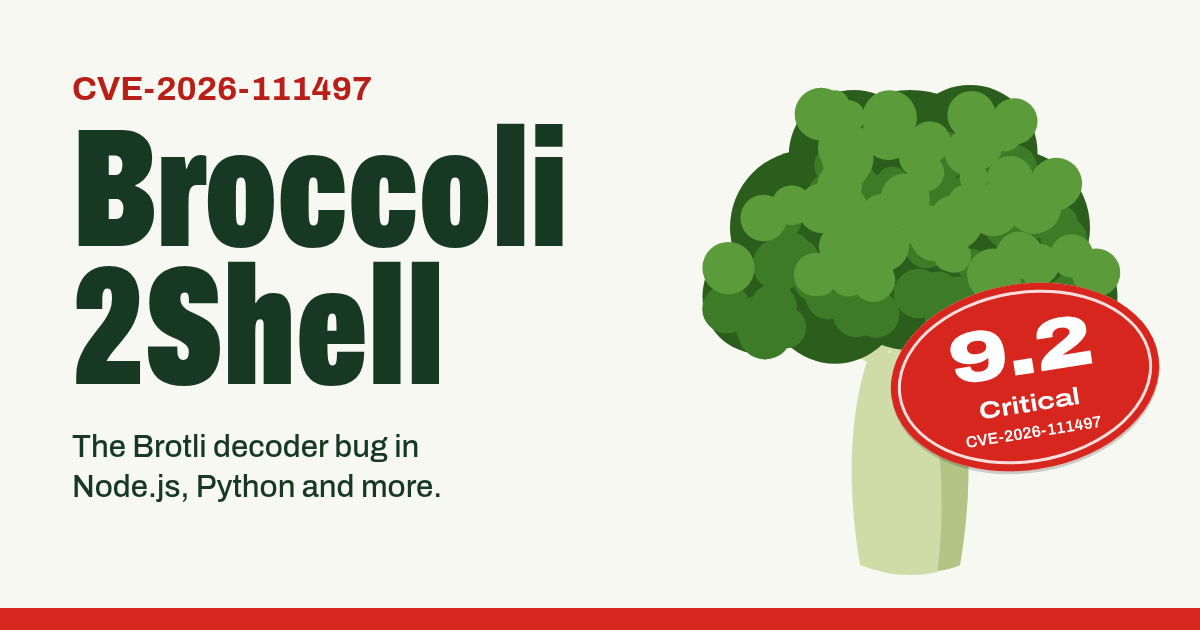
CVE-2026-111497 (Broccoli2Shell, aka Node2Shell): an out-of-bounds write in Google’s Brotli decoder affecting Node.js, Python Brotli/brotlicffi and anything built on the C decoder. Affected versions, how to check, and how to fix it.
cross-posted from: nord.pub/…/broccoli2shell-the-brotli-decoder-bug-…
CVE-2026-111497 (Broccoli2Shell, aka Node2Shell): an out-of-bounds write in Google’s Brotli decoder affecting Node.js, Python Brotli/brotlicffi and anything built on the C decoder. Affected versions, how to check, and how to fix it.
I’ve recently registered a .eu domain name.
EURid registry has a portal where you can generate a transfer code, thus not fully relying on access to registrar (as well as check and verify your info).
Welp, security.
The only security is a code sent to e-mail associated with the domain. While the portal requires entering this address to log in, it can also be pulled from WHOIS where it is mandatorily published.
Regardless, e-mail (as a string) should not be affecting security.
The code, as I mentioned, is just lowercase letters and numbers. Precisely 6 of them. This is valid for 2 hours and one use.
While there is a “Request new code” button, I wasn’t able to generate multiple codes for one 2 hour window, so that’s good.
But now we get to rate-limiting. After 9 attempts, I get:
You have exceeded the allowed number of requests.
Please try again in 10 minutes.
Sounds good, BUT, clearing cookies bypasses this.
I have not (yet) tried any automation, I just quickly manually repeated this tomfoolery from same IP 3 times without actually being rate-limited.
I find this… at least strange. Especially since everyone is doing at least 2FA, while some sites even support physical security keys, and then there’s “we email you 6 characters”.
I’ve recently registered a .eu domain name.
EURid registry has a portal where you can generate a transfer code, thus not fully relying on access to registrar (as well as check and verify your info).
Welp, security.
The only security is a code sent to e-mail associated with the domain. While the portal requires entering this address to log in, it can also be pulled from WHOIS where it is mandatorily published.
Regardless, e-mail (as a string) should not be affecting security.
The code, as I mentioned, is just lowercase letters and numbers. Precisely 6 of them. This is valid for 2 hours and one use.
While there is a “Request new code” button, I wasn’t able to generate multiple codes for one 2 hour window, so that’s good.
But now we get to rate-limiting. After 9 attempts, I get:
You have exceeded the allowed number of requests.
Please try again in 10 minutes.
Sounds good, BUT, clearing cookies bypasses this.
I have not (yet) tried any automation, I just quickly manually repeated this tomfoolery from same IP 3 times without actually being rate-limited.
I find this… at least strange. Especially since everyone is doing at least 2FA, while some sites even support physical security keys, and then there’s “we email you 6 characters”.


It’s scary month
It’s scary month
CVE-2026-109618 CVE-2026-109618
x.com/NSACyber/status/2112903220209098897
x.com/Sad_HAMs_/status/2112879897572180387
>Not just PHP. Node.js has also announced security releases for October 21, with HIGH-severity vulnerabilities affecting its 26.x, 24.x and 22.x release lines. > >If you run either stack in production, keep an eye on official advisories and apply patches promptly. > >Security maintenance doesn’t stop at your application code. Your runtime matters too.
CVE-2026-109618 CVE-2026-109618
x.com/NSACyber/status/2112903220209098897
x.com/Sad_HAMs_/status/2112879897572180387
>Not just PHP. Node.js has also announced security releases for October 21, with HIGH-severity vulnerabilities affecting its 26.x, 24.x and 22.x release lines. > >If you run either stack in production, keep an eye on official advisories and apply patches promptly. > >Security maintenance doesn’t stop at your application code. Your runtime matters too.
PHP 8.5.12, 8.4.27, 8.3.36 and 8.2.35 fix two critical vulnerabilities that can allow unauthenticated remote code execution. All PHP users are strongly encouraged to update immediately.
Who is at risk: all PHP installations serving web requests, including PHP-FPM, Apache with mod_php, php-cgi, FrankenPHP and LiteSpeed. We consider the risk highest for mod_php, with a demonstrated exploit where an unauthenticated request can trigger the attack before any application code runs.
The vulnerabilities:
PHP 8.5.12, 8.4.27, 8.3.36 and 8.2.35 fix two critical vulnerabilities that can allow unauthenticated remote code execution. All PHP users are strongly encouraged to update immediately.
Who is at risk: all PHP installations serving web requests, including PHP-FPM, Apache with mod_php, php-cgi, FrankenPHP and LiteSpeed. We consider the risk highest for mod_php, with a demonstrated exploit where an unauthenticated request can trigger the attack before any application code runs.
The vulnerabilities:

The compromised eMudhra keys were defective at a level that’s challenging the imagination of many of the engineers studying the incident. A normal size for a NIST P-384 elliptic curve cryptography private key contains roughly 384 bits of entropy, a size allowing almost 2384, or a number with 116 digits, different possibilities. The private key sizes of the compromised keys ranged from 3 to 8 bits. Astonishingly, the private keys were 4, 56, 66, 115, 155, 156, 230, 237.
The compromised eMudhra keys were defective at a level that’s challenging the imagination of many of the engineers studying the incident. A normal size for a NIST P-384 elliptic curve cryptography private key contains roughly 384 bits of entropy, a size allowing almost 2384, or a number with 116 digits, different possibilities. The private key sizes of the compromised keys ranged from 3 to 8 bits. Astonishingly, the private keys were 4, 56, 66, 115, 155, 156, 230, 237.

Hey ! Running a Snowflake proxy in Brave for a while now. Normally I help around 20 people on a busy day. Today the counter says 226 in the last 24h. Never seen anything close to that.
Is anyone else running a proxy and seeing a jump? Any tips on how to tell a real event from a local fluke?
Cheers
Hey ! Running a Snowflake proxy in Brave for a while now. Normally I help around 20 people on a busy day. Today the counter says 226 in the last 24h. Never seen anything close to that.
Is anyone else running a proxy and seeing a jump? Any tips on how to tell a real event from a local fluke?
Cheers





Compromise of 3 domain registries allows hackers to walk off with unauthorized certs.
Compromise of 3 domain registries allows hackers to walk off with unauthorized certs.