0

Organic / Chemical Free is the new shrinkflation

preview

If you’ve been doing your own grocery in the last few months, you’ll have seen that the shelves have more Organic, Bio, Free From chemicals products than ever before.
Relevant report - www.mckinsey.com/…/future-of-wellness-trends


From peanut butter to soap to detergent, you’ll see grocery aisles stocked with a more expensive version of the same product you like, but with a cleaner, modern packaging that signals that it contains fewer harmful chemicals or additives. Your high protein yoghurt might not even have more protein than regular yoghurt, but costs a few bucks more.

Now I don’t think that products have been downgraded just to sell premium versions, but over the years product quality has gone down, and what was acceptable for a normal product some years ago, is now sold as trendy better for you variant. I was shocked to see that non eco peanut butter was full of palm oil, sugar and what not, which i didnt know was happening with something as simple as peanut butter.

The hipster wellness trend is now going mainstream and the companies are charging you more for claims that are not even meaningful. Be mindful of the products you buy, don’t just buy because it has an eco label or comes in friendly looking packaging (e.g.trendhunter.com/…/laundry-detergent-sheets-free-c…).

The best thing to do 95% of the times is to buy store brands and many of the store brands are also offering eco/bio/organic products. With food, taste is subjective and you might not like the taste of store brand ketchup, and then it’s a subjective decision to pay more for low sugar Heinz ketchup for example. But very few people actually benefit from eco soaps, detergents (unless you want you avoid optical brighteners), cleaning supplies etc.

Spend more time on the grocery aisles reading labels and comparing the ingredients on the eco and non eco version of the same product and see if it makes meaningful difference to you. Don’t fall for signalling.

If you’ve been doing your own grocery in the last few months, you’ll have seen that the shelves have more Organic, Bio, Free From chemicals products than ever before.
Relevant report - www.mckinsey.com/…/future-of-wellness-trends


From peanut butter to soap to detergent, you’ll see grocery aisles stocked with a more expensive version of the same product you like, but with a cleaner, modern packaging that signals that it contains fewer harmful chemicals or additives. Your high protein yoghurt might not even have more protein than regular yoghurt, but costs a few bucks more.

Now I don’t think that products have been downgraded just to sell premium versions, but over the years product quality has gone down, and what was acceptable for a normal product some years ago, is now sold as trendy better for you variant. I was shocked to see that non eco peanut butter was full of palm oil, sugar and what not, which i didnt know was happening with something as simple as peanut butter.

The hipster wellness trend is now going mainstream and the companies are charging you more for claims that are not even meaningful. Be mindful of the products you buy, don’t just buy because it has an eco label or comes in friendly looking packaging (e.g.trendhunter.com/…/laundry-detergent-sheets-free-c…).

The best thing to do 95% of the times is to buy store brands and many of the store brands are also offering eco/bio/organic products. With food, taste is subjective and you might not like the taste of store brand ketchup, and then it’s a subjective decision to pay more for low sugar Heinz ketchup for example. But very few people actually benefit from eco soaps, detergents (unless you want you avoid optical brighteners), cleaning supplies etc.

Spend more time on the grocery aisles reading labels and comparing the ingredients on the eco and non eco version of the same product and see if it makes meaningful difference to you. Don’t fall for signalling.

0

Your food could be cheaper if they wanted

preview

We all know how much of a resource hog windows/google chrome have become over the years and we all accepted it, because we were told this how modern software works.

And now suddenly as memory prices shot up, these companies are successfully able to optimise their software to reduce memory consumption.

Now the exact same thing has happened to your food and other grocery prices. The prices went up and you were told its because of inflation/wars/pandemic/trade issues, etc and while all of those are true, its not the whole picture.

The food companies are increasingly spending more and more money on advertising (hence the insane growth in revenue for Google/Facebook/Netflix/ etc), and all of this comes from the consumer’s pocket. Since the pandemic, the number of channels where a typical company has to spend ad money has gone up sharply. It’s not enough to just run ads on radio, TV, newspaper and google. You also need pay the neighbourhood aislop influencer, you also need to buy space on 20 different ecommerce website. You have to buy space on the delivery apps, on streaming platforms, on reddit, on pinterest, on your BMW X5’s dashboard, and so on and so forth.

There is always the option to cut spending here, and they don’t. In fact, sometimes, they increase the spending here, despite all the inflation concerns.

Example - marketingweek.com/nestle-more-better-investment/

So yeah. they could make groceries cheaper, but they choose not to.

0

The Banking Oligopoly We Deserve? (Peter Nowak)

The Banking Oligopoly We Deserve? shareapod.com
preview

Peter Nowak of donotpassgo.ca podcast interviews Globe and Mail personal finance columnist Rob Carrick regarding new measures in the industry, Mark Carney’s approach to banking, and why Canadians’ reluctance to switch banks helps maintain the oligopoly.

also feel free to join our recently-launched discord: discord.gg/pFZWSdMxn

0

Rich Country, Poor Citizens: China’s $20 Trillion Paradox Shows That For The Communist Party, A Few Thousand Tycoons Are Easier To Manage Than A Broad Middle Class

preview

cross-posted from: lemmy.sdf.org/post/61602151

Archived (removepaywall.com)

[…]

In 2021, President Xi Jinping triumphantly declared that the rising tide had lifted all boats — the Communist Party had won “complete victory” over absolute poverty — and pledged to pursue “common prosperity”1 for all. China does deserve credit: Since 1978 it has lifted close to 800 million people out of extreme poverty, three-quarters of the global total, according to the World Bank. But to claim that victory, Beijing used a poverty line of about $2.30 a day, which critics contend is too low.

Against the World Bank’s $8.30-a-day poverty line for households in upper-middle-income countries — China’s current group — more than one-fifth of its population remained poor as of 2022. Against the $30 a day that marks poverty in the rich-country cohort China will be joining, the average citizen falls well short. China, in other words, is becoming a high-income country whose people, by any rich-world measure, remain exceedingly poor.

[…]

Both sets of facts flow from the same political economy, and the tension between them will define China’s next quarter-century — turning less on whether the country grows rich, which by conventional measures it largely has, than on what it does about the millions left behind and the middle class it never allowed to form.

[…]

[When China entered] the WTO, the bet was that prosperity would beget a middle class that would demand a say. But Beijing has spent two decades ensuring that constituency never takes shape, since time and time again history has shown that a secure, propertied population is where pressure for a political voice collects.

The evidence on social activism is instructive. In November 2022 a deadly apartment fire in remote Urumqi set off street protests against zero-Covid lockdowns that swelled into the “white paper revolution,” named after the blank sheets of paper demonstrators held up in wordless dissent. But these protests erupted not on China’s poor periphery but in its bourgeois core — along Urumqi Road in Shanghai, the country’s wealthiest city, and across elite campuses like Beijing’s Tsinghua University. The demonstrations confirmed the Party’s operating assumption: It is not hardship that is politically dangerous, but a comfortable middle class.

[…]

On the institutions that underpin a secure middle class — most importantly a social safety net — China diverges sharply from its peers. Social spending sits near 10% of gross domestic product, roughly half the average for countries in the Organization for Economic Cooperation and Development. Xi often warns that welfare programs breed idleness, a surprising stance for an avowed Marxist. The underlying motivation is more likely that households forced to self-insure stay precarious and pliable.

A grinding property crisis has only heightened the sense of vulnerability. Chinese households hold about 47% of their assets in real estate, and prices have fallen roughly a fifth from their 2021 peak, erasing trillions of yuan in wealth. Because a family’s home is often their only form of insurance, the loss of value has made people cling to cash all the more.

[…]

Beijing has promised for years to rebalance the economy toward household consumption, so as to reduce the country’s reliance on the twin growth engines of exports and investment. Yet after two decades of jawboning and half measures, consumption is stuck at about 40% of GDP, compared with 55% to 70% across the rich world. Households save at extraordinary rates — deposits have roughly doubled since 2019, to some 165 trillion yuan ($24.7 trillion) — not from thrift but because the Chinese state offers thin retirement pensions, patchy healthcare coverage and unemployment insurance that reaches barely a third of the workforce. Jobless benefits are pegged to the local minimum wage — not to what a worker earned — and is capped at 90% of that: roughly 2,000 yuan a month. This year the minimum rural pension has increased by just 20 yuan, to 163 yuan a month. A people who cannot count on the government to care for them when they are ill, jobless or old will not spend.

[…]

Youth unemployment tells the same story. The rate for 16- to 24-year-olds who are not in school now stands at 18% — an indicator so politically sensitive that Beijing suspended its publication in 2023, and then revised the methodology. A generation that coined the term neijuan, “involution,” shorthand for running ever faster to stay in place, is not the confident spending cohort a middle class is built on.

[…]

The artificial intelligence boom deepens the divide between the government’s industrial ambitions and household welfare. Beijing is pouring trillions of yuan into the development of more advanced chips and data centers to support AI, and that spending is, for now, what is powering growth. But it funds those technology investments by** starving the basics: hospitals, schools and other elements of the already meager safety net in rural areas**, while the rewards accrue to the coastal, educated sliver.

The resulting inequality would look familiar to any American. With the poor and middle held down, one group has been allowed to grow: the rich. China’s richest 10% of the population hold about 68% of its national wealth, close to the US figure of 70%. In 2025 the 1,434 individuals worth at least 5 billion yuan saw their combined wealth soar 42% thanks to a powerful stock market rally, according to an annual list compiled by the Hurun Research Institute, a Shanghai-based firm that has tracked China’s rich since 1999.

[…]

Common prosperity, Xi’s supposed sequel to Deng’s “let some get rich first,” is turning out to mean shared restraint, not shared wealth: billionaires disciplined when convenient, the middle class asset-trapped, the poor pacified in 20-yuan increments. Everyone, in the end, is held equally in check.

[…]

During 14 years in power, [Xi Jinping] has chosen control over household welfare at every turn, and for the fourth presidential term he’s expected to claim in 2027, there’s no reason to expect a change of course. So the likeliest path is welfare that grows but stays minimal and conditional: enough to keep the peace, and calibrated to sustain dependence rather than end it.

The West wagered in 2001 [when China entered the WTO] that trade would make China rich and wealth would make it liberal. It got the first half. Whether a great power can hold the rest together while keeping most of its citizens poor is, at best, a formula for grinding stagnation — at worst, a slow-burning fuse.

[…]

0

Question about real wages of different income percentiles.

preview

Does anyone know or better yet have resources on how the real wages (wages adjusted for inflation and buying power) have evolved for different percentiles of the national income share of Germany or the USA? As I understand it real wages are calculated from the income of an average citizien. This ignores outliers like people who’s total incomes increased a lot and thus can average out many people who’s total income decreased only a little.

Does anyone know or better yet have resources on how the real wages (wages adjusted for inflation and buying power) have evolved for different percentiles of the national income share of Germany or the USA? As I understand it real wages are calculated from the income of an average citizien. This ignores outliers like people who’s total incomes increased a lot and thus can average out many people who’s total income decreased only a little.

0

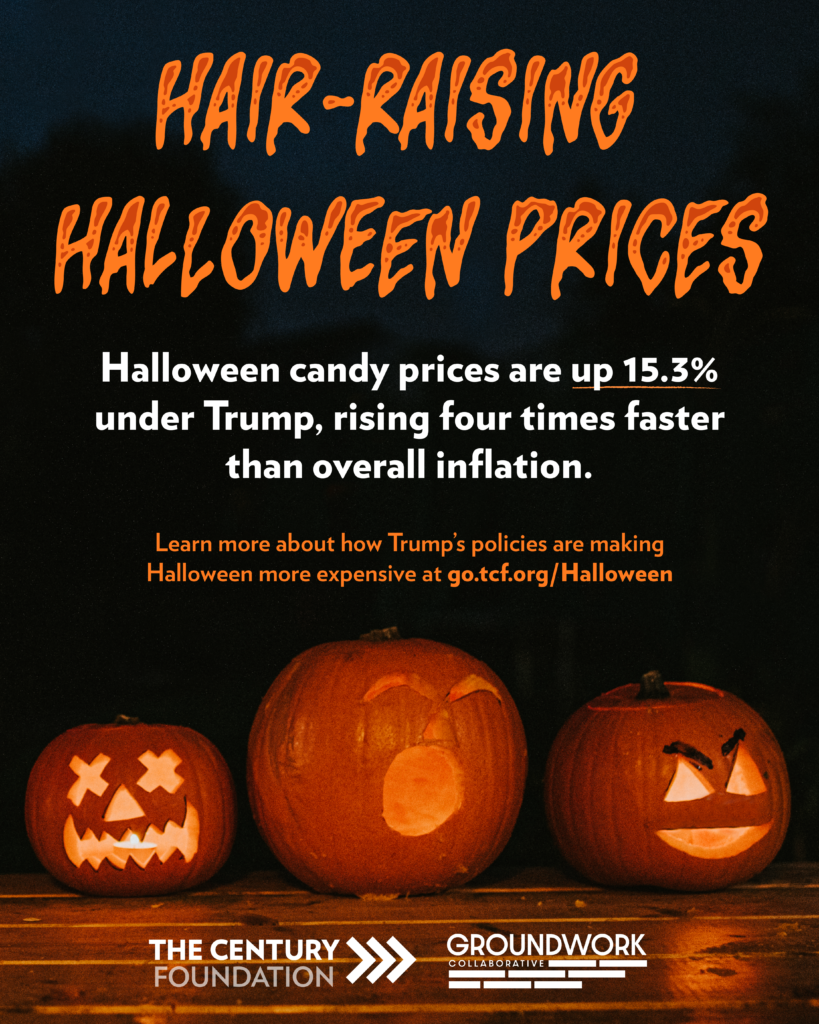
Halloween Candy Prices Up 15%, Giving American Families a Jump Scare

Groundwork Collaborative Halloween Candy Prices Up 15%, Giving American Families a Jump Scare - Groundwork Collaborative groundworkcollaborative.org
preview

cross-posted from: piefed.world/…/halloween-candy-prices-up-15-givin…

cross-posted from: piefed.world/…/halloween-candy-prices-up-15-givin…

0

Indonesia’s Nickel Gambit: How Jakarta is Leveraging US-China Competition for Strategic Autonomy

THE GEOSTRATA Indonesia’s Nickel Gambit: How Jakarta is Leveraging US-China Competition for Strategic Autonomy www.thegeostrata.com
preview

cross-posted from: lemmy.sdf.org/post/60404850

Archived

Indonesia is the world’s largest nickel producer, accounting for a dominant share of global output and making the country increasingly central to the global critical-minerals supply chain.

[…]

Indonesia’s rise as a nickel power is inseparable from its resource nationalist downstreaming strategy. Jakarta restricted exports of unprocessed nickel ore and pushed companies to process the mineral domestically. The policy transformed Indonesia from a major raw-material supplier into a global processing hub.

But Indonesia did not build this transformation alone. Chinese capital, technology, and industrial expertise became deeply embedded in the country’s smelting and refining ecosystem. Today, Chinese firms control about 75% of Indonesia’s nickel-refining capacity, illustrating the depth of this dependence.

This creates Indonesia’s central paradox: Jakarta has greater control over the resource, but much of the capacity required to convert that resource into higher-value products remains connected to Chinese investment and technology. Resource nationalism therefore has not eliminated dependence; in some respects, it has created a more sophisticated form of it.

[…]

Indonesia is now trying to change that equation. President Prabowo Subianto’s government has tightened oversight of strategic commodities and is seeking greater control over how resources are priced and traded.

In August 2026, Prabowo announced plans to launch the Strategic Minerals and Commodities Exchange that would establish domestic reference prices for strategic resources including nickel, with operations expected to begin in January 2027.

[…]

He argued that Indonesia should move beyond being merely a resource exporter and become a price-setter. These policies have created friction with Chinese investors. In May 2026, Chinese companies operating in Indonesia warned that reduced nickel quotas, higher taxes and revised pricing arrangements were making operations more expensive. The China Chamber of Commerce in Indonesia raised concerns directly with the Indonesian government, with several major Chinese-linked companies also facing the impact of these policy changes. But this is where the story moves beyond Indonesia and China.

[…]

The United States increasingly sees Indonesia as important to its effort to build more diversified critical-mineral supply chains. In February 2026, Washington and Jakarta signed an Agreement on Reciprocal Trade containing a section 5 intended to align Indonesia with the U.S. on sanctions, export controls, investment security, and measures targeting third-country economic practices, strengthening bilateral economic-security cooperation on critical minerals.

[…]

This does not, however, mean that Indonesia has chosen America over China. Calling the relationship a US–Indonesia “alliance against China” would oversimplify Jakarta’s strategy. The agreement is fundamentally an economic and strategic partnership, while Indonesia continues to maintain substantial economic relations with Beijing. The distinction is crucial. Indonesia does not necessarily need to replace China; it needs alternatives to China.

If China remains Indonesia’s dominant source of investment, processing technology and industrial partnerships, Jakarta’s ability to impose tougher terms has limits. But if American, Japanese, Korean, European and other investors can provide additional capital, technology and markets, Indonesia acquires greater room to negotiate. This is the essence of Jakarta’s strategy: diversification as leverage.

[…]

Indonesia’s nickel policy is therefore not simply about who mines nickel or who owns a smelter. It is about who gets to set the terms of participation in the value chain. Indonesia may not be choosing between Beijing and Washington. It is attempting something more ambitious: making both compete for access while Indonesia strengthens its own position. The success of that strategy will ultimately depend on whether Jakarta can convert its geological advantage into industrial and technological capability. The real prize is not simply higher revenues from nickel but the ability to decide who participates, under what conditions, and how much value remains within Indonesia.

[…]

0

When the Schedule Names No Number: Decoding 550 Prose-Only Rate Lines in the US HTS

ExportSonar When the Schedule Names No Number: Decoding 550 Prose-Only Rate Lines in the US HTS exportsonar.com
preview

Census of every prose-only duty line in the US Harmonized Tariff Schedule: 550 of 23,193 HTS lines carry no numeric rate, only sentences like “the rate applicable to products provided for in preceding subdivisions”. The article sorts them into six resolution patterns and shows how to compute each effective rate from primary sources. Maintained as part of a free tariff-data project; the full table with source timestamps is here: exportsonar.com/…/nonstandard-duty-rate-text-guid…

Census of every prose-only duty line in the US Harmonized Tariff Schedule: 550 of 23,193 HTS lines carry no numeric rate, only sentences like “the rate applicable to products provided for in preceding subdivisions”. The article sorts them into six resolution patterns and shows how to compute each effective rate from primary sources. Maintained as part of a free tariff-data project; the full table with source timestamps is here: exportsonar.com/…/nonstandard-duty-rate-text-guid…

0

Section 301 Line Exposure: mapping all 7,045 taxed US tariff lines across the schedule

preview

Every one of the 7,045 eight-digit US lines covered by the Section 301 China actions carries the same incremental rate - 25 percent - but the map underneath is anything but uniform. We rebuilt the full map from our structured extract of the Chapter 99 trade-action schedule, cross-checked against the USITC REST API on October 13, 2026:

  • Organic chemicals lead with 692 taxed lines, followed by machinery (chapter 84) at 671, electrical machinery (chapter 85) at 448 and fish (chapter 03) at 269.
  • The three legal anchors split unevenly: U.S. note 20(e)+20(f) holds 5,906 lines (83.8 pct), note 20(b) 856 (12.2 pct), 20©+20(d) 283 (4.0 pct).
  • Fifteen chapters carry zero lines under the three 25 pct actions - including the entire apparel-and-footwear complex.
  • Since the action rate stacks on the base rate, the page also publishes the base-rate census under the 25 pct layer.

Chapter-by-chapter map, free, no signup: exportsonar.com/…/section-301-line-exposure-map.h…

Happy to share details about the data pipeline; corrections welcome.

0

The $800 de minimis exemption is gone: a Section 321 timeline (2016–2026)

preview

For nearly a decade, any shipment worth $800 or less entering the United States cleared duty-free under the Section 321 de minimis exemption (19 U.S.C. §1321(a)(2)©). That carve-out quietly carried cross-border e-commerce logistics through three administrations — and it is now suspended for shipments from every country, in every quantity, by every transport mode.

I maintain a free tariff-data project and we rebuilt the full 2016–2026 timeline from 21 dated legal instruments (Federal Register notices, executive orders, Public Laws), each linked to its primary source and cross-checked against the live CFR — including the August/September 2025 executive orders and the October 2026 final rule that made the suspension permanent-looking in the regulations:

exportsonar.com/…/us-de-minimis-section-321-timel…

Happy to answer questions on how the data pipeline sources and timestamps each instrument.

0

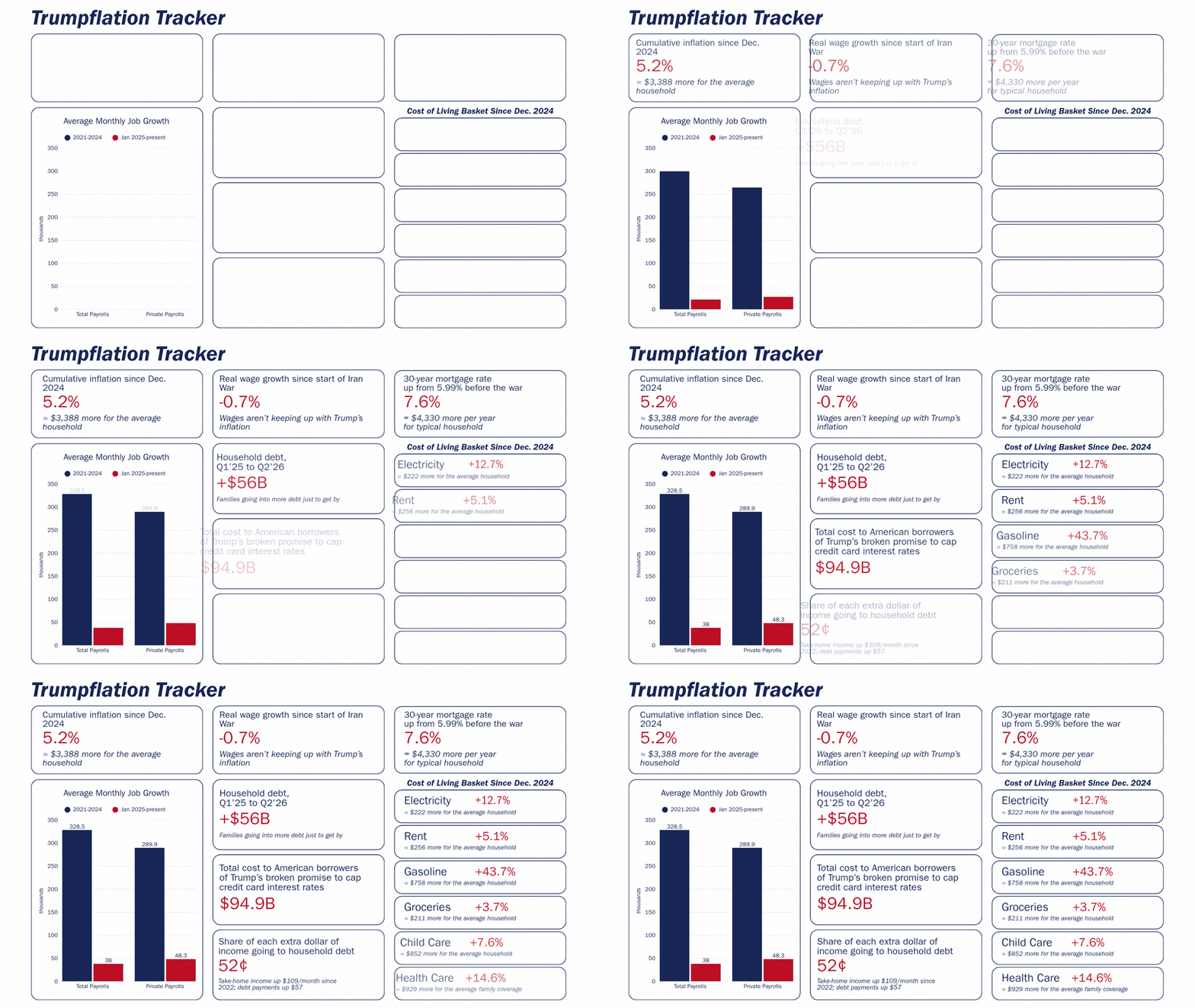
Warren Launches New Trumpflation Tracker: New dashboard will be updated monthly for Americans to see how much more they are paying in Trump’s economy

preview

cross-posted from: piefed.world/…/warren-launches-new-trumpflation-t…

cross-posted from: piefed.world/…/warren-launches-new-trumpflation-t…

0

London Takes a Hit as Super Rich Worth $160 Billion Exit UK

preview

The Bloomberg Billionaires Index reveals how much money is at stake as the ultra-wealthy leave.

archive.is/…/billionaire-exodus-from-uk-leaves-16…

The Bloomberg Billionaires Index reveals how much money is at stake as the ultra-wealthy leave.

archive.is/…/billionaire-exodus-from-uk-leaves-16…

0

Economy Adds Just 29,000 Jobs in September, Wage Growth Slows to 3%

preview

cross-posted from: piefed.world/…/economy-adds-just-29000-jobs-in-se…

  • Job growth slowed sharply, with just 29,000 jobs added in September and the three-month average falling to 51,000.
  • Wage growth weakened further, reaching 3.0 percent year-over-year and 2.6 percent annualized over the latest three months.
  • Health care and social assistance drove job growth, accounting for 23,000 of September’s 29,000 new jobs.
  • Evidence of AI-driven job losses remains limited, with declines concentrated in sectors such as insurance, publishing, and motion pictures.
  • The labor market is weakening beneath the headline unemployment rate, with fewer workers quitting voluntarily and several disadvantaged groups seeing higher unemployment.
  • There is little evidence of an AI-driven productivity boom so far, with estimated productivity growth only slightly above recent trends.
0

‘Winter is coming’: IMF head issues ‘warning’ over inflation and central bank tightening

‘Winter is coming’: IMF head issues ‘warning’ over inflation and central bank tightening www.semafor.com
preview

The global economy has so far shrugged off $100 oil. It won’t forever.

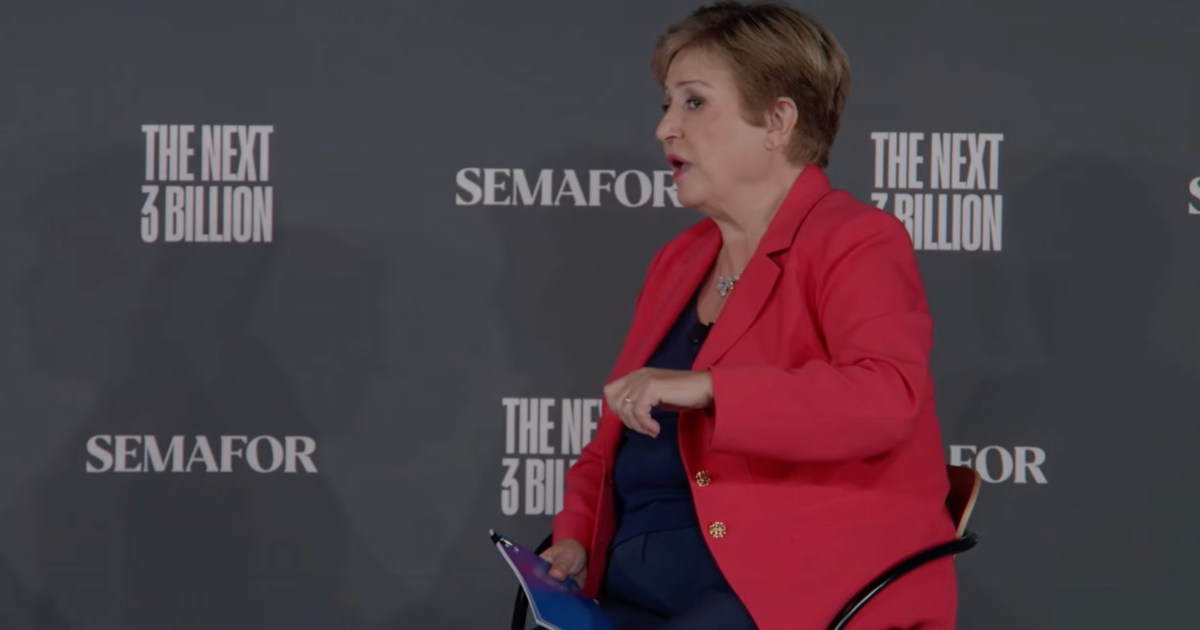
“Winter is coming,” Kristalina Georgieva, managing director of the International Monetary Fund said at Semafor’s Next 3 Billion event in New York, warning that prices will keep climbing.

The Iran war — and the energy shocks that have accompanied it — has elevated inflation globally since February, leading central banks around the world to raise interest rates. That raised their borrowing costs — the US will spend more money this year paying interest on the national debt than on its military — which leaves less to cushion the economic fallout.

While AI has turbocharged economic development globally, counteracting some of the energy shock, the tech falls short of compensating for the full effect of the Strait of Hormuz’s closure.

…

0

Democracy May Survive Trump, but It Looks Like Capitalism Might Not

The New Republic Democracy May Survive Trump, but It Looks Like Capitalism Might Not newrepublic.com
preview

It was a surreal week, bursting with surreal news generated by the surreal idiot who sits in the White House, but maybe the most surreal headline of all was the one I saw Thursday morning telling me that Costco was rationing motor oil. The limit they’ve set is very likely more than your average motorist needs, but still. Rationing! Am I in England in the 1950s? And on top of that, the price has nearly doubled since April, to $58 for a 10-quart pack.

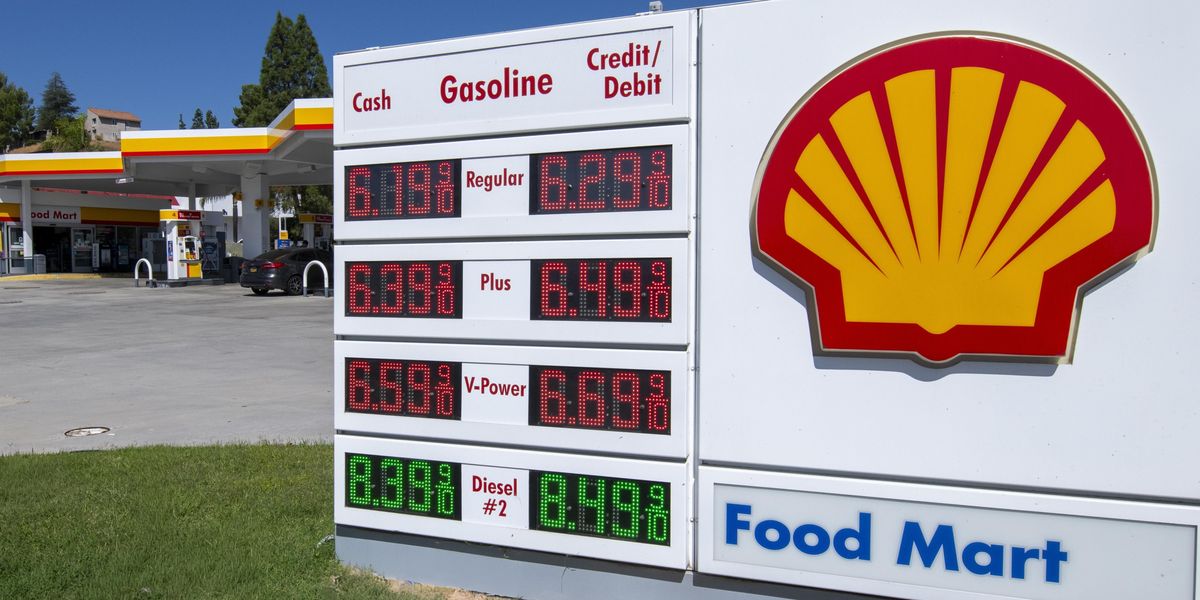
Or maybe it was the news that diesel had topped $6 a gallon. Before the war in Iran, it was about $3.60 a gallon. Some stations, in fact, are out of diesel. That’s right, on the signs that normally list the price per gallon of diesel fuel, it just says “Out.” Diesel powers trucks and delivery vans and tractors and other farm equipment. (Harvest season is around the corner, by the way.) Also freight trains. And buses and ships and barges and tugboats. And bulldozers and backhoes and cranes, and I guess that also means forklifts—you know, the kind seen this week crashing repeatedly into the Kennedy Center. The nation’s, and the world’s, commerce, in other words, runs on diesel gasoline.

For years, we’ve wondered whether American democracy would survive Donald Trump. We still do, of course, and by the way, if you haven’t read Judge Michael Luttig’s terrifying piece on that subject that we posted last week, do so immediately (well, after you finish this). But now, we need to fret that capitalism may not survive Trump, and that between now and January 2029, assuming the GOP doesn’t go Twenty-Fifth Amendment on him, he’ll single-handedly bring not only the American but the global economy to its knees.

America is finally coming to terms with just what an ignoramus Trump is. In his first term, he inherited a steady economy with a record 75 consecutive months of job growth. Until the pandemic hit, he didn’t do anything to screw it up. He inflicted horror after horror on the nation in other realms, but until March 2020, his economy was fine to good.

…

0

Explainer: A Diesel Export Ban Is An Idea Whose Time Has Not Come

preview

Diesel prices have soared to record highs, topping $6 per gallon due to conflicts in Ukraine and Iran, sparking calls for a diesel export ban. Republican Senate Majority Leader John Thune is “open to exploring” the idea, but Interior Secretary Doug Burgum and energy experts strongly oppose it. Experts argue a ban would disrupt supply chains, harm American producers, and fail to lower pump prices, potentially even increasing them. They explain diesel is a global commodity, and limited domestic transport infrastructure means excess Gulf Coast supply wouldn’t easily reach other US regions, leading to refinery cutbacks. Historically, past export bans, like the 1975 crude oil ban, proved ineffective. Critics contend an export ban is a simplistic, self-defeating solution to a complex problem, with the true remedy lying in ending the international conflicts.

Diesel prices have soared to record highs, topping $6 per gallon due to conflicts in Ukraine and Iran, sparking calls for a diesel export ban. Republican Senate Majority Leader John Thune is “open to exploring” the idea, but Interior Secretary Doug Burgum and energy experts strongly oppose it. Experts argue a ban would disrupt supply chains, harm American producers, and fail to lower pump prices, potentially even increasing them. They explain diesel is a global commodity, and limited domestic transport infrastructure means excess Gulf Coast supply wouldn’t easily reach other US regions, leading to refinery cutbacks. Historically, past export bans, like the 1975 crude oil ban, proved ineffective. Critics contend an export ban is a simplistic, self-defeating solution to a complex problem, with the true remedy lying in ending the international conflicts.

0

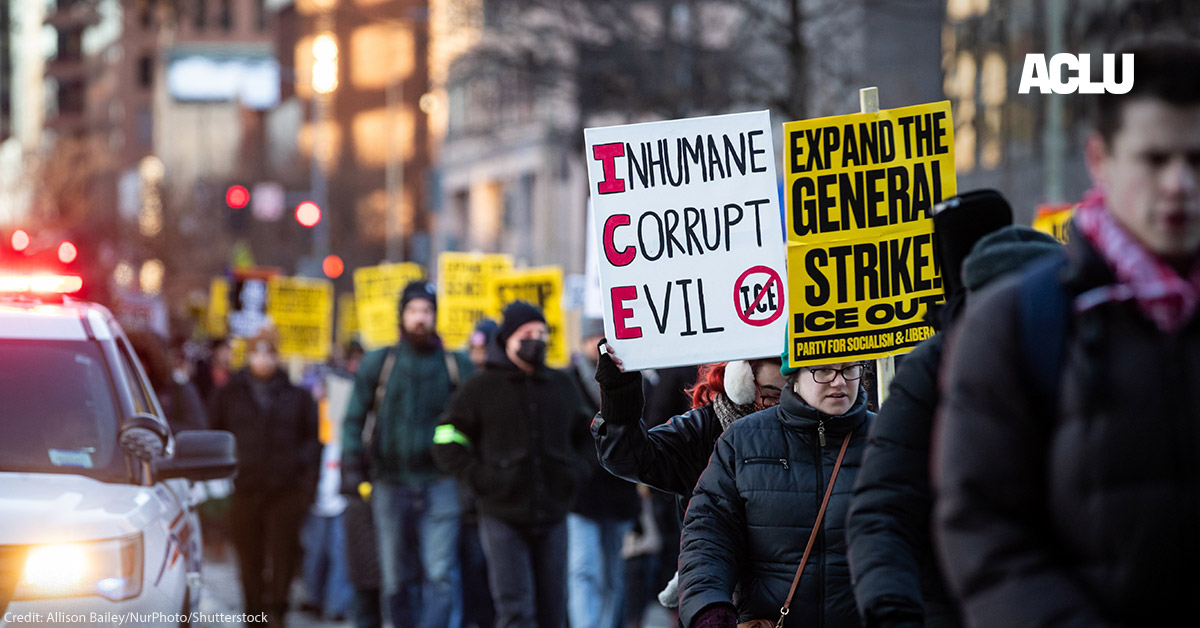
New Report Shows Deportations Lower Wages and Raise Costs for America’s Workers

American Civil Liberties Union New ACLU and AFL-CIO Report Shows Deportations Lower Wages and Raise Costs for America’s Workers | American Civil Liberties Union www.aclu.org
preview

cross-posted from: piefed.world/…/new-report-shows-deportations-lowe…

cross-posted from: piefed.world/…/new-report-shows-deportations-lowe…

0

Study reveals the work & health insurance roller coaster millions of Americans ride

preview

cross-posted from: piefed.world/…/study-reveals-the-work-health-insu…

New changes to Medicaid and ACA Marketplace may affect many low- and middle-income workers in volatile jobs who have limited access to employment-based health insurance

cross-posted from: piefed.world/…/study-reveals-the-work-health-insu…

New changes to Medicaid and ACA Marketplace may affect many low- and middle-income workers in volatile jobs who have limited access to employment-based health insurance

0

Squeezed by a stagnant economy and state directives, China’s underemployed lawyers, architects, and engineers are taking cheap gig work to teach AI their trades — just to pay this month’s mortgage

Rest of World Now it’s China’s experts who are gig workers training AI restofworld.org
preview

cross-posted from: lemmy.sdf.org/post/59073944

Archived

  • Chinese tech giants are recruiting skilled professionals as specialized AI trainers to build high-quality data sets.
  • Facing economic downturns and layoffs, professionals take these challenging annotation gigs as supplementary income.
  • The efforts mirror U.S. platforms like Mercor and Handshake hiring domain experts to narrow the technological gap with Silicon Valley.

[…]

In the U.S., data companies like Mercor, Surge AI, and Handshake have already recruited tens of thousands of Hollywood filmmakers, lawyers, and scientists to train AI models on various white-collar tasks. These jobs are now emerging in China, as the government pushes for AI adoption across the economy.

[…]

Chinese workers say the work is precarious, demanding, and lower-paid than in America. But as they face a tough job market and disruption from AI, the Chinese professionals say they have taken the gigs to make money as well as to participate in what they believe to be an industry of the future.

[…]

Similar to their Western counterparts, the [Chinese] freelance AI trainers said they are told to come up with realistic work tasks, upload documents from their actual jobs, and write down their own thought process so AI can learn from it. Trainers are not allowed to use AI themselves. It usually takes a few hours to complete a task, which earns them 100 to 500 yuan ($15 to $74), they say.

[…]

Platforms including Xpert have stated in their user terms that trainers will not be paid if their submissions do not meet requirements or pass reviews. Siriser said trainers could make revisions or appeal if their submissions were rejected.

[…]

0

People want economic system change - but have stopped trusting anyone to deliver it // 65% believe the economic system is rigged in favour of the rich and powerful

Earth4All People want economic system change - but have stopped trusting anyone to deliver it - Earth4All earth4all.life
preview

cross-posted from: piefed.world/…/people-want-economic-system-change…

Full report(PDF).

  • A new survey of citizens of 17 of the world’s largest economies reveals that 65% of respondents believe the economic system is rigged in favour of the rich and powerful
  • Over two thirds (69%) want major changes to the economic system
  • Just 31% believe their government will make decisions that benefit the majority of people long-term