
0
0

The Washington Post
What 165 days of record ocean temperatures will mean for extreme winter weather
www.washingtonpost.com

Not on this instance? Enter your own instance's domain to go straight to following c/environment@beehaw.org there.
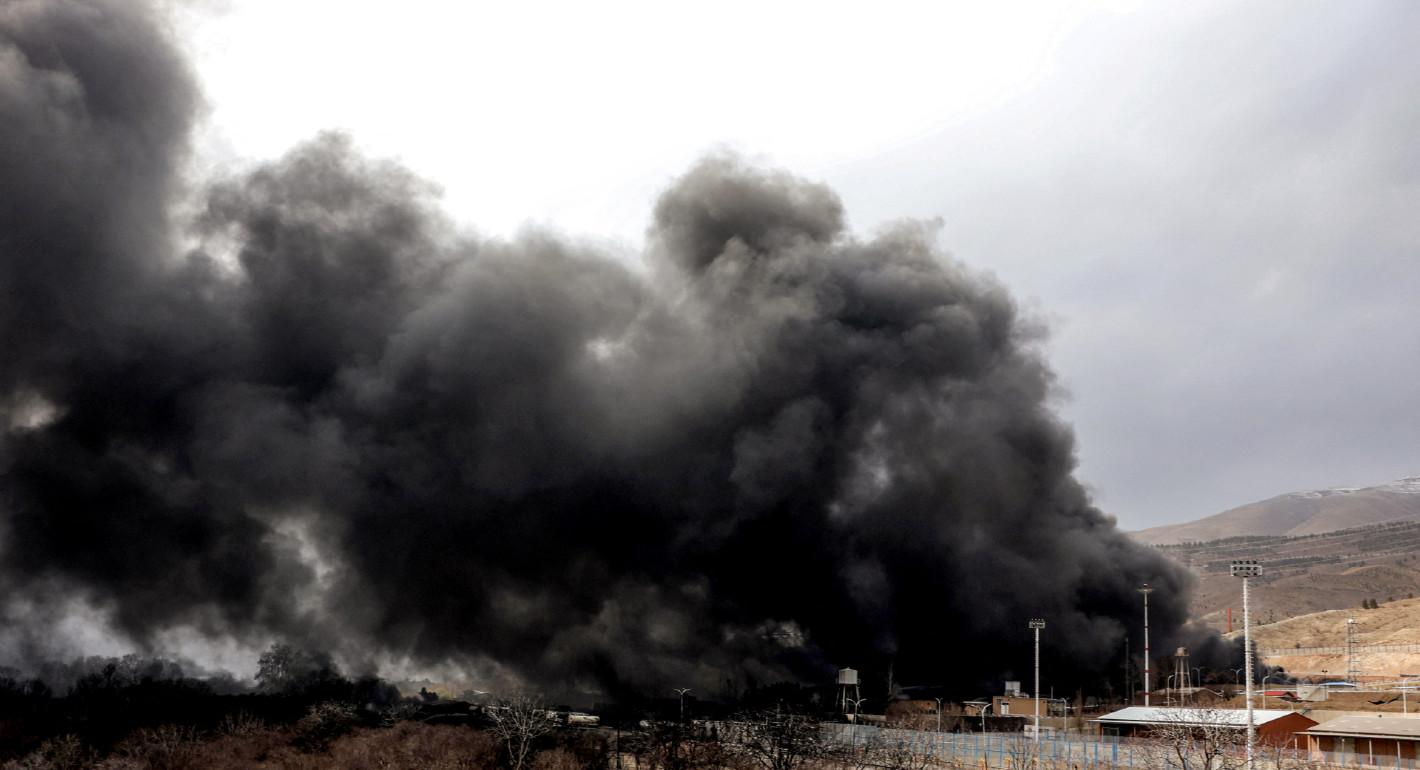
Understanding the climatic pain points is necessary for policymakers hoping to minimize the war’s negative environmental consequences.
This article was published a couple of months back, but I just discovered it, and thought it was worth sharing
Understanding the climatic pain points is necessary for policymakers hoping to minimize the war’s negative environmental consequences.
This article was published a couple of months back, but I just discovered it, and thought it was worth sharing
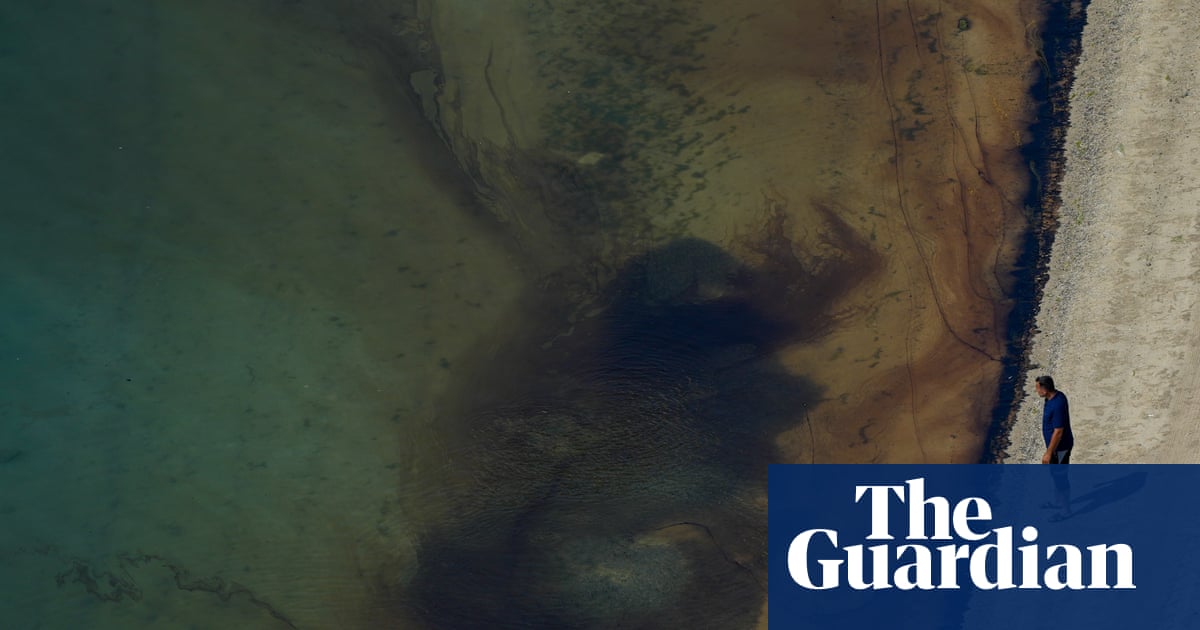
Since the US war on Iran began in February, there have been hundreds of oil spills, posing a ‘generational’ threat to wildlife
Since the US war on Iran began in February, there have been hundreds of oil spills, posing a ‘generational’ threat to wildlife


Pretty neat idea
Pretty neat idea

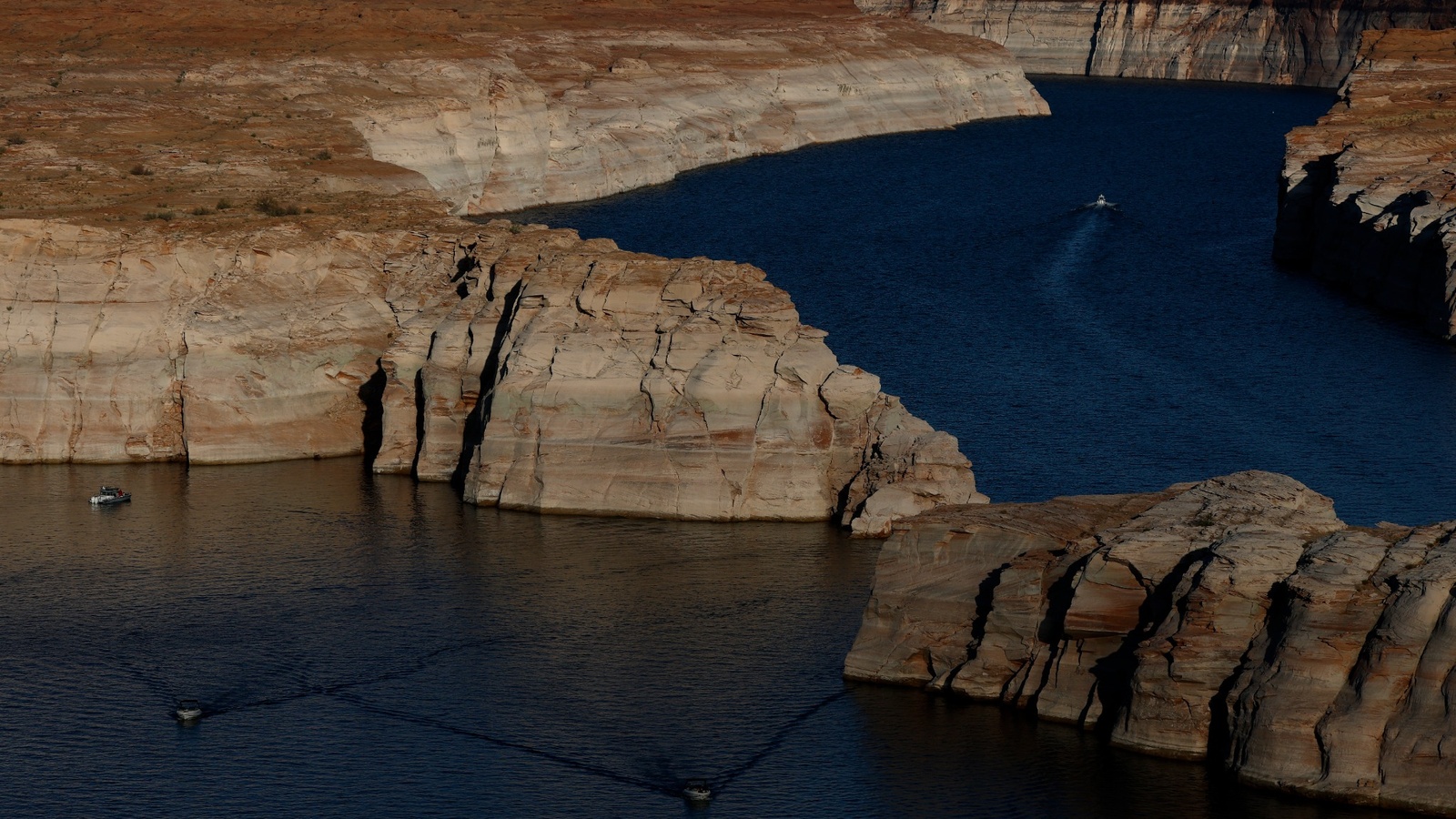
The 27-year-long drought in the Southwestern U.S. — the longest dry period in the last 1,200 years — is taking a serious toll on the flow of the Colorado River. Climate change is shrinking the snowpack in Colorado’s Rocky Mountains, the source of roughly 80 percent of the river’s annual flow, and higher temperatures are melting the snowpack earlier in the year, which saps runoff in late summer and fall. Warmer weather is also increasing evaporation from the river’s 40 reservoirs, including its two largest — lakes Powell and Mead.
Last month, Lake Powell, on the Utah-Arizona border, reached a record low, at less than 150 feet above dead pool, the point at which water can no longer flow through the Glen Canyon Dam’s bypass tubes to reach Lake Mead, behind Hoover Dam, 300 miles downstream. The low water levels reduced the generation of hydropower from both reservoirs, complicated how riverine ecosystems are managed, and slashed deliveries of water to the Lower Basin states of Arizona, California, and Nevada.
Farmers are fallowing fields. Developers in some areas have paused housing construction for lack of guaranteed water supplies. And the Bureau of Reclamation has curtailed its “environmental flows” — releases of cold water from Powell — which is threatening protected fish and preventing the buildup of sandbars that provide habitat for wildlife in the Grand Canyon. No matter how the river is managed going forward, observers say, ecosystems both downstream and up will see significant changes.
Faced with the prospect of even lower Colorado River levels, the federal and state governments have been scrambling to come up with ways to meet the competing demands of disparate interests that rely on its flow, from topping off Lake Powell with water diverted from upstream reservoirs, to slashing downstream water deliveries by 40 percent, to paying farmers to keep their allocations of water in the river. The crisis is even causing some to consider a fix once deemed unthinkable: draining Lake Powell entirely.
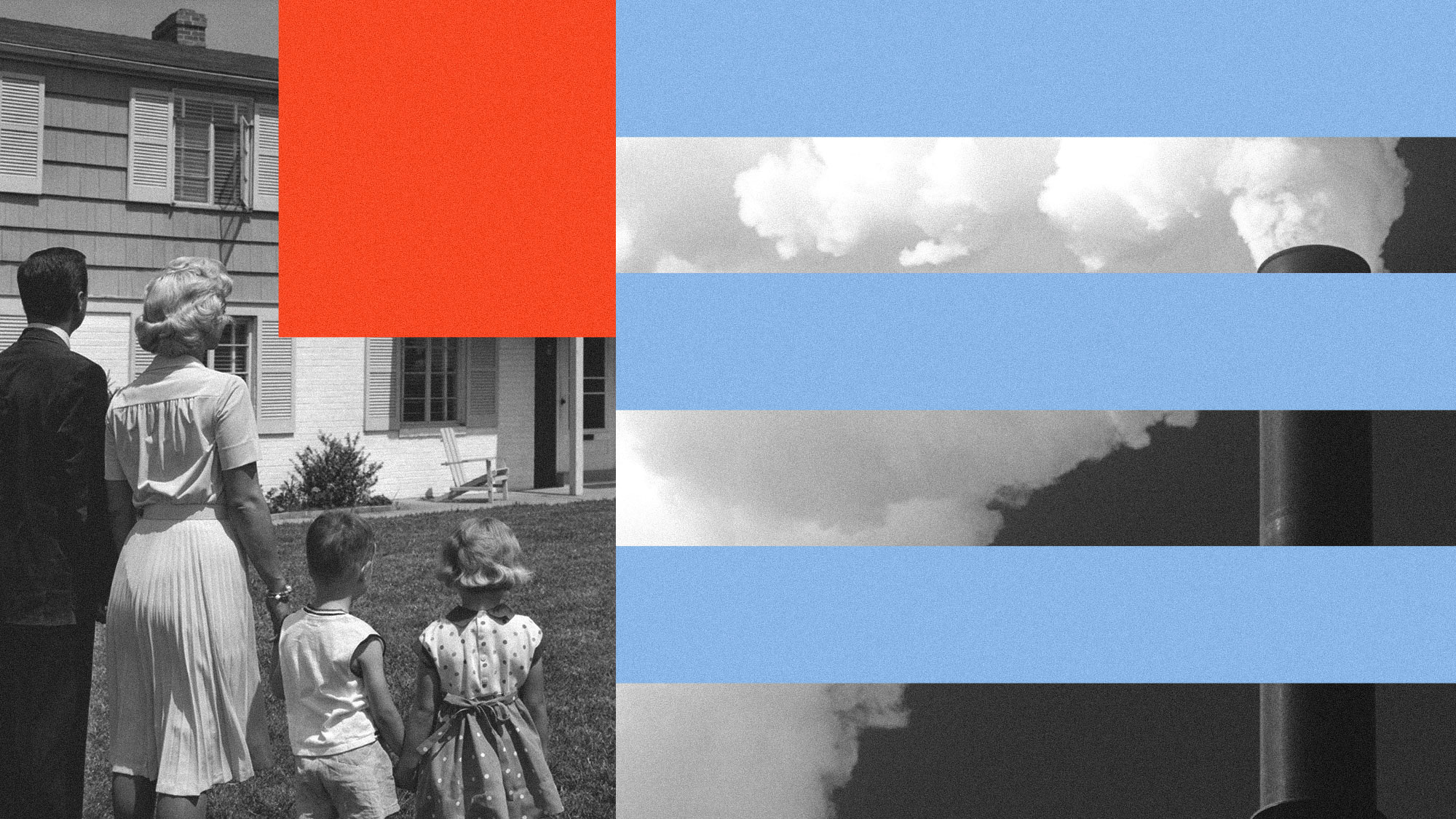
To Sierra Isley, the American Dream brings to mind a home ringed by a white picket fence. “The house in the suburbs is just what you’re taught growing up,” the 26-year-old said. “You know, that’s what you see on TV.” What she wanted for her life was a bit different from that picket-fence ideal, but she still saw the prospect of buying her first house two years ago as a chance to live out what she called “that big dream that everybody has as a kid.”
Isley and her girlfriend, Jamie, were moving from Philadelphia to Asheville, North Carolina, and found a home they liked, a three-bedroom brick house with lots of natural light and a big tree out front. With some help from their parents, they put down a deposit and got their offer accepted. But when they went to sign the closing papers, a complication got in the way: The house had a huge lien on it. After consulting with lawyers, they decided to break the contract and hunt for an apartment to rent in Asheville.
It was a blessing in disguise. One month later, while Sierra and Jamie were still unpacking boxes and building furniture, the remnants of Hurricane Helene turned Asheville into a disaster zone. The basement of their apartment flooded, but they were luckier than some of their neighbors, whose homes had been destroyed.
Owning a home has long been seen as a cornerstone of the American Dream — a way to build wealth that you could use one day to pay for your children’s education and fund your retirement. That arrangement was always more precarious than it was made out to be. But as fires and floods damage homes and drive up insurance rates, pouring your life savings into a house has become riskier than ever. In a report called “Property Prices in Peril,” the firm First Street projected last year that climate risks could knock nearly $1.5 trillion off the value of American homes by 2055. For some people, the sociologist Rebecca Elliott wrote, “the American dream of homeownership may become a nightmare.”
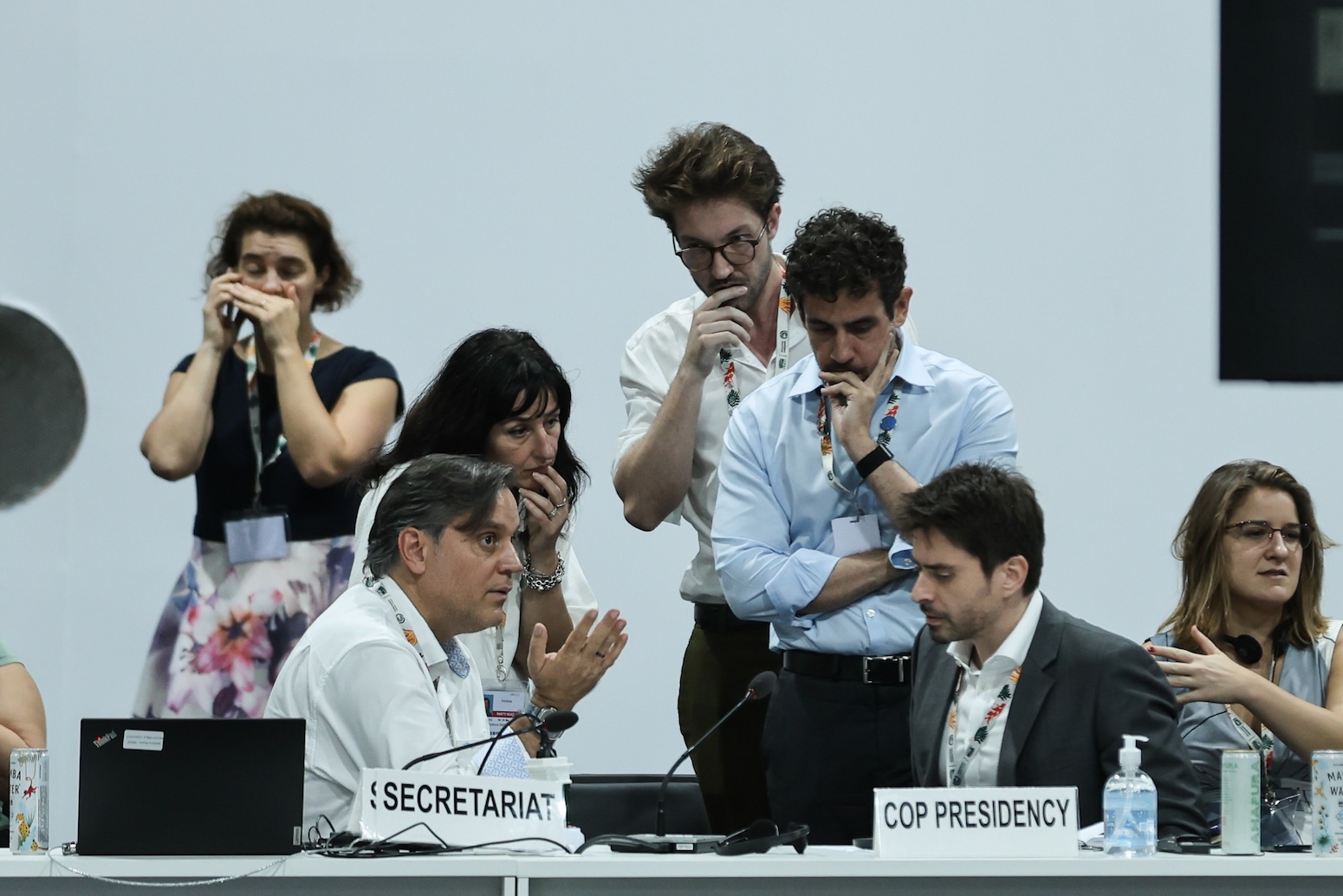
Carbon Brief has analysed around 100 documents at COP31 and captured them in an interactive table
Carbon Brief has analysed around 100 documents at COP31 and captured them in an interactive table

When the sun goes down, the wind picks up in central New Mexico, whipping through arid canyons with a ghostly howl that for centuries, locals have likened to the wails of the folkloric ghost La Llorona.
A few hours east of Albuquerque, this June, those gusts began powering the largest wind farm this continent has ever seen, twirling over 900 colossal steel turbines. Each is as tall as the Statue of Liberty, scattered across a patch of desert roughly the size of Chicago. They plug into a 550-mile transmission line stitched across the Southwest and are now powering over 1 million homes — as far away as California.
The SunZia Wind and Transmission project is a rare 21st-century triumph of American infrastructure, an engineering marvel that generates more electricity than the Hoover Dam. When the turbines came online this spring, they immediately broke records for wind-generated power in California’s energy supply, where solar power may rule the day, but the winds of New Mexico increasingly fuel the night.
After years of stagnant power growth, the U.S. is absolutely starving for more electricity, with demand projected to rise by 25 percent by the end of this decade, and a staggering 78 percent by 2050. Enormous as this challenge might seem, it may ultimately be the catalyst the country needs to dramatically dial up its renewable energy infrastructure, so that the years to come are powered not by gas or coal, but by clean energy sources like the sun and the wind. By next summer, the project will have prevented about 9 million metric tons of carbon dioxide from entering the atmosphere, according to Pattern Energy, the project’s developer.
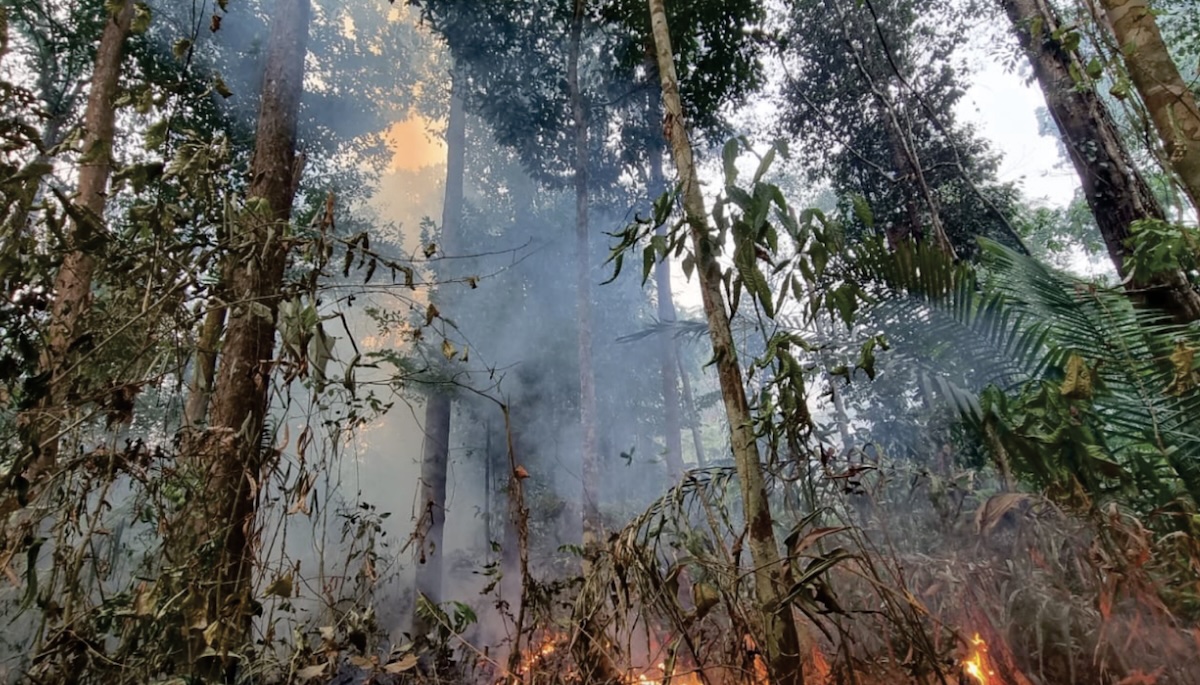
The research team found:
- In years that were relatively wet, with little deforestation or wildfire activity, the Amazon was still a small net source of carbon to the atmosphere.
- In years when the climate was relatively mild, but with high levels of deforestation and wildfire activity, net carbon emissions jumped dramatically, corresponding to the increase in human activities at the surface.
- The third group was the worst of all: years with severe climate stressors that led to extreme droughts in the region, coinciding with very high levels of deforestation and burning at the surface.
The paper: Amazon carbon emissions driven by human actions amplified by droughts

- Scientists’ Secret Vote: A U.N. climate report legitimized carbon capture and storage, suggesting at least 99% of the CO2 would likely remain underground, despite scant empirical evidence.
- Oil Industry Favorite: Fossil fuel companies have identified carbon capture as a climate solution that will allow their industry to survive, and have pushed the U.N. and scientists to study it.
- Pattern of Underperformance: Decades later, major CO2 storage projects have suffered breakdowns, setbacks and cost overruns, while CCS remains central to climate models and policy.
cross-posted from: lemmy.sdf.org/post/60922353
Climate pollutant concentrations in the Beijing region of northern China have plateaued or begun to decline—except for the world’s most potent greenhouse gas, new research concludes.
The findings, published in the journal Environmental Science & Technology, suggest a decades-long effort to clean Beijing’s air is beginning to pay off. But while it cites progress, the research also highlights a growing climate challenge, driven by the region’s surging electricity demand and the explosive growth of semiconductor manufacturing amid the AI boom.
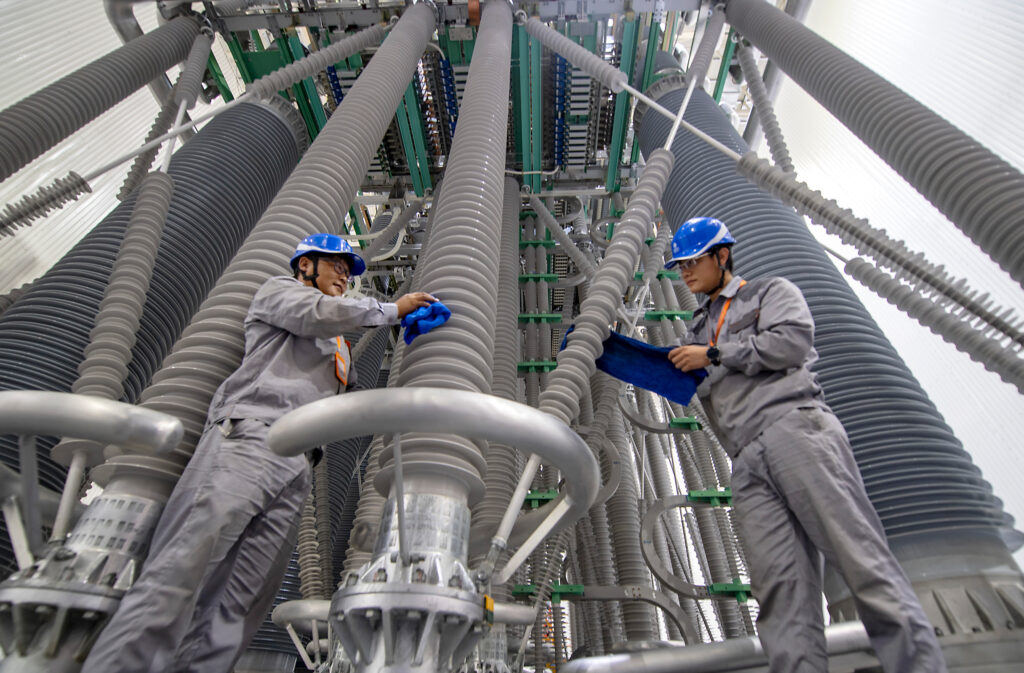
Sulfur hexafluoride—known as SF6—is 24,300 times more effective at warming Earth’s atmosphere, pound for pound, than carbon dioxide, the leading driver of climate change. The synthetic gas is widely used as an electrical insulator in high-voltage equipment, making the power sector a key source of concern as electricity infrastructure expands. While SF6 emissions are declining in other parts of the world, they are rapidly rising in China, which accounts for more than half of global releases.
[…]
The country’s state-owned electric power companies recycle only about 30 percent of the gas they discard each year, with the remainder likely released into the atmosphere, a recent Inside Climate News analysis concluded.
The study, by researchers at the Chinese Academy of Sciences’ Institute of Atmospheric Physics in Beijing, […] found that semiconductor manufacturing, where the gas is used for etching and cleaning, is another fast-growing source of SF6 emissions in the Beijing region.
[…]
Artificial Intelligence, or AI, could fuel rising SF6 emissions by increasing semiconductor chip manufacturing and continuing the region’s power-grid buildout. The Beijing Municipal Committee is a government advisory body overseen by the Chinese Communist Party. The institute’s press release announcing the policy report’s adoption came less than a week after the study was published.
[…]
The semiconductor industry can rein that in. Among the options: optimizing production, using alternative fluorine sources and destroying waste gas.
From 1996 to 2010, the U.S. Environmental Protection Agency partnered with manufacturers in a voluntary effort to reduce emissions of SF6 and other fluorinated greenhouse gases.
[…]
The World Semiconductor Council, which represents industry associations in China, Taiwan, Europe, Japan, Korea and the United States, committed in June to continue gradually reducing the emissions intensity of SF6 and other climate super-pollutants in its products.
However, Avipsa Mahapatra, climate campaign director for the Environmental Investigation Agency US, a nonprofit organization based in Washington, D.C., argued the current study exposes a blind spot in decarbonization policies.
“Whatever measures currently exist are not yet bending the SF6 curve,” Mahapatra said.
[…]

In this essay I review old qualitative data. The data revolves around the flow of information in disaster recovery. What survivors say and what practitioners hear goes through a filtering process. Think of the game Telephone, but the message is purposefully distorted. Important context is lost.
In this essay I review old qualitative data. The data revolves around the flow of information in disaster recovery. What survivors say and what practitioners hear goes through a filtering process. Think of the game Telephone, but the message is purposefully distorted. Important context is lost.
Sand tiger sharks are rebounding in Boston Harbor after cleanup
Sand tiger sharks are rebounding in Boston Harbor after cleanup
@environment@beehaw.org @environment@aussie.zone @Abelvicent @environment@newsmast.community how much water does even a small data center need for its daily functioning ?? How much energy does it require regularly ??
@environment@beehaw.org @environment@aussie.zone @Abelvicent @environment@newsmast.community how much water does even a small data center need for its daily functioning ?? How much energy does it require regularly ??
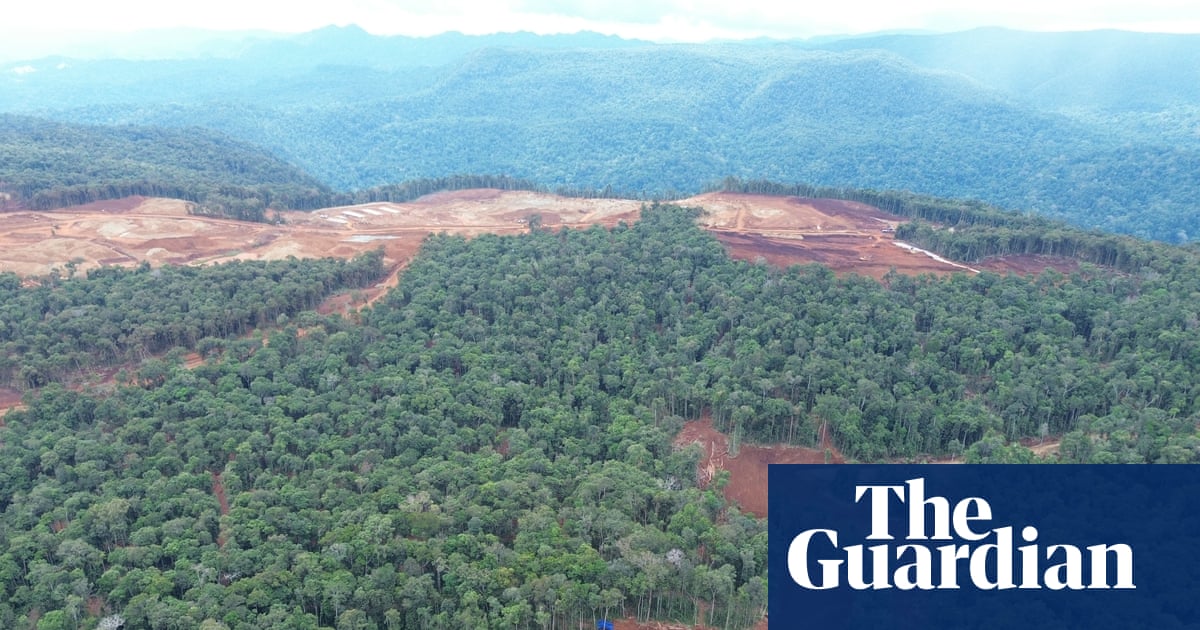
Volkswagen, Ford and Tesla are among the electric carmakers whose batteries may contain nickel mined in indigenous woodlands plagued by deforestation, an analysis has found, highlighting the struggle to make vehicles that are free from environmental destruction.
Corporate disclosures and trade flows from the last two years show mines in the battery supply chains of automotive giants are linked to the loss of trees in Sulawesi, a wildlife hotspot in Indonesia that houses the world’s largest nickel deposits. The metal is widely used in cathodes in car batteries because it boosts energy density and increases range.
Ore from the Cahaya and Hengjaya mines was traced through regional smelters and Chinese processing plants run by Zhejiang Huayou Cobalt, a cathode manufacturer that supplies CATL, the world’s largest battery maker. Huayou’s corporate reports list US and European carmakers as end-users, while additional corporate files and trade data show a separate route from Huayou to LG, a South Korean group that also supplies battery products to leading carmakers, via Poland.
Satellite analysis shows the mines have led to widespread deforestation of primary rainforest in nickel-rich lands inhabited by the indigenous Tolaki people.
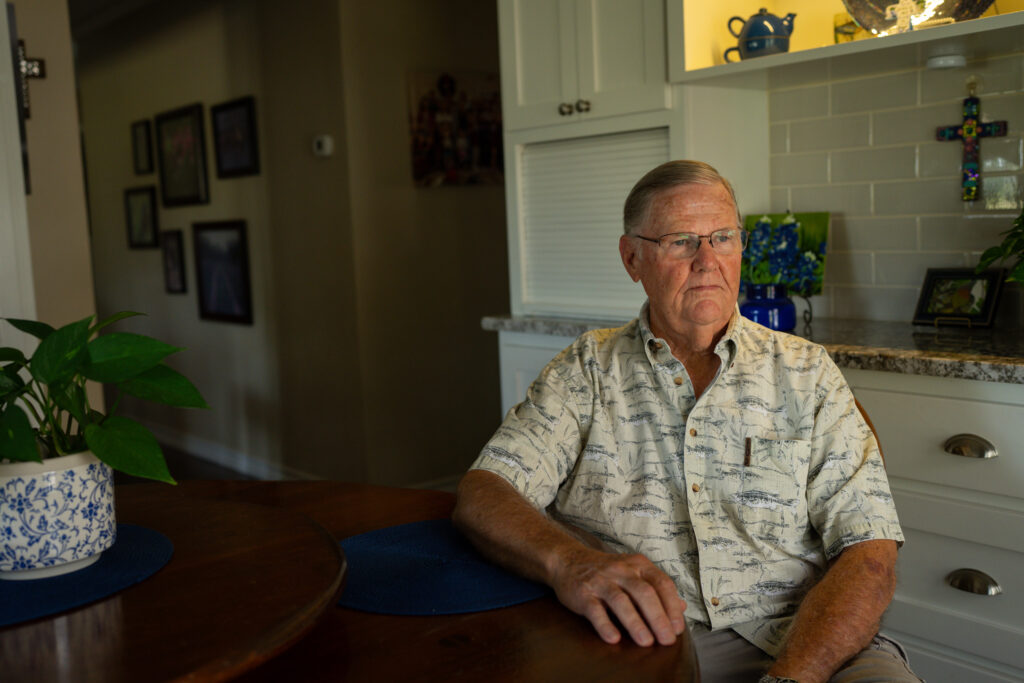
Eight years ago, at the height of the shale-oil boom, a committee of industry giants and public officials unveiled a bold plan to make Corpus Christi “drought proof.”
With this plan, a consultant explained to city officials at the time, their semi-arid stretch of coastline in South Texas could finally overcome the economic limitations of its scarce water supply.
“Industry can continue to operate,” said a slideshow the consultant, Frank Brogan, presented to Corpus Christi City Council. “Industry can justify expansion. Community can attract new industry.”
The plan seemed simple. The region’s largest water users—Texas-based titans like OxyChem, Valero and Citgo—would pay Corpus Christi to build the state’s first-ever seawater desalination plant, which would produce millions of gallons of freshwater per day at minimal cost to the public. In exchange, the companies wouldn’t face pressure to throttle back operations at their refineries and chemical plants during future dry spells.
“We don’t want to have the reputation of having a water problem,” said Brogan, a former executive at the Port of Corpus Christi, the top U.S. port for crude-oil exports, in the August 2018 presentation.
City leaders unanimously approved the plan, hailing it as a breakthrough: Giant corporations had agreed to front the money for an innovative project that other communities could only dream of affording.
But instead of securing Corpus Christi’s water future, the plan pushed Texas’ eighth-largest city to the brink of a water-supply disaster, burned through tens of millions of public dollars, and engulfed the city in political turmoil.

Oil slicks from ships and offshore oil platforms cover nearly 1.6 million square kilometers (618,000 square miles) of the ocean surface each year, an area slightly larger than the nation of Mongolia.
The estimate comes from a recent report by Skytruth, a U.S.-based nonprofit that used satellite imagery, machine learning and vessel tracking data to trace global oil pollution in the oceans between 2023 and 2025.

The complaint lodged this week by Lighthouse Reports, and first reported by POLITICO, accuses the EU executive of setting up rules keeping the public from seeing how much energy and water are used by individual data centers.
The complaint lodged this week by Lighthouse Reports, and first reported by POLITICO, accuses the EU executive of setting up rules keeping the public from seeing how much energy and water are used by individual data centers.

Swiss glaciers have suffered a near-record loss of ice in 2026, new data shows, as intense summer heatwaves take their toll on Alpine peaks.
More than 5% of the country’s remaining glacier ice has disappeared in the last 12 months, which scientists say is “extraordinary”.
They warn that such rapid melting is no longer a surprise given the pace of climate change, but it could threaten water supplies for farming, hydropower and transport in the decades ahead.
The loss of glacier ice can also destabilise mountain slopes and increase the risk of landslides in some places - which can lead to flash flooding in extreme cases, as seen in Nepal in August.
There were multiple factors involved in that event, which was triggered when a large area of bedrock and glacier ice collapsed.
But scientists say long-term glacier thinning and the thawing of frozen ground likely raised the risks.
The notable finding from this latest report is not so much that Swiss glaciers are shrinking - which is to be expected in our warming climate, driven primarily by fossil fuel emissions - but the sheer pace of melting.
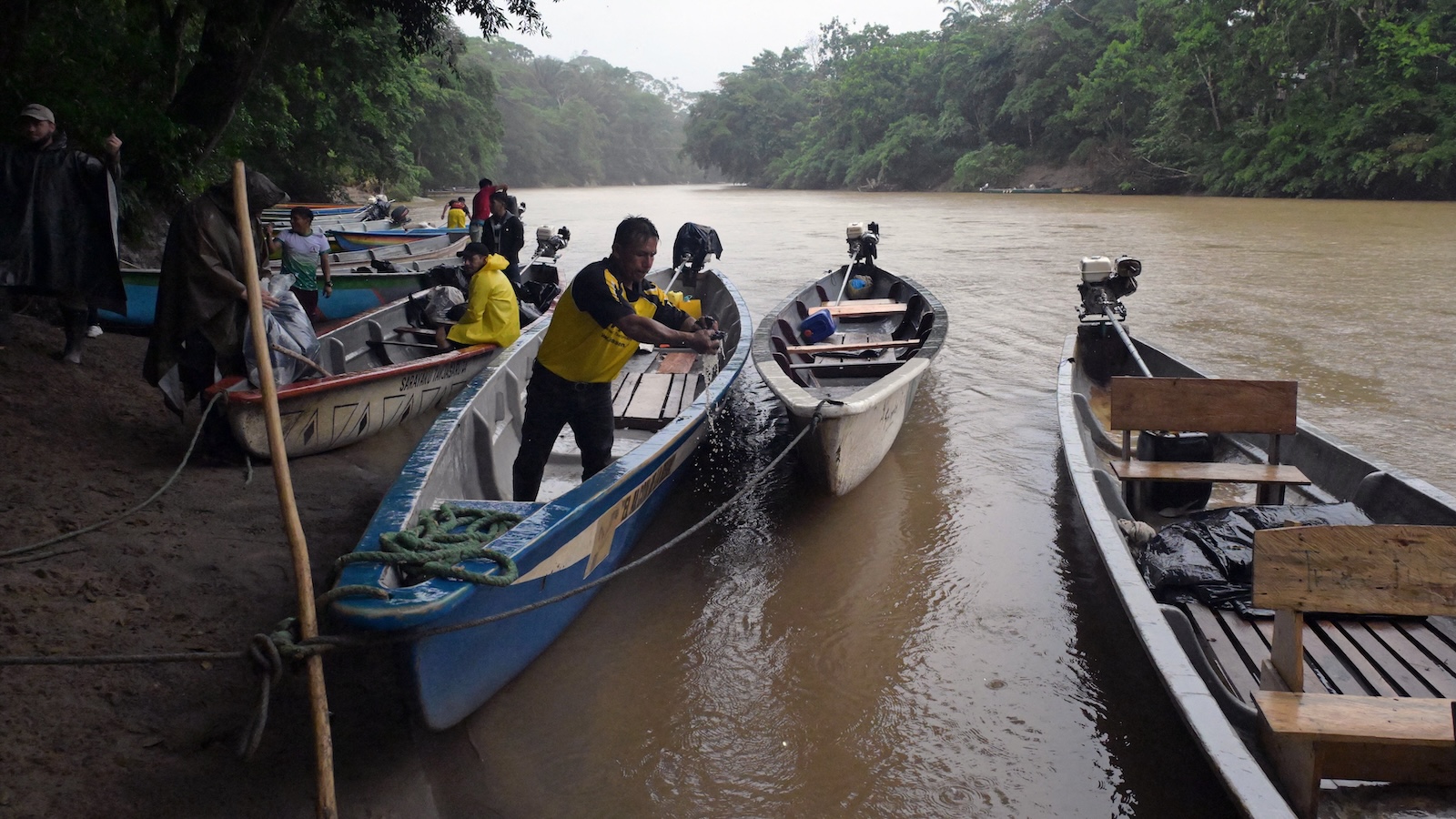
Indigenous lands from Canada to Ecuador to Nepal are increasingly being hit by catastrophic storms, fires, and floods. Worse, these climate disasters often come one after the other as overlapping crises rather than isolated incidents. Still, despite the ongoing destruction, Indigenous peoples continue to prove that they have the knowledge and skills to respond, if only global powers will let them.
Even amid growing recognition by scientists and policymakers of the power of Indigenous expertise to respond to climate change, the key role that Indigenous governance plays in those knowledge systems has not received as much respect.

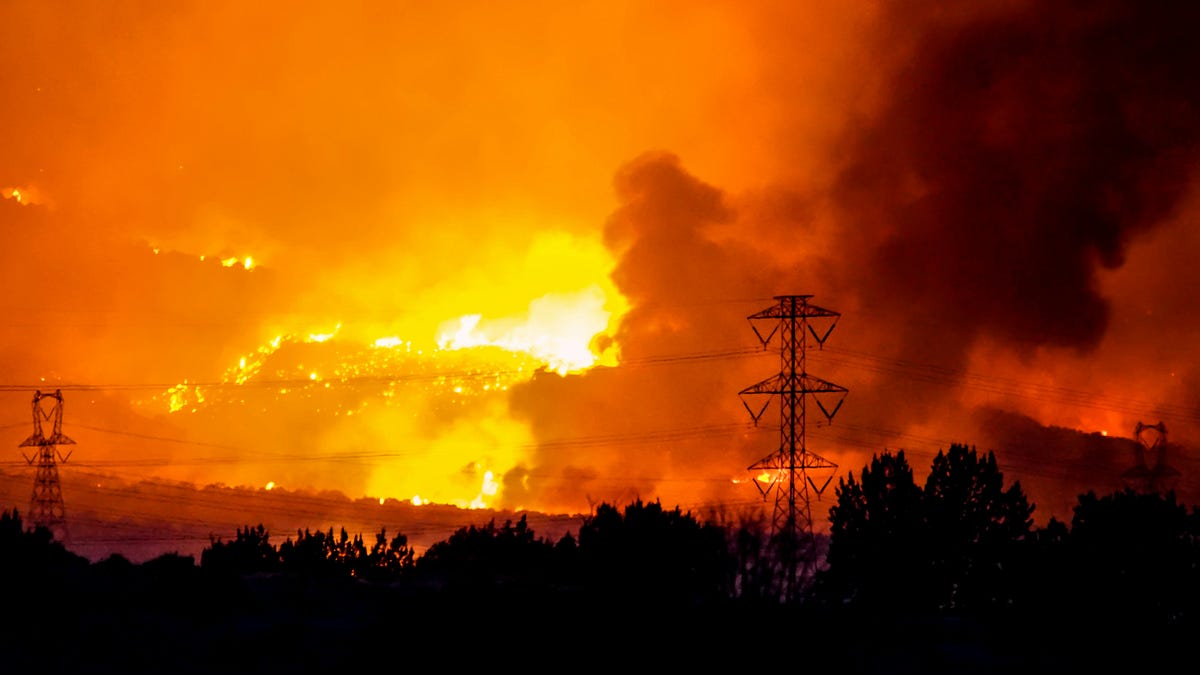
This was a tough essay to write. Tough but necessary. As the climate crisis intensifies, neoliberalism ushered in an age of individual resilience. You’re asked, told really, to prepare yourself and recover yourself. Entrepreneurial survivorship, or perish. In a world increasingly unaffordable, this will lead to increased harm and no systemic change.
This was a tough essay to write. Tough but necessary. As the climate crisis intensifies, neoliberalism ushered in an age of individual resilience. You’re asked, told really, to prepare yourself and recover yourself. Entrepreneurial survivorship, or perish. In a world increasingly unaffordable, this will lead to increased harm and no systemic change.
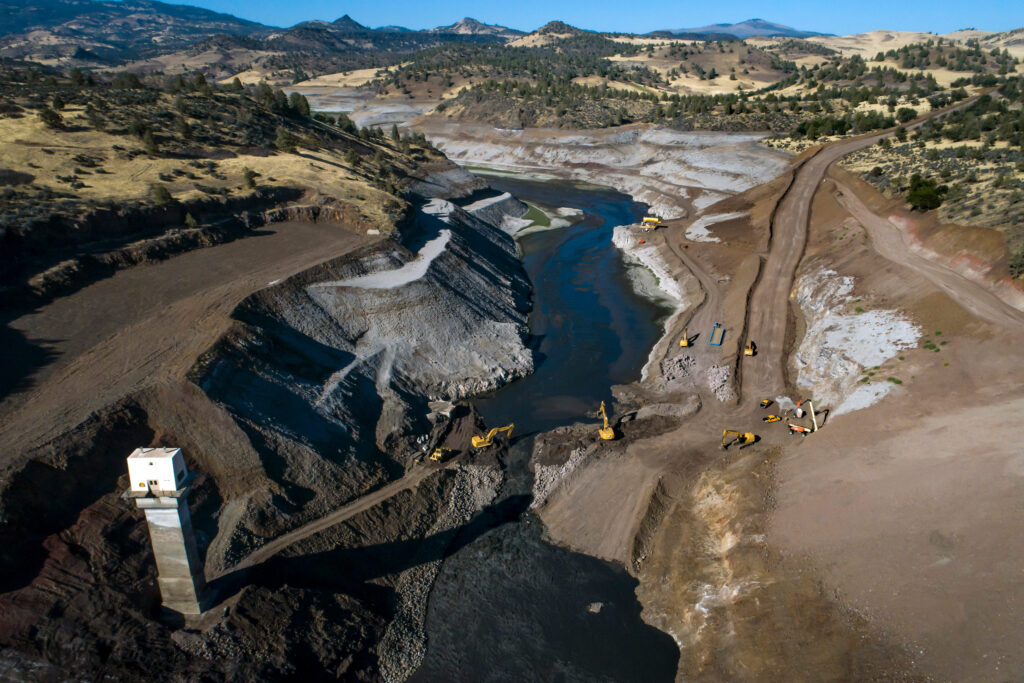
In August 2024, excavation crews breached the last of four dams on the Klamath River in far northern California, marking the first time in over a century that salmon could swim above the dam sites.
Now, new research published on Thursday shows that in the two years since dam removal, over 20,000 chinook salmon have migrated up the Klamath River, many past the former dam sites and into traditional spawning grounds.
“The biological response has been much faster than I, and most of us, expected,” said Damon Goodman, lead author of the study and Mount Shasta-Klamath regional director for Cal Trout. “We expected salmon to eventually recolonize habitat above the former dams, but within two years we’ve seen thousands of Chinook salmon moving into the upper basin and spawning across an enormous portion of their historic range.”
The salmon runs on the Klamath, which continue to hold ceremonial, spiritual and nutritional significance for indigenous tribes in the region, were once among the most productive in the western United States. The four dams, constructed by PacifiCorp in the early and mid-20th century to generate electricity, blocked passage for migrating salmon and altered the river’s natural hydrology, increasing water temperatures and flooding naturally cold springs.
The “jaw-dropping” El Niño currently heating up the planet has burst through the highest temperature ever recorded for the phenomenon, several months before its expected peak.
The latest data shows the temperature rise at the heart of El Niño in the Pacific Ocean has now reached 3.05C. That is higher than the 3.02C set in late November 2015, the previous high set in the 150 years of modern records. This temperature is measured against the average of 1991-2020.
The preferred measure of most meteorologists uses a 30-year rolling average as a reference and so takes account of human-caused global heating. This metric, called ONI (Nino3.4), is on the brink of breaking the record, just one-hundredth of a degree below the 2015 record. Both metrics are underpinned by data from the US National Oceanic and Atmospheric Administration (NOAA).
The most recent forecasts predict a peak of 4.0C in November and December, according to the average of 14 different models assessed by climate scientist Zeke Hausfather. That is a level so far above previous events that Hausfather called it “mind-blowing”, while others have described it as “Godzilla-level”. Any temperature rise above 0.5C is deemed an El Niño; above 2C is officially called a “very strong” El Niño – often referred to as a “super” El Niño.
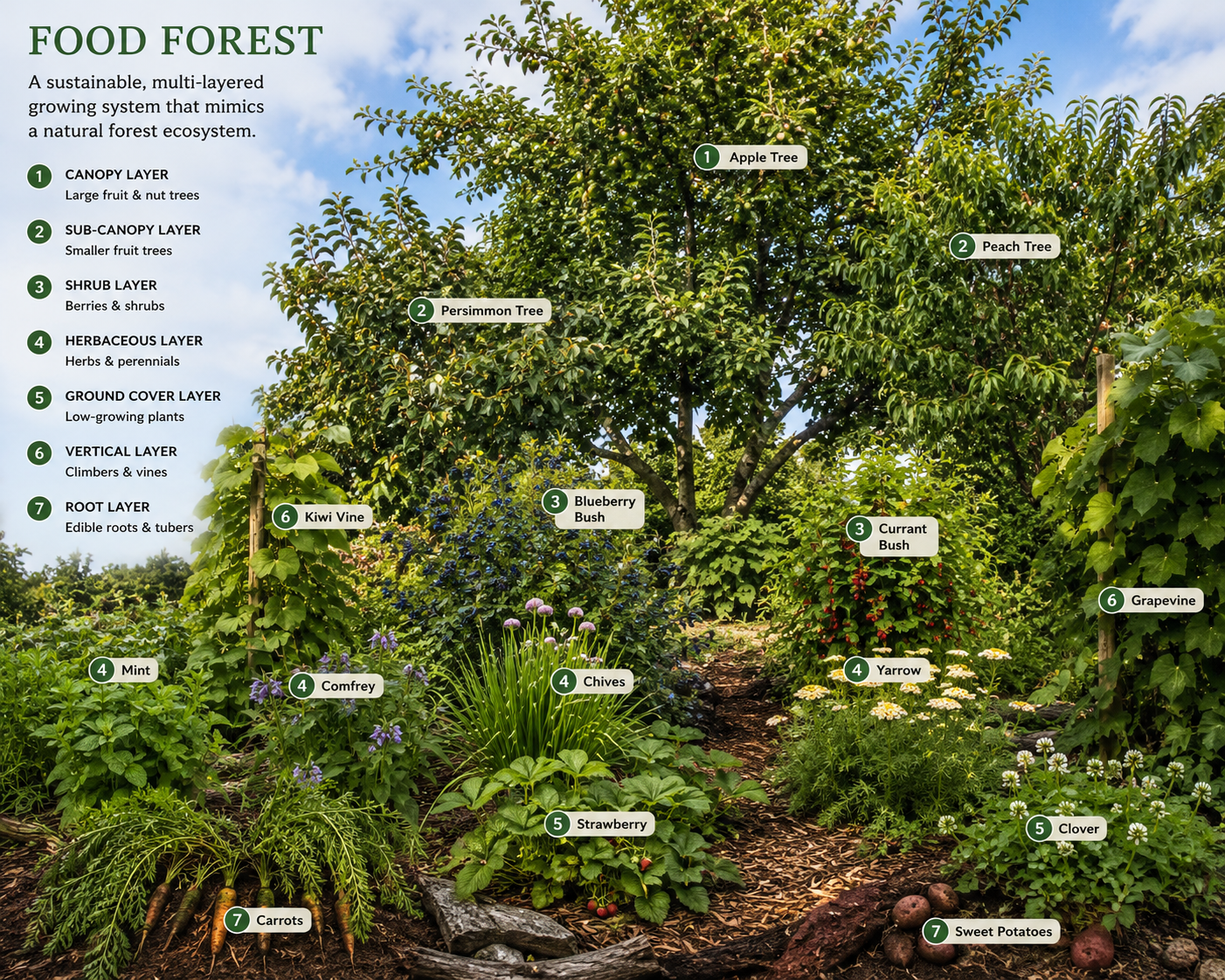
🌿A food forest is a diverse, self-sustaining ecosystem that grows food by working with nature. At Green Youth Movement, our vision is to establish a food forest once we secure funding for land. It will increase harvests, restore biodiversity, and provide hands-on training in regenerative agriculture for more young people and communities.
@environment @foodpluswords_ @BathNature #gardening #Diet #nutrition #agriculture #environment #biodiversity #ecosystems #agroecology #plants #permaculture #UK
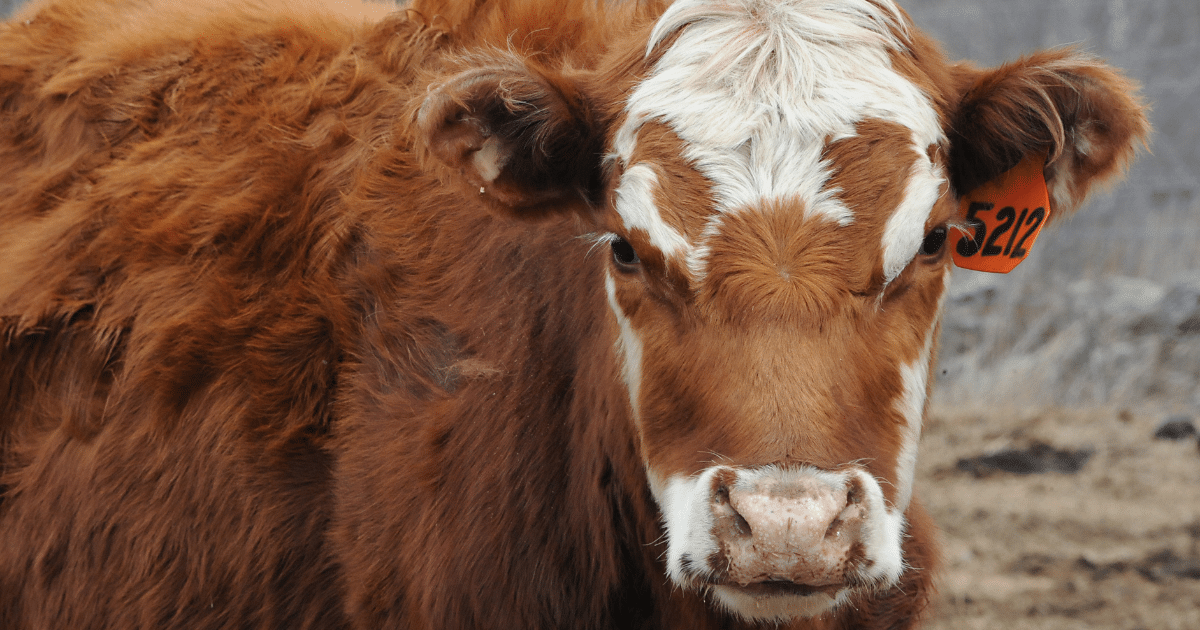
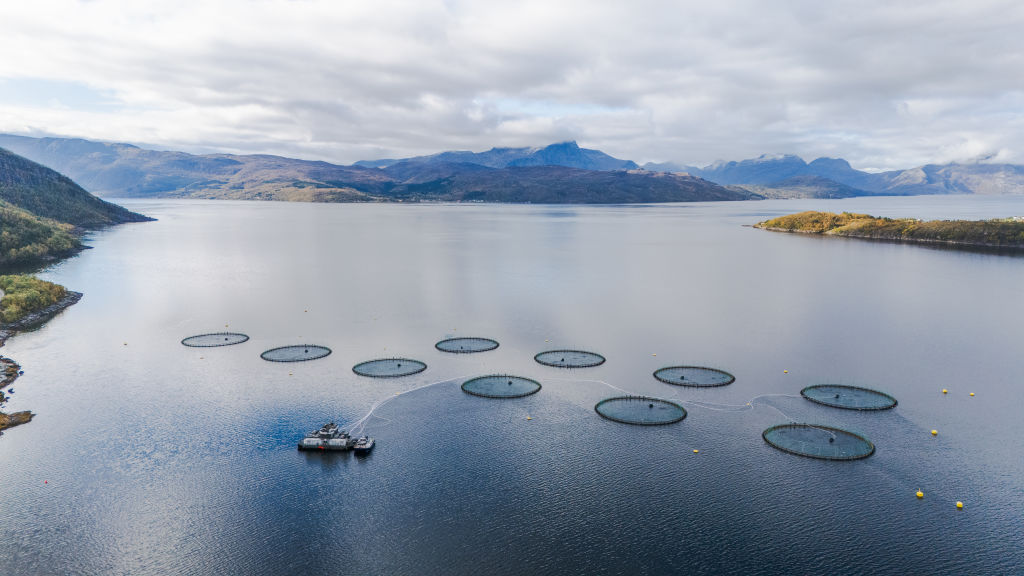
Hayek noted that it’s difficult to attribute soy consumption to individual fish species. But other research has found a rise in the use of crop-based ingredients fed to farmed salmon. In Norway, the world’s biggest producer of farmed salmon, 90 percent of feed ingredients were marine-based in 1990, but by 2020 that had dropped to about 23 percent. Advocacy groups there determined that 90 percent of the soy fed to farmed salmon in Norway comes from three Brazilian companies, each of which have sourced soy ingredients from illegally deforested patches of the Amazon rainforest.
Other research has found that the shift to crop-based ingredients doubled the greenhouse gas emissions, per kilogram, of farmed fish in Europe and the United Kingdom from 2000 to 2020.
It’s trading one problem—marine exploitation—for another—land exploitation,” Cascada said."
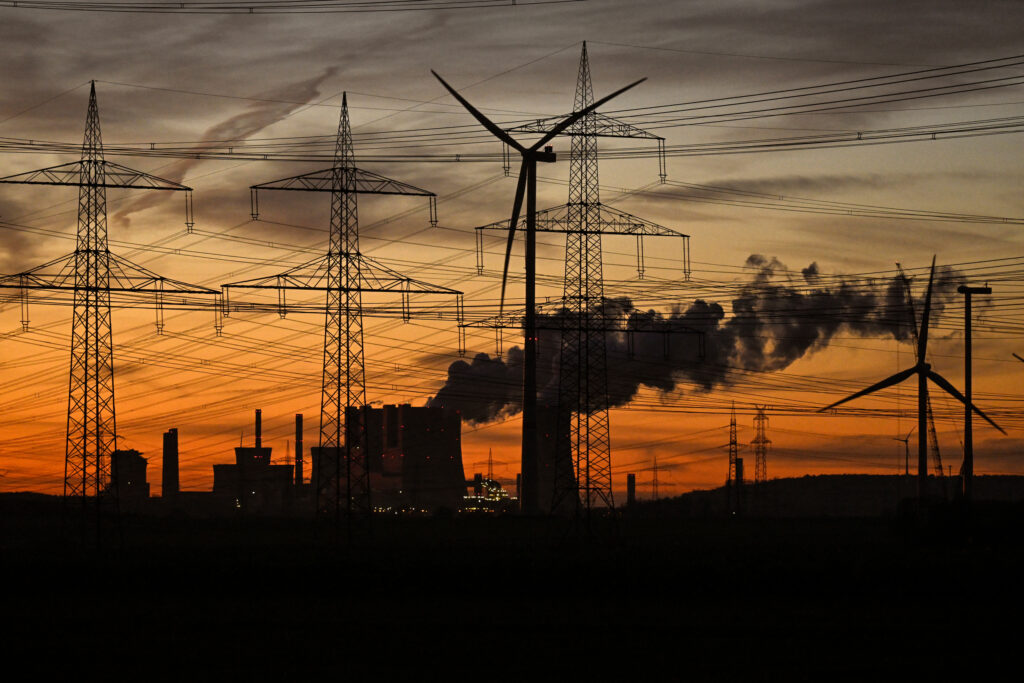
Fossil fuel emissions are pushing Earth’s climate toward a dangerous new phase of climate “overshoot,” scientists warned Wednesday in a new report from the United Nations Environmental Programme.
The report, Limiting Overshoot, projects that global temperatures will exceed the 1.5-degree Celsius (2.7 degrees Fahrenheit) warming threshold identified in the Paris Agreement within a few years, intensifying deadly climate impacts. It says the best chance of restoring a safe climate is to begin cutting greenhouse gas emissions immediately, halve them by 2035, and figure out ways to remove billions of tons of carbon dioxide from the atmosphere before the end of the century.
The 1.5 degrees of warming identified in the report and the Paris pact refers to the increase in global temperatures since the preindustrial period of 1850 to 1900, before humans altered the atmosphere and climate with billions of tons of fossil fuel emissions and other industrial and agricultural pollution.
Under the 2015 agreement, more than 190 countries pledged to keep the global temperature below that level because they knew warming above that would mean even greater intensification of extreme weather events, ecosystem losses and the potential submersion of small island countries.
Multiple scientific studies, including global assessments from the Intergovernmental Panel on Climate Change, project that warming of more than 1.5 degrees Celsius will cause severe damage to human health, food and water supplies, as well as infrastructure and economies.
Scientists have calculated that at the current pace of emissions, warming could reach a catastrophic 2.7 to 3 degrees Celsius by 2100. If all the measures promised by governments under the Paris Agreement are implemented, warming could be limited to about 1.7 or 1.8 degrees Celsius, which would make it easier to return below the 1.5-degree Celsius threshold.
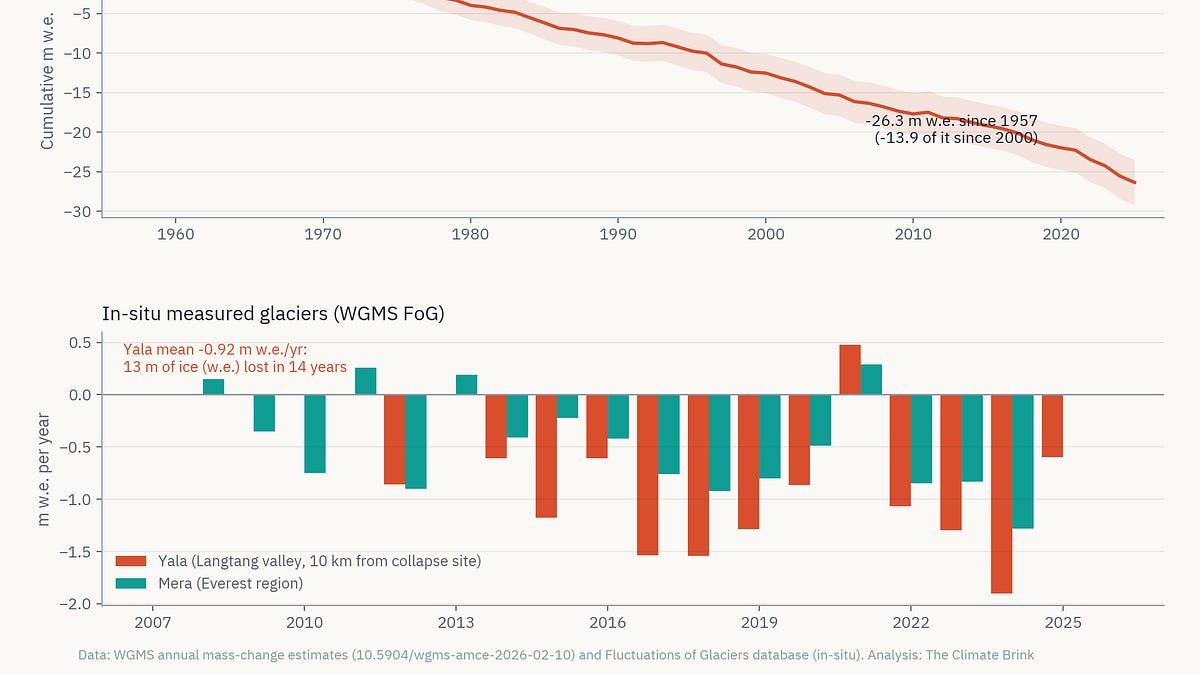
Within hours, some people on social media were confidently asserting that climate change caused the disaster, while others were just as confidently asserting it had nothing to do with it. In this piece I’ll try and lay out what the data and the scientific literature actually supports.
The short version is this: any formal attribution of this specific collapse to climate change is premature, and single events like this are genuinely hard to attribute even after careful study. At the same time, the collapse happened on a mountain that has warmed rapidly for decades, immediately after four consecutive summers that all rank among the five warmest in at least 86 years, and in a valley that has been losing ice at an accelerating rate. A rapidly warming climate and retreating glaciers are increasing risks of these sorts of events in the region, whether or not we can ultimately attribute this particular event.
[…] according to data published by the Office for National Statistics on Wednesday.
The figures do not include this summer, when England has sweltered under a succession of heatwaves and is on track to record its highest ever number of heat-related deaths.
[…] according to data published by the Office for National Statistics on Wednesday.
The figures do not include this summer, when England has sweltered under a succession of heatwaves and is on track to record its highest ever number of heat-related deaths.
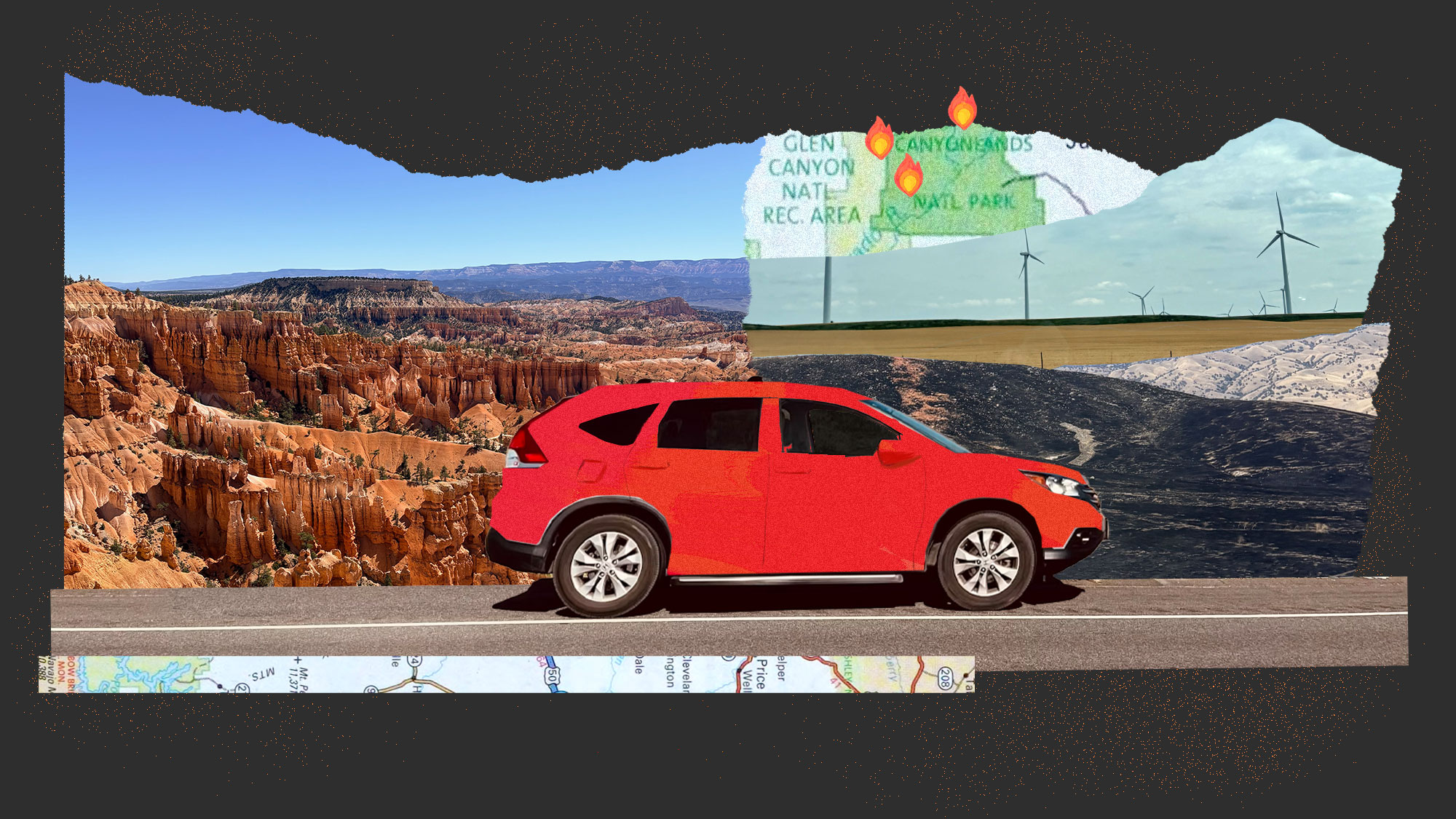
My husband, friends, and I sat huddled at a faux-marble-topped table in the lobby of our Utah hotel, looking down at a Google Maps route pulled up on my iPhone. We pinched and scrolled the screen as the breakfast buffet crowd hummed around us.
We were less than a week into a Great American Road trip — one that would take us 9,000 miles from coast to coast and border to border. Today’s agenda was to relocate from Moab, the gateway city for Arches and Canyonlands national parks, to our hotel near Bryce Canyon. But there was a problem:
Utah was on fire.
To the west of us, the Cottonwood Fire had burned through 94,000 acres of forest and mountain towns, making it the largest conflagration in the United States. To the east, the Jones Fire had just erupted near the ghost town Cisco, its smoke plume looming on the flat horizon, visible from our hotel room. In total, more than a dozen wildfires were burning across the state, closing roads and turning the skies an ominous orange. We had to find a safe way through.
“If we take Route 89, it takes us straight into the middle of the Cottonwood Fire,” said my childhood friend Jessie, who had joined us with her husband for the Utah leg of our trip.
“There’s Route 72 through Loa, but that isn’t much farther away,” my husband said.
We switched apps from Google Maps to Watch Duty, a real-time wildfire tracker, waiting for it to load our precise location. My kids shifted their attention from their stacks of chocolate chip pancakes to the screen, which was covered in fire symbols. My 12-year-old son looked at me, worried.
“The edge of the Cottonwood Fire is creeping toward Route 72, too,” I noted. We had to make a decision and get going.
Family and friends flew over from Europe in 1988 for a roadtrip that had been planned for years but was waiting on me turning 9 to be eligible to raft the Grand Canyon.
After hitting Bryce but skipping Zion for some reason, we headed north.
We had the better part of a week planned just outside Jackson Hole, Wyo., but Yellowstone was on fire, so we pretty much spent that time at the ranch.
From there, it was on to Estes Park, Colo., for some time up at a mountain lodge.
In college, I’d do summer roadtrips just generally meandering about the West. Gas was about a buck a gallon after getting off the coast, and I could coax 52 mpg out of my manual Civic, so it was absurdly cheap.
I can’t begin to imagine what the college summer experience is like now – let alone family road trips – but it’s very apparent that things won’t improve moving forward.
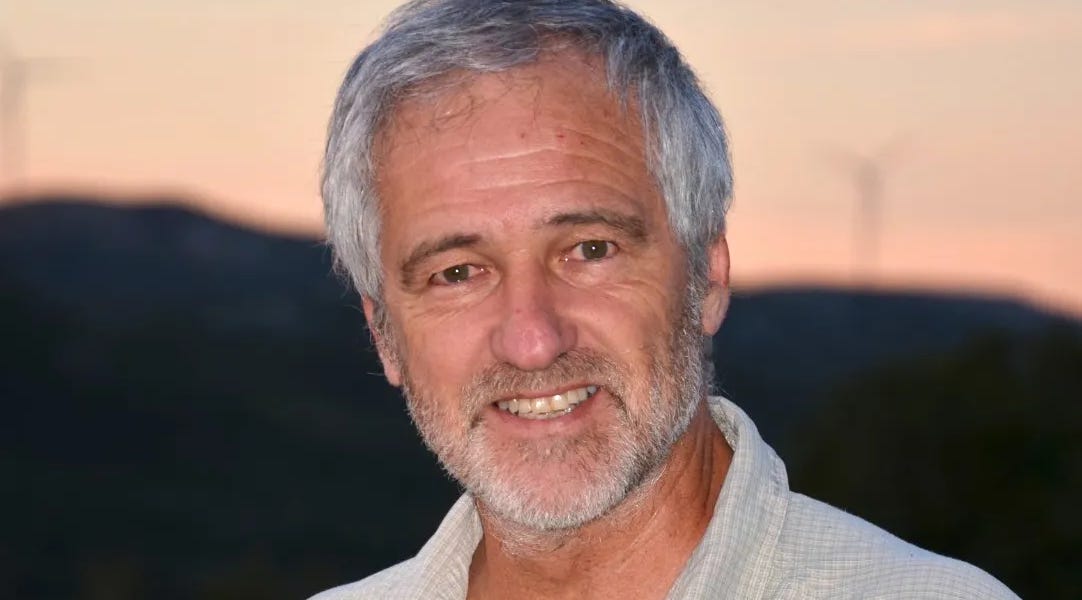
David Roberts interview the man who decarbonized Uruguay on his podcast Volts. They discuss how it happened the first time, and how it could be replicated. He believes that every country could realistically achieve an 80% renewable grid.
David Roberts interview the man who decarbonized Uruguay on his podcast Volts. They discuss how it happened the first time, and how it could be replicated. He believes that every country could realistically achieve an 80% renewable grid.

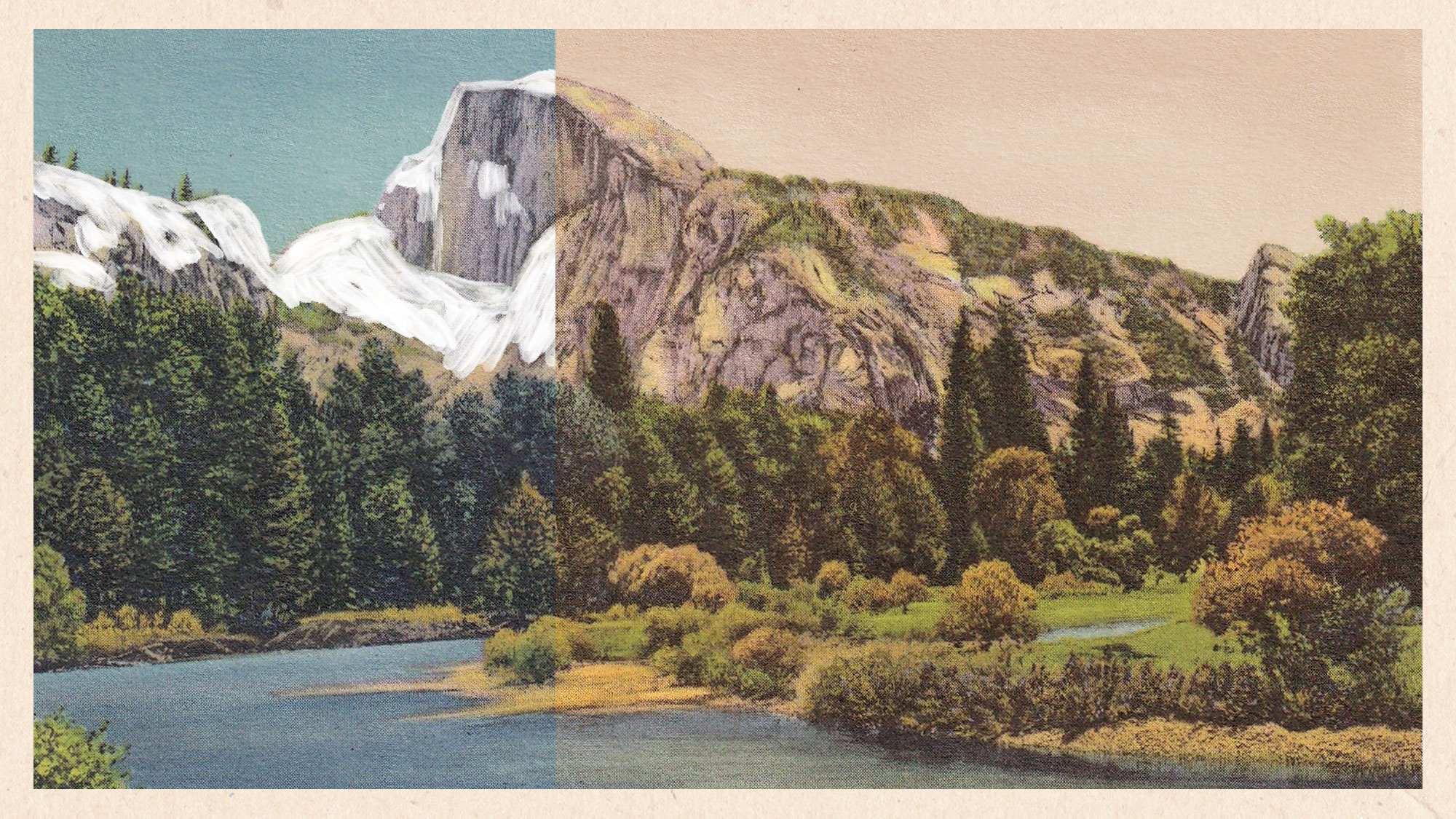
Matthew LaPlante doesn’t have to go to a lab to see his research in action. On some mornings, he can just look out his own window in the mountains high above Salt Lake City. After a warm night when the temperature stays above freezing, he’ll wake up and see that the snow level has dropped by inches, revealing more of the aspens he taps for syrup.
“It feels like a monster came and just in the middle of the night, took a bite out of a snowpack,” said LaPlante, a journalist and climate scientist at Utah State University.
So it’s fitting that scientists have started calling these kinds of heat waves, marked by unusually high temperatures in the spring and early summer, “snow eaters.”
LaPlante was part of a recent study, published in the journal Science Advances, that attempted, for the first time, to identify what conditions exactly make for a “snow eater.” Compared to normal warm spells or heat waves, the researchers determined that these events happen when temperatures stay above freezing through both day and night for multiple days, typically three to five. These events can roughly double the rate at which snow melts, causing flooding and making it challenging to manage water resources.
“Snow eaters” appear to be occurring earlier in the year and becoming more widespread in the Western United States as the climate warms. Since the 1850s, the study found, the area affected by snow eaters has increased by an average of about 40,000 square miles per century, and the first snow eater of the season has been arriving about one month earlier per century.
Skeptics claim that charging your EV with grids that use fossil fuel power is just as bad as burning gas. They’re wrong. It is one of the most absurd and enduring points made by anti-EV advocates.
Skeptics claim that charging your EV with grids that use fossil fuel power is just as bad as burning gas. They’re wrong. It is one of the most absurd and enduring points made by anti-EV advocates.
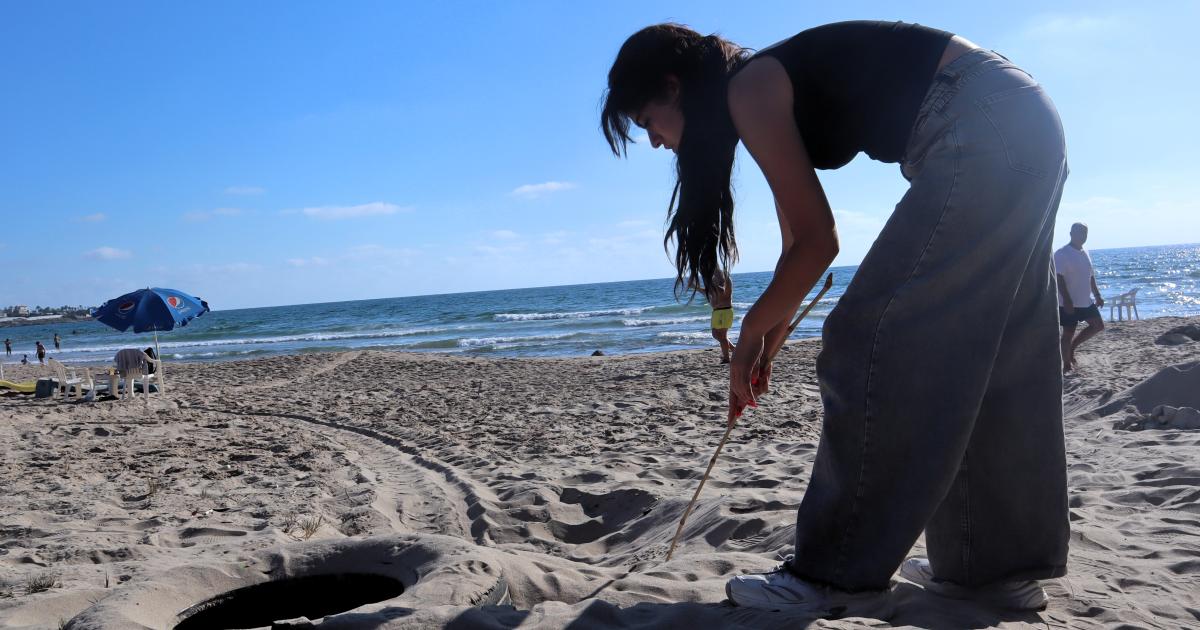
Environmental defenders, wildlife rescuers and farmers are paying with their lives as Israeli strikes continue across southern Lebanon.
Environmental defenders, wildlife rescuers and farmers are paying with their lives as Israeli strikes continue across southern Lebanon.
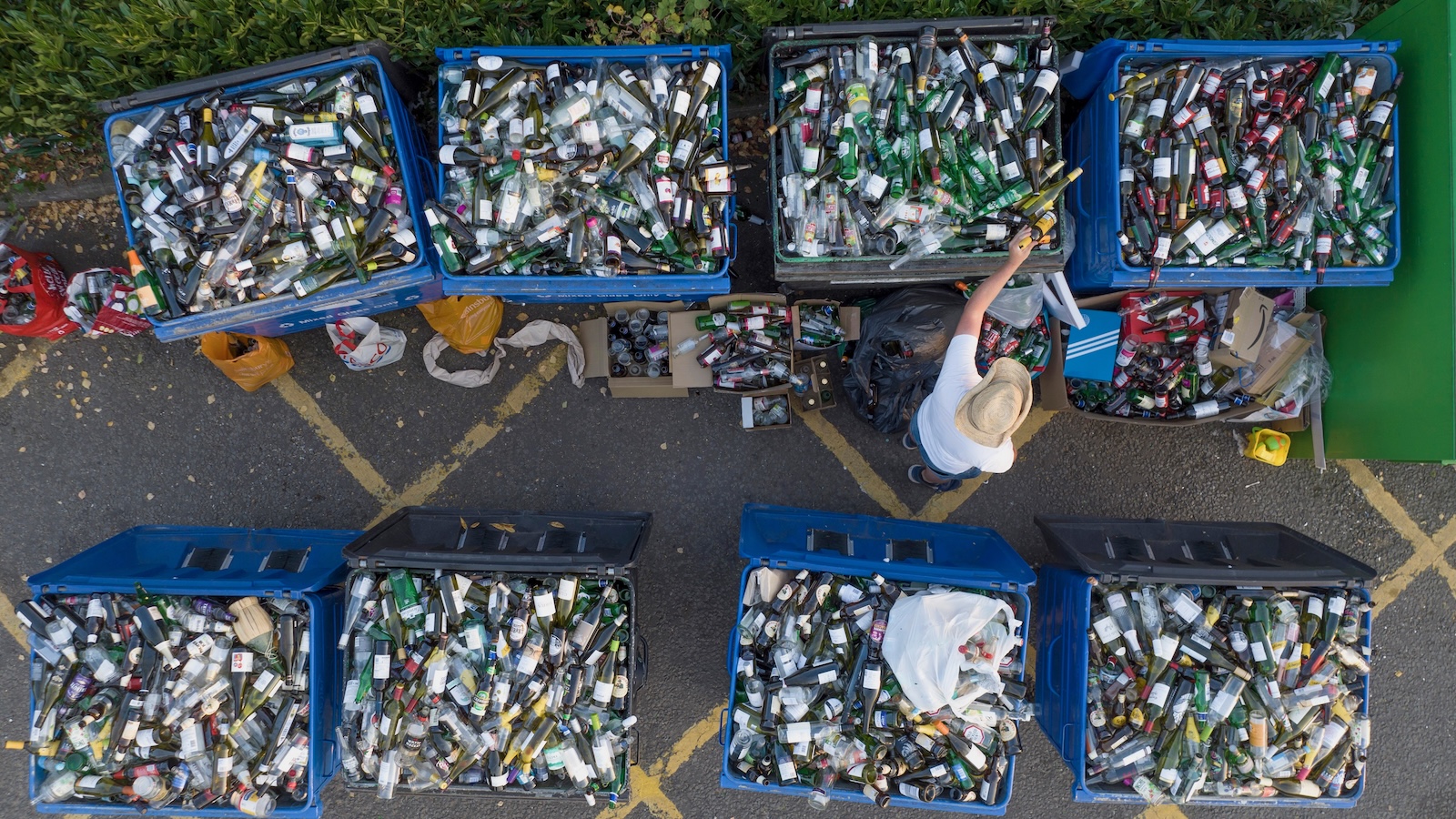
A pioneering California law meant to sharply limit use of the familiar “chasing arrows” recycling symbol has been blocked by a federal judge who said it probably violates the First Amendment.
In a preliminary injunction issued earlier this month, U.S. District Judge William Hayes halted enforcement of SB 343 after food, packaging and retail groups sued, finding that key provisions were “unconstitutionally vague” and likely infringed protected commercial speech. Enforcement of the law, passed in 2021, was expected to start this fall.
The decision is a blow to environmental advocates, who had hoped to remove the familiar symbol from a huge array of plastic products, in line with a statewide study showing that only a fraction are widely collected and actually recycled. SB 343 said only goods and packaging accepted by recycling programs serving at least 60 percent of Californians and then actually sorted for recycling — not collected and thrown away — could bear the chasing arrows.
Hayes’ constitutional reasoning surprised supporters of SB 343 because similar arguments against environmental marketing regulations have historically struggled in court.
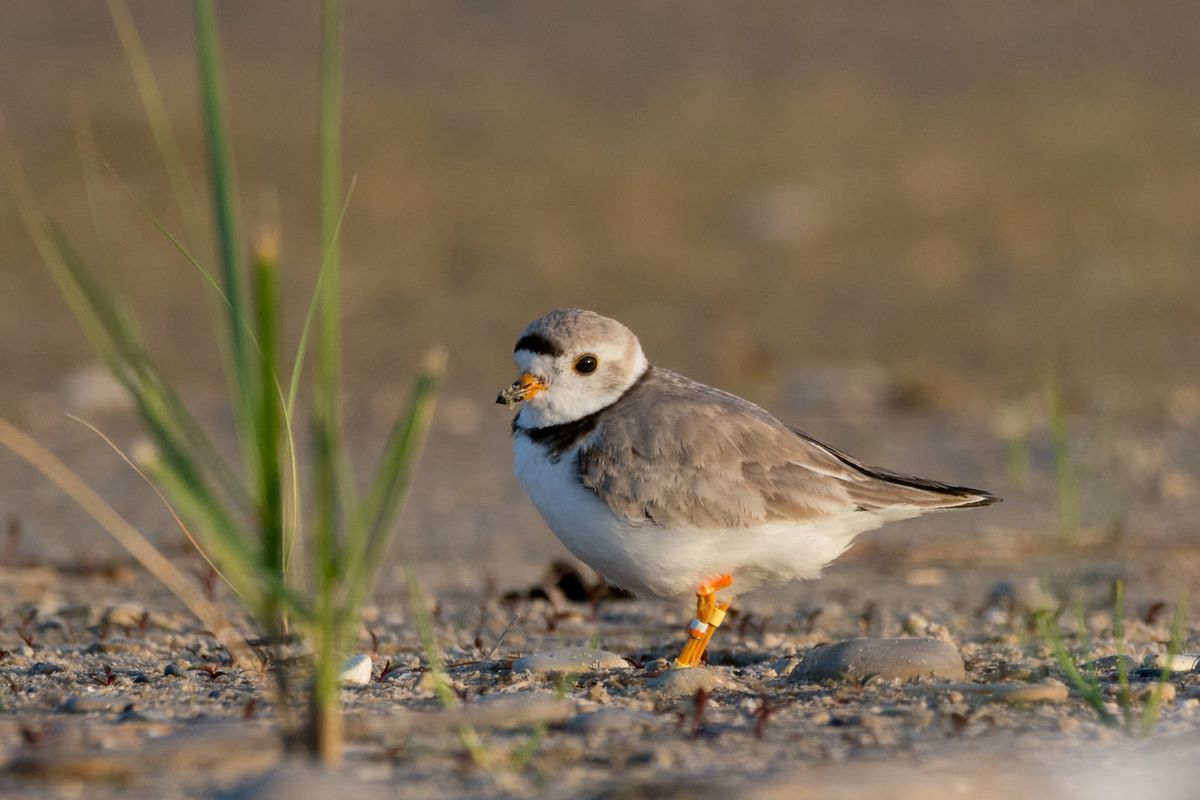
The Great Lakes piping plover (Charadrius melodus) likes to live along sandy beaches in, of course, the Great Lakes in North America. In the past, its population is estimated to have been 500 to 800 pairs. But habitat loss, nest destruction, high tides and predators took their toll and the population fell to between 10 and 20 pairs by the 1980s. The U.S. Fish & Wildlife Service placed the bird on its endangered species list in 1985.
But extinction has been prevented thanks to efforts by various conservation and bird-loving groups as well as governments and land-management agencies bent on bringing the plover population back to its traditional size and range. The Detroit Zoological Society, for instance, partners with volunteers and other agencies to protect these birds and, when necessary, raise them and release them in the wild when ready. The zoo has been working on its Piping Plover Recovery Initiative since 2003 and 88 pairs were counted in 2025. Before the bird can be considered recovered, the count will have to reach at least 150 families, at least half outside of Michigan, where they are now concentrated.
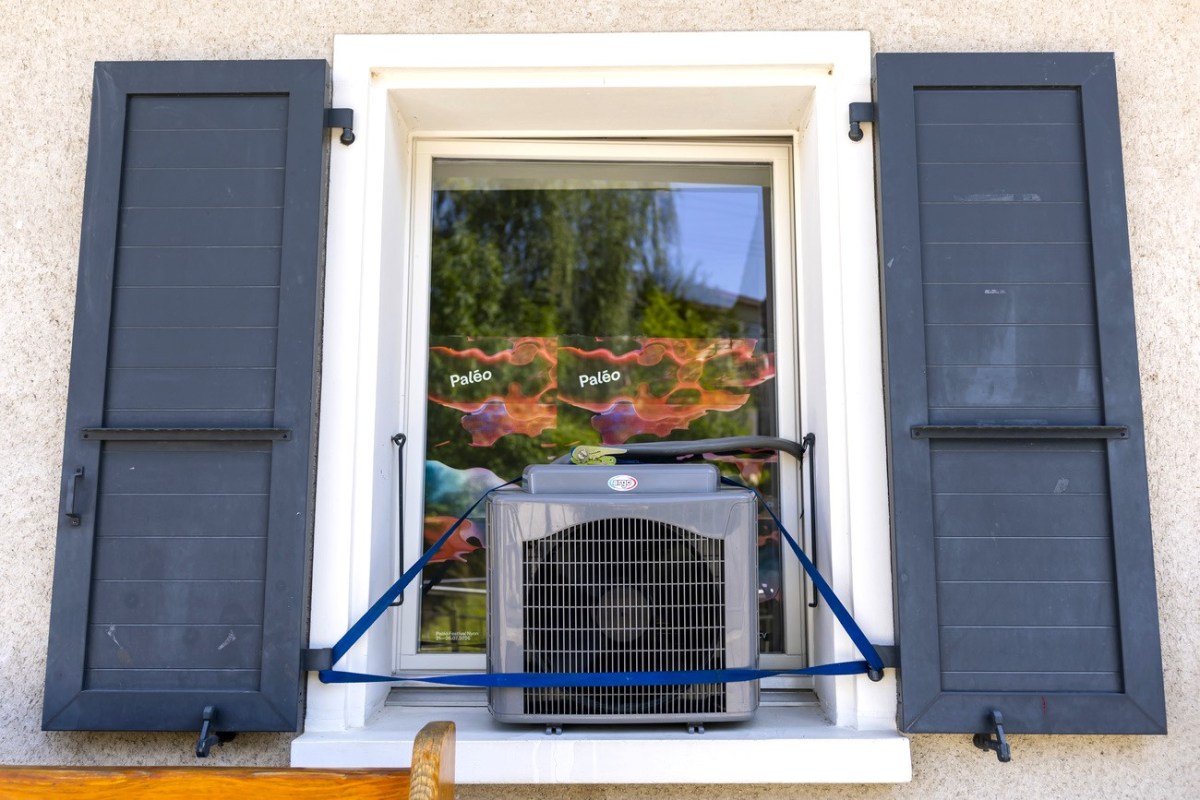
Switzerland is built for winter. Almost all buildings are equipped with heating systems and were designed to maximise exposure to the sun’s rays in colder months.
However, due to climate change, winters are getting milder and heatwaves are growing more frequent and intense. Switzerland is meanwhile among the countries where temperatures are rising fastest. Together with the United Kingdom, it could be set to experience one of the sharpest relative increases in the number of days of uncomfortably high temperatures.
As temperatures rise, the use air conditioning is also on the increase. This summer, sales of portable air conditioners and fans reached record levels in Switzerland. Cooling technologies improve comfort and reduce heat-related deaths, but can also increase pressure on electricity grids, contribute to the urban heat island effect, and raise greenhouse gas emissions.
“Cooling is becoming an increasingly important challenge for both buildings and the electricity system,” Urs-Peter Menti, professor and co-director of the Institute of Building Technology and Energy at the Lucerne University of Applied Sciences and Arts, told Swissinfo.
This trend extends well beyond Switzerland. Electricity demand for cooling is rising sharply worldwide. In European Union countries, energy consumption for cooling doubled between 2018 and 2024. There has also been significant growth in the US and across Asia and the Middle East. Switzerland is one of many countries trying to figure out how to avoid the hazards of a warming planet without contributing to that warming through additional emissions.