0

Aamer Rahman: Is it really ok to punch nazis? | Où et comment agir ?

preview

Je propose de grouper ici des idées d’initiatives que nous pourrions appliquer pour agir à différent niveaux.

Flyers, stickers, actions, groupe locaux…que chacun pourra s’approprier pour agir en France comme aux États-unis.

Important :

  • Ne donnez aucune information publique et personnelle, on ne se connait pas et je sais pas qui lit.
  • Ne votez pas, ne boostez pas. Privilégiez les locaux.
  • Pour discuter : utilisez Matrix ou quiet

Le but est juste de se donner des pistes. Chacun et chacune, trouvera les infos de lui-même

Je propose de grouper ici des idées d’initiatives que nous pourrions appliquer pour agir à différent niveaux.

Flyers, stickers, actions, groupe locaux…que chacun pourra s’approprier pour agir en France comme aux États-unis.

Important :

  • Ne donnez aucune information publique et personnelle, on ne se connait pas et je sais pas qui lit.
  • Ne votez pas, ne boostez pas. Privilégiez les locaux.
  • Pour discuter : utilisez Matrix ou quiet

Le but est juste de se donner des pistes. Chacun et chacune, trouvera les infos de lui-même

0

Bienvenue sur États-unis

preview

Commu entierement dédié à l’actu au USA.

Afin de limiter les posts d’extreme droite et les sorties virulentes de Donald Trump, Elon Musk…

Sur la base de vos retours, j’ai décidé de mettre en place cette commu pour filtrer tous leur posts et permettre à tous et toutes de garder un pied dans l’actualité.

Si vous avez des suggestions, hésitez pas à les proposer ici.


Voilà. Qui souhaite devenir modo dessus ? :)

0

Le premier grand remaniement de Donald Trump dit beaucoup de son état d’esprit après les midterms

Le HuffPost Le premier grand remaniement de Donald Trump dit beaucoup de son état d’esprit après les midterms www.huffingtonpost.fr
preview

Le président américain a nommé Stephen Miller, représentant de la droite identitaire, au poste de directeur de cabinet de la Maison Blanche.

Le président américain a nommé Stephen Miller, représentant de la droite identitaire, au poste de directeur de cabinet de la Maison Blanche.

0

Aux États-Unis, les républicains bloquent la destitution de Pete Hegseth, mais le répit pourrait être de courte durée

Le HuffPost Un seul républicain a refusé de protéger Pete Hegseth lors de ce vote crucial www.huffingtonpost.fr
preview

De @Khrys@mamot.fr

Aux États-Unis, les républicains bloquent la destitution de Pete Hegseth, mais le répit pourrait être de courte durée

Accusé notamment d’avoir engagé les États-Unis dans la guerre contre l’Iran sans l’aval du Congrès, le ministre de la Défense Pete Hegseth a bénéficié d’un vote des républicains pour bloquer une procédure de destitution.

0

Le Texas est bleu. C’est une phrase difficile à prononcer. Mais aujourd’hui, au moins, le Texas est bleu

preview

Moi aussi j’ai un peu de mal à réaliser, avec tout ce que le Texas véhicule de clichés dans les médias et fictions.

Moi aussi j’ai un peu de mal à réaliser, avec tout ce que le Texas véhicule de clichés dans les médias et fictions.

0

Résultats élections au Texas : Abbott (Républicain, ancien gouverneur du Texas) reconnaît sa défaite face à Hinojosa (Démocrate); Selon les projections de NBC, Talarico (Démocrate) devient Sénateur TX

0

États-Unis : l’exécution de Christa Pike, première femme devant être mise à mort depuis 2023, a échoué

La Croix États-Unis : l’exécution de Christa Pike, première femme devant être mise à mort depuis 2023, a échoué www.la-croix.com
preview

Aux États-Unis, l’exécution de Christa Pike, condamnée pour un meurtre commis en 1995, a échoué mercredi 30 septembre dans le Tennessee : elle a survécu à l’injection létale et a été hospitalisée.

Aux États-Unis, l’exécution de Christa Pike, condamnée pour un meurtre commis en 1995, a échoué mercredi 30 septembre dans le Tennessee : elle a survécu à l’injection létale et a été hospitalisée.

0

« Un impérialisme à l’ancienne » : Donald Trump fait main basse sur le pétrole du Venezuela

preview

« Un impérialisme à l’ancienne » : Donald Trump fait main basse sur le pétrole du Venezuela

reporterre.net/Un-imperialisme

« Un impérialisme à l’ancienne » : Donald Trump fait main basse sur le pétrole du Venezuela

reporterre.net/Un-imperialisme

0

Frappé par les États-Unis, l’Iran riposte en attaquant des bases américaines dans plusieurs pays du Golfe

Le HuffPost Frappé par les États-Unis, l’Iran riposte en attaquant des bases américaines dans plusieurs pays du Golfe www.huffingtonpost.fr
preview

Frappé par les États-Unis, l’Iran riposte en attaquant des bases américaines dans plusieurs pays du Golfehuffingtonpost.fr/internationaWashington a mené sa deuxième salve de frappes contre l’Iran en quelques jours, Donald Trump évoquant une « attaque parfaitement justifiée ».

Frappé par les États-Unis, l’Iran riposte en attaquant des bases américaines dans plusieurs pays du Golfehuffingtonpost.fr/internationaWashington a mené sa deuxième salve de frappes contre l’Iran en quelques jours, Donald Trump évoquant une « attaque parfaitement justifiée ».

0

Les USA ont lancé des frappes contre des cibles du Corps des gardiens de la révolution en iran. Frappes suite à des tentatives d’attaques menées par le IRGC contre des navires dans détroit d'Ormuz

0

Les États-Unis sanctionnent la juriste Tomoko Akane, présidente de la CPI

preview

Les États-Unis sanctionnent la juriste Tomoko Akane, présidente de la CPI

Les États-Unis ont annoncé, mardi 18 août, des sanctions contre la présidente de la Cour pénale internationale (CPI), la Japonaise Tomoko Akane, ainsi qu’un autre haut responsable, dans le cadre de leur campagne contre cette institution accusée d’être « politisée ». […]

Ces sanctions constituent en majorité une réponse aux enquêtes menées par la CPI à l’encontre d’Israël, allié des États-Unis.

0

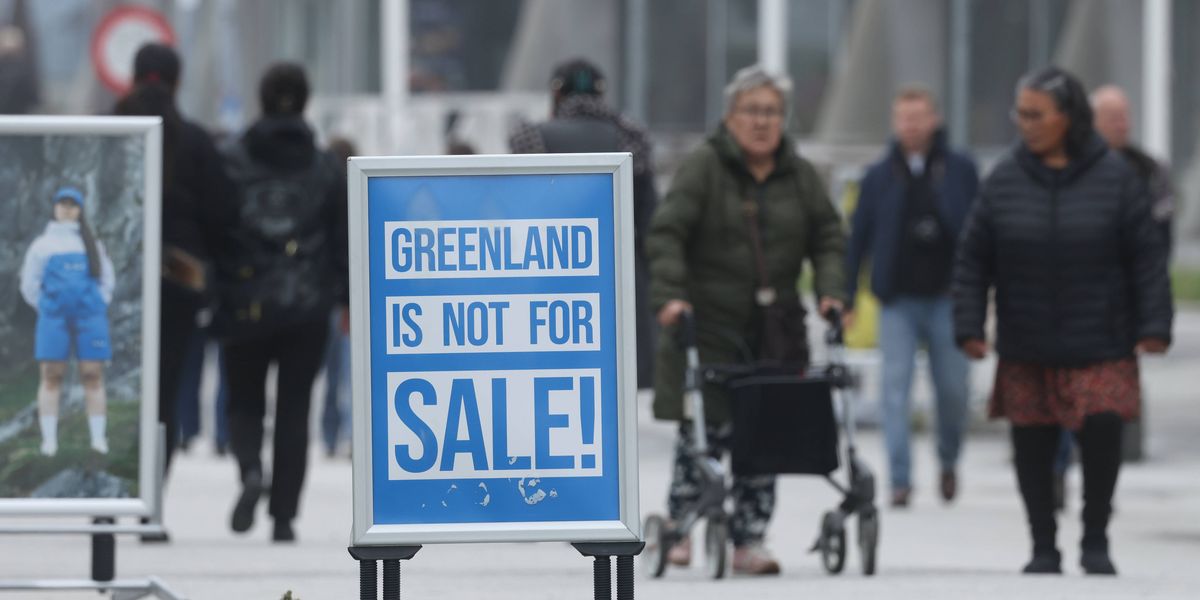
'Has Trump’s Invasion of Greenland Already Begun?': Experts Fearful as MAGA-Linked Oil Company Prepares Unauthorized Drilling

Common Dreams 'Has Trump’s Invasion of Greenland Already Begun?': Experts Fearful as MAGA-Linked Oil Company Prepares Unauthorized Drilling | Common Dreams www.commondreams.org
preview

cross-posted from: lemmy.world/post/50447433

cross-posted from: lemmy.world/post/50447433

0

US citizens in the Middle East shd be cautious, prepare for flight cancellations, airspace closure & disruptions. US outside incl biznss shd reconsider travel. Iran may target US diplomatic facilities

0

La Patrouille de France en tournée d'un mois aux États-Unis pour les 250 ans de l'indépendance américaine

franceinfo La Patrouille de France en tournée d'un mois aux États-Unis pour les 250 ans de l'indépendance américaine www.franceinfo.fr
preview

…gouv.fr/…/liberte-250-ailes-francaises-celebrent…

…gouv.fr/…/liberte-250-ailes-francaises-celebrent…

0

Secteur ferroviaire | Le PDG de CPKC craint une vague de fusions

La Presse Secteur ferroviaire | Le PDG de CPKC craint une vague de fusions www.lapresse.ca
preview

Un projet de fusion ferroviaire aux États-Unis déclencherait une vague d’acquisitions qui réduirait la concurrence, ferait grimper les coûts pour les consommateurs et entraînerait des engorgements dans le transport de marchandises, selon Keith Creel, le président et chef de la direction du Canadian Pacific Kansas City.

Un projet de fusion ferroviaire aux États-Unis déclencherait une vague d’acquisitions qui réduirait la concurrence, ferait grimper les coûts pour les consommateurs et entraînerait des engorgements dans le transport de marchandises, selon Keith Creel, le président et chef de la direction du Canadian Pacific Kansas City.

0

IA: Google signe un accord qui permet au Pentagone d’utiliser Gemini pour des opérations classifiées

preview

Au même titre qu’OpenAI, Google va ainsi se substituer à Anthropic, dont le modèle Claude était jusqu’ici seul habilité à effectuer de telles opérations.

Au même titre qu’OpenAI, Google va ainsi se substituer à Anthropic, dont le modèle Claude était jusqu’ici seul habilité à effectuer de telles opérations.

0

They Didn’t Want to Have C-Sections. A Judge Would Decide How They Gave Birth.

ProPublica They Didn’t Want to Have C-Sections. A Judge Would Decide How They Gave Birth. www.propublica.org
preview

publication croisée depuis : ibbit.at/post/201492

On the afternoon of Sept. 9, 2024, Cherise Doyley was in her 12th hour of contractions at University of Florida Health in downtown Jacksonville when a nurse came in with a bedsheet and told her to cover up. A supervisor brought a tablet to Doyley’s bedside. Gathered on the screen were a judge in a black robe and several lawyers, doctors and hospital staff.

“It’s a real judge in there?” Doyley asked the nurse at the beginning of what would be a three-hour hearing. “Now this is the craziest thing I’ve ever seen.”

Doyley hadn’t asked for the hearing. The hospital had sought it. Doyley had mere minutes to prepare. She had no lawyer and no advocate — no one to explain to her what, exactly, was going on.

Judge Michael Kalil informed her that the state had filed an emergency petition at the hospital’s behest — not out of concern for Doyley, per se, but in the interest of her unborn child. He described the circumstances as “extraordinary.”

The hospital and state attorney’s office wanted to force Doyley to undergo a cesarean section. Doyley, a professional birthing doula, didn’t want that and had been firm about it. She’d had three prior C-sections, one that resulted in a hemorrhage, and hoped to avoid another serious complication and lengthy recovery. She was aware that doctors were concerned about the risk of uterine rupture, a potentially deadly complication for her and her baby. She would say during the hearing that she understood the risk to be less than 2% and didn’t want to agree to a C-section unless there was an emergency.

But the choice would not be hers. The judge would decide how she would give birth.

Watch How a Court Hearing Was Convened in Cherise Doyley’s Hospital Room

Obtained by ProPublica

Mentally competent patients typically have the right to choose their medical care — or refuse it. But there is one notable exception: pregnant patients. That inconsistency is particularly striking in Florida, a state that has pushed to expand medical freedom for those who wish to avoid vaccines or fluoridated water, while constricting the rights of people in various stages of pregnancy.

“There aren’t any other instances where you would invade the body of one person in order to save the life of another,” said Lois Shepherd, a bioethics expert at the University of Virginia School of Law.

In Florida and many other states, court-ordered medical procedures are just one of the ways pregnant patients’ rights are restricted. The effort to chip away at those rights is rooted in the concept of fetal personhood — that a fetus has equal and, in some cases, more rights than the woman sustaining it.

The link between fetal personhood and court-ordered C-sections dates back to the 1980s, when courts started ruling that hospitals can override patients’ decisions in favor of the health of unborn children.

In the years since, proponents of fetal personhood began to push for even broader legal protections. In 1986, Minnesota was the first state to recognize fetuses as victims in homicide cases. Some states have imprisoned pregnant women for exposing their fetuses to drugs. Nearly 30 states have passed laws that allow hospitals to invalidate pregnant patients’ advance directives, which outline the kinds of life-sustaining treatment a person wants after a catastrophic illness or accident. At least one, Alabama, extended the concept of personhood all the way to the earliest stages of fertilization and conception by giving frozen embryos the same legal status as children, though the Legislature later said the law couldn’t be enforced.

And the fetal personhood movement has accelerated in the past several years, supercharged by the U.S. Supreme Court decision to reverse the abortion rights that had been protected by Roe v. Wade.

Florida has long been at the forefront of fetal personhood policies. The state was one of the first in the country to prosecute a woman for “delivering” drugs to her fetus during pregnancy in 1989, although the Florida Supreme Court later overturned her conviction. And after advocates twice failed to get a fetal personhood amendment on the state ballot, the Legislature is now considering a bill that would enshrine the concept in state law by giving embryos and fetuses the same legal status as people in wrongful death suits.

For women in labor, the potential impact of the bill is clear: Experts anticipate their medical needs could be further diminished in favor of the fetuses’.

Several legal experts told ProPublica they are alarmed by Doyley’s case and the legislation’s potential to allow for more court interventions during childbirth. Lawyers who represent women in fetal personhood cases already have identified a higher number of forced C-sections in Florida than other states.

The state attorney’s office for the 4th Judicial Circuit declined to comment on Doyley’s case, saying a response would violate her medical privacy. But in an email, a spokesperson noted why, in general, the office would intervene: “The courts have held that the State has a compelling interest in the preservation of the life of an unborn child and the protection of innocent third parties who may be harmed by the parental refusal to allow or consent to life-saving medical treatment.”

C-sections account for nearly a third of all deliveries in the United States. They can be necessary when babies are breech, or in the wrong position for birth, as well as in cases of maternal or fetal emergency. But in other cases, such as slow laboring or prior C-sections, the need for the surgery is less clear.

Surveys have found that more than 10% of women feel pressured into C-sections and other procedures by doctors worried about injuries to the baby. Patients generally don’t challenge doctors who say they’re necessary, and it is uncommon for someone to hold out and for the hospital to turn to the courts.

It is so rare, in fact, that advocates for the rights of pregnant women were shocked to discover that the same thing that happened to Doyley had happened to another Florida woman just a year and a half earlier.

The similarities in their cases were striking. Both women had three prior C-sections. They had questioned the need for their previous surgeries and arrived prepared to fight for vaginal births. And both women are Black.

They had argued that compelling them to have C-sections violated their rights to make medical decisions. Hospital staff said their medical decisions threatened the health of the fetus. It would be up to the courts to decide which one mattered more.

A smiling Black woman sits in a plastic chair under a wooden awning, holding a baby wearing a diaper. Light from a sunset casts a shadow on the baby and lights up the woman.

Doyley enjoys time with her 1-year-old daughter, Arewa, on their porch.

Outside, a Black woman in a white dress closes her eyes and smiles while holding a toddler wearing a white dress, white ruffled socks, shiny red shoes and pigtails.

Brianna Bennett with her 2-year-old daughter, Aubree. Like Doyley, Bennett was forced to have a court-ordered C-section.

Asked to consider the constitutionality of court-ordered C-sections, the U.S. Supreme Court declined in 1994, leaving a patchwork of decisions that vary by state.

In the early 1980s, a hospital in Georgia won a court order to force a woman with a dangerous pregnancy complication to have a C-section. Then, in 1987, a judge in Washington, D.C., approved a request to perform surgery on a pregnant woman dying from cancer without her consent. Later, a higher court reversed that ruling and held that hospitals should not override medical decisions. An Illinois appellate court in 1993 refused to order a woman to undergo a C-section.

Not long after, a patient named Laura Pemberton, who did not want a C-section, left a hospital in Tallahassee, Florida, against medical advice. A local judge sent law enforcement to her house to bring her back. Once she returned to the hospital, the judge ordered her to have a C-section, which doctors carried out. She later sued in federal court and lost. The 1999 decision by a federal district judge found that the state had a right to override her wishes.

“Whatever the scope of Ms. Pemberton’s personal Constitutional rights in this situation, they clearly did not outweigh the interests of the State of Florida in preserving the life of the unborn child,” the decision said. The decision marked a legal turning point in prioritizing fetal rights over the religious freedom and bodily autonomy of the mother.

In 2009, Samantha Burton arrived at the same hospital at 25 weeks pregnant, after going into premature labor. Doctors told her she needed to remain on bed rest, but she wanted to leave and go home to her children. The hospital got a court order for her to remain in the hospital and undergo any treatment doctors deemed necessary to save the fetus. She had an emergency C-section, and the baby was stillborn.

She appealed the ruling granting the emergency order, and a Florida appeals court ruled in her favor. They said the circuit judge should have required the hospital to prove the baby was viable before imposing unwanted treatment, but the court stopped short of saying it was unacceptable to override the medical decisions of pregnant women in all situations.

Pregnancy is the only condition where Florida courts have ruled that a patient can be forced to undergo unwanted treatment. Even a state prisoner on a hunger strike has more rights to make medical decisions.

Those rulings give the state vast control over pregnant women.

“All of it essentially is about the state’s ability to decide that a fetus, at any point during a pregnancy, is more important than the person who’s pregnant,” said Rutgers University law professor Kimberly Mutcherson.

A woman with her back to the camera presses her hand on a butterfly decal pasted to the wall. There are other butterfly decals nearby surrounding a flower decal.

Doyley decorates her home with decals of butterflies. She says she likes how they represent transformation.

Outside on a wooden porch in the sunset, a baby sits on a rocking horse and looks at a cat sitting nearby.

One-year-old Arewa plays on the family porch.

A child wearing a red shirt and blue shorts runs with her arms out past a red trampoline, a football and a television set inside of a dimly lit, tidy room.

Bennett’s 2-year-old daughter, Aubree, pretends the floor is lava.

In March 2023, more than a year before Doyley’s court-ordered C-section, Brianna Bennett arrived in labor at Tallahassee Memorial Hospital — the same hospital where the women in the 1999 and 2009 lawsuits had given birth.

Over the preceding years, Bennett had come to question the medical reasoning behind her three prior C-sections. Each recovery had been harder than the last, leaving her so incapacitated after the third that for two weeks she couldn’t even go to the bathroom without help.

At the time Bennett went into labor with her fourth, her mother’s hip problems had gotten so bad that she needed a wheelchair and required some help from Bennett to function. Bennett did not think she could care for all her family members while in recovery from abdominal surgery, so she insisted on trying for a vaginal birth.

A woman looks directly at the camera wearing a red floral dress and earrings. She sits on a dark leather couch.

Bennett researched and weighed birthing options before going into labor.

Tallahassee Memorial Hospital had specialists on staff and a neonatal intensive care unit equipped to serve critically ill babies. Bennett believed it offered the kind of support she needed to be able to follow her birth plan. The hospital has handled a lot of high-risk pregnancies.

As Bennett’s labor stretched past 24 hours, a doctor confronted her about agreeing to a C-section, Bennett said. She continued to refuse, so the hospital reached out to the state attorney. In an email, Jack Campbell, state attorney for the 2nd Judicial Circuit, responded that the court needed to act quickly.

“I plan to file an emergency motion with the Court to allow TMH to take whatever steps medically necessary to protect the life of the child and mother,” he wrote.

Two children eat pasta while sitting at a table. In the background a woman and another child look at the kitchen counter and another child reaches for a bowl.

Bennett, in the red dress, prepares lunch with her children, from left, Alannah, 16, Aubree, 2, Ayden, 11, and Ava, 7. After her three prior C-sections, she was worried about recovering from a fourth while taking care of a newborn and other family members.

During the hearing, 15 to 20 people squeezed into Bennett’s hospital room. As would later happen with Doyley, she found herself in front of a tablet with a judge on the screen.

Bennett said she found it offensive that so many people were concerned about the method of her delivery without taking into consideration how difficult it would be to take care of both herself and her baby while recovering from a C-section. “Are any of you gonna help me bathe or shower? Are you gonna help change my pad? Are you gonna help lift the baby out of the bed and put me in the bed because I can’t lift my legs? Is anyone going to help me?”

Campbell told ProPublica that he felt the hearing was necessary to save two lives, Bennett’s and her baby’s. “I’m real comfortable with what we did here,” Campbell said. “I hate the fact that she’s upset about it.”

A spokesperson for Tallahassee Memorial Hospital declined to comment on Bennett’s case, even though she signed a waiver allowing the hospital to do so. “We will not be able to discuss specific patients or cases,” the spokesperson wrote in an email. The hospital did not respond to questions about its history of seeking court intervention in multiple women’s medical decisions while giving birth.

Bennett said she tried to remain calm, but inside she was panicking. During the hearing, her baby’s heart rate spiked. The judge ordered her to have a C-section, and doctors wheeled her into surgery. The operation lasted two and a half hours and the surgical team had to cut around existing scar tissue and avoid her bladder. Her incision looked like an upside-down T and required a wound vac, a portable machine that helps incisions close more quickly.

She said a doctor who visited her room during recovery told her she should never get pregnant again, according to a civil rights complaint filed with federal regulators.The complaint is still under investigation, but lawyers for Bennett said they haven’t heard from investigators in more than a year. The U.S. Department of Health and Human Services did not comment on the complaint.

“I cried every single day,” Bennett said. “I felt like I was supposed to be happy. I’m supposed to be thankful that I have a new life and that the Lord has blessed me to see this new baby. And I’m not even happy.”

Two children wearing white dresses swing on a green swing set.

Bennett’s daughters Aubree and Ava play on a swing set.

A girl wearing a red “Tommy” shirt looks at a smartphone with a picture of a woman wearing a face mask and lying down in a hospital bed.

Aubree looks at a photo of her mother holding her after a court-ordered C-section.

A year and a half later in Jacksonville, Doyley faced a situation eerily similar to Bennett’s.

She noted as her hearing began that she was the only Black person on the screen. About a dozen faces, most of them white, had gathered to challenge her medical decisions. She said it made her feel as if her race had something to do with the fact that she was thrust into the intrusive hearing.

“I have 20 white people against me, and because I am informed and I am making an informed decision, they are trying to take my rights away from me by force,” Doyley told the people on the screen, requesting a Black nurse or doctor.

“I don’t find that race really has much to do with this, ma’am,” the judge responded.

Dr. Erin Burnett said during the hearing that she did not think Doyley could successfully give birth vaginally because she had a history of stalled labors. A long labor after prior C-sections could increase the risk of uterine rupture, which could kill Doyley and the child, she said.

She said the baby’s heart rate showed some signs of distress and told Doyley it would be better to have a C-section before it became an emergency. If the baby’s heart stopped or if she lost oxygen during delivery, the baby could suffer a brain injury or death.

Dr. John Davis, the chair of the obstetrics and gynecology department, testified that the hospital had been recognized for its low C-section rate and did not perform unnecessary surgeries. Doyley’s condition required intervention, he said.

Burnett and Davis did not respond to requests for comment, and the hospital declined ProPublica’s requests to interview them and others involved in Doyley’s care. Doyley signed a waiver allowing the hospital to discuss her case with ProPublica, but a spokesperson for University of Florida Health in Jacksonville would not comment, citing patient privacy. Nor did the hospital respond to questions about Doyley’s claim that race played a role in the decision to involve the court.

The research on the risks of uterine rupture after prior C-sections is unclear. Studies have found that 0.15% to 2.3% of these labors resulted in a rupture, depending on a number of factors such as body mass, a history of successful vaginal births and whether the labor was spontaneous or had to be induced.

Doyley, who felt comfortable with her odds and wanted to continue laboring, argued during the hearing that C-sections carry their own dangers — including a risk of death.

“A lot of that comes from medical negligence and medical racism, where we have a group of white doctors that think that they know what is best for Black bodies and Black babies,” Doyley said in the hearing.

Three children sit outside in plastic chairs in an open wooden structure. In the background are trees and a camping tent. One of the children holds a baby in her arms and kisses her.

Doyley’s children — from left, Aganju, 7, Akilah, 11, and Arewa, 1 — sit on the porch at their home.

Both the doctors and Doyley mentioned recommendations from the American College of Obstetricians and Gynecologists. However, neither one cited the organization’s stance on court-ordered C-sections, which the group has deemed to be “ethically impermissible.”

After three hours of testimony — all while Doyley lay in her hospital bed — the judge ruled that she could keep laboring unless there was an emergency. If that happened, the hospital could operate, whether she wanted it or not. The judge would reconvene the hearing in the morning.

In response to questions from ProPublica, Kalil wrote in an email that the judicial code of conduct prohibits judges from commenting on cases. “These ethical standards exist to protect the integrity of the judicial process, ensure fairness to all parties, and preserve the Court’s neutrality,” he wrote.

Overnight, doctors said the baby’s heart rate dropped for seven minutes. Doyley woke to her hospital bed being wheeled into surgery. She called out to her sister who was asleep in the hospital room.

“I had to tell her, ‘Hey, wake up,’” Doyley said. “‘Something is going on.’ She’s trying to put on her shoes. I’m like, ‘Girl, leave the shoes. Let’s go.’”

Doyley recalled reciting a short prayer as her sister scrambled into the operating room. The baby was delivered by C-section. Although Doyley’s daughter was initially limp, she perked up and became responsive within a few minutes. Doctors took her to the NICU while Doyley went to recover. And to get ready to face the judge again.

At the 8 a.m. hearing, Doyley looked pained and groggy. She told the judge she still hadn’t been allowed to see her daughter and asked if he could help. A doctor testified that the baby had been brought to the NICU in respiratory distress and placed on a continuous positive airway pressure machine to help with her breathing.

Kalil said he couldn’t order the hospital to do anything. The matter he had been appointed to hear involved only her unborn baby. He had no authority over the child in the nursery.

Kalil wished her well and quickly closed the case.

A woman wearing a floor-length black sleeveless dress stands in an open doorway with her hands on the doorframe. A clear porch roof overhead lets light stream in.

Doyley in her home. In Florida and many other states, court-ordered C-sections are just one way in which pregnant women’s rights are eroded.

The post They Didn’t Want to Have C-Sections. A Judge Would Decide How They Gave Birth. appeared first on ProPublica.


From ProPublica via this RSS feed

0

Guerre au Moyen-Orient et indice "Taco" : le monde de la finance face à l'énigme Trump

France 24 Guerre au Moyen-Orient et indice "Taco" : le monde de la finance face à l'énigme Trump www.france24.com
preview

Des analystes financiers ont établi un indice “Taco”, censé modéliser les périodes lors desquelles Donald Trump change de politique. Une tentative d’introduire un peu de rationalité financière dans le…


Surement l’article le plus bizarre. J’en viens à me demander comment on en arrive à ce genre d’absurdité. Quand ya une variable, le mieux est de ne pas l’integrer dans l’equation et de faire sans.

0

États-Unis : "Les néonazis sont devenus respectables"

play · video.blast-info.fr
Blast le souffle de l'info États-Unis : "Les néonazis sont devenus respectables" video.blast-info.fr
preview

Soutenez Blast, nouveau média indépendant : www.blast-info.fr/soutenir

Donald Trump s’embourbe dans sa propre fange.

Il a crié sur tous les toits que l’affaire Epstein ne concernait que les démocrates et qu’il en révélerait tous les documents. Résultat : il tergiverse, visiblement gêné, et se trouve être personnellement cité plusieurs milliers de fois dans les « Epstein Files ».

Après avoir promis qu’il ne mènerait aucune guerre à l’international, Donald Trump a finalement engagé les États-Unis dans un conflit direct avec l’Iran. Soit une trahison de la promesse principale de sa campagne : « America first ».

Alors la base bouge. Et notamment sa partie encore plus droitière : néonazis et autres antisémites maladifs ressurgissent au-devant de la scène, profitant du vide laissé par l’instrumentalisation de l’antisémitisme pour silencier la gauche. Selon un scénario non sans rappeler le contexte français. Analyses et réflexions avec le sociologue Éric Fassin.

Journaliste : Maxime Cochelin
Montage : William Gaye, Mehdi Lakhal
Son : Baptiste Veilhan, Théo Duchesne
Graphisme : Morgane Sabouret, Margaux Simon
Production : Hicham Tragha
Directeur du développement des collaborations extérieures : Mathias Enthoven
Co-directrice de la rédaction : Soumaya Benaïssa
Directeur de la publication : Denis Robert

Le site : www.blast-info.fr
Facebook : www.facebook.com/blastofficiel
Twitter : twitter.com/blast_france
Instagram : www.instagram.com/blastofficiel/
Mastodon : mamot.fr/web/@blast_info
Peertube : video.blast-info.fr
Twitch : www.twitch.tv/blastinfo
Bluesky : bsky.app/profile/blast-info.fr

#trump
#iran
#epstein

0

Un road trip chez les MAGA avec Richard Werly

play · video.davduf.net
Au Poste Un road trip chez les MAGA avec Richard Werly video.davduf.net
preview

📢 Seul média indépendant 100% LIVE et LIBRE | Parce que nous croyons en la rencontre. Plutôt qu’au formatage. Libertés publiques, politique, cinéma, Histoire, littérature & contre-filatures. auposte.fr invite chercheur·es, écrivain·es, philosophes, sociologues, avocat·es, punks et punkettes, cinéastes, artistes et hacktivistes, écoterroristes, féministes.

Le site a été lancé par l’écrivain-réalisateur David Dufresne (Un pays qui se tient sage) comme un espace d’analyse et de défense des libertés fondamentales. auposte.fr porte un regard critique et en mouvement sur le monde.

0

États-Unis en direct : la Cour suprême juge illégale une grande partie des droits de douane de Trump

France 24 Après la ⁠décision de la Cour suprême, Trump riposte avec une taxe mondiale de 10 % www.france24.com
preview

Les droits de douane “réciproques” instaurés par Donald Trump ont été jugés illégaux vendredi par la Cour suprême des États-Unis, qui a estimé que le président américain avait "dépassé les pouvoirs prévus…

Les droits de douane “réciproques” instaurés par Donald Trump ont été jugés illégaux vendredi par la Cour suprême des États-Unis, qui a estimé que le président américain avait "dépassé les pouvoirs prévus…

0

Gallup, l’institut de sondage qui mesure la popularité des présidents américains depuis 1930, arrête cette étude

preview

La nouvelle survient alors que le président américain accuse depuis des années les instituts de sondage de produire des chiffres « truqués » contre lui.

La nouvelle survient alors que le président américain accuse depuis des années les instituts de sondage de produire des chiffres « truqués » contre lui.

0

En tant qu’Européens, sommes-nous prêts à renoncer à Facebook, Instagram, Microsoft, Netflix & rediriger les 10 000 Mds d'épargne européenne des USA pour investir en UE ? Créons un Nutriscore européen

play · youtube.com
YouTube "En tant qu’Européens, sommes-nous prêts à renoncer à Facebook, Instagram ou Netflix ?" Amélie Férey www.youtube.com
0

Déclaration du Danemark, de la Finlande, de la France, de l'Allemagne, des Pays-Bas, de la Norvège, de la Suède et du Royaume-Uni

Regeringskansliet Statement by Denmark, Finland, France, Germany, the Netherlands, Norway, Sweden and the United Kingdom www.government.se
preview

publication croisée depuis : jlai.lu/post/31779237

Déclaration du Danemark, de la Finlande, de la France, de l’Allemagne, des Pays-Bas, de la Norvège, de la Suède et du Royaume-Uni

Publiée le 18 janvier 2026

En tant que membres de l’OTAN, nous sommes attachés au renforcement de la sécurité arctique, un intérêt transatlantique commun. L’exercice danois pré-coordonné « Arctic Endurance », mené avec nos Alliés, répond à cette nécessité. Il ne représente aucune menace pour quiconque.

Nous exprimons notre pleine solidarité avec le Royaume du Danemark et le peuple du Groenland. Forts du processus entamé la semaine dernière, nous sommes prêts à engager un dialogue fondé sur les principes de souveraineté et d’intégrité territoriale auxquels nous adhérons fermement.

Les menaces de droits de douane fragilisent les relations transatlantiques et risquent d’entraîner une spirale négative dangereuse. Nous resterons unis et coordonnés dans notre réponse. Nous sommes déterminés à défendre notre souveraineté.

traduit de l’anglais. Seul l’original sur

government.se/…/statement-by-denmark-finland-fran…

fait foi

0

Marques états-uniennes à boycotter (suite) suite aux +10% et +25% de droits de douane

preview

publication croisée depuis : jlai.lu/post/31778669

Marques états-uniennes dans les supermarchés* =

Mars Inc.

Mars, Snickers, Twix, Bounty, M&M’s, Maltesers, Celebrations, Skittles

Orbit, Extra, Freedent, Airwaves (Gum)

Pringles, Cheez-It, Pop-Tarts, Nutri-Grain

Pedigree, Whiskas, Sheba, Cesar, Royal Canin (Pet food)

Ben’s Original, Miracoli

Mondelēz International

Côte d’Or, Milka, Toblerone

LU (Prince, Bastogne, Petit Beurre, Pim’s)

Oreo, BelVita, Mikado, TUC

Philadelphia (Cream cheese)

PepsiCo

Lay’s, Doritos, Cheetos, Bugles

Pepsi, 7Up, Mountain Dew, Rockstar Energy

Lipton Ice Tea (Joint venture)

Quaker Oats, Cruesli

The Coca-Cola Company

Coca-Cola, Fanta, Sprite

Dr Pepper (Distributed by Coke in BE)

Minute Maid, Fuze Tea, Aquarius, Powerade

Monster Energy (Stakeholder/Distributor)

Tropico

General Mills

Häagen-Dazs

Old El Paso

Pillsbury, Betty Crocker

Géant Vert (Green Giant)

Kraft Heinz

Heinz Ketchup, Mayo, and Mustard

HP Sauce

Tabasco (Distribution)

Procter & Gamble (P&G)

Ariel, Dash, Dreft (Dish soap), Lenor

Mr. Proper, Swiffer, Antikal, Febreze

Pampers, Always, Tampax

Gillette, Venus, Head & Shoulders, Pantene, Aussie

Oral-B, Vicks

Kenvue (Johnson & Johnson)

Neutrogena, Le Petit Marseillais, Aveeno

Listerine

Johnson’s Baby

Nicorette, Imodium

Other U.S. Brands

Arizona Iced Tea

Gatorade (PepsiCo)

Reese’s (Hershey’s)

Clinique, MAC Cosmetics (Estée Lauder)

belges*

0

+10% de droits de douane pour 8 pays européens opposés à l'annexion états-unienne illégale du Groenland > Produits &services US à boycotter & Alternatives UE & non-US (Liste enrichie mais à compléter)

the Guardian European leaders warn of ‘downward spiral’ after Trump threatens tariffs over Greenland – as it happened www.theguardian.com
preview

publication croisée depuis : jlai.lu/post/31741997

Voici des produits fabriqués aux Etats-Unis ou des services etats-uniens :


Biens physiques ?

? Airstream ?

? Hallmark ?

? Viking Appliances

motos

Harley-Davidson

automobiles voitures

Chevrolet

Ford

Jeep (Stellantis)

barbecues Weber

briquets Zippo


fournitures de bureau

fauteuils de bureau

Herman Miller

Crayola Crayons


maison matériel de cuisine

KitchenAid

Pyrex


glacières

Igloo


musique

Gibson Guitars

Steinway Pianos


vêtements

  • chapeaux ?

Stetson Hats

  • chaussures

New Balance

  • vêtements Jean’s

Levi Strauss


Services ?

  • Google = remplacer par ?

  • Google Translate -> DeepL (allemand)

  • Apple = l’Europe va augmenter les droits de douane sur les iPhone et les Mac ?

  • Meta

Facebook = remplacer par Mattermost / Framateam ?

WhatsApp -> Signal, Matrix…

instagram ? immch


  • twitter X = remplacer par Mastodon voire BlueSky ?

et demandez à vos élues et élus de Hello QuitX

  • Amazon = remplacer par ? LDLC ?

  • Coca Cola

  • McDonalds

  • Netflix

  • Hollywood


  • Tesla -> Renault R5, Zoé

  • SpaceX - > Arianespace

  • Starlink -> NordNet ?


Jeans => 1083 , c’est français, j’en ai acheté un il y a quelques mois, je le trouve pas mal. Un peu plus cher qu’un levis, mais levis, outre le fait que c’est US, c’est fabriqué dans des pays pas chers, et la qualité… C’est vraiment pas ouf.

WhatsApp => Matrix, c’est anglais, il me semble. Signal est développée aux USA, même si financée par une fondation a but non lucratif. Je ne sais pas s’ils ont des serveurs en Europe. Et en cas de loi dangereuse pour la vie privée aux USA, je ne sais pas quel est leur recours pour y échapper.

Pyrex => duralex (français)

Google => moteur de recherche => Ecosia (allemand), qwant (français). Ils sont sensés travailler sur un service d’indexation commun, je ne sais pas ce que ça donne.

Google => services (boite mail, drive, suite en ligne ) => infomaniak

Android => AOSP (/e/OS, iode os (les 2 sont français ). Ça reste dépendant de Google, malheureusement ; ubuntu touch, (fondation allemande, je crois ). - Postmarketos. Je crois que Ubuntu touch est plus proche d’être utilisable en tant que daily driver que postmarket.

Hésitez pas à compléter / corriger.

Merci,