47
Greece Has Become a "Café Economy," LSE-Published Study Finds - GreekReporter.com
GreekReporter.com
Greece Has Become a "Café Economy," LSE-Published Study Finds - GreekReporter.com
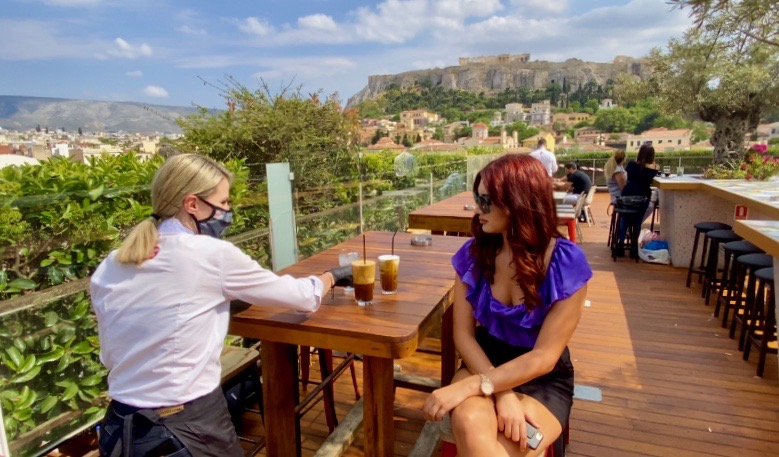
A study titled "The Café Economy" by the London School of Economics (LSE) reveals the transformation of Greece's economy.
greekreporter.com
12 comments
log in to comment.
101% true!
A walk into the street of Athens and you gonna notice lots of coffee/foobs shops. And most of them don’t have a success, meaning they last a year or two and they close down.
Seems pretty natural to me that the first place the higher flexibility in the labor market can be utilized would be in service industries and especially tourism.
If tourism is the stepping stone to a better economy that can help drive other segments, that’s a good thing, not a bad thing.
The decline in economic activity is a logic result of having to spend less, to curb the problem created by overspending.
Is there an example where tourism was actually used as a stepping stone? As an Okinawan, I feel like it’s a shackle that keeps us near the low hanging fruits. Our culture and resources get exploited by outsiders as many of us work in low-rung service jobs (not all of us can own hotels). But it’s a stable enough industry that our politicians don’t invest in anything else.
In an economy with more to offer—like manufacturing and tech—tourism is a very lucrative supplement.
It can be a stepping stone in the exact same way it can be a lucrative supplement.
I don’t see why there should be any reason to doubt that.
There’s your problem where you live.
These 2 articles describe that the Greek economy is really looking up, and from 2 very different aspects.:
greekcitytimes.com/…/greek-investment-surges-as-r…
naftemporiki.gr/…/greece-emerges-as-an-investment…
Has tourism ever brought an economy to a point where most of the workers aren’t second class citizens in their own country? Like is there one example?
Met two greek girls while on a trip in Vietnam. Neither of them lived there because wages are too low and rent is too high.
That’s weird because Vietnam is not normally a place you think of with high rent.
I think they meant neither girl lived in Greece?
They were on a vacation there. I think one of them lives in Sweden and another in Germany.
Incidentally I also can’t remember the last time I bought something made in Greece or found out any software I use was developed in Greece. Apparently the studio behind Darkfall was Greek but they’re defunct.
“supporting technological upgrading” would make things worse. even more automation, even more jobs lost, even lower employment, even lower wages. the opposite of what greece needs.