
showing posts flaired Diagrams, cutaways, or architecture — clear

0

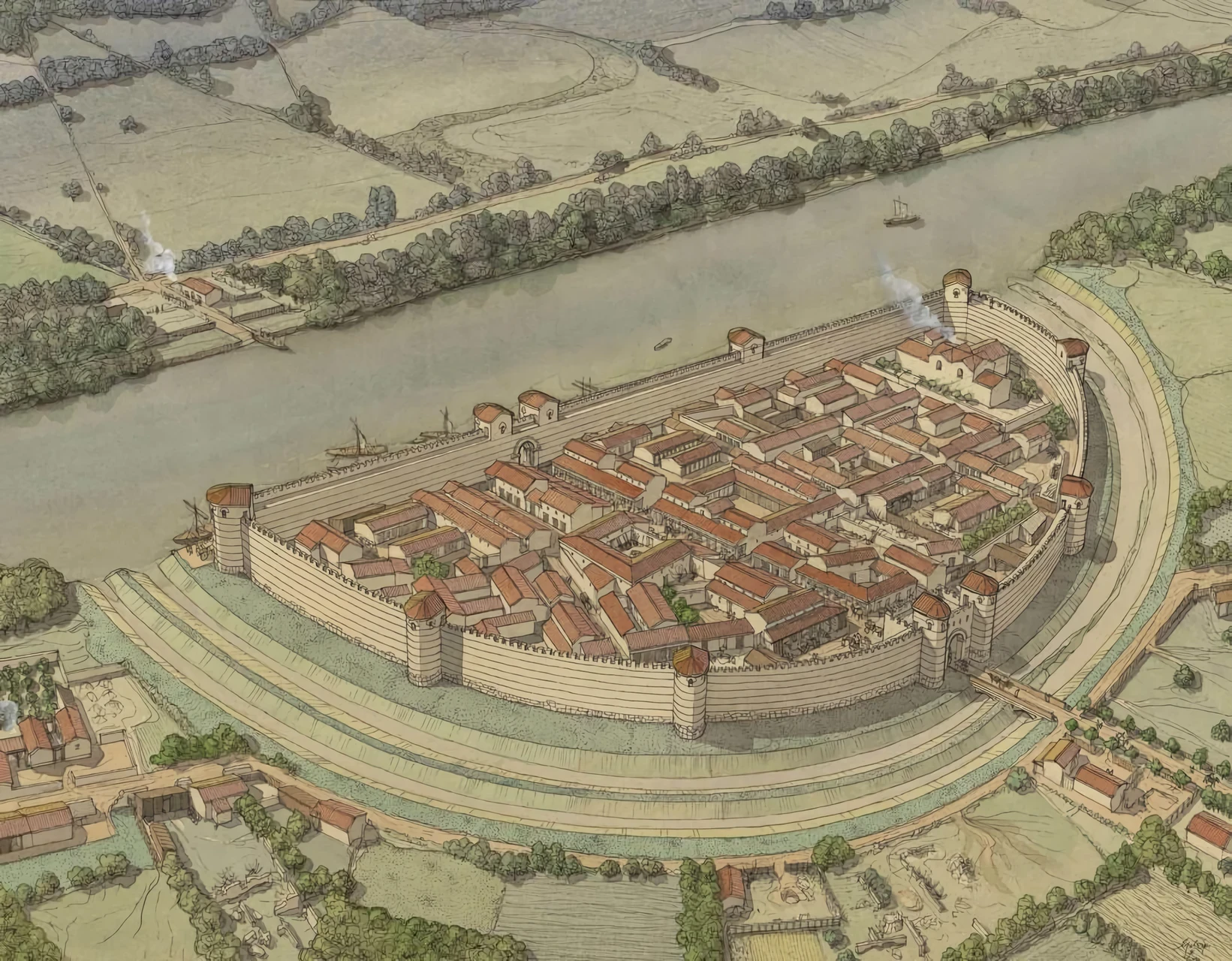
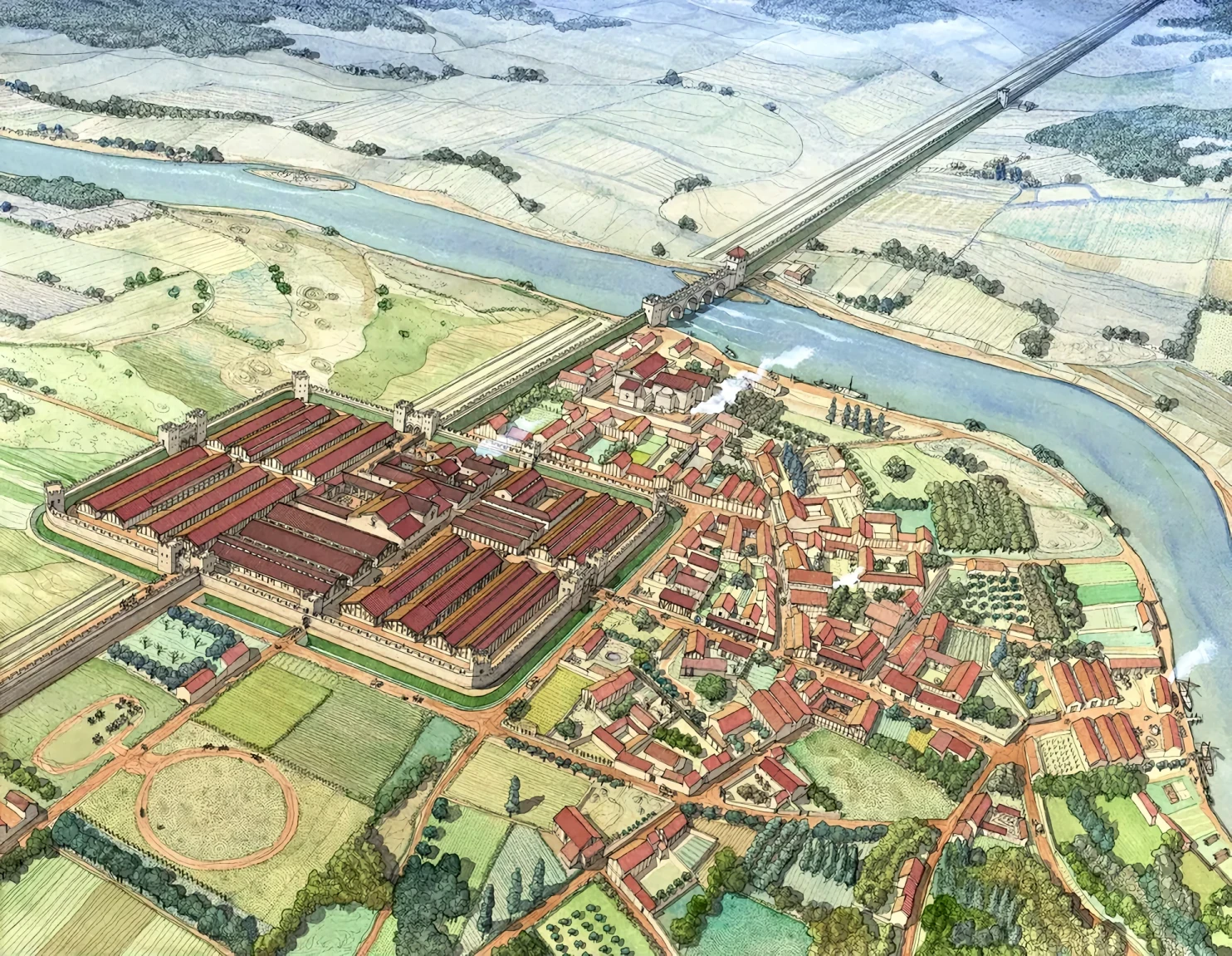
Reconstruction of the Roman Castrum of Mandeure (France, 4thC. CE)

preview

Author and source is Jean-Claude Golvin:
https://people.unil.ch/cedriccramatte/files/2013/10/IAS-MAN-02871-3.jpg
https://jeanclaudegolvin.com/en/gallery/epomanduodurum-mandeure-the-castrum-of-the-late-roman-period/

I’ve upgraded the art via Waifu2x. Thanks to u/dctroll_ for this text:

The castrum of Mandeure was located in present-day Mandeure, in the French department of Doubs, next to the Doubs River, in the southwestern part of the ancient city of Epomanduodurum. Its construction began shortly before the mid-4th century AD, but the works were interrupted by the Alamanni invasion of AD 352 and later resumed and strengthened from AD 364, during the reign of Valentinian I. The fort covered approximately 1.5 hectares and had a distinctive bell-shaped layout. Its walls, which were up to about 4 metres thick at the base, were reinforced with semicircular and quadrangular towers.

Its strategic position along the Doubs River allowed it to control important communication routes and the supply of the military frontier along the Rhine. Archaeological evidence, including materials associated with the Legio I Martia, indicates a significant military presence. However, the castrum probably also had a civilian function and gradually became the new centre of Mandeure’s population during Late Antiquity.

0

Ancient Ephesus brought to life via the "Cassio" series. (seven pages, artist: Henri Recul)

preview

I always enjoy history brought back to life with skill and verve. As mentioned last week in the “Vampire Boy” post, this series has to do with an …
I always enjoy history brought back to life with skill and verve. As mentioned last week in the “Vampire Boy” post, this series has to do with an …

0

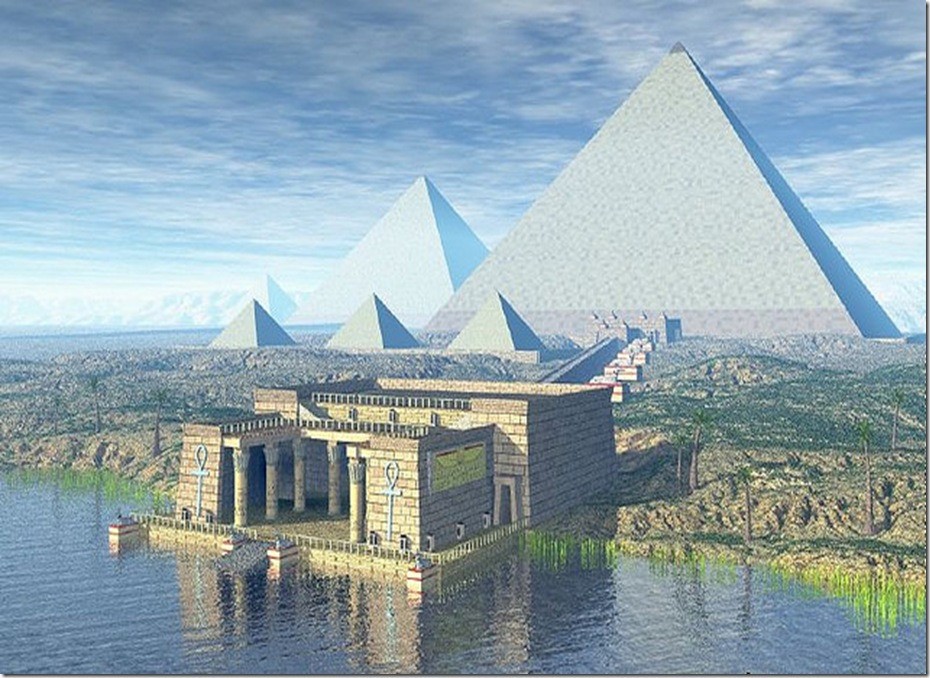
Oof. I'm not happy upon this post, but the basic idea is to convey the fact that the Great Pyramids looked *absolutely spectacular* before their limestone and marble casings got carried off and stripped upon multiple other building projects, later.

preview

Not sure, but I think these are credit to German artist Gabriel Nagypál upon a videogame they were developing around the aughts.

https://www.google.com/search?q=Gabriel+Nagyp%C3%A1l+Giza+pyramid+complex&udm=2

In any case, the original Giza-area pyramids were absolutely spectacular, IMO. We moderns see basically thousands-year old rubble and make judgements upon all that.

Au contraire, those suckers were absolutely unreal for the time. Truth. Facts & reality.

0

Chesters Roman Fort, part of Hadrian's Wall, c.200 AD

preview

All credit to u/dctroll_ for the find and writeup. I decided to put some work in to upgrading the image, and here we are. (I particularly liked that it savored of “ligne claire")

Chesters Roman Fort, known as Cilurnum, was built around 124 AD as part of Hadrian’s Wall in northern Britain. It was an important cavalry fort designed to accommodate around 500 soldiers who helped control and defend the frontier. The first unit stationed there was the Ala Augusta, a cavalry regiment known for its bravery. During the 2nd century, the fort was rebuilt and different auxiliary units occupied it. Around 178–184 AD, the Second Asturians, a cavalry unit originally from northern Spain, arrived at Chesters and remained closely connected with the fort until the end of Roman rule.

As at all Roman forts in northern Britain, the period AD 180–250 was the heyday of both the fort and the sprawling civilian settlement (vicus) lying outside the walls, providing services and accommodation for soldiers and their families.

During the 3rd century, political and military problems across the Roman Empire caused changes to the army and the civilian settlement gradually declined. By the 4th century, the garrison was probably more locally based, although the Second Asturians may still have been present. Chesters probably remained occupied until the Roman administration of Britain ended in the early 5th century.

SOURCES: