0

Submission for Fishyvision 2026 from Oceania, Ecco - Opening Theme

play · youtube.com
YouTube Ecco the Dolphin - Opening Theme www.youtube.com
preview

This is my submission for fishyvison 2026. Please vote for me because I was first and thus deserve to come in first.

This is my submission for fishyvison 2026. Please vote for me because I was first and thus deserve to come in first.

0

Katie Perry - Versatile and Sustainable Basics - Australian-Made Clothing

preview

After recently winning a court case against US Pop-Star Katy Perry trying to force Katie Perry to stop selling under her own name, I figured I’d add them here to help an Australian company continue its fight against.

After recently winning a court case against US Pop-Star Katy Perry trying to force Katie Perry to stop selling under her own name, I figured I’d add them here to help an Australian company continue its fight against.

0

Sketch depicting the Freien by Friedrich Engels, 1842

preview

Context ( Source ): Engels draw this in one of the meetings of German Young Hegelians in which he attended to. People depicted in picture, from left to right are: Arnold Ruge, Ludwig Bühl, Carl Nauwerck, Bruno Bauer, Otto Wigand, Edgar Bauer, Max Stirner, Eduard Meyen, ?, ?, Karl Friedrich Köppen. Possibly squirrel on the left is a satire of Friedrich Eichhorn, sometimes depicted as a squirrel because of the equivalent word in German (Eichhörnchen).

Context ( Source ): Engels draw this in one of the meetings of German Young Hegelians in which he attended to. People depicted in picture, from left to right are: Arnold Ruge, Ludwig Bühl, Carl Nauwerck, Bruno Bauer, Otto Wigand, Edgar Bauer, Max Stirner, Eduard Meyen, ?, ?, Karl Friedrich Köppen. Possibly squirrel on the left is a satire of Friedrich Eichhorn, sometimes depicted as a squirrel because of the equivalent word in German (Eichhörnchen).

0

Mother Anarchy Loves Her Sons, Ukraine, 1919

play · youtube.com
YouTube Mother Anarchy loves her sons - Ukrainian Black Army song www.youtube.com
preview

Context: “Mother Anarchy Loves Her Sons” (Анархия-мама сынов своих любит) is a revolutionary song associated with the anarchist insurgents who fought in southeastern Ukraine during the Ukrainian struggle for independence and self-determination around 1918–1921.

It is commonly described as the unofficial anthem of the Makhnovist “Black Army,” reportedly written in 1919 by Nestor Makhno, and reflects the movement’s militant struggle against forces, whether Red or White, that sought to reimpose centralized state control.

Lyrics:

Our horses are running mile after mile,
Because Freedom is priceless.
Through the slot of my machine gun
I’m looking for the enemy in the dust.

Mother Anarchy loves her sons,
Mother Anarchy is not for sale
We’ll wait for the enemy, with lead we’ll destroy them
Mother Anarchy is with us!

I’ll put my knife into the fire
And then I’ll sneak closer.
Nothing to be sorry for into the fight,
Nothing to be sad about.

Mother Anarchy loves her sons
Mother Anarchy is not for sale
We’ll wait for the enemy, with lead we’ll destroy them
Mother Anarchy is with us!

The only thing that makes me happy is the dead one,
killed by the strength of my friend.
The only thing I can see and remain calm
Is the dead enemy.

Mother Anarchy loves her sons
Mother Anarchy is not for sale.
We’ll wait for the enemy, with lead we’ll destroy them
Mother Anarchy is with us!

Mother Anarchy loves her sons,
Mother Anarchy is not for sale.
We’ll wait for the enemy, with lead we’ll destroy them
Mother Anarchy is with us!
We’ll wait for the enemy, with lead we’ll destroy them
Mother Anarchy is with us!
We’ll wait for the enemy, with lead we’ll destroy them

Mother Anarchy is with us!

0

The Goose and the Common, 18th Century, England, Performed by The Askew Sisters

play · youtube.com
YouTube The Askew Sisters - Goose & Common (Official Video) www.youtube.com
preview

The law locks up the man or woman
Who steals the goose from off the common
But leaves the greater villain loose
Who steals the common from the goose.

The law demands that we atone
When we take things we do not own
But leaves the lords and ladies fine
Who take things that are yours and mine.

The poor and wretched don’t escape
If they conspire the law to break;
This must be so but they endure
Those who conspire to make the law.

The law locks up the man or woman
Who steals the goose from off the common
And geese will still a common lack
Till they go and steal it back

The law locks up the man or woman
Who steals the goose from off the common
But leaves the greater villain loose
Who steals the common from the goose.

The law demands that we atone
When we take things we do not own
But leaves the lords and ladies fine
Who take things that are yours and mine.

The poor and wretched don’t escape
If they conspire the law to break;
This must be so but they endure
Those who conspire to make the law.

The law locks up the man or woman
Who steals the goose from off the common
And geese will still a common lack
Till they go and steal it back

0

Óró Sé do Bheatha 'Bhaile, Ireland, performed by Seo Linn

play · youtube.com
YouTube Seo Linn - Óró Sé do Bheatha Bhaile www.youtube.com
preview

Context: Óró Sé do Bheatha ‘Bhaile is rooted in Irish history as a traditional tune that became a rebel song through centuries of political change, originally associated with welcoming Bonnie Prince Charlie during the third Jacobite rising of 1745–46 and reflecting support for his cause in Ireland. In the early 20th century Irish nationalist leaders like Patrick Pearse adapted its verses to celebrate native resistance figures such as the pirate queen Grace O’Malley and it was widely sung by Irish Volunteers during the Easter Rising and the Irish War of Independence.

Context: Óró Sé do Bheatha ‘Bhaile is rooted in Irish history as a traditional tune that became a rebel song through centuries of political change, originally associated with welcoming Bonnie Prince Charlie during the third Jacobite rising of 1745–46 and reflecting support for his cause in Ireland. In the early 20th century Irish nationalist leaders like Patrick Pearse adapted its verses to celebrate native resistance figures such as the pirate queen Grace O’Malley and it was widely sung by Irish Volunteers during the Easter Rising and the Irish War of Independence.

0

The Diggers' Song by Gerrard Winstanley, 17th century, England, performed by Chumbawamba

play · youtube.com
YouTube Chumbawamba - The Diggers' Song www.youtube.com
preview

Context: The Diggers were a small but radical group of agrarian socialists and Protestant dissidents in 17th-century England who, after the execution of Charles I, occupied common land in 1649 to cultivate it collectively and challenge private property and enclosure. Their communities were harassed and dispersed by landowners and authorities by 1650, but their ideas about communal land use and economic equality left a lasting legacy in later social movements.

Context: The Diggers were a small but radical group of agrarian socialists and Protestant dissidents in 17th-century England who, after the execution of Charles I, occupied common land in 1649 to cultivate it collectively and challenge private property and enclosure. Their communities were harassed and dispersed by landowners and authorities by 1650, but their ideas about communal land use and economic equality left a lasting legacy in later social movements.

0

State integration forced on Rojava

Freedom Press State integration forced on Rojava - Freedom Press freedomnews.org.uk
preview

Recent weeks’ clashes between Syrian state forces and Kurdish forces have developed into a multi-front assault on Rojava, threatening open war as a means of forcing it to integrate into an Islamist state structure. Syrian Democratic Forces (SDF) are resisting sustained attacks using drones and heavy weapons by Damascus-affiliated militias in Hasakeh and Raqqa, including near two prisons housing thousands of Islamic State (ISIS) fighters. SDF confirmed that repeated assaults on al-Shaddadi prison were initially repelled at heavy cost before the facility ultimately fell with thousands of ISIS fighters escaping, despite its proximity to a US-led coalition base that did not intervene.

Recent weeks’ clashes between Syrian state forces and Kurdish forces have developed into a multi-front assault on Rojava, threatening open war as a means of forcing it to integrate into an Islamist state structure. Syrian Democratic Forces (SDF) are resisting sustained attacks using drones and heavy weapons by Damascus-affiliated militias in Hasakeh and Raqqa, including near two prisons housing thousands of Islamic State (ISIS) fighters. SDF confirmed that repeated assaults on al-Shaddadi prison were initially repelled at heavy cost before the facility ultimately fell with thousands of ISIS fighters escaping, despite its proximity to a US-led coalition base that did not intervene.

0

Mirie it is while sumer ilast, performed by Vocantus, 13th century, England

play · youtube.com
YouTube Vocantus - Mirie it is while sumer ilast www.youtube.com
preview

Context: “Mirie it is while sumer ilast” ("Merry it is while summer lasts") is one of the oldest English songs and one of few surviving examples of non-liturgical/secular music. The song, sung in early 13th century Middle English is about the joy of summer before the cold of winter arrives.

The song was re-discovered scribbled onto the back page of a manuscript, alongside two other French songs in the Bodleian Library.

0

“The Foggy Dew” by Canon Charles O’Neill, 1919, Dublin & Ireland (Performed by The Young Dubliners)

play · youtube.com
YouTube The Foggy Dew - Irish Rebel Song (Lyrics) www.youtube.com
preview

Context: The Foggy Dew is an Irish rebel song written around 1919 by Canon Charles O’Neill of County Antrim, using an older traditional melody. It was composed in the aftermath of the 1916 Easter Rising and reflects growing nationalist opposition to Irish participation in World War I under British command. The song contrasts dying for the British Empire abroad with dying for Irish independence at home, capturing a major shift in Irish public sentiment during the revolutionary period.

Context: The Foggy Dew is an Irish rebel song written around 1919 by Canon Charles O’Neill of County Antrim, using an older traditional melody. It was composed in the aftermath of the 1916 Easter Rising and reflects growing nationalist opposition to Irish participation in World War I under British command. The song contrasts dying for the British Empire abroad with dying for Irish independence at home, capturing a major shift in Irish public sentiment during the revolutionary period.

0

"Dance of the Sugar Plum Fairy" played on A Glass Armonica

play · youtube.com
YouTube "Dance of the Sugar Plum Fairy" on the Glass Armonica www.youtube.com
preview

Context: The Glass Armonica or Glass Hermonica was invented in 1761 by Benjamin Franklin. These devices are incredibly fragile and applying too much pressure or not wetting your hands enough can lend itself to broken glass shards in your fingers.

Context: The Glass Armonica or Glass Hermonica was invented in 1761 by Benjamin Franklin. These devices are incredibly fragile and applying too much pressure or not wetting your hands enough can lend itself to broken glass shards in your fingers.

0

Falalalan, ~1556CE Spain, performed by Joculatores Upsalienses

play · youtube.com
YouTube Falalalan (Cancionero de Upsala, 1556): Falalalan [Cancionero de Upsala, 1556] www.youtube.com
preview

Context: Falalalan/Falalalanlera is a Spanish song at least recorded by 1556CE depicting Christian lore. Another version of this song appears in the "Cancionero de Gandía" (Songbook of Gandia), here however it has become a Christmas song. This song is however most notable for being in Europa Universallis II and the hundreds of hours I was forced to listen to it.

Context: Falalalan/Falalalanlera is a Spanish song at least recorded by 1556CE depicting Christian lore. Another version of this song appears in the "Cancionero de Gandía" (Songbook of Gandia), here however it has become a Christmas song. This song is however most notable for being in Europa Universallis II and the hundreds of hours I was forced to listen to it.

0

Eighteen Songs of a Nomad Flute, 177-249CE, China

play · youtube.com
YouTube 《胡笳十八拍》 /古琴独奏: 吴雪盟 www.youtube.com
preview

Context: 胡笳十八拍/Hu Jia Shi Ba Pai (“Eighteen Songs of a Nomad Flute”) is a classical Chinese poetic and musical work traditionally attributed to Cai Wenji (177-249CE) of the late Eastern Han period. After the Wei and Jin dynasties, it gradually evolved into two different instrumental pieces, known as “Da Hu Jia Ming” and “Xiao Hu Jia Ming”. Over the centuries, the piece developed into well-known guqin instrumental versions, often called the Large and Small Hu Jia.

Context: 胡笳十八拍/Hu Jia Shi Ba Pai (“Eighteen Songs of a Nomad Flute”) is a classical Chinese poetic and musical work traditionally attributed to Cai Wenji (177-249CE) of the late Eastern Han period. After the Wei and Jin dynasties, it gradually evolved into two different instrumental pieces, known as “Da Hu Jia Ming” and “Xiao Hu Jia Ming”. Over the centuries, the piece developed into well-known guqin instrumental versions, often called the Large and Small Hu Jia.

0

Wir zogen in das Feld, (1539-1556CE), Germany/Italy

play · youtube.com
YouTube Wir zogen in das Feld www.youtube.com
preview

Conntext: Wir zogen in das Feld ("We marched towards the battlefields") comes from a five-part collection of songs, the Frische teutsche Liedlein written and published in 1539-1556 by the doctor, composer and song collector Georg Forster.

The song is sung in German with scatterings of Italian, it’s about Landsknecht’s (Early German Mercenaries) fighting for their Italian employers during the Italian Wars

0

Seikilos Epitaph by Seikilos, 1-2CE, Greece (Türkiye)

YouTube Seikilos Epitaph with lyrics, ancient greek music, lyre & frame drum ( Acoustic Live ) |YK band www.youtube.com
preview

Context: The Seikilos epitaph is a complete Ancient Greek song engraved on a funerary stele from the 1st–2nd century AD, making it the oldest fully preserved musical composition with both melody and lyrics intact. Found near modern Aydın in Turkey, it was dedicated by a man named Seikilos, possibly in memory of Euterpe. Its brief poem urges the reader to “shine while you live” and not give in to sorrow, expressing a clear, timeless philosophy on the brevity of life. Because the notation is fully preserved, it offers one of the clearest glimpses into how ancient Mediterranean music actually sounded.

Context: The Seikilos epitaph is a complete Ancient Greek song engraved on a funerary stele from the 1st–2nd century AD, making it the oldest fully preserved musical composition with both melody and lyrics intact. Found near modern Aydın in Turkey, it was dedicated by a man named Seikilos, possibly in memory of Euterpe. Its brief poem urges the reader to “shine while you live” and not give in to sorrow, expressing a clear, timeless philosophy on the brevity of life. Because the notation is fully preserved, it offers one of the clearest glimpses into how ancient Mediterranean music actually sounded.

0

GILGAMESH LAMENT FOR ENKIDU

play · youtube.com
YouTube GILGAMESH LAMENT FOR ENKIDU www.youtube.com
preview

Context (Lifted from Peter Pringle’s Video Desc.): Gilgamesh was king of the Sumerian city of Uruk in Southern Mesopotamia, some 5000 years ago. According to legend, he was a ruthless despot, so the gods created a friend for him, a kind of wild man called Enkidu, who was able to challenge him successfully in battle. This took Gilgamesh’s mind off oppressing his people, and he and Enkidu became inseparable friends. The two of them shared many remarkable adventures together but they made a fatal mistake. They traveled to the great cedar forest, where they killed a sacred beast known as “The Bull of Heaven”. This angered the gods, so they sentenced Enkidu to death.

TABLET VIII of the Babylonian Epic of Gilgamesh, contains the text I sing in this lament. I would like to thank Andrew R. George, the translator of Gilgamesh, whose translation of the text appears in the subtitles to this video, for his generous help with the pronunciation of Old Babylonian. […]

There are two musical instruments in this interpretation of the lament of Gilgamesh. The lute I decided to use is the Persian “setar”, which is one of the closest instruments to the ancient three-stringed lutes that is still in existence today. The setar is capable of playing a wide range of quarter tones but, according to archaeomusicologists, the Babylonians did not use them. Personally, I’m not so sure about that.

The other musical instrument I used is a pair of reed pipes which are played together. The ones you see at the beginning of the video are copies of the pair of silver pipes that were discovered by archaeologist, Sir Leonard Woolley, during his excavations of the Sumerian city of Ur, in the 1920’s. They have a sound similar to the modern “duduk” and, like the duduk, the shehnai and the Australian didgeridoo, they are played using the technique known as “circular breathing”, in order to produce a continuous tone without interruption. The ancient Babylonian reed pipe was known as the “malilum”.

Since I could not sing, accompany myself on the lute, and play the pipes at the same time, I sampled the sound of the pipes and used a MIDI pedal keyboard (like the ones organists use to play bass notes) to trigger the sounds - one foot for each of the two silver pipes. That way I could perform all the parts of the lament at once, without any need for overdubs.

The glazed brick wall you see behind me in this video is part of the magnificent “Gate of Ishtar”, which was the main entrance to the ancient city of Babylon.

0

The Sound of the Carnyx

play · youtube.com
YouTube Le Son del Carnyx www.youtube.com
preview

Context: The Carnyx was a Celtic instrument used for ~ 400 years between 200 BCE to 200 CE. A large S shaped wind instrument, with the head decorated and formed into a boars. According to the Greek historian Polybius (~206-126BC) accounts it was at least used during warfare:

There were countless trumpeters and horn blowers and since the whole army was shouting its war cries at the same time there was such a confused sound that the noise seemed to come not only from the trumpeters and the soldiers but also from the countryside which was joining in the echo.

0

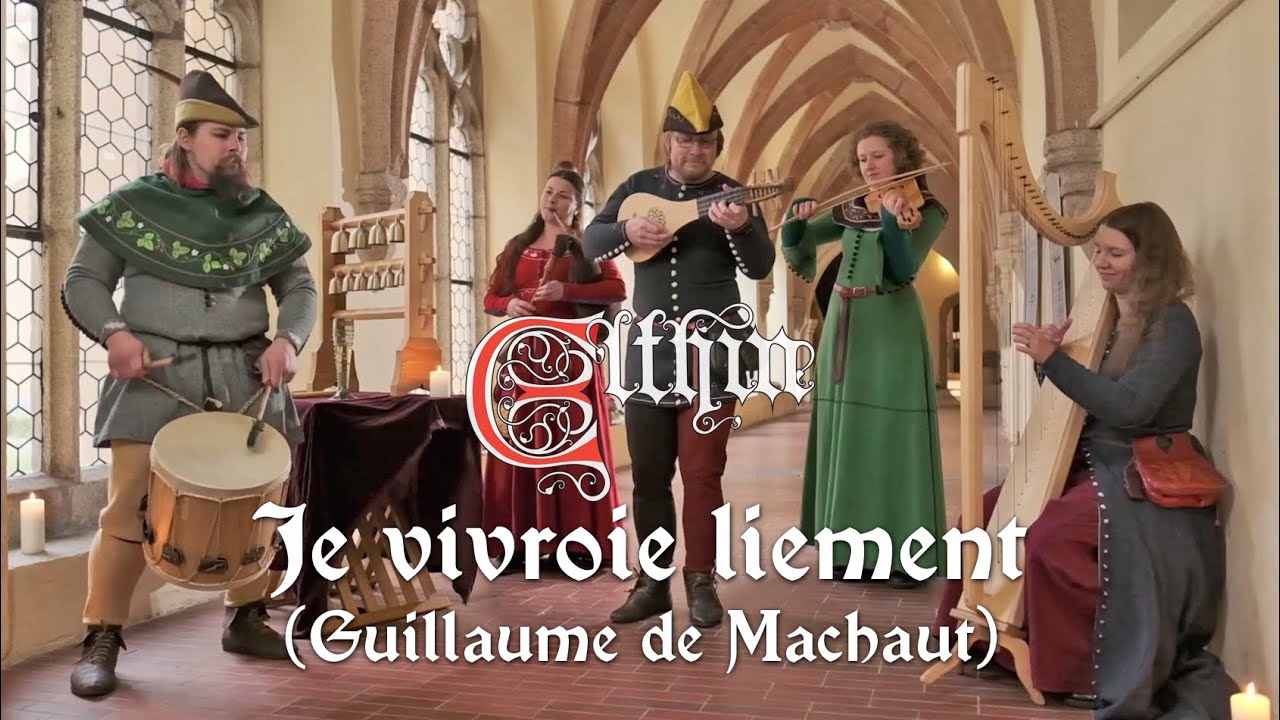
Je vivroie liement by Guillaume de Machaut, 1300 - 1377 CE, France, performed by 𝕰𝖑𝖙𝖍𝖎𝖓

play · youtube.com
YouTube 𝕰𝖑𝖙𝖍𝖎𝖓 - Je vivroie liement (Guillaume de Machaut) www.youtube.com
preview

Context: Guillaume de Machaut was a composer in the Ars nova ("new art") genre. His work was highly influential, with his death signifying the end of an era and the start of “Ars Subtilior”. His music was during a transformative time in Europe, where polyphonic music was the overtaking monophonic.

Context: Guillaume de Machaut was a composer in the Ars nova ("new art") genre. His work was highly influential, with his death signifying the end of an era and the start of “Ars Subtilior”. His music was during a transformative time in Europe, where polyphonic music was the overtaking monophonic.

0

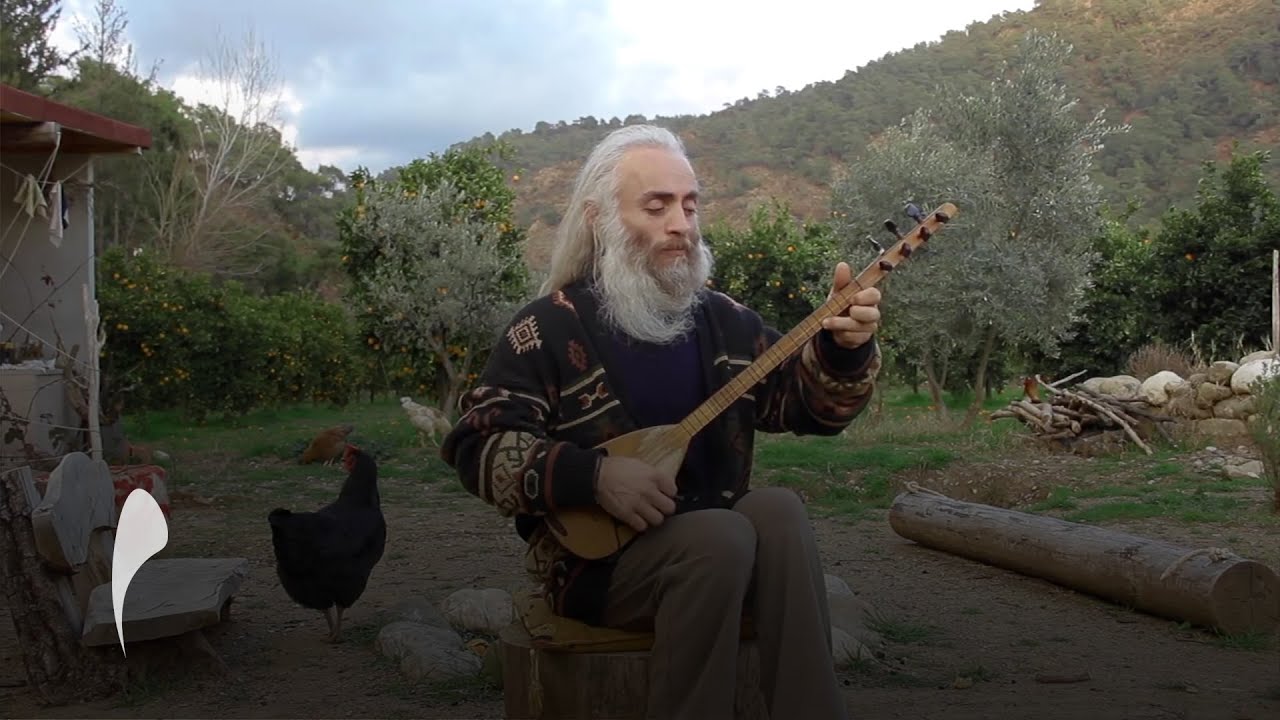
Dertli Dolap, 1240 – 1320CE, Türkiye

play · youtube.com
YouTube Özgür Baba - Dertli Dolap www.youtube.com
preview

Context:L Detrli Dolap ("The Troubled Watermill") was written by Turkish poet and Sufi mystic Yunus Emre. This rendition of Dertli Dolap is sung by Özgür Baba, playing a Cura.

Context:L Detrli Dolap ("The Troubled Watermill") was written by Turkish poet and Sufi mystic Yunus Emre. This rendition of Dertli Dolap is sung by Özgür Baba, playing a Cura.

0

Hurrian Hymn No.6, c.1400 BCE, Ugarit (Syria)

play · youtube.com
YouTube The Oldest Known Melody (Hurrian Hymn no.6 - c.1400 B.C.) www.youtube.com
preview

Context: The Hurrian songs are a set of ancient musical tablets from Ugarit (c. 1400 BC), but only Hurrian Hymn No. 6 survives in nearly complete form, making it the oldest known piece of written music. Addressed to the goddess Nikkal, No. 6 preserves both lyrics and detailed notation for a nine-stringed lyre, showing that a sophisticated musical system already existed. Because the notation is partially damaged and uses an unfamiliar system, modern scholars have produced several differing reconstructions, with gradual improvements being made.

Context: The Hurrian songs are a set of ancient musical tablets from Ugarit (c. 1400 BC), but only Hurrian Hymn No. 6 survives in nearly complete form, making it the oldest known piece of written music. Addressed to the goddess Nikkal, No. 6 preserves both lyrics and detailed notation for a nine-stringed lyre, showing that a sophisticated musical system already existed. Because the notation is partially damaged and uses an unfamiliar system, modern scholars have produced several differing reconstructions, with gradual improvements being made.