



showing posts tagged #humanities — clear

0

Stay sharp, get used to loss – and pay your taxes: the wit and wisdom of Willie Nelson

the Guardian Stay sharp, get used to loss – and pay your taxes: the wit and wisdom of Willie Nelson www.theguardian.com
preview

On being the Last Man Standing

Longevity is a blessing and also a burden. A blessing because you get to hang around to see your grandkids and maybe even your great-grandkids. But a burden because every day it seems like another friend has passed. Grieving becomes a full-time job. The last man standing can be lonely. Loss is something you don’t get over. That idea hit me hard when a friend’s wife died and he came to me for comfort. He saw me as a guy who might understand. The thing I know most, I told him, especially after my son Billy died in 1991, aged 33, is that you don’t get over it, but you will get through it. Best I can do is write a song.

On love and loss

I have to admit that I like songs about suffering love. I’ve experienced a lot of love, and certainly some suffering due to the loss of it. At age 10, when I put together a booklet of songs I had written, they had titles like Faded Love and Wasted Dreams and I Guess I Was Born to Be Blue. I’d already known a little something about pain and loss by then. My sister Bobbie and I felt the loss and abandonment of our parents, who left us with our grandparents when we were six months old, the kindness and love of our grandparents, and the loss of my grandfather, who taught me my first chords and bought me my first guitar. He passed, leaving my grandmother to raise us alone. All that love and loss by the age of 10. Some folks can live with heavy thoughts for a long time. Not me. I turn heavy thoughts into song. And the turning hardly ever fails to lighten the thought. It maybe even makes the thought disappear into thin air.

On meeting his fourth wife, Annie

The 1986 film Stagecoach was a remake of the classic western. I was shooting with Waylon Jennings, Kris Kristofferson and Johnny Cash. The Highwaymen had just recorded a huge hit album that gave new life to our middle-age careers. The script for the movie was, in the measured opinion of Kris (the only actual movie star among us), “a piece of shit”.

We didn’t argue with Kris. After all, he’s a Rhodes Scholar. Kris overlooked the lousy script, though, and went along because it was really just a way for us to all hang out together. We were brothers. I also went along because I love westerns, even bad ones.

In addition, there was this no-nonsense woman named Ann Marie D’Angelo who made things a lot easier. On my shoot days, I was in her makeup chair for a couple hours each day, and we were having a great time. She was smart and funny and spunky and cute. One day, the producer asked that my hair be cut for a scene. We talked about it for a while in the makeup trailer, and all the while it was like we’d known each other for ever, or maybe in another lifetime. Neither of us thought it was a good idea. “Let’s just tell them no,” I said. That was the end of it. It didn’t feel like the first decision we’d made together, and as it turned out, it wouldn’t be the last. It was all so natural, like singing a verse into the chorus of a song.

0

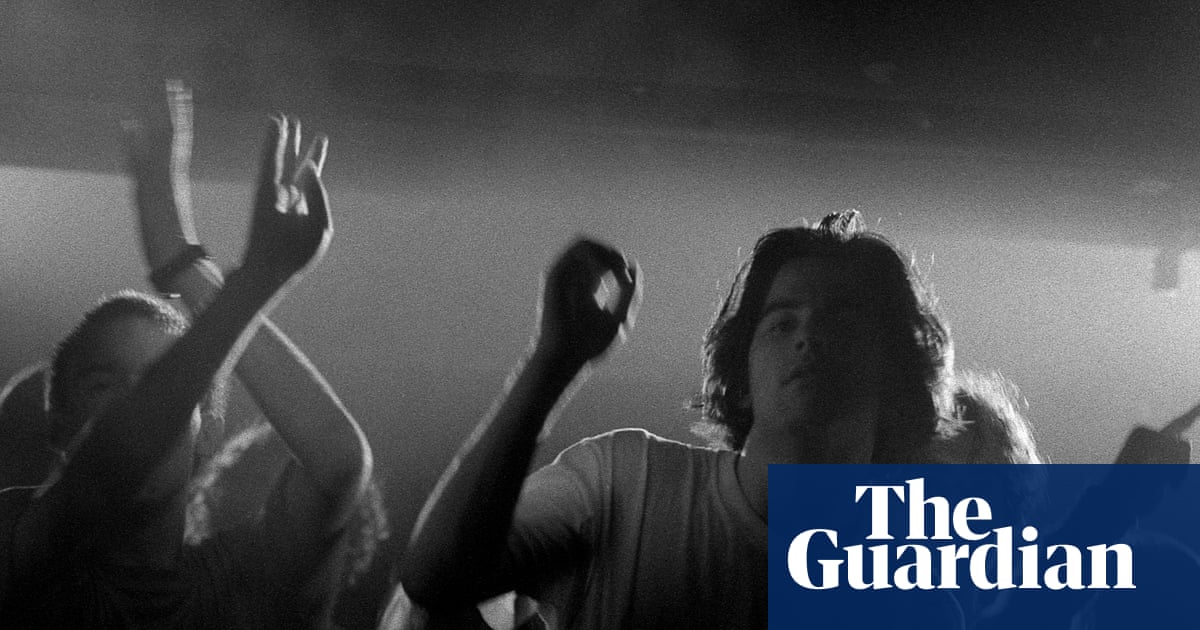
Murder on the dancefloor: are phones, drugs and chatter killing off dancing?

the Guardian Murder on the dancefloor: are phones, drugs and chatter killing off dancing? www.theguardian.com
preview

Towards the end of summer, a debate began raging in clubland, kick-started by an Instagram post from the esteemed DJ Jane Fitz. Ahead of the Houghton festival, where she is a regular fixture, she posted a request asking people to stop chatting so much during DJ sets.

“What I wrote was super respectful,” she tells me. “A bit of talking is obviously OK. But why would you stand completely still, where the sound is super loud, just to ask your mate about a new boyfriend or what they had for lunch? It’s called a dancefloor for a reason.” DJ Jane Fitz at the Rural festival, 2025. Jane Fitz at Rural in 2025. Photograph: Toshimura

Fitz’s plea exploded. It chimed with many, while others were up in arms, claiming that paying an entry fee allowed them to do whatever they wanted. “People were accusing me of being the fun police,” she says. “I’m not trying to stop your fun, mate. I’m trying to give you a better night out.”

“I think the dancefloor is dead,” Charli xcx sang on her tongue-in-cheek comeback single Rock Music this spring. Was she right? Many DJs and clubbers are worried it goes further than the yappers Fitz complained about, citing the rise of certain drugs – insular ketamine, chew-your-ear-off cocaine – and TikTok-boosted star DJs bringing in passive fans used to consuming dance music through a screen, who end up standing still filming the DJ and their visuals. Then there is the rising cost of clubbing, prohibiting younger, potentially bouncier dancers from attending raves.

0

Arielle Zuckerberg and the DJs of late capitalism

Mother Jones Arielle Zuckerberg and the DJs of late capitalism www.motherjones.com
preview

Earlier this month, a video emerged on social media of Arielle Zuckerberg—Mark Zuckerberg’s sister, also known by her alias “AZ”—DJing house music at a kickoff event for SF Tech Week. Like the millions of other DJ videos you’ll find on the internet, it was completely unremarkable. And yet, because of Arielle’s familial proximity to one of the richest men on the planet, a handful of simpering tech bros felt the need to publicly lavish her with praise.

“There are few people who could make DJing with a lanyard cool. @ariellezuck is one of those people,” a chief product officer for a venture capital firm posted on Elon Musk’s X, after watching the 15-second video of Zuckerberg awkwardly bopping around and touching knobs. “I wish she could join us for our Yacht event on Thursday under the blue angels. AZ?” pleaded one party attendee, hoping to score some Zuck star power to boost his AI startup.

As someone who has produced, performed, and DJ’ed electronic music for most of my adult life, I tend to stay as far away from DJ discourse as humanly possible. Even so, I am fascinated by the trope of the Celebrity DJ, even more so when the “celebrity” in question happens to be the sibling of one of the most hated tech oligarchs in the world.

Unlike the artists and curators who defined underground rave and club culture in the 1980s and ’90s, the Celebrity/Influencer DJ can be viewed as a kind of late-capitalist cultural warning sign. Whether it’s Paris Hilton pouting from behind the decks or Goldman Sachs CEO David Solomon swaglessly pantomiming at corporate functions, the contemporary DJ has mutated from a countercultural icon to a monolithic archetype that attracts opportunists and narcissists of all stripes. In some circles of online influencer culture, the DJ has become a being of pure spectacle: Whether or not it’s backed by a genuine love of music is often beside the point.

0

Burning Flipside - Ranger Lead Address (thoughts on managing and developing volunteer groups)

play · youtube.com
YouTube 2026-10-13: Burning Flipside - Ranger Lead Address www.youtube.com
preview

There isn’t too much here that’s in the burner weeds, so I figured I’d post a link, given the larger applicability to creating a robust and thriving volunteer community.

It’s also a peek behind the curtain writ small, as rangering is only a subset of all the work that goes in year-round to ensure a safe and enjoyable experience for participants who may be in novel and/or vulnerable situations at an event. Yes, it’s a lot of old hippies and ravers doing drugs for a few days, but it’s only possible because of tireless effort for months beforehand.

Of interest to me is that Fax Machine’s first burn was the same as mine (Flipside 2024), and he’s now the ranger lead for the next three years. In some contexts, that may seem like a glacial path, while in others, it may seem rushed. But it’s consistent with seeing a need and having or developing relevant skills to satisfy that need for the benefit of others.

I’m in no way an impartial observer, since Fax Machine is the guy who took away my first van fridge after it died to see if he could get a replacement control board and then pass it along to someone else in need. I’m housed because of the burn community. When my phone was stolen this spring, it was a burner who let me use his address and then drove out to my van after 10 p.m. to deliver it from the other end of town.

One thing he pointed out a need for was getting a binder of paperwork condensed, synthesized and digitized, which falls squarely in my bailiwick, so I’ve reached out on Discord offering my services as an editor. (Thank the old gods and the new that Facebook is being more widely recognized as a great way to get messaging out to fewer and fewer people; even in 2024, my attempts to find the community online were met with “here’s the Facebook group,” and upon saying it may as well be in a filing cabinet somewhere across the world in terms of accessibility, I was told that my decision not to throw the doors wide open to a surveillance company was a “me” problem. This is not how community is built.)

It’s about time I gave something back.

More broadly, it’s a reminder that there are people and groups around, no matter where you are (within reason, of course), looking to support each other and in need of help doing so. I don’t want to turn this into a polemic, so I’ll leave it at that.

At the end of the day, life is about human interaction, which society is doing its best to push us away from by forcing long work hours to make ends meet and encouraging parasocial engagement instead. And as much fun as it is to bitch about, simply radically agreeing about problems with colourful language does nothing to fix them.

0

What are the Humanities?

What are the Humanities? lecternmedia.substack.com
preview

In the article, I lament the loss of a path I wanted to walk. Explore how the Humanities suffered under anti-democratic forces, and explain why their study is crucial for us all.

Again, a tough write. I seemed to struggle taking the academic down a notch in this one. But the article was well received in most regards. It’s been a tough few weeks getting coherent thoughts down on paper, but I’m back into a rhythm. Any feedback welcome.

0

Cartographers of North Korea: An analysis of the OpenStreetMap data in North Korea

Cartographers of North Korea Cartographers of North Korea :: 북한의 지도 제작자 cartographers-nk.wonyoung.so
preview

The population of North Korea only has extremely limited internet access; while a select group of people can access the internet for research purposes, almost everybody else can only access a countrywide intranet called Kwangmyong.

For a country that is closed to the internet, however, the quality of OSM data in North Korea is extraordinary: 324,415 data points drawn by 889 contributors since 2007.

It is particularly interesting to note that there are a number of street-level points of interests (POIs), as POIs are regarded as information that only the local people can contribute.

0

The Rise of the IRL Influencer

preview

At Café Soul, a semi-regular party in New York City, $30 buys you a chance to belt R&B hits, sip margaritas from commemorative glasses, try out Awkward Games’ icebreaker cards, and—as the ticket page promises—form “genuine connections.” When I arrived 45 minutes after the rooftop party started on a recent Saturday afternoon, the few 20- and 30-something guests were mostly sitting on mid-century modern couches, looking at their phones. But Tionne Barmer, who dreamed up the event, promised me that, in two hours, the rooftop would be packed: People would be enjoying the Patrón-sponsored bar, trying the brown-sugar cold brew (underwritten by On the Way Coffee), using Awkward Games cards to skip small talk, and maybe even flirting. (The event was also sponsored by Tinder.) They’d have a chance to make genuine connections, which is what Barmer was really selling. “People will pay for the entertainment,” he said, “and, on the side, they get community.”

Barmer has always had a talent for bringing people together, and now he’s making a living out of it. Some people call this job “event curator”; others have started using the term community builder. People like Barmer are, in essence, professional scene-makers. They were student-body presidents, sorority leaders, slumber-party queens, that one guy in the friend group who threw the best parties—and now they organize knitting circles, silent reading parties, adult summer camps, run clubs, and life-story sharing sessions to help young adults find one another. They sell their guests the opportunity for friendship, and they sell brands access to the groups they’ve gathered, not on Instagram or TikTok, but in real life.

If Barmer and others like him can make this a full-time profession (he quit his finance job only when his side gig as a community builder could match that income), it’s in part because Americans are in desperate need of shindigs. As The Atlantic has reported, in the past three decades, pretty much every measure of socializing—hosting dinner parties, going on picnics, volunteering—has dropped by double digits; in 2023, only 4.1 percent of us managed to make it to a social event or host one on an average weekend or holiday. “Everyone wants to attend parties, but no one wants to throw them,” Ellen Cushing wrote in this magazine last year.


At Café Soul, a semi-regular party in New York City, $30 buys you a chance to belt R&B hits, sip margaritas from commemorative glasses, try out Awkward Games’ icebreaker cards, and—as the ticket page promises—form “genuine connections.” When I arrived 45 minutes after the rooftop party started on a recent Saturday afternoon, the few 20- and 30-something guests were mostly sitting on mid-century modern couches, looking at their phones. But Tionne Barmer, who dreamed up the event, promised me that, in two hours, the rooftop would be packed: People would be enjoying the Patrón-sponsored bar, trying the brown-sugar cold brew (underwritten by On the Way Coffee), using Awkward Games cards to skip small talk, and maybe even flirting. (The event was also sponsored by Tinder.) They’d have a chance to make genuine connections, which is what Barmer was really selling. “People will pay for the entertainment,” he said, “and, on the side, they get community.”

Barmer has always had a talent for bringing people together, and now he’s making a living out of it. Some people call this job “event curator”; others have started using the term community builder. People like Barmer are, in essence, professional scene-makers. They were student-body presidents, sorority leaders, slumber-party queens, that one guy in the friend group who threw the best parties—and now they organize knitting circles, silent reading parties, adult summer camps, run clubs, and life-story sharing sessions to help young adults find one another. They sell their guests the opportunity for friendship, and they sell brands access to the groups they’ve gathered, not on Instagram or TikTok, but in real life.

If Barmer and others like him can make this a full-time profession (he quit his finance job only when his side gig as a community builder could match that income), it’s in part because Americans are in desperate need of shindigs. As The Atlantic has reported, in the past three decades, pretty much every measure of socializing—hosting dinner parties, going on picnics, volunteering—has dropped by double digits; in 2023, only 4.1 percent of us managed to make it to a social event or host one on an average weekend or holiday. “Everyone wants to attend parties, but no one wants to throw them,” Ellen Cushing wrote in this magazine last year.

0

Book Publishers Are Quietly Using More AI. Staff Are Revolting

WIRED Book Publishers Are Quietly Using More AI. Staff Are Revolting www.wired.com
preview

In headline after headline this year, American book publishers have appeared to be fighting back against generative AI, from suing Google for copyright infringement to canceling books by authors suspected of using LLMs.

But behind the scenes, at least three of the Big Five US book publishers—HarperCollins, Simon & Schuster, and Hachette—have been quietly incorporating AI tools into their publishing processes without public disclosures or author consent.

According to interviews with more than two dozen workers, all of whom spoke under the condition of anonymity to avoid jeopardizing their employment, publishers are now using LLMs like Claude and ChatGPT to email literary agents, write publicity and back-cover copy, design cover art, and generate marketing materials, often at the direction of their executives.

At the same time, multiple editorial staffers say the widely publicized cases of authors accused of using LLMs to help write their books—like Hachette’s horror novel Shy Girl or Macmillan’s crime thriller Call Me, I’ll Hide the Body—are just the tip of the iceberg. “Every single imprint has a story of someone very esteemed who had a book canceled because of blatant AI use” without ever making the news, one editor says.

0

Abolish frat culture

Abolish frat culture besskalb.substack.com
preview

Raise the son who makes frat culture irrelevant. We need to raise a generation of sons who look at the blueprint of frat culture and laugh at those rapist losers. We need to raise a generation of sons that make the entire notion of fraternities obsolete.

The shift must be seismic for this campus rape cycle to end, and the good news is research has identified a clear problem with a practical solution if we are to pretend college campuses are places where not getting raped matters as much as male bonding. And it’s breathtakingly clear cut. We can abolish something that has an established track record of resulting in rapes: Fraternities, the socially condoned epicenters of college rape culture. Abolish frats.

“But it’s a brotherhood of friendship and service that has roots in tradition —” fuck you, Brendan, go play outside.

Fraternities are rape incubators and this is backed by hard, peer-reviewed evidence.

According to a longitudinal study by the NIH published in 2022 titled “Selection and Socialization Accounts of the Relation between Fraternity Membership and Sexual Aggression,” researchers found that frats cause rape.

0

Why Americans Stopped Throwing Dinner Parties

preview

Mid-century Americans knew how to throw a party, for better or worse. In some of the most famous titles of the 1950s and 1960s—Couples, by John Updike; Who’s Afraid of Virginia Woolf?, by Edward Albee; Revolutionary Road, by Richard Yates—the drama (and martini-soaked melodrama) took place in middle-class living rooms. The stories were fictional, but the setting was realistic. Until 1975, half of Americans said they entertained guests at their home every month.

Then something changed. Americans stopped throwing parties. Even more fundamental, they stopped visiting one another. From 1975 to 1998, the share of Americans who gave or attended a monthly dinner party declined by half. The share of Americans saying they never entertained people at home tripled. Although cultural critics often bemoan the decline of organized religion, the dip in church attendance was downright modest compared with the collapse in hosting, according to data gathered by the DDB Needham Life Style Surveys.

In his 2000 book, Bowling Alone, Robert Putnam wrote that if these trends continued, the ancient practice of visiting with friends “might entirely disappear from American life in less than a generation.” Check your calendars. One generation and change later, Putnam’s prediction needs an update.

0

A prairie enthusiast in search of a farming land ethic: Caring for this planet entails decisions that are intimate, about our farms, our homes, our human and our wild neighbours

A prairie enthusiast in search of a farming land ethic | Aeon Essays aeon.co
preview

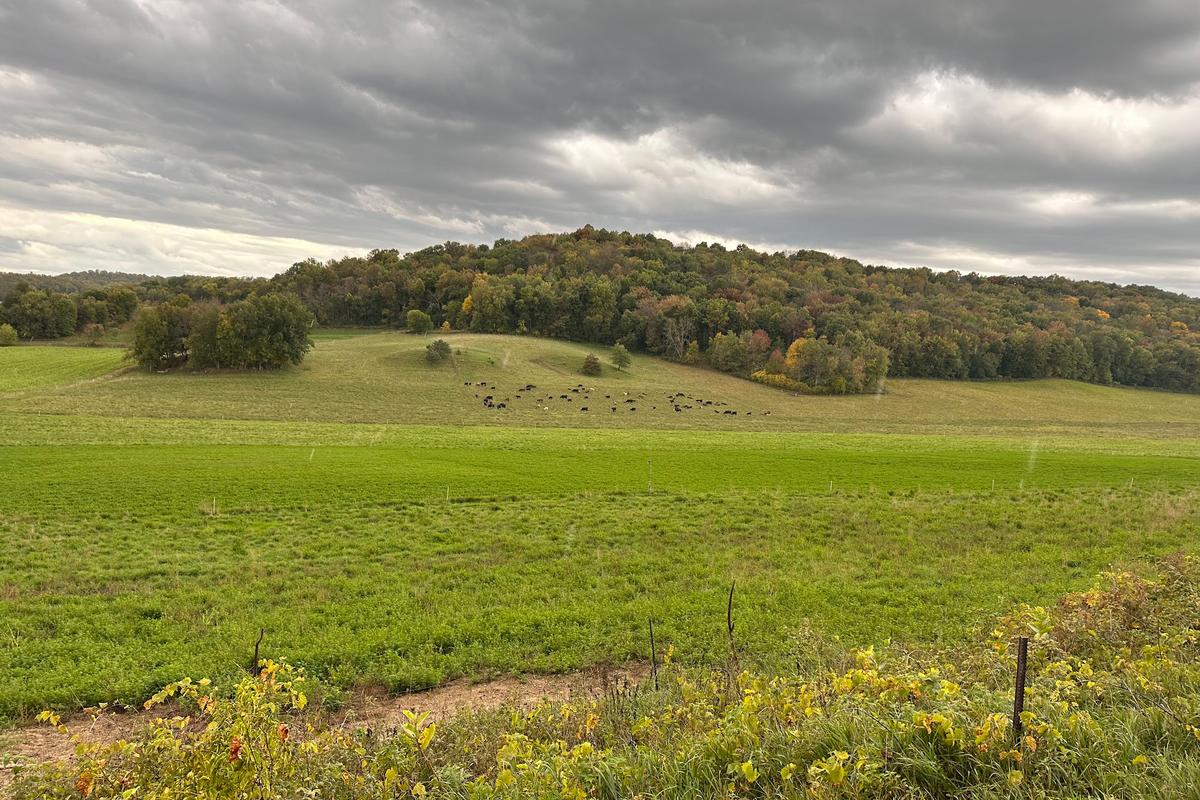
We still have far to go in the attempt to encode a land ethic sufficiently strong to temper our appetite for Earth’s resources and focus our work towards restoring land health. A land ethic, good land use, and an equitable and civil society arise from countless actions and conversations, constantly unfolding, as the nation’s citizens go about their daily lives.

Agriculture is an ecologically embedded enterprise, and we should not tolerate actions that degrade our natural capital, the diversity and function of our ecosystems, or the health of the atmosphere, soils and waters that surround and support us. At the same time, we must recognise that agriculture is embedded in society – a farm practice that runs counter to society’s goals is hard to maintain. I agree that a farm can and should be valued by its owners as a place to live, and as a source of pleasure in good farming, good eating and engagement with both domestic and wild neighbours. Society continues to measure farms, and judge farmers, on their production of grain, meat, biomass and other commodities. Farmers are caught up in a highly competitive market system that typically allows only a slim margin between money coming in and money going out. Meanwhile, the goal of public policy for agriculture continues to be guided by the desire for cheap food.

While the predicament of modern agriculture may appear so dire that we will inevitably adapt and organise a more sustainable system, ecologists at Murdoch University in Australia came to a different conclusion after analysing the problems facing farmers in the semi-arid southwestern part of that continent. Farmers and policy-makers continue to invest in production systems that don’t fit the land because they are now tightly bound up in patterns of modern agribusiness and food production. Financial capital goes to conventional farmers more easily than to alternative farmers, and social capital – in the forms of agronomic research, technical assistance (for addressing issues with animal health, soil fertility, soil erosion and water pollution), and especially processing, distribution and retail – supports the energy- and natural-capital intensive system. The authors describe this as a ‘lock-in trap’, ‘an industry that has so much “sunk-costs” that it may continue to degrade the resource it relies upon until the capital is totally removed.’ Shifting the system to a more desirable state – one that is ecologically as well as socially resilient – requires us to forge new social connections in the quest to establish more sustainable patterns of land use.

0

I Miss My Tears: I used to cry all the time. Then, three years ago, I stopped. What would it take to make me sob again?

The Cut What Would It Take to Make Me Cry Again? www.thecut.com
preview

archive.is link

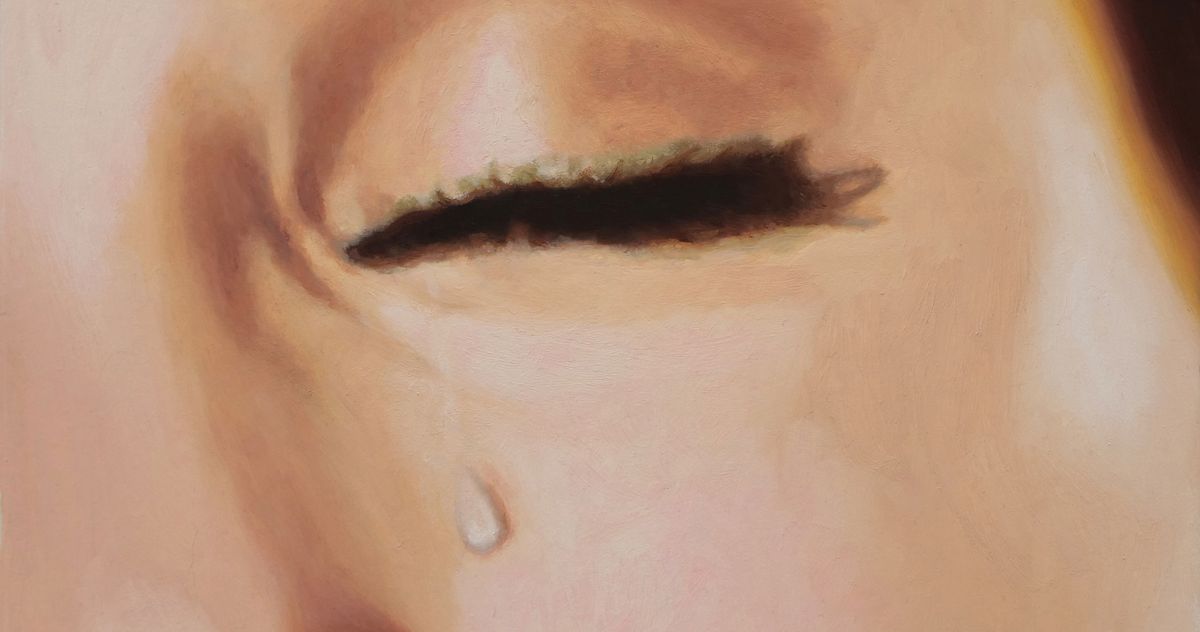
I’d started to suspect that something was wrong with me when a friend I’d known since childhood died and I didn’t shed a tear. I sat at her memorial service and felt something worse than nothing — a calcified layer around where feeling should have been, as if something were trapped in my body with no hope of emerging on its own. I noticed the absence at other times I would usually have sobbed. A late-night fight with my husband, at the point where any other form of communication feels impossible. Fifth-grade graduation, when the valedictorian thanked her teachers for helping her when she was going through chemo. Pixar movies, Call the Midwife, Sarah McLachlan singing “in the arms of the angel” — none of it moved me to tears. I wasn’t a monster, I was pretty sure. Something was wrong with me. I craved the cleansing sensation after the tears stop, that feeling in your sinuses that’s like you’ve been swimming in the ocean. The boneless relief that comes after sobbing has ceased to wrack your body and you can finally rest, absolutely drained. I had no idea what it would take to get back there, the place I’d been effortlessly able to access for the first 41 years of my life. But I would spend the next six months trying. I hoped it might even be fun.


L., my therapist, mostly wanted to know why crying was so important to me — a valid question, as her questions tend to be. I didn’t have a good answer. I told her I craved crying’s cathartic physical release, then clarified that I still had orgasms (just to get that out of the way). Joking around about how much of a therapist she was being, L. asked me to think harder about the significance of crying, to go beyond the moment of triumphant weeping to imagine what it would mean. I realized that I didn’t really know. I’d just understood it as a goal and also something to write about. Unlike every other therapist I’ve ever had, L. doesn’t treat my writing as something separate from the excavations of self that we talk about in therapy but as an inextricable part of my whole deal. It wasn’t that she worried about professionalizing my emotional journey; she was just wondering if I had a thesis beyond “I haven’t cried, and I want to.”

I didn’t have a thesis. Instead, I described sitting at my friend’s funeral, watching as the rabbi sobbed her way through the service, and glancing around to confirm that mine were the only dry eyes in the room. Didn’t she think it was strange that she’d never seen me cry? With my previous therapists, many sessions had ended in tears. But I’d been a different person before I started seeing her and B., before I’d gotten on this exact drug regimen, before the events of 2022 had split my life into a clear “before” and “after.” I wanted the tears back, but I didn’t want the rest of it; I didn’t know whether that was possible, but I wanted to try. When I thought about the project in those terms, I understood why L. and B. were wary. The “before” version of me had done her best to ensure there wouldn’t be an “after.”

0

Private Schools Are Bad for Society

Private Schools Are Bad for Society www.hamiltonnolan.com
preview

If you allow the most wealthy and powerful segment of society to opt out of public services, those public services will get worse. The reason is simple: You have removed the incentive for the most influential people to use their influence to improve public services. Indeed, we see this dynamic in action everywhere we look. If rich people can all go to a private hospital, the public hospital is worse. If rich people can buy their way out of the TSA security lines, the experience for the regular people who have to wait gets worse. And when the rich people’s kids all go to private schools, the public schools are worse than they would have been if they educated everyone’s kids.

From the perspective of an individual parent, the purpose of school is to give their own kid the best possible education. But from the perspective of society—from the perspective of an architect of public policy—the purpose of schools is to give everyone a good education. Wealthier parents often observe that poorer public schools are full of poorer students with more severe needs. They respond to this by opting out and putting their kid into a private school where the student population has less severe needs, and more resources to address them. This may be rational if the goal is to give their kid the very best, but by isolating the neediest children in poorer public schools, it produces a worse outcome from the perspective of public policy, where every student is equally important.

0

I Investigated China's Mahjong Obsession

play · youtube.com
YouTube I Investigated China's Mahjong Obsession www.youtube.com
preview

Roughly 30% of China’s population plays mahjong. That’s over 500 million people… But what surprised me wasn’t the amount of people that play mahjong here. Rather, it was the distinct, negative outlook that people have toward the game. It’s even exempt from the Chinese Cultural Heritage list because of this collective “distaste”, even though the association has enlisted analgous games such as Weiqi (Go) and Xiangqi (Chinese Chess). So I took to the parlors to understand why.

Roughly 30% of China’s population plays mahjong. That’s over 500 million people… But what surprised me wasn’t the amount of people that play mahjong here. Rather, it was the distinct, negative outlook that people have toward the game. It’s even exempt from the Chinese Cultural Heritage list because of this collective “distaste”, even though the association has enlisted analgous games such as Weiqi (Go) and Xiangqi (Chinese Chess). So I took to the parlors to understand why.

0

In Fighting for Every Black Child, Did I Betray My Own?

preview

archive.is link

I could feel her looking at me. Her body slung in adolescent impertinence against the front passenger seat door, shoulders turned so she could face me fully. Usually when I picked up my daughter, Najya, from middle school, she’d tumble into the car and bombard me with the day’s escapades, chattering nonstop about her friend group or complaints about an annoying teacher or her wonder at the test she’d aced despite thinking she’d failed it. But not this day.

“Did you know my school was bad like this when you decided to put me here?” she asked.

My hands tightened on the steering wheel as I worked to keep my face neutral, buying a few moments to gather my thoughts.

As they neared the end of her seventh-grade year, Najya and her closest girlfriends were thinking about their futures. Honors students, they searched the nation’s top colleges, and that led to a curiosity about New York City’s highest ranked public high schools. Wondering about their chances of getting in, they decided to Google their own school and its ratings. And in doing so, Najya and her tight trio of Black girl nerds confronted not only the reality of the city’s deeply segregated educational landscape but also that the Brooklyn school they all attended existed firmly on the wrong side of the divide.

By dismissal time, Najya’s shock had turned to boiling, and the seatbelt had barely clicked before she was confronting me. I had braced myself for this moment, spent nearly a decade expecting it, preparing for it. When Najya was entering pre-K, my husband, Faraji, and I decided to send her to the type of school that wealthier families with choices uniformly avoid — one that is low-income and mostly Black. Our decision had been informed by values shaped by my years of reporting on the enduring and too often seemingly hopeless battle for school integration.

I’ve lost count of how many times I have written some version of this sentence: Nationally, a Black student is less likely to have teachers who are qualified and experienced, and to be offered rigorous and college-prep curriculum, to have up-to-date technology and attend school in modernized facilities.

In New York, a combination of housing segregation and “academic” sorting, called school choice, that begins as early as pre-K means most Black students — even middle-class ones — are forced to attend racially segregated schools with high rates of poverty. And nationally, schools in predominantly nonwhite districts receive $23 billion less in annual funding than their heavily white counterparts, according to a 2019 analysis by EdBuild. In everything that we measure, these schools have less, even though the economically struggling student bodies they serve need more. And so the test scores and poor academic performance that typify these schools reflect not just the disadvantage of the students but, more essentially, the disadvantage of the schools.

New York City is a diverse school system — there is no racial majority among its student body — and yet Black children remain the most segregated of all student groups. As the U.C.L.A. Civil Rights Project describes it, New York “is a four-race city where white and Asian students, on average, attend middle-class, predominantly white and Asian schools and Black and Latino students are increasingly going to school with each other in schools where poverty is the norm.”


Black parents put their children forth as plaintiffs in lawsuits argued by the NAACP Legal Defense and Educational Fund that ultimately ended legal segregation in the Supreme Court’s 1954 Brown v. Board of Education decision. When the federal government refused to enforce the new law of the land, Black parents sent their children to wade through white mobs to enter white-only schools, pushing their doors open for the rest of us.

And yet decades later, integration now exists for a minority of Black children — usually those born to families like ours who have the money to pay for private schools or live in tonier ZIP codes zoned to heavily white public schools, or who can pay for tutoring that allows their children, from a very young age, to test into programs for “gifted” students. Most Black students, however, languish in the type of schools that the law was supposed to have eradicated.

So, like the generations of Black parents who came before us, Faraji and I felt an obligation to make educational decisions based on the collective good and not just our individual advantage. New York is considered one of this nation’s most liberal cities, while operating a school system that is among the most racially segregated. This segregation exists because policymakers and affluent parents — even those who profess a belief in integration and equality, — shed their advocacy at the schoolhouse door and refuse to take or support any substantial action to integrate the city’s schools. Faraji and I decided that our role in this struggle meant upending the status quo and sending our child not to a wealthy white school but to a poor Black one.

We thought by sending Najya to a mostly low-income and Black school, we could help improve it for all the children there. From my past reporting, I knew that P.T.A.s at poor schools often can raise only a few thousand dollars, but Faraji and I could write checks that exceeded the annual P.T.A. budget. I witnessed how dismissive school officials could be to lower-income parents who lodged complaints or made demands for resources and how deferential they were to wealthy ones. I believed Faraji and I could bring some of that power with us. We had connections and time and status that should not matter, but that we all know do. And more than that, we believed strongly that if families like ours went into schools like this one, it would challenge other families with similar values to do the same.

But my child just shook her head, her face a mask of disbelief, and something else: betrayal.

“So you had money to send me to one of the best schools, and you chose not to?” she said, hurling her words. “Because other kids are disadvantaged, you didn’t want to put me in a great school?”

Najya was asking what I’d accomplished by not choosing the “best” school for her. And the honest answer is, I don’t know. When it comes to the choices my husband and I have made about public education, these days I feel that I failed both my values and my child.

0

I Lived Through Collapse. America Is Already There.

indi.ca I Lived Through Collapse. America Is Already There. indi.ca
preview

I lived through the end of a civil war — I moved back to Sri Lanka in my twenties, just as the ceasefire fell apart. Do you know what it was like for me? Quite normal. I went to work, I went out, I dated. This is what Americans don’t understand. They’re waiting to get personally punched in the face while ash falls from the sky. That’s not how it happens.

This is how it happens. Precisely what you’re feeling now. The numbing litany of bad news. The ever rising outrages. People suffering, dying, and protesting all around you, while you think about dinner. If you’re trying to carry on while people around you die, your society is not collapsing. It’s already fallen down.

I was looking through some old photos for this article and the mix is shocking to me now. Almost offensive. There’s a burnt body in front of my office. Then I’m playing Scrabble with friends. There’s bomb smoke rising in front of the mall. Then I’m at a concert. There’s a long line for gas. Then I’m at a nightclub. This is all within two weeks.

0

Don't Fear the Creep. Become the Creep.

play · youtube.com
YouTube Don't Fear the Creep. Become the Creep. www.youtube.com
preview

In this video, I share a personal story. I analyse the psychology of the “creep” and explore the psychological landscape of the outsider. When we stop outsourcing our safety to habitual “bubbles of belonging”, we also enter a space of personal agency. The idea that the inside world is safe and the outside world is dangerous might be an illusion altogether, created by those who do not want us to escape systems. I recommend a life lived off-script.

  • 00:00 Intro: A pimp tried to recruit me
  • 03:38 The safe belongers
  • 08:38 A Personal story
  • 12:49 Individuation cannot go backwards
  • 14:46 The existential wasteland
  • 16:42 Creepdom agency
  • 17:15 The “outside world” is not so dangerous

She describes a situation others would describe as creepy, but she did not experience it as such. She explores why she sees creepiness and safety traveling alone differently from others.

Goes into attachment to social bubbles and views and risks of social bubbles compared to outside of them.

0

A Governance Dilemma

A Governance Dilemma lecternmedia.substack.com
preview

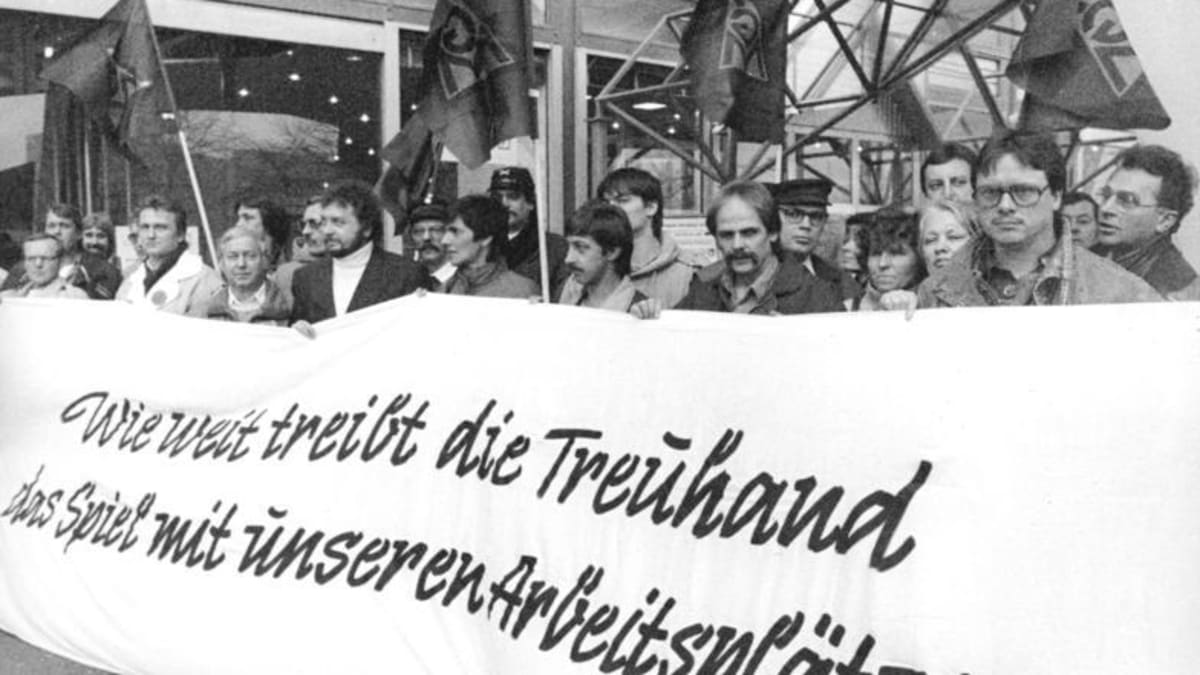
Assassin’s bullets and upsets at the polls. The world is facing a crisis of governance. I explore why that might be through a reflection on the tragedy of the Treuhandanstalt and the rise of the AfD.

Assassin’s bullets and upsets at the polls. The world is facing a crisis of governance. I explore why that might be through a reflection on the tragedy of the Treuhandanstalt and the rise of the AfD.

0

AI vaginas, customisable personalities and fake bruises: the sex doll market is booming. Does it matter how the dolls are treated?

the Guardian AI vaginas, customisable personalities and fake bruises: the sex doll market is booming. Does it matter how the dolls are treated? www.theguardian.com
preview

I suppose I can see how this is a solution to a problem, just not the one in play.

I just can’t see this being anything other than boring. Partners are supposed to be predictable to a certain point – it’s nice to cuddle up without worrying about being murdered – but that’s not what I’m looking for with coding.

That said, this:

Asked about the company’s responsibilities or processes if a doll was asked to be modelled on a real person without their knowledge, a spokesperson at Coeros told the Guardian: “The fact that a custom design can be created from reference images should not be interpreted as permission to use another person’s likeness without their consent. We do not encourage or support the use of our customisation service for harassment, impersonation, or other non-consensual purposes.” Details for prospective buyers on the website include specific services from eyebrow hair implantation to shipping, but do not appear to include any directions as to obtaining the permission of women in any photographs uploaded. One member of the Doll Forum wrote of Coeros’s invention: “The most obvious candidates are the ones who turned you down, the ones that got away, the ones you had no hope of winning.”

That last quote is pretty damning. The one who I had no chance of winning turned me down in 2004, and she was in my bed last week. Oh, and we’ve been divorced for a decade, so she also falls under “the one who got away.”

But Jesus Christ, the last thing I’d want is something modeled after her. I have a propensity for adopting Korats because they’re going to have a consistent baseline of characteristics, but recreating my ex-wife is beyond dystopian.

Bluntly, I know how her body works holistically, so an AI vagina isn’t going to provide the package deal. Also, if I’m going to be impaled by cone spikes, they’d better be on a real person.

Worthwhile relationships include friction and, well, skin contact.

Anyway, now that I’ve shot my load, here’s the opening:

Two weeks ago, two distressed citizens stumbled across what they assumed was the mangled corpse of a woman, stuffed into a suitcase in a small town about three hours south of Sydney. They called the local police, who in turn issued a statement that a body in a suitcase had been found. The wider public waited sombrely for Australia’s tally of dead women to tick up by one.

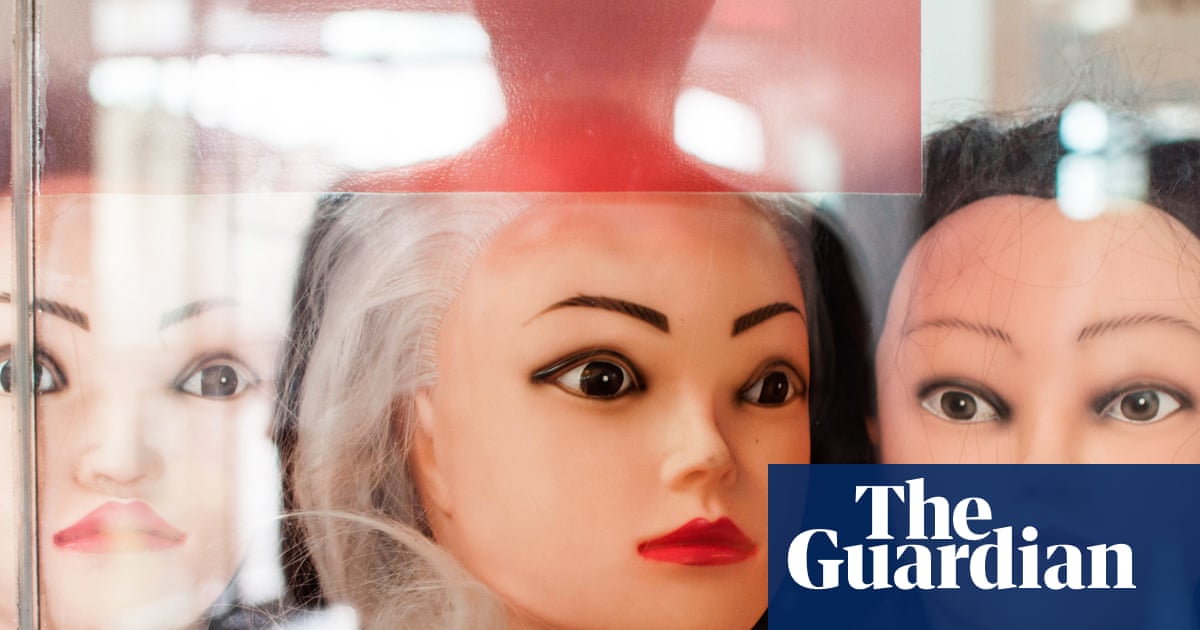
But instead, a day later, after forensic analysis, it was determined that the woman in question wasn’t a woman at all. The “body” was that of a sex doll, marked with fake bruises, left to rot on a lonely dirt road. In Australia, as in the UK and some other European countries, it is not illegal to own a sex doll unless it resembles a child. Given the doll’s seemingly mature presentation, police investigations were called off.

The sex doll trade is flourishing. A 2026 market analysis estimates that the global market was valued at US$6.6bn in 2025, with a projection that it will more than double, to US$13.4bn, by 2033. As the market booms, and involves increasingly lifelike facsimiles of women, does how these dolls get treated matter?

And when a sex doll with “bruises” and rain-matted hair is tucked into a suitcase and left on a roadside, should we be concerned?

I’d argue the answer is yes.

0

Americans Are Spending Luxury Dollars for Dive-Bar Service

preview

Marcella Patino was hunched over a table at the South Salt Lake Community Center, her pizza getting cold and her nerves fraying. Patino is a single mom with three kids, and kid­like in her own way, tiny and sweet-voiced. When I met her, in the summer of 2024, she was 33 years old and earning $300 a week doing manicures and pedicures. To bump up her income, she had recently gotten a degree from aesthetician school, meaning she could start offering her clients facials and eyebrow lamination too. She would start making $450 a week soon—$23,400 a year, assuming she was able to work year-round with no breaks.

Her rent was $1,550 a month. Then she had to pay for electricity, heat, food, clothing, cell service, health care, child care, gas, and everything else. To keep Patino and her children out of abject poverty, the state of Utah was providing her with Medicaid, SNAP (benefits from the Supplemental Nutrition Assistance Program, better known as food stamps), and $600 a month in cash assistance. “Is it enough?” I asked. She blushed, picking at her nails, hand-painted with miniature strawberries and lemons. She went to food banks, she said. Her mom and her neighbors pitched in. Still, she kept falling into debt.

Whether the help was enough was less of a pressing matter than whether the help would be there at all. A few days earlier, the state of Utah had dropped Patino from its cash-assistance program and SNAP. She didn’t understand why; her caseworker had been no help. That’s why she had come to Circles, a self-empowerment nonprofit that helps its clients boost their income to double the federal poverty line or more.

A Circles volunteer, Stephanie Burdick, hugged Patino and logged on to her account at the Utah Department of Workforce Services (DWS) website, as she had done dozens of times over the prior year. She reviewed the notifications Patino had received, read the emails between her and her caseworker, and looked at her pay stubs. “I can’t figure it out,” Burdick said. It was not the first time the pair had been stumped. Her benefits get “turned off all the time,” Patino told me. Because Utah was asking her to substantiate her poverty all the time.

0

The Documentary That Drops You Into a Class War

play · youtube.com
YouTube The Documentary That Drops You Into a Class War www.youtube.com
preview

In Harlan County, USA, Barbara Kopple’s camera doesn’t just film a coal miners’ strike, it becomes part of the fight.

In Harlan County, USA, Barbara Kopple’s camera doesn’t just film a coal miners’ strike, it becomes part of the fight.

0

I'm a historian, and I studied the fall of Rome. Here's what life is like in a dying empire.

Mother Jones I'm a historian, and I studied the fall of Rome. Here's what life is like in a dying empire. www.motherjones.com
preview

The fall of an empire is supposed to be a dramatic thing. It’s right there in the name. “Fall” conjures up images of fluted temple columns toppling to the ground, pulled down by fur-clad barbarians straining to destroy something beautiful. Savage invasions, crushing battlefield defeats, sacked cities, unlucky rulers put to death: These are the kinds of stories that usually come to mind when we think of the end of an empire. They seem appropriate, the climaxes we expect from a narrative of rise, decline, and fall.

We’re all creatures of narrative, whether we think explicitly in those terms or not, and stories are one of the fundamental ways in which we engage with and grasp the meaning of the world. It’s natural that we expect the end of a story—the end of an empire—to have some drama.

The reality is far less exciting. Any political unit sound enough to project its power over a large geographic area for centuries has deep structural roots. Those roots can’t be pulled up in a day or even a year. If an empire seems to topple overnight, it’s certain that the conditions that produced the outcome had been present for a long time—suppurating wounds that finally turned septic enough for the patient to succumb to a sudden trauma.

That’s why the banalities matter. When the real issues come up, healthy states, the ones capable of handling and minimizing everyday dysfunction, have a great deal more capacity to respond than those happily waltzing toward their end. But by the time the obvious, glaring crisis arrives and the true scale of the problem becomes clear, it’s far too late. The disaster—a major crisis of political legitimacy, a pandemic, a climate catastrophe—doesn’t so much break the system as show just how broken the system already was.

The fall of an empire is supposed to be a dramatic thing. It’s right there in the name. “Fall” conjures up images of fluted temple columns toppling to the ground, pulled down by fur-clad barbarians straining to destroy something beautiful. Savage invasions, crushing battlefield defeats, sacked cities, unlucky rulers put to death: These are the kinds of stories that usually come to mind when we think of the end of an empire. They seem appropriate, the climaxes we expect from a narrative of rise, decline, and fall.

We’re all creatures of narrative, whether we think explicitly in those terms or not, and stories are one of the fundamental ways in which we engage with and grasp the meaning of the world. It’s natural that we expect the end of a story—the end of an empire—to have some drama.

The reality is far less exciting. Any political unit sound enough to project its power over a large geographic area for centuries has deep structural roots. Those roots can’t be pulled up in a day or even a year. If an empire seems to topple overnight, it’s certain that the conditions that produced the outcome had been present for a long time—suppurating wounds that finally turned septic enough for the patient to succumb to a sudden trauma.

That’s why the banalities matter. When the real issues come up, healthy states, the ones capable of handling and minimizing everyday dysfunction, have a great deal more capacity to respond than those happily waltzing toward their end. But by the time the obvious, glaring crisis arrives and the true scale of the problem becomes clear, it’s far too late. The disaster—a major crisis of political legitimacy, a pandemic, a climate catastrophe—doesn’t so much break the system as show just how broken the system already was.

0

How Japan Turned Department Stores Into Dreamworlds

preview

Growing up in Tokyo, where entire neighborhoods can feel like shopping corridors, my grandparents sometimes took me to Mitsukoshi, one of Japan’s largest retail emporiums. The store was a veritable monument to beauty and abundance, stocked with everything from fine silks to sweet treats and plush sofas. As we walked from floor to floor, they would buy me “proper” clothes and take me to the fruit parlor on the top floor to eat strawberry parfaits while overlooking the entire city.

As I got older, I grew more curious about how these stores evolved into the grandiose institutions they are today, particularly in Japan. What I found as an academic surprised me: They have a very long and rich lineage, starting as comparatively humble enterprises hundreds of years ago.

We can trace many of Japan’s most prominent department stores, such as Mitsukoshi, Takashimaya, Shirokiya, Matsuzakaya, and Daimaru, back to the premodern Edo period (1603–1868).

Mitsukoshi, for example, started off as an expansive kimono fabric store (gofukuten) in 1673 in Edo (today’s Tokyo). Inside the establishment, originally called “Echigoya,” well-off customers shopped while seated on tatami mats, selecting designs from fabric pattern books (hinagatabon). In the premodern print below by Okumura Masanobu, one can see attendants presenting several bolts of fabric to a group of customers, while other patrons are being served tea. The seated figure in the foreground smokes a pipe while shop attendants bundle her purchases. The shopping experience was meant to be both leisurely and luxurious, reserved mostly for wealthier customers.

0

From Geek Chic to Surveillance Chic: How fashion’s fetish for intelligence enabled big tech’s style takeover.

The Cut From Geek Chic to Surveillance Chic www.thecut.com
preview

archive.is link

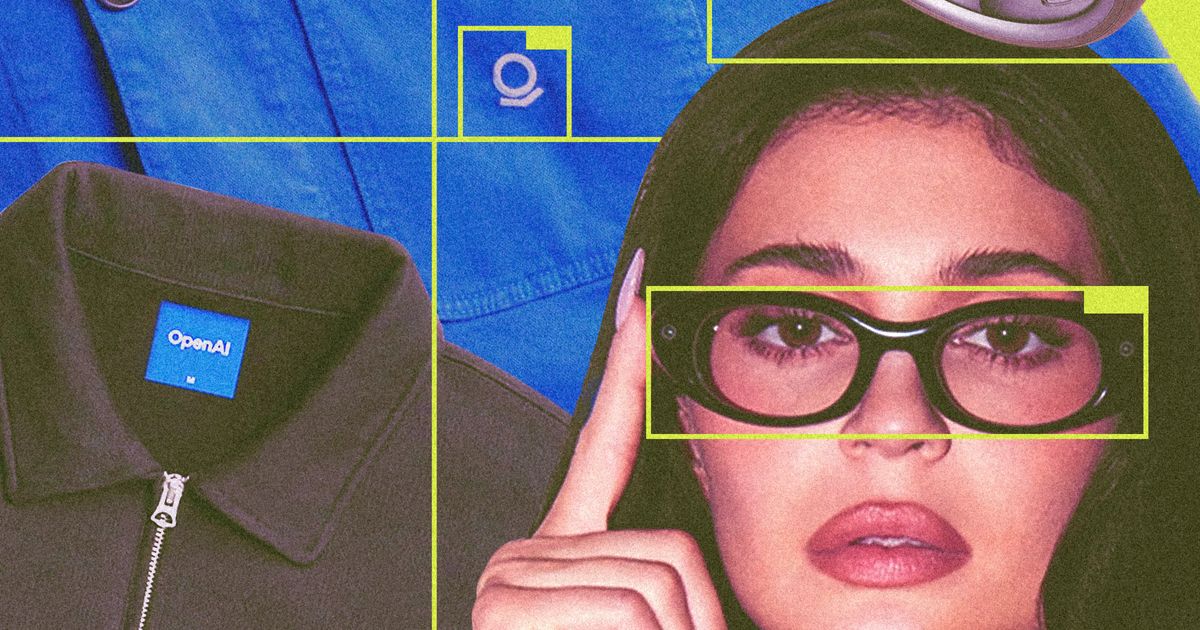
At the beginning of 2024, as big tech slashed its human workforce to fund the AI revolution, fashion romanticized the geek. The prior fall, Miu Miu models descended the catwalk in frumpy cardigans, gray hoodies, and chunky frames, wearing their hair disheveled as if they’d pulled an all-nighter at the library. “I have always been driven by the idea of understanding how women deal with the interaction between vanity and thought,” remarked Miuccia Prada, the brand’s namesake and visionary. Prescription glasses became fashion’s hottest accessory. “It” girls started to look like librarians, or more relevantly, start-up founders. Uncool was cool. This was supposedly a good thing: “In a period in which it’s easy to succumb to the pressures of adopting every micro-trend or the aspiration to curate an immaculate image on social media, this aesthetic offers women the opportunity to opt out of the illusion of perfection,” praised one Who What Wear writer.

If only. “Geek chic” wasn’t liberation from the social-media rat race, just a deceptive new manifestation of it. (Tellingly, the faces of the aesthetic were mostly supermodels like Bella Hadid.) In the years since, our image-conscious culture has grown only more extreme, giving rise to looksmaxxing and the normalization of treatments like peptides and GLP-1s. At the same time, appearing smart has become even more aspirational. In April, Vogue heralded the rise of the “intellectual influencer,” one who shares content “rooted in their expertise, hyperfixations, knowledge, or insights on a specific subject, rather than their looks or style.” (Listed examples include a Substack writer and the podcaster Jay Shetty.) TikTokers advise their audiences on how to be “disgustingly educated”; pop stars now open libraries and curate film series. Last month, Prada and the cult South Korean eyewear brand Gentle Monster debuted a limited-edition glasses collection with a book-themed campaign that features Japanese actor Kentaro Sakaguchi reciting a poem in a lecture hall.

This is a convenient public distraction for the true geeks — tech broligarchs like Mark Zuckerberg, Elon Musk, and Sam Altman — who are busy colonizing our reality. They’ve captured us on their platforms, engineering algorithms for maximum addictiveness — facts and ethics be damned — and hollowed out countervailing institutions like journalism and academia. (Earlier this year, Elon Musk’s Grok AI spat out nonconsensual sexualized deep fakes of real women, including minors; when emailed for comment, XAI replied with the message, “Legacy Media Lies.”) In a quest for AI domination, they have strip-mined the intellectual commons, automated workers out of jobs, and commandeered local water supplies.

Now, big tech is literally coming for our retinas with AI-powered smart glasses through which it will attain a total view of our lives. Backlash to its agenda has necessitated it market these wearables as stylish and empowering lifestyle accessories, not disruptive new tech products. It is doing so with the help of a desperate fashion industry that has already glamorized glasses, reduced to selling the illusion of agency in an attention economy over which it has little authority. (Prada and Gentle Monster are collaborating with Meta and Google on AI smart glasses, respectively.)

0

Living Grief and the Mountains I Lost

Legal Nomads Living Grief and the Mountains I Lost www.legalnomads.com
preview

Living grief lacks the tapestry of rituals, language, and social permissions around grieving that a person is offered with death. In death, that commemoration can help us feel closer to our loved ones. With living grief, it’s the opposite: ritual is like death by a thousand paper cuts, as it only reminds you of what you’ve lost. It can also lead to confusion or distance in relationships. I frequently hear from patients whose families or friends have ghosted them, sometimes after telling them they ‘ought’ to be better by now or are keeping themselves sick.

Living grief diverges from the collective and is an exercise in othering.

In a 1999 book entitled Ambiguous Loss: Learning to Live with Unresolved Grief, Pauline Boss discussed losses that remain unclear and unresolved because a person is simultaneously present and absent. Her own examples were family members grieving someone physically present but changed, such as with dementia or addiction, or someone who is missing in action. However, the concept also applies well to patients’ own experiences. We are, after all, grieving the parts of ourselves that are simultaneously here and gone. The illness itself can create ambiguity because symptoms fluctuate, which may prevent patients from fulfilling the roles society expects of them. It can also prevent validation of the loss of self, because a crisis of meaning has less objective ‘proof’ when it’s tangled within the dense webs of chronic illness — especially invisible illness. And the interminable duration of chronic illness is exhausting for the patient and their loved ones.

While my grief stems from one precipitating event, there is no one ‘thing’ it organizes itself around. It seeps into all sorts of nooks and crannies where I never thought to look, and creeps in without warning even during the times that I think I’m ok. What causes my grief is also the thing I need to make peace with and accept; every symptom, limitation, medical appointment, failed treatment, or activity that I can no longer do is a reminder of the identity I no longer have.

It’s constant work to reframe and not let myself stew in the emptiness of what I lack.

We don’t have the societal tools to support living grief, perhaps in part because of its ambiguity. But I think also because we don’t want to collectively admit that you can’t will your way to being better. I’ve discussed this in part in a piece I wrote about how people have told me to ‘just fight harder’ to seal my leak. In reality, I am determined to live every single day. Unfortunately, the output is not always what society thinks I ought to show for it. My life is reflected in the advocacy I’ve been fortunate enough to engage in, the papers I’ve helped co-author, and the writing that I hope helps people understand what it’s like to be this unwell. I don’t have progress pics or quantifiable changes to share with the world. Some days I can take a walk; other days I am stuck in bed. Vastly fluctuating capacity, even when mobility is limited, is part and parcel of long-term disability. Yet the discourse is often focused on poking holes in the patient: someone ‘is faking it,’ someone is ‘performing illness.’ That disconnect between the unified expectation of progress and the reality of chronic illness is part of what makes being sick this long so isolating.

0

I traveled around Europe. these things shocked me by MoreJps [as an American] - Video Talk (15:32 mins)

preview

In this video, he just sits and talks about his recent trip and experience in Europe and compares some things as an American. So no video footages other than him sitting there, no music (which I like).

Context: Before the trip, he was already visiting some places and there are some cultural shocks which he got used to and is not listed here. He also often watches (and reacts) to documentary and videos about the differences from American and European stuff. So this was not an entirely blind trip going in Europe for him. I can highly recommend his other videos, if you are interested into this topic (as I am).

0

Who Governs the Cameras? Flock and the Accountability Gap

Who Governs the Cameras? Flock and the Accountability Gap lecternmedia.substack.com
preview

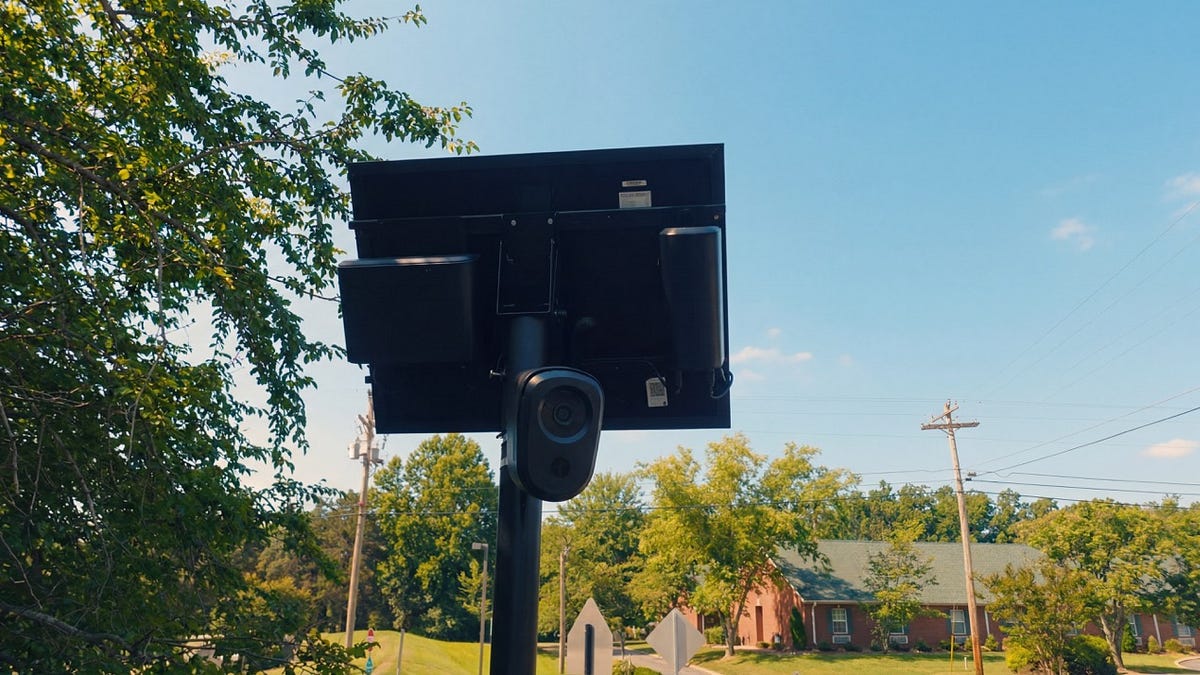
Inspired by a beehaw chat on Flock, I spent way too much time today (almost 6 hours) turning my discussion on governance (about 12 hours of work) into a discussion on governance with Flock. The purpose is to highlight that modern governance is a dizzyng array of public-private partnerships, traditional government, and service providers. It can result in accountability problems when contracts and services rest with private companies. The public rarely hears or understands what’s their local governments are agreeing to before the contract is signed. The problems that arise from this are present all around us.

Inspired by a beehaw chat on Flock, I spent way too much time today (almost 6 hours) turning my discussion on governance (about 12 hours of work) into a discussion on governance with Flock. The purpose is to highlight that modern governance is a dizzyng array of public-private partnerships, traditional government, and service providers. It can result in accountability problems when contracts and services rest with private companies. The public rarely hears or understands what’s their local governments are agreeing to before the contract is signed. The problems that arise from this are present all around us.

0

The rural French priest who preached atheism to the people

The rural French priest who preached atheism to the people | Aeon Essays aeon.co
preview

We do not know exactly when Meslier became an atheist. Everything suggests, however, that his unbelief may have predated his ordination – and that 1716 marked less a conversion than a strategic turning point, when, after being disciplined by the archbishop for confronting the local lord, he shifted his efforts from the pulpit to the page, carrying the struggle onto another terrain: that of writing. Meslier states the logic of this secret, posthumous intervention in the opening sentence of his Mémoire:

My dearest friends, since I would not have been permitted – and since it would have brought consequences both dangerous and grievous – to say openly during my lifetime what I thought of the conduct and government of men, of their religions and their morals, I resolved to tell you after my death.

Meslier wrote for a readership he could reach only once he was beyond punishment. He copied out the manuscript by hand, intending it to survive him. That posthumous strategy turned a private contradiction into a political intervention.

His great text was born of that lived contradiction. After the affair of 1716, when he realised he could no longer fight the alliance between lord and archbishop openly – at the scale of the village – he displaced the struggle. He was no longer attacking only a brutal country lord; he was facing up to the system as a whole. His reasoning was this: if feudal power oppressed the peasants, it was because it was upheld by the Church. If the Church was able to uphold the feudal lords, it was because the Church itself rested on religion. And if religion held men in its grip, then one had to go back to the heart of the mechanism, and dismantle the springs of faith. One might object that Meslier collapses religion, as organised by the Church, into faith. In any case, that is how the Mémoire des pensées et sentiments de Jean Meslier (Memoir of the Thoughts and Sentiments of Jean Meslier) came into being: a huge text, which he copied out by hand three times, intended for his parishioners and, beyond them, for ‘all those like them’. Nothing in that title announces a simple exercise in freethought, let alone an attack on what Meslier himself called ‘the conduct and government of men’.

This point is crucial, and it has often been missed. Meslier was not writing for a circle of literate readers curious about antireligious arguments. That is precisely what sets him apart from the philosophes of the Enlightenment who would come a few decades later. He wrote for ordinary people. He wrote for those crushed by the social order, whom he called on to be ‘disabused’. His atheism was therefore, from the start, popular in its intended audience and political in its purpose. While many 18th-century atheists remained tied to aristocratic or learned circles shaped by the Enlightenment, Meslier addressed the people. No wonder some people have likened him to Marx avant la lettre.

0

Strangers Rent My Home, Sleep in My Bed, Play My Guitar

The Dial Strangers Rent My Home, Sleep in My Bed, Play My Guitar — The Dial www.thedial.world
preview

I felt sad for weeks in anticipation. The fridge, the bedroom, the bathroom were taken care of slowly, one minor shift or disappearance at a time, as we prepared for the guests’ arrival. They had booked our apartment in Rome for five nights on a platform that allows you to stay in another person’s home — either through a direct home swap, or indirectly by way of a credits system that allows you to book a home at a later date. No money is ever exchanged. The platform says we are 250,000+ members in 155 countries. It promotes a global community “built on trust.”

The instructions our guests received when they reserved our home on the platform said they were welcome to enjoy my booze and guitars. Volunteering them felt better than worrying about them tampering with my cherished belongings. I hid my synths and effect boxes behind a wall of sweaters in the closet. We put a sponge mattress cover over the mattress and under the fresh bedsheet and hoped they wouldn’t uncover it and see the blood stains from my partner’s painful periods. It was a thorough and intrusive operation, different to the kind of tidying you do before hosting friends or family for a weekend.

We were exposing our home, and ourselves, to strangers for reasons that had nothing to do with love or human solidarity. We were doing it to lighten the financial load of our next trip. My partner disagreed — she felt that it was also going to be an interesting, and pleasant, experience, that it implied, in fact, some form of solidarity. Solidarity between people who must be creative and cooperative if they want to afford to go on vacation now that inflation is gradually pricing the middle class out of its habitual comforts.

She tends to have the right hunch about these things. I mean experiences that involve other people — community activities, political engagement. So I welcomed the dissonance between her curiosity and my anxiety. I was aware that I had thought of the physical walls to this one-story home as boundaries for my vulnerable self. If diagnoses can be trusted (and who knows, really), I’ve had three schools of psychotherapy state that some of my bad experiences as a child have left me with no personal boundaries. This apartment where I’ve established my adult life is the only barrier I have. I don’t entertain guests, ever. My wife does, and when they come over, I go hide in my room, where I enjoy hearing the way her laugh melts into her friends’.

But even if this home my partner and I lovingly put together over many years was the first place where I felt safe, that doesn’t mean, I reasoned, that I couldn’t try and separate myself from it just a little bit. Maybe I could stop considering these walls to be my ultimate protection and let some life in.

When we left for our vacation, I tried not to think about how strangers would be living in my home while I wasn’t there. Still, I was in a sorry state. A person we trusted would be welcoming them. My wife handled all communication with this person and with the strangers as they browsed the contents of our bathroom cabinet and slept in our beds.

0

Why did we wait so long for the bicycle?

The Roots of Progress Why did we wait so long for the bicycle? blog.rootsofprogress.org
preview

The bicycle, as we know it today, was not invented until the late 1800s. Yet it was a simple mechanical invention. It would seem to require no brilliant inventive insight, and certainly no scientific background.

Why, then, wasn’t it invented much earlier?

The bicycle, as we know it today, was not invented until the late 1800s. Yet it was a simple mechanical invention. It would seem to require no brilliant inventive insight, and certainly no scientific background.

Why, then, wasn’t it invented much earlier?

0

The grocery cart divide: How rural and urban America sort themselves

Flatwater Free Press The grocery cart divide: How rural and urban America sort themselves - Flatwater Free Press flatwaterfreepress.org
preview

I tested 21 consumer preferences, retail patterns and demographic measures against county- and state-level returns from 2024, combining relative search interest from Google Trends with the election results. Nineteen of the 21 were statistically significant. Taken together, they describe a rural-urban split that is not just about who governs but about how people live, eat and shop. That distinction matters for anyone who cares about rural communities because it shapes how campaigns court them and which businesses decide to invest in them.

The food signals were the strongest. The single best predictor in the whole study was a state’s relative search interest in tofu versus pork rinds, which by itself explained 72% of the variation, or the difference, in the vote. Searches for gravy versus pesto came next, then Velveeta versus brie, each explaining roughly two thirds.

The pattern was consistent and, frankly, not surprising to anyone who has lived in a small town: shelf-stable and homemade foods such as Velveeta, Spam, Miracle Whip, biscuits and gravy, and no-bean chili tracked rural, Republican-leaning places. Refrigerated and imported foods such as brie, pesto, prosciutto and avocado toast tracked dense, Democratic-leaning ones. For the sake of this analysis, rural is defined as counties outside of the Office and Management and Budget’s Metropolitan Statistical Areas.

0

The Lost Civic Life of Movie Rental Stores

preview

If a DVD owner from the year 2005 found herself transported back to a video store circa 1982, she would likely find the space remarkably familiar: videocassette cases lining the walls, a movie playing on a television set, maybe some marquee lights framing an announcement board over the checkout counter — all in all, not terribly unlike the video store of two and a half decades later.

However, understanding the video store simply as a transactional space in which money is exchanged for goods and services misses the forest for the trees.

That same time-traveling video renter might find herself startled by the employee offering to recommend a movie, or by the knot of customers hanging out by the counter, shooting the breeze and discussing film. The early video store was often a place to talk as well as to shop, and the persona and expertise of retailers and clerks structured the consumer experience of home video as much as the shelves on the wall. The people behind the counter, and in many cases those in front of it, were not merely moving through the consumption junction but were, in fact, integral parts of it.


The traditional story told about home video is that its sudden appearance fragmented the moviegoing audience into individuals. As Butsch and others have argued, home video helped the viewing public wall themselves off in their separate living rooms. What this argument misses, however, is the shared practice of acquiring those tapes and then watching them at home — in its early years, the video store became a third place where customers, retailers, and clerks met, talked, and shared a common experience of movies on videocassette.

0

The Great Romance Slump

preview

About 90 seconds into a three-minute hug with a stranger, I began to think that dying alone might not be so bad after all. I’d come to a candlelit loft in Manhattan for a “mindful singles event” called The Feels, which was designed to be the opposite of the disembodied experience of dating apps. Participants, phones tucked away, paired up and attempted a series of “somatic awareness” exercises, including staring into each other’s eyes, hugging, and holding a hand over each other’s heart.

We’d been warned that discomfort is part of the process. A facilitator had reminded us that, as long as consent and respect are involved, a little uneasiness opens the door to vulnerability. Having paid $100 for a process advertised as “better relating”—informed by Carl Jung and the Buddha and the body’s “infinite wisdom”—participants were motivated to agree. And many of us, more by circumstance than by choice, were already experts in exiting our comfort zone. We’d spent years meeting strangers, opening ourselves to judgment, scrounging for conversation topics, worrying about our outfits, gargling mouthwash in the office—but we still hadn’t found what, or whom, we wanted. We came ready to get to work.

The mere existence of The Feels, which hosts events in cities across the United States, suggests that we are living in a time of romantic plenty. In New York City, I could go to a dating event every night of the week. I could use a matchmaking service, or talk with a dating coach, or sign up for one of the many newsletters trying to bring back personal ads. Even if I didn’t live in a major city, I’d have dating apps to choose from: not only Tinder and Hinge but a zillion others—platforms for farmers, gamers, single parents, cannabis enthusiasts, and members of the gluten-free community. I have four apps in my current rotation; as I write this, one of them has 317 message threads and 455 “likes” that I need to evaluate.

And yet, despite the bounty of possibility, we are living through a great romance slump. Romance is a broad term, of course. Traditionally, it manifests in the thrill of sex, the devotion of long-term partnership, or the ritual of courtship, including the act of hope that is a first date. But all of those manifestations are becoming less common in the U.S., especially among young people.

0

Don’t turn away from tragedy, but do witness intentionally: Chronic exposure to the world’s horror has a mental cost. Being an effective witness requires a more sustainable approach

Don’t turn away from tragedy, but do witness intentionally | Psyche Ideas psyche.co
preview

Importantly, witnessing tragic events is not just about seeing. It is a process of encountering information, reckoning with it cognitively and emotionally, and then deciding how to respond. As the philosopher Kelly Oliver argues in Witnessing (2001), response is fundamental to witnessing, whether it ultimately involves speaking, writing, donating, organising or simply carrying what one has seen in a way that influences how one moves through the world. To be able to do this, those who witness must be able to acquire the necessary information without becoming overwhelmed, and then have the time and space to make sense of it.

Social media short-circuits this process. The volume and immediacy of content make it difficult to fully absorb any single event before the next one arrives. The psychologist Paul Slovic has highlighted that humans are simply not well equipped to care about large numbers of people simultaneously, not because we are naturally indifferent, but because we lack meaningful ways to comprehend suffering at that scale, let alone to directly intervene. As Slovic put it: ‘The more who die, the less we care.’ His point predates the current social media era, but the constant parallel streams of crises make that response even harder to avoid: the sense of futility compounds with every new tragedy that appears.


Sustainable witnessing means recognising what can be meaningfully held, understood and acted upon, within our actual cognitive and emotional limits – and allowing the rest to pass without guilt. It is about choosing depth over breadth, and intention over pressure. We can make an analogy to food consumption: in societies with abundant access to calorie-dense foods, people cannot consume limitlessly without it becoming harmful. Can we practise consuming emotionally challenging content online without getting sick? As with food consumption, the problem may not be so much the abundance of information, but the absence of an adequate framework for managing our intake.

[…]When attention isn’t fragmented across countless crises, it is more possible to move from reaction to understanding, and from understanding to sustained forms of response. This may begin with a question: what can I meaningfully contribute, and where might my efforts take a tangible form? For some of us, working in fields like education or in civil society, the answer lies within our everyday work. For others, it might take the form of volunteering on days off, supporting a specific political initiative that aligns with one’s values, or showing up where needed in other ways – concrete actions that will likely provide a more durable sense of contribution than online reaction alone ever could.

0

Sometimes It’s O.K. to Let a Language Die

preview

The idea that we have a special duty to prevent the death of languages is instantly compelling to anyone who loves languages; it has a good deal in common with that other conservationist instinct directed at giant pandas and polar bears. The essential argument runs something like this: language death is very bad, and therefore we must do everything we can to prevent it. But does that conclusion follow? And is the premise true?

The idea that we have a special duty to prevent the death of languages is instantly compelling to anyone who loves languages; it has a good deal in common with that other conservationist instinct directed at giant pandas and polar bears. The essential argument runs something like this: language death is very bad, and therefore we must do everything we can to prevent it. But does that conclusion follow? And is the premise true?

0

Your worst fears about cultural collapse might be true – here’s what you can do about it

the Guardian Your worst fears about cultural collapse might be true – here’s what you can do about it www.theguardian.com
preview

In Sarah Wilson’s new book, one page is mostly blank. It’s intended as a reprieve, a neutral space “for you to stare at for a minute while your feelings catch up”.

You will need it. In I Eat the Stars, Wilson argues that the world as we know it is in collapse – and that we are too late to avoid the worst.

This is not just about the climate, but civilisation buckling under the weight of its own complexity. Given worsening inequality, political polarisation, falling fertility, resource shortages and global conflicts, Wilson argues that we are hurtling towards the same end as ancient Rome, the Mayan civilisation and every other sophisticated society before us.

Wilson, an Australian journalist, has often been ahead of the curve, writing bestselling books about quitting sugar, anxiety and the climate crisis before those topics were mainstream. I Eat the Stars was serialised on Wilson’s Substack newsletter before being published by Penguin.

It is an intensely sobering read, seeming to confirm all our worst fears about the future. But it also delivers clarity. Yes, things are that bad, but there is still plenty to fight for and much we can shape – if we are willing to confront reality.

0

The University as Giant App: Theo Baker’s book about Stanford offers a shockingly frank look at a campus that is as tightly governed as a Siberian labor camp—one perhaps designed by Sergey Brin.

Los Angeles Review of Books The University as Giant App | Los Angeles Review of Books lareviewofbooks.org
preview

Baker offers a shockingly frank look at a campus that is as tightly governed as a Siberian labor camp—one perhaps designed by Sergey Brin. Baker reveals the extraordinary lengths to which the administrators go to guard against the smallest chances of drunken, bawdy, or intemperate forms of student life, making a simple campus party harder to organize than a political rally. Consent forms, monitors, and cameras lurk everywhere, and solicitous peers and proctors, like neighborhood grandmas in communist East Germany, report on any behavior likely to taint Stanford’s reputation as the dedicated petri dish for Silicon Valley’s finest. What Baker details is the stifling reality of Stanford’s “War on Fun,” the other side of its endless sunshine.


So why should Baker’s book unsettle us? What’s wrong with a powerhouse of a university being joined at the hip to the newest frontier of the American dream? What’s wrong with a winner-take-all school feeding a winner-take-all economy? What’s wrong with being the filter and the gate to the money and excitement of Silicon Valley?

We can leave aside the usual laundry list of complaints about Stanford’s (and Silicon Valley’s) wealth, privilege and exclusivity, and their implications for hierarchies of race, class, and gender. We do not need Theo Baker to serve as our muckraker on these subjects since the truly dystopian possibilities lie elsewhere. The chilling subtext of Baker’s book is the impression it conveys of Stanford as a piece of advanced pronatalist technology designed to create the optimal laboratory conditions for selecting, grooming, and developing a remarkable class of quasi-adults. These actants can then be assigned to the most exclusive tech hubs (such as Xaira Therapeutics) to create the advanced biomedical tools to further enhance the life chances and cultural dominance of the very class from which they were initially picked. Is this meritocracy, or clonocracy?

It might be argued that Silicon Valley, like the army, the church, and the American Bar Association, is free to identify, recruit, and train new members as they please. What kind of a university is this, then? A metaphor comes to mind. Stanford is the harbinger of the university-as-giant-app, a networked series of buildings, professors, classrooms, donors, faculty, trustees, and back-office staff designed to turn out a small but predictable number of next-generation tech titans. Like other apps, it feels like a highly engineered tool geared to customer convenience, though only a carefully selected group of human beings is allowed to use the program—and the real operator is Silicon Valley itself, whose screen taps summon the Stanford within Stanford, fresh from the warehouse.

0

We used to be able to buy things in this country

We used to be able to buy things in this country dannykatch.substack.com
preview

Many decades ago, humans developed a process by which they could go into a store, pick an item off the shelf, and pay for it at the checkout counter. A few years ago, we lost it. Now you ring a buzzer, wait for an overworked employee to unlock an item that costs $5.99, and navigate the emotional complications of feeling like both a suspected criminal and an entitled ass.

The late Soviet Union was damned by the iconic image of people waiting in endless lines for scarce consumer goods. When we look back at the dying days of America, perhaps we’ll think of waiting in dots, surrounded by plentiful products locked away because our bosses fear and loathe us so much they have forgotten how selling things works.

Why has our society gone backward in this small but really annoying way? Surely there must have been an epidemic of shoplifting? No, there really wasn’t. Instead, the great lotion lockup was a corporate moral panic, which has been a disaster for their profits and for the rest of us a degrading enshittification of running basic errands.

It’s far from the most important way our lives have gotten worse, but it might be the most pointless – which makes it useful for understanding so much else about a moment in history defined by breathtaking self-sabotage.

What’s happened to going to the Walgreens or Target is a store-sized version of what’s happened to living in America. It’s the experience of being subject to the decisions of a ruling class that responds to every challenge with authoritarianism, greed, and the same levels of poise and wisdom as an inbred Pomeranian.


Equally ominous is a new system being developed by CVS, in which customers with the company app can unlock shelves from their phones. If this plan spreads throughout the industry (and of course it will), picking up a product with your own hands will become a privilege you can only have in exchange for giving more personal information to the company.

Will this be the final, camel-back-breaking, indignity? How far will we let these stores degrade us before we rise up to free the shampoo? I don’t have the answers, but I have to think that the arc of history bends back towards being able to touch a stick of deodorant.