
0

Saudi Arabia: Man Executed for Childhood Offenses

Human Rights Watch Saudi Arabia: Man Executed for Childhood Offenses www.hrw.org
preview

cross-posted from: sh.itjust.works/post/69197873

“Saudi Arabia’s execution spree, particularly for offenses by children, shows no signs of slowing down in 2026,” Shea said. “This underscores the urgent need for the international community to press the Saudi government to immediately halt executions and abolish the death penalty once and for all.”

0

How paper cheques are critically important to our human right to autonomy. Belgians will lose this right soon.

preview

Belgium plans to do away with paper cheques. Apparently no one is fighting this. The eagerness to do away with paper cheques can only be attributed to addiction to convenience without regard to the consequences.

Once paper cheques are gone, there will be no way to survive without banks. Even if you walk away from your job and go on social aid, the social aid has no way to reach you without a bank account. Paper cheques are the sole means having personal autonomy from banks.

Some pensioners still receive their pension payment as a paper cheque, which they can cash without having a bank account. Belgium is taking this away.


Belgium plans to do away with paper cheques. Apparently no one is fighting this. The eagerness to do away with paper cheques can only be attributed to addiction to convenience without regard to the consequences.

Once paper cheques are gone, there will be no way to survive without banks. Even if you walk away from your job and go on social aid, the social aid has no way to reach you without a bank account. Paper cheques are the sole means having personal autonomy from banks.

Some pensioners still receive their pension payment as a paper cheque, which they can cash without having a bank account. Belgium is taking this away.

0

Political Prisoners Watch: Five Democracy Advocates Targeted for Seeking Help Abroad

Freedom House Political Prisoners Watch: Five Democracy Advocates Targeted for Seeking Help Abroad freedomhouse.org
preview

cross-posted from: lemmy.sdf.org/post/59853821

Dictatorial regimes are retaliating against democratic activists who talk to foreign governments and international bodies.

Archived

On September 2, prominent Hong Kong democracy activist Joshua Wong pleaded guilty to charges under the territory’s notorious National Security Act—the second time he has faced prison time under the Beijing-imposed law. Having already been imprisoned since November 2020, he now faces the possibility of another lengthy sentence simply for demanding that Hong Kongers have a voice in their own government. Joshua’s detention has been widely recognized as emblematic of the Chinese Communist Party’s increasing restrictions on freedom in and the autonomy of Hong Kong.

However, his case is also an example of an important but less visible phenomenon: to hide truth about their abuses, dictatorial regimes are criminalizing the act of talking to the outside world. The allegations against Joshua included meetings in the United States with Congresswoman Nancy Pelosi and then Senator Marco Rubio. Unfortunately, activists around the globe are facing similar charges. The following cases highlight the efforts of repressive regimes to shut down engagement with foreign democracies and international bodies that have made protecting democracy part of their mission.

[…]

Vietnamese journalist Pham Chi Dung was detained after petitioning members of the European Parliament (EP) to pressure Vietnam over its human rights record. In 2019, he wrote to EP members asking them to postpone ratification of the EU-Vietnam Free Trade Agreement until Vietnamese authorities made human rights improvements, and made a similar appeal in a video featured at an event hosted by a British EP member. Two days later, he was arrested. UN experts noted that the arrest “appears to be an act of reprisal for his human rights advocacy.” Dung was later sentenced to 15 years in prison for “conducting antistate propaganda,” and he remains imprisoned today.

Mohammad Seifzadeh, a human rights lawyer in Iran, wrote a letter with other human rights activists to UN Secretary General António Guterres in December 2022, asking him to respond to the Iranian regime’s execution of peaceful protesters. Just a few months later, as a result of the letter, he was convicted of “propaganda against the system” and “spreading false information” and sentenced to a year in prison (though his sentence was eventually suspended for medical reasons).

Azerbaijani activist Anar Mammadli, chair of the Election Monitoring and Democracy Studies Centre (EMDS), was arrested in 2024 a few weeks after calling on Azerbaijani authorities to release political prisoners and respect fundamental rights at events hosted by the UN Human Rights Council and the Organization for Security and Co-operation in Europe (OSCE). A group of UN officials expressed “serious concerns that Mammadli’s detention and prosecution may be in retaliation for his human rights work and his engagement with UN mechanisms.” In 2026, Anar was sentenced to 13 years in prison on a variety of baseless charges.

In November 2020, three staff of the Egyptian Initiative for Personal Rights, including Executive Director Gasser Abdel Razek, were arrested a few days after discussing human rights issues with 13 foreign ambassadors and diplomats. While they were released a few weeks later, they were placed under a travel ban that remains in place to this day.

[…]

0

Do Americans have a right to good administration? Or just Europeans?

preview

This post mentions that Europeans have a “right to good administration”. When I dug further, it means (for example) that apparently if you file a report, request, or complaint with a European government, they cannot simply ignore you. They must acknowledge you. And if they need to make a decision on how to handle your request, they must inform you of their decision and also state the reason for their decision.

It all seems like basic common sense stuff. But in Trump’s US, consumers just get ignored. Telecoms have no incentive to comply with the law under Trump’s FCC and FTC. So there are plenty of things to complain about to the FCC and FTC, but they simply ignore the complaints now.

Is the only recourse to file a lawsuit? It would seem silly to sue the FTC or FCC for ignoring complaints. But AFAICT, the FCC and FTC answer only to Trump. Correct?

0

Complaint filed against Belgium for digital inequality

European Disability Forum Organisations file complaint against Belgium for deepening digital inequality - European Disability Forum www.edf-feph.org
preview

cross-posted from: belgae.social/post/2325532

I don’t have a link to the full complaint but I heard it’s around 80 pages.

cross-posted from: belgae.social/post/2325532

I don’t have a link to the full complaint but I heard it’s around 80 pages.

0

The Council of Europe (who protects our right to social inclusion) blocks the Tor community from their website, and also archive.org (a public library).

preview

The CoE whose job it is to protect peoples’ human rights under the Social Charter of Council of Europa has hired an exclusive US tech giant to confine their website to Cloudflare’s walled-garden.

This means several demographics of people are excluded from being informed about their rights. Anyone not in Cloudflare’s preferred demographics of people (such as the Tor community) are blocked from access. Even the world’s ubiquitous public library (archive.org) is blocked from making copies of the website for public consumption.

Exceptionally, this link is reachable where at one moment archive.org was able to visit CoE: web.archive.org/web/20260219202536/…/full-list?mo…

But it’s enshitified to the point of just rendering a blank page, at least in my case, after refusing some shitty popup about cookies or some shit. That page is likely the page that attempts to publish the “European Social Charter (ETS №35)”.

Update: Ireland shares

I could only dig up a 1961 version of the European Social Charter from the CoE’s minefield of broken pages within archive.org. If anyone wants a recent version (1996), Ireland is sharing it openly:

hria.equalit.ie/…/European social charter_English…

0

Trump wants to sell early access to his social media posts

NPR For sale: early access to Trump's Truth Social posts www.npr.org
preview

cross-posted from: lemmy.sdf.org/post/57532633

Of course what this means is people who are not in Trump’s exclusive fiefdom will be excuded from access, at least for a period of time.

It’s being challenged as unconstitutional. But I think more basically it’s a violation of human rights. The Universal Declaration of Human Rights:

Article 21

  1. Everyone has the right to take part in the government of his country, directly or through freely chosen representatives.
  2. Everyone has the right of equal access to public service in his country.

Trump’s “early access” program is inherently partaking in governance as it is communication between reps and those they represent. Knowing what is going on inside that nutjob’s brain is part of the democracy equation – as precursor to protesting his next stupid idea. Yet in this case it would be exclusively available to paying subscribers, not everyone as required by art.21.

Trump’s move violates both paragraph 1 and 2 of Art.21.

0

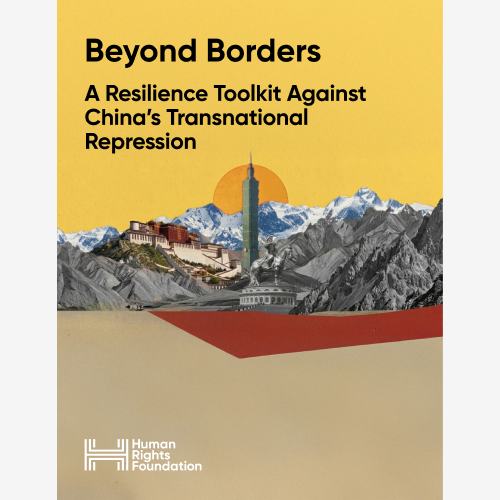
Human Rights Foundation Publishes Toolkit to Counter the Chinese Communist Party’s Transnational Repression

Human Rights Foundation Toolkit to Counter the Chinese Communist Party’s Transnational Repression hrf.org
preview

cross-posted from: lemmy.sdf.org/post/57485851

Archived

The Human Rights Foundation’s Toolkit to Counter the Chinese Communist Party’s (CCP) Transnational Repression (TNR) is a direct outcome of HRF’s 2026 Beyond Borders workshop, which brought together young activists from Uyghur, Hong Konger, Tibetan, Chinese, and Southern Mongolian diasporas and Taiwan.

Built from workshop discussions, participant reflections, facilitator guidance, and additional research, this toolkit attempts to fill a gap of practical resources for activists and diaspora communities navigating and responding to CCP-linked TNR.

[…]

HRF classifies China as ruled by a fully authoritarian regime, with the CCP being the sole ruling party retaining absolute control over all branches of government. While freedoms are enshrined in the Constitution of the PRC, in practice, the CCP monitors all aspects of daily life to actively suppress any criticism of its rule and ideologies.

Under General Secretary and President Xi Jinping, the CCP’s desire for control — both domestically and beyond its borders — has tightened. Xi’s unprecedented continued tenure is largely characterized by repressive government policies to consolidate power under the guise of fostering harmony and state security. His political and ideological vision, dubbed the “Chinese Dream,” centers on making China a global powerhouse and revitalizing a homogenous nation-state. As a result, the regime has dramatically scaled up its repression of dissenting voices while exporting the party’s narrative overseas.

As the world’s leading perpetrator of TNR, Beijing almost indiscriminately targets diaspora members of ethnic-national groups7, religious groups, and Chinese dissidents, as their ethnic or religious identities and political existence itself are viewed as a threat to the CCP’s authority and ambitions.

[…]

China’s operationalization of TNR involves numerous party-state organs, including public security and intelligence organs, United Front networks, and diplomatic outposts, such as embassies and consulates. In practice, the Chinese government conducts TNR through a wide ecosystem including student and business associations, overseas community organizations, as well as co-opted actors, including members of ethnic-national diasporas, foreign nationals, or institutions, that are incentivized, pressured, or coerced into assisting state surveillance, intimidation, or information-gathering. The blurred boundary between state and non-state actors makes clear attribution harder, as it may be carried out directly by state agencies or indirectly through intermediaries or through co-opted actors whose relationship to the state is harder to trace.

[…]

0

Cannot buy tickets for a Bob Dylan concert without cloud access

preview

cross-posted from: slrpnk.net/post/40597815

WTF Bob Dylan? A friend who is offline is blocked from buying tickets to Bob Dylan in Antwerp, Belgium. The concert is effectively exclusively for online people. Most likely cash payers must fuck off.

It’s exactly the kind of shit Bob Dylan should be bitching about in his songs. WTF, Bob Dylan?

The human rights aspect was mentioned here. That is, our right to:

  • privacy
  • autonomy
  • self-determinism
  • have access to culture and works thereof
0

Behind Bars: survey reveals exploitation & violence in Chinese prisons

Behind Bars: survey reveals exploitation & violence in Chinese prisons safeguarddefenders.com
preview

cross-posted from: lemmy.sdf.org/post/56178607

Archived

Report downloads in English (pdf) and in Chinese (pdf).

This publication is a sister report to Behind Bars: A Survey on Detention Centre Conditions in China (in English, pdf), which follows the same survey, interview and case study format to look at human rights failings in the country’s detention system.

[…]

To mark Mandela Day this weekend, Safeguard Defenders is releasing a new study that reveals exploitative working conditions, political coercion and physical and psychological abuse in China’s sprawling prison system.

Behind Bars: a survey on prison conditions in China, based on a survey of 59 former prisoners, paints a grim picture with respondents describing abuses and violations of both international law and Chinese law and regulations. Its findings should be a stark reminder for foreign governments considering security agreements or extradition arrangements with Beijing that such cooperation is incompatible with fundamental human rights principles.

Mandela Day, held on 18 July (on Nelson Mandela’s birthday) honours his life’s work fighting for social justice and human rights. The day is also an important date for prisoner rights—Mandela spent 27 years as a political prisoner in South Africa during the Apartheid years, and the key UN document on the treatment of prisoners was officially renamed the Nelson Mandela Rules in 2015.

[…]

In addition to the survey, Behind Bars also draws on a longform interview with former Australian detainee Matthew Radalj, a comparative analysis of domestic and international law and a case study of a large prison in central China that has been at the heart of recent international allegations of forced labour.

“The truth is that xxx prison is not a prison with factories, but factories with a prison,” one survey respondent wrote, adding, “ In Chinese prisons, guilty and innocent are treated just like animals, with not even basic rights.”

[…]

At a time when China’s authoritarian surveillance state has been deleting sources of public data and made it more dangerous for people to share their testimony, Behind Bars shines a light on what really goes on in Chinese prisons. It is an important addition to the body of research on the widespread rights violations perpetrated on those incarcerated in the country.

With China typically sentencing around 850,000 people to prison time every year in one of their 680+ prisons, the scale of abuse is potentially massive. Estimates put the number of people serving time in China at around 2.34 million, likely making China the country with the largest number of prisoners serving time in the world.

[…]

One respondent wrote, “I was not treated like a human being at all.”

Radalj said that when he was in solitary confinement, he was Tasered “almost on a daily basis” and that he was “chained for the entire 194 days” around his leg.

[…]

The Chinese prison system heavily emphasizes ideological education and expects prisoners to produce thought reports, such as letters of repentance, statements of confession and essays outlining support and praise for the CCP.

More than three quarters of respondents said they had to write thought reports when they were in prison. Education provided for prisoners was more often propaganda in nature and focused on CCP ideological education rather than being vocational in nature and helping them develop skills so they can find work upon release.

Prisoners who refused to write thought reports or whose written works were not deemed sufficiently “politically correct” or remorseful were typically punished, for example by not being able to apply for sentence commutation, having their shopping quota cut, the cancellation or reduction of time for a family visit or phone call and even physical punishment and/or solitary confinement. One respondent said they were denied medical attention because they did not write a confession letter.

[…]

0

MEPs urge EU crackdown on transnational repression, calling it threat to democracy

preview

cross-posted from: mander.xyz/post/53751698

The report was adopted on Tuesday by 434 votes in favour, 128 against and 104 abstentions, the parliamentary press service announced.

Transnational repression was described in the text as deliberate acts or threats by states and authoritarian regimes — or state-linked entities and proxies — to threaten, silence, coerce or harm people living abroad, as well as their support networks and family members.

MEPs said these actions pose a threat to democracy and the protection of human rights, and amount to foreign interference.

…

Targets can include dissidents, journalists, activists, academics and members of diaspora communities, as well as their families, according to the European Parliament.

…

They also called for measures to share best practice between member states and floated the appointment of an EU coordinator to help develop a wider strategy, including action against digital threats, abusive Interpol “red notices” — requests to locate and provisionally arrest people pending extradition — and “consular coercion”, which the report described as pressure from embassies and consulates.

“For many people living in exile in Europe, distance doesn’t guarantee safety. Authoritarian regimes actively seek to silence critics beyond their own borders,” the report’s rapporteur, Hannah Neumann, said in the statement published by the European Parliament.

…

0

Europeans have a fundamental right to “good administration” (Yay!) But what about Germany?

preview

Article 41 of the Charter of Fundamental Rights of the European Union (CFREU) entitles people to “good administration”. What does that mean exactly – you might ask. It is up to every administration to define what that means. The EU has their own “European Code of Good Administrative Behaviour” but that is just for EU agencies (i.e. excluding member states).

Belgium has a standards of good administrative behaviour just for Belgian administrations at the federal level.

I see that Germany answered a survey about good administration. It’a a good sign. But what do they have? A German agency ignored my request for standards of good administration that they are expected to adhere to. Ignoring that request in itself likely undermines the right to good administration.

So, my question: can anyone point to a code of good administrative conduct for German administrations? Preferably in English if it exists but of course I would be satisfied with German if needed.

0

2025 Annual Report on the Human Rights Situation in Tibet: "One of the least free places in the world"

preview

cross-posted from: lemmy.sdf.org/post/54247012

Archived

Here is the full report: TCHRD 2025 Annual Report on the Human Rights Situation in Tibet (pdf)

The Tibetan Centre for Human Rights and Democracy (TCHRD) launched its 2025 Annual Report on the Human Rights Situation in Tibet.

[…]

In 2025, Tibet continued to remain one of the least free places in the world, receiving a Global Freedom Score of 0 out of 100 by Freedom House.

Under the continued leadership of Xi Jinping, the Chinese Communist Party expanded policies aimed at reshaping Tibetan identity through tighter legal regulation, political indoctrination, heightened surveillance, and systematic cultural assimilation.

[…]

The year witnessed intensified state interference in Tibetan religious life and institutions. New measures further consolidated Party control over monasteries and religious practices, requiring monastic institutions to align more closely with CCP ideology. Heightened restrictions surrounding the 90th birthday of His Holiness the Dalai Lama illustrated the extent of China’s fear of Tibetan religious identity, as authorities imposed sweeping security measures, intensified censorship, and cracked down on displays of devotion to the Tibetan spiritual leader.

[…]

One of the most alarming cases documented during the reporting period involved the extrajudicial killing of Tibetan religious leader Tulku Hungkar Dorje in Viet Nam following his detention during a joint operation involving Chinese and Vietnamese authorities. The case raised grave concerns regarding China’s growing transnational repression and the targeting of Tibetan religious leaders and activists beyond its borders.

[…]

0

How China is breaking apart a people and its culture

preview

cross-posted from: lemmy.sdf.org/post/53903311

The campaign of repression against the Uyghurs has entered a new phase.

Archived

In August 2024, the parents of Ekpar Asat made a long journey to a prison in the Chinese region of Xinjiang.

Asat, who belongs to the Uyghur ethnic group, was detained by authorities in April 2016 on charges of “inciting ethnic hatred”. The founder of a popular Uyghur-language website, he had recently returned from attending a prestigious leadership programme in the US.

The May visit was the first time Asat’s parents had seen him in person since his disappearance, and he had lost so much weight he was “unrecognisable”, his sister Rayhan later said.

The meeting lasted barely 10 minutes and was done through a glass window, according to human rights groups. The family was forced to speak in Chinese — a language Ekpar is fluent in, but his parents barely speak — and not permitted to show any emotion. “Prisoners have to be always happy,” Rayhan tells the FT.

[…]

Analysis suggests that the Chinese state’s campaign of oppression against Uyghurs and their culture and identity has in fact entered a new phase. While many camps have shut, a vast network of prisons and detention centres remains, alongside pervasive surveillance and systems of coercive social control.

It shows Xinjiang has the world’s highest prison detention capacity relative to its population size — evidence that authorities continue to rely on mass incarceration. Researchers and rights groups say repression in the region now extends towards the long-term remaking of Uyghur society.

Beijing has expanded labour transfer programmes that move Uyghurs into factory work elsewhere in the country — schemes UN experts say can amount to forced labour. This places multinational corporations that work in China in a challenging situation, as Beijing is also making it increasingly difficult and dangerous for companies to perform due diligence in their supply chains so they do not target Uyghur rights.

[…]

Researchers say the campaign reflects Beijing’s drive to assimilate Uyghurs into mainstream Han Chinese identity amid rising nationalism under Xi Jinping.

Uyghurs’ distinct language, culture and Islamic faith create a “degree of insecurity that has only intensified as China has begun taking this profoundly nationalistic turn”, says historian Hannah Theaker. “They just want to force them to be Chinese,” adds Peter Irwin, co-executive director of the Network for Uyghur Rights.

[…]

Xinjiang is also strategically important to Beijing, as it straddles trade routes linking China to Central Asia, the Middle East and Europe, while holding large reserves of coal, oil and gas. “They see it as an economic engine for the country,” Irwin says.

China continues to frame its policies in Xinjiang as essential to security and stability. In a speech last year, Xi stressed the need for readiness in “combating terrorism”. State media said Xi also called for religions to “conform to China’s realities” and for officials and ethnic groups to “develop a correct view” of the country, its history, nation, culture and religion.

[…]

China tightly controls information from the region, censoring online material, restricting travel and intimidating Uyghurs abroad through threats against relatives back home. But the FT was able to gather a picture of the current situation from human rights observers, members of the diaspora, and people who recently left China and witnessed the mechanisms used to control Uyghurs.

[…]

Human rights researchers believe many facilities remain occupied. More than 578,000 people were prosecuted in Xinjiang between 2017 and 2022, according to figures compiled by the Uyghur Human Rights Project from official data. Given China’s conviction rate of more than 99.9 per cent and the long prison terms handed down during the crackdown, researchers believe many of those sentenced are likely still imprisoned.

[…]

The figures suggest that if Xinjiang were a country, it would have the highest incarceration rate in the world, at 1,944 per 100,000 people. China’s nationwide rate is 119 per 100,000 people, according to the World Prison Brief.

[…]

Uyghurs interviewed by the FT say large parts of their families have been detained. Nureli Abliz, a former telecoms worker in Xinjiang, estimates that roughly 70 per cent of his extended family remain in custody.

[…]

The campaign to assimilate Uyghurs into mainstream Han Chinese culture is reshaping a generation, particularly children separated from their families through Xinjiang’s vast boarding school system.

Boarding schools have long existed across the region, often justified by authorities as a way to provide education in rural areas. But official documents also describe them as a way to teach children Mandarin and “[block] the influence of the family’s religious atmosphere”.

[…]

Uyghur activists say the removal of children from their families and communities is creating a “generation gap” in which many no longer understand their language and culture. Lessons are taught in Mandarin, and families say children are not allowed to speak Uyghur.

“Young children lose their language skills very quickly,” says Abduweli Ayup, a Uyghur linguist and activist. In one family, he says, siblings learnt different Mandarin dialects from their respective teachers. “Now the children can’t communicate with one another.”

[…]

A new law downgrades languages other than Mandarin, encourages inter-ethnic marriage and requires parents to raise children to “love the Chinese Communist Party”.

“Everything that once reflected Uyghur civilisation — our culture, our language — has been wiped out,” says a Uyghur man who recently visited the region from the US.

0

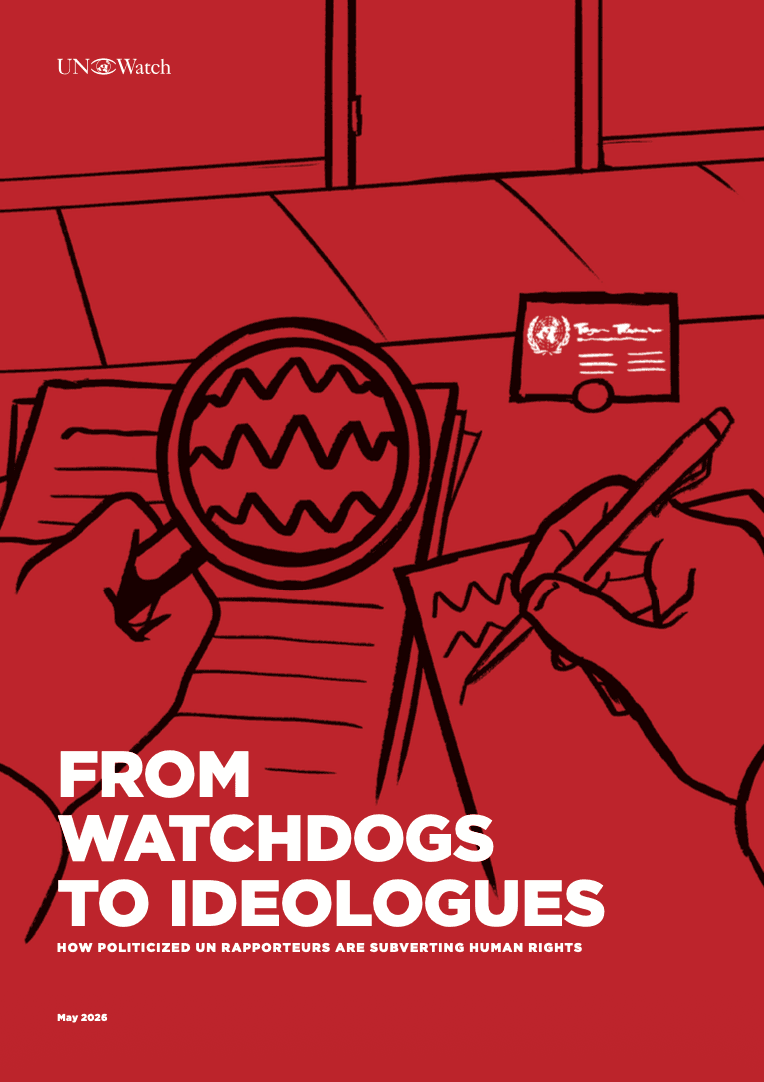
Report: U.N. “experts” accepted funding from China, Russia, Qatar, pushed their interests

play · youtube.com
UN Watch Report: U.N. “experts” accepted funding from China, Russia, Qatar, pushed their interests unwatch.org
preview

cross-posted from: lemmy.sdf.org/post/53805497

Archived

Here is the report: From Watchdogs to Ideologues - How Politicized UN Rapporteurs Are Subverting Human Rights (pdf)

In November 2006, UN Secretary-General Kofi Annan described the system of Special Procedures as “the crown jewel of the UN human rights system.” Nearly two decades later, that jewel has lost much of its luster—tarnished by politicization, disregard for impartiality, and a complete failure of accountability to minimal norms and professional standards.

The Human Rights Council today maintains 59 Special Procedures mandates—46 dealing with global themes, and 13 addressing specific countries—an increase of nearly 30% from when the Council was created in 2006. Although Special Procedures are unsalaried, they receive certain financial support when carrying out official duties, including UN funding for country visits, as well as training, staffing support, and other institutional resources.

[…]

Yet, like the body that appoints them—the 47-member Human Rights Council, a majority of whose members are non-democracies—the Special Procedures have become politicized. The mechanism increasingly functions not as an independent human rights safeguard, but as a vehicle for ideological advocacy, selective targeting, and the laundering of unverified and even spurious allegations through the authority of the United Nations.

[…]

[According to a new report], the reality of the Special Procedures system increasingly diverges from the admiring scholarly assessments. Rather than operating as independent and impartial experts, many mandate-holders now use country visits and thematic reports to advance politicized narratives, disproportionately target democratic states, and shield authoritarian regimes from scrutiny. As detailed below, structural deficiencies—including politicized appointments, proliferation of mandates, weakened evidentiary standards, lack of transparency, and the absence of accountability—have eroded the credibility and integrity of the system in practice.

0

[Opinion] Human Rights Are Off the Agenda at the Trump-Xi Summit in Beijing

Human Rights Are Off the Agenda at the Trump-Xi Summit in Beijing thediplomat.com
preview

cross-posted from: mander.xyz/post/51928451

The meeting will be a stark display of Trump and Xi’s shared anti-human rights vision of transactional geopolitics. Accountability will have to come from elsewhere.

Op-ed by Carolyn Nash, Amnesty International USA’s director of advocacy for Asia.

At their summit in Beijing this week, U.S. President Donald Trump and Chinese leader Xi Jinping will discuss trade, the war in Iran, and other pressing topics, but one vital issue will undoubtedly be off the agenda: human rights.

…

Both men, in their own ways, have tried to co-opt the concept of human rights to promote their narrow economic and security interests, eliminate dissent domestically, and ignore human rights crises around the world – many of which their governments’ policies and practices have fueled.

We are thus about to see two perpetrators of grave violations meet, each one comfortable in the knowledge that the other won’t hold them accountable for their actions. If Trump’s pre-departure press conference is any indication, the gravity of human rights issues that should be on the table may be beyond the grasp of these leaders. When asked about political prisoner Jimmy Lai, Trump incomprehensively compared Lai to former FBI director James Comey, implicitly suggesting that it is excusable for leaders to imprison their critics.

…

The Trump administration is overseeing a mass deportation machine that rips families apart while empowering ICE agents who have targeted and killed activists. The U.S. military under Trump has kidnapped and killed foreign heads of state, rolled back years of work to minimize civilian harm during war, committed mass murder on the high seas under the false guise of a drug war, and continued to send weapons to Israel as its government commits genocide.

Meanwhile, the Xi administration entirely stifles free expression, freedom of protest, and freedom of religion, while committing crimes against humanity against minority groups. Xi’s government has interned or disappeared over a million Uyghurs in Xinjiang and has implemented draconian laws, not least the Hong Kong National Security Law, subjecting people to indefensible state control.

…

Other countries must band together and insist that Xi and Trump stop undermining ongoing efforts to implement and improve the international human rights systems, which save lives, protect millions from persecution, advance the dignity of people around the world and increase global prosperity and security. The United States and China are not above these systems, nor can their people thrive without them.

…

Archive Today link

0

In a Single Day, 3 Democracies Pushed Back Against Chinese Transnational Repression

In a Single Day, 3 Democracies Pushed Back Against Chinese Transnational Repression thediplomat.com
preview

cross-posted from: mander.xyz/post/51733617

On May 7, in a historic verdict, Peter Wai and Bill Yuen were found guilty of assisting a foreign intelligence service under the U.K. National Security Act. Their convictions send an unambiguous message: transnational repression by the Chinese Communist Party has no place on British soil. Remarkably, on the same day, the United States and Norway delivered that message too. That three liberal democracies acted against Beijing’s long arm on a single day was not coordinated – but perhaps it should have been.

Peter Wai, office manager of the Hong Kong Economic and Trade Office (HKETO) in London, and Bill Yuen, a U.K. immigration official, were convicted for their roles in a “shadow policing operation.” Wai’s position at the HKETO lent weight to longstanding concerns from civil society groups that HKETOs, which are nominally trade missions, function as additional diplomatic outposts through which the Chinese Communist Party (CCP) extends its surveillance reach and advances its anti-democratic agenda abroad. Yuen, meanwhile, was found to have exploited his access to British government databases to extract sensitive immigration data on Hong Kong dissidents living in the United Kingdom, turning the machinery of the state against the very people it was meant to protect.

…

The human cost of this operation had a face. Monica Kwong, a Hong Kong woman living in the U.K. on the British National (Overseas) visa scheme, became a target. Operatives slid a camera beneath her front door to observe her movements and poured water under it to lure her outside. A woman who left everything behind to seek safety in Britain was being hunted through her letterbox – that is the lived reality of transnational repression. Luckily, the counterterrorism police had been monitoring the suspects. When the men attempted to lure Kwong from her flat, police, who were already waiting inside, moved in and made the arrests.

…

The convictions … demonstrate that British law is fit for purpose, and they set a precedent: stalking, intimidation, and repression on U.K. soil now carry real and serious legal consequences. The Foreign Office’s decision to summon the Chinese ambassador in the wake of the verdict underlines that the British government views this not merely as a criminal matter, but as a direct affront to national sovereignty that demands a diplomatic response.

…

The very same day brought parallel developments in New York, with the continuing trial of Liu Jianwang. Liu is charged with operating a secret Chinese police station in Manhattan’s Chinatown. This is just one of over 50 such stations identified by the NGO Safeguard Defenders in cities across Europe, North America, and beyond. Prosecutors allege Liu received direct orders from Beijing to monitor, intimidate, and ultimately silence pro-democracy activists living in the United States.

…

In recent years, U.S. federal prosecutors have charged multiple individuals with acting as unregistered foreign agents on Beijing’s behalf, targeting Hong Kongers, Uyghurs, and Tibetans on American soil.

…

Norway’s contribution was quieter but no less pointed. On May 7, authorities arrested a Chinese national accused of collecting sensitive data near Andøya Spaceport, a facility central to Europe’s expanding space and satellite infrastructure. The alleged operation fits a well-documented pattern of Chinese intelligence activity targeting dual-use technology. In an era when satellite communications underpin everything from financial systems to battlefield coordination, Andøya is not a peripheral concern. It is exactly the kind of target Beijing’s intelligence services have shown sustained interest in.

…

Three cases involving Chinese transnational operations in three different countries saw major developments on one day. The coincidence is striking, but the underlying story is not coincidental at all. It reflects the sheer scale and geographic reach of Beijing’s transnational repression campaign to monitor, harass, and silence those who have dared to speak against it. It is a campaign that does not respect borders, residency status, or the protections that democratic citizenship is supposed to confer.

The response so far is necessary but not sufficient. …

At present, democracies are largely fighting this battle alone, each developing its own legal tools, its own enforcement capacity, and its own political will at different speeds …, Beijing’s networks operate transnationally by design, exploiting the seams between jurisdictions, sharing intelligence across embassies and proxies, and adapting when one avenue is closed.

…

In Britain, one concrete and overdue step would be to include China in the enhanced tier of the Foreign Influence Registration Scheme.

…

The answer beyond that is coordination. The Five Eyes intelligence alliance, NATO, and the Summit for Democracy all provide frameworks through which like-minded states can share information and align responses. What is needed is the political decision to use them explicitly for this purpose: to treat transnational repression not as a domestic law enforcement issue in each country, but as a collective security threat requiring a collective answer.

…

For Hong Kongers, Uyghurs, Tibetans, and all those who sought safety in democratic countries, this week offers a measure of reassurance. The countries that took them in are beginning to defend them in earnest. The task now is to make that defense systematic, shared, and permanent.

…

Web Archive link

0

Successful autocracies? - Researcher Christian Göbel, expert in Chinese studies, on China and autocracies

Rudolphina – Research Magazine of the University of Vienna Christian Göbel, expert in Chinese studies, on China und autocracies rudolphina.univie.ac.at
preview

cross-posted from: mander.xyz/post/51622296

*This is a Q&A with Christian Göbel, professor of Chinese studies with emphasis on social studies at the Department of East Asian Studies, Sinology division, at the University of Vienna, austria. His research focuses on state-society relations, local governance and protests in the People’s Republic of China and Taiwan. *

Question: The recently published Democracy Report 2026 paints a rather gloomy picture. The global share of democracies has fallen back to the level of 1978, while autocracies are gaining ground. From your perspective, what are the reasons for this dramatic advance of autocracies around the globe?

Göbel: The reasons for this are complex and mutually reinforce each other. Many people feel economically left behind, social media are spreading anti-democratic discourses, and party systems are not keeping up with increasing social complexity, which makes simplistic autocratic discourses seem more attractive.

And, of course, we also see the effects of political leaders deliberately undermining democratic institutions. It is also related to a weakening of the media, as we have seen in Hungary and to some extent also in the USA, to name two examples.

…

When I hear somebody saying this, I vehemently clarify that we are very much living in a democracy – and are, to name just one example, able to discuss politics without being afraid that someone will charge into the room and arrest us for doing so.

Appreciation of democracy is often equated with material prosperity. A decline in prosperity conversely leads to people being dissatisfied with democracy.

…

Security is a high priority in China. And the most important aspect of security is regime security, which in turn means the continued existence of the one-party autocratic system. China’s greatest fear is that the Communist Party will no longer rule.

…

There are three pillars that serve to maintain power. The first and probably most important pillar is performance. This means that the majority of the population does not realise (or should not realise) that they are living in an autocratic regime. “If I do not speak out against the government and follow the rules, I can lead a good life in China.” This is how many Chinese people see it, and in fact, they have no alternative.

The second pillar is propaganda, which is used to indoctrinate the population and portray China as the best and most successful political and economic system. And the third pillar – which is being used surgically – is repression. Persons who try to initiate even a kind of democratic movement, put themselves in danger. They usually disappear without a trace or, at best, reappear in court.

…

Taiwan’s history has largely been different to that of the People’s Republic (PRC). The Japanese occupation brought not only suffering but also economic development and prosperity, creating a strong middle class that favoured democracy.

…

In social media, democracy is being undermined not only by individuals but also by bots and controlled discourse. As a result, its image is no longer viewed positively. Instead, it is often associated with oligarchy, chaos and forms of social diversification that many find unsettling.

…

Platforms [in China’s internet] are … customised for the Chinese market … and these platforms are subject to tight control. Every social medium is responsible for its own censorship. Influencer accounts are monitored more closely than small accounts with few followers. There have also been several waves in which influencer accounts were shut down because they were too critical [of the Chinese Communist Party].

…

Another important point is that the Chinese state media and actors have a strong media presence … This actually makes them the strongest and most important actors online, resulting in a de facto colonisation of social media by state accounts and content.

…

The [autocratic] system is currently relatively successful in China, even if economic tensions are increasing. If we compare this with the USA, for example, we see that the undermining of democratic institutions does not work very well there. In terms of prosperity, we still have a higher increase in prosperity in democracies. Personally, I do not buy the argument that autocracies are more efficient.

…

If we are lucky, the current events in the USA and in other countries will delegitimise autocratic practices. When populist or illiberal forces come to power, this often not only restricts citizens’ rights and heterogeneity, but also often leads to increasing government debt. It is my impression that illiberal governments will cost us dearly.

…

[To increase the appreciation of democracy], politics can also create opportunities for participation beyond elections. Citizens’ councils are a good example of this. Third, we need an honest communication of what democracy is and what it is not. Democracy cannot guarantee that everything will go well, but it guarantees that we have the possibility to contribute to improving the system. I believe it is essential to increase this awareness, also through education.

Web Archive link

0

Over 130 organisations condemn the Government of Zambia’s abrupt disruption of RightsCon

Association for Progressive Communications Over 130 organisations condemn the Government of Zambia’s abrupt disruption of RightsCon www.apc.org
preview

cross-posted from: mander.xyz/post/51546066

A coalition of over 130 civil society organisations and digital rights actors has condemned the Government of Zambia for the cancellation of RightsCon 2026, which was scheduled to take place in Lusaka and online.

In a joint statement, the groups said the government’s late announcement disrupted preparations for the event, which was expected to bring together thousands of participants from across the digital policy, human rights, and technology sectors.

…

According to information publicly shared by Access Now, the decision appears to have been influenced by external pressure, including from authorities of the Peoples Republic of China on the Government of Zambia over the planned participation of Taiwanese civil rights representatives, and the exclusion of topics that appeared to be inconvenient for China.

…

Web Archive link

0

European Parliament condemns Chinese ethnic unity law and Beijing's "intensified suppression of ethnic identities"

preview

cross-posted from: mander.xyz/post/51313004

In a joint resolution, members of the European Parliament across the political spectrum condemned “China’s repressive assimilation policies and consequent violations of universal human rights, including in Tibet, Xinjiang and Inner Mongolia”, the resolution reads.

“[The Parliament] expresses grave concern over the adopted Law on the Promotion of Ethnic Unity and Progress, which openly promotes assimilation policies and restricts the cultural, religious and linguistic freedoms of various groups within China and beyond.”

The lawmakers urge China to repeal the law, thereby upholding its obligations under international law regarding non-discrimination, and call on European Council to activate the EU Global Human Rights Sanctions Regime against officials and entities responsible for conceiving and implementing this law.

The resolution also urges all EU Member States to suspend extradition treaties with China to protect persecuted individuals residing in the EU from the risks of transnational repression under this law.

…

0

[Opinion] Dismissing China’s repression in Xinjiang

Tempest Dismissing China’s repression in Xinjiang tempestmag.org
preview

cross-posted from: mander.xyz/post/51191977

This is an opinion piece by David Brophy, an Australian socialist scholar of Chinese and Uyghur history. He delivers a critical response to a recently published article on “The Idea of the ‘Uyghur Genocide’ and the Realities of Xinjiang,” that attempts to downplay the Chinese communist Party’s atrocities in East Turkestan, also known as Xinjiang.

…

Vijay Prashad and Tings Chak’s article in Monthly Review, “The Idea of the ‘Uyghur Genocide’ and the Realities of Xinjiang,” is among the more substantial recent efforts on the international Left to defend China’s repressive policies in Xinjiang and dismiss the grievances of local Muslim peoples. Their article strikes a similar tone to the Chinese government sources that they often rely on, featuring the same questionable historical narratives and narrow focus on a few individual critics and their affiliations. By the end of the piece, I was noting signs of intellectual sloppiness. As I did my due diligence and dug into its sources, my suspicions were confirmed.

…

Prashad and Chak now edit the international edition of the journal Wenhua Zongheng 文化纵横. This has brought them into dialogue with Chinese intellectuals such as Wang Hui 汪晖, and it was unsurprising to see the article’s conclusion riffing off Wang’s critique of technocratic governance in the PRC. Wang was cited here for the view that “[g]enuine ethnic unity cannot be achieved through depoliticization, but must be built on recognition of history, diversity, and substantive equality.”

…

Take the authors’ sketch of Xinjiang’s history. Like every State Council White Paper, they repeat a version of the mantra that this territory has been part of China since ancient times. They claim that not only Xinjiang, but Tibet as well, were part of China during the Eastern Han dynasty (25–229 CE)—and also during the Tang (618–907), Yuan (1271–1368), Ming (1368–1644), and Qing (1644–1912) dynasties.

Before going on, I must pause to note how absurd it is for Prashad and Chak to drag us onto this terrain of debate at all. Since when has the Left considered the political status of a territory millennia in the past to have any bearing on the justice of its political configuration in the present? What business is it of today’s radicals to plumb dynastic chronicles to decide whether this or that piece of land rightfully “belongs” to a modern state? Prashad and Chak would not appreciate the comparison, but the similarity between this kind of argumentation and the logic of Zionism is striking.

…

The only version of history [Vijay Prashad and Tings Chak] have presented is the distorted one preferred by Beijing. Their closing gesture towards the inscrutable Orient is a last-ditch effort to restore some distance between themselves and the obviously false claims they have rehashed.

…

Again, I am reminded of the way that Zionists try to discredit the Palestinian cause by claiming that “Palestine” was not a well-defined, or meaningful geographic unit for the inhabitants of the region at the time of Zionist colonization. Those facts are in dispute, but even assuming this was the case, what follows? Are people to be punished for arriving late to a fully elaborated nationalist program? Are we reinventing here the category of “non-historic” peoples, destined to be swept aside by those with more viable national movements?

…

Prashad and Chak show no serious interest in the complex political history of the region they are discussing. They skip the entire history of Islamic reformism and Soviet-aligned Uyghur nationalism; there is no mention of Comintern strategies towards Xinjiang, which saw various schemes to extend the Russian revolution there; nothing on Uyghur labor organizing or cultural radicalism in Soviet Central Asia. Their “left” analysis sets all this aside to commence a narrative of “secession” movements at the time of the Sino-Soviet split, aligning with a trend in China today to reduce Uyghur nationalism to a tool of Russian/Soviet intrigue.

…

[Repression of Uyghurs] is grossly minimized by Prashad and Chak. In the only mention of formal incarceration in their entire article, they note in passing that “several people” were imprisoned from 2014 to 2019 for “violent activities.” “Several people”? Total prosecutions in Xinjiang soared during this period, jumping from 41,305 in 2016 to 215,823 in 2017, and increased in average length. China has not hidden the fact that thousands have been convicted for “terrorism” offenses—keeping in mind that a UN review of available judicial documentation described “judgments referring to conduct being ‘extremist’ despite none of the formal charges being related to terrorism or “extremism.’” This was seen as indicative “of an approach that considers any type of violation of law committed by a Muslim person as presumptively “extremist.’”

…

The authors would have us believe that stories of repression in Xinjiang originate in a narrow circle of U.S.-aligned diaspora activists. But some of the most chilling stories I have encountered—of family members ripped from their beds at night, eventually returning months or years later as broken individuals—have been from people who studiously avoid all involvement in diaspora politics.

…

Aligning as they do with official Chinese government positions, Prashad and Chak’s argumentation draws more on the logic of nationalism than left traditions of debate on the national question … Wang Hui’s critique of “depoliticization,” which the authors embrace in their conclusion, expresses a desire for more dialogue and debate to build trust among the peoples of Xinjiang. Well and good. But who do they imagine participating in this dialogue? Minzu University Professor Ilham Tohti once tried to initiate such an exchange, and is now serving a life sentence in prison for separatism. Any comment from the authors on that?

…

Web Archive link

0

Authoritarian states keep collaborating to target dissidents abroad

Democracy Without Borders Authoritarian states keep collaborating to target dissidents abroad www.democracywithoutborders.org
preview
  • China is responsible for the highest number of Transnational Repression (TNI) with more cases than the Turkey and Russia (number 2 and 3) combined
  • The report by Freedom House is citing more abuse of Interpol for authoritarian purposes
  • There is growing response but uneven protection among democratic states as the report provides recommendation to protect human rights

Here is the full report: Collaboration and Resistance: Tracking Transnational Repression in 202 (pdf)

Last year, governments all over the world assassinated, assaulted, kidnapped, threatened, and harassed critics beyond their borders. Freedom House recorded 126 new incidents of physical, direct transnational repression during the year, bringing the total number of cases in our database, which spans 2014 to 2025, to 1,375.

Autocrats collaborating in Southeast Asia and in East Africa were responsible for the majority of incidents recorded during the year. Thailand cooperated with both Chinese and Vietnamese authorities to detain and return members of minority groups. The deportation of 40 Uyghur men to China in February cemented China’s status as the world’s leading perpetrator of transnational repression. In East Africa, Kenyan, Ugandan, and Tanzanian authorities helped each other track, detain, and return activists in an effort to impede civic mobilization ahead of and during elections.

…

Collaboration among authoritarian governments fueled transnational repression in Southeast Asia and East Africa in 2025. Over half of the incidents recorded last year—69 of 126—occurred in these two regions.2 In Asia, the collaboration was driven by geopolitical pressure and economic incentives from Beijing. In Africa, meanwhile, collaboration stemmed from a mutual desire to suppress mobilization by activists during especially tense political moments, like the lead-up to elections.

…

Perpetrator governments continued to weaponize Interpol to bolster their transnational repression efforts in 2025. Despite suggestions in some media coverage that it is a global policing force with the power of arrest, Interpol is in fact an organization that facilitates law enforcement cooperation across borders through information sharing … But this information-sharing function is routinely abused by some of its 196 member countries for the purpose of transnational repression. In 2025, Freedom House recorded 11 incidents that were linked to Interpol. Governments including Egypt, Kuwait, and Turkmenistan contravened the organization’s own constitution by manipulating the law enforcement network to pursue regime opponents abroad on political grounds.

…

Democracies Take Action to Counter Transnational Repression, but Gaps Remain … Host countries where exiled dissidents and activists have taken refuge are working together to create responses to the threat posed by transnational repression and warning targeted individuals about security concerns. But protection remains unevenly available in Europe and elsewhere, while changes to migration enforcement policies in the United States are exposing exiled individuals to the threat of transnational repression.

…

Recommendations

  • [Governments should] adopt and codify a government-wide definition of transnational repression that can be used across departments and agencies and in official communications …

  • Apply sanctions and visa bans against foreign government officials who facilitate transnational repression via forced returns …

  • Interpol Member States should consider increasing their funding to the organization’s oversight bodies: the Notices and Diffusion Task Force and the Commission for the Control of Interpol’s Files …

  • Continue to engage directly with diaspora communities by creating online resources, providing information on ways to report transnational repression, and connecting communities with local law enforcement …

  • Ensure that immigration enforcement does not facilitate transnational repression …

…

Web Archive link

0

Unprecedented Whistleblower Testimony from Inside China’s Police Apparatus Confirms Xinjiang Forced Labor Is Intensifying

Victims of Communism Memorial Foundation Unprecedented Whistleblower Testimony from Inside China’s Police Apparatus Confirms Xinjiang Forced Labor Is Intensifying victimsofcommunism.org
preview

cross-posted from: mander.xyz/post/50884376

Firsthand testimony from Zhang Yabo — a former Han Chinese police officer who served in China’s Xinjiang Uyghur Autonomous Region from 2014 to 2023 — proves that state-imposed forced labor in Xinjiang has not ended but has grown more pervasive and deliberately harder to detect.

Parts of Zhang Yabo’s testimony, accompanied by VOC’s [Victims of Communism Memorial Foundation’s] latest findings, are published in Foreign Policy, Sourcing Journal, and The Spectator along with a companion profile of the witness by Der Spiegel.

Zhang’s account and corroborating documentation are the most operationally detailed insider testimony yet obtained from within Xinjiang’s security apparatus. Between 2014 and 2016, while working as a detention center officer, Zhang witnessed the routine beating and torture of Uyghur detainees, the rape of a female detainee by a colleague during interrogation, and deaths resulting from abuse. He estimates that approximately 25 percent of the adult population in his jurisdiction was interned in re-education camps.

Between 2018 and 2020, Zhang supervised forced labor transfers to Xinjiang’s cotton fields, describing government convoys escorted by armed forces, identity cards confiscated to prevent escape, ten-hour workdays, and strict prohibitions on prayer and any religious expression.

Beginning in early 2023, authorities initiated a campaign of short-term arbitrary detentions to enforce total obedience among Uyghur populations. Residents who had previously failed to participate in state labor transfers were subjected to detentions lasting up to 15 days under intentionally harsh conditions.

…

Forced labor transfers have since reached a record 3.4 million deployment instances in 2025, and direct exports from Xinjiang to the United States, Canada, the United Kingdom, and the European Union surged 465 percent during Ma’s tenure, according to official customs data.

Zhang’s testimony further documents how Beijing’s repression evolved under Ma Xingrui, who succeeded Chen Quanguo as the region’s Communist Party secretary in December 2021 and remained in power until July 2025. Rather than dismantling the coercive apparatus, Ma transitioned the campaign of repression from high-visibility internment to decentralized, normalized coercion that is far harder for the outside world to detect.

…

“Zhang Yabo risked everything to bring this testimony to light. Beijing has frozen his accounts, threatened his family, and charged him with endangering national security,” said Dr. Eric Patterson, VOC’s President and CEO. “This is not history. It is happening now, woven directly into global supply chains. VOC will continue to expose these atrocities until the international community acts with the urgency this crisis demands.”

…

Web Archive link

0

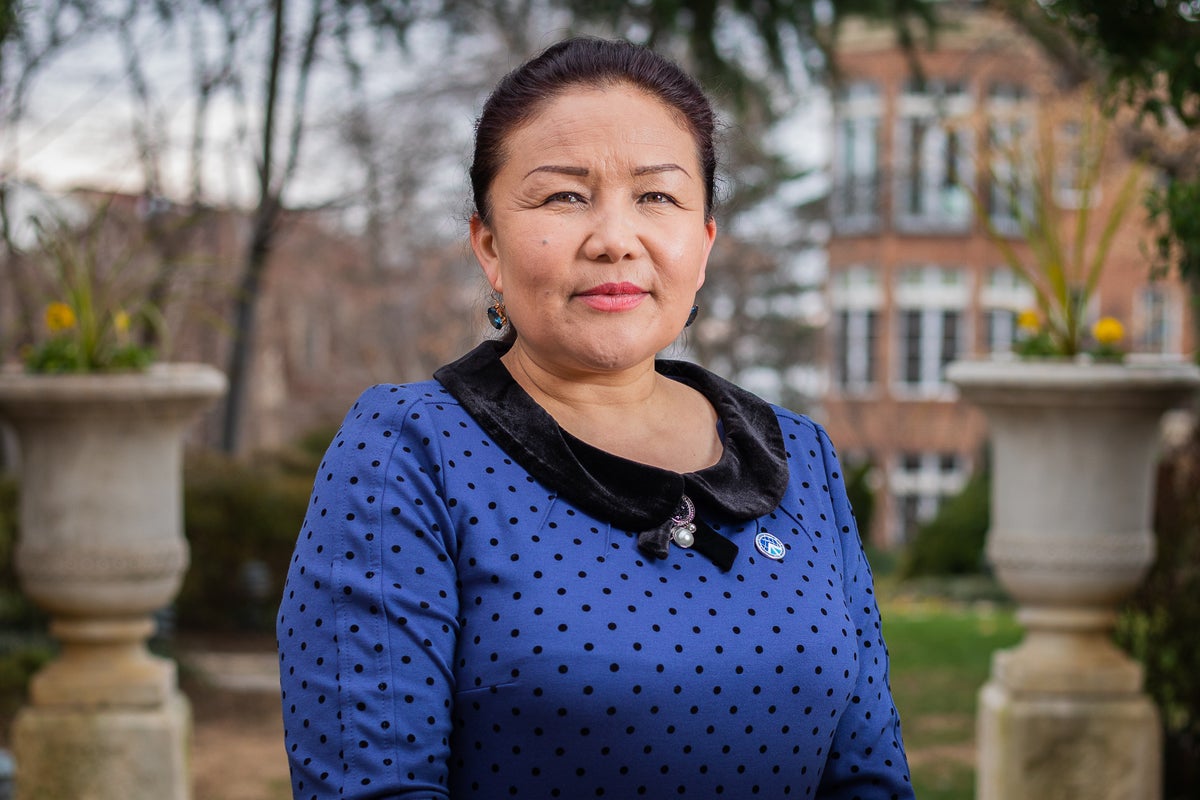
‘I was tortured in a Chinese detention camp for Uyghurs. Starmer’s approval of a new embassy is a betrayal’

The Independent ‘I was tortured in a Uyghur camp. Starmer’s approval of a new embassy is a betrayal’ www.independent.co.uk
preview

cross-posted from: mander.xyz/post/50858589

A woman who was tortured in one of China’s notorious Uyghur detention camps has launched a blistering attack on [UK Prime Minister} Sir Keir Starmer, accusing him of “disrespecting human rights” by approving plans for a Chinese mega-embassy in London.

Sayragul Sauytbay, an ethnic Kazakh who says she witnessed serious abuses when she was forced to work in one of China’s Xinjiang internment camps, accused the British prime minister of prioritising economic and political gain over international law.

“The recent activities of the current UK government have left us in deep anguish and fear,” she said, adding that Britain has “no right to speak about freedom and democracy” given its efforts to strengthen its relationship with President Xi Jinping’s government.

The activist, who is based in Sweden, now serves as the vice president of East Turkestan’s government-in-exile. In 2020, she led a complaint in the International Criminal Court (ICC) accusing Chinese officials of genocide and crimes against humanity, after fleeing China in 2018.

…

Speaking to The Independent, she detailed grave abuses in Chinese internment camps and recalled the horrors of the so-called “black room” in which detainees were tortured.

…

In the middle of the night in January 2017, Ms Sauytbay was detained for the first time by authorities in Xinjiang, an autonomous territory known as East Turkestan by several Turkic ethnic minority groups, including Uyghurs and Kazakhs.

She says she was interrogated on the basis that she had family in Kazakhstan, after her husband and two children had emigrated and gained Kazakh citizenship a year earlier.

…

At the camp, Ms Sauytbay says she witnessed horrific abuse of detainees.

“They engage in all forms of torture against the detainees, including both psychological and physical torture,” she said. “They routinely rape women. I’ve witnessed gang rapes as well with my own eyes.”

She says that a “black room” existed in the camp: a dark cell without any cameras where detention guards carried out torture against the detainees away from view.

…

“You can’t talk, you can’t cry, you can’t smile – even as an instructor, you can’t speak with the detainees unless it’s about teaching them,” she recalled.

When one batch of new detainees arrived, an elderly Kazakh woman ran to Ms Sauytbay crying. She hugged her, and told her she had committed no crimes. She was tortured as a result of the exchange.

…

“For several hours, they made me sit in the electric chair. They beat me. I thought I was going to die. Then, after they beat me up, I fainted. I woke up at 6am to the signal of the wake-up alarm of the camp, and pinched myself to see if I was just dreaming or if I was alive.”

Rape, she added, was a “very common occurrence” in the camp, with prison guards taking “whichever woman that they like”.

…

‘The UK is hypocritical’

Kazakhs and Uyghurs, Ms Sauytbay said, once looked to the United Kingdom for “hope and help”.

But in recent months, Downing Street has sought to repair the tense relationship between UK and China – despite Beijing’s human rights record and its alliances with Russia and Iran.

The prime minister advocated for a “more sophisticated” relationship with the Chinese government as he paid a landmark visit to Beijing in January, stressing the financial benefits of an improved relationship with the world’s second-largest economy.

Days before the visit, the UK had approved a controversial plan for a Chinese mega-embassy in London, criticised by many as a risk to national security.

…

Following a near-six-month stint in one of the detention camps, Ms Sauytbay was officially dismissed from her role at the kindergartens.

It was only a matter of days before the Chinese authorities returned to her door. Again, she was detained and interrogated in the middle of the night and told she would return to the camps for three years to be “re-educated”.

…

Ms Sauytbay fled for Sweden, where she now resides after being granted asylum. She is 4,500km from home - but does not feel she has truly broken free from the threat posed by the Chinese government.

“I don’t feel that I’m 100 per cent safe,” she said. “The CCP has a long reach. It has agents in all these countries. It’s able to use its influence and soft power to get its way and intimidate and silence people.

“The CCP’s increasing influence in democratic nations is not only a threat to the security of those nations, but it’s a threat to democracy, and it’s a very serious issue that needs to be confronted.”

…

Web Archive link

0

[Opinion] China’s energy dominance plan is built on the backs of forced labor

The Hill China’s energy dominance plan is built on the backs of forced labor thehill.com
preview

cross-posted from: mander.xyz/post/50630014

[Opinion piece by Samir Goswami, director of Forced Labor Programs at Global Rights Compliance, and Nyrola Elimä, researcher with expertise in supply chain tracing, forced labor and transnational repression.]

Here is the original paper: Strangling Supply, Exploiting Labour: Inside China’s Five-Year Plan in Xinjiang (pdf)

…

China’s continued exploitation of Uyghur people is central to its ambition to dominate global critical mineral markets. With access to cheap energy and coerced labor in Xinjiang, this creates a structural advantage that U.S. companies cannot fairly compete with. When President Trump meets with Xi Jinping in May, he should take advantage of the vital opportunity to raise these concerns directly.

…

The new [15th Five-Year] plan’s overriding priority is to position China at the “forefront of global science and technology,” by eliminating critical technological dependencies and ensuring that its development trajectory cannot be disrupted by external pressure or supply chain coercion. The success of these goals depends on securing reliable access to raw materials at scale. The Xinjiang Uyghur Autonomous Region is central to that.

For example, Xinjiang holds 83.5 percent of China’s beryllium reserves, a material with no substitute in semiconductor manufacturing. China controls 99 percent of global lithium iron phosphate battery production, much of it anchored in Xinjiang’s mineral wealth.

The Chinese Communist Party also exploits Xinjiang’s abundant coal reserves to provide subsidized energy that enables mineral processing. Industrial electricity in Xinjiang costs approximately 2.7 cents per kilowatt-hour. In the U.S., it’s roughly 7.5 cents, and 22 cents in the European Union. Since energy accounts for 40 to 60 percent of processing costs for materials like titanium, magnesium and lithium, this gap creates a structural competitive advantage that Western producers simply cannot match on their own terms.

…

China is using artificial intelligence to monitor and profile Uyghur workers, classifying them in real time and directing them into forced labor. Non-compliance is not an option. Refusal can be viewed by the government as sympathizing with “extremist” ideologies, which could lead to incarceration.

…

At this year’s two sessions, the Chinese government also passed the Ethnic Unity and Progress Law. This is a sweeping piece of legislation that establishes Mandarin-first policies across all official and educational settings and standardizes teaching materials to promote a single Chinese identity. The law turns the stated goal of “ethnic unity” into a legal requirement across society. It limits what people can say and see, while increasing surveillance and tightening government control.

This isn’t mere rhetoric — when policies are set in five-year plans, local governments move quickly to carry them out. On the same day the new five-year plan was released, the Xinjiang Production and Construction Corps and 18 state owned companies signed 92 agreements across energy, critical minerals, computing and manufacturing. These developments point to a broader push to scale up Xinjiang’s role across the full industrial chain.

…

Web Archive link

[Edit typo.]

0

China: Release Activist Yin Dengzhen and End Deprivation of Medical Care in Detention

preview

cross-posted from: mander.xyz/post/50573702

Hubei authorities should release activist Yin Dengzhen from Wuhan Women’s Prison and ensure she receives adequate medical treatment. Yin is serving a 4.5-year prison sentence and is suffering from lymphoma (cancer of the lymph nodes), which was diagnosed in December 2024. Her health has deteriorated due to a denial of adequate medical care in detention.

“The ongoing incarceration and treatment of Yin Dengzhen is a blatant violation of Chinese and international law and may amount to torture,” said Angeli Datt, research and advocacy coordinator at the Network of Chinese Human Rights Defenders (CHRD). “Authorities are denying her adequate medical care with despicable disregard for her life.”

Beijing police administratively detained Yin on January 16, 2025 as she tried to file a petition with the Supreme People’s Court. Police alleged Yin had “disrupted the order of state organs” and held her for seven days. Shiyan City police then seized Yin from her Beijing apartment on January 26 and brought her to Shiyan, her Hubei Province hometown, and criminally detained her that day.

…

While held in pre-trial detention between January and July 2025 at Shiyan City Detention Center, Yin’s health deteriorated to the point where she was no longer able to walk or eat on her own. She was admitted twice to Shiyan People’s Hospital and hospitalized from July to September 2025. At that time, Yin weighed approximately 80lbs, could not get out of bed, and had to be fed through a nasogastric tube.

…

Web Archive link

0

Ukraine war: Kidnapped children are routinely subjected to pro-Russian indoctrination as well as cruel treatment, including physical and psychological abuse

preview

…

Oleksandr Pavlichenko, Executive Director of the Ukrainian Helsinki Human Rights Union, confirms that Russia’s deportation of children primarily violates the Rome Statute, the Fourth Geneva Convention and the European Convention on Human Rights, among other related international agreements.

…

Researchers at Yale University’s School of Public Health’s Humanitarian Research Lab have been among the most active in investigating the deportations, with findings from each of their studies immediately sent to the ICC.

The abduction of a child from an occupied territory can be reported on the Children of War portal. The child’s information is then entered into Ukrainian government agencies and databases. Abductions can also be reported to the National Police of Ukraine and the Office of the Ukrainian Parliament Commissioner for Human Rights.

According to Daria Herasymchuk, commissioner of the President of Ukraine for Children’s Rights, in most cases parents are told their children are being taken to recreational camps for their health and wellness. Refusal is not an option.

“The problem is that, unfortunately, no international organisation, no country, not even Ukraine itself, can say exactly how many children have been abducted by Russian authorities,” Herasymchuk continued. “It’s possible that even the Russians themselves don’t know this number. They had reported abducting 744,000 Ukrainian children before the ICC issued an arrest warrant for Putin and his Children’s Rights Commissioner, Lvova-Belova.”

…

Mykola Kuleba, Ukraine’s former presidential commissioner for children’s rights and founder of the Save Ukraine organisation, reported that from the beginning of the full-scale war until October 30, 2025, Save Ukraine had successfully returned 1,001 Ukrainian children from occupied territories and deportation. This was made possible by financial support from international partners, particularly European organisations.

…

…

Oleksandr Pavlichenko, Executive Director of the Ukrainian Helsinki Human Rights Union, confirms that Russia’s deportation of children primarily violates the Rome Statute, the Fourth Geneva Convention and the European Convention on Human Rights, among other related international agreements.

…

Researchers at Yale University’s School of Public Health’s Humanitarian Research Lab have been among the most active in investigating the deportations, with findings from each of their studies immediately sent to the ICC.

The abduction of a child from an occupied territory can be reported on the Children of War portal. The child’s information is then entered into Ukrainian government agencies and databases. Abductions can also be reported to the National Police of Ukraine and the Office of the Ukrainian Parliament Commissioner for Human Rights.

According to Daria Herasymchuk, commissioner of the President of Ukraine for Children’s Rights, in most cases parents are told their children are being taken to recreational camps for their health and wellness. Refusal is not an option.

“The problem is that, unfortunately, no international organisation, no country, not even Ukraine itself, can say exactly how many children have been abducted by Russian authorities,” Herasymchuk continued. “It’s possible that even the Russians themselves don’t know this number. They had reported abducting 744,000 Ukrainian children before the ICC issued an arrest warrant for Putin and his Children’s Rights Commissioner, Lvova-Belova.”

…

Mykola Kuleba, Ukraine’s former presidential commissioner for children’s rights and founder of the Save Ukraine organisation, reported that from the beginning of the full-scale war until October 30, 2025, Save Ukraine had successfully returned 1,001 Ukrainian children from occupied territories and deportation. This was made possible by financial support from international partners, particularly European organisations.

…

0

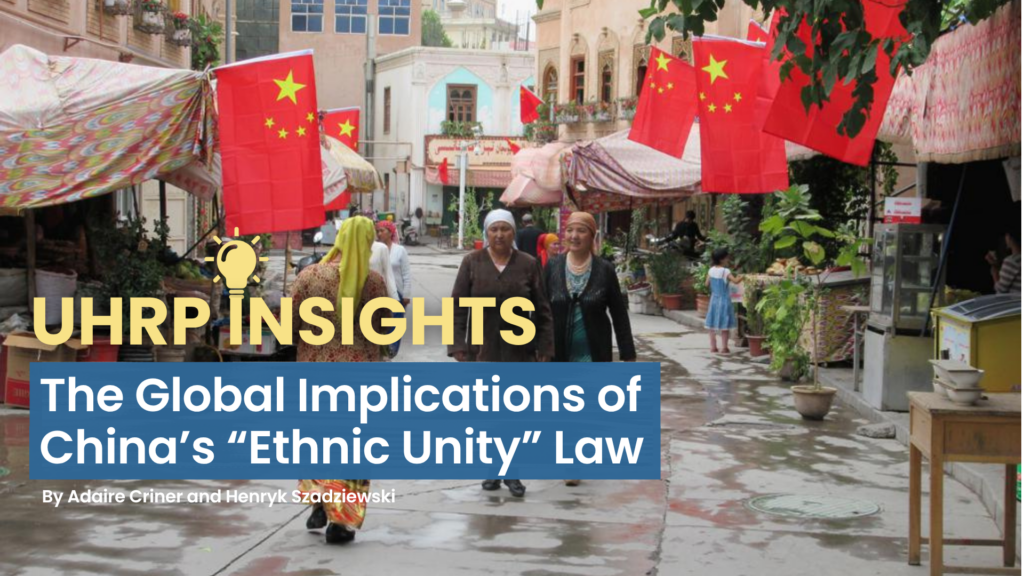
[Opinion] The Global Implications of China's "Ethnic Unity" Law

Uyghur Human Rights Project The Global Implications of China's "Ethnic Unity" Law - Uyghur Human Rights Project uhrp.org
preview

cross-posted from: mander.xyz/post/50531925

In 2019, Chinese diplomat Jiang Duan told UNHCR delegates in Geneva that “the experience in Xinjiang in this field can be introduced to other countries.” While “this field” referred to management of minoritized peoples, the “experience” he touted was China’s vast system of internment camps, so-called “vocational training centers,” targeting Uyghurs and other Turkic peoples. Survivor testimony has implicated the camps in a systematic campaign of forced labor, cultural assimilation, political indoctrination, torture, and forced sterilization. The Uyghur Tribunal determined these abuses to constitute genocide, while the very body Jiang Duan addressed, UNHCR, found they may amount to crimes against humanity.

…

A Global Model for Repression

Despite a focus on the domestic management of minoritized peoples, the implications of the Ethnic Unity Law do not end at China’s borders. Chinese state officials and amplifiers argue this approach is the optimal way to govern diverse ethnicities. Chen Xiaoyan, a member of the Chinese People’s Political Consultative Conference, a rubber-stamp advisory body, stated that the law “will not only benefit the people of China but also serve as a valuable model for other countries and regions grappling with ethnic relations.” In an article for CGTN, academic Bai Fan claimed the Ethnic Unity Law “represents a model approach to addressing ethnic issues internationally.”

If adopted overseas, the principles underlying the Ethnic Unity Law risk normalizing deeply troubling practices, including the framing of ethnic relations primarily as a national security issue and the promotion of state authority over cultural pluralism. For the Uyghur people, the consequences are already clear through the systemic and iterative dismantling of their cultural and religious heritage. Exporting this model globally risks a dramatic expansion of similar abuses against minoritized peoples and the further erosion of international human rights protections.

To prevent the normalization of the repressive framework represented in the Ethnic Unity Law, the multilateral system must move beyond statements and invoke formal accountability for the outcomes of China’s assimilationist policies and practices. In addition to the 2022 UN Committee on the Elimination of Racial Discrimination (CERD) call for an investigation, the UN Special Rapporteur on contemporary forms of racism and the Special Rapporteur on minority issues should issue a joint communication expressing grave concern over the law’s compatibility with international treaties.

…

Web Archive link

0

Strangling Supply, Exploiting Labor: Inside China’s Five-Year Plan in Xinjiang

preview

cross-posted from: mander.xyz/post/50387254

China is intensifying its exploitation of Uyghur people in Xinjiang to maintain control over global mineral supply chains. “The system of coercive labor allocation applied to minority communities in Xinjiang will continue under the 15th five-year Plan," a study authored by Uyghur researcher Nyrola Elimä Global Rights Compliance (GRC), an international NGO, and directed by Samir Goswami, finds.

“China’ s plans to dominate semiconductors, clean energy, and artificial intelligence are all dependent in part on Xinjiang – for both its critical minerals, and the cheap, repressed forced labor used to extract them,"

Here is the full report: Strangling Supply, Exploiting Labor: Inside China’s Five-Year Plan in Xinjiang (pdf)

Among the report’s key findings:

  • China’s goals in semiconductors, clean energy, and advanced manufacturing all depend on upstream raw materials, and Xinjiang is being deliberately positioned to supply them.
  • The Plan aims to concentrate industrial development and employment absorption in southern Xinjiang – the area with the highest Uyghur population density and the most extensively documented record of forced labour. Every policy applied to Xinjiang, such as employment, economic development, education, culture, becomes an instrument of social control and ideological re - engineering.
  • Industrial electricity in Xinjiang costs about 2.7 cents per kWh, far below roughly 7.5 cents in the U.S. and 22 cents in the EU. Given that power accounts for 40 to 60 % of processing costs for materials like titanium, magnesium, and lithium, this price d isparity creates a significant competitive barrier for Western producers.
  • Advanced technology systems, including U.S. military capabilities and AI, are heavily dependent on Chinese lithium - ion batteries, much of which rely on raw materials including lithium and graphite, sourcing from Xinjiang., China holds a strategic lever ove r these critical technologies - and they can’t dominate this production without exploiting the labor of Uyghur people.
  • The 15th Five - Year Plan will accelerate close monitoring, surveillance and re-intervention for Uyghurs who refuse to participate will continue throughout the 2026 to 2030 period.
  • The CCP also adopted the Law on Promoting Ethnic Unity and Progress, which pursues assimilation practices for ethnic minorities to strengthen the “cohesion” of Chinese culture and identity. When combined with the industrial ambitions of the Five-Year Plan, this Law facilitates the continued eradication of Uyghur identity and culture alongside the strategic resource exploitation of their homelands.

…

0

Disney: Brainwashing :don't give a F... about undocumented migrant

preview

( Francais en dessous. )

In the “Super Picsou Géant” number 246

We can see this comic strip

It narrate a place where youngling can play a video game like Luanti / MineCraft. They create a virtual world and at the end of the day they can visit it IRL[^1] ! The end twist is that it might be undocumented migrants, that do that heavy job !

But the story tell at the end

ces rumeurs n’intéressent pas grand monde. Ce qui compte…

Those rumors do not interests people, what’s matter…

I summarize the last sentence: What matter is that YOU had fun !!

So first they make an statement that globally no body give a F… secondly they encourage the ( young ) reader to act the same, focusing only on his pleasure…

WTF Mickey !?


🇫🇷
Dans le Super Picsou Géant 246

se trouve cette planche de BD

L’histoire se déroule dans un endroit où des jeunes peuvent jouer à un jeu vidéo comme Luanti/MineCraft. Ils créent un monde virtuel et, à la fin de la journée, ils peuvent le visiter dans la vraie vie ! Le twist final, c’est que ce sont peut‑être des migrants en situation irrégulière qui accomplissent ce travail pénible.

A la fin de l’histoire on peux lire

ces rumeurs n’intéressent pas grand monde. Ce qui compte…

En gros, ce qui compte c’est que TU t’es amuser…

D’abord, ils affirment qu’en gros personne n’en a rien à faire… Ensuite, ils encouragent le lecteur (jeune) à en faire autant, en ne se concentrant que sur son plaisir…

P*tain ! Mickey !?

[^1]: In Real life

0

Human Rights Council members among least cooperative with UN experts

preview

cross-posted from: lemmy.sdf.org/post/53153867

Several sitting members of the Human Rights Council are among the States showing weak cooperation with UN Special Procedures, whether by leaving country visit requests unanswered for years or by failing to provide substantive replies to communications. The pattern raises serious concerns about whether Council members are meeting the level of cooperation expected of States elected to the UN’s principal human rights body.

Archived

Data shows that some current Council members have accumulated high numbers of pending or declined visit requests over the past five years. Of the 13 States with 10 or more pending or declined requests during the period, nine currently sit on the Council.

China records the highest number, with 21 requests still awaiting confirmation.

Other States with high numbers that also happen to be current Council members include Indonesia (18), South Africa (17), India (17), and Kenya (14).

[…]

The concern is even greater where the unanswered requests come from mandates dealing with grave violations. The Special Rapporteur on torture and the Working Group on enforced or involuntary disappearances currently face the highest numbers of pending visit requests globally, with 40 and 38, respectively.

The Special Rapporteur on human rights defenders also faces persistent barriers to access, with 18 pending requests and two formal declines over the past five years. When access is withheld from mandates addressing these violations, allegations cannot be independently examined on the ground, victims lose visibility, and States avoid scrutiny in areas where accountability is most urgent.

Country visits are one of the UN’s most important tools for examining human rights conditions at the national level.

[…]

0

🇧🇪🇵🇸 Belgian Immigration Office sent ltrs to Belgian municipalities asking them to withdraw the Belgian nationality from children born in Belgium to parents of Palestinian origin.

preview

cross-posted from: belgae.social/post/1306984

Yes, it is batshit crazy that this happened, and that municipalities actually stripped people of Belgian nationality that they already acquired.

Even more puzzling is how flimsy Belgian nationality is – that you can lose Belgian nationality so easily and without even any kind of wrong-doing.

The Federal Ombudsman says the “Immigration Office is exceeding its powers.” But AFAICT the immigration office is just making a request – one that can and should be ignored.

Very bizarre that the municipality has these powers. Sure, the muni has the power to grant nationality. Fair enough. But I find it a bit disturbing that the muni has power to strip nationality. Such a serious assault on someone’s human right to self-determinism should be a federal procedure, no?

0

Russia's energy companies Gazprom, Rosneft facilitate abduction and indoctrination of Ukrainian children, new report finds

preview

cross-posted from: mander.xyz/post/49524156

Here is the study: Willing Accomplices: Gazprom & Rosneft’s Role In The Transport and Indoctrination of Ukraine’s Children (pdf)

…

Russian state-owned energy giants Gazprom and Rosneft are directly involved in the transfer and political indoctrination of thousands of Ukrainian children, according to a report published by the Yale School of Public Health’s Humanitarian Research Lab.

The report, Willing Accomplices: Gazprom & Rosneft’s Role In The Transport and Indoctrination of Ukraine’s Children (opens pdf), comes soon after U.S. President Donald Trump’s decision this month to ease sanctions on Russian energy, notably to authorize the sale, delivery, or offloading of Russian-origin crude oil and petroleum products that were already loaded onto shipping vessels in an attempt to stabilize global energy markets amid disruptions from the Iran war.

Gazprom- and Rosneft-controlled subsidiaries and trade unions helped facilitate and sponsor the transport and re-education of Ukraine’s children through direct ownership of camps, provision of camp vouchers, and coordination of pro-Russia indoctrination. Three of the camps previously identified by Yale HRL were owned by Gazprom subsidiaries when children from Ukraine were present at these facilities. As of March 2026, two of the three camps still are owned by Gazprom subsidiaries.

It is worth noting that Gazprom and Rosneft have sponsored children from Russia to attend camps since as early as 2008. Additionally, at least 15 children from Ukraine were taken by Gazprom to the “Kubanskaya Niva” camp in 2015, which is owned by Gazprom subsidiary Gazprom Dobycha Urengoy. However, the energy companies’ involvement into this illegal activities have been increasing since Moscow’s full-scale invasion of Ukraine.

“What this report demonstrates for the first time is that Gazprom and Rosneft, two of Russia’s most critical oil and gas companies, are willing accomplices in this interconnected web of diverse entities,” the report concludes.

Key findings:

  • Children from Ukraine have been taken to at least six camps in Russia and Russia-occupied Crimea, including three camps owned by Gazprom subsidiaries as recently as 2025.

  • At least 2,158 children from the Donetsk, Luhansk, and Zaporizhzhia oblasts of Ukraine were taken to camps owned by Gazprom subsidiaries and/or sponsored by Gazprom and Rosneft subsidiaries and trade union organizations to attend these or other pro-Russia camps beginning in 2022.

  • At least 1,072 children from Russia-occupied Ukraine received vouchers from Gazprom subsidiaries and trade union organizations to attend pro-Russia camps in 2022 and 2023.

  • Rosneft Trade Union sponsored 100 children from Ukraine to attend three camps in 2023, including: “Kubanskaya Niva” camp, “Art-Quest” camp, and A.V. Kazakevich Children’s Health camp.

  • Gazprom subsidiaries facilitated the pro- Russia re-education of Ukraine’s children.

At least 80% of Russian Federation-affiliated entities involved in the activities described in this report are not currently under sanction by the United States or Europe. Yale HRL identified 44 entities – including camps, oil and gas subsidiaries, trade unions, and high-level company directors – involved in the transport and/or re-education of Ukraine’s children. Among the 44 entities identified, 35 (80%) are not currently subjected to sanctions by the United States or Europe, six entities are subject to sanctions by the United States and European countries, and three entities have an unknown sanction status.

…

0

China, Russia Driving Autocratic Shift Around World, Report Says

Bloomberg.com China, Russia Driving Autocratic Shift Around World, Report Says www.bloomberg.com
preview

cross-posted from: lemmy.sdf.org/post/52491016

Moscow and Beijing are driving closer collaboration between authoritarian states and such networks help advance repression globally, according to researchers [at the] nonprofit Action for Democracy.

Here is the full report: Authoritarian Collaboration Index - Mapping the Global Autocratic Ecosystem (pdf)

The researchers built an index to track seven types of cooperation, including on funding, diplomatic activities, propaganda and tech sharing.

It found that China and Russia “sit at the center of global authoritarian collaboration” and were jointly involved in around half of all recorded activity. The report’s authors said that such cooperation generated compound returns because, for example, “surveillance infrastructure exported to one regime becomes a template for the next.”

  • China and Russia sit at the heart of this axis of autocracy and, together with Iran, were respectively involved in nearly two-thirds of global “collaboration” events for the years 2024 to 2025.

  • The authoritarian ecosystem extends far beyond China and Russia, with a mid-tier of regional powers and a long tail of smaller states and parties that sustain collaboration across narrower corridors.

  • Authoritarian cooperation is becoming institutional: recurring forums, media alliances, and training platforms are hardening ad hoc coordination into durable infrastructure.

  • Authoritarianism is also becoming routinised — practices like reciprocal sham election monitoring and cross-border dissident deportation now operate as low-friction, self-reinforcing defaults. And shared authoritarian imperatives consistently supersede ideological and religious divides, enabling cooperation between actors whose nominal worldviews would otherwise place them in opposition.

[…]

[China’s] Belt and Road Initiative has likewise expanded beyond its origins as a development and investment vehicle to serve as a framework for media institutionalization. Beijing has promoted standing media alliances such as the Belt and Road News Network, designed to disseminate favorable content and coordinate a pro-BRI information environment through a multi-country membership model and recurring convenings. In the same vein, the Belt and Road Journalists Network provides for people-to-people information-sharing architecture, uniting nearly 1.7 million media professionals across participating states.

Crucially, these infrastructures are not confined to media collaboration.

[…]

As historian and democracy scholar Anne Applebaum has observed, contemporary authoritarian cooperation is often driven less by ideological convergence than by shared regime-security and elite-enrichment imperatives—namely, sustaining incumbency, protecting patronage networks, and shaping aspects of the international environment in ways that reduce external constraints.

[…]

0

UK accused of ‘undermining human rights commitments’ over Xinjiang carbon capture aid in China

Land and Climate Review UK accused of 'undermining human rights commitments' over Xinjiang carbon capture aid - Land and Climate Review landclimate.org
preview

cross-posted from: lemmy.sdf.org/post/52490230

UK foreign aid helped to develop Chinese fossil fuel extraction in a region where the oil sector is associated with forced labour risks, a new investigation has found.

Archived

The UK funded the regional government in Xinjiang, China to develop carbon capture technology during the height of its mass internment of Uyghur Muslims, a new investigation has revealed.

The investigation was conducted by Land and Climate Review […] uncovered data from deleted UK government webpages that show quarterly Foreign Office payments between 2016-2018 “to support the Xinjiang Autonomous Region Development and Reform Commission to systematically assess and identify regional Carbon Capture Utilisation and Storage (CCUS) development opportunities, and build capacity for CCUS development in Xinjiang”.

CCUS is a technology designed to reduce pollution from power plants. It uses chemical filters to remove carbon dioxide gas from smokestack emissions. Xinjiang is a major fossil-fuel region for China, containing approximately a third of the country’s onshore oil and gas reserves.

[…]

Laura Murphy, whose research into Uyghur abuses led to a Chinese intimidation campaign now being investigated by counter-terrorism police in the UK, said that the internment of Uyghurs “really ramped up” in 2016. “For the years between at least 2016 and 2020, there was a system of mass internment and arbitrary detention that affected upwards of a million people in the Uyghur region.”

The academic at Sheffield Hallam University said the UK government “absolutely should have known” about this before the aid scheme ended in March 2018.

[…]

Labour transfer schemes – where Uyghurs from rural villages in Xinjiang were forcibly relocated to work across China – were headed by Xinjiang’s Development and Reform Commission as it was receiving UK funding to develop its energy sector. China denies such practices occur.

Zumretay Arkin, Vice President of the World Uyghur Congress, described the investigation findings as “deeply alarming”. She said “the Xinjiang Development and Reform Commission played a central role in the policies that enabled the mass transfer of Uyghur labour. Any cooperation with regional authorities should have been subject to the highest level of scrutiny.”

[…]

0

The normalization of Uyghur repression in the name of ’social governance’ in China

Global Voices The normalization of Uyghur repression in the name of ’social governance’ in China globalvoices.org
preview

cross-posted from: lemmy.sdf.org/post/52357783

Archived

In recent years, Chinese official discourse has increasingly used the term “social governance” (社會管治) to describe policies in the Uyghur region (Xinjiang) of China. This seemingly neutral administrative language is quietly reshaping people’s perception of repression, genocide, forced assimilation, and social control.

[…]

Since 2016, the plight of the Uyghurs has drawn widespread international attention due to reports of mass detention, forced disappearances, extensive surveillance systems, and restrictions on religious and cultural life. Leaked government documents, testimonies from camp survivors, and multiple international investigations have made the region a central issue in global human rights discussions.

Chinese authorities have consistently described these policies as necessary measures to combat terrorism and maintain stability. However, United Nations human rights experts and international human rights organizations have repeatedly expressed serious concern about the scale of repression and its impact on Uyghur society.

In recent years, the official narrative surrounding the region has begun to shift. Detention facilities have become less visible in state media coverage, tourism campaigns highlighting the region’s landscapes and cultural heritage have re-emerged, and official reports increasingly portray the region as peaceful, prosperous, and harmonious.

[…]

When decoding Chinese official documents, a major key is to look for what officials avoid saying. This particular piece makes little reference to ethnic rights, religious freedom, language use, or cultural continuity. Nor does it acknowledge the concerns repeatedly raised by international observers.

The conflicts in the Uyghur region are not merely a matter of governance but also stem from history, demographic change, and political power structures.

According to data from China’s National Bureau of Statistics, the population of the Uyghur region in 1953 was approximately 4.87 million, of whom about 3.64 million — roughly 75 percent — were Uyghurs, while Han Chinese accounted for only about 6 percent. By 2010, however, Han Chinese made up roughly 40 percent of the population, while the Uyghur share had declined to around 46 percent.

Many researchers link this demographic transformation to decades of large-scale migration policies that encouraged settlement from China’s interior.

Although China formally operates a system of “regional ethnic autonomy (民族區域自治制),” the political structure tells a different story. The most powerful position in the region — the Communist Party secretary — is appointed by the central government, while the regional chairman, who is typically Uyghur, holds far less real authority.

Under such a structure, autonomy often exists more as a symbolic arrangement than as meaningful self-governance.

As a result, Uyghurs have increasingly been marginalized in their own homeland, not only politically but also in areas such as education, employment, and language use.

[…]

Governance in the post-violence era

The governance model emerging in the Uyghur region also reflects a broader transformation in contemporary authoritarian politics.

Repression does not always rely on visible coercion, as administrative systems, data technologies, social engineering, and policy language can gradually reshape social reality.

For many Uyghur families, the defining experience of recent years has not been open conflict but disappearance: across the Uyghur diaspora, countless people have lost contact with relatives back home. Many have been detained, sentenced, or simply vanished from public life.

The social governance system, presented as rational, benevolent, and successful in Chinese official discourse, is precisely engineered to deprive people of the ability to organize themselves, express their identity, and sustain their cultural life, thereby quietly normalizing repression in society.

0

Invisible Corners of the Factory Floor: Forced Labor in China’s Prisons

China Labor Watch Invisible Corners of the Factory Floor: Forced Labor in China’s Prisons : China Labor Watch chinalaborwatch.org
preview

cross-posted from: lemmy.sdf.org/post/52240923

Here is the full report: Invisible Corners of the Factory Floor: Forced Labor in China’s Prisons (pdf)

A new report by China Labor Watch examines the issue of prison labor in China. Against the backdrop of increasing international attention, monitoring, and enforcement regarding systemic forced labor in China, the report aims to explore the institutional foundations of this practice within the Chinese prison system, analyze how prison-run enterprises embed products made by incarcerated laborers into global supply chains through multi-layer subcontracting, disguised registration, and local economic collaborations, and finally discuss the legal frictions and responsibility frameworks between Chinese prison labor practices and international human rights law and labor conventions.

[…]

- Institutionalized Logic of Coercion: Although labor is defined in legal texts as a means of “reform,” in practice it is directly tied to points-based evaluation systems and sentence reduction/parole decisions. This creates a structural incentive-and-sanction mechanism of “trading labor for freedom,” effectively undermining the voluntariness of labor.

- Dual Roles and Conflicts of Interest: Prison enterprises carry both judicial and economic functions. They are responsible for custody and rehabilitation while simultaneously acting as market actors accepting orders and generating revenue. These conflicting objectives often lead to weakened labor protections.

- Working Hour Limits are Systematically Relaxed: Although there are nominal limits such as “six days per week and eight hours per day,” exception clauses for “seasonal production” or “urgent tasks” are vaguely defined and lack external oversight, effectively creating a structural gateway for normalized overtime.

- Weak Labor Protection and Injury Compensation: Occupational Safety and Health (OSH) regulations are incomplete, and some cases show inadequate investment in protective equipment. Injury compensation is calculated based on prison labor stipends rather than social wage standards, resulting in significantly lower compensation. Channels for appeal and third-party medical assessment are extremely limited.

- Real Risks in Trade and Supply Chains: Despite formal export bans for prison-made products, such goods enter domestic and international markets through layered subcontracting and enterprise “rebranding.” Recent legislation, enforcement actions, and litigation within global business and human rights due diligence frameworks reveal that these risks are receiving increased recognition.

[…]

0

China: Authorities block life-saving kidney treatment for activist ahead of major government meetings

Amnesty International China: Authorities block life-saving kidney treatment for woman activist ahead of major government meetings www.amnesty.org
preview

cross-posted from: lemmy.sdf.org/post/51870372

Archived

…

The family of human rights defender Yang Li, who recently spent 15 months in detention for her advocacy on land rights, says that her condition has deteriorated to end-stage kidney failure following prolonged inability to access medical care during and following her time in custody.

According to the family, since her release police have repeatedly blocked her travel to Beijing to receive potentially life-saving dialysis treatment, restricting her freedom of movement to her home in the eastern province of Jiangsu.

The ‘Two Sessions’ – annual meetings of Chinese Party and government leadership that set the tone for political, social and economic reforms for the year to come – began on Wednesday 4 March with the elite Chinese People’s Political Consultative Conference, while the regular, rubberstamp National People’s Congress (NPC) annual session started on Thursday.

“Keeping Yang Li from essential treatment is unconscionable. Denying urgent care to a critically ill woman – seemingly in retaliation for her peaceful advocacy – is a glaring violation of China’s duty to respect and fulfil the right to health of all,” said Sarah Brooks, Amnesty International’s Deputy Regional Director.

“As China’s leaders gather for the ‘Two Sessions’, we expect to hear about their commitment to improving peoples’ lives and ensuring social services; this must be matched by action and applied to all.

[…]

Yang Li, 46, is a land rights defender from Jintan, Jiangsu, who for years has pursued lawful channels to challenge land expropriation by local government and related human rights abuses. She was detained for her work between October 2024 and December 2025, during which time she allegedly faced torture and was denied medical treatment in violation of international standards, namely the Mandela Rules, which make clear that prisoners should enjoy the same standards of health care as non-incarcerated individuals.

Civil society groups following the case say police repeatedly blocked Yang’s attempts to reach Peking University No. 1 Hospital in January 2026 and confiscated phones from her and her father.

[…]

It appears that Yang did manage to make it to Beijing in early February. A hospitalization notice for Yang Li was issued by Peking University No. 1 Hospital on 11 February, but the activist was not admitted and has since been forcibly returned once again by the police to Jiangsu, where the family fears further refusal of appropriate care.

[…]

0

China Enacts Sweeping Secrecy Law in Uyghur Region to Silence Witnesses and Bury Evidence of Crimes

Uyghur Times China Enacts Sweeping Secrecy Law in Uyghur Region to Silence Witnesses and Bury Evidence of Crimes uyghurtimes.com
preview

cross-posted from: lemmy.sdf.org/post/51811171

Archived

From March 1, a new law is in effect in Uyghur region — and it tells government workers what they cannot say, where they cannot travel, and who they cannot talk to, for the rest of their lives if necessary. It orders villages to appoint secrecy officers. It requires artificial intelligence to monitor what information leaves government systems. And it makes clear that anyone who talks — to a journalist, a foreign government, a human rights investigator — may be committing a crime.

China already has a national state secrets law. Every province is bound by it. So when the region’s legislature passed its own separate secrecy regulation on November 26, 2025, the question human rights advocates immediately asked was: why does the region need one of its own?

Yalkun Uluyol, a China researcher at Human Rights Watch, offered a direct answer.

“China has a state secret law,” he said. “But Xinjiang authorities had to enact a new one to hide its crimes against humanity. The new law provides new enforcement mechanisms, including travel restrictions for officials and state secret offices at local institutions.”

The regulation took effect on March 1, 2026.

[…]

Among its most significant provisions is one that targets the people most likely to know what has happened inside region’s detention system: the officials who ran it. Under Article 32, any government worker who leaves a position with access to classified information enters what the law calls a “demystification period.” During that time, they are barred from traveling abroad. They cannot emigrate. They cannot speak publicly about what they know in any form.

For years, the testimony of former officials and guards has been among the most important evidence used by researchers documenting abuses in what Beijing calls “vocational training centers.” This law creates a legal wall around those people.

The law also reaches far down into ordinary Uyghur life. Article 5 requires township governments and neighborhood committees — the grassroots structures that in the region already function as instruments of community surveillance — to formally appoint secrecy management personnel. These are the same bodies that have been documented knocking on doors, monitoring prayer habits, and reporting families for contact with relatives abroad. They are now, under this law, official nodes in a secrecy enforcement network.

[…]

Perhaps the most technically far-reaching provision is Article 24, which requires agencies to treat aggregated data as classified even when individual pieces of it are not. Demographic records, birth statistics, religious registration data — the very datasets that independent researchers and UN investigators have used to document what has happened to Uyghurs — could under this article be sealed entirely.

[…]

For the families of the disappeared, for the former detainees who have already spoken, and for those inside the region who have not yet found a way to, the law arrives with a message that needs no translation: what you know about this place is a secret. And it belongs to the state.

0

China’s new language law to criminalise advocacy of ethnic minority rights

Tibetan Review China’s new language law to criminalise advocacy of ethnic minority rights - Tibetan Review www.tibetanreview.net
preview

cross-posted from: lemmy.sdf.org/post/51758910

Archived

In the name of promoting inter-ethnic harmony, China is to force dozens of ethnic minorities within the People’s Republic of China (PRC) to assimilate into Han-dominated society by enacting a landmark law during the upcoming fourth session of the 14th National People’s Congress (NPC) which opens on Mar 5. The law will require ethnic minorities to use Mandarin Chinese as their main language of instruction, overturning decades-old policies that date back to the era of Mao Zedong, noted ft.com Mar 3.

[…]

The sweeping law marks the latest effort in a signature “Sinicization” campaign under Chinese leader Xi Jinping and prescribes legal action against anyone, inside or outside the country, who undermines “national unity” or provokes “separatism”.

The so-called Han majority accounts for more than 90% of the PRC’s population of 1.4 billion and the country’s constitution recognises 55 ethnic minorities, and a dozen languages — some with their own written scripts — and hundreds of dialects.

Under the new Law on Promoting Ethnic Unity and Progress, while minority languages may still be taught as a second language, groups such as Tibetans, Uyghurs and Mongolians will no longer be entitled to use their native tongues for core subjects in schools and universities, the report noted.

[…]

The new law “overturns the multicultural promises upon which China was founded”, moving from “an idea of unity through difference or unity through pluralism, to one of unity through sameness, through the elimination of difference”, Benno Weiner, a historian of modern China, Tibet and Inner Asia at Carnegie Mellon University, has said.

“The conclusion that Xi Jinping and others seem to have come to is that diversity is dangerous.”

[…]

Worryingly, one clause in the new law is cited as saying only the state has the right to promote “a system of symbols of Chinese civilisation”, which can be used “in public facilities and architectural design, scenic area exhibitions, place naming and public activities”. Such policies, if enforced, meant there was “no way” that non-Han people would be able to safely express “any type of discontent without being accused of being essentially separatists or terrorists,” Weiner has said.

[…]

0

International Law for Some, but Not for All | Opinion

Newsweek International Law for Some, but Not for All | Opinion www.newsweek.com
preview

cross-posted from: mander.xyz/post/48320144

[This is an opinion piece by Rayhan Asat, a human rights lawyer of Uyghur descent, an international law scholar at Harvard Law School and a senior legal and policy advisor at the Atlantic Council Strategic Litigation Project.]

Web archive link

At Davos, Canadian Prime Minister Mark Carney drew applause for his plea to middle powers to “build a new order that encompasses values.” … It was also deeply painful to see Carney feted for his “principled pragmatism” only days after he visited China to forge a new strategic partnership, devoid of any mention of human rights concerns.

…

Carney’s embrace at Davos and his appeal to deal with the “world as it is, not as we wish it to be” left me with the question: Will the “new” world order he’s advertising protect everyone, or only those whose suffering is not inconvenient? The old order certainly didn’t. Treating human rights as separate from trade, as if mass atrocity can be compartmentalized to appease China, may have safeguarded commercial interests and avoided friction in the short-term—but it also helped normalize the intolerable.

It’s been 10 years since China began building a sprawling system of concentration camps—designed to bury atrocities behind bureaucracy and beyond tourists’ gaze.

…

It’s been three years since the U.N.’s foremost human rights body determined China is committing crimes against humanity. Carney and his “middle power” peers can hardly claim that they didn’t know.

But what happens when China’s façade becomes useful? Even for leaders of the democratic world, U.K. Prime Minister Keir Starmer recently visited China, it allows suffering to be acknowledged just enough to be set aside, framed as a difference in systems rather than a violation that demands consequence. Public pressure is muted, accountability deferred and appeals for justice quietly absorbed into diplomatic language.

…

It’s not just Uyghurs; there are Tibetans, Hong Kongers. International law has never protected Taiwan. Its security rests not on legal norms, but on strategic necessity—especially its dominance in advanced semiconductor chips.

Carney argued that middle powers need to unite to hedge against stronger countries, because what we’re living through is not a transition but a rupture in the rules-based order … The deeper irony is that leaders of the Global South, including President Luiz Inácio Lula da Silva’s advisor, argued that Brazil would continue working with Europe, China and others who champion multilateralism and international law. It’s unfathomable to square China’s status as a champion with its promotion of what Professor Tom Ginsburg described as authoritarian international law.

…

An international legal order worth its name is more than just policing borders and battlefields. It must serve as a shield for those hidden from sight, protecting them from the machinery of disappearance, torture, cultural erasure and similar threats.

…

0

🛃🙊 The spread of travel authorisations (🇺🇸→🇬🇧→🇪🇺) has scrapped our visa-free travel rights. Also resulting in privacy loss and suppression of speech.

Farside: “this is fine”
preview

The US can be credited with starting the Orwellian idea of forcing all “visa-free” visitors to file an ETA¹. It’s not just a money grab for us$ 20. It’s a snooping mechanism to link people to social media accounts, and then perform a background check on travelers to look for any speech that’s critical of the US.

Someone from Lebanon got a scholarship for Harvard. Then he was blocked at the border by border control. The cause: a friend linked to him on social media said something critical of the US. Even though the aspiring student did not himself criticise the US, being associated with someone who did was sufficient to block his entry. (He eventually made it back after some hassle and back and forth on flights).

Then the UK decided decided to impose travel authorisations as well, thus doing a money grab of £16. Initially it seemed to just be a retaliation against the US. But recently the UK decided to target Europeans.

So now the EU has decided to follow suit. In 2027, the loss of visa-free travel hits Europe. Even those who merely have a connecting flight in Europe will have to pay €20 and pass the background check. You need not even leave the airport to be subjected to this.

Of course it’s bullshit to continue calling this “visa-free travel”. They hope a technical semantical spin will fool people into accepting unfunded background checks coupled with surcharges as still “visa-free”.

¹ Electronic Travel Authorisation

Human rights

Do we still have privacy and free speech, as guaranteed in the Universal Declaration of Human Rights, Article 12 and 19, which states (respectively):

  1. “No one shall be subjected to arbitrary interference with his privacy, family, home or correspondence, nor to attacks upon his honour and reputation. Everyone has the right to the protection of the law against such interference or attacks.”
    …
  1. “Everyone has the right to freedom of opinion and expression; this right includes freedom to hold opinions without interference and to seek, receive and impart information and ideas through any media and regardless of frontiers.”

?

Yes, those rights are protected – but only if you stay in your homeland. Only if you do not expect to simultaneously exercise your Article 13 rights, which states:

“1. Everyone has the right to freedom of movement and residence within the borders of each State.
2. Everyone has the right to leave any country, including his own, and to return to his country.”

What other UDHR-signatory countries have joined this ETA shit-show?

Is this also a loss of a right to be analog?

Cross-posting to !right_to_unplug@sopuli.xyz because:

  1. the “E” in ETA is electronic, thus implying that there is no offline mechanism for unplugged people and unbanked people (correct me if I am wrong)
  2. those who declare not having a social media account are distrusted, presumed nefarious, and potentially denied entry (e.g. entering the US with a new/clean phone has triggered suspicion and ultimately entry refusals)
0

Archive of Crimes of ICE

preview

Hello everyone,

We created and are developing an archive to document, archive, and expose the crimes of ICE.

It is on crimesofice.org

TOR link: ice7fl7ycodmekhrch5wkclblrbbpjctvdniikzs5gfatnk6p…

Unfortunately, our abilities to find different videos and documents of ICE on the internet are still limited. We are a small team.

If you want join our team to help us find more material and show the crimes of ICE to the whole world, let us know :)

SimpleX Chat:

smp17.simplex.im/a#6B-MiQ-P7nUt5-xsf3iIfh6H-VS_LW…

Matrix: @cardboardenjoyer:unredacted.org

Mail: basedbatman@airmail.cc

0

The philosophy that it’s okay to force everyone to change their behaviour to appear less like baddies (bots/criminals/adversaries)

preview

cross-posted from: libretechni.ca/post/715575

There are many manifestations of this way of thinking that people must conform to behaviour, methods and styles that differ from that of bots and criminals. For example:

  • Countless websites falsely accuse me of being a robot based on whatever faulty logic is making poor assumptions. I cannot access publications of laws or my own credit history because Cloudflare benefits financially from crude and cheap access decisions.
  • The Tor community is collectively targetted for opaque adverse treatment despite a vast majority of Tor users being non-criminal.
  • Countless email servers falsely refuse my mail server on the crude basis of having a residential IP address - mandating that I conform by hiring a 3rd party relay service which then becomes an additional MitM.
  • A landlord’s email system accepted my email but then silently directed it to a spam quarantine that the landlord never reviews. When a dispute errupted, the landlord claimed it was my fault he did not get my msgs. My fault, as if I have control over his mail server (which signalled to me the msg was delivered).
  • Creditors refuse cash payments under the faulty premise that cash is used by criminals and thus non-criminals must change their lifestyle & give up using cash in order to support the faulty logic used in targetting criminals.
  • Public libraries have removed or disabled ethernet ports (or neglect to install them) based on the faulty logic that cybercriminals use ethernet and legit users only use Wi-Fi.
  • This nutter believes humans should not use emoji because he thinks bots use emoji and he would like his crude AI detector to work.
  • We cannot buy lye in enough bulk to make our own biodiesel and bar soap from waste oil because lye is also used by meth labs.
  • Asylum seekers cannot cross a national border because they are presumed criminal.
  • (update) Cannot send email directly from your dynamic IP address because lazy email admins use that as a flag for spam.

All these scenarios represent different manifestations of the same oppressive paradigm: that it is okay to control people’s innocuous behaviour in order to support the convenience of a simplified and unsophisticated distinction from nefarious actors.

From a human rights standpoint, the result is a form of oppression that violates:

  • autonomy
  • self-determinism
  • privacy
  • consumer protection
  • the right to a presumption of innocence

What do we call this?

  • “Collective punishment” is somewhat fitting because a whole demographic of people are punitively targetted. But unlike the traditional meaning, it’s not a response to a particular incident. It’s more like a preemtive strike.
  • “Collateral damage” is somewhat fitting because innocent people are damaged by the oppression. OTOH, collateral damage implies the victims are comrades aligned with the aggressors. But in reality the victims do not necessarily agree with the mission that causes the sloppy assault. I do not necessarily consider myself on the same team as the oppressors.

Neither are quite right. We need a term to express “pusher of forced lifestyle comformity to assist lazy baddy finders”.

0

EU: “You cannot be charged a fee for paying by card, but you can be charged a fee for paying in cash.” No worries about marginlising Americans who face discrimination by banks.

preview

cross-posted from: slrpnk.net/post/30909420

According to the linked leaflet, the EU’s payment services directive ensures that “You can no longer be charged extra costs by a merchant when you pay using a card issued in the EU.” But they neglect to extend reciprocity to cash payers.

Incidentally, this exacerbates adversely discriminatory treatment of Americans who face uniquely poor treatment by banks. Cash is the sole notable refuge from shitty banks.

Upcharging cash payers violates human rights. This is not only attributed to banks discriminating on the basis of nationality. We have a human right to:

  • self-determinism
  • autonomy
  • consumer protection
  • privacy

Penalising cash payers is an assault on any consumer who exercises their self-deterministic right to live autonomous and independent from banks.

No consumer protection is more important than the right to opt out of a transaction. It’s the only consumer protection that one can give themself without relying on others. Surcharging consumers who opt out of banking is an attack on that option. It puts a price on consumer protection.

Banking inherently entails abuse of privacy. The digital footprint is huge and undermins data minimisation rights.

0

(Belgium) ❝Only banked people may submit a case to the appeals court❞. No bank account? → fair trial ineligable

preview

(crossposted from !exclusive_public_resources)

The Council of State is a court that handles appeals, often to challenge non-court decisions like that of a public enforcement body. E.g. you report to SPF Mobilité that an airline or rail operator did not compensate you for a delay or cancellation, and they give you a flippant rejection, the Council of State is your recourse.

The Council of State will not open a case unless you pay a few hundred euros to their bank account. They do not accept cash.

So you might think: I’ll just hire a lawyer with cash and the lawyer will open the case. Nope. Belgian lawyers are prohibited from accepting cash.

0

How anti-repair enshitification (like kill switches on washing machines) violates 9 human rights

preview

I have two Beko washing machines, both “broken”. All components work fine - proven by hotwiring each component individually after some fixing. Yet the control panel wash LEDs just blink. The user manuals both conceal what the faults are, but leaked service manuals for similar models enabled me to expose the error codes, Beko tried to prevent me from seeing.

The errors are bullshit. One of them indicates “unbalanced load”. Beko actually designed the unbalanced load sensor to enter an error trap that cannot be escaped by the consumer. In effect, it is a kill switch. The service manual actually says to instruct the client on how to avoid unbalanced loads. But it does not tell the technician how to escape the error trap either. Reversing the kill switch is apparently so secret that they don’t even write it in the service manual. Putting it in writing would serve as hard evidence that the kill switch exists.

I have some amateur repair capability. I want to develop this skill so I can live independantly. I don’t want to be helplessly dependant on technicians that cost more than replacing the machine. I also respect the planet too much to throw away fixable machines. I believe my right to “self-determination” applies here, as well as autonomy and dignity. I choose not to be helpless. Throwing money at the problem is just another form helplessness. I intend to live a self-sufficient life.

When Beko creates these secret steps to unlock an otherwise working washing machine, they do so with intent to deprive people of their personal property, ultimately to boost more sales. Aspiring repairers are at a loss for self-determinism and autonomy. Self-sufficiency is both a matter of autonomy and dignity. Dependency strips us of dignity. As Beko assults consumer rights, environmental protection is also a human right they undermine. Forcing people to throw away working machines seems to violate all that.

Europe’s useless right to repair law is part of a higher green initiative (forgot what they called it). It apparently neglects non-environmental human rights, which I believe is why the law is so weak.

Is Beko violating human rights? This is what I find:

Universal Declaration of Human Rights – Article 17 (emphasis added)

  1. Everyone has the right to own property alone as well as in association with others.
  2. No one shall be arbitrarily deprived of his property.

Universal Declaration of Human Rights – Article 22 (emphasis added)

Everyone, as a member of society, has the right to social security and is entitled to realization, through national effort and international co-operation and in accordance with the organization and resources of each State, of the economic, social and cultural rights indispensable for his dignity and the free development of his personality.

Universal Declaration of Human Rights – Article 29

  1. Everyone has duties to the community in which alone the free and full development of his personality is possible.

International Covenant on Civil and Political Rights – Article 1 (emphasis added)

  1. All peoples have the right of self-determination. By virtue of that right they freely determine their political status and freely pursue their economic, social and cultural development.

International Covenant on Economic Social and Cultural Rights – PART I, Article 1 (emphasis added)

  1. All peoples have the right of self-determination. By virtue of that right they freely determine their political status and freely pursue their economic, social and cultural development.
  2. All peoples may, for their own ends, freely dispose of their natural wealth and resources without prejudice to any obligations arising out of international economic co-operation, based upon the principle of mutual benefit, and international law. In no case may a people be deprived of its own means of subsistence.

Charter of Fundamental Rights of the EU – Article 17

Right to property

  1. Everyone has the right to own, use, dispose of and bequeath his or her lawfully acquired possessions. No one may be deprived of his or her possessions, except in the public interest and in the cases and under the conditions provided for by law, subject to fair compensation being paid in good time for their loss. The use of property may be regulated by law in so far as is necessary for the general interest.

Charter of Fundamental Rights of the EU – Article 37

Environmental protection
A high level of environmental protection and the improvement of the quality of the environment must be integrated into the policies of the Union and ensured in accordance with the principle of sustainable development.

Charter of Fundamental Rights of the EU – Article 38

Consumer protection
Union policies shall ensure a high level of consumer protection.

European Convention on Human Rights – Article 8

Right to respect for private and family life

  1. Everyone has the right to respect for his private and family life, his home and his correspondence.

(analysis of the above: “Guide on Article 8”)

  1. Right to personal development and autonomy
    ¶253. Article 8 protects a right to personal development, … (Niemietz v. Germany, § 29; Pretty v. the United Kingdom, §§ 61 and 67; Oleksandr Volkov v. Ukraine, §§ 165-167;…).