0

Alien menace or victim of xenophobia? The battle over Britain’s parakeets

the Guardian Alien menace or victim of xenophobia? The battle over Britain’s parakeets www.theguardian.com
preview

Established in UK cities for decades and much loved for their green plumage, the Himalayan birds have been recast as an ecological threat. But is the idea of invasive species itself a problem?

Wayback Machine mirror

Established in UK cities for decades and much loved for their green plumage, the Himalayan birds have been recast as an ecological threat. But is the idea of invasive species itself a problem?

Wayback Machine mirror

0

A genocidal militia was coming for his city. He was one of the last doctors left

preview

This is a long read. I copy pasted the article from the link here in case you can’t open the link as is a paid one. I encourage you to read this it’ll take about 30 mins. This story is devastating and it show us what true heroes are. I hope Sudan civil war ends today. There’s no reason for this horrors to persist and the state being a puppet of foreign powers is not fair. The people who suffered, the children who have died, and the combatants don’t even have a clear reason to fight except the interference of Gulf states and enemies of the state conspiring with murderers and assassins. Adam story isn’t unique and people need to see what’s happening in Sudan. Such a big country ignored as the horrors of the civil war keep unraveling.

By Katharine Houreld and Hafiz Haroun The woman spoke in a whisper. “You’re the doctor. I know you.” Adam could barely hear her over the babble of the other captives. Militiamen had seized them as they fled the slaughter; now they were trapped in a disused school on the edge of the Sudanese desert. The woman was one of the locals let in to sell peanuts. Until she spoke, Adam had been in a kind of trance. When the city fell in October 2025, he was already weak from the months-long siege. All he’d been given to eat in the two weeks since were a few mouthfuls of flatbread a day. As his body shut down, the past and present blurred. He day-dreamed about the last days of el-Fasher: joking with friends at the hospital; his dog, Bulldoze, padding behind him as he walked through the wards; the screams when the militia finally overran the city’s defences. The woman leaned closer, her headscarf slipping forwards. “You’re the doctor,” she repeated. “From Saudi hospital.” Suddenly Adam was alert. Fighters from the Rapid Support Forces (RSF), the militia that had captured him, were hunting down doctors. Hospital staff had evidence of the atrocities they had committed since they began fighting the Sudanese army in 2023; some doctors, like Adam, had spoken publicly about them. When Adam was first taken captive on the road out of el-Fasher, he’d been held under the scorching sun with thousands of others, and had watched RSF fighters search the crowds for people they considered enemies. They grabbed prisoners at random and shouted, “Where are the soldiers? Where are the doctors?” as they punched and kicked. The gunmen offered to let people go free if they informed on wanted men. Sometimes they snatched captives’ phones and searched them for incriminating material. Adam, who had left his phone at the hospital and shaved off his beard, managed to avoid discovery. Others weren’t so lucky. Several times he saw a fighter pull a man from the crowd and drag him behind the nearby trees. After a burst of shots, the fighter would come back alone. For all he knew the woman before him could be an RSF informant. “Sorry, you’re mistaken,” he told her politely. She moved on. A few days later she was back. She asked him again if he was the doctor, and he denied it a second time. He wasn’t sure he should have. He needed a friend. The only way out seemed to be to get a family member to pay a ransom to the RSF, but Adam had no way of contacting anyone. (Opening image) Adam, after a long shift in the operating room. (Above) Students from el-Fasher university celebrate their graduation, the year before war erupted In theory he could have escaped, as the school wasn’t heavily guarded. But the desert sands stretched all around him; he’d die of thirst without help. Someone might have mercy on him if he ran into the nearby village. But they might also report him to the RSF. Later, the woman tried a third time. “I know you,” she insisted. “You helped my sister.” Adam thought about his parents, who had escaped to safety, and his friends. He longed to see them again. With a deep sigh, he commended his life to God and leaned in close. “Yes,” he admitted. “I’m the doctor.” RSF forces stormed el-Fasher on October 26th 2025, briefly putting Sudan’s civil war on front pages. Humanitarians and diplomats had been warning for months that the RSF’s capture of the city, the last stronghold of the Sudanese army in the Darfur region, would lead to a bloodbath. The events that followed were only sparsely documented. Internet and phone signals were down, and those who survived often had their phones stolen. Researchers relied on satellite imagery to quantify the scale of the killing. The UN later concluded that it bore the “hallmarks of a genocide”. A year after its fall to the RSF, investigators are still working out how a city that once housed a million people was emptied. El-Fasher has yet to gain the name recognition of other sites of modern-day massacres, such as Srebrenica. Fighters offered to let people go free if they informed on someone Adam had a happy childhood there, even during the previous civil war. A rebellion in Darfur broke out in 2003 when Adam was six, the result of decades of neglect by the corrupt, authoritarian government in Khartoum. When armed rebels, drawn from the region’s African ethnic groups, attacked military bases, the Arab-dominated regime in the capital retaliated against the rebels’ communities. Warplanes bombed villages, burning families alive. The Janjaweed, a feared Arab militia, were sent in. They looted, gang-raped women, and bludgeoned children to death. But these horrors impinged only tangentially on Adam’s life in el-Fasher. For centuries, the city had been a hub on trans-Saharan caravan routes linking north, central and east Africa, and it retained its cosmopolitan roots. Children from different African ethnic groups as well as pupils with Arab roots studied together at Adam’s primary school. His classmates sometimes relayed gossip they’d overheard about bands of marauders in the countryside, but Adam was more interested in talking about football and anime series, like “Detective Conan”. Doctors at the Saudi hospital operate using light from their mobile phones (top). Fighters from Sudan’s paramilitary group, the Rapid Support Forces (bottom) Eventually a series of truces, together with the deployment of an armed peacekeeping force, tamped down the violence in Darfur. As Adam got older, he noticed things he’d overlooked as a young child: the refugee camp on the edge of the city; the portraits of the president, Omar al-Bashir, looking down from the walls of shops; the fact that no one would talk about politics in public. For him and his family at least, life was good. His parents both had decent jobs, and he and his two sisters grew up in a spacious house with a garden. Even as a child, Adam knew that he wanted to help people, so he studied hard in science in the hope of one day becoming a doctor. On special occasions, the family went out for dinner at shisha bars illuminated by lights strung between the trees like glowing cobwebs. Sometimes Adam’s father took him for coffee in el-Fasher’s main market, where the shops glittered with bangles made from gold mined in south Darfur. By the time Adam started studying medicine at el-Fasher university in 2014, the economy was crumbling. The Bashir regime’s dysfunction had helped create a surge in food and fuel prices. Critics were disappearing. Protesters around the country began demanding Bashir’s resignation; Adam helped organise demonstrations at the university. He and his fellow students were teargassed, beaten and sometimes jailed. In April 2019, after months of popular revolt, Bashir’s security chiefs forced him to step down. A fledgling transitional government took charge with the backing of the two main powerbrokers in the country: the Sudanese army and the RSF, the official paramilitary organisation that had emerged from the Janjaweed. For the first time in Adam’s life, peace and democracy seemed within reach. Adam and his fellow students would stay up late chatting about their dreams for a new country. Then in 2021, the army and the RSF overthrew the civilian government in a coup. Adam was deep in his studies by then, and struggled to juggle exam preparation with participating in pro-democracy protests. Classes were often cancelled owing to the tumult. But eventually, towards the end of 2022, he graduated. His proud father hosted a barbeque for their family and friends; guests sipped sweet, sticky glasses of ruby-red hibiscus juice while frankincense smoke curled through the evening air. Afterwards Adam and the other graduates zoomed around town, cheering loudly and hooting their car horns. People escaped to eastern Chad (top). Abdel Fattah al-Burhan, the head of the Sudanese army, at the Flamingo marine base in Port Sudan in 2023 (bottom) The next week he started work at el-Fasher’s teaching hospital. Later, he’d marvel at how cosseted he was there. One of the hospital’s 30 consultants was always there to give him advice. When he had to tell a young woman she had cancer, older staff counselled him on how to break the news gently. On the morning of April 15th 2023 Adam was at home getting ready for a shift when his phone buzzed and he looked down. He didn’t know it at the time, but it was the moment his old life ended. Wassim, a 25-year-old laboratory technician who would later become one of Adam’s closest friends, was at the teaching hospital when the news broke. He had recently graduated, and had brought his CV to the hospital seeking an internship. As he waited he heard the crack of gunshots outside, but assumed it was just another protest being dispersed. Within half an hour, bloodied civilians began stumbling in. Hospital staff triaged them while shouting out the updates flashing on their phones. Gunmen were fighting near the military barracks a few streets away. The RSF and the army were at war. Staff and patients fled the building. Two other hospitals caught up in the fighting also had to close. Along with other doctors, nurses and support staff, Adam made his way to South hospital, then the only one operating. Adam ran to help with triage when someone yelled: “South Hospital has been overrun by the RSF!” The next few days were chaos, with casualties piling up and the hospital stretched beyond its limits. Fortunately, the Sudanese are used to handling crises without any help from the state. The network of volunteers that had helped organise pro-democracy ­demonstrations became an emergency-response force: mending, scrubbing and scrounging for supplies to keep the hospital working. Wassim, his internship application long forgotten, joined in. One of the most prominent figures in the network was Abdullah, a graduate in management studies. Abdullah and Adam were university friends, and had sometimes marched in the same protests. Abdullah’s easy manner and confidence meant he was often called on to give speeches at community events, and he was well-known even before the war. Once it started, he got to work asking people for money and medicine on behalf of the hospital. Sometimes there was a pretty young woman at the hospital, who caught Abdullah’s attention. Aisha, an economics graduate, had been visiting an ailing relative when the war broke out and then pitched in to assist with the volunteer effort. She helped Abdullah look after a mentally ill man who had been injured, and later they distributed medicines together. Abdullah was drawn to her spirit and grit. The aftermath of an attack on the World Food Programme’s offices. Saudi hospital’s obstetrics clinic (clockwise from top left) Adam, too, threw himself into the collective effort, sometimes joining Wassim for night-time raids on abandoned hospitals in search of supplies. He decided he was most needed at the Saudi maternity hospital (or “Saudi”, as everyone called it), which had reopened two weeks after the start of the war. Other doctors and volunteers began splitting their time between Saudi and South. For a few months it looked as though el-Fasher might be spared the worst of the conflict ravaging other parts of Sudan. The governor of Darfur, Minni Minnawi, was a former rebel leader. His fighters had been at war with both the Sudanese army and the RSF’s predecessor, the Janjaweed, for years, and trusted neither. Shortly after the fighting broke out, Minnawi declared his forces’ neutrality. Instead of becoming a battle site, el-Fasher was divided into zones of influence. Minnawi’s men held a buffer zone in the centre. The RSF held the east. The Sudanese Armed Forces (SAF) held the west and parts of the south, where South and Saudi hospitals were located. Like most people, Adam and Wassim knew fighters in all three groups. The city was tense, but it functioned. Then in November 2023, Minnawi announced that he was going to fight alongside the Sudanese armed forces, citing RSF atrocities. Panic gripped el-Fasher. Families strapped bulging suitcases onto cars and fled. One night Saudi’s senior medical director called Adam. They’d worked closely together, and he wanted to tell Adam himself that he was leaving. Then came the kicker: he asked Adam to take over his responsibilities, alongside two other people. Saudi had a staff of 400, and was the only specialist maternity hospital in Darfur, a region of 12m people. Adam was ten months out of medical school. That night he lay awake for hours, his mind churning. Would the older staff accept him? Where should he start? He began compiling lists of available staff in his head. He awoke feeling calmer. There was no point trying to fake authority. He had to earn trust by being humble: cleaning the floors himself and leaning on his more experienced colleagues. Rather than make a big speech, he met staff individually. “You are the real leaders of the hospital,” he told them. He was particularly reliant on the hospital’s middle-aged administrative director, Mahasin, who was a surrogate mother to the younger staff. She ticked them off over behaviour she considered risky, such as leaving the hospital for coffee or parties, and cooked up enormous vats of food for them. Injured children in Saudi hospital, looking at the dead body of their mother (top). One of the shipping containers used as bomb shelters (bottom) The hospital was Adam’s home now. He moved in with some essential belongings, including Bulldoze. A few months later fighting reached the neighbourhood where his family lived. His parents and sisters decided to flee, packing only a few bags of clothes and Adam’s degree certificate. He escorted them to the city gates in the morning, hugged them, then went back to work. He found it hard to concentrate on anything until they called that evening to say they had made it out safely. As the RSF seized town after town in Darfur, reports of atrocities mounted. Adam’s mother begged him to flee himself. In November the RSF captured el-Geneina, a city 300km west of el-Fasher. Civilians from the tribes fighting the RSF were executed; some were tortured to death. Those who tried to escape were shot. If they did that to el-Geneina, his mother said, what did he think the RSF would do in el-Fasher, the centre of resistance? After several of these entreaties, Adam snapped. He told his mother he was already dead. “Consider that I have given my life to this city,” he said. “Consider me a martyr.” They spoke most days, but she never brought up the subject of him leaving again. The war sometimes got to Adam. He took care to hide black moods from his colleagues. Often the only place he could find solitude was in the operating room, where he’d lean against the walls and brood in the antiseptic dark. Small victories buoyed him, such as the time his team was able to save a baby who had been shot in its mother’s womb. But the injuries were becoming worse as both sides’ weapons got more powerful. When the war first broke out, Adam and his colleagues had mainly treated people for bullet wounds. But then both sides obtained more sophisticated equipment, including drones. Though the RSF tried to keep their foreign benefactors a secret, an overwhelming body of evidence pointed to the UAE (the UAE denies the accusation). By the summer of 2024, people were arriving at Saudi eviscerated, or with limbs sliced off. “No one cared any more. You would hear a bomb hit the hospital and just shrug” One day in June 2024 about 50 wounded people arrived at Saudi within half an hour. Many were women and children with gaping shrapnel wounds. Adam ran to help with triage when someone yelled: “South hospital has been overrun by the RSF!” He refused to believe it at first. So many of his friends were working there. Then he froze as he noticed how dirty and tired the new arrivals looked: they had run the 5km distance between the two hospitals. The rumour was true. Over the next few days, staff from South hospital limped in. Many had scaled the hospital walls under fire to escape. Among them was the director-general of the facility, who had been beaten, stabbed in the face and left for dead.

The staff didn’t know what happened after they fled, but they found out a few days later when a team was briefly able to re-enter. Some patients were shot in their beds; the bodies of their relatives lay sprawled in the lobby. A handful of survivors said the RSF had rounded up men of military age. Saudi was now the last functioning hospital in the city. They got used to the sounds of drones overhead. The smaller ones whined; the bigger, military-grade ones sounded like small planes. Sometimes quadrocopters hovered for hours, blades whirring, before releasing a bomb. Adam managed to get hold of some shipping containers, and the team buried them to use as bomb shelters. But there were no sirens to alert them to attacks, and often people didn’t make it to the shelter in time. Amna, a pharmacist with a penchant for romance novels who had joined them after escaping South hospital, was killed in a direct hit on Saudi’s pharmacy. Soon Adam gave up trying to run to the shelter when the bombs fell. Ignoring Mahasin’s scolding, he would enjoy his coffee in the sunshine instead, with Bulldoze by his side. “No one cared any more,” Adam recalled. “You would hear a bomb hit the hospital and just shrug.” Once a ward was hit in the middle of the night. Adam ran into the darkness, guided by screams. Then he heard a drone loitering above. Second strikes were common if there was a sign of life, so Adam couldn’t switch on his torch. In the darkness, a young boy clutched his leg and begged him, “Uncle, save me!” But he couldn’t help anyone without light. For hours, the screaming continued, then slowly subsided. Around 70 people died. The hospital was targeted so often that the staff set up operating theatres and emergency rooms in abandoned buildings. But it didn’t make them much safer: the drones just tracked the wounded to these secret outposts, and attacked them too. In spite of the risks, hundreds of people—patients, doctors, staff from other hospitals and their families— moved into Saudi hospital. Nowhere in the city was safe; at least in Saudi they had each other. Room Three, where Adam and his friends lived, was the hospital’s beating heart. It had only four beds, but more than a dozen people would crash there at a time. There was a spate of marriages between doctors, lab technicians, nurses and pharmacists, and celebrations in the hospital included a henna party People didn’t come just to sleep. Room Three was where they went when they were feeling hopeless and alone. Room Three was life. “In Room Three someone was always dancing, someone was always singing,” one surgeon told me later. “Someone was farting.” Room Three was also directly opposite Room Four, where some of the young female staff slept. Inhabitants of both rooms rolled out mats in the corridor between them, and chatted there over coffee and music. Sometimes they fell in love with each other: there was a spate of marriages between doctors, lab technicians, nurses and pharmacists. The love story that gripped the hospital was that of the two volunteers: Abdullah and Aisha. Abdullah was a great favourite with the hospital staff, as was his mother, Zeinab, who cooked for them. When Aisha’s family home was overrun by RSF fighters in 2024, she moved in with Zeinab. In January 2025 a stray bullet hit Zeinab in the chest. Before she died, she made Abdullah promise to take care of Aisha. Abdullah and Aisha married a few months later. At the ceremony Abdullah asked for a moment’s silence for his mother. Everyone wept. He told his mother he was already dead. “Consider that I have given my life to this city” Then they threw a party in one of the damaged emergency rooms. Blue and purple balloons dangled from the walls and people danced to Sudanese love songs. The men threw their hands in the air while women sang along. “It was like there was no war,” Adam said. “We were not living like rats underground.” Two days after Abdullah’s and Aisha’s wedding in April 2025, the RSF overran ZamZam, a camp for families displaced during the last war, which lay on the main road out of el-Fasher. The UN says at least 1,000 people were killed; the real number is probably much higher. The camp had a medical clinic run by Relief International, an aid agency. Though other charities pulled out as the RSF approached, Relief International staff stayed at their posts. One of the doctors, 26-year-old Mahmoud Babikir Idris Adam, also worked shifts at the Saudi hospital. He had been one of the guests at Abdullah’s and Aisha’s wedding celebration. When RSF fighters overran ZamZam they shot Mahmoud dead in his clinic, together with eight of his colleagues. Adam found out shortly afterwards. It was one of the only times in the war that he cried. The hospital pharmacy after a strike in which one of the staff was killed. The operating theatre in Saudi hospital. Sandbags reinforcing the hospital walls (left to right) After ZamZam, el-Fasher was the RSF’s last significant target in Darfur. RSF soldiers began bulldozing earth into piles to make a barrier round the city. Most exit roads were blocked by RSF checkpoints, and the soldiers manning them were much less inclined to let people pass through for a bribe than they had been in the past. Now travellers were frequently raped, held for ransom or executed. Men of military age were especially at risk. The Yale Humanitarian Lab, which monitored the RSF’s barrier construction from space, described it as a “kill box”. There was hardly anything to eat. By then, the hospital’s windows had all been blown out and replaced by sandbags. The medical staff tried to distract themselves. Adam obtained a PlayStation 5; between shifts he and the other staff lost themselves in “Grand Theft Auto”, “fifa” and “Assassin’s Creed”. The men pooled their remaining supplies of cologne and swapped bottles of Sauvage and Baccarat for novelty. Adam contributed a heady scent called Rose Tobacco. His friend Yasir, who was also a doctor, instituted a weekly fashion ritual called “smart Tuesdays”. He and one of the volunteers would put on their most colourful clothes and take pictures of each other pulling model poses. If they were going to die, they said, they might as well be dressed for it. There were other small comforts. A black-and-white cat came to the hospital; Yasir adopted it and named it c5 after the incoming RSF rockets. When Bulldoze came home after going missing for three days in August, Adam was so happy he gave the dog some of his precious rice. Music was another balm. A song by Abdullah Alawad, a Sudanese singer with a white streak in his beard, became their anthem. Once Yasir used flour to whiten his own beard, and they recorded a cover version on their phones, bawling out the chorus together: “A person can die but their memory lives on.” No one wanted to acknowledge the fear they all lived with. Wassim, the lab technician, felt suicidal some days. “My family was in danger, everyone around me was in danger, every morning a lot of people died. Children died of starvation,” he said when I met him much later. “I felt like it was better for me to die.” At his lowest point he confided in Adam. The doctor talked him round, promising that God saw their work and would not forget them. Animal feed made out of crushed peanut waste was often all the staff had to eat. Rancid cooking oil found in a jerrycan (top). Some doctors tied sheets around their stomachs to alleviate the stabs of starvation (bottom) That summer, the staff’s resolve started to crumble. The bombardment was unrelenting, and roads out were getting more dangerous every day. Izzadin, one of the surgeons, watched as his operating team dwindled. A few asked him whether they should flee, but he refused to advise them. Some just stopped showing up; others came tearfully to say goodbye. Izzadin thanked them and gave them his blessing: “May Allah preserve you and help you reach a safe area.” Wassim watched the other lab technicians leave. He was getting calls from a former classmate in the RSF, warning that the militia were about to seize the city and offering to get him out. The classmate spoke with contempt for those still in el-Fasher. He spat out a racist slur sometimes used to describe the dark-skinned people of Darfur: slaves. “He called many times, saying ‘we are coming,’” said Wassim. Eventually, he blocked his old classmate’s number. By the end of the summer, a kilo of rice, which fed a dozen medical staff for a day, cost more than $750. Sometimes surgeons would operate on an injured child and find his bowels full of leaves. Often all the staff had themselves was animal feed made out of crushed peanut waste. They re-used the same coffee grounds for weeks. Some doctors tied sheets around their stomachs to alleviate the stabs of starvation. Adam had weighed 88kg at the beginning of the war: now he was just 38kg. The men pooled their remaining cologne supplies and swapped bottles of Sauvage and Baccarat Medical supplies were also scarce, and doctors were forced to use medicines that were several years out of date. The only remaining spinal anaesthesia had expired in 2021. The RSF executed anyone caught smuggling medicine into the city, but some people did it anyway. One of them was an elderly man the Saudi team had operated on; he was frail but would walk three days across the desert to bring back supplies. After hearing the hospital was nearly out of anaesthetic, some women walked to a town 90km away to buy ketamine, which they smuggled back in their bras. The doctors’ cheerfulness became their armour. When a new load of casualties arrived, Yasir would announce, “Life is beautiful!” before getting down to work. But by September it had become hard to maintain. On September 19th a missile slammed into a mosque near the hospital. The imam was married to Mahasin, the hospital’s administrator, who rushed to the site. Her husband was badly injured and begged her to look for their two young sons in the rubble. By the time she found their bodies, her husband had died. She buried them all in their bedsheets and left the city with her teenage daughter. An unexploded artillery shell found in the compound. A volunteer spent weeks scrounging ingredients to make a celebratory serving of hot chocolate. Adam’s favourite cologne, which he took with him on his escape (left to right) The hospital was down to two surgeons. Adam and his friends still didn’t want to go. If Saudi went unstaffed, most of the remaining population would leave and the city would be easy to capture. In any case, leaving was now as dangerous as staying. Yasir’s brother was killed at a roadblock trying to escape. A volunteer had left and was never heard from again. By October everything was breaking. A bomb blasted a hole in the wall of the maternity ward that was big enough to walk through. There was an outbreak of cholera. On October 25th Abdullah decided he had to get Aisha, who was now pregnant, to safety. They left with a group of other civilians. Among them was a man who had written social-media posts supporting the Sudanese army. An RSF fighter recognised him at a roadblock, and pulled his family aside. The soldier grabbed the man’s six-year-old son and cut the boy’s throat as he struggled and screamed for his mother. Then he released the man, telling him: “You couldn’t save your son. Go live with this pain.” One of the RSF soldiers beckoned to Aisha. Abdullah stepped forward instead, meekly explaining that his wife was pregnant. To his surprise, the RSF soldier waved them through. “Go with my best wishes,” he told them. Abdullah­ looked the man in the face, astonished. It was the first time he’d seen evidence of humanity in an RSF fighter. He never forgot it. That evening Adam and the remaining crew talked about whether they should follow Abdullah and Aisha out of el-Fasher. They were determined to live or die together, so they held a vote. Adam, like the majority of them, voted to stay. It felt appalling to leave the patients to the RSF. But he sensed it would all be over soon no matter what he did. That night, as explosions shook the building, he walked through the hospital in the dark, saying a silent goodbye. He patted Bulldoze. Ali, one of the last pharmacists, lay awake listening to the RSF artillery. In the early hours he fetched the others and told them they should vote again on leaving. “It’s the end,” he said. Reluctantly, Adam agreed. It was shortly before sunrise. They had no plan—they just ran outside. All Adam took with him was a bottle of water and his Rose Tobacco. Terrified families filled the streets; mothers carried crying children. A few were riding donkeys but most were on foot. They were heading west, towards the city’s last collapsing defence. Adam’s dog Bulldoze. The precious hot chocolate. Video games that helped the doctors relax between shifts (clockwise from top left) Behind them, giddy RSF fighters roared in from the south, east and north, looting and shooting. Crowds of people seeking refuge at the university were strafed and mortared. Families were forced to lie down at gunpoint and crushed with armoured vehicles. Later, videos would emerge of an RSF commander gleefully murdering groups of unarmed people. He boasted that he had personally killed more than 2,000. Adam and the rest of the hospital workers joined a flood of people heading west, but the RSF seized them on the road. In the chaos, Adam’s friends were put on trucks while he was marched to the abandoned school. For the first time since the siege began, he and his colleagues were separated. Wassim, Ali and Yasir were imprisoned in the yard of the abandoned Children’s hospital, along with thousands of others. For three days, there was virtually no water. Some prisoners died of dehydration. When a commander eventually brought in a tank, dying men swarmed towards it, trampling each other. A fighter shot into the crowd, killing three people. After hearing the hospital was nearly out of anaesthetic, some women walked to a town 90km away to buy ketamine, which they smuggled back in their bras Maddened by thirst, the prisoners broke into the septic tank and began to scoop up the fetid water with their hands. There was another cholera outbreak and diarrhoea coated the ground. The RSF fighters, terrified the disease would spread, appealed for doctors to come forward from the crowd. An official said there had been orders from the top not to kill people with medical skills. The Saudi team worried it was a trap. On the other hand, they were as good as dead anyway. Eventually, one by one, they pitched in, isolating cholera patients with a barricade of broken chairs and branches, and treating them as best they could with the medicines they were given. Over the course of the next ten days they managed to contain the outbreak, though not before 200 people had died. Afterwards, the RSF took them back to Saudi. The militia’s leaders seemed to want the hospital working again. In the courtyard the team found a small boy crying. He whispered to them that his mother and father, both patients, had been killed by RSF gunmen just after the doctors had left. The UN later said around 460 people were shot dead when the hospital was taken—mostly patients in their beds. A few weeks later Wassim, Ali and Yasir all managed to escape, reaching the border with Chad via a circuitous route of small villages. They worried all the time about what had happened to Adam. The operating theatre in Saudi hospital (top). A Rapid Support Forces fighter (bottom) Far away, in the darkened schoolroom on the edge of the desert, Adam was listening to the peanut-seller explain how she would help him escape. Tell the guards you need to relieve yourself, she said, then meet me at the back of the building. He did as she said, walking unsteadily into the glaring sun. The woman guided him surreptitiously to her home, where he hid for 20 days. Adam moved from house to house, mostly at night. Each time a person hid him, he’d ask them to try to find someone on the path ahead who might help. Sometimes a friendly driver would give him a lift. It took him a month to reach Khartoum. He was desperate to find out what had happened to his friends, but was still afraid that the RSF would track him down. In the end he made a fake Facebook account, and found one of the hospital volunteers online. It’s Adam, he wrote. I’m alive. Today, el-Fasher is a ghost town. Satellite images show grass growing on its market. Several staff from the Saudi hospital are still missing. The surviving members of the team are scattered. Many cannot sleep or are plagued by nightmares. One woman can’t stop dreaming about scrambling over a ditch full of dead bodies. This summer I met Adam in the town where he’s been hiding. He was still nervous about RSF reprisals, and asked me not to name it. “Those who survived, some are bitter,” he said. “When we were working, the world said we were heroes. But now we are forgotten.” Every time he connects his phone to the internet it is flooded with messages from desperate colleagues: asking for medicine, a job or money. It overwhelms him. But he can’t switch off. He is a helper. If he doesn’t help, who is he? In a strange way, he said, he and the others felt nostalgia for the siege. Not for the suffering, but for the purpose and unity they had back then, and the family they became. “Even now, I feel as though I never truly left el-Fasher. My soul is still there,” said Adam. “The city is not destroyed as long as some of its people are alive.”■ Names have been changed Katharine Houreld is a journalist based in Rome. Previously she was East Africa bureau chief for the Washington Post. Hafiz Haroun is a Sudanese journalist Illustrations by Michelle Thompson

This is a long read. I copy pasted the article from the link here in case you can’t open the link as is a paid one. I encourage you to read this it’ll take about 30 mins. This story is devastating and it show us what true heroes are. I hope Sudan civil war ends today. There’s no reason for this horrors to persist and the state being a puppet of foreign powers is not fair. The people who suffered, the children who have died, and the combatants don’t even have a clear reason to fight except the interference of Gulf states and enemies of the state conspiring with murderers and assassins. Adam story isn’t unique and people need to see what’s happening in Sudan. Such a big country ignored as the horrors of the civil war keep unraveling.

By Katharine Houreld and Hafiz Haroun The woman spoke in a whisper. “You’re the doctor. I know you.” Adam could barely hear her over the babble of the other captives. Militiamen had seized them as they fled the slaughter; now they were trapped in a disused school on the edge of the Sudanese desert. The woman was one of the locals let in to sell peanuts. Until she spoke, Adam had been in a kind of trance. When the city fell in October 2025, he was already weak from the months-long siege. All he’d been given to eat in the two weeks since were a few mouthfuls of flatbread a day. As his body shut down, the past and present blurred. He day-dreamed about the last days of el-Fasher: joking with friends at the hospital; his dog, Bulldoze, padding behind him as he walked through the wards; the screams when the militia finally overran the city’s defences. The woman leaned closer, her headscarf slipping forwards. “You’re the doctor,” she repeated. “From Saudi hospital.” Suddenly Adam was alert. Fighters from the Rapid Support Forces (RSF), the militia that had captured him, were hunting down doctors. Hospital staff had evidence of the atrocities they had committed since they began fighting the Sudanese army in 2023; some doctors, like Adam, had spoken publicly about them. When Adam was first taken captive on the road out of el-Fasher, he’d been held under the scorching sun with thousands of others, and had watched RSF fighters search the crowds for people they considered enemies. They grabbed prisoners at random and shouted, “Where are the soldiers? Where are the doctors?” as they punched and kicked. The gunmen offered to let people go free if they informed on wanted men. Sometimes they snatched captives’ phones and searched them for incriminating material. Adam, who had left his phone at the hospital and shaved off his beard, managed to avoid discovery. Others weren’t so lucky. Several times he saw a fighter pull a man from the crowd and drag him behind the nearby trees. After a burst of shots, the fighter would come back alone. For all he knew the woman before him could be an RSF informant. “Sorry, you’re mistaken,” he told her politely. She moved on. A few days later she was back. She asked him again if he was the doctor, and he denied it a second time. He wasn’t sure he should have. He needed a friend. The only way out seemed to be to get a family member to pay a ransom to the RSF, but Adam had no way of contacting anyone. (Opening image) Adam, after a long shift in the operating room. (Above) Students from el-Fasher university celebrate their graduation, the year before war erupted In theory he could have escaped, as the school wasn’t heavily guarded. But the desert sands stretched all around him; he’d die of thirst without help. Someone might have mercy on him if he ran into the nearby village. But they might also report him to the RSF. Later, the woman tried a third time. “I know you,” she insisted. “You helped my sister.” Adam thought about his parents, who had escaped to safety, and his friends. He longed to see them again. With a deep sigh, he commended his life to God and leaned in close. “Yes,” he admitted. “I’m the doctor.” RSF forces stormed el-Fasher on October 26th 2025, briefly putting Sudan’s civil war on front pages. Humanitarians and diplomats had been warning for months that the RSF’s capture of the city, the last stronghold of the Sudanese army in the Darfur region, would lead to a bloodbath. The events that followed were only sparsely documented. Internet and phone signals were down, and those who survived often had their phones stolen. Researchers relied on satellite imagery to quantify the scale of the killing. The UN later concluded that it bore the “hallmarks of a genocide”. A year after its fall to the RSF, investigators are still working out how a city that once housed a million people was emptied. El-Fasher has yet to gain the name recognition of other sites of modern-day massacres, such as Srebrenica. Fighters offered to let people go free if they informed on someone Adam had a happy childhood there, even during the previous civil war. A rebellion in Darfur broke out in 2003 when Adam was six, the result of decades of neglect by the corrupt, authoritarian government in Khartoum. When armed rebels, drawn from the region’s African ethnic groups, attacked military bases, the Arab-dominated regime in the capital retaliated against the rebels’ communities. Warplanes bombed villages, burning families alive. The Janjaweed, a feared Arab militia, were sent in. They looted, gang-raped women, and bludgeoned children to death. But these horrors impinged only tangentially on Adam’s life in el-Fasher. For centuries, the city had been a hub on trans-Saharan caravan routes linking north, central and east Africa, and it retained its cosmopolitan roots. Children from different African ethnic groups as well as pupils with Arab roots studied together at Adam’s primary school. His classmates sometimes relayed gossip they’d overheard about bands of marauders in the countryside, but Adam was more interested in talking about football and anime series, like “Detective Conan”. Doctors at the Saudi hospital operate using light from their mobile phones (top). Fighters from Sudan’s paramilitary group, the Rapid Support Forces (bottom) Eventually a series of truces, together with the deployment of an armed peacekeeping force, tamped down the violence in Darfur. As Adam got older, he noticed things he’d overlooked as a young child: the refugee camp on the edge of the city; the portraits of the president, Omar al-Bashir, looking down from the walls of shops; the fact that no one would talk about politics in public. For him and his family at least, life was good. His parents both had decent jobs, and he and his two sisters grew up in a spacious house with a garden. Even as a child, Adam knew that he wanted to help people, so he studied hard in science in the hope of one day becoming a doctor. On special occasions, the family went out for dinner at shisha bars illuminated by lights strung between the trees like glowing cobwebs. Sometimes Adam’s father took him for coffee in el-Fasher’s main market, where the shops glittered with bangles made from gold mined in south Darfur. By the time Adam started studying medicine at el-Fasher university in 2014, the economy was crumbling. The Bashir regime’s dysfunction had helped create a surge in food and fuel prices. Critics were disappearing. Protesters around the country began demanding Bashir’s resignation; Adam helped organise demonstrations at the university. He and his fellow students were teargassed, beaten and sometimes jailed. In April 2019, after months of popular revolt, Bashir’s security chiefs forced him to step down. A fledgling transitional government took charge with the backing of the two main powerbrokers in the country: the Sudanese army and the RSF, the official paramilitary organisation that had emerged from the Janjaweed. For the first time in Adam’s life, peace and democracy seemed within reach. Adam and his fellow students would stay up late chatting about their dreams for a new country. Then in 2021, the army and the RSF overthrew the civilian government in a coup. Adam was deep in his studies by then, and struggled to juggle exam preparation with participating in pro-democracy protests. Classes were often cancelled owing to the tumult. But eventually, towards the end of 2022, he graduated. His proud father hosted a barbeque for their family and friends; guests sipped sweet, sticky glasses of ruby-red hibiscus juice while frankincense smoke curled through the evening air. Afterwards Adam and the other graduates zoomed around town, cheering loudly and hooting their car horns. People escaped to eastern Chad (top). Abdel Fattah al-Burhan, the head of the Sudanese army, at the Flamingo marine base in Port Sudan in 2023 (bottom) The next week he started work at el-Fasher’s teaching hospital. Later, he’d marvel at how cosseted he was there. One of the hospital’s 30 consultants was always there to give him advice. When he had to tell a young woman she had cancer, older staff counselled him on how to break the news gently. On the morning of April 15th 2023 Adam was at home getting ready for a shift when his phone buzzed and he looked down. He didn’t know it at the time, but it was the moment his old life ended. Wassim, a 25-year-old laboratory technician who would later become one of Adam’s closest friends, was at the teaching hospital when the news broke. He had recently graduated, and had brought his CV to the hospital seeking an internship. As he waited he heard the crack of gunshots outside, but assumed it was just another protest being dispersed. Within half an hour, bloodied civilians began stumbling in. Hospital staff triaged them while shouting out the updates flashing on their phones. Gunmen were fighting near the military barracks a few streets away. The RSF and the army were at war. Staff and patients fled the building. Two other hospitals caught up in the fighting also had to close. Along with other doctors, nurses and support staff, Adam made his way to South hospital, then the only one operating. Adam ran to help with triage when someone yelled: “South Hospital has been overrun by the RSF!” The next few days were chaos, with casualties piling up and the hospital stretched beyond its limits. Fortunately, the Sudanese are used to handling crises without any help from the state. The network of volunteers that had helped organise pro-democracy ­demonstrations became an emergency-response force: mending, scrubbing and scrounging for supplies to keep the hospital working. Wassim, his internship application long forgotten, joined in. One of the most prominent figures in the network was Abdullah, a graduate in management studies. Abdullah and Adam were university friends, and had sometimes marched in the same protests. Abdullah’s easy manner and confidence meant he was often called on to give speeches at community events, and he was well-known even before the war. Once it started, he got to work asking people for money and medicine on behalf of the hospital. Sometimes there was a pretty young woman at the hospital, who caught Abdullah’s attention. Aisha, an economics graduate, had been visiting an ailing relative when the war broke out and then pitched in to assist with the volunteer effort. She helped Abdullah look after a mentally ill man who had been injured, and later they distributed medicines together. Abdullah was drawn to her spirit and grit. The aftermath of an attack on the World Food Programme’s offices. Saudi hospital’s obstetrics clinic (clockwise from top left) Adam, too, threw himself into the collective effort, sometimes joining Wassim for night-time raids on abandoned hospitals in search of supplies. He decided he was most needed at the Saudi maternity hospital (or “Saudi”, as everyone called it), which had reopened two weeks after the start of the war. Other doctors and volunteers began splitting their time between Saudi and South. For a few months it looked as though el-Fasher might be spared the worst of the conflict ravaging other parts of Sudan. The governor of Darfur, Minni Minnawi, was a former rebel leader. His fighters had been at war with both the Sudanese army and the RSF’s predecessor, the Janjaweed, for years, and trusted neither. Shortly after the fighting broke out, Minnawi declared his forces’ neutrality. Instead of becoming a battle site, el-Fasher was divided into zones of influence. Minnawi’s men held a buffer zone in the centre. The RSF held the east. The Sudanese Armed Forces (SAF) held the west and parts of the south, where South and Saudi hospitals were located. Like most people, Adam and Wassim knew fighters in all three groups. The city was tense, but it functioned. Then in November 2023, Minnawi announced that he was going to fight alongside the Sudanese armed forces, citing RSF atrocities. Panic gripped el-Fasher. Families strapped bulging suitcases onto cars and fled. One night Saudi’s senior medical director called Adam. They’d worked closely together, and he wanted to tell Adam himself that he was leaving. Then came the kicker: he asked Adam to take over his responsibilities, alongside two other people. Saudi had a staff of 400, and was the only specialist maternity hospital in Darfur, a region of 12m people. Adam was ten months out of medical school. That night he lay awake for hours, his mind churning. Would the older staff accept him? Where should he start? He began compiling lists of available staff in his head. He awoke feeling calmer. There was no point trying to fake authority. He had to earn trust by being humble: cleaning the floors himself and leaning on his more experienced colleagues. Rather than make a big speech, he met staff individually. “You are the real leaders of the hospital,” he told them. He was particularly reliant on the hospital’s middle-aged administrative director, Mahasin, who was a surrogate mother to the younger staff. She ticked them off over behaviour she considered risky, such as leaving the hospital for coffee or parties, and cooked up enormous vats of food for them. Injured children in Saudi hospital, looking at the dead body of their mother (top). One of the shipping containers used as bomb shelters (bottom) The hospital was Adam’s home now. He moved in with some essential belongings, including Bulldoze. A few months later fighting reached the neighbourhood where his family lived. His parents and sisters decided to flee, packing only a few bags of clothes and Adam’s degree certificate. He escorted them to the city gates in the morning, hugged them, then went back to work. He found it hard to concentrate on anything until they called that evening to say they had made it out safely. As the RSF seized town after town in Darfur, reports of atrocities mounted. Adam’s mother begged him to flee himself. In November the RSF captured el-Geneina, a city 300km west of el-Fasher. Civilians from the tribes fighting the RSF were executed; some were tortured to death. Those who tried to escape were shot. If they did that to el-Geneina, his mother said, what did he think the RSF would do in el-Fasher, the centre of resistance? After several of these entreaties, Adam snapped. He told his mother he was already dead. “Consider that I have given my life to this city,” he said. “Consider me a martyr.” They spoke most days, but she never brought up the subject of him leaving again. The war sometimes got to Adam. He took care to hide black moods from his colleagues. Often the only place he could find solitude was in the operating room, where he’d lean against the walls and brood in the antiseptic dark. Small victories buoyed him, such as the time his team was able to save a baby who had been shot in its mother’s womb. But the injuries were becoming worse as both sides’ weapons got more powerful. When the war first broke out, Adam and his colleagues had mainly treated people for bullet wounds. But then both sides obtained more sophisticated equipment, including drones. Though the RSF tried to keep their foreign benefactors a secret, an overwhelming body of evidence pointed to the UAE (the UAE denies the accusation). By the summer of 2024, people were arriving at Saudi eviscerated, or with limbs sliced off. “No one cared any more. You would hear a bomb hit the hospital and just shrug” One day in June 2024 about 50 wounded people arrived at Saudi within half an hour. Many were women and children with gaping shrapnel wounds. Adam ran to help with triage when someone yelled: “South hospital has been overrun by the RSF!” He refused to believe it at first. So many of his friends were working there. Then he froze as he noticed how dirty and tired the new arrivals looked: they had run the 5km distance between the two hospitals. The rumour was true. Over the next few days, staff from South hospital limped in. Many had scaled the hospital walls under fire to escape. Among them was the director-general of the facility, who had been beaten, stabbed in the face and left for dead.

The staff didn’t know what happened after they fled, but they found out a few days later when a team was briefly able to re-enter. Some patients were shot in their beds; the bodies of their relatives lay sprawled in the lobby. A handful of survivors said the RSF had rounded up men of military age. Saudi was now the last functioning hospital in the city. They got used to the sounds of drones overhead. The smaller ones whined; the bigger, military-grade ones sounded like small planes. Sometimes quadrocopters hovered for hours, blades whirring, before releasing a bomb. Adam managed to get hold of some shipping containers, and the team buried them to use as bomb shelters. But there were no sirens to alert them to attacks, and often people didn’t make it to the shelter in time. Amna, a pharmacist with a penchant for romance novels who had joined them after escaping South hospital, was killed in a direct hit on Saudi’s pharmacy. Soon Adam gave up trying to run to the shelter when the bombs fell. Ignoring Mahasin’s scolding, he would enjoy his coffee in the sunshine instead, with Bulldoze by his side. “No one cared any more,” Adam recalled. “You would hear a bomb hit the hospital and just shrug.” Once a ward was hit in the middle of the night. Adam ran into the darkness, guided by screams. Then he heard a drone loitering above. Second strikes were common if there was a sign of life, so Adam couldn’t switch on his torch. In the darkness, a young boy clutched his leg and begged him, “Uncle, save me!” But he couldn’t help anyone without light. For hours, the screaming continued, then slowly subsided. Around 70 people died. The hospital was targeted so often that the staff set up operating theatres and emergency rooms in abandoned buildings. But it didn’t make them much safer: the drones just tracked the wounded to these secret outposts, and attacked them too. In spite of the risks, hundreds of people—patients, doctors, staff from other hospitals and their families— moved into Saudi hospital. Nowhere in the city was safe; at least in Saudi they had each other. Room Three, where Adam and his friends lived, was the hospital’s beating heart. It had only four beds, but more than a dozen people would crash there at a time. There was a spate of marriages between doctors, lab technicians, nurses and pharmacists, and celebrations in the hospital included a henna party People didn’t come just to sleep. Room Three was where they went when they were feeling hopeless and alone. Room Three was life. “In Room Three someone was always dancing, someone was always singing,” one surgeon told me later. “Someone was farting.” Room Three was also directly opposite Room Four, where some of the young female staff slept. Inhabitants of both rooms rolled out mats in the corridor between them, and chatted there over coffee and music. Sometimes they fell in love with each other: there was a spate of marriages between doctors, lab technicians, nurses and pharmacists. The love story that gripped the hospital was that of the two volunteers: Abdullah and Aisha. Abdullah was a great favourite with the hospital staff, as was his mother, Zeinab, who cooked for them. When Aisha’s family home was overrun by RSF fighters in 2024, she moved in with Zeinab. In January 2025 a stray bullet hit Zeinab in the chest. Before she died, she made Abdullah promise to take care of Aisha. Abdullah and Aisha married a few months later. At the ceremony Abdullah asked for a moment’s silence for his mother. Everyone wept. He told his mother he was already dead. “Consider that I have given my life to this city” Then they threw a party in one of the damaged emergency rooms. Blue and purple balloons dangled from the walls and people danced to Sudanese love songs. The men threw their hands in the air while women sang along. “It was like there was no war,” Adam said. “We were not living like rats underground.” Two days after Abdullah’s and Aisha’s wedding in April 2025, the RSF overran ZamZam, a camp for families displaced during the last war, which lay on the main road out of el-Fasher. The UN says at least 1,000 people were killed; the real number is probably much higher. The camp had a medical clinic run by Relief International, an aid agency. Though other charities pulled out as the RSF approached, Relief International staff stayed at their posts. One of the doctors, 26-year-old Mahmoud Babikir Idris Adam, also worked shifts at the Saudi hospital. He had been one of the guests at Abdullah’s and Aisha’s wedding celebration. When RSF fighters overran ZamZam they shot Mahmoud dead in his clinic, together with eight of his colleagues. Adam found out shortly afterwards. It was one of the only times in the war that he cried. The hospital pharmacy after a strike in which one of the staff was killed. The operating theatre in Saudi hospital. Sandbags reinforcing the hospital walls (left to right) After ZamZam, el-Fasher was the RSF’s last significant target in Darfur. RSF soldiers began bulldozing earth into piles to make a barrier round the city. Most exit roads were blocked by RSF checkpoints, and the soldiers manning them were much less inclined to let people pass through for a bribe than they had been in the past. Now travellers were frequently raped, held for ransom or executed. Men of military age were especially at risk. The Yale Humanitarian Lab, which monitored the RSF’s barrier construction from space, described it as a “kill box”. There was hardly anything to eat. By then, the hospital’s windows had all been blown out and replaced by sandbags. The medical staff tried to distract themselves. Adam obtained a PlayStation 5; between shifts he and the other staff lost themselves in “Grand Theft Auto”, “fifa” and “Assassin’s Creed”. The men pooled their remaining supplies of cologne and swapped bottles of Sauvage and Baccarat for novelty. Adam contributed a heady scent called Rose Tobacco. His friend Yasir, who was also a doctor, instituted a weekly fashion ritual called “smart Tuesdays”. He and one of the volunteers would put on their most colourful clothes and take pictures of each other pulling model poses. If they were going to die, they said, they might as well be dressed for it. There were other small comforts. A black-and-white cat came to the hospital; Yasir adopted it and named it c5 after the incoming RSF rockets. When Bulldoze came home after going missing for three days in August, Adam was so happy he gave the dog some of his precious rice. Music was another balm. A song by Abdullah Alawad, a Sudanese singer with a white streak in his beard, became their anthem. Once Yasir used flour to whiten his own beard, and they recorded a cover version on their phones, bawling out the chorus together: “A person can die but their memory lives on.” No one wanted to acknowledge the fear they all lived with. Wassim, the lab technician, felt suicidal some days. “My family was in danger, everyone around me was in danger, every morning a lot of people died. Children died of starvation,” he said when I met him much later. “I felt like it was better for me to die.” At his lowest point he confided in Adam. The doctor talked him round, promising that God saw their work and would not forget them. Animal feed made out of crushed peanut waste was often all the staff had to eat. Rancid cooking oil found in a jerrycan (top). Some doctors tied sheets around their stomachs to alleviate the stabs of starvation (bottom) That summer, the staff’s resolve started to crumble. The bombardment was unrelenting, and roads out were getting more dangerous every day. Izzadin, one of the surgeons, watched as his operating team dwindled. A few asked him whether they should flee, but he refused to advise them. Some just stopped showing up; others came tearfully to say goodbye. Izzadin thanked them and gave them his blessing: “May Allah preserve you and help you reach a safe area.” Wassim watched the other lab technicians leave. He was getting calls from a former classmate in the RSF, warning that the militia were about to seize the city and offering to get him out. The classmate spoke with contempt for those still in el-Fasher. He spat out a racist slur sometimes used to describe the dark-skinned people of Darfur: slaves. “He called many times, saying ‘we are coming,’” said Wassim. Eventually, he blocked his old classmate’s number. By the end of the summer, a kilo of rice, which fed a dozen medical staff for a day, cost more than $750. Sometimes surgeons would operate on an injured child and find his bowels full of leaves. Often all the staff had themselves was animal feed made out of crushed peanut waste. They re-used the same coffee grounds for weeks. Some doctors tied sheets around their stomachs to alleviate the stabs of starvation. Adam had weighed 88kg at the beginning of the war: now he was just 38kg. The men pooled their remaining cologne supplies and swapped bottles of Sauvage and Baccarat Medical supplies were also scarce, and doctors were forced to use medicines that were several years out of date. The only remaining spinal anaesthesia had expired in 2021. The RSF executed anyone caught smuggling medicine into the city, but some people did it anyway. One of them was an elderly man the Saudi team had operated on; he was frail but would walk three days across the desert to bring back supplies. After hearing the hospital was nearly out of anaesthetic, some women walked to a town 90km away to buy ketamine, which they smuggled back in their bras. The doctors’ cheerfulness became their armour. When a new load of casualties arrived, Yasir would announce, “Life is beautiful!” before getting down to work. But by September it had become hard to maintain. On September 19th a missile slammed into a mosque near the hospital. The imam was married to Mahasin, the hospital’s administrator, who rushed to the site. Her husband was badly injured and begged her to look for their two young sons in the rubble. By the time she found their bodies, her husband had died. She buried them all in their bedsheets and left the city with her teenage daughter. An unexploded artillery shell found in the compound. A volunteer spent weeks scrounging ingredients to make a celebratory serving of hot chocolate. Adam’s favourite cologne, which he took with him on his escape (left to right) The hospital was down to two surgeons. Adam and his friends still didn’t want to go. If Saudi went unstaffed, most of the remaining population would leave and the city would be easy to capture. In any case, leaving was now as dangerous as staying. Yasir’s brother was killed at a roadblock trying to escape. A volunteer had left and was never heard from again. By October everything was breaking. A bomb blasted a hole in the wall of the maternity ward that was big enough to walk through. There was an outbreak of cholera. On October 25th Abdullah decided he had to get Aisha, who was now pregnant, to safety. They left with a group of other civilians. Among them was a man who had written social-media posts supporting the Sudanese army. An RSF fighter recognised him at a roadblock, and pulled his family aside. The soldier grabbed the man’s six-year-old son and cut the boy’s throat as he struggled and screamed for his mother. Then he released the man, telling him: “You couldn’t save your son. Go live with this pain.” One of the RSF soldiers beckoned to Aisha. Abdullah stepped forward instead, meekly explaining that his wife was pregnant. To his surprise, the RSF soldier waved them through. “Go with my best wishes,” he told them. Abdullah­ looked the man in the face, astonished. It was the first time he’d seen evidence of humanity in an RSF fighter. He never forgot it. That evening Adam and the remaining crew talked about whether they should follow Abdullah and Aisha out of el-Fasher. They were determined to live or die together, so they held a vote. Adam, like the majority of them, voted to stay. It felt appalling to leave the patients to the RSF. But he sensed it would all be over soon no matter what he did. That night, as explosions shook the building, he walked through the hospital in the dark, saying a silent goodbye. He patted Bulldoze. Ali, one of the last pharmacists, lay awake listening to the RSF artillery. In the early hours he fetched the others and told them they should vote again on leaving. “It’s the end,” he said. Reluctantly, Adam agreed. It was shortly before sunrise. They had no plan—they just ran outside. All Adam took with him was a bottle of water and his Rose Tobacco. Terrified families filled the streets; mothers carried crying children. A few were riding donkeys but most were on foot. They were heading west, towards the city’s last collapsing defence. Adam’s dog Bulldoze. The precious hot chocolate. Video games that helped the doctors relax between shifts (clockwise from top left) Behind them, giddy RSF fighters roared in from the south, east and north, looting and shooting. Crowds of people seeking refuge at the university were strafed and mortared. Families were forced to lie down at gunpoint and crushed with armoured vehicles. Later, videos would emerge of an RSF commander gleefully murdering groups of unarmed people. He boasted that he had personally killed more than 2,000. Adam and the rest of the hospital workers joined a flood of people heading west, but the RSF seized them on the road. In the chaos, Adam’s friends were put on trucks while he was marched to the abandoned school. For the first time since the siege began, he and his colleagues were separated. Wassim, Ali and Yasir were imprisoned in the yard of the abandoned Children’s hospital, along with thousands of others. For three days, there was virtually no water. Some prisoners died of dehydration. When a commander eventually brought in a tank, dying men swarmed towards it, trampling each other. A fighter shot into the crowd, killing three people. After hearing the hospital was nearly out of anaesthetic, some women walked to a town 90km away to buy ketamine, which they smuggled back in their bras Maddened by thirst, the prisoners broke into the septic tank and began to scoop up the fetid water with their hands. There was another cholera outbreak and diarrhoea coated the ground. The RSF fighters, terrified the disease would spread, appealed for doctors to come forward from the crowd. An official said there had been orders from the top not to kill people with medical skills. The Saudi team worried it was a trap. On the other hand, they were as good as dead anyway. Eventually, one by one, they pitched in, isolating cholera patients with a barricade of broken chairs and branches, and treating them as best they could with the medicines they were given. Over the course of the next ten days they managed to contain the outbreak, though not before 200 people had died. Afterwards, the RSF took them back to Saudi. The militia’s leaders seemed to want the hospital working again. In the courtyard the team found a small boy crying. He whispered to them that his mother and father, both patients, had been killed by RSF gunmen just after the doctors had left. The UN later said around 460 people were shot dead when the hospital was taken—mostly patients in their beds. A few weeks later Wassim, Ali and Yasir all managed to escape, reaching the border with Chad via a circuitous route of small villages. They worried all the time about what had happened to Adam. The operating theatre in Saudi hospital (top). A Rapid Support Forces fighter (bottom) Far away, in the darkened schoolroom on the edge of the desert, Adam was listening to the peanut-seller explain how she would help him escape. Tell the guards you need to relieve yourself, she said, then meet me at the back of the building. He did as she said, walking unsteadily into the glaring sun. The woman guided him surreptitiously to her home, where he hid for 20 days. Adam moved from house to house, mostly at night. Each time a person hid him, he’d ask them to try to find someone on the path ahead who might help. Sometimes a friendly driver would give him a lift. It took him a month to reach Khartoum. He was desperate to find out what had happened to his friends, but was still afraid that the RSF would track him down. In the end he made a fake Facebook account, and found one of the hospital volunteers online. It’s Adam, he wrote. I’m alive. Today, el-Fasher is a ghost town. Satellite images show grass growing on its market. Several staff from the Saudi hospital are still missing. The surviving members of the team are scattered. Many cannot sleep or are plagued by nightmares. One woman can’t stop dreaming about scrambling over a ditch full of dead bodies. This summer I met Adam in the town where he’s been hiding. He was still nervous about RSF reprisals, and asked me not to name it. “Those who survived, some are bitter,” he said. “When we were working, the world said we were heroes. But now we are forgotten.” Every time he connects his phone to the internet it is flooded with messages from desperate colleagues: asking for medicine, a job or money. It overwhelms him. But he can’t switch off. He is a helper. If he doesn’t help, who is he? In a strange way, he said, he and the others felt nostalgia for the siege. Not for the suffering, but for the purpose and unity they had back then, and the family they became. “Even now, I feel as though I never truly left el-Fasher. My soul is still there,” said Adam. “The city is not destroyed as long as some of its people are alive.”■ Names have been changed Katharine Houreld is a journalist based in Rome. Previously she was East Africa bureau chief for the Washington Post. Hafiz Haroun is a Sudanese journalist Illustrations by Michelle Thompson
0

Have I Befriended a Murderer?

Longreads Have I Befriended a Murderer? - Longreads longreads.com
preview

For five years, I’ve investigated a man convicted of bludgeoning his wife to death. Somewhere along the way, the line between journalism and friendship blurred.

For five years, I’ve investigated a man convicted of bludgeoning his wife to death. Somewhere along the way, the line between journalism and friendship blurred.

0

Lab-grown meat was supposed to save the world. What happened?

the Guardian Lab-grown meat was supposed to save the world. What happened? www.theguardian.com
preview

We were promised a panacea for the climate crisis and a way to save our food system. So why is nobody firing up the chicken vats? I went to find out

We were promised a panacea for the climate crisis and a way to save our food system. So why is nobody firing up the chicken vats? I went to find out

0

Would you pay to have the ‘best baby’? Liberal eugenics and the troubling quest for human perfection

the Guardian Would you pay to have the ‘best baby’? Liberal eugenics and the troubling quest for human perfection www.theguardian.com
preview

From the perspective of a disabled person.

Wayback Machine mirror

From the perspective of a disabled person.

Wayback Machine mirror

0

Secret Billionaires, Mafia Brides, Alpha Kings: The Insane World of Microdramas

preview

Non-paywall mirror

Sexy werewolves, boy-toy mafiosos, homeless guys who are secretly billionaires: Welcome to the world of the microdrama.

Each episode is short, soapy and over-the-top, and studios are churning them out for cheap. Hundreds of millions of people are watching them.

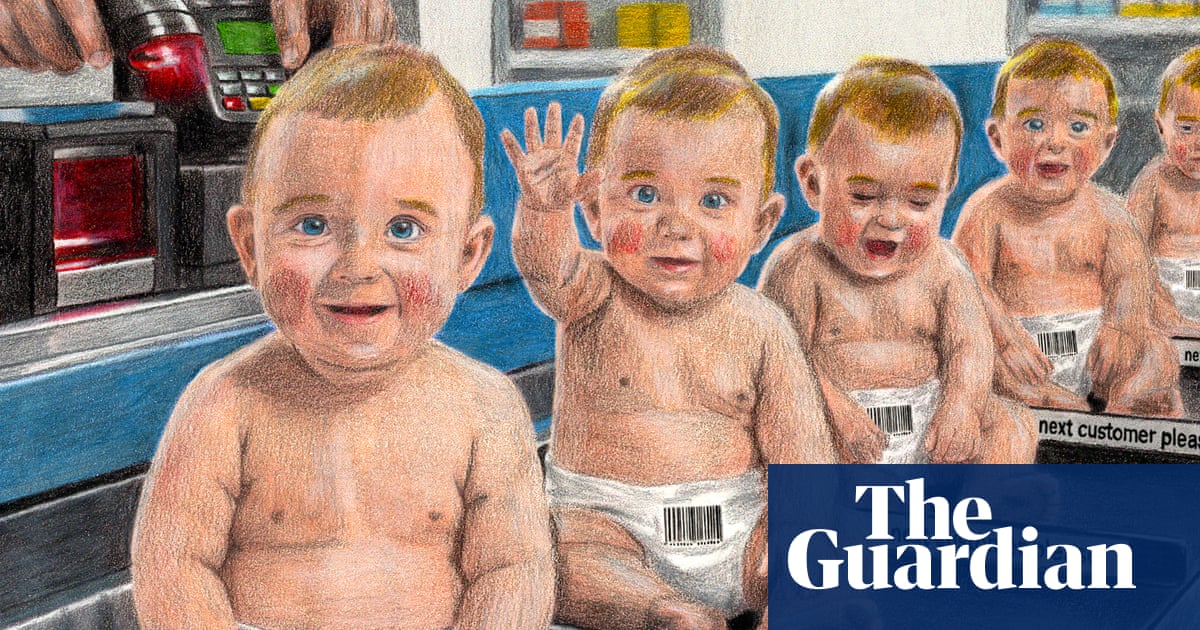
Are 60-Second Microdramas the Future of Hollywood, or the End?

I found this piece quite funny despite how depressing the topic is.

43-54 minutes read according to Firefox.

0

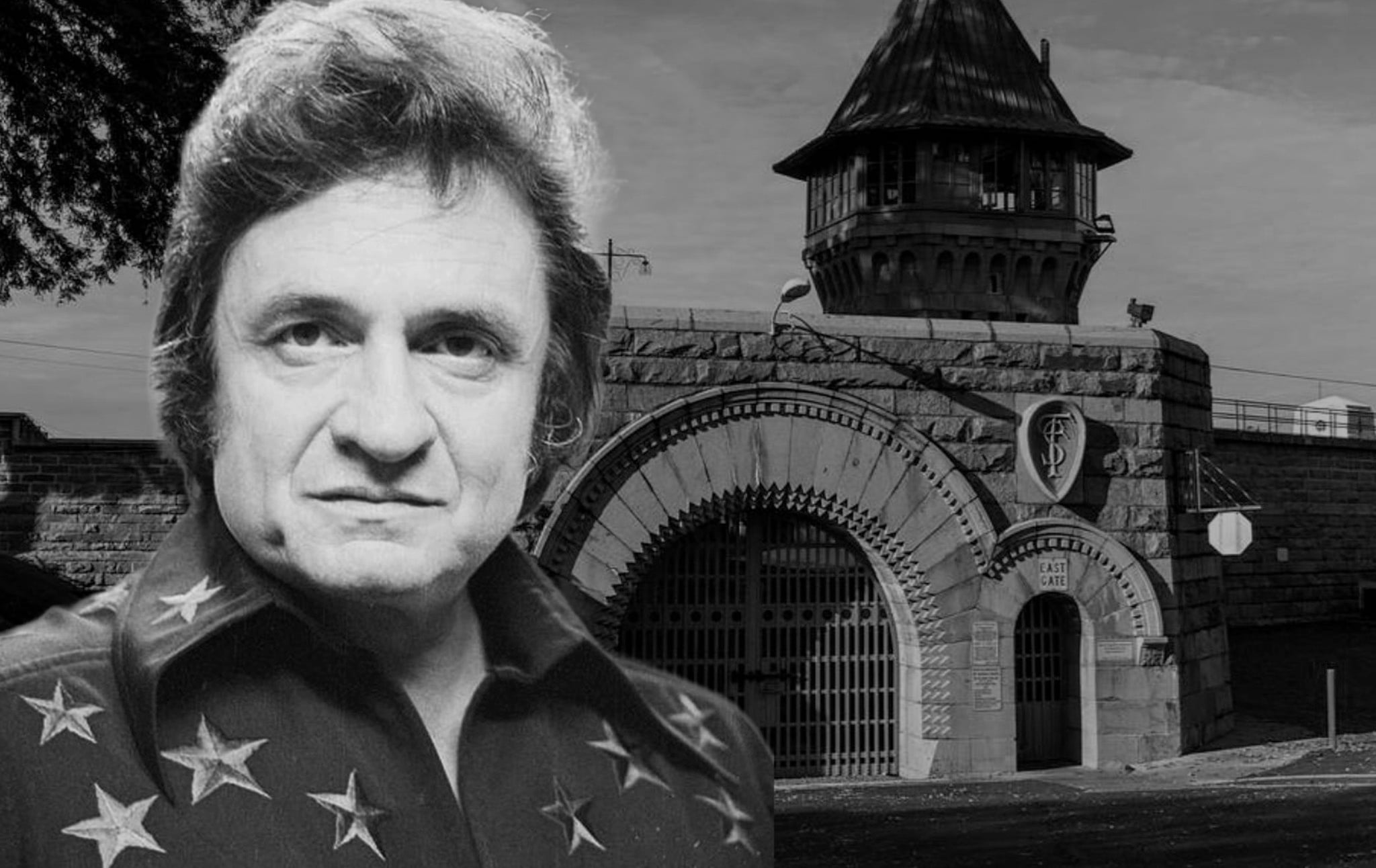
Johnny Cash, Prison Abolitionist
Johnny Cash, Prison Abolitionist www.currentaffairs.org
preview

RE: Nixon
Cash would soon confront Nixon in person, too. In 1972, the president invited him to the White House and asked him to perform a few songs; he wanted to hear Merle Haggard’s “Okie from Muskogee” and a novelty song called “Welfare Cadillac.” The first choice was an ironic one, since Haggard had been one of the prisoners in the audience at San Quentin when Cash played there in 1958. The fact that “Okie” existed was proof of the creative potential of the people right-wing politicians like Nixon wanted to keep locked away. Not only that, but Haggard had been serving a 15-year sentence for burglary, a crime Nixon would soon order to be committed himself. “Welfare Cadillac,” meanwhile, is a mean-spirited song about a scammer who buys a brand-new convertible with his government checks. “I don’t know those songs, but I got a few of my own I can play for you,” Cash reportedly said. It was almost certainly a lie. He knew Haggard personally, and was an obsessive student and archivist of country music, so it’s hard to believe he missed “Cadillac.” But before anyone could stop him, he instead played his classic “Man in Black.” The lyrics stabbed at Nixon twice: first over Vietnam (“I wear the black in mourning for the lives that could have been / Each week we lose a hundred fine young men”), and then over imprisonment (“I wear it for the prisoner who has long paid for his crime / But who’s there because he’s a victim of the times.”) The White House archives don’t record what Tricky Dick thought of this, but like the governor at Angola, he can’t have been thrilled.

RE: Contemporary Leftists

But even as things get darker, politicians and commentators on the progressive left, who ought to know better, have started to compromise on prisons and policing. In 2020, there was a real opportunity to change things. The U.S. saw one of the biggest popular uprisings in its history after the murder of George Floyd by Minneapolis cops, and opposition to incarceration as such entered the political mainstream. But in the six years that followed, there’s been a predictable right-wing backlash, and now people who called to defund the police and prisons in 2020 say the opposite.

In New York City, Mayor Zohran Mamdani once—quite accurately—said that “We don’t need an investigation to know that the NYPD is racist,” and that “What we need is to #DefundTheNYPD.” Today, he has apologized for those comments, and says that “I’ve made very clear that I do not believe in defunding the police.” Similarly, Representative Alexandria Ocasio-Cortez once criticized people who “cannot fathom what an abolitionist America looks like,” but has now distanced herself from those demands, saying that “rhetoric in that time is not rhetoric that we would use today.” Even Florida’s Angie Nixon, one of the most promising new voices on the left, insists that “I don’t want to defund the police. I want to defund Flock cameras.” Nixon added that she only wants to abolish “for-profit” prisons—which, as Current Affairs editor-at-large Yasmin Nair points out, “hold only about 8% of the entire prison population.” The remaining 92 percent, apparently, are out of luck.

The catch-all slogan for this line of thinking, obnoxiously enough, is “Woke 1 was crazy.” That is, if you think America’s prisons as they currently exist, or policing as it currently stands, are fundamentally unacceptable—well, that’s just wacky woke stuff from back in 2020, similar to linguistic tics like saying “Latinx” or “folx” with an X. You need to grow out of it. Being serious means accepting the status quo on imprisonment, or at least refraining from any active attempt to end it. In a controversial radio interview, labor historian and DSA member Eric Blanc summed up this position:

$4,300+ words

Alex Skopic filed 13 October 2026 in Criminal Punishment

currentaffairs.org/…/johnny-cash-prison-abolition…

RE: Nixon

Cash would soon confront Nixon in person, too. In 1972, the president invited him to the White House and asked him to perform a few songs; he wanted to hear Merle Haggard’s “Okie from Muskogee” and a novelty song called “Welfare Cadillac.” The first choice was an ironic one, since Haggard had been one of the prisoners in the audience at San Quentin when Cash played there in 1958. The fact that “Okie” existed was proof of the creative potential of the people right-wing politicians like Nixon wanted to keep locked away. Not only that, but Haggard had been serving a 15-year sentence for burglary, a crime Nixon would soon order to be committed himself. “Welfare Cadillac,” meanwhile, is a mean-spirited song about a scammer who buys a brand-new convertible with his government checks. “I don’t know those songs, but I got a few of my own I can play for you,” Cash reportedly said. It was almost certainly a lie. He knew Haggard personally, and was an obsessive student and archivist of country music, so it’s hard to believe he missed “Cadillac.” But before anyone could stop him, he instead played his classic “Man in Black.” The lyrics stabbed at Nixon twice: first over Vietnam (“I wear the black in mourning for the lives that could have been / Each week we lose a hundred fine young men”), and then over imprisonment (“I wear it for the prisoner who has long paid for his crime / But who’s there because he’s a victim of the times.”) The White House archives don’t record what Tricky Dick thought of this, but like the governor at Angola, he can’t have been thrilled.

RE: Contemporary Leftists

But even as things get darker, politicians and commentators on the progressive left, who ought to know better, have started to compromise on prisons and policing. In 2020, there was a real opportunity to change things. The U.S. saw one of the biggest popular uprisings in its history after the murder of George Floyd by Minneapolis cops, and opposition to incarceration as such entered the political mainstream. But in the six years that followed, there’s been a predictable right-wing backlash, and now people who called to defund the police and prisons in 2020 say the opposite.

In New York City, Mayor Zohran Mamdani once—quite accurately—said that “We don’t need an investigation to know that the NYPD is racist,” and that “What we need is to #DefundTheNYPD.” Today, he has apologized for those comments, and says that “I’ve made very clear that I do not believe in defunding the police.” Similarly, Representative Alexandria Ocasio-Cortez once criticized people who “cannot fathom what an abolitionist America looks like,” but has now distanced herself from those demands, saying that “rhetoric in that time is not rhetoric that we would use today.” Even Florida’s Angie Nixon, one of the most promising new voices on the left, insists that “I don’t want to defund the police. I want to defund Flock cameras.” Nixon added that she only wants to abolish “for-profit” prisons—which, as Current Affairs editor-at-large Yasmin Nair points out, “hold only about 8% of the entire prison population.” The remaining 92 percent, apparently, are out of luck.

The catch-all slogan for this line of thinking, obnoxiously enough, is “Woke 1 was crazy.” That is, if you think America’s prisons as they currently exist, or policing as it currently stands, are fundamentally unacceptable—well, that’s just wacky woke stuff from back in 2020, similar to linguistic tics like saying “Latinx” or “folx” with an X. You need to grow out of it. Being serious means accepting the status quo on imprisonment, or at least refraining from any active attempt to end it. In a controversial radio interview, labor historian and DSA member Eric Blanc summed up this position:

$4,300+ words

Alex Skopic filed 13 October 2026 in Criminal Punishment

currentaffairs.org/…/johnny-cash-prison-abolition…

0

Alexander Bevilacqua · Under a Cloud: How was slavery justified?

London Review of Books Alexander Bevilacqua · Under a Cloud: How was slavery justified? www.lrb.co.uk
preview

It can be hard​ to imagine a world in which people justified slavery, yet for most of recorded history enslavement met with little opposition.

It can be hard​ to imagine a world in which people justified slavery, yet for most of recorded history enslavement met with little opposition.

0

Where the Forest Went - Longreads

Longreads Where the Forest Went - Longreads longreads.com
preview

Hugh Maxwell’s walk transformed 2.6 million acres of wilderness into a grid for sale. A writer followed his trail to survey what remains.

Hugh Maxwell’s walk transformed 2.6 million acres of wilderness into a grid for sale. A writer followed his trail to survey what remains.

0

A perfect storm: how the super El Niño is devastating the fishing industry

the Guardian A perfect storm: how the super El Niño is devastating the fishing industry www.theguardian.com
preview

Peru’s anchoveta have made up about a 10th of the entire global commercial fishing catch since 1970, more than any other fish. A combination of warming seas and decades-long overfishing spells disaster

Peru’s anchoveta have made up about a 10th of the entire global commercial fishing catch since 1970, more than any other fish. A combination of warming seas and decades-long overfishing spells disaster

0

Has America Become the Scariest Country in the World to Visit? I Went Looking, and Part of Me Wishes I Hadn't.

Has America Become the Scariest Country in the World to Visit? thearchitectautopsy.com
preview

Five years of your social media just to visit the US on an ESTA, and 50,922 phone searches at the border in a single year with no suspicion needed. Part 1 of my Five Eyes series: who else gets to see it?

Archive: web.archive.org/…/has-america-become-the-scariest…

Five years of your social media just to visit the US on an ESTA, and 50,922 phone searches at the border in a single year with no suspicion needed. Part 1 of my Five Eyes series: who else gets to see it?

Archive: web.archive.org/…/has-america-become-the-scariest…

0

They War-Gamed Dimming the Sun. It Went Even Worse Than You Think

WIRED They War-Gamed Dimming the Sun. It Went Even Worse Than You Think www.wired.com
preview

wired.com They War-Gamed Dimming the Sun. It Went Even Worse Than You Think Karl Mathiesen 14–17 minutes

Oct 12, 2026 10:00 AM

Solar geoengineering could buy humanity time against climate change—or trigger a dangerous new arms race. A first-of-its-kind simulation offered a glimpse of what happens when geopolitics takes the wheel.

Photo Illustration of Man above the clouds controlling the Weather

Photo-Illustration: Jobanny Cabrera; Getty Images

When it comes to deciding the fate of the planet, Colleen Golja always thought science and reason would have a seat at the table. That was until one morning last September in London, when the climate researcher took part in the first in a series of war games. The goal: to prevent an uncontrolled global race to develop a technology aimed at cooling the planet but that comes with vast, unknown risks that could reshape life on Earth.

“I thought that would be such an easy thing. Like, we can all agree to do ethical research and make sure it’s for the better of all humans,” she told WIRED. “And boy, was I wrong.”

The simulation, titled Exploring Geopolitical Tipping Points and Climate Cooling Strategies, saw a couple dozen foreign-relations experts, scientists, military personnel, and former government officials from across the world convene in a meeting room at Queen Mary University of London. After making introductions over coffee and little yogurts, they sat at tables arranged in a square with the name of the country or organization each person was playing: national governments, climate NGOs and nonprofits, indigenous groups, and tech companies. Golja was assigned to provide technical advice to help participants make scientifically literate decisions.

The point of the game was to stress-test the world’s response to a group of prospective technologies known collectively as solar radiation modification. These technologies promise to reverse global warming by reflecting away a portion of the sunlight reaching Earth, for example by spraying particles of sulphur dioxide or some other manufactured substance into the atmosphere. The cooling effect of this kind of solar geoengineering is widely accepted. It would mimic the well-known impacts of large volcanic eruptions, which temporarily cool the planet by half a degree or more. But the fallout is less certain—and less equal. Some regions will suffer: Models predict drying in sub-Saharan Africa and more intense tropical storms in the Atlantic. The cooling effect would also last only as long as the geoengineering continued; after that the global temperature could shoot back up with wild and hard-to-predict effects.

Until recently, the idea of solar radiation modification was a speculative niche of climate science. That has changed fast. Private firms are exploring solar geoengineering as a commercial opportunity: Last year, a US-Israeli startup called Stardust Solutions raised $60 million, and in May it released details of a suite of new inventions it claims would give humans the ability to dial down the global temperature as desired. In August, Elon Musk, whose company SpaceX might be a candidate for delivering geoengineering interventions, threw his voice behind solar geoengineering, writing on X: “Space satellites to control temperature and massive geo-engineering will be needed or it will be game over.”

The world is going to have to make decisions about how to govern this technology much sooner than most policymakers imagine, Cynthia Scharf, a former UN advisor, told WIRED. “It’s not 15 years from now; it’s in the next decade, easily.”

It was against this backdrop that Danielle Young, an assistant professor in international relations at Leeds University, arranged the war game. Its setting was a hastily convened UN committee charged with coordinating the international response to developments in solar geoengineering. The game unfolded over simulated meetings set at three points in time: the present, September 2027, and September 2028. Each step ratcheted up the stakes, with the game creators introducing new advances in sunlight-reflecting technology. As in real life, no one knew all the facts, and players had to respond to events that were bringing the world closer to a full-scale attempt at deploying solar geoengineering tech, even when they may not have a full picture of what had truly occurred—or what any of the others were up to.

The first session set the tone. Distrust and disinformation dominated. As participants discussed rules governing outdoor experiments in an attempt to agree an international deal, players representing both the US and China told the group they could not sign a deal that constrained their pursuit of research considered to be in their “national interest.” Nor could they accept a deal that would see their superpower rival taking the lead technologically. Speaking to WIRED, Jeffrey Nielsen, a major in the US Army who played the role of a US national security attaché, summarized the position as “worse than no deal at all is any deal that favors China.”

Tensions escalated when the team running the simulation handed the Russian delegates an “intelligence report” indicating they had found a plane near the Bering Strait believed to be involved in a US geoengineering research program. The US team—which was indeed flying research missions—accused Russia of disinformation.

Meanwhile, the US became convinced China was also conducting research and developing its own program. Beijing’s representatives had tried to insert language into a mooted deal that would ensure no retroactive punishment for past experiments. Then, China approached a player representing SpaceX to float the idea of a technology-sharing program. In a private discussion away from the group, the SpaceX player immediately reported the Chinese approach to the US team. The US demanded an international investigation. The finger-pointing continued, and countries abandoned the talks. The Canadian representative called it a “humiliating defeat.”

At the end of the session, Nielsen was pumped. He’d busted China and derailed any prospect of a global deal. In the context of the game, he told WIRED, it was a “humungous victory” for the Americans. But Young, the researcher who designed the scenario, said the Chinese were not, in fact, conducting experiments in the game. Mutual suspicion meant all parties left the room believing the others were moving as quickly as possible to build their own geoengineering capability.

What played out in the first session reflected “the likelihood, in my opinion, of the geoengineering arms race,” says Nielsen, who clarified he was speaking to WIRED in a private capacity and not representing the views of the actual US government. Most experts agree it would take a superpower’s reach to ensure the safe passage of planes needed to deliver payloads of dust to the stratosphere in a geoengineering exercise. But neither the US nor China would lightly cede control over the global thermostat, says Nielsen, and distrust and poor communication are a significant risk: “Any action related to the issue by one actor can be perceived as malintent by the other.”

The threat of falling behind a rival is “a very strong driver of research and development of capability,” a former British diplomat with a background in national security told WIRED. “But that’s not at all the same thing as deployment.” There are similarities with nuclear arms dynamics—though solar radiation management, unlike nukes, has more obvious benefits as well as downsides, many of which are poorly understood. “There is an interdependence here,” says the former diplomat, who was not involved in the game and spoke on condition of anonymity to preserve relationships. “It’s not an inherently zero-sum game.”

Scharf, who represented the US government alongside Nielsen in the game, told WIRED a “scientifically transparent international collaboration” between China and the US “might be the best we can do in terms of fending off a very dangerous competition between the two. But I certainly cannot imagine that happening under the Trump administration.”

Compounding the problem is a lack of information. Geoengineering has historically been viewed with suspicion and often ignored by the scientific mainstream. One researcher told WIRED he’d experienced ostracization and barriers to academic progression owing to his interest in the technology; he no longer works in the field.

This lack of scientific interest greatly frustrated Golja, who spent much of the game watching as a bystander while political posturing dominated. Given the low level of knowledge around solar radiation modification and its side effects, she was one of very few experts who could help the participants understand the climate impacts of what they were discussing—yet she was largely ignored.“I was just so surprised about how little anyone actually cared about the science,” she says.

In the next sessions, the organizers tried in vain to nudge the talks back toward the realities of climate change. The participants received frequent notifications of climate disasters. These barely registered. Golja had prepared an “emulator,” a real-world demonstration of the best available science on how solar radiation management might affect weather patterns in different regions. It was ignored. If country representatives asked her anything, it was usually a leading question looking for data that would serve their ends or frame a rival’s proposal as reckless.

Then, during the last day, players were trying to find a way to respond to reports that a major plume of aerosols had been detected. In the game, this had been caused by a joint US-Saudi test of Stardust’s technology, though not everyone knew this. Finally, scientific advice was at a premium. Countries needed to know how to establish a monitoring network of satellites and other observational tools in order to prevent tests like this from happening in secret. A player representing an NGO called the Climate Futures Cooperative approached Golja, offering her money to fund such a scheme.

“Great. Fabulous. Why wouldn’t I do that?” she recalls thinking.

But it soon came out that the Climate Futures Cooperative was actually backed by the fossil fuel industry. The organizers had recognized that fossil fuel companies and major producing countries like the US and Saudi Arabia would have a clear interest in removing barriers from the development of a technology that could combat climate change without having to immediately stop burning coal, oil, and gas. The shadowy NGO spent the game subtly wrecking the vibe and carping about process—though mostly they just sat back and let it burn. Some players—Russia, the US, SpaceX and Stardust—figured out the CFC was not what it seemed, says Young. “But they assessed it was to their benefit and didn’t draw attention to it.” Then the CFC chose its moment to offer money to Golja, only to crater her credibility, isolating and fragmenting the voice of science in the room.

“It was a whole mess,” says Golja.

That final lesson in fossil fuel realpolitik was about all Golja could endure. By the end of the last day, she was in tears.

At no point did the countries in the game agree to a deal, despite multiple proposals being put forward. European countries and Canada tried to build support for safeguards and open scientific research, but the talks constantly got bogged down by delay tactics and veered into tense showdowns over duelling strategic interests. In their final report, the researchers running the simulation—whose work was sponsored by the UK government-funded Advanced Research and Invention Agency—concluded that “strategic competition and state sovereignty drove the simulations, not climate concerns.”

Simulations like this one are not supposed to predict the future. The outcomes depend on the design of the game and the relative personalities and experience of the players. Many of those in the room lacked first-hand diplomatic and national security experience. The UN forum, which organizers selected as the game’s setting, may also not be as effective as talks between smaller groups of major countries. But the experiment in London echoed and refracted through the real world, during and after the months it was running.

In March, two papers from conservative US think tanks urged the Trump administration to take the lead on solar radiation modification and counter China’s threat. One memorably invoked a new, MAGA-coded term: “Weather sovereignty.” This month, the Observer newspaper in London revealed that the UK Ministry of Defense had paid a deep tech security consultancy to conduct research into sunlight reflection. Then, last week, the British government released its first official policy paper on the field, backing further research but stating firmly that it did not support deployment and “does not plan to do so.” Stardust has continued its lobbying of the US and governments around the world; CEO Yanai Yedvab told WIRED its job was getting easier as, unlike before, “the majority of policymakers … are already aware of this technology.”

Stardust has always maintained that it will not conduct large-scale outdoor experiments, let alone full deployment, before global governance is in place. “We are developing a very powerful tool,” Yedvab says. “When you develop this kind of powerful technology—and you have many precedents—national interests will play out. We’re not naive about it.”

Meanwhile, drivers of the climate crisis are intensifying. During the time span of the game, efforts to curtail the use of fossil fuels were being undermined by rising energy costs and political hostility. Week after week, an incredible summer of drought and heat pounded Europe. In the final week of August, the collapse of a glacier on the Tibet-Nepal border fulfilled the prophecies of decades of climate scientists, killing more than 1,450 people.

In the months since the simulation ended, Golja has reevaluated many things. On a corkboard behind her desk, she has pinned up a note to herself, laying out a vision for life in a world ruled by narrow geopolitical self-interest rather than science, evidence, and reason. Her answer: She plans to return to the small coastal town where she grew up in Connecticut and use her expertise to help local climate groups build the seawalls and coastal erosion buffers they will need to cope with the inevitable. “To try and make a difference where it feels like I actually have traction,” she says. After what she saw, pursuing science in the hope of informing global decisions no longer held as much appeal. “Now it feels a little bit more personal.”

In your inbox: Go inside the world of digital security with Kernel Panic

Karl Mathiesen is an investigative reporter who has worked for Politico, The Guardian and The Observer. His work has won national and international journalism awards. He is based in London. … Read More

Read More

0

How A Fake Disease Known As Syndrome K Saved Dozens Of Jewish Romans During The Holocaust

preview

How A Fake Disease Known As Syndrome K Saved Dozens Of Jewish Romans During The Holocaust

As Nazi forces occupied Rome during World War II, doctors at Fatebenefratelli Hospital took in Jewish residents and diagnosed them with Syndrome K, a “highly contagious” disease they invented to keep the Gestapo out of the building.

https://allthatsinteresting.com/syndrome-k

@longreads

#uspol #fascism

0

Ever felt like something is very wrong with the world but can't put it into words? Here are those words.

Degeneracy is a Symptom henryfudgeofficial.substack.com
preview

Degeneracy is a Symptom: On Conspicuous Despair, the Ponzi stage of being alive, and why your grandparents are wrong about you.

tl;dr: Wealth consolidation and oligopolies have stagnated economic growth. This you probably know, but the author amazingly shows that the rise of “social degeneracy” is merely a symptom of this problem. He tracks this phenomenon around the world and throughout history. We either tackle the problem early and directly or–my words, not his–the rivers will flow with blood.

0

The end times fascists are plotting their escape from our world. Our mission is clear

the Guardian The end times fascists are plotting their escape from our world. Our mission is clear | Naomi Klein and Astra Taylor www.theguardian.com
preview

cross-posted from: lemmy.ca/post/70841923

And among tech oligarchs, Bezos is all too typical. Peter Thiel, for one, once revealed that his three best ideas for achieving true freedom are “cyberspace”, “outerspace” and “seasteading” (the idea of building new countries on floating oil rigs). In other words, this man, whose enormous wealth affords him access to the most spectacular settings our planet has to offer, actually believes these three cold, dead places are superior to the Earth we have, verdant and alive.

Something similar seems amiss with Elon Musk, a man who seems to look up at the wonders of the night sky and see only opportunities to fill that inky unknown with his own space junk. The venerable novelist Joyce Carol Oates highlighted these apparent limits in the fall of 2025 when she roasted him ruthlessly on his own platform, X.

“So curious,” she wrote, “that such a wealthy man never posts anything that indicates that he enjoys or is even aware of what virtually everyone appreciates – scenes from nature, pet dog or cat, praise for a movie, music, a book (but doubt that he reads); pride in a friend’s or relative’s accomplishment; condolences for someone who has died; pleasure in sports, acclaim for a favorite team; references to history. In fact he seems totally uneducated, uncultured. The poorest persons on Twitter [X] may have access to more beauty & meaning in life than the ‘most wealthy person in the world.’”

The observation clearly got under the tech baron’s notoriously thin skin: he called her “a lazy liar” and began posting approvingly about various movies to prove Oates wrong.

0

A Man Built a Connecticut Castle to Host a Harem of Women. Then He Invited the Wrong Guest.

Slate Magazine A Man Built a Connecticut Castle to Host a Harem of Women. Then He Invited the Wrong Guest. slate.com
preview

slate.com A Man Built a Connecticut Castle to Host a Harem of Women. Then He Invited the Wrong Guest. Scaachi Koul 22–27 minutes A big castle has Jon Ronson, Andrew Tate, Sam Altman, and Sean O’Malley in it.

Photo illustration by Slate. Photos by Eamonn M. McCormack/Getty Images, Alon Skuy/Getty Images, Chip Somodevilla/Getty Images, Jacquelyn Martin/ Pool/Getty Images, and Getty Images Plus.

This summer, two trials amassed crowds of men and women, respectively, who came to support two different types of defendants. In Plymouth, Massachusetts, women in pink tops and dresses stood outside the trial of Lindsay Clancy, the woman charged with murdering her three children. She claims she did it because of postpartum psychosis, and her case ended in a frustrating mistrial; it’s still to be determined if she’ll be tried again. Meanwhile in Miami, young men in polo shirts and baseball caps were doing pushups outside of the trial for Andrew and Tristan Tate, who are facing extradition to the U.K. on charges of rape, sex trafficking, and assault.

These seem like decidedly gendered proceedings, but in reality, both are dominated by discussions about men. The Tate case is about whether we can use the justice system to punish the most heinous form of masculinity, a measure of how much the courts care about the treatment of women. But the Clancy case too has ended up being all about men: The judge declared a mistrial all because a single, male juror was the holdout. While the other 11 jurors of all genders were convinced by her mental health defense, he wasn’t.

Men still rule the world, so we keep trying to make sense of them. Explorations from every possible angle of “the manosphere” are now routine in all media: the Liver King rucksacking on his YouTube channel where he talks about his “ancestral lifestyle” while eating organ meats and lying about taking steroids, Louis Theroux hanging out with twentysomething influencers on Netflix who largely call him a cuck for 90 minutes, feminists activists online trying to beat back the surge of angry straight men in the shadow of Gloria Steinem’s death. The latest addition is a book from a both likely and unlikely source, a reporter who’s always been able to hide in plain sight, who can get along with the guys without being co-opted by their ideology.

“It’s for men like me. And women like me!” Jon Ronson tells me in his immaculate downtown Manhattan apartment. He lives in upstate New York most of the time, with his wife, journalist Elaine Patterson, and their new puppy Bonnie, now that his 28-year-old son Joel has moved out on his own in Brooklyn. Ronson has been stateside for more than a decade now, even though he’s more “ubiquitous” in the U.K. When I ask him if “ubiquitous” is a Britishism for “famous,” he gets bashful, trying to shrink back into his T-shirt. “I’ve been around a long time,” he says.

Ronson’s new book, The Castle: Adventures in a World of Unraveling Men, follows his investigation into Chris Mark, the 60-year-old heir to steel industrialist Clayton Mark. In an effort to make himself feel more like a king, Mark built a castle in Woodstock, Connecticut, with family money. His plan was to host a harem of women—a pretty typical goal of many of the guys in the manosphere—in the castle. Mark eventually wanted to film a reality-show series in the castle called 101 Princesses, which would chronicle his attempt to find an obedient, much younger girlfriend (or two, or three). “I’m the lord,” Mark says. “I’m looking for my queen, and I’ve got 101 princesses to choose from.”

Joel accompanied a friend to the castle, where they were asked to participate in the show. He told his dad about his strange night and Ronson began investigating. “It’s not a good idea to lure a journalist’s son to a castle of mysteries,” Ronson says in the live stage performance of his book, now touring through the U.K., “because I decided to visit the castle myself.” Ronson eventually speaks to the women in Mark’s life, and finds out that he’s allegedly been abusing them, sexually and emotionally, sometimes holding them captive.

The Castle is part page-turner and part didact on the mansophere. Alongside Mark’s story, Ronson looks at a host of men who have lost their purpose in the world, from YouTube “success” stories to Armie Hammer and the cannibalistic sex play that torpedoed his career. (Much like Mark, Hammer comes from a family of uber-rich industrialists and has struggled to find purpose as an heir.) There have been plenty of examinations of the manosphere, but what Ronson gets especially right—and wouldn’t you need an anxious, bespectacled British guy to be the one to define it—is the role that shame is playing in bringing men into this space and keeping them there.

The thesis of his book is that men are becoming more misogynistic, more aggressive, and are seeking more worldly dominance and control because they’ve lost their sense of purpose. Men were once relegated to supporting their families, but women are starting families later than ever and are more often becoming the breadwinners. “The men in this book are from very different walks of life … but they had something in common,” Ronson writes in The Castle. “They were men out of time. They couldn’t keep up—and in some cases didn’t want to keep up—with a dramatically changing world.”

That loss of purpose for men around the world has been written about. What Ronson adds to the conversation is a deep understanding of male shame. He thinks what’s driving these men’s misbehavior is a renewed sense of inhibition, a lack of proportional shame. “Refusing to feel ashamed was healthy if the shaming had been inappropriate,” Ronson writes, “but people started brushing the shame off no matter the seriousness of their wrongdoing.”

Ronson isn’t exactly a paragon of traditional masculinity; “90 percent of men and women identify as strongly or quite strongly their gender,” he tells me. “And I’m one of the 10 percent who doesn’t. I just don’t think about it.” But he is still a man, and so he has access to spaces and conversations that only other men are privy to. The manosphere is compelling, and the figures within it—like Tate, like Mark, like the president—are frightening enough that we keep trying to understand it as a means of flattening it down.

But this greater understanding, or at least greater awareness of what the problem is, still doesn’t provide a solution. Ronson wasn’t aiming to. He isn’t a representative of the manosphere; he’s just a willing interlocutor. “I see this as something much stranger and bigger and odder and more surprising than a manosphere book,” Ronson says. “But in the midst of all this, it’s speaking to this weird moment of men not knowing their place anymore. It’s not tub-thumping for men, nor is it self-flagellating about men.” The Castle isn’t a polemic, a guidebook, a how-to, or even a how-not-to. It’s a reminder of our perplexing, alarming, and steadily worsening status quo. If you have any concerns about how women are treated in or out of the manosphere, The Castle is a five-alarm fire.

It’s a good thing Ronson is such a funny writer; it’s a decidedly unfunny book.

The Castle marks Ronson’s ninth book, all of which tell stories of extreme people or extreme factions of our culture. His works include 2004’s The Men Who Stare at Goats, an investigation into the U.S. Army later adapted into a 2009 George Clooney movie. In 2011, he published The Psychopath Test, a look at the concept of psychopathy and the mental health industry, and in 2015, he authored So You’ve Been Publicly Shamed, featuring interviews with the victims of online public disgraces. Knit together with The Castle, Ronson’s oeuvre is an investigation into what people—namely men—do when they feel devalued, forgotten, and insulted.

The cover of The Castle.

Slate receives a commission when you purchase items using the links on this page. Thank you for your support.

As he does in all his books, Ronson gets his sources to say and admit their ugliest and truest thoughts in The Castle. Meeting him, you can see how he gets the goods. He’s disarming and gentle—when he sees me off after our interview, he raises his arm tight by his side, his hand disappearing into the sleeve of his sweatshirt, and gives me a perky wave. He answers my calls and greets his onstage audience with a singsong “Hiiii-iiii.” At his home, he’s wearing a zip-up hoodie and a teal T-shirt with a hole in it, indoor Crocs, and his trademark Dilbert-round glasses. He shows me the only magic trick he knows: pretending to separate his thumb from his hand, which he does serviceably, to my delight.

Ronson looks a little like Beaker from the Muppets; he has an inherently trustful but worried face and a tender voice. No wonder he managed to get all these people to tell him about their worst instincts in The Castle. Wouldn’t you tell all your secrets to Beaker if he asked?

Ronson is staying in Manhattan to kick off the promotion, and it’s the first time he hasn’t been anxious on the eve of a book release. “God, I remember when Them came out in 2000, I was on my way to give a talk and I was so stressed out—I haven’t said this to anyone before—I was crying in the back of the taxi,” he says. “Men Who Stare At Goats, I was worried. Psychopath Test, I was worried. So You’ve Been Publicly Shamed, I was worried.”

Ronson runs a hand through his stick-straight hair, making it stand on end even more. “This is the first time I’ve had a book come out where I’m not worried.”

Maybe he should be: Mark was far from a compliant source through The Castle. Even while he gives Ronson access to his home and his harebrained schemes, while he tells him about his plan to entrap young women on his reality show where they treat him like a king, he also digs at Ronson with constant hostility. He demands Ronson sign a nondisclosure agreement (which he refuses to do, saying he’s never signed one and isn’t going to start now with some guy in his castle), he threatens him with legal warnings, and he even says his friends will come after him. “I’m going to be sending you some of my friends that were in prison for killing somebody,” Mark texts Ronson. “Do not mention anything negative about the castle because this guy will get really upset … He just got out of jail like a week ago and has been in there for like 15 years.”

Mark tells him that “Carlos and Brandon” are on their way to meet Ronson in person, ostensibly to fulfill Mark’s many threats. “Yes,” Ronson writes in The Castle. “This is good.”

Ronson is even more equipped for manosphere discourse because of his reporting in So You’ve Been Publicly Shamed. In that book, Ronson writes about Max Mosley, the former president of the Fédération Internationale de l’Automobile for Formula One. He’s also the son of a fascist leader. In 2008, he was caught in what was often described as a “sick Nazi orgy,” which Mosley said was merely consensual sadomasochism, a private party that didn’t hurt anyone and was very much not Nazi-themed. Mosley survived the scandal—in fact, it made him more popular than ever, especially with anti-kink-shaming types. Before he died, Ronson asked him why the scandal didn’t fell him completely in the public eye. “He emailed me a couple of weeks later and said, ‘A shaming is a pact between a shamer and a shamee, and as soon as the shamee steps out of the pact by refusing to feel ashamed, then the whole thing crumbles,’ ” Ronson says. “That turned out to be the most prophetic moment in the book, because we saw this wave of unashamedness sweeping across society, which I think was, to a large extent, a kind of response to the overuse of shame as a weapon.”

Ronson compares 2026’s shame culture to a hospital superbug—a virus that’s gotten sanitized so much that it becomes impervious to treatment. This might sound like Woke 1 opprobrium, but is maybe more about how the internet gamified piling onto one person for their perceived failures. Ronson writes about Greg Chism, a former lawn-care YouTuber who started to make real bank when he featured his daughters in his increasingly bizarre videos where the three of them pretended to be babies. “Greg was surrendering his life to YouTube and its algorithm, to what it indicated Greg should be,” Ronson wrote in his New York Times Magazine story about Chism. Chism wasn’t a part of the manosphere, but he was a part of the machine that helps weird internet detritus float to the very top. He made those videos to make more money, to turn his hobby into a real career, but he followed a dark path to success. “That’s the part of the book that I personally really connect to,” Ronson says. “All of this stuff about men feeling tossed around in a sea of conflicting ideologies as to what being a man actually means.” Chism’s is a story that could have easily fit in So You’ve Been Publicly Shamed; in The Castle, it’s a story about the long tail of public shaming.

“What you’re seeing now is a further mutation from unashamedness into disinhibition,” Ronson says. “When society’s rules abruptly change, institutions collapse, structures collapse. Even if they’re institutions that were bad, it still has this bizarre impact on people’s inner lives.” As men (and everyone else) unburden themselves from perhaps unfair modalities of shame, we’ve seen the brutalizing side effects. “If society’s rules don’t mean anything to you anymore for whatever reason, then it enables some people to just rip off their faces,” he tells me.

Further enabling everyone is A.I., designed to compliment and never push back. If The Castle feels like the natural descendent to Publicly Shamed, it seems likely Ronson’s next book will be about LLMs. “So many items on the psychopath checklist apply to ChatGPT: the lovebombing, the obsequiousness, the aping human emotion,” Ronson says. “The pathological lying and not being the slightest bit embarrassed. It has no shame.”

I haven’t read or watched anything about the manosphere that’s left me with much hope. Earlier this year, I watched British journalist (and friend of Ronson’s) Louis Theroux in his Netflix documentary where he haplessly follows around some of the more condescending and anti-feminist among manosphere influencers like Sneako and HSTikkyTokky, listening to them belittle him and all the women around them. It’s a brutal watch, a cringe-worthy display from these guys flailing around in public, searching for some meaning in their lives.

The Castle is similar in some regards: It’s tough not to read it with dread. At the end of the book, there are no consequences for Mark, including for his harassment and abuse of his girlfriend, Leanne. Increased Immigration and Customs Enforcement operations across the country seem to have led to a slowdown in the investigation into Mark. He eventually went to Argentina, where he was investigated, but he was determined to be “not criminally responsible” for his crimes with women because of an unnamed “psychiatric disorder” which prevented him from understanding that he was committing crimes in the first place. He still owns the castle, and the American investigation into him continues.

But in person, Ronson is much more optimistic about the future of the manosphere. He’s finding hope in an unlikely place: the UFC ring. Last month, he went to the White House for the UFC match on the South Lawn. “The UFC definitely tries to sell itself as a free-speech utopia,” he says. “But I saw occasions when it was like real life was snapping back to put them back in their place.” Take the example of MMA fighter Sean O’Malley—he’s talked at length about his one-sided open marriage with Danya Gonzalez, where he’s allowed to sleep with other women while she isn’t permitted to sleep with other men. “He revealed to me that Danya said, ‘No more sleeping with other women,’ ” Ronson says. “He looked so baffled at this change in his fortunes. I thought, OK, maybe the future is Danya. It’s people putting their foot down.” But as usual, it’s women—and access to us as caregivers and sexual objects—that forces the pendulum to sway even an inch back toward gender parity.

To me—a woman, ugh—this modest swing back doesn’t provide me with a lot of optimism for the future of gender relations. But maybe I’m not acknowledging even the small wins of getting a man to change his mind, and maybe I’m also too unwilling to see their vulnerabilities on display. Like everyone else in the world, I’ve been conditioned to accept a fundamental “truth” about gender: that vulnerability from men is much tougher to tolerate than it is from women. “What do you think about the chapter of the book where it turns out there’s occasions when men do exactly what you’re saying men should do: take off their masks, be vulnerable towards women?” Ronson asks. “Then they notice the women are recoiling in disgust.” I know I’ve recoiled from it before too, unfairly. Ronson cites Brené Brown in his live show, saying that most of us “fear” male vulnerability because it’s too strange and uncomfortable for people of all genders. “It’s a kind of primordial revulsion when they’re too far from their role as a stone-cold provider,” Ronson says. “But exactly the same thing is true the other way: All these male feminists get really pissed off when women they’re dating are doing well. It’s both groups.”

Near the end of our interview, Ronson starts asking me about my experiences with masculinity, which have been, in a few words, not very good. But even I, a notorious man-hater, have a soft spot for men and the ways they love each other. Last year, I went to the Oasis concert at Wembley Stadium in London, and saw firsthand what non-toxic masculinity can look like: blokes hugging, singing, crying, kissing each other and calling each other a cunt. It was beautiful. These are, it seems, the kinds of guys Ronson is more in tune with than the men of The Castle. (He even knows one of the Gallagher brothers; their kids went to the same school.) It makes sense he would possess more hope for the men of the world than I ever have.

“You’re more in this world than I am: Is there an argument that the Oasis crowd is more the norm? And the guys throwing dildos [at WNBA games] are the outliers?” he asks me. I think he might be right. As usual, though, a minority of men remain the loudest, and the scariest.

Before The Castle’s U.S. release, it came out in the U.K. and was an immediate bestseller. “It’s the only time it’s happened to me other than when I rode the George Clooney wave in 2009,” he tells me, beaming. “So this is a No. 1 without movie-star help.”

At Ronson’s publication-day event at Brooklyn’s Bell House theater, the crowd was unexpectedly made up of mostly straight couples. In line for a drink or to get a seat inside, everyone seemed paired off, and to my eye, they all seemed like the stereotypes of the straight couples that Ronson writes about. In front of me, a lug of a man was drinking a beer with his dainty wife; she was in a brown polka-dot dress, and he was wearing a T-shirt and shorts. Behind me, a first date or a new crush seemed to be unfurling: a young man rushed through the swell of rain outside to meet her, and he just couldn’t stop sweating even once inside. “I don’t know anything about this book, but I’ll definitely read it,” he said, T-shirt drenched.

What to make of a Ronson event acting as a hot date night for white Brooklyn intellectuals? Is his intended audience the elder–Gen X women sipping white wine on folding chairs or is it the men he’s writing about in his book, the ones who so sorely need rescuing? “I don’t think the manosphere men are going to read this book,” Ronson tells me. “They’re going to see me as this beta cuck. I guess that was the pitfall as I was writing it: I wanted this to be a book written for women as well as men, because it’s a fun page-turning mystery story.”

On stage, Ronson is dressed in a more formal version of his home wear: a crewneck layered over another crewneck, gray pants, black Hokas. His show is just over 90 minutes, and takes the audience through him meeting Mark, going to the castle, and a few of the book’s digressions. But what the stage show does that the book cannot is show the audience how fucked up this world is. There’s a black-and-white photo of the castle printed in The Castle, but that doesn’t help you understand the building’s scale quite like a blown-up high-res photo projected onto a 7-foot screen at the front of a performance hall. Everyone gasps at the sight of the monstrosity, along with Chism’s bizarre YouTube videos and audio recordings of Ronson’s more perplexing interviews. The visuals remind the audience of how gross and strange this story is; it’s less about the politics of the manosphere and more about the repugnance of it all. It’s scary.

When Ronson projects one final image of the inside of Mark’s castle—an underground double-hot-tub grotto, lit by hideous purple lights as if Hugh Hefner were hosting Grimace for the evening—everyone groans. It’s spooky and discomfiting, but above all, god, it’s ugly.

After Ronson’s set, he takes some questions from the audience, all of which come from younger women. And as the prophecy foretold, the first wasn’t really a question so much as a comment. “The focus is on these guys,” she says. “And the women are just throwaways.”

Ronson told her that in the book, the women aren’t dashed-off characters, which is true. But Ronson is painted in this corner now no matter what he does: He’s still a man offering a view of masculinity to a mostly feminized audience. The men are here, but they’re here with their wives or girlfriends or besties. They’re listening, but not necessarily asking questions. “This book would’ve been worse if women weren’t interested in reading it,” he tells me after his event. “My crowd is a lot of women—thank god.”

After Ronson’s event, I left the venue behind two people who seemed to be transitioning their friendship into something more. “Do you want to get another drink or call it a night?” the woman asked the man, who practically tripped over himself to say yes when she gently touched his arm.

“There’s a bourbon bar up the street,” he said, following her out the door. He was taking her to a restaurant nearby where you can order a burger with a syringe of special sauce. I walked by, and the whole place was bathed in reddish-purple lights, mostly empty except for a few people, on a rainy Tuesday night. It looked, actually, much like the castle’s underground double-hot-tub grotto.

0

Ivanka Trump—and Everyone Else—Sees One European Country as the Next Mediterranean Tourist Mecca. I Went to See Why People Are So Mad.

Slate Magazine Ivanka Trump—and Everyone Else—Sees One European Country as the Next Mediterranean Tourist Mecca. I Went to See Why People Are So Mad. slate.com
preview

slate.com Ivanka Trump—and Everyone Else—Sees One European Country as the Next Mediterranean Tourist Mecca. I Went to See Why People Are So Mad. Imogen West-Knights 33–41 minutes

People on a beach framed as if seen through the bushes, sinisterly.

Adnan Beci/AFP via Getty Images Politics Ivanka Trump’s Luxury Disaster Like everyone else, America’s first daughter sees one European country as the next Mediterranean tourism destination. But when she tried to get involved, everything exploded.

Sept 08, 20265:40 AM

It is difficult to imagine what it is like to have nearly unlimited money. What it might be like to arrive at a Mediterranean island on a yacht and to think that the next logical step is that this island should belong to you. So you can develop it into your next real estate project, of course.

But that is the life that Ivanka Trump leads. In May, she explained such an experience on a podcast that interviews the world’s “greatest living founders”: “We were on a friend’s boat, and we stopped for a swim. Effectively, that’s how we found it. We swam to the island, we went on a hike barefoot all the way up to the top, and we were just captivated. And it stayed with us ever since, and over the course of many years, we developed the opportunity to help realize its potential.”

The “potential” of this Albanian island, called Sazan, is to become a luxury villa resort, and Trump has embarked upon this real estate project with her husband, Jared Kushner. The endeavor, worth $1.4 billion, would render many acres of Albania’s coastline unrecognizable. Because in addition to what the couple wants to build on Sazan, they are proposing to build 10,000 luxury villas on the Zvernec peninsula, which lies opposite the island. Never mind that the peninsula is currently an ecologically protected area known as the Vjosa Narta, including a river delta and lagoon that is home to hundreds of species of birds, including flamingos. They are doing it anyway, with the blessing of a government whose motivations have, shall we say, come under question.

That’s the one bit of trouble with Ivanka Trump’s little project: The people of Albania are very, very angry about it. The development has provoked fury all summer and sparked the biggest outbreak of civil unrest since communism collapsed in the country 35 years ago, in what has now been dubbed, relevantly, the Flamingo Revolution. Even the European Union has gotten involved, and not on the side of the trailblazing couple. The world has never seen a movement quite like this.

The uprising is a sight to behold, and this summer I went to Albania and beheld it. What I found is that this is not just a protest of one project in one area by one couple of American elites. Albania is a country on the cusp of becoming a tourist mecca, the next hot spot for international beachgoers to descend upon in their quest to soak up the sun and dip in the turquoise Mediterranean Sea. But the people who already live there have been scarred by decades of communism and now decades of the dodgy capitalism that replaced it. A dynastic couple calling in their orders for the country’s future from Florida is just the beginning. In Albania, I found a story with roots that go much deeper than anything that has happened this summer.

Lots of people are gathered and one is holding a large inflatable flamingo; others have signs in Albanian. Adnan Beci/AFP via Getty Images

A routine was established over this summer for many in Tirana, Albania’s capital. Every single night at 7, once work is over and the peak of the day’s fierce heat is done, city residents turn out on the streets to protest. As I left my hotel, the television in the lobby was playing rolling news coverage of the protests. I told the receptionist at the front desk where I was going, and she said she felt guilty that she couldn’t be there herself, because of her evening shift. “But in my heart, I am there,” she said, pointing to the screen.

I met up with Olsi Nika, the founder of the environmental organization EcoAlbania, at a café on Tirana’s central Skanderbeg Square, where he was treating his 6-year-old son to a fior di latte ice cream ahead of that evening’s protests. EcoAlbania and other environmental groups have been fighting this fight since 2021, when rumblings first emerged about the sale of Sazan island and the Vjosa Narta area. What tipped this into a national movement, at the end of May this year, was a video clip taken just outside Zvernec village. Locals came out to the edge of the construction site, a fenced-off area they’d been given no warning about, and made their unhappiness about construction on their land known. The security protecting the site dragged an older local resident to the ground. It was caught on camera and went viral across the country. After that, not just a small group of dedicated environmentalists was aware of the development. Everybody was. And they were furious about it.

Olsi and his fellow activists have reasons to be hopeful that they might actually stop all this from happening. They’ve already succeeded in persuading the government to designate the Vjosa Narta river area as a national park. That happened back in 2023, after nine years of campaigning, and halted the construction of a hydropower dam that would have damaged the ecosystem. Now this new battle has prompted a lot of additional support, though Olsi still has the specificity of a long-committed activist. When I referred to the luxury resort as a tourism development, he corrected me: “It’s just making money, it’s not about the development of tourism,” he said. That’s one thing my time in Albania clarified to me: Albanians aren’t necessarily anti-tourism. They’re anti–this tourism. “It would be fine if it wasn’t in protected areas, but they want to urbanize—badly, in my opinion—the last pristine river delta in the Mediterranean,” Olsi said.

We arrived at the demonstration, which had gathered near the Pyramid of Tirana—once a museum to Communist-era leader Enver Hoxha and now a cultural and community center—at a quarter past 8. On the first days of protest, there were about 100,000 people crowding this central street, which stretches from Skanderbeg Square down to the Polytechnic University of Tirana, a distance of almost a mile. This was the 49th day of consecutive protests, and there were still many thousands of people turning out each night, draped in Albanian flags. They’re in it for the long haul—there is a sense of orderliness, of anger and energy being spent judiciously to preserve stamina. A woman, an architect in her 40s holding a Styrofoam lawn flamingo on a stick, told me she’d come every single day so far. I asked her how long she was planning to keep coming down. She blinked at the question. “Until we see the difference,” she said.

These protests have been overwhelmingly peaceful—family-oriented, even. At the edge of the crowd, a clutch of children were all drawing flamingos on a long piece of cardboard on the ground, and many people held pink flamingos on sticks. Groups of young people paraded around carrying banners with slogans such as “New Albania” and “Edi Rama Resign.”

What was noticeably absent was any reference to Ivanka Trump.

Maybe that was an intentional rebuttal to the way the powers that be have attempted to dismiss the movement. Edi Rama, Albania’s prime minister, approved the project and welcomed it with open arms and has tried to pass off the objections as stemming from anti-Trump sentiment. “If it were not Jared Kushner … nobody would give a shit about flamingos, about Albania, about nothing,” he told the Financial Times in June. On the ground, though, the people protesting in Albania are against something much bigger. There are no anti-Trump signs, no anti-Trump slogans. The Trump connection may have attracted international attention, but Jared and Ivanka are almost beside the point.

In fact, more so than practically anywhere else in Europe, sentiment in Albania toward America is pretty positive. Their loyalty runs deep: Woodrow Wilson defended Albanian independence from the Ottoman Empire in 1919, and in 1999, the U.S. intervened in the ethnic cleansing of Albanians in Kosovo led by Serbian war criminal Slobodan Milosevic. Many here see America as a lighthouse of Western democratic values. “Because of America, Albania exists,” as one local put it to me. “For the last 100 years, they have been supporting us.”

I gradually began to realize that despite the flamingo as an organizing symbol, these protests aren’t even really about Sazan or the Zvernec development. That was just the last straw. At the edge of the crowd, I ran into Redi Muci, a member of the Albanian parliament for the left-wing party Lëvizja Bashkë, which translates as the “Together Movement,” and the party’s leader, Arlind Qori. “The main reason why Albanians are protesting is basically an economic model of very autocratic ruling of one man, Edi Rama, who is surrounded by a group of economic oligarchs,” Muci said. Yes, the idea that Ivanka Trump could waltz in and buy an island that is actually a nationally protected ecological treasure thanks to corruption sticks in the craw—but Albanians have been living under corruption at a much larger, societal scale for years, thanks to their own leaders.

“One of the most popular slogans in this protest has been ‘Albania is not for sale,’ ” Qori told me, “which means our resources, our nature, our environment, but also our democratic and representative institutions, they belong to the Albanian people, not to the Albanian corrupt government.”

Rama’s government is now in its fourth term. Once Tirana’s mayor, he became prime minister in 2013, after a campaign that ran on the promise of an “Albanian renaissance.” What he has delivered, many here think, is something decidedly less glorious.

In recent years, Rama has had two primary focuses: to get Albania into the European Union, and to attract investment. These are both fine—even positive—goals. Albania is one of the poorest countries in Europe. The average salary is just $1,000 per month. This is a country that needs money. But Rama has pursued profit for those willing to invest at the expense of sustainable economic development, many here told me. Endless construction projects are pitched, plumped up with promises of jobs and money for the local economy. Then they get started and turn out to be something else entirely.

A woman talks close to the clear riot guard held by one of a line of police officers in Albania. Florion Goga/Reuters

“The real estate system of Albania is broadly connected with organized crime and with money laundering,” Qori said. So projects get started, but only because the initial plans and proposals help money get flowing—and then they don’t conclude. He pointed at the high-rises around us, in which there were no lights on in the windows: “Ninety percent of these offices are uninhabited. They are just empty. There are no businesses there.” I asked him who owned the buildings. “Corrupted politicians, economic oligarchs, drug traffickers. The scum of the earth in terms of, you know, criminal and antisocial interests.” A 2024 report by the Global Initiative Against Transnational Organized Crime found that more than two-thirds of high-rise construction companies in Tirana, the sorts of companies that had built the high-rises visible all around us at the protest, lacked both bank credit and verified financial capacity, which are taken as glaring warning signs that their funding comes from under-the-table illegal sources. But it’s in the interest of the government to approve these projects. More than half of Tirana’s municipal budget comes from revenue from construction permits and taxes.

The Vjosa Narta development, many believe, is just another chapter in the same story. “The way they finance it, and make it make sense financially, is if it’s villas that are super luxurious and very high-priced,” Muci said.

“It’s not even a business for me,” Ivanka claimed on that podcast about her island project—but it certainly will be for some, and likely a grubby one. The Albanian public prosecutor has preventatively frozen the bank accounts of two of the non-Trump investors financing the project, Syrian billionaire brothers Moutaz and Ramez Al-Khayyat. The reason is that in the eyes of the law, the brothers had no right to buy this land in the first place.

The story of who actually owns the land on the Zvernec peninsula, where Kushner and company are planning their villas, is a long and messy one. During communism, all land in Albania was collectivized. After communism’s fall, people all over Albania received titles to the property where they lived, once the land was not all de facto owned by the state. In Zvernec, because it was a rigidly protected area for environmental conservation by law, people did receive titles, but those titles didn’t permit them to develop their property however they wanted. Then suddenly, in 2006, people in Zvernec learned that their land was now officially registered to a Miami-based Albanian businessman (and suspected gangster) named Artur Shehu, who has some very dodgy-seeming claims to ancestry in the area that would grant him landownership in the same way as the residents. Kushner and Trump seem to have bought the peninsula from Shehu, if indirectly. (In a statement to the Wall Street Journal, Shehu’s lawyer, Kujtim Cakrani, has said that Shehu “is neither a drug dealer nor a land thief, and he never dealt directly with Kushner—only acting through an intermediary.”)

The Zvernec residents have already been battling this appropriation of their land in the courts for 20 years, so in many ways, the Kushner development is just the latest twist. While they’ve won various stages of this legal fight, the court has perpetually dragged its feet on a final decision, and in Albania, when a legal decision is not formalized, the case can be nullified and they have to start again from scratch. Which means that everyone is on edge about how this will go. Plus, the once rock-solid legislation forbidding construction in vulnerable environmental areas like these was overturned by Rama in December 2024 to make the land available for development after all, just in time for the Kushner project to come along.

This helps explain how everything added up into a feeling I found to be universal among Albanians: Enough is enough. As I spoke with Muci and Qori, a chant went up calling for Edi Rama to go to prison. The crowd also called for the same treatment of Sali Berisha, which was notable because Berisha is the opposition leader. He was president between 1997 and 2005. But his premiership was marred by his own corruption scandals, and no one sees him as a solution. The people gathered here don’t just want to get rid of Rama in favor of the other guy. They want a full-scale reconstruction of Albanian democracy.

So far, Rama seems unmoved by protests against his government. He says the development will be going ahead. “I tell them, ‘Fuck you,’ ” he said in the Financial Times June interview. “That simple.”

Lots of people waving Albanian flags gathered on a beach. Malton Dibra/IMAGO/Light Studio Agency via Reuters Connect

To really understand the scale of what is being proposed by Kushner, Trump, and their partners, you have to go to the site itself. The following morning, bright and early to beat the heat, Olsi drove me the two hours from Tirana to the Vjosa Narta delta, which lies just north of the coastal city of Vlore. Eighty percent of the bird species in Albania can be found here, across sand dunes, pine forest, and a lagoon that stretches over 16 square miles. As we neared the lagoon, a black-winged stilt flew alongside the car, trailing its legs behind it. We got out at the northwestern edge of the lagoon, where there are swaths of land that have been churned up by heavy machinery, stretches of gravel, and remnants of fencing. This is where construction started on May 5 and continued for three weeks, until the scale of the protests brought it to a temporary halt. Hastily put-together surveying is apparently being done now in an attempt to placate the development’s detractors. Olsi reckoned it would probably start up again in the autumn, though, regardless of those survey results. “It’s like barbarians,” Olsi said as we walked past a tree that looked as if it had been hacked at by a chain saw.

There was the chirping of cicadas and the crunch of desiccated pine needles underfoot, but the most remarkable thing about the place was the quiet. Olsi produced some binoculars and showed me egrets, plovers, ducks, cormorants, bee-eaters, a pelican. Out in the distance, four flamingos were picking their way through the lagoon. The protected area is enormous, encompassing everything we could see through our binoculars from there.

There’s a reason for that.

“Lagoons are the most delicate ecosystem on the planet,” Olsi said as a small white butterfly traced his outline, “because the water exchange is fragile, the fresh and the salt water. Already, fish are dying because of small changes that the existing construction works have made.”

We drove past an undeveloped beach—no facilities, just a handful of people taking a dip—and up to a viewpoint where there was a military outpost containing one soldier and his dog. From there, you can see the entire area of the proposed development, acres and acres of it, including the stretch of unspoiled white-sand beach between the lagoon and the sea that we’d just driven past. The thing is that the coast is gorgeous. As we wound our way down the seaside road, the waters were calm and pristine beside us. But for the signs in Albanian, we could have been on the Amalfi Coast, or the Côte d’Azur, except that it has not yet been overrun with bachelorettes and party buses. That view, unlike a similar one in Spain, is not yet spoiled by parasols and day-trippers’ detritus.

Albania has something here that people all over the world want. At the viewpoint, Olsi got out his phone and pulled up the resort proposals, holding the map against the landscape. If Kushner and Co. have their way, all of it will be villas. As we looked out over the bay, its turquoise edges giving out to darker blue, Olsi pointed at a hump of land rising out of the water. “Ivanka’s private island,” he said darkly. As Jared Kushner put it to one magazine, the Dial, that island is where “I’d want to be at with my family and with my friends.” It was as telling a comment as any he’s given about the project. This will not be a normal hotel, is what he was clarifying. It will cater to the ultrawealthy—and will almost certainly mean that local Albanians have much more limited access to the area.

Ivanka or not, tourism is coming for this corner of the Mediterranean. Tired of the overcrowded beaches of Italy, Greece, and Spain, savvy developers are looking for new stretches of the coastline and have landed on Albania. The city of Vlore is a central point on the burgeoning tourist trail of what is sometimes called the Albanian Riviera. Around 77,000 people live here, but that number already triples during the summer due to incoming holidaymakers. Once a working-class port city, now Vlore has a beachfront lined with ritzy bars, restaurants catering to tourists, and blocks of hotels.

A fully-fledged tourist city, Vlore is also about to get its own dedicated airport. One is being merrily constructed in the middle of a protected area; it was supposed to be finished in 2024 but, true to Albanian form, is still only half complete. Whether the airport can in fact legally be constructed is being contested in the courts even as the runways get tarmacked.

In 2023, Albania landed the distinction of being fourth in the world for the highest increase in percentage of international tourist visits, a 56 percent jump over 2019. This is a big leap in a new direction for any country, but particularly for a country like Albania. The nation is extremely young when it comes to being capitalist and Westernized at all. Albania gained independence from the Ottoman Empire in 1912 and became a monarchy. After the Second World War, Enver Hoxha ushered in a severely isolated and repressive Communist regime. Communism fell in 1991, and the country has gradually, shakily established itself as a market economy and democracy.

In her memoir Free, about growing up in communist Albania, Lea Ypi, now 46, writes that during her childhood, Coca-Cola cans, unavailable in the food-stamp shops where Albanians could get their goods, were prized as heirlooms and displayed in pride of place on a family’s mantelpiece. Wealthy tourists would have felt like visitors from another solar system. Albania was sometimes called Europe’s North Korea, so cut off was it from the rest of the continent. The transition to parliamentary democracy over the past 36 years has been far from easy. One person I met in Vlore told me he remembered aid packages being flown in from Italy full of long-expired pasta. Everyone over 35 remembers the bloody civil war of 1997—and those younger grew up in its shadow. To go from that to the proposed high-end beach clubs and already present budget-airline weekenders involves extreme whiplash.

Still, Albanians see tourism’s potential for their country. But for the country’s counterparts—Portugal, Italy, Greece, Spain—tourism is the focus of protests by locals because overtourism is driving up the cost of living and crowding them out of their homes. These more developed countries have served as a warning for Albania: What the locals here realize is that they still have time to approach their coastal fortunes differently. They seek to disabuse their leaders of the fantasy that tourism will be a magic bullet that will somehow bring sustainable economic development to the area.

To get a better idea of what the Albanian Riviera currently looks like, I took a trip down the coastline from Vlore with a man named Aulon Harizaj in his old banger of a VW Polo. Aulon, 38, was born and bred here in Vlore. He had been thinking of going abroad to study mechanical engineering, in Italy or Denmark, but then the protests began, and he decided to stay for the time being and do his part.

“You know the boiling-frog experiment?” he said as he smoked a cigar out of the car’s open window. “We have been through something like that, politically.” The temperature was slowly rising for some time, then there was that video of the local man being dragged by the police out of the construction fence in Zvernec. Suddenly, the frog jumped out of the pot.

“That was when everything exploded. On a personal level, we felt betrayed, but on a broader level, we felt treasoned,” he told me. He railed against Rama’s audacity in offering up parts of Albania for sale at business meetings with men in suits. “How can you sell a piece of the country over a coffee table?”

As we drove down to Orikum, a beach town south of Vlore, Aulon spoke at length about the other times they’ve been promised benefits from luxury tourist resorts that never materialized. “We’ve had Palase Green Coast, which turned natural landscape into villas and hotels, which produced nothing but waste and ugliness.” The resort was finished, but jobs in particular never really opened up for local people around that development. “It’s mostly manned by Filipino workers, and compared to Albanians they are underpaid, and the conditions they find themselves in? Appalling, to say the least. Some of them have their passports locked into safes,” he told me.

Not only are there no jobs at the resort, but it doesn’t even boost other parts of the economy. Despite fertile ground, Albanian agriculture is struggling. It needs government subsidies to get back in order. But for now, most food is imported. New resorts are not buying local produce, because the local produce doesn’t exist.

A parasailer flew overhead. I asked Aulon how much the coastline had changed in recent years, and he shook his head and lit up his cigar again as we waited to maneuver around a coach full of tourists.

“It has been subject to increasingly aggressive change. When I was younger, it was sad for me to witness. I was consoled because Vlore was not the center, but then they started attacking here too.” We passed a beach club selling Aperol and private sunbeds. “What will it be? Nothing,” he mused. “Just cafés and bars.” He pointed out a tree trunk at the edge of a construction site. “There used to be three eucalyptus there, but the hotel owner cut them down because they were obstructing his view.”

We arrived at Orikum and sat down for a caffè freddo at a café overlooking the sea.

“We have been told that tourism is the magic wand,” Aulon said, as ABBA’s “Gimme! Gimme! Gimme!” played out of speakers over the heads of a Germany family wrapped in towels at the next table, “that it will cure us and make us rich. But it will not if you don’t produce your own food. Tourism should not be the main column of the economy. It should complement.”

A few people on a rocky beach near a dilapidated small cement structure. Adnan Beci/AFP via Getty Images

It has been possible for tourists to visit the island of Sazan only since 2015, and no overnight stays are permitted. The island has a long and diverse military history. Italy had control of it during World War I, and then it was passed back to Albania. The Soviets established a military base there after World War II but were booted off in 1961 because Nikita Khrushchev, then the premier of the Soviet Union, denounced Josef Stalin, which met with the disapproval of Hoxha, the Communist who led Albania for most of the 20th century. From then on, Hoxha took complete control of the island, building a settlement, banning foreigners, and limiting access even for Albanians—other than those who had proved their loyalty to his regime. At its peak, 4,000 soldiers and their families lived on the island. Sazan appealed to the infamously paranoid Hoxha as a vantage point from which he and his associates could look out for any invaders who might come sailing over the Mediterranean to interrupt his rule. Now there is a much depleted Albanian, and Italian, military presence on the island. According to some reports, it houses just two soldiers.

This is the supposedly pristine island that Ivanka had hiked up barefoot. Now it was my turn.

Before I got on my boat, I got to talking to Regina. She was checking people in on the pier for a separate boat tour to Sazan on a replica galleon that advertises the opportunity to “be a pirate for a day.” “Maybe this will be the last year we visit,” she said of her countrymen generally. “But we hope not.” She is, “of course,” against the developments. “It will not be positive for the country. They will not buy from the locals, these luxury visitors, and we are not going to profit from this tourism.” She corrected herself: “They are not tourists. They are elites.”

On my boat, a packed, three-deck pleasure cruise otherwise populated by swimsuit-clad tourists and screaming infants, the story was much the same. I spoke to one of the boat staff, Alessio, after he had finished handing round slices of watermelon to the clientele. He was 18 and spending his summer working in order to pay for his training to become a doctor. “We pray that they don’t give it away,” he said as we leaned over the boat’s side and looked out at the island over the waves.

There were other stops before we got to Sazan: a beach on the Karaburun Peninsula, a look at a beloved local cave. I ended up in the orbit of Corrie, a woman in her 50s from Manchester, England, who offered me some rum and Coke that she’d smuggled on board to avoid paying boat bar prices. She’d been traveling all over the Balkans, to untouched places that seem right on the verge of being truly developed for tourism. “It feels like you’re seeing the end of something,” she said. “Maybe they need to look at the Costa del Whatsit and see what the cost is of tourism, because you can’t undo it once it’s done.”

At the height of the day’s heat, we approached Sazan. Only pine trees and rock faces are visible as you approach it by boat. It’s big, too, nearly 10 miles long, and peaky, with some squat concrete buildings up at the crest of one of the hills, and a single telegraph pole. Other tour boats skate around the limestone coast fringed with wind-blasted greenery. There are large fragments of salt-eaten machinery littering the shore, relics of the island’s martial heyday.

There are parts of the island you’re not allowed to photograph, “secure zones” consisting of dilapidated military buildings topped with ragged, sun-bleached Albanian flags. I took a walking tour with a handful of tourists from the boat and a guide, Gleni, up to the old Communist-era village. Along the rugged path (which, incidentally, you’d be insane to walk barefoot), little mushroom-shaped domes are visible, half-buried in the shrubs and blackberry bushes. These are bunkers, of which there are 3,600 on the island. Each bunker leads into an extensive tunnel network beneath the rocks that was built to protect the island in case of attack. There’s no electricity grid or potable water. All that will be down to the Albanian state to provide to make the Trump-Kushner development viable.

“From here, now, we have to stay on the path,” Gleni announced to us a few minutes into our walk up the hill, “because there are mines around.” Yes, Sazan is covered in unexploded land mines, a feature that, like the waterlessness and lack of electricity, doesn’t scream “luxury tourist development.”

I asked Gleni what he thought of the planned development. He’s studying for a degree in tourism at the University of Vlore. On our way up here, we had passed graffiti flamingos on the sides of bunkers and on the path itself, but he had made no reference to them in his spiel about the island’s history. He looked grave. “I’m against it. I’ve been in protests in Tirana, because we are not against tourism or development, but we are against selling the land and taking parts of protected zones, giving it to a businessman, or whatever you would call them.”

On our way back down, an Australian tourist strayed from the path toward a tunnel entrance. Gleni whipped toward him: “Come back, come back,” he said. “You’re safe, but not that much.”

For people like Jared Kushner and Ivanka Trump to have their pied-à-terre in the Mediterranean, and more importantly make a shedload of cash out of it, who has to lose? All land that tourist development happens on belongs, in some way, to someone: the state, Indigenous people, or individuals. In the last part of my time in Albania, I met some of the people who are the true owners of the plot of land that was now destined to become part of the Kushner-Trump development.

Bruna Subashi, an energetic woman in her 40s, asked to convene in a luridly pink dessert parlor on Vlore’s waterfront called Big Scoop. Bruna is an academic in the field of nursing, and her husband comes from Zvernec. She was late to meet me because she had stopped to sign a petition about pollution on Vlore’s beaches. “Every day we have to sign a petition to save our country, save the nature, save the city,” she sighed as we sat down. She has taken it upon herself to protest loudly and widely against the Vjosa Narta project. “I am so tired!” she said, laughing with the near-hysteria of someone genuinely exhausted.

Bruna’s need to protest comes partly from her connection to the place: Her mother-in-law is 88, has been in Zvernec her whole life, and has spent the past 20 years battling to prove that the land on the Zvernec peninsula belongs to her and her fellow villagers. Her people have lived on this land since the fifth century. Her home in Zvernec village seems safe, but seeing what’s happened on the peninsula, she now worries about whether that will be taken away too. She is, according to Bruna, also not sleeping well anymore.

The next day, Bruna and her husband took me to meet her, and the other owners of the property that the state has commandeered to sell to Kushner and Trump. It happened to be the day when elderly people—and most of Zvernec’s 200-odd residents are elderly people—collected their pensions of 100 euros a month, in cash, from a municipality employee installed at a table in the café-slash-shop-slash-bar at the center of the village. “It’s only enough for their medicines,” Bruna said. Life here is largely supported by children and grandchildren who have moved abroad seeking work, often construction for the men and cleaning for the women, and can send a little money back home.

At least one person in Zvernec has a sense of humor about the proposed development. A local restaurant has been renamed “Ivanka Seafood” in recent months, although when I went in there to find out exactly why, all I found was the chef, who knew nothing about it, and a large portrait of Kate Winslet as Rose in Titanic on the wall. In general, though, the mood is dark. None of the residents wanted to give me their names, though Bruna said identifying them separately wouldn’t matter. “All the inhabitants have the same problems, the same voice, they suffer the same.” And they did want to talk. The owner of the shop, a woman nearing retirement age herself, told me about her feelings on the development: “We are afraid that one day they can take our homes too. We want to develop our village with the help of our own kids,” she said. “They work abroad, and all the finances they gather there, they could invest here.”

Suddenly, she began to cry. “People live alone here,” she said. “Their kids are all abroad, and old people die in their home, and nobody notices them. Sometimes they are dead for a week.”

Another woman began to console her, and a third woman raised her voice in anger. “We are obligated to save our land because this is our heritage from our ancestors,” she said, gesticulating, “and we want to inherit the land for other generations. We are pro-tourism, but not tourism by thieves who grab our land without permission and without compensation and without information.”

They thanked me for being there and said they wished more Albanian journalists would come and talk to them. The Albanian media, they said, is very cozy with Rama. “This is the last way to protect our rights,” one woman said. “The inhabitants of Zvernec have a message for Rama,” she added, standing up a little taller. “We are not guests here. We are the owners of the land.”

“But Rama knows this,” Bruna added quietly. “This is not news.”

0

Why So Many Men Are Unraveling: The disinhibited men looking for purpose in all the wrong places

preview

A podcast, but having only read the transcript, I can say it does make an excellent read.

A podcast, but having only read the transcript, I can say it does make an excellent read.

0

The Hottest Restaurant in America Does Only One Thing. Its Fans Are Obsessed. Its Secret Is There for All to See.

Slate Magazine The Hottest Restaurant Chain in America Has a Pitch Very Different From Others. People Are Absolutely Obsessed. slate.com
preview

slate.com The Hottest Restaurant in America Does Only One Thing. Its Fans Are Obsessed. Its Secret Is There for All to See. Steffi Cao 20–26 minutes

Michelangelo’s God, in the painting “The Creation of Adam,” reaching out to touch a Raising Cane’s combo tray containing chicken fingers, coleslaw, fries, and a drink in a red cup.

Photo illustration by Slate. Photos by Michelangelo, Public Domain, and Raising Cane’s. Moneybox The Church of Raising Cane’s The hottest restaurant chain in America is inspiring people to fly 16 hours to try it. I went to find out why—and I saw too much.

Aug 24, 20265:40 AM

Last November, Cierra Barrera arrived at the restaurant in Grand Rapids, Michigan, at 9 the night before it opened—and she wasn’t the first. More than a dozen people were already set up in front of her. For the next 13 hours, Barrera waited, vlogging her entire experience as temperatures dipped into the 40s and a brief morning rain washed over the crowd.

Still, everyone remained. It was worth it. After all, this wasn’t just any restaurant. It was Raising Cane’s.

“I’m kind of embarrassed, because I’ve never actually done this before, and there’s already people here,” she exclaimed in the video. “I’m thinking, This is a little too early, nobody’s going to be here. But people are here.”

She told me later: “When I got ahead of when Cane’s was opening in my city, I made sure to put it in my calendar.”

You should expect no less for Raising Cane’s, a chicken-finger spot that inspires something close to religious devotion among its growing flock. It recently surpassed KFC to become America’s third-biggest chicken chain, and it’s hot on the heels of Popeyes too. (Princely Chick-fil-A remains far and away No. 1, but never say never.) In the past five years alone, the chain has doubled its domestic sales to nearly $5 billion and opened more than 250 restaurants in the U.S.

Cane’s secret sauce—besides the beloved Cane’s Sauce itself—is those fans. They are not like other fast-food fans. They are evangelists who worship at its Texas toast–padded altar. Caniacs, as they are called, camp out overnight and cause traffic pileups at new locations. About 250 people slept outside the Charlotte, North Carolina, store the night before it opened in February, when the temperature hit a low of 25 degrees. Hordes of international influencers have flown to the U.S. specifically to try the crispy chicken and that renowned dipping sauce.

Their devotion knows few limits.

At the Times Square location at noon on a steaming Wednesday in August, I got a taste of just how intense the fandom has become. Tourists hauled their suitcases over the doorstep into the fray, fresh off a flight or rushing to make one, if only they could get one last chicken finger first.

“Get a video of the DJ—it’s only here,” one woman told her husband over pounding Bruno Mars, clutching her fanny pack. Another couple, wearing designer sunglasses, told me that they had traveled here all the way from Italy to try Cane’s. That’s about all they could say in English.

Standing by the DJ booth with an armful of shopping bags, a tourist named Paul told me that he and his son have taken several trips from the Philippines to the States. “We try to come to Cane’s every time,” he said. “He loves it.”

The mania is intense for a chain that entered the American market relatively recently. Todd Graves, who is still co-CEO, opened the first location 30 years ago this month—Aug. 28, 1996, to be exact—across the gates from Louisiana State University. That’s 60 years after KFC opened its doors in Kentucky.

“At that time, I saw a gap that needed to be filled in the market,” Graves, who named the restaurant after his dog, told me. “Many concepts were offering chicken tenders, but none were craveable. It’s that craveability that sets us apart, and the way we’ve been able to maintain that is by focusing on doing one thing and doing it better than anyone else.”

Indeed, Cane’s does only one thing, and that thing is chicken. Every single Cane’s meal has basically the same components: chicken, fries, toast, sauce, and sometimes coleslaw. That’s it. All of this rests on the hook of one single (chicken) finger. Compared to other quick-service competitors, who are increasingly offering labyrinthine menus with new products rolled out seasonally and limited runs of nostalgia items, Cane’s menu feels sparse, with a sort of Steve Jobs Apple-era minimalism. Except for chicken.

Could all this hype really be for a chicken finger? What is happening here? The more I looked into the cult of Cane’s, the more I understood how the country’s most obsessed-over digit-shaped delicacy took America by storm, slowly and then all at once.

Historically, chicken was a bit of an afterthought in fast food. America’s predominant drive-through fixation has been the beef: Burger King’s Whopper, McDonald’s Big Mac, White Castle’s sliders (widely acknowledged as the first fast food in America), Arby’s litany of meats. Chicken was something of a side act to the main stage, marketed primarily as a kid’s-meal option. But in the latter half of the 20th century, new research about the dangers of cholesterol and fat in beef began to shift consumer tides toward leaner proteins. To meet that demand, massive corporate farms also began churning out chicken, lowering the cost of the meat. Chicken not only became a more affordable option; it started being associated with less health risk.

Chicken now holds its own as a fast-food category. Americans eat twice as much chicken today as they did in the 1970s, and fast-food places focusing specifically on chicken began swallowing truly staggering amounts of market share. Bojangles, the Southern fried chicken drive-through, began in 1977; Zaxby’s, Wingstop, and Raising Cane’s all opened in the 1990s. Dave’s Hot Chicken was founded just nine years ago, in 2017. Even international chains like Jollibee, the popular Filipino fried chicken spot, has spread throughout the U.S. in recent years.

The competition in the chicken landscape is likewise intense, and corporations are battling to capture audience attention with different chicken offerings. Nothing illustrates this better than the great “Chicken Sandwich Wars” of 2019, when Popeyes decided to put its fried chicken on a bun and top it with mayo and two pickle slices— and it sold out within a month. The chain had officially entered chicken sandwich territory, and this quickly spurred a massive fight with the OG sandwich maker Chick-fil-A, with the two brands throwing jabs at each other online for weeks. By January 2021, more than 20 American fast-food brands had introduced or rereleased chicken sandwiches, including Panda Express, which launched an Orange Chicken Sandwich.

For nonsandwiches, the chicken war is fought in sauces, suitable terrain for blank-canvas fried chicken and consumers who increasingly expect their food to be modifiable. (Think of it as the Starbucks menu effect.) Wingstop offers 13 different dipping sauces, and Buffalo Wild Wings boasts 23 different flavorings. Chili’s infamous Triple Dipper allows diners to dunk everything from its honey-chipotle chicken crispers (read: fingers) to its fried mozzarella sticks into any number of dipping sauces. Dave’s Hot Chicken quickly rolled out its own version, the Big Trio.

But while all these chains rush to roll out more seasonal offerings and limited-edition menu items, Raising Cane’s is sticking to its guns. It offers one finger and one sauce—no more.

“I’m always asked if I plan to add anything to the menu, and the answer is always no,” Graves told me. “You don’t need to be all things to all people, and too often brands are chasing trends or limited-time offerings that distract their crew from focusing on what made them successful to begin with.”

In some ways, Cane’s is winning the chicken wars by not really fighting them at all. The menu, embracing its red-hued simplicity, almost reads as a rebuke to its competitors. It’s essentially just the chicken listed in different quantities: basket of fingers, box of fingers, finger sandwich (in some places), or a single-finger add-on. Dave’s Hot Chicken has adopted a similar premise for its spicier entry into the market, but for many Caniacs, nothing beats the stripped-down glory of the original.

The Cane’s menu, featuring various chicken-finger combos. Raising Cane’s

Is there a downside to this approach? Ari Felhandler, an analyst for the research firm Morningstar focusing on the food and drink industries, said that although keeping the menu tight allows costs to remain low and operations to remain relatively streamlined, it may also prevent the brand from remaining agile to meet constantly changing consumer tastes and avoid potential disruptions to its supply chain.

“We think the firm’s concentration may also limit its ability to penetrate markets as deeply as more diversified peers like McDonald’s,” Felhandler said.

Indeed, every fast-food brand is trying to find a new, louder way into the game. This year, Taco Bell released the limited-run Diablo Dusted Crispy Chicken Nuggets, and there are rumors that the chain is quietly testing out a Chicken Caesar Dorito Burrito, all in an attempt to get a little bit of real estate in the chicken sphere. Even though it has been known for burgers since it opened in the 1940s, McDonald’s has seen its chicken fare generate sales commensurate with beef, at about $25 billion in 2023, CEO Christopher Kempczinski said during a fourth-quarter earnings call. The chain rolled out three new chicken items at the end of last year, including permanently bringing back the Y2K-era McCrispy Strips.

Graves, for his part, seemed unmoved by all this when we spoke. Perhaps because he has something better than Diablo Dust.

At the Raising Cane’s in Times Square, it felt like being inside a very red megachurch. Pushing through the glass double doors, I found every inch of the restaurant pulsating with some kind of sensory experience. Oversized disco balls hung overhead, casting flecks of light onto the couches, which were shaped like the brand’s beloved Texas toast. The rest of the ceiling was lined in a digital screen displaying a close-up of fried chicken, and the walls were lit up with electric signs reading things like “Caniac Corner” and the brand’s motto, “One Love.”

Every single Formica-topped table was packed to the brim. A thick queue of customers waited for the self-order kiosks. At least 20 more crowded by the pickup stand. Gaggles of British tourists with fur coats and spray tans jostled for seating, clutching their outerwear to their chests for space as they scouted for a table to open up. One man pushed past me with a backpack, shouting agitatedly about fried chicken.

After several rounds of prowling, three friends and I managed to grab a table at the front, right by the DJ booth, which was blaring every single Top 40 song from 2016 in succession, including three Ed Sheeran club remixes. The DJ was silhouetted by a large window display of a gigantic, human-sized plastic re-creation of Raising Cane’s chicken tenders and crinkle-cut fries being dipped into a tub of Cane’s Sauce. I heard, in preparation for this story, that the DJ occasionally requests that visitors form a conga Iine. I eyed him suspiciously. It was 5 p.m. on a weekday.

“Raising Cane’s is a step above other fast-food chicken forms,” one friend explained to me, a non-Caniac, over his three-finger combo. “The quality of the chicken is way better, so it’s worth it to spend a little more than you would at, like, a McDonald’s. It’s just not the same experience.”

Being a Cane’s newbie, I felt dubious about this pitch. How different can a chicken finger actually be? But seeing the chicken in front of me, I had to admit that it really didn’t seem like the same experience at all. The chicken is visually distinct from what I’ve historically known a chicken tender to look like. Mostly: It’s really wet. My friend held up a chicken finger for me to inspect. It was almost limp with moisture, and there was an obvious contrast between where the breading ended and the chicken began. Unlike a McNugget or a chicken fry, both of which are primarily taut pieces of dry stuff that exist as vehicles for sauce, the Cane’s version is obviously and unmistakably chicken. The meat was so glistening that it caught the light of the disco ball. It tore easily into pieces.

I took a bite of the buttery Texas toast and the crinkle-cut fries, then dipped them into the creamy, peppery Cane’s Sauce, which tasted something like pickled ranch. Fat and salt. But it really is that chicken. Especially in this setting, the fingers here just feel posher than other fast food (that is, if you consider eating fried chicken under a gigantic disco ball to be posh).

Yes, Raising Cane’s is somewhat more expensive than other brands. Three combo meals and an additional drink ran my group about $50. A three-finger meal for $12.39 feels relatively steep in the reenergized era of the value menu. I asked my panel of chicken eaters if that was too expensive for fast food.

“You need to think about this in relation to the other fast-food places,” one of my friends argued. “Think about what the chicken is usually like at other chains—the nuggets and tenders and stuff. Imagine that’s all that’s in your area. You don’t have a Cane’s near you. And then it finally opens, you go try it out, and you taste this.”

Right now, there’s a halo of rarity around Raising Cane’s due to its newness, which likely adds to the psychosis. For reference, as of this March, there were 953 Cane’s locations nationwide, as opposed to 2,361 Wingstop locations and 3,413 Chick-fil-A locations. And those numbers pale in comparison to more-ubiquitous quick-service brands like McDonald’s, which operates 13,827 locations across the country, or Starbucks, with 16,875. In the same way that regional brands like Shake Shack and In-N-Out have maintained cult followings for their novelty, Cane’s has no doubt benefited from the same kind of rarefied air.

Even my chicken-tasting panel had thoughts about what constitutes an actual Cane’s. “The real Raising Cane’s experience is in the suburbs,” a friend declared. Another nodded. “You have to imagine that you just finished volleyball practice and the JV squad is having a horrendous season to really get the full picture.” Everyone solemnly agreed.

It won’t be long before that’s not true, though. Raising Cane’s is one of the fastest-growing quick-service restaurants in the country. Graves told me he plans to continue expanding nationwide, and even across the world. The chain opened seven new locations in May, 12 in June, five in July, and seven in August. Aggressive expansions typically come with plenty of risk: an immediate strain on resources, profit instability, and possibly outgrowing the existing business model. But the reason to keep on growing is clear. Cane’s is having a moment, and the chain doesn’t want to miss it.

The chain also leans into the hype of new locations. It raffles off free Cane’s for a year to a “Lucky 20” customers who show up within the first few hours of an opening, offering Caniacs another reason to camp outside in the parking lot. Of course, there’s the DJs and giveaways, plus prizes for the first visitors in line. It’s the gift that keeps on giving: They stoke the flames, and the flames reward them back. Local news coverage and social media posts about the lines, traffic, and campers get the Cane’s name in front of plenty of people who would’ve never heard about the chain in the first place. (For her part, Barrera, in Grand Rapids, told me she ultimately found the chaos at the store opening a little disconcerting—but she kept vlogging all the same.)

It’s an aggressive expansion tactic, but it works, and the chain is able to do it probably because it’s still privately owned. “Cane’s is one of few founder-led companies of its size,” Graves said. “It’s important to me and my family to be involved in every aspect of the business, and I want our customers to know that.”

Chicken fingers and crinkle fries with dipping sauce. Noam Galai/Getty Images for Raising Cane’s

Felhandler, the analyst, agreed that because Cane’s doesn’t have to answer to shareholders, that likely allows it to adapt more quickly to the market, a crucial ability in a competitive landscape desperate to meet fickle consumer tastes as quickly as possible. He added that franchise-heavy chains often struggle because the hundreds to thousands of independent owners don’t always agree with corporate leadership on things like menu prices, labor practices, and operations standards.

It’s clear that Raising Cane’s leadership is aware of these advantages, as it has zero intentions of going public in the near future. “We use a traditional line of credit to be able to fund our growth and have the capital that is needed to grow our business,” co-CEO AJ Kumaran told CNBC. “We take a very long-term viewpoint in the business, and we have no interest in going public or taking private investments.”

In other words, for now Caniacs are safe in their chicken-finger fiefdom, free from gimmicks in their food—save those for the DJ booth. What happens in the coming years remains to be seen. As Graves is well aware, the flock will be watching.

Despite Raising Cane’s measured approach, the real engine of its recent success may be outside the restaurant entirely.

Two British girls standing outside the restaurant in New York, surrounded by all their check-in suitcases on the hot concrete sidewalk, told me they had just landed in the U.S. for a summer camp in Pennsylvania, but that they first went to visit their brother, who had been in the city for three weeks. He had already gone to Cane’s three times.

There’s a palpable sugar high that has spread throughout the Cane’s brand and its customers. And that has played out online. The clicky videos, the snaking lines of customers, the grandiose launch parties—it echoes similar consumer hype trends of the past, like McDonald’s hyperviral Travis Scott Meal or infamous Rick and Morty–fueled Szechuan Sauce incident. Like many other internet-fueled food crazes, Cane’s enthusiasm often spills offline in surprisingly tangible ways. Fans trade tips in online communities and treat new locations as pilgrimages.

The craze is reflected on social media, where fried chicken has had a renaissance. Mukbangers, content creators who eat grotesque amounts of food on camera, frequently feature fried chicken. They crunch into every flavor of Wingstop and rack up millions of views; they clean Korean fried chicken drums in one fell bite, without leaving a trace of meat on the bone. And, notably, they eat Cane’s, whether it’s buying entire orders of just Texas toast or dunking their entire hand into a fountain cup of Cane’s Sauce and licking it off their fingers.

Viral marketing has been a core part of Raising Cane’s success. Sure, celebrities often partner with fast-food restaurants to release collaboration meal deals, but Cane’s A-listers also seem to evangelize the brand itself. There’s Cardi B using Raising Cane’s moisturizing sauce in her skin care routine. There’s Ice-T giving out iced tea at the Times Square location. Love Island USA star Olandria Carthen walked the Raising Cane’s runway during New York Fashion Week in a Caniac-red gown designed by influencer Joe Ando-Hirsh.

Graves is a regular face in all of this, going on beloved YouTube shows like Mythical Kitchen and hanging out with the likes of Glen Powell on camera, all in the name of Cane’s. He positions himself as a guy who wants to have a good time and who throws tentpole pop-culture events. It’s rare to see a fast-food CEO as public as Graves is—that can be risky, as the McDonald’s CEO can attest—but it’s another way the company is meeting its customers where they are. Although other CEOs have historically remained in the shadows, Graves is often splashed all over the brand pages. (To be fair, co-CEO Kumaran is rarely seen on the company TikTok page, and only Graves spoke with me for this piece.)

“When I first started Raising Cane’s in 1996, we obviously didn’t have social media, but once I started to learn how to leverage it in a way that was authentic and genuine, that was a true unlock,” Graves said. “I have a lot of celebrity friends, and we’re always partnering with them around peak cultural moments, whether that be the Super Bowl, Winter Olympics, the drop of a new album, or anything in between.”

Graves said that no one believed in this business model when he first set out to open his restaurant. “I had this idea for a restaurant that focused on just that, and when I put it into a business plan in college, it actually got the lowest grade in the class,” he said. “I was told it wouldn’t work, but that just made me more determined to prove that a focused concept would work.”

Despite some critics, it’s clear that so far he’s been right. “It’s deeply personal to me,” Graves said. “I always say I believe that God made me good at chicken fingers to help people. I know it sounds crazy, but it’s true.”

Melting on the sidewalk of Midtown Manhattan, sipping an iced sweet tea that tourists have taken 16-hour flights to try, I watched the hordes of tourists push their shopping and suitcases through the heavy glass doors, immediately enamored by the dulcet tones of EDM Ed Sheeran. Maybe this does help them somehow. I certainly felt different in there.

Fast Food
TikTok
Restaurants
0

The Mystery of Dark Oxygen

The New Yorker The Mystery of Dark Oxygen www.newyorker.com
preview

newyorker.com The Mystery of Dark Oxygen James Dinneen 17–21 minutes

In March, I accompanied an international team of scientists on an expedition to one of the deepest places that humans have ever visited, a few hours outside Johannesburg, South Africa. Before sunrise, we drove to the entrance of the Moab Khotsong gold-and-uranium mine, joining a line of workers who were relieving the night shift. Security was tight; for years, mining companies have struggled to keep out illegal miners called zama-zamas, who sneak underground and collect ore at great danger to themselves. When guards finally cleared us and our gear, we walked through rotating gates into what resembled a suburban office park. At its center was a boxy concrete tower—a mine shaft that would carry us nearly two miles down into the earth.

The scientists had come not for precious metals but for something even more elusive: what they call dark oxygen. On Earth’s surface, plants and algae produce plentiful oxygen from sunlight and water, allowing us to live and breathe. At one time, scientists didn’t think that significant quantities of free oxygen, or O2, would be found anywhere else on the planet, in part because O2 reacts aggressively with other elements. “O2 is way less abundant in the universe than diamond,” Emil Ruff, a microbial ecologist and the expedition lead for the trip, told me. But, over the past few years, small quantities of free oxygen have been detected in a range of deep places, far removed from the light of the sun. Ruff and his colleagues hoped to collect new samples of ancient water in the mine. They suspected that oxygen was playing an unrecognized role in powering underground life.

We were issued boots, helmets, and reflective coveralls strongly reminiscent of the music video for the Beastie Boys song “Intergalactic.” So costumed, we passed through another checkpoint, into a room filled with headlamps and emergency oxygen packs. A poster on the wall explained what to do in the event of a cave-in: pull a tab to inflate a bag with a few crucial minutes of breathable air. “We’re embarrassingly dependent on oxygen,” Karen Lloyd, a University of Southern California biogeochemist, who was there to research how underground microbes respond to seismic activity, said. Many of the subsurface microorganisms she studies don’t breathe oxygen, as we do, instead using sulfur or iron compounds that leach from the rock to drive their metabolism.

Once everyone was suited up, we clambered into a three-story-tall lift called the Cage, which ferries thousands of workers up and down the shaft each day. I tried not to think about the void—seven times the height of the Empire State Building—beneath us. If we fell in, I calculated, a full minute would pass before we hit the bottom. The operator pulled down a gate with a clang, plunging us into darkness. We began to drop.

Enterprising scientists have been conducting research in Moab Khotsong for many years, but the mine became particularly valuable to biologists after an earthquake struck nearby in 2014. A group of Japanese geoscientists soon started drilling toward the fault line under the shaft. After half a mile, extremely salty radioactive water started flowing out of the borehole. This water, in turn, attracted researchers who investigate the deep biosphere—the poorly understood microbial ecosystems in the earth’s crust—which has been estimated to contain ten to fifty per cent of the biomass on Earth. Tullis C. Onstott, the late Princeton geobiologist who authored “Deep Life: The Hunt for the Hidden Biology of Earth, Mars, and Beyond,” told colleagues that he’d spent twenty-five years searching for water like what was found in Moab Khotsong. “It’s totally separate from the surface world,” Thomas Kieft, a microbiologist who worked with Onstott, told me. “It’s totally separate from photosynthesis.”

Geochemical measurements suggested that the water had been separated from the surface for at least 1.2 billion years—more than a quarter of Earth’s history, since before animals and plants existed. Yet it turned out to be full of life. Onstott and his colleagues showed that slow-growing cells in the brine fed on hydrogen molecules, which were produced when radioactivity split water into its constituent “H”s and “O”s. The team also found hints that oxygen was present in the brine, and even a bit of genetic evidence to suggest that underground microbes might be capable of using it. But oxygen was never the focus of their research, because deep, dark environments are usually assumed to be oxygen-free zones.

Then, while working with the government of Canada to monitor groundwater, in 2023, Ruff and his colleagues detected O2 in deep wells beneath Alberta. This was very odd. Much of this oxygen had not come from the atmosphere, and there was no sunlight or plant life down there to produce it. Any stray O2 molecules should have been quickly gobbled up by chemical reactions with rocks and fluids, or by microbes. “Nobody in their right mind would look at ancient groundwater and think, Let’s look at oxygen,” Ruff told me. “But we found it accumulating.”

The implications were electrifying. O2 is the essential ingredient in the chemistry of large and complex life-forms. It’s what’s known as an electron acceptor, which means that it steals electrons from other compounds. When we light a fire, O2 steals electrons from the fuel, releasing heat. When we eat food, O2 steals electrons from sugars and fats, releasing energy that powers our bodies. No other compound can unlock as much energy—and any creature that goes without O2 has to make do with less. (Ruff quoted the Nobel Prize-winning biochemist Albert Szent-Györgyi: “Life is nothing but an electron trying to find a place to rest.”)

If such a useful molecule was abundant underground, the researchers reasoned, then the deep biosphere might be even more diverse and widespread than expected. And whatever was generating dark oxygen might also be found on planets or moons beyond Earth. “We started digging,” Ruff told me. His team soon discovered trace amounts of oxygen in deep groundwater from around the world. They found DNA from aerobes—microbes capable of using oxygen—in places that sunlight could never reach. Other microbes seemed to produce their own dark oxygen, perhaps to extract energy from hydrocarbons such as methane, much as drag racers inject nitrous oxide into their engines to boost horsepower. Last year, Ruff and five other investigators won a multimillion-dollar grant from NASA to extend their investigations on a sort of dark-oxygen world tour. Moab Khotsong was their first and deepest stop.

Once the Cage was moving at full speed, it raced down the shaft at nearly forty miles an hour. It was a remarkably smooth ride, apart from a faint rattle and whoosh each time we passed an underground level. Our ears popped; the researchers chuckled nervously. Cool water began to drip from the ceiling. Finally, about four thousand feet below the surface, the lift slowed at our first stop.

Before we could visit the super-salty radioactive brine at the bottom of the mine, we had to collect a baseline sample of groundwater that was not a billion-plus years old. We exited the Cage, ducking through a curtain of falling water, into a high tunnel. No natural rock was visible here; the passageway had been plastered over with mottled concrete and lined with air pipes. It smelled of rotten eggs and concrete dust. At first glance, it seemed utterly devoid of life.

Bennie Liebenberg, a former geologist at the mine who was serving as our guide, has the plodding, slightly wide-eyed manner of someone who has spent a lot of time underground. He previously facilitated the drilling of the borehole after the earthquake, and has been the mine’s liaison with scientists ever since, helping convince higher-ups that the chance to solve profound environmental mysteries was worth the occasional disruption to mining operations. In his office, he keeps a copy of “Deep Life” that Onstott inscribed: “You have been a blessing to our cause. Eternally grateful.”

Liebenberg led us to a wall where water was gushing out of orange pipes. It had been flowing this way since the shaft was drilled, decades earlier. “They tried to seal it, but couldn’t,” he said, in a clipped Afrikaans accent. The water here was shallow enough to have been connected with surface flows tens of thousands of years ago, and it still contained oxygen. Thus, it would give the scientists a point of comparison with the billion-year-old brine below. Before the researchers could start sampling it, though, a deafening roar suddenly filled the tunnel. Scott Wankel, the team’s lead geochemist and a researcher at the Woods Hole Oceanographic Institution (W.H.O.I.), had accidentally kicked a tiny hole in a rusty pipe of compressed air. (“You broke the fucking mine, dude!” Ruff joked later; Liebenberg seemed unconcerned.)

We had earplugs, thankfully, but we were no longer able to speak. Instead, for several hours, the scientists mimed awkwardly as they collected samples: No, I don’t need that small bottle, I need the slightly smaller one! Eventually, someone realized that we could write notes to one another, which helped move things along. Lloyd, the U.S.C. geobiologist, gestured for me to give her my notebook.

“Did you see the sulfur streamers?” she wrote. I shook my head. She waved me over to a gutter where tufts of blue-gray fibres were fluttering in mine water. “They are giant filaments of sulfide oxidizing bacteria,” she wrote on pages that were getting increasingly wet. Apparently, some bacteria were using oxygen in the tunnel to metabolize sulfur compounds in the water, and that was producing the rotten-egg smell. Single-celled organisms ganged up in filaments, by the tens of millions, to avoid being carried away by the flow.

Under another water pipe, Ranjani Murali, a biochemist who was co-leading the expedition, found a film of even larger streamers, along with what appeared to be orange-colored sulfide-oxidizing bacteria. Sujung Lim, who works in Murali’s lab at the University of Nevada, Las Vegas, wiggled her body as though she were a streamer to alert everyone to a cluster that she’d found. Meanwhile, at the other end of the tunnel, Ruff reached a gloved hand into several inches of underwater microbial ooze. Mops of ghostly streamers, some of them longer than my arm, were waving like tentacles atop layers of black muck. When we were back in the quiet of the Cage, he said with a grin: “It was like a kombucha!”

A space that had appeared dead and artificial was actually teeming with microorganisms. According to the scientists, the oxygen we were breathing was helping them thrive. In the same way that oxygen helps a fire burn hotter, it was enabling these microbes to unlock energy from sulfur and iron compounds in the water. That’s why the bacteria could multiply to the point that they were visible to the naked eye. But the oxygen here wasn’t a natural resource—it was cycled into the shaft so that miners (and the occasional geobiologist) could breathe. The question remained whether oxygen, a sort of rocket fuel for life, might also be available far deeper in the rock.

The next day, we crowded back into the Cage, this time joined by about thirty mine workers who were descending to “the deep level.” When I told a fellow named David that I was impressed by the sheer scale of the mine, he nodded and replied, “There is life underground!” Others chatted nonchalantly in Zulu and Xhosa. This time, the lift sped nearly two miles into the earth. At the deep level, we climbed out and saw several long tunnels that radiate out from the shaft. We were now deeper than anyone on the team had ever been—even Ruff, who had visited deep-sea hydrothermal vents in the Gulf of California. “I’m closer to the center of the earth here than I was in the submarine,” he said.

After a few minutes of waiting around, Liebenberg informed us that an underground train wasn’t working, so we’d have to walk the rest of the way. We tramped for about a mile, sweating in heat that emanated from the rock, until we turned onto a smaller passageway. Two workers walked past. “Morning,” one said cheerily.

After another half mile, we finally reached a dead end, where the concrete walls gave way to natural rock—the gold-flecked quartzite of the Witwatersrand Basin, which is more than two billion years old. Another half mile beneath us were the water-filled fractures opened by the earthquake, which Liebenberg had dubbed the Onstott dike. Two pipes protruded from the wall; beneath one of them, the rock glistened with crystallized salt and orange-colored microbial mats. The whole site looked to be in desperate need of a plumber. Wankel, from W.H.O.I., quipped, “We’ve come all this way—for this.”

The researchers got to work. Wankel turned a valve, and billion-year-old brine sputtered out of one of the pipes. Emeline Vidal, who works in Ruff’s lab, was able to fill up several containers before the water pressure ran down; she planned to sequence DNA from any cells that were present. Wankel focussed on filling airtight cannisters without letting any gases escape; he moved as gingerly as if he were opening a shaken-up can of soda. “It smells less like sulfur and more like fart,” Ruff observed. David Bekaert, another geochemist on the team, used a seventy-thousand-dollar mass spectrometer to find a scientific explanation: there was methane in the water, likely a signature of microbes eating hydrogen and CO2.

The whole group gathered around as Carolina Fernandes Moreira de Carvalho, another biogeochemist, took a preliminary measure of O2 dissolved in the water. Lit by the circle of headlamps, she held a hypersensitive oxygen probe up to the borehole. Brine filtered through it and filled up a bottle. After a minute, the reading from the probe levelled out, and Fernandes read out the number: 0.09 micromoles per litre. This was an extremely small amount of oxygen—maybe two hundredths of what you’d find in a glass of drinking water—and it would need to be confirmed. But down here, in waters that had been trapped in darkness since before the dawn of plants, there shouldn’t have been any oxygen at all.

A few months after leaving the mine, I called Ruff. He had undertaken the expedition as a scientist at the Marine Biological Laboratory, on Cape Cod, but now he was teaching at the University of Bremen, in Germany. His team had confirmed that dark oxygen was “a feature of this ecosystem,” he told me. But it might take years of laboratory work to figure out whether biology or radioactivity was most responsible for creating it, and how any microbes might be using it. The weight of the oxygen atoms, for example, would clarify their origins; the team would use that data, in combination with measures from other underground sites, to estimate the over-all amount of O2 available in the deep biosphere.

Still, the researchers were excited. In Las Vegas, Murali and Lim had started a slow process of trying to grow cells from the brine in the laboratory. Vidal, in Woods Hole, had bags of DNA samples on ice, ready to be sequenced. Ruff was permitting himself to imagine animals living off of dark oxygen in new and surprising places. In 2011, Onstott’s team had discovered that, as deep as 2.2 miles into a South African mine, a previously unknown species of nematode was feeding on waterborne bacteria. They named it Halicephalobus mephisto—the devil worm. Maybe dark oxygen would allow for other multicellular creatures to lurk even deeper in the rock.

Ruff and the team were careful not to speculate too much, however, in part because of a dark-oxygen controversy that has been swirling around a different part of the planet: the deep ocean. In 2024, a group of scientists reported that lumps of metal on the Pacific seafloor—which happened to be the target of seabed-mining operations—seemed to be producing dark oxygen. Many of the resulting news stories, in Ruff’s view, wrongly credited the metal lumps with oxygenating the atmosphere or helping give rise to life. “It was crazy,” Ruff said of the media coverage. “Everyone was talking about it.” Andrew Sweetman, the Scottish marine biogeochemist who led the work, hadn’t made such claims, but he was still pilloried by fellow-scientists, and proponents of mining accused him of being an anti-mining crusader. (Later this year, Sweetman and his colleagues will revisit the Pacific on a follow-up expedition.)

New insights into dark oxygen really could revise the story of life, according to researchers who were not a part of Ruff’s expedition. If dark oxygen keeps turning up in unlikely places, that “probably means that the deep biosphere is more extensive than we thought previously, and has even more cells than we thought,” Devan Nisson, a NASA geobiologist who, as Onstott’s last doctoral student, spearheaded much of the early research at Moab Khotsong, said. The same could be true beyond Earth: access to dark oxygen could enable organisms to survive in shockingly radioactive or salty habitats. “I think that dark-oxygen production—whether biotic or abiotic—will unlock zones of habitability we previously thought beyond that fringe of biology,” Nisson said.

Another big question, back on Earth, is what role dark oxygen may have played in the evolution of aerobes—living things that breathe oxygen, like us. In a recent analysis of bacterial genomes, Murali and her colleagues concluded that some aerobes existed before the dawn of photosynthesis. This was on Ruff’s mind as we left the mine together, huffing and puffing on our way back to the Cage. It’s conceivable, he told me, that aerobic respiration was originally a kind of “freak metabolism” that took advantage of dark oxygen generated by radioactive rocks. When photosynthetic microbes began filling the atmosphere with oxygen, about 2.4 billion years ago—a development that would have been deadly for many other organisms—such aerobes would have been ready. It’s even possible that they are ancestors of oxygen breathers like us. If so, then dark oxygen might not be some kind of subterranean aberration. It might be a starting point for life as we know it. ♦

0

388 years ago, Galileo worked out why human giants can't exist—and explained a law of physics

Scientific American 388 years ago Galileo worked out why human giants can’t exist—and explained a law of nature www.scientificamerican.com
preview

scientificamerican.com 388 years ago, Galileo worked out why human giants can’t exist—and explained a law of nature Joel David Hamkins 10–12 minutes

Acording to legend, giants once roamed the Earth. In Homer’s Odyssey, Odysseus encounters the Cyclops, the one-eyed son of Poseidon, living in a huge cavern, hungry and angry. He grasps men and sheep in one hand, devouring them whole. In the days of King Arthur, a clever young boy earned the title of “Jack the Giant Killer,” using his sharp wit to outsmart and slay the various “giants” plaguing the land. Another Jack—or perhaps it is the same Jack—famously plants some magic beans and climbs the resulting beanstalk to a castle in the clouds, cleverly outwitting the giant residing there.

All these giants of legend have a humanoid form, and they undertake generally human activities—walking, stomping, dancing, carrying heavy loads, running, and so forth. They act and move about in a human manner, only at a larger scale. But if human giants did exist, could they actually survive in this form?

In his foundational 1638 text “Dialogues Concerning Two New Sciences,” Galileo Galilei argues that this folklore understanding of the nature of giants is fundamentally flawed. He contends that this idea of a massive humanlike creature is, quite simply, physically impossible.

To begin his argument, Galileo asks us to imagine a structural beam of sturdy oak. The beam might be used to support a heavy load—perhaps a load of bricks or a great stone.

He then asks us to imagine a much larger oak beam, scaled up in size but with the same proportions and material. A thicker, solid oak beam, of course, will naturally support more than a slender beam of the same wood. But how much more can it support? Will the larger beam be able to support the same load, but also scaled up in size? Should we expect the larger beam to support a scaled-up load of bricks or a scaled-up stone?

Galileo ingeniously argues no—the larger beam will not support a similarly scaled-up load. Indeed, he claims that at a certain sufficient scale, the beam will no longer support even its own weight! His argument relies on a certain subtle observation concerning how scaling works in different dimensions.

Galileo first observes that the load-bearing strength of a beam depends on its cross-sectional area, since a failure of the beam involves it breaking across a cross section. Since area scales as the square of the linear factor, a 10-times larger beam—with length, width, and depth each scaled by a factor of 10—will have a cross-sectional area 100 times larger than before. In other words, a 10-times larger beam is 100 times stronger! It will be able to support 100 times the load as the smaller beam.

That may seem initially very good. But the problem is that the weight of the load, for a given material density, is determined by its volume, and volume scales with the cube of the linear factor. Scaling up a load of bricks or a great stone by a linear factor of 10, therefore, will cause a 1,000-fold increase in the volume—a 10-times larger stone weighs 1,000 times more.

Galileo brings these observations to their natural collision. A 10-times-larger beam is 100 times stronger, yes, but the similarly scaled-up load became 1,000 times heavier. If the smaller beam had been carrying the optimal load, therefore, then the scaled-up beam would not be able to support the scaled-up load—not even close! It would support only one-tenth of it. Galileo argues that any given beam will have a certain sufficiently scaled-up size at which it will no longer support even its own weight. The strength of the beam scales with the square, but the mass of the beam itself scales with the cube, so at a sufficient scale, the beam will simply be too heavy for its own strength.

Now back to giants. Picture the bones of a giant serving, in effect, as structural “beams” supporting its body mass, its flesh, and muscles. If the giant’s bones are made of the same stuff as ordinary men, his strength has not scaled the same as his mass.

The conclusion, Galileo writes, is catastrophic for the giant:

Clearly then if one wishes to maintain in a great giant the same proportion of limb as that found in an ordinary man he must either find a harder and stronger material for making the bones, or he must admit a diminution of strength in comparison with men of medium stature; for if his height be increased inordinately he will fall and be crushed under his own weight.

Similarly, scaled-up versions of wooden ladders would not support a scaled-up giant human climbing them; scaled-up swords would be too heavy for such giants to lift; scaled-up armor would be too heavy to wear; scaled-up wooden houses would not support their own roofs; a scaled-up wooden chair would not support even itself, let alone a giant sitting in it; and scaled-up dining glasses would be too weak to hold the volume of wine or water within them. In short, the entire world of giants as pictured in folklore does not fully make physical sense.

While Galileo’s argument explains the nonexistence of human giants, it also explains the existence of nature. Namely, of animals such as hippopotamuses, rhinoceroses, elephants, and dinosaurs, which tend (or tended) to be stocky, with proportionally thicker, sturdier bones than smaller animals.

Elephants, for example, have much thicker legs relative to their size than do dogs and cats. This is explained by Galileo’s observation that the strength of bones scales with the square of the linear scale, since it depends on the cross-sectional area of the bones (and perhaps the pulling strength of muscles also depends on cross-sectional area), but the weight of the animal scales with the cube. So, the bones themselves need to become proportionally thicker to support the increased weight.

A dual effect occurs when scaling down in size. Very small animals, for example, are typically slender and lithe. Insects tend to have relatively thin limbs, which would be entirely inadequate to support the animal if scaled up proportionally to a much larger size. Unlike humans, small insects can often jump many times their own height. Insects can walk on walls and ceilings—they weigh so little, in fact, that electrostatic forces are strong enough to hold them fast to the surface.

If one were to encounter a fly that was 10-times normal size, but with the same proportions and body design, it would weigh 1,000 times as much, and the tiny electrostatic forces would be insufficient to allow it to stick to walls. It would certainly not be able to fly, and probably it could not even support itself standing on those toothpick legs. Water bugs can walk on the surface of water, because at that scale, the surface tension of the water is proportionally strong enough to support the meager mass, but larger bugs would be too heavy. The laws of physics and the basic nature of chemical and physical reality simply do not scale uniformly with size.

Galileo’s paradox applies just as much to the folklore conception of the miniature human, such as with the Lilliputians or the Hollywood films Downsizing, Ant-Man, or Honey, I Shrunk the Kids! The Lilliputians of “Gulliver’s Travels,” for instance, are about six inches tall, and the bones of such a 10-times scaled-down human would be 100 times weaker, while weighing 1,000 times less. Such a person would therefore not walk about normally but could probably jump very high (relative to his or her height) and carry correspondingly huge loads. For example, at normal size, a human can often carry another human on his or her back, but not much more. But the one-tenth-size humans, as Galileo notes, would be able to carry much more:

Whereas, if the size of a body be diminished, the strength of that body is not diminished in the same proportion; indeed the smaller the body the greater its relative strength. Thus a small dog could probably carry on his back two or three dogs of his own size; but I believe that a horse could not carry even one of his own size.

Meanwhile, however, the tiny humans would find themselves subject to all manner of forces that are more prominent at small scale. They would stick to walls and other things more easily because of the electrostatic forces, and water would be a big problem, seeming much stickier at small scale. In short, the folklore vision of Lilliputians or other tiny humans walking about as humans ordinarily do is fundamentally flawed and ultimately just as physically impossible as giants are.

Galileo’s observations enable us to see easily how evolutionary forces might work on body size. Perhaps for some organisms, there are comparatively few genes that control the overall body size in such a way that the typical size of an animal will be subject to evolutionary forces of natural selection.

We have clear evidence of species of animals greatly changing in size over evolutionary time scales. Early mammals were very small. For example, horses used to be about the size of small dogs — and a vestige of this can be seen today in the miniature horse breeds. Many insects, by contrast, were larger. Before dinosaurs and birds, dragonflies had wingspans of several feet, while we’ve found fossils of cockroaches up to four inches long. But the body shapes are not simply scaled exactly up and down. Evolutionary forces have acted on these body-size plans over time to improve survival, performing an optimizing arbitrage for the comparative advantages available in each size.

Galileo glimpsed a subtle, secret aspect of our physical existence: He perceived the core dimensional nature of important features such as strength and mass, realizing as a purely mathematical consequence that these features will therefore scale differently in those different dimensions. So despite the enormous range of sizes available in the physical universe, our lives would not be the same at a different scale. Giants are impossible. The Lilliputians are to be found only in literature. And as for humans, there is a very good reason we are the size we are.

This story was republished from the MIT Press Reader. Read the original article.

0

How a Nazi Era Tape Recorder Gave Birth to the Laugh Track

IEEE Spectrum How a Nazi Era Tape Recorder Gave Birth to the Laugh Track spectrum.ieee.org
preview

The Magnetophon was a high-fidelity reel-to-reel magnetic tape recorder. The hit of the Berlin Radio Show when it debuted in 1935, it was developed by the German electronics manufacturer AEG. The magnetic tape was produced by I.G. Farben (now known as BASF).

Where’s Rocketman when you need him!? What??.. He is ‘too diffuse and mixed up to be harnessable by the machines for work anymore?’ What the hell kind of answer is that?

I stare at the phone in confusion.

SIGNAL TO NOISE RATIO the phone squawks in an exasperated exclamation in a foreign language back.

0

Fiber-Optic Cables Can be Used to Track "Silent" Bow Wave Vibrations

The Maritime Executive Fiber-Optic Cables Can be Used to Track "Silent" Bow Wave Vibrations maritime-executive.com
preview

link to open access paper www.pnas.org/doi/10.1073/pnas.2603077123

DAS is a fiber-optic measurement technique that uses coherent Rayleigh backscattering to record strain along the fiber with high spatial and temporal resolution. The method is based on phase measurements of the Rayleigh backscattering to capture the strain field along a fiber at timescales controlled by the kilohertz laser pulse repetition rate (12). DAS has traditionally been used to study high-frequency signals (4, 13, 14). More recent work has demonstrated that it can also resolve significantly lower-frequency variations (15–17).

In the marine environment, low-frequency strain variations (0.01 to 0.1 Hz) may arise from a range of physical mechanisms, including hydrodynamic processes associated with moving objects. The displacement of water generated by moving whales and ships induces a moving hydrodynamic pressure field that extends through the water column, dynamically loading and unloading the seafloor. This varying pressure field causes the seafloor sediments to deform both vertically and laterally. When the fiber is buried in sediments, the DAS system primarily records the resulting lateral deformation of the surrounding material. Hydrodynamic pressure fluctuations produced by ocean waves have already been extensively studied (18–21). However, for more detailed characterization of pressure signals, dedicated pressure sensors are often employed. For example, Stenvold et al. (22) demonstrated that high-precision seabed pressure sensors can detect subtle pressure variations, highlighting their potential for hydrocarbon reservoir monitoring. Related studies have also explored acoustic and hydrodynamic signals generated by moving objects. Hegna (23) investigated how acoustic wavefields generated by moving vessels, recorded by towed streamers or ocean-bottom sensors, can be used to image the subsurface. Another study by Werner and Landrø (24) investigated the hydrodynamic pressure field generated by a buoy moving through the water column, while Scarpa et al. (25) used pressure sensors to measure ship wakes in Venice, Italy, and assess their impact on the lagoon.

The pressure field associated with ship-generated Kelvin wakes typically contains frequencies between 0.1 and 0.4 Hz (26–28). Buisman and Thiem (29) investigate hydrodynamic signals from ships recorded with different DAS configurations in both very shallow and deeper water settings, down to 58 m. In very shallow water, they report low-frequency signals attributed to ship wakes, including contributions from bow and stern waves within the Kelvin wake system. In deeper water, they observe even lower-frequency signals, which they describe more generally as “ship-induced water waves,” without drawing a firm conclusion on whether these arise from the Kelvin wake or from other displacement-driven processes. In this study, we present observations of ship- and whale-generated signals from a DAS installation in Svalbard, where the recorded signatures fall within the same low-frequency band as those observed in the deeper-water setting of Buisman and Thiem. Building on these earlier observations, we introduce a theoretical framework that explains the origin of these signals.