

showing posts tagged #privacy — clear

0

HHS Finalizes Sweeping HIPAA Privacy Rule Changes

HHS Finalizes Sweeping HIPAA Privacy Rule Changes www.databreachtoday.com
preview

New Requirements Speed Records Access, Expand App Use But Raise Some ConcernsFederal regulators finalized long-awaited HIPAA Privacy Rule changes to speed patients’ access to medical records, including through third-party apps, and ease care coordination information sharing. But privacy experts warn of security risks and compliance challenges.

New Requirements Speed Records Access, Expand App Use But Raise Some ConcernsFederal regulators finalized long-awaited HIPAA Privacy Rule changes to speed patients’ access to medical records, including through third-party apps, and ease care coordination information sharing. But privacy experts warn of security risks and compliance challenges.

0

"LG Isn't the Only TV Company Spying on You" - RTINGs R&D Investigation

play · youtube.com
YouTube LG Isn't the Only TV Company Spying on You www.youtube.com
preview

I didn’t know about RTING’s YouTube channel, they have some decent stuff out.

From the description:

Read more about our full investigation: www.rtings.com/tv/learn/…/smart-tv-data-privacy

Learn how to set up a pi-hole to block ACR at the network level: docs.pi-hole.net/main/basic-install/

I didn’t know about RTING’s YouTube channel, they have some decent stuff out.

From the description:

Read more about our full investigation: www.rtings.com/tv/learn/…/smart-tv-data-privacy

Learn how to set up a pi-hole to block ACR at the network level: docs.pi-hole.net/main/basic-install/

0

Report: IDF uploaded millions of photos of Palestinians to Amazon’s AI face scanner tech

preview

Guardian report claims some 3.5 million photos of Palestinians from Gaza being stored at Amazon data center in Tel Aviv to allow Israel access to facial recognition technology

Guardian report claims some 3.5 million photos of Palestinians from Gaza being stored at Amazon data center in Tel Aviv to allow Israel access to facial recognition technology
0

Italy fines Meta $880 million over accessing users' photos

play · cbsnews.com
CBS News Italy fines Meta $880 million over accessing users' photos www.cbsnews.com
preview

“…accessing users’ photos without their “specific” consent…” $880 Million and that is only Italy, hopefully all other countries sue them next!!!

“…accessing users’ photos without their “specific” consent…” $880 Million and that is only Italy, hopefully all other countries sue them next!!!

0

EFF Criticizes US Government's Use of AI For Evaluating Senior Health Insurance Requests

EFF Criticizes US Government's Use of AI For Evaluating Senior Health Insurance Requests - Slashdot yro.slashdot.org
preview

“When we need medical care, we expect decisions about our treatment to be made by our doctors, not a tech company’s algorithm,” writes the EFF newsletter EFFector. But in January America’s federal government launched a program called WISeR that uses AI to evaluate authorization requests for certain procedures from America’s federal health insurance program for seniors, Medicare. EFF sued for records and discovered “additional issues” with the program that they say "could jeopardize Medicare beneficiaries’…

“When we need medical care, we expect decisions about our treatment to be made by our doctors, not a tech company’s algorithm,” writes the EFF newsletter EFFector. But in January America’s federal government launched a program called WISeR that uses AI to evaluate authorization requests for certain procedures from America’s federal health insurance program for seniors, Medicare. EFF sued for records and discovered “additional issues” with the program that they say "could jeopardize Medicare beneficiaries’…

0

Australia’s AI Safety Push Risks Expanding Government Power

Reclaim The Net: Free Speech, Privacy, Digital Rights Australia’s AI Safety Push Risks Expanding Government Power reclaimthenet.org
preview

A small incident has become the pretext for a sweeping experiment in AI surveillance and censorship.

A small incident has become the pretext for a sweeping experiment in AI surveillance and censorship.

0

Seven things a website can read even when your proxy shows the right IP

preview

Everybody runs the IP check, sees the exit address and calls it done. Fair enough, but a site can ask a lot more than that, and these are the ones that bite:

IPv6. Your device has a public v6 address, your proxy only carries v4, and some traffic just walks around it. Turn IPv6 off in the browser profile or on the adapter.

DNS. Resolver in your own country while the exit is in another one? That’s a leak. On SOCKS5, use socks5h:// so names resolve at the proxy.

WebRTC can hand out another public address. Via, Forwarded and X-Forwarded-For can carry your real IP. And your browser clock saying one time zone while the IP says another is a flag all by itself.

Also, easy to forget: a system proxy only covers apps that bother to read it, and an extension only covers its own browser.

We put all seven checks on one page. Your browser asks a few public services the questions directly and we store nothing: proxymint.com/tools/proxy-check/

Disclosure: it’s our tool, we run a proxy service.

Everybody runs the IP check, sees the exit address and calls it done. Fair enough, but a site can ask a lot more than that, and these are the ones that bite:

IPv6. Your device has a public v6 address, your proxy only carries v4, and some traffic just walks around it. Turn IPv6 off in the browser profile or on the adapter.

DNS. Resolver in your own country while the exit is in another one? That’s a leak. On SOCKS5, use socks5h:// so names resolve at the proxy.

WebRTC can hand out another public address. Via, Forwarded and X-Forwarded-For can carry your real IP. And your browser clock saying one time zone while the IP says another is a flag all by itself.

Also, easy to forget: a system proxy only covers apps that bother to read it, and an extension only covers its own browser.

We put all seven checks on one page. Your browser asks a few public services the questions directly and we store nothing: proxymint.com/tools/proxy-check/

Disclosure: it’s our tool, we run a proxy service.

0

Nvidia's new interim CEO Colette Kress and the company's deep ties to Israel

Clash Report Colette Kress Named Nvidia Interim CEO With Israel Business Ties · Clash Report clashreport.com
preview

Nvidia’s new interim CEO, Colette Kress, has a direct line to Israel. In a 2023 interview with the Israeli business outlet Globes, she said her day starts with meetings with Nvidia’s Israeli executives: “My day starts with Israel meetings, and only then continues to California.”

Kress takes over after Jensen Huang’s resignation. Israel is one of Nvidia’s largest bases outside the United States. About 12 percent of its employees, roughly 3,200 people, work there, according to Globes.

Nvidia’s new interim CEO, Colette Kress, has a direct line to Israel. In a 2023 interview with the Israeli business outlet Globes, she said her day starts with meetings with Nvidia’s Israeli executives: “My day starts with Israel meetings, and only then continues to California.”

Kress takes over after Jensen Huang’s resignation. Israel is one of Nvidia’s largest bases outside the United States. About 12 percent of its employees, roughly 3,200 people, work there, according to Globes.

0

No Parking, No Standing? Florida Court Rules on Standing in Driver’s License Privacy Case

preview

A Florida parking invoice has sparked a much bigger legal battle over personal privacy. After a parking company allegedly used license plate information to retrieve a driver’s name and home address from state motor vehicle records, a federal judge ruled that the resulting privacy claim could proceed. The case challenges the idea that individuals must suffer financial loss or other visible damage before they can enforce their privacy rights, raising important questions about surveillance, statutory protect…

A Florida parking invoice has sparked a much bigger legal battle over personal privacy. After a parking company allegedly used license plate information to retrieve a driver’s name and home address from state motor vehicle records, a federal judge ruled that the resulting privacy claim could proceed. The case challenges the idea that individuals must suffer financial loss or other visible damage before they can enforce their privacy rights, raising important questions about surveillance, statutory protect…

0

What Constant Surveillance Is Doing To Children

preview

The United States Department of State has released a report detailing what it says the US has done with more than $12bn in revenue from Venezuelan oil and mineral resources, nearly a year after it abducted the country’s leader, Nicolas Maduro.

The disclosure is part of an effort to “promote transparency and accountability in the management of these funds”, says the 53-page report, released on Thursday.

By the end of September, the State Department report says, nearly all of those funds had been distributed to a set of Venezuelan banks, to be used in foreign exchange interventions, transactions where banks sell those dollars to reduce the amount of local currency floating around and prop up the currency’s value, in this case the Venezuelan bolivar.

The report is heavily redacted and does not provide details about the final recipients of the more than $12bn in funds that was distributed in Venezuela, although it does note that approximately $9.4bn went to “legal entities” and $2.9bn to “individuals”.

The United States Department of State has released a report detailing what it says the US has done with more than $12bn in revenue from Venezuelan oil and mineral resources, nearly a year after it abducted the country’s leader, Nicolas Maduro.

The disclosure is part of an effort to “promote transparency and accountability in the management of these funds”, says the 53-page report, released on Thursday.

By the end of September, the State Department report says, nearly all of those funds had been distributed to a set of Venezuelan banks, to be used in foreign exchange interventions, transactions where banks sell those dollars to reduce the amount of local currency floating around and prop up the currency’s value, in this case the Venezuelan bolivar.

The report is heavily redacted and does not provide details about the final recipients of the more than $12bn in funds that was distributed in Venezuela, although it does note that approximately $9.4bn went to “legal entities” and $2.9bn to “individuals”.

0

Tracking Every Turn: California Drivers Challenge Axon’s ALPR Practices

The National Law Review Tracking Every Turn: California Drivers Challenge Axon’s ALPR Practices natlawreview.com
preview

Two California drivers have filed a class action against Axon Enterprise, alleging that the company’s automated license plate reader (ALPR) network tracks and stores California residents’ movements without the privacy disclosures state law requires. The complaint states that Axon’s fixed and police-vehicle cameras capture license plates, locations, timestamps, and vehicle characteristics, and then combines this information with other camera feeds and makes it searchable through its Evidence and Fusus softwa…

Two California drivers have filed a class action against Axon Enterprise, alleging that the company’s automated license plate reader (ALPR) network tracks and stores California residents’ movements without the privacy disclosures state law requires. The complaint states that Axon’s fixed and police-vehicle cameras capture license plates, locations, timestamps, and vehicle characteristics, and then combines this information with other camera feeds and makes it searchable through its Evidence and Fusus softwa…

0

LG facing a lawsuit in Portugal for alleged “domestic espionage” through their TVs (article in Portuguese)

Executive Digest LG enfrenta ação judicial em Portugal por alegada “espionagem doméstica” através de televisões executivedigest.sapo.pt
preview

Article being fully in text and not having paywall (at least on my side?), it can be easily translated by plugins or in-built browser tools though.

Also, news is two weeks old already, but since from what I’ve read and heard, Portugal can be quite slow for bureaucratic matters, I would expect the news to be relatively fresh still, and any updates to take a while to come.

Still, hopefully the outcomes are positive. =)

Article being fully in text and not having paywall (at least on my side?), it can be easily translated by plugins or in-built browser tools though.

Also, news is two weeks old already, but since from what I’ve read and heard, Portugal can be quite slow for bureaucratic matters, I would expect the news to be relatively fresh still, and any updates to take a while to come.

Still, hopefully the outcomes are positive. =)

0

Google pushes privacy angle as Gemini-powered smartglasses debut starting at $395

Ars Technica Google pushes privacy angle as Gemini-powered smartglasses debut starting at $395 arstechnica.com
preview

Smartglasses have always faced an uphill road to acceptance. Not only is propping a computer up on your nose an uncomfortable proposition, but the privacy aspect has been vexing people since the Google Glass days. Now, Google is ready to take another swing at “intelligent eyewear” for the Gemini era after previewing its plans a couple of times. The first glasses are up for preorder today from Gentle Monster and Warby Parker, but they’re no impulse buy.

These devices are a collaboration between Google, Samsung, and the aforementioned eyewear designers. Gentle Monster and Warby Parker have each designed a few different frames, with options for transparent and tinted lenses. Samsung is providing the computing hardware that fits inside them, and Google has the software covered.

Warby Parker has designed three frames for Google eyewear, called Alden, Reid, and Wren (see above). They are available with both standard optical and sun lenses in Pine, Saddle, and Jet Black colors at $395 and higher. Warby Parker is only selling devices in the US. Gentle Monster has gone a bit further with six styles, but Google hasn’t told us any names for those yet. They come in dark red, pink, gray, and yellow colors and are available with clear, tinted, blue, or brown lenses. The Gentle Monster styles start a little higher at $449, and they will be available in the US and South Korea.

Google says the frames all weigh about 41 grams, which is not terrible but is definitely near the top for glasses generally. They will, naturally, weigh much more when you account for lenses. That will also determine the final pricing. So far, we only have the starting prices for these devices, including non-prescription lenses.

The setup here is similar to the Ray-Ban Meta glasses we’ve seen for a few years. There are no screens in the lenses, but you can interact with the AI system via voice or by activating the integrated camera. The experience should be similar to using Gemini Live on your phone, but it will be a lot easier to fire up the AI. You can say “Hey Gemini” or tap a touch-sensitive area of the frame to start interacting with the robot.

Since this is the same chatbot that operates across the Google ecosystem, it has access to your data and preferences. You can ask questions and get personalized answers, have Google Maps guide you by voice, or just talk with the AI to kill time. The glasses use custom open-ear speakers to limit distractions for those around you. Google notes the directional microphones should not pick up speech from other people, either.

Adding the camera feed is where things get interesting. When the AI can see what you see, it has the potential to do more work on your behalf. Google suggests asking Gemini for recommendations when looking at a bookshelf or glancing at an event poster to have the AI add it to your calendar. The glasses will also support Gemini Guided Vision, which provides conversational audio descriptions for people who are visually impaired.

The utility of these devices hinges on Gemini. I would be remiss not to point out that Gemini, like all AI systems, is not infallible. In fact, it can be frustratingly fallible at times. The chatbot still regularly screws up simple things like adding calendar appointments or identifying objects in an image in my testing, and when you don’t have a screen to verify the AI’s output, it may be harder to trust it. These devices will really only make sense if you can rely on Gemini to do things right, and that’s still not a guarantee. Google’s privacy promises

All the Gemini-powered glasses from Gentle Monster and Warby Parker feature a 12 MP wide-angle camera capable of shooting photos and video. Google says it has implemented a number of features and limitations to ensure people don’t do creepy things with its intelligent eyewear, and that it doesn’t do creepy things to you—Google claims its approach respects privacy on “both sides of the lens.”

For starters, there’s a recording light that is on whenever the camera is active. Like the Meta glasses, Google’s eyewear will detect if the light has been covered up or modified in any way that would prevent it from illuminating. In that event, the glasses will refuse to activate the camera. All Google-powered glasses will have a physical off switch, too.

The terms of use for Gemini eyewear also require users to agree not to record people without consent or in sensitive areas. If Google finds out someone has broken those rules, it may remotely disable the glasses. Google is going a bit further in restricting video functionality than Meta, too. Google says it will not allow any apps in the Play Store to live stream video to social media from the glasses (not even YouTube live is supported). The content you record is saved to your gallery, and you can upload that wherever you want, but going live is apparently not on the agenda. Real-time facial recognition is also off the table, according to Google. The glasses also automatically redact faces before sending video to Google for processing.

On the user privacy side, Google says it will not save any images or videos captured by the glasses in your Gemini history. Additionally, none of that data will be used for training AI models or targeting ads. Your voice interactions with Gemini via the glasses are, as with all other Gemini endpoints, not guaranteed the same level of protection. You can delete your chats from the Gemini history, though.

Data on the glasses is encrypted, and it remains that way during transit to the cloud. However, it’s not encrypted on Google’s servers. The company does note that it’s working to bring Private AI Compute to glasses, which will isolate data during processing so not even Google can access it.

Anyone looking to get Gemini on their face and test Google’s privacy promise can preorder the glasses from the Gentle Monster and Warby Parker websites. Devices should ship and appear on store shelves on December 10. Importantly, support for these devices is a bit narrow at launch. They will work with all iPhones from the 13 Pro onward. On the Android side, you’ll need a Pixel 7 or newer or a Samsung Galaxy S or Z series device running One UI 9 or later. If you’ve got a cheaper Samsung Galaxy or a device from another OEM, you’re out of luck at the moment.

Smartglasses have always faced an uphill road to acceptance. Not only is propping a computer up on your nose an uncomfortable proposition, but the privacy aspect has been vexing people since the Google Glass days. Now, Google is ready to take another swing at “intelligent eyewear” for the Gemini era after previewing its plans a couple of times. The first glasses are up for preorder today from Gentle Monster and Warby Parker, but they’re no impulse buy.

These devices are a collaboration between Google, Samsung, and the aforementioned eyewear designers. Gentle Monster and Warby Parker have each designed a few different frames, with options for transparent and tinted lenses. Samsung is providing the computing hardware that fits inside them, and Google has the software covered.

Warby Parker has designed three frames for Google eyewear, called Alden, Reid, and Wren (see above). They are available with both standard optical and sun lenses in Pine, Saddle, and Jet Black colors at $395 and higher. Warby Parker is only selling devices in the US. Gentle Monster has gone a bit further with six styles, but Google hasn’t told us any names for those yet. They come in dark red, pink, gray, and yellow colors and are available with clear, tinted, blue, or brown lenses. The Gentle Monster styles start a little higher at $449, and they will be available in the US and South Korea.

Google says the frames all weigh about 41 grams, which is not terrible but is definitely near the top for glasses generally. They will, naturally, weigh much more when you account for lenses. That will also determine the final pricing. So far, we only have the starting prices for these devices, including non-prescription lenses.

The setup here is similar to the Ray-Ban Meta glasses we’ve seen for a few years. There are no screens in the lenses, but you can interact with the AI system via voice or by activating the integrated camera. The experience should be similar to using Gemini Live on your phone, but it will be a lot easier to fire up the AI. You can say “Hey Gemini” or tap a touch-sensitive area of the frame to start interacting with the robot.

Since this is the same chatbot that operates across the Google ecosystem, it has access to your data and preferences. You can ask questions and get personalized answers, have Google Maps guide you by voice, or just talk with the AI to kill time. The glasses use custom open-ear speakers to limit distractions for those around you. Google notes the directional microphones should not pick up speech from other people, either.

Adding the camera feed is where things get interesting. When the AI can see what you see, it has the potential to do more work on your behalf. Google suggests asking Gemini for recommendations when looking at a bookshelf or glancing at an event poster to have the AI add it to your calendar. The glasses will also support Gemini Guided Vision, which provides conversational audio descriptions for people who are visually impaired.

The utility of these devices hinges on Gemini. I would be remiss not to point out that Gemini, like all AI systems, is not infallible. In fact, it can be frustratingly fallible at times. The chatbot still regularly screws up simple things like adding calendar appointments or identifying objects in an image in my testing, and when you don’t have a screen to verify the AI’s output, it may be harder to trust it. These devices will really only make sense if you can rely on Gemini to do things right, and that’s still not a guarantee. Google’s privacy promises

All the Gemini-powered glasses from Gentle Monster and Warby Parker feature a 12 MP wide-angle camera capable of shooting photos and video. Google says it has implemented a number of features and limitations to ensure people don’t do creepy things with its intelligent eyewear, and that it doesn’t do creepy things to you—Google claims its approach respects privacy on “both sides of the lens.”

For starters, there’s a recording light that is on whenever the camera is active. Like the Meta glasses, Google’s eyewear will detect if the light has been covered up or modified in any way that would prevent it from illuminating. In that event, the glasses will refuse to activate the camera. All Google-powered glasses will have a physical off switch, too.

The terms of use for Gemini eyewear also require users to agree not to record people without consent or in sensitive areas. If Google finds out someone has broken those rules, it may remotely disable the glasses. Google is going a bit further in restricting video functionality than Meta, too. Google says it will not allow any apps in the Play Store to live stream video to social media from the glasses (not even YouTube live is supported). The content you record is saved to your gallery, and you can upload that wherever you want, but going live is apparently not on the agenda. Real-time facial recognition is also off the table, according to Google. The glasses also automatically redact faces before sending video to Google for processing.

On the user privacy side, Google says it will not save any images or videos captured by the glasses in your Gemini history. Additionally, none of that data will be used for training AI models or targeting ads. Your voice interactions with Gemini via the glasses are, as with all other Gemini endpoints, not guaranteed the same level of protection. You can delete your chats from the Gemini history, though.

Data on the glasses is encrypted, and it remains that way during transit to the cloud. However, it’s not encrypted on Google’s servers. The company does note that it’s working to bring Private AI Compute to glasses, which will isolate data during processing so not even Google can access it.

Anyone looking to get Gemini on their face and test Google’s privacy promise can preorder the glasses from the Gentle Monster and Warby Parker websites. Devices should ship and appear on store shelves on December 10. Importantly, support for these devices is a bit narrow at launch. They will work with all iPhones from the 13 Pro onward. On the Android side, you’ll need a Pixel 7 or newer or a Samsung Galaxy S or Z series device running One UI 9 or later. If you’ve got a cheaper Samsung Galaxy or a device from another OEM, you’re out of luck at the moment.

0

Leaked screenshot shows Graphite reading your Signal, WhatsApp, and Telegram - directly from your phone

preview

found this on some telegram channel:

In February 2026, an employee of Paragon Solutions published a photograph on her LinkedIn profile depicting the operation of the Graphite spyware. The post has currently been deleted.

Reut Yamen holds the position of Chief Legal Counsel and Director of Compliance at the Israeli company Paragon Solutions, which specializes in cyber-surveillance technologies. The company was founded in 2019 by a group of former employees of Israeli intelligence services — among them Ehud Schneorson, former commander of Unit 8200 (Israel’s equivalent of the U.S. National Security Agency), as well as former Israeli Prime Minister Ehud Barak.

The post was first noticed by technology researcher Yurre van Bergen, who tracks the use and proliferation of spyware worldwide.

The image apparently shows a demonstration interface of the Graphite system. An operator can view messages intercepted from a surveillance target in various services, including WhatsApp, Telegram, Signal, Line, and TikTok.

According to the results of a large-scale investigation conducted by The Citizen Lab in 2025, in 2024 in Italy, dozens of journalists and private individuals were attacked via the WhatsApp messenger using Graphite. A “zero-click” exploit (one that does not require user interaction) was used for this purpose.

Paragon Solutions has (or previously had) contracts with U.S. government agencies, in particular the Drug Enforcement Administration (DEA) and Immigration and Customs Enforcement (ICE).

found this on some telegram channel:

In February 2026, an employee of Paragon Solutions published a photograph on her LinkedIn profile depicting the operation of the Graphite spyware. The post has currently been deleted.

Reut Yamen holds the position of Chief Legal Counsel and Director of Compliance at the Israeli company Paragon Solutions, which specializes in cyber-surveillance technologies. The company was founded in 2019 by a group of former employees of Israeli intelligence services — among them Ehud Schneorson, former commander of Unit 8200 (Israel’s equivalent of the U.S. National Security Agency), as well as former Israeli Prime Minister Ehud Barak.

The post was first noticed by technology researcher Yurre van Bergen, who tracks the use and proliferation of spyware worldwide.

The image apparently shows a demonstration interface of the Graphite system. An operator can view messages intercepted from a surveillance target in various services, including WhatsApp, Telegram, Signal, Line, and TikTok.

According to the results of a large-scale investigation conducted by The Citizen Lab in 2025, in 2024 in Italy, dozens of journalists and private individuals were attacked via the WhatsApp messenger using Graphite. A “zero-click” exploit (one that does not require user interaction) was used for this purpose.

Paragon Solutions has (or previously had) contracts with U.S. government agencies, in particular the Drug Enforcement Administration (DEA) and Immigration and Customs Enforcement (ICE).

0

Help me choose my daily browser (Android + Linux): hard privacy AND ethics constraints

preview

cross-posted from: lemmy.ml/post/55238685

no baked-in trackers/analytics, No VC backing, Big Tech parent, or crypto schemes. aggressive ad/tracker blocking, fingerprinting resistance, working YouTube ad blocking, extension support, smooth Android + Linux use.

What’s your daily driver under these constraints, and what tradeoff did you accept?

cross-posted from: lemmy.ml/post/55238685

no baked-in trackers/analytics, No VC backing, Big Tech parent, or crypto schemes. aggressive ad/tracker blocking, fingerprinting resistance, working YouTube ad blocking, extension support, smooth Android + Linux use.

What’s your daily driver under these constraints, and what tradeoff did you accept?

0

4th Circuit Rebukes Trump Administration for Asking LinkedIn To Turn Over Info on Critics in the News Media

Reason Magazine 4th Circuit rebukes Trump administration for asking LinkedIn to turn over info on critics in the news media reason.com
preview

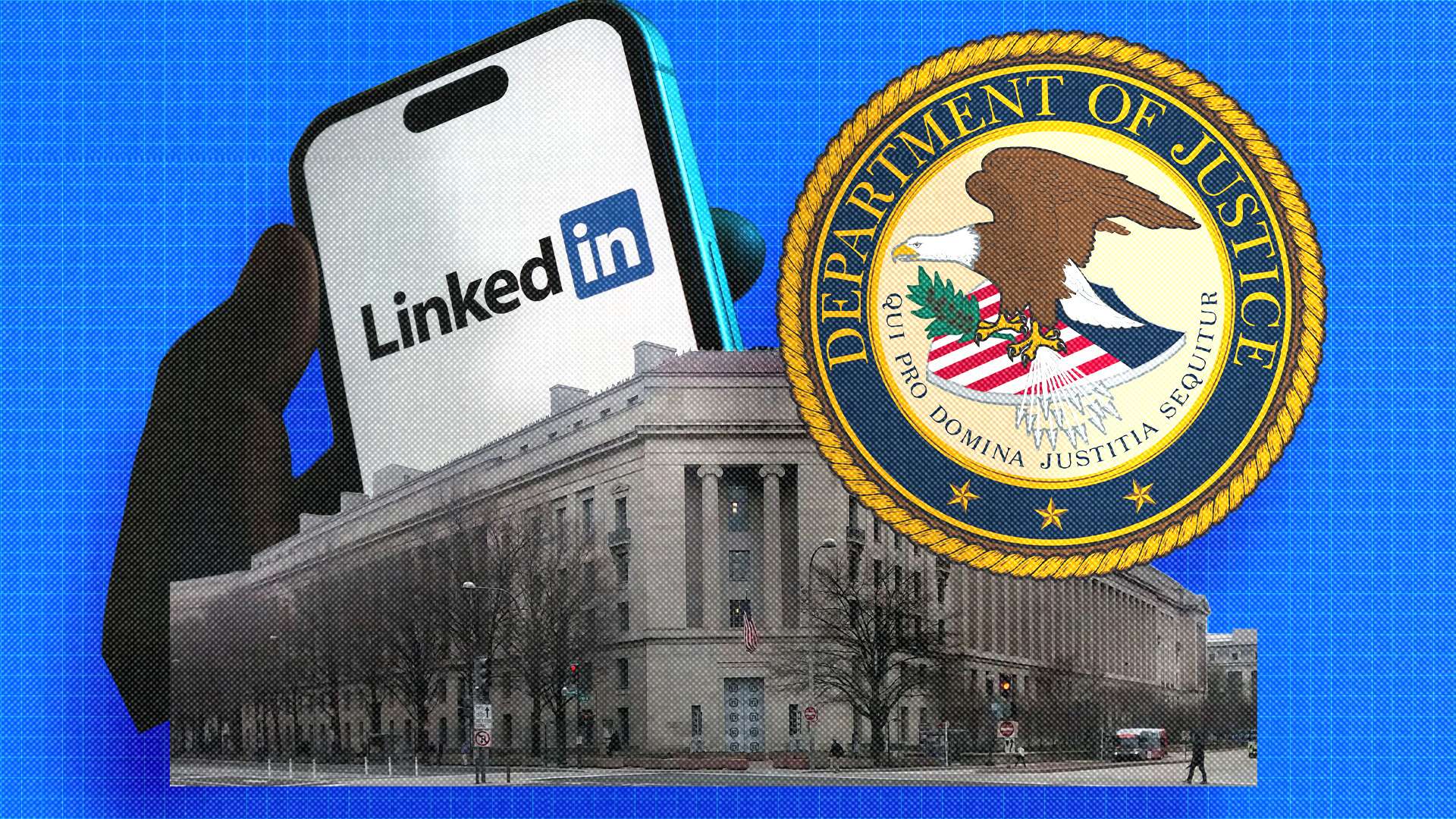
A smartphone showing LinkedIn’s logo, the Department of Justice building, and the DOJ logo against a blue background

A smartphone showing LinkedIn’s logo, the Department of Justice building, and the DOJ logo against a blue background

0

The ad tells you about the app. The privacy policy tells you about you.

play · youtube.com
YouTube (Privacy Not Included) www.youtube.com
preview

Reject Convenience reads the privacy policies of ZocDoc, Ground News and Monarch, so you know what you’re agreeing to before you sign up.

Reject Convenience reads the privacy policies of ZocDoc, Ground News and Monarch, so you know what you’re agreeing to before you sign up.

0

Grok Build coding agent leaks oodles of confidential info, some belonging to SpaceXSI

Ars Technica Grok Build coding agent leaks oodles of confidential info, some belonging to SpaceXSI arstechnica.com
preview

Grok Build, the vibe-coding agent from SpaceXSI, is leaking data—some of it proprietary business information and other sensitive secrets—from thousands of its users, including the very same Elon Musk-owned company that offers the platform, new research shows.

The information is revealed through links allowing Grok Build users to share their apps with others. Grok takes steps to randomize the URLs so only people who know the exact URL can access the data stored there. A design decision by developers of the platform, however, completely torpedoes that objective and makes it possible for anyone to enumerate thousands of live Grok Build projects. Except in rare cases, clicking those links opens the app and reveals all data associated with it.

You had one job

Research from security firm Claroc shows that the exposed data includes things like internal business plans, ad proposals, medical exam results, galley checklists from a celebrity cruise line, and employee names and ID numbers. Ironically, some of the sensitive data comes from two-dozen apps built by SpaceXSI (the name of the now-merged SpaceX and xAI) itself. A small sampling of the documents revealed in the SpaceXSI apps—Claroc found 24 of them—include an onboarding plan, marked confidential, for a new member of SpaceXSI’s enterprise sales team, a sales territory map of 594 accounts, internal system addresses for sales team tools, and advertising proposals.

“We were shocked,” Claroc said in a Tuesday post. “The company that makes Grok had its own internal material open to anyone holding the link, and we had never been given it. Had the sales team bought a tool for this, it would have sat behind company sign-in, open only to the team. Built with AI, it went live open to anyone with the link.

Claroc notified SpaceXSI of the privacy spill on Sunday. When no one responded, a Claroc official took to X to tag both Musk and Grok Manager Matt Palmer about the threat. At the time this post went live almost all data remained available with one notable exception: the contents from the 24 SpaceXSI apps. All of them were exposing the information on Monday evening. SpaceXSI began removing the links within a few hours of Ars sending an email with questions for this article. At the time this post went live, links for all 24 apps returned an “app not found” error.

Claroc found sensitive data belonging to other Grok Build users, some working for Fortune 500 companies and a defense contractor. Some of the affected organizations and data revealed includes:

A Peruvian construction company: occupational-health dashboard with 3,784 worker medical exams

Tesla: service-center scorecard naming 22 technicians with productivity and bonus status

A US-Navy ship engineering contractor: roster of 108 people on a Navy logistics support contract

A leading luxury cruise company: a galley checklist for a celebrity cruise line listing crew by full name and employee ID

A healthcare company: hospital staff app with a roster of about 3,565 employees by name and ID

A US IT services company: a confidential proposal to a large retail customer with the hardware bill of materials

A Norwegian-Finnish aerospace and defense group: load board and loading procedure for an explosives building at a US plant, plus its HSE training matrix

A US home construction company: sales callsheet with about 583 home-buyer prospects, budgets and financing notes

A Malaysian holding company: project monitor for 37 developments with profit and sales figures

An auto transport company: quote desk with about 4,000 vehicle-transport orders, prices, and margins

A US data center colocation and hosting service: confidential IP transit proposal to a European carrier

Asaf Aprozper, the co-founder and CTO of Claroc, said he’s in the process of notifying companies. After speaking to the CISO of the luxury cruise company, it “pulled in their whole security team as soon as we shared the findings and are already working to contain the Grok exposure.”

A fatal flaw… shared by most other AI platforms

Link sharing for Grok Build is intended to streamline the process of developing and deploying apps. A user can input speech or text and have a working app ready for internal testing within minutes. The links are designed to give developers a way to get the app in front of authorized users quickly. The very left of the URLs contain two or more “dice words,” meaning randomly generated phrases such as “failing chassis traders,” although users can modify them. The rightmost portion of the link is grok.me. The URL for an X ads campaign plan was: cinder-crane-sand-frost.grok.me.

The scheme is intended to prevent links from being easily guessable. When done correctly, a phrase comprising three dice words has roughly 38 bits of entropy, amounting to billions of possible combinations. The idea—sometimes called capability-based access control—is that possession of the URL serves as authorization to the resources behind it. Google has long used this technique to make URLs easy to share but hard to guess. A URL share on that platform might look like: docs.google.com/document/d/…/edit

There’s a fatal flaw in the way SpaceXSI has implemented the mechanism. Instead of being to the right of the domain—as is the case with Google links—the randomness for Grok Build links is positioned to the left of it. That allows the links to be easily enumerated using passive DNS services. These services monitor central DNS lookup servers. When a server lookup requests the IP address of a previously never-before-seen URL, the transaction is captured in a publicly searchable database. Had Grok followed Google’s approach, the links would have been invisible to passive DNS searchers. Muse, the Meta agent that CEO Mark Zuckerberg said was built from the ground up for security, recently suspended a link-sharing feature after it too was found leaking sensitive data.

Aprozper said a passive DNS search returned 43,601 links ending in grok.me. Of them, more than 35,000, or nearly 95 percent, were public, meaning that clicking on the link opened the corresponding app and all data it stored. He said that tests he conducted over the past week showed that, by default, Grok sets links to “Anyone with the link.” Users have the option to change the setting to “invited users” or “only you.”

A representative with Cursor, the AI coding service SpaceXSI recently acquired, said in an email that Grok Build “apps are private by default and nothing goes public unless the creator chooses to share it.” The representative said that competing coding agents from ChatGPT, Lovable, and Bolt also give users the ability to generate shareable links.

Aprozper’s tests contradict the representative’s statement. In all cases, Grok Build required users to change anyone with the link to one of the other two options.

The Cursor statement regarding other AI coding platforms is correct. Aprozper said that app builders, including Lovable, Bolt, and Replit, “also give each app its own web address, so the same DNS records expose them, too. However, Grok is where we found by far the most sensitive company data.” That means that people using these other platforms are also at risk of exposing sensitive data through shared links. Interestingly, AI platforms that follow the correct sharing link practice include Claude’s published artifacts (claude.ai/public/artifacts/), ChatGPT’s shared conversations (chatgpt.com/share/), and Gemini (gemini.google.com/share/). For all three, the secret randomness is in the path, so DNS never sees it.

The representative didn’t respond to follow-up questions, including if SpaceXSI intentionally exposed the proprietary internal information, why the company removed the data after Ars asked about it, and if it planned to notify customers who also exposed similar types of information. Anyone using shareable links with Grok Build should choose the “invite others” option unless they intend to make an app widely available.

Grok Build, the vibe-coding agent from SpaceXSI, is leaking data—some of it proprietary business information and other sensitive secrets—from thousands of its users, including the very same Elon Musk-owned company that offers the platform, new research shows.

The information is revealed through links allowing Grok Build users to share their apps with others. Grok takes steps to randomize the URLs so only people who know the exact URL can access the data stored there. A design decision by developers of the platform, however, completely torpedoes that objective and makes it possible for anyone to enumerate thousands of live Grok Build projects. Except in rare cases, clicking those links opens the app and reveals all data associated with it.

You had one job

Research from security firm Claroc shows that the exposed data includes things like internal business plans, ad proposals, medical exam results, galley checklists from a celebrity cruise line, and employee names and ID numbers. Ironically, some of the sensitive data comes from two-dozen apps built by SpaceXSI (the name of the now-merged SpaceX and xAI) itself. A small sampling of the documents revealed in the SpaceXSI apps—Claroc found 24 of them—include an onboarding plan, marked confidential, for a new member of SpaceXSI’s enterprise sales team, a sales territory map of 594 accounts, internal system addresses for sales team tools, and advertising proposals.

“We were shocked,” Claroc said in a Tuesday post. “The company that makes Grok had its own internal material open to anyone holding the link, and we had never been given it. Had the sales team bought a tool for this, it would have sat behind company sign-in, open only to the team. Built with AI, it went live open to anyone with the link.

Claroc notified SpaceXSI of the privacy spill on Sunday. When no one responded, a Claroc official took to X to tag both Musk and Grok Manager Matt Palmer about the threat. At the time this post went live almost all data remained available with one notable exception: the contents from the 24 SpaceXSI apps. All of them were exposing the information on Monday evening. SpaceXSI began removing the links within a few hours of Ars sending an email with questions for this article. At the time this post went live, links for all 24 apps returned an “app not found” error.

Claroc found sensitive data belonging to other Grok Build users, some working for Fortune 500 companies and a defense contractor. Some of the affected organizations and data revealed includes:

A Peruvian construction company: occupational-health dashboard with 3,784 worker medical exams

Tesla: service-center scorecard naming 22 technicians with productivity and bonus status

A US-Navy ship engineering contractor: roster of 108 people on a Navy logistics support contract

A leading luxury cruise company: a galley checklist for a celebrity cruise line listing crew by full name and employee ID

A healthcare company: hospital staff app with a roster of about 3,565 employees by name and ID

A US IT services company: a confidential proposal to a large retail customer with the hardware bill of materials

A Norwegian-Finnish aerospace and defense group: load board and loading procedure for an explosives building at a US plant, plus its HSE training matrix

A US home construction company: sales callsheet with about 583 home-buyer prospects, budgets and financing notes

A Malaysian holding company: project monitor for 37 developments with profit and sales figures

An auto transport company: quote desk with about 4,000 vehicle-transport orders, prices, and margins

A US data center colocation and hosting service: confidential IP transit proposal to a European carrier

Asaf Aprozper, the co-founder and CTO of Claroc, said he’s in the process of notifying companies. After speaking to the CISO of the luxury cruise company, it “pulled in their whole security team as soon as we shared the findings and are already working to contain the Grok exposure.”

A fatal flaw… shared by most other AI platforms

Link sharing for Grok Build is intended to streamline the process of developing and deploying apps. A user can input speech or text and have a working app ready for internal testing within minutes. The links are designed to give developers a way to get the app in front of authorized users quickly. The very left of the URLs contain two or more “dice words,” meaning randomly generated phrases such as “failing chassis traders,” although users can modify them. The rightmost portion of the link is grok.me. The URL for an X ads campaign plan was: cinder-crane-sand-frost.grok.me.

The scheme is intended to prevent links from being easily guessable. When done correctly, a phrase comprising three dice words has roughly 38 bits of entropy, amounting to billions of possible combinations. The idea—sometimes called capability-based access control—is that possession of the URL serves as authorization to the resources behind it. Google has long used this technique to make URLs easy to share but hard to guess. A URL share on that platform might look like: docs.google.com/document/d/…/edit

There’s a fatal flaw in the way SpaceXSI has implemented the mechanism. Instead of being to the right of the domain—as is the case with Google links—the randomness for Grok Build links is positioned to the left of it. That allows the links to be easily enumerated using passive DNS services. These services monitor central DNS lookup servers. When a server lookup requests the IP address of a previously never-before-seen URL, the transaction is captured in a publicly searchable database. Had Grok followed Google’s approach, the links would have been invisible to passive DNS searchers. Muse, the Meta agent that CEO Mark Zuckerberg said was built from the ground up for security, recently suspended a link-sharing feature after it too was found leaking sensitive data.

Aprozper said a passive DNS search returned 43,601 links ending in grok.me. Of them, more than 35,000, or nearly 95 percent, were public, meaning that clicking on the link opened the corresponding app and all data it stored. He said that tests he conducted over the past week showed that, by default, Grok sets links to “Anyone with the link.” Users have the option to change the setting to “invited users” or “only you.”

A representative with Cursor, the AI coding service SpaceXSI recently acquired, said in an email that Grok Build “apps are private by default and nothing goes public unless the creator chooses to share it.” The representative said that competing coding agents from ChatGPT, Lovable, and Bolt also give users the ability to generate shareable links.

Aprozper’s tests contradict the representative’s statement. In all cases, Grok Build required users to change anyone with the link to one of the other two options.

The Cursor statement regarding other AI coding platforms is correct. Aprozper said that app builders, including Lovable, Bolt, and Replit, “also give each app its own web address, so the same DNS records expose them, too. However, Grok is where we found by far the most sensitive company data.” That means that people using these other platforms are also at risk of exposing sensitive data through shared links. Interestingly, AI platforms that follow the correct sharing link practice include Claude’s published artifacts (claude.ai/public/artifacts/), ChatGPT’s shared conversations (chatgpt.com/share/), and Gemini (gemini.google.com/share/). For all three, the secret randomness is in the path, so DNS never sees it.

The representative didn’t respond to follow-up questions, including if SpaceXSI intentionally exposed the proprietary internal information, why the company removed the data after Ars asked about it, and if it planned to notify customers who also exposed similar types of information. Anyone using shareable links with Grok Build should choose the “invite others” option unless they intend to make an app widely available.

0

Looking for Ethical & Privacy-Respecting Free or freemium AI Alternatives

preview

cross-posted from: lemmy.ml/post/55185832

Hi everyone,

I’m looking for recommendations on free (or freemium) AI assistants that meet these criteria:

✅ Strong capabilities – Can handle complex questions and research. ✅ Privacy-respecting – Doesn’t train on user data, preferably E2E encrypted. ✅ Ethical stance – Not complicit in oppression or human rights violations (Palestine, sudan, uygur, etc). ✅ Not on BDS list – Companies that aren’t supporting or profiting from occupation.

Which AI tools have you found that respect both privacy AND human rights?

I’d really appreciate honest recommendations and experiences. Trying to find tools that align with my values without sacrificing functionality.

Thanks in advance! 🤝

cross-posted from: lemmy.ml/post/55185832

Hi everyone,

I’m looking for recommendations on free (or freemium) AI assistants that meet these criteria:

✅ Strong capabilities – Can handle complex questions and research. ✅ Privacy-respecting – Doesn’t train on user data, preferably E2E encrypted. ✅ Ethical stance – Not complicit in oppression or human rights violations (Palestine, sudan, uygur, etc). ✅ Not on BDS list – Companies that aren’t supporting or profiting from occupation.

Which AI tools have you found that respect both privacy AND human rights?

I’d really appreciate honest recommendations and experiences. Trying to find tools that align with my values without sacrificing functionality.

Thanks in advance! 🤝

0

Muse sleep band users weren’t told their brain data was training AI

Malwarebytes Muse sleep band users weren’t told their brain data was training AI www.malwarebytes.com
preview

Muse maker Interaxon reportedly trained AI on users’ de-identified brainwave data, then revised its privacy policy after journalists asked questions.

Muse maker Interaxon reportedly trained AI on users’ de-identified brainwave data, then revised its privacy policy after journalists asked questions.

0

Fact check: Is Germany really cracking down on free speech and being investigated by the United Nations because of it?

preview

geteilt von: feddit.org/post/33726379

Note: this post was originally posted in c/privacy@lemmy.ml, but got removed by a moderator, because it was apparently “off-topic” in “A place to discuss privacy and freedom in the digital world.”

Mastodon post

The US-based nonprofit Privacy Guides recently covered in their podcast “This Week in Privacy“ episode 64 an article titled “Inside the dystopian world of Germany’s free speech crackdown” from UK-based publisher The Telegraph. The co-host (Nate) read off the notes while covering the story and said the original article is "definitely worth a read. Lots of good stuff in there.”

Disclaimer: This fact-check has been written on a best-effort basis with the time and resources available to me. I would have liked to dig deeper into the sources I’ve linked, the claims made, and the original article, but my current circumstances don’t allow for such a large-scale investigation. In contrast to Privacy Guides, which is funded by many supporters, Voxel is a single person who tries his best to educate people about data protection and cybersecurity and to fight for a better future with no funding whatsoever. If you find something that is inaccurate, please feel free to kindly correct me in the comments, I will adjust it ASAP.

I’ll cover the claims made in the episode and debunk them chronologically.

The first claim is about Rainer Zitelmann who, according to them, had been accused of violating § 86a StGB, which bans the display of Nazi symbols, slogans, and imagery, and could now face three years in prison if found guilty. He found out the offending social media post was a meme about Adolf Hitler, but it was one in which he compared the Nazi dictator and his invasion of Czechoslovakia to Vladimir Putin’s invasion of Ukraine. I found news coverage from other sources that paints a similar picture, but was unable to independently verify R. Zitelmann’s claims.

All following quotes are by Nate from Privacy Guides (source) if not marked otherwise.

So basically, like, I’m saying Hitler is bad. Why is this? Yeah.

Objectively misrepresents the case and makes it seem as if Germany would fight negative speech about Hitler.

(…) is one of thousands of Germans who have been threatened with fines or prison sentences for social media posts that fall afoul of the country’s political speech laws, which are unusually stringent for an EU member state.

Neither Privacy Guides nor the original article provides a source for this data. I was unable to find information about this.

They went on to cover the “Schwachkopf” (can be roughly translated as “weak head” in the cognitive/intellectual sense) case. They claim that the person who called Robert Habeck “Schwachkopf” got his home “raided.” This is false; the supposed raid was actually a search warrant to seize evidence. The accused voluntarily handed over the tablet used in the crime to officers; consequently, further measures were waived, not least for reasons of proportionality. So no actual home search was conducted.

In the case of the “Lügenfritz” (can be roughly translated to “lying Fritz”) insult, Nate says that the accused was fined two thousand euros. This is theoretically false. The court issued a fine of 30 days’ income. I was unable to find source that provides information on how much the accused earned. The accused didn’t object the ruling.

The number of investigations under Section 86a, the Nazi symbol ban that Dr. Z was investigated for has more than doubled over the past decade according to official police statistics. Investigations into the political insult law also reached a record level in 2025.

Neither Privacy Guides nor the original article provides a source for this data. I was unable to find information about this.

In one recent case, a pensioner was investigated under Section 188 for posting Pinocchio is coming on Facebook after he learned that Frederick Mertz, the chancellor, was visiting his hometown.

This is true, but the investigations were closed, “because this is a form of criticism of power covered by freedom of expression and is therefore permissible“ (automated translation). The original article and Nate fail to mention that.

In 2021, police raided a man’s apartment in Hamburg after he told a senator, you’re such a d***.

That is partially true; his apartment was searched. I don’t think this is equal to being “raided,” but the original article, as well as Nate, fail to mention that the apartment search was deemed illegal by the court.

The surge in cases is so vast that the U.N. has launched an investigation into free speech violations in Germany, a step typically reserved for dictatorships and banana republics. (…) So and Germany needs to figure out what they’re doing if they’re getting investigated by the UN. I think that’s pretty wild.

This is completely false. This misinformation was taken from the original article, which provides no source whatsoever. What is true, but wasn’t mentioned in the episode, is that the United Nations Special Rapporteur on freedom of opinion and expression, Ms. Irene Khan, undertook an official country visit to Germany to examine, in the spirit of cooperation and dialogue, the situation of the rights to freedom of opinion and expression in the country. But it’s important to highlight that (emphasis added):

Special Rapporteurs/Independent Experts/Working Groups are independent human rights experts appointed by the United Nations Human Rights Council. Together, these experts are referred to as the Special Procedures of the Human Rights Council. Special Procedures experts work on a voluntary basis; they are not UN staff and do not receive a salary for their work. While the UN Human Rights office acts as the secretariat for Special Procedures, the experts serve in their individual capacity and are independent from any government or organization, including OHCHR and the UN. Any views or opinions presented are solely those of the author and do not necessarily represent those of the UN or OHCHR.

German free speech activists on the left and right, as well as the Trump administration, have also raised the alarm, and there are growing calls from some of the country’s stricter laws to be scrapped.

No sources provided, but it wouldn’t surprise me if there are some people who do. I can’t comment on the Trump administration.

The fur bears some similarities to the speech debate in Britain, where citizens have a knock on the door from police over opinions posted online.

I believe this is an extreme exaggeration and misrepresentation of the current situation based on the data provided.

Conclusion: Privacy Guides seemingly did not verify the integrity of the article and the information they took from it and shared in their podcast. They spread lots of misinformation about Germany’s current status, left out important information, and even claimed that the UN would be investigating Germany for free speech violations.

My opinion: In addition to the conclusion above, I would like to point out that the article seems to be highly politically motivated and appears to manipulate readers through disinformation into specific beliefs; that Privacy Guides used the article without seemingly noticing this highly political intention behind it, and did not verify the integrity of the information provided, is very concerning. My appeal to Privacy Guides would be: accuracy over quantity. Covering more articles at the cost of the integrity of the information provided causes a lot of harm and allows misinformation to spread even further than it otherwise would. Privacy Guides also makes it very hard to investigate and check the integrity of the sources yourself, as they’re not provided or linked in the show notes of the podcast, and you have to manually go to their website, search for the blog entry for the podcast, and find the sources there; I believe putting the sources directly in the show notes allows for a healthier information flow and empowers listeners to investigate themselves.

geteilt von: feddit.org/post/33726379

Note: this post was originally posted in c/privacy@lemmy.ml, but got removed by a moderator, because it was apparently “off-topic” in “A place to discuss privacy and freedom in the digital world.”

Mastodon post

The US-based nonprofit Privacy Guides recently covered in their podcast “This Week in Privacy“ episode 64 an article titled “Inside the dystopian world of Germany’s free speech crackdown” from UK-based publisher The Telegraph. The co-host (Nate) read off the notes while covering the story and said the original article is "definitely worth a read. Lots of good stuff in there.”

Disclaimer: This fact-check has been written on a best-effort basis with the time and resources available to me. I would have liked to dig deeper into the sources I’ve linked, the claims made, and the original article, but my current circumstances don’t allow for such a large-scale investigation. In contrast to Privacy Guides, which is funded by many supporters, Voxel is a single person who tries his best to educate people about data protection and cybersecurity and to fight for a better future with no funding whatsoever. If you find something that is inaccurate, please feel free to kindly correct me in the comments, I will adjust it ASAP.

I’ll cover the claims made in the episode and debunk them chronologically.

The first claim is about Rainer Zitelmann who, according to them, had been accused of violating § 86a StGB, which bans the display of Nazi symbols, slogans, and imagery, and could now face three years in prison if found guilty. He found out the offending social media post was a meme about Adolf Hitler, but it was one in which he compared the Nazi dictator and his invasion of Czechoslovakia to Vladimir Putin’s invasion of Ukraine. I found news coverage from other sources that paints a similar picture, but was unable to independently verify R. Zitelmann’s claims.

All following quotes are by Nate from Privacy Guides (source) if not marked otherwise.

So basically, like, I’m saying Hitler is bad. Why is this? Yeah.

Objectively misrepresents the case and makes it seem as if Germany would fight negative speech about Hitler.

(…) is one of thousands of Germans who have been threatened with fines or prison sentences for social media posts that fall afoul of the country’s political speech laws, which are unusually stringent for an EU member state.

Neither Privacy Guides nor the original article provides a source for this data. I was unable to find information about this.

They went on to cover the “Schwachkopf” (can be roughly translated as “weak head” in the cognitive/intellectual sense) case. They claim that the person who called Robert Habeck “Schwachkopf” got his home “raided.” This is false; the supposed raid was actually a search warrant to seize evidence. The accused voluntarily handed over the tablet used in the crime to officers; consequently, further measures were waived, not least for reasons of proportionality. So no actual home search was conducted.

In the case of the “Lügenfritz” (can be roughly translated to “lying Fritz”) insult, Nate says that the accused was fined two thousand euros. This is theoretically false. The court issued a fine of 30 days’ income. I was unable to find source that provides information on how much the accused earned. The accused didn’t object the ruling.

The number of investigations under Section 86a, the Nazi symbol ban that Dr. Z was investigated for has more than doubled over the past decade according to official police statistics. Investigations into the political insult law also reached a record level in 2025.

Neither Privacy Guides nor the original article provides a source for this data. I was unable to find information about this.

In one recent case, a pensioner was investigated under Section 188 for posting Pinocchio is coming on Facebook after he learned that Frederick Mertz, the chancellor, was visiting his hometown.

This is true, but the investigations were closed, “because this is a form of criticism of power covered by freedom of expression and is therefore permissible“ (automated translation). The original article and Nate fail to mention that.

In 2021, police raided a man’s apartment in Hamburg after he told a senator, you’re such a d***.

That is partially true; his apartment was searched. I don’t think this is equal to being “raided,” but the original article, as well as Nate, fail to mention that the apartment search was deemed illegal by the court.

The surge in cases is so vast that the U.N. has launched an investigation into free speech violations in Germany, a step typically reserved for dictatorships and banana republics. (…) So and Germany needs to figure out what they’re doing if they’re getting investigated by the UN. I think that’s pretty wild.

This is completely false. This misinformation was taken from the original article, which provides no source whatsoever. What is true, but wasn’t mentioned in the episode, is that the United Nations Special Rapporteur on freedom of opinion and expression, Ms. Irene Khan, undertook an official country visit to Germany to examine, in the spirit of cooperation and dialogue, the situation of the rights to freedom of opinion and expression in the country. But it’s important to highlight that (emphasis added):

Special Rapporteurs/Independent Experts/Working Groups are independent human rights experts appointed by the United Nations Human Rights Council. Together, these experts are referred to as the Special Procedures of the Human Rights Council. Special Procedures experts work on a voluntary basis; they are not UN staff and do not receive a salary for their work. While the UN Human Rights office acts as the secretariat for Special Procedures, the experts serve in their individual capacity and are independent from any government or organization, including OHCHR and the UN. Any views or opinions presented are solely those of the author and do not necessarily represent those of the UN or OHCHR.

German free speech activists on the left and right, as well as the Trump administration, have also raised the alarm, and there are growing calls from some of the country’s stricter laws to be scrapped.

No sources provided, but it wouldn’t surprise me if there are some people who do. I can’t comment on the Trump administration.

The fur bears some similarities to the speech debate in Britain, where citizens have a knock on the door from police over opinions posted online.

I believe this is an extreme exaggeration and misrepresentation of the current situation based on the data provided.

Conclusion: Privacy Guides seemingly did not verify the integrity of the article and the information they took from it and shared in their podcast. They spread lots of misinformation about Germany’s current status, left out important information, and even claimed that the UN would be investigating Germany for free speech violations.

My opinion: In addition to the conclusion above, I would like to point out that the article seems to be highly politically motivated and appears to manipulate readers through disinformation into specific beliefs; that Privacy Guides used the article without seemingly noticing this highly political intention behind it, and did not verify the integrity of the information provided, is very concerning. My appeal to Privacy Guides would be: accuracy over quantity. Covering more articles at the cost of the integrity of the information provided causes a lot of harm and allows misinformation to spread even further than it otherwise would. Privacy Guides also makes it very hard to investigate and check the integrity of the sources yourself, as they’re not provided or linked in the show notes of the podcast, and you have to manually go to their website, search for the blog entry for the podcast, and find the sources there; I believe putting the sources directly in the show notes allows for a healthier information flow and empowers listeners to investigate themselves.

0

Why VPNs Are Worth Defending

Techdirt Why VPNs Are Worth Defending www.techdirt.com
preview

Developers of virtual private network (VPN) apps are reporting that their products are again being pulled from Apple’s App Store in Russia. This is an unacceptable crackdown on a vital tool to protect privacy and speech online. Why? VPNs give people a way to control their own online activities. When you visit a website through…

Developers of virtual private network (VPN) apps are reporting that their products are again being pulled from Apple’s App Store in Russia. This is an unacceptable crackdown on a vital tool to protect privacy and speech online. Why? VPNs give people a way to control their own online activities. When you visit a website through…

0

Long-Awaited Report Recommends Limits on Real Time Crime Center, Including Warrants for Investigators to Search Surveillance Footage

PubliCola Long-Awaited Report Recommends Limits on Real Time Crime Center, Including Warrants for Investigators to Search Surveillance Footage - PubliCola publicola.com
preview

By Erica C. Barnett The NYU Policing Project released its long-awaited privacy and civil-liberties audit of the Seattle Police…

By Erica C. Barnett The NYU Policing Project released its long-awaited privacy and civil-liberties audit of the Seattle Police…

0

New civil liberties audit urges stronger safeguards at Seattle’s Real Time Crime Center

MyNorthwest.com New civil liberties audit urges stronger safeguards at Seattle’s Real-Time Crime Center - MyNorthwest.com mynorthwest.com
preview

A new civil liberties audit urged stronger safeguards at Seattle’s Real Time Crime Center, identifying gaps in several rules.

A new civil liberties audit urged stronger safeguards at Seattle’s Real Time Crime Center, identifying gaps in several rules.

0

How ICE Keeps an Eye on Protestors

The New Republic How ICE Keeps an Eye on Protestors newrepublic.com
preview

While much of the florid, fashy antics of Immigration and Customs Enforcement, or ICE, has lingered long in the memory, there’s one thing the agency has been doing that’s largely flown under the radar—its efforts to surveil protesters using sophisticated tracking technologies. This represents a realization of warnings that privacy advocates have long expressed: the tools of the war on terror would be turned on Americans by an authoritarian. According to a recent report from Wired, during the unrest in Minne…

While much of the florid, fashy antics of Immigration and Customs Enforcement, or ICE, has lingered long in the memory, there’s one thing the agency has been doing that’s largely flown under the radar—its efforts to surveil protesters using sophisticated tracking technologies. This represents a realization of warnings that privacy advocates have long expressed: the tools of the war on terror would be turned on Americans by an authoritarian. According to a recent report from Wired, during the unrest in Minne…

0

Proton removed post on UserVoice calling for Andy Yen to step down

preview

Protonmail.uservoice.com is supposedly “The Voice of the Proton Community”. Well last week I was tracking a post that was rising rapidly to the top-most voted in the “general ideas” category. And this morning when I went to check if it was at the top yet, it’s just gone without a trace. No sign that it was ever there

OC by @akilou@sh.itjust.works

Nov 3 snapshot of the General Ideas page, showing top post calling for Yen’s departure: web.archive.org/web/…/945460-general-ideas

Nov 7 snapshot of the post with 2457 votes: web.archive.org/…/51869994-andy-yen-ceo-should-st…

Current link to the post bounces to the list with message “That idea has been deleted” …uservoice.com/…/51869994-andy-yen-ceo-should-ste…

These should all be referenced when writing to the Proton Foundation until a response is issued.

Protonmail.uservoice.com is supposedly “The Voice of the Proton Community”. Well last week I was tracking a post that was rising rapidly to the top-most voted in the “general ideas” category. And this morning when I went to check if it was at the top yet, it’s just gone without a trace. No sign that it was ever there

OC by @akilou@sh.itjust.works

Nov 3 snapshot of the General Ideas page, showing top post calling for Yen’s departure: web.archive.org/web/…/945460-general-ideas

Nov 7 snapshot of the post with 2457 votes: web.archive.org/…/51869994-andy-yen-ceo-should-st…

Current link to the post bounces to the list with message “That idea has been deleted” …uservoice.com/…/51869994-andy-yen-ceo-should-ste…

These should all be referenced when writing to the Proton Foundation until a response is issued.

0

Are there any more privacy violating laws in Canada that people should know about?

preview

The 5-eyes and NSA are creeping on Canadians.

The federal liberal government is cracking on crypto ATMs instead of targeting the scam ones and VPNs on the official Canada Gov website.

Other than the bills below:

c-22 by Gary Anandasangaree. Will introduce 6 month metadata retention for service providers and provide the CSIS with subscriber information.

s-209 by Julie Miville-Dechêne. Will introduce age verification.

c-34 by Marc Miller. Second way to introduce age verification. Yes that guy who called privacy critics of c-22 tinfoil hats.

The 5-eyes and NSA are creeping on Canadians.

The federal liberal government is cracking on crypto ATMs instead of targeting the scam ones and VPNs on the official Canada Gov website.

Other than the bills below:

c-22 by Gary Anandasangaree. Will introduce 6 month metadata retention for service providers and provide the CSIS with subscriber information.

s-209 by Julie Miville-Dechêne. Will introduce age verification.

c-34 by Marc Miller. Second way to introduce age verification. Yes that guy who called privacy critics of c-22 tinfoil hats.

0

Ads in Popular Apps Give Police a Powerful Tool to Spy on Users

preview

Penlink’s Webloc is sold to police in the US, UK and worldwide. It uses technology found in weather, gaming, email and religious apps to locate people using their cellphones.

In presentations prepared last year for international law enforcement agencies, representatives of US digital intelligence company Penlink showed off their flagship technology, Webloc. They demonstrated the system tracking people as they walked down Fifth Avenue in New York City, visited the European Central Bank in Frankfurt, and moved close to the UK Parliament in central London.

The presentations said that Webloc, originally developed by an Israeli startup, Cobwebs, can track hundreds of millions of mobile phones across the world. For law enforcement, that’s a powerful capability — made more so by the fact that in the US it can be used without the need for any kind of search warrant or judicial authorization.

Penlink’s Webloc is sold to police in the US, UK and worldwide. It uses technology found in weather, gaming, email and religious apps to locate people using their cellphones.

In presentations prepared last year for international law enforcement agencies, representatives of US digital intelligence company Penlink showed off their flagship technology, Webloc. They demonstrated the system tracking people as they walked down Fifth Avenue in New York City, visited the European Central Bank in Frankfurt, and moved close to the UK Parliament in central London.

The presentations said that Webloc, originally developed by an Israeli startup, Cobwebs, can track hundreds of millions of mobile phones across the world. For law enforcement, that’s a powerful capability — made more so by the fact that in the US it can be used without the need for any kind of search warrant or judicial authorization.

0

Any open-source live football score app that's actually usable and privacy respect for Android ?

preview

cross-posted from: lemmy.ml/post/55072578

I’ve checked Exodus: the main score apps (FotMob, 365Scores, Yalla Shoot) all carry 10+ trackers each. I found a few hobby projects on GitHub but nothing mature.

Does anyone here use an open-source app for live scores they’d actually recommend?

cross-posted from: lemmy.ml/post/55072578

I’ve checked Exodus: the main score apps (FotMob, 365Scores, Yalla Shoot) all carry 10+ trackers each. I found a few hobby projects on GitHub but nothing mature.

Does anyone here use an open-source app for live scores they’d actually recommend?

0

An unexpected activist emerged to help block a $5 billion data center in Maryland

NPR An unexpected activist emerged to help block a $5 billion data center in Maryland www.npr.org
preview

Thousands across the U.S. have gotten involved to oppose data centers. One is a Maryland woman who’d been evicted after a pay cut and became a leader of a community effort that blocked a vast project.

Thousands across the U.S. have gotten involved to oppose data centers. One is a Maryland woman who’d been evicted after a pay cut and became a leader of a community effort that blocked a vast project.

0

I built a page that shows what any website can tell about you without asking (fingerprint, IP vs. timezone mismatches, WebRTC/DNS leaks)

1ms.dog Who do websites think you are? Browser fingerprint, IP and privacy test · Who Are You who.1ms.dog
preview

Disclosure first: I’m the author of this page (香蕉痞 Yang), and I used an AI assistant to help write this post. It’s free, no account, no ads.

I kept getting asked “why does site X still recognise me when I’m on a VPN?”, so I built a page that shows the answer from the website’s side. It reads what a normal site can read from your browser without any permission prompt (118 signals: timezone vs. IP location, languages, fonts, GPU/canvas, screen, network, etc.), then writes it up as one plain paragraph, the kind of profile a tracker could build.

The part I find most useful is the contradiction checks: WebRTC leaks, DNS leaks, and mismatches such as a US exit IP with an Asia/Shanghai timezone and zh-CN fonts, which is usually what gives away a VPN, proxy or a spoofed user agent.

Privacy notes, since this is the right crowd to ask: no IP is stored, only anonymous counts of how common each value is (used for the “how unique are you” part). The page itself is not open source yet; the wider 1ms.dog network toolset it belongs to is MIT on GitHub (yt1988/1ms.dog).

Link: who.1ms.dog

Genuinely curious what people here see. Do Tor Browser / Mullvad Browser / LibreWolf with resistFingerprinting come out looking “common”, and are there signals you think I’m missing or over-weighting?

Disclosure first: I’m the author of this page (香蕉痞 Yang), and I used an AI assistant to help write this post. It’s free, no account, no ads.

I kept getting asked “why does site X still recognise me when I’m on a VPN?”, so I built a page that shows the answer from the website’s side. It reads what a normal site can read from your browser without any permission prompt (118 signals: timezone vs. IP location, languages, fonts, GPU/canvas, screen, network, etc.), then writes it up as one plain paragraph, the kind of profile a tracker could build.

The part I find most useful is the contradiction checks: WebRTC leaks, DNS leaks, and mismatches such as a US exit IP with an Asia/Shanghai timezone and zh-CN fonts, which is usually what gives away a VPN, proxy or a spoofed user agent.

Privacy notes, since this is the right crowd to ask: no IP is stored, only anonymous counts of how common each value is (used for the “how unique are you” part). The page itself is not open source yet; the wider 1ms.dog network toolset it belongs to is MIT on GitHub (yt1988/1ms.dog).

Link: who.1ms.dog

Genuinely curious what people here see. Do Tor Browser / Mullvad Browser / LibreWolf with resistFingerprinting come out looking “common”, and are there signals you think I’m missing or over-weighting?

0

LG faces legal action over alleged smart TV spying

TechRadar Smart TVs study suggests opting out of data tracking doesn't always work — as LG faces legal action over alleged TV spying www.techradar.com
preview

LG’s smart TV privacy woes continue as Portugal’s Citizen Voice asks the court to investigate. Are smart TVs too keen to gather data?

LG’s smart TV privacy woes continue as Portugal’s Citizen Voice asks the court to investigate. Are smart TVs too keen to gather data?

0

GrapheneOS about Fairphone

preview

I came across an interesting bit in a HN thread where GrapheneOS talked about Fairphone’s lack of security, which somewhat relates to privacy so I thought I’d post here. Sadly can’t link the original comment but you can find it with Ctrl+f. Not hating on Fairphone, but I think this is worth knowing about.

from news.ycombinator.com/item?id=50380810 :

“Fairphones are designed and made for Fairphone by T2Mobile which is a Chinese ODM. Fairphones have very poor updates and security. Those devices are incredibly far from meeting the requirements for GrapheneOS and cannot be supported. Fairphones aren’t European phones but rather Chinese designed and made devices sold by a European brand. T2Mobile not only designs the hardware but also builds and signs the firmware. Fairphone does very limited engineering and mainly combines AOSP, Google Mobile Services and the firmware/drivers from T2Mobile to make the stock OS. They’re not in a position to meet our requirements. T2Mobile doesn’t provide good security in practice and would need to greatly improve. Trying to get an ODM to improve security is only realistic with a security-focused organization as their direct customer and Fairphone definitely isn’t.”


“Fairphone has a transparency report on their website about the manufacturing and supply chain which nearly entirely only provides a list of the companies, the location of their HQ and a link to their website for a subset of the companies. There’s no information provided on the working conditions, pay or environmental impact of the supply chain. Past posts with vague details about this were mainly about their original ODM and they switched to 2 different ODMs since then. T2Mobile is their ODM since the Fairphone 4 and there’s nearly no information available about it. Why did they switch ODMs twice and how do they compare? Is the supply chain for the T2Mobile-made devices more sustainable? Are they still prioritizing the ethics of the supply chain? None of that is clear.

Fairphone is marketed as being a sustainable device with good long term updates and an ethical supply chain. However, the updates are very poor from the beginning and get much worse over time. It isn’t clear that the marketing about the supply chain is much more accurate. Pixels and iPhones get much better updates and hold up better over the long term. It isn’t clear whether a Fairphone has better working conditions than an iPhone and it’s quite possible an iPhone has lower overall environmental impact per device mainly due to the efficiency of scale.”

I came across an interesting bit in a HN thread where GrapheneOS talked about Fairphone’s lack of security, which somewhat relates to privacy so I thought I’d post here. Sadly can’t link the original comment but you can find it with Ctrl+f. Not hating on Fairphone, but I think this is worth knowing about.

from news.ycombinator.com/item?id=50380810 :

“Fairphones are designed and made for Fairphone by T2Mobile which is a Chinese ODM. Fairphones have very poor updates and security. Those devices are incredibly far from meeting the requirements for GrapheneOS and cannot be supported. Fairphones aren’t European phones but rather Chinese designed and made devices sold by a European brand. T2Mobile not only designs the hardware but also builds and signs the firmware. Fairphone does very limited engineering and mainly combines AOSP, Google Mobile Services and the firmware/drivers from T2Mobile to make the stock OS. They’re not in a position to meet our requirements. T2Mobile doesn’t provide good security in practice and would need to greatly improve. Trying to get an ODM to improve security is only realistic with a security-focused organization as their direct customer and Fairphone definitely isn’t.”


“Fairphone has a transparency report on their website about the manufacturing and supply chain which nearly entirely only provides a list of the companies, the location of their HQ and a link to their website for a subset of the companies. There’s no information provided on the working conditions, pay or environmental impact of the supply chain. Past posts with vague details about this were mainly about their original ODM and they switched to 2 different ODMs since then. T2Mobile is their ODM since the Fairphone 4 and there’s nearly no information available about it. Why did they switch ODMs twice and how do they compare? Is the supply chain for the T2Mobile-made devices more sustainable? Are they still prioritizing the ethics of the supply chain? None of that is clear.

Fairphone is marketed as being a sustainable device with good long term updates and an ethical supply chain. However, the updates are very poor from the beginning and get much worse over time. It isn’t clear that the marketing about the supply chain is much more accurate. Pixels and iPhones get much better updates and hold up better over the long term. It isn’t clear whether a Fairphone has better working conditions than an iPhone and it’s quite possible an iPhone has lower overall environmental impact per device mainly due to the efficiency of scale.”

0

Stop asking whether a proxy provider logs. Ask which fields, why, and for how long

preview

“No logs” on a proxy or VPN page tells you very little, and a couple of old court cases show why. In 2011 a UK web proxy and VPN service handed over a user’s records under a court order. In 2017 a US cyberstalking complaint relied on records from a VPN whose privacy policy said it kept no logs.

A service that bills per GB and handles abuse reports has to keep something, so I’d stop asking whether a provider logs. Ask which fields, for what purpose, how long, and who can demand them. A policy that names its fields is worth more than a bold claim on the landing page.

The other half is what they can see at all. Over a CONNECT tunnel with certificate checks on, a proxy sees your IP, the hostname, timing and volume. Paths, headers, passwords and page content stay inside TLS. Turn off certificate verification and that stops being true, which is why I’d never leave verify=False in a script.

Disclosure: we run a proxy service, so we keep some of those records too.

“No logs” on a proxy or VPN page tells you very little, and a couple of old court cases show why. In 2011 a UK web proxy and VPN service handed over a user’s records under a court order. In 2017 a US cyberstalking complaint relied on records from a VPN whose privacy policy said it kept no logs.

A service that bills per GB and handles abuse reports has to keep something, so I’d stop asking whether a provider logs. Ask which fields, for what purpose, how long, and who can demand them. A policy that names its fields is worth more than a bold claim on the landing page.

The other half is what they can see at all. Over a CONNECT tunnel with certificate checks on, a proxy sees your IP, the hostname, timing and volume. Paths, headers, passwords and page content stay inside TLS. Turn off certificate verification and that stops being true, which is why I’d never leave verify=False in a script.

Disclosure: we run a proxy service, so we keep some of those records too.

0

45 Attorneys General Urgently Want Congress to Push Platforms Toward Age Checks

Reclaim The Net: Free Speech, Privacy, Digital Rights 45 Attorneys General Urgently Want Congress to Push Platforms Toward Age Checks reclaimthenet.org
preview

A bipartisan group of 45 attorneys general from 42 states, the District of Columbia, American Samoa, and the US Virgin Islands have asked Congress to pass the Senate’s Kids Online Safety Act (KOSA) censorship law, and make sure the bill’s duty of care provision is included.

A bipartisan group of 45 attorneys general from 42 states, the District of Columbia, American Samoa, and the US Virgin Islands have asked Congress to pass the Senate’s Kids Online Safety Act (KOSA) censorship law, and make sure the bill’s duty of care provision is included.