0

Mini, spoiler free review of *The Raven Scholar*, by Antonia Hodgson [fantasy]

preview

The empire of Orrun is protected by eight mythological guardians: fox, raven, tiger, ox, bear, monkey, hound and dragon. Each has its own temple and society/guild, with attributes and traditions based on the guardian. Neema is an archivist with the ravens, who prize knowledge and understanding above all things. She is gifted, but shunned by many because of her poor origins. Because of her exceptional calligraphy, she is asked by the emperor to produce a proclamation that will change her life, and many others. This is an interesting story in that it morphs from one kind into another. It starts as a tragedy, morphs into a murder mystery, then a competition for the throne, and through it all a political thriller. It’s populated with rich and interesting characters, and the magical elements are handled with a very light touch (for half the book, there are hardly any at all). I enjoyed it and will likely read the sequel.

The empire of Orrun is protected by eight mythological guardians: fox, raven, tiger, ox, bear, monkey, hound and dragon. Each has its own temple and society/guild, with attributes and traditions based on the guardian. Neema is an archivist with the ravens, who prize knowledge and understanding above all things. She is gifted, but shunned by many because of her poor origins. Because of her exceptional calligraphy, she is asked by the emperor to produce a proclamation that will change her life, and many others. This is an interesting story in that it morphs from one kind into another. It starts as a tragedy, morphs into a murder mystery, then a competition for the throne, and through it all a political thriller. It’s populated with rich and interesting characters, and the magical elements are handled with a very light touch (for half the book, there are hardly any at all). I enjoyed it and will likely read the sequel.
0

Ancient Origins series by Robert Storey

preview

In 2011, a near-Earth asteroid with the potential to impact Earth in 2040 was discovered by the Mount Lemmon Observatory and was codenamed 2011 AG5.

Sara Morgan is a discredited archaeologist because she is looking for proof that a human species existed before homo sapiens that were gigantic and she has called them homo gigantis.

The book has a lot of religious stuff as it explains how homo gigantis had effects on the bible.

In her quest for Homo Gigantis, Sarah discovers a place called Sanctuary, underneath Mexico, which is an area that spans hundreds of miles of caves, and was home to Homo Gigantis for millions of years before humanity.

But she also discovers United States subterranean base sanctuary, which is a military black project that none of the taxpayers are aware of.

Homo gigantus were more technologically advanced than homo sapiens, so where did they go and what wiped them out? Will Sarah Morgan and the US military awaken a force that would be better left untouched.

0

Mini, spoiler free review of *Ancestral Night*, by Elizabeth Bear

preview

In a far future, humans have joined the “Synarche” collective of space-fairing alien races in the galaxy. Haimey is an engineer, working on a small salvage craft along with the pilot and the AI shipmind. They’re arriving at the location of a potential salvage job where they find something that will change their lives, and maybe everyone’s. This book has a lot to recommend it. The future it depicts is interesting and believable, it explores practical and ethical impacts of technologies, and I enjoyed the main characters and their relationships. I had a few minor complaints, including inconsistent pacing, philosophical debates that go on a little too long, and the common issue of alien races that look too much like earth species. Overall enjoyable though

In a far future, humans have joined the “Synarche” collective of space-fairing alien races in the galaxy. Haimey is an engineer, working on a small salvage craft along with the pilot and the AI shipmind. They’re arriving at the location of a potential salvage job where they find something that will change their lives, and maybe everyone’s. This book has a lot to recommend it. The future it depicts is interesting and believable, it explores practical and ethical impacts of technologies, and I enjoyed the main characters and their relationships. I had a few minor complaints, including inconsistent pacing, philosophical debates that go on a little too long, and the common issue of alien races that look too much like earth species. Overall enjoyable though

0

As You Wake, Break the Shell - Becky Chambers

preview

Just bought the ebook. There are a gazillion good reviews on Internet, so I have high hopes. I’m finishing a book right now, then I’ll read it and post my thoughts here.

Anybody here already read it?

Just bought the ebook. There are a gazillion good reviews on Internet, so I have high hopes. I’m finishing a book right now, then I’ll read it and post my thoughts here.

Anybody here already read it?

0

Mini, spoiler free review of *All That We See Or Seem*, by Ken Liu

preview

A tech thriller set in a near future in which AIs, both corporate and personal, have become ubiquitous. Julia is a gifted young hacker with a troubled past, trying to put the troubles behind her. A man comes to her desperate for help finding his famous wife who disappeared and may have been kidnapped. The future in this book is very believable, especially in the growth, use, and misuse of AI. It’s also very disconcerting. Interesting characters, though some don’t feel as fleshed out as they might have deserved. I enjoyed it.

A tech thriller set in a near future in which AIs, both corporate and personal, have become ubiquitous. Julia is a gifted young hacker with a troubled past, trying to put the troubles behind her. A man comes to her desperate for help finding his famous wife who disappeared and may have been kidnapped. The future in this book is very believable, especially in the growth, use, and misuse of AI. It’s also very disconcerting. Interesting characters, though some don’t feel as fleshed out as they might have deserved. I enjoyed it.

0

Charge (2022) – Hjalti Hjálmarsson

SFSS Charge (2022) - Hjalti Hjálmarsson sfss.space
preview

A very short movie (4mn) produced by Blender Studio. In a dystopian world where energy is scarce, a destitute man attempts to break into a battery factory. He soon finds himself cornered by a threat: a security droid…

https://youtu.be/UXqq0ZvbOnk?is=ORjTJkqQwUWZLm77

“Charge” © Blender Foundation / Blender Studio, dir. Hjalti Hjálmarsson — CC BY 4.0

0

Mini, spoiler free review of *The Butcher's Masquerade*, by Matt Dinniman

preview

Book five of the Dungeon Crawler Carl series. Carl and Donut get to the next level, get into more trouble, get additional skills and levels, and figure more things out. In this level, hunters from the “real world" alien races are there killing the crawlers. This one felt somewhat less superficial and a little more gritty than prior books, but still in keeping with the series. It continues to hold true that if you liked the prior books, you’ll probably like this one.

Book five of the Dungeon Crawler Carl series. Carl and Donut get to the next level, get into more trouble, get additional skills and levels, and figure more things out. In this level, hunters from the “real world" alien races are there killing the crawlers. This one felt somewhat less superficial and a little more gritty than prior books, but still in keeping with the series. It continues to hold true that if you liked the prior books, you’ll probably like this one.

0

The Choice (1952) - W. Hilton-Young

SFSS The Choice (1952) - W. Hilton-Young sfss.space
preview

A man returns from a trip to the future remembering just one small (but disturbing) thing about his adventure.


Under 1-minute read.

Before Williams went into the future he bought a camera and a tape recording-machine and learned shorthand. That night, when all was ready, we made coffee and put out brandy and glasses against his return.

“Good-bye,” I said. “Don’t stay too long.”

“I won’t,” he answered.

I watched him carefully, and he hardly flickered. He must have made a perfect landing on the very second he had taken off from.

He seemed not a day older; we had expected he might spend several years away.

“Well?”

“Well,” said he, “let’s have some coffee.”

I poured it out, hardly able to contain my impatience. As I gave it to him I said again, “Well?”

“Well, the thing is, I can’t remember.

“Can’t remember? Not a thing?”

He thought for a moment and answered sadly, “Not a thing.”

“But your notes? The camera? The recording-machine?”

The notebook was empty, the indicator of the camera rested at “1” where we had set it, the tape was not even loaded into the recording-machine.

“But good heavens,” I protested, “why? How did it happen? Can you remember nothing at all?”

“I can remember only one thing.”

“What was that?”

“I was shown everything, and I was given the choice whether I should remember it or not after I got back.”

“And you chose not to? But what an extraordinary thing to—” “Isn’t it?” he said. “One can’t help wondering why.”

0

Mini, spoiler free review of *Where the Axe is Buried*, by Ray Nayler

preview

Set in a future in which there are basically two types of governments: the Eastern countries have formed into a brutal autocracy called “The Federation,” which is ruled by a president who gets copied into a new body when the old one fails, and the Western countries have each turned to AI Prime Ministers, programmed to make the most beneficial decisions without human influence, with less than utopian results. We follow the stories of dissidents of the former, and cabinet members of the latter, as the world is fundamentally changed. I enjoyed the book for its exploration of how technology might be used by different sorts of governments (especially to keep the powerful in power), and for the way it captures the way people keep finding hope, even when they feel they’ve lost it all. It’s definitely a cautionary tale for our times.

Set in a future in which there are basically two types of governments: the Eastern countries have formed into a brutal autocracy called “The Federation,” which is ruled by a president who gets copied into a new body when the old one fails, and the Western countries have each turned to AI Prime Ministers, programmed to make the most beneficial decisions without human influence, with less than utopian results. We follow the stories of dissidents of the former, and cabinet members of the latter, as the world is fundamentally changed. I enjoyed the book for its exploration of how technology might be used by different sorts of governments (especially to keep the powerful in power), and for the way it captures the way people keep finding hope, even when they feel they’ve lost it all. It’s definitely a cautionary tale for our times.

0

Clarksworld Magazine: SciFi short stories published monthly

preview

cross-posted from: lemmy.world/post/53712212

Monthly SciFi short story publication since 2006. Each month they release about 6-8 short stories (and a few non-fiction articles). The stories always feel fresh and varied from authors around the world. They don’t shy away from modern topics, but try not to play the same old dystopian tropes. It can be lighthearted or heavy you never know what you will get. Even if the rare story doesn’t hit, I never finished a story and felt like I regretted reading it.

Its free on the website, but if you want the epub or a physical copy, it costs a few bucks a month. The enjoyment I get from this subscription is worth every cent. I highly recommend it.

clarkesworldmagazine.com

Clarkesworld is a monthly science fiction and fantasy magazine first published in October 2006. Each issue contains interviews, thought-provoking articles, and between six and eight works of original fiction. Our fiction is also available in ebook editions/subscriptions, audio podcasts, print issues, and in our annual print/ebook anthologies. Clarkesworld has been recognized with a World Fantasy Award, three Hugo Awards, and a British Fantasy Award. Our fiction has been nominated for or won the Hugo, Nebula, World Fantasy, BSFA, Sturgeon, Locus, Shirley Jackson, Ditmar, Aurora, Aurealis, WSFA Small Press, and Stoker Awards.

The cover art is also very good imo

There are even ways to subscribe that don’t use Amazon’s Kindle system. I think they’re currently encouraging that based off of some Amazon rule changes. I know how we are here on Lemmy.

Follow them on Mastodon!

0

Interview: Chisom Umeh

SFSS Interview: Chisom Umeh sfss.space
preview

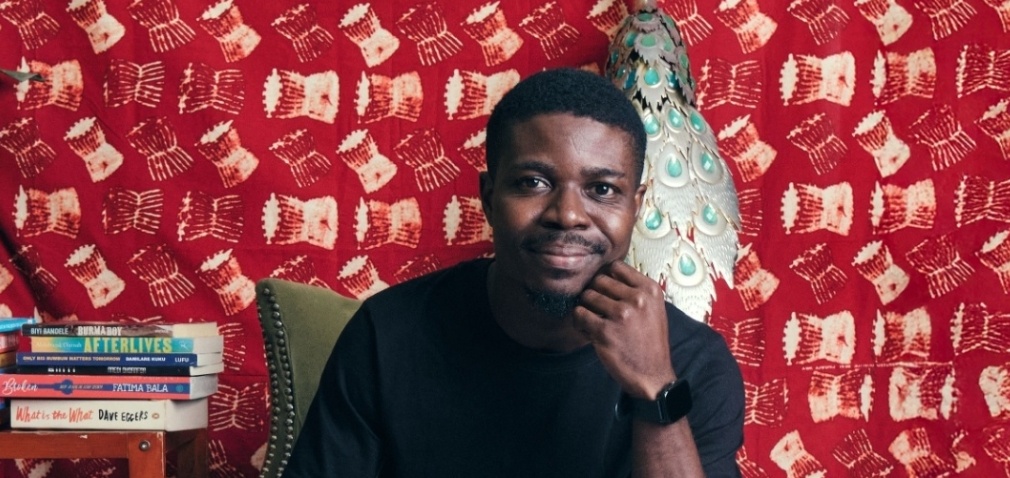
Chisom is a Nigerian fiction writer and poet. His short stories have been featured on Omenana, Apex, Clarkesworld, Year’s Best African Speculative Fiction 2023, African Ghosts anthology, Isele, Mythaxis, ZamaShorts, and elsewhere. His short story, “Ancestors’s Gift” won the 2024 Tractor Beam short story contest. He was a finalist for the Seattle Worldcon Short Story Contest, longlisted for the British Science Fiction Association Awards, and is the winner of the 2025 Nommo Award for Best African Speculative Fiction Short Story.

<!–more–>

1) Which Nigerian city do you live in, and what is it like?

I live in Lagos and it’s quite an interesting city. It wants to be everything at the same time, so it has its hands in many places. Some parts of the city are quite urban and there are houses in estates that run into millions of dollars, but there are also shantytowns with houses built from corrugated sheets. Also, there are churches in almost every street corner, but someone can pick your pocket right in front of one if you’re not careful. Lol. It’s a jack of all trades and master of many.

2) I know relatively little about African science fiction, but I get the impression that Nigeria has a particularly lively and growing SF scene. Would you agree? If so, what do you think accounts for this growth, and how does the Nigerian scene compare with those in other African countries?

I agree with you that it has a growing speculative fiction scene, “growing” being the key word. Most people who come to literature and writing in these parts usually do so through the literary fiction and (more recently) romance route. Nigerian writers have broken a lot of ground in those areas so they’re the most popular. Genre fiction over here is still picking up steam and trying to catch up. Longtime torch bearers like Nnedi Okorafor, Wole Talabi, Tade Thompson, and others, have helped spread the word through their extensive works, but a new crop of writers are finding their voices too and doing magic. Look out for the works of folks like Pemi Aguda, Uchechukwu Nwaka, Plangdi Neple, Somto Ihezue, Osahon Ize-Iyamu, Gabrielle Emem Harry, amongst many others, and you’ll see exactly why the genre is on the rise here. I think some other things that are also driving this growth are social media, genre literary magazines, and the prospect of writers getting paid for their works. Social media has helped us find outlets willing to platform our writings, and the knowledge that we can earn something from that is enough to keep some of us writing. I think something similar too is happening across other African countries. These little fires are spreading everywhere.


From Across Time (2024)

A woman discovers a hidden message from a time-traveling lover who erased their love story to save it. No one remembers it, no proof remains except a video, and she decides to build a time machine to find her.

3) In your story From Across Time, the heroine Adaeze experiences the emotional consequences of a relationship she cannot remember. What interested you in exploring the emotional impact of a relationship that only one person bears memory of?

The thing that got me thinking about this story, like I usually say, was a short story by Vajra Chandrasekera titled Peristalsis. In the story, he used a concept that involved the two main characters watching a movie of themselves on TV. They hadn’t seen this movie before and thus didn’t know how it was going to play out, so they were keen on following it. The story moved between the characters in the real world and the version of themselves in the screen, and this interesting technique got me thinking: What if one character was on the other side and was trying desperately to communicate with the other who didn’t remember them again? Then, because I love exploring themes around time travel, I asked, again, what if they were distances from each other in time?

4) Is the woman in the video being selfless by preserving the memory of their love, or selfish by forcing Adaeze to live with a loss she would otherwise never have known?

I think it’s a bit of both. She feels terrible for taking away the memories of their beautiful relationship from Adaeze, so she wants to make up for that by telling her about it. In this way, we can say that she’s selfish. She’s inflicting memories on someone who would have otherwise lived her life perfectly without them, just to assuage her guilt. But she’s also giving Adaeze a gift, one Adaeze herself isn’t sure she’d have given back if the option presented itself, because that information is precious to her.

5)The ending suggests that the heroine values knowing the truth over the comfort of blissful ignorance. Was that an important theme you wanted to explore?

Not really. That ending just came to me as I was drawing close to completing the story and it just felt like the most natural place to leave things off.


Prerequisites for the creation of a possible world (2025)

When a futuristic simulated World’s Fair unexpectedly begins to malfunction, an undercover employee must navigate the collapsing digital past while a major technological crisis threatens the entire enterprise.

6) What interests you about the futures people imagined in the past, especially those that never came true?

The present we are living now is largely as a result of the imaginings and postulations of people who lived in the past. Someone imagined humans flying like birds through the air and got to work on the idea, and today the skies are filled with airplanes. Someone once imagined communicating with someone else far away from them wirelessly, and so they began to manipulate radio waves. Today, we have cell phones. Things we have now began from past predictions, and so will things in the future. But there are also tons of things people thought about that never came to fruition; technologies (flying cars come to mind, at least for now), societies, and all. I like to think about them too, and that’s how I came to the idea of the story.

7) Why is belief in a prediction one of the four prerequisites for recreating a possible world? What role does belief play in this process?

Because I believe that the level of conviction a creator has in their idea, amongst other things, contributes greatly to whether the idea would eventually be brought to fruition. In the story, a giant AI simulator builds photorealistic worlds that people from different planets can come and take tours in. These worlds are the imaginations of earth people from the distant past. They’re predictions of how things would look like, but were ultimately wrong about. So these future people in the story then use this AI to create that world just to connect with the people of old. But the AI can only proceed to create such a world if there was sufficient evidence that the people who predicted them believed in them completely, even though it never came to pass. It’s one of the prerequisites that the AI demands, because without that, it doesn’t think that world would be believable after building it.

To the Death (2023)

A man’s feud with his sister’s abusive police boyfriend moves into their dreams, where the officer tries to kill him every night.

8) Your story To the Death suggests that understanding someone’s deepest fears can be a powerful way to defeat them. Do you think this kind of psychological insight is a form of power?

I think so. Think of the ways big tech companies go to lengths to obtain private data of their customers. The way they use that information to eventually force their users to stay glued to their platform like zombies, eventually divulging more data. This isn’t exactly what happens in the story, but it’s a version of it. The protagonist used information gathering to access his adversary’s weaknesses, and used that in a spiritual warfare against him.

9) When the protagonist and the policeman fight in their dreams, are they experiencing lucid dreams? I’ve had a few myself, and I find the experience fascinating.

Would have been interesting too if they were lucid, but I just wanted to set these dreams in the actual dream realm to add to the spookiness of the story. I don’t know how well I achieved that eerie feel though. I just hope readers find the story interesting enough.


10) To conclude, what are you currently working on?

At this moment, I’m writing a story for the volume 2 of the Applied African Speculative Fiction anthology. It’s a collaborative project between speculative fiction writers and experts in different fields. So I’ll be working with a renowned expert to deliver a scientifically accurate and grounded story. On the longer term, I’m still hoping to put together my short story collection. Hopefully I manage to achieve that in the nearest future.

0

Mini, spoiler free review of *Luminous*, by Silvia Park

preview

The story takes place some years in the aftermath of a war that ended with a reunited Korea, in a future where robots are ubiquitous. Ruijie is a disabled young girl who walks with the aid of automated braces. While exploring a scrap yard she finds a damaged but charming robot in the shape of a boy. Jun and Morgan are estranged brother and sister, each with emotional scars from the disappearance of their older brother, a lifelike robot created by their visionary roboticist father. Jun, now a cop, is investigating the disappearance of an older model child robot, and Morgan, now a roboticist herself, is preparing for the rollout of her company’s new line of advanced child robots. The story has a lot going on, with a number of interesting characters, both human and robot. There’s a little too much coincidence in the circumstances that reconnect the siblings for my tastes, but the story is otherwise interesting, with a lot of exploration of how we’re shaped by memories and what it means to be human.

The story takes place some years in the aftermath of a war that ended with a reunited Korea, in a future where robots are ubiquitous. Ruijie is a disabled young girl who walks with the aid of automated braces. While exploring a scrap yard she finds a damaged but charming robot in the shape of a boy. Jun and Morgan are estranged brother and sister, each with emotional scars from the disappearance of their older brother, a lifelike robot created by their visionary roboticist father. Jun, now a cop, is investigating the disappearance of an older model child robot, and Morgan, now a roboticist herself, is preparing for the rollout of her company’s new line of advanced child robots. The story has a lot going on, with a number of interesting characters, both human and robot. There’s a little too much coincidence in the circumstances that reconnect the siblings for my tastes, but the story is otherwise interesting, with a lot of exploration of how we’re shaped by memories and what it means to be human.

0

Silly Asses (1958) – Isaac Asimov

SFSS Silly Asses (1958) - Isaac Asimov sfss.space
preview

The people of Earth develop nuclear power. Naron, a long-lived Rigellian who serves as the Keeper of galactic records, notes this achievement and records humanity as having reached maturity. Until he discovers something else… Despite the seriousness of the subject, Asimov keeps a light touch in this very short story.


A 1-minute read.

Naron of the long-lived Rigellian race was the fourth of his line to keep the Galactic records.

He had the large book which contained the list of the numerous races throughout the Galaxies that had developed intelligence, and the much smaller book listing those races that had reached maturity and had qualified for the Galactic Federation. In the first book, a number of those listed were crossed out; those that, for one reason or another, had failed. Misfortune; biochemical or biophysical shortcomings; social maladjustment, etc., took their toll. In the smaller book, however, no member listed had yet blanked out.

And now Naron, large and incredibly ancient, looked up as a messenger approached.

“Naron,” said the messenger. “Great One!”

“Well, well, what is it? Less ceremony.”

“Another group of organisms has attained maturity.”

“Excellent. Excellent. They are coming up quickly now. Scarcely a year passes without a new one. And who are these?”

The messenger gave the code number of the Galaxy and the coordinates of the world within it.

“Ah, yes,” said Naron. “I know the world.” And in flowing script, he noted it in the first book and transferred its name into the second—using, as was customary, the name by which the planet was known to the largest fraction of its populace. He wrote: Earth.

He said, “These new creatures have set a record. No other group has passed from intelligence to maturity so quickly. No mistake, I hope.”

“None, sir,” said the messenger.

“They have attained to thermonuclear power, have they?”

“Yes, sir.”

“Well, that’s the criterion.” Naron chuckled. “And soon their ships will probe out and contact the Federation.”

“Actually, Great One,” said the messenger, reluctantly, “the Observers tell us they have not yet penetrated space.”

Naron was astonished. “Not at all? Not even a space station?”

“Not yet, sir.”

“But if they have thermonuclear power, where then do they conduct their tests and detonations?”

“On their own planet, sir.”

Naron rose to his full twenty feet of hight and thundered, “On their own planet?”

“Yes, sir.”

Slowly, Naron drew out his stylus and passed a line through the latest addition in the smaller book. It was an unprecedented act, but, then, Naron was very wise and could see the inevitable as well as anyone in the Galaxy.

“Silly asses,” he muttered.

0

Examination day (1958) – Henry Slesar

SFSS Examination Day (1958) - Henry Slesar sfss.space
preview

A boy takes a national intelligence test. His parents wait by the phone. Not a word is wasted in this very short story, and the twist at the very end will catch you off guard. A 3-minutes read.

The Jordans never spoke of the exam, not until their son, Dick, was 12 years old. It was on his birthday that Mrs. Jordan first mentioned the subject in his presence, and the anxious manner of her speech caused her husband to answer sharply.

“Forget about it,” he said. “He’ll do all right.”

They were at the breakfast table, and the boy looked up from his plate curiously. He was an alert-eyed youngster, with flat blond hair and a quick nervous manner. He didn’t understand what the sudden tension was about, but he did know that today was his birthday, and he wanted harmony above all.

Somewhere in the little apartment there was wrapped, beribboned packages waiting to be opened. In the tiny wall-kitchen, something warm and sweet was being prepared in the automatic stove. He wanted the day to be happy, and the moistness of his mother’s eyes, the scowl of his father’s face, spoiled the mood of expectation with which he had greeted the morning.

“What exam?” he asked.

His mother looked at the tablecloth. “It’s just a sort of Government intelligence test they give children at the age of twelve. You’ll be taking it next week. It’s nothing to worry about.”

“You mean a test like in school?”

“Something like that,” his father said, getting up from the table. “Go read your comic books, Dick.”

The boy rose and wandered toward that part of the living room that had been “his” corner since infancy. He fingered the topmost comic of the stack, but seemed uninterested in the colorful squares of fast-paced action. He wandered toward the window and peered gloomily at the veil of mist that shrouded the glass.

“Why did it have to rain today?” he asked. “Why couldn’t it rain tomorrow?” His father, now slumped into an armchair with the Government newspaper, rattled the sheets in vexation. “Because it just did, that’s all. Rain makes the grass grow.”

“Why, Dad?”

“Because it does, that’s all.”

Dick puckered his brow. “What makes it green though? The grass?”

“Nobody knows,” his father snapped, then immediately regretted his abruptness. Later in the day, it was birthday time again. His mother beamed as she handed over the gaily-colored packages, and even his father managed a grin and a rumple-of-thehair.

He kissed his mother and shook hands gravely with his father. Then the birthday cake was brought forth, and the ceremonies concluded.

An hour later, seated by the window, he watched the sun force its way between the clouds.

“Dad,” he said, “how far away is the sun?”

“Five thousand miles,” his father said.


Dick: “It won’t be long now. When they call your name, you go through the doorway at that end of the room.” He indicated the portal with his finger.

A concealed loudspeaker crackled and called off the first name. Dick saw a boy leave his father’s side reluctantly and walk slowly towards the door.

At five minutes of eleven, they called the name of Jordan.

“Good luck, son,” his father said, without looking at him. “I’ll call for you when the test is over.”

Dick walked to the door and turned the knob. The room inside was dim, and he could barely make out the features of the gray-tunicked attendant who greeted him.

“Sit down,” the man said softly. He indicated a high stool behind his desk. “Your name’s Richard Jordan?”

“Yes sir.”

“Your classification number is 600-115. Drink this, Richard.”

He lifted a plastic cup from the desk and handed it to the boy. The liquid inside had the consistency of buttermilk, tasted only vaguely of the promised peppermint. Dick downed it and handed the man the empty cup.

He sat in silence, feeling drowsy, while the man wrote busily on a sheet of paper. Then the attendant looked at his watch and rose to stand only inches from Dick’s face.

He unclipped a pen-like object from the pocket of his tunic and flashed a tiny light into the boy’s eyes.

“All right,” he said. “Come with me, Richard.”

He led Dick to the end of the room, where a single wooden armchair faced a multi-dialed computing machine. There was a microphone on the left arm of the chair, and when the boy sat down, he found its pinpoint head conveniently at his mouth.

“Now just relax, Richard. You’ll be asked some questions, and you think them over carefully. Then give your answers into the microphone. The machine will take care of the rest.”

“Yes, sir.”

“I’ll leave you alone now. Whenever you want to start, just say ‘ready’ into the microphone.”

“Yes, sir.”

The man squeezed his shoulder and left.

Dick said, “Ready.”

Lights appeared on the machine, and a mechanism whirred. A voice said:

“Complete this sequence. One, four, seven, ten…”


Mr. and Mrs. Jordan were in the living room, not speaking, not even speculating.

It was almost four o’clock when the telephone rang. The woman tried to reach it first, but her husband was quicker.

“Mr. Jordan?”

The voice was clipped; a brisk, official voice.

“Yes, speaking.”

“This is the Government Educational Service. Your son, Richard M. Jordan, Classification 600-115, has completed the Government examination. We regret to inform you that his intelligence quotient has exceeded the Government regulation, according to Rule 84, Section 5, of the New Code.”

Across the room, the woman cried out, knowing nothing except the emotion she read on her husband’s face.

“You may specify by telephone,” the voice droned on, “whether you wish his body interred by the Government or would you prefer a private burial place? The fee for Government burial is ten dollars.”

0

Mini, spoiler free review of *Shorefall*, by Robert Jackson Bennett [fantasy]

preview

Sequel to Foundryside, set in the same city in which inanimate objects can be "scrived” to somewhat change their structure or state (make a wooden door behave more like stone, or a sword behave like it’s moving much faster than it is). In the prior book we learned that this ability was learned from recovered fragments from a long gone civilization of "hierophants” who were masters of it. Here, Sancha and most of the main characters from the prior book have settled into a new life, but learn that someone is attempting to resurrect the original and greatest hierophant, who is likely to destroy their world. As with the first, I enjoyed this book. The world is interesting, the characters relatable, and the action kept the pages turning.

Sequel to Foundryside, set in the same city in which inanimate objects can be "scrived” to somewhat change their structure or state (make a wooden door behave more like stone, or a sword behave like it’s moving much faster than it is). In the prior book we learned that this ability was learned from recovered fragments from a long gone civilization of "hierophants” who were masters of it. Here, Sancha and most of the main characters from the prior book have settled into a new life, but learn that someone is attempting to resurrect the original and greatest hierophant, who is likely to destroy their world. As with the first, I enjoyed this book. The world is interesting, the characters relatable, and the action kept the pages turning.

0

What lesser-known sci-fi reads do you recommend?

Tildes What lesser-known sci-fi reads do you recommend? - ~books tildes.net
preview

There are some great novel recommendations here, but I wouldn’t say that most of them are lesser-known.

What are your recommendations?

As for me, I’ve exclusively read well-known novels, except if you consider someone like Alfred Bester obscure, for example.

One exception: Misha Burnett’s Endless Summer: Twelve Strange Tales of Mankind’s Future. It’s a collection of exceptionnaly well-crafted stories. It ain’t a novel, though.

0

Mini, spoiler free review of *Klara and the Sun*, by Kazuo Ishiguro

preview

In an unspecified but not too distant future, classrooms give way to individual instruction on mobile devices and children are more isolated. “Artificial Friends” (AFs) - androids designed as companions - become more popular to help reduce their loneliness. Klara is an AF, bought for a very sick young girl. Though Klara is especially clever and observant, her knowledge of how the world works is very limited. This is a wonderful but very slowly paced story - if you’re looking for something action packed, it’s not here. I really enjoyed the way Ishiguro gives us a constant trickle of information about the future he’s created, and I enjoyed Klara’s joyful nature.

In an unspecified but not too distant future, classrooms give way to individual instruction on mobile devices and children are more isolated. “Artificial Friends” (AFs) - androids designed as companions - become more popular to help reduce their loneliness. Klara is an AF, bought for a very sick young girl. Though Klara is especially clever and observant, her knowledge of how the world works is very limited. This is a wonderful but very slowly paced story - if you’re looking for something action packed, it’s not here. I really enjoyed the way Ishiguro gives us a constant trickle of information about the future he’s created, and I enjoyed Klara’s joyful nature.

0

Knock (1948) – Fredric Brown

SFSS Knock (1948) – Fredric Brown sfss.space
preview

There is a sweet little horror story that is only two sentences long:

“The last man on Earth sat alone in a room. There was a knock on the door…”

There is a sweet little horror story that is only two sentences long:

“The last man on Earth sat alone in a room. There was a knock on the door…”

0

Mini, spoiler free review of *Witch King*, by Martha Wells [Fantasy]

preview

Kai is a powerful demon who awakens outside of his human body to find he’s been trapped unconscious in a tomb for over a year. His long-time friends are also missing. He has to figure out who has done this, and why. The story alternates between this “present" timeline, and a "past” timeline that starts with him as a young demon in his newly-gifted human body. Wells has a real knack for creating worlds with interesting rules (far from the cookie cutter tropes of some fantasy), and then exploring the boundaries of those rules. I enjoyed it, but also felt like there was an odd detachment to the story - like there wasn’t a lot of emotional attachment to the characters. As an aside, Wells has a penchant for making subtle or not-so-subtle commentary on our society and the prejudices in it. As examples in this one, demons are referred to by the gender of their demon selves, not the gender of the body they’re in. Some societies have gender neutral clothing, but where it’s gendered it’s the men who wear skirts and women who wear pants. One culture is referred to as confusing because they stick to two genders.

Kai is a powerful demon who awakens outside of his human body to find he’s been trapped unconscious in a tomb for over a year. His long-time friends are also missing. He has to figure out who has done this, and why. The story alternates between this “present" timeline, and a "past” timeline that starts with him as a young demon in his newly-gifted human body. Wells has a real knack for creating worlds with interesting rules (far from the cookie cutter tropes of some fantasy), and then exploring the boundaries of those rules. I enjoyed it, but also felt like there was an odd detachment to the story - like there wasn’t a lot of emotional attachment to the characters. As an aside, Wells has a penchant for making subtle or not-so-subtle commentary on our society and the prejudices in it. As examples in this one, demons are referred to by the gender of their demon selves, not the gender of the body they’re in. Some societies have gender neutral clothing, but where it’s gendered it’s the men who wear skirts and women who wear pants. One culture is referred to as confusing because they stick to two genders.

0

Mini, spoiler free review of *The Gate of the Feral Gods*, by Matt Dinniman

preview

Book four of the Dungeon Crawler Carl series. Carl, Donut, and Katia get to the next level, get into more trouble, get additional skills and levels, and figure more things out. This level has the crawlers divided up into separate domes with different circular quadrants. Also, there’s getting to be a little more about the underlying factions and politics of the universe as the serious progresses. As before, if you liked the prior books, you’ll probably like this one.

Book four of the Dungeon Crawler Carl series. Carl, Donut, and Katia get to the next level, get into more trouble, get additional skills and levels, and figure more things out. This level has the crawlers divided up into separate domes with different circular quadrants. Also, there’s getting to be a little more about the underlying factions and politics of the universe as the serious progresses. As before, if you liked the prior books, you’ll probably like this one.

0

Mini, spoiler free review of *Reamde*, by Neal Stephenson

preview

Zula has taken a job at a company responsible for a globally popular video game, founded by her billionaire uncle. Her boyfriend Peter has entered into an illegal transaction with someone he doesn’t realize is connected to the Russian Mafia. Everything goes south, and Zula and Peter are abducted. What follows is a book with a giant scope. It’s an international suspense thriller that takes a multitude of interesting main characters to the limits of their capabilities. Stephenson manages to linger on lots of small technical details in a way that’s interesting, and while still making a real page-turner with characters we care about for over 1000 pages.

Zula has taken a job at a company responsible for a globally popular video game, founded by her billionaire uncle. Her boyfriend Peter has entered into an illegal transaction with someone he doesn’t realize is connected to the Russian Mafia. Everything goes south, and Zula and Peter are abducted. What follows is a book with a giant scope. It’s an international suspense thriller that takes a multitude of interesting main characters to the limits of their capabilities. Stephenson manages to linger on lots of small technical details in a way that’s interesting, and while still making a real page-turner with characters we care about for over 1000 pages.

0

A Pail of Air (1951) – Fritz Leiber

SFSS A Pail of Air (1951) - Fritz Leiber sfss.space
preview

So, it’s a very optimistic story. If some of you are utterly despaired, well of course it certainly won’t fix the problem(s), but it could be food for thought.

In general, I’d be curious to know what did you think of this story (its very long tho compared to my usual posts, so theyre might not be a lot of readers)

Thinking of adding a comment section in the future

0

Looking for religious short stories/ books/authors

preview

I’m non dénominationel Christian and id be interested by any kind of christianity inspired works, be they catholic or protestant or whatever.

Same for all religions: buddhism, islam, anything religious.

If not religious but spiritual and exceptionnal like PKD’s gnosticism, Im also curious. Not only for the gnosticism, but the whole doubting if some things experienced during psychosis are not all batshit-land, so I’ve also put Jung in my to read list, but let’s keep it sci-fi.

0

Mini, spoiler free review of *Dissolution*, by Nicholas Binge

preview

Maggie is an 83-year-old woman living alone while her husband is in a memory care facility with Alzheimer’s. She’s visited by a man who tells her that it’s not a disease - her husband’s memories are being erased intentionally because of something he discovered, and she needs to go inside his memories to find out what it was and to save him. There’s quite a bit packed into this book. It’s a thriller, a puzzle book, and especially it’s a love story. There’s one element of the book that seems more like mysticism than SF, but it’s hard to say more - really about any aspect of the book - without spoilers. I enjoyed it and it kept me turning pages into the night.

Maggie is an 83-year-old woman living alone while her husband is in a memory care facility with Alzheimer’s. She’s visited by a man who tells her that it’s not a disease - her husband’s memories are being erased intentionally because of something he discovered, and she needs to go inside his memories to find out what it was and to save him. There’s quite a bit packed into this book. It’s a thriller, a puzzle book, and especially it’s a love story. There’s one element of the book that seems more like mysticism than SF, but it’s hard to say more - really about any aspect of the book - without spoilers. I enjoyed it and it kept me turning pages into the night.

0

Quick Review of Katabasis

preview

Based on a request from a comment deep in another thread I have a quick review of the novel Katabasis by R.F Kuang

The novel in brief (without any spoilers) is about two magicians, doctoral candidates, who must venture into hell to save their thesis advisor in order to receive letters of recommendation. Its a deep look into academia and our concepts of hell and the underworld.

Overall I would recommend the book especially if you enjoy fantasy, or deep world building. Like other R.F Kuang novels is it well researched, full of real world references and root in her own experiences. In this book the experiences is academia especially the cut throat elite university of a PhD program. The book is about a journey to hell deep with references toward underworld deities and stories from around the world that add a depth and complexity to a hero’s journey. The trip to the underworld is a method to both explore the deep world building including an unique magic system as well as the protagonist personal journey of discovery. The novel is about two similar characters who are both magician going through a personal journey to rescue their advisor for their own personal reasons. Overall, its fascinating, well researched and definitely unique. Overall I would recommend it, especially if you enjoy Babel.

Like some of her other novels it can get long but in this case the multiple layers of hell do provide a direction as well a structure about its length. Like most of her other novels there are multiple themes and ideas that are explored which can seem meandering but I quite enjoyed all the ideas.

0

Mini, spoiler free review of *Days of Shattered Faith*, by Adrian Tchaikovsky

preview

Book three of the Palleseen Sway series. Many of the main characters of the prior book figure into this one, but they’re less of the focus. It takes place in the aftermath of the prior book’s war, but in Usmiat, a costal city kingdom ruled by a blind king, but with some Pal presence in the city. Most of the focus is on the woman who is the highest ranking Pal, and on the king’s heir. This one seemed to take longer to get going, but as it went along the momentum kept building. Tchaikovsky does a good job creating rich and diverse cultures as they clash or align. Good.

Book three of the Palleseen Sway series. Many of the main characters of the prior book figure into this one, but they’re less of the focus. It takes place in the aftermath of the prior book’s war, but in Usmiat, a costal city kingdom ruled by a blind king, but with some Pal presence in the city. Most of the focus is on the woman who is the highest ranking Pal, and on the king’s heir. This one seemed to take longer to get going, but as it went along the momentum kept building. Tchaikovsky does a good job creating rich and diverse cultures as they clash or align. Good.

0

Question: should this be a fantasy-free zone?

preview

I read a lot of both SF and fantasy. Most communities I’ve dealt with have commingled the genres, in part because the line between them can be blurry. Is this community supposed to be strictly SF, or are discussions of fantasy also okay?

I was going to post my mini review of Days of Shattered Faith, by Adrian Tchaikovsky, but it’s clearly fantasy (though Tchaikovsky writes quite a lot of SF), so I thought I should ask.

Edit: it seems like I’ve had pretty good response to the question, and the vast majority would prefer to be more inclusive rather than draw a line. I’ll go ahead and continue posting both, though note that so far a moderator hasn’t weighed I in, and that could change things.

0

Mini, spoiler free review of *The Dungeon Anarchist's Cookbook*, by Matt Dinniman

preview

Book three of the Dungeon Crawler Carl series. The team is on a level consisting of trains and stations. I was almost right that I could reuse “Carl and Donut get to the next level, get into more trouble, get additional skills and levels, and figure more things out” except that I have to add Katia. It’s a good hearted series. As before, if you liked the prior books, you’ll probably like this one

Book three of the Dungeon Crawler Carl series. The team is on a level consisting of trains and stations. I was almost right that I could reuse “Carl and Donut get to the next level, get into more trouble, get additional skills and levels, and figure more things out” except that I have to add Katia. It’s a good hearted series. As before, if you liked the prior books, you’ll probably like this one

0

Question for scifi worldbuilding: could Nuclear Thermal Rockets have higher thrust?

preview

NERVA has about 250 kN of thrust at 841 seconds of specific impulse.
Merlin 1D has about 1000 kN of thrust at 311 seconds of specific impulse.
That suggests NTRs have around 4x less thrust, but around 2.7z more efficiency than chemical rockets. At a large enough scale craft, the weight of the engine could be considered irrelevant. But for smaller crafts, the Merlin has a thrust to weight ratio of 184:1, whereas NTRs only ever achieved 7:1 (they hoped to get up to around 35:1 eventually).

I imagine the thrust to weight could be substantially improved by making lightweight reactors, but I’m wondering if anybody knows anything about concepts for higher thrust NTRs?

en.wikipedia.org/wiki/NERVA
en.wikipedia.org/wiki/SpaceX_Merlin

0

'By Any Means Necessary' - In 1994, Sci-fi show Babylon 5 aired an episode about exploited dock workers on the station forming a militant union, using slowdown tactics, and enacting a wildcat strike

play · youtube.com
YouTube By Any Means Necessary | S1 E12 | Babylon 5 FULL EPISODE www.youtube.com
preview

cross-posted from: slrpnk.net/post/41960577

After bouncing off the show a couple times over the years, I finally sat down and gave it an earnest try, and found that I actually enjoyed it more than I thought I would (for reference, I could never enjoy DS9), and this episode in particular really got me hooked to the series overall. I think it did a good job of showing the effectiveness of unions, and more surprisingly, went as far as to depict the government as wanting nothing more than to violently suppress it after delivering empty promises.

Apparently all the episodes are slowly being uploaded to youtube now due to the efforts of the creator of the show, with one new episode every 3 days. If you’ve ever been interested in trying Babylon 5, now is a good time to start :)

Here’s a link to the season 1 playlist: www.youtube.com/watch?v=pGVW-aDczak&list=PLGTv90e…

Personally I enjoyed all of season 1, but the prevailing view is that it really gets its footing in season 2, but I have to say, season 1 has tons of great setup that pays off if you watch through it.

0

Mini, spoiler free review of *Carl's Doomsday Scenario*, by Matt Dinniman

preview

Sequel to Dungeon Crawler Carl. Carl and Donut get to the next level, get into more trouble, get additional skills and levels, and figure more things out. Pretty sure I can reuse the description for all subsequent books in the series. Basically an extension of the first book. If you liked it, you’ll like this one. Continues to be dumb fun.

Sequel to Dungeon Crawler Carl. Carl and Donut get to the next level, get into more trouble, get additional skills and levels, and figure more things out. Pretty sure I can reuse the description for all subsequent books in the series. Basically an extension of the first book. If you liked it, you’ll like this one. Continues to be dumb fun.

0

Mini, spoiler free review of *Dungeon Crawler Carl*, by Matt Dinniman

preview

Carl is outside in his boxers trying to get his girlfriend’s cat out of a tree when everything with a roof on the planet is destroyed and the smaller number of survivors are made to compete in an intergalactic dungeon game similar to D&D. If this sounds kind of dumb, I described it correctly; it’s kind of dumb. It’s also fairly entertaining and has a good amount of heart. People who have played any sort of role playing game, like World Of Warcraft, will probably be extra amused.

Carl is outside in his boxers trying to get his girlfriend’s cat out of a tree when everything with a roof on the planet is destroyed and the smaller number of survivors are made to compete in an intergalactic dungeon game similar to D&D. If this sounds kind of dumb, I described it correctly; it’s kind of dumb. It’s also fairly entertaining and has a good amount of heart. People who have played any sort of role playing game, like World Of Warcraft, will probably be extra amused.

0

Mini, spoiler free review of *Platform Decay*, by Martha Wells

preview

Book 8 of the Murderbot Diaries series. Murderbot is sent to rescue some of Mensah’s family members who have been taken hostage on an immense torus built around a dead planet. He has a new emotional status check module, which is equal parts helping and irritating. As usual, the extraction plan doesn’t go smoothly. This edition of the series is just okay. It almost seems like Wells was making it up as she went along. It feels like a side story more than a full installment. But it’s short and probably worth reading if you’ve enjoyed the series up till now.

Book 8 of the Murderbot Diaries series. Murderbot is sent to rescue some of Mensah’s family members who have been taken hostage on an immense torus built around a dead planet. He has a new emotional status check module, which is equal parts helping and irritating. As usual, the extraction plan doesn’t go smoothly. This edition of the series is just okay. It almost seems like Wells was making it up as she went along. It feels like a side story more than a full installment. But it’s short and probably worth reading if you’ve enjoyed the series up till now.

0

Mini, spoiler free review of *House of Open Wounds,* by Adrian Tchaikovsky (fantasy)

preview

Sequel to City of Last Chances. Yasnic, the (ex)priest from the first book, has been sent to the Palleseen army, forced to help in a hospital that uses a variety of magic-enabled approaches to healing battlefield injuries. He carries his god, along with a couple other small gods he found before being captured, in a box on his back. Whereas the first book was mostly set in a large, diverse city, this one is set in an army camp, which gives the setting a more intimate feel. Tchaikovsky shows his amazing creativity once again; there are concepts here that would have been the whole basis for a novel in someone else’s hand, but are just part of the richness of the world here. Though they’re pretty different, if you liked the first book, you’ll probably like this one.

Sequel to City of Last Chances. Yasnic, the (ex)priest from the first book, has been sent to the Palleseen army, forced to help in a hospital that uses a variety of magic-enabled approaches to healing battlefield injuries. He carries his god, along with a couple other small gods he found before being captured, in a box on his back. Whereas the first book was mostly set in a large, diverse city, this one is set in an army camp, which gives the setting a more intimate feel. Tchaikovsky shows his amazing creativity once again; there are concepts here that would have been the whole basis for a novel in someone else’s hand, but are just part of the richness of the world here. Though they’re pretty different, if you liked the first book, you’ll probably like this one.

0

Answer (1954) – Fredric Brown

SFSS Answer (1954) - Fredric Brown sfss.space
preview

A very very short read. I don’t share Brown’s pessimism about AI, but this story dates back to 1954 (!) and is a fun read.

<!–more–>

Dwan Ev ceremoniously soldered the final connection with gold. The eyes of a dozen television cameras watched him and the subether bore throughout the universe a dozen pictures of what he was doing.

He straightened and nodded to Dwar Reyn, then moved to a position beside the switch that would complete the contact when he threw it. The switch that would connect, all at once, all of the monster computing machines of all the populated planets in the universe – ninety-six billion planets – into the supercircuit that would connect them all into one supercalculator, one cybernetics machine that would combine all the knowledge of all the galaxies.

Dwar Reyn spoke briefly to the watching and listening trillions. Then after a moment’s silence he said, “Now, Dwar Ev.”

Dwar Ev threw the switch. There was a mighty hum, the surge of power from ninety-six billion planets. Lights flashed and quieted along the miles-long panel.

Dwar Ev stepped back and drew a deep breath. “The honor of asking the first question is yours, Dwar Reyn.”

“Thank you,” said Dwar Reyn. “It shall be a question which no single cybernetics machine has been able to answer.”

He turned to face the machine. “Is there a God?”

The mighty voice answered without hesitation, without the clicking of a single relay. “Yes, now there is a God.”

Sudden fear flashed on the face of Dwar Ev. He leaped to grab the switch.

A bolt of lightning from the cloudless sky struck him down and fused the switch shut.

0

A timeline problem in For all mankind

preview

as someone who’s looked into FAM and is interested about Spaceflight history and proposals i have a lot of confusion about some things one of them is the timeline according to the show Jamestown had landed in 1973 and it’s implied to be after apollo-20 however it doesnt make sense since NASA can do two lunar missions per year even if they got infinite budget it will take at least until 1975 until they would get Jamestown worked out and launched Apollo 11-20 were already schedualed and if even if apollo-20 launches in 1973 it still means that NASA needs to test new technologies like the LSAM life support a new version of the CSM built for extended missions like i dont get it why make an alternate reality show about spaceflight and get all the historical and scientific things wrong you are pushing the greatest most devoted audience you can have

as someone who’s looked into FAM and is interested about Spaceflight history and proposals i have a lot of confusion about some things one of them is the timeline according to the show Jamestown had landed in 1973 and it’s implied to be after apollo-20 however it doesnt make sense since NASA can do two lunar missions per year even if they got infinite budget it will take at least until 1975 until they would get Jamestown worked out and launched Apollo 11-20 were already schedualed and if even if apollo-20 launches in 1973 it still means that NASA needs to test new technologies like the LSAM life support a new version of the CSM built for extended missions like i dont get it why make an alternate reality show about spaceflight and get all the historical and scientific things wrong you are pushing the greatest most devoted audience you can have

0

“There Will Come Soft Rains” by Ray Bradbury

preview

Crossposted from lemmy.world/post/50292024

“Today is August 4, 2026”

Text transcript available at the bottom

Transcript

## There Will Come Soft Rains By: Ray Bradbury In the living room the voice-clock sang, Tick-tock, seven o’clock, time to get up, time to get up, seven o’clock! As if it were afraid that nobody would. Seven-nine, breakfast time, seven-nine! In the kitchen the breakfast stove ejected eight pieces of perfectly browned toast, eight eggs sunnyside up, sixteen slices of bacon, two coffees, and two cool glasses of milk. “Today is August 4, 2026, the city of Allendale, California.” Somewhere in the walls, relays clicked, memory tapes glided under electric eyes. “”Eight-one, tick-tock, eight-one o’clock, off to school, off to work, run, run, eight-one!” But no doors slammed. It was raining outside. The weather box on the front door sang quietly: “Rain, rain, go away; rubbers, raincoats for today…” Outside, the garage chimed and lifted its door to reveal the waiting car. After a long wait the door swung down again. At eight-thirty the eggs were shriveled and the toast was like stone. An aluminum wedge scraped them into the sink. The dirty dishes were dropped into a hot washer and emerged twinkling dry. “Nine-fifteen,” sang the clock, “time to clean.” Tiny robot mice thudded against chairs, whirling their mustached runners, Kneading the rug nap, sucking gently at hidden dust. Then, they popped into their burrows. The house was clean. “Ten o’clock.” The sun came out from behind the rain. The house stood alone in a city of rubble and ashes. This was the one house left standing. At night the ruined city gave off a radioactive glow which could be seen for miles. “Ten-fifteen.” The garden sprinklers pelted the windowpanes, running down the charred west side where the house had been burned evenly free of its white paint. The entire west face of the house was black, save for five places. Here the silhouette in paint of a man mowing a lawn. Here, as in a photograph, a woman bent to pick flowers. Still farther over, their images burned on wood in one titanic instant, a small boy, hands flung into the air; higher up, the image of a thrown ball, and opposite him a girl, hand raised to catch a ball which never came down. The five spots of paint – the man, the woman, the children, the ball – remained. The rest was a think charcoaled layer. “Twelve noon.” A dog whined on the front porch. The front door recognized the dog voice and opened. The dog, once huge and fleshy, but now gone to bone and covered with sores, moved in and through the house, tracking mud. The dog frothed at the mouth, ran wildly in circles, biting at its tail, spun in a frenzy, and died. It lay in the parlor for an hour. “Two-fifteen.” The dog was gone. In the cellar, the incinerator glowed suddenly and a whirl of sparks leaped up the chimney. “Two thirty-five.” Bridge tables sprouted from patio walls. Playing cards fluttered. Martinis manifested while music played. But the tables were silent and the cards untouched. At four o’clock the tables folded back through the paneled walls. “Four-thirty.” The nursery walls glowed. Animals took shape: yellow giraffes, blue lions, pink antelopes, lilac panthers. Hidden films clocked through well-oiled sprockets, and the glas walls lived. It was the children’s hour. “Six, seven, eight o’clock.” The dinner dishes manipulated like magic tricks, and in the study a click. “Nine-five.” A voice spoke from the study ceiling: “Mrs. McClellan, which poem would you like this evening?” The house was silent. The voice said at last, “Since you express no preference, I shall select a poem at random.” “Sara Teasdale. As I recall, your favorite… “There will come soft rains and the smell of the ground, And swallows circling with their shimmering sound; And frogs in the pools singing at night, And wild plum trees in tremulous white; Robins will wear their feathery fire, Whistling their whims on a low fence-wire; And not one will know of the war, not one Will care at last when it is done, Not one would mind, neither bird nor tree If mankind perished utterly; And Spring herself, when she woke at dawn Would scarcely know that we were gone. At ten o’clock a falling tree bough crashed through the kitchen window shattering cleaning solvent over the stove. The room was ablaze in an instant. “Fire!” screamed a voice. Water pumps shot water from the ceilings while the voices took it up in chorus: “Fire, fire, fire!” The house tried to save itself, but the wind blew and sucked upon the fire. Scurrying water rats pistoled their water, and ran for more. And the wall sprays let down showers of mechanical rain. But too late. The quenching rain ceased. The reserve water supply which had filled baths and washed dishes for many quiet days was gone. From attic trapdoors gushed a green chemical. But the fire was clever. It had sent flames outside the house, up through The attic to the pumps there. An explosion! The attic brain which directed the pumps was shattered. The house shuddered, its bared skeleton cringing from the heat. And the voices wailed, “Fire, fire, run, run,” like a tragic nursery rhyme, a dozen voices, high, low. One, two, three, four, five voices died. Other choruses could be heard announcing the time, playing music, or cutting the lawn by remote-control mower. A scene of maniac confusion, yet unity; singing, screaming, and one voice, read poetry aloud in the firey study, until all the film spools burned. In the kitchen the stove could be seen making breakfasts at a psychopathic rate, ten dozen eggs, six loaves of toast, twenty dozen bacon strips, which eaten by the fire, started the stove working again, hysterically hissing! The crash. The attic smashing into kitchen and parlor. The parlor into cellar, cellar into sub-cellar. Smoke and silence. Among the ruins, one wall stood alone. Within the wall, a last voice said, over and over, “Today is August 5, 2026, today is August 5, 2026, today is …”

0

Mini, spoiler-free review of *Foundryside* by Robert Jackson Bennett

preview

Fantasy set in a world in which inanimate objects can be "scrived” to somewhat change their structure or state (make a wooden door behave more like stone, or a sword behave like it’s moving much faster than it is). The area is ruled by four merchant houses where people live in luxury, and between them is a lawless slum. A young girl with an unusual ability is making her way as an accomplished thief, hiding in the slum. She’s being paid a large sum to steal a box from a safe, but the contents may change her world. This is the first book in a trilogy, and I enjoyed it quite a bit. The characters are interesting and the pacing is spot on.

Fantasy set in a world in which inanimate objects can be "scrived” to somewhat change their structure or state (make a wooden door behave more like stone, or a sword behave like it’s moving much faster than it is). The area is ruled by four merchant houses where people live in luxury, and between them is a lawless slum. A young girl with an unusual ability is making her way as an accomplished thief, hiding in the slum. She’s being paid a large sum to steal a box from a safe, but the contents may change her world. This is the first book in a trilogy, and I enjoyed it quite a bit. The characters are interesting and the pacing is spot on.

0

Who is actually a Cylon in Battlestar Galactica (Spoilers)

preview

This post is full of spoilers about the 2003 reimagined series.

Throughout the series, a common trope is finding out that a character has secretly been a Cylon the entire time. Most of the time, these secret Cylons are not even aware that they are Cylons. They are under the impression that they are actually a human.

I would argue that every character we meet (except for the few “angels”) are actually Cylons. We literally never meet a real human in this series.

The rough chain of events were as follows:

  1. Humans created Cylons
  2. Humans/Cylons did not get along
  3. Cylons moved away
  4. Cylons developed their own culture in isolation
  5. Cylons forgot that they were robots and began to view themselves as true biological human beings
  6. Cylons (who believed themselves to actually be humans) created Cylons

And thus becomes a cycle. In each iteration of this loop, these “humans” create Cylons, and from their own perspective, they are inventing the concept of Cylons for the first time. But in reality, each of these loops is just the previous generation of Cylons creating the next generation of Cylons.

We spend the entire series following a group of individuals who we assume are humans. And these individuals themselves even assume they are humans as well. But unbeknownst to them, they are actually Cylons who have just spent so long in isolation that they started to believe they were the true human race.

But true humans are a thing of the past. They are likely living in peace in some distant galaxy after the first generation of Cylons had fled. We never see a real human.

0

Mini, spoiler free review of *Gateway*, by Frederick Pohl

preview

In Earth’s future, tunnels are found on Venus that contain alien artifacts left behind hundreds of thousands of years ago. Later an asteroid is found that is riddled with tunnels and studded with nearly a thousand small ships, most of which are in working order. The ships will travel faster than light to a preset destination, and return automatically, but no one knows where the destination will be, and a significant percentage of ships either never return, or return with the crew dead. Of those that do return, many return with alien technology or data on valuable locations, making the crew very wealthy. This has set off a sort of gold rush, with people spending everything they have to get to the “Gateway" asteroid and gamble their lives on the chance to get rich. The story is told through the eyes of one such man, who has gotten to Gateway, but then is too scared to take a mission. This is an amazing book. I read it originally in the 80s (it was written in the 70s), and I believe this was my first reread since then. I can’t recommend it strongly enough.

Edit: Sorry for the double post - I was having issues with my internet connection and was getting posting errors, but one of them must have worked. I deleted the other one.