0
ESA: TBD
From boring to bursting: a giant black hole awakens
www.esa.int
Not on this instance? Enter your own instance's domain to go straight to following c/space@sopuli.xyz there.

cross-posted from: sh.itjust.works/post/69597093
cross-posted from: sh.itjust.works/post/69597093


The Hera spacecraft has recently been assembled in Bremen, Germany by OHB. Its mission is to observe the result of NASAʼs DART mission which impacted Dimorphos in 2022-09. The Hera spacecraft will now be sent to the Netherlands for testing by the European Space Agency (ESA). The craft is scheduled to be launched by SpaceX from Cape Canaveral on 2024-10.
The Hera spacecraft has recently been assembled in Bremen, Germany by OHB. Its mission is to observe the result of NASAʼs DART mission which impacted Dimorphos in 2022-09. The Hera spacecraft will now be sent to the Netherlands for testing by the European Space Agency (ESA). The craft is scheduled to be launched by SpaceX from Cape Canaveral on 2024-10.

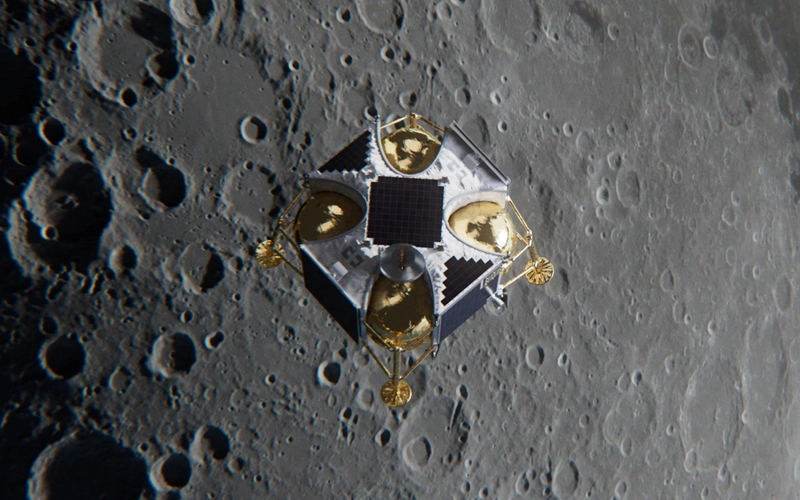
2023-08-23T12:34+00 (UTC)2023-08-23T05:34-07 (Los Angeles)2023-08-23T08:34-04 (New York)2023-08-23T15:34+03 (Helsinki)2023-08-23T15:34+03 (Kyiv)2023-08-23T18:04+05:30 (Delhi)2023-08-23T19:34+07 (Jakarta)2023-08-23T20:34+08 (Beijing)2023-08-23T22:34+10 (Sydney)Chandrayaan means “moon craft” in Hindi. In addition to the propulsion module that pushed the spacecraft into orbit around the moon, the landing module consists of the Vikram lander and the Pragyan rover that will attempt to set down on the lunar surface in the moon’s south polar region. The mission is robotic and there are no astronauts aboard.
The Aug. 23 landing was selected because it is the day when the sun will rise at the landing site. The mission is to conclude two weeks later when the sun sets. While on the surface, the solar-powered lander and rover will use a range of instruments to make thermal, seismic and mineralogical measurements.