0


follow from another instance
Not on this instance? Enter your own instance's domain to go straight to following c/technology@lemmygrad.ml there.

0

Tech for Palestine
Israel Is Attacking Wikipedia: Report - Tech for Palestine
techforpalestine.org
0
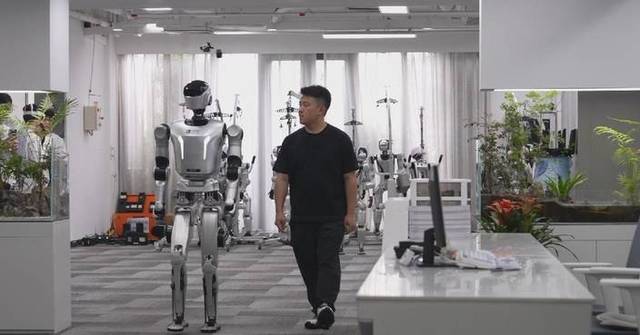
Shenzhen startup strives to make humanoid robots as affordable as household appliance
www.bastillepost.com
0

Tom's Hardware
China retains fastest supercomputer in the world crown as AI data centers soak up new hardware — Top500 records fewest new systems in 33 years
www.tomshardware.com
0
0

the Guardian
Revealed: Israel uploaded millions of photos to Amazon’s facial recognition platform to track Palestinians
www.theguardian.com
0

TechNode
Huawei’s native HarmonyOS tops 100 million installations, third-party tracker estimates · TechNode
technode.com
0
0
0
Home - Down With Data Centers
downwithdatacenters.now
0
Home - Down With Data Centers
downwithdatacenters.now
0

YouTube
DeepSeek's New LLM Engine Just Made GPUs 3x More Valuable
www.youtube.com
0
0

China Reporter
China's 10-ton electric commercial aircraft makes successful maiden manned flight - China Reporter
chinareporter.news
0

YouTube
Inside Shenzhen's waste-to-energy incineration plant
youtu.be
0

Interesting Engineering
China achieves 99.9999 percent purity in new hydrogen chloride plant
interestingengineering.com
0

TechNode
When robots dive underwater, HeymanDex sees new possibilities for dexterous hands · TechNode
technode.com
0

YouTube
The Husband behind the Huang/Huang Affair
www.youtube.com
0
0


NVIDIA Newsroom
NVIDIA Announces CEO Transition
nvidianews.nvidia.com
preview
NVIDIA Board of Directors announced today that Jensen Huang has resigned as President, Chief Executive Officer, and a member of the Board, effective immediately.
Colette Kress, current Executive Vice President and Chief Financial Officer of NVIDIA, has agreed to serve as Interim Chief Executive Officer. Kress will continue to serve as Executive Vice President and Chief Financial Officer while serving as Interim Chief Executive Officer until a permanent successor has been named. The Board is initiating a search for a permanent Chief Executive Officer and will consider internal and external candidates.

I shared some thoughts on this yesterday.
I think the smuggling and the general desire to continue exporting to China is the key here, and that Alice Huang being a spy is bullshit. I think she’s a chip smuggler, something that the Chinese state has been trying to curtail, because it wants to develop its own domestic chip industry that’s no longer depended on Western chip manufacturers. That’s why millions of NVIDIA chips are currently quarantined at Hong Kong ports.
I think this is a fight between two factions of big capital, one that wants to constrain China and another that wants to continue profiting from China.
NVIDIA Board of Directors announced today that Jensen Huang has resigned as President, Chief Executive Officer, and a member of the Board, effective immediately.
Colette Kress, current Executive Vice President and Chief Financial Officer of NVIDIA, has agreed to serve as Interim Chief Executive Officer. Kress will continue to serve as Executive Vice President and Chief Financial Officer while serving as Interim Chief Executive Officer until a permanent successor has been named. The Board is initiating a search for a permanent Chief Executive Officer and will consider internal and external candidates.
I shared some thoughts on this yesterday.
I think the smuggling and the general desire to continue exporting to China is the key here, and that Alice Huang being a spy is bullshit. I think she’s a chip smuggler, something that the Chinese state has been trying to curtail, because it wants to develop its own domestic chip industry that’s no longer depended on Western chip manufacturers. That’s why millions of NVIDIA chips are currently quarantined at Hong Kong ports.
I think this is a fight between two factions of big capital, one that wants to constrain China and another that wants to continue profiting from China.
0

theregister
Huawei says it’s made a 100 percent Chinese PC
www.theregister.com
0

TechNode
Huawei details how Kirin 9050 runs a 30-billion-parameter model on device · TechNode
technode.com
0

China's first commercial-grade solar-powered UAV makes maiden flight
news.cgtn.com
0

China Reporter
Siemens at CIIE: From selling in China to building with China - China Reporter
chinareporter.news
0

TechNode
Ant Group’s Robbyant open-sources tactile AI model for robot hands · TechNode
technode.com
0
0
0

Tech Unionism Against Doomerism
tribunemag.co.uk
0
0
0
0

China's 4,000-meter-class airborne wind power system completes first urban test flight
www.bastillepost.com
0

Cainiao Opens Its Global Warehouse Network as a Real-World Training Ground for Embodied AI
pandaily.com
0

Apparently you can buy "tokens" to gain access to Autodesk software instead of buying a subscription
preview
I learned about this practice today. The normal way of landlording software is to allow you the privilege of buying monthly or yearly subscriptions. But Autodesk lets you buy “tokens”. Their software costs certain tokens per day. According to their estimator, AutoCAD costs 7 tokens a day for example. “A Flex user uses tokens to open a product for 24 hours (one day).” The math is pretty bad. Buying tokens becomes uneconomical (vis-a-vis a subscription) if you use AutoCAD for 8 or more days in a month. Of course, this plan is marketed as “Autodesk Flex”.
I hate software companies.
I learned about this practice today. The normal way of landlording software is to allow you the privilege of buying monthly or yearly subscriptions. But Autodesk lets you buy “tokens”. Their software costs certain tokens per day. According to their estimator, AutoCAD costs 7 tokens a day for example. “A Flex user uses tokens to open a product for 24 hours (one day).” The math is pretty bad. Buying tokens becomes uneconomical (vis-a-vis a subscription) if you use AutoCAD for 8 or more days in a month. Of course, this plan is marketed as “Autodesk Flex”.
I hate software companies.
0

the Guardian
Activists break into building site of Microsoft datacentre in Amsterdam
www.theguardian.com
0

Rest of World
A rare strike in Taiwan exposes labor unrest beneath the global AI rush
restofworld.org
0

West China Hospital Develops MicroSpine: A 2mm Robotic Arm System for Minimally Invasive Spinal Surgery
pandaily.com
0
0
0
0
The Chosun Daily
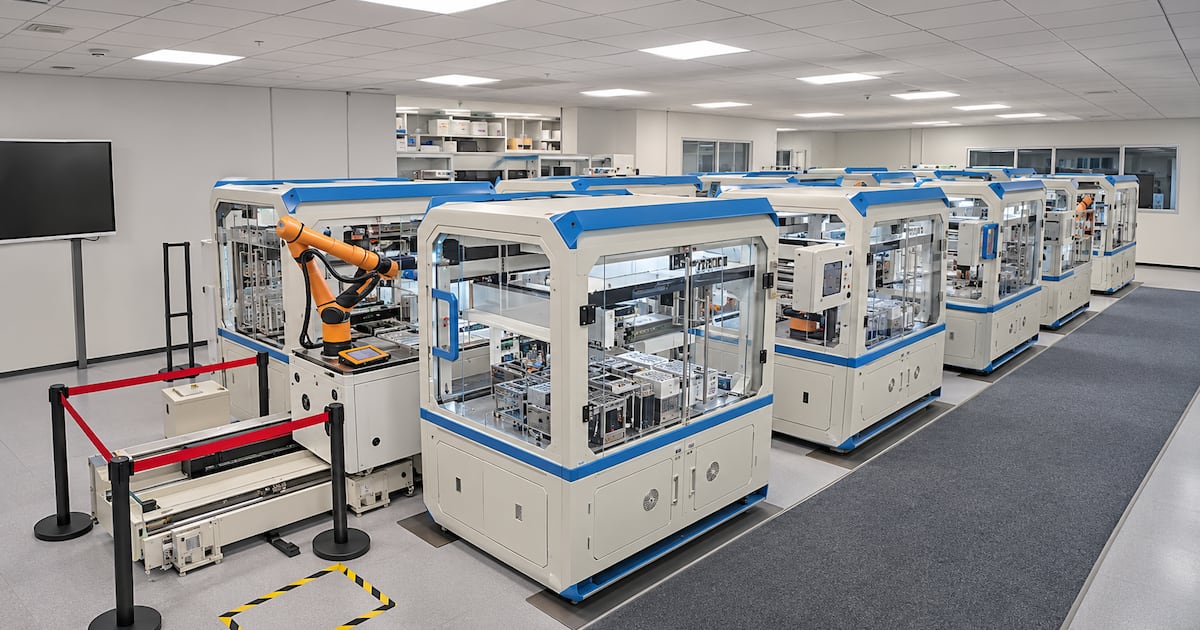
Chinese AI Scientist Completes 11,382-Step Experiment in 203 Hours
www.chosun.com
0

China makes breakthrough in underground positioning and navigation
news.cgtn.com
0
Tom's Hardware
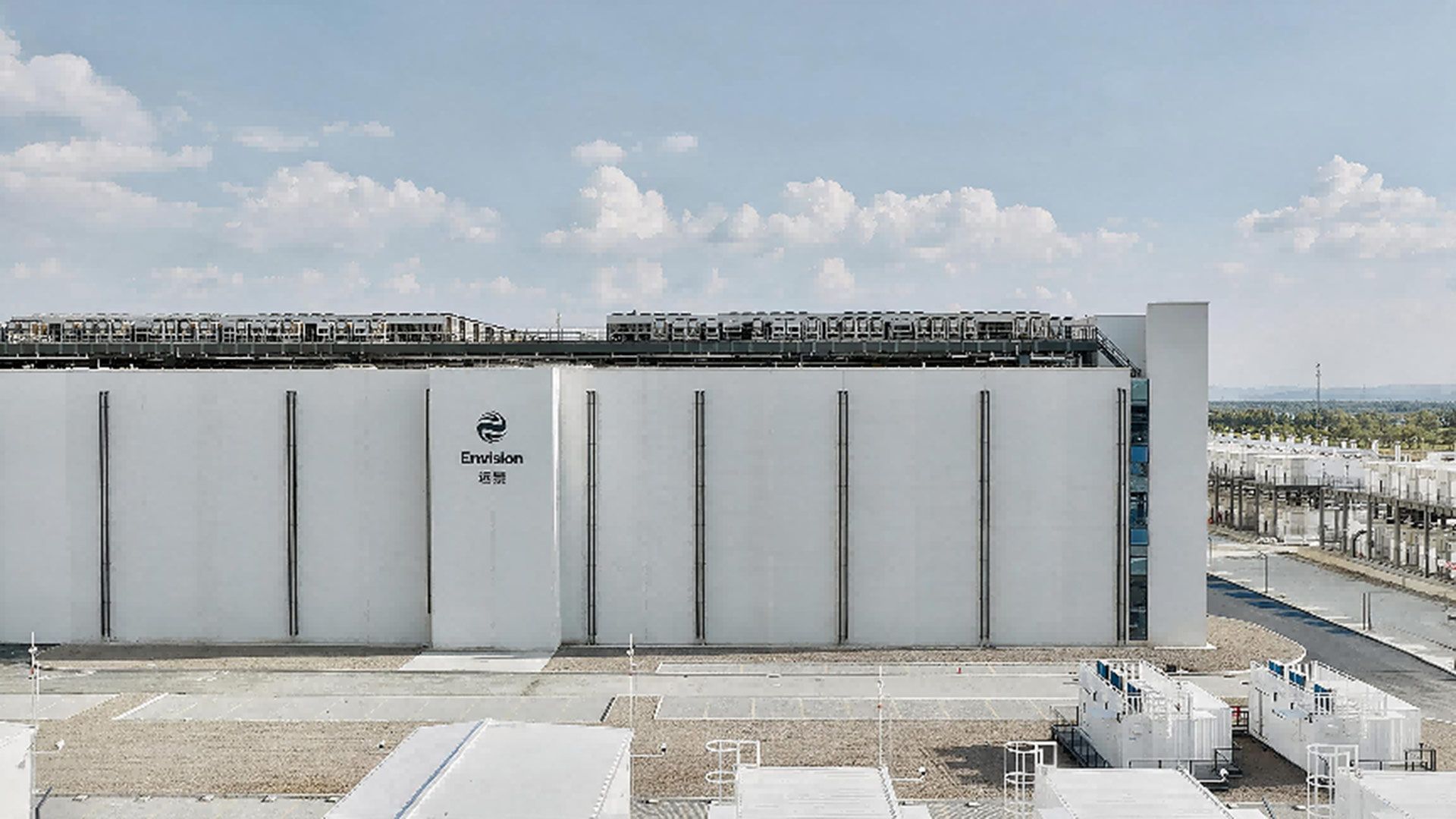
China deploys 'world's first' 800-volt DC power system for massive AI data center — seeks to quench power needs with higher conversion and efficiency inside a smaller footprint
www.tomshardware.com
0

Interesting Engineering
Sodium–sulfur batteries hold charge over 2,500 cycles with atomic fix
interestingengineering.com
0
0

Six AgiBot G2 Humanoids Run a Shanghai Convenience Store for 24 Hours, Logging 1,730 Tasks
pandaily.com
0


theregister
Cops bust botnet of 1.3M infected Android TV boxes
www.theregister.com
preview
A coalition of private-sector security firms working with Japan’s National Police Agency has disrupted XCPE, a backdoor used to build a massive botnet comprising more than 1.3 million Android devices across more than 200 countries.
Google, Lumen, Human Security, Plume, Synthient, and TrendAI participated in the disruption.
“We assess with high confidence that the backdoor and botnet were intentionally developed, deployed, and operated for financial gain by Videostrong Technology,” the Google Threat Intelligence Group (GTIG) said in a Monday blog.
Videostrong Technology is a hardware manufacturer based in Shenzhen, China. It builds Android devices, including home TV boxes and projectors. According to Google, Videostrong deliberately embedded the XCPE backdoor in device firmware and sold access to criminal affiliates, allowing them to install additional malware modules on devices shipped to unsuspecting customers. When buyers connected these devices to their home networks, the preinstalled backdoor allowed operators to create proxy networks and hide malicious traffic using the customers’ internet connections without their knowledge.
The firmware’s pre-installed management agent purported to be a standard remote-management client, according to TrendAI. It pulled updates from a GitHub page, and connected to a Message Queuing Telemetry Transport (MQTT) server that gave the operator full remote control of each box, allowing them to install and remove apps, change settings, and push updates to the infected devices.
Between June 3 and October 1, TrendAI documented more than 3.8 million distinct home and mobile IP addresses connected to the operation.
The coalition also disrupted the command-and-control domains used to manage the affiliate modules. “Because these affiliates each have diversified distribution channels for their modules beyond XCPE, we assess that taking down their C2 domains will sever access to at least 10 million additional compromised devices,” according to GTIG.
Google said it had since cut ties with Videostrong, and banned the OEM from making devices with preloaded Google apps.
Videostrong did not immediately respond to The Register’s inquiries.
This backdoor and botnet operation is part of the same ecosystem as BadBox 2.0, another notorious botnet that infected more than 10 million TV boxes and other devices before Human, Google, and TrendAI disrupted it in March 2025.®
A coalition of private-sector security firms working with Japan’s National Police Agency has disrupted XCPE, a backdoor used to build a massive botnet comprising more than 1.3 million Android devices across more than 200 countries.
Google, Lumen, Human Security, Plume, Synthient, and TrendAI participated in the disruption.
“We assess with high confidence that the backdoor and botnet were intentionally developed, deployed, and operated for financial gain by Videostrong Technology,” the Google Threat Intelligence Group (GTIG) said in a Monday blog.
Videostrong Technology is a hardware manufacturer based in Shenzhen, China. It builds Android devices, including home TV boxes and projectors. According to Google, Videostrong deliberately embedded the XCPE backdoor in device firmware and sold access to criminal affiliates, allowing them to install additional malware modules on devices shipped to unsuspecting customers. When buyers connected these devices to their home networks, the preinstalled backdoor allowed operators to create proxy networks and hide malicious traffic using the customers’ internet connections without their knowledge.
The firmware’s pre-installed management agent purported to be a standard remote-management client, according to TrendAI. It pulled updates from a GitHub page, and connected to a Message Queuing Telemetry Transport (MQTT) server that gave the operator full remote control of each box, allowing them to install and remove apps, change settings, and push updates to the infected devices.
Between June 3 and October 1, TrendAI documented more than 3.8 million distinct home and mobile IP addresses connected to the operation.
The coalition also disrupted the command-and-control domains used to manage the affiliate modules. “Because these affiliates each have diversified distribution channels for their modules beyond XCPE, we assess that taking down their C2 domains will sever access to at least 10 million additional compromised devices,” according to GTIG.
Google said it had since cut ties with Videostrong, and banned the OEM from making devices with preloaded Google apps.
Videostrong did not immediately respond to The Register’s inquiries.
This backdoor and botnet operation is part of the same ecosystem as BadBox 2.0, another notorious botnet that infected more than 10 million TV boxes and other devices before Human, Google, and TrendAI disrupted it in March 2025.®
0
0
0