55
556

Yahoo Finance
Nvidia reportedly preparing to oust CEO Huang after alleged affairs with spy, Nvidia exec
finance.yahoo.com
posts tagged #technology









cross-posted from: lemmy.world/post/54245199
Meta always up to no good, even in quality!
cross-posted from: lemmy.world/post/54245199
Meta always up to no good, even in quality!



From 72 hours to 2 months in a single quiet announcement. Careful what you ask Google’s AI, because it’s storing it even if you ask it not to
From 72 hours to 2 months in a single quiet announcement. Careful what you ask Google’s AI, because it’s storing it even if you ask it not to

The move was due to fears that messaging functions on the platforms allowed strangers to groom children, according to the newspaper. It suggested similar reselling platforms, Depop and Facebook Marketplace, would also be included in the list of banned sites.
I don’t even know what to say to this LOL.

adforce.akua.net, tanıtım yazısı konusundaki temel bilgileri bir araya getirmiş.
adforce.akua.net, tanıtım yazısı konusundaki temel bilgileri bir araya getirmiş.


Over the last ten years, we’ve lived through the rapid adoption of remote connectivity in industrial environments around the world.
[…]
Now that we understand the chaos of connectivity in modern industrial environments, we can talk about what’s getting hacked right now, and why. Why water? Why refrigerators?
A few unfortunate, incredibly predictable factors have led us here, and my colleagues and I have been screaming about them for years: [ …]
[…]
Fixing the vulnerability isn’t easy, even if the organisation is aware of it. Industrial systems have long lifecycles, sometimes 10 to 30 years. They’re engineered and tested by the OEM to work in a very specific technology stack and topology. Any alteration can, at best, disrupt the process and, at worst, lead to injury or death. Either outcome can be far more damaging than a casual hacker. Because of these lifecycles, and the inability to replace systems, I still deal with Windows 2000, CE, and XP every week. They can’t be removed from production or modified without express authorisation from the OEM and engineers, plus a significant outage and testing window.

Apple CEO John Ternus pressured Apple senior VP of Software Engineering Craig Federighi to “accelerate the company’s road map and move quickly beyond merely making necessary improvements to Siri,” reports Bloomberg’s Mark Gurman in today’s Power On newsletter.
Citing anonymous sources, Gurman writes that Ternus is “frustrated by what he sees as a reluctance to embrace AI with the same urgency as competitors,” and pushed Federighi for changes in a meeting behind closed doors. Federighi, Gurman points out, has been considered an AI skeptic with concerns “about the technology’s privacy, security, societal and employment implications.”




cross-posted from: reddthat.com/post/76163261
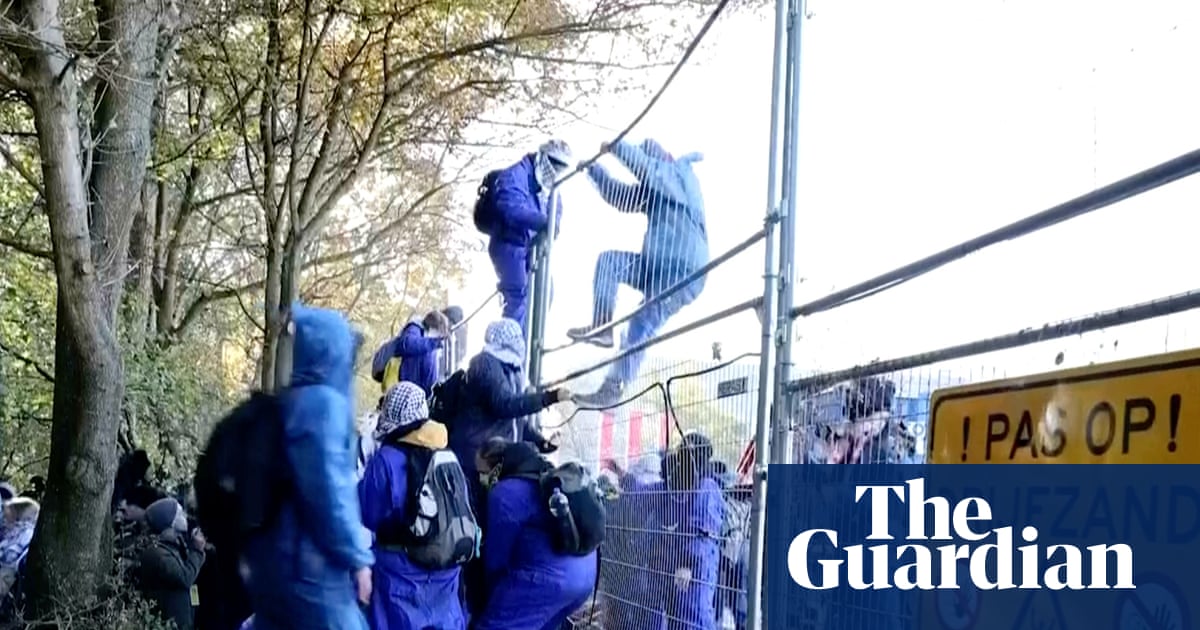
Reuters reports that around 100 people made it into the construction site, with some scaling a crane to place a “fuck AI” banner. Protesters also unfurled a “Microsoft powers genocide” banner on the construction site, and chanted “Microsoft has got to go” and “free Palestine.”

I’ll be upfront: I use their models and I’m not a hater. But “I use it” and “I’d put my money in it” are two different conversations. I’m passing on giving them my money. Here are my points, talk me out of them.
1. The IPO is a funding story, not a growth story.
Anthropic is not profitable. It is, in fact, very far from profitable (despite the news and claims you see online: they did not use GAAP when reporting their ‘claimed profits’ in the last two quarters). The IPO is to fund day-to-day operations and service existing debt. When a company goes public to keep the lights on and pay down what it already owes, this is a red flag. Read carefully their use-of-proceeds section twice before you fall in love with the roadmap.
2. The capex treadmill.
The entire capital-expenditure thesis requires two things to stay true, indefinitely: inference keeps getting more expensive, and cloud dependency keeps getting deeper. Every dollar of data center is a bet that the moat holds. But the moat is exactly the part I don’t believe in (see below). You keep building, you keep borrowing, you keep needing the next round and now you need the public markets to keep the belt tight. That’s a treadmill with a countdown on it.
3. The moat is no longer the model.
This is the biggest one. Their frontier models are impressive, sure. But they are facing aggressive competition from all angles:
4. One letter away from the dark.
On June 12th, a single export-control letter switched Fable 5 off for every customer worldwide for 17 days. One letter, and your model is gone. If you’re building a business on models (or an investment thesis) that can be switched off by a piece of paper, you’re not diversified.
5. The irony.
They have frontier models under their fingertips, and those models cannot solve their business model or their financing problems. The so-claimed best models in the world are a wonderful thing to have when your problem is compute. It is a much less useful thing to have when your problem is P&L.
So, after doing my research: not a single cent. I’ll happily keep paying per-token for the models I use from them. But an equity stake in a company that is far from profitable, riding a capex treadmill, whose competition is extremely fierce, and whose flagship model can be switched off by a single letter? Convince me otherwise.



While Cisco’s involvement with Israel’s military before and since 2023 has been documented before, the leaked documents obtained by the Guardian reveal the lengths the company went to in order to preserve and expand the relationship as the war in Gaza dragged on.
They also show that earlier this year, Splunk – a Cisco subsidiary platform that can process and analyze massive volumes of machine-generated data – made a pitch to join the controversial cloud computing contract between the Israeli government, Google and Amazon known as Project Nimbus.
Cisco pursued these opportunities as the mass killing of civilians in Gaza was amply documented, international organizations and governments began to refer to Israel’s actions in Gaza as genocide, and the company itself was roiled by internal turmoil over its own role in the war.


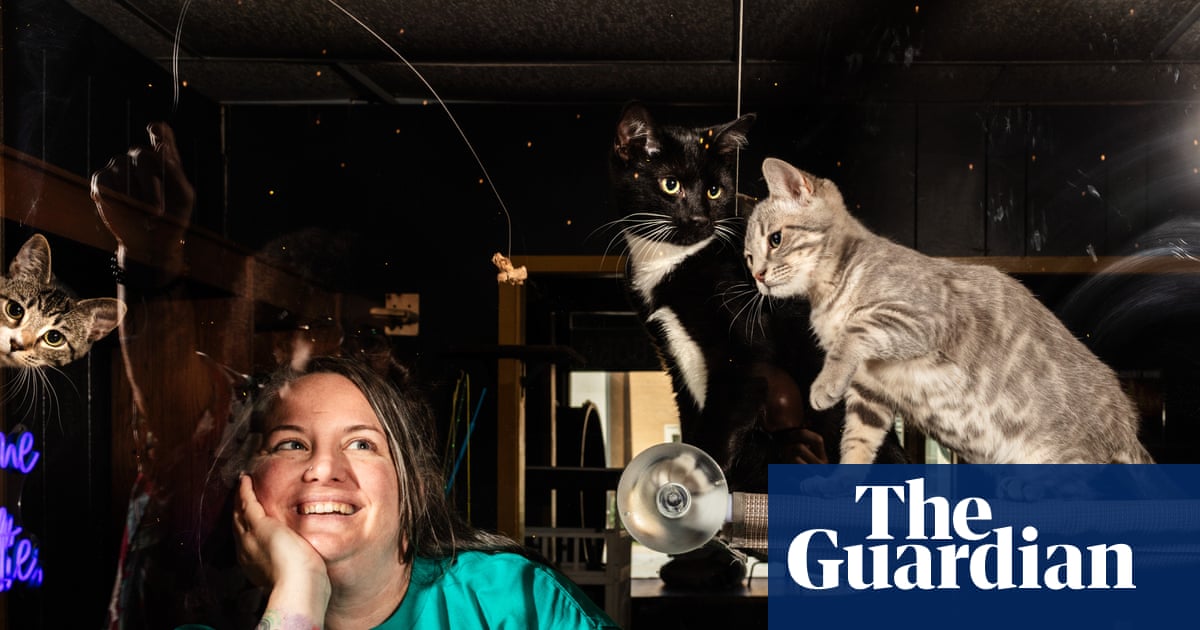
Nicole Flanagin remembers exactly the moment an influencer came after her business. It was the early hours of a March morning and the cat cafe owner in Lenoir, North Carolina, got a message. “At 1.37,” she says, “a friend sent me the link to this girl’s TikTok.”
The 41-year-old was already having a bad 24 hours. A mother of four, Flanagin also works at a pet rescue shelter and had spent the previous day unsuccessfully fighting for a dog not to be put down. She got home exhausted and promptly conked out in bed. Then she woke up to the message.
The video began innocuously enough with a local influencer sitting in her parked car. “For those of you who know me,” she stated, “I do reviews of local businesses. One very special thing about me is I don’t make bad reviews – but I’m kinda mad right now!” The woman had just taken her child to an unnamed cafe with “animals you can pet”, only to be coldly turned away because she had got its visiting hours wrong. In the influencer’s telling, she began bargaining with staff to try to let the girl into the area where the animals were kept. No dice. Her daughter started “literally bawling her eyes out … and they were just, like, standing there staring”.
Flanagin knew instantly that the woman was talking about her cafe, Brews and Mews – the only animal cafe in the area. The cats are fosters from local shelters, and children aged six and under can only visit during “Happy Meow-ers” sessions, to safeguard the cats’ time away from customers – particularly small, sticky‑fingered ones.





cross-posted from: lemmy.ml/post/54833264
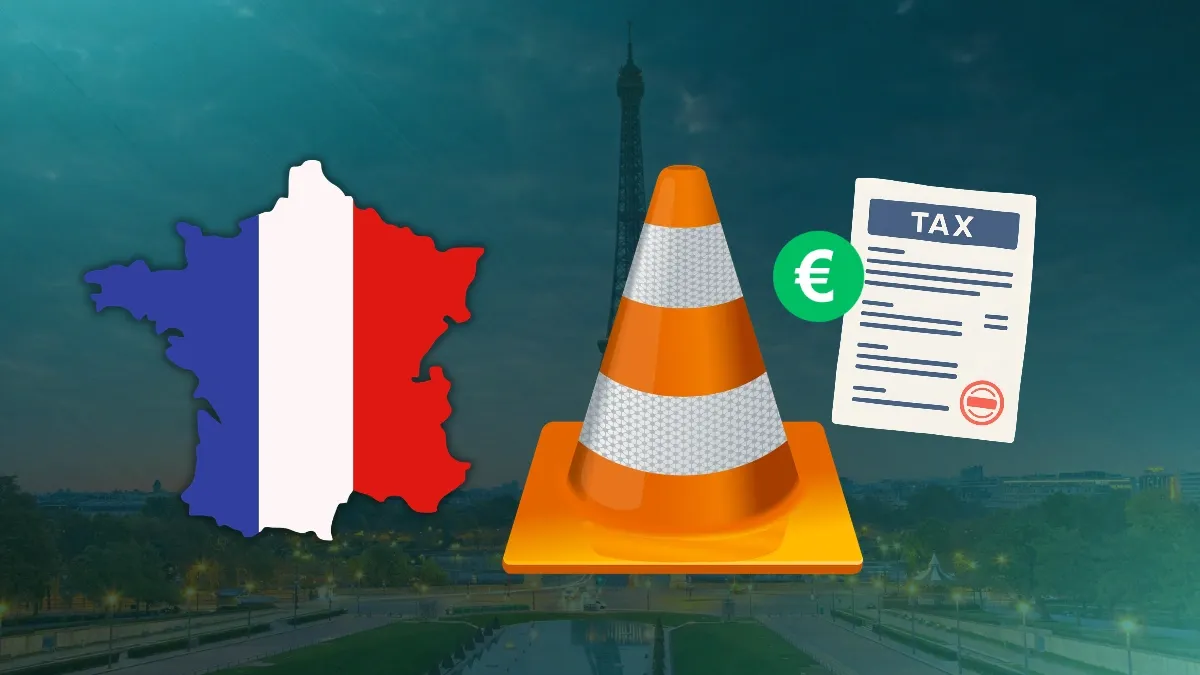
At least that’s what VLC thinks when protesting the new French law.
France’s National Assembly has voted in favour of a new “internet tax” that would charge companies for every gigabyte of data they send to users in France.
The idea is to make Netflix, Google, Meta and the rest of Big Tech pay more.
That sounds like a dream come true for many of us who prefer taking ownership of data in our own hands but unfortunately things are not that simple.
The way this law is written, it doesn’t stop at Big Tech. Even VLC, a free and open source media player maintained by a non-profit, could end up paying this new tax. What the new French internet tax says New French Internet Tax law
The measure is amendment I-1358 to France’s 2027 finance bill, tabled by Laurent Lhardit. It creates a tax on “producers of digital data” at €0.055 (5.5 euro cents) for every gigabyte delivered to subscribers of French internet providers.
Internet providers would measure how much data each sender pushes to their customers, with the collection supervised by telecom regulator Arcep and the tax administration DGFiP. Only the volume is counted, not the content or where it goes.
The amount is capped at 15% of the company’s revenue in France or 2% of its total revenue, as per the amendment. Note that it’s 15% of French revenue, not of total network traffic. And the text joins the two caps with an “or” without saying which one applies when they differ. How much money are we talking about?
The amendment cites an Arcep estimate of 200 billion GB a year flowing to French internet subscribers. It expects the tax to bring in €10 billion a year. It also names Google, Meta (Facebook, Instagram), Amazon, Netflix and Akamai (cloud server provider) as the senders of about half of that traffic.
You’d think the money goes to the telecom operators who build and maintain the networks. That’s the “fair share” argument European telcos have pushed for years.
But that’s not the case. The revenue goes straight into the state budget, and the amendment’s own justification talks about tax fairness between local businesses and digital multinationals, plus the ecological benefit of compressing data.
Why VLC is angry
A gigabyte of open source software counts the same as a gigabyte of Netflix. VideoLAN, the French non-profit behind VLC, posted on X that the tax would cost it over €1 million a year.
Lhardit replied that the cap would protect VideoLAN. He also said he didn’t see how the tax could be passed on to users of Facebook, Instagram or TikTok since those services are free.
VideoLAN didn’t take that well:
You have no idea what you are talking about. What you said about Facebook and Insta and other social networks are not targeted because they are free, means you don't understand the basics of economy. You don't understand the difference between Revenue and Profit.

VideoLAN (@videolan), October 30, 2026
The cap may limit what a low-revenue non-profit owes. But there is no explicit exemption for associations, free software or free content anywhere in the text. VideoLAN’s €1 million is the possible figure before the cap, and right now nobody can tell the exact figure for certain because of all the ambiguity.
VLC isn’t alone. OVHcloud founder Octave Klaba put his company’s gross exposure at around €70 million a year, and Free’s (Teleccom) Xavier Niel called the authors “ignares incompétents”, roughly “incompetent ignoramuses”. Those are French companies, by the way. Not exactly the US giants this internet tax bill was meant to tame. At the end, the consumer pays the bill
See, a “war on Big Tech” sounds great in a headline, and European governments are fond of laws that squeeze extra money out of American tech companies. But I don’t buy the idea that Netflix will pay them out of their pocket.
Netflix will do what it always does and raise subscription prices. And Facebook is “free” only because advertisers pay for it, which is exactly the revenue versus profit point VideoLAN was making.
So the government gets extra money, Big Tech protects its margins, and you end up paying. Meanwhile, non-profit projects like VLC, which never had a price to raise in the first place, are left wondering how big their bill will be.
Let’s just hope that this doesn’t take the form of law. Because this will set a precedence. I wouldn’t be surprised to see other European countries try their own version. No government will say no to extra tax revenue.
Like GDPR, this has all the ingredients of another mess. If a law is going to tax “internet companies”, it needs to say in black and white which ones. Right now, it doesn’t.
What do you think? A fair way to make Big Tech pay, or a blunt instrument that hits everyone else? Let me know in the comments.
cross-posted from: lemmy.world/post/54061344
archive.ph/…/32fd4450-5880-437d-9bd9-df13289ada24
The US midterm elections — in which voters elected anti-data centre governors in Texas, Georgia and Ohio and passed 38 local votes in favour of restrictions on their development — have forced the tech industry to reflect on its failure to connect with the public.
“The reason is not that people are Luddites . . . it’s much like the protests against the masks in Covid. It has become a political symbol,” said Vik Bajaj, co-chief executive of the Jeff Bezos-backed AI start-up Prometheus.
. . . “As a profession, we have spent two years pretty dangerously telling people that AI will change the future of work for the worse — that they will be out of jobs, that their children will be out of jobs, their grandchildren will live in a world that’s unrecognisable. And then for the last year or so, we’ve also been flirting with the idea that it’s an existential crisis.”
“I think this election was a big wake-up call . . . to take a pause and think about what’s happening and approach this in a way that’s maybe a little more thoughtful,” said John Hanke, founder of Niantic Spatial, the AI world model company and gaming group that made Pokémon Go. “It’s been go, go, go, build, build, build, and some of that has been . . . with head buried in sand.”