0
preview
an update and announcement.
an update and announcement.

Not on this instance? Enter your own instance's domain to go straight to following c/vegan@lemmy.vg there.
an update and announcement.
an update and announcement.
cross-posted from: slrpnk.net/post/42117003
What’s the best BIFL electric pressure cooker?
I mostly need something that’ll cook beans fast (with pressure). I want something electric with lots of (pressure-related) safety features. I figured if I got a multicooker, then I could also make yogurt; specifically I want the ability to set the temperature myself (not just “high, med, or low” – but the specific granular number of degrees in Celsius, including low temps down in the 30s)
I’ve read good things about Instant Pot, but I’ve also read some people say they broke after some years. That’s expected for some percent of devices, but the big red flag was that I couldn’t find any place on their site to buy replacement parts. They had a video describing the different components, but it was 40 seconds of trash – no info on how to replace the PCB or troubleshoot other common hardware issues to actually repair this thing. So it didn’t seem very BIFL…
I’m wondering if there’s any commercial-grade alternatives to Instant Pot, which really are BIFL. Something in the thousands of dollars, not hundreds (I’d also be willing to pay more for one that has better sensors for cooking rice – and elimination of stupid fads like radio-control-by-app). Something where they offer very few models and lots of standardized parts – where those parts are clearly purchasable on their website, and they have comprehensive guides on how to fix and replace parts that fail after 10 years.
What’s the best commercial-grade BIFL electric multi cooker?
What’s your favorite brand of BIFL cookware for induction?
I’m looking to upgrade my kitchen with industrial-quality pots and pans. After about a month of searching, I came to the conclusion that the most important requirements are:
From what I’ve read, stainless steel isn’t a very good conductor (NIST says that aluminum transfers heat 16x better than aluminum). But stainless steel is a better surface to cook-on, because it’s less reactive and won’t absorb flavours. So, 3-ply sandwiches a thick aluminum layer between two different types of stainless steel (nickle-free [eg 18/0 or 200- or 400-grade] on the outside, which – though less corrosion resistant – is important for induction) and either 18/8 or 18/10 on the inside.
5-ply is also a thing, but my research suggests that it doesn’t really matter how many layers. What’s more important is the thickness of the material.
And that’s why I’m here. Because, confidingly, the manufacturers of these pots don’t seem to even know how thick the layers of their 3-ply cookware is!
Ideally I’d just find the technical specifications of their cookware on their website, make a spreadsheet, and then buy the one with the thickest material (or close to the thickest, depending on my trade-off between quality vs weight & cost).
But I’ve called maybe a dozen manufacturers, and none seem to know the specifications of their own cookware :(
So, fediverse, I ask you: does anyone know what the thickness of the layers in these manufacturer’s 3-ply cookware is? Otherwise, what’s been your experience? How do you feel about these brands? Is there some other one (not listed) that you prefer?
Edit: I should be clear that I’m specifically asking about 3-ply or 5-ply stainless steel cookware. This is for a community house, so I need something that can be (ab)used by housemates who don’t know or care for the seasonings on the pans. And I don’t want cast iron, because it’s more likely to break the glass-topped induction cooktop.
Today we’re talking about the return of New World Screwworm to the United States and why we’re all getting screwed!
Today we’re talking about the return of New World Screwworm to the United States and why we’re all getting screwed!
The European eel is threatened with extinction. But it is also a highly sought-after commodity on the global market. The trade in young eels is booming. And it’s increasingly controlled by organized crime.
The film “Billion Dollar Babies — The Big Business of Eel Trafficking” tells the story of a multi-billion-dollar illegal trade, centered on one of nature’s most enigmatic creatures. Born in the Sargasso Sea near the Bermuda Triangle, the eel begins its journey of up to 5,000 kilometers to Europe — as a translucent ‘willow-leaf’ larva known as a glass eel. To this day, it remains unclear exactly how the European eel reproduces. Commercial breeding isn’t possible: every eel consumed comes from the wild. The documentary follows the trail of a global network of smugglers, middlemen and high-ranking triad bosses. The investigative journey takes viewers from European fishing grounds via Paris to Hong Kong and on to mainland China. It extends as far as Haiti and examines the role that the lucrative eel smuggling trade may have played in the circumstances surrounding the assassination of the Haitian president.

By choosing to be a vegan, you put the well being of other sentient beings over pleasure.
I like to sit in a forest or garden and love all the birds, insects, and animals around me. I appreciate how they are the same as me going about their lives.
It’s something that’s only truly accessible to us.
By choosing to be a vegan, you put the well being of other sentient beings over pleasure.
I like to sit in a forest or garden and love all the birds, insects, and animals around me. I appreciate how they are the same as me going about their lives.
It’s something that’s only truly accessible to us.

cross-posted from: hexbear.net/post/8710585
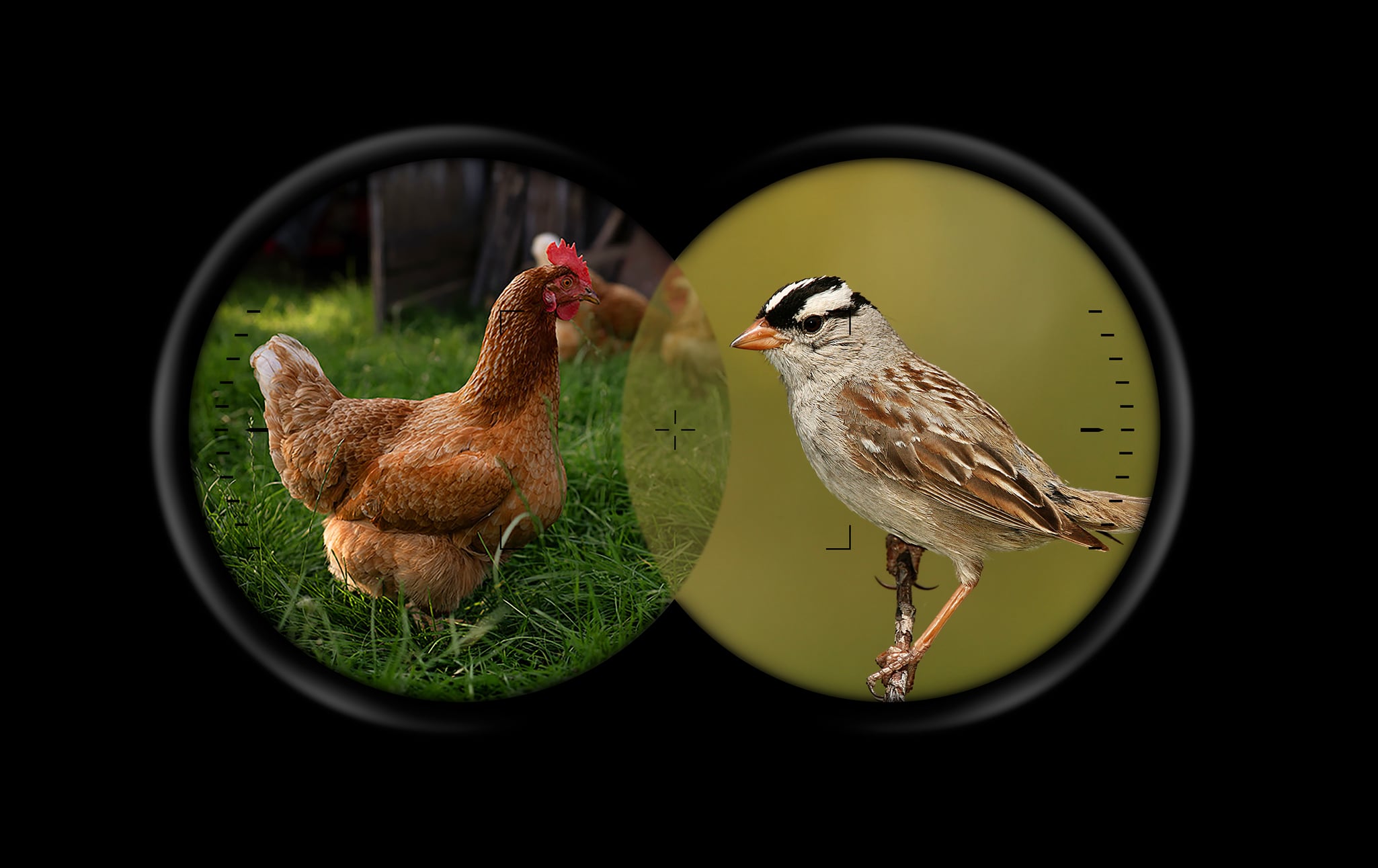
The first time I met him, the stranger didn’t have a name—he was “the zebra-stripey one.” A notch above “anonymous brown blob,” the species all unmet birds fall into. All I knew was that he was elusive. I chased him and ten of his closest friends down a San Diego hiking trail for 30 minutes trying for an ID. It was on the 61st branch that I managed a clear enough picture, shaken through my binoculars.
We had no relationship then. He was, to me, as unique as a default profile photo. A grey silhouette on a greyer background.
Seven months later, I moved out of downtown into a more suburban area—a home with a garden, space for my arms and legs to stretch, and far more flowers for inquisitive birds. That’s where zebra stripes found me again.
I thought him shy, at first. I’d only spotted him once in the first three months, but then I learned I’d been looking for him outside his social hours. How conceitedly human of me! Like insisting the world banks on my hours.
Before long, I had dug through the grey and found contours of an expansive inner world. The bird—the white-crowned sparrow—has favorite seeds, tones of voice, enemies, friends. I catalog intuitively, give him a nod of the head. I see him now. It took time, but I do.
This is how it goes with every bird I meet: a devotional practice. It starts with learning the species’ name, and the rest slots into place. I can tell you about the blue jay in upstate New York who threw tantrums whenever he didn’t get his way. Or the Anna’s hummingbird with such a strong preference for curled-petal flowers he’d chirp at the sight of one. Or the juvenile starling whose subtle hunger tell was putting his mother’s whole face in his beak.
But what can I tell you about the bird I see most often? Ah… nothing. I can’t tell you her likes, dislikes, or quirks, even if I squinted through binoculars. And it’s not by choice, it’s because the system is designed so I could never stand at a feeder long enough to find out without the cops being called. It is, yes, the bird on the plates of everyone I love, whose dismembered legs and wings I’ve seen far more often than her feathered face: an ordinary chicken. Before we can ask who she is, the meat industry has already ensured we can’t find out.
Her life begins as one of 600 million chicks hatched annually in the U.S. egg industry. Half of these chicks—her sisters and female cousins—will live the same short life as her. The other 300 million males are considered useless to both the egg industry, since they can’t lay, and the meat industry, since they are leaner and unsuitable for efficient meat production. Instead, they are routinely ground up or gassed alive within their first day of life. On average, male chicks live to be one day old, and what’s left on the other side of the macerator gets turned into animal food, fertilizer, or biofuel.
Narrowly avoiding this fate, she is transported from hatchery to factory farm. In the 67 or so square inches she’s afforded—an area smaller than a sheet of printer paper—the only natural behavior left to her beak is pecking, and the only thing it can reach is other birds. So she pecks at them, and the industry reads it as damage to the product. Before she can grow into herself, a hot knife takes one third of her beak—her instrument of recognition and means of language—searing through a thin layer of highly sensitive soft tissue, similar to the quick of the human nail. In one slice, she is marooned from everything her Red Junglefowl ancestors passed on to her: the dust baths, the foraging, the full use of herself. No housing system—free-range, cage-free, or battery cage—meets all of her needs, so the industry manages a symptom of confinement, not the confinement itself.
There is a body she should have had, and a body she is given. The body she should have had lays 10-15 eggs per year. The body she is given lays around 300, far beyond what is biologically healthy. The body she should have had naturally tapers egg production as she ages. The body she is given is force-molted: starved for weeks until she loses a quarter of her body weight, then returned to a normal diet to rejuvenate egg production at the first sight of egg decline.
Or maybe she is a chicken raised for meat, in which case the body she is given grows 300 percent faster than the body she should have had. Genetic manipulation and breeding favor rapid weight gain and disproportionately large breasts. Though her body is adult-sized within weeks, her organs and bones cannot keep pace with muscles, so her heart strains, her lungs fall short of breath, her legs twist and buckle under her weight. Weak and heavy, she spends long hours lying on shed floors covered in her own waste, developing painful lesions that make movement even harder. She is, perpetually, starving. Her appetite regulation system is re-engineered so she cannot feel full. Stomach fullness is a hindrance to the machine. She must ravenously hunger to ensure fullness of “chicken breast,” instead.
The body she should have had could sustain her for up to 15 years. The body she is given is taken again at six weeks. It is held upside down by the feet, shackled to a conveyor line, run through an electrified bath to stun, slit at the throat, and immersed in scalding water to loosen feathers. Line speeds reach up to three birds every two seconds, which means stunning and slaughter are not always completed before the water. Around a million birds a year are boiled alive. A 2017 USDA inspector account at Southern Hens reads: “While performing a 500 bird count, I saw a live, non-stunned bird enter the scalder. The bird was flapping and attempting to right itself. As it entered and traveled half the length of the first scalder, the bird jerked violently while lifting itself until it was no longer in my immediate sight.”
If I could bring my binoculars to a factory farm, I would not see her. I would see the capitalism-perfected, efficiency-optimized machine of her. I couldn’t see her because even she couldn’t see herself. There is a witness problem here. And to witness that, you’d need a special lens that so-called “ag-gag” laws, a new class of legislation that has sprung up across the Midwest of the United States in the last decade, work hard to ensure you never look through.
In 2011, a Mercy for Animals activist known as “Scott” went undercover at Sparboe farms, the fifth-largest egg producer in the US supplying all McDonald’s eggs west of the Mississippi. His mission as an activist was similar to mine as a birder, though the tools were different: to see up close what’s far away. He spent months wearing a hidden camera in facilities across Iowa, Minnesota, and Colorado. Sparboe marketed its eggs as humane, claiming hens had “freedom from fear and distress” and “freedom to express normal behavior.” Scott found that this freedom looked like hens crammed in crowded cages, workers grabbing birds by the neck, slamming them in and out of cages, shoving them in pockets “apparently for fun,” pressing thumbs into the back of chicks’ necks until they broke.
The footage aired on ABC. McDonald’s announced it would no longer accept Sparboe eggs before the broadcast finished. Target pulled their eggs within hours. Then most grocery chains followed suit. In response, Sparboe fired employees and blamed everything on a few bad actors. The president and owner claimed to be “shocked and deeply disturbed.”
Within months, Iowa’s governor passed what would become the model for a new generation of ag-gag laws. It was not a response to the cruelty, but a response to the proof of it.
Agricultural gag—“ag-gag”—laws are a series of anti-whistleblower laws that make it nearly impossible to see inside a factory farm or slaughterhouse. Civil liberties lawyers fight them in court and often win. The industry adjusts the wording and passes them again. In Iowa, the whack-a-mole has lasted over four rounds:
The same pattern is repeated across many states—Idaho, Utah, and Wyoming among them. The industry doesn’t change its practices, only what is legal to document.
We know what the government’s own inspectors saw because someone had to sue to make it public. The USDA settled a Freedom of Information Act violation lawsuit in 2021, agreeing to publish inspection reports. Those reports described birds with heads engorged with blood, skin torn from their bodies, and live animals lying among carcasses on blood-soaked floors. All of it was on the government’s record the whole time; it was just hidden from public view
Sparboe’s farm was not especially cruel, just especially documented. Consumer ignorance is not a byproduct of the industry. It is the product—actively manufactured and legally enforced so the public never gets to meet her: the bird on the plates of everyone I love.
I still take a seat at the table. I see the plates and make no scene. The entire architecture—legal, cultural, linguistic—exists so that she stays invisible and we stay comfortable. The fortress of ignorance is so sturdy I don’t even try when I face it in the eyes of my brother or my best friend. How do I go against an almost universal silencing? Often, I don’t. I’m silent, too. I save my strongest attacks for when I’m safe behind a phone. Am I not, then, complicit too?
Across the table, sometimes, I think to ask: do you know what species you’re eating for lunch? Not “chicken”—which chicken? What kind? Did you know there are dozens of breeds, each with different temperaments? Four different species? Was she ever a stranger to you, or was she always a product? In another world, could she have been a visitor? A regular? A friend?
The anonymous brown lumps our forks interact with contain nothing to recognize. Bodies are drained bloodless, cut to the uniform shape of plastic containers, and stripped of anything that could rouse curiosity. We are organ-carrying, hot-blooded creatures with legs and hearts. She is caloric, inanimate flesh.
But it stays a thought. I reach for words, but the reason I’m so drawn to birding is I’ve always been more fluent in observation than speech.
I’ll tell you, then, what I’ve observed: the white crowned sparrow’s favorite perch is the second branch to the left. When he visits my feeder, he loves to shuffle his feet in the seeds before picking the first. Doesn’t scurry when a towhee or finch lingers on the trellis. Prefers the early sunset hour. Has something to say about every other bird’s song.
I can tell you nothing about the bird you ate for dinner. Maybe she would have loved the color yellow, if she were allowed to have eyes. Maybe she would have followed every bee to its flower, if she were allowed to have legs.
Manar Naboulsi is a creator, activist, and serial-hobbyist who can’t shut up about human and animal rights. You can find her on Instagram at @earth.to.manar.
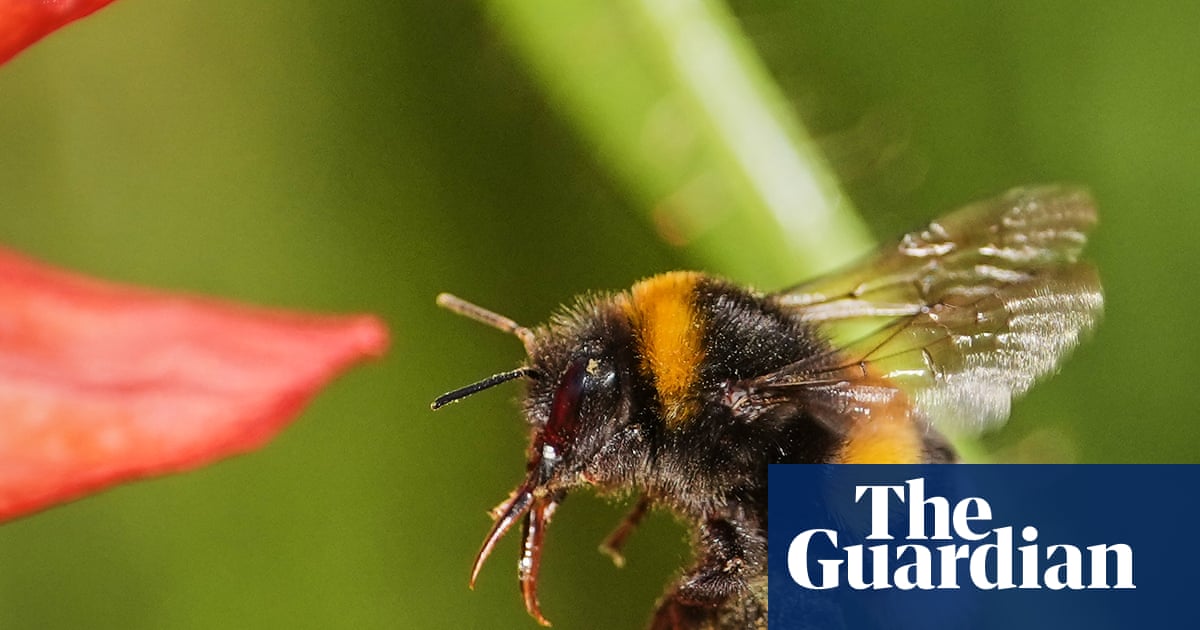
Ants passed the mirror test showing their cognitive self awareness. And a recent study shows bees can use tools to solve problems—a remarkably advanced cognitive ability.
Yet how many of us take insects for granted because they are small and creepy?
Ants passed the mirror test showing their cognitive self awareness. And a recent study shows bees can use tools to solve problems—a remarkably advanced cognitive ability.
Yet how many of us take insects for granted because they are small and creepy?
"Gaz Oakley No Longer ‘Vegan’ "
https://www.youtube.com/watch?v=WQsZnGrZ5bI
Another plant-based minor celebrity fails to understand veganism.
"Gaz Oakley No Longer ‘Vegan’ "
https://www.youtube.com/watch?v=WQsZnGrZ5bI
Another plant-based minor celebrity fails to understand veganism.

They traditionally eat a lot of plant based foods like okra, plantains, beans, and drinks like mbege, which is made with fermented banana and millet
They traditionally eat a lot of plant based foods like okra, plantains, beans, and drinks like mbege, which is made with fermented banana and millet
We fear and hate AI a lot but it’s nothing compared to the beef industry.
Eating beef not only poisons your body and contributes to torture of cows but it also destroys the planet at a scale that makes even AI feel insignificant.
We fear and hate AI a lot but it’s nothing compared to the beef industry.
Eating beef not only poisons your body and contributes to torture of cows but it also destroys the planet at a scale that makes even AI feel insignificant.
A lot of us go vegan for ethical reasons. It’s great to experience health benefits too!
In my case, I lost a lot of weight. I feel much better mentally and recover faster from exercise.
A lot of us go vegan for ethical reasons. It’s great to experience health benefits too!
In my case, I lost a lot of weight. I feel much better mentally and recover faster from exercise.
And that it can result in more deaths than hunting and eating one large animal.
I admit that modern agriculture can and should be improved to be less cruel. I would still be uncomfortable with the act of killing and eating the flesh of a sentient being like me.
And that it can result in more deaths than hunting and eating one large animal.
I admit that modern agriculture can and should be improved to be less cruel. I would still be uncomfortable with the act of killing and eating the flesh of a sentient being like me.
I messed up my body by eating ultra processed junk food all my life. I switched over to a carnivore diet and feel the best I ever did.
No you switched to another horrible diet. It made you feel good for a bit (like smoking) but It’ll get you in the end.
I messed up my body by eating ultra processed junk food all my life. I switched over to a carnivore diet and feel the best I ever did.
No you switched to another horrible diet. It made you feel good for a bit (like smoking) but It’ll get you in the end.
cross-posted from: lemmygrad.ml/post/11612103
They apparently caught it early.
I hope I will be fine. I hope I will be okay.
I may go vegan soon.
I’m trying to watch my diet and exercise more now.
I could use all the advice in the world now.
cross-posted from: lemmygrad.ml/post/11612103
They apparently caught it early.
I hope I will be fine. I hope I will be okay.
I may go vegan soon.
I’m trying to watch my diet and exercise more now.
I could use all the advice in the world now.
cross-posted from: lemmygrad.ml/post/11575812
Amsterdam bans public adverts for meat and fossil fuels
BBC
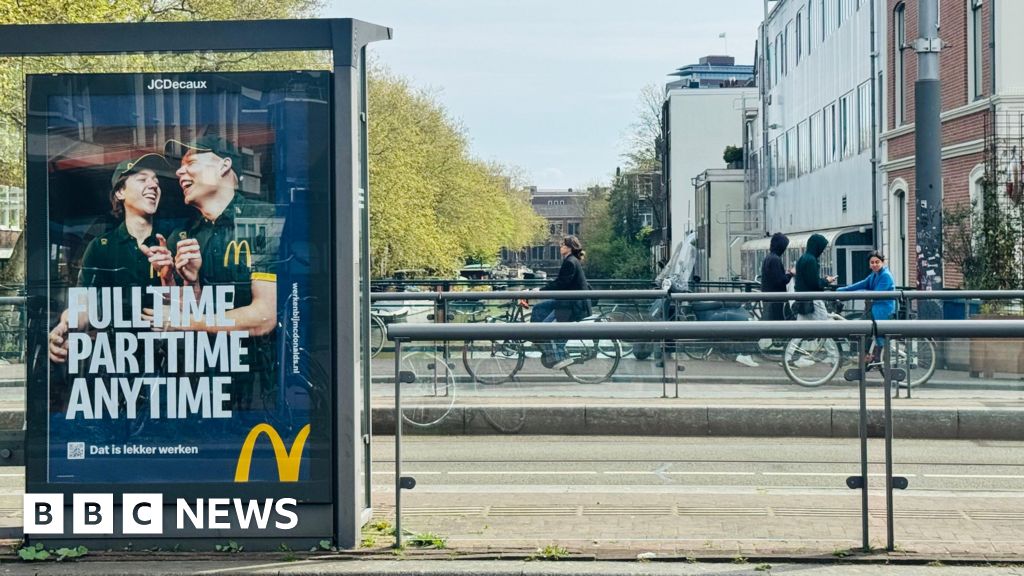
Advertisements for meat products, such as beef burgers, have disappeared from Amsterdam’s streets
Amsterdam has become the world’s first capital city to ban public advertisements for both meat and fossil fuel products. Since 1 May, adverts for burgers, petrol cars and airlines have been stripped from billboards, tram shelters, and metro stations.
At one of the city’s busiest tram stops, adjacent to a grassy roundabout bursting with vibrant yellow daffodils and orange tulips, the poster advertising landscape has changed.
They now promote the Rijksmuseum, the national museum of the Netherlands, and a piano concert. Until last week it was chicken nuggets, SUVs and low-budget holidays.
Politicians in the city say the move is about bringing Amsterdam’s streetscape into line with the local government’s own environmental targets.
These aim for the Dutch capital to become carbon neutral by 2050, and for local people to halve their meat consumption over the same period.
“The climate crisis is very urgent,” says Anneke Veenhoff from the GreenLeft Party. "I mean, if you want to be leading in climate policies and you rent out your walls to exactly the opposite, then what are you doing?
“Most people don’t understand why the municipality should make money out of renting our public space with something that we are actively having policies against.”
This view is echoed by Anke Bakker, who is Amsterdam group leader for a Dutch political party that focuses on animal rights – Party for the Animals.
She instigated the new restrictions, and rejects accusations of them being nanny state.
“Everybody can just make their own decisions, but actually we are trying to get the big companies not to tell us all the time what we need to eat and buy,” says Bakker.
“In a way, we’re giving people more freedom because they can make their own choice, right?”
Removing that constant visual nudge, she says, both reduces impulse buying, and signals that cheap meat and fossil heavy travel are no longer aspirational lifestyle choices.
Meat was a relatively small slice of Amsterdam’s outdoor advertising market – accounting for an estimated 0.1% of ad spend, compared with roughly 4% for fossil related products.
The advertising was instead dominated by the likes of clothing brands, movie posters, and mobile phones.
But politically the ban sends a message. Grouping meat with flights, cruises and petrol and diesel cars reframes it from a purely private dietary choice to a climate issue.
Local politicians Anneke Veenhoff (left) and Anke Bakker say the ban was needed
Unsurprisingly, the Dutch Meat Association, which represents the industry, is unhappy at the move, which it calls “an undesirable way to influence consumer behaviour”. It adds that meat “delivers essential nutrients and should remain visible and accessible to consumers”.
Meanwhile, the Dutch Association of Travel Agents and Tour Operators says that the ban on advertising holidays that include air travel is a disproportionate curb on companies’ commercial freedom.
For activists like lawyer Hannah Prins and her environmental organisation Advocates for the Future, which worked closely with campaign group Fossil-Free Advertising, the ban on meat advertising is a deliberate attempt to create a “tobacco moment” for high carbon food.
“Because if I look now back at like old pictures, you have Johan Cruyff,” says Prins. "The famous Dutch footballer.
"He would be in advertisements for tobacco. That used to be normal. He died of lung cancer.
"That you were allowed to smoke on the train, on restaurants. For me, that’s like, whoa, why did people do that? You know, that feels so weird.
“So it really is like what we see in our public space is what we find normal in our society. And I don’t think it’s normal to see murdered animals on billboards. So I think it’s very good that that’s going to change.”
Lawyer Hannah Prins wants people to view meat in the same way as they do smoking
The Dutch capital is not starting from scratch.
Haarlem, 18km (11 miles) to its west, was in 2022 the first city in the world to announce a broad ban on most meat advertising in public spaces. It came into force in 2024, together with a prohibition on fossil fuel adverts.
Utrecht and Nijmegen have since followed with their own measures that explicitly restrict meat (and in Nijmegen’s case also dairy) advertising on municipal billboards, on top of existing bans on adverts for fossil fuels, petrol cars and flying.
Globally, dozens of cities have, or are moving to, ban fossil-fuel advertising. Such as Edinburgh, Sheffield, Stockholm and Florence. France even has a nationwide ban.
Campaigners hope that the Dutch approach - linking meat and fossil fuels - will act as a legal and political blueprint others can copy.
Stand at a tram stop in Amsterdam and you might no longer see a juicy burger or a 19 euro ($18.70; £14.90) flight to Berlin on the shelter.
Yet the same eye-catching offers can still pop up in your social media algorithm. And, let’s face it, many of us would be looking down at our screens until the tram trundles along.
If municipal bans leave digital platforms untouched, how much real world impact can they have on our habits or are they purely symbolic virtue-signalling?
Getty Images
Is the ban on outdoor adverts worthwhile if people can still see promotions for meat and fossil fuel online?
So far, there is no direct evidence that removing meat advertising from public spaces leads to a shift toward more plant-based societies.
However, some researchers are cautiously optimistic, such as Prof Joreintje Mackenbach who is an epidemiologist - a medical professional who investigates health patterns within populations.
She describes Amsterdam’s move as “a fantastic natural experiment to see”.
“If we see advertisements for fast food everywhere, it normalizes the consumption of behaviour of fast consumption,” says Mackenbach, who is from the Department of Epidemiology and Data Science at hospital Amsterdam University Medical Center.
“So if we take away those types of cues in our public living environments, then that is also going to have an impact on those social norms.”
She points to a study which claims that London Underground’s 2019 ban on junk food adverts led to less people buying such products in the UK capital.
Smiling on the banks of a canal in the centre of Amsterdam, Prins is adamant smaller specialist tradespeople in Amsterdam will benefit from the new advertising ban.
“Because like everything we love, festivals, nice cheese, a flower shop around the corner. All the stuff that we love, we don’t hear from through ads,” she says.
"It’s usually through people that we know, or we walk past the building. So I think local businesses will be able to thrive because of this.
“I think and I hope that big polluting companies will be extra scared. And maybe will rethink the kind of products they are selling. I think you can really see that change is possible.”
cross-posted from: lemmygrad.ml/post/11575812
Amsterdam bans public adverts for meat and fossil fuels
Advertisements for meat products, such as beef burgers, have disappeared from Amsterdam’s streets
Amsterdam has become the world’s first capital city to ban public advertisements for both meat and fossil fuel products. Since 1 May, adverts for burgers, petrol cars and airlines have been stripped from billboards, tram shelters, and metro stations.
At one of the city’s busiest tram stops, adjacent to a grassy roundabout bursting with vibrant yellow daffodils and orange tulips, the poster advertising landscape has changed.
They now promote the Rijksmuseum, the national museum of the Netherlands, and a piano concert. Until last week it was chicken nuggets, SUVs and low-budget holidays.
Politicians in the city say the move is about bringing Amsterdam’s streetscape into line with the local government’s own environmental targets.
These aim for the Dutch capital to become carbon neutral by 2050, and for local people to halve their meat consumption over the same period.
“The climate crisis is very urgent,” says Anneke Veenhoff from the GreenLeft Party. "I mean, if you want to be leading in climate policies and you rent out your walls to exactly the opposite, then what are you doing?
“Most people don’t understand why the municipality should make money out of renting our public space with something that we are actively having policies against.”
This view is echoed by Anke Bakker, who is Amsterdam group leader for a Dutch political party that focuses on animal rights – Party for the Animals.
She instigated the new restrictions, and rejects accusations of them being nanny state.
“Everybody can just make their own decisions, but actually we are trying to get the big companies not to tell us all the time what we need to eat and buy,” says Bakker.
“In a way, we’re giving people more freedom because they can make their own choice, right?”
Removing that constant visual nudge, she says, both reduces impulse buying, and signals that cheap meat and fossil heavy travel are no longer aspirational lifestyle choices.
Meat was a relatively small slice of Amsterdam’s outdoor advertising market – accounting for an estimated 0.1% of ad spend, compared with roughly 4% for fossil related products.
The advertising was instead dominated by the likes of clothing brands, movie posters, and mobile phones.
But politically the ban sends a message. Grouping meat with flights, cruises and petrol and diesel cars reframes it from a purely private dietary choice to a climate issue.
Local politicians Anneke Veenhoff (left) and Anke Bakker say the ban was needed
Unsurprisingly, the Dutch Meat Association, which represents the industry, is unhappy at the move, which it calls “an undesirable way to influence consumer behaviour”. It adds that meat “delivers essential nutrients and should remain visible and accessible to consumers”.
Meanwhile, the Dutch Association of Travel Agents and Tour Operators says that the ban on advertising holidays that include air travel is a disproportionate curb on companies’ commercial freedom.
For activists like lawyer Hannah Prins and her environmental organisation Advocates for the Future, which worked closely with campaign group Fossil-Free Advertising, the ban on meat advertising is a deliberate attempt to create a “tobacco moment” for high carbon food.
“Because if I look now back at like old pictures, you have Johan Cruyff,” says Prins. "The famous Dutch footballer.
"He would be in advertisements for tobacco. That used to be normal. He died of lung cancer.
"That you were allowed to smoke on the train, on restaurants. For me, that’s like, whoa, why did people do that? You know, that feels so weird.
“So it really is like what we see in our public space is what we find normal in our society. And I don’t think it’s normal to see murdered animals on billboards. So I think it’s very good that that’s going to change.”
Lawyer Hannah Prins wants people to view meat in the same way as they do smoking
The Dutch capital is not starting from scratch.
Haarlem, 18km (11 miles) to its west, was in 2022 the first city in the world to announce a broad ban on most meat advertising in public spaces. It came into force in 2024, together with a prohibition on fossil fuel adverts.
Utrecht and Nijmegen have since followed with their own measures that explicitly restrict meat (and in Nijmegen’s case also dairy) advertising on municipal billboards, on top of existing bans on adverts for fossil fuels, petrol cars and flying.
Globally, dozens of cities have, or are moving to, ban fossil-fuel advertising. Such as Edinburgh, Sheffield, Stockholm and Florence. France even has a nationwide ban.
Campaigners hope that the Dutch approach - linking meat and fossil fuels - will act as a legal and political blueprint others can copy.
Stand at a tram stop in Amsterdam and you might no longer see a juicy burger or a 19 euro ($18.70; £14.90) flight to Berlin on the shelter.
Yet the same eye-catching offers can still pop up in your social media algorithm. And, let’s face it, many of us would be looking down at our screens until the tram trundles along.
If municipal bans leave digital platforms untouched, how much real world impact can they have on our habits or are they purely symbolic virtue-signalling?
Is the ban on outdoor adverts worthwhile if people can still see promotions for meat and fossil fuel online?
So far, there is no direct evidence that removing meat advertising from public spaces leads to a shift toward more plant-based societies.
However, some researchers are cautiously optimistic, such as Prof Joreintje Mackenbach who is an epidemiologist - a medical professional who investigates health patterns within populations.
She describes Amsterdam’s move as “a fantastic natural experiment to see”.
“If we see advertisements for fast food everywhere, it normalizes the consumption of behaviour of fast consumption,” says Mackenbach, who is from the Department of Epidemiology and Data Science at hospital Amsterdam University Medical Center.
“So if we take away those types of cues in our public living environments, then that is also going to have an impact on those social norms.”
She points to a study which claims that London Underground’s 2019 ban on junk food adverts led to less people buying such products in the UK capital.
Smiling on the banks of a canal in the centre of Amsterdam, Prins is adamant smaller specialist tradespeople in Amsterdam will benefit from the new advertising ban.
“Because like everything we love, festivals, nice cheese, a flower shop around the corner. All the stuff that we love, we don’t hear from through ads,” she says.
"It’s usually through people that we know, or we walk past the building. So I think local businesses will be able to thrive because of this.
“I think and I hope that big polluting companies will be extra scared. And maybe will rethink the kind of products they are selling. I think you can really see that change is possible.”


If you turn Vegan, eating wise, & are strict (no cheating) about it, then you will eventually (if you started overweight-obese) will never be overweight-obese, for as long as maintain being a strict Vegan.
Now that I am eating a lot more processed, salted & sugary Vegan foods, revolution for the worst has happen in Vegan eating, when I started it was not Capitalist popular as now. I wonder if I was always wrong, I have always been Vegan thin, genes & always active enough. I leaning towards no, with a lot more processed, salted & sugary Vegan foods introduced into one’s way of strictly eating Vegan would result in overweight-obese Vegans.
What do you readers think?
I am not saying being thin is being healthy enough,


Many years ago I was watching Rising Up with Sonali, as I always do, when she brought on a famous Cali. Chef that converted to Veganism cooking at her restaurants & started investigating how Vegan the food was, she was buying. Only to find that the non-DIY & big growers had no way to provide her the food, without killing other Beings! She is not talking about just pesticides, side effects or intended, but actually taking action to kill them. WOW MOMENT, AS SHE EXPLAINED IT! THAT WAS EVEN THOUGH I HAVE LIVED IN A AG., FORMERLY DOMINATED BY FARMERS, AREA FOR 40±YEARS!
Since other Beings naturally or have no other option eat whatever is grown (if grown indoors, then deprives other Beings ability to have more land as growing a food source), ** the non-DIY & big growers have to kill the other Beings to economically survive **.
I NEVER THOUGHT OF THIS BEFORE, EVEN THOUGH I HAVE WALKED, RAN, BICYCLED & DROVE RIGHT PAST A LOT OF HUGE FARMERS’ LANDS, BARRON OF ANY OTHER LIFE!
If I alone paid for & selected our Vegan foods, I would have made a huge switch & started growing even more food on our own property.
I hope this does not cause anyone to give-up on Being A Vegan, when it comes to food, but instead causes everyone to work to grow their own Vegan foods & learn to cook without the non-DIY & big growers. By the chef, did change from Strict Vegan chef to a chef that is but Vegan & non-Vegan. That is BLANKED-UP!
**Interesting question why has this not rocked The Vegan world & caused serious change? **

On Dec. 3rd, animal rescuer Zoe Rosenberg was sentenced to 90 days in jail for rescuing 4 sick chickens from Perdue’s Petaluma Poultry slaughterhouse in Sonoma County, California. Zoe made sure the chickens, Poppy, Aster, Ivy, and Azalea, got the veterinary care they needed. For this act of compassion, Zoe is now a convicted felon and will be incarcerated at risk to her health, given her serious medical issues. Meanwhile, Petaluma Poultry faces no consequences for leaving sick animals to die or scalding animals alive. Please share the news of this injustice and keep exposing the animal cruelty that the authorities are covering up.
On Dec. 3rd, animal rescuer Zoe Rosenberg was sentenced to 90 days in jail for rescuing 4 sick chickens from Perdue’s Petaluma Poultry slaughterhouse in Sonoma County, California. Zoe made sure the chickens, Poppy, Aster, Ivy, and Azalea, got the veterinary care they needed. For this act of compassion, Zoe is now a convicted felon and will be incarcerated at risk to her health, given her serious medical issues. Meanwhile, Petaluma Poultry faces no consequences for leaving sick animals to die or scalding animals alive. Please share the news of this injustice and keep exposing the animal cruelty that the authorities are covering up.


On the unequal consideration of nonhuman animals
On the unequal consideration of nonhuman animals


To answer the question of whether the animal rights movement and the veganism movement are the same, their philosophical and sociological differences will be discussed by someone who has been an animal rights vegan for decades. This will include a brief history of the two philosophies/movements and how they intersect today. Understanding whether they have now merged into a single movement or are somehow still separate is useful to understand the dynamics of the current animal rights movement – including tribalism and infighting – and assess how it will evolve in the future.
To answer the question of whether the animal rights movement and the veganism movement are the same, their philosophical and sociological differences will be discussed by someone who has been an animal rights vegan for decades. This will include a brief history of the two philosophies/movements and how they intersect today. Understanding whether they have now merged into a single movement or are somehow still separate is useful to understand the dynamics of the current animal rights movement – including tribalism and infighting – and assess how it will evolve in the future.

www.youtube.com/watch?v=kVgOpaRul8M
Hhad to post as link because of the placeholder video image showing slaughtered dog.
Link is to the Joey’s channel.
www.youtube.com/watch?v=kVgOpaRul8M
Hhad to post as link because of the placeholder video image showing slaughtered dog.
Link is to the Joey’s channel.