0

New conservation effort launched to protect coral reefs in Yap

Conservation news New conservation effort launched to protect coral reefs in Yap news.mongabay.com
preview

cross-posted from: hexbear.net/post/9892456

Banner image: A pair of nudibranchs on coral in Manta Ray Bay, Yap in Micronesia. Image by Betty Wills via Wikimedia (CC BY-SA 4.0).

New conservation effort launched to protect coral reefs in Yap

Conservation groups have launched a new initiative to safeguard coral reefs in Yap, a state in the Federated States of Micronesia, through both scientific innovation and traditional stewardship.

The Yap Resilience Hub, a partnership between The Nature Conservancy (TNC) and the Great Barrier Reef Foundation (GBRF), is a three-year project that seeks to support local conservation efforts through 2028.

“Coral reefs are central to life in Yap and across island communities because they provide food, support livelihoods, and sustain cultural practices,” Berna Gorong, capacity building manager at TNC Micronesia & Polynesia, told Mongabay by email.

The reefs are traditional fishing grounds managed under community and clan tenure and “closely tied to identity, stewardship, and daily life,” Gorong said.

The Yap Resilience Hub plans to rely on a steering committee of government, traditional leaders and community representatives to help identify candidate reef areas for protection. The reefs will be selected based on five criteria, Gorong said, including their ecological condition and potential for recovery, connectivity to other reef systems, and community and governance readiness.

Once priority reefs are identified, she said the project will support local action plans, ensuring that community priorities and local leadership remain at the forefront of the conservation strategy. “Capacity building and capacity-needs assessments will be central so local partners can sustain the work beyond the project period,” Gorong said.

“By pairing community priorities with science, planning, and capacity building, [the project] aims to strengthen reef resilience and support the long-term well-being of Yap’s people and coastal communities,” she added.

While many Micronesian reefs remain relatively healthy compared to other global regions, they face increasing pressure from rising seas and climate change.

Dawnette Olsudong, a researcher at the Palau International Coral Reef Center who has conducted assessments on coral restoration in Yap and isn’t involved in the project, said proactive measures are important.

“I am hopeful that the launch of this project will strengthen our understanding of reef conditions and improve our ability to make informed conservation and restoration decisions,” Olsudong told Mongabay. She noted her research has helped identify sites that communities perceived as degraded and in need of restoration.

The Yap Resilience Hub project is part of the Resilient Reefs Pasifika initiative, funded by the GBRF.

0

Climate refuges may be key to restoring imperiled amphibians

Phys.org Climate refuges may be key to restoring imperiled amphibians phys.org
preview

cross-posted from: hexbear.net/post/9876937

Climate refuges may be key to restoring imperiled amphibians

Climate refuges may be key to restoring imperiled amphibians

Panamanian golden frogs (Atelopus zeteki) suffered significant declines due to chytrid. The species has not been seen in the wild since 2009. Credit: Roshan Patel, Smithsonian’s National Zoo and Conservation Biology Institute.

As a deadly fungal disease ravages wild frog populations around the globe, scientists have identified potential locations in Panama where amphibians might persist despite the disease, according to new research from the Smithsonian’s National Zoo and Conservation Biology Institute (NZCBI) and Smithsonian Tropical Research Institute (STRI) published in the Journal for Nature Conservation.

The amphibian chytrid disease, also known as chytridiomycosis or simply chytrid, is caused by the fungus Batrachochytrium dendrobatidis. It has spread like wildfire through Central and South America since the 1970s and is now ubiquitous. It is believed to have driven numerous species of neotropical frogs to the brink of extinction, including many in the genus Atelopus, commonly known as harlequin toads.

Now, as conservationists attempt to reintroduce captive-bred species to the wild, they hope to give the animals a leg up by identifying climatic refugia—places that are environmentally unsuitable for chytrid but well-suited to frogs.

Mapping seasonal disease risk

The chytrid fungus is present across almost all of the historic range of Atelopus species, but just as human influenza cases change with the seasons, the severity of chytrid disease fluctuates with temperature and humidity.

Using previously developed models that identified where the disease was present and when it was most severe, the authors built new chytrid suitability maps to identify places where reintroduced frogs might thrive without the threat of chytrid.

“We have tried releasing captive-bred harlequin toads back into the wild and experienced high losses due to the amphibian chytrid fungus that persists in the environment,” said Brian Gratwicke, conservation biologist at NZCBI and senior author of the article.

“By mapping climatic refuges, we finally have a tool to rank potential release sites, allowing us to select places where the released animals have the best chance of survival.”

Climate refuges may be key to restoring imperiled amphibians

Variable harlequin frogs (Atelopus varius) were the only species found surviving in chytrid-suitable sites, which scientists say is consistent with evidence that the species may have evolved resistance to the disease. Credit: Brian Gratwicke, Smithsonian’s National Zoo and Conservation Biology Institute

Surviving toads reveal potential refuges

Researchers found that most harlequin toad species in Panama persist only at sites where more than 80% of the seasons were unsuitable for medium- and high-intensity infections. Only one species, the variable harlequin toad (A. varius), was found at sites suitable for the disease, which scientists say is consistent with evidence that the species may have evolved resistance to chytrid.

The models not only identify potential reintroduction sites but also point to places where wild Atelopus populations might remain.

“Our ability to identify climate refugia is critical if we hope to locate populations that might have disappeared from most places in their former range,” said Carrie Lewis, a doctoral candidate at George Mason University and lead author of the publication. “These persisting populations could provide a source of genes to bolster populations under human care and provide opportunities to augment wild populations.”

Climate refuges may be key to restoring imperiled amphibians

Like other Atelopus species, the critically endangered Pirri harlequin frog (A. glyphus) has experienced significant declines due to the amphibian chytrid disease. Credit: Brian Gratwicke, Smithsonian’s National Zoo and Conservation Biology Institute.

Climate refuges may be key to restoring imperiled amphibians

A prior reintroduction trial conducted with Limosa harlequin frogs (Atelopus limosus) resulted in the deaths of numerous frogs due to chytrid. By choosing reintroduction sites considered unsuitable for chytrid, researchers hope to reduce losses in future reintroduction trials. Credit: Roshan Patel, Smithsonian’s National Zoo and Conservation Biology Institute.

Climate refuges may be key to restoring imperiled amphibians

Researchers established captive assurance colonies for numerous species, including the critically endangered Toad Mountain harlequin frog (Atelopus certus), at the Panama Amphibian Rescue and Conservation Project in Gamboa, Panama. Credit: Roshan Patel, Smithsonian’s National Zoo and Conservation Biology Institute.

Although there are currently a limited number of potential refuges, additional opportunities have been identified. The models also forecast areas that, while currently suitable for the disease, might become unsuitable in the coming years because of climate change. Researchers note that the shifting climate could also have negative effects on frogs adapted to cooler mountainous habitats.

“Guided by these climate refugia and Atelopus habitat-suitability maps, we have already begun surveying potential sites for habitat suitability and potential release trials,” said Roberto Ibáñez, a STRI staff scientist and co-author of the study. “These tools will allow us to experimentally test the climate refugia hypothesis through future release trials.”

0

The winning images of the 2026 British Wildlife Photography Awards

preview

cross-posted from: hexbear.net/post/9838153

The winning images of the 2026 British Wildlife Photography Awards - Geographical

Glowing Bright — a fluorescing spiny squat lobster photographed by James Lynott during a night dive in Loch Fyne, Scotland

A fluorescing spiny squat lobster. Image: James Lynott

From a fluorescing squat lobster to a sleeping swan cygnet — the winning images of the 2026 British Wildlife Photography Awards


More than 12,000 images were entered in the 2026 British Wildlife Photography Awards, which celebrate the variety, beauty and resilience of nature across the UK. The winning images range from familiar to overlooked forms of life, revealing behaviour, colour and texture in gardens, forests, rivers and coastal waters. Ben Lucas was named Young British Wildlife Photographer of the Year for his tender portrait of a mute swan cygnet asleep on its sibling. Together, the images offer a joyful record of Britain’s wildlife and a reminder of fragile habitats on which it depends.


Feathery Pillow

A mute swan cygnet asleep on its sibling

Ben Lucas’s portrait of a mute swan cygnet asleep on its sibling in Hornchurch, Essex


Glowing Bright

A fluorescing spiny squat lobster

A fluorescing spiny squat lobster photographed by James Lynott during a night dive in Loch Fyne, Scotland


Slime Moulds and a Water Droplet

One-millimetre-tall slime moulds and a water droplet

One-millimetre-tall slime moulds found by Barry Webb on a fragment of wood in South Buckinghamshire


Cutting Edge

A leaf-cutter bee peering from a clay bee hotel

Jamie Smart’s portrait of a leaf-cutter bee peering from a clay bee hotel in Powys, Wales


New Life

A developing common frog embryo

A developing common frog embryo photographed by Julian Terreros-Martin in Messingham, Lincolnshire


Beams of Brightness

Dawn light through frosty woodland in Bushy Park

Dawn sunlight breaks through frosty woodland in Bushy Park, West London, photographed by Mark Richardson


The 2027 competition is now open for entries at bwpawards.org. Photographers of all experience levels are invited to submit their photographs of Britain’s nature at its best.

0

Endangered Lantau toads show genetic and call differences that could signal an emerging species

Phys.org Endangered Lantau toads show genetic and call differences that could signal an emerging species phys.org
preview

cross-posted from: hexbear.net/post/9822526

Endangered Lantau toads show genetic and call differences that could signal an emerging species

Lingnan University finds endangered Lantau Short-legged Horned Toad

The short-legged horned toad, an endangered species in Hong Kong, is a small frog measuring around 40 mm in length. It is characterised by short hind limbs, small horn-like projections above the eyes, and skin coloration and patterns that closely resemble dead leaves. (The photo shows the Short-legged Horned Toad population on Lantau Island.) Credit: Lingnan University

The short-legged horned toad (Boulenophrys brachykolos), listed as endangered on the International Union for Conservation of Nature (IUCN) Red List of Threatened Species, is the only known small frog species in Hong Kong belonging to the genus Boulenophrys of the family Megophryidae.

A study led by the Division of Science at Lingnan University has found that the Lantau Island population of the short-legged horned toad shows clear genetic divergence from other local populations, along with several notable differences in the mating calls of males.

The research team suggests that the Lantau population represents an early stage of speciation. Geographic isolation of Lantau Island from other landmasses likely contributed to these unique evolutionary traits. The team recommends treating the Lantau population as a separate conservation unit in the future.

These findings have been published in the journal Current Herpetology.

Distinct genes and faster mating calls

The short-legged horned toad is found in mountain streams on Lantau Island, Hong Kong Island, Kowloon, the New Territories and adjacent Shenzhen. The research team, led by Lingnan University, collected 19 samples of the short-legged horned toad (nine from Lantau Island, six from Hong Kong Island and four from Kowloon) to examine their genetic and morphological characteristics.

Lingnan University finds endangered Lantau Short-legged Horned Toad

The study shows that Short-legged Horned Toads are visually almost identical, making evolutionary differences difficult to detect through traditional field surveys alone. (The photo shows the Short-legged Horned Toad population on Hong Kong Island.). Credit: Lingnan University

The results show that the short-legged horned toads on Lantau form a distinct genetic group separate from those on Hong Kong Island, Kowloon and Shenzhen. This suggests that the Lantau population has been separated from other populations for a considerable period.

In addition, the team recorded and analyzed the mating calls of male short-legged horned toads from Lantau Island, Hong Kong Island and Kowloon. They found significant differences between the calls of the Lantau Island population and those of other local populations. The Lantau population produces calls with a faster rhythm and shorter individual notes.

Similar appearance masks evolutionary differences

In terms of physical appearance, the team found no marked differences between frogs from Lantau Island and other regions, indicating that physical characteristics alone may be insufficient to distinguish the Lantau population from other populations.

Jonathan Fong, the corresponding author of the study, associate dean (administration and education) of the Wu Jieh Yee School of Interdisciplinary Studies and associate professor of the Division of Science at Lingnan University, said the study provides a more comprehensive approach to evaluating evolutionary divergence among populations of the same species.

He said, "Many amphibians look very similar, making evolutionary differences difficult to detect through traditional methods that examine morphology alone. By integrating genetic and acoustic data, we found that frogs on Lantau Island have a distinct genetic makeup and male toads have different mating calls. This suggests that the Lantau population is following a distinct evolutionary trajectory."

Isolation strengthens the case for separate conservation

Sung Yik-hei, the first author of the study and adjunct assistant professor of the Division of Science at Lingnan University, explained that Lantau Island became geographically isolated from the mainland approximately 10,000 years ago. The geographic isolation likely reduced gene flow between populations, allowing the Lantau short-legged horned toad population to develop unique genetic traits over time. The study also highlights that Hong Kong may harbor undiscovered biodiversity.

Sung said, "The results suggest that the short-legged horned toad population on Lantau Island may represent an early stage of speciation, although current evidence is insufficient to determine whether the Lantau population constitutes a distinct species. The short-legged horned toad is an endangered species, and if the Lantau population declines or becomes extinct, its unique genetic traits could be lost and could not be replaced by populations from other areas.

“We therefore propose that conservation management recognize the Lantau population as an independent conservation unit, giving due consideration to its specific conservation needs to ensure the survival of this unique native population.”

0

Legal gaps allow rampant pet trade, poaching reptiles and amphibians towards extinction

Conservation news Legal gaps allow rampant pet trade, poaching reptiles and amphibians towards extinction news.mongabay.com
preview

cross-posted from: hexbear.net/post/9822455

Banner image: Endemic to Colombia, Lehmann’s poison frog (Oophaga lehmanni) is a critically endangered species threatened by the pet trade. Image by © Jonathan Vanegas/WCS.

Legal gaps allow rampant pet trade, poaching reptiles and amphibians towards extinction

  • Recent seizures of trafficked reptiles and amphibians provide insight into a booming trade in these animals, which are now coveted as pets worldwide.
  • Patchy legislation and loopholes in wildlife trade enable traffickers to pull reptiles and amphibians from their natural habitats and sell them abroad with impunity, conservationists warn.
  • They call for stronger national laws, making it illegal to sell wildlife protected in their native habitats, as well as creating a ‘positive list’ that identifies species that may be sold and kept as pets.
  • Conservationists also note the need for international measures to stop exploitation of reptiles and amphibians that are already harmed by habitat loss, invasive species, diseases and changing climate.

Spain’s law enforcement agency, the Civil Guard, announced on Sept. 25, 2026, that it seized 209 reptiles from breeding facilities in Jérica and Sot de Ferrer (Castellón), including critically endangered iguanas endemic to Fiji. Nearly half of the reptiles were protected under CITES, the global wildlife trade treaty. They also seized unlicensed handguns and nearly 200 rounds of ammunition.

Authorities arrested three individuals — two men aged 48 and 51 and a 37-year-old woman — on a litany of charges: Belonging to a criminal organization, wildlife-related offenses, smuggling, money laundering and illegal weapons possession.

The alleged traffickers reportedly smuggled reptiles from the wild in the Americas, Africa and Asia, and then bred them without permits, the authorities said. They added that these reptiles were then sold at European reptile and trade fairs, mixing smuggled animals with legally acquired animals — a practice called laundering that’s prevalent in wildlife trade. In this way, traffickers exploit the “legal gray area surrounding documentation that certifies the animals’ origins,” the authorities said in a press release.

The Spanish case is just one recent example among a slew of seizures and arrests involving rare tortoises, endangered turtles, poisonous frogs, endemic iguanas and many other protected reptiles and amphibians worldwide. The trade is lucrative — estimated to be worth some $2.5 billion — and comes with little risk. It’s often unregulated. Smugglers are rarely caught, and if they are, they get off by paying a small fine, which is absorbed as the cost of doing business.

Tortoises seized by the Civil Guard in Spain in a recent raid. Image courtesy of the Civil Guard.

Tortoises seized by the Civil Guard in Spain in a recent raid. Image courtesy of the Civil Guard.

As demand for these animals continues to grow, conservationists are calling on countries to close legal loopholes that allow traffickers to smuggle them across the world, sometimes by breaking local laws. Many reptiles and amphibians are sold as “low maintenance” first-time pets in stores or online, and some collectors pay thousands of dollars for rare species.

In a recent commentary published in Nature, the authors say countries must scrutinize their exports and imports, strengthen global frameworks to punish traffickers, and introduce regulations that permit only a limited list of vetted wildlife species to be kept as pets — also called a ‘positive list’ — to rein in the trade.

One in five of all reptile species and two in five amphibians are threatened with extinction, according to IUCN, the global conservation authority. With the planet heating up, habitats destroyed, fatal diseases decimating entire populations and invasive species replacing them, reptiles and amphibians are already under pressure. A skyrocketing trade in them could be devastating, the authors warn.

“This isn’t a new trade, but it’s becoming more of a problem,” said one of the commentary authors Susan Lieberman, vice president of international policy at the U.S.-based NGO Wildlife Conservation Society. “We’re seeing increasing pressure on more and more species in the wild across the globe.”

Case in point: The poisonous black-and-orange harlequin mantella frog (Mantella cowanii), which has almost disappeared from its native habitat in Madagascar, in part because of its popularity among collectors.

Galapagos marine iguanas are the only iguanas that live in the sea and eat algae. Despite the highest protections under CITES, and Ecuador never having legally exported any, these lizards are still widely traded internationally. Image by ©️Simon Pierce via iNaturalist (CC BY-NC 4.0).

Galapagos marine iguanas are the only iguanas that live in the sea and eat algae. Despite the highest trade protections under CITES, and Ecuador never having legally exported any, these lizards are still traded legally internationally. Image by © Simon Pierce via iNaturalist (CC BY-NC 4.0).

“This is certainly an urgent and frequently overlooked issue,” said Alice Hughes, who studies the reptile and amphibian trade at the University of Melbourne and was not an author on the commentary. “Unfortunately, repeated calls to notice and act on this gap have not yet gained the traction needed to bridge them.”

This commentary, she said, “does a good job of contextualizing many of the issues” and “highlighting opportunities to improve our ability to understand and regulate trade, and raise awareness of these issues.”

Lack of data makes it hard to monitor trade

More than half of reptiles and 40% of amphibians currently in trade are pulled from the wild, Hughes’ research shows. But only a handful — 9.5% of reptiles and 4.2% of amphibians — are regulated under CITES. The rest can be traded without oversight or monitoring — and most countries have little information on what is in commerce because no one’s looking.

The U.S. records all its wildlife imports, including traded species not regulated under CITES, in the Law Enforcement Management Information System (LEMIS) database. But there’s no such data in other countries — so many reptile and amphibian species fall through the cracks.

“Without … data on what is on trade, where it is coming from, the source, and the quantity, there is simply no means to assess the sustainability, or to tease apart legal and illegal trade more clearly,” Hughes said. In some cases, a species can be traded illegally from its native country to a third country, then re-exported to the intended destination with fraudulent permits and paperwork, she said.

The problem is particularly stark in the European Union, which is a hub of the reptile and amphibian trade, according to commentary co-author Sandra Altherr, a biologist and co-founder of the German-based NGO Pro Wildlife. “The EU wildlife imports are still largely a black box. We have no idea of the origin or the history of many animals, or even how many animals are actually entering the EU. And that, for me, is unbelievable.”

Endemic to Puerto Rico, a brown morph of the Cuvier’s Anole (Anolis cuvieri), like the one pictured, was recently on sale for 4,000 euros ($4,460) at a reptile fair in Germany. Image by Geoff Gallice via Wikimedia Commons (CC BY 2.0).

Endemic to Puerto Rico, a brown morph of the Cuvier’s Anole (Anolis cuvieri), like the one pictured, was recently on sale for 4,000 euros ($4,460) reportedly at a reptile fair in Germany. Image by Geoff Gallice via Wikimedia Commons (CC BY 2.0).

The EU logs its wildlife imports in Trade Control and Expert Systems (TRACES), but experts say it mostly focuses on food control and biosecurity rather than wildlife trade and conservation.

It’s also accessible only to authorities with an EU account in countries that use the system, and not to most others. “This data is neither open — nor reportedly at a sufficient taxonomic resolution — for most taxa, meaning that as long as TRACES remains inaccessible to researchers, it will fail to provide the information that could be used to monitor and manage trade and its impacts on wild species,” Hughes said.

CITES records all legal transactions in listed species, but adding new species to that list is challenging without data, Lieberman said. “You need to prove not only that it’s in trade, but that trade is a threat … It’s a heavy lift to get anything listed, particularly for reptiles and amphibians where there might not be enough data.”

Adding a species to CITES needs a proposal submitted at a once-every-three-years gathering of all treaty signatories, and it must be accepted by more than a two-thirds majority. For newly described ones hammered by trade, which typically enter commerce within a year, waiting for three years could be too long, Lieberman said.

The commentary’s authors call for better data collection to address this. Lieberman said every country needs to create a LEMIS-like system to monitor all wildlife trade. “It’s not that hard with AI,” she said, since the bill of lading, needed for every shipment of animals, already has the details of the species being transported.

Measuring only 10 centimeters (4 inches) in length, the Vallarta mud turtle is the smallest turtle in the world. It’s a critically endangered species with fewer than 300 remaining in the wild, but are already on the pet market. Image by Sandra Weiss for Mongabay.

Hughes said trade data could be complemented with genetic barcoding, which uses DNA to identify a species, to verify what is being sold, and by digitizing invoices so authorities can “obtain exact lists of what is being traded.” Authorities can then flag irregularities, such as spotting species that are endemic to Australia, New Zealand, Fiji or Ecuador where it’s illegal to remove any wildlife from the wild. “With better data on trade, all other processes become easier,” she said.

Legal loopholes fuel trade in amphibians and reptiles

In the U.S., the Lacey Act makes it illegal “to take, possess, transport, or sell wildlife that has been taken in violation of any law.” But in most countries and the EU, a species protected by law in its country of origin can be sold legally once it’s outside the region.

Traffickers exploit this loophole in EU regulations by smuggling protected species to Europe, breeding them, and selling the offspring legally — even selling to the U.S. market, mislabeling them as captive-bred, thereby circumventing the Lacey Act.

“The E.U. represents a major gap for global trade at present, often stated to be more lax than the United States and providing a route for animals to be taken from the wild and end up in the global pet trade,” Hughes said.

A variable harlequin frog (Atelopus varius), a critically endangered species coveted for its colors and patterns, is sought after by collectors in the exotic pet trade. Image by ©️Randall Jiménez via iNaturalist (CC BY-NC 4.0).

A variable harlequin frog (Atelopus varius), a critically endangered species coveted for its colors and patterns, is sought after by collectors in the exotic pet trade. Image © Randall Jiménez via iNaturalist (CC BY-NC 4.0).

The international trade in Galapagos land (Conolophus spp.) and marine iguanas (Amblyrhynchus cristatus) is a stark example. Ecuador never legally exported any of these endemic reptiles, but there’s a thriving legal commerce in ‘captive-bred’ marine and land iguanas from the archipelago, mostly from Europe and Africa. All Galapagos iguanas are now protected under CITES, but they continue to be smuggled.

Altherr from Pro Wildlife said it’s “quite easy” for traffickers to launder wildlife into the EU. “When you pass the customs, then it’s fully legal to sell these animals here … anyone selling or owning [such wildlife] is not required to prove that it was obtained legally.”

Other challenges include poor enforcement and lack of political will. Many countries lack the resources and funding needed to detect and stop wildlife trafficking. Some nations are plagued by corruption, with poaching and transport aided by police, environmental officials or customs agents that turn a blind eye or validate fraudulent paperwork. Fewer than half of the countries in the world impose maximum penalties of at least four years in prison for wildlife-related crimes.

Opportunities for reform

The authors point to opportunities to rein in the global pet trade. The EU, for example, has commissioned three feasibility studies. One of them, published in 2025, looks at formulating a regulation like the U.S. Lacey Act, called Criminalisation of Illegally Sourced Wildlife Trade.

“Legislation that respects the laws of range countries should be a minimum,” Lieberman said, adding that she hopes other countries pass similar laws.

The second study looks at creating an EU-wide ‘positive list’ of species that can be kept as pets without harming their wild populations; that don’t become invasive; and that can be kept without concerns for their welfare. The third study looks at ways to reduce demand for wildlife as pets. These two are expected to be published later this year, Altherr said.

At the upcoming gathering of the U.N. Convention against Transnational Organized Crime (UNTOC) to be held Oct. 19-23, 2026, delegates will purportedly submit a resolution that would expand the charter’s purview. If passed, it would launch negotiations on a new protocol on crimes affecting the environment, including wildlife trafficking.

The Lau banded iguana, endemic to Fiji, is an endangered species that is sought after by reptile collectors.

The Lau banded iguana, endemic to Fiji, is an endangered species that is sought after by reptile collectors. Image by Leszek Leszczynski via Wikimedia Commons (CC BY 2.0).

“It’s high time that wildlife crime, fisheries crime, illegal mining — all of those things — are treated as serious crime. These are transnational crimes,” Lieberman said. “They are often connected with drug and weapons smuggling, and we want the criminal justice community to take it seriously.” Similar protocols exist for human trafficking and arms trafficking.

Such a protocol helps countries work together on enforcement, extradition, training and technical assistance on environmental crimes.

“It will define a level playing field of what are crimes that affect the environment,” Lieberman said. “CITES is a great treaty, but it doesn’t really deal with criminality … So if a [UNTOC] protocol is adopted, then governments that ratify the protocol would be bound by it.”

Other international organizations are taking note. In 2025, the IUCN World Congress agreed to create a task force to develop guidelines on regulating the pet trade. Because bribery, fraud and money laundering enable wildlife trafficking, an industry often run by crime syndicates, the authors say the U.N. Convention against Corruption should also be strengthened to fight it.

The short-term solution to rein in the pet trade is to get a grip on it and improve enforcement; in the medium term, to change legislation and regulations; and in the long term, to both establish a new protocol and change consumer behaviors, Lieberman said.


cross-posted from: hexbear.net/post/9822455

Banner image: Endemic to Colombia, Lehmann’s poison frog (Oophaga lehmanni) is a critically endangered species threatened by the pet trade. Image by © Jonathan Vanegas/WCS.

Legal gaps allow rampant pet trade, poaching reptiles and amphibians towards extinction

  • Recent seizures of trafficked reptiles and amphibians provide insight into a booming trade in these animals, which are now coveted as pets worldwide.
  • Patchy legislation and loopholes in wildlife trade enable traffickers to pull reptiles and amphibians from their natural habitats and sell them abroad with impunity, conservationists warn.
  • They call for stronger national laws, making it illegal to sell wildlife protected in their native habitats, as well as creating a ‘positive list’ that identifies species that may be sold and kept as pets.
  • Conservationists also note the need for international measures to stop exploitation of reptiles and amphibians that are already harmed by habitat loss, invasive species, diseases and changing climate.

Spain’s law enforcement agency, the Civil Guard, announced on Sept. 25, 2026, that it seized 209 reptiles from breeding facilities in Jérica and Sot de Ferrer (Castellón), including critically endangered iguanas endemic to Fiji. Nearly half of the reptiles were protected under CITES, the global wildlife trade treaty. They also seized unlicensed handguns and nearly 200 rounds of ammunition.

Authorities arrested three individuals — two men aged 48 and 51 and a 37-year-old woman — on a litany of charges: Belonging to a criminal organization, wildlife-related offenses, smuggling, money laundering and illegal weapons possession.

The alleged traffickers reportedly smuggled reptiles from the wild in the Americas, Africa and Asia, and then bred them without permits, the authorities said. They added that these reptiles were then sold at European reptile and trade fairs, mixing smuggled animals with legally acquired animals — a practice called laundering that’s prevalent in wildlife trade. In this way, traffickers exploit the “legal gray area surrounding documentation that certifies the animals’ origins,” the authorities said in a press release.

The Spanish case is just one recent example among a slew of seizures and arrests involving rare tortoises, endangered turtles, poisonous frogs, endemic iguanas and many other protected reptiles and amphibians worldwide. The trade is lucrative — estimated to be worth some $2.5 billion — and comes with little risk. It’s often unregulated. Smugglers are rarely caught, and if they are, they get off by paying a small fine, which is absorbed as the cost of doing business.

Tortoises seized by the Civil Guard in Spain in a recent raid. Image courtesy of the Civil Guard.

Tortoises seized by the Civil Guard in Spain in a recent raid. Image courtesy of the Civil Guard.

As demand for these animals continues to grow, conservationists are calling on countries to close legal loopholes that allow traffickers to smuggle them across the world, sometimes by breaking local laws. Many reptiles and amphibians are sold as “low maintenance” first-time pets in stores or online, and some collectors pay thousands of dollars for rare species.

In a recent commentary published in Nature, the authors say countries must scrutinize their exports and imports, strengthen global frameworks to punish traffickers, and introduce regulations that permit only a limited list of vetted wildlife species to be kept as pets — also called a ‘positive list’ — to rein in the trade.

One in five of all reptile species and two in five amphibians are threatened with extinction, according to IUCN, the global conservation authority. With the planet heating up, habitats destroyed, fatal diseases decimating entire populations and invasive species replacing them, reptiles and amphibians are already under pressure. A skyrocketing trade in them could be devastating, the authors warn.

“This isn’t a new trade, but it’s becoming more of a problem,” said one of the commentary authors Susan Lieberman, vice president of international policy at the U.S.-based NGO Wildlife Conservation Society. “We’re seeing increasing pressure on more and more species in the wild across the globe.”

Case in point: The poisonous black-and-orange harlequin mantella frog (Mantella cowanii), which has almost disappeared from its native habitat in Madagascar, in part because of its popularity among collectors.

Galapagos marine iguanas are the only iguanas that live in the sea and eat algae. Despite the highest protections under CITES, and Ecuador never having legally exported any, these lizards are still widely traded internationally. Image by ©️Simon Pierce via iNaturalist (CC BY-NC 4.0).

Galapagos marine iguanas are the only iguanas that live in the sea and eat algae. Despite the highest trade protections under CITES, and Ecuador never having legally exported any, these lizards are still traded legally internationally. Image by © Simon Pierce via iNaturalist (CC BY-NC 4.0).

“This is certainly an urgent and frequently overlooked issue,” said Alice Hughes, who studies the reptile and amphibian trade at the University of Melbourne and was not an author on the commentary. “Unfortunately, repeated calls to notice and act on this gap have not yet gained the traction needed to bridge them.”

This commentary, she said, “does a good job of contextualizing many of the issues” and “highlighting opportunities to improve our ability to understand and regulate trade, and raise awareness of these issues.”

Lack of data makes it hard to monitor trade

More than half of reptiles and 40% of amphibians currently in trade are pulled from the wild, Hughes’ research shows. But only a handful — 9.5% of reptiles and 4.2% of amphibians — are regulated under CITES. The rest can be traded without oversight or monitoring — and most countries have little information on what is in commerce because no one’s looking.

The U.S. records all its wildlife imports, including traded species not regulated under CITES, in the Law Enforcement Management Information System (LEMIS) database. But there’s no such data in other countries — so many reptile and amphibian species fall through the cracks.

“Without … data on what is on trade, where it is coming from, the source, and the quantity, there is simply no means to assess the sustainability, or to tease apart legal and illegal trade more clearly,” Hughes said. In some cases, a species can be traded illegally from its native country to a third country, then re-exported to the intended destination with fraudulent permits and paperwork, she said.

The problem is particularly stark in the European Union, which is a hub of the reptile and amphibian trade, according to commentary co-author Sandra Altherr, a biologist and co-founder of the German-based NGO Pro Wildlife. “The EU wildlife imports are still largely a black box. We have no idea of the origin or the history of many animals, or even how many animals are actually entering the EU. And that, for me, is unbelievable.”

Endemic to Puerto Rico, a brown morph of the Cuvier’s Anole (Anolis cuvieri), like the one pictured, was recently on sale for 4,000 euros ($4,460) at a reptile fair in Germany. Image by Geoff Gallice via Wikimedia Commons (CC BY 2.0).

Endemic to Puerto Rico, a brown morph of the Cuvier’s Anole (Anolis cuvieri), like the one pictured, was recently on sale for 4,000 euros ($4,460) reportedly at a reptile fair in Germany. Image by Geoff Gallice via Wikimedia Commons (CC BY 2.0).

The EU logs its wildlife imports in Trade Control and Expert Systems (TRACES), but experts say it mostly focuses on food control and biosecurity rather than wildlife trade and conservation.

It’s also accessible only to authorities with an EU account in countries that use the system, and not to most others. “This data is neither open — nor reportedly at a sufficient taxonomic resolution — for most taxa, meaning that as long as TRACES remains inaccessible to researchers, it will fail to provide the information that could be used to monitor and manage trade and its impacts on wild species,” Hughes said.

CITES records all legal transactions in listed species, but adding new species to that list is challenging without data, Lieberman said. “You need to prove not only that it’s in trade, but that trade is a threat … It’s a heavy lift to get anything listed, particularly for reptiles and amphibians where there might not be enough data.”

Adding a species to CITES needs a proposal submitted at a once-every-three-years gathering of all treaty signatories, and it must be accepted by more than a two-thirds majority. For newly described ones hammered by trade, which typically enter commerce within a year, waiting for three years could be too long, Lieberman said.

The commentary’s authors call for better data collection to address this. Lieberman said every country needs to create a LEMIS-like system to monitor all wildlife trade. “It’s not that hard with AI,” she said, since the bill of lading, needed for every shipment of animals, already has the details of the species being transported.

Measuring only 10 centimeters (4 inches) in length, the Vallarta mud turtle is the smallest turtle in the world. It’s a critically endangered species with fewer than 300 remaining in the wild, but are already on the pet market. Image by Sandra Weiss for Mongabay.

Hughes said trade data could be complemented with genetic barcoding, which uses DNA to identify a species, to verify what is being sold, and by digitizing invoices so authorities can “obtain exact lists of what is being traded.” Authorities can then flag irregularities, such as spotting species that are endemic to Australia, New Zealand, Fiji or Ecuador where it’s illegal to remove any wildlife from the wild. “With better data on trade, all other processes become easier,” she said.

Legal loopholes fuel trade in amphibians and reptiles

In the U.S., the Lacey Act makes it illegal “to take, possess, transport, or sell wildlife that has been taken in violation of any law.” But in most countries and the EU, a species protected by law in its country of origin can be sold legally once it’s outside the region.

Traffickers exploit this loophole in EU regulations by smuggling protected species to Europe, breeding them, and selling the offspring legally — even selling to the U.S. market, mislabeling them as captive-bred, thereby circumventing the Lacey Act.

“The E.U. represents a major gap for global trade at present, often stated to be more lax than the United States and providing a route for animals to be taken from the wild and end up in the global pet trade,” Hughes said.

A variable harlequin frog (Atelopus varius), a critically endangered species coveted for its colors and patterns, is sought after by collectors in the exotic pet trade. Image by ©️Randall Jiménez via iNaturalist (CC BY-NC 4.0).

A variable harlequin frog (Atelopus varius), a critically endangered species coveted for its colors and patterns, is sought after by collectors in the exotic pet trade. Image © Randall Jiménez via iNaturalist (CC BY-NC 4.0).

The international trade in Galapagos land (Conolophus spp.) and marine iguanas (Amblyrhynchus cristatus) is a stark example. Ecuador never legally exported any of these endemic reptiles, but there’s a thriving legal commerce in ‘captive-bred’ marine and land iguanas from the archipelago, mostly from Europe and Africa. All Galapagos iguanas are now protected under CITES, but they continue to be smuggled.

Altherr from Pro Wildlife said it’s “quite easy” for traffickers to launder wildlife into the EU. “When you pass the customs, then it’s fully legal to sell these animals here … anyone selling or owning [such wildlife] is not required to prove that it was obtained legally.”

Other challenges include poor enforcement and lack of political will. Many countries lack the resources and funding needed to detect and stop wildlife trafficking. Some nations are plagued by corruption, with poaching and transport aided by police, environmental officials or customs agents that turn a blind eye or validate fraudulent paperwork. Fewer than half of the countries in the world impose maximum penalties of at least four years in prison for wildlife-related crimes.

Opportunities for reform

The authors point to opportunities to rein in the global pet trade. The EU, for example, has commissioned three feasibility studies. One of them, published in 2025, looks at formulating a regulation like the U.S. Lacey Act, called Criminalisation of Illegally Sourced Wildlife Trade.

“Legislation that respects the laws of range countries should be a minimum,” Lieberman said, adding that she hopes other countries pass similar laws.

The second study looks at creating an EU-wide ‘positive list’ of species that can be kept as pets without harming their wild populations; that don’t become invasive; and that can be kept without concerns for their welfare. The third study looks at ways to reduce demand for wildlife as pets. These two are expected to be published later this year, Altherr said.

At the upcoming gathering of the U.N. Convention against Transnational Organized Crime (UNTOC) to be held Oct. 19-23, 2026, delegates will purportedly submit a resolution that would expand the charter’s purview. If passed, it would launch negotiations on a new protocol on crimes affecting the environment, including wildlife trafficking.

The Lau banded iguana, endemic to Fiji, is an endangered species that is sought after by reptile collectors.

The Lau banded iguana, endemic to Fiji, is an endangered species that is sought after by reptile collectors. Image by Leszek Leszczynski via Wikimedia Commons (CC BY 2.0).

“It’s high time that wildlife crime, fisheries crime, illegal mining — all of those things — are treated as serious crime. These are transnational crimes,” Lieberman said. “They are often connected with drug and weapons smuggling, and we want the criminal justice community to take it seriously.” Similar protocols exist for human trafficking and arms trafficking.

Such a protocol helps countries work together on enforcement, extradition, training and technical assistance on environmental crimes.

“It will define a level playing field of what are crimes that affect the environment,” Lieberman said. “CITES is a great treaty, but it doesn’t really deal with criminality … So if a [UNTOC] protocol is adopted, then governments that ratify the protocol would be bound by it.”

Other international organizations are taking note. In 2025, the IUCN World Congress agreed to create a task force to develop guidelines on regulating the pet trade. Because bribery, fraud and money laundering enable wildlife trafficking, an industry often run by crime syndicates, the authors say the U.N. Convention against Corruption should also be strengthened to fight it.

The short-term solution to rein in the pet trade is to get a grip on it and improve enforcement; in the medium term, to change legislation and regulations; and in the long term, to both establish a new protocol and change consumer behaviors, Lieberman said.

0

[CW: Starling attacked by Sparrowhawk] A window on the wild: The best of British wildlife photography

Country Life A window on the wild: The best of British wildlife photography www.countrylife.co.uk
preview

cross-posted from: hexbear.net/post/9002851

A window on the wild: The best of British wildlife photography | Country Life

Two hares boxing

It’s boxing day for the brown hares of Bintree in Norfolk, captured in Sarah Darnell’s ‘The Fur Flew’

(Image credit: Sarah Darnell/British Wildlife Photography Awards)

A bee stuffs its face with pollen

Hello petal: A shower of pollen is scattered by a foraging bee illuminated in the glow of the sun in Alison Bell’s highly commended ‘A Kind of Magic’.

(Image credit: Alison Bell/British Wildlife Photography Awards)

A spider waits on a daisy.

A camouflaged flower crab spider blends in with the colour of the blooms in the hope of ambushing any unsuspecting bees, moths and other insects in Adam Ferry’s ‘Waiting on a Daisy’.

(Image credit: Adam Ferry/British Wildlife Photography Awards)

An own looking at the camera with its head upside down

Turning heads: Cate Barrow attracts the icy stare of a short-eared owl in her ‘Upside Down Owl’

(Image credit: Cate Barrow/British Wildlife Photography Awards)

The cover of the book, featuring a hedgehog

More than 250 of the winning and shortlisted images are published in ‘British Wildlife Photography Awards Collection 14’ (£35, Graffeg Books). Entries are now open for the 2027 competition.

(Image credit: British Wildlife Photography Awards)

A falcon holds another smaller bird in its talons

Trouble afoot: A plucky juvenile starling struggles to escape the clutches of a sparrowhawk in Mark Parker’s ‘Nemesis’, winner of the Animal Behaviour category.

(Image credit: Mark Parker/British Wildlife Photography Awards)

A bug has eaten a hole through a leaf and is posing in the frame

‘So glad you could come’: A dew-doused azure damselfly appears to beckon the viewer through a nibbled leaf that forms Lee Frost’s ‘Nature’s Window’.

(Image credit: Lee Frost/British Wildlife Photography Awards)

A vixen and her cub in a field

Someone to look up to: A fox cub is a study in adoration under the watchful care of its mother in Victor Soares’s ‘Admiration in a Fox’s Eyes’.

(Image credit: Victor Soares/British Wildlife Photography Awards)

A mouse shakes a dandelion

When time flies: A flurry of feathered seeds dances from the shaken head of a delicate dandelion clock as a bank vole contemplates sinking its teeth into the stem in Paul Williams’s ‘Zephyr’.

(Image credit: Paul Williams/British Wildlife Photography Awards)

A bee is pictured carrying a leaf

Flyleaf: a patchwork leaf-cutter bee in Chris Jackson’s ‘Bringing in the Leaves’, which was highly commended in the Hidden Britain category. The bees cut discs out of greenery and glue them together with saliva to build cells to house their larvae.

(Image credit: Chris Jackson/British Wildlife Photography Awards)

0

Something’s up with federation from multiple instances

preview

I have posts and comments on Hexbear from 4 hrs ago that don’t show up

I have a comment on Lemmygrad from 4 hrs ago that doesn’t show up

A recent series of posts from ml to other instances have almost no interaction locally. When viewed remotely, they have higher vote counts (no more comments to compare).

I haven’t extensively looked at the new feed to see if posts are outright missing, but I see the same general pattern spot checking posts that do appear: vote totals much lower than elsewhere, missing comments

I don’t see issues reported on phiresky.github.io/lemmy-federation-state/site

0

[CW: animal cruelty] Why Do We Love Birds, But Slaughter Chickens?

Why Do We Love Birds, But Slaughter Chickens? www.currentaffairs.org
preview

cross-posted from: hexbear.net/post/8710585

Why Do We Love Birds, But Slaughter Chickens?

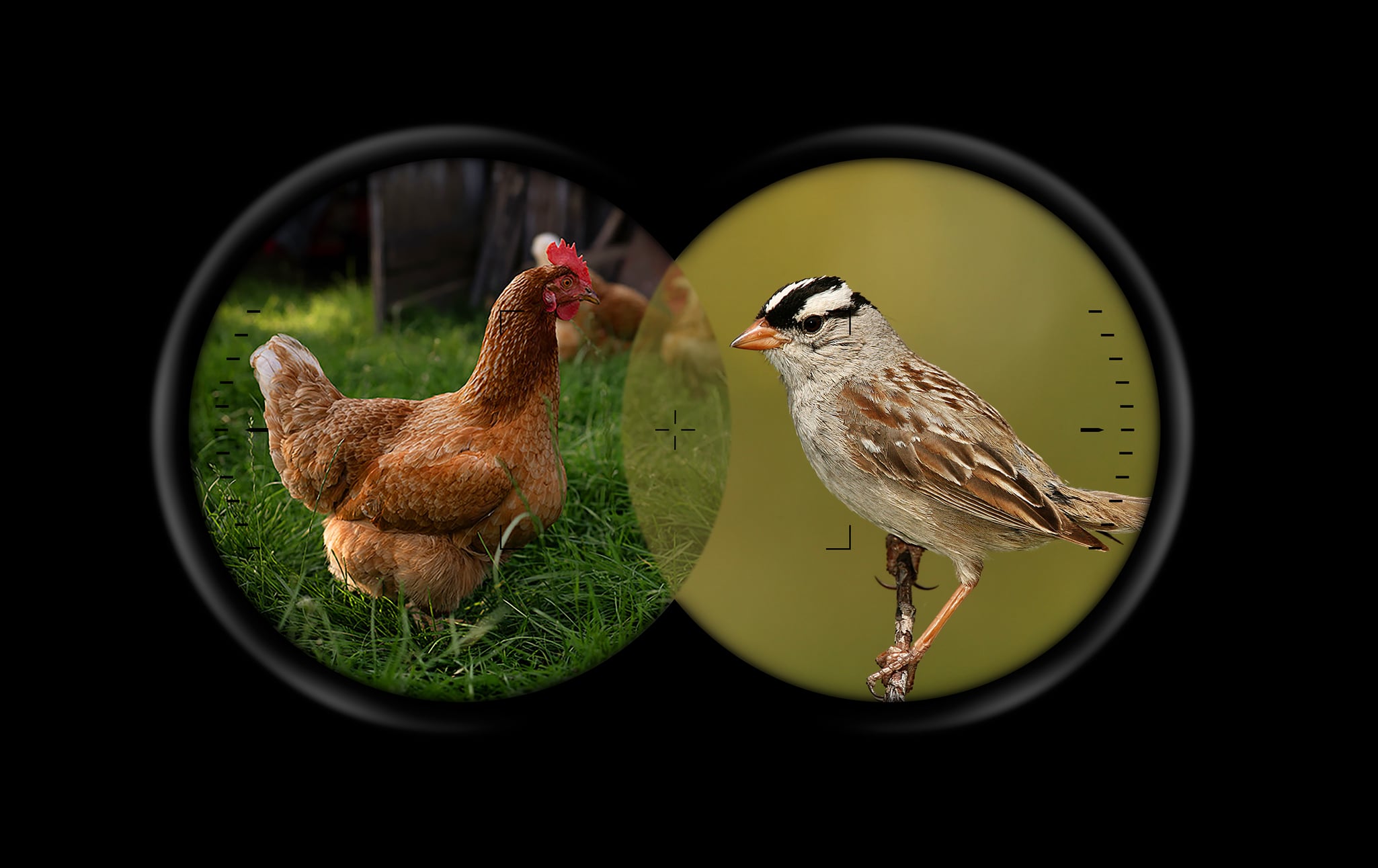
The first time I met him, the stranger didn’t have a name—he was “the zebra-stripey one.” A notch above “anonymous brown blob,” the species all unmet birds fall into. All I knew was that he was elusive. I chased him and ten of his closest friends down a San Diego hiking trail for 30 minutes trying for an ID. It was on the 61st branch that I managed a clear enough picture, shaken through my binoculars.

We had no relationship then. He was, to me, as unique as a default profile photo. A grey silhouette on a greyer background.

Seven months later, I moved out of downtown into a more suburban area—a home with a garden, space for my arms and legs to stretch, and far more flowers for inquisitive birds. That’s where zebra stripes found me again.

I thought him shy, at first. I’d only spotted him once in the first three months, but then I learned I’d been looking for him outside his social hours. How conceitedly human of me! Like insisting the world banks on my hours.

Before long, I had dug through the grey and found contours of an expansive inner world. The bird—the white-crowned sparrow—has favorite seeds, tones of voice, enemies, friends. I catalog intuitively, give him a nod of the head. I see him now. It took time, but I do.

This is how it goes with every bird I meet: a devotional practice. It starts with learning the species’ name, and the rest slots into place. I can tell you about the blue jay in upstate New York who threw tantrums whenever he didn’t get his way. Or the Anna’s hummingbird with such a strong preference for curled-petal flowers he’d chirp at the sight of one. Or the juvenile starling whose subtle hunger tell was putting his mother’s whole face in his beak.

But what can I tell you about the bird I see most often? Ah… nothing. I can’t tell you her likes, dislikes, or quirks, even if I squinted through binoculars. And it’s not by choice, it’s because the system is designed so I could never stand at a feeder long enough to find out without the cops being called. It is, yes, the bird on the plates of everyone I love, whose dismembered legs and wings I’ve seen far more often than her feathered face: an ordinary chicken. Before we can ask who she is, the meat industry has already ensured we can’t find out.

Her life begins as one of 600 million chicks hatched annually in the U.S. egg industry. Half of these chicks—her sisters and female cousins—will live the same short life as her. The other 300 million males are considered useless to both the egg industry, since they can’t lay, and the meat industry, since they are leaner and unsuitable for efficient meat production. Instead, they are routinely ground up or gassed alive within their first day of life. On average, male chicks live to be one day old, and what’s left on the other side of the macerator gets turned into animal food, fertilizer, or biofuel.

Narrowly avoiding this fate, she is transported from hatchery to factory farm. In the 67 or so square inches she’s afforded—an area smaller than a sheet of printer paper—the only natural behavior left to her beak is pecking, and the only thing it can reach is other birds. So she pecks at them, and the industry reads it as damage to the product. Before she can grow into herself, a hot knife takes one third of her beak—her instrument of recognition and means of language—searing through a thin layer of highly sensitive soft tissue, similar to the quick of the human nail. In one slice, she is marooned from everything her Red Junglefowl ancestors passed on to her: the dust baths, the foraging, the full use of herself. No housing system—free-range, cage-free, or battery cage—meets all of her needs, so the industry manages a symptom of confinement, not the confinement itself.

There is a body she should have had, and a body she is given. The body she should have had lays 10-15 eggs per year. The body she is given lays around 300, far beyond what is biologically healthy. The body she should have had naturally tapers egg production as she ages. The body she is given is force-molted: starved for weeks until she loses a quarter of her body weight, then returned to a normal diet to rejuvenate egg production at the first sight of egg decline.

Or maybe she is a chicken raised for meat, in which case the body she is given grows 300 percent faster than the body she should have had. Genetic manipulation and breeding favor rapid weight gain and disproportionately large breasts. Though her body is adult-sized within weeks, her organs and bones cannot keep pace with muscles, so her heart strains, her lungs fall short of breath, her legs twist and buckle under her weight. Weak and heavy, she spends long hours lying on shed floors covered in her own waste, developing painful lesions that make movement even harder. She is, perpetually, starving. Her appetite regulation system is re-engineered so she cannot feel full. Stomach fullness is a hindrance to the machine. She must ravenously hunger to ensure fullness of “chicken breast,” instead.

The body she should have had could sustain her for up to 15 years. The body she is given is taken again at six weeks. It is held upside down by the feet, shackled to a conveyor line, run through an electrified bath to stun, slit at the throat, and immersed in scalding water to loosen feathers. Line speeds reach up to three birds every two seconds, which means stunning and slaughter are not always completed before the water. Around a million birds a year are boiled alive. A 2017 USDA inspector account at Southern Hens reads: “While performing a 500 bird count, I saw a live, non-stunned bird enter the scalder. The bird was flapping and attempting to right itself. As it entered and traveled half the length of the first scalder, the bird jerked violently while lifting itself until it was no longer in my immediate sight.”

If I could bring my binoculars to a factory farm, I would not see her. I would see the capitalism-perfected, efficiency-optimized machine of her. I couldn’t see her because even she couldn’t see herself. There is a witness problem here. And to witness that, you’d need a special lens that so-called “ag-gag” laws, a new class of legislation that has sprung up across the Midwest of the United States in the last decade, work hard to ensure you never look through.

In 2011, a Mercy for Animals activist known as “Scott” went undercover at Sparboe farms, the fifth-largest egg producer in the US supplying all McDonald’s eggs west of the Mississippi. His mission as an activist was similar to mine as a birder, though the tools were different: to see up close what’s far away. He spent months wearing a hidden camera in facilities across Iowa, Minnesota, and Colorado. Sparboe marketed its eggs as humane, claiming hens had “freedom from fear and distress” and “freedom to express normal behavior.” Scott found that this freedom looked like hens crammed in crowded cages, workers grabbing birds by the neck, slamming them in and out of cages, shoving them in pockets “apparently for fun,” pressing thumbs into the back of chicks’ necks until they broke.

The footage aired on ABC. McDonald’s announced it would no longer accept Sparboe eggs before the broadcast finished. Target pulled their eggs within hours. Then most grocery chains followed suit. In response, Sparboe fired employees and blamed everything on a few bad actors. The president and owner claimed to be “shocked and deeply disturbed.”

Within months, Iowa’s governor passed what would become the model for a new generation of ag-gag laws. It was not a response to the cruelty, but a response to the proof of it.

Agricultural gag—“ag-gag”—laws are a series of anti-whistleblower laws that make it nearly impossible to see inside a factory farm or slaughterhouse. Civil liberties lawyers fight them in court and often win. The industry adjusts the wording and passes them again. In Iowa, the whack-a-mole has lasted over four rounds:

  • 2012: Ag-gag 1.0 passes—criminalizes lying about being an animal rights member on a farm application. Struck down as unconstitutional, 2019.
  • 2019: Ag-gag 2.0—criminalizes using deception to gain access to an agricultural facility with intent to harm the business. Struck down, 2020.
  • 2021: Ag-gag 3.0—criminalizes the use of cameras on farms entirely. Struck down, 2022.
  • 2024: a federal appeals court reverses the lower courts. Iowa’s ag-gag laws are, for now, constitutional, a first offense carrying up to two years in prison and an $8,500 fine.

The same pattern is repeated across many states—Idaho, Utah, and Wyoming among them. The industry doesn’t change its practices, only what is legal to document.

We know what the government’s own inspectors saw because someone had to sue to make it public. The USDA settled a Freedom of Information Act violation lawsuit in 2021, agreeing to publish inspection reports. Those reports described birds with heads engorged with blood, skin torn from their bodies, and live animals lying among carcasses on blood-soaked floors. All of it was on the government’s record the whole time; it was just hidden from public view

Sparboe’s farm was not especially cruel, just especially documented. Consumer ignorance is not a byproduct of the industry. It is the product—actively manufactured and legally enforced so the public never gets to meet her: the bird on the plates of everyone I love.

I still take a seat at the table. I see the plates and make no scene. The entire architecture—legal, cultural, linguistic—exists so that she stays invisible and we stay comfortable. The fortress of ignorance is so sturdy I don’t even try when I face it in the eyes of my brother or my best friend. How do I go against an almost universal silencing? Often, I don’t. I’m silent, too. I save my strongest attacks for when I’m safe behind a phone. Am I not, then, complicit too?

Across the table, sometimes, I think to ask: do you know what species you’re eating for lunch? Not “chicken”—which chicken? What kind? Did you know there are dozens of breeds, each with different temperaments? Four different species? Was she ever a stranger to you, or was she always a product? In another world, could she have been a visitor? A regular? A friend?

The anonymous brown lumps our forks interact with contain nothing to recognize. Bodies are drained bloodless, cut to the uniform shape of plastic containers, and stripped of anything that could rouse curiosity. We are organ-carrying, hot-blooded creatures with legs and hearts. She is caloric, inanimate flesh.

But it stays a thought. I reach for words, but the reason I’m so drawn to birding is I’ve always been more fluent in observation than speech.

I’ll tell you, then, what I’ve observed: the white crowned sparrow’s favorite perch is the second branch to the left. When he visits my feeder, he loves to shuffle his feet in the seeds before picking the first. Doesn’t scurry when a towhee or finch lingers on the trellis. Prefers the early sunset hour. Has something to say about every other bird’s song.

I can tell you nothing about the bird you ate for dinner. Maybe she would have loved the color yellow, if she were allowed to have eyes. Maybe she would have followed every bee to its flower, if she were allowed to have legs.


Manar Naboulsi is a creator, activist, and serial-hobbyist who can’t shut up about human and animal rights. You can find her on Instagram at @earth.to.manar.

0

Posts from Lemmygrad from 2+hrs ago have not federated

preview

I’ve spot checked other new posts too, but am missing two posts here: lemmygrad.ml/c/science?dataType=Post&sort=New

A post made from ml has federated to grad in the last hour: lemmy.ml/c/science?dataType=Post&sort=New

I’ve spot checked other new posts too, but am missing two posts here: lemmygrad.ml/c/science?dataType=Post&sort=New

A post made from ml has federated to grad in the last hour: lemmy.ml/c/science?dataType=Post&sort=New

0

Amsterdam bans public adverts for meat and fossil fuels

Amsterdam bans public adverts for meat and fossil fuels www.bbc.com
preview

cross-posted from: lemmygrad.ml/post/11575812

Amsterdam bans public adverts for meat and fossil fuels

BBC An advert for McDonald’s on a bridge in the centre of AmsterdamBBC

Advertisements for meat products, such as beef burgers, have disappeared from Amsterdam’s streets

Amsterdam has become the world’s first capital city to ban public advertisements for both meat and fossil fuel products. Since 1 May, adverts for burgers, petrol cars and airlines have been stripped from billboards, tram shelters, and metro stations.

At one of the city’s busiest tram stops, adjacent to a grassy roundabout bursting with vibrant yellow daffodils and orange tulips, the poster advertising landscape has changed.

They now promote the Rijksmuseum, the national museum of the Netherlands, and a piano concert. Until last week it was chicken nuggets, SUVs and low-budget holidays.

Politicians in the city say the move is about bringing Amsterdam’s streetscape into line with the local government’s own environmental targets.

These aim for the Dutch capital to become carbon neutral by 2050, and for local people to halve their meat consumption over the same period.

“The climate crisis is very urgent,” says Anneke Veenhoff from the GreenLeft Party. "I mean, if you want to be leading in climate policies and you rent out your walls to exactly the opposite, then what are you doing?

“Most people don’t understand why the municipality should make money out of renting our public space with something that we are actively having policies against.”

This view is echoed by Anke Bakker, who is Amsterdam group leader for a Dutch political party that focuses on animal rights – Party for the Animals.

She instigated the new restrictions, and rejects accusations of them being nanny state.

“Everybody can just make their own decisions, but actually we are trying to get the big companies not to tell us all the time what we need to eat and buy,” says Bakker.

“In a way, we’re giving people more freedom because they can make their own choice, right?”

Removing that constant visual nudge, she says, both reduces impulse buying, and signals that cheap meat and fossil heavy travel are no longer aspirational lifestyle choices.

Meat was a relatively small slice of Amsterdam’s outdoor advertising market – accounting for an estimated 0.1% of ad spend, compared with roughly 4% for fossil related products.

The advertising was instead dominated by the likes of clothing brands, movie posters, and mobile phones.

But politically the ban sends a message. Grouping meat with flights, cruises and petrol and diesel cars reframes it from a purely private dietary choice to a climate issue.

Local politicians Anneke Veenhoff (left) and Anke Bakker smile at the camera

Local politicians Anneke Veenhoff (left) and Anke Bakker say the ban was needed

Unsurprisingly, the Dutch Meat Association, which represents the industry, is unhappy at the move, which it calls “an undesirable way to influence consumer behaviour”. It adds that meat “delivers essential nutrients and should remain visible and accessible to consumers”.

Meanwhile, the Dutch Association of Travel Agents and Tour Operators says that the ban on advertising holidays that include air travel is a disproportionate curb on companies’ commercial freedom.

For activists like lawyer Hannah Prins and her environmental organisation Advocates for the Future, which worked closely with campaign group Fossil-Free Advertising, the ban on meat advertising is a deliberate attempt to create a “tobacco moment” for high carbon food.

“Because if I look now back at like old pictures, you have Johan Cruyff,” says Prins. "The famous Dutch footballer.

"He would be in advertisements for tobacco. That used to be normal. He died of lung cancer.

"That you were allowed to smoke on the train, on restaurants. For me, that’s like, whoa, why did people do that? You know, that feels so weird.

“So it really is like what we see in our public space is what we find normal in our society. And I don’t think it’s normal to see murdered animals on billboards. So I think it’s very good that that’s going to change.”

Lawyer Hannah Prins smiles at the camera

Lawyer Hannah Prins wants people to view meat in the same way as they do smoking

The Dutch capital is not starting from scratch.

Haarlem, 18km (11 miles) to its west, was in 2022 the first city in the world to announce a broad ban on most meat advertising in public spaces. It came into force in 2024, together with a prohibition on fossil fuel adverts.

Utrecht and Nijmegen have since followed with their own measures that explicitly restrict meat (and in Nijmegen’s case also dairy) advertising on municipal billboards, on top of existing bans on adverts for fossil fuels, petrol cars and flying.

Globally, dozens of cities have, or are moving to, ban fossil-fuel advertising. Such as Edinburgh, Sheffield, Stockholm and Florence. France even has a nationwide ban.

Campaigners hope that the Dutch approach - linking meat and fossil fuels - will act as a legal and political blueprint others can copy.

Stand at a tram stop in Amsterdam and you might no longer see a juicy burger or a 19 euro ($18.70; £14.90) flight to Berlin on the shelter.

Yet the same eye-catching offers can still pop up in your social media algorithm. And, let’s face it, many of us would be looking down at our screens until the tram trundles along.

If municipal bans leave digital platforms untouched, how much real world impact can they have on our habits or are they purely symbolic virtue-signalling?

Getty Images Students on their mobile phonesGetty Images

Is the ban on outdoor adverts worthwhile if people can still see promotions for meat and fossil fuel online?

So far, there is no direct evidence that removing meat advertising from public spaces leads to a shift toward more plant-based societies.

However, some researchers are cautiously optimistic, such as Prof Joreintje Mackenbach who is an epidemiologist - a medical professional who investigates health patterns within populations.

She describes Amsterdam’s move as “a fantastic natural experiment to see”.

“If we see advertisements for fast food everywhere, it normalizes the consumption of behaviour of fast consumption,” says Mackenbach, who is from the Department of Epidemiology and Data Science at hospital Amsterdam University Medical Center.

“So if we take away those types of cues in our public living environments, then that is also going to have an impact on those social norms.”

She points to a study which claims that London Underground’s 2019 ban on junk food adverts led to less people buying such products in the UK capital.

Smiling on the banks of a canal in the centre of Amsterdam, Prins is adamant smaller specialist tradespeople in Amsterdam will benefit from the new advertising ban.

“Because like everything we love, festivals, nice cheese, a flower shop around the corner. All the stuff that we love, we don’t hear from through ads,” she says.

"It’s usually through people that we know, or we walk past the building. So I think local businesses will be able to thrive because of this.

“I think and I hope that big polluting companies will be extra scared. And maybe will rethink the kind of products they are selling. I think you can really see that change is possible.”