0
0
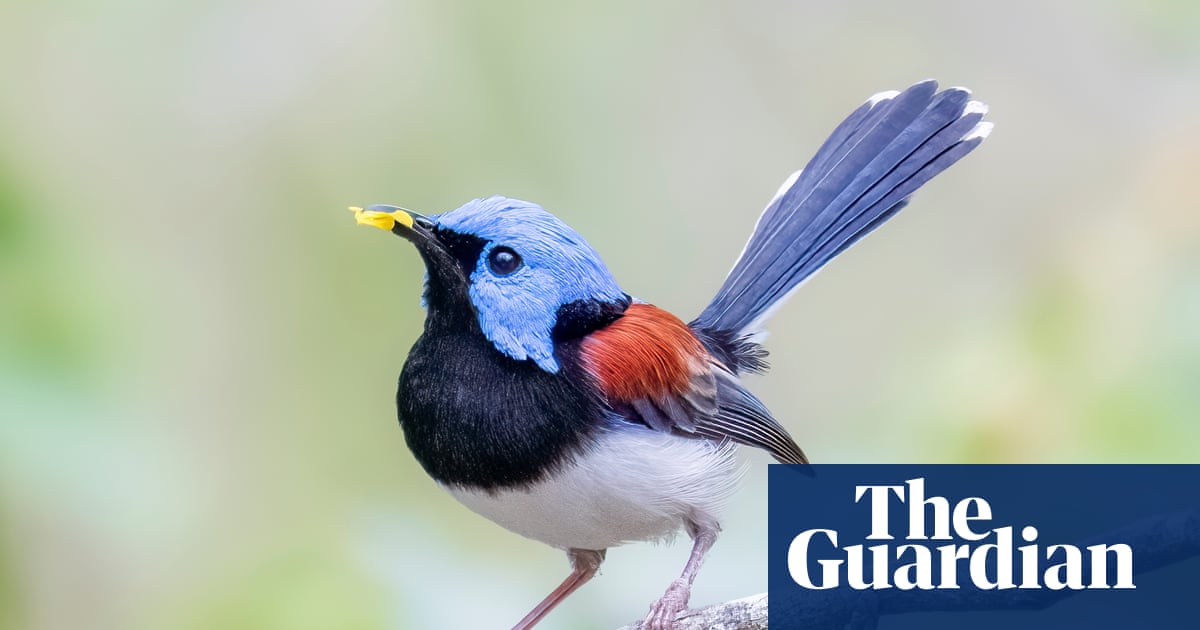
the Guardian
The tiny world of Australian fairywrens – in pictures
www.theguardian.com

Not on this instance? Enter your own instance's domain to go straight to following c/wildlifephotography@lemmy.world there.

This adorable aquatic asshole took down one of the very few maple trees at my favorite island park.


This adorable aquatic asshole took down one of the very few maple trees at my favorite island park.

cross-posted from: lemmy.world/post/50587168
cross-posted from: lemmy.world/post/50587168

When I was out walking the dog this morning I heard a buzzing and saw this - occasionally the dragonfly would make an attempt to get away and fly a few metres but the hornet was hanging on tight and stinging it.
Taken from my phone, Pixel 8 Pro with GrapheneOS and the pixel camera app
When I was out walking the dog this morning I heard a buzzing and saw this - occasionally the dragonfly would make an attempt to get away and fly a few metres but the hornet was hanging on tight and stinging it.
Taken from my phone, Pixel 8 Pro with GrapheneOS and the pixel camera app


Photographer: Giles Laurent
Photographer: Giles Laurent

Photographer: Tisha Mukherjee
Photographer: Tisha Mukherjee

Dictyophorus spumans, also known as the koppie foam grasshopper, is a species of grasshopper in the family Pyrgomorphidae, indigenous to southern Africa. The name “foam grasshopper” derives from the insect’s ability to produce a toxic foam from its thoracic glands, using a combination of hemolymph with air from the grasshopper’s spiracles. Adult males are typically 4.5 to 5 cm (1.8 to 2.0 in) long and females typically 5 to 7 cm (2.0 to 2.8 in), but can grow up to a length of 8 cm (3.1 in).
Photographer: Charles J. Sharp
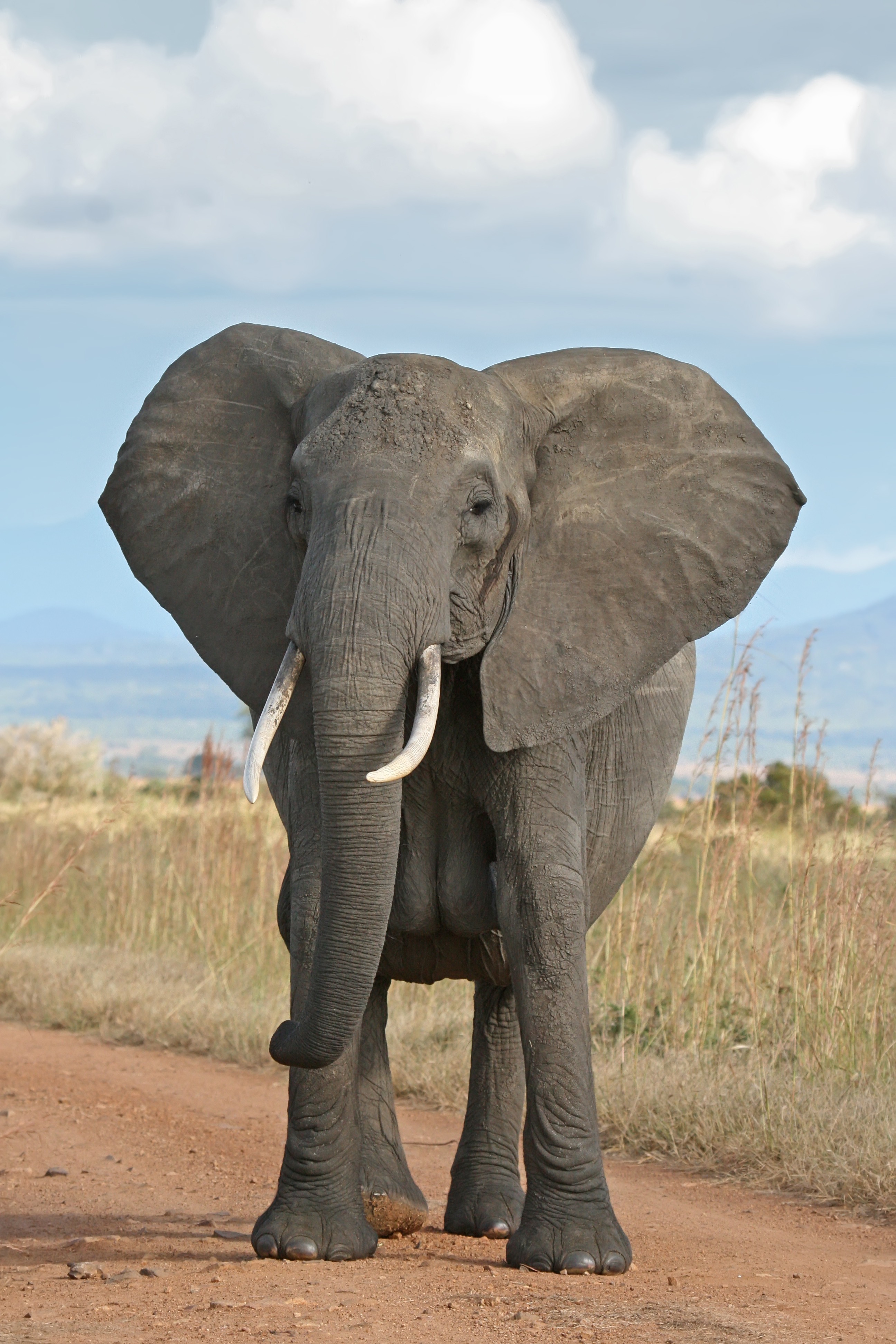
Elephants are the largest existing land animals and the only surviving members of the family Elephantidae. Three living species are recognised: the African bush elephant, the African forest elephant, and the Asian elephant. Elephants have long, flexible trunks, long tusks, large ear flaps, pillar-like legs, and grey skin. They are herbivorous, and stay near water when it is accessible. Females (cows) tend to live in family groups, which can consist of one female with her calves or several related females with offspring. After reaching adulthood, males (bulls) live separately, either alone or with other males. Elephants communicate by touch, sight, smell, and sound. Threats to their populations include poaching for their ivory tusks, habitat destruction, and conflicts with local people. Elephants are iconic in human culture and have been featured in art, folklore, religion, literature, and popular culture.
Photographer: Muhammad Mahdi Karim

Photographer: Charles J. Sharp
Photographer: Charles J. Sharp

The red knot (Calidris canutus) is a medium-sized shorebird in the sandpiper family, Scolopacidae. It breeds across the high Arctic of Canada, Greenland, Europe and Russia, and undertakes some of the longest migrations of any landbird. Six subspecies are recognised, wintering on coasts from western Africa to Australia, New Zealand and South America. It feeds on arthropods and larvae on its breeding grounds and mainly on molluscs and other marine invertebrates during migration and winter. The red knot is a relatively large sandpiper with short dark legs and a thin dark bill. In winter it is mostly pale grey, while breeding adults develop distinctive reddish-cinnamon underparts; the exact plumage varies between subspecies. Although widespread, some populations have declined because of habitat loss, climate change and reduced food availability.
Photographer: Chuck Homler

This 5 centimetres (2.0 in)-long nudibranch can be found in the Western Pacific Ocean and feeds, like many other nudibranchs, on sponges.
Photographer: Diego Delso
This 5 centimetres (2.0 in)-long nudibranch can be found in the Western Pacific Ocean and feeds, like many other nudibranchs, on sponges.
Photographer: Diego Delso

The parti-coloured bat (Vespertilio murinus), also known as the rearmouse, is a species in the vesper bat family, Vespertilionidae. It is found across temperate Eurasia, from western and southern Europe through the Caucasus, Iran, Mongolia, northern China, Korea, Afghanistan and northern Pakistan. It measures 4.8–6.4 cm (1.9–2.5 in) in body length, weighs 11–24 grams (0.39–0.85 oz), and has a 26–33 cm (10–13 in) wingspan. Much of the parti-coloured bat’s behaviour remains poorly understood because the species is relatively rare. It hunts insects such as mosquitoes, caddis flies and moths using ultrasonic calls, often over water and forests and around street lights. Females form maternity roosts and usually bear twins, while the species migrates long distances and hibernates alone through winter. Its distinctive twittering call is especially noticeable during the autumn mating season.
Photographer: Charles J. Sharp

Photographer: Giles Laurent
Photographer: Giles Laurent

The red-necked grebe (Podiceps grisegena) is a species of water bird in the grebe family, Podicipedidae, found across the temperate regions of the northern hemisphere. It breeds on shallow freshwater lakes, marshes and ponds, and winters mainly along sheltered coasts and other large bodies of water. In breeding plumage, adults have a black cap, pale grey face and throat, and a rusty-red neck, while winter birds are duller grey. The species is a strong swimmer and diver, feeding on fish, aquatic insects and other invertebrates. Red-necked grebes build floating nests among emergent vegetation, and newly hatched chicks often ride on their parents’ backs. It is classified as a least-concern species by the International Union for Conservation of Nature.
Photographer: Charles J. Sharp

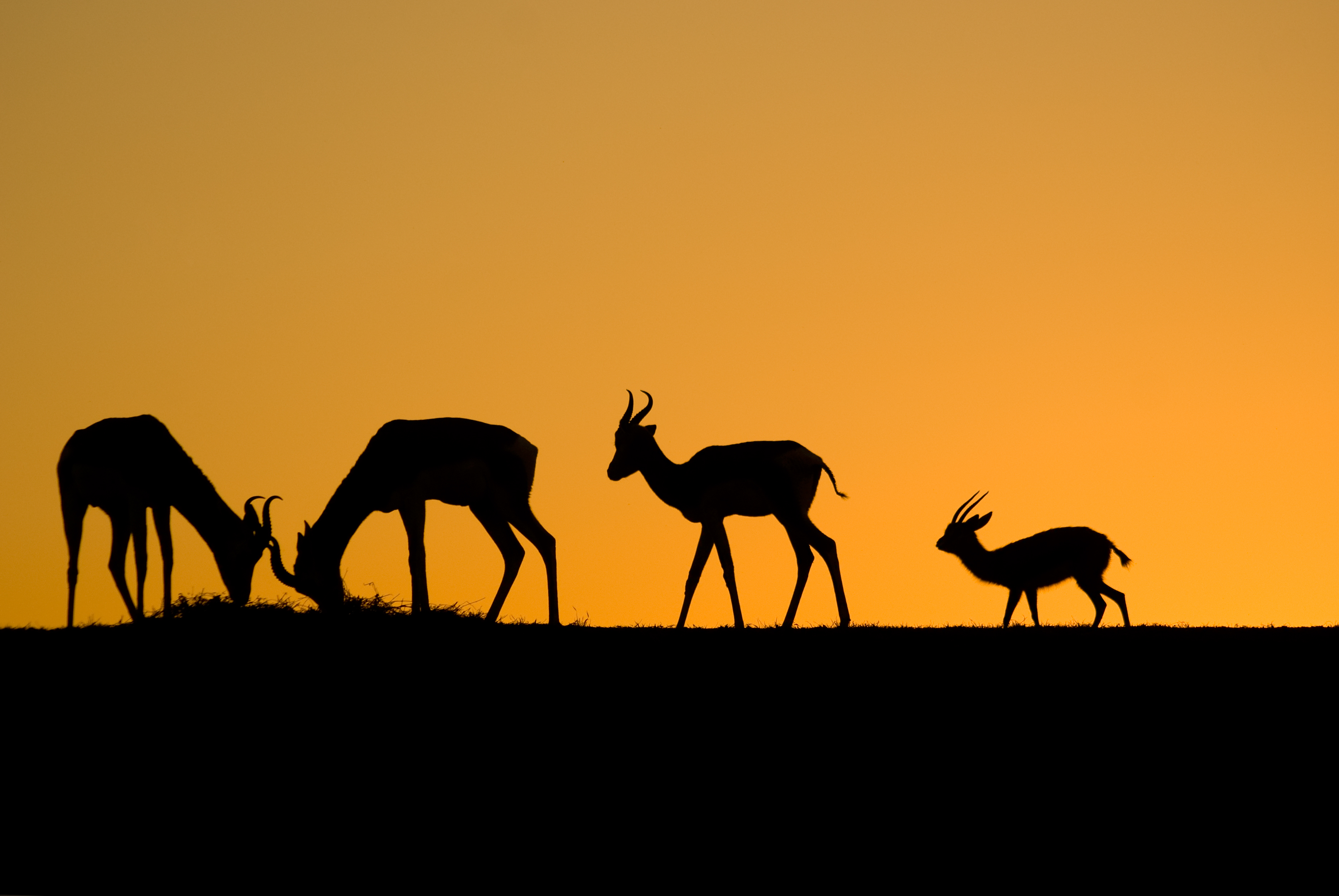
As the sun fades away you get to see a real beauty, you get to see some gazelles, you can’t actually see any details but their silhouettes glazing within the sun rays. Pure epic wonder in such view, you can feel the beauty through the sunset’s colors reflected on the gazelles.
Photographer: Anass Errihani

Arctocephalus pusillus, the Cape fur seal, is a species in the family Otariidae, the eared seals. The species is found along the coasts of southern Africa and southeastern Australia and is the largest of the fur seals, with adult males growing up to 2.3 metres (7.5 ft) in length and females somewhat smaller. Males are dark grey to brown with a darker mane, while females are lighter in colour and pups are born black. The species breeds in large colonies on rocky islands, reefs and coastal outcrops, where females give birth to a single pup. Cape fur seals feed mainly on fish, squid and other marine animals, and are preyed upon mainly by great white sharks and orcas. It is classified as a least-concern species by the International Union for Conservation of Nature.
Photographer: JJ Harrison

Photographer: Tisha Mukherjee
Photographer: Tisha Mukherjee

The Eurasian chaffinch (Fringilla coelebs) is a species of bird in the family Fringillidae, the finches. It is found across Europe and temperate Asia, with introduced populations elsewhere. The adult male has a blue-grey head, rust-red underparts, and contrasting white wing bars and tail markings; the female is much duller, being mainly grey-brown. The species breeds in wooded areas, where the female builds a cup-shaped nest in a tree or bush and lays around four to five eggs. The Eurasian chaffinch mainly eats seeds outside the breeding season, and feeds its young on invertebrates such as caterpillars. It has two or three different song types, with some regional song dialects, and is classified as a least-concern species by the International Union for Conservation of Nature.
Photographer: Caroline Legg
Photographer: Charles J. Sharp
Photographer: Charles J. Sharp

Graphium colonna, the black swordtail or mamba swordtail, is a species in the family Papilionidae, the swallowtail butterflies. It is found widely across sub-Saharan Africa, from West Africa to eastern and southern Africa. The butterfly is predominantly black with green markings and the characteristic “tail” on the hindwing. The species breeds throughout the warmer months, and its caterpillars feed on plants in the genera Artabotrys, Uvaria and Annona. Graphium colonna belongs to the clade antheus of the genus Graphium and was first described by Christopher Ward in 1873.
Photographer: Charles J. Sharp

Photographer: Diego Delso
Photographer: Diego Delso

The American woodcock (Scolopax minor) is a small shorebird in the sandpiper family, Scolopacidae. It is found mainly in the eastern half of North America, where it is the most common sandpiper, although unlike most other species it lives primarily in upland woods, thickets, and brushy wetlands. Its plumage is a mottled mix of brown, gray and black that provides effective camouflage against leaves and soil. The American woodcock has a plump body, short legs, large eyes set high on the head, and a long prehensile bill used to probe moist soil for earthworms and other invertebrates. Males are known for their spring courtship displays, giving a buzzy peent call before spiraling into the air. The species is considered of least concern globally, but its population has declined because of habitat loss and forest maturation.
Photographer: Rhododendrites

She gave me a beautiful show! Please consider these free for use. They’d make great art references.


She gave me a beautiful show! Please consider these free for use. They’d make great art references.

The moor frog (Rana arvalis) is a reddish-brown, yellow, grey or olive frog in the family Ranidae, found in Europe and Asia. Usually 5.5 to 6.0 centimetres (2.2 to 2.4 in) long, it has horizontal pupils, partly webbed feet and, in males, nuptial pads and paired vocal sacs. The species inhabits varied wetlands, meadows, forests, steppes, bogs and farmland, from lowlands to high elevations, and tolerates acidic breeding pools. It feeds opportunistically on small invertebrates, with prey size broadly matching frog size. Breeding follows hibernation; males form choruses and may turn bright blue for a few days during mating. Although listed as a least-concern species, it is threatened in some areas by habitat loss, drainage, pollution, acidification and fragmentation.
Photographer: Charles J. Sharp

Photographer: Giles Laurent
Photographer: Giles Laurent

The blue-billed white tern (Gygis candida) is a small tropical seabird in the family Laridae, occurring across the Indian Ocean and Pacific Ocean. Formerly treated as a subspecies within the white tern complex, conspecific with the the Atlantic white tern (G. alba) and the little white tern (G. microrhyncha), it is now generally recognised as a distinct species. First described by Johann Friedrich Gmelin in 1789, it is an all-white tern with dark eyes, a black bill with a blue base, and slaty-blue legs. Two subspecies are recognised, ranging from the Seychelles and Maldives to Hawaii and the Pitcairn Islands. Unusually, chicks occasionally fall prey to Aldabra giant tortoises in the Seychelles. This blue-billed white tern of the subspecies G. c. candida was photographed in flight at Muri Lagoon, on Rarotonga in the Cook Islands.
Photographer: Charles J. Sharp

Photographer: Tisha Mukherjee
Photographer: Tisha Mukherjee

The adder (Vipera berus), also known as the common adder and the common European viper, is a species of venomous snake in the viper family, Viperidae. It occurs across much of Europe (where it is the most widespread snake species) and northern Asia, including Great Britain, Scandinavia, and parts of Russia and China. In several European countries, the adder is the only extant venomous snake. Usually growing to around 60 cm (24 in) in length, it has a dark zigzag stripe along the back, though colour varies considerably, including completely black melanistic forms. The adder inhabits a wide range of environments such as heathland, woodland edges, moors, and wetlands. It feeds mainly on small mammals, amphibians, and lizards, and is ovoviviparous, giving birth to live young. Although its bite can be painful, fatalities are extremely rare. The species is protected in several countries because of habitat loss and population declines.
Photographer: Charles J. Sharp

Like all hornbills, the bird has a large casque; the male’s casque is even larger.
Photographer: Charles J. Sharp
Like all hornbills, the bird has a large casque; the male’s casque is even larger.
Photographer: Charles J. Sharp

The black kite (Milvus migrans) is a medium-sized bird of prey in the family Accipitridae, which occurs widely across Europe, Asia, Africa, and Australia, inhabiting both temperate and tropical regions. It is an opportunistic feeder, hunting small animals but also scavenging on carrion, household refuse and fish. Black kites are highly adaptable and often thrive in urban environments, especially in South Asia, where they frequently live close to humans. The bird has an average weight of 735 grams (26 oz) and features a forked tail and a distinctive shrill whistle followed by a rapid whinnying call. It is a skilled soarer, commonly using thermal currents to search for food and migrate. Several subspecies are recognised, including the Indian govinda and the Australian affinis.
Photographer: Charles J. Sharp

cross-posted from: lemmy.world/post/47636607
Found in the Pentland Hills, Scotland
CC-BY-4.0
cross-posted from: lemmy.world/post/47636607
Found in the Pentland Hills, Scotland
CC-BY-4.0

Trisopterus luscus, commonly known as pouting, is a small marine fish in the family Gadidae, which includes the cods and near relatives. The species occurs mainly in European waters, particularly around the British Isles, Scandinavia, the Mediterranean Sea, and the coast of North Africa. They live over rocky and sandy seabeds at depths of up to 300 metres (980 ft), with smaller specimens being found closer to the shore. With a typical adult length of around 30 centimetres (12 in), they mature quickly and generally live for about four years. They are scavengers which feed on the seabed, with marine worms, shellfish and dead fish typically making up their diet. Once regarded as low-value bycatch, they have become increasingly important as a relatively sustainable commercial fish.
Photographer: Diego Delso


Despite its name, on a sign instead a of a fence ;)
Southwestern USA, May 2026
Despite its name, on a sign instead a of a fence ;)
Southwestern USA, May 2026

I caught this guy on our morning drive. We only had the chance to see 2 leopards and I was fortunate enough to get this shot before he headed into the brush.
I caught this guy on our morning drive. We only had the chance to see 2 leopards and I was fortunate enough to get this shot before he headed into the brush.

Photographer: Giles Laurent
Photographer: Giles Laurent

The hoatzin (Opisthocomus hoazin) is a tropical bird found in the Amazon basin and the Orinoco Basin in South America. It is the only extant species in the family Opisthocomidae. A folivore, the hoatzin eats the leaves of the plants that grow in its marshy and riverine habitat. Its digestive system supports fermentation and effective breakdown of plant matter, a trait typically found in ruminants such as cattle. Because of aromatic compounds in the leaves it consumes and the fermentation required to digest them, the hoatzin has a manure-like odor, giving it a local nickname of stinkbird. It is a noisy bird and makes a variety of hoarse calls, including groans, croaks, hisses and grunts. Its chicks feature primitive claws on two of their wing digits, which they use immediately after hatching to move around tree branches. The hoatzin is believed to remain fairly common in a large part of its range, but its population is likely decreasing due to habitat loss. It is the national bird of Guyana.
Photographer: Charles J. Sharp

Photographer: Giles Laurent
Photographer: Giles Laurent

Nephila pilipes is a species of golden orb-web spider found across Asia and parts of Oceania. It is commonly found in humid forests and coastal areas, near surface water and against buildings. The species shows extreme sexual dimorphism, with females among the world’s largest orb-weaving spiders, reaching 50 mm (2 in) in body length, while males are typically only 5–6.5 mm (0.2–0.25 in). Nephila pilipes preys mainly on flying insects and can alter web structure depending on prey type. Its asymmetrical golden webs are made from exceptionally strong silk that has been studied in materials science. The spider rarely bites humans, and its bites are generally mild. In parts of Vietnam, it is also eaten as a traditional food source. This photograph shows an N. pilipes female and male (on the female’s abdomen) on the Wu Kau Tang, Hong Kong.
Photographer: Charles J. Sharp

Photographer: Tisha Mukherjee
Photographer: Tisha Mukherjee

The tufted titmouse (Baeolophus bicolor) is a small North American songbird in the family Paridae, the tits and chickadees. Native to eastern North America, it inhabits deciduous and mixed woodland as well as parks, gardens and suburban areas, and has expanded its range northwards in recent decades. The species has a gray crest, black forehead, pale underside and rust-colored flanks, with a song usually described as a whistled peter-peter-peter. The tufted titmouse’s diet includes insects, seeds, berries and nuts, and it is a regular visitor to bird feeders, sometimes storing food for later use. It nests in tree cavities or nest boxes lined with soft materials, sometimes including hair taken from live mammals. Family groups may remain together beyond the breeding season, with older offspring occasionally helping to raise younger siblings. It is currently listed as a least-concern species by the International Union for Conservation of Nature.
Photographer: Rhododendrites


Phelsuma lineata, also known commonly as the lined day gecko, is a species of diurnal gecko in the family Gekkonidae. The species is native to Madagascar. It has also been introduced to Réunion.
en.wikipedia.org/wiki/Phelsuma_lineata
Photo taken in Antananarivo, Madagascar April 2026
CC BY 4.0
Phelsuma lineata, also known commonly as the lined day gecko, is a species of diurnal gecko in the family Gekkonidae. The species is native to Madagascar. It has also been introduced to Réunion.
en.wikipedia.org/wiki/Phelsuma_lineata
Photo taken in Antananarivo, Madagascar April 2026
CC BY 4.0

The Balearic green toad (Bufotes balearicus) is a species in the family Bufonidae, the true toads, native to Italy, Corsica, and the western Mediterranean Sea region. Although named after the Balearic Islands, it was probably introduced there by humans during the Bronze Age. It is mainly a lowland species but can occur up to 1,300 metres (4,300 ft) above sea level. Formerly treated as part of the European green toad complex, genetic studies now recognise it as a distinct species, though limited hybridization occurs where its range overlaps with related green toads. The species has characteristic brownish or reddish-spotted paratoid glands. It is classified as a least-concern species by the International Union for Conservation of Nature, although Balearic populations are declining.
Photographer: Richard Bartz

The European golden plover (Pluvialis apricaria), also known as the Eurasian golden plover, greater golden plover, or just the golden plover within Europe, is a relatively large species of plover. This species is similar to two other golden plovers, the American golden plover, Pluvialis dominica, and Pacific golden plover, Pluvialis fulva, which are both slightly smaller, slimmer and longer-legged than European golden plover, and both have grey rather than white axillary (armpit) feathers (visible in flight, and when the bird stretches its wings on the ground).
en.wikipedia.org/wiki/European_golden_plover
Photo taken in the Cairngorms, Scotland May 2026
CC BY 4.0