#climatehope

posts tagged #climatehope

0

The Guardian decided to ignore the rules about what constitutes news and start writing about positive climate stories

preview

The Guardian decided to ignore the rules about what constitutes news and start writing about positive climate stories

And so was born the Alternatives, a weekly news column where we cover these different projects. We’re constantly amazed by some of the things we learn. Norway has heat pumps in two-thirds of its homes. China’s sponge cities are targeting 70% rainwater reuse. Paris is building a gigantic cooling machine using river water.

https://www.theguardian.com/membership/ng-interactive/2026/aug/25/we-asked-our-climate-reporters-to-highlight-one-idea-for-positive-change-we-got-a-chronicle-of-global-transformation
@climatehope

0

Here's a potential climate change solution I have in mind

preview

Setup — Solar-Azolla-Duck System

  1. Site prep: Dig shallow trenches (6–12" deep) in parallel rows under planned panel rows. Line with clay or pond liner. Grade slightly so water flows trench-to-trench toward a settling basin at the low end.

  2. Solar canopy: Mount panels on A-frame/overhead racking above the trenches, ~40% coverage for shade without killing plant growth elsewhere. Add gutters/channels on panel edges feeding rainwater into trench inlets.

  3. Fill & inoculate: Fill trenches with water. Seed with Azolla (get local stock — pond supply, extension office, or aquaculture supplier). Let it establish full mat coverage before introducing ducks (1–2 weeks).

  4. Fencing: Perimeter fence trenches to keep ducks contained but able to access water edges for grazing.

  5. Stock ducks: Add Khaki Campbells once Azolla mat is established. Start light (don’t overstock before mat can regrow) — increase flock size as mat production stabilizes.

  6. Settling basin: Build a simple sump/basin at the trench outflow — concrete or lined pit, deep enough to let solids settle. Add a drawdown valve or pump port for pulling out compost solids and overflow water.

  7. Optional Gambusia: Add Eastern mosquitofish (Gambusia holbrooki) to the settling basin for backup mosquito control. Free from local mosquito control offices in most FL counties.

  8. Water testing kit: Get ammonia, dissolved oxygen, and pH test kits. Test weekly at minimum.

Operation loop:

  • Ducks graze Azolla + get 60% commercial feed
  • Manure drains into trench water → feeds Azolla growth
  • Azolla mat regrows, blocks mosquito larvae, keeps filtering water
  • Excess Azolla + drift debris flows to settling basin
  • Basin solids → compost; overflow water → fertigate crop beds
  • Surplus Azolla (whatever ducks don’t eat) → harvest, dry or sell fresh as feed

Weekly maintenance:

  • Check ammonia/DO levels
  • Harvest surplus Azolla
  • Collect eggs
  • Pump/rake settling basin as needed
  • Visual check on mat coverage (thin spots = mosquito risk + reduced N-fixation)

Scale-up flag: pilot on a small section (1/4 to 1/2 acre) before committing all 10 acres. Confirms manure-load/Azolla-regrowth balance before you’re managing it across the whole site.

0

Updated the design idea to be lifted off the ground at a slight angle

preview

Using thin steel efficiently, this keeps the panels above the plants and dirt so it doesn’t get blocked or dirty. This would also be a bit more resistant to high wind because it can pass below the panels rather than getting trapped by the panel touching the ground. The slight angle ensures that water/dirt slides off more easily than a flat roof, and so the panels get maximum exposure facing in the direction of the sun either South or North depending on hemisphere.

Posted originally in lemmy.world/c/SolarAzolla

0

Agrivoltaic azolla and solar panel synergistic combination

preview

I have been working on creating the most realistic, cheapest, and most productive setups possible, and I think I’ve gotten close.

This combines the electricity production of solar, and the carbon capture power of azolla. The solar power helps keep the azolla safe from harsh direct sun, and the azolla pond below helps cool the panel with subtle evaporation cooling.

How does it make money? Excess electricity sale and azolla biomass which can be used as animal feed or squeezed into cakes biochar because it fixes nitrogen from the atmosphere.

This infrastructure start up cost is very simple, accessible, and easy to maintain. This would ideally be done in places that don’t experience cold winters, ideally somewhere like Southern USA. It can be done in Summer in the Northern hemisphere but only for about 4 months a year. Any type of heating or infrastructure greatly increases costs.

0

“You cannot blockade the sun”: how to help Cuba’s green transition

“You cannot blockade the sun”: how to help Cuba’s green transition belly-of-the-beast.kit.com
preview

cross-posted from: lemmy.ml/post/44132390

Feb. 20, 2026

[from weekly newsletter about Cuba (with YouTube video links) from the Belly Of The Beast news/video collective. Their videos can also be found at: peertube.world/c/cuba_botb_videos/videos]

Since the Trump administration imposed what amounts to an oil blockade on Cuba three weeks ago, most media outlets have focused on how the island has radically cut back fuel consumption. But that’s not the only story: The Cuban government insists overcoming the energy crisis requires a bold shift to renewable energy. A new solidarity initiative offers ways you can help.

Also:

  • Travel to Havana with Belly of the Beast!
  • Belly of the Beast’s Liz Oliva Fernández Cuts Through “Bullshit” Propaganda
  • Cuba Vows to Continue Protecting U.S. From Drug “Scourge”
  • More Talk About Talks — and More Anonymous Sources
  • Spain to Send Food, Russia Signals Upcoming Fuel Delivery
  • UN Human Rights Commission Condemns Oil Blockade
  • Canadian Mining Company Suspends Cuba Operations
  • Mexico Offers to Serve as “Air Bridge” to Cuba
0

Judge Strikes Down Trump’s Latest Effort to Stop Offshore Wind

Judge Strikes Down Trump’s Latest Effort to Stop Offshore Wind Project www.nytimes.com
preview

Revolution Wind is roughly 87 percent complete, with 58 of 65 wind turbines installed. It was scheduled to be fully operational by the second half of this year, delivering power to more than 350,000 homes and businesses in Connecticut and Rhode Island by year’s end.

This is the second time the administration has tried to stop the project. In August, the administration initially ordered work to halt on Revolution Wind, citing unspecified national security concerns. But Connecticut, Rhode Island and Orsted sued, and in September, Judge Lamberth allowed construction to continue.

On Dec. 22, the Interior Department again ordered Revolution Wind to halt. The suspension order also applied to Sunrise Wind and Empire Wind, both off the coast of New York; Vineyard Wind 1 off the coast of Massachusetts; and Coastal Virginia Offshore Wind off Virginia.

Together the projects represented $25 billion of investment and about 10,000 jobs and were expected to power more than 2.5 million homes and businesses.

0

What would change your mind about climate change? We asked 5,000 Australians – here’s what they told us

UNSW Sites What would change your mind about climate change? We asked 5,000 Australians – here’s what they told us www.unsw.edu.au
preview

geteilt von: aussie.zone/post/19997535

Many respondents said their views could shift if they saw real, meaningful action – especially from governments and big business. Some wanted proof that Australia is taking climate change seriously. Others said action would offer hope or reduce their anxiety.

Even some sceptical respondents said coordinated, global action might persuade them

This part of the research is actually quite interesting. Its the bandwagon effect, people concluding, “everyones heading that way, must be for a reason.”

Its all the more reason to keep the pressure against the propaganda from the likes of Koch, Rhinehart or Palmer, et al.

You never know, the mass of action from others could convince these people, with their deep vested interests, of their own folly.

0

Paris to Replace Parking Spaces With Trees | The city’s new climate plan promises to drop speed limits, repurpose traffic lanes, remove 60k parking spots & create urban “oases” to combat extreme heat

preview

cross-posted from: feddit.org/post/4897192

archive.today link

cross-posted from: slrpnk.net/post/15360304

cross-posted from: feddit.org/post/4897192

archive.today link

cross-posted from: slrpnk.net/post/15360304

0

Biden Urged to 'Follow the Facts' as Study Shows LNG Emissions 33% Worse Than Coal

Common Dreams Biden Urged to 'Follow the Facts' as Study Shows LNG Emissions 33% Worse Than Coal | Common Dreams www.commondreams.org
preview

cross-posted from: lemmy.ml/post/20232082

By Brett Wilkins

September 12, 2024

cross-posted from: lemmy.ml/post/20232082

By Brett Wilkins

September 12, 2024

0

The science of protests: demonstrations are on the rise, and scientists are revealing which types work best

The science of protests: how to shape public opinion and swing votes www.nature.com
preview

Scientist Erica Chenoweth, who studies civil resistance at Harvard Kennedy School in Cambridge in the U.S., showed that every movement that mobilized at least 3.5% of a population was successful. This led to what’s known as the 3.5% rule — that protests require this level of participation to ensure change.

But the figure can be misleading, Chenoweth cautions. A much larger number of people are probably supporting a successful revolution even if they aren’t visibly protesting.

0

Conservation slowing biodiversity loss, scientists say

Conservation slowing biodiversity loss, scientists say www.bbc.com
preview

cross-posted from: lemmy.world/post/14705005

Conservation actions are effective at reducing global biodiversity loss, according to a major study.

International researchers spent 10 years looking at measures, from hatching Chinook salmon to eradication of invasive algae.

The authors said their findings offered a “ray of light” for those working to protect threatened animals and plants.

0

'Reef stars' restored Indonesia's blast-damaged corals in just 4 years

Grist 'Reef stars' restored Indonesia's blast-damaged corals in just 4 years grist.org
preview

cross-posted from: slrpnk.net/post/8027175

‘Reef stars’ restored Indonesia’s blast-damaged corals in just 4 years

cross-posted from: slrpnk.net/post/8027175

‘Reef stars’ restored Indonesia’s blast-damaged corals in just 4 years

0

MIT: How to pull carbon dioxide out of seawater

MIT News | Massachusetts Institute of Technology How to pull carbon dioxide out of seawater news.mit.edu
preview

As carbon dioxide continues to build up in the Earth’s atmosphere, research teams around the world have spent years seeking ways to remove the gas efficiently from the air. Meanwhile, the world’s number one “sink” for carbon dioxide from the atmosphere is the ocean, which soaks up some 30 to 40 percent of all of the gas produced by human activities.

Recently, the possibility of removing carbon dioxide directly from ocean water has emerged as another promising possibility for mitigating CO2 emissions, one that could potentially someday even lead to overall net negative emissions. But, like air capture systems, the idea has not yet led to any widespread use, though there are a few companies attempting to enter this area.

Now, a team of researchers at MIT says they may have found the key to a truly efficient and inexpensive removal mechanism. The findings were reported this week in the journal Energy and Environmental Science, in a paper by MIT professors T. Alan Hatton and Kripa Varanasi, postdoc Seoni Kim, and graduate students Michael Nitzsche, Simon Rufer, and Jack Lake.

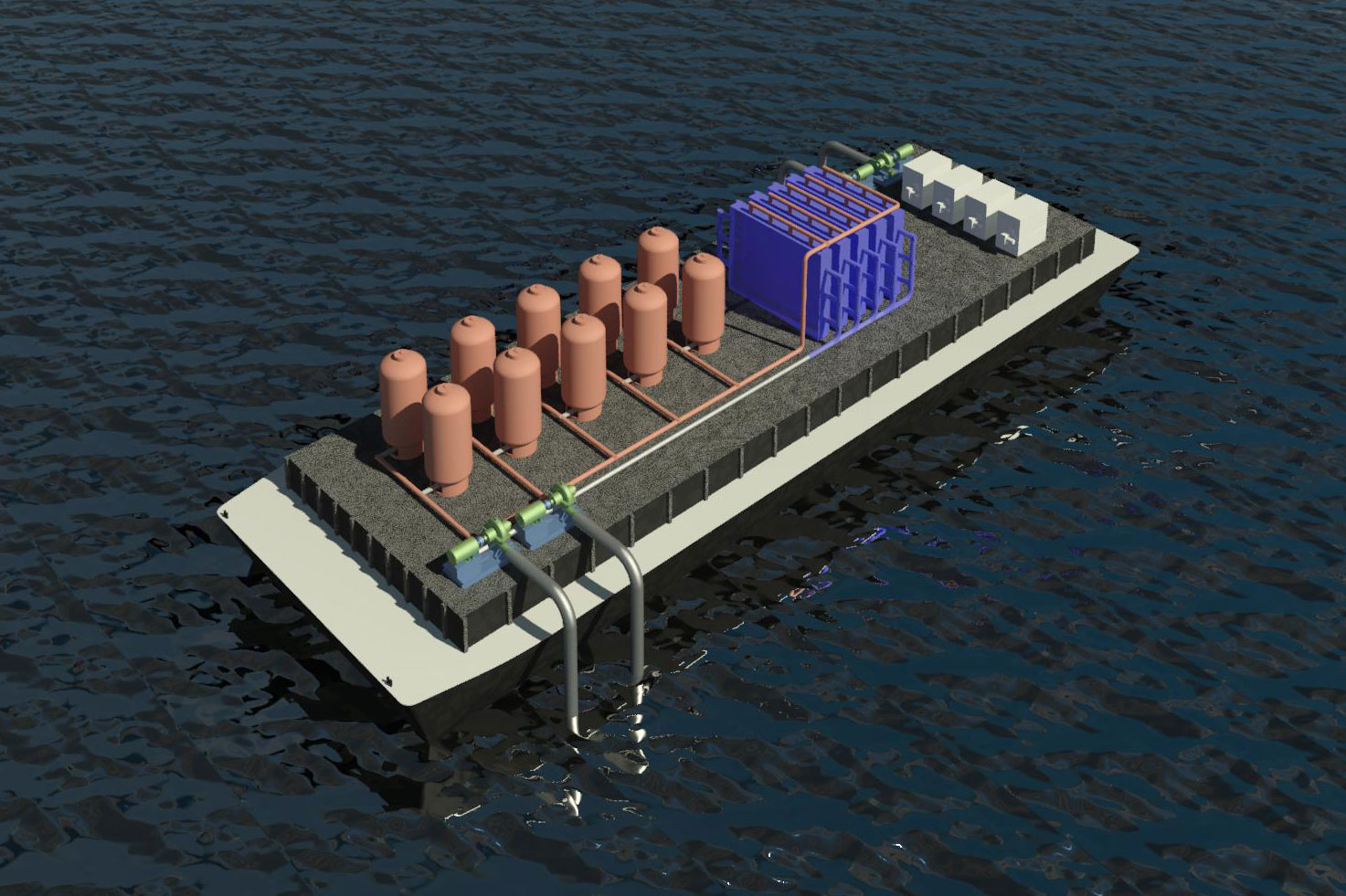
The existing methods for removing carbon dioxide from seawater apply a voltage across a stack of membranes to acidify a feed stream by water splitting. This converts bicarbonates in the water to molecules of CO2, which can then be removed under vacuum. Hatton, who is the Ralph Landau Professor of Chemical Engineering, notes that the membranes are expensive, and chemicals are required to drive the overall electrode reactions at either end of the stack, adding further to the expense and complexity of the processes. “We wanted to avoid the need for introducing chemicals to the anode and cathode half cells and to avoid the use of membranes if at all possible,” he says.

The team came up with a reversible process consisting of membrane-free electrochemical cells. Reactive electrodes are used to release protons to the seawater fed to the cells, driving the release of the dissolved carbon dioxide from the water. The process is cyclic: It first acidifies the water to convert dissolved inorganic bicarbonates to molecular carbon dioxide, which is collected as a gas under vacuum. Then, the water is fed to a second set of cells with a reversed voltage, to recover the protons and turn the acidic water back to alkaline before releasing it back to the sea. Periodically, the roles of the two cells are reversed once one set of electrodes is depleted of protons (during acidification) and the other has been regenerated during alkalization.

This removal of carbon dioxide and reinjection of alkaline water could slowly start to reverse, at least locally, the acidification of the oceans that has been caused by carbon dioxide buildup, which in turn has threatened coral reefs and shellfish, says Varanasi, a professor of mechanical engineering. The reinjection of alkaline water could be done through dispersed outlets or far offshore to avoid a local spike of alkalinity that could disrupt ecosystems, they say.

“We’re not going to be able to treat the entire planet’s emissions,” Varanasi says. But the reinjection might be done in some cases in places such as fish farms, which tend to acidify the water, so this could be a way of helping to counter that effect.

Once the carbon dioxide is removed from the water, it still needs to be disposed of, as with other carbon removal processes. For example, it can be buried in deep geologic formations under the sea floor, or it can be chemically converted into a compound like ethanol, which can be used as a transportation fuel, or into other specialty chemicals. “You can certainly consider using the captured CO2 as a feedstock for chemicals or materials production, but you’re not going to be able to use all of it as a feedstock,” says Hatton. “You’ll run out of markets for all the products you produce, so no matter what, a significant amount of the captured CO2 will need to be buried underground.”

Initially at least, the idea would be to couple such systems with existing or planned infrastructure that already processes seawater, such as desalination plants. “This system is scalable so that we could integrate it potentially into existing processes that are already processing ocean water or in contact with ocean water,” Varanasi says. There, the carbon dioxide removal could be a simple add-on to existing processes, which already return vast amounts of water to the sea, and it would not require consumables like chemical additives or membranes.

“With desalination plants, you’re already pumping all the water, so why not co-locate there?” Varanasi says. “A bunch of capital costs associated with the way you move the water, and the permitting, all that could already be taken care of.”

The system could also be implemented by ships that would process water as they travel, in order to help mitigate the significant contribution of ship traffic to overall emissions. There are already international mandates to lower shipping’s emissions, and “this could help shipping companies offset some of their emissions, and turn ships into ocean scrubbers,” Varanasi says.

The system could also be implemented at locations such as offshore drilling platforms, or at aquaculture farms. Eventually, it could lead to a deployment of free-standing carbon removal plants distributed globally.

The process could be more efficient than air-capture systems, Hatton says, because the concentration of carbon dioxide in seawater is more than 100 times greater than it is in air. In direct air-capture systems it is first necessary to capture and concentrate the gas before recovering it. “The oceans are large carbon sinks, however, so the capture step has already kind of been done for you,” he says. “There’s no capture step, only release.” That means the volumes of material that need to be handled are much smaller, potentially simplifying the whole process and reducing the footprint requirements.

The research is continuing, with one goal being to find an alternative to the present step that requires a vacuum to remove the separated carbon dioxide from the water. Another need is to identify operating strategies to prevent precipitation of minerals that can foul the electrodes in the alkalinization cell, an inherent issue that reduces the overall efficiency in all reported approaches. Hatton notes that significant progress has been made on these issues, but that it is still too early to report on them. The team expects that the system could be ready for a practical demonstration project within about two years.

“The carbon dioxide problem is the defining problem of our life, of our existence,” Varanasi says. “So clearly, we need all the help we can get.”

The work was supported by ARPA-E.

0

Welcome and Moderators Wanted!

preview

Hello everybody,

I created this community to give everybody a breath of fresh air in the face of apocalyptic headline after apocalyptic headline. We face serious trouble as a species, but unless we focus our time and energy on solutions, we won’t be able to get ourselves out of it. I am certain you feel the same way.

And I want this community to grow, but I can’t do it all on my own, and I need your help! If you are interested in finding positive solutions to climate change, and have some moderator experience, please respond and I will get in contact with you.

Have a great day everyone, and remember it’s always darkest before the dawn. 🙂

0

Small Modular Reactors Explained - Nuclear Power's Future?

play · youtube.com
YouTube Small Modular Reactors Explained - Nuclear Power's Future? www.youtube.com
preview

🤔 I legitimately do wonder why stuff like this and support for nuclear energy in general hasn’t skyrocketed on account of climate change. It’s the one large-scale means that we have to achieve clean energy with current technology, yet I see no governments pushing to replace coal plants with nuclear ones. You’d think the companies who own the coal plants would just accept the writing on the wall and switch to nuclear, if only to save themselves.

There’s so much about humanity’s tepid response to climate change in general that does not make sense to me, but the fact remains that nuclear is an important tool we have in our toolbox and we desperately need to start using it to prevent the real tragedy of runaway climate collapse.

What do you guys think? Do you think these small modular reactors will take off or nah?

0

Potent greenhouse gas produced by industry could be readily abated with existing technologies: Affordable and available technologies can curb rising nitrous oxide emissions

ScienceDaily Potent greenhouse gas produced by industry could be readily abated with existing technologies www.sciencedaily.com
preview

Researchers have found that one method of reducing greenhouse gas emissions is available, affordable, and capable of being implemented right now. Nitrous oxide, a potent greenhouse gas and ozone-depleting substance, could be readily abated with existing technology applied to industrial sources.

“The urgency of climate change requires that all greenhouse gas emissions be abated as quickly as is technologically and economically feasible,” said lead author Eric Davidson, a professor with the University of Maryland Center for Environmental Science. “Limiting nitrous oxide in an agricultural context is complicated, but mitigating it in industry is affordable and available right now. Here is a low-hanging fruit that we can pluck quickly.”

When greenhouse gases are released into the atmosphere, they trap the heat from the sun, leading to a warming planet. In terms of emissions, nitrous oxide is third among greenhouse gases, topped only by carbon dioxide and methane. Also known as laughing gas, it has a global warming potential nearly 300 times that of carbon dioxide and stays in the atmosphere for more than 100 years. It also destroys the protective ozone layer in the stratosphere, so reducing nitrous oxide emissions provides a double benefit for the environment and humanity.

Nitrous oxide concentration in the atmosphere has increased at an accelerating rate in recent decades, mostly from increasing agricultural emissions, which contribute about two-thirds of the global human-caused nitrous oxide. However, agricultural sources are challenging to reduce. In contrast, for the industry and energy sectors, low-cost technologies already exist to reduce nitrous oxide emissions to nearly zero.

Industrial nitrous oxide emissions from the chemical industry are primarily by-products from the production of adipic acid (used in the production of nylon) and nitric acid (used to make nitrogen fertilizers, adipic acid, and explosives). Emissions also come from fossil fuel combustion used in manufacturing and internal combustion engines used in cars and trucks.

“We know that abatement is feasible and affordable. The European Union’s emissions trading system made it financially attractive to companies to remove nitrous oxide emissions in all adipic acid and nitric acid plants,” said co-author Wilfried Winiwarter of the International Institute for Applied Systems Analysis. “The German government is also helping to fund abatement of nitrous oxide emissions from nitric acid plants in several low-income and middle-income countries.”

The private sector could also play a key role in nitrous oxide emissions reduction, encouraged by trends in consumer preferences for purchasing climate-friendly products. For example, 65% of the nitrous emissions embodied in nylon products globally are used in passenger cars and light vehicles. Automobile manufacturers could require supply chains to source nylon exclusively from plants that deploy efficient nitrous oxide abatement technology.

0

Scientists beam solar power to Earth from space for 1st time ever

Space Scientists beam solar power to Earth from space for 1st time ever www.space.com
preview

A space solar power prototype has demonstrated its ability to wirelessly beam power through space and direct a detectable amount of energy toward Earth for the first time. The experiment proves the viability of tapping into a near-limitless supply of power in the form of energy from the sun from space.

Because solar energy in space isn’t subject to factors like day and night, obscuration by clouds, or weather on Earth, it is always available. In fact, it is estimated that space-based harvesters could potentially yield eight times more power than solar panels at any location on the surface of the globe.

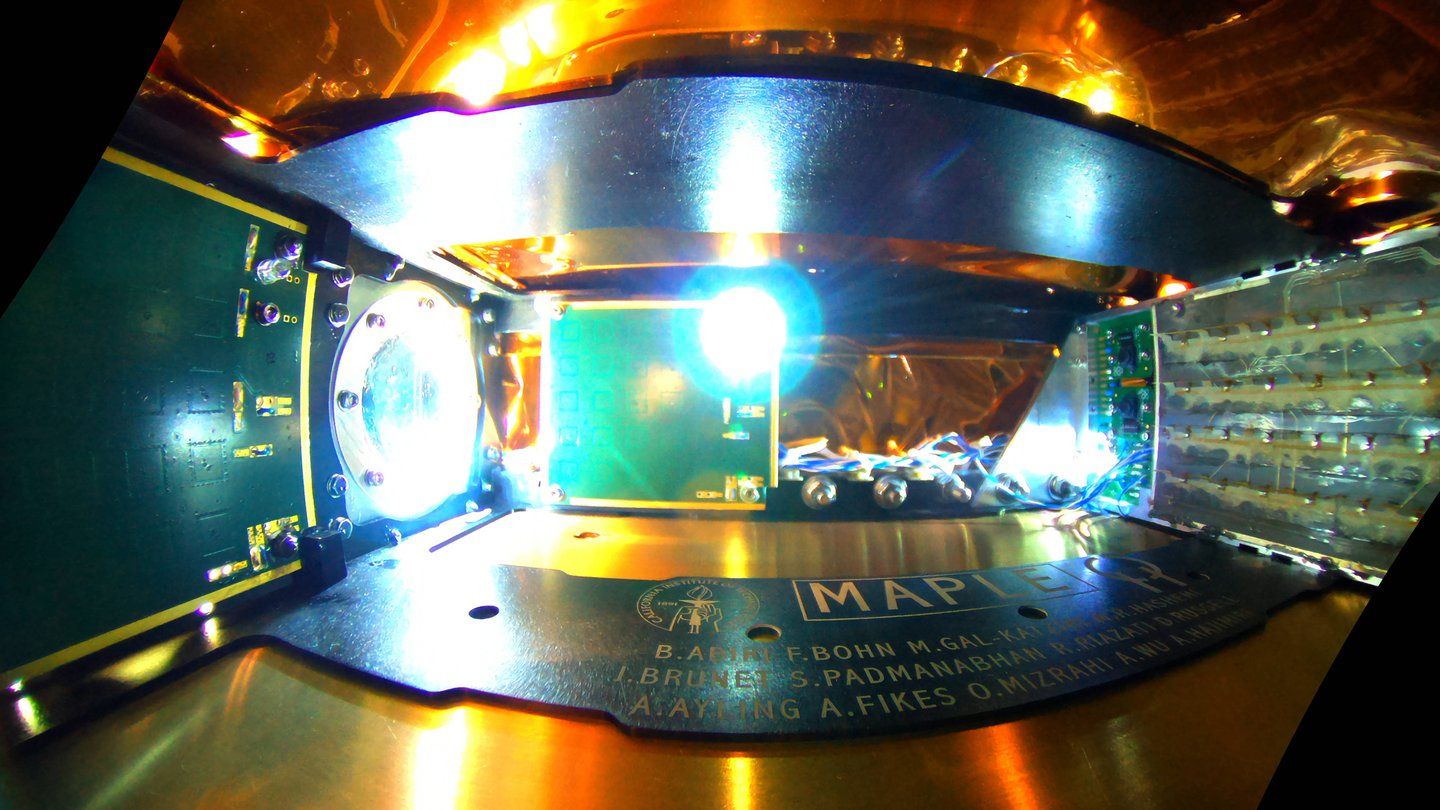
The wireless power transfer was achieved by the Microwave Array for Power-transfer Low-orbit Experiment (MAPLE), an array of flexible and lightweight microwave power transmitters, which is one of the three instruments carried by the Space Solar Power Demonstrator (SSPD-1).

SSPD-1 was launched in January 2023 as part of the California Institute of Technology’s (Caltech) Space Solar Power Project (SSPP), the primary goal of which is to harvest solar power in space and then transmit it to the surface of Earth.

“Through the experiments we have run so far, we received confirmation that MAPLE can transmit power successfully to receivers in space,” Co-Director of the Space-Based Solar Power Project, Dr. Ali Hajimiri, said in a statement. “We have also been able to program the array to direct its energy toward Earth, which we detected here at Caltech. We had, of course, tested it on Earth, but now we know that it can survive the trip to space and operate there.”

MAPLE demonstrated the transmission of energy wirelessly through space by sending energy from a transmitter to two separate receiver arrays around a foot away, where it was transformed into electricity. This was used to light up a pair of LEDs.

The instrument then beamed energy from a tiny window installed in the unit to the roof of Gordon and Betty Moore Laboratory of Engineering on Caltech’s campus in Pasadena.

Because MAPLE is not sealed, the experiment also demonstrated its capability to function in the harsh environment of space while subject to large swings in temperature and exposure to solar radiation. The conditions experienced by this prototype will soon be felt by large-scale SSPP units.

“To the best of our knowledge, no one has ever demonstrated wireless energy transfer in space, even with expensive rigid structures,” Hajimiri added. “We are doing it with flexible, lightweight structures and with our own integrated circuits. This is a first!”

In a video from Caltech, Hajimiri, who led the Caltech that developed MAPLE, explained how the wireless transmission of energy through space is based on a quantum phenomenon called “interference.”

Interference arises due to the wave-like nature of light. When two light waves overlap, if they are in phase, the waves align, and the peaks of the waves meet and create a greater peak with a height that is the sum of the two original peaks. This is called constructive interference.

If, however, the waves of light are out of phase and overlap while misaligned, a peak may meet a trough in the wave, and both are canceled out, a process known as destructive interference.

“If you have multiple sources that are operating in concert, in the same phase, you can actually direct energy in one direction so all of them will only add in one direction and will cancel each other out in all other directions,” Hajimiri said. “The same way that a magnifying glass can focus light into a small point, you can actually control the timing of this in such a way that you can focus all of that energy in a smaller area than the area that you started with.” Related stories

By precisely controlling the timing of this process, the direction of the energy can be adjusted very rapidly on a scale of nanoseconds, and power can be redirected to space-based receivers or even receivers here on Earth. Together this allows the energy to be directed to the desired location and nowhere else, and all this can be done without the need for any moving mechanical parts.

Hajimiri and his team are now assessing the performance of the individual units that comprise MAPLE. a painstaking process that will take as long as six months to complete. This will allow them to provide feedback that will guide the development of fully realized versions of the system in the future.

It is planned that SSPP will eventually consist of a constellation of modular spacecraft collecting sunlight, transforming it into electricity, and turning this into microwaves that are then beamed over vast distances, including back to Earth, where energy is needed. This could include regions of the globe currently poorly served by existing energy infrastructure.

“In the same way that the internet democratized access to information, we hope that wireless energy transfer democratizes access to energy,” Hajimiri concluded. “No energy transmission infrastructure will be needed on the ground to receive this power. That means we can send energy to remote regions and areas devastated by war or natural disaster.”


Something like this would be really, really great in terms of providing 24/7 solar power without the baggage of battery storage, especially if fusion never pans out. Stuff like this should be up there with nuclear when it comes to this kind of talk, but I don’t know if the rest of the world has put 2 and 2 together on it yet.

0

The Great Green Wall: An Initiative to Reforest the African Landscape

The Great Green Wall education.nationalgeographic.org
preview

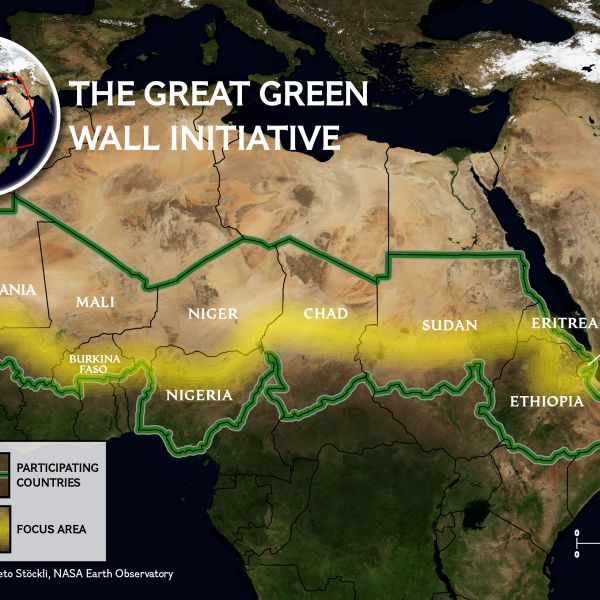
In Africa, scientists are hard at work restoring land once rich with biodiversity and vegetation. Eleven countries in the Sahel-Sahara region—Djibouti, Eritrea, Ethiopia, Sudan, Chad, Niger, Nigeria, Mali, Burkina Faso, Mauritania, and Senegal—have joined to combat land degradation and restore native plant life to the landscape.

In recent years, northern Africa has seen the quality of arable land decline significantly due to climate change and poor land management. Uniting under the banner of the “Great Green Wall” initiative, national and regional leaders hope to reverse this trend. The bulk of the work on the ground was originally slated to be concentrated along a stretch of land from Djibouti, Djibouti, in the east to Dakar, Senegal, in the west—an expanse 15 kilometers (nine miles) wide and 7,775 kilometers (4,831 miles) long. The project has since expanded to include countries in both northern and western Africa.

Land degradation typically stems from both human-related and natural factors; overfarming, overgrazing, climate change, and extreme weather are the most common causes. Beyond affecting land and the natural environment, land degradation poses serious threats to agricultural productivity, food security, and quality of life. Nowhere is this issue more urgent than in sub-Saharan Africa, where an estimated 500 million people live on land undergoing desertification, the most extreme form of land degradation.

Jean-Marc Sinnassamy is a senior environmental specialist with the Global Environment Facility (GEF). He helps manage a program developed under the Great Green Wall initiative with countries in the Sahel and West Africa. The GEF has been with the initiative since the beginning, helping to convene country leaders at the headquarters of the United Nations Convention to Combat Desertification in Bonn, Germany, in February 2011. The World Bank and other organizations focused on global development and the environment provide financial and technical support.

For Sinnassamy, the partnership represents a unique opportunity to work across the region with a solid political base.

“Here, we saw political leaders, heads of state, ministers in different countries wanting to work on common environmental issues and wanting to tackle land degradation issues together,” he says. “For us, this is a political blessing. We have to respond to this demand, and we have to capitalize on that.”

Integrated Landscape Approach

Beyond the project’s strong political foundation, its carefully crafted approach brings environmental benefits both locally and globally. The initiative uses an “integrated landscape approach” that allows each country to address land degradation, climate change adaptation and mitigation, biodiversity, and forestry within its local context.

“In this case, working to combat land degradation is the best way to address both very local issues and improve the global environment,” Sinnassamy says. “We are working with the land, which is the basis of livelihood in these communities. We are working with people to improve soil quality, which improves crop yield and in turn agricultural production and the overall quality of life in the community. These very local benefits are also a way to generate global benefits for water, land, and nature.”

In the end, Sinnassamy hopes the region as a whole will be composed of a “mosaic of landscapes” that increases biodiversity and maintains native flora as part of agricultural land. Each participating country has its own individual goals, which include reducing erosion, diversifying income, increasing crop yield, and improving soil fertility.

While trees and forests are only part of the focus of the Great Green Wall initiative, many in the media have cast the project as solely a tree-planting project and an attempt to halt the southward expansion of the Sahara Desert.

Sinnassamy is quick to point out two faults in this perception. The first is that the Great Green Wall initiative is much more nuanced than simply planting a belt of trees across the continent.

“Behind the name or the brand ‘Great Green Wall,’ different people see different things. Some people saw just a stripe of trees from east to west, but that has never been our vision,” he says. “In Niger, Mali, and Burkina Faso . . . natural regeneration managed by farmers has yielded great results. We want to replicate and scale up these achievements across the region. It’s very possible to restore trees to a landscape and to restore agroforestry practices without planting any trees. This is also a sustainable way of regenerating agroforestry and parkland.”

The second misperception Sinnassamy points to is that the Sahara Desert is not, in fact, expanding.

“We are not fighting the desert,” he says. “In the majority of the areas we are working in these 11 countries, the desert is not advancing. The [Sahara] Desert is a very stable ecosystem. Of course, there are some areas on the margins—for instance in Senegal, Mauritania, and Nigeria—where there are some sand movements. But from a geographic perspective, over time the desert has been relatively stable in this area.”

What Will It Take to ‘Build the Wall?’

Having spent the better part of a year planning, strategizing, and building partnerships with agencies on the ground, the Great Green Wall initiative is beginning to report positive early results. The project’s $2 billion budget, stemming largely from World Bank co-financing and partnerships fostered by the African Union, ensures participating countries will have the means to see the project through to the end.

Examples of success include more than 50,000 acres of trees planted in Senegal. Most of these are the acacia species Senegalia senegal, which has economic value for the commodity it produces, gum arabic. (Gum arabic is primarily used as a food additive.) A small portion of the trees are also fruit-bearing, which, when mature, will help combat the high levels of malnutrition in the country’s rural interior.

Even more dramatic is the project’s potential social impact. The BBC reports that the improvements in land quality and economic opportunity in Mali may help curb terrorism in the country, where famine and poverty have exacerbated a spike in political and religious extremism.

In Africa, scientists are hard at work restoring land once rich with biodiversity and vegetation. Eleven countries in the Sahel-Sahara region—Djibouti, Eritrea, Ethiopia, Sudan, Chad, Niger, Nigeria, Mali, Burkina Faso, Mauritania, and Senegal—have joined to combat land degradation and restore native plant life to the landscape.

In recent years, northern Africa has seen the quality of arable land decline significantly due to climate change and poor land management. Uniting under the banner of the “Great Green Wall” initiative, national and regional leaders hope to reverse this trend. The bulk of the work on the ground was originally slated to be concentrated along a stretch of land from Djibouti, Djibouti, in the east to Dakar, Senegal, in the west—an expanse 15 kilometers (nine miles) wide and 7,775 kilometers (4,831 miles) long. The project has since expanded to include countries in both northern and western Africa.

Land degradation typically stems from both human-related and natural factors; overfarming, overgrazing, climate change, and extreme weather are the most common causes. Beyond affecting land and the natural environment, land degradation poses serious threats to agricultural productivity, food security, and quality of life. Nowhere is this issue more urgent than in sub-Saharan Africa, where an estimated 500 million people live on land undergoing desertification, the most extreme form of land degradation.

Jean-Marc Sinnassamy is a senior environmental specialist with the Global Environment Facility (GEF). He helps manage a program developed under the Great Green Wall initiative with countries in the Sahel and West Africa. The GEF has been with the initiative since the beginning, helping to convene country leaders at the headquarters of the United Nations Convention to Combat Desertification in Bonn, Germany, in February 2011. The World Bank and other organizations focused on global development and the environment provide financial and technical support.

For Sinnassamy, the partnership represents a unique opportunity to work across the region with a solid political base.

“Here, we saw political leaders, heads of state, ministers in different countries wanting to work on common environmental issues and wanting to tackle land degradation issues together,” he says. “For us, this is a political blessing. We have to respond to this demand, and we have to capitalize on that.”

Integrated Landscape Approach

Beyond the project’s strong political foundation, its carefully crafted approach brings environmental benefits both locally and globally. The initiative uses an “integrated landscape approach” that allows each country to address land degradation, climate change adaptation and mitigation, biodiversity, and forestry within its local context.

“In this case, working to combat land degradation is the best way to address both very local issues and improve the global environment,” Sinnassamy says. “We are working with the land, which is the basis of livelihood in these communities. We are working with people to improve soil quality, which improves crop yield and in turn agricultural production and the overall quality of life in the community. These very local benefits are also a way to generate global benefits for water, land, and nature.”

In the end, Sinnassamy hopes the region as a whole will be composed of a “mosaic of landscapes” that increases biodiversity and maintains native flora as part of agricultural land. Each participating country has its own individual goals, which include reducing erosion, diversifying income, increasing crop yield, and improving soil fertility.

While trees and forests are only part of the focus of the Great Green Wall initiative, many in the media have cast the project as solely a tree-planting project and an attempt to halt the southward expansion of the Sahara Desert.

Sinnassamy is quick to point out two faults in this perception. The first is that the Great Green Wall initiative is much more nuanced than simply planting a belt of trees across the continent.

“Behind the name or the brand ‘Great Green Wall,’ different people see different things. Some people saw just a stripe of trees from east to west, but that has never been our vision,” he says. “In Niger, Mali, and Burkina Faso . . . natural regeneration managed by farmers has yielded great results. We want to replicate and scale up these achievements across the region. It’s very possible to restore trees to a landscape and to restore agroforestry practices without planting any trees. This is also a sustainable way of regenerating agroforestry and parkland.”

The second misperception Sinnassamy points to is that the Sahara Desert is not, in fact, expanding.

“We are not fighting the desert,” he says. “In the majority of the areas we are working in these 11 countries, the desert is not advancing. The [Sahara] Desert is a very stable ecosystem. Of course, there are some areas on the margins—for instance in Senegal, Mauritania, and Nigeria—where there are some sand movements. But from a geographic perspective, over time the desert has been relatively stable in this area.”

What Will It Take to ‘Build the Wall?’

Having spent the better part of a year planning, strategizing, and building partnerships with agencies on the ground, the Great Green Wall initiative is beginning to report positive early results. The project’s $2 billion budget, stemming largely from World Bank co-financing and partnerships fostered by the African Union, ensures participating countries will have the means to see the project through to the end.

Examples of success include more than 50,000 acres of trees planted in Senegal. Most of these are the acacia species Senegalia senegal, which has economic value for the commodity it produces, gum arabic. (Gum arabic is primarily used as a food additive.) A small portion of the trees are also fruit-bearing, which, when mature, will help combat the high levels of malnutrition in the country’s rural interior.

Even more dramatic is the project’s potential social impact. The BBC reports that the improvements in land quality and economic opportunity in Mali may help curb terrorism in the country, where famine and poverty have exacerbated a spike in political and religious extremism.

0

Improving soil could keep world within 1.5C heating target, research suggests

the Guardian Improving soil could keep world within 1.5C heating target, research suggests www.theguardian.com
preview

Marginal improvements to agricultural soils around the world would store enough carbon to keep the world within 1.5C of global heating, new research suggests.

Farming techniques that improve long-term fertility and yields can also help to store more carbon in soils but are often ignored in favour of intensive techniques using large amounts of artificial fertiliser, much of it wasted, that can increase greenhouse gas emissions.

Using better farming techniques to store 1% more carbon in about half of the world’s agricultural soils would be enough to absorb about 31 gigatonnes of carbon dioxide a year, according to new data. That amount is not far off the 32 gigatonnes gap between current planned emissions reduction globally per year and the amount of carbon that must be cut by 2030 to stay within 1.5C.

The estimates were carried out by Jacqueline McGlade, the former chief scientist at the UN environment programme and former executive director of the European Environment Agency. She found that storing more carbon in the top 30cm of agricultural soils would be feasible in many regions where soils are currently degraded.

McGlade now leads a commercial organisation that sells soil data to farmers. Downforce Technologies uses publicly available global data, satellite images and lidar to assess in detail how much carbon is stored in soils, which can now be done down to the level of individual fields.

“Outside the farming sector, people do not understand how important soils are to the climate,” said McGlade. “Changing farming could make soils carbon negative, making them absorb carbon, and reducing the cost of farming.”

She said farmers could face a short-term cost while they changed their methods, away from the overuse of artificial fertiliser, but after a transition period of two to three years their yields would improve and their soils would be much healthier.

She estimated it would cost about $1m (£790,000) to restore 40,000 hectares (99,000 acres) of what is currently badly degraded farmland in Kenya, an area that is home to about 300,000 people.

Downforce data could also allow farmers to sell carbon credits based on how much additional carbon dioxide their fields are absorbing. Soil has long been known to be one of Earth’s biggest stores of carbon, but until now it has not been possible to examine in detail how much carbon soils in particular areas are locking up and how much they are emitting. About 40% of the world’s farmland is now degraded, according to UN estimates.

Carbon dioxide removal, the name given to a suite of technologies and techniques that increase the uptake of carbon dioxide from the air and sequester the carbon in some form, is an increasing area of interest, as the world slips closer to the critical threshold of 1.5C of global heating above pre-industrial levels.

Arable farmers could sequester more carbon within their soils by changing their crop rotation, planting cover crops such as clover, or using direct drilling, which allows crops to be planted without the need for ploughing. Livestock farmers could improve their soils by growing more native grasses.

Hedgerows also help to sequester carbon in the soil, because they have large underground networks of mycorrhizal fungi and microbes that can extend metres into the field. Farmers have spent decades removing hedgerows to make intensive farming easier, but restoring them, and maintaining existing hedgerows, would improve biodiversity, reduce the erosion of topsoil, and help to stop harmful agricultural runoff, which is a key polluter of rivers.