
0
0

NV
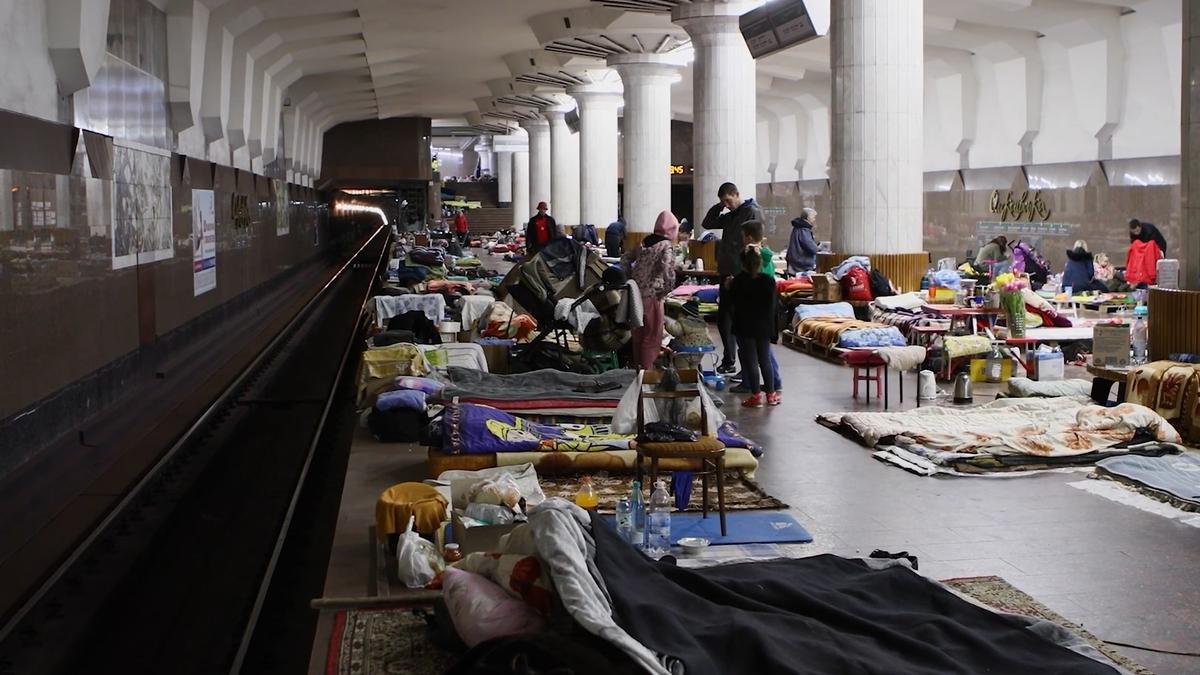
Ukrainian documentary wins top human rights award at Bergen Film Festival
english.nv.ua
posts tagged #documentaries


cross-posted from: lemmy.ml/post/53584930
They are children who have fallen through the cracks of society, outcasts who have run away or been thrown out of their homes. Known as ‘Toyoko kids’, they hang out in the most infamous neighbourhood in Tokyo. This episode of ARTE Reportage went to meet them.
Japanese society is quite harsh on minors




Still, Premo found the constant macho rhetoric and violence he witnessed while filming mentally and emotionally exhausting. He went to rallies dressed in protective gear, prepared for a riot. Even if there weren’t skirmishes between the Proud Boys and other groups, there were men talking about what they wanted to do to antifa or others.
While he included the violence in his film, Premo is clear that it is not meant to make these men exceptions, but to situate them within a broader pattern.
“One of my critiques of American history and polite, middle-class white liberal society is this idea that violence is only an aberration of the norm. It’s only something that is carried out by the fringe or the extremes of society, when fundamentally, the American project is a project built by violence,” he says.
…
I found the ease with which Quaglin committed these acts astounding. The interspersion of political violence and domesticity doesn’t allow viewers to compartmentalize what’s on screen as fringe behavior, safely outside the bounds of ordinary American life. It suggests something more uncomfortable: that the difference is often not one of belief, but of expression—who says what out loud, and who knows not to.


Beneath the luxury, nightlife, and nonstop entertainment of Las Vegas lies a hidden world few ever see.
High Class is a feature-length investigative documentary exposing the realities of the escort industry and the links between prostitution, exploitation, and sex trafficking in one of America’s most iconic cities.
Through firsthand survivor accounts, this documentary reveals the human cost behind the fantasy—and the systems that keep it hidden.
Watch and share to help expose the truth.




Under former dictator President Zia, Pakistan plunged into the dark ages with the strict “Zina Ordinance,” a brutal set of Islamic laws that saw rape victims routinely jailed and women facing public whippings or stoning to death for adultery. In 1990, 60 Minutes reporter Jennifer Byrne travelled to a Peshawar women’s prison to meet the innocent victims of these barbaric laws, shedding light on a human rights crisis that would take decades of political fighting to finally reform.
Under former dictator President Zia, Pakistan plunged into the dark ages with the strict “Zina Ordinance,” a brutal set of Islamic laws that saw rape victims routinely jailed and women facing public whippings or stoning to death for adultery. In 1990, 60 Minutes reporter Jennifer Byrne travelled to a Peshawar women’s prison to meet the innocent victims of these barbaric laws, shedding light on a human rights crisis that would take decades of political fighting to finally reform.


This documentary was researched and written by Dr Raoul McLaughlin.
Sources for this project - Mallory, J. The Origins of the Irish (2017). Warren, G. Hunter-Gatherer Ireland: Making connections in an Island World (2021). Cooney, G. Death in Irish Prehistory (2023). Woodman, P. Ireland’s First Settlers: Time and the Mesolithic (2021). Cummings, V. The Neolithic of Britain and Ireland (2017). Waddell, J. The Prehistoric Archaeology of Ireland (2010).
History Time is written, researched and produced by Pete Kelly.

In the late 1840s, a British naturalist named Henry Walter Bates set out on an 11-year expedition into the Amazon jungle. When he returned to England in 1859, he had a collection of over 14,000 rare and new species of insects, never before discovered by science.
At the time, many other naturalists were doing the same thing. What set him apart was that he also studied and observed their behavior and went in-depth into their relationships and how they interacted with one another. For Bates, this was a way to understand each species’ different roles within an ecosystem.
At one point in his expedition, he noticed that the “Ithomiini” butterfly - a slow-flying and extremely abundant species - was hardly ever hunted by predators. “Oh, maybe they taste terrible!” he thought and decided to gather specimens to examine them more closely.
He soon discovered that there was another type of butterfly species living amongst the Ithomiinis that he caught. They were of two different families, yet their body shape, wings, and appearance were nearly identical. This newfound discovery left him puzzled, yet he observed that this was a common occurrence throughout the Amazon Rainforest. What’s more, it was not exclusive to butterflies, but hundreds of different insects and animals replicated this behavior.
Of the two families, he found that the Ithomiini was ignored by predators, while the lookalike was regularly targeted - despite it being the faster of the two. Bates concluded that the lookalike had evolved to mimic the Ithomiini to confuse predators, essentially allowing them to hide in plain sight.
This phenomenon is now known as Batesian mimicry, where a weaker or disadvantaged species would mimic the appearance of a stronger species to increase its chances of survival.
Batesian mimicry is a natural and unconscious evolutionary process. If an animal changes itself consciously, then it is no longer Mimicry. It can include appearance, sounds and even behaviors, and there are endless examples across the insect and animal world.
Batesian mimicry is also different from camouflage, where an animal actively hides to blend in with his environment. In Mimicry, species want or mean to be detected, and the goal is to confuse predators. The size of the “model” population is also crucial - when there are more of the models, it is easier for the mimics to imitate.
In a nutshell, Mimicry, as a phenomenon, is an incredibly complex, nuanced, and exciting field of natural science. Over the years, more types of mimicry have been observed and recognized, such as Mullerian mimicry, Defensive mimicry, and even aggressive mimicry - all with their unique criteria.
Mimicry is considered significant proof of Darwin’s Theory of Evolution. In fact, he included Batesian mimicry in his then-controversial book. Batesian mimicry allows us to witness first-hand the effects and outcomes of natural selection. It offers a deeper understanding of evolution, which can help us ponder how it applies to our human species.
On YouTube: www.youtube.com/watch?v=quO_Dzm4rnk
I would share a link to a copy on the Internet Archive, but I think they’re all in lower quality.
Licensed under Creative Commons Attribution NC Sharealike
On YouTube: www.youtube.com/watch?v=quO_Dzm4rnk
I would share a link to a copy on the Internet Archive, but I think they’re all in lower quality.
Licensed under Creative Commons Attribution NC Sharealike

You can watch the trailer here
You can watch the trailer here


cross-posted from: lemmy.world/post/47552153
Part 2 (2023)
cross-posted from: lemmy.world/post/47552153
Part 2 (2023)

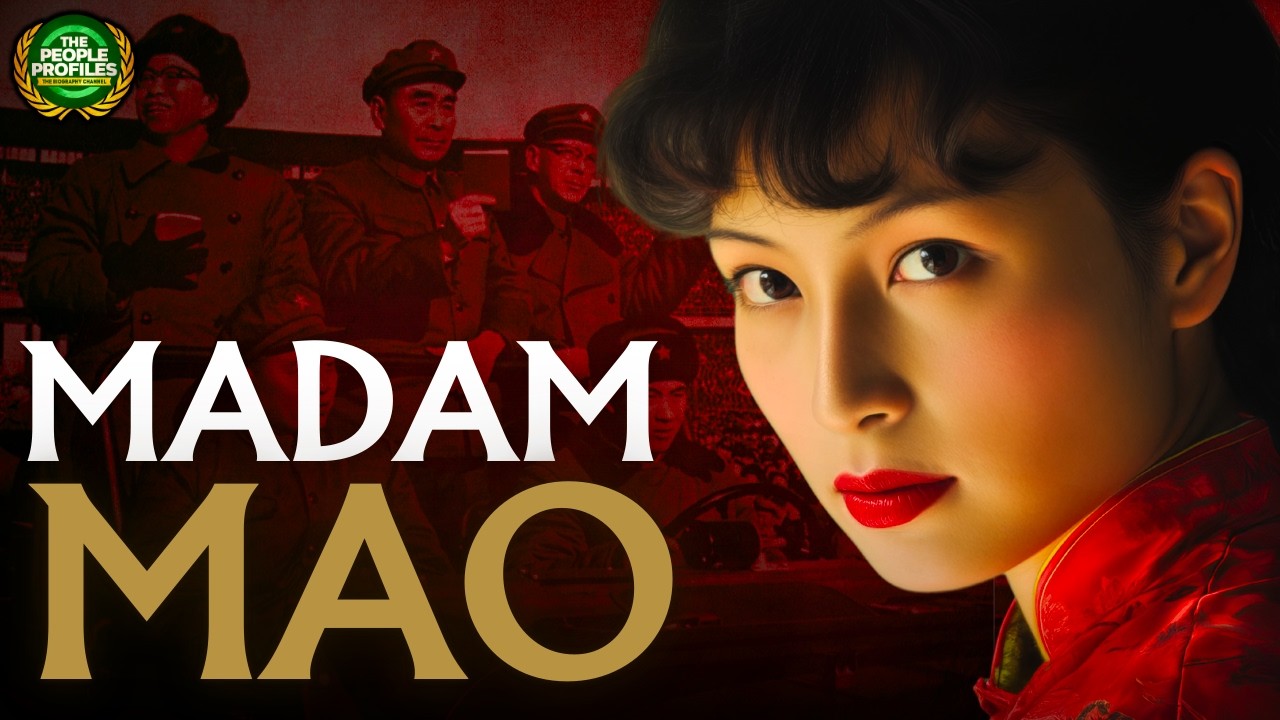
Mao’s death was followed by a very short period of freedom of expression in China. Known as the “Beijing Spring”, it was part of Deng Xiaoping’s desire to distance himself from the mistakes of the Cultural Revolution.
A brick wall near Tiananmen Square in Beijing briefly became the site of a democracy movement after Mao’s death in 1976. People travelled from all over China to put up posters on this “Democracy Wall”. They demanded accountability for the tens of thousands of people murdered and imprisoned during Mao’s Cultural Revolution.
At the same time, a group of former factory workers founded the art group “Stars” — among them, the young Ai Weiwei. They exhibited critical works on the wall, including abstract paintings and sculptures in which they settled accounts with the Cultural Revolution. Wei Jingsheng was arrested for publishing an essay in which he called Deng Xiaoping a dictator. He was sentenced to 15 years in prison. The members of the artists’ group Stars, however, succeeded in recording the secret trial on tape. They published the trial‘s transcript on the Wall of Democracy, garnering worldwide attention: even the New York Times reported on it.
When the traditional National Day military parade was canceled because the country was still officially mourning Mao’s death, the Stars art collective decided to organize a parade on their own. They bid goodbye to their families and friends, as they risked their lives to fight for freedom of expression and art. Deng Xiaoping used violence against the protesters and increased censorship. The Wall of Democracy was abolished, and many of the activists and artists were sentenced to prison or forced into exile. It was the end of the “Beijing Spring”.
Filmmaker Chi Xiaoning documented this period of revolt on 16mm film. When he was arrested, he managed to save the material by destroying blank film reels in front of the police instead of the originals. Chi’s family and friends hid the footage for decades. In this documentary, the footage is shown publicly for the first time.


The project is a 360-degree VR documentary created as a co-production between Ukraine, the Netherlands, and Belgium. The film was co-directed by Ukrainian film producer Ivanna Khitsinska and Dutch filmmaker Sjoerd Swierstra. It was produced by Justin Karten from the Netherlands-based Scopic Lab, a Virtual Reality Studio, Bram Crols from Belgium, the Associate Director, and Khitsinska’s WAYA Production.
Filmed across Ukraine in 2024, “Shelter” provides an intimate look at life during wartime through the space of bomb shelters. The film immerses viewers in locations where people hide from shelling, give birth, listen to music, prepare for battle, and say goodbye to loved ones.

TURN IT AROUND: THE STORY OF EAST BAY PUNK spans over 30 years of the California Bay Area’s punk music history with a central focus on the emergence of Berkeley’s inspiring 924 Gilman Street music collective. Directed by Corbett Redford, narrated by Iggy Popand executive produced by Green Day, Turn It Around: The Story of East Bay Punk is a sprawling telling of this vibrant story, drawing from a wide variety of voices and viewpoints and featuring the music of many of the most famous and infamous punk bands ever.
TURN IT AROUND: THE STORY OF EAST BAY PUNK spans over 30 years of the California Bay Area’s punk music history with a central focus on the emergence of Berkeley’s inspiring 924 Gilman Street music collective. Directed by Corbett Redford, narrated by Iggy Popand executive produced by Green Day, Turn It Around: The Story of East Bay Punk is a sprawling telling of this vibrant story, drawing from a wide variety of voices and viewpoints and featuring the music of many of the most famous and infamous punk bands ever.
The URL is a magnetic link to a torrent I grabbed off of The Pirate Bay. You’ll need a BitTorrent client for that. You can also watch it from The Internet Archive. There are many uploads of the film on youtube.
The film is Creative Commons-licensed.
The URL is a magnetic link to a torrent I grabbed off of The Pirate Bay. You’ll need a BitTorrent client for that. You can also watch it from The Internet Archive. There are many uploads of the film on youtube.
The film is Creative Commons-licensed.
