#europe

posts tagged #europe

17

UK spy agency MI5 will not face contempt case for misleading evidence, court rules

preview

MI5 chief ​Ken McCallum apologised last year after the agency provided untrue information about a right-wing extremist who was a covert human intelligence source, sometimes referred to as an agent.

A BBC ​investigation found the MI5 agent, referred to in court as “Agent X”, ​had abused two former partners and told one of them, known only as “Beth”, that ‌he ⁠worked for MI5 in order to terrorise her.

22

Despite Trump, Europeans still like Americans – but the window of opportunity may be closing

LSE European Politics - Bridging research, policy and public debate on Europe Despite Trump, Europeans still like Americans – but the window of opportunity may be closing blogs.lse.ac.uk
preview

cross-posted from: sh.itjust.works/post/69393818

cross-posted from: sh.itjust.works/post/69393818

21

Too scared to shop: How facial recognition leaves innocent UK shoppers stranded

TechRadar Too scared to shop: How facial recognition leaves innocent UK shoppers stranded www.techradar.com
preview

A routine run for vitamins ended with an innocent man being escorted out of Home Bargains, branded a shoplifter. The ordeal left him feeling “isolated”. “I was scared to go into a shop,” he said.

Miles away at a local Budgens, a shopper’s husband was left “shaking from head to toe” after watching his wife be accused of stealing meat from a store they hadn’t set foot in for months.

Neither had broken the law. Instead, both were victims of private facial recognition systems that have quietly rolled out across UK high streets in recent years.

23

EU and UK spent millions on Israeli phone cracking tech despite risks

Statewatch EU and UK spent millions on Israeli phone cracking tech despite risks - Statewatch statewatch.org
preview

Controversial phone extraction systems made by Israeli company Cellebrite have become a go-to technology for law enforcement across Europe. Statewatch has mapped more than 150 public contracts worth a total of €69 million since 2023, including purchases funded by the EU.

Controversial phone extraction systems made by Israeli company Cellebrite have become a go-to technology for law enforcement across Europe. Statewatch has mapped more than 150 public contracts worth a total of €69 million since 2023, including purchases funded by the EU.

15

Scandal-hit EU innovation agency disputes auditors’ finding that €8.7m may be unrecoverable

EUobserver Scandal-hit EU innovation agency disputes auditors’ finding that €8.7m may be unrecoverable euobserver.com
preview

The European Institute of Innovation & Technology (EIT), which received €435m in taxpayer money in 2025, is the only EU agency out of a total of 43 whose accounts did not yield a “clean opinion” in the most-recent audit.

The accounts of the innovation hub did not properly reflect an €8.7m recovery uncertainty, according to a report by European Court of Auditors (ECA) last week.

16

Trial over VW diesel scandal delayed, with no end in sight

preview

The legal proceedings in Germany relating to the Volkswagen diesel emissions fraud have stalled, more than 11 years after the scandal came to light.

The legal proceedings in Germany relating to the Volkswagen diesel emissions fraud have stalled, more than 11 years after the scandal came to light.

33

German police union defends blaming migrants groups for Gen Z riots

preview

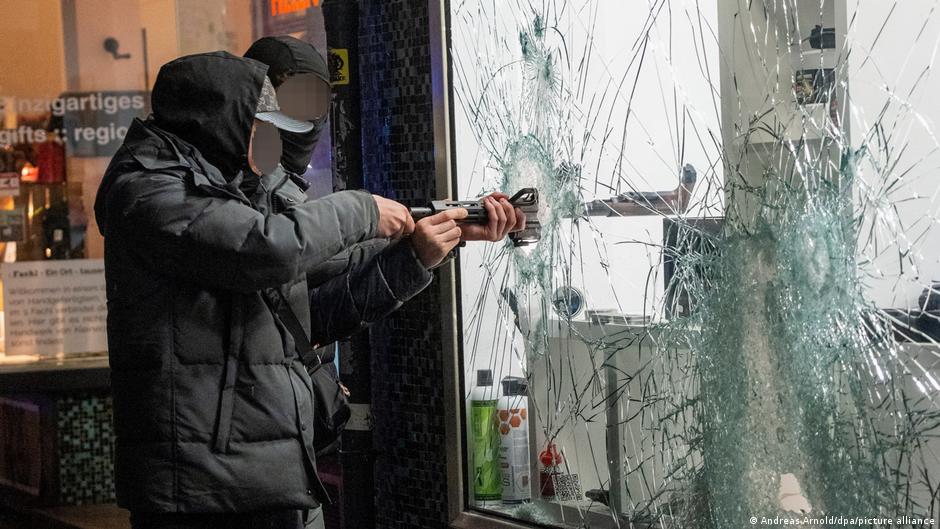
Interior Minister Alexander Dobrindt pinned the blame for the unrest on “violent left-wing groups and troublemakers from migrant communities,” in comments echoed by other conservative politicians

Interior Minister Alexander Dobrindt pinned the blame for the unrest on “violent left-wing groups and troublemakers from migrant communities,” in comments echoed by other conservative politicians

51

Russia's last independent newspaper 'Novaya Gazeta' closes as press freedom faces its swan song

preview

For Novaya Gazeta, a bastion of free press in Moscow, the end has come. “They killed us,” the editorial team of Dmitry Muratov, co-winner of the 2021 Nobel Peace Prize (with Philippine journalist Maria Ressa), warned on Friday, October 30. “They” refers to the special services of the FSB (Federal Security Service, successor to the Soviet-era KGB). In a letter published by Le Monde, current editor-in-chief Sergei Sokolov described the “coordinated operation” carried out over recent weeks against Russia’s last outspoken media outlet.

“Deprived of means of subsistence and under constant threat of repression,” Novaya Gazeta can no longer continue its work as it had managed to do over nearly five years of war. “On November 9, we will turn off the lights in our home, where we have lived for 30 years. We will shut down the servers and leave,” wrote Sokolov. “The newspaper no longer exists.”

‘They killed us’: The farewell letter by Russia’s free newspaper ‘Novaya Gazeta,’ forced by authorities to close In March 2022, blocked by authorities after its opposition to Russia’s invasion of Ukraine, Novaya Gazeta (originally a thrice-weekly print publication) chose to halt all publication temporarily. Since then, it found other ways to operate. Exiled journalists founded Novaya Gazeta Europe to continue their reporting. This autonomous outlet will continue to exist. In Moscow, despite bans and threats, Muratov and his team persist publishing in other formats, mainly on the internet and through an occasional print version with fewer than 1,000 copies, the threshold above which registration as a media outlet is required.

In recent months, the pressure escalated against the Moscow newsroom, which, since the newspaper’s founding in 1993, had tirelessly investigated corruption, state violence and human rights violations. For five years, the team resisted from Potapovsky Lane, the newspaper’s historic headquarters. But on April 9, the police conducted a 13-hour search and seizure operation at those offices, confiscating computers, electronic devices and many important documents from Muratov’s safe. They arrested one journalist, Oleg Roldugin, who was placed under house arrest pending trial. Charged with “illegally collecting and disseminating computer information containing personal data,” he faces up to six years in prison.

‘Foreign agents’

Then, in September, the courts added Novaya Gazeta to its list of foreign agents. Muratov was already designated as such – number 665 in the register maintained by the Ministry of Justice, where around one hundred names, mostly journalists and contributors to the newspaper, have since been added. Unlike many other independent publications, Novaya Gazeta had so far avoided this classification, which, reminiscent of the Soviet-era label “enemies of the people,” imposes countless Kafkaesque formalities. On October 15, the noose tightened further. Sokolov, already arrested in 2024 and prosecuted for “discrediting the armed forces” over an article, was detained by police. After a search at his Moscow home, he was questioned for several hours by the Investigative Committee. Reporters Without Borders denounced “new escalation in the authorities’ relentless campaign against this emblematic independent Russian media outlet.”

Journalists in Russia: ‘It’s much more dangerous today than it was under perestroika’ Released, Sokolov immediately returned to the newspaper. But, in his own words, Novaya Gazeta has since found itself in a “killing zone,” with its journalists “surrounded on all sides by security services.” A special operation targeted the newsroom. The same day it received an eviction notice demanding its departure from its historic headquarters, the authorities simultaneously disabled the donation system that, for five years, had allowed the outlet to receive reader financial support.

“We can no longer exist,” Muratov warned as early as October 20, at an event in Paris organized by Le Monde and the Théâtre de la Ville in tribute to Anna Politkovskaya, murdered on October 7, 2006, outside her Moscow home and one of six Novaya Gazeta journalists killed under Putin’s regime. “Does Article 29 of the Russian Constitution, ‘Censorship is prohibited,’ not sound today like a grim joke?” the editorial team denounced in its farewell letter. “The real betrayal is when the state betrays its own Constitution. And that betrayal is a crime unfolding right now, before the entire world. The assassination of Novaya Gazeta is further proof.” In Russia, more than 30 journalists from various media outlets are currently in prison. Factual but cautious, meticulously complying with increasingly repressive laws and practicing growing self-censorship, Novaya Gazeta had managed to survive since 2022. This is no doubt thanks to the international stature of Muratov’s Nobel Peace Prize; he is one of the newspaper’s founders. For a long time, it was also due to the personality of one of its shareholders, Mikhail Gorbachev, the last Soviet leader and architect of Perestroika, who died on August 30, 2022. These two moral guarantees, by October 2026, were not enough to save Novaya Gazeta from the FSB’s operation

For Novaya Gazeta, a bastion of free press in Moscow, the end has come. “They killed us,” the editorial team of Dmitry Muratov, co-winner of the 2021 Nobel Peace Prize (with Philippine journalist Maria Ressa), warned on Friday, October 30. “They” refers to the special services of the FSB (Federal Security Service, successor to the Soviet-era KGB). In a letter published by Le Monde, current editor-in-chief Sergei Sokolov described the “coordinated operation” carried out over recent weeks against Russia’s last outspoken media outlet.

“Deprived of means of subsistence and under constant threat of repression,” Novaya Gazeta can no longer continue its work as it had managed to do over nearly five years of war. “On November 9, we will turn off the lights in our home, where we have lived for 30 years. We will shut down the servers and leave,” wrote Sokolov. “The newspaper no longer exists.”

‘They killed us’: The farewell letter by Russia’s free newspaper ‘Novaya Gazeta,’ forced by authorities to close In March 2022, blocked by authorities after its opposition to Russia’s invasion of Ukraine, Novaya Gazeta (originally a thrice-weekly print publication) chose to halt all publication temporarily. Since then, it found other ways to operate. Exiled journalists founded Novaya Gazeta Europe to continue their reporting. This autonomous outlet will continue to exist. In Moscow, despite bans and threats, Muratov and his team persist publishing in other formats, mainly on the internet and through an occasional print version with fewer than 1,000 copies, the threshold above which registration as a media outlet is required.

In recent months, the pressure escalated against the Moscow newsroom, which, since the newspaper’s founding in 1993, had tirelessly investigated corruption, state violence and human rights violations. For five years, the team resisted from Potapovsky Lane, the newspaper’s historic headquarters. But on April 9, the police conducted a 13-hour search and seizure operation at those offices, confiscating computers, electronic devices and many important documents from Muratov’s safe. They arrested one journalist, Oleg Roldugin, who was placed under house arrest pending trial. Charged with “illegally collecting and disseminating computer information containing personal data,” he faces up to six years in prison.

‘Foreign agents’

Then, in September, the courts added Novaya Gazeta to its list of foreign agents. Muratov was already designated as such – number 665 in the register maintained by the Ministry of Justice, where around one hundred names, mostly journalists and contributors to the newspaper, have since been added. Unlike many other independent publications, Novaya Gazeta had so far avoided this classification, which, reminiscent of the Soviet-era label “enemies of the people,” imposes countless Kafkaesque formalities. On October 15, the noose tightened further. Sokolov, already arrested in 2024 and prosecuted for “discrediting the armed forces” over an article, was detained by police. After a search at his Moscow home, he was questioned for several hours by the Investigative Committee. Reporters Without Borders denounced “new escalation in the authorities’ relentless campaign against this emblematic independent Russian media outlet.”

Journalists in Russia: ‘It’s much more dangerous today than it was under perestroika’ Released, Sokolov immediately returned to the newspaper. But, in his own words, Novaya Gazeta has since found itself in a “killing zone,” with its journalists “surrounded on all sides by security services.” A special operation targeted the newsroom. The same day it received an eviction notice demanding its departure from its historic headquarters, the authorities simultaneously disabled the donation system that, for five years, had allowed the outlet to receive reader financial support.

“We can no longer exist,” Muratov warned as early as October 20, at an event in Paris organized by Le Monde and the Théâtre de la Ville in tribute to Anna Politkovskaya, murdered on October 7, 2006, outside her Moscow home and one of six Novaya Gazeta journalists killed under Putin’s regime. “Does Article 29 of the Russian Constitution, ‘Censorship is prohibited,’ not sound today like a grim joke?” the editorial team denounced in its farewell letter. “The real betrayal is when the state betrays its own Constitution. And that betrayal is a crime unfolding right now, before the entire world. The assassination of Novaya Gazeta is further proof.” In Russia, more than 30 journalists from various media outlets are currently in prison. Factual but cautious, meticulously complying with increasingly repressive laws and practicing growing self-censorship, Novaya Gazeta had managed to survive since 2022. This is no doubt thanks to the international stature of Muratov’s Nobel Peace Prize; he is one of the newspaper’s founders. For a long time, it was also due to the personality of one of its shareholders, Mikhail Gorbachev, the last Soviet leader and architect of Perestroika, who died on August 30, 2022. These two moral guarantees, by October 2026, were not enough to save Novaya Gazeta from the FSB’s operation

0

France opens ‘attempted murder’ probe into petrol bomb attacks on police

Al Jazeera France opens ‘attempted murder’ probe into petrol bomb attacks on police www.aljazeera.com
preview

tigation into attempted murder after petrol bombs were thrown at security forces during protests in Paris, as video of an officer in flames provoked outrage.

The probe announced on Sunday came after the Paris police prefecture said several hundred rioters had attacked security forces with projectiles, including a Molotov cocktail.

On Saturday, clashes erupted in Paris and other cities as hundreds of thousands of people staged a third weekend of protests against soaring living costs and deteriorating public services.

Video and images from the demonstrations showed a homemade incendiary device exploding at the feet of a security officer in protective gear, engulfing his lower body in flames.

Prosecutors said the investigation was opened for “attempted murder of persons vested with public authority”.

“Explosive devices were thrown at around 15 gendarmes as well as police officers,” the prosecutor’s office said, referring to military police officers who are part of the French armed forces.

While riots were less widespread than two weeks ago, when France experienced some of its worst unrest in years, Interior Minister Laurent Nunez said on Saturday that the level of violence perpetrated by some was “extraordinary”.

An assessment of the injured was ongoing, prosecutors said, adding that the reported injuries included second-degree burns.

No suspects arrested yet

The gendarme struck said his unit was “under assault”, with glass bottles, paving stones, shards of glass and firebombs thrown at them

“We were hit by several significant incendiary devices,” he told broadcaster RTL on condition of anonymity.

“The flammable substance was so greasy that I could feel it spreading across my skin,” he said. “I kept wondering when it would stop because I really felt as though I had been coated by the heat itself”

The officer, who received minor injuries, said the leg and shin protections on his riot uniform melted.

The gendarmerie said 13 members of the officer’s unit were injured, according to RTL.

No suspects “have been arrested at this stage in connection with the incident”, the prosecutor’s office said, adding that investigators were working to identify those responsible.

More than 770 people were arrested across France, the interior ministry said.

A total of 159 members of law enforcement were injured during protests and Halloween celebrations, it added.

The protests come in a tense political climate, with presidential elections six months away and far-right frontrunner Marine Le Pen vowing to restore law and order if elected next year.

Le Pen, the leader of the far-right National Rally party, said on X that those responsible for the firebomb attack must be “punished with the utmost severity”.