This new site Invisiclues appears to be a labour of love of one person and promises to be “dedicated to (1) archiving historical Infocom-related artifacts – InvisiClues, of course, but also magazine articles, marketing material, packaging, artwork, literature, and the games themselves – and (2) making the archives available in an enjoyable format.”
Quite a lot of material there. Thanks to Andrew Plotkin on Mastodon for linking to it on his post here
"Dominion of Darkness” is an interactive fiction strategy/RPG text game in which the player takes on the role of a Sauron-style Lord of Darkness with the goal of conquering the world. He will carry out his plans by making various decisions. He will build his army and send it into battles, weave intrigues and deceptions, create secret spy networks and sectarian cults, recruit agents and commanders, corrupt representatives of Free Peoples and sow discord among them, collect magical artifacts and perform sinister plots. Note – one game takes about 1 hour, but the premise is that the game can be approached several times, each time making different decisions, getting different results and discovering something new.
"Dominion of Darkness” is an interactive fiction strategy/RPG text game in which the player takes on the role of a Sauron-style Lord of Darkness with the goal of conquering the world. He will carry out his plans by making various decisions. He will build his army and send it into battles, weave intrigues and deceptions, create secret spy networks and sectarian cults, recruit agents and commanders, corrupt representatives of Free Peoples and sow discord among them, collect magical artifacts and perform sinister plots. Note – one game takes about 1 hour, but the premise is that the game can be approached several times, each time making different decisions, getting different results and discovering something new.
Does anyone have recommendations for software for physical gamebooks? Most of the IF software (understandably) is focused online on computer based games, but I’m looking for something that will help organize links, has the ability to shuffle passages while maintaining links, and can export to text. Does such a program exist?
Does anyone have recommendations for software for physical gamebooks? Most of the IF software (understandably) is focused online on computer based games, but I’m looking for something that will help organize links, has the ability to shuffle passages while maintaining links, and can export to text. Does such a program exist?
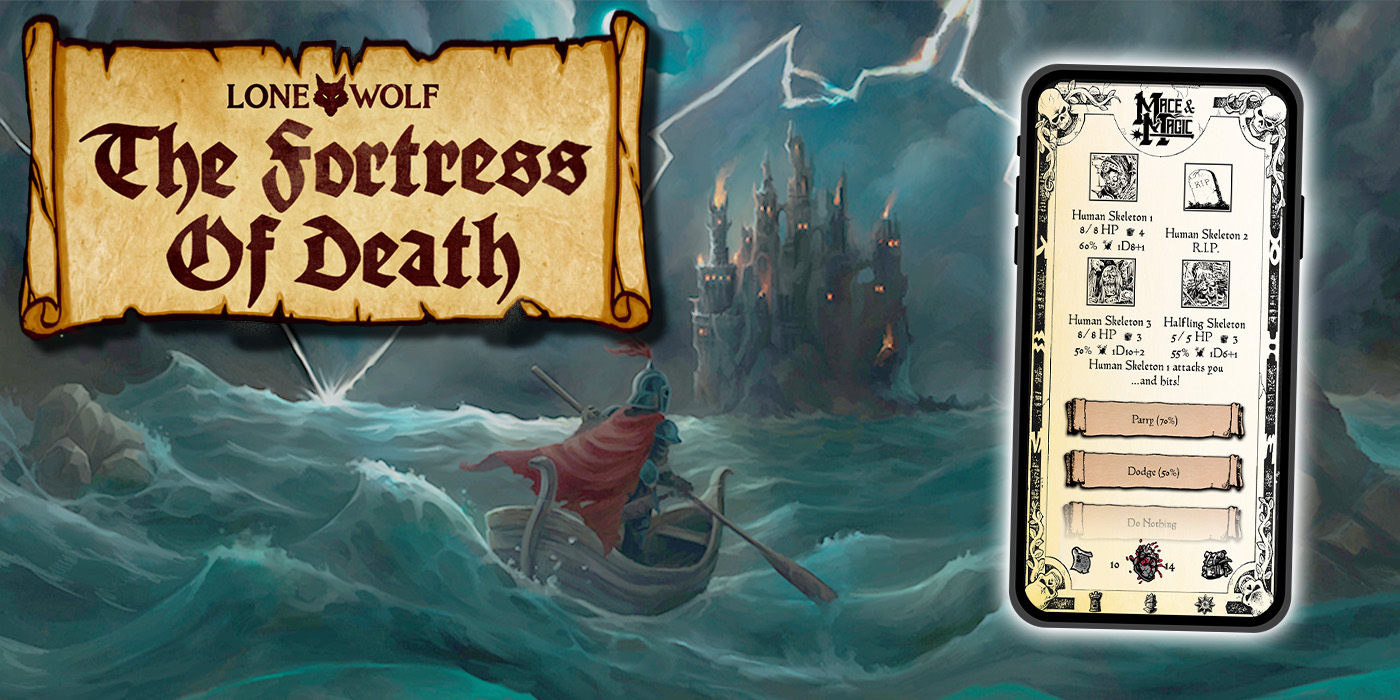
Back in 1989, a game maker and author named Joe Dever had a wild idea. He had already set up a whole fantasy series set in the world of Magnamund from his Lone Wolf gamebook series. Ever the innovator, Dever concocted the idea of PhoneQuest. In PhoneQuest, people could dial a number on their phone and listen to, essentially, an interactive audio drama set in the Lone Wolf setting.
I have loved the Lone Wolf series since I was naught but a wee lad, so imagine my excitement upon discovering the idea is making a triumphant return to Kickstarter under the Sound Realms platform.
…
The game itself plays out something like a Choose-Your-Own-Adventure book. The narrator describes what’s going on as any good Dungeon Master would, until you reach a point where you need to make a decision. But what sets the Lone Wolf series above the rest is the depth of the RPG elements found within. In the Lone Wolf series, it’s not just choosing your own adventure path. There is character stats, equipment, items, quests, skill checks, and of course, combat!
2018’s Black Mirror: Bandersnatch and 2019’s You vs. Wild marked a new phase for Netflix’s interactive shows, which started off with relatively simple interactive experiments for kids in 2017, designed to test the waters for actual Netflix games down the road. These Choose Your Own Adventure-style stories became some of Netflix’s more distinctive offerings for a short while, but they’re getting rarer as Netflix’s focus shifts toward skill tests like Cat Burglar and Trivia Quest.
Still, Netflix continues to drop the occasional interactive story, and we’re continuing to rank each one based on how interactive it actually is. The service’s latest interactive special, the ambitious We Lost Our Human, prompted a new update of our rankings. This list considers whether a given Netflix interactive special is fun to play, what kind of story it’s telling, and whether your choices actually have any effect on how that story unfolds.
The game starts out with the player standing at the end of a dirt road, but it turns to the surreal when players realize that they are actually walking around inside a Unix system, and teleporting themselves around the Arpanet.
The game starts out with the player standing at the end of a dirt road, but it turns to the surreal when players realize that they are actually walking around inside a Unix system, and teleporting themselves around the Arpanet.
Happy 20th anniversary, Suikogaiden. You’re a hyper-obscure text adventure with a hero named after a deep-fried pancake, but you let us observe Suikoden 2’s beloved story and characters from another angle. You also gave us one of gaming’s last great traditionally animated introductions.
Happy 20th anniversary, Suikogaiden. You’re a hyper-obscure text adventure with a hero named after a deep-fried pancake, but you let us observe Suikoden 2’s beloved story and characters from another angle. You also gave us one of gaming’s last great traditionally animated introductions.
This project comes across as a well-meaning satire of sites like discoversaintjohn and exploits the limitations of the Twine platform to provide a particularly memorable aesthetic.
Edited: clarity
This project comes across as a well-meaning satire of sites like discoversaintjohn and exploits the limitations of the Twine platform to provide a particularly memorable aesthetic.