
0

Bite marks on York skeleton reveal first evidence of ‘gladiators’ fighting lions

the Guardian Bite marks on York skeleton reveal first evidence of ‘gladiators’ fighting lions www.theguardian.com
preview

Bite marks from a lion on a man’s skeleton, excavated from a 1,800-year-old cemetery on the outskirts of York, provide the first physical evidence of human-animal combat in the Roman empire, new research claims.

While clashes between combatants, big cats and bears are described and depicted in ancient texts and mosaics, there had previously been no convincing proof from human remains to confirm that these skirmishes formed part of Roman entertainment.

Prof Tim Thompson, an anthropologist and first author on the study at Maynooth University in Ireland, said: “This is the first time we have physical evidence for gladiators fighting, or being involved in a spectacle, with big cats like lions in the Roman empire.”

Excavations at the Driffield Terrace burial site, near York city centre, began more than 20 years ago and uncovered about 80 decapitated skeletons. Most belonged to well-built young men and bore signs of brutal violence, leading experts to suspect they had uncovered a gladiator graveyard.

…

Dr John Pearce, an archaeologist from King’s College London and co-author of the study published in Plos One, said York doubled as a Roman town and legionary fortress at the time, making it the second largest population centre in Britain after Londinium.

He said: “These may be gladiators who trained in a gladiatorial school at York linked to the Roman legion based there, and their comrades from the arena or training ground took responsibility for burying them.”

If the researchers are right, their discovery raises questions about where gladiators fought their battles.

An arena probably exists beneath the city of York, but uncovering it will not be easy. “One of challenges with York is that so many old buildings are preserved, you can’t do the excavations underneath them,” Thompson said.

It is not the only mystery that remains. “This shifts the conversation,” Thompson added. “We now know that these events happened in the provinces of the Roman empire, but it raises other questions. How, for example, do you get a lion from Africa to York?”

0

Mystery of Welsh medieval cemetery deepens

Mystery of Welsh medieval cemetery deepens www.bbc.com
preview

A medieval cemetery unearthed near Cardiff Airport is continuing to confound archaeologists, as the mysteries surrounding it are multiplying.

The discovery of the site, dating to the 6th or 7th Century, was announced last year, with dozens of skeletons found lying in unusual positions with unexpected artefacts.

Now researchers have learned nearly all of those buried in the cemetery are women, and while their bones show signs of wear and tear - indicating they carried out heavy manual work - there are also surprising signs of wealth and luxury.

Another unexpected find has been a woman tossed in a ditch, in stark contrast to all the other people who were buried with great care.

“Every time we think we understand something, something else crops up and the picture gets more intriguing,” said Andy Seaman from Cardiff University, who is leading the project.

0

Treasures found in the UK indicate Thetford was Pagan until the fifth century

Phys.org Treasures found in the UK indicate Thetford was Pagan until the fifth century phys.org
preview

Jewelry in a Roman treasure hoard found in Thetford Forest, East Anglia, indicates that Thetford was Pagan until the fifth century, which is longer than previously believed, reveals a new paper in the Journal of Roman Archaeology.

The Thetford treasure was first found by a metal detectorist trespassing on a construction site at Fison’s Way on Gallows Hill, Thetford in 1979. It consisted of 81 objects, including 22 gold finger-rings, other gold jewelry, and 36 silver spoons or strainers. It is now in the collections of the British Museum and can be seen on display there.

The author of the research, Professor Ellen Swift of the University of Kent, argues that there is compelling evidence that the treasure was buried in the fifth century rather than the late fourth.

Swift says, “Since wider evidence found at the site confirms the religious context previously established by inscriptions on the spoons within the hoard, this means, remarkably, that the re-dating of the Thetford hoard suggests a Pagan cult center survived there into the fifth century. The site’s economic assets, indicated by the value and variety of the hoard, also show that it may have wielded significant power and authority locally.”

…

The paper also shows that Britain was less isolated than previously believed, with the items in the treasure originating from across the Roman empire.

0

Archaeology wonder on Scottish isle is a treasure trove of human bones and artefacts

preview

Perched high above the cliffs of South Ronaldsay, one of Scotland’s most remarkable ancient sites offers a window into life and death thousands of years ago.

Known as the Tomb of the Eagles, the Neolithic chambered cairn has fascinated visitors since its discovery in the 1950s, and is now set to reopen after a major funding boost.

Discovered by local farmer Ronnie Simison, the 5,000-year-old tomb revealed a treasure trove of human bones and artefacts, with the remains of some 300 individuals found buried alongside sea eagles. The striking find gave the site its dramatic name and cemented its place as one of Orkney’s most important archaeological landmarks.

…

And now, thanks to almost £358,000 in fresh funding, a community trust on the island is set to become the first in Scotland to purchase an ancient monument. The move will secure the Tomb of the Eagles’ long-term future as a key piece of local and national history.

The Tomb of the Eagles, a protected site that has long attracted visitors, has been closed since the pandemic after the family who managed it decided to retire.

Located on their land, the tomb was temporarily shut to the public, leaving the community of South Ronaldsay and Burray to find a way forward.

After much consideration, Orkney Isles Council determined that the best path for preserving the site was for the local community to purchase it.

0

UK consumers plan to ‘buy British’ as Trump’s trade war bites, survey shows

preview

The vast majority of UK consumers plan to “buy British” over concerns that imported products will surge in price after Donald Trump’s sweeping tariffs, according to data that underlines the impact of the US president’s trade war.

Some 71 per cent of people said they wanted to support UK businesses by buying more items that were “Made in Britain”, after Trump imposed a 10 per cent tax on British imports this month, Barclays said on Tuesday.

About two-thirds of consumers were concerned that imported products would become more expensive, according to the survey carried out on behalf of Barclays by Opinium Research, and two in five were already looking for UK-made alternatives.

Archive

0

Reeves rejects calls for ‘buy British’ campaign in response to US tariffs

the Guardian Reeves rejects calls for ‘buy British’ campaign in response to US tariffs www.theguardian.com
preview

Rachel Reeves has declined to back calls for the UK government to launch a “buy British” campaign in response to Donald Trump’s tariffs, saying it would make Britain too “inward-looking”.

However, Downing Street said the Cabinet Office was examining procurement rules and said there were already policies in place to incentivise using the government’s purchasing power for British companies.

The chancellor and Downing Street said they would not be calling for British shoppers to do the same, despite a campaign from the Liberal Democrats. Canada launched a buy Canadian campaign in response to a 25% US tariff on Canadian imports.

During Treasury questions on Tuesday, the Lib Dems’ deputy leader and Treasury spokesperson, Daisy Cooper, asked the government to “commit to a ‘buy British’ campaign as part of a broader national effort to encourage people to buy British here at home”.

Reeves replied: “In terms of buying British, I think everyone will make their own decisions. What we don’t want to see is a trade war, with Britain becoming inward-looking, because if every country in the world decided that they only wanted to buy things produced in their country, that is not a good way forward.”

The prime minister’s spokesperson backed Reeves and said there were no plans for the government to launch a buy British campaign. He said the government “will always back British manufacturers” but it was up to individuals to decide what they wanted to buy.

Asked if the government would advise people to avoid US products, he said that would not be consistent with Britain being an “open, trading nation” and the government was “not going to tell people where they buy their stuff”.

0

Pete & Bas - Mugshot (The Northern Boys Remix)

play · youtube.com
YouTube Pete & Bas - Mugshot (The Northern Boys Remix) [feat. Queen Vic] www.youtube.com
preview

Starting to worry we could have done with some “big minge energy” to retain our Lemmyvision trophy.

Starting to worry we could have done with some “big minge energy” to retain our Lemmyvision trophy.

0

Submission from feddit.uk: "God's Country" by the Lambrini Girls

play · youtube.com
YouTube Lambrini Girls - God's Country (Official Video) www.youtube.com
preview

The UK came together (and might need a lie down and a cup of tea after that) and voted for their Lemmyvision Song Contest entry. The official winner of the selection round, and now moving forward to the finals, was… 🥁:

“God’s Country” by the Lambrini Girls

May the best song win!

The UK came together (and might need a lie down and a cup of tea after that) and voted for their Lemmyvision Song Contest entry. The official winner of the selection round, and now moving forward to the finals, was… 🥁:

“God’s Country” by the Lambrini Girls

May the best song win!

0

Secrets of Britain’s connection with the world’s least known ancient civilizations

preview

New archaeological research is revealing that, more than a thousand years before Britain became part of the Roman Empire, it was part of an extraordinary Mediterranean-based trading network.

Investigations being carried out by archaeologists from five European countries suggest that around 3,300 years ago, the western Mediterranean island of Sardinia started to become a powerful trading centre, eventually linking Britain, Scandinavia, Spain and Portugal in the West to what are now Turkey, Syria, Israel, Cyprus and Crete in the east.

A series of ground-breaking discoveries are revealing, for the first time, the remarkable role played by the island - one of the world’s least known ancient civilizations, known to archaeologists as the Nuragic culture.

And it is showing the remarkable way in which Britain seems to have contributed to that civilization’s development.

…

The island (a series of chiefdoms) was rich in copper ore - which helped turn it into a Bronze Age mercantile and economic superpower (because copper was one of the two key ingredients needed to make high quality bronze, which was far stronger than copper on its own).

But the second key ingredient, needed to make high quality bronze, was tin - and one of the best sources of tin in the ancient world was Cornwall. Tin played a crucial role in human history - because it enabled the production of really strong manufactured goods and its acquisition usually necessitated and promoted long distance trade.

Recent scientific research has revealed that Cornish tin was being delivered, probably by Sardinian or Sardinian-connected merchants, to what are now Israel and Turkey.

What’s more, a study of a shipwreck off the Devon coast has revealed that a Bronze Age ship, carrying Cornish tin ingot exports, were also carrying items from Sardinia or Spain. The English Channel appears to have been a Bronze Age highway for delivering Mediterranean copper ingots and Cornish tin ingots to Scandinavia and for transporting Danish amber to Britain, Ireland, Spain and the Mediterranean.

And a growing body of evidence now suggests that, at the heart of this Bronze Age international trade, lay Sardinia’s mysterious Nuragic civilization.

All parts of the network prospered as a result of that trade - and recent archaeological excavations have found a Bronze Age settlement at one of the most likely ports used at the Cornish end of the maritime route, St. Michael’s Mount near Penzance

…

All the new research suggests that Sardinia itself acted as the major trading hub - with British, Scandinavian and Iberian raw materials and products (including tin, copper and amber) being shipped to Sardinia for transhipment to points further east like Crete, Cyprus, Syria, Lebanon and Israel. In the other direction Sardinian and perhaps other ships are now thought to have carried Middle Eastern glass beads, Egyptian faience, Cypriot copper ingots, precious gemstones and other products to customers in the West.

In Britain, archaeologists have found Iranian and Egyptian beads, Scandinavian amber items, Aegean metalwork, Cypriot and Spanish copper ingots and Sicilian razors, all of which would have had to have been imported by sea.

…

But there is one tantalising piece of evidence that ancient Sardinians themselves may have visited Britain - for there is an enigmatic and mysterious rock-cut tomb (the only one of its sort ever found in Britain) in northern Scotland, on the island of Hoy in Orkney, the nearest rock-cut parallel for which is in Sardinia.

0

A truly unique UK tech story with Raspberry Pi’s Eben Upton

Brands2Life — Better stories | Bigger impact Podcast: A truly unique UK tech story with Raspberry Pi’s Eben Upton — Brands2Life brands2life.com
preview

Welcome to the fourth episode of our podcast series, “Brands Transforming Our World“, where we give a platform for the tech C-Suite to tell their stories.

In this month’s conversation, Brands2Life Co-Founder, Giles Fraser, and former BBC Tech Correspondent, Rory Cellan-Jones, meet with Eben Upton CBE, CEO at Raspberry Pi.

Eben is a computer scientist and engineer and co-founded the Raspberry Pi Foundation in 2008, aiming to inspire a new generation of learners to engage with programming and electronics. Designing single board and modular computers since 2012, Raspberry Pi is a genuine UK success story and the biggest – and in our eyes, the most exciting – listing on the London Stock Exchange this year.

Under Eben’s leadership, Raspberry Pi has grown into one of the world’s most popular computing platforms, with widespread applications ranging from education to industrial automation. To date, it’s sold over 60 million computers.

In this episode, Eben discusses:

  • Building a UK technology trailblazer with such a clear mission at its heart
  • The inside story on the run up to going public and what really happens on IPO day
  • The importance of fostering creativity and problem-solving in education
  • The role of technology in driving social change

Some are surprised that the Raspberry Pi is designed and built in the UK, so here is some background.

0

British artsy or fun t-shirts

preview

Previously:

Here in the UK we have:

Any more?

Previously:

Here in the UK we have:

Any more?

0

Posters reveal how Edward VIII urged shoppers to buy British

Mail Online Posters reveal how Edward VIII urged shoppers to buy British www.dailymail.co.uk
preview

The campaign was part of King Edward VIII’s drive to boost the British economy in the wake of the Great Depression.

It compels Britons to reject foreign made or imported goods in favour of products made in the UK.

Archive, as it is the Daily Fail

The campaign was part of King Edward VIII’s drive to boost the British economy in the wake of the Great Depression.

It compels Britons to reject foreign made or imported goods in favour of products made in the UK.

Archive, as it is the Daily Fail

0

British ISPs

Marketing Website Zen - the UK's best broadband www.zen.co.uk
preview

Sky and Virgin aren’t British owned, so who is? British Telecom and:

Sky and Virgin aren’t British owned, so who is? British Telecom and:

0

Buy British: it will help defend the UK against Trump

the Guardian Buy British: it will help defend the UK against Trump | Phillip Inman www.theguardian.com
preview

The chancellor wants everyone with money to back Britain. Initially, she talked mostly about attracting foreign investors.

These days the focus is on domestic funds that have – contrary to a Britain First agenda – spread their investments across the world, and especially the US, where stock markets have boomed in the wake of the 2008 financial crash. Why bother with the UK when all the action is in fast-growing, emerging markets or the US, fund managers ask.

British manufacturing is back in the spotlight now that Donald Trump is in the White House, threatening the withdrawal of US defence cover. His trade tariffs are part of the same story. They are aimed at manufactured imports, to illustrate the cost to Europe, China and others of not agreeing to all of Trump’s main political aims. Then they are withdrawn or delayed at a moment’s notice, as Mexico’s government can attest, to make sure countries cannot plan or adjust to cope with the new regime.

The only way to react is to smile in Washington’s direction, as Keir Starmer has done, and plan furiously and diligently to reduce any reliance on the US.

0

Secrets of Britain’s ancient elites revealed by remarkable find in Yorkshire field

preview

A remarkable Iron Age hoard, unearthed in a Yorkshire field, is prompting archaeologists to reassess the wealth and power dynamics of northern Britain two millennia ago.

The discovery, dubbed the Melsonby Hoard, contains more than 800 items, including remnants of wagons, ceremonial spears, and pony harnesses, offering a glimpse into the lives of the elite in the 1st century AD.

Unearthed in 2021 near the village of Melsonby, North Yorkshire, by metal detectorist Peter Heads, the hoard lay undisturbed in two ditches.

Its sheer scale and the nature of the artefacts suggest a deliberate disposal, a practice laden with symbolic meaning for the people of that era.

Experts believe the Melsonby Hoard could be one of the UK’s most significant archaeological finds, requiring years of meticulous study.

The discovery challenges previous assumptions about the distribution of wealth and power in pre-Roman Britain. While some believed such opulence was confined to the south, the Melsonby Hoard’s richness indicates a more complex reality.

…

Melsonby is around a mile from Stanwick, the powerbase of the Brigantes tribe who in pre-Roman times controlled a large part of what is now Yorkshire.

“The Melsonby Hoard is of a scale and size that is exceptional for Britain and probably even Europe,” Professor Moore said.

“Unusually it includes lots of pieces of vehicles and items such as the wine mixing bowl which is decorated in both Mediterranean and Iron Age styles.

“Whoever originally owned the material in this hoard was probably a part of a network of elites across Britain, into Europe and even the Roman world.

“The destruction of so many high-status objects, evident in this hoard, is also of a scale rarely seen in Iron Age Britain and demonstrates that the elites of northern Britain were just as powerful as their southern counterparts.”

0

Anti-plague amulets and IOUs: the excavation that brings Roman London thundering back to life

the Guardian Anti-plague amulets and IOUs: the excavation that brings Roman London thundering back to life www.theguardian.com
preview

Geography mattered on the Bloomberg site in the heart of the City, close to the Bank of England. The Walbrook, a lost river of London, had carved a deep valley into the landscape and the Romans constantly tried to reclaim the banks as the city grew and prospered. They did this by packing the ground with rubbish, building on it, then packing it again, three more times, so there is a stratigraphical layer cake of Roman trash going almost all the way back to London’s creation, in AD47 or 48. The river also waterlogged the ground, protecting the material from oxygen: leather, brooches, shoes, writing tablets, wood, animal bones and ceramics were all phenomenally well preserved. There are sandals that look fresher than last year’s Birkenstocks.

Site B2Y10 – to give it its academic name – was previously occupied by Legal and General, which dug deep in the 1950s, to create the biggest post-blitz rebuild in the City. Excavating archaeologists found the third-century Temple of Mithras, and oral histories from Londoners who witnessed the find in 1954 recall a magical atmosphere, when the secrets of the ancient past met the regeneration of the postwar present to create a sense of enormous hope and renewal. People queued for hours to see the temple. One woman who was pregnant at the time called her baby Mithra. As significant as that archaeological yield was, it was pretty haphazard – workers on the site were just picking things up and handing them in.

The Legal and General building had huge double basements, except on one side, where they had had to stay shallow for fear of jeopardising a Christopher Wren church on the opposite corner. “We were so excited by that single basement,” Jackson says. “We knew that in the layer underneath, that they hadn’t dug into, a lot of material would have survived.” Across 150 years of previous Roman recoveries in London, 19 writing tablets were found in total. In this one find, there were 400, of which 80 have already been deciphered. These are wooden frames, with an inset writing area about “the size of a Ryvita”, which would be filled with black wax, then written on.

…

Then there are anomalies that tell us something about the limits of Roman understanding. Jackson shows me a black, pebble-like object with three indentations on it, in which someone has tried to make a hole, to turn it into a pendant. Finding the material unnaturally unyielding, the Romans decided these were “solidified thunderbolts”, she says. “It’s so interesting to think of Romans doing archaeology themselves.” Not very well, mind; it wasn’t a solidified thunderbolt, it was a neolithic hand-axe made of obsidian.

It’s a reminder that we modern humans are also capable of misreading the signs. In the 1954 excavation, for example, they found beads that were assumed to have been worn by a woman, but here, those same beads and amulets were found still on their original strings, alongside other material that indicates they were worn by a horse. “It might have been a lady horse,” Marshall allows. Horses wore amulets covered in sexual imagery – such as fist-and-phallus amulets, with a clenched fist gesture at one end and an unmetaphorical phallus at the other, which was thought to ward off the evil eye. Children also wore amulets to ward off plague.

0

Archaeologists uncover Bronze Age stone circle in Farley Wood

BBC News Archaeologists uncover Bronze Age stone circle in Farley Wood www.bbc.co.uk
preview

Archaeologists have discovered that what was thought to be a single standing stone in a forest is part of a larger ceremonial site dating back 3,700 years to the Bronze Age.

The discovery in Farley Wood, near Matlock in Derbyshire, was made after excavations by Forestry England in partnership with archaeology series Time Team.

At 2m (6.6ft) tall, the Farley Moor standing stone was previously believed to be an isolated monument.

But Forestry England said excavations uncovered evidence of a ceremonial platform beside it and identified that five other nearby stones would once have been standing, creating a circle.

Dr Lawrence Shaw, Forestry England’s lead historic environment adviser, said the discovery, which will feature in an episode aired on Time Team’s YouTube channel on Saturday, was “hugely significant and transforms our understanding” of the site.

According to Forestry England, the main stone was intentionally placed above a natural spring.

“What we’ve uncovered is evidence of a much more complex ceremonial landscape, which the original standing stone is part of,” Dr Shaw explained.

“The stone platform predates the standing stone itself, suggesting continuous ritual use of this site over hundreds of years, strongly linked to the water and the importance it held for Bronze Age communities.”

0

I can't believe Lucasfilm is sitting on 60 Star Wars episodes from the George Lucas era (will we ever see them?)

ScreenRant I Can't Believe Lucasfilm Is Sitting On 60 Star Wars Episodes From The George Lucas Era (Will We Ever See Them?) screenrant.com
preview

I can’t believe Lucasfilm reportedly has 60 scripts for a Star Wars television show that have largely gone unused. Although it’s been a matter of record for several years, new details about George Lucas’ Star Wars: Underworld have recently been revealed. To that end, many have been wondering if the fascinating series will ever become a reality.

One of the last projects George Lucas worked on before selling Lucasfilm to Disney in 2012, Star Wars: Underworld was intended to be a major multi-season show the likes of which had never been seen before on network television. However, there are some key reasons why the show never got made. However, I firmly believe that the time has come for Lucasfilm to finally make Star Wars: Underworld a reality, especially seeing how 60 out of a hundred intended scripts were apparently written for the series before its cancellation.

According to reports, Star Wars: Underworld was George Lucas’s big idea and mission in the late 2000s, shortly after getting the animated Clone Wars series off the ground in 2008. Gathering several accomplished television writers to Skywalker Ranch, around 60 third-draft scripts were written for this intended series set during the Dark Times of the Empire’s rule, between Revenge of the Sith and A New Hope. Story arcs would have focused on Palpatine, Darth Vader, Boba Fett, Han Solo, and Lando Calrissian, with many actors like Ian McDiarmid and Jeremy Bulloch intending to return for the show.

Underworld would have been predominantly set in the lower levels of Coruscant, while also tying into the intended video game 1313 from LucasArts that was also cancelled shortly after the series. Confirmed to be darker and more geared toward adult audiences, it seems Lucas intended for a big chunk of the Star Wars franchise to start growing up with its audience. However, it ultimately wasn’t meant to be.

0

Roman brooch found in Ayrshire during archaeological dig

Roman brooch found in Ayrshire during archaeological dig www.bbc.com
preview

Experts are investigating the discovery of a mysterious Roman artefact uncovered in an Iron Age settlement under an Ayrshire distillery.

Archaeologists believe the enamelled bronze brooch may have been placed in the foundations of the fortified roundhouse as a sacrifice during its construction to grant “protection” to the household.

The item, thought to have dated from about the second century AD, was found during an excavation at the William Grant and Sons Girvan Distillery at the Curragh in South Ayrshire in 2020.

…

The brooch was thought to be a popular design among Roman military personnel, but examples of the artefacts have been more commonly discovered in present-day central Europe, the Rhineland and Switzerland.

It would have arrived in Scotland at about the time the Roman Empire was losing its grip on the south of the country.

…

Jordan Barbour, who co-authored a report into the find, said it was unclear how the brooch passed from Roman hands to those of the Britons.

But he said it was a possible the artefact was a “trophy won in battle”.

He said: "It’s the only Roman artefact recovered from the site. If the inhabitants had established regular trade with Roman Britain, we might expect to find a greater variety of Roman objects, but this is a solidly native context.

0

Get Your Coconuts Ready: Monty Python and the Holy Grail Is Returning to Theaters

Gizmodo Get Your Coconuts Ready: Monty Python and the Holy Grail Is Returning to Theaters gizmodo.com
preview

cross-posted from: feddit.org/post/8829536

The big-screen revival is taking place Sunday, May 4 and Wednesday, May 7

cross-posted from: feddit.org/post/8829536

The big-screen revival is taking place Sunday, May 4 and Wednesday, May 7

0

Ancient Dorset burial site raises questions over age of Stonehenge

the Guardian Ancient Dorset burial site raises questions over age of Stonehenge www.theguardian.com
preview

A prehistoric burial site in Dorset is now thought to be the earliest known large circular enclosure in Britain prompting researchers to question whether current dating of Stonehenge may need revising.

The Flagstones monument, near Dorchester in Dorset, has been re-dated to about 3200BC, approximately two centuries earlier than previously thought, following analysis by the University of Exeter and Historic England.

The archaeologists used advanced radiocarbon analysis to examine some of the finds, including human remains, red deer antlers and charcoal.

Dr Susan Greaney, archaeologist from the University of Exeter and author of the study published in the Antiquity journal, said: “The chronology of Flagstones is essential for understanding the changing sequence of ceremonial and funeral monuments in Britain.

“The ‘sister’ monument to Flagstones is Stonehenge, whose first phase is almost identical, but it dates to around 2900BC.

“Could Stonehenge have been a copy of Flagstones? Or do these findings suggest our current dating of Stonehenge might need revision?”

0

The Monty Python RPG does exactly what it says on the tin

Polygon.com The Monty Python RPG does exactly what it says on the tin www.polygon.com
preview

The Monty Python-themed tabletop role-playing game, following a successful crowdfunding campaign in 2022, is available widely today. Formally titled Monty Python’s Cocurricular Mediaeval Reenactment Programme, it is the rare game that does exactly what it says on the tin. It’s just that the tin says “SPAM” on it, and the gubbins smell faintly of coitus and dead birds. If that’s not exactly your cup of tea, then look elsewhere for your merriments. But if you’ve got a pair of coconuts to clap together and are otherwise eager to commit to the bit, it looks like a fine time for the troupe’s most dedicated fans.

The book as a whole feels like part of the Monty Python universe, with all the annotations, ephemera, and defacements that implies. It’s actually quite lavish in its art treatment, with whole pages filled with integrated works from multiple artists. While it holds itself together for the duration, that energy can feel a bit overeager at times — especially when you’re just trying to grapple with the mechanical systems as presented.

The best bits, though, come in a series of 10 linked quests spread over nearly 60 pages at the back of the book. If you did nothing else but grabbed those and ran with them, the core book would be well worth the $50 price tag given the Sensible Middle Class Edition. Each one is designed to place the players directly inside a Monty Python sketch, some directly inspired by televised episodes or movie scenes and others fashioned from spare parts left lying around at the edges of commercials.

0

Blu-ray Review: Jean-Luc Godard’s ‘King Lear’ on the Criterion Collection

Slant Magazine 'King Lear' Blu-ray Review: The Criterion Collection www.slantmagazine.com
preview

Outside of rare retrospective screenings, for decades now King Lear has largely been seen, if at all, via low-quality bootlegs. Criterion’s transfer, sourced from a 2K restoration, is a revelation. The painterly beauty of Sophie Maintigneux’s cinematography and its heavy emphasis on naturalistic tones of blues and greens can finally be appreciated, and scenes in dim interiors sport deep black levels with no visible crushing or halo artifacts. Detail is fine enough to make out the faint signs of photo reproduction on the film stills and painting scans woven into the montage. Equally impressive is the soundtrack, which flawlessly renders the stereo track of overlapping dialogue, needle drops and ambient sound. The soundtrack is as blatantly artificial as it is immersively impressionistic, and it’s overwhelming to hear it in its full clarity.

…

Extras

New Yorker critic Richard Brody, likely the film’s biggest champion in the English-speaking world, contributes both an interview and the booklet essay for Criterion’s release. In both, he makes the case for the film as a Gesamtkunstwerk of Godard’s career while also offering ample insight into the project’s convoluted and enervating production. Brody even obliquely features in the interview with Molly Ringwald, who reminisces about how baffled she was on the set of King Lear and how she came to appreciate the film years later when reading Brody’s Everything Is Cinema: The Working Life of Jean-Luc Godard. Also interviewed is Peter Sellars, who recalls in depth the strangeness of the production but clearly prides having participated in the project. The disc also comes with audio of a press conference with Godard at its Cannes premiere, in which he’s his usual evasive, irascible, yet always entertaining self.

Overall

Jean-Luc Godard’s long-neglected masterpiece at last receives a proper video release in a stunning A/V transfer that primes the film for overdue rediscovery.

0

2,000-year-old bronze divination spoon discovered on the Isle of Man

Archaeology News Online Magazine 2,000-year-old bronze divination spoon discovered on the Isle of Man | Archaeology News Online Magazine archaeologymag.com
preview

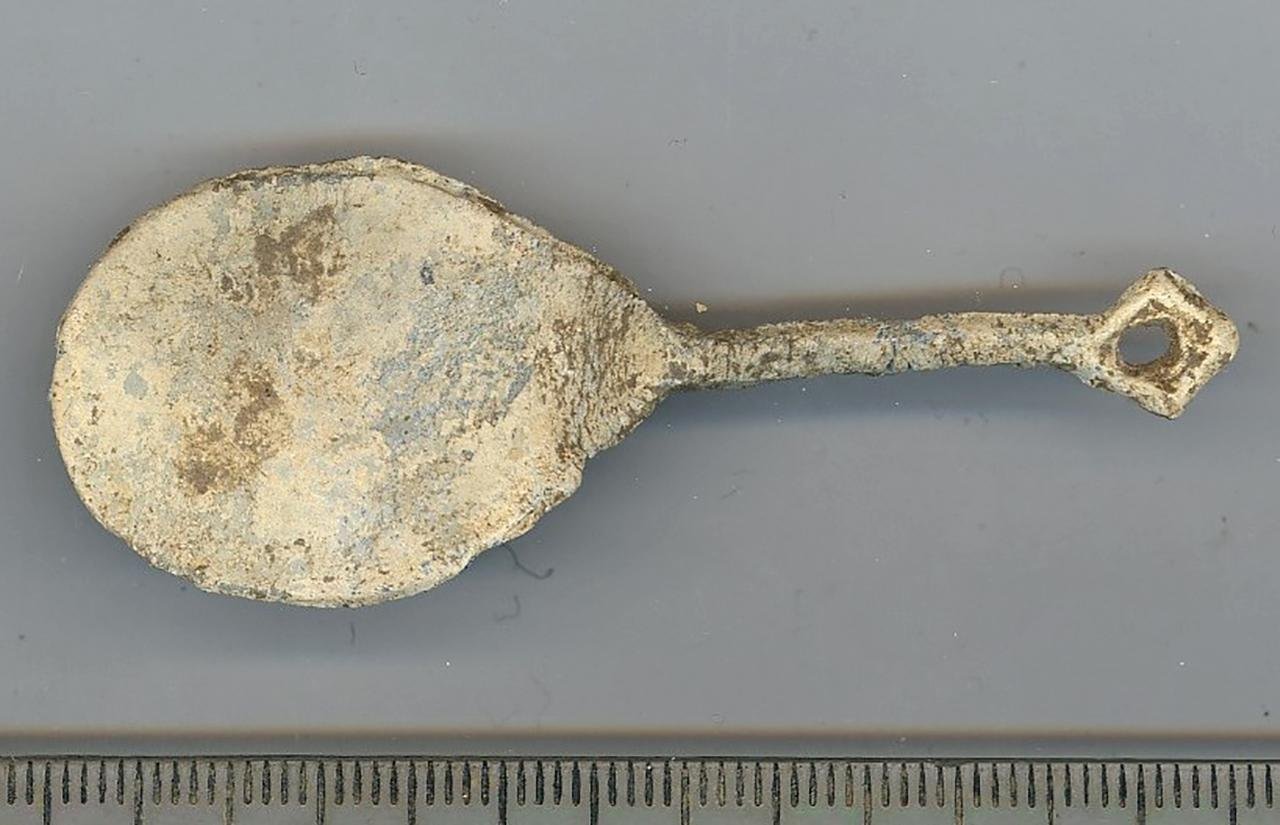
A unique bronze spoon from 2,000 years ago, thought to have played a role in divination rituals, has been uncovered on the Isle of Man. Rob Middleton, a metal detectorist, found this object on David Anderson’s farm in Patrick. This spoon stands out as the first of its type to surface on the island. While similar items have been found in Britain, Ireland, and France, only 28 such spoons exist in the world.

Allison Fox, the Curator for Archaeology at Manx National Heritage, called the discovery “one of the most intriguing objects ever discovered on the island.” She also stated that Iron Age finds are relatively scarce in the region. This rarity makes the spoon an especially valuable piece of evidence for prehistoric activity on the Isle of Man.

The spoon has a broad, strawberry-shaped bowl with a circular handle decorated with spiral patterns. Two finely engraved lines create a cross at the bottom of the bowl, dividing it into four quadrants. While its function remains unclear, researchers think it might have played a role in ritual ceremonies to predict future events. “It has been suggested that liquid of some form would have been poured into the spoon marked with the cross, and whatever quarter it landed in would tell something about the future,” Fox explained.

This find matches earlier discoveries of similar spoons, often found in pairs—one with an incised cross and the other with a small hole. Experts think someone might have dripped a liquid, maybe water, beer, or even blood, from the spoon with the hole into the one marked with a cross, creating an ancient form of fortune-telling or divination.

0

On the Margins: Comics, Gender, Identity & Subversion – comic conference announced

downthetubes.net On the Margins: Comics, Gender, Identity & Subversion – comic conference announced downthetubes.net
preview

cross-posted from: feddit.uk/post/24794805

On the Margins: Comics, Gender, Identity & Subversion is an upcoming two-day conference about comics at Ulster University in Northern Ireland in May, “Exploring Why Comics Matter”. BEANO artist Nigel Parkinson is among the speakers, addressing the success of DC Thomson’s surviving humour weekly.

Other comic creators taking part include artist and writer John Farrelly, writer Mark McCann, and Andrew Pope, editor of Local Colour Comics,

This two-day event will focus on exploring the intersections of comics, gender, identity, and subversion, bringing together academics, artists, writers, and industry professionals to discuss how comics shape and reflect cultural narratives.

…

On the Margins: Comics, Gender, Identity & Subversion Friday 2nd – Saturday 3rd May 2025, Ulster University Cromore Road Coleraine BT52 1SA | Full Programme Here | Free, but Booking Requested via EventBrite

0

Andor Season 2 Trailer: The Rebellion sparks revolution in Star Wars drama

Empire Andor Season 2 Trailer: The Rebellion Sparks Revolution In Star Wars Drama www.empireonline.com
preview

As you’ve likely heard people saying for years now, Andor is truly excellent TV – whether you’re a Star Wars super-fan, or someone who only dabbles in the galaxy far, far away. And now, with just two months to go until the second (and final) season of Tony Gilroy’s revolutionary drama gets underway, we finally have a teaser trailer, promising an explosive return from a Star Wars story like no other. Get ready for the return of Diego Luna’s Cassian Andor – alongside a rich tapestry of rebels from across the galactic firmament – and give the Season 2 trailer a here:

Trailer

0

Choose-your-own-adventure style RPG Fighting Fantasy was a UK obsession in the '80s, and it's finally coming to the US

GamesRadar+ Choose-your-own-adventure style RPG Fighting Fantasy was a UK obsession in the '80s, and it's finally coming to the US www.gamesradar.com
preview

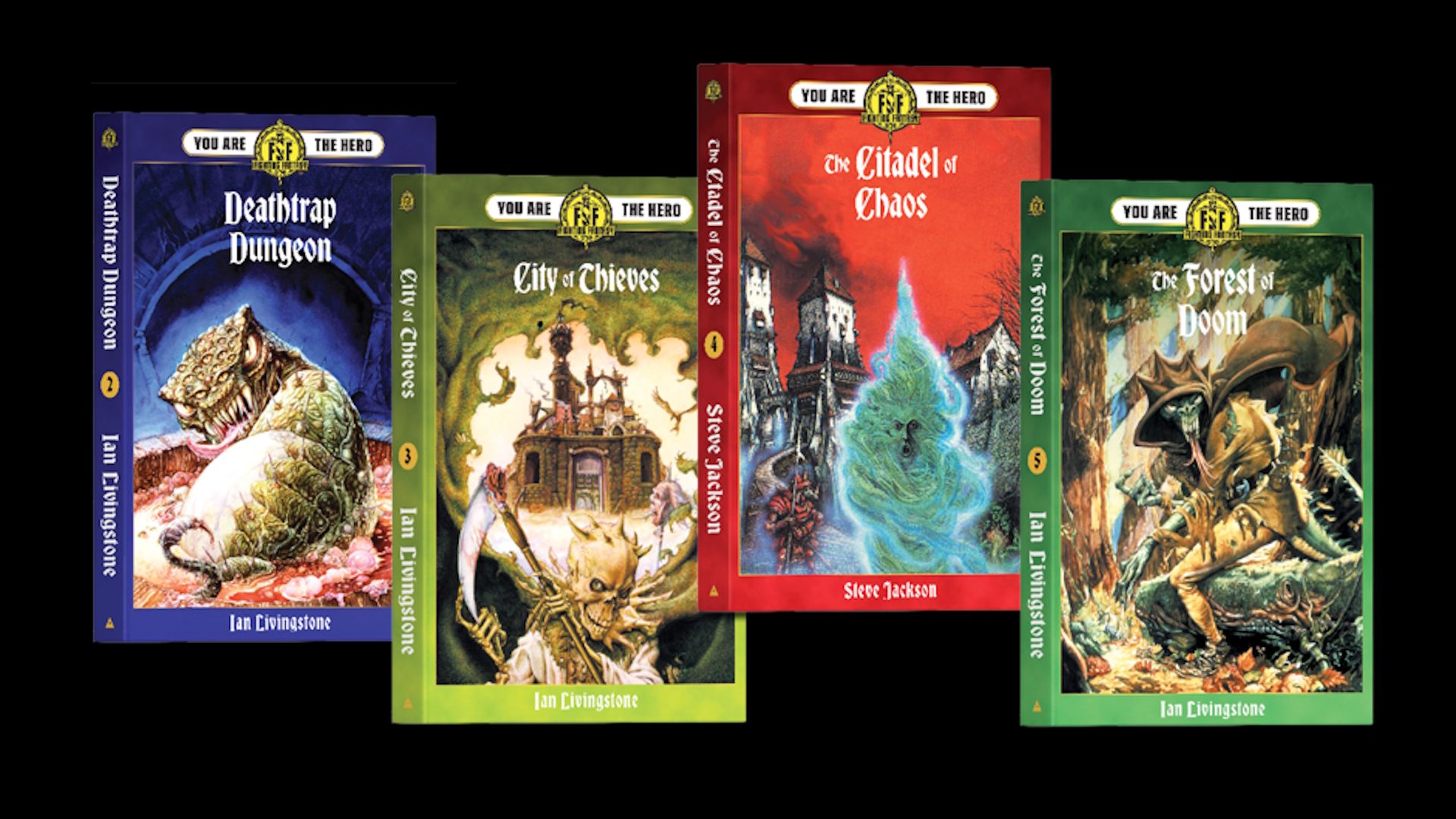
More than 40 years after its initial inception, the classic Fighting Fantasy book series is back as a Kickstarter campaign collection, owing to a book deal with Steve Jackson Games. Trailing an intimidating legacy behind it, this marks a milestone for the classic choose-your-own-adventure style RPG as it finally comes to the US, along with larger print and a host of original artwork to accompany it.

…

While coveted across the Atlantic, prospective players in the US had been stuck scouting for ways to ship the books “overseas or via online auction sites” as the Kickstarter page notes. That will no longer be a problem, thanks to the series being picked up by Texas-based publisher Steve Jackson Games last year.

…

Now, writers Steve Jackson (UK), Steve Jackson (US), and Sir Ian Livingstone are working together to bring us revisions of the classic original series, which will contain original black and white artwork “when possible,” as well as larger print and better formatting for enhanced readability.

The current collection, which is live on Kickstarter right now, includes the five most popular books in the series: The Warlock of Firetop Mountain by Steve Jackson (UK) and Ian Livingstone, Deathtrap Dungeon and City of Thieves by Ian Livingstone, The Citadel of Chaos by Steve Jackson (UK), and The Forest of Doom by Ian Livingstone.

0

Decapitated woman found in Irish bog is 2,000-year-old ritual sacrifice

Live Science Decapitated woman found in Irish bog is 2,000-year-old ritual sacrifice www.livescience.com
preview

cross-posted from: feddit.uk/post/24566473

Ancient human remains discovered in an Irish bog in October 2023 don’t belong to a teenage boy as originally assumed but rather a young woman, making them an exceptionally rare find.

Over the past year, several museums and universities have collaborated to reveal new information about the individual, now known as the Ballymacombs More Woman, including her sex, age, height and manner of death.

“As is the case for so many Iron Age bog bodies, the young woman suffered a highly violent death which involved the flow of blood from her throat followed by decapitation,” Eileen Murphy, an archaeologist at Queen’s University Belfast who studied the body, said in a statement on Thursday (Feb. 20).

The body first came to light when police were alerted to human remains on the surface of a peat bog in the village of Bellaghy in Northern Ireland. Initial examination of the body showed that it was at least 2,000 years old, and a forensic anthropologist suggested the person was male and between 13 and 17 years old at the time of his death.

…

“Ballymacombs More Woman is certainly one of the most important archaeological discoveries on the island of Ireland,” Niamh Baker, curator of archaeology at National Museums Northern Ireland, said in the statement, particularly because the majority of bog bodies discovered in the British Isles from this time period are male.

0

Decapitated woman found in Irish bog is 2,000-year-old ritual sacrifice

Live Science Decapitated woman found in Irish bog is 2,000-year-old ritual sacrifice www.livescience.com
preview

Ancient human remains discovered in an Irish bog in October 2023 don’t belong to a teenage boy as originally assumed but rather a young woman, making them an exceptionally rare find.

Over the past year, several museums and universities have collaborated to reveal new information about the individual, now known as the Ballymacombs More Woman, including her sex, age, height and manner of death.

“As is the case for so many Iron Age bog bodies, the young woman suffered a highly violent death which involved the flow of blood from her throat followed by decapitation,” Eileen Murphy, an archaeologist at Queen’s University Belfast who studied the body, said in a statement on Thursday (Feb. 20).

The body first came to light when police were alerted to human remains on the surface of a peat bog in the village of Bellaghy in Northern Ireland. Initial examination of the body showed that it was at least 2,000 years old, and a forensic anthropologist suggested the person was male and between 13 and 17 years old at the time of his death.

…

“Ballymacombs More Woman is certainly one of the most important archaeological discoveries on the island of Ireland,” Niamh Baker, curator of archaeology at National Museums Northern Ireland, said in the statement, particularly because the majority of bog bodies discovered in the British Isles from this time period are male.

0

Metal detectorists unearth 15th Century coin hoard in the Borders

Metal detectorists unearth 15th Century coin hoard in the Borders www.bbc.com
preview

Two metal detectorists have unearthed a hoard of 15th Century coins in the Scottish Borders.

Keith Young and Lisa Stephenson discovered 30 gold and silver coins in close proximity in the Cappercleuch area which is near St Mary’s Loch.

The coins are a mix of Scottish and English coins, comprising English silver groats minted by Henry V (1413-1422) to Edward IV (1461-1483), and Scottish gold demy and half-demys of James I (1406-1437) and James II (1437-1460).

Lisa described the discovery - likely deposited at the site in the early to mid-1460s - as the “find of a lifetime”.

…

The discovery has been reported to the Treasure Trove Unit, which assesses all Scottish archaeological finds.

It will then be referred to the Scottish Archaeological Finds Allocation Panel (SAFAP), an independent panel, where it will be assigned a monetary value to be paid to the finders in the form of an ex-gratia reward.

Accredited museums who wish to acquire the find can apply to SAFAP and will be required to raise the funds for the ex-gratia award.

…

Antony Lee from the Treasure Trove Unit said coin hoards containing a mix of both English and Scottish coins were not unusual.

However, he said they did not find many from this period in Scotland which made it a “fascinating find”.

0

Remember those 'choose your own adventure' fantasy books? Well, now they're coming back in this delightfully chonky e-ink console

PC Gamer Remember those 'choose your own adventure' fantasy books? Well, now they're coming back in this delightfully chonky e-ink console www.pcgamer.com
preview

No good thing ever dies, Stephen King once wrote, and while he was talking about hope, the saying could well be applied to the hugely popular ‘Choose Your Own Adventure’ books from the 1980/1990s. That’s because one person has decided to revisit the magic of those books and old-school text-based RPGs, by inventing a bespoke e-ink handheld device for reading and gaming.

…

Anyway, inspired by his son’s lack of interest in reading, Daniel Pucha, an electronics and programming entrepreneur (who prefers to go by the name Dana) decided to develop his own handheld device, called the Ink Console (via The Verge), that can be used to play/read CYOA books. While the prototype looks like nothing more than a simple e-ink reader, the device offers more than just an interface for electronic books.

That’s because while you’ll be able to purchase new books to read/play in the form of tiny cartridges that you pop into the device (which Dana calls Gamebooks), he and developer Rafa Laguna are also working on creating a software kit that will allow you to create your own CYOA stories and text-based RPGs.

…

As with all such projects, Dana is turning to crowdfunding, via Crowd Supply, to generate the income required to bring the Ink Console to market. At the time of writing, though, the funding project hasn’t started so it’s not clear just how much the Ink Console and the extra Gamebooks will cost if everything all comes to fruition.

0

Ancient Egyptian mummies smell "spicy" and "sweet", study finds

BBC News Ancient Egyptian mummies smell "spicy" and "sweet", study finds www.bbc.co.uk
preview

Even after 5,000 years in a sarcophagus, mummified bodies from ancient Egypt still smell quite nice, scientists have discovered.

Researchers who examined nine mummies found that though there was some difference in the intensity of their odours, all could be described as “woody”, “spicy” and “sweet”.

They say recreating the composition of the smells chemically will allow others to experience a mummy’s whiff - and help to tell when the bodies inside may be starting to rot.

“We want to share the experience we had smelling the mummified bodies, so we’re reconstructing the smell to be presented in the Egyptian Museum in Cairo,” Cecilia Bembibre, one of the researchers, told BBC Radio 4’s Today programme.

…

“In films and books, terrible things happen to those who smell mummified bodies,” said Dr Bembibre said.

“We were surprised at the pleasantness of them.”

0

Flohmarkt is a Fediverse Marketplace

preview

Historically speaking, the Fediverse has lacked apps related to money, trade, or commerce. Although there’s a growing number of small businesses, services, and contractors within the space, the network has largely been missing a shared marketplace for people to buy or sell things.

Flohmarkt (German for “Flea Market”) is a new platform that hopes to serve that need. The premise is simple: What if we built our own Craigslist, eBay, or Facebook Marketplace? The project is still relatively young, having only started in March 2023, but it exists today as a platform that anyone can use.

The overall experience is reminiscent of eBay, Etsy, or Facebook Marketplace, in that individuals can reach out to one another to sell or exchange listed items.

…

One extremely interesting here is acknowledging a limitation of today’s Fediverse: not every instance admin or user can use an integrated payment system. Instead, this platform allows users to privately message each other directly to handle the transaction out-of-band. What’s cool about this is that these interactions are not just limited to Flohmarkt members; Mastodon users can reach out about listings directly.

0

Cumbria archaeologists find 'significant' Viking-age building

Cumbria archaeologists find 'significant' Viking-age building www.bbc.com
preview

Archaeologists have unearthed what they believe to be a Viking-age building in a recent dig.

Teams of volunteers dug up High Tarns Farm in Silloth, Cumbria, in July after crop marks indicated a structure had previously been on the land.

Carbon dating of a timber building they discovered suggested it was a “large hall of the late-Viking age”, archaeologist Mark Graham of Grampus Heritage told volunteers.

Mr Graham added the significance of the discovery in shedding light on the early medieval period and social structure in rural Cumbria was “hard to overstate”.

…

“It seems most likely that the hall is the focus of an early medieval manor farm,” Mr Graham said.

He explained the site appeared similar to high status Viking age farms in Denmark, because it encompassed not only the hall but also the social structure and broader agricultural activity associated with them.

Mr Graham said it was a remarkable discovery.

“You really do not find much archaeology from that period [the Viking age] in our county,” he said.

“It’s a big gap in our knowledge.”

0

London’s first Roman basilica found under office basement

London’s first Roman basilica found under office basement www.bbc.com
preview

A discovery underneath the basement of an office block has been described as one of the most important pieces of Roman history unearthed in the city of London.

Archaeologists have found a substantial piece of the ancient city’s first basilica - a 2,000 year old public building where major political, economic and administrative decisions were made.

The excavation has so far revealed sections of stone wall that formed the base of the basilica, which would have been two-and-a-half storeys high.

The site, which will eventually be opened to the public, sheds light on the city’s beginnings.

“This is so significant - this is the heart of Roman London,” said Sophie Jackson, from the Museum of London Archaeology (Mola), who revealed the new find exclusively to BBC News.

“This building will tell us so much about the origins of London, why London grew and why it was chosen as the capital of Britain. It’s just amazing.”

0

Women led early British society 2,000 years ago, archaeologists find

preview

Women were at the centre of early Iron Age British communities, a new analysis of 2,000-year-old DNA reveals.

The research, published in the journal Nature on Wednesday, found that British Celtic societies were matrilocal with married women staying in their ancestral communities.

Human societies have often been shaped by where married couples choose to reside culturally.

For instance, in patrilocal communities partners mainly reside with or near the families of the male, whereas in matrilocal societies, couples live near the female’s parents.

Previous studies confirm that patrilocality was widely followed in the European Neolithic, Copper and Bronze ages.

However, earlier research hinted that in the case of Celtic societies, women had higher status.

Romans documented their astonishment at finding women occupying positions of power, writing about queens – Boudica and Cartimandua – who commanded armies and finding the empowerment of Celtic women remarkable.

…

Scientists analysed the genomes of 57 individuals buried in Iron Age cemeteries associated with Durotrigian communities in southern Britain.

They found that most individuals were related through the maternal line.

Unrelated individuals found in the cemetery were also found to be predominantly male, indicating they migrated to the area after marriage.

“This tells us that husbands moved to join their wives’ communities upon marriage, with land potentially passed down through the female line,” study co-author Lara Cassidy said.

“This is the first time this type of system has been documented in European prehistory and it predicts female social and political empowerment,” Dr Cassidy said.

0

The real purpose of the Criterion Collection, actually explained

SlashFilm The Real Purpose Of The Criterion Collection, Actually Explained - SlashFilm www.slashfilm.com
preview

When Criterion announced that it would celebrate its 40th anniversary by replicating the Closet with a portable Closet van, cinephiles across the country started planning their visits when the tour reached their home cities. To have a movie in the Criterion Collection is a great honor. Still, there are a few misconceptions regarding what the Criterion Collection actually is, what purpose it serves in our culture, and how decisions are made regarding the films that “get in.” Coming from a physical media obsessive, consider this your crash-course history lesson and guide to all things Criterion.

Founded by Robert Stein, Aleen Stein, and Joe Medjuck in 1984, Criterion is a pioneering home media distribution company that focuses on restoring, preserving, and publishing important cinematic works — classic and contemporary — across all genres and from around the world. The films that Criterion distributes on physical media are considered part of the Criterion Collection, including its early days of LaserDisc and out-of-print DVDs. Criterion was truly the first of its kind to include restorations and supplemental special features to encourage repeat viewings with its releases, essentially providing buyers the ultimate viewing experience that included film enjoyment and film education. For over 40 years, Criterion has worked in tandem with filmmakers and film scholars to put out the best release possible of any given title.

As far as the films that are selected to be a part of the collection, despite the “arthouse” or “snobby” accusations often lobbied at Criterion, the collection has a little bit of everything. An intimate, black and white micro-budget queer film like “Go Fish” exists alongside an exercise in depravity like “Salò, or the 120 Days of Sodom,” Chantal Akerman’s French masterpiece “Jeanne Dielman, 23, quai du Commerce, 1080 Bruxelles,” and an explosive blockbuster like Michael Bay’s “Armageddon.” But Criterion doesn’t have carte blanche to obtain any title it wants, including films it’s previously released. Criterion is also at the mercy of the movie’s rightsholders. For example, Criterion released John Woo’s action classic “Hard Boiled” on DVD and it has been out of print for many years, but we likely won’t see a re-release anytime soon as Shout! Factory recently obtained the rights to 156 films in the Golden Princess Library of Hong Kong cinema, including “Hard Boiled.”

0

Gold mourning ring found on Dorset farm dated to 17th Century

Gold mourning ring found on Dorset farm dated to 17th Century www.bbc.com
preview

A 17th Century mourning ring discovered by a metal detectorist in Dorset is to go under the hammer.

Anthony Woolmington, who has been metal detecting for eight years, found the ring on a farm near Shillingstone in 2021.

Unaware of its significance, he handed it to the farmer, whose son began looking in to its origins.

Research by Dorset History Centre, British Museum and Hansons Auctioneers revealed the ring commemorated a death more than 300 years ago.

…

The inside of the band bears a maker’s mark - a Gothic capital “B” - which dates it to 1692, along with the initials “ML” and date of death “23rd April 1692”.

Helen Smith, head of jewellery at Hansons, described the discovery as “truly remarkable”.

"Mourning rings were often crafted to commemorate significant losses, particularly during times of turmoil such as the English Civil War, the execution of Charles I, and the subsequent political upheaval.

“This ring is an extraordinary example of both craftsmanship and the deeply personal nature of jewellery in that era.”

The 3.7g ring is expected to fetch between £600 and £800 when it is sold on 27 February.

0

Scottish archaeologists up for top award for Merlin myth discovery

The National Scottish archaeologists in line for top award after key Merlin myth discovery www.thenational.scot
preview

Two community archaeology projects in Scotland have been nominated for an award for their work helping to discover a key detail towards the myth of Merlin and for shedding new light on whisky production in the Highlands.

The two projects have been nominated for the Archaeological Research Project of the Year Award for involving local communities in helping to link traditional tales and myths with physical sites across Scotland.

The Drumelzier’s Hidden Heritage project led by the Arthur Trail Association and GUARD Archaeology, with help from volunteers and local heritage groups, investigated the archaeological roots of Drumelzier’s Merlin legend and has been nominated for the award by Current Archaeology.

The Pioneering Spirit Project, led by the National Trust for Scotland and The Glenlivet, revealed the story of the industrialisation of whisky production in the Highlands during the nineteenth century and was also nominated for an award.

The village of Drumelzier in the Scottish Borders has long been associated with the myth of Merlin.

According to Vita Merlini Sylvestris (the Life of Merlin of the Forest), a medieval manuscript held by the British Library, Merlin was reportedly imprisoned there and buried on the banks of the Tweed in the seventh century.

In 2022, a team of volunteers across Scotland led by GUARD Archaeology set out to investigate the archaeological roots of the legend with the results from the work published last year revealing there may indeed be some truth to the reports of Merlin’s death in Scotland.

A geophysics survey revealed that there is an archaeological feature resembling a grave near the believed location of Merlin’s Grave at Drumelzier.

Previously:

0

John Woo, Chow Yun-Fat films among Hong Kong classics in Shout! deal

Variety John Woo, Chow Yun-fat Classics Among 156-Film Golden Princess Library Acquired by Shout! Studios (EXCLUSIVE) variety.com
preview

cross-posted from: slrpnk.net/post/17249723

In a major move set to electrify action film aficionados, Shout! Studios has nabbed worldwide rights (excluding select Asian territories) to the coveted Golden Princess movie library, a treasure trove of 156 Hong Kong cinema classics that’s been MIA from Western markets for decades.

The deal, which brings together Hollywood’s indie powerhouse with one of Hong Kong cinema’s most prestigious catalogs, includes genre-defining works from directing legends John Woo and Tsui Hark, alongside star-studded vehicles featuring Chow Yun-fat, Tony Leung Chiu-wai and Leslie Cheung.

The acquisition’s crown jewels include Woo’s action masterpieces “Hard Boiled,” “The Killer,” the complete “Better Tomorrow” trilogy, “Bullet in the Head” and “Once a Thief.” The library also boasts Ringo Lam’s “City on Fire,” “Prison on Fire” and its sequel; Eric Tsang’s “Aces Go Places”; Tsui’s “Peking Opera Blues”; Tony Ching’s “Chinese Ghost Story” trilogy; and additional hits like Wai Ka-fai’s “Peace Hotel,” Andrew Kam and Johnnie To’s “The Big Heat” and Alex Law’s “Now You See It, Now You Don’t.”

0

Star Wars: Ahsoka Season 2 to replace Ray Stevenson with Rory McCann

The Hollywood Reporter ‘Game of Thrones’ Actor Rory McCann Replacing the Late Ray Stevenson for ‘Ahsoka’ Season 2 www.hollywoodreporter.com
preview

Scottish actor Rory McCann, best known for playing the burly brute The Hound on HBO’s Game of Thrones, will replace late actor Ray Stevenson for a second season of Star Wars show Ahsoka, The Hollywood Reporter has confirmed.

Stevenson played the hulking former Jedi known as Baylan Skoll in the Disney+ series. He died after a brief illness in May 2023, three months before the series premiered. The actor was a fan favorite, thanks to his resonate voice, humor and roles in Punisher: War Zone, the Thor movies and TV’s Rome.

…

It is unclear when the new season is to begin shooting or who will be directing. Dave Filoni was the showrunner of season one, and is returning in the same capacity.

0

Roman-era dog penis bone painted red discovered in ancient quarry shaft

Phys.org Roman-era dog penis bone painted red discovered in ancient quarry shaft phys.org
preview

A bio-archaeologist with the University of Reading, in the U.K., has found an ancient dog’s red-painted penis bone along with a trove of other bones, in an ancient Roman era quarry shaft. In her paper published in the Oxford Journal of Archaeology, Ellen Green describes where the bone was found, its condition, and possible reasons for it being painted red.

In her paper, Green notes that in 2015, a group of archaeologists digging at a site called Nescot, located near the modern town of Ewell, came upon a 4-meter-deep shaft that had been dug into the rock. Subsequent work revealed that the shaft had been used as a grave of sorts; it held hundreds of human and animal bones. In this new effort, Green focuses her efforts on one particular bone—a canine baculum (penis bone) that had been painted using red ochre.

Green notes that the remains of more than 280 domestic animals had been found in the shaft, 70% of which were dogs. None showed signs of butchering, disease or burning, which suggested they had been pets or working animals that had died and were buried. Just one of the canine baculum had been painted, making it stand out.

Green states that during Roman times, the penis, or depictions of it, were used in many contexts, many of which involved hoping for good luck. She suspects that the bone from the shaft likely played a role in a ritual of some sort, either before being tossed into the quarry shaft, or during its internment. She notes that other objects found in the shaft support the idea that the bone could have played a role in a larger ritual—perhaps one related to fertility.

0

Exquisite hoard of silver coins unearthed at Sizewell C site

East Anglian Daily Times Silver coin hoard nicknamed 'the pasty' is discovered at Sizewell C site www.eadt.co.uk
preview

A “significant” collection of silver coins dating back to the 11th century have been discovered at the site of the new Sizewell C nuclear power station taking shape on the Suffolk coast.

An archaeologist involved in a pre-construction dig saw the sliver of a coin edge peeping out and started shaking as he realised the importance of his discovery.

It was a “perfect archaeological time capsule” said Andrew Pegg of Oxford Cotswold Archaeology (OCA) which was tasked with carrying out the dig.

…

The discovery of the 321 mint-condition silver coins feature on BBC2’s Digging for Britain today (Tuesday, January 7) at 8pm and on BBC iplayer.

Historians think that the hoard - wrapped in a lead and cloth bundle about the size of a pasty - was probably a savings pot for a local figure worried about political instability following the coronation of Edward the Confessor in 1042.

…

Experts think that it would have belonged to someone of middling status and of local influence as it was worth about the value of a small herd of cows.

0

Fields of gold: Understanding the Snettisham Hoards

The Past Fields of gold: Understanding the Snettisham Hoards – The Past the-past.com
preview

Ken Hill, near the village of Snettisham in north-west Norfolk, is a special place. This promontory overlooking the Wash is a conspicuous feature in an otherwise flat and marshy coastal landscape, commanding views across the North Sea. It sits close to the Crown’s estates at Sandringham, and over the last few hundred years the land has been used for grazing, arable farming, and shooting. Some 2,000 years ago, however, the slopes of this hill saw the deposition of some of the most ornate ancient metalwork found in Britain: a series of gold hoards that lay largely undisturbed as the world moved on around them, until a chance discovery in the mid-20th century.

On a cold November day in 1948, a young tractor driver, Raymond Williamson, was working on the slopes of Ken Hill when his plough struck something hard. After climbing down to investigate, he retrieved what looked like the remains of an old brass bedstead, threw it to the side of the field, got back on his tractor, and continued with his task. The following day, though, he found more old metal, this time a ‘lot of twisted wire’. Again, no one thought much of the finds, and Williamson probably forgot all about them until a local company owner became interested, and they eventually came to the attention of Roy Rainbird Clarke, the Curator of Archaeology at Norwich Castle Museum. Clarke rushed to investigate – fighting transport delays and road closures because of a freezing fog that had descended over much of eastern Britain – and soon realised that Williamson’s discarded find was no bedstead. The ‘brass bed fittings’ were actually more than 2,000 years old, and they were made not of brass, but gold. In fact, they were neck- rings that would have been worn by people during the later Iron Age – unknown to him at the time, Raymond Williamson had stumbled on one of the most important archaeological sites in Britain.

Despite its significance, Williamson’s find was just one of a series made at Snettisham over the next 70 years. The first came just two years later in 1950, when another ploughman, Tom Rout, unearthed a beautiful golden torc (now known as the ‘Great Torc’) with intricately decorated terminals. Legend has it that George VI was staying at the nearby Sandringham estate at the time, and the artefact was taken by the landowner to be admired by the king.

There were only infrequent finds through the 1960s and 1970s, and it was thought there were no more treasures to be found at the site, but in August 1990 a metal-detectorist named Cecil ‘Charles’ Hodder once again struck gold. This time, it wasn’t the finely wrought torc that Hodder had perhaps been hoping for when he gained permission to detect at the site; rather, he recovered more than 500 fragmentary objects in alloys of gold, silver, and bronze, a group that we now know had originally been buried in an upturned bronze helmet (of which, more below). Hodder reported his discovery to the Norfolk Archaeological Unit and, soon after, in December that year, a second archaeologist and his team returned to investigate. Dr Ian Stead, then Deputy Keeper of the Department of Prehistoric and Romano-British Antiquities at the British Museum, began a large-scale excavation that lasted for three successive seasons between 1990 and 1992, uncovering several more hoards, as well as evidence about the longer history of the site.

Subsequent excavations and surveys in the 2000s and 2010s have added to this picture, and, in all, more than 1,200 metal artefacts have been found from this single field – which perhaps inevitably became known as the ‘gold field’, owing to the material from which many of the objects had been made.

…

Let’s start with the most impressive objects from Snettisham, the finds that make the site so exceptional: the torcs. These are metal neck-rings, sometimes with decorated terminals at the front. Similar objects were worn across much of Europe, but the number found at Snettisham is unprecedented. There are more than 60 complete or near-complete torcs from the site, with hundreds more represented by fragments. This compares to 85 or so examples known from the whole of the rest of Britain. Taking all 14 hoards together, it is the largest assemblage of ancient gold jewellery from anywhere in Europe.

…

Further reading:
Julia Farley and Jody Joy (eds) (2024) The Snettisham Hoards (British Museum Research Publication 225; British Museum Press, ISBN 978 0861592258, £40).

0

'Godzilla vs Biollante' is the weirdest movie in the franchise & has a new release

MovieWeb The Weirdest 'Godzilla' Movie Is Getting an Impressive New Release movieweb.com
preview

cross-posted from: feddit.uk/post/22159855

The monstrous Godzilla is colossal in more ways than one, dominating screens since 1954. One of the most recognizable reptilian figures in cultural history, fans lap up the spectacle of this kaiju (a Japanese term for large monster) towering over urban landscapes and battling with other untamed beasts. In 1989, one of the weirdest movies in the genre was released, Godzilla vs. Biollante, becoming a firm franchise favorite for many fans…

Director Kazuki Ōmori delved deep into his imagination for Godzilla vs. Biollante. The film proudly displays some of the coolest special effects of the franchise, one of its strangest antagonists, and some great social commentary. It’s been a challenge for anyone to track down a watchable physical copy of the movie, and anything on streaming usually has poorly translated subtitles, but that all ends next spring. Audiences will be able to get their hands on the 4K restoration of the film (with new, properly handled subtitles and a 5.0 surround DTS-HD Master Audio soundtrack), so they can judge how wonderfully eccentric it is for themselves.

…

Along with the restoration, The Criterion Collection release is stuffed with special features as usual:

There’s a new audio commentary featuring film historian Samm Deighan, host of the podcast Eros + Massacre and coeditor of the book Revolution in 35mm. There’s also a making-of program from 1993 featuring director Kazuki Ōmori and special-effects director Koichi Kawakita, among others. There are deleted special effects, TV spots, and a short documentary from 1993 about the Biollante and Super X2 vehicle concepts.