#learn_finnish

posts tagged #learn_finnish

0

"Mulla on ruokakauppa" - does this make sense?

preview

Came across this phrase in a Finnish course but I can’t find any other examples of the adessive being used this way? As I understand it, “mulla” is the colloquial form of “minulla”, which is paired with “on” to mean “I have”, e.g. “minulla on kissa” = “I have a cat”. So “mulla on ruokakauppa” would mean something like “I have a supermarket”, which I guess could technically be correct but from context (the course is just in Finnish) it seems like it’s supposed to mean something more like “I’m at the supermarket”. Is “minulla on …” ever used in this way? Or have I just gotten confused somewhere?

Came across this phrase in a Finnish course but I can’t find any other examples of the adessive being used this way? As I understand it, “mulla” is the colloquial form of “minulla”, which is paired with “on” to mean “I have”, e.g. “minulla on kissa” = “I have a cat”. So “mulla on ruokakauppa” would mean something like “I have a supermarket”, which I guess could technically be correct but from context (the course is just in Finnish) it seems like it’s supposed to mean something more like “I’m at the supermarket”. Is “minulla on …” ever used in this way? Or have I just gotten confused somewhere?

0

From the desert aavikko (desert) +sta (elative, movement out of) or +lta (ablative, movement away from something)

preview

If i wanted to say I am from the desert would it be Olen aavikolta or Olen aavikosta? Or is there is a better suffix to use?

If i wanted to say I am from the desert would it be Olen aavikolta or Olen aavikosta? Or is there is a better suffix to use?

0

Toista and Toinen

preview

Yesterday while walking my dog i was practicing my Finnish, as one does. Specifically i was counting, something i had not practiced in a while. While counting in the -teens, i realized -toista reminded me of Toinen. I looked it up today, and sure enough they are the same root.

So 15, viisitoista appears to literally mean, 5 again, or 5 the second.

-toista

Etymology

From the partitive singular toista of toinen (“second”), by ellipsis of the phrase toista kymmentä (literally “of the second decade”), referring to the second ten of numbers (11–19). yksitoista, for example, originally was yksi toista kymmentä (literally “one of/into the second decade”), as the first “decade” (first ten numbers) were already counted. This system used to be used more widely, but is now only used for 11 to 19, possibly by influence from the Germanic languages where those numerals too get special names, while numbers beyond 19 are more formulaic.

lähde

0

Päivän sana - leppäkerttu (ladybird/ladybug)

preview

Etymology

leppä (“blood”) (archaic) +‎ Kerttu, after the red-orange color

Pronunciation

  • IPA(key): /ˈlepːæˌkertːu/, [ˈle̞pːæˌk̟e̞rt̪ːu]
  • Rhymes: -ertːu
  • Syllabification(key): lep‧pä‧kert‧tu
  • Hyphenation(key): leppä‧kerttu

Noun

leppäkerttu

  1. ladybird, ladybug

lähde

Etymology

leppä (“blood”) (archaic) +‎ Kerttu, after the red-orange color

Pronunciation

  • IPA(key): /ˈlepːæˌkertːu/, [ˈle̞pːæˌk̟e̞rt̪ːu]
  • Rhymes: -ertːu
  • Syllabification(key): lep‧pä‧kert‧tu
  • Hyphenation(key): leppä‧kerttu

Noun

leppäkerttu

  1. ladybird, ladybug

lähde

0

Päivän sana - räyhätä (to scream, or scold)

play · youtube.com
YouTube Hevisaurus - Räyh!!!! ( official video ) www.youtube.com
preview

Etymology

Proto-Finnic *räühä- +‎ -tä, probably sound-symbolic. Compare reuhata, rähjätä, räjähtää, ärähtää.

Pronunciation

  • IPA(key): /ˈræy̯hætæˣ/, [ˈræy̯ɦæt̪æ(ʔ)]
  • Rhymes: -æyhætæ
  • Syllabification(key): räy‧hä‧tä
  • Hyphenation(key): räy‧hä‧tä.

Verb

räyhätä (intransitive)

  1. to scream (at), scold angrily [with allative] Synonym: rähistä
  2. to scuffle, have a fight (engage in a disorderly fight, especially one that isn’t that physical)
    Synonym: rähistä
  3. synonym of reuhata (“to rage, storm”)
0

Toinen päivän sana - huomen (morning)

preview

Pronunciation

  • IPA(key): /ˈhuo̯men/, [ˈhuo̞̯me̞n]
  • Rhymes: -uomen
  • Syllabification(key): huo‧men
  • Hyphenation(key): huo‧men

Etymology 1

From Proto-Finnic *hoomën.

Noun

  1. huomen (poetic, literary)
    morning, morrow
    Synonym: aamu

Etymology 2

Contraction of huomenna, itself an archaic locative of sense 1.

Adverb

huomen (colloquial)

  1. synonym of huomenna (“tomorrow”)

lähde

0

Päivän sana - aamu (morning)

preview

Etymology

Unknown. The word is known to be recent, as the original word for morning in Finnish is huomen. It is likely that once huomen began to be used in words meaning “tomorrow”, such as huominen and huomenna, it was eventually replaced by aamu in the sense “morning”. One theory is that aamu is a shortening of the archaic word *huomenhaamu (“morning twilight, morning mist”), which is a compound of huomen (“morning”) + haamu (“twilight, mist, ghost”), but no such compound is attested in older texts, which leaves this theory uncertain. Another theory is that the word is borrowed from the genitive form of Old Swedish *āma (“mist, smoke”) (whence dialectal Swedish åmme), which would have developed the sense “daybreak”. While this could be compared to the possible development of aurinko (“sun”) < auer (“haze”), it is likewise uncertain.

Pronunciation

  • IPA(key): /ˈɑːmu/, [ˈɑ̝ːmu]
  • Rhymes: -ɑːmu
  • Syllabification(key): aa‧mu
  • Hyphenation(key): aa‧mu

Noun

Period of day

previous: yö
next: päivä

Period of day

previous: aamuyö
next: aamupäivä

aamu

  1. morning
    Synonym: (poetic) huomen

Usage notes

As with all words for times of day (except päivä) in Finnish, the adessive case (aamulla) is normally used when talking about events that will take place or took place in the morning. The essive case (aamuna) is used instead, however, if there is a determiner like tämä (“this”), viime (“last”) or ensi (“next”); if the day is specified otherwise, either the essive or adessive case can be used (the former is more common). As usual, other uses, e.g. when postponing events (allative) or with asti (“until”) (illative), may use other locative cases.

lähde

0

toinen päivän sana - ylös (up)

preview

Alternative forms

  • ylähä (dialectal)
  • yles (dialectal, archaic)

Etymology

From Proto-Finnic *üles. Equivalent to ylä-/yle- (“upper, above”) +‎ -s (s-lative singular), with labialization from dialectal yles.

Pronunciation

  • IPA(key): /ˈyløs/, [ˈylø̞s̠]
  • Rhymes: -yløs
  • Syllabification(key): y‧lös
  • Hyphenation(key): ylös

Adverb

ylös (comparative ylemmäksi or ylemmäs, superlative ylimmäksi or ylimmäs)

  1. up, upward, upwards
    kulkea ylös rinnettä / kulkea rinnettä ylös ― to go up the slope

lähde

0

päivän sana - ulos (out)

preview

Etymology

ulko- (“out(side)”) +‎ -s (s-lative singular)

Pronunciation

  • IPA(key): /ˈulos/, [ˈulo̞s̠]
  • Rhymes: -ulos
  • Syllabification(key): u‧los
  • Hyphenation(key): ulos

Adverb

ulos (comparative ulommas, superlative uloimmas)

  1. (of movement) out, outside; outdoors
    Menen ulos.
    I’m going out.
    Ulos! ― Get out!

lähde

0

päivän sana - kieli (tongue, language, to snitch, to gossip)

preview

Etymology 1

From Proto-Finnic *keeli (compare Estonian keel, Karelian kieli), from Proto-Uralic *käle (compare Northern Sami giella, Erzya кель (keľ), Moksha кяль (käľ), Udmurt кыл (kyl), Eastern Khanty кӧԓ (köł), Nganasan сиәде (siədje)).

Pronunciation

  • IPA(key): /ˈkie̯li/, [ˈk̟ie̞̯li]
  • Rhymes: -ieli
  • Syllabification(key): kie‧li
  • Hyphenation(key): kie‧li

Noun

kieli

  1. tongue (organ)
  2. (by extension) tang, tongue, projecting part
  3. (music) string (tightly tensioned wire that produces a tone)
  4. (music) reed (vibrating part in the mouthpiece of a woodwind instrument)
  5. clapper, clanger, tongue (in a bell)
  6. pointer, needle (on a balance scale)
  7. tongue (in a shoe)
    Synonym: iltti
  8. prong of a buckle
    Synonyms: neula, paljin
  9. language (form of communication)
  10. language, tongue (particular form of oral or spoken communication used by a community)
  11. language, tongue (manner of expression; particular words or structures used in a speech or a passage of text)

Etymology 2

Pronunciation

  • IPA(key): /ˈkie̯li/, [ˈk̟ie̞̯li] (third-person indicative)
  • IPA(key): /ˈkie̯liˣ/, [ˈk̟ie̞̯li(ʔ)] (imperative, indicative connegative)
  • Rhymes: -ieli
  • Syllabification(key): kie‧li
  • Hyphenation(key): kie‧li

Verb

kieli

  1. inflection of kieliä (see below):
  2. third-person singular past indicative
  3. present active indicative connegative
  4. second-person singular present imperative
  5. second-person singular present active imperative connegative

kieliä

  1. (intransitive) to inform, snitch, gossip about [with elative]
  2. (intransitive, figuratively) to indicate, suggest [with elative]

lähde kieli lähde kieliä

0

päivän sana - kurkku (throat, cucumber)

preview

Pronunciation

  • IPA(key): /ˈkurkːu/, [ˈkurkːu]
  • Rhymes: -urkːu
  • Syllabification(key): kurk‧ku
  • Hyphenation(key): kurk‧ku

Etymology 1

From Proto-Finnic *kurkku (compare Estonian, Livonian and Veps kurk), borrowed from Proto-Norse [script needed] (*kwerku), from Proto-Germanic *kwerkō (compare Old Norse kverk, Swedish Kvarken), and ultimately from Proto-Indo-European *gʷerh₃- (“to devour”) (compare Erzya кирьга (kiŕga)).

Noun

kurkku

  1. throat, gullet
  2. throat (front part of the neck)
    mustakurkkurautiainen ― black-throated accentor
  3. throat (narrow opening)
    kaasuttimen kurkku ― the throat of a carburetor
  4. the part of the belly of an axe haft that is just below the head
    Joskus isku menee ohi ja terän sijasta klapiin osuu kirveen kurkku.
    Sometimes one misses and the log is hit by the belly of the haft instead of the axe head.

Etymology 2

Borrowed from Swedish gurka, German Gurke, ultimately from a Slavic language.

Noun

kurkku

  1. cucumber (vine, Cucumis sativus)
    Synonym: vihanneskurkku
  2. cucumber (vegetable)
  3. pickle (pickled cucumber)

lähde

0

päivän sana - tuli (fire, to come, to orgasm)

preview

Pronunciation

  • IPA(key): /ˈtuli/, [ˈt̪uli]
  • Rhymes: -uli
  • Syllabification(key): tu‧li
  • Hyphenation(key): tu‧li

Etymology 1

From Proto-Finnic *tuli (compare Estonian tuli), from Proto-Uralic *tule (compare Northern Sami dolla, Moksha тол (tol), Eastern Mari тул (tul), Udmurt тыл (tyl), Tundra Nenets ту (tu)). tuli has previously been typical of Eastern Finnish, whereas Western Finnish dialects usually used valkea.

Noun

tuli

  1. fire (reaction; burning)
    leikkiä tulella ― to play with fire
  2. fire (instance of this chemical reaction)
    Synonyms: (more common in this sense) tulipalo, palo
  3. synonym of nuotio (“campfire”)
  4. fire, gunfire
    Synonym: tulitus
    tuli seis! ― cease fire! (stop firing/shooting)
  5. (alchemy) fire (one of the basic elements)

Etymology 2

Verb

tuli

  1. third-person singular past indicative of tulla:
  2. to come (move nearer)
  3. to become, get, go, turn
  4. (impersonal + elative) to become, get, go, turn (noun, adjective, participle, etc.)
  5. to become, get, go, turn [with translative] (usually an adjective or a participle, only rarely a noun)
  6. to come into, get [with illative] (enter a state of being)
  7. (impersonal + genitive) to have to, be to, should, be supposed to [with first infinitive]
  8. A verb used to construct the emphatic future tense; the present tense is usually used instead as a future tense. [with illative of third infinitive]
  9. Used to express the passive voice for arbitrary verbs [with translative of past passive participle]
  10. Used to express the passive voice, particularly if the action is less definite, or in direct questions; mostly synonymous with the previous use with the translative, however [with partitive of past passive participle]
  11. to happen to do, manage to do (more or less unintentionally), to succeed in doing (more or less unintentionally) [with translative of past active participle]
  12. (slang) to cum, orgasm

lähde

0

Päivän sana - palaa (to burn, a piece, ???, to return)

preview

Etymology 1

From Proto-Finnic *paladak, from Proto-Uralic *pala-.

Pronunciation

  • IPA(key): /ˈpɑlɑːˣ/, [ˈpɑ̝lɑ̝ː(ʔ)]
  • Rhymes: -ɑlɑː
  • Syllabification(key): pa‧laa
  • Hyphenation(key): pa‧laa

Verb

palaa (intransitive).

  1. to burn
    Tuli palaa uunissa.
    A fire is burning in the stove.
    Maito paloi pohjaan.
    The milk burned (into the bottom of a kettle, pot, etc).
  2. (e.g. of a lamp) to shine, emit light
    Lamppu palaa.
    The lamp is turned on.
  3. (colloquial) to smoke, used when offering a cigarette
    Palaako?
    Would you like to smoke?
  4. to be caught committing a crime
  5. (baseball, pesäpallo, dodgeball) to be out, strike out.
  6. (of a lamp, fuse, etc.) to blow, to burn out, to blow out
    Lamppu paloi.
    The lamp has blown out. / The lamp is burned out.

Etymology 2

Pronunciation

  • IPA(key): /ˈpɑlɑː/, [ˈpɑ̝lɑ̝ː]
  • Rhymes: -ɑlɑː
  • Syllabification(key): pa‧laa
  • Hyphenation(key): pa‧laa

Noun

palaa

  1. A piece, partitive singular of pala
    Kukaan ei ottanut viimeistä palaa.
    Nobody took the last piece.

Etymology 3

Pronunciation

  • IPA(key): /ˈpɑlɑː/, [ˈpɑ̝lɑ̝ː]
  • Rhymes: -ɑlɑː
  • Syllabification(key): pa‧laa
  • Hyphenation(key): pa‧laa

Verb

palaa

  1. third-person singular present indicative of palaa (this is all the info this entry has, there is no link or definition of this entry)

Etymology 4

Pronunciation

  • IPA(key): /ˈpɑlɑː/, [ˈpɑ̝lɑ̝ː]
  • Rhymes: -ɑlɑː
  • Syllabification(key): pa‧laa
  • Hyphenation(key): pa‧laa

Verb

palaa

  1. third-person singular present indicative of palata
    (intransitive) to return, come back, go back, get back [with illative or allative; or (with verbs) with illative of third infinitive ‘to do’]

Etymology 5

Pronunciation

+IPA(key): /ˈpɑlɑːˣ/, [ˈpɑ̝lɑ̝ː(ʔ)]
+Rhymes: -ɑlɑː
+Syllabification(key): pa‧laa
+Hyphenation(key): pa‧laa

Verb

palaa

  1. present active indicative connegative of palata (to return, come back, go back, get back [with illative or allative; or (with verbs) with illative of third infinitive ‘to do’])
  2. second-person singular present imperative of palata
  3. second-person singular present active imperative connegative of palata

lähde

0

Päivän sana - kuusi (six, a spruce, your moon)

preview

Pronunciation

  • IPA(key): /ˈkuːsi/, [ˈkuːs̠i]
  • Rhymes: -uːsi
  • Syllabification(key): kuu‧si
  • Hyphenation(key): kuu‧si

Etymology 1

From Proto-Finnic *kuuci (compare Estoniankuus), from Proto-Finno-Ugric *kutte (compare Erzya кото (koto), Northern Khanty хәт (hət), Northern Mansi хо̄т (hōt), Hungarian hat).

Numeral

kuusi

  1. six

kuusi kuusta joulukuussa ― six spruce trees in December

etymology 2

From Proto-Finnic *kuusi (compare Estoniankuusk), from Proto-Uralic *kowse (compare Northern Sami guossa, Erzya куз (kuz), Eastern Mari кож (kož), Udmurt кыз (kyz), Tundra Nenets хады (xadi)).

Noun

kuusi

  1. spruce (any tree in the genus Picea)Kuusi on valtapuulaji noin kolmasosassa Suomen metsiä.Spruce is the dominating tree in about one third of Finnish forests.
  2. Norway spruce, Picea abies
  3. spruce (wood of spruce)Perinteisesti puulattiat tehtiin kuusesta.Traditionally the wooden floors were made of spruce. 


Etymology 3

Noun

kuusi

  1. inflection of kuu:
  2. second-person singular possessive form of nominative/genitive singular
  3. second-person singular possessive form of nominative/accusative plural

lähde

0

Kolmas päivän sana - kaivo (well)

preview

Etymology

From Proto-Finnic *kaivo. Equivalent to kaivaa (“to dig”) +‎ -o. Cognate with Estonian kaev.

Pronunciation

  • IPA(key): /ˈkɑi̯ʋo/, [ˈkɑ̝i̯ʋo̞]
  • Rhymes: -ɑiʋo
  • Syllabification(key): kai‧vo.
  • Hyphenation(key): kai‧vo

Noun

kaivo

  1. well (water source)

lädhe

Etymology

From Proto-Finnic *kaivo. Equivalent to kaivaa (“to dig”) +‎ -o. Cognate with Estonian kaev.

Pronunciation

  • IPA(key): /ˈkɑi̯ʋo/, [ˈkɑ̝i̯ʋo̞]
  • Rhymes: -ɑiʋo
  • Syllabification(key): kai‧vo.
  • Hyphenation(key): kai‧vo

Noun

kaivo

  1. well (water source)

lädhe

0

Toinen päivän sana - no (well)

preview

Etymology

Similar interjections can be found in other Finnic languages (compare Estonian no, noh, Ingrian no, Karelian no, Livonian no, noh, Ludian no, Votic no) and possibly also in other Uralic languages (compare Komi-Zyrian но (no), Udmurt но (no)). Compare also to those found in neighboring Indo-European languages (such as Swedish nå, Latvian nu, Russian ну (nu)), which may all trace back as far as Proto-Indo-European *nu. SSA concludes that the interjection is probably part original and part foreign.

Pronunciation

  • IPA(key): /ˈno/, [ˈno̞]
  • Rhymes: -o
  • Syllabification(key): no
  • Hyphenation(key): no

Interjection.

no

  1. well! (to acknowledge a situation; encouragement to answer or react; expressing the overcoming of reluctance to say something; exclamation of indignance) Alternative form: noh. No sepä mukavaa! ― Well, that’s nice. No kai meidän sitten pitää käydä katsomassa. ― Well I guess we have to go look then.
    No, mikset mennyt juhliin? ― Well, why didn’t you go to the party?
    Siellä oli, no, aika tylsää. ― It was, well, pretty boring there.
    No, et sinä nyt noin voi käyttäytyä! ― Well! You can’t behave like that!

lähde

0

Päivän sana - hyvin (well)

preview

Pronunciation

  • IPA(key): /ˈhyʋin/, [ˈhyʋin]
  • Rhymes: -yʋin
  • Syllabification(key): hy‧vin
  • Hyphenation(key): hy‧vin

Adverb

hyvin (comparative paremmin, superlative parhaiten)

  1. well (accurately, competently, satisfactorily; in a manner that can be described as good)
    Synonym: (dated or dialectal) hyvästi
    Kiitos kysymästä, voin hyvin.
    Thanks for asking, I’m doing well.
    Kuten hyvin tiedätte, […]
    As you well know […]
  2. very, well (to a significant degree)
    Synonyms: see Thesaurus:erittäin. hyvin kaunis ― very beautiful
    hyvin tunnettu ― well known

[lähde](en.wiktionary.org/wiki/hyvin#Finnish]

0

Päivän sana - syksy (fall, autumn)

preview

Etymology

From Proto-Finnic *süksü, from Proto-Finno-Ugric *sükśe. Cognates include Estonian sügis, Karelian šygyžy, Northern Sami čakča, Erzya сёксь (śokś), Hungarian ősz.

Pronunciation

  • IPA(key): /ˈsyksy/, [ˈs̠yks̠y]
  • Rhymes: -yksy
  • Syllabification(key): syk‧sy
  • Hyphenation(key): syk‧sy

Noun

season
Previous: kesä
Next: talvi

syksy

  1. autumn, fall (season of the year)

Usage notes

As with all four seasons in Finnish, the adessive case (syksyllä) is normally used when talking about events that will take place or took place in (the) autumn/fall. The essive case (syksynä) is used instead, however, if there is a determiner like tämä (“this”), viime (“last”) or ensi (“next”); this does not apply when e.g. specifying the year (adessive case is used). As usual, other uses, e.g. when postponing events (allative) or with asti (“until”) (illative), may use other locative cases.

0

Päivän sana - majava (beaver)

preview

Etymology

From Proto-Finnic *majaga, from Proto-Finno-Permic *maja. Related to Veps majag and Erzya мия (mija), мияв (mijav).

Pronunciation

  • IPA(key): /ˈmɑjɑʋɑ/, [ˈmɑ̝jɑ̝ʋɑ̝]
  • Rhymes: -ɑjɑʋɑ
  • Syllabification(key): ma‧ja‧va
  • Hyphenation(key): ma‧ja‧va

Noun

majava

  1. beaver

lähde

Etymology

From Proto-Finnic *majaga, from Proto-Finno-Permic *maja. Related to Veps majag and Erzya мия (mija), мияв (mijav).

Pronunciation

  • IPA(key): /ˈmɑjɑʋɑ/, [ˈmɑ̝jɑ̝ʋɑ̝]
  • Rhymes: -ɑjɑʋɑ
  • Syllabification(key): ma‧ja‧va
  • Hyphenation(key): ma‧ja‧va

Noun

majava

  1. beaver

lähde

0

Päivän sana - pinjansiemen (pine nuts)

preview

Etymology

pinjan +‎ siemen

Pronunciation

  • IPA(key): /ˈpinjɑnˌsie̯men/, [ˈpinjɑ̝nˌs̠ie̞̯me̞n]
  • Rhymes: -iemen
  • Syllabification(key): pin‧jan‧sie‧men
  • Hyphenation(key): pinjan‧siemen

Noun

pinjansiemen

  1. A pine nut.

lähde

Etymology

pinjan +‎ siemen

Pronunciation

  • IPA(key): /ˈpinjɑnˌsie̯men/, [ˈpinjɑ̝nˌs̠ie̞̯me̞n]
  • Rhymes: -iemen
  • Syllabification(key): pin‧jan‧sie‧men
  • Hyphenation(key): pinjan‧siemen

Noun

pinjansiemen

  1. A pine nut.

lähde

0

A band vs the band

preview

Hän haluaa soittaa kitaraa bändissä.

How do you know it is the band and not a band? Especially with the choices given.

Would a band be: Hän haluaa soittaa kitaraa bändiässä?
But i think that would make it a multiple number of bands.

Hän haluaa soittaa kitaraa bändissä.

How do you know it is the band and not a band? Especially with the choices given.

Would a band be: Hän haluaa soittaa kitaraa bändiässä?
But i think that would make it a multiple number of bands.

0

Are tavat and perrine both words mean traditions?

preview

I stuck in the situation where tavat and perrine mean tradition for me.

Here’s how LMM explains the difference

Tavat:

  • In Finnish, tavat is the plural form of tapa.

  • Tapa means habit, custom, practice, manner.

  • So tavat translates as habits/customs (in plural).

    It can refer to traditions but also to general ways of doing things (e.g., social manners, everyday practices).

Perinne in Finnish actually does mean “tradition” or “heritage.”

WDYT?

0

Päivän sana - takia (because of)

preview

Etymology

taka- +‎ -ia. Related to Karelian takie.

Pronunciation

  • IPA(key): /ˈtɑkiɑ(ˣ)/, [ˈt̪ɑ̝k̟iɑ̝(ʔ)]
  • Rhymes: -ɑkiɑ
  • Syllabification(key): ta‧ki‧a
  • Hyphenation(key): ta‧kia

Postposition

takia [with genitive and/or possessive form]

  1. because of, due to
    tämän takia ― because of this
    sinun takiasi ― due to you
    minkä takia? ― because of what?

lähde

0

PSA: "menu" and "menu" are two different words

preview

The word menu translates to valikko in Finnish - valita (“to choose, select”) +‎ -kko

The word menu translates to ruokalista in Finnish - ruoka (“food”) +‎ lista (“list”)

Yes, Google Maps literally calls the sidebar menu “Food List”

en.wiktionary.org/wiki/valikko
en.wiktionary.org/wiki/ruokalista

0

Question about partitives

preview

This could be Duolingo, as they have already had partitive mistakes they quietly corrected.

Lesson 1: Vesi on syvää.
Lesson 2: Vesi on syvä ja sininen.

Why is 2 not syvää ja sinistä?

This could be Duolingo, as they have already had partitive mistakes they quietly corrected.

Lesson 1: Vesi on syvää.
Lesson 2: Vesi on syvä ja sininen.

Why is 2 not syvää ja sinistä?

0

kiinnostus versus mielenkiintoinen

preview

Kiinnostus = interest (noun). A noun that refers to the feeling of interest or curiosity someone has.

Minulla on kiinnostus historiaan. = I have an interest in history.

Mielenkiintoinen = interesting (adjective). An adjective used to describe something that causes interest.

*Kuulostaa mielenkiintoiselta! = Sounds interesting! *

What do you think, is it correct?

0

Ajatella versus Luulla

preview

Ajatella = “to think” (in general, consciously)

Luulla = “to think”, but with the meaning of believing something to be true (perhaps mistakenly)

Is it correct assumption?

Ajatella = “to think” (in general, consciously)

Luulla = “to think”, but with the meaning of believing something to be true (perhaps mistakenly)

Is it correct assumption?

0

Päivän sana heinäkuu (July)

preview

Etymology

heinä (“hay”) +‎ kuu (“month”); haymaking often takes place in July. Compare Estonian heinakuu.

Pronunciation

  • IPA(key): /ˈhei̯næˌkuː/, [ˈhe̞i̯næˌkuː]
  • Rhymes: -uː
  • Syllabification(key): hei‧nä‧kuu
  • Hyphenation(key): heinä‧kuu

Noun

previous: kesäkuu
next: elokuu

heinäkuu

  1. July (month)

Usage notes

“in July” is expressed with the inessive case (heinäkuussa). When the day is specified, the partitive case is used (e.g. 1. heinäkuuta), but the genitive is also possible in a structure like heinäkuun 1. päivä.

lädhe

0

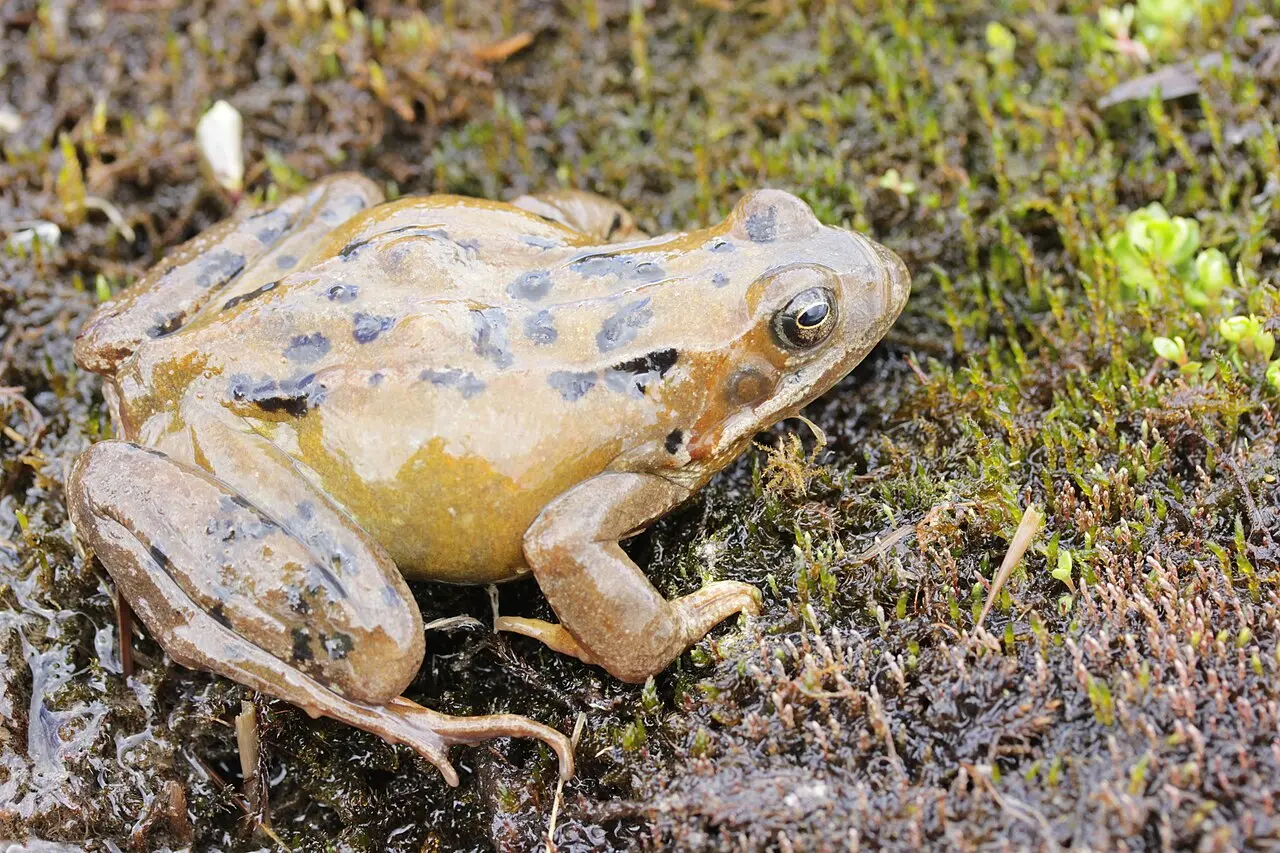
Päivän sana - sammakko (frog)

preview

Etymology

Uncertain. Sometimes connected with sammas (“cosmic pillar”). Related to Karelian šammakko and Veps samba.

Pronunciation

  • IPA(key): /ˈsɑmːɑkːo/, [ˈs̠ɑ̝mːɑ̝kːo̞]
  • Rhymes: -ɑmːɑkːo
  • Syllabification(key): sam‧mak‧ko
  • Hyphenation(key): sam‧mak‧ko

Noun

sammakko

  1. frog (amphibian)
  2. common frog, Rana temporaria
  3. synonym of rintauinti (“breaststroke”)

lähde

0

Päivän sana - ryyppäjäiset (drinking party)

preview

Etymology

Plural of ryypätä +‎ -iäinen.

Pronunciation

  • IPA(key): /ˈryːpːæjæi̯set/, [ˈryːpːæˌjæi̯s̠e̞t̪]
  • Rhymes: -æiset
  • Syllabification(key): ryyp‧pä‧jäi‧set
  • Hyphenation(key): ryyp‧pä‧jäi‧set

Noun

ryyppäjäiset pl

  1. drinking party, booze-up

lähde

Etymology

Plural of ryypätä +‎ -iäinen.

Pronunciation

  • IPA(key): /ˈryːpːæjæi̯set/, [ˈryːpːæˌjæi̯s̠e̞t̪]
  • Rhymes: -æiset
  • Syllabification(key): ryyp‧pä‧jäi‧set
  • Hyphenation(key): ryyp‧pä‧jäi‧set

Noun

ryyppäjäiset pl

  1. drinking party, booze-up

lähde

0

Päivän sana - päivänjatko (rest of the day)

preview

Etymology

päivän (“of the day”) +‎ jatko (“continuation”)

Pronunciation

  • IPA(key): /ˈpæi̯ʋænˌjɑtko/, [ˈpæi̯ʋænˌjɑ̝t̪ko̞]
  • Rhymes: -ɑtko
  • Syllabification(key): päi‧vän‧jat‧ko
  • Hyphenation(key): päivän‧jatko

Noun

päivänjatko

  1. rest of the day; used mainly in the expression hyvää päivänjatkoa for which the best English translation is probably have a nice day

lähde

0

Päivän sana - juhannus (midsummer)

preview

Etymology

A corruption of the name Johannes, referring to Saint John.

Pronunciation

  • IPA(key): /ˈjuhɑnːus/, [ˈjuɦɑ̝nːus̠]
  • Rhymes: -uhɑnːus
  • Syllabification(key): ju‧han‧nus
  • Hyphenation(key): ju‧han‧nus

Noun

juhannus

  1. Midsummer Day, Saint John’s Day

Usage notes

  • Currently juhannus is celebrated in Finland on the Saturday that falls between the 20th and 26th of June.
  • Temporal expressions of the word are formed with the essive case: juhannuksena ― (on) Midsummer Day.

Lähde

0

Päivän sana - kesäkuu (June)

preview

Etymology

kesä (“fallow”) (archaic) +‎ kuu (“month”); June is the time to plough the fallows.

Pronunciation

  • IPA(key): /ˈkesæˌkuː/, [ˈk̟e̞s̠æˌkuː]
  • Rhymes: -uː
  • Syllabification(key): ke‧sä‧kuu
  • Hyphenation(key): kesä‧kuu

Noun

month

Previous: toukokuu
Next: heinäkuu

kesäkuu

  1. June (month)

Usage notes

“in June” is expressed with the inessive case (kesäkuussa). When the day is specified, the partitive case is used (e.g. 1. kesäkuuta), but the genitive is also possible in a structure like kesäkuun 1. päivä.

lähde

0

Päivän sana - rahka (quark, tvorog)

preview

Etymology

From Proto-Finnic *rahka, probably borrowed from Proto-Germanic *dragjō (“dregs”).

Pronunciation

  • IPA(key): /ˈrɑhkɑ/, [ˈrɑ̝xkɑ̝]
  • Rhymes: -ɑhkɑ
  • Syllabification(key): rah‧ka
  • Hyphenation(key): rah‧ka

Noun

rahka

  1. quark, tvorog (soft creamy curd cheese made by souring or fermenting milk and removing the whey from it)
  2. Synonym of juustouma (“curd (part of milk that coagulates)”)
  3. (dialectal) dregs

lähde

0

Good YouTube channels

preview

I like next channels:

www.youtube.com/channel/UCJs381WGd5fVICEOSSLDL4A

www.youtube.com/channel/UCKDSMJAKwHWEIY5YzhWyd_Q

www.youtube.com/channel/UCAPUmsVfTtiowWNSPQR8zeQ

www.youtube.com/channel/UCoDbIqejIAS9eZgYNzE2FCg

www.youtube.com/channel/UCPdUhp3L-Rxp_wigblquLtA

www.youtube.com/channel/UCBab4D0PcftG8-4RVNYhT3Q

What are yours favorite channels?

0

Päivän sana - järki (reason)

preview

Etymology

From Proto-Finnic *järki (“order, row”), of unknown further origin. The original sense can be seen in derived terms like järjestää. The sense of “order” would have later shifted to that which provides order, or sense, i.e. the faculty of reason.

Pronunciation

  • IPA(key): /ˈjærki/, [ˈjærk̟i]
  • Rhymes: -ærki
  • Syllabification(key): jär‧ki
  • Hyphenation(key): jär‧ki

Noun

järki

  1. reason (ability to think)
  2. sense (meaning, reason, or value of something)
    Siinä ei ole mitään järkeä.
    It doesn’t make any sense.
  3. sense (sound practical judgment)
    terve järki ― common sense

lähde

0

Päivän sana - vihta (bath broom)

preview

Etymology

From Proto-Finnic *vihta.

Pronunciation

  • IPA(key): /ˈʋihtɑ/, [ˈʋiçt̪ɑ̝]
  • Rhymes: -ihtɑ
  • Syllabification(key): vih‧ta
  • Hyphenation(key): vih‧ta

Noun

vihta

  1. bath broom, a kind of whip made of birch twigs and used in the sauna to enhance the effect of heat by beating oneself with it.

Usage notes

Traditionally vihta was used more often in Western Finnish, while vasta was used in Eastern Finnish.

lähde

0

Päivän sana - tyhjä (empty, blank)

preview

Etymology

From Proto-Finnic *tühjä, from earlier *tüšjä, borrowed from Proto-Balto-Slavic *tuskjas, compare Lithuanian tuščias (“empty”) and Latvian tukšs (“empty, blank”). Akin to Estonian tühi, Ludian tühd’ and Veps tühj.

Pronunciation

  • IPA(key): /ˈtyhjæ/, [ˈt̪yçjæ]
  • Rhymes: -yhjæ
  • Syllabification(key): tyh‧jä
  • Hyphenation(key): tyh‧jä

Adjective

tyhjä (comparative tyhjempi, superlative tyhjin)

  1. empty, void (devoid of content)
    Antonym: täysi
    kuivua tyhjiin ― to dry up completely
  2. blank (free from writing, printing, or marks)
    tyhjä ääni ― blank vote
    äänestää tyhjää ― to abstain (from a vote)
  3. (figuratively) empty, meaningless (destitute of effect, sincerity, or sense)
    4, (figuratively) empty, pointless, fruitless, futile, vain, void (destitute of, or lacking, purpose or effectiveness)
  4. (figuratively) empty (destitute of, or lacking, sense, knowledge, or courtesy)
  5. (figuratively) empty (destitute of reality, or real existence; unsubstantial)
  6. void (containing no immaterial quality)
  7. (typography) white (not containing characters)

lähde

0

Päivän sana - kostea (humid, moist)

preview

Etymology

Equivalent to kostaa +‎ -ea. Sense contaminated by the family of kastaa; see kostua for more.

Pronunciation

  • IPA(key): /ˈkosteɑ/, [ˈko̞s̠te̞ɑ̝]
  • Rhymes: -osteɑ
  • Syllabification(key): kos‧te‧a
  • Hyphenation(key): kos‧tea

Adjective

kostea (comparative kosteampi, superlative kostein)

  1. moist, humid, damp, wet (with high humidity or some liquid, but not completely impregnated)
  2. (of an event, period etc.) boozy (involving large consumption of alcohol)

lähde

0

Päivän sana - ahma (wolverine)

preview

Etymology

From Proto-Finnic *ahma (“glutton”) (compare dialectal Estonian ahm (“glutton”), Ingrian ahmo (“greedy”), Karelian ahmo (“wolverine, glutton”), Ludian ahmo (“wolverine”)), probably ultimately borrowed from Proto-Indo-Iranian *Haćman- (compare Sanskrit अश्मन् (aśman, “eater”)).[1] Related also to Proto-Samic *vuosvēs (compare Northern Sami vuosmmis).

The meaning “wolverine” is possibly a calque from other European languages such as German Vielfraß and Latin gulo. Alternatively, according to SSA, the shift “glutton” → “wolverine” may have first occurred in Finnish and been calqued into Low German and thence into other languages.[2]

Pronunciation

  • IPA(key): /ˈɑhmɑ/, [ˈɑ̝xmɑ̝]
    +Rhymes: -ɑhmɑ
  • Syllabification(key): ah‧ma
  • Hyphenation(key): ah‧ma

Noun

ahma

  1. wolverine, glutton (Gulo gulo)
    Synonyms: osma, osmo, kätkä, kamppi
  2. (dialectal, chiefly Eastern Finnish) Synonym of ahmatti (“glutton”)

lähde

0

Päivän sana -kohelo (a clumsy person)

preview

Etymology

From Proto-Finnic *kohëlo, of sound-symbolic origin.

Pronunciation

  • IPA(key): /ˈkohelo/, [ˈko̞ɦe̞lo̞]
  • Rhymes: -ohelo
  • Syllabification(key): ko‧he‧lo
  • Hyphenation(key): ko‧he‧lo

Noun

kohelo (colloquial)

  1. a clumsy person

lähde

Etymology

From Proto-Finnic *kohëlo, of sound-symbolic origin.

Pronunciation

  • IPA(key): /ˈkohelo/, [ˈko̞ɦe̞lo̞]
  • Rhymes: -ohelo
  • Syllabification(key): ko‧he‧lo
  • Hyphenation(key): ko‧he‧lo

Noun

kohelo (colloquial)

  1. a clumsy person

lähde

0

Päivän sana - pirtelö (milkshake)

preview

Etymology

Blend of pirteä +‎ jäätelö. Coined in the late 20th century.

Pronunciation

  • IPA(key): /ˈpirtelø/, [ˈpirt̪e̞lø̞]
  • Rhymes: -irtelø
  • Syllabification(key): pir‧te‧lö
  • Hyphenation(key): pir‧te‧lö

Noun

pirtelö

  1. milkshake, shake (milk and ice cream beverage)

lähde

Etymology

Blend of pirteä +‎ jäätelö. Coined in the late 20th century.

Pronunciation

  • IPA(key): /ˈpirtelø/, [ˈpirt̪e̞lø̞]
  • Rhymes: -irtelø
  • Syllabification(key): pir‧te‧lö
  • Hyphenation(key): pir‧te‧lö

Noun

pirtelö

  1. milkshake, shake (milk and ice cream beverage)

lähde

0

Päivän sana - lohi (salmon)

preview

Etymology

From Proto-Finnic *lohi, from earlier *loši, borrowed from Proto-Baltic *laśas.

Pronunciation

  • IPA(key): /ˈlohi/, [ˈlo̞ɦi]
  • Rhymes: -ohi
  • Syllabification(key): lo‧hi
  • Hyphenation(key): lo‧hi

Noun

lohi

  1. salmon (fish of the family Salmonidae)
  2. (specifically) Atlantic salmon (Salmo salar)

lähde

0

Päivän sana - kirsikka (cherry)

preview

Etymology

Old Swedish kirse-(bær) +‎ -ikka (diminutive suffix); compare German Kirsche, Swedish körsbär, Estonian kirss, Russian чере́шня (čeréšnja). Ultimately from Vulgar Latin ceresia, from the neuter plural of Late Latin ceresium, from Latin cerasium, from Ancient Greek κεράσιον (kerásion, “cherry”), from Ancient Greek κερασός (kerasós, “bird cherry”), ultimately possibly of Anatolian origin.

Pronunciation

  • IPA(key): /ˈkirsikːɑ/, [ˈk̟irs̠ikːɑ̝]
  • Rhymes: -irsikːɑ
  • Syllabification(key): kir‧sik‧ka
  • Hyphenation(key): kir‧sik‧ka

Noun

kirsikka

  1. cherry

lähde

0

Päivän sana - herkku (delicacy)

preview

Etymology

From Proto-Finnic *hërkku. Cognates include Estonian hõrk, Karelian herkku and Votic erkku (Mati), herkku. Possibly related to herkkä.

Pronunciation

  • IPA(key): /ˈherkːu/, [ˈhe̞rkːu]
  • Rhymes: -erkːu
  • Syllabification(key): herk‧ku
  • Hyphenation(key): herk‧ku

Noun

herkku

  1. (food) delicacy
  2. treat (snack food item designed to be given to pets)
    Synonym: herkkupala
  3. (slang) option, accessory kaikilla herkuilla ― with all options; loaded

lähde

0

Päivän sana - tapa (n. habit, v. to kill)

preview

Etymology 1

From Proto-Finnic *tapa, borrowed from Proto-Baltic *dabāˀ (compare Latvian daba).

Pronunciation

  • IPA(key): /ˈtɑpɑ/, [ˈt̪ɑ̝pɑ̝]
  • Rhymes: -ɑpɑ.
  • Syllabification(key): ta‧pa
  • Hyphenation(key): ta‧pa

Noun

tapa

  1. habit (action performed on a regular basis) [with first infinitive ‘to do’]
    Meillä oli sunnuntaisin tapana mennä rannalle.
    We used to go to the beach on Sundays. / We would go to the beach on Sundays.
  2. habit (action performed repeatedly and automatically, usually without awareness) [with first infinitive ‘to do’]
    Synonym: tottumus
  3. custom (frequent repetition of the same act) [with first infinitive ‘to do’]
    Synonym: käytäntö
  4. (usually in the plural) habit, manner (one’s customary method of acting)
  5. (usually in the plural) manner (good, polite behavior)
  6. way, manner (to do something) [with illative ‘for’; or with first infinitive ‘to do’] jollain tavalla ― some way, by some means, somehow

Etymology 2

Pronunciation

  • IPA(key): /ˈtɑpɑˣ/, [ˈt̪ɑ̝pɑ̝(ʔ)]
  • Rhymes: -ɑpɑ
  • Syllabification(key): ta‧pa
  • Hyphenation(key): ta‧pa

Verb

tapa

  1. inflection of tappaa (to kill, slay):
    1. present active indicative connegative
    2. second-person singular present imperative
    3. second-person singular present active imperative connegative

lähde

0

Päivän sana - loukata (to hurt, or injure)

preview

Etymology

From Proto-Finnic *louk’at’ak. Related to Ingrian loukata, Karelian loukahtoa and Votic loukõtõ.

Pronunciation

  • IPA(key): /ˈlou̯kɑtɑˣ/, [ˈlo̞u̯kɑ̝t̪ɑ̝(ʔ)]
  • Rhymes: -oukɑtɑ
  • Syllabification(key): lou‧ka‧ta
  • Hyphenation(key): lou‧ka‧ta

Verb

loukata

  1. (transitive) to wound, hurt, injure (cause a physical injury to (chiefly of [one’s own] body parts))
    Synonyms: satuttaa, teloa
    Loukkasin jalkani.
    I hurt my leg.
    Loukkasin varpaani oveen.
    I hurt my toe on the door.
  2. (transitive, usually atelic) to hurt (someone’s feelings), injure, offend, insult, wound (cause emotional offense to)
    Synonyms: satuttaa, pahoittaa (mieli)
    loukata jonkun kunniaa ― to offend someone’s honour
  3. (transitive, usually atelic) to violate, infringe upon, encroach upon, make inroads on
    Loukkasivatko Venäjän hävittäjät Suomen ilmatilaa?
    Did the Russian fighter planes violate the Finnish air space?
  4. (intransitive) to get hurt (physically)
    Loukkasitko pahasti?
    Did you get badly hurt?

lähde

Etymology

From Proto-Finnic *louk’at’ak. Related to Ingrian loukata, Karelian loukahtoa and Votic loukõtõ.

Pronunciation

  • IPA(key): /ˈlou̯kɑtɑˣ/, [ˈlo̞u̯kɑ̝t̪ɑ̝(ʔ)]
  • Rhymes: -oukɑtɑ
  • Syllabification(key): lou‧ka‧ta
  • Hyphenation(key): lou‧ka‧ta

Verb

loukata

  1. (transitive) to wound, hurt, injure (cause a physical injury to (chiefly of [one’s own] body parts))
    Synonyms: satuttaa, teloa
    Loukkasin jalkani.
    I hurt my leg.
    Loukkasin varpaani oveen.
    I hurt my toe on the door.
  2. (transitive, usually atelic) to hurt (someone’s feelings), injure, offend, insult, wound (cause emotional offense to)
    Synonyms: satuttaa, pahoittaa (mieli)
    loukata jonkun kunniaa ― to offend someone’s honour
  3. (transitive, usually atelic) to violate, infringe upon, encroach upon, make inroads on
    Loukkasivatko Venäjän hävittäjät Suomen ilmatilaa?
    Did the Russian fighter planes violate the Finnish air space?
  4. (intransitive) to get hurt (physically)
    Loukkasitko pahasti?
    Did you get badly hurt?

lähde

0

Päivän sana - vasta- (prefix, anti-)

preview

Etymology

From Proto-Finnic *vasta, from Proto-Finno-Permic *wasta (“a place opposite or across”). Related to Estonian vast, Karelian vasta, Livonian vastõ, Livvi vastah, Veps vast, Võro vasta, Votic vassõ, Northern Sami vuostá (“towards, against”), Erzya васта (vasta, “spouse”), вастомс (vastoms, “to meet”), Moksha васта (vasta, “spot, place”) and probably Eastern Mari ваштареш (vaštareš, “against”).

Pronunciation

  • IPA(key): /ˈʋɑstɑ-/, [ˈʋɑ̝s̠tɑ̝-]

Prefix

vasta-

  1. counter-, anti- (expressing opposition or contrast)
    Antonym: myötä-
  2. new-, freshly, just, recently (expressing that something took place recently)
  3. return (expressing reciprocity)

Inflection

Like many other Finnish prefixes, vasta- has inflected forms to a limited extent that are used as adverbs.

lähde

0

Päivän sana - kolkko (gloomy)

preview

Etymology

kol- +‎ -kko; from the same root as kolea.

Pronunciation

  • IPA(key): /ˈkolkːo/, [ˈko̞lkːo̞]
  • Rhymes: -olkːo
  • Syllabification(key): kolk‧ko
  • Hyphenation(key): kolk‧ko

Adjective

kolkko (comparative kolkompi, superlative kolkoin)

  1. gloomy, dismal

lähde

Etymology

kol- +‎ -kko; from the same root as kolea.

Pronunciation

  • IPA(key): /ˈkolkːo/, [ˈko̞lkːo̞]
  • Rhymes: -olkːo
  • Syllabification(key): kolk‧ko
  • Hyphenation(key): kolk‧ko

Adjective

kolkko (comparative kolkompi, superlative kolkoin)

  1. gloomy, dismal

lähde