


0
Fires near Madrid Force Evacuation of NASA’s DSN Facility
spacepolicyonline.com
posts tagged #nasa








It’s sad to see stuff i saw happen in person in the news now. It was really difficult to work on the Roman Space Telescope while all this was happening. People are celebrating the launch, but forgetting how difficult the conditions were that we were working under.
It’s sad to see stuff i saw happen in person in the news now. It was really difficult to work on the Roman Space Telescope while all this was happening. People are celebrating the launch, but forgetting how difficult the conditions were that we were working under.


x.com/Echo5550/status/2096236426161471589
With Artemis III now having all its RS-25D engines installed, it’s time to look at their history!
Surprisingly, two of these engines share a history of flying together twice! 2052 and 2057 both flew missions 117 and 122 and will now end their final flight together as well. 2052 also shared a history with another engine; it flew once with 2054 on mission 126.
There is an even deeper history with the AJ10-190: its first flight was 41 years ago in 1985! It did have a strange pause in flights in 1986 but returned in 2007 to finish off the shuttle program. The AJ10 also shares flights with two RS-25s, these being 2057 and 2054.
x.com/Echo5550/status/2096252573946642583
A little thing I forgot to add, but 2052, 2054, and the AJ10 all shared a flight awelll, STS-126

x.com/Echo5550/status/2095613529243947012
SLS continues to grow!
Yesterday NASA had lifted and mated the Left Forward Center SRB segment onto the stack! Only five segments remain!
x.com/Echo5550/status/2095613529243947012
SLS continues to grow!
Yesterday NASA had lifted and mated the Left Forward Center SRB segment onto the stack! Only five segments remain!

Credit: Echo5550
Wow, what a week for SLS! Every mission had a part moved or modified.
Artemis III:
The core has received its first RS-25, and its second is underway, along with one (or both) Center Center SRB segments stacked. The spacer also had its forward ring welded on.
Artemis IV:
Not a huge update, but the boat-tail was finally shipped to KSC to be mated with the engine section.
Artemis V:
Thanks to @ThePrimalDino, we can confirm that two (assuming one of the barrels is the already-confirmed one) exist for Artemis V, along with the forward skirt!
Artemis VI:
The core had its first ring welded together! Additionally, thanks to photos from @ThePrimalDino, Michoud has begun assembling the engine section, which appears to be half-welded, with parts lying nearby ready to be added, and it should be completed soon.


Jeff Foust
6–8 minutes
WASHINGTON — NASA and AeroVironment are moving ahead with the development of a set of helicopters to be sent to Mars on a nuclear propulsion demonstration mission at the end of 2028.
AeroVironment announced Aug. 27 it received a contract from NASA’s Jet Propulsion Laboratory for the co-design and co-manufacture of three Mars helicopters for NASA’s SkyFall mission. The company did not disclose the value of the contract.
NASA announced SkyFall at its Ignition event in March as a payload on its Space Reactor 1 Freedom mission, which is scheduled to launch in late 2028 to test nuclear electric propulsion. SkyFall was described then as a trio of helicopters based on the Ingenuity helicopter flown to Mars on the Perseverance rover in 2021.
The agency said little about the helicopters at the time beyond their heritage and plans to include ground-penetrating radar instruments on them to allow them to survey for subsurface ice. That radar, JPL said in a release earlier this month, will use a flexible, fabric-based antenna with metallic elements, enabling it to probe between 12 and 60 centimeters below the surface.
The SkyFall helicopters themselves will be slightly larger versions of Ingenuity. “If you don’t have a scale bar, certainly they will look almost identical,” said Will Pomerantz, head of space ventures at AeroVironment, in an interview. The helicopters will have larger rotors to carry a larger payload, such as the ground-penetrating radar.
Other changes include a larger solar panel and a communications system that enables each helicopter to communicate directly with relay spacecraft in Mars orbit. Ingenuity instead relied on Perseverance for communications.
AeroVironment did not mention other payloads on the SkyFall helicopters, but in a talk at the Small Satellite Conference on Aug. 24, Timothy Canham, a principal software engineer at JPL, said the helicopters may also carry high-resolution imagers, a dosimeter and temperature sensors.
That results in a helicopter weighing about 2.5 kilograms, said Joey Beckman, program manager for the SkyFall helicopters at AeroVironment, compared with about 1.8 kilograms for Ingenuity. A slide in Canham’s presentation listed the total mass of each helicopter as 2.7 kilograms.
Perhaps the biggest difference between Ingenuity and SkyFall is how the helicopters are delivered. Ingenuity flew to Mars on the underside of the Perseverance rover and, after landing, the rover released the helicopter onto the surface. That gave engineers time to test the helicopter’s systems before attempting its first flight.
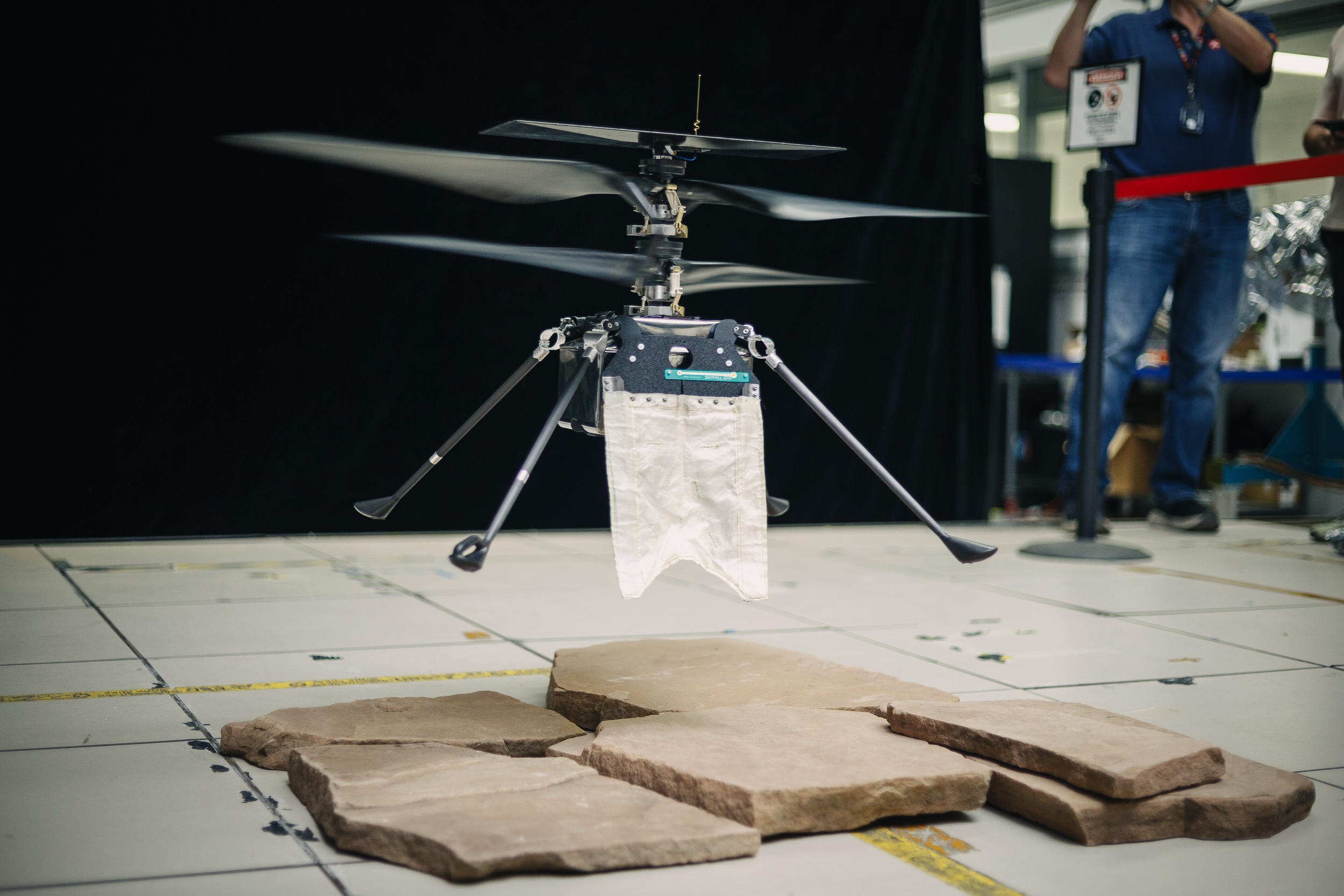 A test of a SkyFall helicopter. Credit: AeroVironment
On SkyFall, the three helicopters will be carried inside an entry vehicle based on the design used for the Mars Exploration Rovers. Rather than landing the helicopters directly on the surface, the helicopters will instead be released in midair, which Pomerantz said is called the SkyFall maneuver.
He said the helicopters will receive some information from the entry capsule about their location but will also use their own cameras to observe the ground and determine where they are. Once they have that location information, he said, “they’re going to get tossed overboard.”
The helicopters will descend quickly, “then do a pull-up maneuver and come to a hover at about the altitude at which we typically flew Ingenuity,” he said, before descending vertically for a landing.
“The SkyFall maneuver is enabled by the increased capability we’ve been able to establish for the rotor system and for the helicopter,” Beckman said. “It takes advantage of all of that capability to maintain controlled flight throughout the entire flight profile, from the moment that it leaves the host platform and the helicopter deployment system releases it all the way down to the surface.”
The project has tested the larger rotor blades, whose tips spin at supersonic speeds, to confirm that they can perform the maneuver. “That gives us a huge amount of confidence in the ability to do the SkyFall maneuver,” said Pomerantz.
He credited the design of the SkyFall maneuver itself to Håvard Grip, chief pilot for the Ingenuity helicopter and now JPL’s manager for SkyFall. That stemmed from earlier studies that looked at options for delivering helicopters to Mars without a lander, given a lack of NASA Mars lander missions for the foreseeable future, particularly with the cancellation of the Mars Sample Return effort.
“Do we actually need a ride all the way to the surface of Mars?” he said. “That was really the start of the conversation for what became now known as the SkyFall maneuver.”
The missions of the helicopters, once they make their initial landings on Mars, are not yet well defined. The helicopters are designed to operate independently of one another, although Pomerantz said there could be cases where two fly together, such as for stereo imaging.
The initial landing site is also uncertain. Canham said in his presentation that the focus was on regions at low elevations in midlatitude regions, with one site in the Arcadia Planitia region of the Martian northern hemisphere being used as a design reference case.
Workshops in 2027 will consider that and potential alternative sites. “They want to look for places that have ice but are also accessible,” he said.
Pomerantz said that, wherever the helicopters land, they should be able to explore a wide region, with each helicopter capable of traveling a kilometer or more per flight. “I think it’s great to have the ability to send helicopters and not just scout out a neighborhood, but to go and scout out a region on Mars,” he said, such as surveying potential future landing sites for crewed missions.
He added that, if SkyFall is successful, it will demonstrate the ability to use helicopters on any Mars mission, not just landers. There is interest in using similar helicopters from “pretty much every subdiscipline of planetary science” to carry out studies of the planet.
“I think there should be helicopters going to Mars in every launch window that we have, and they should be riding along with pretty much every other system that’s going,” he said. “They do unlock these really cool capabilities for the science community and for the human exploration community.”
Jeff Foust
6–8 minutes
WASHINGTON — NASA and AeroVironment are moving ahead with the development of a set of helicopters to be sent to Mars on a nuclear propulsion demonstration mission at the end of 2028.
AeroVironment announced Aug. 27 it received a contract from NASA’s Jet Propulsion Laboratory for the co-design and co-manufacture of three Mars helicopters for NASA’s SkyFall mission. The company did not disclose the value of the contract.
NASA announced SkyFall at its Ignition event in March as a payload on its Space Reactor 1 Freedom mission, which is scheduled to launch in late 2028 to test nuclear electric propulsion. SkyFall was described then as a trio of helicopters based on the Ingenuity helicopter flown to Mars on the Perseverance rover in 2021.
The agency said little about the helicopters at the time beyond their heritage and plans to include ground-penetrating radar instruments on them to allow them to survey for subsurface ice. That radar, JPL said in a release earlier this month, will use a flexible, fabric-based antenna with metallic elements, enabling it to probe between 12 and 60 centimeters below the surface.
The SkyFall helicopters themselves will be slightly larger versions of Ingenuity. “If you don’t have a scale bar, certainly they will look almost identical,” said Will Pomerantz, head of space ventures at AeroVironment, in an interview. The helicopters will have larger rotors to carry a larger payload, such as the ground-penetrating radar.
Other changes include a larger solar panel and a communications system that enables each helicopter to communicate directly with relay spacecraft in Mars orbit. Ingenuity instead relied on Perseverance for communications.
AeroVironment did not mention other payloads on the SkyFall helicopters, but in a talk at the Small Satellite Conference on Aug. 24, Timothy Canham, a principal software engineer at JPL, said the helicopters may also carry high-resolution imagers, a dosimeter and temperature sensors.
That results in a helicopter weighing about 2.5 kilograms, said Joey Beckman, program manager for the SkyFall helicopters at AeroVironment, compared with about 1.8 kilograms for Ingenuity. A slide in Canham’s presentation listed the total mass of each helicopter as 2.7 kilograms.
Perhaps the biggest difference between Ingenuity and SkyFall is how the helicopters are delivered. Ingenuity flew to Mars on the underside of the Perseverance rover and, after landing, the rover released the helicopter onto the surface. That gave engineers time to test the helicopter’s systems before attempting its first flight.
A test of a SkyFall helicopter. Credit: AeroVironment
On SkyFall, the three helicopters will be carried inside an entry vehicle based on the design used for the Mars Exploration Rovers. Rather than landing the helicopters directly on the surface, the helicopters will instead be released in midair, which Pomerantz said is called the SkyFall maneuver.
He said the helicopters will receive some information from the entry capsule about their location but will also use their own cameras to observe the ground and determine where they are. Once they have that location information, he said, “they’re going to get tossed overboard.”
The helicopters will descend quickly, “then do a pull-up maneuver and come to a hover at about the altitude at which we typically flew Ingenuity,” he said, before descending vertically for a landing.
“The SkyFall maneuver is enabled by the increased capability we’ve been able to establish for the rotor system and for the helicopter,” Beckman said. “It takes advantage of all of that capability to maintain controlled flight throughout the entire flight profile, from the moment that it leaves the host platform and the helicopter deployment system releases it all the way down to the surface.”
The project has tested the larger rotor blades, whose tips spin at supersonic speeds, to confirm that they can perform the maneuver. “That gives us a huge amount of confidence in the ability to do the SkyFall maneuver,” said Pomerantz.
He credited the design of the SkyFall maneuver itself to Håvard Grip, chief pilot for the Ingenuity helicopter and now JPL’s manager for SkyFall. That stemmed from earlier studies that looked at options for delivering helicopters to Mars without a lander, given a lack of NASA Mars lander missions for the foreseeable future, particularly with the cancellation of the Mars Sample Return effort.
“Do we actually need a ride all the way to the surface of Mars?” he said. “That was really the start of the conversation for what became now known as the SkyFall maneuver.”
The missions of the helicopters, once they make their initial landings on Mars, are not yet well defined. The helicopters are designed to operate independently of one another, although Pomerantz said there could be cases where two fly together, such as for stereo imaging.
The initial landing site is also uncertain. Canham said in his presentation that the focus was on regions at low elevations in midlatitude regions, with one site in the Arcadia Planitia region of the Martian northern hemisphere being used as a design reference case.
Workshops in 2027 will consider that and potential alternative sites. “They want to look for places that have ice but are also accessible,” he said.
Pomerantz said that, wherever the helicopters land, they should be able to explore a wide region, with each helicopter capable of traveling a kilometer or more per flight. “I think it’s great to have the ability to send helicopters and not just scout out a neighborhood, but to go and scout out a region on Mars,” he said, such as surveying potential future landing sites for crewed missions.
He added that, if SkyFall is successful, it will demonstrate the ability to use helicopters on any Mars mission, not just landers. There is interest in using similar helicopters from “pretty much every subdiscipline of planetary science” to carry out studies of the planet.
“I think there should be helicopters going to Mars in every launch window that we have, and they should be riding along with pretty much every other system that’s going,” he said. “They do unlock these really cool capabilities for the science community and for the human exploration community.”

Credit: Echo5550
Credit: Echo5550

Jeff Foust 4–5 minutes SALT LAKE CITY — After flying cubesats on the first two Space Launch System missions, NASA will not include them on the rocket’s next flight. In a presentation at the Small Satellite Conference here Aug. 24, David Hitt of the NASA SLS Payload Integration Office said the agency elected not to incorporate cubesats as secondary payloads on the Artemis 3 launch, scheduled for no earlier than mid-2027. The key factor in the decision is the change in the configuration for the SLS stemming from NASA’s move earlier this year to convert Artemis 3, originally planned to be a lunar landing mission, into a low Earth orbit test of the Orion spacecraft docking with lunar landers being developed by Blue Origin and SpaceX. Since Orion will remain in low Earth orbit on Artemis 3, NASA will not use an upper stage on SLS, preserving the final remaining Interim Cryogenic Propulsion Stage, or ICPS, upper stage for the Artemis 4 lunar landing mission. NASA instead will install an inert “spacer” in place of the ICPS on the SLS for Artemis 3. “Because of that, because the payloads fly above the upper stage, we’re not going to be flying cubesats on Artemis 3,” he said. On the first two SLS launches, Artemis 1 in 2022 and Artemis 2 this April, the SLS carried cubesats as secondary payloads located on the Orion Stage Adapter. The cubesats were deployed after Orion separated from the ICPS upper stage. NASA issued a request for information in May seeking input from organizations interested in flying cubesats on Artemis 3 as well as Artemis 4 and 5, both planned for 2028. Hitt said the agency also reached out to countries that have signed the Artemis Accords to gauge their interest in flying cubesats. He said NASA is still considering flying cubesats on Artemis 4 and later missions. “We are working now with payload developers, cubesat developers, that are interested in flying on those missions.” NASA has been talking to international partners that responded to the agency’s request and is “preparing to begin talking to” those that responded to the RFI. On Artemis 1, NASA flew 10 6U cubesats that were deployed on trajectories that took them toward the moon and beyond. While all the cubesats successfully deployed, they enjoyed varying levels of success, with some suffering technical problems that prevented them from carrying out their planned missions while others were able to achieve their goals. Artemis 2 carried four 12U cubesats provided by Argentina, Germany, Saudi Arabia and South Korea. Hitt noted that many focused on space weather and radiation measurements given the high altitude at which they were deployed after the ICPS performed a final disposal burn. “They spent time in a regime of space that you don’t normally deploy cubesats into,” he noted, offering an opportunity for unique measurements from high above geostationary orbit down to low Earth orbit altitudes. The organizations that flew the cubesats have released few public details about how those cubesats performed. “All four payloads transmitted data received by stations on the ground,” NASA stated in a paper accompanying the conference presentation, but deferred discussion of the cubesats’ performance to the operators.
Jeff Foust 4–5 minutes SALT LAKE CITY — After flying cubesats on the first two Space Launch System missions, NASA will not include them on the rocket’s next flight. In a presentation at the Small Satellite Conference here Aug. 24, David Hitt of the NASA SLS Payload Integration Office said the agency elected not to incorporate cubesats as secondary payloads on the Artemis 3 launch, scheduled for no earlier than mid-2027. The key factor in the decision is the change in the configuration for the SLS stemming from NASA’s move earlier this year to convert Artemis 3, originally planned to be a lunar landing mission, into a low Earth orbit test of the Orion spacecraft docking with lunar landers being developed by Blue Origin and SpaceX. Since Orion will remain in low Earth orbit on Artemis 3, NASA will not use an upper stage on SLS, preserving the final remaining Interim Cryogenic Propulsion Stage, or ICPS, upper stage for the Artemis 4 lunar landing mission. NASA instead will install an inert “spacer” in place of the ICPS on the SLS for Artemis 3. “Because of that, because the payloads fly above the upper stage, we’re not going to be flying cubesats on Artemis 3,” he said. On the first two SLS launches, Artemis 1 in 2022 and Artemis 2 this April, the SLS carried cubesats as secondary payloads located on the Orion Stage Adapter. The cubesats were deployed after Orion separated from the ICPS upper stage. NASA issued a request for information in May seeking input from organizations interested in flying cubesats on Artemis 3 as well as Artemis 4 and 5, both planned for 2028. Hitt said the agency also reached out to countries that have signed the Artemis Accords to gauge their interest in flying cubesats. He said NASA is still considering flying cubesats on Artemis 4 and later missions. “We are working now with payload developers, cubesat developers, that are interested in flying on those missions.” NASA has been talking to international partners that responded to the agency’s request and is “preparing to begin talking to” those that responded to the RFI. On Artemis 1, NASA flew 10 6U cubesats that were deployed on trajectories that took them toward the moon and beyond. While all the cubesats successfully deployed, they enjoyed varying levels of success, with some suffering technical problems that prevented them from carrying out their planned missions while others were able to achieve their goals. Artemis 2 carried four 12U cubesats provided by Argentina, Germany, Saudi Arabia and South Korea. Hitt noted that many focused on space weather and radiation measurements given the high altitude at which they were deployed after the ICPS performed a final disposal burn. “They spent time in a regime of space that you don’t normally deploy cubesats into,” he noted, offering an opportunity for unique measurements from high above geostationary orbit down to low Earth orbit altitudes. The organizations that flew the cubesats have released few public details about how those cubesats performed. “All four payloads transmitted data received by stations on the ground,” NASA stated in a paper accompanying the conference presentation, but deferred discussion of the cubesats’ performance to the operators.

Jeff Foust 6–7 minutes A NASA-industry team is embarking on a follow-up to a cubesat mission to the moon by developing a pair of smallsats that will test rendezvous and proximity operations there. NASA announced July 24 it is working with Advanced Space on the CAPSTONE 02 mission, scheduled to launch in late 2027. It will feature two spacecraft built by Terran Orbital that will operate in a highly elliptical lunar orbit. The mission completed its critical design review earlier this month. The project is a successor to the original CAPSTONE, or Cislunar Autonomous Positioning System Technology Operations and Navigation Experiment, which launched in 2022. It was a single cubesat testing operations in near-rectilinear halo orbit (NRHO) around the moon, intended to inform plans for NASA’s lunar Gateway. That mission also was led by Advanced Space using a Terran Orbital bus. CAPSTONE 02 builds upon that earlier mission, which Brad Cheetham, chief executive of Colorado-based Advanced Space, now calls CAPSTONE Classic. “We realized that there are other technical challenges and technology demonstrations that we needed to do that we just couldn’t get to with CAPSTONE Classic,” he said in an interview. Key among them is demonstrating rendezvous and proximity operations (RPO) in the vicinity of the moon, particularly in orbits where the gravity of both the Earth and moon influence trajectories. Another is testing autonomous flight operations around the moon and beyond. NASA also intends to use the mission to measure the radiation environment in cislunar space to inform future crewed missions. “It’s going to be very helpful for us as we have crews out around the moon and on the moon for much longer,” said Sean Fuller, NASA’s CAPSTONE manager. While Advanced Space and NASA had been talking about a follow-on to CAPSTONE for a year and a half, NASA’s announcement in March that it will develop a lunar base, requiring dozens of missions, helped crystallize plans for CAPSTONE 02. “All of us are going to have different spacecraft maneuvering in orbits around the moon, in close proximity sometimes,” Fuller said. CAPSTONE 02 features both similarities to and differences with the original CAPSTONE. The biggest difference is the spacecraft: while CAPSTONE used a single cubesat weighing 25 kilograms, CAPSTONE 02 will use twin spacecraft each weighing 400 kilograms. The much larger spacecraft, Cheetham said, are needed to accommodate both the payloads and propellant needed for the mission. Advanced Space is also able to leverage an existing production line of similar buses at Terran Orbital. “We’re able to benefit from some economies of scale from other programs, where we’re able to buy a common, well-established, flight-proven platform.” Among the payloads that larger spacecraft bus will host is a new communications system from the Space Dynamics Laboratory (SDL), an updated version of the Iris radio flown on CAPSTONE. “A lot of what Advanced Space was asking for on CAPSTONE 02 fit perfectly with several of the new technologies and features that we were working to add to version three of the radio,” said Tim Neilsen, head of the spacecraft missions and technologies branch for civil space at SDL. That includes improved precision navigation and timing capabilities and the ability to support additional crosslinks. The two spacecraft will launch on a low-energy ballistic lunar transfer trajectory, heading out more than 1 million kilometers from Earth before returning to enter orbit around the moon in three to four months. Advanced Space plans to use that extended cruise to test autonomous navigation technologies. Once at the moon, the CAPSTONE 02 spacecraft will go into NRHO. While NASA is no longer pursuing that orbit for the Gateway or other Artemis operations, Cheetham said it provides an opportunity to demonstrate RPO activities between the spacecraft in different parts of that highly elliptical orbit. “NRHO itself gives us a test bed that allows us a bunch of different analogous conditions for where we might be doing these operations in the future,” he said. “We can refine the techniques with the propellant used on CAPSTONE 02 so that we’re better prepared for the Orion missions like Artemis 4, 5 and much beyond,” Fuller added. CAPSTONE 02 will cost NASA “just under” $100 million, Fuller said, a figure that does not include launch. He said NASA is working on launch arrangements that will combine CAPSTONE 02 with other missions related to its lunar base plans. Both NASA and Advanced Space expect to incorporate lessons for operations into early Artemis missions even before CAPSTONE 02 launches. “A tremendous amount of the lessons learned and the risk reduction actually happens before we ever launch,” Cheetham said, citing the experience of CAPSTONE Classic. He noted that CAPSTONE 02 is sharing information with the Orion and Human Landing System programs and the broader Moon Base effort at the agency. “We are learning before launch a tremendous amount technologically, and that is being shared in real time with all those other programs.” CAPSTONE 02 is designed for a two-year prime mission, but Advanced Space is keeping open options for extended missions. CAPSTONE Classic remains operational today, with Advanced Space using it for testing after NASA wrapped up its use of the spacecraft in June. “We’re absolutely going to do interesting stuff with them, and we’ve got a lot of ideas,” Cheetham said, but emphasized the company is focused on carrying out the prime CAPSTONE 02 mission first. “We’re orbit nerds, and when orbit nerds design missions, we never run out of fuel.”
Jeff Foust 6–7 minutes A NASA-industry team is embarking on a follow-up to a cubesat mission to the moon by developing a pair of smallsats that will test rendezvous and proximity operations there. NASA announced July 24 it is working with Advanced Space on the CAPSTONE 02 mission, scheduled to launch in late 2027. It will feature two spacecraft built by Terran Orbital that will operate in a highly elliptical lunar orbit. The mission completed its critical design review earlier this month. The project is a successor to the original CAPSTONE, or Cislunar Autonomous Positioning System Technology Operations and Navigation Experiment, which launched in 2022. It was a single cubesat testing operations in near-rectilinear halo orbit (NRHO) around the moon, intended to inform plans for NASA’s lunar Gateway. That mission also was led by Advanced Space using a Terran Orbital bus. CAPSTONE 02 builds upon that earlier mission, which Brad Cheetham, chief executive of Colorado-based Advanced Space, now calls CAPSTONE Classic. “We realized that there are other technical challenges and technology demonstrations that we needed to do that we just couldn’t get to with CAPSTONE Classic,” he said in an interview. Key among them is demonstrating rendezvous and proximity operations (RPO) in the vicinity of the moon, particularly in orbits where the gravity of both the Earth and moon influence trajectories. Another is testing autonomous flight operations around the moon and beyond. NASA also intends to use the mission to measure the radiation environment in cislunar space to inform future crewed missions. “It’s going to be very helpful for us as we have crews out around the moon and on the moon for much longer,” said Sean Fuller, NASA’s CAPSTONE manager. While Advanced Space and NASA had been talking about a follow-on to CAPSTONE for a year and a half, NASA’s announcement in March that it will develop a lunar base, requiring dozens of missions, helped crystallize plans for CAPSTONE 02. “All of us are going to have different spacecraft maneuvering in orbits around the moon, in close proximity sometimes,” Fuller said. CAPSTONE 02 features both similarities to and differences with the original CAPSTONE. The biggest difference is the spacecraft: while CAPSTONE used a single cubesat weighing 25 kilograms, CAPSTONE 02 will use twin spacecraft each weighing 400 kilograms. The much larger spacecraft, Cheetham said, are needed to accommodate both the payloads and propellant needed for the mission. Advanced Space is also able to leverage an existing production line of similar buses at Terran Orbital. “We’re able to benefit from some economies of scale from other programs, where we’re able to buy a common, well-established, flight-proven platform.” Among the payloads that larger spacecraft bus will host is a new communications system from the Space Dynamics Laboratory (SDL), an updated version of the Iris radio flown on CAPSTONE. “A lot of what Advanced Space was asking for on CAPSTONE 02 fit perfectly with several of the new technologies and features that we were working to add to version three of the radio,” said Tim Neilsen, head of the spacecraft missions and technologies branch for civil space at SDL. That includes improved precision navigation and timing capabilities and the ability to support additional crosslinks. The two spacecraft will launch on a low-energy ballistic lunar transfer trajectory, heading out more than 1 million kilometers from Earth before returning to enter orbit around the moon in three to four months. Advanced Space plans to use that extended cruise to test autonomous navigation technologies. Once at the moon, the CAPSTONE 02 spacecraft will go into NRHO. While NASA is no longer pursuing that orbit for the Gateway or other Artemis operations, Cheetham said it provides an opportunity to demonstrate RPO activities between the spacecraft in different parts of that highly elliptical orbit. “NRHO itself gives us a test bed that allows us a bunch of different analogous conditions for where we might be doing these operations in the future,” he said. “We can refine the techniques with the propellant used on CAPSTONE 02 so that we’re better prepared for the Orion missions like Artemis 4, 5 and much beyond,” Fuller added. CAPSTONE 02 will cost NASA “just under” $100 million, Fuller said, a figure that does not include launch. He said NASA is working on launch arrangements that will combine CAPSTONE 02 with other missions related to its lunar base plans. Both NASA and Advanced Space expect to incorporate lessons for operations into early Artemis missions even before CAPSTONE 02 launches. “A tremendous amount of the lessons learned and the risk reduction actually happens before we ever launch,” Cheetham said, citing the experience of CAPSTONE Classic. He noted that CAPSTONE 02 is sharing information with the Orion and Human Landing System programs and the broader Moon Base effort at the agency. “We are learning before launch a tremendous amount technologically, and that is being shared in real time with all those other programs.” CAPSTONE 02 is designed for a two-year prime mission, but Advanced Space is keeping open options for extended missions. CAPSTONE Classic remains operational today, with Advanced Space using it for testing after NASA wrapped up its use of the spacecraft in June. “We’re absolutely going to do interesting stuff with them, and we’ve got a lot of ideas,” Cheetham said, but emphasized the company is focused on carrying out the prime CAPSTONE 02 mission first. “We’re orbit nerds, and when orbit nerds design missions, we never run out of fuel.”


A public lecture at The Australian National University about how their ground station worked for communicating with the Artemis II Mission
A public lecture at The Australian National University about how their ground station worked for communicating with the Artemis II Mission
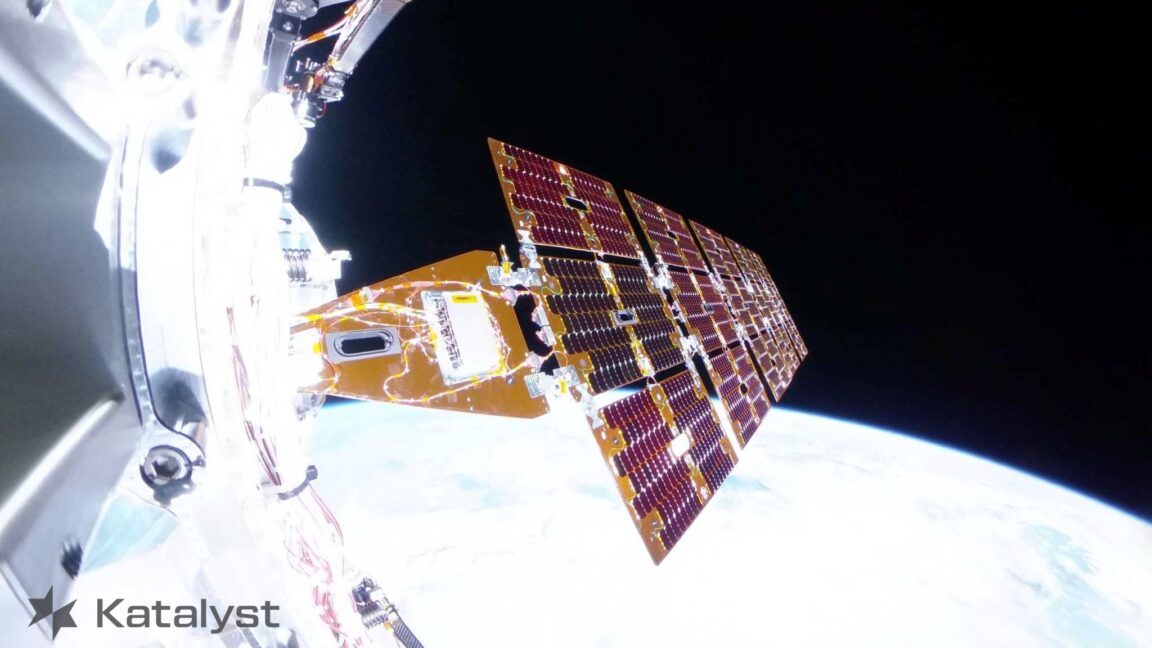
Katalyst, the startup leading the Swift rescue effort, said Wednesday that “ongoing attitude control issues” will prevent the Link satellite from completing its rescue mission. The spacecraft is still alive, and Katalyst said it will make the most of Link’s remaining capacity, which may still allow it to get near enough to Swift for a demonstration of the satellite’s close-in navigation system.
Katalyst, the startup leading the Swift rescue effort, said Wednesday that “ongoing attitude control issues” will prevent the Link satellite from completing its rescue mission. The spacecraft is still alive, and Katalyst said it will make the most of Link’s remaining capacity, which may still allow it to get near enough to Swift for a demonstration of the satellite’s close-in navigation system.
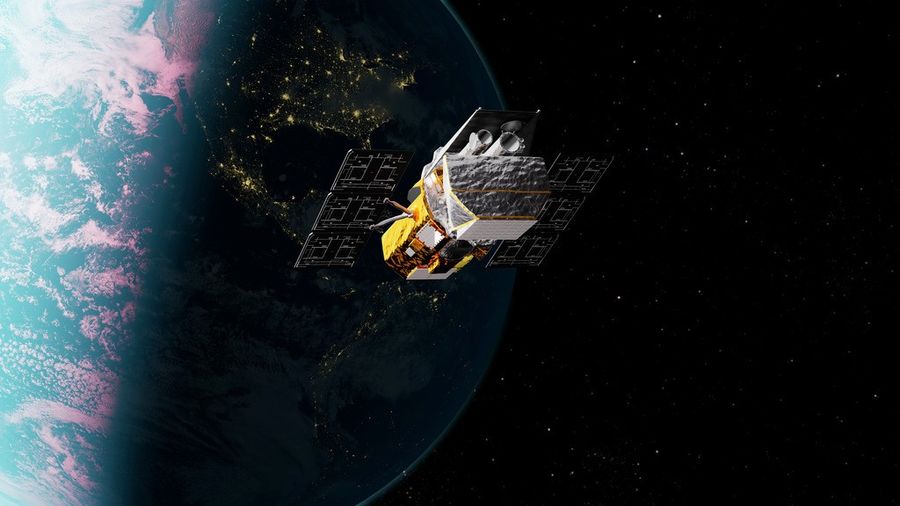

Jeff Foust 7–8 minutes WASHINGTON — NASA plans to award three more lunar missions this year through a commercial services program, including an orbiter that would replace the Lunar Reconnaissance Orbiter. In earnings calls this week, executives with Firefly Aerospace and Intuitive Machines, the two companies that have landed spacecraft on the moon through NASA’s Commercial Lunar Payload Services, or CLPS, program, said they expect NASA to award three more task orders through that program by the end of the year. Two of the upcoming CLPS task orders will be lander missions, which have accounted for nearly all the missions under the program since the agency issued the first task orders in 2019. The companies did not discuss specifics of those missions. The third, though, would be an “orbiter imaging service,” said Jason Kim, chief executive of Firefly Aerospace, during his company’s Aug. 12 earnings call. Steve Altemus, chief executive of Intuitive Machines, mentioned in an Aug. 14 earnings call a task order expected later this summer or in early fall for “the orbiter surveyor to map the moon in replacement of the Lunar Reconnaissance Orbiter.” NASA developed LRO two decades ago during an earlier effort to return humans to the moon, the Vision for Space Exploration. Launched in 2009, LRO features a high-resolution camera and other instruments for studying the moon. The spacecraft continues to function well and operates under an extended mission running through 2028. The spacecraft is aging, though, and scientists have for years pushed to fly a replacement to continue lunar science and support future lander missions. “Plans for a next-generation long-lived integrated orbiter with modern instruments that can replace the highly productive LRO (launched in 2009) are long overdue,” a 2022 report by the Lunar Exploration Analysis Group noted. NASA has not disclosed plans to develop a successor to LRO, either through the CLPS program or other approaches. The agency provides few details about upcoming CLPS task orders or those being competed, and once it awards a task order, it does not release a source selection statement. A timeline of CLPS missions on the NASA website does not include several recent awards and lacks updated dates for others. Both companies are well-positioned to pursue a lunar orbiter imaging mission. Firefly announced in 2025 its intent to develop a commercial lunar imaging service, called Ocula, using cameras mounted on the company’s Elytra spacecraft that will accompany future Blue Ghost lander missions. Intuitive Machines has a NASA contract to manage the operations of the high-resolution camera on LRO, as well as another NASA-developed camera, ShadowCam, on South Korea’s Danuri lunar orbiter. The companies also have backlogs of four CLPS lander missions each. That includes missions awarded in June through a CLPS task order called CS-8 that also included two landers for a third company, Astrobotic (now Voyager Lunar Systems). The four landers awarded under the task order will carry an identical suite of instruments. Both companies said the CS-8 task order is intended to demonstrate the ability to rapidly produce a standardized lander model. “The primary goal of this mission is to demonstrate repeatable access to the lunar surface on an accelerated timeline, executing the mission in half the time of our first landing,” Kim said. “NASA’s contract represents a near build-to-print lander design to enable faster production cycles and template our successful Blue Ghost into a production line vehicle.” “The whole idea here is no longer building bespoke landers for each individual mission, but how do you get the production rate up,” Altemus said, noting the company’s proposal for the CS-8 task order included a 26-month schedule to build the lander. Firefly Aerospace and Intuitive Machines have been expanding production facilities for their landers. Altemus said his company has added 75,000 square feet of production space at its Houston headquarters that will be used to build both landers and its constellation of five lunar data relay satellites. Kim said Firefly has more than quadrupled cleanroom space for lander and spacecraft production. “That gives us a really good position and extra capacity to take on more, so we see the CS-8 win in the second quarter as just the beginning.” Preparing for CLPS 2.0 Altemus said he expects a final task order under the original CLPS contract, called CP-32, to be awarded early next year. NASA will then shift to a new contract, CLPS 2.0, with proposals due to NASA at the end of June. Both companies said they are bidding on the contract, which will have a maximum value of $10 billion over 10 years, with an option for a five-year extension that would increase the maximum value by $5 billion. Both are preparing to offer larger landers as part of CLPS 2.0. While most of Intuitive Machines’ missions have used its Nova-C lander, with a payload capacity of about 100 kilograms, the company won a task order in March for a mission designated IM-6 using its larger Nova-D lander, which can deliver about 500 kilograms. Altemus said the company is considering building a second Nova-D lander in parallel with the lander for IM-6 without a contract yet for it. “We’re looking at building two in a row, or two in parallel is a better way to put it, in our facilities here, anticipating an award for a second Nova-D in the same time frame, which is 2029.” The companies are looking at even larger landers to support NASA’s anticipated needs for its lunar base. Altemus said the company was looking at a revised three-engine configuration for Nova-D that would allow it to deliver up to 1 metric ton to the surface. “NASA is calling for landers that can carry two to five metric tons to the surface,” he said, which would require upgrades to the engine. “That’s what we’re doing in coming up with that roadmap of where those technologies need to be matured to get to the heavier and heavier cargo, which will be an essential piece of CLPS 2.0.” Kim said Firefly also has plans to increase the performance of its Blue Ghost landers. “We’re really excited about taking our success from Blue Ghost Mission 1 and subsequent missions and applying it and extending it to a larger lander to take even more mass, even more volume, to the moon, so that we can be part of the infrastructure builds of the moon base.” He said details of the company’s larger landers remain confidential, but he described a “modular” approach that can be scaled up to payloads weighing several metric tons. “We have a design that takes a lot of the common components that we successfully landed on the moon with, but scales it in terms of size, volume and mass so we can take that moon base infrastructure cargo reliably,” he said. “We’re talking a multi-ton capability.”
Jeff Foust 7–8 minutes WASHINGTON — NASA plans to award three more lunar missions this year through a commercial services program, including an orbiter that would replace the Lunar Reconnaissance Orbiter. In earnings calls this week, executives with Firefly Aerospace and Intuitive Machines, the two companies that have landed spacecraft on the moon through NASA’s Commercial Lunar Payload Services, or CLPS, program, said they expect NASA to award three more task orders through that program by the end of the year. Two of the upcoming CLPS task orders will be lander missions, which have accounted for nearly all the missions under the program since the agency issued the first task orders in 2019. The companies did not discuss specifics of those missions. The third, though, would be an “orbiter imaging service,” said Jason Kim, chief executive of Firefly Aerospace, during his company’s Aug. 12 earnings call. Steve Altemus, chief executive of Intuitive Machines, mentioned in an Aug. 14 earnings call a task order expected later this summer or in early fall for “the orbiter surveyor to map the moon in replacement of the Lunar Reconnaissance Orbiter.” NASA developed LRO two decades ago during an earlier effort to return humans to the moon, the Vision for Space Exploration. Launched in 2009, LRO features a high-resolution camera and other instruments for studying the moon. The spacecraft continues to function well and operates under an extended mission running through 2028. The spacecraft is aging, though, and scientists have for years pushed to fly a replacement to continue lunar science and support future lander missions. “Plans for a next-generation long-lived integrated orbiter with modern instruments that can replace the highly productive LRO (launched in 2009) are long overdue,” a 2022 report by the Lunar Exploration Analysis Group noted. NASA has not disclosed plans to develop a successor to LRO, either through the CLPS program or other approaches. The agency provides few details about upcoming CLPS task orders or those being competed, and once it awards a task order, it does not release a source selection statement. A timeline of CLPS missions on the NASA website does not include several recent awards and lacks updated dates for others. Both companies are well-positioned to pursue a lunar orbiter imaging mission. Firefly announced in 2025 its intent to develop a commercial lunar imaging service, called Ocula, using cameras mounted on the company’s Elytra spacecraft that will accompany future Blue Ghost lander missions. Intuitive Machines has a NASA contract to manage the operations of the high-resolution camera on LRO, as well as another NASA-developed camera, ShadowCam, on South Korea’s Danuri lunar orbiter. The companies also have backlogs of four CLPS lander missions each. That includes missions awarded in June through a CLPS task order called CS-8 that also included two landers for a third company, Astrobotic (now Voyager Lunar Systems). The four landers awarded under the task order will carry an identical suite of instruments. Both companies said the CS-8 task order is intended to demonstrate the ability to rapidly produce a standardized lander model. “The primary goal of this mission is to demonstrate repeatable access to the lunar surface on an accelerated timeline, executing the mission in half the time of our first landing,” Kim said. “NASA’s contract represents a near build-to-print lander design to enable faster production cycles and template our successful Blue Ghost into a production line vehicle.” “The whole idea here is no longer building bespoke landers for each individual mission, but how do you get the production rate up,” Altemus said, noting the company’s proposal for the CS-8 task order included a 26-month schedule to build the lander. Firefly Aerospace and Intuitive Machines have been expanding production facilities for their landers. Altemus said his company has added 75,000 square feet of production space at its Houston headquarters that will be used to build both landers and its constellation of five lunar data relay satellites. Kim said Firefly has more than quadrupled cleanroom space for lander and spacecraft production. “That gives us a really good position and extra capacity to take on more, so we see the CS-8 win in the second quarter as just the beginning.” Preparing for CLPS 2.0 Altemus said he expects a final task order under the original CLPS contract, called CP-32, to be awarded early next year. NASA will then shift to a new contract, CLPS 2.0, with proposals due to NASA at the end of June. Both companies said they are bidding on the contract, which will have a maximum value of $10 billion over 10 years, with an option for a five-year extension that would increase the maximum value by $5 billion. Both are preparing to offer larger landers as part of CLPS 2.0. While most of Intuitive Machines’ missions have used its Nova-C lander, with a payload capacity of about 100 kilograms, the company won a task order in March for a mission designated IM-6 using its larger Nova-D lander, which can deliver about 500 kilograms. Altemus said the company is considering building a second Nova-D lander in parallel with the lander for IM-6 without a contract yet for it. “We’re looking at building two in a row, or two in parallel is a better way to put it, in our facilities here, anticipating an award for a second Nova-D in the same time frame, which is 2029.” The companies are looking at even larger landers to support NASA’s anticipated needs for its lunar base. Altemus said the company was looking at a revised three-engine configuration for Nova-D that would allow it to deliver up to 1 metric ton to the surface. “NASA is calling for landers that can carry two to five metric tons to the surface,” he said, which would require upgrades to the engine. “That’s what we’re doing in coming up with that roadmap of where those technologies need to be matured to get to the heavier and heavier cargo, which will be an essential piece of CLPS 2.0.” Kim said Firefly also has plans to increase the performance of its Blue Ghost landers. “We’re really excited about taking our success from Blue Ghost Mission 1 and subsequent missions and applying it and extending it to a larger lander to take even more mass, even more volume, to the moon, so that we can be part of the infrastructure builds of the moon base.” He said details of the company’s larger landers remain confidential, but he described a “modular” approach that can be scaled up to payloads weighing several metric tons. “We have a design that takes a lot of the common components that we successfully landed on the moon with, but scales it in terms of size, volume and mass so we can take that moon base infrastructure cargo reliably,” he said. “We’re talking a multi-ton capability.”
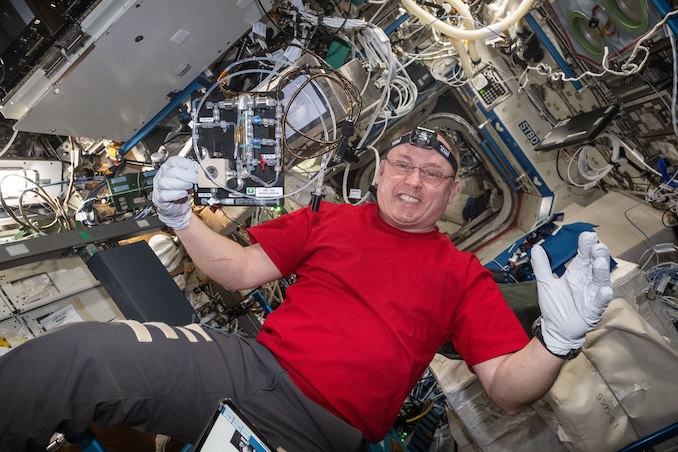

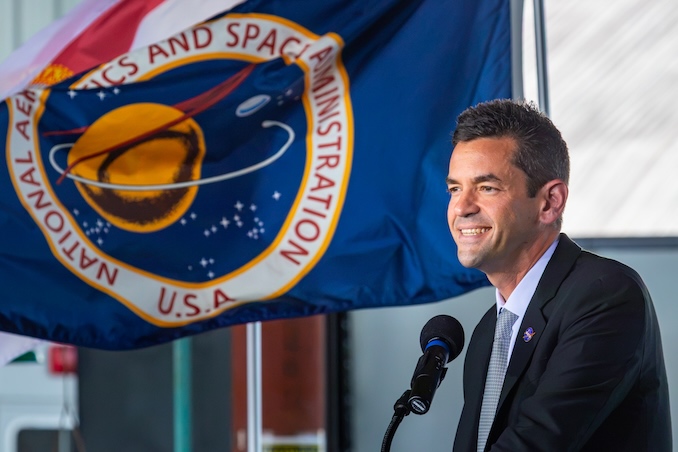
Jeff Foust 8–10 minutes IDAHO FALLS, Idaho — NASA officials say they are confident in plans to launch a nuclear electric propulsion demonstration mission by the end of 2028 after visiting the national lab building the mission’s reactor. NASA leadership, including Administrator Jared Isaacman and Associate Administrator Amit Kshatriya, visited the Idaho National Laboratory, or INL, on Aug. 7 to review work being done on nuclear reactors there. That includes designs developed by the lab itself as well as several companies that are using INL to test small nuclear reactors, some with potential space applications. INL is responsible for the reactor that will be used on Space Reactor 1 Freedom, a mission NASA announced at its Ignition event in March. SR-1 Freedom, slated for launch in late 2028, will use a 20-kilowatt-electric nuclear reactor to power an electric propulsion system originally developed for the lunar Gateway. That will propel the spacecraft to Mars, where it will deploy SkyFall, a set of helicopters modeled on the Ingenuity rotorcraft that accompanied the Perseverance Mars rover. SR-1 Freedom is intended to be a precursor for future space nuclear power and propulsion systems, Isaacman said in remarks after the tour, drawing comparisons to the USS Nautilus, a U.S. Navy submarine that was the first nuclear-powered vessel. “This is our Nautilus, and where we go from here must lead to the nuclear NASA of the future,” he said. “What should follow is an agencywide Apollo-like endeavor, a series of SR missions, progressively incorporating new technology.” That would, in turn, lead to a vehicle capable of crewed Mars missions, he said. “Then we bring those technologies together into a vehicle capable of carrying astronauts to Mars and bring them home safely, and not just once.” That would, he argued, be the culmination of a “third space race” after the original space race of the 1960s and an ongoing second space race to return humans to the moon. Isaacman told reporters after his remarks that the tour “absolutely” increased his confidence in launching SR-1 Freedom by the end of 2028. “Everybody’s moving very quickly,” he said, including both government and commercial teams. SR-1 progress and challenges NASA announced SR-1 Freedom at the same event where it also revealed its intent to establish a lunar base over the next decade. However, while NASA has provided regular updates about work related to the base, the agency has said little about SR-1 since the Ignition event. At a meeting of two National Academies committees in early June, NASA officials said they were working to streamline management of SR-1 Freedom to ensure it could be ready to launch at the end of 2028, but provided few technical details on the mission and declined to offer a cost estimate. The agency later said it has a preliminary cost estimate of $2.1 billion for the mission. In an interview after the INL event, Steve Sinacore, NASA’s SR-1 Freedom program director, said the agency had recently finished a “design sync review” for the mission analogous to a mission concept or systems requirements review that examined the status of the major elements of the mission. Those elements include the Power and Propulsion Element, or PPE, a spacecraft originally built for the lunar Gateway with a high-power electric propulsion system. NASA plans to repurpose the PPE as the electric propulsion system for SR-1 Freedom. He said the agency was preparing a contract modification to Intuitive Machines to perform the needed modifications to the PPE. He added the agency has a concept for the spacecraft structure that will link the PPE with the SkyFall payload and the nuclear reactor. “Procurements are hitting the street for the major components, and so we’re making really good progress,” he said. The heart of SR-1 Freedom, though, is the reactor itself. The mission will use a design based on the Versatile Autonomous Lightweight Kilowatt-class Reactor Experiment, or VALKRE, a reactor concept developed at INL. That reactor will use high-assay low-enriched uranium, or HALEU, also provided by the Department of Energy. Neither NASA nor DOE have provided many details about the reactor design. Media accompanying the NASA tour of INL were not allowed to take photos or videos in a room that contained information about and hardware related to VALKRE and its application for SR-1 Freedom, and some lab officials were reticent to talk about VALKRE. NASA officials, though, said they were pleased with what they saw of reactor development at INL. “I was super impressed to see the engineering design unit for VALKRE, the condition that was in, the testing they’ve done,” said Kshatriya. That heritage is essential to meet SR-1 Freedom’s schedule. “We need to launch by December of 2028, and to do that, we just have to use the things that we have today,” said Justin Coleman, division director for nuclear reactor technology at INL. That December 2028 launch date requires the reactor itself to be completed by the spring of 2028. “It’s a very aggressive schedule,” he said, but one he felt was achievable based on what companies have demonstrated with small nuclear reactors in the past year. “I think that shows it’s possible, and there is a supply chain that we can pull from to make that happen.” That supply chain, though, poses perhaps the biggest issue to meeting that schedule. “The biggest challenge is the procurement of components,” said Sebastian Corbisiero, national technical director for the DOE Space Reactor Program, as those nuclear reactor startups also need some of the same components. “There’s some overlap with some of the components that are needed by these small commercial reactors as well, so the biggest challenge is making sure that we can get all the pieces and parts made in time to meet NASA’s target,” he said. Coleman, in addition to his work at INL, also serves as a senior adviser to the NASA administrator on space nuclear issues. “In my role at NASA, I’m there to help enable that to happen,” he said of SR-1 Freedom. “So, if NASA’s running into barriers, if they’re running into issues, I’m there to help them remove those.” Both NASA and INL say they have been cooperating well on SR-1 Freedom. Corbisiero described the collaboration as “badgeless” between the agencies. “You wouldn’t necessarily know whether it’s a NASA engineer or a DOE INL engineer. We are all part of one team.” “It’s been phenomenal to watch the nuclear reactor design engineers at INL and the NASA spaceflight engineers get together and meld their craft,” said Sinacore. “It gives me great hope that this is going to happen, and it’s going to be sustainable for the future.” Thinking beyond SR-1 As NASA and INL race to develop a reactor for SR-1 Freedom in time for a late 2028 launch, they say they also want to avoid developing a point design that is suitable for that mission but can’t be extended to later applications, such as a proposed Lunar Reactor 1 that could be used by NASA’s future lunar base. “All of the technology that we are using will absolutely be extensible to both Lunar Reactor 1 and then the next version of SR-1,” said Sinacore. “That is always in our design decision space: Is it extensible or not?” Examples of this, he said, are the reactor’s use of a Brayton power conversion system to generate power from the reactor’s heat, which can be scaled up for larger reactors, as well as heat-pipe technology he said could be used on future reactors up to the megawatt level. “I don’t see any constraints in terms of scaling this up,” said Corbisiero. “Within the reason of the mission cases that we’ve thought about, this technology that we’re pursuing is good.” Coleman said one goal of the SR-1 Freedom program is to develop a reactor design that can then be handed over to industry to build and revise for future space missions. “Hopefully, with Space Reactor 1 Freedom, when we are done, we’ll have a design that we’ll say, ‘Yeah, that’s good enough. It works. It meets the objectives,’” he said. “At that point, we have a technology that works, and we hope that there’s a private industry out there that is interested in helping take that technology and then grow it.”
Jeff Foust 8–10 minutes IDAHO FALLS, Idaho — NASA officials say they are confident in plans to launch a nuclear electric propulsion demonstration mission by the end of 2028 after visiting the national lab building the mission’s reactor. NASA leadership, including Administrator Jared Isaacman and Associate Administrator Amit Kshatriya, visited the Idaho National Laboratory, or INL, on Aug. 7 to review work being done on nuclear reactors there. That includes designs developed by the lab itself as well as several companies that are using INL to test small nuclear reactors, some with potential space applications. INL is responsible for the reactor that will be used on Space Reactor 1 Freedom, a mission NASA announced at its Ignition event in March. SR-1 Freedom, slated for launch in late 2028, will use a 20-kilowatt-electric nuclear reactor to power an electric propulsion system originally developed for the lunar Gateway. That will propel the spacecraft to Mars, where it will deploy SkyFall, a set of helicopters modeled on the Ingenuity rotorcraft that accompanied the Perseverance Mars rover. SR-1 Freedom is intended to be a precursor for future space nuclear power and propulsion systems, Isaacman said in remarks after the tour, drawing comparisons to the USS Nautilus, a U.S. Navy submarine that was the first nuclear-powered vessel. “This is our Nautilus, and where we go from here must lead to the nuclear NASA of the future,” he said. “What should follow is an agencywide Apollo-like endeavor, a series of SR missions, progressively incorporating new technology.” That would, in turn, lead to a vehicle capable of crewed Mars missions, he said. “Then we bring those technologies together into a vehicle capable of carrying astronauts to Mars and bring them home safely, and not just once.” That would, he argued, be the culmination of a “third space race” after the original space race of the 1960s and an ongoing second space race to return humans to the moon. Isaacman told reporters after his remarks that the tour “absolutely” increased his confidence in launching SR-1 Freedom by the end of 2028. “Everybody’s moving very quickly,” he said, including both government and commercial teams. SR-1 progress and challenges NASA announced SR-1 Freedom at the same event where it also revealed its intent to establish a lunar base over the next decade. However, while NASA has provided regular updates about work related to the base, the agency has said little about SR-1 since the Ignition event. At a meeting of two National Academies committees in early June, NASA officials said they were working to streamline management of SR-1 Freedom to ensure it could be ready to launch at the end of 2028, but provided few technical details on the mission and declined to offer a cost estimate. The agency later said it has a preliminary cost estimate of $2.1 billion for the mission. In an interview after the INL event, Steve Sinacore, NASA’s SR-1 Freedom program director, said the agency had recently finished a “design sync review” for the mission analogous to a mission concept or systems requirements review that examined the status of the major elements of the mission. Those elements include the Power and Propulsion Element, or PPE, a spacecraft originally built for the lunar Gateway with a high-power electric propulsion system. NASA plans to repurpose the PPE as the electric propulsion system for SR-1 Freedom. He said the agency was preparing a contract modification to Intuitive Machines to perform the needed modifications to the PPE. He added the agency has a concept for the spacecraft structure that will link the PPE with the SkyFall payload and the nuclear reactor. “Procurements are hitting the street for the major components, and so we’re making really good progress,” he said. The heart of SR-1 Freedom, though, is the reactor itself. The mission will use a design based on the Versatile Autonomous Lightweight Kilowatt-class Reactor Experiment, or VALKRE, a reactor concept developed at INL. That reactor will use high-assay low-enriched uranium, or HALEU, also provided by the Department of Energy. Neither NASA nor DOE have provided many details about the reactor design. Media accompanying the NASA tour of INL were not allowed to take photos or videos in a room that contained information about and hardware related to VALKRE and its application for SR-1 Freedom, and some lab officials were reticent to talk about VALKRE. NASA officials, though, said they were pleased with what they saw of reactor development at INL. “I was super impressed to see the engineering design unit for VALKRE, the condition that was in, the testing they’ve done,” said Kshatriya. That heritage is essential to meet SR-1 Freedom’s schedule. “We need to launch by December of 2028, and to do that, we just have to use the things that we have today,” said Justin Coleman, division director for nuclear reactor technology at INL. That December 2028 launch date requires the reactor itself to be completed by the spring of 2028. “It’s a very aggressive schedule,” he said, but one he felt was achievable based on what companies have demonstrated with small nuclear reactors in the past year. “I think that shows it’s possible, and there is a supply chain that we can pull from to make that happen.” That supply chain, though, poses perhaps the biggest issue to meeting that schedule. “The biggest challenge is the procurement of components,” said Sebastian Corbisiero, national technical director for the DOE Space Reactor Program, as those nuclear reactor startups also need some of the same components. “There’s some overlap with some of the components that are needed by these small commercial reactors as well, so the biggest challenge is making sure that we can get all the pieces and parts made in time to meet NASA’s target,” he said. Coleman, in addition to his work at INL, also serves as a senior adviser to the NASA administrator on space nuclear issues. “In my role at NASA, I’m there to help enable that to happen,” he said of SR-1 Freedom. “So, if NASA’s running into barriers, if they’re running into issues, I’m there to help them remove those.” Both NASA and INL say they have been cooperating well on SR-1 Freedom. Corbisiero described the collaboration as “badgeless” between the agencies. “You wouldn’t necessarily know whether it’s a NASA engineer or a DOE INL engineer. We are all part of one team.” “It’s been phenomenal to watch the nuclear reactor design engineers at INL and the NASA spaceflight engineers get together and meld their craft,” said Sinacore. “It gives me great hope that this is going to happen, and it’s going to be sustainable for the future.” Thinking beyond SR-1 As NASA and INL race to develop a reactor for SR-1 Freedom in time for a late 2028 launch, they say they also want to avoid developing a point design that is suitable for that mission but can’t be extended to later applications, such as a proposed Lunar Reactor 1 that could be used by NASA’s future lunar base. “All of the technology that we are using will absolutely be extensible to both Lunar Reactor 1 and then the next version of SR-1,” said Sinacore. “That is always in our design decision space: Is it extensible or not?” Examples of this, he said, are the reactor’s use of a Brayton power conversion system to generate power from the reactor’s heat, which can be scaled up for larger reactors, as well as heat-pipe technology he said could be used on future reactors up to the megawatt level. “I don’t see any constraints in terms of scaling this up,” said Corbisiero. “Within the reason of the mission cases that we’ve thought about, this technology that we’re pursuing is good.” Coleman said one goal of the SR-1 Freedom program is to develop a reactor design that can then be handed over to industry to build and revise for future space missions. “Hopefully, with Space Reactor 1 Freedom, when we are done, we’ll have a design that we’ll say, ‘Yeah, that’s good enough. It works. It meets the objectives,’” he said. “At that point, we have a technology that works, and we hope that there’s a private industry out there that is interested in helping take that technology and then grow it.”

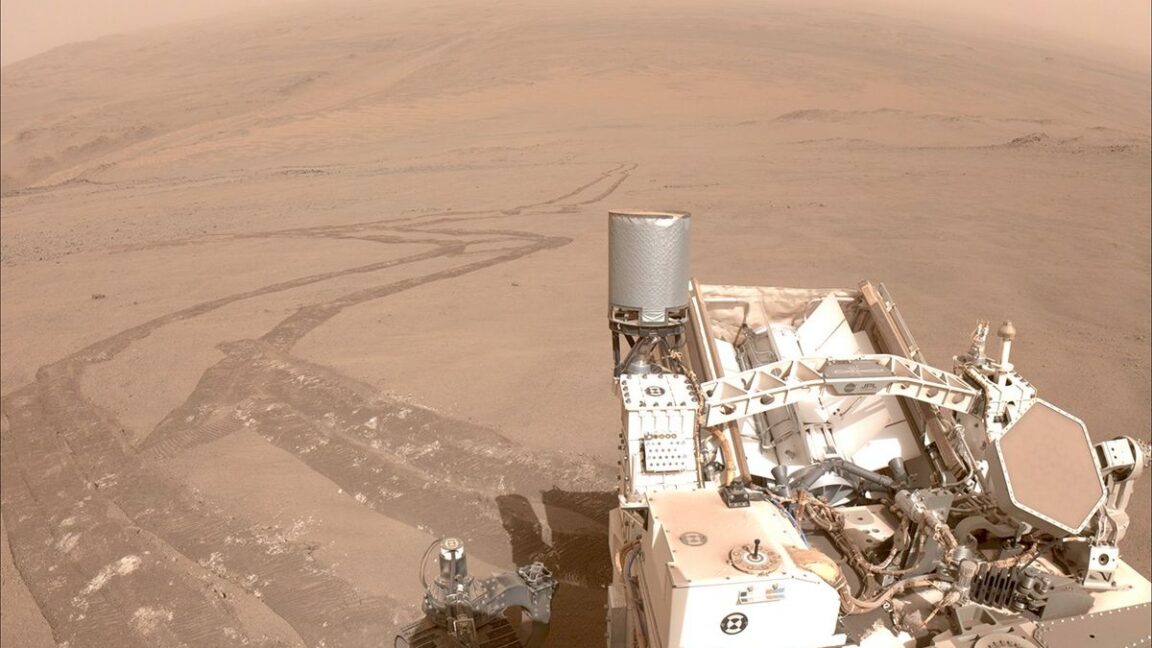

x.com/Echo5550/status/2085102784756768912
Stacking, reassignments, and more are happening on SLS!
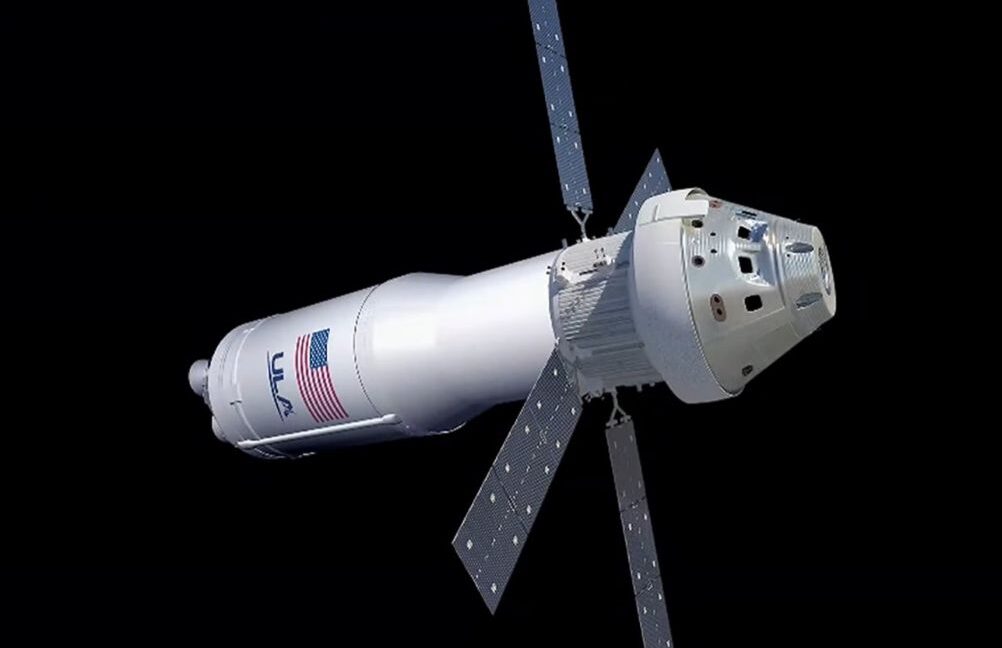
Orion and the ESM for Artemis III were mated together a few days ago.
The last OSA and LVSA were moved from Artemis III to Artemis IV to use the old structural test articles made before Artemis I instead!
Additionally, over 250 components from Integrity (A2 Orion) are being reused on Artemis IV and Artemis V Orion capsules.

Jeff Foust 5–6 minutes Crew Dragon approach SpaceX’s Crew Dragon approaches the ISS on the Crew-9 mission. Credit: NASA WASHINGTON — NASA and Roscosmos have agreed to continue exchanging seats between Soyuz and Crew Dragon spacecraft, but that agreement does not yet extend to Starliner. Russian media reported in July, after a meeting between NASA Administrator Jared Isaacman and Roscosmos Director General Dmitry Bakanov, that the two had agreed “in principle” to extend an agreement between the agencies to barter seats between the two spacecraft on International Space Station missions. That allows NASA astronauts to fly on Soyuz while Roscosmos cosmonauts fly on Crew Dragon and thus ensures both NASA and Roscosmos personnel can remain on the station if either vehicle is out of service for an extended period. NASA officials did not immediately confirm that report or provide a readout of Isaacman’s meeting with Bakanov. It was the first face-to-face meeting between the two and also marked the first visit by a NASA administrator to Russia or the Baikonur Cosmodrome in Kazakhstan since 2018. During an Aug. 3 briefing about the upcoming Crew-13 mission to the ISS, whose crew again includes a Russian cosmonaut, NASA officials confirmed that they have extended the seat barter agreement but provided few details about the extension. Dana Weigel, manager of NASA’s low Earth orbit program, said the agencies work about 18 months ahead on missions. “We work on a shorter horizon with all our agreements, so we are covered for a number of missions with the exchanges,” she said. She said she did not know the specific missions included in the agreement, and officials said at the briefing they would later provide that information. As of the end of the day Aug. 5, the agency had not provided those specifics. Weigel, though, said the agreement does not, for now, include Boeing’s Starliner, which NASA has yet to certify for long-duration crewed ISS missions. “We have not finished the work on Starliner. What they’re waiting to see is the rest of our flight and certification data,” she said. “They’d like to see that data before we go into it.” NASA has been working with Boeing to address propulsion system issues seen on the vehicle’s last flight, the Crew Flight Test mission two years ago. Both NASA and Boeing officials said in recent briefings they were working to fly Starliner again on a cargo-only mission, perhaps before the end of this year. The focus of the work has been on thrusters in Starliner’s service module that overheated while on approach to the station on the previous flight, said Richard Jones, deputy director of NASA’s commercial crew program, at the briefing. That includes installing structures called thermal shunts to direct heat away from the thrusters as well as insulation on the thrusters themselves. “These changes have proven themselves in the White Sands ground testing,” he said, referring to the New Mexico facility used for Starliner thruster tests. “They have looked at those improvements and have definitely shown that the thermal improvements have taken shape in a planned form.” “Boeing has done a great job making thermal modifications to the spacecraft,” Weigel said, adding that the testing of those modifications was still being closed out. At the Crew-13 briefing, as at some previous briefings, NASA did not include the Starliner-1 cargo mission among the visiting vehicles headed to the ISS in the coming months. Weigel, though, said the agency has not ruled out flying it before the end of the year. That depends on both completing the work on Starliner’s thrusters and finding a spot in the schedule. “We’re going to make sure that we’ve laid in all the right technical work and that we use that to drive the schedule,” she said. “But in terms of a space station flight plan and windows where I’ve got an open docking port, I’ve still got capability to fly Starliner in this year.”
Jeff Foust 5–6 minutes Crew Dragon approach SpaceX’s Crew Dragon approaches the ISS on the Crew-9 mission. Credit: NASA WASHINGTON — NASA and Roscosmos have agreed to continue exchanging seats between Soyuz and Crew Dragon spacecraft, but that agreement does not yet extend to Starliner. Russian media reported in July, after a meeting between NASA Administrator Jared Isaacman and Roscosmos Director General Dmitry Bakanov, that the two had agreed “in principle” to extend an agreement between the agencies to barter seats between the two spacecraft on International Space Station missions. That allows NASA astronauts to fly on Soyuz while Roscosmos cosmonauts fly on Crew Dragon and thus ensures both NASA and Roscosmos personnel can remain on the station if either vehicle is out of service for an extended period. NASA officials did not immediately confirm that report or provide a readout of Isaacman’s meeting with Bakanov. It was the first face-to-face meeting between the two and also marked the first visit by a NASA administrator to Russia or the Baikonur Cosmodrome in Kazakhstan since 2018. During an Aug. 3 briefing about the upcoming Crew-13 mission to the ISS, whose crew again includes a Russian cosmonaut, NASA officials confirmed that they have extended the seat barter agreement but provided few details about the extension. Dana Weigel, manager of NASA’s low Earth orbit program, said the agencies work about 18 months ahead on missions. “We work on a shorter horizon with all our agreements, so we are covered for a number of missions with the exchanges,” she said. She said she did not know the specific missions included in the agreement, and officials said at the briefing they would later provide that information. As of the end of the day Aug. 5, the agency had not provided those specifics. Weigel, though, said the agreement does not, for now, include Boeing’s Starliner, which NASA has yet to certify for long-duration crewed ISS missions. “We have not finished the work on Starliner. What they’re waiting to see is the rest of our flight and certification data,” she said. “They’d like to see that data before we go into it.” NASA has been working with Boeing to address propulsion system issues seen on the vehicle’s last flight, the Crew Flight Test mission two years ago. Both NASA and Boeing officials said in recent briefings they were working to fly Starliner again on a cargo-only mission, perhaps before the end of this year. The focus of the work has been on thrusters in Starliner’s service module that overheated while on approach to the station on the previous flight, said Richard Jones, deputy director of NASA’s commercial crew program, at the briefing. That includes installing structures called thermal shunts to direct heat away from the thrusters as well as insulation on the thrusters themselves. “These changes have proven themselves in the White Sands ground testing,” he said, referring to the New Mexico facility used for Starliner thruster tests. “They have looked at those improvements and have definitely shown that the thermal improvements have taken shape in a planned form.” “Boeing has done a great job making thermal modifications to the spacecraft,” Weigel said, adding that the testing of those modifications was still being closed out. At the Crew-13 briefing, as at some previous briefings, NASA did not include the Starliner-1 cargo mission among the visiting vehicles headed to the ISS in the coming months. Weigel, though, said the agency has not ruled out flying it before the end of the year. That depends on both completing the work on Starliner’s thrusters and finding a spot in the schedule. “We’re going to make sure that we’ve laid in all the right technical work and that we use that to drive the schedule,” she said. “But in terms of a space station flight plan and windows where I’ve got an open docking port, I’ve still got capability to fly Starliner in this year.”

Jeff Foust 4–5 minutes WASHINGTON — With a Falcon 9 upper stage set to hit the moon this week, SpaceX says it is working with NASA on ways to prevent similar collisions in the future. The Falcon 9 upper stage used for the January 2025 launch of lunar landers built by Firefly Aerospace and ispace is on a trajectory to collide with the moon Aug. 5 at 2:35 a.m. Eastern. The upper stage is expected to impact near a crater named Einstein on the western limb of the moon, according to Bill Gray, an astronomer who has tracked the stage and was the first to report the projected collision in April. The impact itself, with an estimated energy equivalent of two to three tons of TNT, is unlikely to be visible from Earth, but it may create a plume that can be seen by telescopes. The impact is not intentional. “What has happened is essentially a mixture of solar activity and gravity forces have put it on a path toward the moon,” said Julianna Scheiman, director of NASA science and Dragon programs at SpaceX, during an Aug. 3 NASA briefing about the upcoming Crew-13 mission to the International Space Station. She said the company followed best practices in passivating the stage “per the appropriate rules and regulations,” noting that for a launch on a high-energy trajectory like this, it is not possible to deorbit the stage, which the company does for missions to low Earth orbit. This will not be the first upper stage to hit the moon. In 2022, the upper stage from the 2014 Long March 3B launch of the Chang’e-5 T1 mission hit the moon. That impact left a double crater, thought to correspond to the engines at one end of the stage and a payload adapter or other equipment at the other end. In 2009, the Centaur upper stage of an Atlas 5 rocket deliberately hit Cabeus crater near the lunar south pole, creating a plume studied by NASA’s Lunar Crater Observation and Sensing Satellite, or LCROSS, spacecraft before LCROSS itself hit the moon. Those observations provided scientists with evidence of water ice in the south polar region. During the Apollo program, the third stages from several Saturn 5 launches were also directed to collide with the moon. Seismometers placed on the lunar surface by Apollo missions detected the impacts to help scientists understand the structure of the lunar interior. However, with the growing interest in lunar exploration, including plans for lunar bases, there is concern that future unintentional impacts by upper stages could pose a small but nonzero risk to spacecraft or astronauts on the moon. “One of the things that we’re working on in partnership with NASA and the other appropriate agencies is what is the best future disposal path for high-energy missions that are in the sun-Earth-moon system,” Scheiman said. She didn’t elaborate on how disposal of upper stages on future launches might differ from that used on the Firefly-ispace launch. NASA is planning to observe the impact site with its Lunar Reconnaissance Orbiter — launched on the same Atlas 5 as LCROSS in 2009 — after the impact, comparing the site with images taken before the impact. South Korea’s space agency, the Korea AeroSpace Administration, or KASA, said Aug. 3 that its Danuri lunar orbiter will also attempt to observe the stage’s impact.
Jeff Foust 4–5 minutes WASHINGTON — With a Falcon 9 upper stage set to hit the moon this week, SpaceX says it is working with NASA on ways to prevent similar collisions in the future. The Falcon 9 upper stage used for the January 2025 launch of lunar landers built by Firefly Aerospace and ispace is on a trajectory to collide with the moon Aug. 5 at 2:35 a.m. Eastern. The upper stage is expected to impact near a crater named Einstein on the western limb of the moon, according to Bill Gray, an astronomer who has tracked the stage and was the first to report the projected collision in April. The impact itself, with an estimated energy equivalent of two to three tons of TNT, is unlikely to be visible from Earth, but it may create a plume that can be seen by telescopes. The impact is not intentional. “What has happened is essentially a mixture of solar activity and gravity forces have put it on a path toward the moon,” said Julianna Scheiman, director of NASA science and Dragon programs at SpaceX, during an Aug. 3 NASA briefing about the upcoming Crew-13 mission to the International Space Station. She said the company followed best practices in passivating the stage “per the appropriate rules and regulations,” noting that for a launch on a high-energy trajectory like this, it is not possible to deorbit the stage, which the company does for missions to low Earth orbit. This will not be the first upper stage to hit the moon. In 2022, the upper stage from the 2014 Long March 3B launch of the Chang’e-5 T1 mission hit the moon. That impact left a double crater, thought to correspond to the engines at one end of the stage and a payload adapter or other equipment at the other end. In 2009, the Centaur upper stage of an Atlas 5 rocket deliberately hit Cabeus crater near the lunar south pole, creating a plume studied by NASA’s Lunar Crater Observation and Sensing Satellite, or LCROSS, spacecraft before LCROSS itself hit the moon. Those observations provided scientists with evidence of water ice in the south polar region. During the Apollo program, the third stages from several Saturn 5 launches were also directed to collide with the moon. Seismometers placed on the lunar surface by Apollo missions detected the impacts to help scientists understand the structure of the lunar interior. However, with the growing interest in lunar exploration, including plans for lunar bases, there is concern that future unintentional impacts by upper stages could pose a small but nonzero risk to spacecraft or astronauts on the moon. “One of the things that we’re working on in partnership with NASA and the other appropriate agencies is what is the best future disposal path for high-energy missions that are in the sun-Earth-moon system,” Scheiman said. She didn’t elaborate on how disposal of upper stages on future launches might differ from that used on the Firefly-ispace launch. NASA is planning to observe the impact site with its Lunar Reconnaissance Orbiter — launched on the same Atlas 5 as LCROSS in 2009 — after the impact, comparing the site with images taken before the impact. South Korea’s space agency, the Korea AeroSpace Administration, or KASA, said Aug. 3 that its Danuri lunar orbiter will also attempt to observe the stage’s impact.

Jeff Foust
4–6 minutes
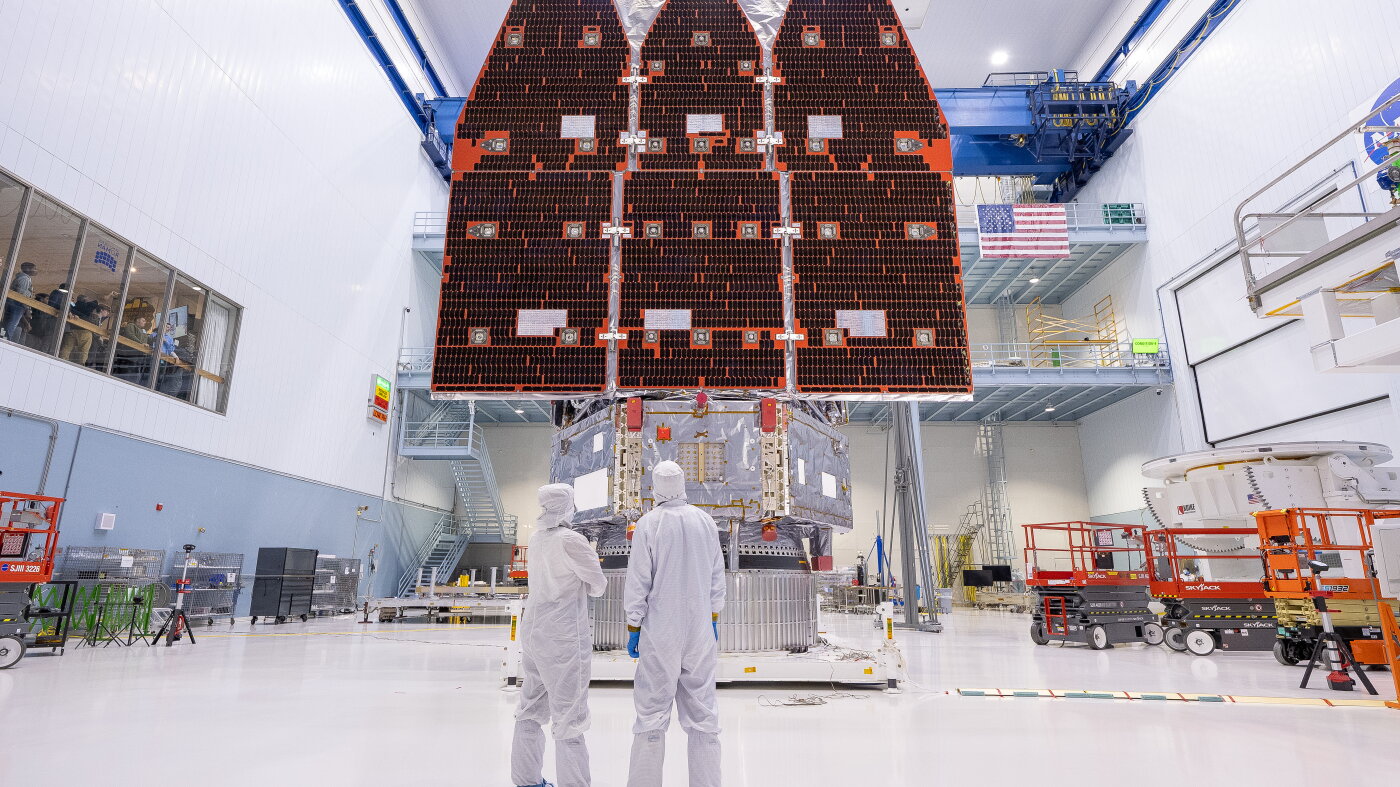
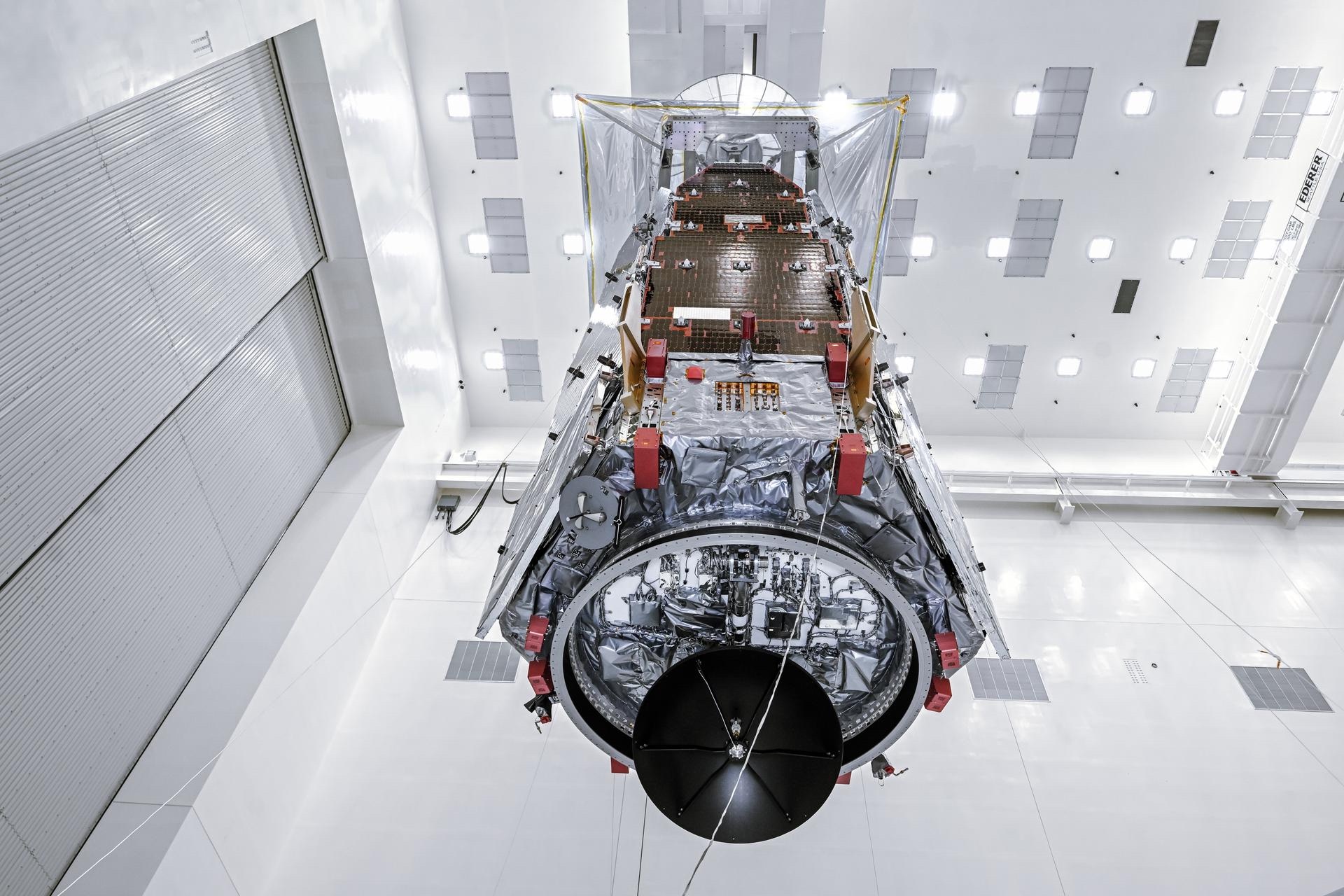 NASA’s Roman Space Telescope during launch processing at the Kennedy Space Center in July. Credit: NASA/Sydney Rohde (Rocz)
WASHINGTON — NASA’s next flagship space telescope is set to launch in late August, nine months ahead of schedule.
At a July 29 briefing, NASA officials said they are working toward a launch of the Nancy Grace Roman Space Telescope on Aug. 30. Liftoff of the Falcon Heavy rocket carrying the spacecraft is scheduled for 7:26 a.m. Eastern from the Kennedy Space Center.
“The project is right where we need to be as we approach launch,” said Jackie Townsend, project manager for Roman, at the briefing.
Last week, workers completed loading the spacecraft with propellant that will be used to maneuver the spacecraft to the Earth-Sun L-2 Lagrange point and for stationkeeping there. The NASA spacecraft team will soon start joint operations with the SpaceX launch vehicle team, with encapsulation of Roman into the Falcon Heavy payload fairing expected in about three weeks.
Those launch preparations are keeping Roman well ahead of schedule. The mission has a formal launch readiness date of May 2027, but project officials said this spring that careful planning as well as adherence to a cost cap allowed the mission to get well ahead of schedule.
“Complex things are hard to bring in on schedule and on budget, and this team has lived within its resources and is delivering nine months early,” said Shawn Domagal-Goldman, director of NASA’s astrophysics division, calling that work “an amazing feat.”
Townsend said the project completed a review in early July confirming its readiness for operations after launch, including commissioning the telescope.
“We’ve practiced and tuned up the plans and the procedures, and training the staff with 50 mission readiness tests encompassing more than 1,100 hours of operational time, using the exact staff who were going to be on console during launch and commissioning across the first 100 days,” she said.
That commissioning will start immediately after launch with the deployment of the spacecraft’s solar panels and sunshield, with a maneuver at the end of the first day of operations to put the spacecraft on course to L-2, said Jeremy Perkins, Roman telescope integration and test scientist.
After that maneuver, engineers will continue checking out other spacecraft subsystems and deploy its high-gain antenna, designed to downlink 1 terabyte of data a day. They will also start taking images using the spacecraft’s 2.4-meter main mirror to calibrate the telescope.
The commissioning should be complete about 100 days after launch, when Roman reaches L-2. That will allow the spacecraft to begin its main survey mission.
Unlike other telescopes, where astronomers submit proposals to make observations of specific objects, Roman will instead carry out broad surveys. “What we did over the last few years was to work with the scientific community all over the world and ask them for their ideas on how we should use Roman,” said Julie McEnery, senior project scientist for Roman.
“Then we put everything together to try and design three really large surveys that address the cosmology, that address the exoplanet studies, but that maximize the science,” she said. Those surveys will be carried out during Roman’s five-year primary mission.
McEnery added that it will be complementary to the Vera C. Rubin Observatory, a large telescope in Chile that recently started its own survey of the night sky. Rubin observes at visible wavelengths while Roman can see in the infrared.
“When we got to the point of deciding how we were going to use the observatories, Roman’s surveys are optimized to overlap with Rubin’s because it is so valuable to combine observations with Roman and Rubin together,” she said. “We really are siblings embarking on a life of exploration at the same time.”
Jeff Foust
4–6 minutes
NASA’s Roman Space Telescope during launch processing at the Kennedy Space Center in July. Credit: NASA/Sydney Rohde (Rocz)
WASHINGTON — NASA’s next flagship space telescope is set to launch in late August, nine months ahead of schedule.
At a July 29 briefing, NASA officials said they are working toward a launch of the Nancy Grace Roman Space Telescope on Aug. 30. Liftoff of the Falcon Heavy rocket carrying the spacecraft is scheduled for 7:26 a.m. Eastern from the Kennedy Space Center.
“The project is right where we need to be as we approach launch,” said Jackie Townsend, project manager for Roman, at the briefing.
Last week, workers completed loading the spacecraft with propellant that will be used to maneuver the spacecraft to the Earth-Sun L-2 Lagrange point and for stationkeeping there. The NASA spacecraft team will soon start joint operations with the SpaceX launch vehicle team, with encapsulation of Roman into the Falcon Heavy payload fairing expected in about three weeks.
Those launch preparations are keeping Roman well ahead of schedule. The mission has a formal launch readiness date of May 2027, but project officials said this spring that careful planning as well as adherence to a cost cap allowed the mission to get well ahead of schedule.
“Complex things are hard to bring in on schedule and on budget, and this team has lived within its resources and is delivering nine months early,” said Shawn Domagal-Goldman, director of NASA’s astrophysics division, calling that work “an amazing feat.”
Townsend said the project completed a review in early July confirming its readiness for operations after launch, including commissioning the telescope.
“We’ve practiced and tuned up the plans and the procedures, and training the staff with 50 mission readiness tests encompassing more than 1,100 hours of operational time, using the exact staff who were going to be on console during launch and commissioning across the first 100 days,” she said.
That commissioning will start immediately after launch with the deployment of the spacecraft’s solar panels and sunshield, with a maneuver at the end of the first day of operations to put the spacecraft on course to L-2, said Jeremy Perkins, Roman telescope integration and test scientist.
After that maneuver, engineers will continue checking out other spacecraft subsystems and deploy its high-gain antenna, designed to downlink 1 terabyte of data a day. They will also start taking images using the spacecraft’s 2.4-meter main mirror to calibrate the telescope.
The commissioning should be complete about 100 days after launch, when Roman reaches L-2. That will allow the spacecraft to begin its main survey mission.
Unlike other telescopes, where astronomers submit proposals to make observations of specific objects, Roman will instead carry out broad surveys. “What we did over the last few years was to work with the scientific community all over the world and ask them for their ideas on how we should use Roman,” said Julie McEnery, senior project scientist for Roman.
“Then we put everything together to try and design three really large surveys that address the cosmology, that address the exoplanet studies, but that maximize the science,” she said. Those surveys will be carried out during Roman’s five-year primary mission.
McEnery added that it will be complementary to the Vera C. Rubin Observatory, a large telescope in Chile that recently started its own survey of the night sky. Rubin observes at visible wavelengths while Roman can see in the infrared.
“When we got to the point of deciding how we were going to use the observatories, Roman’s surveys are optimized to overlap with Rubin’s because it is so valuable to combine observations with Roman and Rubin together,” she said. “We really are siblings embarking on a life of exploration at the same time.”

Jeff Foust 4–5 minutes WASHINGTON — A spacecraft launched nearly a month ago in a high-risk bid to boost the orbit of a NASA astrophysics satellite is suffering from attitude control problems that could jeopardize its mission. In a July 28 update posted on social media, Katalyst Space Technologies said its Link spacecraft, launched July 3, was in a “multi-axis spin” caused by attitude control issues that also affected spacecraft communications. “During commissioning, the Katalyst team encountered a series of technical issues related to attitude control of the spacecraft,” the company stated. “Over the last 72 hours, the LINK spacecraft has been in a multi-axis spin, causing a temporary loss of communications and subsequent bus reset.” The company said that two of the three reaction wheels on Link, used for attitude control, were not functioning and that the spacecraft’s reaction control system thrusters were only partially working. Link launched into low Earth orbit on a Pegasus XL on a mission to rendezvous and dock with NASA’s Neil Gehrels Swift Observatory, or Swift, spacecraft. That gamma-ray observatory is in a decaying orbit and will reenter late this year or early next year without intervention. NASA awarded Katalyst Space a $30 million contract last September to attempt a reboost mission. Katalyst has provided few updates on the status of Link since its launch. In a July 15 statement, the company said it completed initial post-launch checkouts, including getting the spacecraft into a stable attitude. The company said then there had been some problems during the commissioning process. “Early in commissioning, mission operations identified attitude control and communications anomalies during flight operations,” it stated. “The team implemented flight software patches and operational updates that restored reliable communications and enabled three-axis stabilized attitude control, allowing LINK to accurately point and orient itself in space.” In a July 24 update, the company said it had started testing the spacecraft’s electric thrusters, performing two burns to raise the spacecraft’s altitude by about 2 kilometers. Those tests, it said, were designed “to prepare for the longer, multi-hour burns it will execute in the rendezvous phase.” Katalyst Space said that other key subsystems on Link, including communications, propulsion and robotics systems needed to grapple Swift, were working properly. “Over the coming days, Katalyst will work to reduce the body rates using the gimbaled electric propulsion thrusters and stabilize the spacecraft. We have already begun this series of burns and are seeing the intended effect,” the company stated. It then plans over the next few weeks to update the spacecraft guidance, navigation and control systems “to reflect the current spacecraft configuration” and, after testing, begin its approach to Swift. “The mission remains active and we continue to believe that with these changes, LINK has a viable path to rendezvous with Swift,” the company stated. Before the launch of Link, NASA said that efforts to raise Swift’s orbit needed to begin before the spacecraft’s altitude fell below 300 kilometers. Swift is currently at an altitude of about 350 kilometers, and at a prelaunch briefing NASA said the agency expected Swift to reach the 300-kilometer altitude threshold in October.
Jeff Foust 4–5 minutes WASHINGTON — A spacecraft launched nearly a month ago in a high-risk bid to boost the orbit of a NASA astrophysics satellite is suffering from attitude control problems that could jeopardize its mission. In a July 28 update posted on social media, Katalyst Space Technologies said its Link spacecraft, launched July 3, was in a “multi-axis spin” caused by attitude control issues that also affected spacecraft communications. “During commissioning, the Katalyst team encountered a series of technical issues related to attitude control of the spacecraft,” the company stated. “Over the last 72 hours, the LINK spacecraft has been in a multi-axis spin, causing a temporary loss of communications and subsequent bus reset.” The company said that two of the three reaction wheels on Link, used for attitude control, were not functioning and that the spacecraft’s reaction control system thrusters were only partially working. Link launched into low Earth orbit on a Pegasus XL on a mission to rendezvous and dock with NASA’s Neil Gehrels Swift Observatory, or Swift, spacecraft. That gamma-ray observatory is in a decaying orbit and will reenter late this year or early next year without intervention. NASA awarded Katalyst Space a $30 million contract last September to attempt a reboost mission. Katalyst has provided few updates on the status of Link since its launch. In a July 15 statement, the company said it completed initial post-launch checkouts, including getting the spacecraft into a stable attitude. The company said then there had been some problems during the commissioning process. “Early in commissioning, mission operations identified attitude control and communications anomalies during flight operations,” it stated. “The team implemented flight software patches and operational updates that restored reliable communications and enabled three-axis stabilized attitude control, allowing LINK to accurately point and orient itself in space.” In a July 24 update, the company said it had started testing the spacecraft’s electric thrusters, performing two burns to raise the spacecraft’s altitude by about 2 kilometers. Those tests, it said, were designed “to prepare for the longer, multi-hour burns it will execute in the rendezvous phase.” Katalyst Space said that other key subsystems on Link, including communications, propulsion and robotics systems needed to grapple Swift, were working properly. “Over the coming days, Katalyst will work to reduce the body rates using the gimbaled electric propulsion thrusters and stabilize the spacecraft. We have already begun this series of burns and are seeing the intended effect,” the company stated. It then plans over the next few weeks to update the spacecraft guidance, navigation and control systems “to reflect the current spacecraft configuration” and, after testing, begin its approach to Swift. “The mission remains active and we continue to believe that with these changes, LINK has a viable path to rendezvous with Swift,” the company stated. Before the launch of Link, NASA said that efforts to raise Swift’s orbit needed to begin before the spacecraft’s altitude fell below 300 kilometers. Swift is currently at an altitude of about 350 kilometers, and at a prelaunch briefing NASA said the agency expected Swift to reach the 300-kilometer altitude threshold in October.

Jeff Foust 4–5 minutes WASHINGTON — NASA has selected Advanced Space to fly a successor to a cislunar smallsat mission that will test rendezvous and proximity operations around the moon. NASA announced July 24 it awarded a contract to Advanced Space for the CAPSTONE 02 mission, a pair of small satellites planned to launch in 2027. The twin 400-kilogram satellites, built by Lockheed Martin subsidiary Terran Orbital, will operate in cislunar space. The spacecraft will test the ability to operate in proximity to one another under the influence of both terrestrial and lunar gravity, while also performing navigation and communications demonstrations and measuring the radiation environment around the moon. The two spacecraft will perform rendezvous and proximity operations, or RPO, with the spacecraft switching between the target and the chaser. The spacecraft will carry an advanced imager from Lawrence Livermore National Laboratory that will be used for those RPO tests as well as for imaging the moon. Both NASA and Advanced Space billed CAPSTONE 02 as a risk-reduction activity ahead of Artemis missions that will require the Orion spacecraft to dock with landers in lunar orbit. “With CAPSTONE 02, we are taking the next step toward routine, resilient operations in cislunar space,” Brad Cheetham, president and chief executive of Advanced Space, said in a statement. “By maturing autonomous rendezvous and proximity operations in this complex environment, we are directly enabling the future of lunar exploration, development, and long-term presence,” he said. “CAPSTONE 02 can reduce risk for Moon Base, Artemis and every lunar mission that follows.” “Achieving our most ambitious space exploration goals requires iterative, risk-tolerant demonstrations in partnership with industry,” said Christopher Baker, lead for the in-space infrastructure portfolio in NASA’s Research and Technology Mission Directorate, in an agency statement. “Technology development through flight testing is how we convert hard problems into the lasting capabilities needed for a permanent presence at the moon.” CAPSTONE 02 is a follow-on to the original CAPSTONE, or Cislunar Autonomous Positioning System Technology Operations and Navigation Experiment, mission. That used a single cubesat-class spacecraft, built by Terran Orbital for Advanced Space, that tested operations in a near-rectilinear halo orbit around the moon that NASA had planned to use for the lunar Gateway. CAPSTONE launched on a Rocket Lab Electron in 2022. NASA concluded a series of extended missions for the spacecraft in June, testing autonomous navigation technologies and delay-tolerant networking. “CAPSTONE demonstrated what is possible in cislunar operations with small-satellite technology and rapid mission timelines,” said Alec Forsman, chief engineer for CAPSTONE 02 at Advanced Space, in a statement. “The CAPSTONE 02 mission will push that envelope even further by demonstrating RPO in a three-body orbit, enabling demonstration of cislunar communications architectures and proving autonomy capabilities that future lunar missions will depend on.” Neither NASA nor Advanced Space disclosed the value of the contract for the CAPSTONE 02 mission. The agency provided few details about CAPSTONE 02 before the contract announcement. House appropriators, in a report accompanying a fiscal year 2027 spending bill in May, directed NASA to spend at least $20 million, and up to $60 million, on CAPSTONE 02 in 2027.
Jeff Foust 4–5 minutes WASHINGTON — NASA has selected Advanced Space to fly a successor to a cislunar smallsat mission that will test rendezvous and proximity operations around the moon. NASA announced July 24 it awarded a contract to Advanced Space for the CAPSTONE 02 mission, a pair of small satellites planned to launch in 2027. The twin 400-kilogram satellites, built by Lockheed Martin subsidiary Terran Orbital, will operate in cislunar space. The spacecraft will test the ability to operate in proximity to one another under the influence of both terrestrial and lunar gravity, while also performing navigation and communications demonstrations and measuring the radiation environment around the moon. The two spacecraft will perform rendezvous and proximity operations, or RPO, with the spacecraft switching between the target and the chaser. The spacecraft will carry an advanced imager from Lawrence Livermore National Laboratory that will be used for those RPO tests as well as for imaging the moon. Both NASA and Advanced Space billed CAPSTONE 02 as a risk-reduction activity ahead of Artemis missions that will require the Orion spacecraft to dock with landers in lunar orbit. “With CAPSTONE 02, we are taking the next step toward routine, resilient operations in cislunar space,” Brad Cheetham, president and chief executive of Advanced Space, said in a statement. “By maturing autonomous rendezvous and proximity operations in this complex environment, we are directly enabling the future of lunar exploration, development, and long-term presence,” he said. “CAPSTONE 02 can reduce risk for Moon Base, Artemis and every lunar mission that follows.” “Achieving our most ambitious space exploration goals requires iterative, risk-tolerant demonstrations in partnership with industry,” said Christopher Baker, lead for the in-space infrastructure portfolio in NASA’s Research and Technology Mission Directorate, in an agency statement. “Technology development through flight testing is how we convert hard problems into the lasting capabilities needed for a permanent presence at the moon.” CAPSTONE 02 is a follow-on to the original CAPSTONE, or Cislunar Autonomous Positioning System Technology Operations and Navigation Experiment, mission. That used a single cubesat-class spacecraft, built by Terran Orbital for Advanced Space, that tested operations in a near-rectilinear halo orbit around the moon that NASA had planned to use for the lunar Gateway. CAPSTONE launched on a Rocket Lab Electron in 2022. NASA concluded a series of extended missions for the spacecraft in June, testing autonomous navigation technologies and delay-tolerant networking. “CAPSTONE demonstrated what is possible in cislunar operations with small-satellite technology and rapid mission timelines,” said Alec Forsman, chief engineer for CAPSTONE 02 at Advanced Space, in a statement. “The CAPSTONE 02 mission will push that envelope even further by demonstrating RPO in a three-body orbit, enabling demonstration of cislunar communications architectures and proving autonomy capabilities that future lunar missions will depend on.” Neither NASA nor Advanced Space disclosed the value of the contract for the CAPSTONE 02 mission. The agency provided few details about CAPSTONE 02 before the contract announcement. House appropriators, in a report accompanying a fiscal year 2027 spending bill in May, directed NASA to spend at least $20 million, and up to $60 million, on CAPSTONE 02 in 2027.

cross-posted from: sh.itjust.works/post/64038210
Article text
Jeff Foust 4–5 minutes
The Deep Space Network complex near Madrid, Spain, escaped major damage from a wildfire there July 24. Credit: X @NASASpox WASHINGTON — Key ground stations in Spain operated by NASA and the European Space Agency have avoided serious damage from major wildfires in the country. NASA announced July 24 it had evacuated the Madrid Deep Space Communications Complex, or MDSCC, one of three main ground stations for the Deep Space Network, located in Robledo de Chavela, about 65 kilometers west of Madrid. The evacuation was prompted by a major wildfire in the region. “All personnel were safely evacuated. The wildfire has passed through the MDSCC. Any potential damage will be assessed when it is safe to do so,” the agency said in a statement. In a social media post July 25, NASA press secretary Bethany Stevens said the MDSCC site avoided major damage from the fire. “On July 25, an initial onsite inspection by the NASA Madrid Deep Space Communications Complex (MDSCC) emergency response team found wildfire damage primarily to pavement and surrounding vegetation, with no significant structural damage observed to antennas or buildings,” she wrote. She added more tests and inspections are planned as conditions permit. “The situation remains dynamic, and comprehensive assessments will proceed as conditions stabilize and access improves.” MDSCC is one of three sites in the DSN, alongside those in Goldstone, California, and near Canberra, Australia. It hosts a 70-meter antenna and five 34-meter antennas used for communicating with NASA spacecraft throughout the solar system. According to NASA’s Deep Space Network Now website, which provides real-time visualization of DSN activities, none of the antennas at the Madrid site have been actively communicating with spacecraft since at least July 24. The Canberra and Goldstone sites remain active. NASA uses a “follow the sun” approach to management of the DSN, where management of the entire DSN shifts among the three sites. Stevens said Canberra and Goldstone have taken over control of the DSN, “ensuring continuity of operations and uninterrupted spacecraft communications.” It’s not clear how long MDSCC will be out of service or how that will affect spacecraft operations. The DSN was already suffering from a capacity crunch due to increasing demand for spacecraft communications, exacerbated by damage to the 70-meter antenna at Goldstone that has taken it out of service until 2028 for repairs and upgrades. In addition to the DSN site, ESA operates a ground station near Cerberos, Spain, 77 kilometers west of Madrid, also affected by the wildfires. It hosts a 35-meter antenna ESA uses for communications with its deep-space missions. It, too, appears to have survived the wildfires without serious damage. “Based on the information currently available, the station appears to have remained unharmed,” ESA said in a July 25 statement. All of the station’s personnel are safe and accounted for. “ESA does not have physical access to the station and is therefore unable to conduct an on-site inspection,” the agency added. “Any assessment of the site’s condition will be carried out as soon as access can be safely restored.” The wildfires near Madrid are among dozens in Spain and France that have flared up in recent days, linked to unseasonably high temperatures and dry conditions. As of late July 25, nearly 300,000 people in the two countries had been evacuated because of the fires.
cross-posted from: sh.itjust.works/post/64038210
Article text
Jeff Foust 4–5 minutes

Jeff Foust 4–5 minutes WASHINGTON — The island nation of Mauritius signed the Artemis Accords July 17, becoming the 70th nation to do so in less than six years. In a ceremony in the Mauritian city of Ébène, Navindsing Jugmohunsing of the country’s Ministry of Tertiary Education, Science and Research signed the accords. U.S. State Department officials attended the event, while NASA Deputy Administrator Matt Anderson provided remarks by video. “The accession of Mauritius to the Artemis Accords marks a defining chapter in our new space journey,” Jugmohunsing said in a statement. “As a small island developing state in the Indian Ocean, we are committed to ensuring that space serves humanity by protecting our oceans and coastlines and amplifying the voices of nations like ours.” “Mauritius stands ready to help shape the future of space governance while unlocking new opportunities for innovation and partnership,” he added. Mauritius signed the Artemis Accords one day after Serbia did so at an event at NASA Headquarters. Mauritius is the 70th country to sign the Accords and the 11th so far this year. The Artemis Accords outline best practices in space exploration on topics such as deconfliction of space activities, utilization of space resources and exchange of scientific data. NASA officials say they also plan to use the Accords to coordinate international cooperation in the agency’s lunar exploration plans, such as development of a moon base. “Together, we are creating the foundation for future exploration while ensuring that space remains peaceful, accessible and beneficial for all,” Anderson said in a statement. “That work requires capable partners and a shared commitment to responsible exploration.” NASA and the State Department rolled out the Artemis Accords in 2020, with seven nations joining the United States as original signatories. “Going from seven nations joining the U.S. in signing the Accords in 2020 to 70 signatories in 2026 is a huge accomplishment,” Mike Gold, president of Redwire Space and a former NASA associate administrator who coordinated the development of the Accords, told SpaceNews. “The success of the Accords demonstrates the inherent optimism and hope that the space program represents not only in America but around the world.” He supported the agency’s efforts to use the Accords as a mechanism for coordinating international participation in Artemis. “The Artemis Accords are inseparable from the Artemis program,” he said. “I’m so excited to see the U.S. lead the way in bringing the world to the lunar frontier.” Three of the Artemis Accords signatories — Senegal, Serbia and Thailand — had previously joined the Chinese-led International Lunar Research Station to develop a lunar base. “Through the Artemis Accords, we’re not just launching our astronauts, we’re launching our values to the moon,” Gold said, “which is why every ILRS nation, such as Serbia, that commits to the principles of the Artemis Accords is a special victory for a peaceful and prosperous future in space.”
Jeff Foust 4–5 minutes WASHINGTON — The island nation of Mauritius signed the Artemis Accords July 17, becoming the 70th nation to do so in less than six years. In a ceremony in the Mauritian city of Ébène, Navindsing Jugmohunsing of the country’s Ministry of Tertiary Education, Science and Research signed the accords. U.S. State Department officials attended the event, while NASA Deputy Administrator Matt Anderson provided remarks by video. “The accession of Mauritius to the Artemis Accords marks a defining chapter in our new space journey,” Jugmohunsing said in a statement. “As a small island developing state in the Indian Ocean, we are committed to ensuring that space serves humanity by protecting our oceans and coastlines and amplifying the voices of nations like ours.” “Mauritius stands ready to help shape the future of space governance while unlocking new opportunities for innovation and partnership,” he added. Mauritius signed the Artemis Accords one day after Serbia did so at an event at NASA Headquarters. Mauritius is the 70th country to sign the Accords and the 11th so far this year. The Artemis Accords outline best practices in space exploration on topics such as deconfliction of space activities, utilization of space resources and exchange of scientific data. NASA officials say they also plan to use the Accords to coordinate international cooperation in the agency’s lunar exploration plans, such as development of a moon base. “Together, we are creating the foundation for future exploration while ensuring that space remains peaceful, accessible and beneficial for all,” Anderson said in a statement. “That work requires capable partners and a shared commitment to responsible exploration.” NASA and the State Department rolled out the Artemis Accords in 2020, with seven nations joining the United States as original signatories. “Going from seven nations joining the U.S. in signing the Accords in 2020 to 70 signatories in 2026 is a huge accomplishment,” Mike Gold, president of Redwire Space and a former NASA associate administrator who coordinated the development of the Accords, told SpaceNews. “The success of the Accords demonstrates the inherent optimism and hope that the space program represents not only in America but around the world.” He supported the agency’s efforts to use the Accords as a mechanism for coordinating international participation in Artemis. “The Artemis Accords are inseparable from the Artemis program,” he said. “I’m so excited to see the U.S. lead the way in bringing the world to the lunar frontier.” Three of the Artemis Accords signatories — Senegal, Serbia and Thailand — had previously joined the Chinese-led International Lunar Research Station to develop a lunar base. “Through the Artemis Accords, we’re not just launching our astronauts, we’re launching our values to the moon,” Gold said, “which is why every ILRS nation, such as Serbia, that commits to the principles of the Artemis Accords is a special victory for a peaceful and prosperous future in space.”