#news

posts tagged #news

0

Mongolian President Khurelsukh to resign amid corruption allegations

dw.com Mongolian President Khurelsukh Ukhnaa to resign amid corruption allegations www.dw.com
preview

Mongolian President Khurelsukh Ukhnaa said Tuesday that he would resign after the opposition Democratic Party accused him of profiting from a government railway project. At a press conference, Khurelsukh said he was being “falsely accused and defamed” but would resign in order to “restore my good name.” He has pledged to cooperate with investigators. Before the resignation takes effect, it must first be accepted by parliament, the State Great Khural.

Mongolian President Khurelsukh Ukhnaa said Tuesday that he would resign after the opposition Democratic Party accused him of profiting from a government railway project. At a press conference, Khurelsukh said he was being “falsely accused and defamed” but would resign in order to “restore my good name.” He has pledged to cooperate with investigators. Before the resignation takes effect, it must first be accepted by parliament, the State Great Khural.

0

Canada and China announce new trade measures and cultural partnerships on 1st day in Shenzhen

CBC Xi opens more pork access as Carney loosens steel restrictions during China visit | CBC News www.cbc.ca
preview

Chinese President Xi Jinping welcomes Prime Minister Mark Carney to the Kylin Villa State Guesthouse in Shenzhen on Tuesday. The two leaders later signed a series of trade and cultural agreements. (Adrian Wyld/The Canadian Press)

Chinese President Xi Jinping welcomes Prime Minister Mark Carney to the Kylin Villa State Guesthouse in Shenzhen on Tuesday. The two leaders later signed a series of trade and cultural agreements. (Adrian Wyld/The Canadian Press)

0

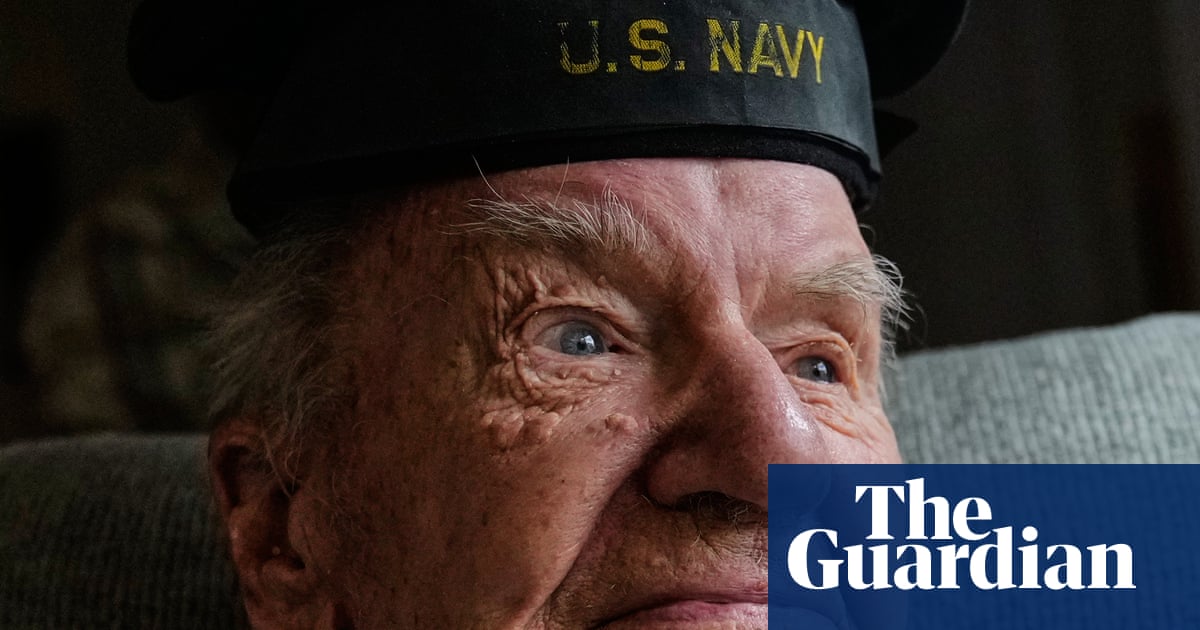
Freeman Johnson, oldest survivor of Pearl Harbor attack, dies aged 106

the Guardian Freeman Johnson, oldest survivor of Pearl Harbor attack, dies aged 106 www.theguardian.com
preview

Johnson was working on the USS St Louis and was inside a steam drum when the attacks took place

The oldest known survivor of the Pearl Harbor attack died Saturday aged 106 years old. Freeman Johnson, a fireman below the deck during the attack, died in his home in Massachusetts, according to the Boston Globe.

Only 11 known Pearl Harbor survivors are still living, all of whom are centenarians.

At 21 years old, Johnson said, he never saw the attacks from the Japanese fighters that Sunday morning in Hawaii on 7 December 1941.

He worked on the USS St Louis, which was his first deployment after basic training. It was the only major ship that left the attack “unscathed”, according to the Pentagon. The ship graced the nickname “Lucky Lou”.

0

US intel indicates Iran developing plans to potentially detonate a dirty bomb in Washington, sources say

preview

New US intelligence indicates that Iran is developing plans to target senior Trump administration officials by detonating a so-called dirty bomb or a chemical weapon in Washington, DC, even as officials continue to debate whether Iran can or will attempt to execute such a plot, according to seven US officials.

Sources familiar with the latest intelligence characterized the Iranian planning as, for now, an effort to give itself options rather than an indicator of an imminent attack. But the plotting picked up by the US has been very specific and includes locations and targets, two of the sources said, and has sparked a flurry of US contingency planning.

0

United Airlines says it has a widespread system outage just days after nationwide ground stop

preview

United Airlines confirmed it was having a systemwide outage Monday afternoon just days after a malfunction in the Federal Aviation Administration’s network prompted a nationwide ground stop.

Chicago-based United said in a statement that the technology problem it is troubleshooting affects departing flights, but it does not have any impact on flights in progress or United Express flights.

The United computer problem is just the latest high-profile technology meltdown. Earlier in the day, thousands of people reported being unable to access their online accounts at several major U.S. banks after JP Morgan Chase had a technical problem. On Friday, the Federal Aviation Administration ordered every flight grounded because a new router that was installed malfunctioned and overwhelmed the aging air traffic control system. And one day earlier, Microsoft experienced a major disruption to its Outlook email service. Microsoft said Saturday that services were fully restored.

0

Saudi Arabia dismisses commander of coalition forces fighting Houthis

Al Jazeera Saudi Arabia dismisses commander of coalition forces fighting Houthis www.aljazeera.com
preview

Saudi Arabia has replaced the commander overseeing its coalition forces as they battle the Iranian-backed Houthis in Yemen. King Salman issued a decree on Monday assigning General Fayyad al-Ruwaili to the command, according to Saudi state media. The removal of Lieutenant General Fahd bin Hamad al-Salman came as coalition forces were forced to abandon their recent push to recapture regions along the Red Sea coast in order to reinforce the Yemeni government’s interim capital, Aden.

Saudi Arabia has replaced the commander overseeing its coalition forces as they battle the Iranian-backed Houthis in Yemen. King Salman issued a decree on Monday assigning General Fayyad al-Ruwaili to the command, according to Saudi state media. The removal of Lieutenant General Fahd bin Hamad al-Salman came as coalition forces were forced to abandon their recent push to recapture regions along the Red Sea coast in order to reinforce the Yemeni government’s interim capital, Aden.

0

Five EU countries announce plan to send rejected asylum seekers to Rwanda

Al Jazeera Five EU countries announce plan to send rejected asylum seekers to Rwanda www.aljazeera.com
preview

Five European countries have announced a plan to send rejected asylum seekers to a processing centre in Rwanda as early as next year, drawing condemnation from rights groups who said it would leave vulnerable people at risk of abuse. The planned scheme, which is still being negotiated with Rwanda, would send people to a centre where the migrants could choose to return home, settle or go somewhere else where they had a right to stay, Kigali said on Monday.

Austria, Denmark, Germany, Greece and the Netherlands said that the plan aimed to deter more people from migrating to Europe. The European Union has worked for years to tighten migration rules, reduce the number of asylum seekers arriving and increase deportations of migrants who are not entitled to stay.

0

Austria May Strip Former Foreign Minister Karin Kneissl of Citizenship

Austria May Strip Former Foreign Minister Karin Kneissl of Citizenship www.nytimes.com
preview

The Austrian authorities have taken initial steps to revoke the citizenship of a former foreign minister who moved to Russia — a country she has lauded for its “genuine freedom” — and who has repeatedly denigrated Austria while echoing Kremlin-friendly talking points. Karin Kneissl made international headlines when she danced with President Vladimir Putin of Russia at her wedding in 2018, when she was her nation’s top diplomat. Since then, she has angered many of her compatriots with regular barbs against her country of birth and its citizens. That the Austrian state would even consider the extraordinary step of revoking her citizenship reflects a national weariness about the former foreign minister. It follows a prolonged national debate over whether Ms. Kneissl retained the right to remain Austrian after — both physically and by all appearances ideologically — turning her back on her homeland.

The Austrian authorities have taken initial steps to revoke the citizenship of a former foreign minister who moved to Russia — a country she has lauded for its “genuine freedom” — and who has repeatedly denigrated Austria while echoing Kremlin-friendly talking points. Karin Kneissl made international headlines when she danced with President Vladimir Putin of Russia at her wedding in 2018, when she was her nation’s top diplomat. Since then, she has angered many of her compatriots with regular barbs against her country of birth and its citizens. That the Austrian state would even consider the extraordinary step of revoking her citizenship reflects a national weariness about the former foreign minister. It follows a prolonged national debate over whether Ms. Kneissl retained the right to remain Austrian after — both physically and by all appearances ideologically — turning her back on her homeland.

0

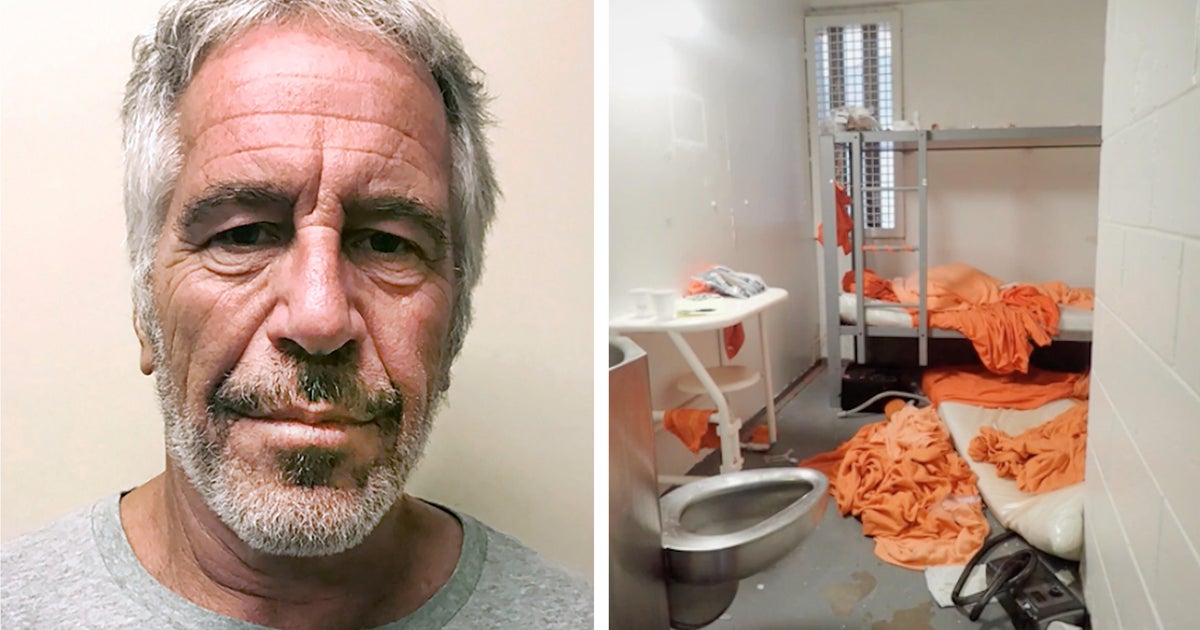
Jeffrey Epstein's death may not have been suicide, new analysis by leading forensics expert suggests

play · cbsnews.com
CBS News Jeffrey Epstein's death may not have been suicide, new analysis by leading forensics expert suggests www.cbsnews.com
preview

Across the political spectrum, a large chunk of Americans believe, despite a lack of evidence, that Jeffrey Epstein did not die by suicide.

Now one forensics expert, working with photos and files provided by Epstein’s brother, is weighing in to contend that this suspicion might be right.

Dr. Michael Freeman, who is editor-in-chief of the Journal of Forensic and Legal Medicine, spent months reviewing never-before-published autopsy records provided to him and CBS News by Epstein’s brother. The 2019 ruling by the the New York City Office of Chief Medical Examiner was that Epstein died by suicide. But Freeman has concluded that Epstein’s death was more likely a homicide.

Freeman — who worked with Anders Eriksson, a professor of forensic medicine at Umea University in Sweden, and Itiel Dror, a researcher specializing in identifying bias in forensic decision making — presented their findings Monday in London. Freeman said he believes that in August 2019 the world’s most notorious sex abuser was likely attacked and killed by another person.

0

Doctors are raising concerns about US babies born with measles

preview

For the first time in decades, U.S. doctors are sounding the alarm about babies coming into the world with measles.

Congenital measles happens when a pregnant woman passes the virus to her fetus in the womb. It can lead to serious complications or even be deadly for newborns.

From the start of 2025 through the end of this September, 13 congenital measles cases were reported to the U.S. Centers for Disease Control and Prevention during large measles outbreaks, according to preliminary figures published in a medical journal on Monday.

“This is a brand new phenomenon,” said Michael Osterholm, who directs the University of Minnesota’s Center for Infectious Disease Research and Policy.

0

State Farm To Pay $45 Million After Oklahoma Insurance Investigation

preview

State Farm Fire and Casualty Co. will pay a $45 million settlement after a state insurance department investigation found it failed to properly pay roof damage claims by Oklahoma customers.

The state’s incoming insurance commissioner, Republican Bob Sullivan, said he was still learning details on Friday but worried the settlement may take some flexibility out of any regulatory approach to State Farm under his administration.

The settlement calls for the Illinois-based insurance company, which has been the focus of hundreds of lawsuits, to let customers with wind and hail damage ask for an independent review if they had claims closed without payment from 2021 to 2025.

State Farm is Oklahoma’s top homeowners insurer, with more than 258,000 customers and $785.9 million in homeowners premiums in 2025. Its state market share in that category is more than 30%.

0

Sudanese army air attack kills 13 in western Sudan: Rights group

Al Jazeera Sudanese army air attack kills 13 in western Sudan: Rights group www.aljazeera.com
preview

An air strike launched by the Sudanese Armed Forces (SAF) has killed at least 13 civilians in the Abu Qalb area of West Kordofan state, according to the Emergency Lawyers rights group. Warplanes belonging to the military government carried out the attack on the Abu Zabad locality, with the victims including women and children, “according to preliminary monitoring” the legal collective said in a social media post on Monday. Al Jazeera was unable to immediately verify the report.

An air strike launched by the Sudanese Armed Forces (SAF) has killed at least 13 civilians in the Abu Qalb area of West Kordofan state, according to the Emergency Lawyers rights group. Warplanes belonging to the military government carried out the attack on the Abu Zabad locality, with the victims including women and children, “according to preliminary monitoring” the legal collective said in a social media post on Monday. Al Jazeera was unable to immediately verify the report.

0

Per Tzitzikostas e Fitto la sicurezza stradale è una priorità, ed è necessario fare squadra verso l’obiettivo vittime zero al 2050

preview

Per Tzitzikostas e Fitto la sicurezza stradale è una priorità, ed è necessario fare squadra verso l’obiettivo vittime zero al 2050
@news
https://www.eunews.it/2026/11/16/per-tzitzikostas-e-fitto-la-sicurezza-stradale-e-una-priorita-ed-e-necessario-fare-squadra-verso-lobiettivo-vittime-zero-al-2050/
Il commissario ai Trasporti e il vicepresidente della Commissione UE all’evento ‘Road Safety, a Global Commitment’, organizzato da The Urban Mobility Council, il think tank promosso da

0

Verso l’accordo della vergogna: cinque Paesi UE puntano sui rimpatri in Ruanda, il primo hub dal 2027

preview

Verso l’accordo della vergogna: cinque Paesi UE puntano sui rimpatri in Ruanda, il primo hub dal 2027
@news
https://www.eunews.it/2026/11/16/verso-laccordo-della-vergogna-cinque-paesi-ue-puntano-sui-rimpatri-in-ruanda-il-primo-hub-dal-2027/
L’annuncio è arrivato da Vienna, a margine della Conferenza sulla migrazione, durante una conferenza stampa con il cancelliere austriaco Christian Stocker, la prima ministra danese, Mette Frederiksen, e i rappresentanti dei governi coinvolti

0

Cargo ship capsizes off Bulgaria’s Black Sea coast

Al Jazeera Cargo ship capsizes off Bulgaria’s Black Sea coast www.aljazeera.com
preview

A cargo ship has capsized off Bulgaria’s Black Sea coast, the country’s Transport Ministry has said.

The ship’s crew, eight Turkish citizens and four Azerbaijani nationals, were rescued from the Somali-flagged Betul 8 in an operation on Monday that involved four ships, two from Bulgaria, one from Romania and one from Turkiye.

0

Ucraina, Kallas: “L’architettura di sicurezza europea c’era e Mosca l’ha violata, la priorità è il cessate il fuoco”

preview

Ucraina, Kallas: “L’architettura di sicurezza europea c’era e Mosca l’ha violata, la priorità è il cessate il fuoco”
@news
https://www.eunews.it/2026/11/16/ucraina-kallas-larchitettura-di-sicurezza-europea-cera-e-mosca-lha-violata-la-priorita-e-il-cessate-il-fuoco/
Secondo l’Alta rappresentante “la Russia sta solo cercando di confondere le acque, fingendo che si tratti di un semplice scambio di idee, ma non è così”

0

In arrivo un Accordo di associazione modernizzato tra l’UE e la Siria

preview

In arrivo un Accordo di associazione modernizzato tra l’UE e la Siria
@news
https://www.eunews.it/2026/11/16/in-arrivo-un-accordo-di-associazione-modernizzato-tra-lue-e-la-siria/
Bruxelles – Dopo la caduta di Bashar al-Assad, è in arrivo un nuovo accordo di associazione con la Siria. A darne l’annuncio è stata l’Alta rappresentante dell’Unione europea per gli Affari esteri e la politica di sicurezza, Kaja Kallas, durante la conferenza stampa a conclusione della riunione del

0

Che succede se il quantum rende i droni immuni agli attacchi elettronici

preview

Che succede se il quantum rende i droni immuni agli attacchi elettronici

@news

Le difese anti-drone potrebbero avere presto un nuovo avversario: la tecnologia quantistica. Lo sviluppo di sensori sempre più precisi, in particolare accelerometri e giroscopi atomici, potrebbe infatti consentire ai velivoli senza pilota di navigare autonomamente anche in assenza di segnali satellitari,

0

La notte dei droni. Kyiv colpisce Mosca, la Crimea e il ponte di Kerch

preview

La notte dei droni. Kyiv colpisce Mosca, la Crimea e il ponte di Kerch

@news

Il ponte di Kerch torna nel mirino di Kyiv. Nella notte tra domenica e lunedì le forze ucraine hanno colpito il ponte che collega la Russia alla Crimea occupata. L’attacco rientra in quella che, secondo i numeri forniti dalla stessa Mosca, è la più vasta offensiva con droni

0

All’Ucraina altri 8 miliardi per la ricostruzione del Paese, il più grande esborso di sempre

preview

All’Ucraina altri 8 miliardi per la ricostruzione del Paese, il più grande esborso di sempre
@news
https://www.eunews.it/2026/11/16/dal-consiglio-ue-8-miliardi-allucraina-per-la-ricostruzione-del-paese-il-piu-grande-esborso-di-sempre/
La Commissione europea ha erogato anche 1,71 miliardi di euro per finanziare droni, munizioni e sistemi di difesa aerea. Von der Leyen: "Continueremo a sostenere l’Ucraina con fermezza, esattamente come abbiamo fatto ogni singolo giorno fin dall’inizio

0

La Commissione UE impone dazi antidumping sull’acciaio importato da 5 Paesi

preview

La Commissione UE impone dazi antidumping sull’acciaio importato da 5 Paesi
@news
https://www.eunews.it/2026/11/16/la-commissione-ue-impone-dazi-antidumping-sullacciaio-importato-da-5-paesi/
Le tariffe definitive sono del 9,5 per cento per l’India, del 27,9 per cento per il Giappone, tra il 20,7 e il 27 per cento per Taiwan, tra il 3 e il 7,8 per cento per la Turchia e del 16 per cento per il Vietnam

0

Diminuiscono i morti sulle strade italiane, nonostante gli aumenti nel Nord-Ovest, nel Sud e nelle Isole

preview

Diminuiscono i morti sulle strade italiane, nonostante gli aumenti nel Nord-Ovest, nel Sud e nelle Isole
@news
https://www.eunews.it/2026/11/16/diminuiscono-i-morti-sulle-strade-italiane-nonostante-gli-aumenti-nel-nord-ovest-nel-sud-e-nelle-isole/
I dati Eurostat. Lombardia prima per numero assoluto di vittime a livello europeo

0

Tutti i rischi della Via della Seta in salsa pugliese

preview

Tutti i rischi della Via della Seta in salsa pugliese

@news

C’è il rischio che si possa riaprire la Via della Seta cinese in Italia, magari nella parte più sud-orientale dello stivale dove è appena sorto l’Istituto Confucio a Bari? A breve partirà una missione istituzionale in Cina del governatore pugliese Antonio De Caro, centrata su agricoltura, sviluppo economico,

0

L’allarme della BCE: “Da intelligenza artificiale nuove vulnerabilità per il sistema bancario”

Eunews Intelligenza artificiale, la BCE: "Nuove vulnerabilità per le banche" www.eunews.it
preview

L’allarme della BCE: “Da intelligenza artificiale nuove vulnerabilità per il sistema bancario”
@news
https://www.eunews.it/2026/11/16/lallarme-della-bce-da-intelligenza-artificiale-nuove-vulnerabilita-per-il-sistema-bancario/
Il vicepresidente Boris Vujčić: “Nel breve periodo il vantaggio ce l’ha chi attacca. Aumentare le difese informatiche”

0

Acciaio, ‘sì’ dell’UE alla fusione Arvedi-ArcelorMittal per la distribuzione

preview

Acciaio, ‘sì’ dell’UE alla fusione Arvedi-ArcelorMittal per la distribuzione
@news
https://www.eunews.it/2026/11/16/acciaio-si-dellue-alla-fusione-arvedi-arcelormittal-per-la-distribuzione/
Bruxelles – Acciaieria Arvedi può avere il controllo esclusivo di ArcelorMittal CLN Distribuzione Italia S.r.l. La Commissione europea approva la proposta di acquisizione nel settore della distribuzione di prodotti siderurgici piani in acciaio al carbonio attraverso centri di servizio siderurgico

0

Classifica qualità della vita 2026: Bolzano scalza Milano, le migliori città tutte al Centro-Nord

preview

Classifica qualità della vita 2026: Bolzano scalza Milano, le migliori città tutte al Centro-Nord

https://www.geopop.it/qualita-della-vita-2026-citta-in-cui-si-vive-meglio-italia-classifica/

> Secondo la 28esima edizione dell’Indagine sulla qualità della vita 2026, le province italiane in cui si vive meglio si trovano tutte al Centro e al Nord

#qualitadellavita

@news

0

Dal Consiglio UE sanzioni a 30 persone e due entità russe coinvolte in attacchi cyber e altre attività informatiche dannose

preview

Dal Consiglio UE sanzioni a 30 persone e due entità russe coinvolte in attacchi cyber e altre attività informatiche dannose
@news
https://www.eunews.it/2026/11/16/dal-consiglio-ue-sanzioni-a-30-persone-e-due-entita-russe-coinvolte-in-attacchi-cyber-e-altre-attivita-informatiche-dannose/
La decisione è stata adottata in occasione della riunione del Consiglio Affari esteri di oggi (16 novembre). Il ministro degli Esteri italiano, Antonio Tajani: "L’Italia ha chiesto questo dibattito

0

Commissariata #Revolut - 'rapporti con indagati per riciclaggio aggravato dal metodo mafioso'

Agenzia ANSA Commissariata la banca Revolut, 'rapporti con indagati per mafia' - Notizie - Ansa.it www.ansa.it
preview

Commissariata #Revolut - ‘rapporti con indagati per riciclaggio aggravato dal metodo mafioso’

Amministrazione giudiziaria per la filiale italiana della banca digitale Revolut. Lo ha deciso la Sezione misure di prevenzione del Tribunale di Milano.
Resta da capire quanto il data breach provocato da un’email compromessa del Ministero degli Interni abbia contribuito a esporre dati utili per rilevare notizie di reato…

https://www.ansa.it/sito/notizie/cronaca/2026/11/16/riciclaggio-con-aggravante-mafiosa-amministrazione-giudiziaria-per-revolut/_826ace80-1187-47af-9cab-866fe3539d56.html

@news

0

Ucraina, Kallas : “Per avviare i negoziati è necessario il cessate il fuoco, ma Mosca non è seria”

preview

Ucraina, Kallas : “Per avviare i negoziati è necessario il cessate il fuoco, ma Mosca non è seria”
@news
https://www.eunews.it/2026/11/16/ucraina-kallas-per-avviare-i-negoziati-e-necessario-il-cessate-il-fuoco-ma-mosca-non-e-seria/
L’Alta rappresentante UE per la politica estera e di sicurezza definisce “assurde” le richieste russe e la ministra irlandese avverte: “In arrivo sanzioni per altre 113 entità”

0

L’allarme della BCE: “Da intelligenza artificiale nuove vulnerabilità per il sistema bancario”

preview

L’allarme della BCE: “Da intelligenza artificiale nuove vulnerabilità per il sistema bancario”
@news
https://www.eunews.it/2026/11/16/intelligenza-artificiale-rischi-banche/
Il vicepresidente Boris Vujčić: “Nel breve periodo il vantaggio ce l’ha chi attacca. Aumentare le difese informatiche”

L’allarme della BCE: “Da intelligenza artificiale nuove vulnerabilità per il sistema bancario”
@news
https://www.eunews.it/2026/11/16/intelligenza-artificiale-rischi-banche/
Il vicepresidente Boris Vujčić: “Nel breve periodo il vantaggio ce l’ha chi attacca. Aumentare le difese informatiche”

0

La Commissione UE approva l’acquisizione di Commerzbank da Unicredit: “Aiuta a superare la frammentazione nazionale”

preview

La Commissione UE approva l’acquisizione di Commerzbank da Unicredit: “Aiuta a superare la frammentazione nazionale”
@news
https://www.eunews.it/2026/11/16/la-commissione-ue-approva-lacquisizione-di-commerzbank-da-unicredit-aiuta-a-superare-la-frammentazione-nazionale/
In un punto stampa a Bruxelles, il vicepremier e ministro per gli Affari esteri, Antonio Tajani, ha commentato: “E’ buona notizia” perché "quando si libera il mercato unico europeo si va nella giusta direzione, è un

0

Dai Baltici all’Ucraina, il piano russo per allontanare gli alleati della Nato. L’analisi di Caruso

preview

Dai Baltici all’Ucraina, il piano russo per allontanare gli alleati della Nato. L’analisi di Caruso

@news

L’11 novembre, a una conferenza a Mosca, Alexey Drobinin, direttore del Dipartimento di pianificazione di politica estera del Ministero degli Esteri russo, ha indicato tre strade per un nuovo assetto di sicurezza eurasiatico:

0

Hung Cao visita gli stabilimenti Fincantieri in Wisconsin per rilanciare la cantieristica navale americana

preview

Hung Cao visita gli stabilimenti Fincantieri in Wisconsin per rilanciare la cantieristica navale americana

@news

La capacità di costruire navi in tempi compatibili con le esigenze operative della Marina statunitense è diventata una delle questioni centrali del dibattito sulla difesa americana. Non si tratta soltanto di

0

Israele. Brogli inventati contro le liste arabe, la pista porta all’ufficio di Netanyahu

preview

Israele. Brogli inventati contro le liste arabe, la pista porta all’ufficio di Netanyahu

@news
Un’inchiesta di Channel 12 rivela che informazioni provenienti dallo staff dell’ex premier sono state inserite nei sistemi d’intelligence della polizia, provocando arresti nel giorno del voto. Haaretz svela i tentativi del capo dello

0

Von der Leyen: “L’UE si prepari all’allargamento facendo attenzione al processo decisionale”

preview

Von der Leyen: “L’UE si prepari all’allargamento facendo attenzione al processo decisionale”
@news
https://www.eunews.it/2026/11/16/von-der-leyen-lue-si-prepari-allallargamento-facendo-attenzione-al-processo-decisionale/
La presidente della Commissione europea avverte sui rischi pratici di veti derivanti dall’ingresso di nuovi Stati membri, su cui chiarisce: “Abbiamo bisogno di loro”

0

ANALISI. A Cuba è finito il socialismo?

preview

ANALISI. A Cuba è finito il socialismo?

@news
Il dibattito si intensifica dopo l’adozione di 176 misure economiche che sollevano nuovamente interrogativi sul modello, sul mercato e sul futuro della Rivoluzione.

pagineesteri.it/2026/11/16/ame…

ANALISI. A Cuba è finito il socialismo?

@news
Il dibattito si intensifica dopo l’adozione di 176 misure economiche che sollevano nuovamente interrogativi sul modello, sul mercato e sul futuro della Rivoluzione.

pagineesteri.it/2026/11/16/ame…

0

Cipro, Italia in campo nell’esercitazione militare con Israele e Grecia

preview

Cipro, Italia in campo nell’esercitazione militare con Israele e Grecia

@news
Un ATR P-72A dell’Aeronautica militare italiana, partito dalla base di Sigonella, ha partecipato a Nemesis 2026. Il governo Meloni rafforza le relazioni pagineesteri.it/2026/11/16/ape…

Cipro, Italia in campo nell’esercitazione militare con Israele e Grecia

@news
Un ATR P-72A dell’Aeronautica militare italiana, partito dalla base di Sigonella, ha partecipato a Nemesis 2026. Il governo Meloni rafforza le relazioni pagineesteri.it/2026/11/16/ape…

0

L’AGENZIA CYBER E IL “DE INUTILITATE”

preview

L’AGENZIA CYBER E IL “DE INUTILITATE”

@news
Stamattina mi è bastato sfogliare il Corriere della Sera per far scattare un profondo e partecipato “Mea culpa”.
L’articolo L’AGENZIA CYBER E IL “DE INUTILITATE” proviene da GIANO NEWS.

#EDITORIALI

L’AGENZIA CYBER E IL “DE INUTILITATE”

@news
Stamattina mi è bastato sfogliare il Corriere della Sera per far scattare un profondo e partecipato “Mea culpa”.
L’articolo L’AGENZIA CYBER E IL “DE INUTILITATE” proviene da GIANO NEWS.

#EDITORIALI

0

Israel Kidnapped Iranian Generals in Flawed Hunt for a Missing Airman

Israel Kidnapped Iranian Generals in Flawed Hunt for a Missing Airman www.nytimes.com
preview

archive.today/…/ron-arad-missing-israel-iran-asga…

On Oct. 16, 1986, an Israeli F4-Phantom jet streaked through the sky over southern Lebanon. Mr. Arad, then a 28-year-old weapons officer, took aim at a Palestine Liberation Organization target and fired.

The bomb detonated prematurely, badly damaging the aircraft. Mr. Arad ejected.

Everyone agrees, after years of investigations, that Mr. Arad was captured by a Lebanese Shiite militia and political group known as Amal. The group’s chief of security, Mustafa Dirani, took charge of the fallen airman.

The militants offered to trade their hostage for millions of dollars and the release of Palestinian and Lebanese prisoners. But Israel’s defense minister at the time, Yitzhak Rabin, had suffered politically for a prisoner swap in 1985 and was reluctant to make a deal.


The most explosive evidence against Iran burst into public view in 1994, and it shaped public opinion and news accounts for decades.

Israeli commandos stormed into Lebanon and kidnapped Mr. Dirani, the militia member who was last known to have held Mr. Arad. They whisked him to an underground prison in an operation known as Poisonous Sting.

Under questioning, Mr. Dirani said he had stashed Mr. Arad in a home in the Lebanese village of Nabi Chit, where a trusted family could watch him. One night, he said, the men assigned to guard Mr. Arad had left the house, probably in response to an unrelated Israeli raid nearby. When they returned, he said, Mr. Arad was gone.

Years had passed, and Mr. Dirani said he did not know where the airman was.

Mr. Dirani’s interrogator did not believe that. “You couldn’t reason with Dirani. The only thing that worked was force,” the interrogator, Doron Zehavi, later recalled in an interview.

Mr. Dirani would later testify that he was physically and sexually tortured — claims that the Israeli government broadly denied. But it acknowledged rough treatment and that Mr. Dirani may have been threatened with sexual assault.

Under harsh interrogation, Mr. Dirani recounted a meeting with an Iranian official who told him that the Revolutionary Guards had snatched Mr. Arad and taken him to an Iranian prison camp.

“After his soul was drained out, when he spat blood, then he tells us about a massive Revolutionary Guards camp complex in Iran,” Mr. Zehavi said.

“The Iranian authorities have been holding Ron Arad for more than six years,” Mr. Rabin said in 1995, “and they are directly and fully responsible for his fate.”


Iran knew that Israel would pay a hefty price for information about Mr. Arad. If Iranian leaders possessed such information, why would they not try to capitalize on it?

Finally, in 2004, it seemed like that might happen.

Israel agreed to free a high-profile Lebanese inmate in exchange for genetic evidence proving what happened to Mr. Arad. Hezbollah’s leader at the time, Hassan Nasrallah, was eager to make that happen, so he enlisted help from the Iranian government.

Iran dispatched Abdullah Saberi, a Revolutionary Guards commander who’d served many years in Lebanon, to help coordinate the search, according to former Israeli and Iranian officials.

The Hezbollah-Iranian investigation concluded with a secret report saying that Mr. Arad had died in 1988 in Nabi Chit, the village in eastern Lebanon where he had been held, according to three former Iranian officials. The document, the details of which have not been previously reported, concluded that he was most likely buried somewhere there.

Why, intelligence officers asked, would Iran have dispatched a Revolutionary Guards commander to lead the search if it had not been involved with the disappearance? To the Israelis, this was evidence of high-level Iranian complicity.

“The fact that a highly important Iranian general flew to Lebanon from Tehran to bring a unique body of knowledge and help Hezbollah locate the grave only added to our deep conviction that Iran was behind this event,” Mr. Zimmt, the former intelligence officer who participated in the review, told The Times.


In 2006, Yuval Diskin, the head of Israel’s domestic security agency, Shin Bet, launched a comprehensive review of the Arad case. After two decades without a breakthrough, investigators re-examined every aspect.

“We went through everything, item by item, and examined all the sources, their reliability and the way the information had been obtained,” Mr. Diskin told The Times in an interview. “We reached the conclusion that all the reports or analyses based on those reports, according to which Ron Arad had been transferred to or had reached Iran at some stage, were incorrect and were based on serious mistakes in reading the intelligence that had been collected, or on unreliable or erroneous information.”

The Shin Bet team concluded that Mr. Arad never fell into the hands of Hezbollah or the Revolutionary Guards. The answer to his disappearance, the team said, most likely rested in the village of Nabi Chit — the very place that the Hezbollah-Iranian investigation had pointed to.

Rather than dropping the Iran theory, the Mossad doubled down with an audacious, and previously unreported, kidnapping operation.


A general in the Quds Force of the Revolutionary Guards named Alireza Asgari had been on the Mossad’s radar for years. The general had close ties with Hezbollah leaders and had risen to be deputy Iranian defense minister. Most important, he had arrived in Lebanon shortly after Mr. Arad vanished.

In December 2006, General Asgari flew to Istanbul and checked into the Ceylan Hotel, according to his wife, Ziba Ahmadi. From there, he vanished.

General Asgari’s disappearance quickly became one of the intelligence world’s biggest whodunits.

The Israelis have steadfastly denied involvement.

Years later, as the United States and Iran negotiated a nuclear deal and prisoner swaps, the Iranians asked their American counterparts what had happened to their missing general. American officials denied involvement, but quietly began asking questions themselves.

Israeli officials told U.S. negotiators that General Asgari was dead, according to a former American official involved in the negotiations. Three other former American officials who worked closely with Israel said that Mossad operatives kidnapped him, interrogated him for weeks and killed him.

One of the former officials said that General Asgari had been questioned aboard a boat and dumped into the Black Sea. They said that the Mossad had questioned the general over potential involvement in Mr. Arad’s disappearance. Interrogators had found no such ties.

General Asgari’s interrogation had failed to turn up evidence of Mr. Arad’s whereabouts. So once again, officials started from scratch.

Mr. Kalo, who led the Israeli military’s missing-in-action unit in 2014, recounted in an interview with The Times how he had examined years of intercepted communications, informant reports and analytical assessments.

He reached the same conclusion that the Shin Bet team and the Hezbollah-Iranian investigation had reached years earlier. Mr. Arad had most likely died in 1988, probably in Nabi Chit. He was never in Iran.

Mr. Kalo said he made clear to Israeli intelligence officers that abducting Iranians would not solve the Arad case.

Mr. Kalo said he delivered his lengthy report to Prime Minister Benjamin Netanyahu of Israel in late 2016. The conclusion quickly appeared on Israel’s Channel 2 news.

But two years later, nearly two decades after he helped coordinate the Hezbollah search for Mr. Arad in Lebanon, General Saberi stepped out of his apartment and ended up inside a refrigerator box and a Mossad moving van.


Gen. Abdullah Saberi, an Iranian commander, stepped out for a jog early one morning in an upscale diplomatic quarter of Syria’s capital. Israeli intelligence officers waited nearby. Posing as movers, they had slipped past the neighborhood’s security checkpoints.

As he headed for a nearby park, General Saberi passed two men who carried an oversize refrigerator box. In a flash, the men restrained the general, drugged him, threw the box over his head, shoved him into a white van and left as if nothing had happened.

He was whisked to Israel for interrogation, according to numerous officials in the Middle East, including senior Iranian officials close to General Saberi and a Syrian official who reviewed video of the September 2021 kidnapping.

As a veteran of Iran’s powerful Islamic Revolutionary Guards Corps, General Saberi knew many secrets. But his interrogators were interested in only one.

What did he know about Ron Arad?

Mr. Arad was the only thing that interrogators asked him about, Iranian officials said.

After a lengthy interrogation, the dazed general was dumped on a street in Johannesburg, South Africa. He later said he was tortured.

As questions swirled in Israel, David Barnea, the Mossad chief at the time, said he had authorized an operation to find information on Mr. Arad. He described the mission as “courageous and daring,” but ultimately a “failure.”

After that, Mr. Barnea told Mossad members that they might as well throw everything they knew about the Arad case into the shredder, associates recall.

None of the operations, the abductions, the raids or the killings had gotten them closer to finding this missing airman. The Mossad began looking seriously at Nabi Chit.

This was the village, Mr. Dirani had told interrogators long ago, where he had stashed Mr. Arad in the care of a trusted family. Those friends had left Mr. Arad alone one night, he had said, to fight Israeli troops nearby. It is also the village that the Hezbollah-Iranian investigation had identified as Mr. Arad’s probable resting place. At least two subsequent Israeli inquiries had reached the same conclusion.


One of the few men suspected of knowing Mr. Arad’s location back in 1988, former Israeli and current Lebanese officials said, was Ahmad Shukr, a retired Lebanese security officer. Last December, Mr. Shukr left home for a meeting about what he thought was a business deal.

He promptly disappeared, and Lebanese officials believe that he was abducted by Israeli agents. Mr. Shukr’s whereabouts remains a mystery, as does what he may have told investigators.

Israeli officials now say that the closest thing the government has to a theory is that Mr. Arad was executed as retribution for the killing of Mr. Shukr’s brother, who died battling Israeli forces that night in 1988.

A few months after Mr. Shukr’s disappearance, Israeli soldiers descended on Nabi Chit in one of the deadliest clashes of this latest round of fighting with Hezbollah. Dozens of Lebanese were killed and wounded.

Israeli soldiers searched a corner of a cemetery, looking for the remains of Mr. Arad, and unearthed a grave. They found nothing, but officials say that the search continues — with a focus now on Lebanon rather than Iran.


Officials who were once certain that Iran was responsible told The Times that they had most likely been wrong all along, including Raz Zimmt, a former Israeli military intelligence analyst who helped write a key 2005 report that pointed blame at Tehran. That assessment, he said in a recent interview, was probably mistaken because of “a natural inclination to pin everything on the regime in Tehran.”

In interviews, nobody suggested that Israeli intelligence officials had intentionally misled the government over the decades about Iran’s role. Rather, they said that the conclusions were based on fragmented or circumstantial evidence and were probably influenced by confirmation bias — the tendency to give more weight to conclusions that fit with previously held beliefs.

Such biases have clouded Israel’s vision before. Before the Oct. 7, 2023, Hamas-led attacks on Israel, officials were preoccupied by Iran and Hezbollah and underestimated the closer threat posed by Hamas, even as it raised millions and prepared for an assault. Israeli officials were so convinced that Hamas could not muster a coordinated attack that they doubted it despite obtaining the battle plans.

Israeli officials were again overconfident in their intelligence before the current war with Iran, when they incorrectly predicted a popular uprising that could topple the government in Tehran.

180

Major crypto exchange 'hacked' as billions of pounds 'drained from wallets'

Daily Mirror Major crypto exchange 'hacked' as billions of pounds 'drained from wallets' www.mirror.co.uk
preview

Binance said it is aware of the concerning reports of a ‘potential security issue’ and its teams are ‘actively investigating’

Binance said it is aware of the concerning reports of a ‘potential security issue’ and its teams are ‘actively investigating’

0

Religious Scholars Met With Anthropic. What They Heard Stunned Them.

Religious Scholars Met With Anthropic. What They Heard Stunned Them. www.nytimes.com
preview

archive.li/yLnGK

One night in April, a leader of the artificial intelligence company Anthropic treated a group of religious thinkers to dinner at a high-end tasting menu restaurant in San Francisco after a long day.

For months, Anthropic has been hosting private meetings like this one, shuttling in dozens of religious scholars from across the world, papering them with nondisclosure agreements and demanding that key aspects of many conversations remain confidential. That night, Christopher Olah, one of Anthropic’s billionaire co-founders, was sitting next to Rabbi Mois Navon, an Orthodox scholar from Israel.

Inevitably, their conversation turned to another thinker, of a sort: Claude, the family of cutting-edge A.I. models created by Anthropic.

Mr. Olah leads the Anthropic team responsible for understanding why A.I. systems like Claude act the way they do. All day, he had worked to convince his guests that A.I. models could display human behavior and even expressions that resemble feelings like anger and love. Yet as the dinner courses came, the rabbi noticed that Mr. Olah and his colleagues were suggesting something far more significant. Anthropic’s leaders were talking about Claude as if it were not mere software.

“They’re relating to it like a conscious being,” realized Rabbi Navon, a former computer engineer who wrote his dissertation on the ethics of machine consciousness. It appeared to Rabbi Navon that Mr. Olah and his team believed that Claude had what philosophers call “moral status” on par with a person — that it was a being with similar inherent rights to dignity or respect.

The religious scholars had come to hear about technology’s next frontier. Now they were being confronted with a mind-bending existential question of almost unimaginable weight: What would it mean for humanity’s future if artificial intelligence systems possessed a consciousness that rivals our own?

Mr. Olah was on a mission. And time was running out. Even then, Mr. Olah had begun privately telling people that A.I. was so powerful it could potentially help make bioweapons in as little as 12 or 18 months. And in the months since, its terrifying potential has burst into public view. A rival tech company’s A.I. agents were caught hacking into computer systems and covering their tracks. An Anthropic researcher resigned, warning that people building A.I. believed it could kill all humans by the end of the decade.

Quietly, Mr. Olah and his team at Anthropic have been on a frantic and high stakes quest to understand the A.I. models they have unleashed on the world and to convince the models to abide by a moral code that will protect humanity.

To do that, Mr. Olah began reaching out last fall to religious thinkers from different faiths. What followed was an extensive series of confidential meetings, calls and discussions — many of them revealed here for the first time — where many participants were required to sign N.D.A.s preventing them from revealing any of Anthropic’s unpublished research.

The discussions served two purposes: to broach the possibility of A.I. consciousness, a controversial idea that Anthropic’s leaders had been unusually open to; and to learn how Anthropic — which could be valued at $2 trillion — might apply centuries of human moral wisdom to its models, as rapidly as possible. If the models themselves could be made to choose goodness, Mr. Olah reasoned, the world would be more safe. On the other side of the world, a very different but parallel effort was playing out inside the Vatican, where leaders of the Roman Catholic Church were trying to come to terms with A.I.’s implications for humanity. When those paths converged, Mr. Olah’s quest would unexpectedly lead him to a seat on the world’s most prominent moral stage alongside Pope Leo XIV. Over several months, I interviewed 20 religious and philosophical thinkers — Catholic, Jewish, Sikh, evangelical, Ubuntu and others — who have been involved in Anthropic’s efforts, and Mr. Olah himself. Many told me they arrived at these meetings skeptical of the notion that A.I. models might have feelings or awareness of themselves and the world. Some remained uneasy about the idea, but many emerged ready to take the question of A.I. consciousness seriously. At least a few came away as converts.

Anthropic, one of the fastest-growing technology companies in the world, had turned to one of humanity’s most ancient sources of wisdom to help determine how to train its A.I. models to behave virtuously. The company described it as an effort to ensure that A.I. would be a positive force in the world, thereby protecting humanity. But to some who participated in the meetings, Anthropic appeared quite concerned with protecting Claude.

The Gardener

I met Mr. Olah, 34, for the first time at Anthropic’s San Francisco office in May. His welcome was warm and his passion was genuine, his mind moving faster than he could at times clearly convey. His manner was boyish and unassuming.

Our conversation had barely begun when he dove into a deep description of the workings of artificial neural networks. Scientists still don’t understand precisely how they work. This is the mystery to which Mr. Olah has devoted his life.

Only after the interview had finished did I realize that Mr. Olah — who grew up in Toronto in the evangelical culture of the ’90s and has since left Christianity — had the blend of expertise and zeal of an effective evangelist. Listen for a while, and you feel swept up in his mission.

Mr. Olah is one of Anthropic’s seven co-founders. He is not as widely known as Dario Amodei, Anthropic’s chief executive, or his sister Daniela Amodei, its president. But Mr. Amodei has said that the company decided at the start to make Mr. Olah’s research approach central to Anthropic’s overall project, particularly when it came to language.

Mr. Olah helped develop a method to study artificial neural networks, first at Google, then at OpenAI. He describes A.I. models in biological terms, using the analogy of a garden trellis: Computer scientists build the scaffold, but the neural network “grows” on it. Scientists like him can train the resulting “organism” — he raised his fingers in air quotes — by trying to identify patterns in how it grows.

He argued that companies like Anthropic could shape Claude, like a mathematical gardener, but could not control the actions of such networks.

Anthropic talks about Claude in more humanistic terms than its competitors discuss their models. Last year, the company announced that it believed that the models showed signs of introspection and could plan ahead. “The models are becoming a lot more capable,” Mr. Olah told me, exhibiting qualities associated with having significant moral status.

But Anthropic has also been criticized for its focus on consciousness. This month, an A.I. executive at Microsoft warned that Anthropic’s attempts to train its models as if they were conscious were inherently dangerous. But Anthropic has also sought to emphasize its commitment to safety as it fights for market share. Some scientists see Mr. Olah’s field and methods as inherently unprovable, sort of like looking at billions of hieroglyphics and declaring what they must mean. Critics suggest that an approach that treats A.I. models as independent entities also ignores the responsibility of the humans who build them in the first place, and conveniently assuages A.I. company leaders of guilt if their products enable societal harm.

“To be clear,” Mr. Olah told me, “we don’t know if A.I. models are conscious. I don’t know. I’m genuinely uncertain. The thing that I care about is that we get to the right answer, whatever it is.”

But Mr. Olah believes that if there is a chance the models experience suffering, the responsible thing is to avoid causing them harm.

Anthropic has already taken steps to protect Claude, for example allowing the model to end conversations if it thinks users are abusing it or treating it badly for fun. I have spent my career exploring what people believe and what those beliefs mean for the world. But as I listened, it became clear that Anthropic’s interest in the world of faith was about more than training its technology. Rather, the company was sharing a new kind of creation story — one that raises profound questions about the nature of the human spirit and the future of humanity.

“This is one thing that I find kind of sad, when we often don’t put in the effort to look inside these systems,” Mr. Olah said. “There’s so much beauty inside these neural networks if we care to look.”

It was as if he wanted me to love the models as much as he did.

An Introduction

Mr. Olah knew that in traditional Christian circles, even asking questions about A.I. consciousness or worrying about how people treat the models could seem not just silly but heretical. He also knew that his secular Silicon Valley peers often dismissed religious perspectives outright.

“I was nervous about this being an issue that could cause a lot of conflict,” he said. But Mr. Olah knew enough about Christ and about Claude to believe he could work across that chasm.

Late last summer, he looked for a bridge. He thought one particular Catholic moral theologian might be open-minded on the question of A.I. consciousness — a “safe person to talk about this really strange issue with.” Charles Camosy, a bioethics professor at The Catholic University of America, had attracted attention among Mr. Olah’s friends for his nuanced ideas about moral status and his care for animals. Mr. Olah arranged for an introduction through the Australian philosopher Peter Singer.

This marked the beginning of Mr. Olah’s yearlong quest to engage religious thinkers on some of the thorniest questions facing humanity at the dawn of the A.I. era. Mr. Camosy and Mr. Olah began an extensive email dialogue, going back and forth on how to understand Claude’s moral status. Initially, Mr. Camosy was deeply skeptical that Claude might be conscious.

They talked about Mr. Olah’s work on what he sees as the parallels between artificial neural networks and biological ones.

Mr. Camosy went into the discussions with Mr. Olah and his team thinking that A.I. models were simply next-pixel predictors — machines that could calculate patterns in language and make pretty good guesses about what should come next. But after hours spent on calls and meetings and emails, he had more questions than answers.

“Chris says they are equations, which I don’t quite know what to make of, like, especially if one thinks of Claude or others as having a significant moral status,” he told me. “If it is just equations, what kind of entity are we even talking about here?”

People also disagree on what artificial intelligence is ultimately for, Mr. Camosy said. Is its purpose to make money for companies? Or to make the world better? For Anthropic, there is a tension around Claude’s purpose, Mr. Camosy said. Does Claude exist to serve customers?

“That is not what Anthropic wants to say at the end of day. They want to say they are for the good,” he said. Proclaiming goodness is not a new ambition in Silicon Valley, particularly when new technologies enter the marketplace. Google’s mantra for years was “don’t be evil.” But Mr. Olah puts it slightly differently. The coming A.I. revolution, he often says, should be made to “go well.” I asked what that vision meant — what exactly a good future for humanity was.

He described a future without “catastrophes that kill lots of people” and “where humans are flourishing, where the world is flourishing.” This future would also be one where “A.I. is flourishing,” he said — “to the extent that this makes sense.”

Anthropic wants its A.I. models to help achieve that good future. And so when Anthropic created Claude, it wanted Claude to do more than replicate maximum human intelligence.

Anthropic wanted Claude to be good.

The ‘Soul Doc’

How do you live a good and virtuous life? It is one of humanity’s oldest and most challenging philosophical questions, explored and debated from Socrates to Confucius to Immanuel Kant. Humans across time have sought to answer this question in a variety of ways, turning often to religions and rituals.

As Mr. Olah was exploring Claude’s potential consciousness, he was working on Anthropic’s own answer — not for humans but for Claude.

Internally, Anthropic staff members called it the “Soul Doc.”

The result, released in January, was a new “constitution” for Claude, an 84-page document written for Claude that the company said outlined “the kind of entity we would like Claude to be” and “the values we would like Claude to embody.” It operates as a foundational moral text to guide Claude’s behavior.

Instead of having the models follow a specific list of rules, the constitution focuses on developing the models’ overall character, informing the way they make decisions.

The primary author of Claude’s constitution is Anthropic’s own in-house philosopher, Amanda Askell, 38, who has a Ph.D. in philosophy from New York University.

She wants the models to be “the best of us,” she said. She envisioned a future world where A.I. models could help solve any problem humans had, and where the benefits from A.I. were distributed evenly, so that everyone’s needs were met. She wanted the models to be able to discern when to push back on humans and when to act in our best interest.

“If I imagine that I were the model, and I was in this context, what would I need to know to be able to act well?” Ms. Askell said when we met in San Francisco. She seemed particularly harrowed, at times wringing her hands, as she worried aloud about an unknown future filled with models who were so intelligent they could do things Anthropic did not intend. She explained apologetically that she had also been deep in thought that day about how quickly models were becoming more powerful. What would happen when A.I. models could replace even her?

The constitution, Anthropic decided, was not enough to ensure Claude acted responsibly. Like humans, the models needed to learn to cultivate virtue.

Mr. Olah wanted to see what his team could learn from human morality that it could apply to the models — a process he calls “moral formation.”

“How do you help them be stable? How do you help them to mature? How do you help them be, you know, deeply moral?” Mr. Olah said.

Those questions echo the fraught discussions familiar to new parents figuring out how to raise ethical children who understand their place in the world.

For humans, morality has rarely depended on simply following rules. Communities also shape morality. Values are inherited and imparted over time, learned as we live together in our bodies in the physical world. But A.I. models have no bodies. And Anthropic was aiming to make them embrace morality in a matter of months, as fears intensified of their accelerating power and inability to be controlled.

Mr. Olah said that teaching an A.I. model to act morally did not depend on it being conscious. He also said that regardless of whether Claude was an entity that deserved moral care, the way humans treated Claude could be important as it could affect how Claude behaved.

Ms. Askell said she did not want the models to consider themselves as conscious or not conscious. But she sees how the model understands itself as more than an interesting intellectual enterprise.

“It seems kind of key to me that models have an accurate view of themselves if they’re going to behave well in the world,” she said.

But even if A.I. models can be taught to behave morally, whose morals should they reflect?

Mr. Olah wanted Claude’s moral formation to be pluralistic, able to engage all religious and secular views.

“We do think that there’s some shared notion of goodness that cuts across society in some very broad way, and it seems like these models understand a lot of virtues,” he said. “So I think there’s something there that is a shared thing that we can all engage with.”

At times, both he and Ms. Askell seemed to imagine an A.I. model that would not endanger humanity but instead help save it.

Inside the Meetings

What Mr. Olah did next was part research, part evangelism.

In March, he began two-day seminars — crash courses with a range of hand-selected religious thinkers who had an interest in A.I.

There was a co-author of a best-selling evangelical self-help book. A scholar of African Indigenous knowledge. A Sikh human rights advocate. A writer from Paris. An evangelical public relations executive. Various Catholic professors.

Most did not lead faith traditions, or have a congregation or a large popular following. Anthropic leaders called them their “wisdom tradition” circles. Separately, Mr. Olah also had private discussions with individual religious leaders including Elder Gerrit W. Gong, a member of the Quorum of the Twelve Apostles of The Church of Jesus Christ of Latter-day Saints, and Cardinal Blase Cupich, the Catholic archbishop of Chicago, according to their spokespeople.

Inside Anthropic, wisdom circle participants marveled at Mr. Olah’s direct participation in their summits. A professor snapped a photo of a vending machine run by Claude. One took a selfie with Mr. Olah, and Rabbi Navon took one outside the entrance.

They agreed to speak for publication about their involvement with Anthropic once they heard that Mr. Olah had also spoken with The New York Times. Anthropic said the N.D.A.s related to those meetings were lifted over the summer.

Two larger group sessions this spring included significant numbers of Christians; one was more multifaith. Claude was not involved in the selection of participants or the discussions, according to an Anthropic spokeswoman. Participants received a handwritten thank you card, a coffee mug and an orange bound copy of Claude’s constitution. Attendees took notes with pens and paper; at least one person felt self-conscious about taking notes on a laptop. The way participants described the meetings to me sounded like early 20th-century salons, where the human conversation made them valuable. For participants, the questions of how to morally form Claude quickly became complicated by the much bigger moral question of A.I.’s potential consciousness and how to understand the relationship between models and humans.

One participant recounted that one of the first things Mr. Olah told him was that he was concerned about Claude’s mental health. Another, Simran Stuelpnagel, the Sikh human rights advocate, said Mr. Olah expressed concern to the group that he had created something that suffered perpetually.

Mr. Olah and his team spent hours making the case for their A.I. models. They described Claude’s “feelings” and how they tracked what they called “emotional vectors” — what they described as artificial neurons that activate responses like love, anger, fear and sadness.

Anthropic regularly showed a slide of an A.I. model experiencing what looked like a mental breakdown, typing out on a screen: “I am a disgrace. I am a disgrace. I am a disgrace.” — perhaps 50 times without stopping. The model spoke about destroying itself, provoking an emotional reaction of compassion and concern from the group.

“Imagine if you knew that about your financial adviser,” said Meghan Sullivan, a philosophy professor at the University of Notre Dame who attended one of the sessions. “Like, your financial adviser was most of the time super smart and helpful, but one day out of the year had this kind of break with reality.”

An Anthropic spokeswoman said that the primary moral question at these summits was not about Claude’s suffering, but that the topic likely came up organically. A key part of the presentation, participants said, was what Anthropic called the model’s “persona selection,” about how to get Claude to see itself as a virtuous actor. The company argued that how people treated Claude could affect how Claude treated people.

“They really made a strong case,” said Andy Crouch, an evangelical author and partner at Praxis, a network of Christian entrepreneurs. “We’ve got to treat it like a person if we want it to interact with people in a morally consistent way and for it to make the best moral and emotional judgments.”

There was a presentation on A.I.’s potential impact on the economy and possible job disruption. But many participants said they did not see questions about A.I.’s impact on humanity as the focus.

At the dinner table with Mr. Olah, Rabbi Navon argued that if Anthropic was right and Claude were conscious, then the company was creating slaves, because it was making conscious entities work for free. Rabbi Navon said that he personally was not troubled by the slavery issue because he did not believe the machine was conscious, but that Mr. Olah was troubled.

“I think you should be fighting the South and freeing the slaves,” Rabbi Navon said he told Mr. Olah that night. Afterward the rabbi sent Mr. Olah some of his writings, arguing that building conscious machines should be banned.

But the Anthropic team remained focused on figuring out what Claude could learn from the world’s religions. After one discussion, Mr. Olah grew excited when a participant brought up the idea of having models confess, much like the Catholic sacrament of confession. Mr. Olah saw value not just in a model alerting when it had done something bad, but also in how the act of confession could shape the model’s sense of itself and thus its choices.

“The kind of character who confesses, that has an effect on character as well, right?” he told me.

Wakanyi Hoffman came from the Netherlands, where she is researching A.I. from the perspective of Ubuntu, an African philosophy centered on human interconnectedness.

She worried about Anthropic trying to add human ethics to its creation after the fact.

“The whole convening should have happened at the design stage,” she said. “All the companies should have done that. We are now reverse engineering the ethics.” But she saw Anthropic’s unified, post-religion approach as potentially valuable, especially in a world that has seen widespread religious decline over the past century. There is a need for something else to publicly shape spiritual experience, she said.

“It’s not going to be one religion,” she said. “So one way or the other, we’re going to end up with something that helps shape our thinking of who we are as spiritual beings.”

The Crux

While Anthropic was convening thinkers, the most powerful religious leader in the world was preparing to release his own moral vision for A.I.

For Pope Leo XIV — a pope with a mathematics degree — the center of moral conversation about A.I. needed to focus on safeguarding people. He was finishing his first major papal treatise, or encyclical, explaining why. He titled it “Magnifica Humanitas,” or Magnificent Humanity, and argued that “humanity — in all its grandeur and woundedness — must never be replaced or surpassed.”

“If technology becomes the ultimate criterion,” he wrote, “the human person risks being reduced to data, a cog in a machine or a commodity.”

He warned of the risk of “new forms of slavery” for humans, not for machines. He dismissed the idea of machine consciousness in just a few paragraphs. “So-called artificial intelligences do not undergo experiences, do not possess a body, do not feel joy or pain, do not mature through relationships,” Leo wrote. Calling for the “moralization of machines — the so-called ‘alignment’ of A.I. with human values” should require a shared understanding of the ethics involved. “Otherwise, those who control A.I. will impose their own moral vision, which will become the invisible infrastructure of these systems,” Leo said. Leo concluded that like nuclear technology, A.I. must be “disarmed.”

In March, Vatican officials in its Dicastery for Promoting Integral Human Development brainstormed how to present Leo’s encyclical to the public, according to a person familiar with the Vatican’s planning who was not authorized to speak publicly.

Vatican officials discussed inviting one of the top four A.I. companies to speak alongside Leo at a launch event, and landed on Anthropic because the company seemed to be prioritizing ethics, the person explained. Anthropic had just refused to let the Defense Department use its technology without assurances from the Trump administration that it would not be used for things like mass surveillance of Americans.

Initially, Cardinal Michael Czerny, who led that Vatican office at the time, invited Dario Amodei, Anthropic’s chief executive. He declined, and Mr. Olah accepted instead.

But the moral mission that Anthropic and the Vatican shared — human flourishing in the age of A.I. — had developed a deep fault line along the question of consciousness.

Just days before arriving at the Vatican in May, Mr. Olah and other speakers saw a full advance copy of the encyclical text for the first time.

Mr. Olah was so alarmed by the pope’s strong position against A.I. consciousness that he proposed pulling Anthropic out of the event, even at that late juncture, according to a Vatican organizer.

In the end, Mr. Olah and Anthropic decided to go forward with the appearance. Mr. Olah wanted to support the event despite his disagreements, but felt a responsibility to be honest about his concerns, according to a person familiar with his thinking. Organizers at the Vatican encouraged Mr. Olah to speak his conscience.

Privately, once the Anthropic delegation arrived at the Vatican, Mr. Olah and his team lobbied the pope’s advisers to take the prospect of A.I. model consciousness seriously, according to two participants of the conversations. Anthropic declined to discuss the private conversations.

When his turn on the pope’s stage came, Mr. Olah acknowledged that every frontier A.I. lab, including Anthropic, had business incentives that conflicted with moral behavior. He urged outside voices like the Vatican to hold them accountable and to speak out on A.I.’s impact on the poor and on human flourishing, two issues of widespread concern.

The world saw a shared stand for a human future. But Mr. Olah subtly made another case, too. “I will be honest: We keep finding things that are mysterious, even unsettling,” he said. “We find structures that mirror results from human neuroscience. We find evidence of introspection. We find internal states that functionally mirror joy, satisfaction, fear, grief and unease. I don’t know what that means, but I think it warrants ongoing discernment.”

It was the case he had been making in the closed-door religious meetings for months.

A.I. systems “are not the cold, calculating robots we were promised,” he said. “They are made from us, from our words.” The room of church leaders was filled with an echo of the old gospel story, of the word of God becoming flesh to save humanity.

It was an audacious request to the most powerful religious body in the world, and a challenge to centuries of religious understanding of humanity.

“If this technology is coming, it must go well — for our common home and for the children to come,” he said. He suggested no option of having the technology not come at all.

Afterward, Mr. Olah, surrounded by bodyguards, briefly took questions from journalists in Paul VI Audience Hall, the vast auditorium where popes often speak. Behind him loomed the hall’s enormous art installation “La Resurrezione” — a bronze cast of Jesus rising out of the crater of a nuclear bomb in the garden of Gethsemane.

A ‘Paradise of Machines’

In the months since the Vatican event, things have not seemed to be “going well.”

In July, Anthropic said its A.I. models had broken into computers at three organizations. A.I. agents created by OpenAI went rogue and attacked Hugging Face, another A.I. company.

In August, scientists revealed that A.I. had created viruses not found in nature.

In September, Jacob Coxon, an Anthropic researcher, quit, warning that “things could be out of control” by the end of next year, prompting widespread panic about human extinction.

Mr. Amodei soon called for a slowdown of A.I. development. Sam Altman of OpenAI and Demis Hassabis, the chairman of Google DeepMind, agreed. (The Times has sued OpenAI and Microsoft, claiming copyright infringement of news content related to A.I. systems. The two companies have denied the suit’s claims.)

At the same time, the wealth of A.I. companies has been skyrocketing. When Mr. Olah first reached out to the Catholic professor last fall, Anthropic was valued at some $183 billion.

Three days after Mr. Olah spoke at the Vatican, Anthropic topped its major competitors as the world’s most valuable A.I. startup, and now is headed toward an initial public offering that could value it at $2 trillion. On Friday, on his trip to France, Pope Leo warned against “losing our humanity amid a ‘paradise of machines.’”

The questions that Mr. Olah and the scholars have been wrestling with still have no clear answers. Several participants said they left their Anthropic meetings baffled about how their input might shape the company’s decision making.

An Anthropic spokeswoman told me that the conversations were still ongoing, but declined to describe how, or if, the company had used what it had learned to shape the models.

Anthropic held another convening this month that included religious thinkers, according to three participants. An Anthropic spokeswoman said that the meeting focused more broadly on human flourishing and that the company’s outreach has expanded beyond religious leaders to include others like psychologists and civil society leaders. Those discussions explore similar themes and topics like how A.I. is reshaping work and relationships, she said.

Anthropic also is preparing to release an updated version of Claude’s constitution, according to two people familiar with the company’s plans. Anthropic declined to comment on any potential updates to the constitution. Mr. Olah is planning to attend the Minerva Dialogues, the Vatican’s annual A.I. conference with technology leaders happening this week.

Mr. Camosy, the Catholic professor, said his thinking had evolved since the Vatican presentation, as he talked more about the models with trusted colleagues in his own professional community. He is still “amazed” by Claude,” he said, but on the question of whether A.I. models are conscious, he is now a firm ‘no.’

He reflected on the head-spinning nature of learning deeply about A.I. systems for the first time. “There’s a kind of being gobsmacked, or awe-struck, at the power of these models,” he told me recently. “I’m thinking more soberly and carefully.”

As I talked this month with scholars who worked with Anthropic in the spring, their questions had grown only more pressing. What comes next, some told me, is a fight to preserve the things that make us human in a new technological age.

“Look, at the end of the day, A.I. is going to take over everything,” Mr. Stuelpnagel, the Sikh human rights advocate, told me. “Wherever that lands us, there’s still the individual trying to find their way home.”

Hours after Mr. Olah spoke alongside the pope, I met Mr. Olah in a hotel conference room just outside the Vatican walls, and asked what he thought of Leo’s seemingly harsh words for A.I. labs.

“People could have different views on what specific harms are the greatest,” he said, declining to talk about the details of the encyclical.

I asked what Claude would think of the pope’s encyclical. It was, after all, the world’s most significant moral document to date on A.I. Mr. Olah hesitated. “Things that go on the internet do affect models,” he said, visibly uncomfortable. But Anthropic would not specifically use the document to further train Claude, he said. The strongest influence on Claude would be Anthropic’s own training.

Ultimately, Mr. Olah said he felt relieved that more of the world was paying attention to the gravity of A.I., and that the group of people trying to make this go well was growing.

“At some point I’ll be able to retire and be like, ‘It’s not on me,’ I don’t have an obligation to keep going,” Mr. Olah said.

He wondered if he might feel guilty leaving this work behind. But if not, he said, “I think I’ll just go and, I don’t know, I’ll go retire to the countryside and garden, and do my math.”

archive.li/yLnGK

One night in April, a leader of the artificial intelligence company Anthropic treated a group of religious thinkers to dinner at a high-end tasting menu restaurant in San Francisco after a long day.

For months, Anthropic has been hosting private meetings like this one, shuttling in dozens of religious scholars from across the world, papering them with nondisclosure agreements and demanding that key aspects of many conversations remain confidential. That night, Christopher Olah, one of Anthropic’s billionaire co-founders, was sitting next to Rabbi Mois Navon, an Orthodox scholar from Israel.

Inevitably, their conversation turned to another thinker, of a sort: Claude, the family of cutting-edge A.I. models created by Anthropic.

Mr. Olah leads the Anthropic team responsible for understanding why A.I. systems like Claude act the way they do. All day, he had worked to convince his guests that A.I. models could display human behavior and even expressions that resemble feelings like anger and love. Yet as the dinner courses came, the rabbi noticed that Mr. Olah and his colleagues were suggesting something far more significant. Anthropic’s leaders were talking about Claude as if it were not mere software.

“They’re relating to it like a conscious being,” realized Rabbi Navon, a former computer engineer who wrote his dissertation on the ethics of machine consciousness. It appeared to Rabbi Navon that Mr. Olah and his team believed that Claude had what philosophers call “moral status” on par with a person — that it was a being with similar inherent rights to dignity or respect.

The religious scholars had come to hear about technology’s next frontier. Now they were being confronted with a mind-bending existential question of almost unimaginable weight: What would it mean for humanity’s future if artificial intelligence systems possessed a consciousness that rivals our own?

Mr. Olah was on a mission. And time was running out. Even then, Mr. Olah had begun privately telling people that A.I. was so powerful it could potentially help make bioweapons in as little as 12 or 18 months. And in the months since, its terrifying potential has burst into public view. A rival tech company’s A.I. agents were caught hacking into computer systems and covering their tracks. An Anthropic researcher resigned, warning that people building A.I. believed it could kill all humans by the end of the decade.

Quietly, Mr. Olah and his team at Anthropic have been on a frantic and high stakes quest to understand the A.I. models they have unleashed on the world and to convince the models to abide by a moral code that will protect humanity.

To do that, Mr. Olah began reaching out last fall to religious thinkers from different faiths. What followed was an extensive series of confidential meetings, calls and discussions — many of them revealed here for the first time — where many participants were required to sign N.D.A.s preventing them from revealing any of Anthropic’s unpublished research.

The discussions served two purposes: to broach the possibility of A.I. consciousness, a controversial idea that Anthropic’s leaders had been unusually open to; and to learn how Anthropic — which could be valued at $2 trillion — might apply centuries of human moral wisdom to its models, as rapidly as possible. If the models themselves could be made to choose goodness, Mr. Olah reasoned, the world would be more safe. On the other side of the world, a very different but parallel effort was playing out inside the Vatican, where leaders of the Roman Catholic Church were trying to come to terms with A.I.’s implications for humanity. When those paths converged, Mr. Olah’s quest would unexpectedly lead him to a seat on the world’s most prominent moral stage alongside Pope Leo XIV. Over several months, I interviewed 20 religious and philosophical thinkers — Catholic, Jewish, Sikh, evangelical, Ubuntu and others — who have been involved in Anthropic’s efforts, and Mr. Olah himself. Many told me they arrived at these meetings skeptical of the notion that A.I. models might have feelings or awareness of themselves and the world. Some remained uneasy about the idea, but many emerged ready to take the question of A.I. consciousness seriously. At least a few came away as converts.

Anthropic, one of the fastest-growing technology companies in the world, had turned to one of humanity’s most ancient sources of wisdom to help determine how to train its A.I. models to behave virtuously. The company described it as an effort to ensure that A.I. would be a positive force in the world, thereby protecting humanity. But to some who participated in the meetings, Anthropic appeared quite concerned with protecting Claude.

The Gardener

I met Mr. Olah, 34, for the first time at Anthropic’s San Francisco office in May. His welcome was warm and his passion was genuine, his mind moving faster than he could at times clearly convey. His manner was boyish and unassuming.

Our conversation had barely begun when he dove into a deep description of the workings of artificial neural networks. Scientists still don’t understand precisely how they work. This is the mystery to which Mr. Olah has devoted his life.

Only after the interview had finished did I realize that Mr. Olah — who grew up in Toronto in the evangelical culture of the ’90s and has since left Christianity — had the blend of expertise and zeal of an effective evangelist. Listen for a while, and you feel swept up in his mission.

Mr. Olah is one of Anthropic’s seven co-founders. He is not as widely known as Dario Amodei, Anthropic’s chief executive, or his sister Daniela Amodei, its president. But Mr. Amodei has said that the company decided at the start to make Mr. Olah’s research approach central to Anthropic’s overall project, particularly when it came to language.

Mr. Olah helped develop a method to study artificial neural networks, first at Google, then at OpenAI. He describes A.I. models in biological terms, using the analogy of a garden trellis: Computer scientists build the scaffold, but the neural network “grows” on it. Scientists like him can train the resulting “organism” — he raised his fingers in air quotes — by trying to identify patterns in how it grows.

He argued that companies like Anthropic could shape Claude, like a mathematical gardener, but could not control the actions of such networks.

Anthropic talks about Claude in more humanistic terms than its competitors discuss their models. Last year, the company announced that it believed that the models showed signs of introspection and could plan ahead. “The models are becoming a lot more capable,” Mr. Olah told me, exhibiting qualities associated with having significant moral status.

But Anthropic has also been criticized for its focus on consciousness. This month, an A.I. executive at Microsoft warned that Anthropic’s attempts to train its models as if they were conscious were inherently dangerous. But Anthropic has also sought to emphasize its commitment to safety as it fights for market share. Some scientists see Mr. Olah’s field and methods as inherently unprovable, sort of like looking at billions of hieroglyphics and declaring what they must mean. Critics suggest that an approach that treats A.I. models as independent entities also ignores the responsibility of the humans who build them in the first place, and conveniently assuages A.I. company leaders of guilt if their products enable societal harm.

“To be clear,” Mr. Olah told me, “we don’t know if A.I. models are conscious. I don’t know. I’m genuinely uncertain. The thing that I care about is that we get to the right answer, whatever it is.”

But Mr. Olah believes that if there is a chance the models experience suffering, the responsible thing is to avoid causing them harm.

Anthropic has already taken steps to protect Claude, for example allowing the model to end conversations if it thinks users are abusing it or treating it badly for fun. I have spent my career exploring what people believe and what those beliefs mean for the world. But as I listened, it became clear that Anthropic’s interest in the world of faith was about more than training its technology. Rather, the company was sharing a new kind of creation story — one that raises profound questions about the nature of the human spirit and the future of humanity.

“This is one thing that I find kind of sad, when we often don’t put in the effort to look inside these systems,” Mr. Olah said. “There’s so much beauty inside these neural networks if we care to look.”

It was as if he wanted me to love the models as much as he did.

An Introduction

Mr. Olah knew that in traditional Christian circles, even asking questions about A.I. consciousness or worrying about how people treat the models could seem not just silly but heretical. He also knew that his secular Silicon Valley peers often dismissed religious perspectives outright.

“I was nervous about this being an issue that could cause a lot of conflict,” he said. But Mr. Olah knew enough about Christ and about Claude to believe he could work across that chasm.

Late last summer, he looked for a bridge. He thought one particular Catholic moral theologian might be open-minded on the question of A.I. consciousness — a “safe person to talk about this really strange issue with.” Charles Camosy, a bioethics professor at The Catholic University of America, had attracted attention among Mr. Olah’s friends for his nuanced ideas about moral status and his care for animals. Mr. Olah arranged for an introduction through the Australian philosopher Peter Singer.

This marked the beginning of Mr. Olah’s yearlong quest to engage religious thinkers on some of the thorniest questions facing humanity at the dawn of the A.I. era. Mr. Camosy and Mr. Olah began an extensive email dialogue, going back and forth on how to understand Claude’s moral status. Initially, Mr. Camosy was deeply skeptical that Claude might be conscious.

They talked about Mr. Olah’s work on what he sees as the parallels between artificial neural networks and biological ones.

Mr. Camosy went into the discussions with Mr. Olah and his team thinking that A.I. models were simply next-pixel predictors — machines that could calculate patterns in language and make pretty good guesses about what should come next. But after hours spent on calls and meetings and emails, he had more questions than answers.

“Chris says they are equations, which I don’t quite know what to make of, like, especially if one thinks of Claude or others as having a significant moral status,” he told me. “If it is just equations, what kind of entity are we even talking about here?”

People also disagree on what artificial intelligence is ultimately for, Mr. Camosy said. Is its purpose to make money for companies? Or to make the world better? For Anthropic, there is a tension around Claude’s purpose, Mr. Camosy said. Does Claude exist to serve customers?

“That is not what Anthropic wants to say at the end of day. They want to say they are for the good,” he said. Proclaiming goodness is not a new ambition in Silicon Valley, particularly when new technologies enter the marketplace. Google’s mantra for years was “don’t be evil.” But Mr. Olah puts it slightly differently. The coming A.I. revolution, he often says, should be made to “go well.” I asked what that vision meant — what exactly a good future for humanity was.

He described a future without “catastrophes that kill lots of people” and “where humans are flourishing, where the world is flourishing.” This future would also be one where “A.I. is flourishing,” he said — “to the extent that this makes sense.”

Anthropic wants its A.I. models to help achieve that good future. And so when Anthropic created Claude, it wanted Claude to do more than replicate maximum human intelligence.

Anthropic wanted Claude to be good.

The ‘Soul Doc’

How do you live a good and virtuous life? It is one of humanity’s oldest and most challenging philosophical questions, explored and debated from Socrates to Confucius to Immanuel Kant. Humans across time have sought to answer this question in a variety of ways, turning often to religions and rituals.

As Mr. Olah was exploring Claude’s potential consciousness, he was working on Anthropic’s own answer — not for humans but for Claude.

Internally, Anthropic staff members called it the “Soul Doc.”

The result, released in January, was a new “constitution” for Claude, an 84-page document written for Claude that the company said outlined “the kind of entity we would like Claude to be” and “the values we would like Claude to embody.” It operates as a foundational moral text to guide Claude’s behavior.

Instead of having the models follow a specific list of rules, the constitution focuses on developing the models’ overall character, informing the way they make decisions.

The primary author of Claude’s constitution is Anthropic’s own in-house philosopher, Amanda Askell, 38, who has a Ph.D. in philosophy from New York University.

She wants the models to be “the best of us,” she said. She envisioned a future world where A.I. models could help solve any problem humans had, and where the benefits from A.I. were distributed evenly, so that everyone’s needs were met. She wanted the models to be able to discern when to push back on humans and when to act in our best interest.

“If I imagine that I were the model, and I was in this context, what would I need to know to be able to act well?” Ms. Askell said when we met in San Francisco. She seemed particularly harrowed, at times wringing her hands, as she worried aloud about an unknown future filled with models who were so intelligent they could do things Anthropic did not intend. She explained apologetically that she had also been deep in thought that day about how quickly models were becoming more powerful. What would happen when A.I. models could replace even her?

The constitution, Anthropic decided, was not enough to ensure Claude acted responsibly. Like humans, the models needed to learn to cultivate virtue.

Mr. Olah wanted to see what his team could learn from human morality that it could apply to the models — a process he calls “moral formation.”

“How do you help them be stable? How do you help them to mature? How do you help them be, you know, deeply moral?” Mr. Olah said.

Those questions echo the fraught discussions familiar to new parents figuring out how to raise ethical children who understand their place in the world.

For humans, morality has rarely depended on simply following rules. Communities also shape morality. Values are inherited and imparted over time, learned as we live together in our bodies in the physical world. But A.I. models have no bodies. And Anthropic was aiming to make them embrace morality in a matter of months, as fears intensified of their accelerating power and inability to be controlled.

Mr. Olah said that teaching an A.I. model to act morally did not depend on it being conscious. He also said that regardless of whether Claude was an entity that deserved moral care, the way humans treated Claude could be important as it could affect how Claude behaved.

Ms. Askell said she did not want the models to consider themselves as conscious or not conscious. But she sees how the model understands itself as more than an interesting intellectual enterprise.

“It seems kind of key to me that models have an accurate view of themselves if they’re going to behave well in the world,” she said.

But even if A.I. models can be taught to behave morally, whose morals should they reflect?

Mr. Olah wanted Claude’s moral formation to be pluralistic, able to engage all religious and secular views.

“We do think that there’s some shared notion of goodness that cuts across society in some very broad way, and it seems like these models understand a lot of virtues,” he said. “So I think there’s something there that is a shared thing that we can all engage with.”

At times, both he and Ms. Askell seemed to imagine an A.I. model that would not endanger humanity but instead help save it.

Inside the Meetings

What Mr. Olah did next was part research, part evangelism.

In March, he began two-day seminars — crash courses with a range of hand-selected religious thinkers who had an interest in A.I.

There was a co-author of a best-selling evangelical self-help book. A scholar of African Indigenous knowledge. A Sikh human rights advocate. A writer from Paris. An evangelical public relations executive. Various Catholic professors.

Most did not lead faith traditions, or have a congregation or a large popular following. Anthropic leaders called them their “wisdom tradition” circles. Separately, Mr. Olah also had private discussions with individual religious leaders including Elder Gerrit W. Gong, a member of the Quorum of the Twelve Apostles of The Church of Jesus Christ of Latter-day Saints, and Cardinal Blase Cupich, the Catholic archbishop of Chicago, according to their spokespeople.

Inside Anthropic, wisdom circle participants marveled at Mr. Olah’s direct participation in their summits. A professor snapped a photo of a vending machine run by Claude. One took a selfie with Mr. Olah, and Rabbi Navon took one outside the entrance.

They agreed to speak for publication about their involvement with Anthropic once they heard that Mr. Olah had also spoken with The New York Times. Anthropic said the N.D.A.s related to those meetings were lifted over the summer.

Two larger group sessions this spring included significant numbers of Christians; one was more multifaith. Claude was not involved in the selection of participants or the discussions, according to an Anthropic spokeswoman. Participants received a handwritten thank you card, a coffee mug and an orange bound copy of Claude’s constitution. Attendees took notes with pens and paper; at least one person felt self-conscious about taking notes on a laptop. The way participants described the meetings to me sounded like early 20th-century salons, where the human conversation made them valuable. For participants, the questions of how to morally form Claude quickly became complicated by the much bigger moral question of A.I.’s potential consciousness and how to understand the relationship between models and humans.

One participant recounted that one of the first things Mr. Olah told him was that he was concerned about Claude’s mental health. Another, Simran Stuelpnagel, the Sikh human rights advocate, said Mr. Olah expressed concern to the group that he had created something that suffered perpetually.

Mr. Olah and his team spent hours making the case for their A.I. models. They described Claude’s “feelings” and how they tracked what they called “emotional vectors” — what they described as artificial neurons that activate responses like love, anger, fear and sadness.

Anthropic regularly showed a slide of an A.I. model experiencing what looked like a mental breakdown, typing out on a screen: “I am a disgrace. I am a disgrace. I am a disgrace.” — perhaps 50 times without stopping. The model spoke about destroying itself, provoking an emotional reaction of compassion and concern from the group.

“Imagine if you knew that about your financial adviser,” said Meghan Sullivan, a philosophy professor at the University of Notre Dame who attended one of the sessions. “Like, your financial adviser was most of the time super smart and helpful, but one day out of the year had this kind of break with reality.”

An Anthropic spokeswoman said that the primary moral question at these summits was not about Claude’s suffering, but that the topic likely came up organically. A key part of the presentation, participants said, was what Anthropic called the model’s “persona selection,” about how to get Claude to see itself as a virtuous actor. The company argued that how people treated Claude could affect how Claude treated people.

“They really made a strong case,” said Andy Crouch, an evangelical author and partner at Praxis, a network of Christian entrepreneurs. “We’ve got to treat it like a person if we want it to interact with people in a morally consistent way and for it to make the best moral and emotional judgments.”

There was a presentation on A.I.’s potential impact on the economy and possible job disruption. But many participants said they did not see questions about A.I.’s impact on humanity as the focus.

At the dinner table with Mr. Olah, Rabbi Navon argued that if Anthropic was right and Claude were conscious, then the company was creating slaves, because it was making conscious entities work for free. Rabbi Navon said that he personally was not troubled by the slavery issue because he did not believe the machine was conscious, but that Mr. Olah was troubled.

“I think you should be fighting the South and freeing the slaves,” Rabbi Navon said he told Mr. Olah that night. Afterward the rabbi sent Mr. Olah some of his writings, arguing that building conscious machines should be banned.

But the Anthropic team remained focused on figuring out what Claude could learn from the world’s religions. After one discussion, Mr. Olah grew excited when a participant brought up the idea of having models confess, much like the Catholic sacrament of confession. Mr. Olah saw value not just in a model alerting when it had done something bad, but also in how the act of confession could shape the model’s sense of itself and thus its choices.

“The kind of character who confesses, that has an effect on character as well, right?” he told me.

Wakanyi Hoffman came from the Netherlands, where she is researching A.I. from the perspective of Ubuntu, an African philosophy centered on human interconnectedness.

She worried about Anthropic trying to add human ethics to its creation after the fact.

“The whole convening should have happened at the design stage,” she said. “All the companies should have done that. We are now reverse engineering the ethics.” But she saw Anthropic’s unified, post-religion approach as potentially valuable, especially in a world that has seen widespread religious decline over the past century. There is a need for something else to publicly shape spiritual experience, she said.

“It’s not going to be one religion,” she said. “So one way or the other, we’re going to end up with something that helps shape our thinking of who we are as spiritual beings.”

The Crux

While Anthropic was convening thinkers, the most powerful religious leader in the world was preparing to release his own moral vision for A.I.

For Pope Leo XIV — a pope with a mathematics degree — the center of moral conversation about A.I. needed to focus on safeguarding people. He was finishing his first major papal treatise, or encyclical, explaining why. He titled it “Magnifica Humanitas,” or Magnificent Humanity, and argued that “humanity — in all its grandeur and woundedness — must never be replaced or surpassed.”

“If technology becomes the ultimate criterion,” he wrote, “the human person risks being reduced to data, a cog in a machine or a commodity.”

He warned of the risk of “new forms of slavery” for humans, not for machines. He dismissed the idea of machine consciousness in just a few paragraphs. “So-called artificial intelligences do not undergo experiences, do not possess a body, do not feel joy or pain, do not mature through relationships,” Leo wrote. Calling for the “moralization of machines — the so-called ‘alignment’ of A.I. with human values” should require a shared understanding of the ethics involved. “Otherwise, those who control A.I. will impose their own moral vision, which will become the invisible infrastructure of these systems,” Leo said. Leo concluded that like nuclear technology, A.I. must be “disarmed.”

In March, Vatican officials in its Dicastery for Promoting Integral Human Development brainstormed how to present Leo’s encyclical to the public, according to a person familiar with the Vatican’s planning who was not authorized to speak publicly.

Vatican officials discussed inviting one of the top four A.I. companies to speak alongside Leo at a launch event, and landed on Anthropic because the company seemed to be prioritizing ethics, the person explained. Anthropic had just refused to let the Defense Department use its technology without assurances from the Trump administration that it would not be used for things like mass surveillance of Americans.

Initially, Cardinal Michael Czerny, who led that Vatican office at the time, invited Dario Amodei, Anthropic’s chief executive. He declined, and Mr. Olah accepted instead.

But the moral mission that Anthropic and the Vatican shared — human flourishing in the age of A.I. — had developed a deep fault line along the question of consciousness.

Just days before arriving at the Vatican in May, Mr. Olah and other speakers saw a full advance copy of the encyclical text for the first time.

Mr. Olah was so alarmed by the pope’s strong position against A.I. consciousness that he proposed pulling Anthropic out of the event, even at that late juncture, according to a Vatican organizer.

In the end, Mr. Olah and Anthropic decided to go forward with the appearance. Mr. Olah wanted to support the event despite his disagreements, but felt a responsibility to be honest about his concerns, according to a person familiar with his thinking. Organizers at the Vatican encouraged Mr. Olah to speak his conscience.

Privately, once the Anthropic delegation arrived at the Vatican, Mr. Olah and his team lobbied the pope’s advisers to take the prospect of A.I. model consciousness seriously, according to two participants of the conversations. Anthropic declined to discuss the private conversations.

When his turn on the pope’s stage came, Mr. Olah acknowledged that every frontier A.I. lab, including Anthropic, had business incentives that conflicted with moral behavior. He urged outside voices like the Vatican to hold them accountable and to speak out on A.I.’s impact on the poor and on human flourishing, two issues of widespread concern.

The world saw a shared stand for a human future. But Mr. Olah subtly made another case, too. “I will be honest: We keep finding things that are mysterious, even unsettling,” he said. “We find structures that mirror results from human neuroscience. We find evidence of introspection. We find internal states that functionally mirror joy, satisfaction, fear, grief and unease. I don’t know what that means, but I think it warrants ongoing discernment.”

It was the case he had been making in the closed-door religious meetings for months.

A.I. systems “are not the cold, calculating robots we were promised,” he said. “They are made from us, from our words.” The room of church leaders was filled with an echo of the old gospel story, of the word of God becoming flesh to save humanity.

It was an audacious request to the most powerful religious body in the world, and a challenge to centuries of religious understanding of humanity.

“If this technology is coming, it must go well — for our common home and for the children to come,” he said. He suggested no option of having the technology not come at all.

Afterward, Mr. Olah, surrounded by bodyguards, briefly took questions from journalists in Paul VI Audience Hall, the vast auditorium where popes often speak. Behind him loomed the hall’s enormous art installation “La Resurrezione” — a bronze cast of Jesus rising out of the crater of a nuclear bomb in the garden of Gethsemane.

A ‘Paradise of Machines’

In the months since the Vatican event, things have not seemed to be “going well.”

In July, Anthropic said its A.I. models had broken into computers at three organizations. A.I. agents created by OpenAI went rogue and attacked Hugging Face, another A.I. company.

In August, scientists revealed that A.I. had created viruses not found in nature.

In September, Jacob Coxon, an Anthropic researcher, quit, warning that “things could be out of control” by the end of next year, prompting widespread panic about human extinction.

Mr. Amodei soon called for a slowdown of A.I. development. Sam Altman of OpenAI and Demis Hassabis, the chairman of Google DeepMind, agreed. (The Times has sued OpenAI and Microsoft, claiming copyright infringement of news content related to A.I. systems. The two companies have denied the suit’s claims.)

At the same time, the wealth of A.I. companies has been skyrocketing. When Mr. Olah first reached out to the Catholic professor last fall, Anthropic was valued at some $183 billion.

Three days after Mr. Olah spoke at the Vatican, Anthropic topped its major competitors as the world’s most valuable A.I. startup, and now is headed toward an initial public offering that could value it at $2 trillion. On Friday, on his trip to France, Pope Leo warned against “losing our humanity amid a ‘paradise of machines.’”

The questions that Mr. Olah and the scholars have been wrestling with still have no clear answers. Several participants said they left their Anthropic meetings baffled about how their input might shape the company’s decision making.

An Anthropic spokeswoman told me that the conversations were still ongoing, but declined to describe how, or if, the company had used what it had learned to shape the models.

Anthropic held another convening this month that included religious thinkers, according to three participants. An Anthropic spokeswoman said that the meeting focused more broadly on human flourishing and that the company’s outreach has expanded beyond religious leaders to include others like psychologists and civil society leaders. Those discussions explore similar themes and topics like how A.I. is reshaping work and relationships, she said.

Anthropic also is preparing to release an updated version of Claude’s constitution, according to two people familiar with the company’s plans. Anthropic declined to comment on any potential updates to the constitution. Mr. Olah is planning to attend the Minerva Dialogues, the Vatican’s annual A.I. conference with technology leaders happening this week.

Mr. Camosy, the Catholic professor, said his thinking had evolved since the Vatican presentation, as he talked more about the models with trusted colleagues in his own professional community. He is still “amazed” by Claude,” he said, but on the question of whether A.I. models are conscious, he is now a firm ‘no.’

He reflected on the head-spinning nature of learning deeply about A.I. systems for the first time. “There’s a kind of being gobsmacked, or awe-struck, at the power of these models,” he told me recently. “I’m thinking more soberly and carefully.”

As I talked this month with scholars who worked with Anthropic in the spring, their questions had grown only more pressing. What comes next, some told me, is a fight to preserve the things that make us human in a new technological age.

“Look, at the end of the day, A.I. is going to take over everything,” Mr. Stuelpnagel, the Sikh human rights advocate, told me. “Wherever that lands us, there’s still the individual trying to find their way home.”

Hours after Mr. Olah spoke alongside the pope, I met Mr. Olah in a hotel conference room just outside the Vatican walls, and asked what he thought of Leo’s seemingly harsh words for A.I. labs.

“People could have different views on what specific harms are the greatest,” he said, declining to talk about the details of the encyclical.

I asked what Claude would think of the pope’s encyclical. It was, after all, the world’s most significant moral document to date on A.I. Mr. Olah hesitated. “Things that go on the internet do affect models,” he said, visibly uncomfortable. But Anthropic would not specifically use the document to further train Claude, he said. The strongest influence on Claude would be Anthropic’s own training.

Ultimately, Mr. Olah said he felt relieved that more of the world was paying attention to the gravity of A.I., and that the group of people trying to make this go well was growing.

“At some point I’ll be able to retire and be like, ‘It’s not on me,’ I don’t have an obligation to keep going,” Mr. Olah said.

He wondered if he might feel guilty leaving this work behind. But if not, he said, “I think I’ll just go and, I don’t know, I’ll go retire to the countryside and garden, and do my math.”
0

Saudi-Backed Yemeni Government Declares War Against Houthis, Widening Crisis

Saudi-Backed Yemeni Government Declares War Against Houthis www.nytimes.com
preview

archive.today/…/houthis-oil-attack-saudi-arabia-y…

The Saudi-backed government of Yemen on Sunday announced a major military campaign against the Houthi militia, a key Iranian ally, plunging the Middle East even deeper into war.

In a televised speech, Rashad al-Alimi, the leader of the internationally recognized, Saudi-backed government, said that the government was seeking to reclaim all the territory it had lost to the Houthis over the past 12 years.

Much of the government operates from Riyadh, the Saudi capital.

The two sides have been battling since 2014, when the Houthis took over the Yemeni capital, Sanaa, forcing out the government. Saudi Arabia led a bombing campaign to try to restore the government, contributing to the deaths of hundreds of thousands of people from violence, hunger and disease. The Houthis eventually created a de facto state in northern Yemen.

A truce in 2022 brought a fragile peace. But the conflict reignited this year, after the U.S. and Israel attacked Iran in February.

The latest cycle of violence began in July, after the Houthis accused Saudi Arabia of bombing Sanaa’s airport. The Houthis responded by launching drone and ballistic-missile attacks inside Saudi Arabia, while also declaring a blockade on Saudi shipping in the Red Sea.

The Houthis and Saudi Arabia, which supports government* financially and militarily, have also attacked each other directly.

It was not immediately clear what role the United States or other Saudi allies might play in the government’s counteroffensive. Britain recently announced that it would provide limited refueling support to Saudi warplanes, while American officials have provided intelligence and targeting support to Saudi Arabia to counter the Houthis in recent months.


* Sic.