#operating_systems

posts tagged #operating_systems

0

Haiku OS rises / Beta 6 sails open web / Virtual winds fly fast

theregister Haiku OS rises / Beta 6 sails open web / Virtual winds fly fast theregister.com
preview

A great article on Haiku and the overall state of alternative operating systems.

However, the author skipped mentioning that NetBSD has taken an anti-AI stance as well. From developer guidelines:

  1. Do not commit tainted code to the repository. … Code generated by a large language model or similar technology, such as GitHub/Microsoft’s Copilot, OpenAI’s ChatGPT, or Facebook/Meta’s Code Llama, is presumed to be tainted code, and must not be committed without prior written approval by core

The developers’ announcement on Mastodon: mastodon.sdf.org/@netbsd/112446618914747900

0

OSNEWS - Tribblix Milestone 41 for x86 released

preview

Looks like the retro illumos distro Tribblix got a small maintenance update. Haven’t used it before but I have tried openIndiana but it failed to boot for me at the time. Anyone else give Tribblix a go?

Looks like the retro illumos distro Tribblix got a small maintenance update. Haven’t used it before but I have tried openIndiana but it failed to boot for me at the time. Anyone else give Tribblix a go?

0

Word rescue on ps4. (Linux)

play · youtube.com
YouTube Word rescue on ps4. (Tearch Linux) www.youtube.com
preview

I have been getting into running linux on ps4 lately I am probably the first person to post a video of the Game word rescue running on a ps4.

I have been getting into running linux on ps4 lately I am probably the first person to post a video of the Game word rescue running on a ps4.

0

Haiku Activity & Contract Report, February 2026

Haiku Project Haiku Activity & Contract Report, February 2026 www.haiku-os.org
preview

An update on the progress of Haiku during the month of February. Tried it out and I quite like it. Anyone else give it a go?

An update on the progress of Haiku during the month of February. Tried it out and I quite like it. Anyone else give it a go?

0

SvarDOS

preview

SvarDOS is an open-source project that is meant to integrate the best out of the currently available DOS tools, drivers and games. DOS development has been abandoned by commercial players a long time ago, mostly during early nineties. Nowadays it survives solely through the efforts of hobbyists and retro-enthusiasts, but this is a highly sparse and unorganized ecosystem. SvarDOS aims to collect available DOS software and make it easy to find and install applications using a network-enabled package manager (like apt-get, but for DOS and able to run on a 8086 PC).

SvarDOS is an open-source project that is meant to integrate the best out of the currently available DOS tools, drivers and games. DOS development has been abandoned by commercial players a long time ago, mostly during early nineties. Nowadays it survives solely through the efforts of hobbyists and retro-enthusiasts, but this is a highly sparse and unorganized ecosystem. SvarDOS aims to collect available DOS software and make it easy to find and install applications using a network-enabled package manager (like apt-get, but for DOS and able to run on a 8086 PC).

0

Oracle Solaris 11.4 SRU90 released – OSnews

preview

Despite continuous rumors to the contrary, Oracle is still actively developing Solaris, and it’s been more active than ever lately. Yesterday, the company pushed out another release for customers with the proper support contracts: Oracle Solaris 11.4 SRU90. Aside from the various package updates to bring them up to speed with the latest releases, this new Solaris version also comes with a slew of improvements for ZFS.

Despite continuous rumors to the contrary, Oracle is still actively developing Solaris, and it’s been more active than ever lately. Yesterday, the company pushed out another release for customers with the proper support contracts: Oracle Solaris 11.4 SRU90. Aside from the various package updates to bring them up to speed with the latest releases, this new Solaris version also comes with a slew of improvements for ZFS.

0

GitHub - Kimplul/kmi: Hybrid kernel with thread migration as IPC

GitHub GitHub - Kimplul/kmi: Hybrid kernel with thread migration as IPC github.com
preview

Apologies if self-promo is not allowed.

This is a project I’ve been hacking on-and-off on for some years. The main point of intrigue is that the kernel doesn’t use traditional message passing for inter-process communication (IPC), instead allowing threads to be moved between processes. Compared to a typical synchronous message passing implementation, thread migration can be more parallel (several threads can enter the same process at the same time versus messages having to wait in a mailbox to be read) while being roughly as performant single-thread. I’ve benchmarked my kernel on real RISC-V hardware to roughly be on par with seL4. Thread migration could potentially also be significantly sped up with hardware: dl.acm.org/doi/10.1145/3064176.3064197

Personally, I also find that thread migration has some soft benefits, like easy userspace scheduling, being easy to implement and arguably allowing better resource distribution, that are more difficult to demonstrate but are probably worth bringing up. The major downside is that some of the flexibility of message passing is lost, message passing between networked computers is straightforward and asynchronous messages can allow the sender thread to do other things while it waits, which both require extra effort with thread migration (but are at least doable).

The idea itself is not exactly new, the first implementation of thread migration I could find is from 1994, in an experimental PA-RISC port of the Mach kernel, where the migrating thread model was retrofitted to a remote procedure call (RPC) mechanism that was previously built on message passing: usenix.org/…/evolving-mach-30-migrating-thread-mo…

According to the article, thread migration made the RPC mechanism ~5x faster while requiring only about half the source lines of code. Unfortunately, the port never really went anywhere and Mach as a whole kind of disappeared. A form of it still lives on in GNU Hurd, but only the message passing parts.

Beyond that, I could really only find one other semi-active project using migrating threads, the COMPOSITE project: www2.seas.gwu.edu/~gparmer/…/ospert10.pdf COMPOSITE was designed for thread migration, but targets a more niche use-case of predictable systems, which it argues thread migration is better suited for than message passing. Some design decisions place limitations on how the kernel can be used, for example each process is required to allocate execution stacks for however many threads the process is willing to host at the same time, which is not really an issue if you have full control over the system but can cause slowdowns and extra resource usage if you’re trying to use it as a general-purpose operating system.

I have a blog post which is something of a technical overview if anyone is curious: metanimi.dy.fi/blog/kmi/

The kernel itself is in fairly good shape, but I don’t really have a proper userspace for it quite yet, sorry. That’s something I’m semi-actively working on.


Apologies if self-promo is not allowed.

This is a project I’ve been hacking on-and-off on for some years. The main point of intrigue is that the kernel doesn’t use traditional message passing for inter-process communication (IPC), instead allowing threads to be moved between processes. Compared to a typical synchronous message passing implementation, thread migration can be more parallel (several threads can enter the same process at the same time versus messages having to wait in a mailbox to be read) while being roughly as performant single-thread. I’ve benchmarked my kernel on real RISC-V hardware to roughly be on par with seL4. Thread migration could potentially also be significantly sped up with hardware: dl.acm.org/doi/10.1145/3064176.3064197

Personally, I also find that thread migration has some soft benefits, like easy userspace scheduling, being easy to implement and arguably allowing better resource distribution, that are more difficult to demonstrate but are probably worth bringing up. The major downside is that some of the flexibility of message passing is lost, message passing between networked computers is straightforward and asynchronous messages can allow the sender thread to do other things while it waits, which both require extra effort with thread migration (but are at least doable).

The idea itself is not exactly new, the first implementation of thread migration I could find is from 1994, in an experimental PA-RISC port of the Mach kernel, where the migrating thread model was retrofitted to a remote procedure call (RPC) mechanism that was previously built on message passing: usenix.org/…/evolving-mach-30-migrating-thread-mo…

According to the article, thread migration made the RPC mechanism ~5x faster while requiring only about half the source lines of code. Unfortunately, the port never really went anywhere and Mach as a whole kind of disappeared. A form of it still lives on in GNU Hurd, but only the message passing parts.

Beyond that, I could really only find one other semi-active project using migrating threads, the COMPOSITE project: www2.seas.gwu.edu/~gparmer/…/ospert10.pdf COMPOSITE was designed for thread migration, but targets a more niche use-case of predictable systems, which it argues thread migration is better suited for than message passing. Some design decisions place limitations on how the kernel can be used, for example each process is required to allocate execution stacks for however many threads the process is willing to host at the same time, which is not really an issue if you have full control over the system but can cause slowdowns and extra resource usage if you’re trying to use it as a general-purpose operating system.

I have a blog post which is something of a technical overview if anyone is curious: metanimi.dy.fi/blog/kmi/

The kernel itself is in fairly good shape, but I don’t really have a proper userspace for it quite yet, sorry. That’s something I’m semi-actively working on.

0

did anyone get CommodoreOS3 running?

preview

I downloaded the CommodoreOS3-20250422_0209.iso when it was released. The file is 37 GB. HyperV didn’t recognize it as an ISO, and I just didn’t put any further work into getting it going. I still have this monster ISO just sitting there, almost a year later.

Did anyone get it installed? They do have video about the initial experience right there on the download page. It sounds pretty unique.

www.commodoreos.net/CommodoreOS.aspx

Maybe I’ll sneakernet that 40gb file to my server or something.

0

Haiku OS Lands Improved Touchpad Support, Still Working Toward Beta 6 - Phoronix

Haiku OS Lands Improved Touchpad Support, Still Working Toward Beta 6 www.phoronix.com
preview

Haiku published their January 2026 status report to highlight the improvements they made to their open-source OS over the past month. Some of the January highlights for Haiku include:

  • Completing the work around new touchpad functionality for Haiku. This work now allows for two-finger scrolling, edge motion, software button areas, and click finger support. Newer Elantech touchpads are now supported too.

  • The Realtek rtl8125 driver has been synced with upstream OpenBSD for improving support for some newer networking hardware.

  • Haiku has implemented more functionality mandated by the POSIX 2024 specification.

  • Fixing some missing locking in the file panel constructor to fix broken open/save panel appearances throughout various apps.

  • A disk image menu is finally added to DriveSetup so that disk images can be worked from that GUI without resorting to the command line.

  • IPv6 support for telnet as well netstat.

0

NetBSD 11.0-RC1 Available For Testing With Enhanced Linux Emulation - Phoronix

NetBSD 11.0-RC1 Available For Testing With Enhanced Linux Emulation www.phoronix.com
preview

The first release candidate of the big NetBSD 11.0 release is now available for testing.

NetBSD 11.0 is headlined by better RISC-V support and improved Linux binary emulation. There are also various new drivers for hardware sensors and fan controls, PVH boot support is now supported on x86 non-Xen platforms like QEMU and Firecracker, and a wealth of package updates. There is GCC 12.5, GDB 15.1, OpenSSH 10.0, and many other upgrades.

0

Linuxulator-Steam-Utils To Enjoy Steam Play Gaming On FreeBSD & Other Options - Phoronix

Linuxulator-Steam-Utils To Enjoy Steam Play Gaming On FreeBSD & Other Options www.phoronix.com
preview

Presented today at FOSDEM in Brussels was the state of gaming on FreeBSD by Thibault Payet. Besides various open-source games able to be compiled natively for FreeBSD, this BSD can get in on the Steam Play gaming scene thanks to the “linuxulator-steam-utils” project as a set of workarounds for the Steam Linux client on FreeBSD 14 and newer. Linuxulator-steam-utils builds off FreeBSD’s Linuxulator support for running Linux binaries to enjoy the likes of Steam and even Steam Play (Proton) Windows games running on this translation layer for Linux and in turn running on FreeBSD.

Presented today at FOSDEM in Brussels was the state of gaming on FreeBSD by Thibault Payet. Besides various open-source games able to be compiled natively for FreeBSD, this BSD can get in on the Steam Play gaming scene thanks to the “linuxulator-steam-utils” project as a set of workarounds for the Steam Linux client on FreeBSD 14 and newer. Linuxulator-steam-utils builds off FreeBSD’s Linuxulator support for running Linux binaries to enjoy the likes of Steam and even Steam Play (Proton) Windows games running on this translation layer for Linux and in turn running on FreeBSD.

0

9front is a weird Unix-based operating system with an even stranger history

XDA 9front is a weird Unix-based operating system with an even stranger history www.xda-developers.com
preview

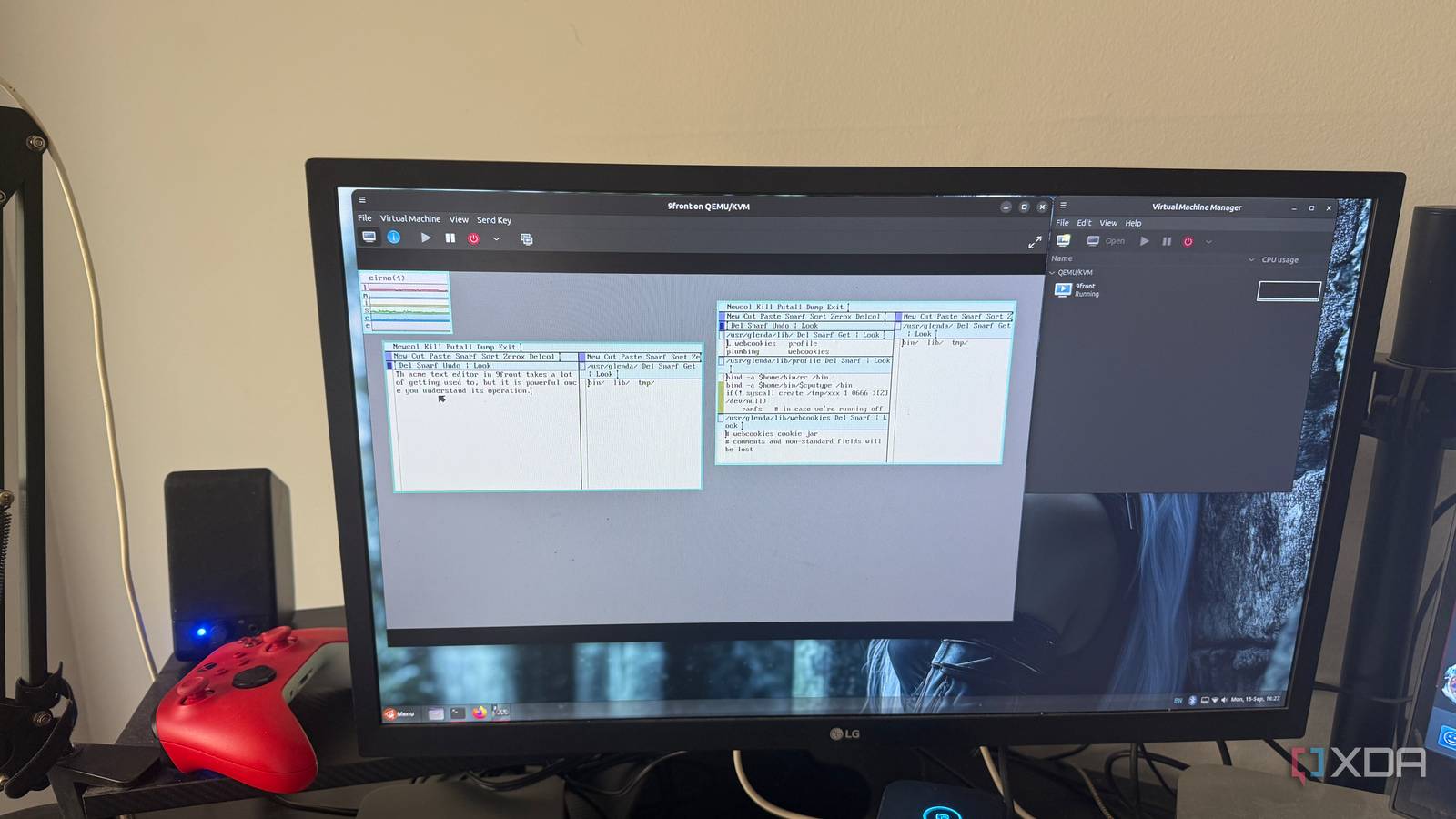
9front, a fork of Plan 9, blends eccentric design with a quirky community to preserve one of Unix’s strangest legacies.

9front, a fork of Plan 9, blends eccentric design with a quirky community to preserve one of Unix’s strangest legacies.

0

The Xous operating system – OSnews

preview

Xous is a microkernel operating system designed for medium embedded systems with clear separation of processes. Nearly everything is implemented in userspace, where message passing forms the basic communications primitive.

Xous is a microkernel operating system designed for medium embedded systems with clear separation of processes. Nearly everything is implemented in userspace, where message passing forms the basic communications primitive.

0

ChaosBSD Is A New BSD For "Broken Drivers, Half-Working Hardware, Vendor Trash" Test Bed - Phoronix

ChaosBSD Is A New BSD For "Broken Drivers, Half-Working Hardware, Vendor Trash" Test Bed www.phoronix.com
preview

A new BSD on the block is ChaosBSD that intends to serve as a testing distribution for unfinished and broken drivers not suitable for upstreaming to FreeBSD proper.

ChaosBSD is a downstream fork of FreeBSD that is self-described as:

"A Driver Proving Ground  

ChaosBSD is a fork of FreeBSD. It exists because upstream cannot, and should not, accept broken drivers, half-working hardware, vendor trash, or speculative hacks.  

We can."  
0

ReactOS Receives Fix For A Very Annoying Usability Issue - Phoronix

ReactOS Receives Fix For A Very Annoying Usability Issue www.phoronix.com
preview

ReactOS began 2026 with another “major step” towards Windows NT 6 compatibility with updating its MSVCRT implementation from Wine for the Microsoft C Runtime DLL library. That improved support for a number of Windows applications running on this open-source OS. ReactOS is taking another step-forward now with addressing a very annoying usability issue where up until now you may need to refresh the file manager for seeing folder changes.

ReactOS began 2026 with another “major step” towards Windows NT 6 compatibility with updating its MSVCRT implementation from Wine for the Microsoft C Runtime DLL library. That improved support for a number of Windows applications running on this open-source OS. ReactOS is taking another step-forward now with addressing a very annoying usability issue where up until now you may need to refresh the file manager for seeing folder changes.

0

Haiku OS Pulls In Updated Drivers From FreeBSD 15 - Phoronix

Haiku OS Pulls In Updated Drivers From FreeBSD 15 www.phoronix.com
preview

The BeOS-inspired Haiku open-source operating system project just published a new status report to detail how they ended out the year.

During the month of December they updated their FreeBSD driver compatibility layer against FreeBSD 15.0 that released at the start of the month. With that the Haiku OS developers then updated all of their Ethernet and WiFi drivers from FreeBSD to align with the FreeBSD 15.0 release.

0

Everything We Hate About Windows by The Hardware Unboxed Podcast - Oct 24, 2025 [Video Podcast, 1:27:02 hours]

preview

Invidious: inv.nadeko.net/watch?v=r3XLQMsQGGk

YouTube: youtu.be/r3XLQMsQGGk

Video description:


Episode 86: You all told us what you hated about Windows 11, and we fully agreed. So in this episode we go through all our grievances with the current state of Windows.

CHAPTERS
00:00 - Intro
06:21 - Unnecessary Microsoft accounts
10:39 - Search is broken
15:49 - Splash screens and ads
20:52 - The right click context menu
26:53 - Pre-installed bloatware
33:21 - Windows updates hurting performance
38:41 - Telemetry capture and data mining
42:28 - Copilot AI integration
45:45 - Updates breaking things
48:14 - Inability to dismiss pop-ups and updates
50:25 - Janky monitor issues
58:21 - Removing useful customization options
1:01:06 - Driver updates via Windows Update breaking things
1:05:17 - Microsoft Store
1:09:21 - Is Linux an alternative for gaming PCs?
1:14:36 - Summary of the current state of Windows
1:17:44 - Updates from our boring lives
0

RISC-V and micro kernel synergy

preview

I came across the post about Milk-V Titan, and there was a comment asking about the lack of the V extension would hinder running Ubuntu 25.10 which was targetting a particular RISC-V configuration, and it made me wonder if there were an opportunity for micro kernels to exploit.

Now, up-front: it’s been literally decades since I had an OS design class, and my knowledge of OS design is superficial; and while I’ve always been interested in RISC architectures, the depth of my knowledge of that also dates back to the 90’s. In particular (my knowledge of) RISC-V’s extension design approach is really, really shallow. It’s all at a lower level than I’ve concerned myself with for years and years. So I’m hoping for an ELI-16 conversation.

What I was thinking was that a challenge of RISC-V’s design is that operating systems can’t rely on extensions being available, which (in my mind) means either a lot of really specific kernel builds – like, potentially an exponential number – or a similar number of code paths in the kernel code, making for more complicated and consequently more buggy kernels (per the McConnell rule). It made me wonder if this is not, then, an opportunity for micro kernels to shine, by exploiting an ability to load extension-specific modules based on a given CPU capability set.

As I see it, the practicality of this depends on whether the extensions would be isolatable to kernel modules, or whether (like the FP extension) it’d just be so intrinsic that even the core kernel would need to vary. Even so, wouldn’t having a permutation of core kernel builds be smaller, more manageable, and less bug-prone than permutations of monolithic kernels?

Given the number of different possible RISC-V combinations, would a micro kernel design not have an intrinsic advantage over monolithic kernels, and be able to exploit the more modular nature of their design?

edit clarification

0

windows is soo easy to configure

preview

Today I needed to add outlook to the auto start programs on a corporate computer, so I searched how to do it and found an official step by step manual (see link) that read more like a linux help document.

In comparison to my linux mint, it appears more difficult to add a software to autostart on windows.

0

My first day using Pop OS

preview

I recently decided to reinstall linux mint 21.3 Cinnamon to clean any extra packages I installed over time so I didnt have to manually look for and uninstall packages that I no longer use. Though when I tried to run lutris it would no longer run so instead of trying to get it to work I thought I would try pop os. First thing I noticed when installing Pop OS was the different layout. I was use to the linux mint layout since I went from windows to Mint. I never used Mac so this layout might seem normal for mac users. So far I have reinstalled Lutris and got lord of the rings the battle for middle earth 2 to run. This is part2 of my first post from a few months ago. 1 month of Linux Mint and some thoughts.

I recently decided to reinstall linux mint 21.3 Cinnamon to clean any extra packages I installed over time so I didnt have to manually look for and uninstall packages that I no longer use. Though when I tried to run lutris it would no longer run so instead of trying to get it to work I thought I would try pop os. First thing I noticed when installing Pop OS was the different layout. I was use to the linux mint layout since I went from windows to Mint. I never used Mac so this layout might seem normal for mac users. So far I have reinstalled Lutris and got lord of the rings the battle for middle earth 2 to run. This is part2 of my first post from a few months ago. 1 month of Linux Mint and some thoughts.

0

x86 tablet os

preview

Like the title says i need an os for a x86 tablet.

I already tested various different linux distros, (mint, ubuntu, debian etc.) with various de’s (gnome, xfce, plasma, plasma mobile) but nothing really suits a tablet. I tried android x86 but that wouldn’t install.

Basically my problem is that apps etc. Are made with mouse and keyboard in mind making me unable to for example easily scroll as i have to drag the scroll bar manually.

Anyone got ANY recommendation? The default os was mint btw.

0

best resources and tips for a newbie to linux?

preview

I didn’t realize this community existed and posted my other thread about linux distros in another community, so I’ll try rectifying that here.

I’m trying to learn as much about linux as a desktop system as I can before I dive in to installing a distro on my computer. I do have a tiny bit of familiarity with the terminal from having servers running Debian, but those I get a lot of help with. the distro I’ve chosen is Bazzite, which is based(?) on Fedora if I recall right. I liked the stuff it comes with (I love video games) built in and I like the idea of the atomic desktop setup.

so, what are your tips and tricks for a new linux user? what about outside resources? I’ve been doing as much digging for articles and videos as I can, but I thought asking the community might be a good idea too. I’m trying to compile these resources for myself and my partner, so that we have stuff to learn from and reference.

as a final question, what got you into using linux over windows or mac?

thanks in advance!

0

Ars Technica | Not-a-Linux distro review: SerenityOS is a Unix-y love letter to the ’90s

Ars Technica Not-a-Linux distro review: SerenityOS is a Unix-y love letter to the ’90s arstechnica.com
preview

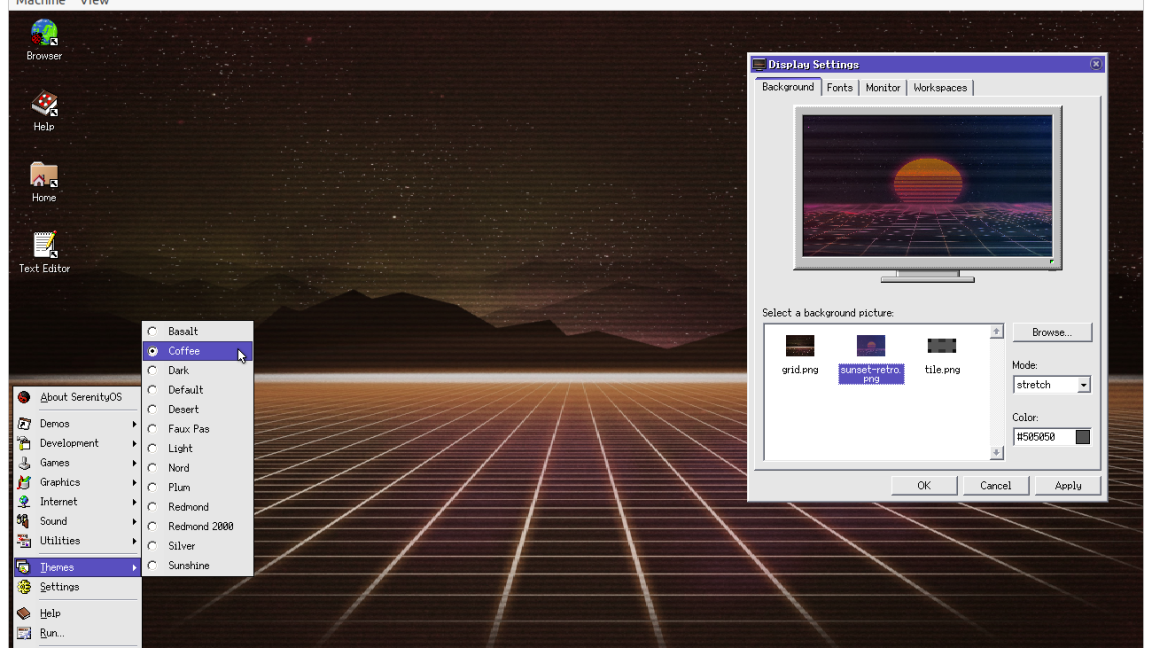
Here are links to the website, GitHub, and Wikipedia pages.


The article I linked is a couple years old but I did a quick search of the community and it doesn’t seem to have been mentioned here. Hopefully you find it as neat as I did.

There’s also a couple YouTube videos covering it if you have some time to kill.

0

OMG! We’re at forty! (Announcing the release of Fedora Linux 40) - Fedora Magazine

Fedora Magazine OMG! We’re at forty! (Announcing the release of Fedora Linux 40) - Fedora Magazine fedoramagazine.org
preview

Fedora 40’s Changeset

It’s mostly minor changes, but the most noticable one for me was that Gnome 46 now has expandable notifications, no extensions needed. (Making it impossible to read the full notification text was one of the design choices of all time.)

Fedora 40’s Changeset

It’s mostly minor changes, but the most noticable one for me was that Gnome 46 now has expandable notifications, no extensions needed. (Making it impossible to read the full notification text was one of the design choices of all time.)

0

Porting Strategy - Redox - Your Next(Gen) OS

preview

cross-posted from: programming.dev/post/9979951

Monday, February 12, 2024
Ribbon and Ron Williams write:

As Redox functionality becomes more complete, we have been working hard to get a wide variety of software working.

This post will cover our porting strategy for Linux/BSD programs.

We have ported the following games and emulators:

2048
ClassiCube
DevilutionX
DOSBox
eduke32
FreeCiv
Gigalomania
Hematite
Mednafen
Neverball
OpenJK
OpenTTD
PrBoom (Doom engine)
ScummVM
Space Cadet Pinball
and others.

Porting is a major part of the Redox development effort. We are using porting as a way to prioritize and validate Redox functionality.

Currently dozens of programs and many more libraries work. Our initial focus has been on porting Rust programs, but we also recognize the importance of supporting programs written in other languages.

In last year Ribbon began the porting of more than 1000 programs and libraries to Redox! They are still work-in-progress and many require customized cross-compilation scripts or improved library support. You can see them here.

With our recent change to a Linux-compatible path format, we have removed a major hurdle to supporting Linux applications. In the future we plan to expand our POSIX support, port more Rust crates and continue to improve Relibc.

Some thought is being given to virtual machines and Wine as possible mechanisms for running proprietary binaries and possibly even proprietary drivers. However, there are no specific plans for that capability at this time.

Read Porting Strategy - Redox - Your Next(Gen) OS

0

System-hardening pinsyscalls(2) work on OpenBSD, summarized by Theo de Raadt. "The direct-syscalls-inside-the-binary model used by go ... provided the biggest resistance against this effort."

0

How do you recall your most used commands?

preview

For example, things you do often but not often enough to make a muscle memory? On Linux systems with Bash, I just use bash aliases. If I do it more than once, It gets an alias or a script; cause I won’t remember next time. Example of my current desktop aliases :

alias fuck='sudo $(history -p \!\!)'
alias hstat='curl -o /dev/null --silent --head --write-out '\''%{http_code}\n'\'''
alias ls='ls -la --color=auto'
alias pwgen='< /dev/urandom tr -dc "_A-Z-a-z-0-9\#\+=\$" | head -c${1:-15};echo;'
alias rsync='rsync -ah --info=progress2'

And in my bashrc I have the following settings and functions which come in handy when heads down in the terminal:

# append to the history file, don't overwrite it
shopt -s histappend

# for setting history length see HISTSIZE and HISTFILESIZE in bash(1)
HISTSIZE=1000
HISTFILESIZE=2000
HISTTIMEFORMAT="%Y-%m-%d %T "

####
function stopwatch() {
    local BEGIN=$(date +%s)
    echo Starting Stopwatch...

    while true; do
        local NOW=$(date +%s)
        local DIFF=$(($NOW - $BEGIN))
        local MINS=$(($DIFF / 60))
        local SECS=$(($DIFF % 60))
        local HOURS=$(($DIFF / 3600))
        local DAYS=$(($DIFF / 86400))

        printf "\r%3d Days, %02d:%02d:%02d" $DAYS $HOURS $MINS $SECS
        sleep 0.5
    done
}

function md() {
  pandoc "$1" | lynx -stdin;
}

function weather() {
  ( IFS=+; curl wttr.in/$(curl -s http://ipwho.is/ | jq .postal););
}

So what do you do to remember or recall your most used commands?

0

Fedora Linux 39 is officially here! - Fedora Magazine

Fedora Magazine Fedora Linux 39 is officially here! - Fedora Magazine fedoramagazine.org
preview

I rebased my Silverblue install yesterday. The most notable change in my opinion is the tweaks to the UI and theming of Gnome 45.

Changeset

I rebased my Silverblue install yesterday. The most notable change in my opinion is the tweaks to the UI and theming of Gnome 45.

Changeset

0

Linux 6.5 Released With AMD P-State EPP Default, USB4 v2, MIDI 2.0 & More Hardware Bits

Linux 6.5 Released With AMD P-State EPP Default, USB4 v2, MIDI 2.0 & More Hardware Bits www.phoronix.com
preview

Linux 6.5 has many great features from the AMD P-State EPP driver default rather than ACPI CPUFreq for Zen 2 and newer supported AMD Ryzen systems, initial USB4 v2 enablement, initial MIDI 2.0 kernel driver work, more Intel hybrid CPU tuning, and a whole lot more.

Linux 6.5 has many great features from the AMD P-State EPP driver default rather than ACPI CPUFreq for Zen 2 and newer supported AMD Ryzen systems, initial USB4 v2 enablement, initial MIDI 2.0 kernel driver work, more Intel hybrid CPU tuning, and a whole lot more.

0

If Mircosoft were to fully collaborate with the Linux/open source community what would the resulting Linux distro chimera look like and how would it affect the Linux community in general?

preview

I am aware of the Linux subsystem and projects like Linspire and ReactOS that attempt to either better compatibility between the two OSs or replicate the other but I was wondering if Microsoft were to open source the entirety of Windows what the ramifications on the Linux community would be.

Would WINE and Proton’s development rapidly accelerate? Would they be necessary?

Would Windows tools like their file explorer become dominant over others in the Linux space?

Would things like NTFS be installed by default in most distros? exFAT also seemed to be (or was) in a weird legal position.

Do you think a lot of people and businesses would jump on a chimera distro that was half and half?


Bit of a weird question I know but I wouldn’t even know how to word it for a web search. I could also be missing a lot due to my knowledge level on licenses and compatibility projects.

It doesn’t have to be Linux specific either. If you wanted to mention how it would affect BSD or other OSs I’d be interested to hear about that as well.

0

I'm looking for the best way to recover data from an android phone that isn't unlocked or rooted.

preview

Long story short, I was arrested for disorderly conduct and “resisting arrest.” The police took my phone and arrested me when I told them I was recording. They took me in a car, and we waited for about 15 minutes, then they brought my phone back. When I got out of jail, the recording only went up to a few seconds before a key moment and then ended before the time the police arrived.

Under file properties, the time ‘edited’ does add up to the length of the recording after another short recording had stopped. I started and stopped recording, and the started again shortly afterward. If you trim the end of a video, does it also change the time it was edited?

The Trash folder on my phone was empty, I have never emptied this folder, perhaps I’ve never deleted anything in 1.5 yrs? I still have 40 gb left in storage.

One of three things happened:

  1. I bumped the phone, and it stopped recording, I wasn’t looking at the screen at all and was just holding it against my chest.
  2. My phone overheated and stopped recording. It is a pixel 5a 5g, it has overheated on me from just sitting in the sun, so I can see it overheating while recording, it was very hot out at the time.
  3. The police officer trimmed the video down and then emptied my trash folder to make it harder to recover.

I’ve tried several different apps and haven’t been able to recover anything relevant, only old files that I deleted (Again, I don’t remember ever emptying my trash folder)

All the options for copying a full disk image require root, which requires unlocking the bootloader, which requires wiping the entire phone. I might still be able to recover data that way, but who knows.

I’m almost willing to have it sent off to have the data pulled from the physical storage inside the device if I have to.

I feel like I’m going crazy, it would really help to have the rest of the video since it does show someone threatening my life with a weapon.

I already explained this to my attorney. If the police claim they watched the video on my phone, they are lying since my phone would have been locked by the time they got there if it wasn’t recording, right?

0

Toy Story characters behind code names of Debian releases

Debian codenames & Toy Story characters — Filling the Void blanc.pages.dev
preview

Debian release code names are derived from the names of characters in the movie Toy Story. This post lists Debian releases accompanied by images of their corresponding Toy Story characters.

Debian release code names are derived from the names of characters in the movie Toy Story. This post lists Debian releases accompanied by images of their corresponding Toy Story characters.