preview
IMPORTANT DISCLAIMER: This is my own project. Im am using AI, so lets get that out of the way… because its the key reason for why YOU SHOULD NOT USE IT. Im not trying to promote “yet another ui framework”, this is an investigation to see what is possible. Its unreviewed, unaudited and far from finished. Nobody else should be using this. This framework is intended for myself on my own projects. It is provided open-source for transparency, testing and demo purposes. Feel free to reach out for clarity if you have any questions.
Im was investigating an idea i had about JSX-like syntax for webcomponents after some experience with Lit. I am sharing this here because it might be interesting/educational.
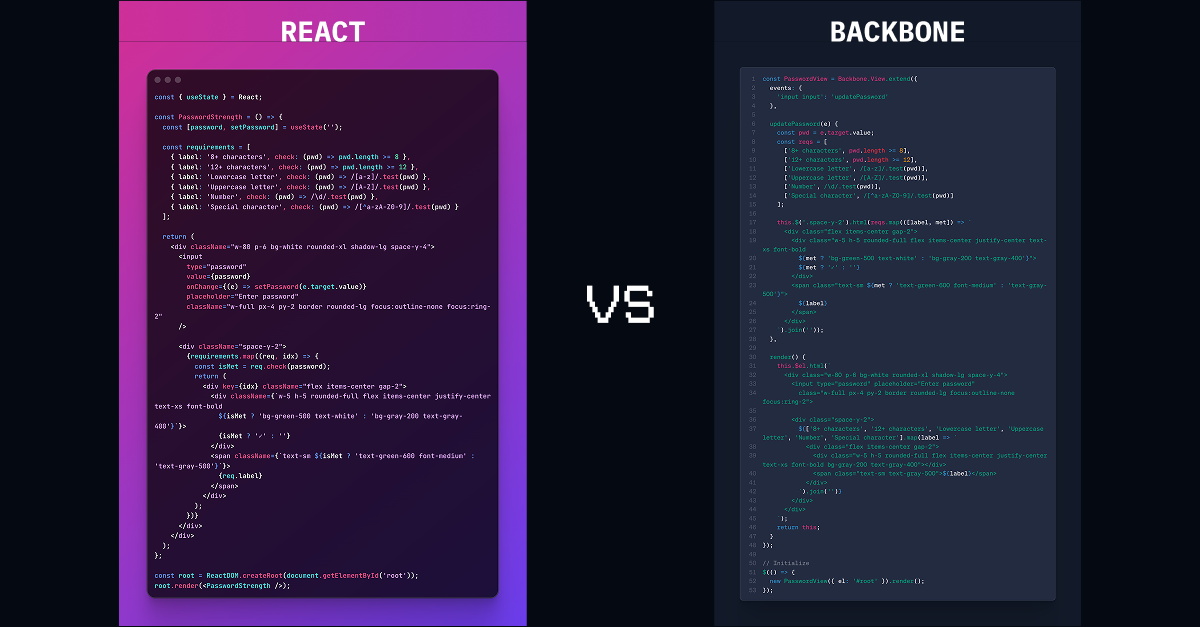
Lit is a nice lightweight UI framework, but i didnt like that it was using class-based components. It can support React with a wrapper, buts React is fundamentally an abstraction away from the DOM.
Vue has a nice approach but i prefer working with the syntax that React uses. I find it more intuitive for debugging and deterministic rendering. I wondered if with webcomponents, i could create a UI framework that didnt need to be transpiled.
My intentions with this framework is to get to a reasonable level of stability, to then replace React on some of my existing projects. I made a start by creating some basic reusable ui components components to be built with the js framework. Aiming for something like Material UI.
I can then simmer that slop into some basic UI demos:
To better demonstrate the pure javascript approach, i created an example of using a minimal amount of tooling for a PWA. The aim here is to keep the application logic in readable js and abstract the framework logic away from the developer for better DX.
To simplify things for myself, i added something similar to module-federation where i can fetch the dim dependencies from remote instead of publishing to npm. The approach has tradoffs worth considering and is still a work in progress.
The disclaimer above is always worth repeating. Im aiming for a post like this to be like “building in public”. If interesting to anyone, i hope its inviting to take a look. It’s hard to determine if / when its a good time to share, so best to get it out there sooner for any outstanding issues i may have overlooked.