0
0

Tech Explorist
Saturn's moon- Titan, could harbor only a tiny amount of life
www.techexplorist.com
posts tagged #space


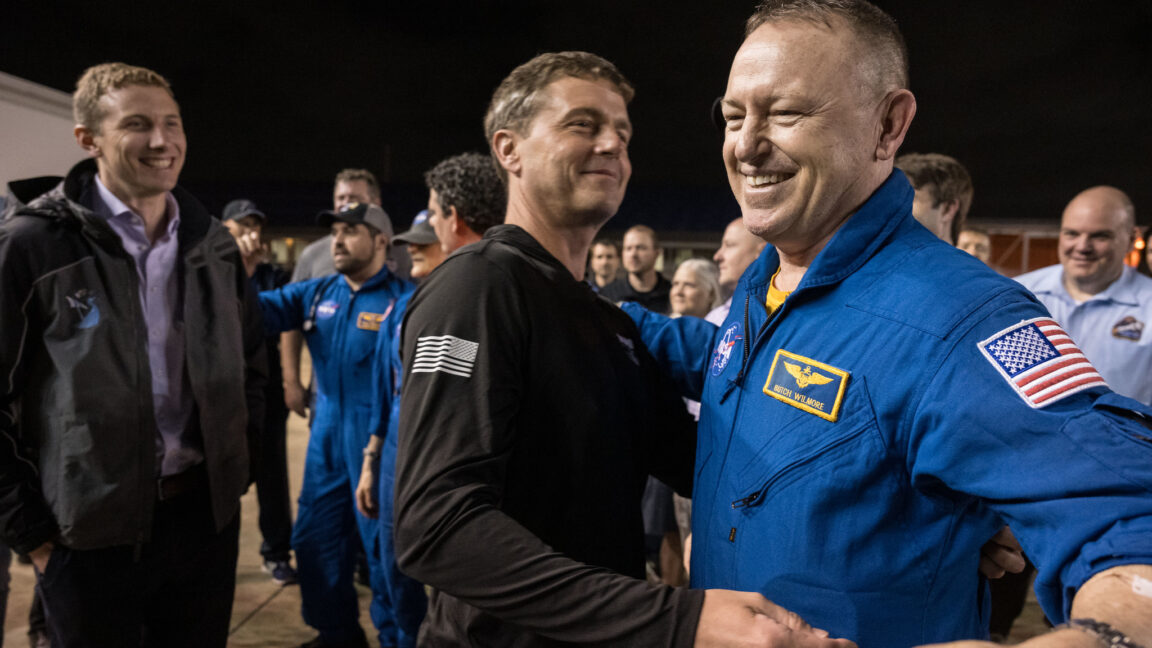
Starliner’s flight to the space station was far wilder than most of us thought
Starliner’s flight to the space station was far wilder than most of us thought

cross-posted from: lemmy.world/post/27606387
cross-posted from: lemmy.world/post/27606387

People often think about archaeology happening deep in jungles or inside ancient pyramids. However, a team of astronomers has shown that they can use stars and the remains they leave behind to conduct a special kind of archaeology in space.
Mining data from NASA’s Chandra X-ray Observatory, the team of astronomers studied the relics that one star left behind after it exploded. This “supernova archaeology” uncovered important clues about a star that self-destructed—probably more than a million years ago.
Today, the system called GRO J1655-40 contains a black hole with nearly seven times the mass of the sun and a star with about half as much mass. However, this was not always the case.
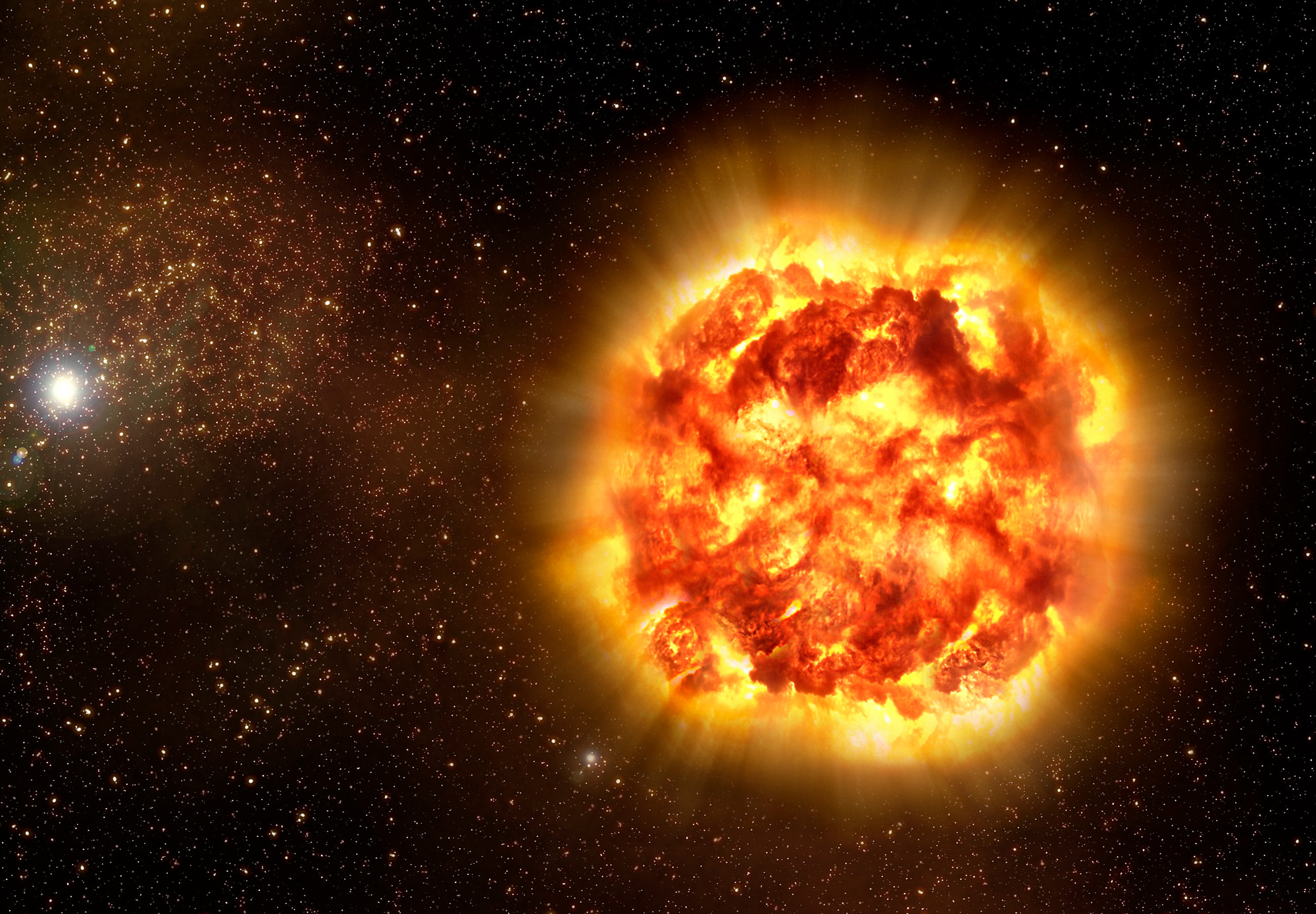
Originally GRO J1655-40 had two shining stars. The more massive of the two stars, however, burned through all of its nuclear fuel and then exploded in what astronomers call a supernova. The debris from the destroyed star then rained onto the companion star in orbit around it, as shown in the artist’s concept.
Originally GRO J1655-40 had two shining stars. The more massive of the two stars, however, burned through all of its nuclear fuel and then exploded in what astronomers call a supernova. The debris from the destroyed star then rained onto the companion star in orbit around it, as shown in the artist’s concept. With its outer layers expelled, including some striking its neighbor, the rest of the exploded star collapsed onto itself and formed the black hole that exists today. The separation between the black hole and its companion would have shrunk over time because of energy being lost from the system, mainly through the production of gravitational waves.
When the separation became small enough, the black hole, with its strong gravitational pull, began pulling matter from its companion, wrenching back some of the material its exploded parent star originally deposited. While most of this material sank into the black hole, a small amount of it fell into a disk that orbits around the black hole. Through the effects of powerful magnetic fields and friction in the disk, material is being sent out into interstellar space in the form of powerful winds.
This is where the X-ray archaeological hunt enters the story. Astronomers used Chandra to observe the GRO J1655-40 system in 2005 when it was particularly bright in X-rays. Chandra detected signatures of individual elements found in the black hole’s winds by getting detailed spectra—giving X-ray brightness at different wavelengths—embedded in the X-ray light. Some of these elements are highlighted in the spectrum shown in the inset. The team of astronomers digging through the Chandra data were able to reconstruct key physical characteristics of the star that exploded from the clues imprinted in the X-ray light by comparing the spectra with computer models of stars that explode as supernovae.
They discovered that, based on the amounts of 18 different elements in the wind, the long-gone star destroyed in the supernova was about 25 times the mass of the sun, and was much richer in elements heavier than helium in comparison with the sun.
A paper describing these results titled “Supernova Archaeology with X-Ray Binary Winds: The Case of GRO J1655−40” was published in The Astrophysical Journal.
This analysis paves the way for more supernova archaeology studies using other outbursts of double star systems.



cross-posted from: sopuli.xyz/post/24424697
cross-posted from: sopuli.xyz/post/24424697


cross-posted from: sopuli.xyz/post/24367228
cross-posted from: sopuli.xyz/post/24367228



The Hera spacecraft has recently been assembled in Bremen, Germany by OHB. Its mission is to observe the result of NASAʼs DART mission which impacted Dimorphos in 2022-09. The Hera spacecraft will now be sent to the Netherlands for testing by the European Space Agency (ESA). The craft is scheduled to be launched by SpaceX from Cape Canaveral on 2024-10.
The Hera spacecraft has recently been assembled in Bremen, Germany by OHB. Its mission is to observe the result of NASAʼs DART mission which impacted Dimorphos in 2022-09. The Hera spacecraft will now be sent to the Netherlands for testing by the European Space Agency (ESA). The craft is scheduled to be launched by SpaceX from Cape Canaveral on 2024-10.

2023-08-23T12:34+00 (UTC)2023-08-23T05:34-07 (Los Angeles)2023-08-23T08:34-04 (New York)2023-08-23T15:34+03 (Helsinki)2023-08-23T15:34+03 (Kyiv)2023-08-23T18:04+05:30 (Delhi)2023-08-23T19:34+07 (Jakarta)2023-08-23T20:34+08 (Beijing)2023-08-23T22:34+10 (Sydney)Chandrayaan means “moon craft” in Hindi. In addition to the propulsion module that pushed the spacecraft into orbit around the moon, the landing module consists of the Vikram lander and the Pragyan rover that will attempt to set down on the lunar surface in the moon’s south polar region. The mission is robotic and there are no astronauts aboard.
The Aug. 23 landing was selected because it is the day when the sun will rise at the landing site. The mission is to conclude two weeks later when the sun sets. While on the surface, the solar-powered lander and rover will use a range of instruments to make thermal, seismic and mineralogical measurements.