#urbanism

posts tagged #urbanism

0

Leipzig's masterpiece - How a new district for tens of thousands was created under socialism and what remains of it now

Unsere Zeit Leipzigs Meisterstück www.unsere-zeit.de
preview

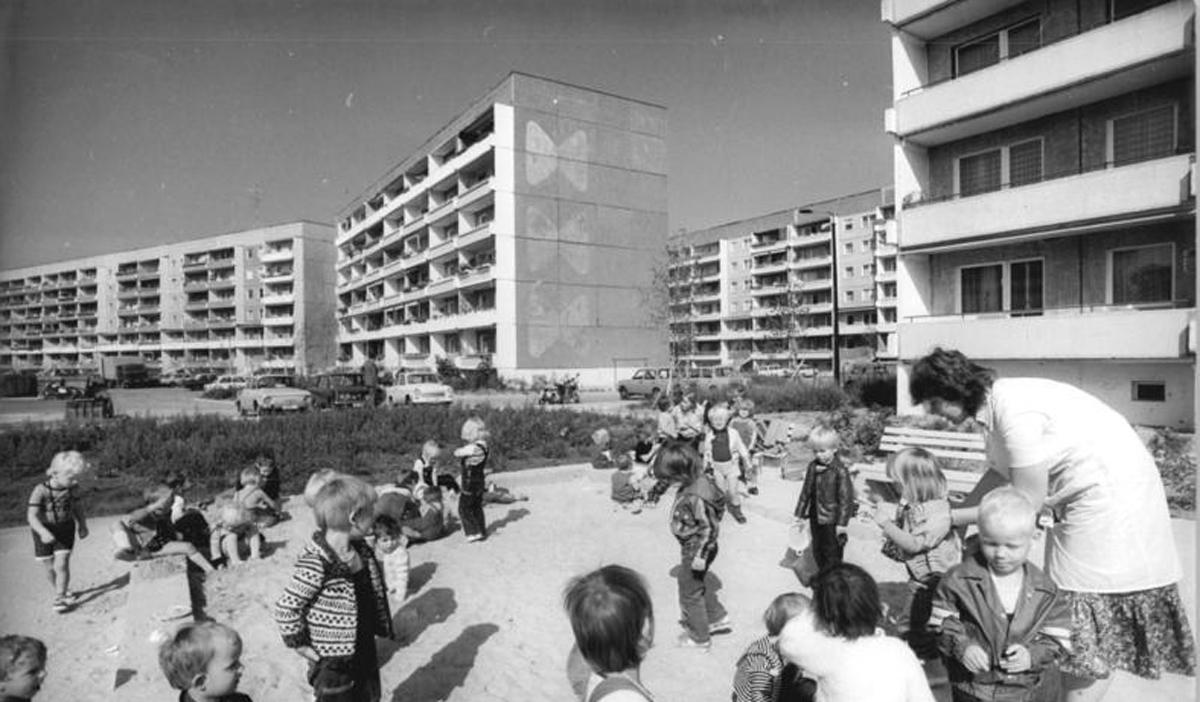
When the first families moved to Leipzig-Grünau at the end of the 1970s, it was a huge step forward for many. Those who previously had to live with a coal stove and an outside toilet were given a modern apartment with a bathroom, central heating and often even a balcony. Within a few years, a new district for tens of thousands of people was created.

Fifty years after the foundation stone was laid, rents in Leipzig are rising, affordable apartments are becoming increasingly scarce and the number of homeless people is growing. How was it possible to create housing on this scale back then, and what can we learn from these experiences for our struggles for better housing today?

These questions were the focus of a well-attended event on October 28th by DKP Leipzig and the International Research Center for the GDR (IFDDR). On the occasion of the 50th anniversary of the laying of the foundation stone, Martin Küpper presented the study “Housing for all, building according to plan”. Long-time people from Grünau and those involved in the construction also brought their experiences into the discussion.

Socialist property relations

In order to understand how a residential area the size of Grünau could be created, it is worth taking a look at the historical initial conditions of the GDR. After the war, many cities lay in ruins. Homes, factories and transport routes were damaged, and millions of refugees and displaced people needed accommodation. For 1950, a shortage of around 1.3 million apartments was determined in the GDR. Almost a million of the existing apartments dated from before 1860 and many of them were poorly equipped and in need of renovation.

At the same time, the economic conditions were difficult. War damage, dismantling and reparations weakened the economy. The division tore up supply relationships, and Western export restrictions made access to modern technology more difficult. Under these conditions, the GDR had to develop an efficient construction industry.

The basis for this was the changed ownership structure. Large construction companies became state-owned and housing construction was increasingly organized by the state. The Reconstruction Act of 1950 made it possible to use land in designated development areas for reconstruction and to transfer it to public ownership. In June 1951, the Leipzig center was also declared a development area. Since 1968, the right to housing was enshrined in Article 37 of the GDR constitution, depending on economic possibilities.

On this basis, construction capacities, material supplies and investments could be aligned towards common goals. Residential areas, traffic and supplies could be planned together. Land policy, state planning, industrialized construction, low rents and public housing all intertwined.

Serving all of life

On July 27, 1950, the GDR government passed the “16 Principles of Urban Development”. They saw the city as a place to work, live, learn and relax. Public facilities, green spaces and cultural life should be taken into account during planning. This idea continued in the later construction of large residential areas, even if the architecture and construction methods changed fundamentally.

As early as 1972, after comparing various locations, it was decided to first develop Grünau and later Paunsdorf. A year later, the city of Leipzig announced an urban planning ideas competition for Grünau. At the same time, a new phase of housing construction in the GDR began with the housing construction program approved in 1973. By 1990, 2.8 to three million apartments were to be built or modernized.

The foundation stone was laid in Grünau on June 1, 1976, and the first residents moved in in November 1977. By the end of the 1980s, around 36,000 apartments had been built, in which around 85,000 people lived. In addition to the residential buildings, schools, kindergartens, polyclinics, department stores, playgrounds and transport connections were planned. The design of the living environment with green spaces, murals and sculptures was also part of the planning.

This pace of construction was made possible by the industrial construction method and the efficiency of the panel factories and housing complexes. In 1985, 83 percent of housing construction across the GDR was already carried out industrially. The standardized production made it possible to build large residential areas in a comparatively short time and to combine the planning of apartments and public facilities.

The construction site and its residents

For the Leipzig builders, Schönefeld was the “journeyman’s piece”, Grünau was supposed to be their “masterpiece”. But the high pace of construction brought difficulties. Siegfried Schlegel, who also spoke at the event about the planning and technical decisions of the time, describes in the book “Building in Leipzig 1945 – 1990” the disproportion between high-rise and open-space construction: At times around 2,000 people worked on building construction, but only around 30 on the design of the outdoor facilities.

While new apartment blocks were already being built, there were still no paved streets and paths in front of houses that had already been occupied. Grünau was therefore nicknamed “mud town”. Temporary power lines also caused difficulties. An on-call service had to rectify problems.

The residents helped. Schlegel reports on an initiative in which tenants of municipal apartments were asked to spend one hundred hours per household designing green spaces. This partially compensated for the lack of capacity and offered the opportunity to get to know neighbors and help shape the living environment.

Neighborhood instead of separation

Grünau was not a neighborhood for just one income group. Workers lived next to engineers, teachers next to employees. Newly built apartments in the GDR in the 1980s usually cost 0.80 to 1.25 marks per square meter. The rents were set by the state and did not cover the actual costs. Anyone who got an apartment did not have to fear being pushed out by rising market rents.

Housing allocation followed social and political priorities. Young families and single parents with children had better opportunities; Employees of important companies and state institutions were also taken into account. What was crucial was not the tenants’ ability to pay, but rather a politically organized distribution of living space according to social needs. But living space remained scarce, some groups were privileged, and many people waited years for a new apartment.

Because numerous young families moved in at about the same time, a residential area with many children was created. Shared schools, farms and house parties offered opportunities to make contacts across professional boundaries. This is how neighborhoods emerged in which people with different professions and walks of life shared their everyday lives with one another.

Having a say, working together, living together

Residents should not just be tenants, but should also participate in their living environment. In workers’ housing cooperatives (AWG), members contributed shares and construction hours. Companies and the state helped with land, workers and cheap loans. At general meetings, the cooperative members were able to decide on construction, financial and maintenance plans, elect board members and form commissions.

There was also co-management in communal houses. According to Section 114 of the GDR Civil Code, the housing authorities concluded contracts with tenant communities for care, repairs and administration. House communities participated in maintenance plans and were able to receive funding for smaller jobs. Repair bases provided equipment and materials.

The fundamental decisions about housing construction and the development of the district were integrated into state planning. Nevertheless, the residents were able to help shape their immediate living environment and take on communal tasks. Youth clubs and the “Völkerfreundschaft” cultural center, which opened in 1983, also offered space for cultural and community life.

Economic Limits

While Grünau grew, many of Leipzig’s old buildings fell into disrepair. The new building had priority. The repair of old roofs, facades and pipes required craftsmen and materials that were often lacking. The repair backlog grew.

One problem was that the GDR had fewer and fewer resources available to renew and expand its economic foundations. According to information from “Building in Leipzig 1945 – 1990”, the proportion of national income that was used for such investments fell from 29 percent in 1970 to 22 percent in 1989. This made it more difficult to modernize companies, renew machines and increase the performance of the economy.e

There were also international pressures. Cooperation with the Soviet Union and the other CMEA states had made long-term supplies of raw materials possible. However, after the global oil price shocks, transfer prices in trade with the Soviet Union also rose. In 1981 it also announced that it would reduce annual oil deliveries from around 19 to 17 million tons. The GDR had to rely more on brown coal and change production processes. Credit problems and restrictions on technology imports also weighed on the economy.

Nevertheless, the GDR leadership stuck to the housing construction program and low rents. This priority improved the living conditions of millions of people, but required resources that were not available for the renovation of old buildings or industrial renewal.

From new building to “Plattenbau”

After 1990, many industrial companies in Leipzig collapsed, jobs were lost and younger families moved away. Grünau lost almost half of its residents by the 2000s. Apartments were empty and facilities closed. At the same time, the public image of the new development areas changed: the sought-after apartment became the derogatory term “Platte”.

The sociologist Alice Kahl, who has studied Grünau since 1979, described the interests behind this image change. Real estate companies and investors were able to market renovated old buildings and homes better if prefabricated buildings were considered unattractive. In their 2000 survey, 55 percent saw improvements in the living environment, but only 22 percent saw an improvement in Grünau’s reputation. There was a clear gap between his own experience in his own neighborhood and his public reputation.

The resident survey “Grünau 2025” by the Helmholtz Center for Environmental Research (UFZ) also shows what has remained of the quality of living. Of the almost 700 Grünau residents surveyed, 68 percent feel very comfortable in their own apartment. In contrast, only 49 percent feel completely comfortable in the district, while another 48 percent feel comfortable with restrictions.

The ownership structure also changed. Municipal and cooperative housing companies sold parts of their holdings. The Old Debt Relief Act of 1993 linked debt relief with privatization and sales obligations. Between 2001 and 2010, around 6,800 apartments were demolished in Grünau. The vacancy rate was high; Funding programs and economic interests decided on the future of the buildings. Familiar neighborhoods disappeared along with the houses.

The housing question is back

In Leipzig, asking rents rose by around a quarter between 2022 and 2025. It is becoming increasingly difficult for many households to find affordable housing. Need alone does not automatically lead to construction. Private investors must have the prospect of sufficient returns.

Grünau reminds us that the housing issue was once approached with a different social standard. The GDR leadership declared it a central task, built up an efficient construction industry and invested large amounts of resources. Within just a few years, living space was created for tens of thousands, with schools, kindergartens, utilities and places for community living. The fact that difficulties arose in a construction project of this magnitude and not all plans could be realized does not detract from this development achievement. Anyone who wants to understand the socialist new development areas must look at their achievements as well as the material conditions under which they were created and the unresolved contradictions. The work of the IFDDR makes a contribution to this. In view of today’s housing shortage, the question once again arises as to who owns the land and apartments, to what standards they are built and who makes the decisions.
0

HSR should not be seen as the "be all and end all" of rail transport!

Diesel locomotive TU6MB-2494 with a freight train, Braslav peat enterprise railway
preview

~Photo~ ~by~ ~user~ ~“Valdemar”~ ~on~ ~parovoz~ ~IS~

i’ve observed that many on the left tend to be overly enthusiastic about high-speed rail, perhaps due to misunderstanding the success of china’s network.

high-speed rail is indeed impressive and serves as an important element of transport infrastructure, but it cannot fulfil every transport requirement, nor was it intended to do so! a rail system’s usefulness depends on the network supporting it, which should mainly include regional trains, and freight services, perhaps also narrow-gauge lines, where appropriate, not solely the headline-grabbing high-speed corridors. while speed is important, factors such as coverage, access, capacity, and the types of services the network can provide are much more significant.

regional rail is what makes a passanger network practical on a daily basis. most journeys are not made between distant megacities; people require reliable connections between towns, suburbs, smaller cities and regional centres. a train station that is difficult to access except by car, or that serves only a limited number of major destinations, is of limited value. strong links between high-speed rail and commuter or regional services allow more communities to benefit from faster intercity travel.

freight rail is essential, despite being seen as less glamorous than passenger services. freight requires capacity, reliable paths, and infrastructure suited to heavy loads, rather than top speeds. dedicated high-speed lines often have steeper gradients and more costly alignments, which can be unsuitable for freight operations. focusing rail strategy solely on passenger speed overlooks one of rail’s key economic functions: moving goods efficiently at scale.

also, narrow-gauge rail is criminally overlooked and warrants investment based on its own merits. track gauge is a matter of engineering rather than a measure of a railway’s quality. narrow-gauge lines can provide services in areas where terrain, existing infrastructure, or low demand make a new, high-speed standard-gauge line impractical. while they may not support high speeds, they still offer reliable passenger connections and freight movement. insisting that every line emulate high-speed rail risks disregarding useful existing routes or serving communities unable to justify the expense of a new corridor.

also, china’s system is by no means perfect, with its CRH200J trainsets actually being a fairly good example of the image of hsr being used to make rail service worse, not better:

from january 5, 2019, CRH200J trains were introduced into passenger service and replaced some conventional trains (“green trains”). however, while the regular trains were categorized as “k”, “t” or “z”, their replacements are in the higher fare category “d”, which belongs to the high-speed group. however, the train itself does not fit category d in terms of speed, as it moves much slower, only 130 km/h! (not to mention that service reportedly got considerably worse.) the only reasons for the fare-increase was thus only the missaplied “hsr” marque. the same trainsets are used on the much-lauded china-laos “hsr”, btw, which seemed to have caused much envy among western leftists, despite moving slower than the american acela.

0

China sets out railway technology roadmap to 2030

preview

China: In October, China’s National Railway Administration (NRA) published its railway science and technology innovation plan for the 15th Five-Year Plan period (2026–2030). The plan covers the development of high-speed and heavy-haul operations, intelligent control systems, alternative traction and digital technologies.

A key objective is to strengthen China’s own research and engineering base. The document acknowledges that, despite its achievements, the industry still lacks fundamental research, in-house development capability and qualified specialists, and continues to face difficulties in bringing new technologies into use. ROLLINGSTOCK has previously reported that CRRC’s declared R&D spending is three times that of Europe’s largest player, Alstom.

Under the new plan, China intends to set up around 30 industry research centres and complete at least 20 pilot projects by 2030. These include engineering systems to support operation at up to 400 km/h and technologies for building railways in high-altitude areas.

For passenger rolling stock, the plan calls for CRRC’s CR450 high-speed train, with a commercial speed of 400 km/h, to complete the process of entering commercial service. Testing of the train was completed in the summer. Once in service, it will be used for further research into wheel and rail wear at 400 km/h, pantograph–catenary interaction, and the effects of infrastructure condition, the environment and signalling systems on train performance.

The plan also provides for a new generation of trains with distributed or concentrated traction for speeds of 200 to 250 km/h, as well as new passenger coaches and tourist trains. China also intends to continue research and testing of maglev trains, targeting speeds of up to 600 km/h.

Another priority is automated control for heavy-haul freight trains, which the plan says will improve safety and increase capacity. China carried out its first tests of a driverless freight train on open infrastructure in 2024. The plan also includes preliminary research into the use of 6G communications on the railway and the development of potential use cases.

For traffic management, China plans to develop satellite-based train control systems, including solutions based on its BeiDou navigation system. In particular, the plan provides for further development of moving-block signalling. Unlike fixed-block systems, moving block sets the safe separation between trains according to their actual position and movement. At the end of last year, China tested virtual coupling on a main line, running seven freight trains as a single group.

The plan also covers continued development of hybrid locomotives with hydrogen and battery traction, together with the refuelling infrastructure they require. CRRC already offers a modular shunting locomotive platform with a range of traction options. However, hybrid mainline locomotives remain one-off projects, such as the hydrogen locomotive for Chile.

0

Cuba manufactures its first electric "Rutero" minibuses in Holguín

CiberCuba Cuba manufactures its first electric "Rutero" minibuses in Holguín en.cibercuba.com
preview

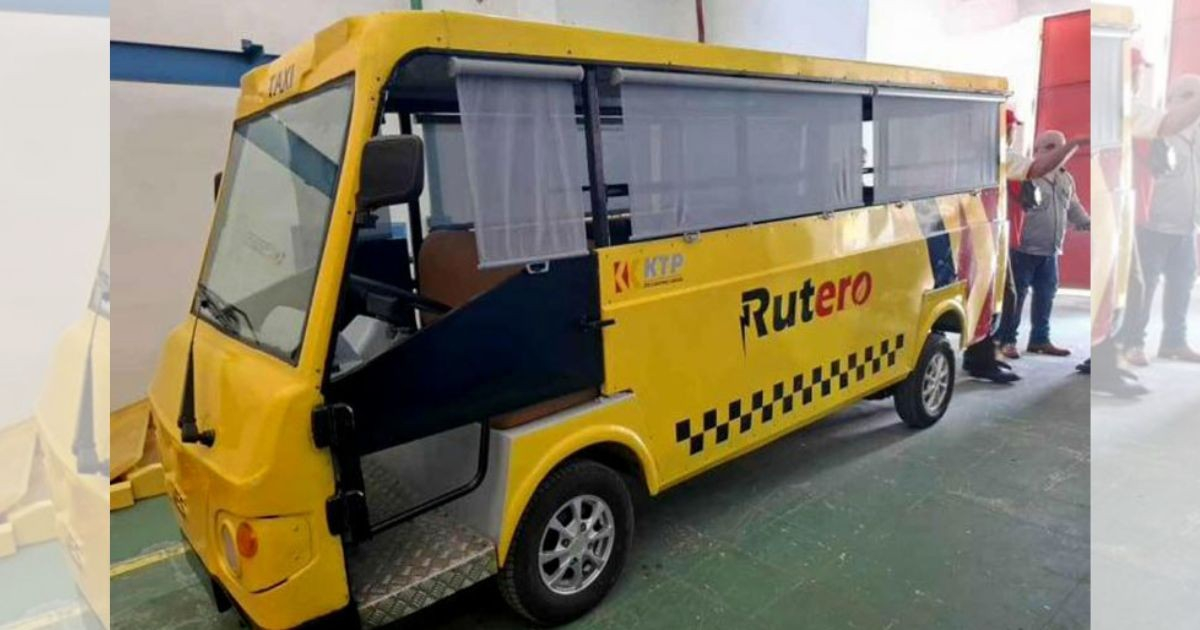
The province of Holguín is preparing to incorporate a new electric minibus of national manufacture, called “Rutero”, with a capacity for 13 passengers and an announced range of just over 300 kilometers per charge.

The vehicle is part of a project that involves the construction of ten units intended for public transportation.

According to the state newspaper ¡Ahora!, the first minibus was manufactured at the “60th Anniversary of the October Revolution” Company, known as the KTP Factory, in collaboration with the Military Industry of Sancti Spíritus, and will begin service soon in the provincial capital of Holguín.

Although the authorities announced their upcoming integration into urban routes, they have not yet specified the start date for operations, the route it will cover, or how much passengers will need to pay.

The project is funded by the Transport Development Fund, which allowed for the acquisition of propulsion modules, electrical components, and other necessary parts for manufacturing the vehicles.

René Rodríguez, provincial delegate of the Ministry of Transport, explained that the initiative also involves the Gibara Shipyard, whose workers are participating in the manufacture of fiberglass components, drawing on their experience with this material.

The planned production is ten minibuses, although the manufacture of new units will depend on the availability of the necessary kits and components.

The initiative comes amid the deep crisis of public transportation in Cuba, characterized by a shortage of fuel, the deterioration of the vehicle fleet, and the challenges in maintaining regular routes.

0

💔 The Rain Has Flooded Us… Who Will Hear Our Pain?

preview

نُشر تبادليًا من: hexbear.net/post/9991953

💔 The Rain Has Flooded Us… Who Will Hear Our Pain?

Our hardship was already unbearable, and now the rain has flooded our living space, leaving us with nothing to protect us. We cry out for help, but no one answers.

How long must we face this suffering alone?

Please stand with Doaa and her family in Gaza. 🔗 gofund.me/1d3ea05b6

#Gaza #HelpGaza #Humanity #Donate

0

[2024] How China's first home-made train wheels are revolutionizing high-speed rail | CGTN

play · youtube.com
YouTube How China's first home-made train wheels are revolutionizing high-speed rail www.youtube.com
preview

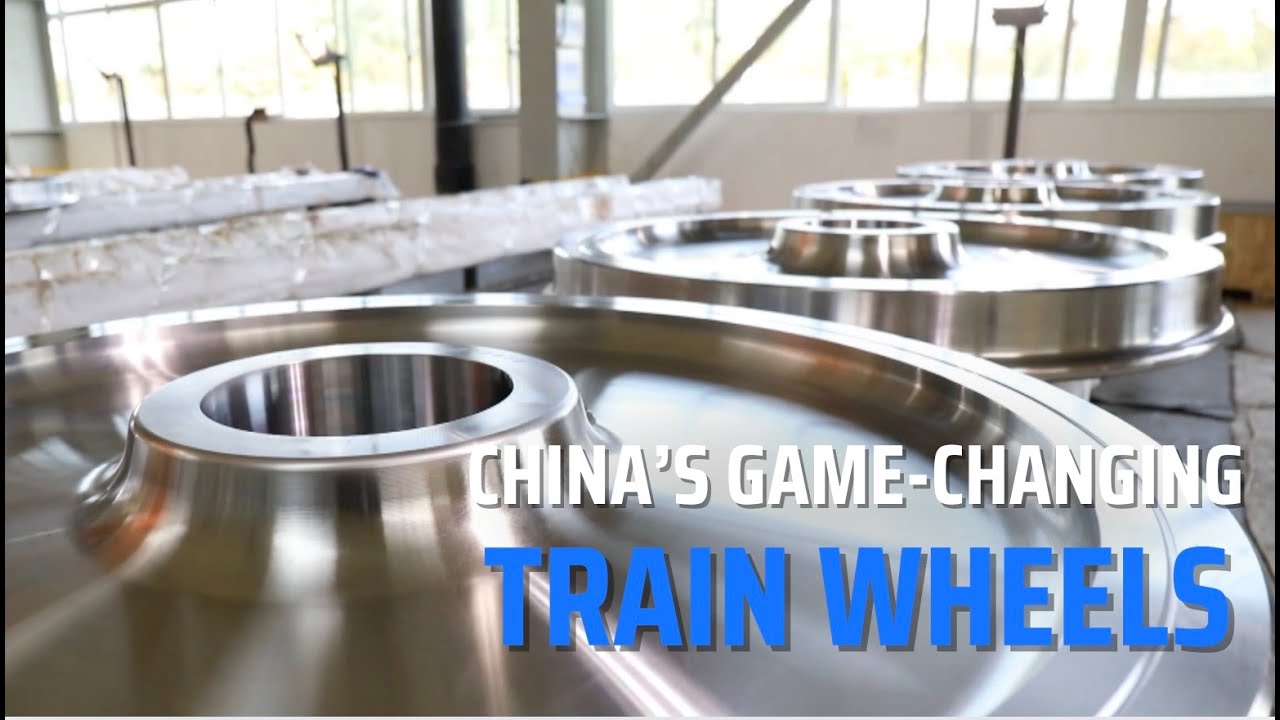
Ever wonder what keeps China’s high-speed trains rolling? Masteel is the first Chinese brand to make fully homegrown wheels for bullet trains. High-tech meets heavy industry here—each wheel takes just 68 seconds to shape, and they’re rolling into over 70 countries. Watch the video to find out more!

Ever wonder what keeps China’s high-speed trains rolling? Masteel is the first Chinese brand to make fully homegrown wheels for bullet trains. High-tech meets heavy industry here—each wheel takes just 68 seconds to shape, and they’re rolling into over 70 countries. Watch the video to find out more!

0

nearly got run by the car I was cycling towards to offer help since they were parked hapharzardly on the sidewalk with hazards on

preview

it was basically still night with 0 traffic, I thought “surely, given all the free real estate this is an actual emergency of sorts” but alas. I should start carrying ninja rocks

it was basically still night with 0 traffic, I thought “surely, given all the free real estate this is an actual emergency of sorts” but alas. I should start carrying ninja rocks

0

Part of China's first 'air-rail' hub, Shanghai East Railway Station, expected operational in 2027 | ShanghaiEye魔都眼

play · youtube.com
YouTube Part of China's first 'air-rail' hub, Shanghai East Railway Station, expected operational in 2027 www.youtube.com
preview

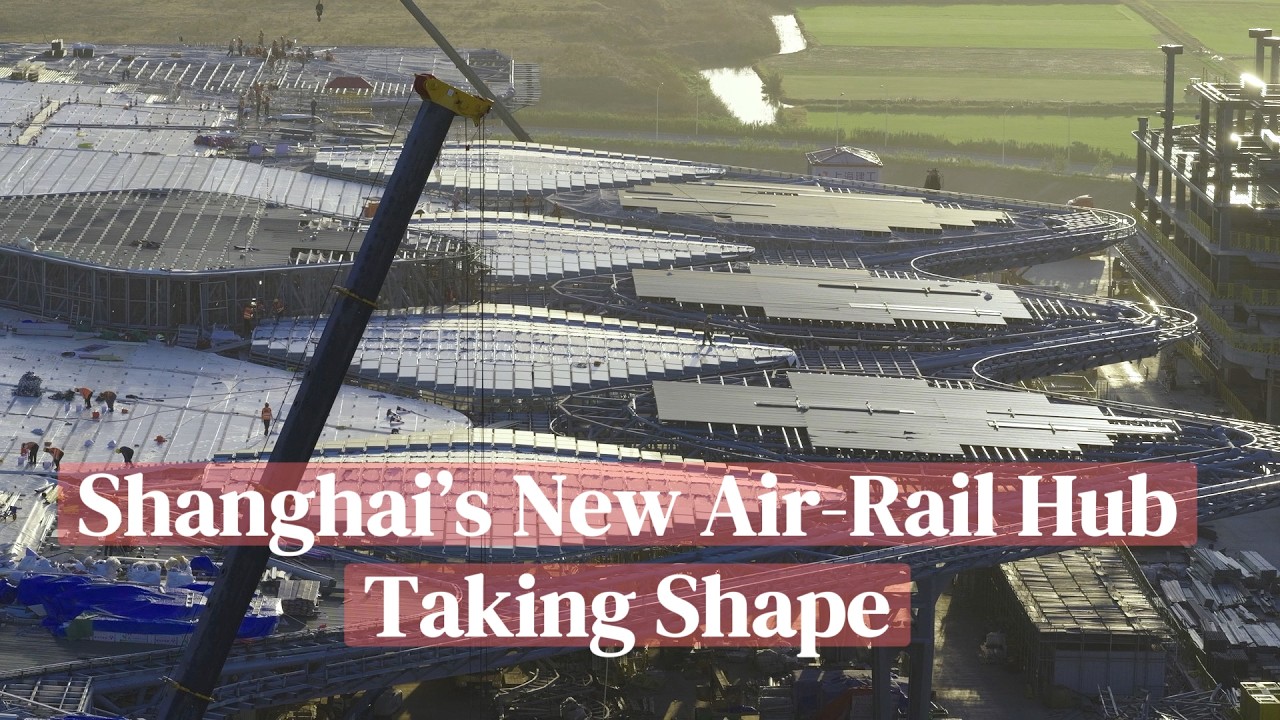
Shanghai’s newest mega transport hub is taking shape, with over 70% of the main station structure now complete.

Located about 5 km from Pudong International Airport’s Terminal 1, the station will bring together national rail, regional and urban rail services — plus airline check-in — under one roof, with a layout of 15 platforms and 30 tracks.

It’s China’s first high-speed rail station to feature an integrated “air-rail” hub, and is expected to open in July 2027.

Its vast double-curved steel roof is now largely in place, and interior construction is underway.

0

Meet CR450, China's latest high-speed train model with a speed of 400 kms per hour | ShanghaiEye魔都眼

play · youtube.com
YouTube Meet CR450, China's latest high-speed train model with a speed of 400 kms per hour www.youtube.com
preview

Meet the CR450 – China’s latest high-speed train model that’s set to redefine how we think about rail travel.

Pushing boundaries was key to building this train. Designers say they had to step out of their comfort zone, rethinking old standards and blending them with cutting-edge tech to unlock new possibilities.

0

[CW MENTION OF MURDER] Man who ran over cyclist and dragged him under car for a mile convicted of murder

preview

cross-posted from: hexbear.net/post/9917383

Average car brained homicidal maniac.

cross-posted from: hexbear.net/post/9917383

Average car brained homicidal maniac.

0

A possible malfunction in the LZB system and human error, possible causes of the collision between the AVE and the Iryo in Toledo

Demócrata A failure in the LZB safety system, possible cause of the collision between the AVE and the Iryo in Toledo www.democrata.es
preview

Big high-speed rail collision in Spain.

article text

The first information about the circumstances of the Urda (Toledo) railway accident points to the trains involved, the AVE 2080 and the Iryo 6076, possibly having been traveling under the Lateral Signaling Blocking (BSL) system due to a fault in the LZB system. This circumstance has not yet been confirmed by Adif, although the possible incident in the signaling system and a subsequent human error appear as the main hypotheses about the origin of the accident, after Government sources indicated that the trains resumed circulation under human control following a failure of the automatic safety system. According to the first information, the fault would initially have forced the convoys to stop, before the resumption of rail traffic was authorized through alternative circulation procedures. Always according to the Government, preliminary analyses point to an Adif operator possibly having made a mistake during this human control phase, a circumstance whose relation to the collision will have to be clarified by the official investigation. A possible LZB fault before the accident The LZB (Linienzugbeeinflussung) is a railway protection system that allows the circulation of trains to be continuously supervised and information to be transmitted directly to the equipment installed in the cabs, so that drivers receive indications about the authorized speed, braking distances and the conditions they must respect during the journey. Its use on certain high-speed lines allows the convoys to circulate with constant supervision, especially important when the speeds reached make the distances needed to stop a train considerably greater than those usual in the conventional network. The information known so far points to a fault in this system having forced the circulation conditions to be modified before the accident, although it has still not been specified when the failure was detected, how long it remained out of service or what measures those responsible for rail traffic adopted. What the Lateral Signaling Blocking is and how it works When the automatic protection system associated with the automatic block stops working properly, railway regulations provide for alternative procedures that allow traffic to continue under certain safety conditions, among them Lateral Signaling Block (BSL). Unlike the usual regime of continuous supervision, this procedure uses the signals installed alongside the tracks to regulate the entry of trains into the different block sections, so that each new movement authorization depends on the safety conditions established for the corresponding section being met. The Railway Traffic Regulation establishes that the sections must be free before authorizing certain movements and that the signals must prevent the entry of trains when incompatible movements may occur. The use of this procedure is regulated and does not necessarily imply a loss of safety, although it requires applying the operational conditions provided for situations in which the usual automatic system is not functioning. The Government points to a human error by Adif after the signaling failure The first conclusions being handled by government sources point to the fact that an Adif operator could have made a mistake after a breakdown forced traffic to be managed under human control, a hypothesis that, if confirmed, would make it possible to explain why the safety mechanisms did not prevent the collision. According to this version, the trains were initially stopped when the automatic signaling system failed and were later authorized to continue, although it is still not clear what specific instructions were transmitted or how the movement of both convoys was coordinated. The possible failure would have occurred precisely during that phase of traffic resumption, when the decisions of the traffic controllers acquired special importance as the automatic supervision system was not available in its usual conditions. High-speed service between Madrid and Andalusia interrupted The accident between AVE 2080 and Iryo 6076 took place this Wednesday, October 28, in Urda (Toledo), on the Madrid-Andalusia high-speed line, where the collision caused several carriages to leave the track and part of the train to fall down an embankment. The accident has left fatalities and numerous injured, while emergency services continue attending to those affected and the authorities work to clarify the circumstances of the collision. Adif communicated the suspension of rail traffic between Madrid and Andalucía after reporting “an impact between two trains”, with no official forecast at the moment to restore service. The investigation will have to determine whether the possible failure of the LZB forced a change in the circulation regime and whether, during the subsequent management, the human error pointed to by the first government reports occurred.

0

Why is it that you can just put a car on the side of the road

preview

just fine. But my bike, locked, gets stolen from the fucking inner yard.

Even the most run down car is like 100x more valuable. Hell you could suck out the fuel from any of the cars and make more money.

And it’s not like I wouldn’t want to get a nicer bike but why would I do that just to have it stolen?

0

The reason Americans can't have waft

play · youtube.com
YouTube The reason Americans can't have waft...unless they are Jay Leno #cars #automobile #automotive #why www.youtube.com
preview

An informative short on how the US will only regulate something to make it worse.

The US kept putting regulations on cars to keep Citroen out of the US market because they didn’t want their better and safer cars competing with the US market. Instead of making better cars, they created regulations that would force Citroen to make worse cars in order to sell in the US. So instead of trying to enter a market that didn’t want them, Citroen just didn’t bother.

You can see the parallels with Chinese EVs at the moment. A classic case of the ‘free market’ falling apart as soon as it encounters any competition that isn’t friendly to capital.

0

Wall Street Journal DEBUNKED on rent control

play · youtube.com
YouTube Wall Street Journal DEBUNKED on rent control www.youtube.com
preview

These landlords are actually keeping rent stabilized units vacant until their lobbying efforts are successful – which would allow them to charge sky-high prices, once again.

These landlords are actually keeping rent stabilized units vacant until their lobbying efforts are successful – which would allow them to charge sky-high prices, once again.

0

Starting the day off with an bang

play · youtube.com
YouTube Starting the day off with a bang www.youtube.com
preview

The Linden Ave Bridge is a locally famous low clearance railroad trestle next to the Y-Bridge, a historic Y-shaped three-way bridge that spans the confluence of the Licking and Muskingum Rivers in downtown Zanesville, Ohio. The stated clearance for the bridge is 9’ 7" with an adjacent 12’ 5" bypass for northbound traffic. Over height sensors, flashing lights and loudspeaker sirens are not enough for drivers who just cant pay attention.

The Linden Ave Bridge is a locally famous low clearance railroad trestle next to the Y-Bridge, a historic Y-shaped three-way bridge that spans the confluence of the Licking and Muskingum Rivers in downtown Zanesville, Ohio. The stated clearance for the bridge is 9’ 7" with an adjacent 12’ 5" bypass for northbound traffic. Over height sensors, flashing lights and loudspeaker sirens are not enough for drivers who just cant pay attention.

0

How an eroded neighborhood blight was transformed into a river-regenerating park

play · youtube.com
YouTube How an eroded neighborhood blight was transformed into a river-regenerating park www.youtube.com
preview

Brad Lancaster shows us how a bleak, eroding, and dehydrating storm DRAIN was transformed into vibrant, passive water-harvesting storm PARK rehydrating and regenerating the community thanks to work by designer and implementer Craig Sponholtz of Watershed Artisans and his team.

The installation helps recharge groundwater and Santa Fe River flows, while creating a vibrant and beautiful public park and gathering space that reduces flooding and erosion, and grows a living seed bank of native plants — irrigated solely with passively harvested rain and stormwater — supporting abundant pollinators, birds, and other wildlife.

0

6 networks, 5 years, $4 trillion | Inside China Business

play · youtube.com
YouTube 6 networks, 5 years, $4 trillion www.youtube.com
preview

cross-posted from: hexbear.net/post/9807241

China will spend nearly $5 trillion by 2030, on new and upgraded infrastructure projects.

“Six Networks” comprise water, power grids, underground utilities, computing, telecom, and logistics.

cross-posted from: hexbear.net/post/9807241

China will spend nearly $5 trillion by 2030, on new and upgraded infrastructure projects.

“Six Networks” comprise water, power grids, underground utilities, computing, telecom, and logistics.

0

The time a car saves goes to paying for it

A graph showing how many hours per week someone earning $18.98/hr has to work to pay for weekly travel. Cars require 3.2 more hours of work per week to afford than an ebike.
preview

maxmautner.com/2026/10/11/how-fast-is-a-car.html

The median American worker earns $23.80/hour, or ~$19 after taxes. A used car driven the US average of ~10,900 miles a year costs ~$8,200, counting $1,700 a year for a parking space at home. That is ~430 hours of work before the car moves. A new car takes ~700 hours. A $999 e-bike ridden 3,000 miles a year takes ~25 hours.

0

The Chinese Property Crisis is Over.

play · youtube.com
YouTube They Lied to you about China's Property Crisis.. www.youtube.com
preview

cross-posted from: hexbear.net/post/9762787

China’s Property Crisis was supposed to be its ‘Lehman Moment’, akin to the 2008 global financial crisis. But 5 years on, how do things stand? And who, if anyone, has faced justice?

cross-posted from: hexbear.net/post/9762787

China’s Property Crisis was supposed to be its ‘Lehman Moment’, akin to the 2008 global financial crisis. But 5 years on, how do things stand? And who, if anyone, has faced justice?

0

Ontario will officially begin removing Toronto bike lanes on Tuesday

CBC Ontario will officially begin removing Toronto bike lanes on Tuesday | CBC News www.cbc.ca
preview

Ontario will officially begin removing Toronto bike lanes on Tuesday | CBC News

Toronto

Ontario will begin removing bike lanes from a stretch on Bloor Street W. in Etobicoke on Tuesday, the Ministry of Transportation says.

Crews to work on a 1.2-km section of Bloor Street W. between Clissold Road and Royal York Road

Construction to remove Toronto bike lanes: What you need to know

Work is scheduled to begin Tuesday on bike lane removals from a section of Bloor Street W. in Etobicoke on Tuesday. CBC’s Karina Zapata breaks down what commuters need to know.

Ontario will begin removing bike lanes from a stretch on Bloor Street W. in Etobicoke on Tuesday, the Ministry of Transportation says.

A notice of construction start, issued by the ministry, says the work will occur on a 1.2-kilometre section between Clissold Road and Royal York Road.

Dakota Brasier, spokesperson for Ontario Transportation Minister Prabmeet Sarkaria, confirmed in an email on Thursday that bike lane removal will begin Oct. 13.

“Following the ruling by the Ontario Court of Appeal, the province announced in September that it would immediately begin restoring motor vehicle lanes on Bloor Street West. That work begins Tuesday,” Brasier said.

The Court of Appeal ruled in August that Premier Doug Ford’s government could rip out 19 kilometres of protected bike lanes in Toronto, reversing a lower-court decision made in July 2025.

Toronto Mayor Olivia Chow said Thursday that the removal of the bike lanes is “completely unacceptable” and an affront to the city by Ontario Premier Doug Ford.

Bike lane removal ‘outrageous,’ Chow says

“It is outrageous. He’s overstepping,” Chow said.

“That is trampling on local democracy, the right of Torontonians through their municipal government to have a say over the municipal affairs of this city. Whether it is bike lanes, speed cameras, Island airport, every element we need to have our say. The city belong to all of us Torontonians through the municipal government,” she said.

“Cyclists needs to be protected, they need to be safe.”

The ministry-issued notice says existing pavement markings and pre-cast concrete curbs will be removed and new pavement markings and signs “to safely restore” an additional vehicle lane in each direction will be installed.

Crews are expected to work primarily at night to reduce the impact on traffic, but may work during the day depending on weather, operational needs and staging requirements, the ministry-issued notice says.

The notice says the work, which may lead to traffic delays, is expected to be finished in November.

Incumbent Mayor Olivia Chow and Coun. Brad Bradford face off in a debate at the CBC Broadcasting Centre in Toronto on Oct. 8, 2026. The debate is hosted by CBC Radio host Chris Glover. (Voters go to the polls on Oct. 26.)

Toronto Mayor Olivia Chow says of the bike lane removal: ‘That is trampling on local democracy, the right of Torontonians through their municipal government to have a say over the municipal affairs of this city.’ (Mehrdad Nazarahari/CBC)

Chow said, if re-elected mayor, she will mobilize efforts against the removal of bike lanes.

"I will do everything I can. I will bring residents and citizens together. We will work together and we will fight back."

Bike lanes need to be removed if not working: Bradford

Rival mayoral candidate Coun. Brad Bradford said bike lanes need to be removed if they are not working.

“I ride more bikes than anyone who has ever been elected to Toronto City Council for sure. We’ve got the record for that. But I also am going to be pragmatic and recognize when some of the bike lanes aren’t working like they should,” Bradford said.

“And that’s why we’re talking about the section on Etobicoke, part of Bloor from Resurrection Road to the South Kingsway, where you have 38,490 cars per day and 197 bikes. So you allocated 50 per cent of the space to half a percentage of road users and that doesn’t work.”

Incumbent Mayor Olivia Chow and Coun. Brad Bradford face off in a debate at the CBC Broadcasting Centre in Toronto on Oct. 8, 2026. The debate is hosted by CBC Radio host Chris Glover. (Voters go to the polls on Oct. 26.)

Coun. Brad Bradford says: ‘Big cities are going to have bike infrastructure and that’s a positive thing. We’re going to have it. But we also have to build trust with Torontonians to recognize if it’s not working, we can fix it.’ (Mehrdad Nazarahari/CBC)

Bradford said some bike lanes, including those on Richmond Street W., Adelaide Street and Danforth Avenue, are working.

"Big cities are going to have bike infrastructure and that’s a positive thing. We’re going to have it. But we also have to build trust with Torontonians to recognize if it’s not working, we can fix it."

Removal won’t ease congestion, advocate says

Michael Longfield, executive director of local cycling advocacy group CycleTO, said the organization is “outraged but not surprised” that the government has rejected the mayor’s “win-win offer” to restore car lanes but keep bike lanes in Etobicoke.

"Ripping out these protected bike lanes against the will of Toronto city council is a colossal waste of $48 million. The province’s own experts know it will not ease traffic congestion, it will put people’s lives at risk, and there is no network of side streets that could replace these lanes.“

In December 2025, the province completed work to restore a vehicle lane and maintain a bike lane on a 600-metre section of Bloor Street W. from Resurrection Road to Clissold Road. The work that begins Tuesday is east of that section.

The notice says crews will attempt to minimize disruption, saying access to businesses and properties “will be maintained throughout construction,” as well as sidewalk access and emergency access.

Ontario Transportation Minister Prabmeet Sarkaria said in a Sept. 1 news release that the government is committed to tackling traffic congestion.

“Our government was given a clear and direct mandate by the people of Ontario to fight gridlock, including by restoring motor vehicle lanes that are needed to keep drivers moving. We’re keeping our promise,” Sarkaria said.

0

Under communism, you will be able to buy any vehicle with machine guns instead of money.

uflyit.com's FAQ: Do You Take Trades?  Yes, we do.  We take other ultralight, light sport and experimental aircraft (equal, lower or higher value).  We also occasionally take trades of these items (again, value can be equal, more or less, with appropriate monetary adjustment either direction as necessary):  Classic cars, boats (preferably open bow, weekender or live aboard up to 40 feet in length), motorcycles, rail buggies, vintage camper trailers, motor homes, Class 3 firearms.
preview

www.uflyit.com/aeolite_faq.htm#Do You Take Trades

Do You Take Trades? Yes, we do. We take other ultralight, light sport and experimental aircraft (equal, lower or higher value). We also occasionally take trades of these items (again, value can be equal, more or less, with appropriate monetary adjustment either direction as necessary): Classic cars, boats (preferably open bow, weekender or live aboard up to 40 feet in length), motorcycles, rail buggies, vintage camper trailers, motor homes, Class 3 firearms.

They make a cool $20k ultralight plane if you have some boats or machine guns laying around: www.uflyit.com/aerolite103main.htm

0

Forget what you thought about urban cycling in China | Shifter (edit: found a single brainworm about china not being a democracy)

play · youtube.com
YouTube Forget what you thought about urban cycling in China www.youtube.com
preview

had some preconceptions about what it might be like to ride a bike in Chinese cities, but I wasn’t prepared for what I saw.

The Canadian left-liberals are getting china-pilled, maybe.

had some preconceptions about what it might be like to ride a bike in Chinese cities, but I wasn’t prepared for what I saw.

The Canadian left-liberals are getting china-pilled, maybe.

0

China's Northernmost High-Speed Railway Starts Service | CCTV Video News Agency

play · youtube.com
YouTube China's Northernmost High-Speed Railway Starts Service www.youtube.com
preview

cross-posted from: hexbear.net/post/9679651

The Harbin-Yichun High-Speed Railway, China’s northernmost high-speed rail line, officially entered service on September 28.

cross-posted from: hexbear.net/post/9679651

The Harbin-Yichun High-Speed Railway, China’s northernmost high-speed rail line, officially entered service on September 28.

0

Why is there no infighting amongst the car people?

preview

How do they have so much solidarity with each other?

Parking spaces are the eternal ire and nobody ever seems to consider that maybe John Example could maybe walk 500m along a safe pedestrian route instead of taking his car and taking up a space.

But especially with rising gas prices people don’t seem to realize they’re all basically in a bidding war over combustion fuel and maybe if the 20% of drives that are under 2km - going by german statistics - would consider occasionally, on a nice day, taking a bicycle, you’d save on some of the demand.

And adding on to this: Everytime gas prices shoot up most people manage to triangulate themselves into a somewhat correct position of “man these oil companies are ripping us the fuck off” but like only temporarily until it goes down back a bit and gets accepted as the new standard. Again, for germany fuel hasn’t actually become much more expensive adjusted for inflation, but everything else has, but they break the 2€ barrier per liter and people are up in arms until it goes back down to 2,05 and then it’s fine, surely the oil companies have stopped ripping us the fuck off.

What’s the mechanisms at play here? If I depended on a car and had carbrain I’d be furious at John Example

0

Life After Cars audiobook - an exploration of how cars destroy our world and how to fight back

play · tankie.tube
TankieTube Life After Cars audiobook tankie.tube
preview

From the War on Cars podcast

Freeing Ourselves from the Tyranny of the Automobile

NATIONAL BESTSELLER

From the hosts of The War on Cars podcast, a searing indictment of how cars ruin everything—and what we can do to fight back

When the very first cars rolled off production lines, they were a technological marvel, predicted to make life easier and better for all Americans; yet a hundred years later, that dream is running on empty.

Instead of unbounded freedom, the never-ending proliferation of automobiles has delivered a host of costs, among them the demolition of our neighborhoods, towns, and cities to make way for car infrastructure; an epidemic of violent death; countless hours lost in traffic; isolation from our fellow human beings; and the ongoing destruction of the natural world. Globally, SUVs alone now emit more carbon than the nations of Germany, South Korea, or Japan.

That’s why we need Life After Cars. Through historical records, revealing interviews, and unflinching statistics, Sarah Goodyear and Doug Gordon, hosts of the podcast The War on Cars, and former host Aaron Naparstek unpack the scale of damage that cars cause, the forces that have created our current crisis and are invested in perpetuating it, and the way that the fight for better transportation is deeply linked to the fight for a more equitable and just society.

Cars as we know them today are unsustainable—but there is hope. Life After Cars will arm readers with the tools they need to implement real, transformative change, from simply raising awareness to taking a stand at public forums. It’s past time to radically rethink—and shrink—society’s collective relationship with the automobile. Together, let’s create a better Life After Cars.

0

Dreaming of better communities, together! ✨🌿

Instagram Earthed on Instagram: "Dreaming of better communities, together! ✨🌿 We asked, and you answered! In this round of our dream city series, you envisioned: 🛠️ tool libraries, 🚲 bike lanes, 🐝 pollinator pathways, 🌱 native plant lawns, ☀️ solar panels, 💧 rainwater harvesting, 🌿 community medicinal gardens, 🥕 veggie patches, 🍎 food forests, and more. What does the community of the future look like to you? What’s missing? What do you want to see next in this series? Drop your ideas below! ⬇️ #dreamcity #regenerativefuture #urbanrewilding #solarpunk" www.instagram.com
0

Essential stuff to pack on a bike?

preview

I’ve been getting a bit more into cycling around my city for little errands, and after having a couple cases where I’ve had to put my chain back on I’m finally bringing a set of disposable gloves so I don’t have to get so much chain grease off my hands.

Any other things like this that are small but helpful to have around? I typically bring along my lock, a snack, and water. I’m thinking about eventually getting a little bike pump, a spare inner tube, and maybe one of those little bike multi tools, but figured others would be more knowledgeable!

0

Why is everyone buying Chinese electric buses? | Inside China Business.

play · youtube.com
YouTube Why is everyone buying Chinese electric buses? www.youtube.com
preview

cross-posted from: hexbear.net/post/9583493

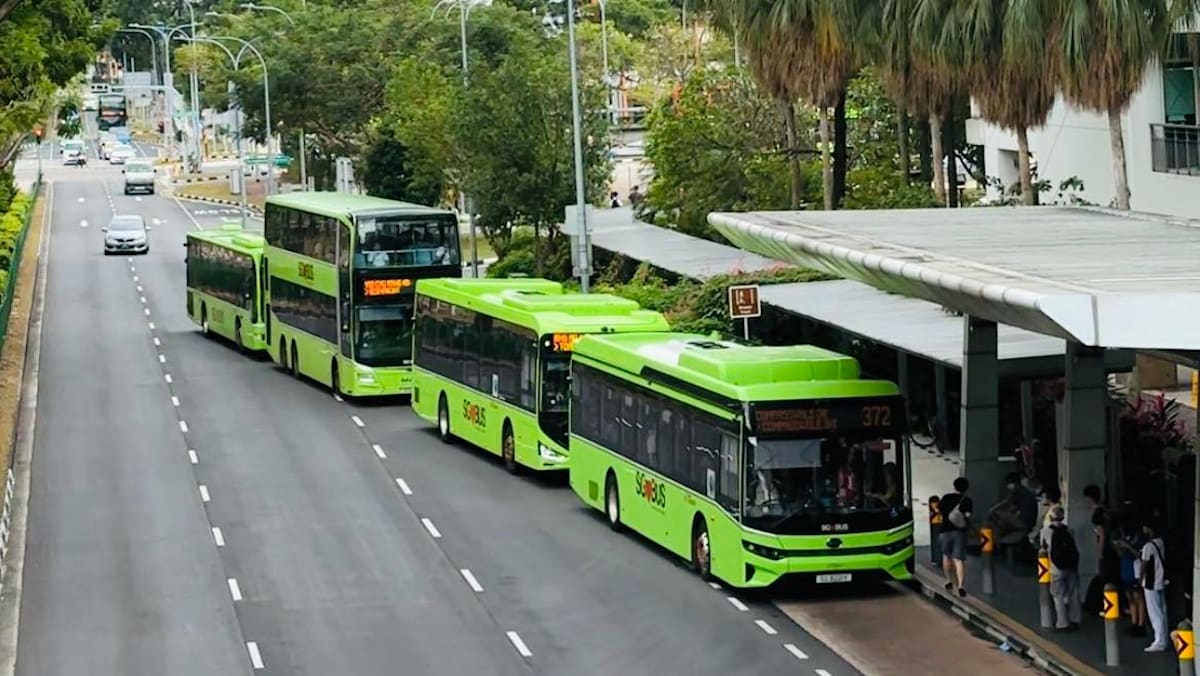
Skyrocketing costs for diesel fuel are pushing municipal governments and fleet operators to switch to electric buses.

The same supply chain monopolies that China enjoys in electric passenger vehicles, are deployed in the electric bus segment.

China was the first country to electrify the bus fleets in urban mass transit, with mass adoption completed in the early 2020’s.

Leading Chinese electric bus makers BYD, Yutong, and Higer are rapidly expanding in Europe, Asia, and South America, and winning large contracts over legacy brands.

0

[EU] I find it insane that even with raising gas prices society can't let go of the car-car

preview

If there is a tipping point where people will start considering the Opel Rocks we sure haven’t hit it yet. Statistically it does like 70% of what people use a car for, more like 100% of what people use a second car for. It’s not taxed regularly, there’s not even inspections, the insurance is a pittance. And that’s still a car by all means! But no, all the conversation is about the small electric car-cars that do ~120kph and go on the highway. Because what if includes needing to spend 600€ a year just so you don’t have to rent a car one time.

Hell, go more adventourous, funky chinese EVs of that class run about 4000€ for a cabin’d three wheeler cargo trike or ~6000€ for a minitruck, both of which can legally seat two and fit an euro pallete in the back. Again, considering the statistics, you get like double the actual utility out of this compared to the new E-Twingo (and I say this finding that thing sympathetic).

None of this is being discussed. Driving stone faced into my own bankruptcy because I refuse to consider a vehicle that’s not legally classified as car.

0

Close Encounters of the 34th Avenue Kind: The Story of NYC's Best Open Street (TRAILER)

play · youtube.com
YouTube Close Encounters of the 34th Avenue Kind: The Story of NYC's Best Open Street (PREMIERE TRAILER) www.youtube.com
preview

The synopisis: During the Covid pandemic, New York City created an Open Street on 34th Avenue in Jackson Heights and Corona, Queens — which was one of the city’s pandemic epicenter, where thousands died. The Open Street quickly became a lifeline to residents desperate to exercise or socialize in a socially responsible way. But even as the pandemic faded, residents quickly realized that the 34th Avenue Open Street had become an essential amenity in a neighborhood with among the lowest amount of park space per-capita.

Quickly, neighborhood activists rallied and got the administration of then-Mayor Bill de Blasio to commit to a full buildout of the Open Street into its current configuration: Paseo Park, which, as its name suggests, is a 1.5-mile long promenade for cycling, strolling and just connecting with neighbors.

0

I thought bike lanes were ‘DEI.’ Then an SUV killed my father

Washington Examiner I thought bike lanes were ‘DEI.’ Then an SUV killed my father www.washingtonexaminer.com
preview

if you don’t wanna read through this garbage, understandably, the obvious problem according to the autor who has never met another republican who is interested in safter streets is that the darn democracts keep using woke words and not like that this idiot and his ilk have a conception of street planning that is entirely solipsistic

if you don’t wanna read through this garbage, understandably, the obvious problem according to the autor who has never met another republican who is interested in safter streets is that the darn democracts keep using woke words and not like that this idiot and his ilk have a conception of street planning that is entirely solipsistic

0

Everytime coworkers talk about their car payments I nearly do a spit take [EU]

preview

dawg what do you mean you’re paying 25k for a used skoda kodiaq that is neither fun nor really practical for hauling people or stuff. you’ve got a 5km commute. the public transport is bad but it’s not “spend 15k more every few years to not have to take the bus for a week while your slightly older car is in the shop” bad. What the fuck.

And that’s carbrain costs, that doesn’t even include like biweekly washes or the yearly inspection because they’re “trying to preserve value”. Dawg just buy a perfectly serviceable toyota aygo for like 8k and run that fucker in the ground. What do you mean you pay like 400€ a month for 60 months at 7% APR before the thing is even insured or moved a single meter.