0

"The Storm of Dracoryn - Chapter: The Vaelindar" (La tormenta de Dracoryn - Los Vaelindar - Original title in Castilian language)

fictograma La tormenta de Dracoryn - Los Vaelindar fictograma.com
preview

Excerpt:

Elianor

Our footsteps echoed through a vast hall that seemed carved from marble, but it was dull and gray. As we ascended the stairs, elves passed by, murmuring and glancing sideways at me, unable to comprehend my presence. Soon, we reached a long corridor where distant music permeated, and as we entered another grand room, the music ceased, and silence took hold.

From the far end of the hall, a person raised a hand. The elves began to clear the space, leaving very few of us. My vision blurred, and I stretched out my arm searching for a wall to lean on. Fear momentarily gripped me, but something told me all was well, that what was happening was not dangerous.

“I can’t see anything,” I said, blindly seeking support from the nearest elf.

“I’m not a walking stick,” Kaelithiel replied, turning to see me clutching his arm.

“Sorry,” I quickly released him.

“Brother!” a thin, elongated man approached with a mocking smile. “Good to see you again in our home.”

“Don’t touch me,” Kael growled, nodding for him to stop his embrace.

“And who is this lovely Lady?” he asked, turning to me. He paused, then added, “Such strength, so much faith… where does it come from, my lady?”

“I doubt she came here to bare her soul before strangers,” I replied, more ironically than intended.

“Spicy,” he chuckled softly, arching his brows. “I am Thaelendis, Kael’s elder brother. I see you’ve already encountered my little brother’s rough nature.”

“Lady Daronen, a true pleasure to meet you,” the elf said humbly, his voice deeper than Liendel’s.

“The pleasure is mine,” I bowed my head.

“Kaelithiel, my son… so many decades without even approaching home,” his tone grew more stern.

“I’ve been compelled to sweeten the halls of Vanir with my presence,” Kael retorted arrogantly.

“You bring news that urgently needs sharing,” a voice from the hall’s depths spoke.

The lights dimmed, and the usual glow was replaced by an orange vision of two elves seated, their eyes veiled, noses and mouths visible but their eyes obscured.

“This woman came from the eastern lands,” one said. “She claims the realm of men fell to the Draco, now ruled by another house that took their place.”

“Such things happen every century, though this time it has taken longer,” responded the other, seeming disinterested. “What is different now?”

“She is here to show you,” the first retorted, “for I do not believe her words, and she was found with Nivrald dust upon crossing.” His gaze hardened, hostility returning.

“Lady Draconen, may I?” the other asked gently.

He stood, taller than the elves we had been with. Later, it was clear his body was immense yet slender.

“I mean no harm, only a brief inquiry into her mind,” he reached toward my face.

The king bowed slightly, touching my forehead. At first, it was a light brush, like a feather’s caress, then my mind opened in a whirlwind of images. I again saw the plains with ill Kael, the meadows, and the dreams haunting me, Darethion’s fall into my arms. It all passed in a flash, as if my life rewound before me.

I wanted to pull away, but my muscles failed. Then I felt the pressure—not his hand, but his will—tearing memories like a hurricane tears leaves from a tree.

“Enough,” I thought, though unsure if aloud.

The white mist thickened, and I felt myself sinking as if into water. Then came the king’s voice—deep, calm, yet stone-hard.

“Your soul is marked by fire and blood. The dragons have touched you more than you admit.”

His presence expanded within me, suffocatingly. Then I felt a small but firm spark of will rise against his. A flicker amidst the storm. I clung to the memory of Darethion—not his death but his smile before departure, the faith he left me.

The king pushed with the force of centuries, but I did not fully yield. I sensed a doubt, a fleeting hesitation, as if unprepared for resistance.

A crack opened in the vision; the mist broke, revealing his lips pursed beneath the veil. He did not completely defeat me. Finally, he saw my struggle and escape from the Nivraldir and my flight from the castle, alongside the dragon’s roar.

I nearly collapsed upon regaining breath, legs trembling but upright. He slowly withdrew his hand.

“Interesting,” he said, and for the first time, his voice carried more humanity than air.

Once the probing ended, he gazed at me curiously. I didn’t understand his look until the room spun and tilted sideways. My eyes closed.

Kaelithiel

When she began to stagger, I instinctively caught her side to prevent a fall onto the hard marble, which would have been severe. My father looked at me as if witnessing something strange in me, and I soon realized this wouldn’t have happened at any other time or perhaps with any other human.

“What’s wrong with her?” I asked my father. “Did she faint?”

“No, I induced a restorative sleep. She is exhausted, and confronting me would have overwhelmed any other human,” he looked at her long and said with surprise…

“Not me…” my father seemed pleased to have seen a human after so long.

“Were you punished by the Wind’s judgment? Something you have not overcome, my son,” Kaelethol spoke gravely.

I gently laid Elianor on the ground; she seemed more fragile than usual. She had faced my father’s scrutiny and still stood firm. Her willpower must be immense—only ancient kings passed the test without succumbing.

“If you prefer to ignore my question…” my father slowly walked to her, his step solemn as one who carries centuries on his back. “No, it was not easy. She holds something even she cannot decipher. And tell me, Kaelithiel, how could I understand what even its bearer does not?”

A group of elves approached to make Elianor comfortable. They helped her sit on a feathered chair and left her there resting in the elven sleep, protected by my father. This time, she would not have nightmares and could sleep peacefully.

“What do you make of all this?” I asked, recalling everything Elianor had told me.

My father looked at me with the calm of an oak that has braved a thousand storms.

“Men seldom call upon our doors without reason. Their arrival is no accident but a warning. The Nivrald do not wander without purpose; they are harbingers of a change we have yet to fully see. Listen well, Kaelithiel: when the ancient peoples move, the whole world trembles.”

Soft footsteps echoed on the marble. Fendriel appeared, from the lesser Elenvar line, among the few still maintaining bonds with human realms. He bowed respectfully, but his words were direct.

“A few years ago, in our last contact with the brotherhood in human territory,” he recalled, “around twenty-five years past, a man told us they prospered—no famine, no plague, no war signs. Yet, the Nivraldir emerged. It is not their nature to roam aimlessly. There is a hidden purpose.”

My father listened gravely, eyes full of ancient wisdom that needed no words to impose.

“The Nivraldir’s alchemy is a poison even our kind cannot fully resist,” Kaelethol said in a deep voice. “Where they mix their fire with the earth’s essence, spirits rot, and even elven purity can be broken. We must not ignore this. If unhalted now, this will be the great war of the century… perhaps the era.”

“I don’t see the situation as before. Our borders are strong and guarded. No Nivrald or human beyond this one has appeared. The dragons in the western mountains sleep deeply; centuries will pass before they wake.” I recalled my last journey’s visits. “The deer of Sylrion are calm.”

“The last time our lineage failed to answer humans’ needs, we believed we granted them independence, and their souls perished in Markhosh’s ruins,” he said, darkening as he mentioned the name. “And how many elven lives have we lost by that decision? We may be wise, but even the wisest err, and that makes us what we are.”

A heavy silence fell, thickening the room’s air. My mother rose from the throne, her voice solemn as ancient chants.

“Do not forget what lies at all roots,” Eryndrael said softly from her seat. “Velkorin, Vaelerin’s second son, forged men and dragons with the same eternal spark. They are branches of the same fire, though centuries have separated them…”

–Read more in its original Castilian language at fictograma.com , an open source Spanish community of writers–

Excerpt:

Elianor

Our footsteps echoed through a vast hall that seemed carved from marble, but it was dull and gray. As we ascended the stairs, elves passed by, murmuring and glancing sideways at me, unable to comprehend my presence. Soon, we reached a long corridor where distant music permeated, and as we entered another grand room, the music ceased, and silence took hold.

From the far end of the hall, a person raised a hand. The elves began to clear the space, leaving very few of us. My vision blurred, and I stretched out my arm searching for a wall to lean on. Fear momentarily gripped me, but something told me all was well, that what was happening was not dangerous.

“I can’t see anything,” I said, blindly seeking support from the nearest elf.

“I’m not a walking stick,” Kaelithiel replied, turning to see me clutching his arm.

“Sorry,” I quickly released him.

“Brother!” a thin, elongated man approached with a mocking smile. “Good to see you again in our home.”

“Don’t touch me,” Kael growled, nodding for him to stop his embrace.

“And who is this lovely Lady?” he asked, turning to me. He paused, then added, “Such strength, so much faith… where does it come from, my lady?”

“I doubt she came here to bare her soul before strangers,” I replied, more ironically than intended.

“Spicy,” he chuckled softly, arching his brows. “I am Thaelendis, Kael’s elder brother. I see you’ve already encountered my little brother’s rough nature.”

“Lady Daronen, a true pleasure to meet you,” the elf said humbly, his voice deeper than Liendel’s.

“The pleasure is mine,” I bowed my head.

“Kaelithiel, my son… so many decades without even approaching home,” his tone grew more stern.

“I’ve been compelled to sweeten the halls of Vanir with my presence,” Kael retorted arrogantly.

“You bring news that urgently needs sharing,” a voice from the hall’s depths spoke.

The lights dimmed, and the usual glow was replaced by an orange vision of two elves seated, their eyes veiled, noses and mouths visible but their eyes obscured.

“This woman came from the eastern lands,” one said. “She claims the realm of men fell to the Draco, now ruled by another house that took their place.”

“Such things happen every century, though this time it has taken longer,” responded the other, seeming disinterested. “What is different now?”

“She is here to show you,” the first retorted, “for I do not believe her words, and she was found with Nivrald dust upon crossing.” His gaze hardened, hostility returning.

“Lady Draconen, may I?” the other asked gently.

He stood, taller than the elves we had been with. Later, it was clear his body was immense yet slender.

“I mean no harm, only a brief inquiry into her mind,” he reached toward my face.

The king bowed slightly, touching my forehead. At first, it was a light brush, like a feather’s caress, then my mind opened in a whirlwind of images. I again saw the plains with ill Kael, the meadows, and the dreams haunting me, Darethion’s fall into my arms. It all passed in a flash, as if my life rewound before me.

I wanted to pull away, but my muscles failed. Then I felt the pressure—not his hand, but his will—tearing memories like a hurricane tears leaves from a tree.

“Enough,” I thought, though unsure if aloud.

The white mist thickened, and I felt myself sinking as if into water. Then came the king’s voice—deep, calm, yet stone-hard.

“Your soul is marked by fire and blood. The dragons have touched you more than you admit.”

His presence expanded within me, suffocatingly. Then I felt a small but firm spark of will rise against his. A flicker amidst the storm. I clung to the memory of Darethion—not his death but his smile before departure, the faith he left me.

The king pushed with the force of centuries, but I did not fully yield. I sensed a doubt, a fleeting hesitation, as if unprepared for resistance.

A crack opened in the vision; the mist broke, revealing his lips pursed beneath the veil. He did not completely defeat me. Finally, he saw my struggle and escape from the Nivraldir and my flight from the castle, alongside the dragon’s roar.

I nearly collapsed upon regaining breath, legs trembling but upright. He slowly withdrew his hand.

“Interesting,” he said, and for the first time, his voice carried more humanity than air.

Once the probing ended, he gazed at me curiously. I didn’t understand his look until the room spun and tilted sideways. My eyes closed.

Kaelithiel

When she began to stagger, I instinctively caught her side to prevent a fall onto the hard marble, which would have been severe. My father looked at me as if witnessing something strange in me, and I soon realized this wouldn’t have happened at any other time or perhaps with any other human.

“What’s wrong with her?” I asked my father. “Did she faint?”

“No, I induced a restorative sleep. She is exhausted, and confronting me would have overwhelmed any other human,” he looked at her long and said with surprise…

“Not me…” my father seemed pleased to have seen a human after so long.

“Were you punished by the Wind’s judgment? Something you have not overcome, my son,” Kaelethol spoke gravely.

I gently laid Elianor on the ground; she seemed more fragile than usual. She had faced my father’s scrutiny and still stood firm. Her willpower must be immense—only ancient kings passed the test without succumbing.

“If you prefer to ignore my question…” my father slowly walked to her, his step solemn as one who carries centuries on his back. “No, it was not easy. She holds something even she cannot decipher. And tell me, Kaelithiel, how could I understand what even its bearer does not?”

A group of elves approached to make Elianor comfortable. They helped her sit on a feathered chair and left her there resting in the elven sleep, protected by my father. This time, she would not have nightmares and could sleep peacefully.

“What do you make of all this?” I asked, recalling everything Elianor had told me.

My father looked at me with the calm of an oak that has braved a thousand storms.

“Men seldom call upon our doors without reason. Their arrival is no accident but a warning. The Nivrald do not wander without purpose; they are harbingers of a change we have yet to fully see. Listen well, Kaelithiel: when the ancient peoples move, the whole world trembles.”

Soft footsteps echoed on the marble. Fendriel appeared, from the lesser Elenvar line, among the few still maintaining bonds with human realms. He bowed respectfully, but his words were direct.

“A few years ago, in our last contact with the brotherhood in human territory,” he recalled, “around twenty-five years past, a man told us they prospered—no famine, no plague, no war signs. Yet, the Nivraldir emerged. It is not their nature to roam aimlessly. There is a hidden purpose.”

My father listened gravely, eyes full of ancient wisdom that needed no words to impose.

“The Nivraldir’s alchemy is a poison even our kind cannot fully resist,” Kaelethol said in a deep voice. “Where they mix their fire with the earth’s essence, spirits rot, and even elven purity can be broken. We must not ignore this. If unhalted now, this will be the great war of the century… perhaps the era.”

“I don’t see the situation as before. Our borders are strong and guarded. No Nivrald or human beyond this one has appeared. The dragons in the western mountains sleep deeply; centuries will pass before they wake.” I recalled my last journey’s visits. “The deer of Sylrion are calm.”

“The last time our lineage failed to answer humans’ needs, we believed we granted them independence, and their souls perished in Markhosh’s ruins,” he said, darkening as he mentioned the name. “And how many elven lives have we lost by that decision? We may be wise, but even the wisest err, and that makes us what we are.”

A heavy silence fell, thickening the room’s air. My mother rose from the throne, her voice solemn as ancient chants.

“Do not forget what lies at all roots,” Eryndrael said softly from her seat. “Velkorin, Vaelerin’s second son, forged men and dragons with the same eternal spark. They are branches of the same fire, though centuries have separated them…”

–Read more in its original Castilian language at fictograma.com , an open source Spanish community of writers–

0

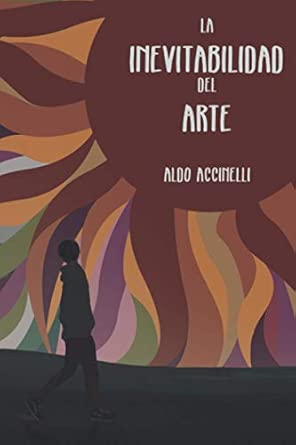
Posmodern Novel: Return to contemplate the wall - Chapter 30 (Volver a contemplar el muro - Original title in Castilian language)

fictograma La inevitabilidad del arte - 30 fictograma.com
preview

Excerpt:

Return. Second. Third. Fourth. I get up. Early morning. I go to the bathroom. I urinate. Three hours without being able to sleep. Maybe more. I don’t know. There are no noises in the house. Everyone is sleeping. I open the curtains. Darkness. Moon. There isn’t one. Silence. It’s cold. Silence. There is no one shouting, no one reprimanding, no one saying anything. There are no prohibitions. Silence. Blue hour. I can’t sleep. A car passing sounds in the distance. A siren sounds. Someone must be dying. Maybe someone is going to prison. Maybe someone just wants to turn on their siren. I get up. I go out. I sit. On the stairs. I look through the window. Lights. Street. Garbage truck. Garbage collectors. Only at this hour. It disappears. The truck. Contemplate the tree on the corner. Try to recognize some tree that I climbed as a child. See how everything changes at this hour. I recognize the most important one. It seems like it was in another place, as if it had been another time when I sat on those branches. A dirty tree. A dirty park. I rest my head on the wall. I curl up.

When was the first time I did this? When did I decide to spend the whole night looking out a window? Deep down I am still a scared child. Scared of what? I didn’t know then. Now I do. I am afraid of living with a huge emptiness for the rest of my life. An emptiness created by anxiety that eats me from within. A kind of beast that needs to create to feed itself, and if it doesn’t create, it will eat me alive. I look at the sky again. When did I decide to spend the whole night looking out a window?

Back then I went to sleep very, very early. It wasn’t to be awake at dawn, it wasn’t to look through the window and see dark trees, it wasn’t to try to imagine a different time or place. It was to be awake when no one else was. To be alone. Without anyone who thinks they know what is best for me better than I do. Do I know what is best for me? Now I do. If not, I wouldn’t feel this now.

Freedom.

With the window wide open to see the sky. I close my eyes. I try to sleep. If they find me sleeping here, what will they say? I can’t sleep. I open my eyes. I can see. What was I doing before at these moments? Playing, playing and playing. Hidden in my room. Without making much noise; not after the times I have been hit.

Shit.

Why do I keep thinking about this? Almost everyone I know doesn’t get caught up in these kinds of things. I don’t know anyone who gets caught up in these kinds of things. They go on with their lives without the flu chasing them. Maybe they feel the same as me. Maybe they go through the same thing. Maybe they don’t dare to tell anyone either. Maybe we all try to fool ourselves. I hold my right shoulder. I lean more.

I want to sleep.

Quietly, I played and no one disturbed me. At least until the sun was fully up. It’s part of a process. Feeling like this is part of a process. It has to be that. At some point I will stop sitting on the stairs at dawn. I will sleep. I will wake up. After that, back to school, back to the noise, back to existence, back to being someone, back to being vomited into the world. Silence. Lights. Street. Tree. The love for silence. I sigh.

I want to sleep.

I hope tiredness finally conquers me. I love silence. Other people get uncomfortable when I stay silent. They have to learn to enjoy it. One star. Two stars. Three stars. I don’t see any more. There are never more. The silence during the early mornings was the only thing I considered mine until I lost that too. Maybe I didn’t need it anymore. Why again now? No, it was last year that I started this again. I should have finished already. Where is that child? What happened to him? When did I lose myself? When did I stop being like that? Before I only enjoyed. Why can’t I look outside now like I did before without having to think about something sooner or later? Why do I always have to end up remembering what I used to do or who I was knowing I already stopped doing it or I am no longer like that?

Shit.

At some point, innocence disappeared for some reason or someone. They sent it to hell. Maybe I don’t feel comfortable noticing all the years that have passed and I don’t remember anything important, nothing significant I have done. No, she is important, she means something. My drawings, my creations are important too. It’s this hour that makes me feel like this. I could share this moment with her. No, not this one. Another different one. One in which I don’t feel lost. One in which I don’t lock myself in. I could tell her all this. Would she understand?

I hope so.

It’s a bond I don’t have with her. It’s that special relationship that exists between the first moments of the day and me. It’s sitting on the stairs leaning against the wall and feeling how I have been in this same place at different ages. That’s it. But this sky always reflects the emptiness I have. No, I don’t have emptiness.

What do I have?

Maybe it is the knowledge that I cannot decide what to do with my life. That in truth it never depended on me. Yet still being naive. And thinking I could choose. Reality is very harsh. Why is this society like this? What do I have that is really mine?

I have to create the bond with her. Maybe I am afraid. Knowing that I could have wasted time. But I am with her now. That is not wasted time. It will never be. I keep feeling that I am clinging to a past. Believing that any moment in which I was more innocent is better. That has nothing to do with her anymore. That is a problem I don’t know how to solve.

Believing that being unconscious, being ignorant, realizing only tiny things is the best way of living there is. I think the more I know or understand the worse I feel. Even love disappears. It always disappears. No, this love remains. It stays.

At this hour is when I doubt whether I really love someone or not. But I am thinking of her. If her image doesn’t come to my mind, I don’t care, it is a silly relationship doomed to die; if her image appears, I care. Only her image has appeared at this moment.

–Read more in its original Castilian language at https://fictograma.com/ , an open source Spanish community of writers–
0

The Sinking of Aphrodite: CHAPTER 41, THE CARD (El hundimiento de Afrodita - original title)

fictograma CAPÍTULO 41. LA TARJETA fictograma.com
preview

Excerpt:


CHAPTER 41. THE CARD

“Life looks at us wanting to play.”

That’s what the little card said, placed on top of the napkin at Urban Sushi Bar Sibuya that midday. Ever since my work stay in Santiago de Chile in early 2012, I had become addicted to sushi, and now, sitting in front of that plate of perfectly aligned rolls, I couldn’t help thinking that phrase was more than a mere slogan: it was a challenge.

The sushi was arranged like a chessboard: small pieces, each with its own destiny. Salmon, avocado (known as palta in Chile), perfectly pressed rice, juicy ginger. Everything looked ordered, calculated, as if life were showing me that even in chaos there was a secret geometry. Chaos and order. Yin and Yang. Did that balance really exist? Or was the randomness of chaos literally the antithesis of order?

While the waiter set down some sexy curry rolls on the table, I thought that yes, life does play with us. It deals us cards and waits to see which one we’ll pick up. I took the chopsticks with a certain clumsiness, aware that my mind was elsewhere. The restaurant’s card remained in front of me, its phrase still echoing: “Life looks at us wanting to play.” What if the game had already started and I was the only one who didn’t know the rules? What if something similar to what happens in the series Alice in Borderland was taking place?

The phone buzzed on the table, bringing me back to reality. It was a message from Lisette: “don’t be late. Dinner is at nine.” There was no room for negotiation. The invitation had turned into an order disguised as courtesy. I put a roll in my mouth, trying to let the fresh taste of the fish calm me down. But all I felt was the pressure of the cards I had to turn over. Option A was the safety of catching the AVE and disappearing. Option B, the adventure, was facing that dinner which promised to be a minefield of insinuations, memories, and half-truths.

I arrived at the apartment five minutes early. I’ve never liked making people wait, nor being made to wait myself. I learned that from my father too. The Barcelona evening-night air still carried the city’s bustle, and in my hands I carried a bottle of wine I had just bought at Vila Viniteca in L’Illa Diagonal. The place, with its endless shelves and its aroma of wood and cork, had held me captive for a few moments, as if every bottle hid a story waiting to be told.

That was where a young, tall, blonde girl of extremely serene beauty and curious eyes recommended an Argentine Malbec to me. Her voice had the confidence of someone who knows what they’re talking about, and she spoke of the Uco Valley in Mendoza as if she had walked it herself, as if she could describe the sun caressing the vines and the cold wind coming down from the mountains. I listened, fascinated, and in the end I let myself be guided by her instinct. The bottle, with its pale and austere label, bore a name that felt more like an omen than a brand: El Enemigo (The Enemy). I held it carefully, aware that this wine was not just an accompaniment for the evening, but a symbol, a silent guest bringing its own mystery. As I climbed the stairs to the apartment, I thought that perhaps the name carried a warning, or maybe an irony: what enemy could be hiding in a wine that promised intensity and character?

I didn’t even have to knock. The door opened the moment I approached. Lisette greeted me with that smile that was never completely sincere: a gesture that seemed kind but always concealed a hint of calculation. She hugged me quickly and gave me a kiss that ran down my spine. She wore a tight black silk dress with a V-neckline that revealed just enough to spark the imagination. The light fabric, with its subtle sheen, slid over her skin like a second layer, marking every movement with natural grace. Matching it were high black heels that clicked firmly, almost hypnotically, against the floor as she walked. Long silver earrings swayed gently with each gesture, drawing the eye to her neck. On her wrist, a minimal bracelet—just a metallic glint that contrasted with the sobriety of the dress.

The clothes were not just an outfit: they were a statement. Every fold, every shimmer, every detail was arranged as part of the game that had begun with this dinner.

“Nice choice,” she said when she saw the bottle. “Though the name is a little unsettling, don’t you think?”

She took my hand and led me through the hallway of realities toward the living room.

The table had been set with almost theatrical precision. Two candles burned, plates arranged symmetrically, and a brand-new-looking linen tablecloth. Everything spoke of a dinner planned down to the smallest detail, as if every object had a role in the play about to unfold. She let the wine rest in the center, its pale label illuminated by the warm candlelight. El Enemigo seemed to watch us, like a third guest waiting for its turn to speak.

“Dinner for two?” I managed to say. “And the girls?”

Her gaze fixed on me, steady, as if searching for an answer beyond the obvious.

“Architect, this dinner is to thank you for everything you’ve done—and still do—for me. The girls went out tonight. It’s just you and me.” She paused. “Do you need anyone else?”

In that moment I understood this wouldn’t be a simple dinner. It was a board. And I, without having chosen it, was already in the game. The game had begun, and the phrase echoed again in my head: “Life looks at us wanting to play.”

We sat in the old chairs that had watched over that dining room since day one. The cork came out with a soft pop, and the aroma of the Malbec filled the air. We filled our glasses; the dark liquid slid smoothly, its purple reflection in the candlelight like a shared secret.

“The enemy…” she repeated, caressing the label with her fingertips. “Sometimes names hide truths we’d rather not say out loud.”

Her gaze settled on me, steady, with a glint that was anything but accidental. The silence grew thick, and when she handed me my glass her fingers lingered longer than necessary. A touch that burned like a spark.

“Let’s toast,” she said softly, almost in a whisper. “To enemies who become allies… or excellent lovers. Have you come to declare war on me?”

The glasses clinked gently, the sound like a shared heartbeat. She held my gaze while she drank, and the movement of her throat as she swallowed the wine was hypnotic. Lisette settled back in her chair, crossing her legs with deliberate slowness. The dress slid just a fraction, revealing a flash of skin.

“You know, some battles are worth fighting,” I said, entering her game. If we were going to play, we might as well play. Besides, since my “confinement” in Madrid I hadn’t been with a woman. Lisette had been the last.

“Reward?” she smiled, toying with the rim of her glass. “I’m curious to know what you expect to win.”

“Maybe it’s not about winning, but about losing… losing track of time, losing control.”

“That sounds dangerous.” She leaned forward, letting her perfume envelop me. “Though… sometimes the forbidden is what attracts us most.”

“And what we enjoy most. Like this wine: intense, dark, with a taste that lingers on the lips,” I said before taking another sip of the Argentine wine.

“Are you talking about the wine… or about me?” Lisette murmured.

The silence that followed spoke louder than words. The candles flickered, as if keeping time with the quickening scene.

“By the way,” she said with a mischievous smile, “you say losing control can be a pleasure… want me to prove it?”

“Maybe you already are. Every gesture of yours is a calculated move… and I’m falling right into your game.”

“Game?” Her fingers traced the edge of the table, moving toward my hand. “I don’t like rules. I prefer high stakes… where the risk is as great as the desire.”

The brush of her skin against mine lasted only an instant, but it was enough to make my pulse race. The dress shifted with every movement, revealing more than it concealed. The dining room was suddenly very, very warm.

“Then let’s toast to risk. To what begins with a wine and ends… who knows where.”“Perhaps in a place where words are no longer necessary,” Lisette…

–Read more in its original Castilian language at fictograma.com, an open source Spanish community of writers–

0

The Travels of Shin (Los viajes de Shin - Original Castilian title)

fictograma Los Viajes de Shin fictograma.com
preview

Excerpt:

Tyrannical Mirror

The unknown ship crashed against the dead shore of a lake. The impact tore through the wasteland’s stillness: a metallic roar, scattered fire, and a tremor that churned the mud. They were far from the castle, in a lifeless place. Only crumbling ruins, a ghost city rotting upright, no animals, no birds, nothing. The silence of a graveyard.

Shin’s ship descended beside it, followed by the brutal landing of Dragon Darius, whose colossal body shook the ground. Rain fell thick, drumming against his black scales.

Shin leapt from her ship and ran toward the downed fighter without a second thought for anything but the pilot. Black smoke swallowed it from the tail, and the windshield glowed with heat. She forced the canopy with nails and raw strength until the glass gave way and shattered. Then she saw.

The scream that ripped from her throat threw her backward; she clawed at the mud to keep from collapsing.

“Shin!” Darius roared, approaching with steps that sank the earth.

The dragon lowered his enormous skull to the cockpit, sniffing, staring. Inside, unconscious over the controls, lay… herself. But not. It was Shin, yet with silver hair and armor bearing the emblem of the ancient Exquemano Empire.

“Uncle…” Shin whispered, voice breaking. “What… does this mean?”

“I don’t know… this is…” Darius’s deep voice wavered, something rare in him.

…

–Read more in its original language, Castilian, at ficto grama.com, an open source Spanish community of writers–

0

A Pucelana story (Original text in Castilian: "Una historia de Pucelana)

fictograma Una historia pucelana fictograma.com
preview

Excerpt:

It’s a wonderful day to stroll through Campo Grande. The trees are beginning to change their colors, turning the park into a fantastic palette of greens, ochres, yellows, and deep reds. The scent of resin and earth mingles with that of roasted chestnuts from the street vendors. People enjoy the good weather, oblivious to what’s happening on the city’s outskirts. Mencía, however, cannot afford that luxury. That’s why she’s the only one walking in a hurry.

…

-Read more in its original language on fictograma.com, an open source Spanish community of writers- Pls, join us ᕕ( ᐛ )ᕗ

0

Trapped in body (Original: Encerrado en cuerpo)

fictograma Encerrado en cuerpo fictograma.com
preview

Excerpt in English (the short story is in Spanish):

Did you know that everything makes a sound? Yes, everything.When they locked us all up because of a virus, I was alone for a long time, a very long time. In that time I discovered something: everything makes a sound. The first few months I tried to endure the solitude; there’s no person immune to loneliness, some just tolerate it better, but in the end they feel the same as all the other lonely people. With time I started talking to myself, then living on the internet, until I cut it off completely…

-Read in original text in the following url-

Fictograma is an open-source platform that serves to extend the reach of Spanish-language writers to the world.

0

It's time to read a Spanish fantasy novel: "Los viajes de Shin"

fictograma Los Viajes de Shin fictograma.com
preview

Más allá de la Nada

En el vasto manto estrellado, el vacío comenzó a desgarrarse. Como una herida abierta en el tejido del cosmos, una grieta palpitante se extendía lentamente, destilando un fulgor eléctrico de rayos y sombras. No era simple oscuridad: lo que se agitaba allí dentro era más profundo que el mismo vacío estelar, un abismo que negaba la existencia.

—Advertencia: brecha hiperespacial en la cercanía. Se recomienda retirada —entonó la voz metálica de la IA, fría e imperturbable.

Frente a la grieta, la nave de Shin flotaba inmóvil, mientras el gran dragón desplegaba sus alas descomunales. Con un rugido gutural se lanzó contra la fisura, exhalando un fuego oscuro y púrpura que lamía los bordes desgarrados del cielo. Las llamas se aferraban al vacío como si intentaran suturar aquella llaga cósmica