0

Isn't it weird how many authors shoehorn their fetishes into their books?

preview

I’ve noticed this in many fantasy, horror and supernatural books. It doesn’t matter if the author is a man or a woman, they always write a scene that isn’t really important to the story and repeat it many times in their work for no reason.

I’ll give the examples and if you have read their books you’ll know what I’m talking about; George RR Martin, Stephen King, Diana Galdon.

As far as I know Lord of the rings is safe from this, tho I’m not sure because I haven’t read nor seen the movies due to a lack of female characters in the story, but I’m sure plenty of you can confirm.

0

Why the classic Canadian novel Bear remains controversial — and relevant

CBC Why the classic Canadian novel Bear remains controversial — and relevant | CBC Radio www.cbc.ca
preview

“Why the bear? What I’m saying, I guess — I mean, why not a crocodile?” CBC’s Peter Gzowski asked Engel in 1976.

“Well, I do know, but I’m not telling, OK? It’s been a personal theme for many, many years,” she replied.

“Why the bear? What I’m saying, I guess — I mean, why not a crocodile?” CBC’s Peter Gzowski asked Engel in 1976.

“Well, I do know, but I’m not telling, OK? It’s been a personal theme for many, many years,” she replied.

0

Thoughts and opinions on "Lobsters" by Charles Stross

preview

CW: Rape, animal abuse

This story is featured in the big book of cyberpunk (literally). It’s… well it’s quite the journey.

The protagonist is a hyper independent… well I guess anarchist? He fulfills thousands of patents constantly and simply just gives them away to non profit organizations, mostly to secure them before capitalists or corporations can snag and monopolize them. If anything at the very least I’d say he’s anti capitalist. The more I read the more I grew to like him and his actions and reasons.

Then there’s the antagonist and love interest. The story takes place in an EU that’s a global superpower with a booming economy; our protagonist was originally from America, which is dying out, hyper-capitalist, and probably fascist (neither region is explicitly described, this is just what I’ve inferred). The antagonist is some sort of agent from America, come to the EU on business but running into the protag. They were engaged at one point, but presumably he left to take some space or out of ideological differences.

The story addresses a lot of themes and subject matter, most of which I probably could not explain accurately. Themes of machine consciousness, duty to home and love, animal personage, economics, patent filing, etc. There’s a lot of moving parts, and it’s quite an excellent read.

What I really wanted to talk about was how much I like the protagonist and how much I despise the antagonist. One thing that’s been reoccurring through the story is the protag recieving dead kittens with missing brains in a box. At the end of the story, after the antagonist rapes the main character and impregnates herself from him, it’s revealed she’s the one leaving the kittens. Kittens, by the way, that the US government are putting into machines and using their brains to guide missiles. What the fuck? She’s out here supporting turning kittens into missiles and he’s out here trying to win lobsters the right to exist and be treated fairly. She’s a horrible person! What the hell?? Why would the protag even fall in love with this crazy psycho???

0

Opinions and thoughts on the Red Rising trilogy, by Pierce Brown

preview

Red Rising is a sci-fi trilogy. I dropped it towards the end of the third book, out of spite. Rest of this post is spoilers.

The first book felt somewhat predictable nearer the start, almost formulaic in a sense. Also, the main character read like a full grown adult, until you find out he’s actually a teenager, because of course it’s a YA dystopian series. His age isn’t mentioned until later, but he has a whole ass wife and feels like a gruff adult. Nah, he’s 16. With a wife. Yippee dystopia. She’s gonna die and be his reason for rebelling against the system, right? Yep. Because of course. Like I said, formulaic.

Formulaic or not, though, the journey through it was well written. While I thought the wife was also a rebel, she’s just got that rebellious spirit, and the MC’s uncle is the one who’s a rebel. It gets pretty brutal at times, with the mc’s hanging and subsequent burial and then rescue, because the uncle gave him a drink that fakes his death. Where the story diverges from the standard formula is after the MC leaving his home, where he’s introduced to the rebels and then told he’s gonna be biologically modified until he’s indistinguishable from one of the oppressing class, then sent to their schools to blend in and betray them from the inside.

Then it goes back to tropes by having the MC and all the students run a war game in the wilderness where they’re forced to survive on their own and fight against each other. Get this, hunger games, but sci-fi.

I say that, because I’m a very pessimistic and cynical person by nature, not because I didn’t like it. Red Rising’s approach to the hunger games style war game was very well executed, along with the MC’s development throughout. He himself is one of the oppressed, so he’s constantly at risk of getting caught. Despite that, he does make friends there. Most important of which is Cassius and Sevro (my goat). They call each other brothers. Except, before the actual war game, the arbiters of the academy paired off each student and forced them to fight to the death in the nude, and the person the MC fought was Cassius’s actual brother. This is very important for the rest of the trilogy.

My biggest gripe about the whole thing is the author wrote these kids as basically gods. I mean, I get it takes place on Mars with reduced gravity and these kids are the pinnacle of human GMO, but still… clearing hundreds of kilometers in a few hours?

I won’t spoil the latter half of the war game and the end of the book, because it’s quite well written and a very good plotline. Suffice it to say, despite following tropes and formulas, so far the book has a lot it does differently within those confines, and all of it hits pretty hard.

The sequel to Red Rising is Golden Son. It follows the MC at the very end of his school period. After the first war game (which also doubled as the kids’ first academy), they went to an actual naval academy to learn to lead space ships and sci-fi battles. Which also had the whole war game setup, but the book starts with the end of that whole period. Anyway the MC loses, then enters the darkest hour where his life as one of the oppressor class is falling apart and he’s questioning his place, goals, and own capabilities, as well as what he’s actually supposed to do as the imposter among them. Anyways he figures it out and starts a civil war in the most dramatic way possible; starting a duel at a banquet and winning via plot convenience. Apparently, before the events of the book, he was trained by the best swordsman and duelist of all time. Something that I’m 90% sure was never actually mentioned or hinted at throughout the book. Yay plot convenience.

Queue a bunch of different battles and fights, character development, and more plot points. Really, I don’t remember too much of the entire middle section of the novel. Probably because I spent literally an entire day reading the novel in (nearly) one sitting. Either way, it had me hooked for the most part, and I can’t recall at the moment anything specific I had problems with.

The end of the book slaps the reader with an enormous plot twist though. The MC gets betrayed by some of the people he worked with in the oppressor civil war, mainly because they found out he’s an imposter and actually one of the oppressed class. Characters important to the MC get slaughtered in front of him, and then he gets knocked out, ending the novel with a fade to black.

Wait, so what was the point of everything else in the novel? All those battles, all those wars, was it just to say “yeah a bunch of the oppressor class died because of the MC?” I honestly could not tell you. It was cool though.

The third book pissed me off a lot. I’ve already written a whole bunch so I won’t dwell on it too much. For the most part, it was solid. More plot points happening, building up the story, the rebellion formally starts, lots of great character moments. Oh, yeah, here’s a spot of capitalist propaganda for you.

There were a number of questionable decisions made by the characters throughout the novel that resulted in other characters dying, even though it probably could have been avoided. The MC is struggling a lot with the war costing the lives of his closest friends on both sides, struggling to bear the weight of all the lives lost in the name of revolution, even having to sacrifice some of them himself for the future of the rebellion. Lies and deception abound, double crossing, questioning loyalties and more. Very emotionally heavy novel, mixed in with action and the like.

Now for the reason I made this post in the first place. See, remember way back in the first novel, when I said the MC had to kill Cassius’s brother? I hadn’t brought it up again since, but that was a major plot point in the first book and what the MC used to spark the civil war in the second book. Cassius and the MC were close, and in the third book, they’re on opposing sides, but still respect each other. Both are worn down by the cost of war. To keep it brief, there’s a lot going between them, but eventually the MC and his crew defeat Cass and take him prisoner.

On the way back to Mars and the main battle, the MC gets the brilliant idea to… release Cassius? Keep in mind, this guy is the deuteragonist. Cassius is to the oppressors what the MC is to the rebellion (more or less). He is one of their ace in the holes, one of their best fighters, one of their strongest champions and leaders. You’re just going to set him free? Why again? Because civilization needs honorable people like him? What the fuck are you on about?? This literally makes no sense. I know what the author is trying to assert, I know where it’s coming from, I know there’s been a lot of emotional buildup towards this by the author, I know how the MC feels, especially since he had to kill someone else he called brother during the war games of the first book (not sevro, don’t worry it’s coming). I understand how the idea came to him, but why the fuck is all his lieutenants and closest confidants going along with this?? This is literally the stupidest decision I’ve ever seen in my life, with the dumbest reasoning behind it. “We can’t be civilized if we kill him” ok I get it, “So let’s let him go” what the fuck???

Cassius vows to leave the war behind. Ok, sure, whatever, affirmations and such. Hey, remember lies and deception?

Frame 1 those handcuffs are off, Cassius breaks his vow and kills the MC’s last remaining adopted brother, Sevro. I fucking immediately stopped reading. This whole scene was stupid. It literally made no sense and ruined the rest of the novel for me.

According to the wiki’s synopsis, this meant nothing; Sevro is actually alive, and Cassius betrays the oppressors near the end and saves the MC. I don’t care. I literally do not care. This was total bullshit and I refuse to read the rest of the book over this. I almost dropped the entire series in the beginning because I thought it was predicable, but my friend called out my lack of patience so I pushed through it and stuck with it, but enough is enough. I only have so much time and energy to deal with bullshit plot “twists” built up to with the most mental gymnastic shit I’ve ever seen in my life.

0

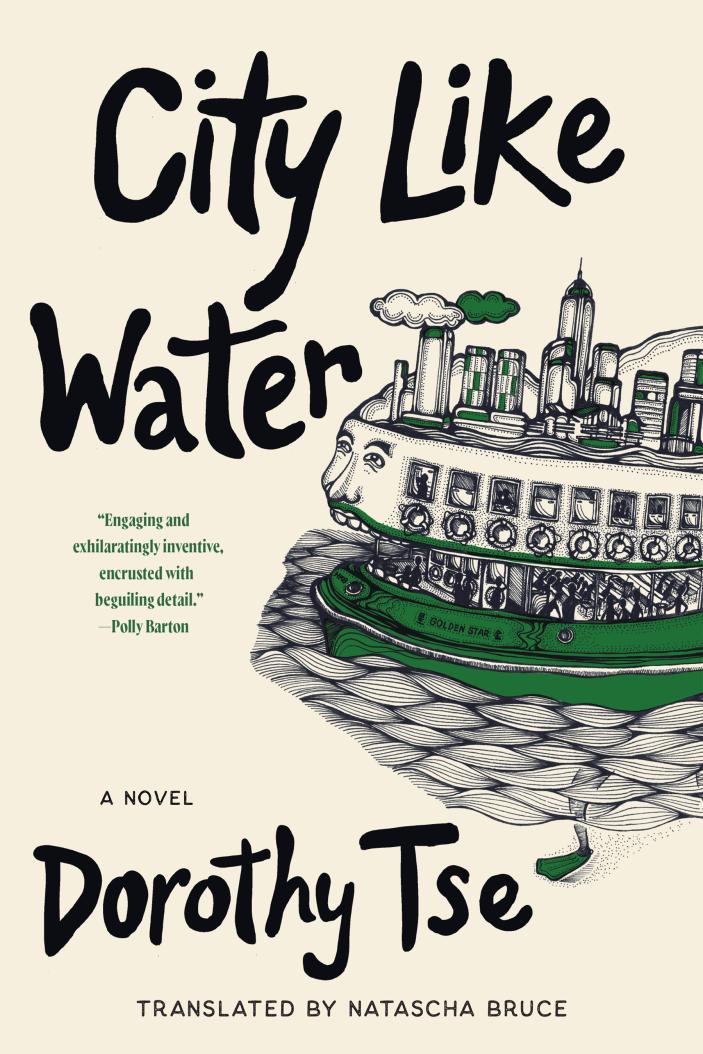
“City Like Water” by Dorothy Tse

Asian Review of Books "City Like Water" by Dorothy Tse asianreviewofbooks.com
preview

For almost a decade in the Anglophone world, comment on the unravelling of reality has become commonplace. See Brexit, Trump 1.0 and 2.0, pandemic, Trump 2024-, the surge in domestic terrorism, internet addiction, AI hallucination, and so on. “Post-truth” has, arguably, arrived hand-in-hand with state violence and social decay. Those who feel we have all literally or figuratively slipped onto the “wrong timeline” may think of their own familiar televisions as Tse describes a news anchor appearing onscreen with her usual smile absent, and instead of announcing the news: weeping.

When Tse finished writing City Like Water, it was 2020, the year after Hong Kong’s massive protests and the subsequent crackdown. City Like Water will arrive in publication in English translation at a time when the world is growing weirder still. Darker still. Chaos is deepening, and hope is a slippery fish. Now is a good time for a City Like Water.

0

Book Review - The Wasp Factory

preview

I just finished this book after a breathless three days, and wow, it was a doozy. Warning, MASSIVE spoilers ahead, and this is a book that definitely should not be spoiled. All of the tension and interesting details would float away without being anchored by the slowly growing awareness of what is happening.

I’m not much of a ‘reviewer’ of books. I love reading them but mostly place them back on the shelf until I want to relive the events again. Thus be warned, this isn’t going to be a treasure trove of insight, but much more along the lines of a longer blurb piquing the interest in the book.

::: spoiler spoiler So where to begin? I suppose with my shock. This was a novel written 41 years ago, but it is horribly relevant our current times. I was not anticipating the ‘big secret’ at all from the short description of the book. I got the book’s title from a list of horror, which really speaks to the lackluster ability of the list’s author, because I would not describe the book as a horror book. The tension of the book lies along an axis of thrillers far more than horror. The reader is never really fearful of what may come, but is anticipating what shocking thing occurs next.

The big reveal at the end was almost certainly more shocking to readers at the time, and my first thought was how eerily familiar it seemed. I then remembered the john money controversy about david reimer, but the wikipedia article says it didn’t come to international attention until 1997, more than a decade after the wasp factory came out. Just a strange coincidence? I know Banks had a relatively progressive view of gender/sexuality in his writing. His culture books casually describe a society where people switch back and forth between human and monster, male and female, digitized computer files and organic matter, seemingly at whim. It almost seems counterintuitive that he sets the impulses and motivations of the protagonist as caused by the conflict within due to the secret.

Anyway, back to the book itself.

It’s neatly written. Little tidbits of information are dangled in front of the reader while the main character pursues day-to-day life. It’s a very strange life, but more so in its extremes than the actual matters. I know the many strange ways bored kids can take up to amuse themselves in the rural fields and isolated days, and building bombs and torturing insects (while horrific in hindsight) isn’t far removed from reality. The magical thinking displayed by the character is pretty tame for someone younger, and only mildly out of sorts due to the late teenage years that the protagonist currently sits at.

The story moves along at a good pace, never really boring the reader. Moments of tension are placed nicely to keep interest between the various murders and banal days. The murders themselves are nicely done. Just enough plausibility to not break verisimilitude, both in their possibility and the mentality of the protagonist in carrying them out.

The protagonist’s inner dialogues and thoughts are where the real meat of the book is. It’s a fascinating read, just like finding someone’s personal diary, and keeps your eyes eager for more explanations of why there are mouse heads hanging from poles, mocked-up villages being destroyed, and wars waged on various small animal dens.

One bit I didn’t like (I had to roll my eyes) was the ‘mental break’ of the protagonist’s brother. Of all the tropes regarding mental illness and insanity, the idea of some horribly overwhelming tragic or scarring event suddenly sending someone into the madhouse is the trope I most abhor. I’ve dealt with a great many people who have had horrific events happen to them, and with many people who aren’t entirely in sync with reality, and none of them provide positive evidence for such a thing. It’s a trope from hokey comic books and bad movies. :::

0

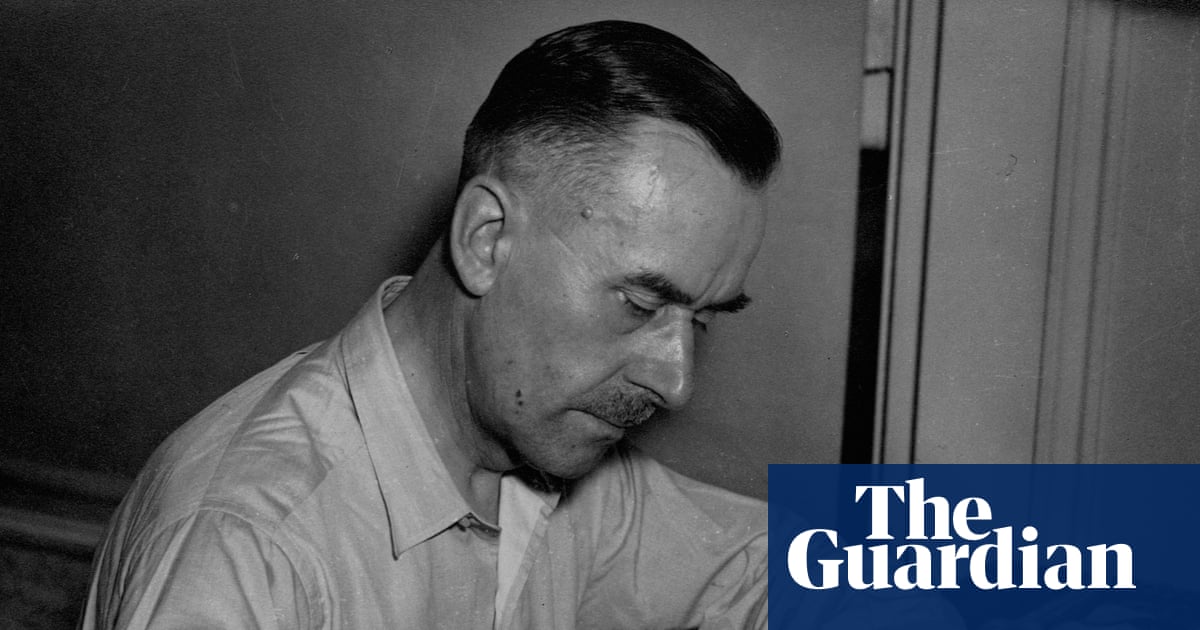
The Master of Contradictions by Morten Høi Jensen review – how Thomas Mann wrote The Magic Mountain

the Guardian The Master of Contradictions by Morten Høi Jensen review – how Thomas Mann wrote The Magic Mountain www.theguardian.com
preview

Wed 31 Dec 2025 10.00 CET

In a 1924 letter to André Gide, Thomas Mann said he would soon be sending along a copy of his new novel, The Magic Mountain. “But I assure you that I do not in the least expect you to read it,” he wrote. “It is a highly problematical and ‘German’ work, and of such monstrous dimensions that I know perfectly well it won’t do for the rest of Europe.”

Morten Høi Jensen’s approachable and informative study of The Magic Mountain positions Mann as a writer who was contradictory to his core: an artist who dressed and behaved like a businessman; a homosexual in a conventional marriage with six children; an upstanding burgher obsessed with death and corruption. Very much the kind of man who would send someone a book and tell them not to read it.

Despite the doubts Mann expressed to Gide, The Magic Mountain – a very strange, very long novel – was embraced throughout Europe, and three years later in America, too. Its publisher there ignored the strangeness and proclaimed its “use value … for the practical life of modern man”. While that makes it sound like Jordan Peterson-style cod philosophy, in fact it stands alongside In Search of Lost Time, Ulysses, The Man Without Qualities and To the Lighthouse as one of the summits (apologies) of literary modernism.

The novel describes its youthful protagonist, Hans Castorp, visiting a tuberculosis sanatorium in Davos where his cousin is a patient. Intending to stay a few days, he doesn’t escape for seven years. The novel’s plot mirrored its composition: it was first conceived as a novella, a lighthearted counterpart to the gloomy Death in Venice. But Mann began writing in 1913 and didn’t finish for more than a decade. Between those two points, the first world war radically changed the book’s size, scope and temper because it radically changed the political and moral outlook of its author.

Mann began the war a staunch conservative. Yet by the early 1920s he was making speeches in defence of the maligned Weimar Republic. (In time, and in exile, Mann became the most prominent German opponent of the Third Reich.)

This tumult fed into The Magic Mountain, notably in the characters of Lodovico Settembrini (humanist) and Leo Naphta (rightwing radical), who vie for Castorp’s soul. Their arguments are dazzling – far more so than the political toing and froing Mann engaged in while writing the novel. It isn’t Jensen’s intention, but his dogged account of Mann’s shifting political views supports the theory that a novel can know more than its creator.

Jensen falters occasionally when attempting to correct the record. He says the “oft-repeated claim” that Mann “was an indifferent or cruel parent seems inaccurate”. Yet all he offers in support is a single quote from the autobiography of Thomas’s son Klaus, who was deeply troubled for much of his relatively short life. There is voluminous evidence to the contrary.

Jensen also takes issue with the “callousness” of Ronald Hayman’s assertion, in his 1995 biography, that Mann “liked and admired” his wife but wasn’t in love with her. Hayman supports his claim by quoting from a letter Thomas wrote to his brother on the matter. It’s permissible to takeissue with Hayman’s conclusion, but Jensen’s protest – “How could he possibly know?” – seems disingenuous coming from a writer engaged in the same process of interpretative analysis. Especially in the case of a judgment about Mann (“gay most of the time”, in Colm Tóibín’s description) that is so uncontroversial.

Whatever the truth may be, it doesn’t make The Magic Mountain any less captivating an exploration of the human condition, or less of a literary achievement. Jensen doesn’t penetrate deeply into the mysteries of the book, but he doesn’t aim to do so. Rather, he gives a brisk, confident overview of an extremely dense work of art – no small achievement – and contextualises the era in which it was forged. In his foreword to the novel Mann wrote that “only thoroughness can be truly entertaining”, but summary has its pleasures too.

0

Why I Think ‘It: Welcome to Derry’s ‘It’ Ability to Exist in The Past-Present-Future & Purposely Freeing ‘It’ is Jumping The Shark/When The Series Started to Tank Moment & Might Force Me to Stop Watch

preview

I do not think it was in the book, rereading the book again (2nd time), because of the series’ changes, or the 1990 Mini-Series (my opinion best visual expression of ‘It’) & much later 2-movies (I disliked both, but keep giving them a try to impress me & they fail).
I liked the series a lot, even with gory bloody scenes (I hate those type of visual entertainment & never scares me, just grosses me out) & main, Kid, character dying, until the following changes that make no sense.
I hate it. Was never necessary,

Plus, I cannot see how ‘It’ can ever be defeated with that huge advantage.
No other character in the series is in Past-Present-Future at exactly the same time.

The Indigenous nation’s idea of using the pieces, of the spaceship-prison, to cage ‘It’ could never work. ‘It’ was only in the cage after the cage was created-when the stupid military General (correct me if I wrong about the character’s rank) freed it, when everyone else exists only in the present. ‘It’ existed when it was not built & after he was freed from the cage, at the very same time, “he was supposed to be caged”, thus ‘It’ was never caged & can never be caged.
Continuing with The Indigenous nation’s idea of using the pieces, of the spaceship-prison, to cage ‘It’, it makes no sense to the script’s/cannot be changed part about all expressions of the story of ‘It’ history, thus is another hugely stupid mistake. Simply, if the cage has existed for centuries before even 1908 (or someone wants to say just 50-years earlier/1858), then how the heck does, in every 27-years, ‘It’ escape? Again, If the answer is he exists in Past-Present-Future, then referencing the previous paragraph, the cage would never work.

Kill the kids when they are being born & feed on the fears of not threatening kids, until next set of threat kids are born, kill them & repeat to end of time. Some would say, the kids that threaten ‘It’ could be born & grow older while ‘It’ is in one or more of the times of 27-years of Hibernation. Remember with the super power of either existing at the same time in Or travels within Past-Present-Future, ‘It’ simply moves to the time when each set of threatening kids are born & takes them-out.

*- The Military General (again, correct me if I wrong about the character’s rank) reasoning to free ‘It’ & actually having it done, is just too unbelievably STUPID to accept. Forget that he also has to convince far too many military personnel below his rank to do it. He would just not be able lie most of the participating people into it. People would figure it out, especially, when destroying one of the pieces & the scientist. Maybe, there are a few certified crazies, but not the rest.

Now, the makers of this series should have simply-
Never had given ‘It’ the possibility to exist in the Past-Present-Future, at the same time or just as like a time traveler
&
Used military construction (maybe, building a underground <like a nuclear missiles [SP?]> facility) accidentally (**not believing the Indigenous Nation people’s telling them not to stealing there land to do it) setting ‘It’ free. Easily Believable, because it happened in IRW USA, many times.

0

Rare Children's Book Review: The Cat Who Tasted Cinnamon Toast (1969)

BobQuasit&#x27;s review of Everything for Everyone - BookWyrm bookwyrm.social
preview

“The Cat Who Tasted Cinnamon Toast” (1969) by Ann Spencer is a delightful and funny high-culture treat for children and adults.

What a lovely book! And how sad it is that I’m almost the only person in the world who seems to remember it. But I read it to my son several times when he was young, so I’ve done my part to share the memories. I should note that my parents read it to me when I was a toddler!

The book was both written and illustrated by the talented Ann Spencer. It’s the story of an elderly millionaire, Miss Margrove, whose cat Augie suddenly goes through a strange transformation: he absolutely refuses to eat cat food. One taste of cinnamon toast, and all is undone; he now insists on only the finest gourmet fare. His psychologist is unable to explain this mysterious change.

Augie is fickle in his tastes, venturing into the haute cuisine of one culture after another. Miss Margrove’s stable of chefs eventually lose their tempers and quit. Fortunately an unexpected television appearance by the French Chef, Julia Child, inspires Miss Margrove and saves the day.

The balance between text and art is particularly well done. Each page features large, finely-detailed black and white illustrations. Unusually, there is absolutely no “talking down” to the young reader; words and phrases like “Escoffier”, “truite amandine”, and “la vie en rose” are sprinkled liberally throughout the text. Nonetheless, the story is quite easy for children to comprehend, and the humor of the words and illustrations is ideal for a child.

I first began reading The Cat Who Tasted Cinnamon Toast to my son when he was about four years old, at a guess. He loved it; it helps that he’s a cat-lover (and any child who is a cat-lover is sure to like this book). There are no serious crises, no moments of terror or stress. Augie is naughty at times, but in a very lovable way. It’s a perfect bedtime book.

Reading the book aloud takes about half an hour, including the VERY necessary time spent allowing the child to look at each picture. As I noted above, some of the cooking-related language is a bit esoteric; if you’re not familiar with the words, you may want to look up pronunciations before reading it aloud. It’s definitely worth the effort.

There is one illustration which might trouble some parents. When Augie sneaks out to the Omar Khayyam restaurant to be inducted into the wonders of Persian cuisine, the illustration includes a representation of a fairly large painting on the background wall that depicts a naked woman seated (with legs turned sideways) next to a man. So far, my son has never commented on it, and I see no reason to call it to his attention or be concerned. When I was a child myself, I never noticed it through many readings.

For very strict parents, I suppose the page where Augie gets drunk on baba au rhum could also be a concern. My son found it hysterical. So do I.

If you’re reading aloud, a passable Julia Child impersonation adds quite a lot to the experience (she has a short but memorable television appearance in the book). It’s also useful to be able to sing the old “Let Your Fingers Do The Walking” jingle from the Yellow Pages commercials in the 1960s and 70s (it’s on YouTube now). But neither is a requirement, of course!

The book is out of print forever, I suppose. It represents what might now be considered an impossibly “high culture” moment in America, an aesthetic which I cannot imagine will ever return to public awareness, much less popularity. And that’s sad. Still, if you’re lucky enough to find a copy, it’s a wonderful, memorable book.

0

Idea for ‘Steven King’s Books, Movies & TV Fans, to Get What I Think All of Us Want More ‘Steven King’s Stories on TV.

preview

I been re-watching ‘Stranger Things’, to prepare to for the show shutting down. Like the show, but it seems almost like a ‘Steven King’ knock off, more so with every sense begun. I also love the original ‘Twilight Zone’ best SciFi stories ever made, better than any TV & Movies ever made. I cannot tell you how many timesI have watched them, but give me $100 each episode I have watched & I would become the richest person in the world. I really liked the original ‘Amazing Stories’ as well. I liked all the remakes of both series that followed.

So, here is my idea-

Create a TV series that takes ‘Steven King’s stories, mostly the books, & makes at least one-entire season out of each of his stories. Maybe, need to increase seasons’ at least 1±Hr. episodes to at least 20. Maybe, even do more than 1-‘Steven King’ stories at a time, already doing that for other famous authors.

0

I Need Help- This ‘It: Welcome to Derry’ Character’s Age Does Not Make Sense- WARNING SPOILER

preview

Through a lot of the series there is a woman providing character Lilly Bainbridge comfort & was the daughter of the circus clown, I believe her name was Ingrid Kersh, played by Madeleine Stowe. They tell this character’s story starting with her as a young teen, minimally 10-years old, in the circus with her clown father, back in 1908. Then she is in the present time of the series, kind of confusing, but I know it started in 1958, looking at least 40s, maybe, 50s years old (my mother is watching to, when I brought it to her, she says late 40s). So, she is looking way too young, for minimally how old the character has to be. 1958 - 1908 = 50-years old + she was at youngest 10-years old in 1908 (again my mother agrees with that) = 60-years old. Even if she looks 55-years old, that is at least 5-years too young.

Can someone help explain to me how this makes any sense?

I really liked the series, liked the book better. Rereading the book, after 35-years & being a young HS person, so maybe, that will change.

0

Giving It a Try

preview

I tried to read Stephen King several times across the years and I don’t know, it never worked. Tried his short stories, the different genres he wrote, … a bit of everything. It frustrated me a bit because I loved every single adaptation from his work in TV show or movie form.

As I started watching It:Welcome to Derry, I got an itch to give him another chance as I really wanted to get to finally know the whole story behind. And I don’t know what changed, perhaps I got older and my taste changed, but I’m speeding through It and I absolutely love it, I can’t let go of the book!

I’m just surprised how taste can evolve across time. Might give a chance to several authors I never liked when I was younger!

0

6 Espionage Novels with Charmingly Clueless Protagonists

CrimeReads 6 Espionage Novels with Charmingly Clueless Protagonists crimereads.com
preview

The guy or gal who was never trained and never expected to be getting into the spy business. Perhaps, even when up to their eyeballs in secret codes and fake identities, they’re still clueless as to what they’ve got themselves into. And that makes them relatable because, well, it could be me, or you.

How would I, a regular person, respond if I somehow got caught up in the world of espionage? How would you? The following reading list might offer some clues.

  • The Thirty-Nine Steps by John Buchan

  • Our Man In Havana by Graham Greene

  • The Tailor Of Panama by John le Carré

  • The Amateur by Robert Littell

  • The Wayward Spy by Susan Ouellette

  • The Travelers by Chris Pavone

0

Posmodern Novel: Return to contemplate the wall - Chapter 30 (Volver a contemplar el muro - Original title in Castilian language)

fictograma La inevitabilidad del arte - 30 fictograma.com
preview

Excerpt:

Return. Second. Third. Fourth. I get up. Early morning. I go to the bathroom. I urinate. Three hours without being able to sleep. Maybe more. I don’t know. There are no noises in the house. Everyone is sleeping. I open the curtains. Darkness. Moon. There isn’t one. Silence. It’s cold. Silence. There is no one shouting, no one reprimanding, no one saying anything. There are no prohibitions. Silence. Blue hour. I can’t sleep. A car passing sounds in the distance. A siren sounds. Someone must be dying. Maybe someone is going to prison. Maybe someone just wants to turn on their siren. I get up. I go out. I sit. On the stairs. I look through the window. Lights. Street. Garbage truck. Garbage collectors. Only at this hour. It disappears. The truck. Contemplate the tree on the corner. Try to recognize some tree that I climbed as a child. See how everything changes at this hour. I recognize the most important one. It seems like it was in another place, as if it had been another time when I sat on those branches. A dirty tree. A dirty park. I rest my head on the wall. I curl up.

When was the first time I did this? When did I decide to spend the whole night looking out a window? Deep down I am still a scared child. Scared of what? I didn’t know then. Now I do. I am afraid of living with a huge emptiness for the rest of my life. An emptiness created by anxiety that eats me from within. A kind of beast that needs to create to feed itself, and if it doesn’t create, it will eat me alive. I look at the sky again. When did I decide to spend the whole night looking out a window?

Back then I went to sleep very, very early. It wasn’t to be awake at dawn, it wasn’t to look through the window and see dark trees, it wasn’t to try to imagine a different time or place. It was to be awake when no one else was. To be alone. Without anyone who thinks they know what is best for me better than I do. Do I know what is best for me? Now I do. If not, I wouldn’t feel this now.

Freedom.

With the window wide open to see the sky. I close my eyes. I try to sleep. If they find me sleeping here, what will they say? I can’t sleep. I open my eyes. I can see. What was I doing before at these moments? Playing, playing and playing. Hidden in my room. Without making much noise; not after the times I have been hit.

Shit.

Why do I keep thinking about this? Almost everyone I know doesn’t get caught up in these kinds of things. I don’t know anyone who gets caught up in these kinds of things. They go on with their lives without the flu chasing them. Maybe they feel the same as me. Maybe they go through the same thing. Maybe they don’t dare to tell anyone either. Maybe we all try to fool ourselves. I hold my right shoulder. I lean more.

I want to sleep.

Quietly, I played and no one disturbed me. At least until the sun was fully up. It’s part of a process. Feeling like this is part of a process. It has to be that. At some point I will stop sitting on the stairs at dawn. I will sleep. I will wake up. After that, back to school, back to the noise, back to existence, back to being someone, back to being vomited into the world. Silence. Lights. Street. Tree. The love for silence. I sigh.

I want to sleep.

I hope tiredness finally conquers me. I love silence. Other people get uncomfortable when I stay silent. They have to learn to enjoy it. One star. Two stars. Three stars. I don’t see any more. There are never more. The silence during the early mornings was the only thing I considered mine until I lost that too. Maybe I didn’t need it anymore. Why again now? No, it was last year that I started this again. I should have finished already. Where is that child? What happened to him? When did I lose myself? When did I stop being like that? Before I only enjoyed. Why can’t I look outside now like I did before without having to think about something sooner or later? Why do I always have to end up remembering what I used to do or who I was knowing I already stopped doing it or I am no longer like that?

Shit.

At some point, innocence disappeared for some reason or someone. They sent it to hell. Maybe I don’t feel comfortable noticing all the years that have passed and I don’t remember anything important, nothing significant I have done. No, she is important, she means something. My drawings, my creations are important too. It’s this hour that makes me feel like this. I could share this moment with her. No, not this one. Another different one. One in which I don’t feel lost. One in which I don’t lock myself in. I could tell her all this. Would she understand?

I hope so.

It’s a bond I don’t have with her. It’s that special relationship that exists between the first moments of the day and me. It’s sitting on the stairs leaning against the wall and feeling how I have been in this same place at different ages. That’s it. But this sky always reflects the emptiness I have. No, I don’t have emptiness.

What do I have?

Maybe it is the knowledge that I cannot decide what to do with my life. That in truth it never depended on me. Yet still being naive. And thinking I could choose. Reality is very harsh. Why is this society like this? What do I have that is really mine?

I have to create the bond with her. Maybe I am afraid. Knowing that I could have wasted time. But I am with her now. That is not wasted time. It will never be. I keep feeling that I am clinging to a past. Believing that any moment in which I was more innocent is better. That has nothing to do with her anymore. That is a problem I don’t know how to solve.

Believing that being unconscious, being ignorant, realizing only tiny things is the best way of living there is. I think the more I know or understand the worse I feel. Even love disappears. It always disappears. No, this love remains. It stays.

At this hour is when I doubt whether I really love someone or not. But I am thinking of her. If her image doesn’t come to my mind, I don’t care, it is a silly relationship doomed to die; if her image appears, I care. Only her image has appeared at this moment.

–Read more in its original Castilian language at https://fictograma.com/ , an open source Spanish community of writers–

0

The Sinking of Aphrodite: CHAPTER 41, THE CARD (El hundimiento de Afrodita - original title)

fictograma CAPÍTULO 41. LA TARJETA fictograma.com
preview

Excerpt:


CHAPTER 41. THE CARD

“Life looks at us wanting to play.”

That’s what the little card said, placed on top of the napkin at Urban Sushi Bar Sibuya that midday. Ever since my work stay in Santiago de Chile in early 2012, I had become addicted to sushi, and now, sitting in front of that plate of perfectly aligned rolls, I couldn’t help thinking that phrase was more than a mere slogan: it was a challenge.

The sushi was arranged like a chessboard: small pieces, each with its own destiny. Salmon, avocado (known as palta in Chile), perfectly pressed rice, juicy ginger. Everything looked ordered, calculated, as if life were showing me that even in chaos there was a secret geometry. Chaos and order. Yin and Yang. Did that balance really exist? Or was the randomness of chaos literally the antithesis of order?

While the waiter set down some sexy curry rolls on the table, I thought that yes, life does play with us. It deals us cards and waits to see which one we’ll pick up. I took the chopsticks with a certain clumsiness, aware that my mind was elsewhere. The restaurant’s card remained in front of me, its phrase still echoing: “Life looks at us wanting to play.” What if the game had already started and I was the only one who didn’t know the rules? What if something similar to what happens in the series Alice in Borderland was taking place?

The phone buzzed on the table, bringing me back to reality. It was a message from Lisette: “don’t be late. Dinner is at nine.” There was no room for negotiation. The invitation had turned into an order disguised as courtesy. I put a roll in my mouth, trying to let the fresh taste of the fish calm me down. But all I felt was the pressure of the cards I had to turn over. Option A was the safety of catching the AVE and disappearing. Option B, the adventure, was facing that dinner which promised to be a minefield of insinuations, memories, and half-truths.

I arrived at the apartment five minutes early. I’ve never liked making people wait, nor being made to wait myself. I learned that from my father too. The Barcelona evening-night air still carried the city’s bustle, and in my hands I carried a bottle of wine I had just bought at Vila Viniteca in L’Illa Diagonal. The place, with its endless shelves and its aroma of wood and cork, had held me captive for a few moments, as if every bottle hid a story waiting to be told.

That was where a young, tall, blonde girl of extremely serene beauty and curious eyes recommended an Argentine Malbec to me. Her voice had the confidence of someone who knows what they’re talking about, and she spoke of the Uco Valley in Mendoza as if she had walked it herself, as if she could describe the sun caressing the vines and the cold wind coming down from the mountains. I listened, fascinated, and in the end I let myself be guided by her instinct. The bottle, with its pale and austere label, bore a name that felt more like an omen than a brand: El Enemigo (The Enemy). I held it carefully, aware that this wine was not just an accompaniment for the evening, but a symbol, a silent guest bringing its own mystery. As I climbed the stairs to the apartment, I thought that perhaps the name carried a warning, or maybe an irony: what enemy could be hiding in a wine that promised intensity and character?

I didn’t even have to knock. The door opened the moment I approached. Lisette greeted me with that smile that was never completely sincere: a gesture that seemed kind but always concealed a hint of calculation. She hugged me quickly and gave me a kiss that ran down my spine. She wore a tight black silk dress with a V-neckline that revealed just enough to spark the imagination. The light fabric, with its subtle sheen, slid over her skin like a second layer, marking every movement with natural grace. Matching it were high black heels that clicked firmly, almost hypnotically, against the floor as she walked. Long silver earrings swayed gently with each gesture, drawing the eye to her neck. On her wrist, a minimal bracelet—just a metallic glint that contrasted with the sobriety of the dress.

The clothes were not just an outfit: they were a statement. Every fold, every shimmer, every detail was arranged as part of the game that had begun with this dinner.

“Nice choice,” she said when she saw the bottle. “Though the name is a little unsettling, don’t you think?”

She took my hand and led me through the hallway of realities toward the living room.

The table had been set with almost theatrical precision. Two candles burned, plates arranged symmetrically, and a brand-new-looking linen tablecloth. Everything spoke of a dinner planned down to the smallest detail, as if every object had a role in the play about to unfold. She let the wine rest in the center, its pale label illuminated by the warm candlelight. El Enemigo seemed to watch us, like a third guest waiting for its turn to speak.

“Dinner for two?” I managed to say. “And the girls?”

Her gaze fixed on me, steady, as if searching for an answer beyond the obvious.

“Architect, this dinner is to thank you for everything you’ve done—and still do—for me. The girls went out tonight. It’s just you and me.” She paused. “Do you need anyone else?”

In that moment I understood this wouldn’t be a simple dinner. It was a board. And I, without having chosen it, was already in the game. The game had begun, and the phrase echoed again in my head: “Life looks at us wanting to play.”

We sat in the old chairs that had watched over that dining room since day one. The cork came out with a soft pop, and the aroma of the Malbec filled the air. We filled our glasses; the dark liquid slid smoothly, its purple reflection in the candlelight like a shared secret.

“The enemy…” she repeated, caressing the label with her fingertips. “Sometimes names hide truths we’d rather not say out loud.”

Her gaze settled on me, steady, with a glint that was anything but accidental. The silence grew thick, and when she handed me my glass her fingers lingered longer than necessary. A touch that burned like a spark.

“Let’s toast,” she said softly, almost in a whisper. “To enemies who become allies… or excellent lovers. Have you come to declare war on me?”

The glasses clinked gently, the sound like a shared heartbeat. She held my gaze while she drank, and the movement of her throat as she swallowed the wine was hypnotic. Lisette settled back in her chair, crossing her legs with deliberate slowness. The dress slid just a fraction, revealing a flash of skin.

“You know, some battles are worth fighting,” I said, entering her game. If we were going to play, we might as well play. Besides, since my “confinement” in Madrid I hadn’t been with a woman. Lisette had been the last.

“Reward?” she smiled, toying with the rim of her glass. “I’m curious to know what you expect to win.”

“Maybe it’s not about winning, but about losing… losing track of time, losing control.”

“That sounds dangerous.” She leaned forward, letting her perfume envelop me. “Though… sometimes the forbidden is what attracts us most.”

“And what we enjoy most. Like this wine: intense, dark, with a taste that lingers on the lips,” I said before taking another sip of the Argentine wine.

“Are you talking about the wine… or about me?” Lisette murmured.

The silence that followed spoke louder than words. The candles flickered, as if keeping time with the quickening scene.

“By the way,” she said with a mischievous smile, “you say losing control can be a pleasure… want me to prove it?”

“Maybe you already are. Every gesture of yours is a calculated move… and I’m falling right into your game.”

“Game?” Her fingers traced the edge of the table, moving toward my hand. “I don’t like rules. I prefer high stakes… where the risk is as great as the desire.”

The brush of her skin against mine lasted only an instant, but it was enough to make my pulse race. The dress shifted with every movement, revealing more than it concealed. The dining room was suddenly very, very warm.

“Then let’s toast to risk. To what begins with a wine and ends… who knows where.”“Perhaps in a place where words are no longer necessary,” Lisette…

–Read more in its original Castilian language at fictograma.com, an open source Spanish community of writers–

0

Trapped in body (Original: Encerrado en cuerpo)

fictograma Encerrado en cuerpo fictograma.com
preview

Excerpt in English (the short story is in Spanish):

Did you know that everything makes a sound? Yes, everything.When they locked us all up because of a virus, I was alone for a long time, a very long time. In that time I discovered something: everything makes a sound. The first few months I tried to endure the solitude; there’s no person immune to loneliness, some just tolerate it better, but in the end they feel the same as all the other lonely people. With time I started talking to myself, then living on the internet, until I cut it off completely…

-Read in original text in the following url-

Fictograma is an open-source platform that serves to extend the reach of Spanish-language writers to the world.

0

It's time to read a Spanish fantasy novel: "Los viajes de Shin"

fictograma Los Viajes de Shin fictograma.com
preview

Más allá de la Nada

En el vasto manto estrellado, el vacío comenzó a desgarrarse. Como una herida abierta en el tejido del cosmos, una grieta palpitante se extendía lentamente, destilando un fulgor eléctrico de rayos y sombras. No era simple oscuridad: lo que se agitaba allí dentro era más profundo que el mismo vacío estelar, un abismo que negaba la existencia.

—Advertencia: brecha hiperespacial en la cercanía. Se recomienda retirada —entonó la voz metálica de la IA, fría e imperturbable.

Frente a la grieta, la nave de Shin flotaba inmóvil, mientras el gran dragón desplegaba sus alas descomunales. Con un rugido gutural se lanzó contra la fisura, exhalando un fuego oscuro y púrpura que lamía los bordes desgarrados del cielo. Las llamas se aferraban al vacío como si intentaran suturar aquella llaga cósmica

0

Simple yet effective - Strange Pictures (2025) Review

preview

Strange Pictures was published by YouTuber Uketsu in 2022 and translated into English in 2025. The book is about multiple drawings connected to different murders and the interlinked story connecting them together, told through simple writing and hand drawings.

One way to take this book into perspective would be to call it “telegraphic horror”, I suppose. The first chapter starts with an epistolary form and it’s obvious to see that it’s meant to be simple enough to engage readers and hook them in without any purple prose or complex sentences.

The diary entries and minimal storytelling reminded me of those exciting times as a kid when I used to read creepypastas and every mystery seemed like a larger than life puzzle that felt like it could be solved and which kept me interested even when I took a break from reading them.

That’s the kind of charm Strange Pictures started with and moving forward it does demand more from it’s readers in terms of attention to sustain the allure of its mystery, it felt earned because I wanted to figure out what the drawings meant and why the second chapter started out in such an unrelated fashion.

One minor criticism would be that it’s marketed as a horror book for Jungi Ito fans but I never found that abyss like horror of human nature and I wouldn’t say the book goes that far in it’s character’s mind, therefore to me it’s still a better mystery and suspense novel with pictures then a new horror addition to Japanese canon but I guess it comes close.

Anyway, if you’re going through a reading slump and would like to read something fast and exciting and mysterious and have had any interactions with reading creepypastas as a kid then I would wholeheartedly recommend this unique experience. I loved it

4/5***

Review by @Legendsofanus@lemmy.ml

0

Horror Recommendations?

preview

Hello! In the spirit of Halloween, I wanted to see if anyone had some recommendations for good horror books?!

Open to new and classic books. I’ve read quite a bit of Stephen King already. Some classics like Dracula, Turn of the Screw, Shirley Jackson books, etc. Exorcist is probably the scariest book I’ve read.

What else should I try?

0

Jane Austen at 250: Why we shouldn’t exaggerate her radicalism

The Conversation Jane Austen at 250: Why we shouldn’t exaggerate her radicalism theconversation.com
preview

I’m not taking any sides in this discussion by posting this. The article was in my RSS feed and I thought it might promote some discussion in these smaller communities. Please check out the article as it covers a lot more than what the title says :)

Author: Kerry Sinanan | Associate Professor of Global pre-1800 Literature, University of Winnipeg

0

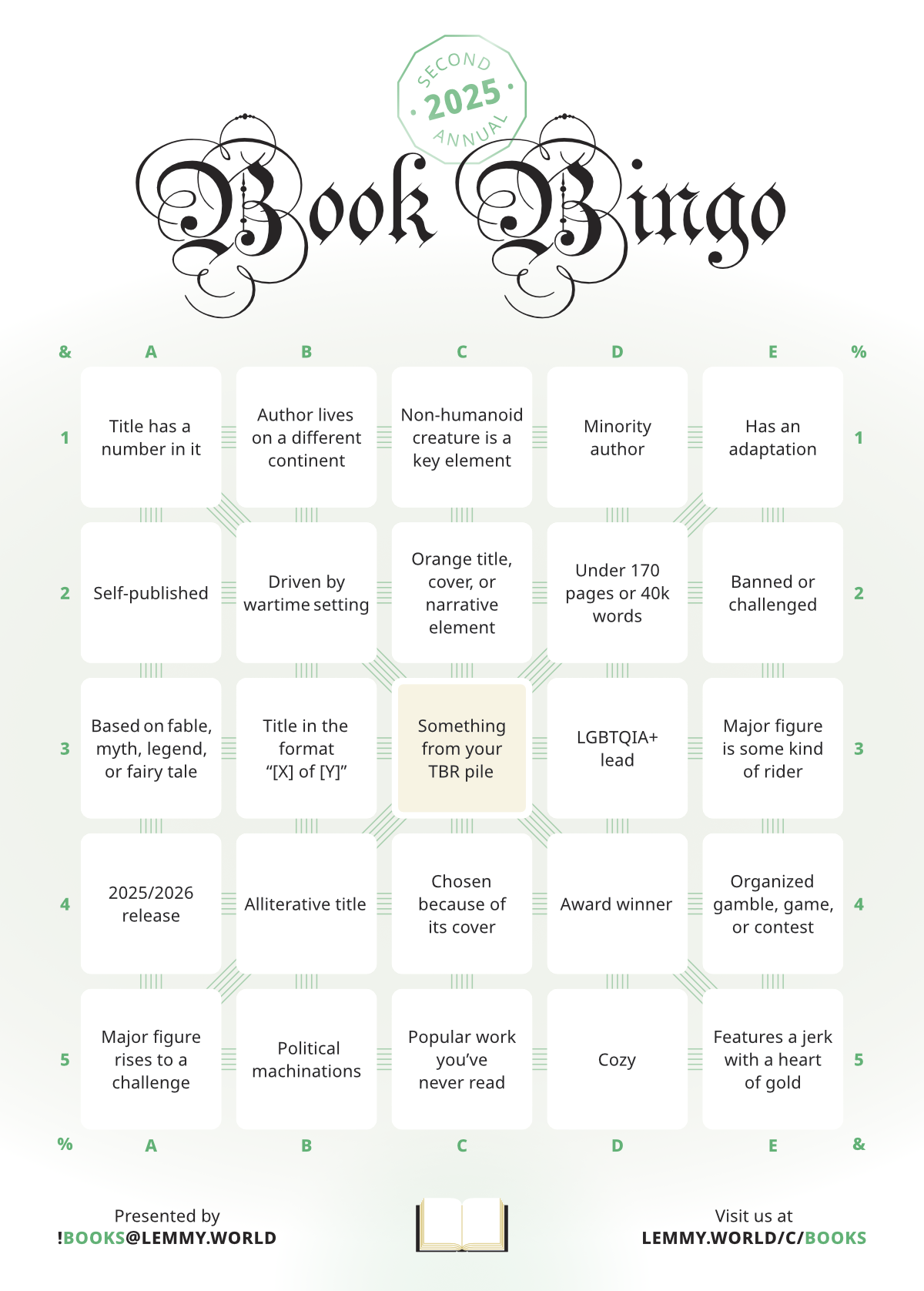
WELCOME TO THE 2nd ANNUAL !BOOKS@LEMMY.WORLD BINGO 2025!

preview

I wanted to invite you to join us for book bingo: cross-posted from: literature.cafe/post/19468617

Want to read more, but need motivation or direction? Want to gamify or expand your reading? Try book bingo! Our hope with this challenge is to provide a fun way for you to keep up with your recreational reading goals throughout the next 12 months.

How Does It Work?

The goal is to read something that fits the theme for each bingo square in any single row, column, or corner diagonal of your choice (one work per square). You’re welcome to complete the entire card (or multiple cards) for an additional challenge goal, but you only need to check off a single line of 5 squares to complete the challenge.

So what can you read? Well, anything you enjoy, really. There’s no requirement to consume any particular kind of work, so any length, format, subject, or genre is totally fine. Want to read graphic novels, audiobooks, poetry, 10-page memoirs, or works in other languages? No problem. There’s no bingo police, either! If you think you can make a well-reasoned argument for why something fits the spirit of a square, go for it. There’s even a process for substituting a square if it doesn’t quite fit your preferences.

We hope you’ll participate in the community throughout the year by posting what you’re reading in the weekly “What are you reading?” thread, and by helping others with recommendations.

In mid-April, 2026, we’ll put up a turn-in post to collect everyone’s cards. After the thread closes at the end of April, we’ll use the submissions to put together a summary of the results, and to determine eligibility for community flair (currently not possible, but maybe in the future!) or some other recognition. If you want to be included, please make sure to contribute to that post, even if you’ve made other bingo posts or comments during the year.

Rules

  • You must read a different work for every square you complete, even across multiple cards. There’s no problem, however, with overlapping other reading challenges that aren’t associated with c/Books.
  • Repeating authors on the same card isn’t forbidden, but we encourage you to read different authors for every square on a card.
  • Likewise, we encourage you to primarily read things you haven’t read before.
  • If you’re having trouble filling a certain square, you are welcome to substitute any non-duplicate square from last year’s card. The center square (C3) is the one exception, and is not eligible for substitution. Please limit your substitutions to one per card.
  • The 2025 challenge runs May 1^st^, 2025 – April 30^th^, 2026. Anything you finish during that time period is eligible, as long as you were no more than halfway through on May 1^st^, 2025.

Upping the Difficulty

Want an additional challenge? Try one of these, or come up with a variation of your own (and share them!).

  • Hard Mode: This is just a stretch goal for those interested – it does not convey any greater achievement. Most square descriptions include an optional extra restriction, which you can do or ignore on a square-by-square basis. It’s up to you!
  • Genre Mode: Read only one genre.
  • Review Mode: Write a review (ratings alone don’t count) for the books you read for bingo, either here on c/Books, a personal blog, Bookwyrm, The Storygraph, Hardcover.app, or elsewhere.

The Card

2025 Bingo Card

Full Size Card

Squares in List Form

The Squares

Row 1

  • 1A Number in the Title: The work must have a number in the title that’s not a just a volume/version number. Example: The Seven Husbands of Evelyn Hugo by Taylor Jenkins Reid. HARD MODE: Only numbers in the title.
  • 1B Author from a Different Continent: The author(s) resides on a different continent than you do. HARD MODE: The work required translation to be published in your native language.
  • 1C Featured Creature: A sentient non-humanoid is the primary PoV, or a non-humanoid creature holds such a prominent role that the work would be completely different without them. Examples: Call of the Wild by Jack London or Old Yeller by Fred Gipson. HARD MODE: Not a sci-fi/fantasy creature.
  • 1D Minority Author: The author is a member of a generally underrepresented or marginalized demographic where you live, such as LGBTQIA+ or BIPOC. HARD MODE: Belongs to more than one minority group.
  • 1E Now a Major Motion Picture: The work has been adapted into a show or single episode, movie, play, audio drama, or other format. HARD MODE: Watch or listen to the adaptation as well (rewatches are ok!).

Row 2

  • 2A Independent Author: Read a work self-published by the author. Any work later published though a conventional publishing house doesn’t count unless you are reading it before the switch, and its rerelease date is after April 30^th^, 2026. HARD MODE: Not published via Amazon Kindle Direct.
  • 2B Set in War: The work takes place with an active war in the foreground or background. The characters do not need to be directly involved in combat, but the war’s presence must be a primary driver of the narrative. HARD MODE: There are more than 2 factions in the war.
  • 2C Orange Crush: The title, a prominent element of the cover, or the narrative involves some form of orange (color, word, or fruit). HARD MODE: The work you chose uses multiple types of orange features.
  • 2D Short and Sweet: Read a individual piece of work under 170 pages or 40,000 words. HARD MODE: Read a collection of this type of short work.
  • 2E Banned Book: Read a work from the ALA’s (American Library Association’s) list of the top 100 banned books in the US 2010-2019. If you are a non-American and there is a similar list for your region, that is also a valid source for comparable information. Additionally, you can use the content from the Wikipedia post on banned books. HARD MODE: One of the top 50 (or equivalent).

Row 3

  • 3A Based on Folklore: The narrative must be based on a real world piece of folklore. Folklore encompasses fairy tales, fables, myths, and legends. HARD MODE: Non-European folklore.
  • 3B Title: [X] of [Y] - The title of the book must feature the format described, such as A Wizard of Earthsea by Ursula K. Le Guin. HARD MODE: [X] of [Y] and [Z] (the conjunctions can be flexible).
  • 3C FREE SPACE - Off Your TBR Pile: A book that’s been on your TBR list for a long time. HARD MODE: Overlaps with at least one other bingo square theme.
  • 3D LGBTQIA+ Lead: A main character identifies as LGBTQIA+. HARD MODE: Includes a significant romantic relationship between characters that identify as LGBTQIA+.
  • 3E Saddle Up: The narrative revolves around someone whose identity is tied to being a rider of something, such as a horse, dragon, or motorcycle. HARD MODE: The ridden creature/object is treated as a character in its own right.

Row 4

  • 4A New Release: New for 2025/2026 (no reprints or new editions). First translations into your language of choice are allowed. HARD MODE: This is the first work you’ve read by this author.
  • 4B Alliterative Title: Many books boldly boast alliteration to attract audience attention. HARD MODE: More than 2 alliterative words in the title, excluding definite articles or conjunctions.
  • 4C Judge a Book by Its Cover: Chosen because you like its cover (or cover analogue). HARD MODE: Picked using only the information available on the front cover.
  • 4D Award Winner: Has won a notable and widely regarded literature award. HARD MODE: More than one award.
  • 4E Gamble, Game, or Contest: Features an organized gamble, game, or contest (life-and-death or otherwise). HARD MODE: Take a gamble on a style or genre of work you don’t typically read, as well.

Row 5

  • 5A Steppin’ Up!: Challenges can come at you quickly, especially for those least prepared. Whether it’s a major leadership position or suddenly being gifted a baby dragon, life is about to get a whole lot harder and more complicated. HARD MODE: The primary PoV does not assume the throne of a monarchy/empire.
  • 5B Political: Political movements are a major driver of the work. HARD MODE: From the perspective of machinations in the background, outside the typical positions of power or major government.
  • 5C Late to the Party: Apparently this is a really popular work, you just haven’t gotten around to it yet. Read a book that you have seen recommended over and over. HARD MODE: Not Harry Potter.
  • 5D Cozy Read: Cozies generally feature a smaller cast of characters in a smaller location, emphasize community, highlight successes and inspirational moments, and have a more optimistic and upbeat tone. Above all, they have to have a satisfyingly happy ending. They offer comfort to their readers and a safe escape from the realities of daily life. HARD MODE: There is no hard mode, hard mode defeats the purpose of the cozy task.
  • 5E Jerk with a Heart of Gold: A significant figure may be rude, gruff, or even insufferable; however, beneath all that, a surprising kindness shows in the right moments. Maybe they are bad at the whole feelings thing, are doing it to hide a deep pain or maintain a position of responsibility, or maybe it’s just all a façade, but their actions ultimately reveal a core of genuine caring. HARD MODE: Not A Man Called Ove/Otto.

Resources

If you make or find any bingo-related resources, ping or DM me so I can add them here. Thanks!

Appreciation

  • This challenge is inspired by, but totally separate from, the one run by r/Fantasy on Reddit. We deeply appreciate the past organizers and the work they did that we are now benefitting from.
  • 2025 bingo card font credits: Parchment, by Photo-Lettering, Inc.; Noto Sans, by the Noto Project authors.
MarkDown Card (click to expand)

--------------------------------- | | A | B | C | D | E | |:—:|:—:|:—:|:—:|:—:|:—:| | 1 | Number in the Title | Author from a Different Continent | Featured Creature | Minority Author | Now a Major Motion Picture | | 2 | Independent Author | Set in War | Orange Crush | Short and Sweet | Banned Book | | 3 | Based on Folklore | Title: [X] of [Y] | FREE SPACE - Off Your TBR Pile | LGBTQIA+ Lead | Saddle Up | | 4 | New Release | Alliterative Title | Judge a Book by Its Cover | Award Winner | Gamble, Game, or Contest | | 5 | Steppin’ Up! | Political | Late to the Party | Cozy Read | Jerk with a Heart of Gold |