




0

Canadian universities must do more to ensure their branded clothing isn’t made in sweatshops

The Conversation Canadian universities must do more to ensure their branded clothing isn’t made in sweatshops theconversation.com
preview

Colleges and universities earn revenue each year by licensing their trademarks to major apparel companies, including Lululemon and Fanatics. These companies, in turn, rely on vast supplier networks located primarily in countries with weak labour protections and regulations.

Colleges and universities earn revenue each year by licensing their trademarks to major apparel companies, including Lululemon and Fanatics. These companies, in turn, rely on vast supplier networks located primarily in countries with weak labour protections and regulations.

0

Investigation found UBC researcher fabricated data, gave spinal patients 'false hope.' The public was not told

CBC False hope, fabricated data: No public notice after UBC uncovered serious misconduct in medical study | CBC News www.cbc.ca
preview

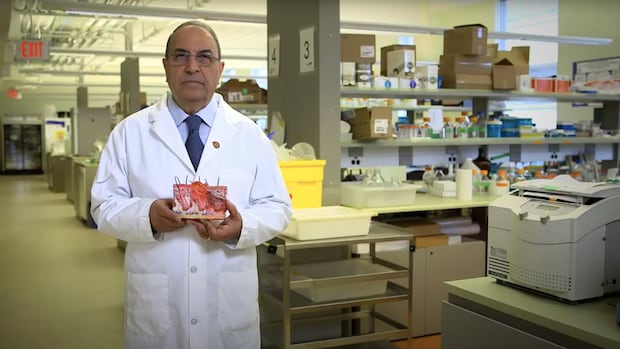
A celebrated Vancouver researcher used fabricated data and hid evidence of infected wounds to falsely claim his patented skin treatment could heal years-old bed sores in a matter of weeks, according to a leaked report.

If these results had been real, a product known as Meshfill would have been “close to miraculous” for people with spinal cord injuries, according to one expert. But investigators say they weren’t real, and the public was never informed about an investigation that uncovered numerous examples of misconduct during a clinical trial for the liquid skin substitute.

The Investigative Journalism Foundation (IJF) and CBC News have obtained a 64-page report about University of British Columbia (UBC) plastic surgery professor Aziz Ghahary’s actions during a pilot study for Meshfill. It lays out how he presented falsified results to the public on several occasions, violated conflict of interest guidelines and was even accused of bullying by another researcher.

The March 2021 document, which was written by a UBC-appointed investigative committee of three outside experts, says Ghahary “abandoned his scholarly integrity in his pursuit of his attempt to establish that Meshfill should be used as a treatment for chronic pressure ulcer wounds” — also known as bed sores. Despite his public claims of success, none of the pressure wounds in the pilot study had healed and some became infected.

“These false claims gave patients and funders false hope by falsely claiming that Meshfill had quickly healed chronic pressure ulcer wounds. He also potentially endangered the health of future human trial subjects when Dr. Ghahary falsely claimed that there had been no adverse effects during the pilot study,” reads the report.

Ghahary left his job at UBC shortly after the investigation was completed in 2021. He’d worked there since 2005.

The lack of public notice about the findings raises some questions for Leigh Turner, director of the Centre for Health Ethics at the University of California, Irvine.

“I think the findings of the report are extremely serious,” Turner said. “I would hope that this is a really relatively extreme example of violation of scholarly integrity. But there presumably are other cases and there presumably are other investigative reports that are not seeing the light of day. That’s a problem.”

UBC spokesperson Matthew Ramsey said he could only confirm that Ghahary’s employment at the university ended in 2021.

“Privacy law prevents UBC from commenting on allegations of scholarly integrity you’ve raised related to Dr. Ghahary’s research at UBC,” Ramsey wrote in an email.

“Scholarly integrity investigation reports contain personal information that UBC, as a public body, is required to protect from disclosure under FIPPA [the Freedom of Information and Protection of Privacy Act]. UBC does not have the legal authority to publish/share this type of personal information.”

[Tarek Elneweihi, a lawyer who represents Ghahary] noted that Ghahary is now 83 years old and is completely retired from research work.

Meshfill never reached the market in Canada and should not be confused with the cosmetic procedure advertised online.

0

Churchill Falls Could Make Newfoundland and Labrador Rich—or Break It Again | The Walrus

The Walrus Churchill Falls Could Make Newfoundland and Labrador Rich—or Break It Again | The Walrus thewalrus.ca
preview

Introduction from the article:

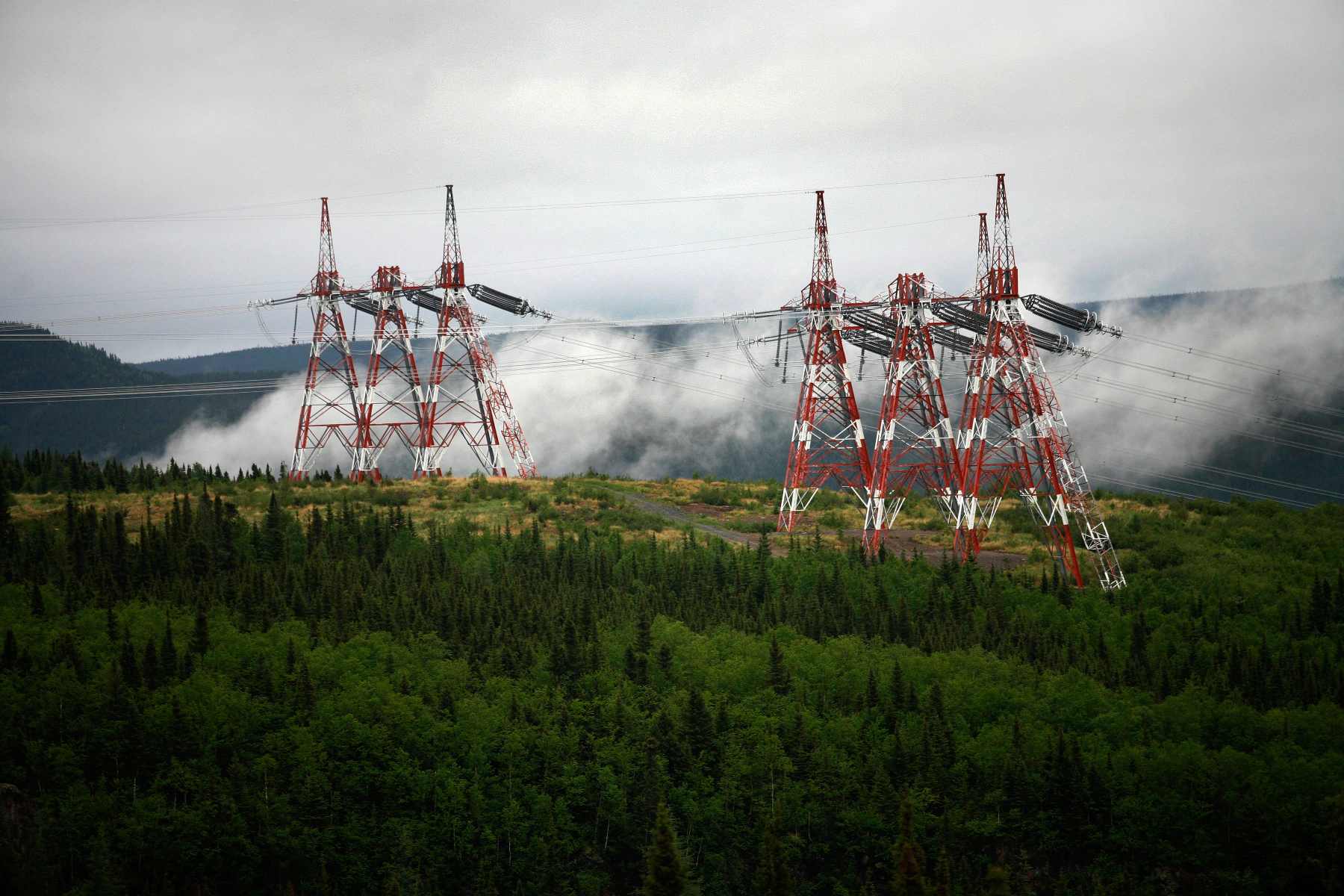
For the past month, John Hogan has been doing his best to make the ballot question in Newfoundland and Labrador’s election today all about the province’s energy future. In mid-September, as the premier greeted voters in Happy Valley-Goose Bay—a regional service town in central Labrador—he made a vow. If his Liberal government is re-elected, he’ll ensure the proposed redevelopment of the massive Churchill Falls hydroelectric project goes ahead, turbo-charging the provincial economy and righting a decades-long dispute with neighbouring Quebec.

The Labrador project and a tentative new development deal with Quebec are vital to provincial coffers, promising to unlock hundreds of billions in new revenue and creating an estimated 8,000 new jobs, radically transforming the economic outlook of a province that, five years ago, was flirting with financial disaster. By centring his campaign around Churchill Falls, Hogan is hoping all these promised riches will be enough to win the Liberals their fourth consecutive mandate.

He hasn’t had much time to drive the message home or endear himself to voters: the provincial election was called mid-September, the latest date possible under the province’s fixed election law. And Hogan has been in the premier’s chair just a few short months, taking the reins after the shock resignation of Andrew Furey, the popular orthopedic surgeon who navigated the province through the choppy waters of the COVID-19 pandemic and signed the new Churchill Falls memorandum of understanding (MOU) with Quebec premier François Legault in 2024.

Churchill Falls isn’t solely a Liberal priority. The opposition Progressive Conservatives, led by Tony Wakeham, support the project but are calling for more transparency in how the final deal is negotiated. They’re also trying hard to pivot the election’s focus toward issues like health care and crime.

But dealing with Churchill Falls will be inescapable. Whoever wins will be expected to shepherd a final Churchill Falls agreement across the finish line sometime in 2026. During his whistle-stop tour in Happy Valley-Goose Bay, near the mouth of the Churchill River, Hogan promised a Labrador Community Engagement Committee comprised of local residents and partners to help the region prepare for new expansion. Wakeham has vowed to put any final agreement to a province-wide referendum.

Yet with spotty polling, pushback from some voters, and Indigenous communities protesting the expansion of Churchill Falls, experts have cautioned that the election is too close to call. It’s anyone’s guess whether Hogan or Wakeham will be the leader to usher Newfoundland and Labrador into a potentially prosperous new era. Or whether it’s smart to hinge an entire campaign on a tentative deal.

0

UBC enzyme technology clears first human test toward universal donor organs for transplantation

preview

I thought this one was really cool!

TLDR:

Blood-type antigens act like nametags on cells, and the UBC enzymes act as molecular scissors, snipping off the ‘nametag’ that marks type A and revealing type O beneath.

Summary:

Published today in Nature Biomedical Engineering, the achievement marks a major step toward helping thousands of patients get kidney transplants sooner.

In a first-in-human experiment, the enzyme-converted kidney was transplanted into a brain-dead recipient with consent from the family, allowing researchers to observe the immune response without risking a life.

For two days, the kidney functioned without signs of hyperacute rejection, the rapid immune reaction that can destroy an incompatible organ within minutes. By the third day, some blood-type markers reappeared, triggering a mild reaction, but the damage was far less severe than in a typical mismatch, and researchers saw signs that the body was beginning to tolerate the organ.

Older History:

The breakthrough is the result of more than a decade of work. In the early 2010s, Dr. Withers and colleague Dr. Jayachandran Kizhakkedathu, a UBC professor in the department of pathology and laboratory medicine and the Centre for Blood Research, were focused on making universal donor blood by stripping away the sugars that define blood types.

Those same sugars, or antigens, coat organ blood vessels. If a recipient’s immune system detects the wrong antigen, it attacks. Type-O patients—more than half of kidney waitlists—can only receive type-O organs, yet type-O kidneys are often given to others because they’re universally compatible. As a result, type-O patients typically wait two to four years longer, and many die waiting.

Traditional methods for overcoming blood-type incompatibility in transplants require days of intensive treatment to strip antibodies and suppress a recipient’s immune system—and require organs from living donors. This new approach changes the organ rather than the patient, meaning transplants could be performed faster, with fewer complications, and for the first time could unlock the use of blood-type mismatched organs from deceased donors—when every hour can determine whether a patient lives or dies.

The chain of discoveries that led up to this:

The key to this approach is the 2019 discovery by the UBC team of two highly efficient enzymes that remove the sugar that defines type-A blood, effectively converting it to type O.

The next challenge was applying this to whole organs, achieved in 2022 when a Toronto team showed lungs could be converted. After successful tests on blood, then lungs and kidneys (with the University of Cambridge) outside the body, the question remained: Could an enzyme-converted organ survive inside a human immune system?

The answer came in late 2023 on an overseas trip for Dr. Kizhakkedathu. “Our collaborators showed me their data where, using our enzymes, they had converted a human kidney and transplanted it into a brain-dead recipient. It was working beautifully.” He stayed up late to call Dr. Withers first thing in the B.C. morning. “I was so thrilled. It was a dream moment.”

Future:

Regulatory approval for clinical trials is the next hurdle, and the partner UBC spin-off company Avivo Biomedical will lead development of these enzymes for transplant application and to enable the creation of universal donor blood on demand for transfusion medicine.

0

Logitech MX Master 4 Review - The Last Productivity Mouse You'll Need | Hardware Canucks

play · youtube.com
YouTube Logitech MX Master 4 Review - The Last Productivity Mouse You'll Need www.youtube.com
preview

Note, if you are on Linux, there is a manager for Logitech devices: github.com/pwr-Solaar/Solaar

It’s third party and has different features, but helpful for things like checking the battery level.

Note, if you are on Linux, there is a manager for Logitech devices: github.com/pwr-Solaar/Solaar

It’s third party and has different features, but helpful for things like checking the battery level.

0

TLDR September 29 - Weekly financial newsletter | Wealthsimple

⚡ Battle of the batteries tldr-archive.wealthsimple.com
preview
WHAT HAPPENED LAST WEEK
IMPORTANT
Will America's $100K visa fee steer more tech talent to Canada? RBC CEO Dave McKay certainly thinks so. Last week's seismic change to the U.S.'s H-1B visa program creates a “material opportunity,” he says, for Canadian companies to attract more highly skilled foreign tech workers. And doctors and scientists too, yes — but especially tech: 60% of current H-1B visa holders work in tech, and in the first half of this year alone, Amazon, Meta, and Microsoft used the program to bring more than 20,000 workers into the U.S. All three of those companies have Canadian offices. Now they have a $2-billion reason to hire the next 20,000 here.

Constellation loses its north star. Constellation Software is the best-performing Canadian investment of the past 20 years, and much of its success (as we covered on an episode of the TLDR podcast) is credited to “Canada’s Warren Buffett,” founder and CEO Mark Leonard. Last week the stock plunged by 15% after Leonard resigned from the company due to health reasons, with analysts calling his leadership “irreplaceable.” His insightful shareholder letters have also become a staple for investors — read some highlights here.
INTERESTING
Understanding how batteries work = understanding how to invest. Batteries are the “hidden plumbing of the modern economy” — they're in our phones, laptops, earbuds, cars, solar panels — and right now, two types of batteries make up 98% of the market: lithium iron phosphate, which is cheap and durable but requires a bigger cell, and nickel manganese cobalt, which is lighter but costlier. This Daily Brief essay makes a compelling case that understanding this difference — including where the two minerals are mined and which companies are betting on them — helps illuminate who stands to benefit from the industry’s growth. Canada’s working on becoming a larger source of the world’s lithium, but we're not a hot spot for cobalt, which is mostly mined in the DRC (although we’re working to refine some here). And when a tech product takes off, its battery type tends to follow: EVs, for example, want the lowest price for the most power (lithium!), while consumer electronics need the smallest storage possible (cobalt!). See, high school chem was good for something!

Useful AI use-case sighting! A startup that reduces health-care waits. With so much of the global economy kinda sorta riding on AI paying off, we're always on the lookout for evidence of promise, and Yukon-based PeerSupport.io might be on to something: it uses AI to pre-fill medical forms, suggest referral opportunities, and help patients navigate an often labyrinthine records system. In a pilot test, addiction patients got care 27 weeks sooner than usual, and form-completion time dropped from 18 minutes to two.

—Sarah Rieger
0

How to Set Up a New Windows Laptop in 2025

play · youtube.com
YouTube Have a New Laptop? Do this FIRST! www.youtube.com
preview

I’m on Linux, I recommend Linux, but if someone must use Windows, this video had a lot of the tips that I had noted down for myself. Forcing a local account, disabling Windows junk, etc.

I’m on Linux, I recommend Linux, but if someone must use Windows, this video had a lot of the tips that I had noted down for myself. Forcing a local account, disabling Windows junk, etc.

0

Jane Austen at 250: Why we shouldn’t exaggerate her radicalism

The Conversation Jane Austen at 250: Why we shouldn’t exaggerate her radicalism theconversation.com
preview

I’m not taking any sides in this discussion by posting this. The article was in my RSS feed and I thought it might promote some discussion in these smaller communities. Please check out the article as it covers a lot more than what the title says :)

Author: Kerry Sinanan | Associate Professor of Global pre-1800 Literature, University of Winnipeg

0

B.C. scientists discover new virus in farmed Pacific oysters during mass die-off

Global News B.C. scientists discover new virus in farmed Pacific oysters during mass die-off | Globalnews.ca globalnews.ca
preview

Scientists at the University of British Columbia have discovered a previously unknown virus in farmed Pacific oysters during a mass die-off in B.C. in 2020.

The paper, published on Monday in the Proceedings of the National Academy of Sciences, said that while mass die-offs have been attributed to various factors, including viruses, in many cases, there is no definitive cause.

“We’ve recently seen annual mass die-offs in B.C. and elsewhere of Pacific oysters, the most widely farmed shellfish worldwide,” said first author Dr. Kevin Zhong, research associate in the UBC Department of earth, ocean and atmospheric sciences (EOAS).

The researchers collected 33 oysters from two farms in B.C. during a mass die-off in 2020, as well as 26 wild oysters from 10 nearby sites.

RNA analysis revealed the presence of a previously unknown virus, Pacific Oyster Nidovirus 1 (PONV1), in 20 of the dead and dying farmed oysters, according to the research. However, the virus was not found in healthy wild oysters, which suggested the virus was killing the oysters.

“This discovery highlights how little we know about viruses infecting invertebrates in general and oysters in particular,” said senior author Dr. Curtis Suttle, professor of earth, ocean and atmospheric sciences, botany, microbiology and immunology, at the Institute for the Oceans and Fisheries.

The virus, which has one of the largest RNA genomes on record, according to the research, is so genetically different from other nidoviruses that the research team has proposed a new family, Megarnaviridae, or ‘large RNA viruses’ PONV1, which the team is proposing to name Megarnavirus gigas, or ‘large RNA virus giant.’

Suttle said these large RNA viruses appear to be specific to oysters, so humans are not at risk of contracting the virus.

However, the team said this discovery is a reminder that oyster farmers should use an abundance of caution when moving juvenile oysters as little is known about what causes disease in the bivalve molluscs.

“This research is not a cause for alarm,” Suttle added. “Rather, this is a meaningful step forward in advancing our understanding of oyster health and supporting the long-term sustainability of shellfish aquaculture.”

0

Canadian PSAs Were Weird | GingerPale

play · youtube.com
YouTube Canadian PSAs Were Weird www.youtube.com
preview

From the video description:

Canadian PSAs:

I have a ton of nostalgia for these PSAs that used to pop up on TV when I was a kid. Sometimes it’s the music or the silly visuals that stick in my head- but sometimes it’s the fear and distrust they inflicted on my mushy youthful brain. I set out to try and cover a bunch of the most memorable, but I quickly got sidetracked and just stuffed a bunch of PSA parallel skits into this video- i have no idea if there is a message that people get from this, but here it is:

The lovely Canadian PSAs were wonderful, terrifying, and educational- sometimes all at the same time. I believe that we consume so much more content than people used to so it’s important to have these educational messages to help us gain a little knowledge, dodge and teach about misinformation, and because other people deserve to have a nice piece of nostalgia sitting at the back of their heads that brings them great joy.

If you want to see a bunch more PSAs i saw growing up, you can go check out ‪@ccacanada‬ , most of the ones they made during their time are uploaded on their channel. My recommendations (or possible future part 2 clips to cover): Health Rock, What’s Your Thing?, Smart As You, Hip Choice, and The Trap. There’s also Don’t Put It In Your Mouth, but it doesn’t appear to be on their channel, but you should be able to find it. I love puppets.

Although i did not set out to cover every single PSA that i wanted to in THIS video, I hope you guys enjoyed some of the dumb jokes and skits :). Thanks for watching! I’m gonna touch some grass and get married.

Special thanks to my brother for making the funny dinky song in my pitched PSA- he actually makes real music too so you should go check him out: @StArnaudband‬

And to my friend Calmy for helping throw in some sound effects!!

You can find him on twitter and twitch: ‪@Calmynism‬

AND SINCERELY TO WHO IT CONCERNS:

I WILL MAKE PUBLIC SERVICE ANNOUNCEMENTS IF YOU WANT THEM!!!

hehe bye bye :)!!

0

3 ways Canadians can take control of their finances in an age of economic uncertainty | TheConversationCanada

The Conversation 3 ways Canadians can take control of their finances in an age of economic uncertainty theconversation.com
preview

Author: Omar H. Fares | Assistant Professor, Faculty of Business, University of New Brunswick

Author: Omar H. Fares | Assistant Professor, Faculty of Business, University of New Brunswick

0

NASA Webb’s Autopsy of Planet Swallowed by Star Yields Surprise - NASA Science

NASA Science NASA Webb's Autopsy of Planet Swallowed by Star Yields Surprise - NASA Science science.nasa.gov
preview

Observations from NASA’s James Webb Space Telescope have provided a surprising twist in the narrative surrounding what is believed to be the first star observed in the act of swallowing a planet. The new findings suggest that the star actually did not swell to envelop a planet as previously hypothesized. Instead, Webb’s observations show the planet’s orbit shrank over time, slowly bringing the planet closer to its demise until it was engulfed in full.

“Because this is such a novel event, we didn’t quite know what to expect when we decided to point this telescope in its direction,” said Ryan Lau, astronomer at the National Science Foundation National Optical-Infrared Astronomy Research Laboratory in Tucson, Arizona. “With its high-resolution look in the infrared, we are learning valuable insights about the final fates of planetary systems, possibly including our own.”

0

Wealthsimple TLDR Newsletter - April 14 - '⏰ The 12 biggest moments of “Liberation Week”'

⏰ The 12 biggest moments of “Liberation Week” tldr-archive.wealthsimple.com
preview

The past few weeks have been wild for Wall Street. So wild, in fact, that we decided to devote this entire issue of TLDR to unpacking what happened, and where it leaves us. Because there are lots of questions about the latter right now. We’ve got a pre-election issue in the works for next week, then we’ll return to our regular programming. —The Editors

The past few weeks have been wild for Wall Street. So wild, in fact, that we decided to devote this entire issue of TLDR to unpacking what happened, and where it leaves us. Because there are lots of questions about the latter right now. We’ve got a pre-election issue in the works for next week, then we’ll return to our regular programming. —The Editors

0

Wealthsimple TLDR: Mar 24, 2025

😬 Stocks always go up…right? tldr-archive.wealthsimple.com
preview

😬 Stocks always go up…right?

THE WEEK IN MARKETS Everything But America The markets were mostly flat last week, but the storyline of 2025 has come into clear focus: the resurgence of EBA — Everything But America. Since January 1, U.S. stocks are down 5%, Canadian stocks are up a smidge, and global stocks outside the U.S. are up 9%. During the tech-driven rally of the past few years, investors were so smitten with U.S. tech companies, and so cool on everyone else, that TINA — “there is no alternative” to U.S. tech — became something of a mantra. Now market analysts are hyping up new global tech super-groups with names like the Terrific Ten that stand to rival the Not-So-Magnificent Seven.

What changed? For one, Trump 2.0 mayhem — his tariff barrage, his plans to gut civil services, his shift away from NATO — alongside cresting fears that U.S. tech stocks have become overvalued. Or, maybe this whole EBA storyline will end up being wrong. We’re only three months into the year, after all, and this is far from the first time global observers have clucked about the end of U.S. dominance.

THE WEEK IN ONE NUMBER $25 If every household spent this much on Canadian, rather than American, goods every week, our economy would grow by 0.7% and support 60,000 new jobs.

0

Wealthsimple TLDR Newsletter for March 10 2025: '🏥 Tariff whiplash? We can treat that'

TLDR 🤑 | Wealthsimple www.wealthsimple.com
preview

IN THIS ISSUE 8 min read 🏦 Bank bluster 😮‍💨 E-cig empire 😟 Tariff talk

One bad week is a blip. Two in a row could be just a minor reversal. But three straight is hard to sugarcoat. Last week the TSX and S&P were both down 3%, the NASDAQ dropped 4%, and the formerly high-flying Magnificent 7 sank more than 5%. Trump has backed off on some tariffs (for now, anyway), but investors are clearly spooked. So is it time to join the sell-off party? We can’t answer that for you! But, as we unpack below, you can always find a reason to sell, and it’s worth noting that stocks have slumped this much 30 times since March 2009. In every case the end felt nigh, and in every case you were better off buying the dip.

(see link for full newsletter)