A bunny peers into an open drawer in their room, where a bunch of black kittens are resting and playing. One of them is awake and is climbing on the headboard of a bed.
A bunny peers into an open drawer in their room, where a bunch of black kittens are resting and playing. One of them is awake and is climbing on the headboard of a bed.
An Israeli soldier has been accused of abusing a Palestinian detainee at a military outpost in the occupied West Bank, including beating him, urinating on him and smearing faeces on his face.
According to Israel’s Channel 12 News, the abuse took place last month at the Jalameh military outpost, after Israeli soldiers arrested a Plestinian man at a nearby crossing.
Investigators suspect the soldier beat the Palestinian and extinguished a cigarette on his body, leaving him injured.
The alleged abuse did not end there. According to the investigation, the soldier urinated on the detainee before smearing his own faeces on the man’s face and urging him to eat it.
This Berlin-set origin story stars Ann Skelly and Rory Kinnear. Plus: the clever, creepy mystery of Yaga takes another turn. Here’s what to watch this evening
9pm, BBC OneIf you ever wondered how Fiona Shaw’s Killing Eve MI6 oddball Carolyn Martens got so eccentric, you’re in luck. This drama, set in East Berlin in 1982, is her origin story: Martha/Carolyn (Ann Skelly) is a bored junior spy when Rory Kinnear’s agent Graham Anderson gives her an assignment that leads her into a menage a trois with a CIA operative and a Stasi officer. It doesn’t quite manage the irreverent mischief of prime Killing Eve but it’s still spicy fun. Phil Harrison
The Hamburg painter Hinz was already known for his still lifes during his lifetime. The “Kunstkammer” shelf represents a unique variation within this genre and depicts a condensed version of a cabinet of curiosities. Since the Renaissance, nobles and wealthy citizens had collected natural objects such as shells or pearls (naturalia), technical instruments (scientificia), and artistic artifacts (artificialia) in these chambers; their encyclopedic arrangement served as a model of the world. Some of the objects depicted can be clearly identified. For example, the ivory goblet in the center is now housed at the Museum für Kunst und Gewerbe in Hamburg. With its exact rendering of the objects, the painting gives the viewer the impression of real objects. Hinz painted several versions of this theme, varying the objects depicted in each. The Hamburg painting was intended for the Danish royal family. The medallion hanging on the right side of the middle shelf features a portrait of Christian IV of Denmark.
The Hamburg painter Hinz was already known for his still lifes during his lifetime. The “Kunstkammer” shelf represents a unique variation within this genre and depicts a condensed version of a cabinet of curiosities. Since the Renaissance, nobles and wealthy citizens had collected natural objects such as shells or pearls (naturalia), technical instruments (scientificia), and artistic artifacts (artificialia) in these chambers; their encyclopedic arrangement served as a model of the world. Some of the objects depicted can be clearly identified. For example, the ivory goblet in the center is now housed at the Museum für Kunst und Gewerbe in Hamburg. With its exact rendering of the objects, the painting gives the viewer the impression of real objects. Hinz painted several versions of this theme, varying the objects depicted in each. The Hamburg painting was intended for the Danish royal family. The medallion hanging on the right side of the middle shelf features a portrait of Christian IV of Denmark.
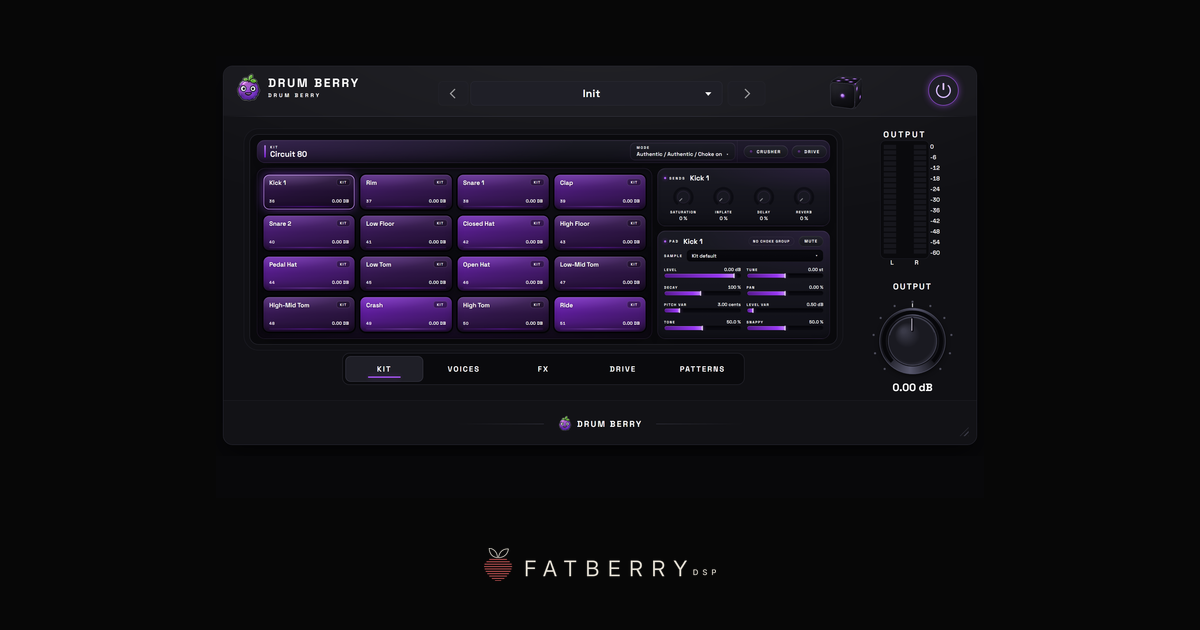
Hi all. We are Fat Berry DSP, a small UK plug-in maker in Birmingham. Drum Berry is our free drum machine: 16 pads and 32 kits, built for sketching beats quickly before you reach for anything heavier.
It is free to keep, free account, no card. It is not open source, so we know it is not everyone’s cup of tea here.
Formats are Windows VST3, and Mac VST3 and AU (Intel and Apple Silicon). There is no AAX, VST2, CLAP or Linux build yet.
This week, investigators in the case against his former Development Minister Miklós Seszták found cash in Hungarian forints, euros and dollars worth about €17.7 million. Some of it was buried in forests, and the rest was hidden in farm buildings, warehouses and safes. The money has been paid into the Hungarian state treasury. May this inspire the US Congress.
This week, investigators in the case against his former Development Minister Miklós Seszták found cash in Hungarian forints, euros and dollars worth about €17.7 million. Some of it was buried in forests, and the rest was hidden in farm buildings, warehouses and safes. The money has been paid into the Hungarian state treasury. May this inspire the US Congress.
When I feel like scrapping the whole project and starting over:
Me: (in the project dir) sudo rm -rf /*
Me: (after waiting a while) Something feels off… Why is it taking so long to delete everything?
Me: (suddenly realizing) ^C ^C ^C
System: Press any key to continue…
当我想把整个项目推倒重做时:
我:(在项目目录)sudo rm -rf /*
我:(等了一会儿)有点不对劲。。。怎么删了这么长时间还没删完
我:(恍然大悟)^C ^C ^C
系统: Press any key to continue…
Nel grande insediamento romano presso il Vallo di Adriano, in Inghilterra, gli archeologi recuperano una lampada a olio completa, proveniente da un contesto del IV secolo d.C. Le lucerne romane nascondono un universo figurativo ancora poco osservato:
Nel grande insediamento romano presso il Vallo di Adriano, in Inghilterra, gli archeologi recuperano una lampada a olio completa, proveniente da un contesto del IV secolo d.C. Le lucerne romane nascondono un universo figurativo ancora poco osservato:
Turns out throwing billions at GPUs doesn’t automatically mean everyone gets more done. Just 0.1 to 0.2 percentage points of additional annual productivity growth since early 2024.
Turns out throwing billions at GPUs doesn’t automatically mean everyone gets more done. Just 0.1 to 0.2 percentage points of additional annual productivity growth since early 2024.
One of humanity’s most remarkable cultural achievements is the division of explanatory labor. When my daughter came down with a fever, I solved the problem by consulting a pediatrician, who shared a likely diagnosis of the flu. Unlike the doctor, I wasn’t able to tell my daughter much about the mechanism by which the flu leads to fever, or exactly why it was so important for her to keep drinking fluids. But the explanation I acquired—roughly “fever because flu”—was what was needed to treat her.
Society runs on this efficient type of information sharing. Just as coordinating specialized skills can streamline the fabrication of products—be it pins or cars or newspapers—coordinating specialized knowledge can facilitate the answering of questions. You can drive a car even if you don’t have the expertise to manufacture one yourself, and I benefited from the pediatrician’s explanation even though his understanding far exceeded my own.
We can thank this divide-and-conquer method for many advancements in medicine and science, engineering and commerce; in fact, it has helped drive the accumulation of human knowledge across communities and over time. But it also leaves us susceptible to illusions of understanding: cases in which we mistake the understanding of others for our own.