0

Man O' War

preview

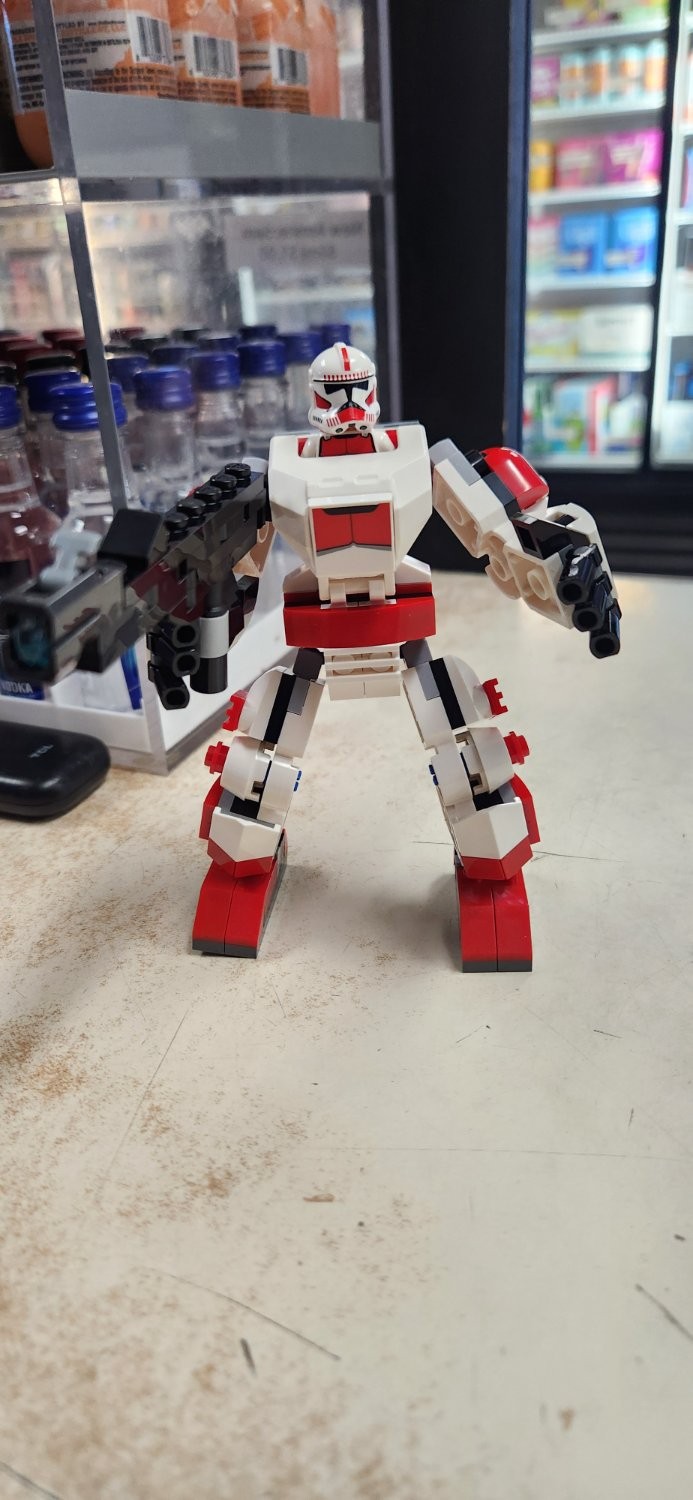
Kimchi looks skeptical but it’s good.

2 oz bourbon

1 oz orange liqueur

1/2 oz sweet vermouth

1/2 oz (I used 3/4oz) lemon juice

Shake all with ice.

Kimchi looks skeptical but it’s good.

2 oz bourbon

1 oz orange liqueur

1/2 oz sweet vermouth

1/2 oz (I used 3/4oz) lemon juice

Shake all with ice.

0

Nintendo's Infamous Hotel Mario Has Been Ported to the Sega Dreamcast

Nintendo's Infamous Hotel Mario Has Been Ported to the Sega Dreamcast handheldhideout.neocities.org
preview

Of all the games I expected to see ported to the Dreamcast in 2026, Hotel Mario just wasn’t one of them! I’ve written a little article about developer MoneyShift64’s kinda unusual project, which brings the infamous 1994 Philips CD-i game to Sega’s final console, complete with the original campaign, two-player support, VMU saving and, of course, those weird, weird animated cutscenes.

Hotel Mario has a reputation, and not the best one, but I find it really interesting that people are still finding new ways to preserve and revisit these corners of gaming history. There’s something really funny to me about seeing Mario and Luigi running around on a Dreamcast, especially considering Nintendo and Sega’s old rivalry. I’ve included some screenshots and links to the developer’s project for anyone curious enough to give it a try!

0

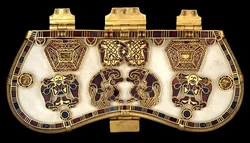
Baku: Monster that Eats Nightmares, ivory with staining, attributed to Gechū

preview

Carved Baku, Japan, date uncertain.

An example of netsuke, a simply-carved button fastener on the cords of an inrō box, netsuke later developed into ornately sculpted objects of craftsmanship.

Carved Baku, Japan, date uncertain.

An example of netsuke, a simply-carved button fastener on the cords of an inrō box, netsuke later developed into ornately sculpted objects of craftsmanship.

0

Linux Native Game Showcase 2026-10-31 - 2026-11-06

play · spectra.video
Spectra Video Linux Native Game Showcase 2026-10-31 - 2026-11-06 spectra.video
preview

Native Linux games released on Steam between Sat. 2026-10-31 and Fri. 2026-11-06. This week there’s 2 hours of trailers?! I’m starting to think I may need to make these twice as often! 00:00 Intro…

Native Linux games released on Steam between Sat. 2026-10-31 and Fri. 2026-11-06. This week there’s 2 hours of trailers?! I’m starting to think I may need to make these twice as often! 00:00 Intro…

0

[Vent] Internalised transphobia and regret

preview

CW: internalised transphobia, regret, bitterness, just shitty thoughts Note: I’m enby and use they/them. When I say trans I mean ‘not cis’, not ‘binary trans’.

Tap for spoiler

I’ve accepted that I’m not cis since I was 13. At the time I would’ve said I’m binary trans. I’m not really sure how long I’ve “known”. I do remember before that time, I occasionally read about trans kids socially transitioning, and it always made me irrationally angry and kind of sad. It isn’t hard to image why, now. I tried coming out to my mom a year later, it sucked. Fast forward to now. I’m in my 20s, I feel ruined. I haven’t come close to transitioning in any way. I feel utterly disconnected from being a man or a woman. I don’t want to go on HRT because I feel like I have too much to lose. I don’t want to be perceived as trans. If I’m to ever transition, I’d be doing it for myself, and I don’t think I could ever be satisfied. These days I mainly experience really intense bottom dysphoria. I’m not sure how I would ever go about getting surgery because I haven’t been able to get myself to properly bring it up in therapy in years. They know I’m not cis, it’s in my file, but I never get asked to elaborate and it’s just too hard to talk about anyway. Especially since most therapists ive seen were women. Plus, I don’t know what bottom surgery would be like without HRT. At this point, I wish I could have HRT minus the obvious physical effects. I don’t like being in trans spaces, or honestly around other trans people at all. It makes me really really dysphoric. It’s lonely. I’m scared that if I attempt to transition, I’ll become my own trans person to be around, making me more dysphoric, not less. I hate being called transfem. Not only because I’m not “fem”, but because it implies my agab, which is no-one’s fucking business. I’m just nonbinary. In general I’m also in very male-dominated spaces (read: compsci). Most of the women in my life are trans women. This is strangely enough very invalidating. It just makes me feel like what I do is a result of my birth defect I feel fucking worthless. I’m not proud to be trans. I just hate being a man. I feel like I’m doing other trans people a disservice by not getting help that I can’t get or afford, just because my self-loathing turns into other-loathing eventually. There was a time where I experimented with names and pronouns with my friends. The only time it didn’t feel like they were “just pretending” is when all communications were suddenly textual for two years. After that it was right back to every “they” or “she” feeling like a lie to my face. It was worse than being misgendered. I once made someone cry because I said that if I were born a girl, I wouldn’t have been non-binary. I feel like that sums it up pretty well.

Sorry if these kinds of vents are commonplace. As alluded to in the spoilered section, I am not really active here. Just needed to get some shit off my chest.

0

Proteste gegen KI-Rechenzentren: Dieser Protest kann Friedrich Merz gefährlich werden

preview

cross-posted from: discuss.tchncs.de/post/70531781

Bei den Midterms hat sich gezeigt: Die Leute mögen keine KI. Auch in Europa gehen nun Menschen auf die Straße. Noch sind es nicht viele. Die Betonung liegt auf: noch.

cross-posted from: discuss.tchncs.de/post/70531781

Bei den Midterms hat sich gezeigt: Die Leute mögen keine KI. Auch in Europa gehen nun Menschen auf die Straße. Noch sind es nicht viele. Die Betonung liegt auf: noch.

0

Crowdfund Quest Weekly 07/11/26 - New Project Launches Over The Last Week

Tabletop Sentinel Crowdfund Quest Weekly 07/11/26 - New Project Launches Over The Last Week www.tabletopsentinel.com
preview

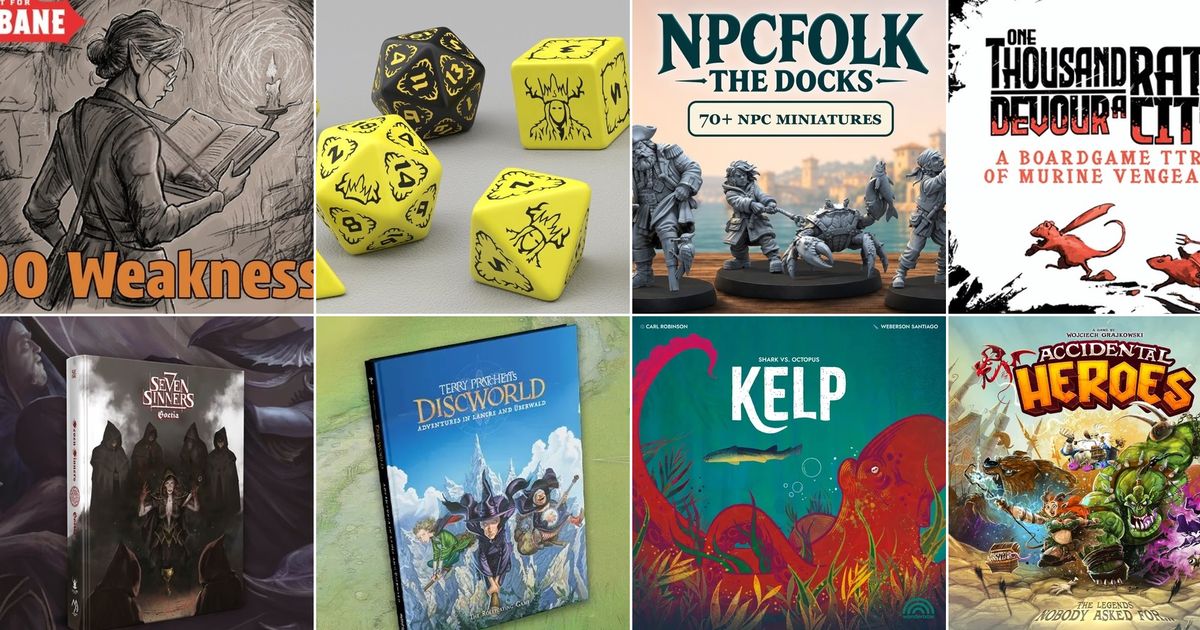
Welcome to our latest Crowdfund Quest Weekly round-up for the tabletop campaigns launched in the last seven days! tabletopsentinel.com/…/crowdfund-quest-weekly-07-…

Welcome to our latest Crowdfund Quest Weekly round-up for the tabletop campaigns launched in the last seven days! tabletopsentinel.com/…/crowdfund-quest-weekly-07-…

0

Rowan Ellis est allée voir les manifs à Paris (Documentaire d'1h en anglais)

preview

“I Went to a French Gen Z Protest (and Got Tear Gassed)”

Je suis allée à une manifestation de la génération Z en France (et je me suis faite gazer)

www.rowanellis.com

Rowan Ellis est une autrice et conférencière connue pour ses contenus éducatifs en ligne et son travail de militantisme au sein de la communauté LGBTQ+. […] Son travail a été évoqué dans des publications telles que Forbes, The Guardian, Teen Vogue, Elle UK et la BBC.

0

Desloppification: I made c/deslop for people to post their human art version of AI slop

Desloppification - Lemmy.zip lemmy.zip
preview

cross-posted from: lemmy.zip/post/74620012

Hey!

Basically what the title says, I created !deslop@lemmy.zip for people to post their own human art version of AI slop, there’s also a megathread for deslop requests.

You see AI slop and want to fix it → you create your own human art version → you post the result in the community.

Thought this could be a fun way to also showcase artists of the fediverse.

See you there! 🤗

0

DBP59: Zeppelin Armada

ModDB DBP59: Zeppelin Armada (full version) file www.moddb.com
preview

A wad I’m playing right now and recommend others to play if there’s still anyone browsing here. It’s really good, love the graphics and the map layouts seem interesting, i am still at the third map though. You can talk with NPCs to do optional quests although very basic from what i can tell so far.

If you have already played it, have you played other DBP wads and what’s your opinion on them?

0

Deslop Requests Megathread

preview

Welcome to c/deslop!

Please read the sidebar for the main rules of the community.

This thread offer a space for desloppification requests.

Post your desloppificaiton request as a comment in this thread.

Threads in this community are reserved for the result of desloppification (human made art, or a side by side comparison). Do not post desloppification requests as their own thread.

📑 Guidelines for requests:

  • Do not generate AI slop and then ask it to be desloppified, this is stupid and counterproductive. There’s already more than enough AI slop in the wild.
  • You must include the source in your request, this helps combat the violations of the rule above. Either as a link to where you found the slop, or a description of it if you took an IRL picture.
  • This also means no speculative work (no-spec.com). This community is not a workaround for asking artists to create work for you, for free.
  • No NSFW requests.
18

From India to Africa, renewables race ahead but Europe is lagging, IEA report shows

EUobserver From India to Africa, renewables race ahead but Europe is lagging, IEA report shows euobserver.com
preview

The oil and gas shock from the Strait of Hormuz is speeding up the transition to renewables almost everywhere in the world, but not in Europe, the International Energy Agency (IEA) said in its annual renewables report on Friday (6 November).

The oil and gas shock from the Strait of Hormuz is speeding up the transition to renewables almost everywhere in the world, but not in Europe, the International Energy Agency (IEA) said in its annual renewables report on Friday (6 November).

0

Waterproof barefoot shoes and/or boots that have no taper and no arch in the sole like THIS please?

preview

Im just looking for shoes and/or boots that have soles that look like EXACTLY this and are waterproof and BIFL. My feet dont taper and look big and flat EXACTLY like this sole (I dont know if I have a disorder or if my feet are just naturally supposed to be like this)

These boots in the picture are from the company manitobah and most reviews conclude that the boots are not as waterproof as theyre advertised to be.

The sneakers Im using right now for winter and the rest of the year I bought frkm a company called last resort AB cause that particular model of sneakers they sold had surprisingly wide soles. However these sneakers are very low quality cause the soles of the last resort AB sneakers broke open after only 3 months of using them . I get my socks super wet when I go for walks in the winter and in the rain obviously. Annd the last resort sneakers are not waterproof at all in the top of the sneaker.

Or should I just get it custom made?

Also I live in toronto so any recommendations have to be able to be shipped here or to a nearby city.

Also I dont care if theyre barefoot shoes/boots or not.

Also I dont mind having to wax the entirety of the boot to keep them waterproof

No budget limit.

Thanks.

21

How Modders Spent Three Years Remastering Mass Effect 3’s Fantastic Multiplayer For Legendary Edition: ‘Let’s Do Something Stupid’

Kotaku How Modders Spent Three Years Remastering Mass Effect 3's Fantastic Multiplayer For Legendary Edition: ‘Let’s Do Something Stupid’ - Kotaku kotaku.com
preview

I have mixed feelings on Kotaku as a source, but it’s a good interview, and Mgamerz is an absolute legend in the community: me3tweaks.com

I had no idea they were doing this. Going to download it and check it out, as I played the heck out of modded ME3MP.

I have mixed feelings on Kotaku as a source, but it’s a good interview, and Mgamerz is an absolute legend in the community: me3tweaks.com

I had no idea they were doing this. Going to download it and check it out, as I played the heck out of modded ME3MP.

0

How do roller shade motors work? (Convert a non-motorized shade to smart)

preview

I’ve taken one of my shades down, and it’s a 38mm diameter aluminum tube with one keying notch. Looking at motorizing them, I found lots of recommendations for the Zemismart roller motors in HA forums. What I don’t get is how they fit?

I pulled the spring mechanism out of one end of the tube, but it looks like the zemismart tube needs to fit all the way inside my current tube, which it won’t. The diagram on the website says their tube is 17" long (436mm), which is half as wide as my window. I don’t see different lengths for sale.

What am I missing? Do the motor tubes extend? Do they only shove halfway down inside the roller tube? The example videos in their store all show windows wider that 17" …

I’m so confused!

I’m also unsure about the “Tuya ZigBee” label. I can still use these with my current ZigBee setup, can’t I?

0

Cold Steel - Evil Eye

preview

Modern crossover thrash metal band from Tampa, Florida that splashes into a bit of groove metal, metalcore and beatdown hardcore. Unique vocal delivery that fits the music and concise songwriting for this short EP. Linking my personal highlight, a 2 minute thrasher that moves into a slower breakdown with heavy growling.

Tidal, Bandcamp, RateYourMusic, Encyclopaedia Metallum

0

The Bantu expansion changed Africa. Scientists are still tracing how.

Ars Technica The Bantu expansion changed Africa. Scientists are still tracing how. arstechnica.com
preview
Article

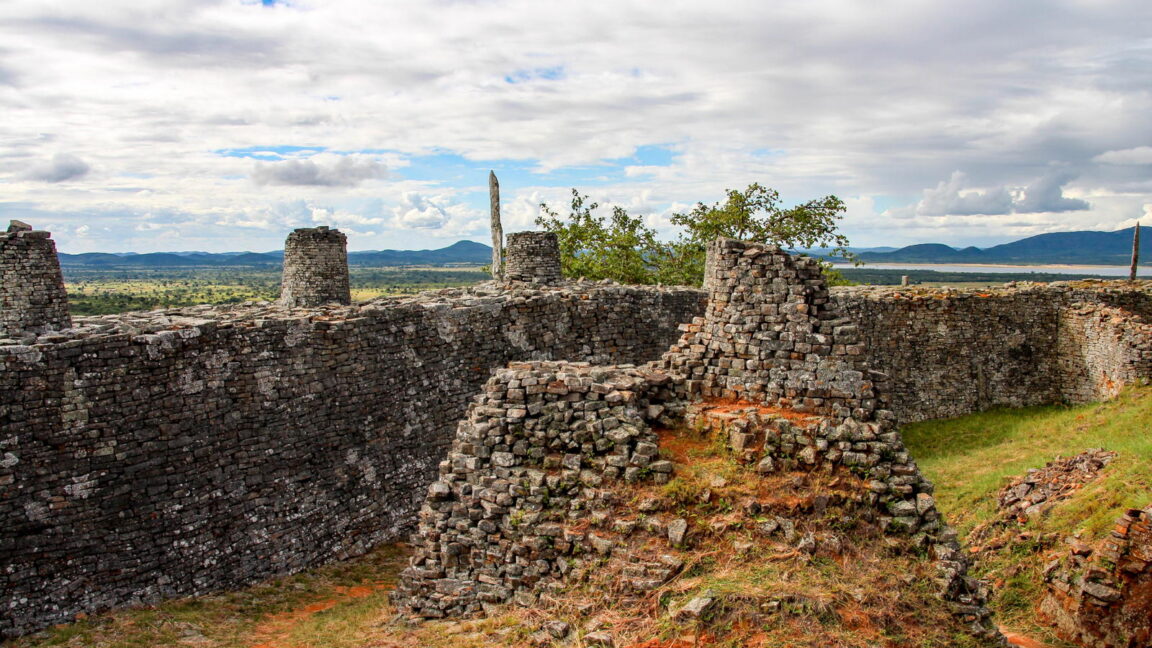
It’s not easy to extract iron from its ore. But the peoples of the ancient city of Great Zimbabwe—the capital of a thriving kingdom in southern Africa between 1000 to 1700 AD—were masters. At sites near the city’s stone ruins, clusters of iron-smelting furnaces survive today as mounds of rubble. At Mashava, a village 25 miles northwest, fragments bear fingermarks of those who long ago smoothed the structures’ clay interiors. Some of the furnaces were nearly an adult’s arm span in width, with walls thick and strong to contain the heat of more than 2,100° Fahrenheit needed to smelt iron. Unlike other furnaces that required workers to force air into them with bellows, these were designed to suck air in, then out through a chimney, no human labor required. This would have made it significantly easier to produce the iron, which was fashioned into hoes, axes, and arrowheads. “The number and size of these furnaces, together with the use of natural-draft technology, indicate intensive and technologically sophisticated iron production,” says archaeometallurgist Ezekiel Mtetwa of Chicago’s Field Museum of Natural History, who has long studied the furnaces. Scientists are extremely interested in the peoples who created this and other iron-powered societies across eastern and southern Africa. Research points to an adaptable and innovative group from western Africa as the masterminds. Known as Bantu speakers, these communities began gradually expanding across the continent’s southern half, starting from 6,000 to 4,000 years ago. In doing so, they introduced a fundamentally new, sedentary way of life—characterized by farming, raising livestock, pottery-making, and metalworking—to regions previously dominated by hunter-gatherer communities. This migration transformed not only the region’s history and technology, but also its languages: Today, around 350 million Africans speak one of roughly 500 distinct Bantu tongues, from southern African Zulu to eastern African Swahili. And at least as many Africans—as well as many African Americans and Afro-Latinos—carry Bantu ancestry in their DNA. Reconstructing this expansion has been a tough puzzle, especially given the region’s sparse written historical records and limited research funding. But a unique blend of scientists—linguists, archaeologists, and geneticists—have teamed up to unearth clues about the deep origins of the Bantu-speaking people, their path across Africa, and their relationships with other cultures. Although much debate and uncertainty remain, little by little the work is uncovering one of history’s largest and longest human migrations. “It completely reshaped the demography in sub-Saharan Africa, and we are really interested in trying to understand it,” says population geneticist Sandra Beleza of the United Kingdom’s University of Leicester. People on the move The first evidence of the Bantu expansion came from observations of similarities among Bantu languages. They’re so alike, in fact, that when the Portuguese explorer Vasco da Gama sailed around the southern tip of Africa in 1497, a Portuguese crew member who had spent time in west-central Africa could reportedly communicate with locals in southeastern Africa. Linguists working in the 19th century started referring to the language family as Bantu, the plural of muntu, meaning “human being” in many Bantu tongues. Later linguists reasoned that the languages stemmed from an ancestral people who migrated across the continent from western Africa, which harbors the greatest diversity of Bantu languages (as would be expected for where the languages originated). Soon, archaeologists found supporting evidence: across eastern and southern Africa, pieces of pottery of similar yet diverse styles, alongside first-time traces of village life, metal-making, domesticated animals, and western African crops—all developed within the last 2,000 years. Northern sites usually dated back to earlier time periods than sites farther south. “You can clearly see a north-to-south progression,” says archaeological scientist Shadreck Chirikure of the University of Oxford. By the 1990s, however, some scholars began to question the idea that Bantu languages and skills spread through a migration. Couldn’t these cultural habits have spread while people stayed in the same place, with hunter gatherer communities passing along new technologies, languages, and habits to each other? Genetic techniques that could analyze people’s ancestry helped to resolve that debate. All of us share DNA with our relatives: 50 percent on average with siblings, 12.5 percent with cousins, 3.3 percent with second cousins, and so on. Though these proportions become minute the further back in time a shared common ancestor lived, statistical techniques can tease out patterns. Sure enough, a 2009 genetic analysis of 2,432 Africans found that Bantu-speaking people from western, central, and southern Africa are much more closely related than one might expect given their geographic distance. And in 2024, a team of scientists analyzed the genomes of 1,763 Africans and found the greatest genetic diversity among Bantu speakers in western Africa. As distance from the region increased, diversity declined. “This is a typical signature of a population expanding from one place to another,” explains coauthor Carina Schlebusch, a geneticist at Uppsala University in Sweden. Roughly 350 million people across sub-Saharan Africa speak one of roughly 500 Bantu languages—from Swahili in eastern Africa to Xhosa spoken in southern Africa. Mysterious roots But while linguistic and genetic data point to western Africa—particularly the Grassfields region of Cameroon—as the Bantu homeland, conclusive archaeological proof is thin. At the best-studied archaeological site in the Grassfields, a rock shelter called Shum Laka, pottery fragments appear dating from 7,000 to 6,000 years ago and become abundant by 5,000 to 4,000 years ago. Bowls and jars at first decorated simply with incisions and stamps and later bearing the marks of carved or braided tools rolled over wet clay are a possible, yet inconclusive, trace of Bantu ancestors. South of Cameroon, archaeologists have searched for artifacts in one of the Bantu-speaking people’s first destinations: the Congo rainforest. A handful of times between 2010 and 2023, archaeologist Alexandre Livingstone Smith of Belgium’s Royal Museum for Central Africa traveled via boat along the Congo River as part of a team led by linguist Birgit Ricquier. In a number of villages, Smith found pottery shards of a style consistent with that found farther west, dating back to 2,300 to 2,000 years ago. “That would be the potential first Bantu settlers of the forest,” Smith says. Many experts interpret the trails of pottery as evidence that ceramics traditions were brought by Bantu-speaking people all the way from their original home. What’s unclear, however, is when and how Bantu-speaking peoples acquired their farming and metalworking skills—and, in particular, whether they invented iron smelting themselves or learned it from neighboring, iron-extracting cultures. Scientists have been able to deduce the path that Bantu speakers took to eastern and southern Africa. Some scholars have argued that the path split into two before entering the Congo rainforest, with one group heading east while another went south through the forest. But evidence is now mounting that these groups crossed the rainforest together, and only upon reaching its southern fringes roughly 2,500 to 3,500 years ago did they split into east-moving and southward-moving groups. Some of this evidence comes from linguistic studies. Not unlike the evolution of species, languages diverge and transform over time, creating “trees” that linguists can reconstruct from similarities in grammar and vocabulary. In 2015, a group of researchers did this computationally using data from about 400 Bantu languages. They observed a much larger diversity—and deeper splits—among the Bantu languages spoken in the Congo rainforest, suggesting that Bantu-speaking ancestors spent a long time there, allowing their languages to diversify. Languages spoken farther east and farther south appeared to stem from a less diverse subset of this larger group, explains coauthor Koen Bostoen, a linguist at Belgium’s Ghent University. Later linguistic studies, as well as genetic analyses, have reached similar conclusions. In 2023, Beleza and her colleagues compared the genomes of Bantu speakers from Angola—south of the Congo rainforest—with those from the eastern African country of Mozambique and ones from Cameroon, the Bantu homeland. Remarkably, the eastern African samples were more genetically similar to those from Angola, hundreds of miles to the south of Cameroon and south of the rainforest, than to any of the samples from Cameroon. That points to a recent common ancestor in the Angola region—suggesting that the Bantu split into eastern and southern streams only once they reached the rainforest’s southern edge, Beleza explains. By the time the Bantu people commenced their movement east and south, they had already come into their own as a farming, iron-making, livestock-herding, and pottery-making people, Chirikure says: Many ancient Bantu settlements across eastern and southern Africa contain evidence of this Bantu “package.” Mixing and mingling Key to the Bantu’s success in southern and eastern Africa, experts suspect, was their sedentary lifestyle. This—and their iron tools—would have allowed them to produce more food and grow in number, propelling them to occupy new territories. Their lifestyle affected the landscape as forests turned into farmland, and it also affected the hunter-gatherer communities who were already living there. Some groups were likely crowded out and disappeared, experts suspect, while others were probably pushed to marginal regions, including Indigenous groups such as rainforest hunter-gatherers and Khoisan peoples, who continue to live in central and southern Africa, respectively, to this day. Still, scientists are learning that Bantu peoples had deep relationships with these two groups. In the 2024 genetic analysis, Schlebusch and her colleagues found that some Bantu-speaking groups in central Africa share about an eighth of their DNA with rainforest hunter-gatherers, and some southern African Bantu speakers share a similar amount with Khoisan groups. Clearly, their ancestors once intermixed. Curiously, in the case of the Khoisan, this mixing tended to arise from pairings of Bantu-speaking men with Khoisan women. One 2021 study of southern African Bantu speakers found that the DNA inside their mitochondria—which people inherit only from their mothers—had greater-than-expected proportions of Khoisan DNA. But the Y chromosomes, which come from fathers, had much higher proportions of DNA with Bantu ancestry. Some experts speculate that this pattern could be the result of Bantu men raiding Khoisan women or preferentially marrying Khoisan women for whom the traditional bride prices would have been cheaper. “Whenever there is a power difference… between two groups, it tends to melt down to this,” says coauthor Ananyo Choudhury, a geneticist at the University of Witwatersrand in South Africa. This pattern also left marks on the language. The characteristic clicks of Khoisan languages also occur in southern African Bantu languages Zulu and Khosa. Bostoen suspects that the children of Khoisan-Bantu pairings were, at first, bilingual. Eventually, “they lost their mothers’ languages, but they left a substrate of the mothers’ languages in the Bantu language.” Archaeologists are also studying the relationships between Bantu farmers and their neighbors. While there may have been conflicts over land, the groups also cooperated with and learned from one another, says Décio Muianga, an archaeologist at Eduardo Mondlane University and the research institute Kaleidoscopio in Maputo, Mozambique. He’s been excavating a rock shelter in Mozambique containing thousands of years’ worth of stone tools, wild animal bones, and wild plant remains—telltale signs of hunter-gatherers living at the site. But interestingly, Bantu-style pottery also appears. “My assumption is that the hunter-gatherers were getting these ceramics from the farmers,” Muianga says. “They were interacting, communicating, and exchanging resources.” There is evidence, too, for cultural exchanges: European anthropologists have reported that some Bantu-speaking groups would solicit San hunter-gatherers to conduct traditional rainmaking ceremonies, for example. Bantu social networks eventually extended well beyond Africa. By 1100 to 1600 AD, many of the complex state societies that Bantu speakers built developed trade networks across the Indian Ocean. Archaeological data shows they imported Chinese porcelain and glass beads; in return, they exported gold, ivory, and iron. In fact, a 12th century Muslim cartographer once wrote that iron from parts of southern Africa—likely referring to Great Zimbabwe’s iron-producing hinterlands, Mtetwa suspects—was deemed to be of much higher quality than that from other places like India. Mtetwa has found evidence that iron smelters near Great Zimbabwe would add bone fragments to the furnaces, perhaps as part of a smelting-blessing ritual, but one with scientific merit: This material contains calcium, which can accelerate the separation of iron from the rest of the ore. That may be a testament to the Great Zimbabweans’ iron-smelting skills: “Some materials introduced within ritual or medicinal practices may simultaneously have had technically beneficial effects on the smelt,” says Mtetwa. A future full of research Though they’ve made great progress in reconstructing the Bantu world, scientists are aware of, and trying to address, the limitations of their research so far. Linguistic studies, for instance, have been a popular tool to reconstruct Bantu history, but Bostoen cautions that very few Bantu languages have been documented thoroughly enough to definitively trace linguistic trees back in time. Linguists may never get a complete dataset, because some old branches of the Bantu language family may have died out. Another limitation of computational Bantu language-family reconstructions is that they’ve usually assumed that languages have evolved in isolation after different Bantu groups separated. But there may have been extensive cross-pollination among languages as different groups met and interacted. In fact, when linguists factored in the possibility of contact among Bantu languages in a 2026 study, they couldn’t reconstruct the diversification patterns described by previous linguists, says coauthor Igor Yanovich of the University of Vienna, who wrote about the challenges of Bantu linguistic studies in the 2025 Annual Review of Linguistics. In his view, linguists should first focus on thoroughly documenting Bantu languages before attempting to use them to understand Bantu history. In hopes of adding new insights, Schlebusch is working to obtain DNA from ancient human remains. By revealing the identity of people who were living in particular places at particular times, this could help to elucidate when and where different Bantu communities moved into, overlapped with, or repopulated areas. “What we see more and more in genetic data is that the movement was probably complex—that it was these ‘spread over spread’ events,” Schlebusch says. Archaeologists, for their part, hope to fill in the vast gaps in the archaeological record of sub-Saharan Africa—by both conducting new excavations and re-examining existing artifact collections for fresh insights. But all this work requires funding for research and laboratories, especially from African governments, says Chirikure; he, like many of his colleagues, has largely relied on funding from Europe, which is limited. Without more funding, “you are not generating fresh ideas, you are not formulating new hypotheses and testing them using some of the cutting-edge science,” he says. Scientists from all three disciplines are hopeful that they will eventually tell the complete story of how an innovative people spread and diversified across sub-Saharan Africa, mixing traditions with those of earlier peoples and of others who still live there, to create myriad cultures, each one a unique blend of food, philosophy, language, music, and traditions. “If you travel from West Africa today all the way to East Africa, you have a unique cultural diversity that is very hard to find in many other parts of the world,” Muianga says. Combined with the legacy of other groups, he says, “this is the result of the Bantu migration.” This story originally appeared in Knowable Magazine

Article

It’s not easy to extract iron from its ore. But the peoples of the ancient city of Great Zimbabwe—the capital of a thriving kingdom in southern Africa between 1000 to 1700 AD—were masters. At sites near the city’s stone ruins, clusters of iron-smelting furnaces survive today as mounds of rubble. At Mashava, a village 25 miles northwest, fragments bear fingermarks of those who long ago smoothed the structures’ clay interiors. Some of the furnaces were nearly an adult’s arm span in width, with walls thick and strong to contain the heat of more than 2,100° Fahrenheit needed to smelt iron. Unlike other furnaces that required workers to force air into them with bellows, these were designed to suck air in, then out through a chimney, no human labor required. This would have made it significantly easier to produce the iron, which was fashioned into hoes, axes, and arrowheads. “The number and size of these furnaces, together with the use of natural-draft technology, indicate intensive and technologically sophisticated iron production,” says archaeometallurgist Ezekiel Mtetwa of Chicago’s Field Museum of Natural History, who has long studied the furnaces. Scientists are extremely interested in the peoples who created this and other iron-powered societies across eastern and southern Africa. Research points to an adaptable and innovative group from western Africa as the masterminds. Known as Bantu speakers, these communities began gradually expanding across the continent’s southern half, starting from 6,000 to 4,000 years ago. In doing so, they introduced a fundamentally new, sedentary way of life—characterized by farming, raising livestock, pottery-making, and metalworking—to regions previously dominated by hunter-gatherer communities. This migration transformed not only the region’s history and technology, but also its languages: Today, around 350 million Africans speak one of roughly 500 distinct Bantu tongues, from southern African Zulu to eastern African Swahili. And at least as many Africans—as well as many African Americans and Afro-Latinos—carry Bantu ancestry in their DNA. Reconstructing this expansion has been a tough puzzle, especially given the region’s sparse written historical records and limited research funding. But a unique blend of scientists—linguists, archaeologists, and geneticists—have teamed up to unearth clues about the deep origins of the Bantu-speaking people, their path across Africa, and their relationships with other cultures. Although much debate and uncertainty remain, little by little the work is uncovering one of history’s largest and longest human migrations. “It completely reshaped the demography in sub-Saharan Africa, and we are really interested in trying to understand it,” says population geneticist Sandra Beleza of the United Kingdom’s University of Leicester. People on the move The first evidence of the Bantu expansion came from observations of similarities among Bantu languages. They’re so alike, in fact, that when the Portuguese explorer Vasco da Gama sailed around the southern tip of Africa in 1497, a Portuguese crew member who had spent time in west-central Africa could reportedly communicate with locals in southeastern Africa. Linguists working in the 19th century started referring to the language family as Bantu, the plural of muntu, meaning “human being” in many Bantu tongues. Later linguists reasoned that the languages stemmed from an ancestral people who migrated across the continent from western Africa, which harbors the greatest diversity of Bantu languages (as would be expected for where the languages originated). Soon, archaeologists found supporting evidence: across eastern and southern Africa, pieces of pottery of similar yet diverse styles, alongside first-time traces of village life, metal-making, domesticated animals, and western African crops—all developed within the last 2,000 years. Northern sites usually dated back to earlier time periods than sites farther south. “You can clearly see a north-to-south progression,” says archaeological scientist Shadreck Chirikure of the University of Oxford. By the 1990s, however, some scholars began to question the idea that Bantu languages and skills spread through a migration. Couldn’t these cultural habits have spread while people stayed in the same place, with hunter gatherer communities passing along new technologies, languages, and habits to each other? Genetic techniques that could analyze people’s ancestry helped to resolve that debate. All of us share DNA with our relatives: 50 percent on average with siblings, 12.5 percent with cousins, 3.3 percent with second cousins, and so on. Though these proportions become minute the further back in time a shared common ancestor lived, statistical techniques can tease out patterns. Sure enough, a 2009 genetic analysis of 2,432 Africans found that Bantu-speaking people from western, central, and southern Africa are much more closely related than one might expect given their geographic distance. And in 2024, a team of scientists analyzed the genomes of 1,763 Africans and found the greatest genetic diversity among Bantu speakers in western Africa. As distance from the region increased, diversity declined. “This is a typical signature of a population expanding from one place to another,” explains coauthor Carina Schlebusch, a geneticist at Uppsala University in Sweden. Roughly 350 million people across sub-Saharan Africa speak one of roughly 500 Bantu languages—from Swahili in eastern Africa to Xhosa spoken in southern Africa. Mysterious roots But while linguistic and genetic data point to western Africa—particularly the Grassfields region of Cameroon—as the Bantu homeland, conclusive archaeological proof is thin. At the best-studied archaeological site in the Grassfields, a rock shelter called Shum Laka, pottery fragments appear dating from 7,000 to 6,000 years ago and become abundant by 5,000 to 4,000 years ago. Bowls and jars at first decorated simply with incisions and stamps and later bearing the marks of carved or braided tools rolled over wet clay are a possible, yet inconclusive, trace of Bantu ancestors. South of Cameroon, archaeologists have searched for artifacts in one of the Bantu-speaking people’s first destinations: the Congo rainforest. A handful of times between 2010 and 2023, archaeologist Alexandre Livingstone Smith of Belgium’s Royal Museum for Central Africa traveled via boat along the Congo River as part of a team led by linguist Birgit Ricquier. In a number of villages, Smith found pottery shards of a style consistent with that found farther west, dating back to 2,300 to 2,000 years ago. “That would be the potential first Bantu settlers of the forest,” Smith says. Many experts interpret the trails of pottery as evidence that ceramics traditions were brought by Bantu-speaking people all the way from their original home. What’s unclear, however, is when and how Bantu-speaking peoples acquired their farming and metalworking skills—and, in particular, whether they invented iron smelting themselves or learned it from neighboring, iron-extracting cultures. Scientists have been able to deduce the path that Bantu speakers took to eastern and southern Africa. Some scholars have argued that the path split into two before entering the Congo rainforest, with one group heading east while another went south through the forest. But evidence is now mounting that these groups crossed the rainforest together, and only upon reaching its southern fringes roughly 2,500 to 3,500 years ago did they split into east-moving and southward-moving groups. Some of this evidence comes from linguistic studies. Not unlike the evolution of species, languages diverge and transform over time, creating “trees” that linguists can reconstruct from similarities in grammar and vocabulary. In 2015, a group of researchers did this computationally using data from about 400 Bantu languages. They observed a much larger diversity—and deeper splits—among the Bantu languages spoken in the Congo rainforest, suggesting that Bantu-speaking ancestors spent a long time there, allowing their languages to diversify. Languages spoken farther east and farther south appeared to stem from a less diverse subset of this larger group, explains coauthor Koen Bostoen, a linguist at Belgium’s Ghent University. Later linguistic studies, as well as genetic analyses, have reached similar conclusions. In 2023, Beleza and her colleagues compared the genomes of Bantu speakers from Angola—south of the Congo rainforest—with those from the eastern African country of Mozambique and ones from Cameroon, the Bantu homeland. Remarkably, the eastern African samples were more genetically similar to those from Angola, hundreds of miles to the south of Cameroon and south of the rainforest, than to any of the samples from Cameroon. That points to a recent common ancestor in the Angola region—suggesting that the Bantu split into eastern and southern streams only once they reached the rainforest’s southern edge, Beleza explains. By the time the Bantu people commenced their movement east and south, they had already come into their own as a farming, iron-making, livestock-herding, and pottery-making people, Chirikure says: Many ancient Bantu settlements across eastern and southern Africa contain evidence of this Bantu “package.” Mixing and mingling Key to the Bantu’s success in southern and eastern Africa, experts suspect, was their sedentary lifestyle. This—and their iron tools—would have allowed them to produce more food and grow in number, propelling them to occupy new territories. Their lifestyle affected the landscape as forests turned into farmland, and it also affected the hunter-gatherer communities who were already living there. Some groups were likely crowded out and disappeared, experts suspect, while others were probably pushed to marginal regions, including Indigenous groups such as rainforest hunter-gatherers and Khoisan peoples, who continue to live in central and southern Africa, respectively, to this day. Still, scientists are learning that Bantu peoples had deep relationships with these two groups. In the 2024 genetic analysis, Schlebusch and her colleagues found that some Bantu-speaking groups in central Africa share about an eighth of their DNA with rainforest hunter-gatherers, and some southern African Bantu speakers share a similar amount with Khoisan groups. Clearly, their ancestors once intermixed. Curiously, in the case of the Khoisan, this mixing tended to arise from pairings of Bantu-speaking men with Khoisan women. One 2021 study of southern African Bantu speakers found that the DNA inside their mitochondria—which people inherit only from their mothers—had greater-than-expected proportions of Khoisan DNA. But the Y chromosomes, which come from fathers, had much higher proportions of DNA with Bantu ancestry. Some experts speculate that this pattern could be the result of Bantu men raiding Khoisan women or preferentially marrying Khoisan women for whom the traditional bride prices would have been cheaper. “Whenever there is a power difference… between two groups, it tends to melt down to this,” says coauthor Ananyo Choudhury, a geneticist at the University of Witwatersrand in South Africa. This pattern also left marks on the language. The characteristic clicks of Khoisan languages also occur in southern African Bantu languages Zulu and Khosa. Bostoen suspects that the children of Khoisan-Bantu pairings were, at first, bilingual. Eventually, “they lost their mothers’ languages, but they left a substrate of the mothers’ languages in the Bantu language.” Archaeologists are also studying the relationships between Bantu farmers and their neighbors. While there may have been conflicts over land, the groups also cooperated with and learned from one another, says Décio Muianga, an archaeologist at Eduardo Mondlane University and the research institute Kaleidoscopio in Maputo, Mozambique. He’s been excavating a rock shelter in Mozambique containing thousands of years’ worth of stone tools, wild animal bones, and wild plant remains—telltale signs of hunter-gatherers living at the site. But interestingly, Bantu-style pottery also appears. “My assumption is that the hunter-gatherers were getting these ceramics from the farmers,” Muianga says. “They were interacting, communicating, and exchanging resources.” There is evidence, too, for cultural exchanges: European anthropologists have reported that some Bantu-speaking groups would solicit San hunter-gatherers to conduct traditional rainmaking ceremonies, for example. Bantu social networks eventually extended well beyond Africa. By 1100 to 1600 AD, many of the complex state societies that Bantu speakers built developed trade networks across the Indian Ocean. Archaeological data shows they imported Chinese porcelain and glass beads; in return, they exported gold, ivory, and iron. In fact, a 12th century Muslim cartographer once wrote that iron from parts of southern Africa—likely referring to Great Zimbabwe’s iron-producing hinterlands, Mtetwa suspects—was deemed to be of much higher quality than that from other places like India. Mtetwa has found evidence that iron smelters near Great Zimbabwe would add bone fragments to the furnaces, perhaps as part of a smelting-blessing ritual, but one with scientific merit: This material contains calcium, which can accelerate the separation of iron from the rest of the ore. That may be a testament to the Great Zimbabweans’ iron-smelting skills: “Some materials introduced within ritual or medicinal practices may simultaneously have had technically beneficial effects on the smelt,” says Mtetwa. A future full of research Though they’ve made great progress in reconstructing the Bantu world, scientists are aware of, and trying to address, the limitations of their research so far. Linguistic studies, for instance, have been a popular tool to reconstruct Bantu history, but Bostoen cautions that very few Bantu languages have been documented thoroughly enough to definitively trace linguistic trees back in time. Linguists may never get a complete dataset, because some old branches of the Bantu language family may have died out. Another limitation of computational Bantu language-family reconstructions is that they’ve usually assumed that languages have evolved in isolation after different Bantu groups separated. But there may have been extensive cross-pollination among languages as different groups met and interacted. In fact, when linguists factored in the possibility of contact among Bantu languages in a 2026 study, they couldn’t reconstruct the diversification patterns described by previous linguists, says coauthor Igor Yanovich of the University of Vienna, who wrote about the challenges of Bantu linguistic studies in the 2025 Annual Review of Linguistics. In his view, linguists should first focus on thoroughly documenting Bantu languages before attempting to use them to understand Bantu history. In hopes of adding new insights, Schlebusch is working to obtain DNA from ancient human remains. By revealing the identity of people who were living in particular places at particular times, this could help to elucidate when and where different Bantu communities moved into, overlapped with, or repopulated areas. “What we see more and more in genetic data is that the movement was probably complex—that it was these ‘spread over spread’ events,” Schlebusch says. Archaeologists, for their part, hope to fill in the vast gaps in the archaeological record of sub-Saharan Africa—by both conducting new excavations and re-examining existing artifact collections for fresh insights. But all this work requires funding for research and laboratories, especially from African governments, says Chirikure; he, like many of his colleagues, has largely relied on funding from Europe, which is limited. Without more funding, “you are not generating fresh ideas, you are not formulating new hypotheses and testing them using some of the cutting-edge science,” he says. Scientists from all three disciplines are hopeful that they will eventually tell the complete story of how an innovative people spread and diversified across sub-Saharan Africa, mixing traditions with those of earlier peoples and of others who still live there, to create myriad cultures, each one a unique blend of food, philosophy, language, music, and traditions. “If you travel from West Africa today all the way to East Africa, you have a unique cultural diversity that is very hard to find in many other parts of the world,” Muianga says. Combined with the legacy of other groups, he says, “this is the result of the Bantu migration.” This story originally appeared in Knowable Magazine

0

ich_iel

Meme Template "Dead Dove Don't Eat"

Suche "Wandkalender unabhängige Künstler"

Slop Slop Slop Slop

Ich weiß nicht, was ich erwartet hatte.
preview

Wollte mal was anderes als den Kurzgesagt Kalender für 2027. Suche einen Kalender mit 12 Illustrationen von Indie Künstlern, gerne DE/EU. Suchmaschinen sind leider unbrauchbar gewesen bisher.

Wollte mal was anderes als den Kurzgesagt Kalender für 2027. Suche einen Kalender mit 12 Illustrationen von Indie Künstlern, gerne DE/EU. Suchmaschinen sind leider unbrauchbar gewesen bisher.

0

Recommend me a smart watch I can track remotely in Home Assistant

preview

I’m after a watch that I can put on a kid when they are on their own at a park etc.

What I’d like:

  • It’s own data connection so it doesn’t need a phone with it
  • Home Assistant support so I can track it remotely via home assistant, automations, etc
  • Some way of calling them when it’s time to come home, or them calling us when needed
  • We don’t have an iPhone so I think Apple is out since it needs an iPhone for setup
  • No subscriptions outside of the cost of the cellphone plan
  • Preferably doesn’t need OEM servers, just connect to Home Assistant
  • Handling knocks and bumps would be a bonus
  • If you can run a non-google OS without tracking etc GrapheneOS style then yay but I don’t know if that exists

Any suggestions?

0

LifeLabs in B.C. ordered to pay $32K for misgendering transgender, non-binary patients: Human Rights Tribunal

CBC LifeLabs in B.C. ordered to pay $32K for misgendering, outing patients: Human Rights Tribunal | CBC News www.cbc.ca
preview

B.C.’s Human Rights Tribunal has ordered LifeLabs and a subsidiary to pay $32,000 to three transgender and non-binary people for “injury to their dignity” after separate instances of discrimination.

Tribunal member Theressa Etmanski said in her decision, posted last week, that LifeLabs and its subsidiary Excelleris Technologies misgendered and outed the three patients at service centres in Vancouver and Burnaby in 2019.

Etmanski also ordered LifeLabs to pay almost $3,000 in lost wages and $11,100 for an expert report.

0

On Houston's transgender baseball team, nobody questions if I belong

Chron How playing baseball brought me closer to Houston's transgender community www.chron.com
preview

Standing beside a girl I met online and a friend from college, I looked down at the twenty three strangers gathered before me. These trans women, some young, some old, had come out on a brutally hot September morning in Houston, at a dusty little league field, to play baseball with me.

There was a problem, though: I had never played baseball in my life.

Standing beside a girl I met online and a friend from college, I looked down at the twenty three strangers gathered before me. These trans women, some young, some old, had come out on a brutally hot September morning in Houston, at a dusty little league field, to play baseball with me.


There was a problem, though: I had never played baseball in my life.

0

Missouri LGBTQIA+ group used ‘deep canvassing’ to build a pro-trans majority

Prism Reports Missouri LGBTQIA+ group canvassed to build a pro-trans majority prismreports.org
preview

PROMO launched its first deep canvassing project in 2024 as a power-building strategy that uses face-to-face conversations to counteract anti-trans political rhetoric and work toward a pro-trans majority among voters. Deep canvassing involves lengthier conversations than typical “get out the vote” canvassing. PROMO characterizes these efforts as “honest, emotional conversations about healthcare and protections for LGBTQ+ individuals, especially trans and gender-expansive people.”

What started with four paid canvassers across two cities now includes over 40 paid canvassers and about 120 volunteers across five Missouri cities, said PROMO Field Director Courtney Cook.

0

I need to bring your attention to this. This is not a drill. (TW: abuse)

preview

There’s a 16-year-old trans girl from Australia named “AphoticGoblin” who was kidnapped and taken against her will in China by her father for two years.

She’s currently trapped for over 140 days, and she needs our help. She has contacted the embassies and consulates, as well as organizations such as Rainbow Railroad. She got no response, but she perservered. She even asked her friends to send information about her, as well as a video of her and her father wrestling for the phone in the airport, in case she haven’t responded for over 24 hours.

Also, her father abused her; sometimes he would spit on her hand, berate her, and sit on her hand until it turns black.

THIS IS NOT A JOKE. APHOTICGOBLIN WAS FORCED AGAINST HER WILL TO STAY IN CHINA BY HER FATHER.

If you’re reading this, please all you can to help and save AphoticGoblin. Spread the word everywhere (and even to people who are influential) with the hashtag #SaveAphoticGoblin. Reach out the Rainbow Railroad, as well as human rights organizations, about her situation.

Please watch Valari’s video, and read through AphoticGoblin’s posts. Someone’s life is on the line.

AphoticGoblin, if you’re reading this, we’re here for you. There’s a light at the end of the tunnel.

PS: I just got banned from Reddit because I explained the bad stuff her father has done to her. I’ve just submitted a ban appeal because I do think the ban was a misunderstanding.

www.planetminecraft.com/member/…/1183243/ www.planetminecraft.com/member/…/wall/