









0
preview
Are we still allowed to post these?
Are we still allowed to post these?


We now reach the stage in this story when I began seriously to think of taking the brahmacharya vow. I had been wedded to a monogamous [involving marriage to one person at a time] ideal ever since my marriage, faithfulness to my wife being part of the love of truth. But it was in South Africa that I came to realize the importance of observing brahmacharya even with respect to my wife. I cannot definitely say what circumstance or what book it was, that set my thoughts in that direction, but I have a recollection that the predominant factor was the influence of Raychandbhai of whom I have already written. I can still recall a conversation that I had with him.
On one occasion I spoke to him in high praise of Mrs Gladstone’s devotion to her husband. I had read somewhere that Mrs Gladstone insisted on preparing tea for Mr Gladstone even in the House of Commons, and that this had become a rule in the life of this illustrious couple, whose actions were governed by regularity. I spoke of this to the poet, and incidentally eulogized [praise highly in speech or writing] conjugal [relating to marriage or the relationship of a married couple] love. “Which of the two do you prize more,” asked Raychandbhai, “the love of Mrs Gladstone for her husband as his wife, or her devoted service irrespective [regardless] of her relation to Mr Gladstone? Supposing she had been his sister, or his devoted servant, and ministered to him with the same attention, what would you have said? Do we not have instances of such devoted sisters or servants? Supposing you had found the same loving devotion in a male servant, would you have been pleased in the same way as in Mrs Gladstone’s case? Just examine the viewpoint suggested by me.”
Raychandbhai was himself married. I have an impression that at the moment his words sounded harsh, but they gripped me irresistibly. The devotion of a servant was, I felt, a thousand times more praiseworthy than that of a wife to her husband. There was nothing surprising in the wife’s devotion to her husband, as there was an indissoluble [unable to be destroyed; lasting] bond between them. The devotion was perfectly natural. But it required a special effort to cultivate equal devotion between master and servant. The poet’s point of view began gradually to grow upon me. What then, I asked myself, should be my relation with my wife? Did my faithfulness consist in making my wife the instrument of my lust? So long as I was the slave of lust, my faithfulness was worth nothing. To be fair to my wife, I must say that she was never the temptress. It was therefore the easiest thing for me to take the vow of brahmacharya, if only I willed it. It was my weak will or lustful attachment that was the obstacle.
Even after my conscience had been roused in the matter, I failed twice. I failed because the motive that actuated the effort was none the highest. My main object was to escape having more children. Whilst in England I had read something about contraceptives. I have already referred to Dr Allinson’s birth control propaganda in the chapter on Vegetarianism. If it had some temporary effect on me, Mr Hill’s opposition to those methods and his advocacy of internal efforts as opposed to outward means, in a word, of self-control, had a far greater effect, which in due time came to be abiding [lasting a long time; enduring]. Seeing, therefore, that I did not desire more children I began to strive after self-control. There was endless difficulty in the task. We began to sleep in separate beds. I decided to retire to bed only after the day’s work had left me completely exhausted. All these efforts did not seem to bear much fruit, but when I look back upon the past, I feel that the final resolution was the cumulative effect of those unsuccessful strivings. The final resolution could only be made as late as 1906. Satyagraha had not then been started. I had not the least notion of its coming.
I was practising in Johannesburg at the time of the Zulu “Rebellion” in Natal, which came soon after the Boer War. I felt that I must offer my services to the Natal Government on that occasion. The offer was accepted, as we shall see in another chapter. But the work set me furiously thinking in the direction of self-control, and according to my wont [one’s customary behavior in a particular situation] I discussed my thoughts with my co-workers. It became my conviction that procreation and the consequent care of children were inconsistent with public service. I had to break up my household at Johannesburg to be able to serve during the “Rebellion”. Within one month of offering my services, I had to give up the house I had so carefully furnished. I took my wife and children to Phoenix and led the Indian ambulance corps attached to the Natal forces. During the difficult marches that had then to be performed, the idea flashed upon me that, if I wanted to devote myself to the service of the community in this manner, I must relinquish the desire for children and wealth and live the life of vanaprastha — of one retired from household cares.
The “Rebellion” did not occupy me for more than six weeks, but this brief period proved to be a very important epoch in my life. The Importance of vows grew upon me more clearly than ever before. I realized that a vow, far from closing the door to real freedom, opened it. Up to this time I had not met with success because the will had been lacking, because I had no faith in myself, no faith in the grace of God, and therefore, my mind had been tossed on the boisterous [noisy, energetic, and cheerful; rowdy] sea of doubt.
I realized that in refusing to take a vow man was drawn into temptation, and that to be bound by a vow was like a passage from libertinism [characterized by a disregard of morality, especially in sexual matters] to a real monogamous marriage, “I believe in effort, I do not want to bind myself with vows,” is the mentality of weakness and betrays a subtle desire for the thing to be avoided. Or where can be the difficulty in making a final decision? I vow to flee from the serpent which I know will bite me, I do not simply make an effort to flee from him. I know that mere effort may mean certain death. Mere effort means ignorance of the certain fact that the serpent is bound to kill me. The fact, therefore, that I could rest content with an effort only, means that I have not yet clearly realized the necessity of definite action. “But supposing my views are changed in the future, how can I bind myself by a vow?” Such a doubt often deters us. But that doubt also betrays a lack of clear perception that a particular thing must be renounced. That is why Nishkulanand has sung: Renunciation without aversion [a strong dislike or disinclination] is not lasting. Where therefore the desire is gone, a vow of renunciation is the natural and inevitable fruit.
After full discussion and mature deliberation I took the vow in 1906. I had not shared my thoughts with my wife until then, but only consulted her at the time of taking the vow. She had no objection. But I had great difficulty in making the final resolve. I had not the necessary strength. How was I to control my passions? The elimination of carnal relationship with one’s wife seemed then a strange thing. But I launched forth with faith in the sustaining power of God. As I look back upon the twenty years of the vow, I am filled with pleasure and wonderment. The more or less successful practice of self-control had been going on since 1901. But the freedom and joy that came to me after taking the vow had never been experienced before 1906.
Before the vow I had been open to being overcome by temptation at any moment. Now the vow was a sure shield against temptation. The great potentiality of brahmacharya daily became more and more patent [easily recognizable; obvious] to me. The vow was taken when I was in Phoenix. As soon as I was free from ambulance work, I went to Phoenix, whence I had to return to Johannesburg. In about a month of my returning there, the foundation of Satyagraha was laid. As though unknown to me, the brahmacharya vow had been preparing me for it. Satyagraha had not been a preconceived plan. It came on spontaneously, without my having willed it. But I could see that all my previous steps had led up to that goal. I had cut down my heavy household expenses at Johannesburg and gone to Phoenix to take, as it were, the brahmacharya vow.
The knowledge that a perfect observance of brahmacharya means realization of brahman, I did not owe to a study of the Shastras. It slowly grew upon me with experience. The shastraic texts on the subject I read only later in life. Every day of the vow has taken me nearer the knowledge that in brahmacharya lies the protection of the body, the mind and the soul. For brahmacharya was now no process of hard penance, it was a matter of consolation and joy. Every day revealed a fresh beauty in it. But if it was a matter of ever-increasing joy, let no one believe that it was an easy thing for me. Even when I am past fifty-six years, I realize how hard a thing it is. Every day I realize more and more that it is like walking on the sword’s edge, and I see every moment the necessity for eternal vigilance. Control of the palate [a person’s appreciation of taste and flavor] is the first essential in the observance of the vow. I found that complete control of the palate made the observance very easy, and so I now pursued my dietetic experiments not merely from the vegetarian’s but also from the brahmachari’s point of view. As the result of these experiments I saw that the brahmachari’s food should be limited, simple, spiceless, and, if possible, uncooked.
Six years of experiment have showed me that the brahmachari’s ideal food is fresh fruit and nuts. The immunity from passion that I enjoyed when I lived on this food was unknown to me after I changed that diet. Brahmacharya needed no effort on my part in South Africa when I lived on fruits and nuts alone. It has been a matter of very great effort ever since I began to take milk. How I had to go back to milk from a fruit diet will be considered in its proper place. It is enough to observe here that I have not the least doubt that milk diets make the brahmacharya vow difficult to observe. Let no one deduce from this that all brahmacharis must give up milk. The effect on brahmacharya of different kinds of food can be determined only after numerous experiments. I have yet to find a fruit substitute for milk which is an equally good muscle-builder and easily digestible. The doctors, vaidyas and hakims have alike failed to enlighten me. Therefore, though I know milk to be partly a stimulant, I stimulant, I cannot, for the time being, advise anyone to give it up.
As an external aid to brahmacharya, fasting is as necessary as selection and restriction in diet. So overpowering are the senses that they can be kept under control only when they are completely hedged in on all sides, from above and from beneath. It is a common knowledge that they are powerless without food, and so fasting undertaken with a view to control of the senses is, I have no doubt, very helpful. With some, fasting is of no avail, because assuming that mechanical fasting alone will make them immune, they keep their bodies without food, but feast their minds upon all sorts of delicacies, thinking all the while what they will eat and what they will drink after the fast terminates. Such fasting helps them in controlling neither palate nor lust. Fasting is useful, when mind co-operates with starving body, that is to say, when it cultivates a distaste for the objects that are denied to the body. Mind is at the root of all sensuality. Fasting, therefore, has a limited use, far a fasting man may continue to be swayed by passion. But it may be said that extinction of the sexual passion is as a rule impossible without fasting, which may be said to be indispensable for the observance of brahmacharya.
Many aspirants after brahmacharya fail, because in the use of their other senses they want to carry on like those who are not brahmacharis. Their effort is, therefore, identical with the effort to experience the bracing cold of winter in the scorching summer months. There should be a clear line between the life of a brahmachari and of one who is not. The resemblance that there is between the two is only apparent. The distinction ought to be clear as daylight. Both use their eyesight, but whereas the brahmachari uses it to see the glories of God, the other uses it to see the frivolity [lack of seriousness; lightheartedness] around him. Both use their ears, but whereas the one hears nothing but praises of God, the other feasts his ears upon ribaldry [amusingly coarse or irreverent talk or behavior]. Both often keep late hours, but whereas the one devotes them to prayer, the other fritters them away in wild and wasteful mirth [amusement, especially as expressed in laughter]. Both feed the inner man, but the one only to keep the temple of God in good repair, while the other gorges himself and makes the sacred vessel a stinking gutter. Thus both live as the poles apart, and the distance between them will grow and not diminish with the passage of time.
Brahmacharya means control of the senses in thought, word and deed. Every day I have been realizing more and more the necessity for restraints of the kind I have detailed above. There is no limit to the possibilities of renunciation even as there is none to those of brahmacharya. Such brahmacharya is impossible of attainment by limited effort. For many it must remain only as an ideal. An aspirant after brahmacharya will always be conscious of his shortcomings, will seek out the passions lingering in the innermost recesses of his heart and will incessantly strive to get rid of them. So long as thought is not under complete control of the will, brahmacharya in its fullness is absent. Involuntary thought is an affection of the mind, and curbing of thought, therefore, means curbing of the mind which is even more difficult to curb than the wind. Nevertheless the existence of God within [Luke 17:21] makes even control of the mind possible. Let no one think that it is impossible because it is difficult. It is the highest goal, and it is no wonder that the highest effort should be necessary to attain it.
But it was after coming to India that I realized that such brahmacharya was impossible to attain by mere human effort. Until then I had been labouring under the delusion that fruit diet alone would enable me to eradicate all passions, and I had flattered myself with the belief that I had nothing more to do. But I must not anticipate the chapter of my struggle. Meanwhile let me make it clear that those who desire to observe brahmacharya with a view to realizing God need not despair, provided their faith in God is equal to their confidence in their own effort.
“The sense-objects turn away from an abstemious [not self-indulgent, especially when eating and drinking] soul, leaving the relish behind. The relish also disappears with the realization of the Highest.” - The Bhagavad Gita, 2-59. Therefore His name and His grace are the last resources of the aspirant after moksha [salvation]. This truth came to me only after my return to India. - Mahatma Gandhi, The Story Of My Experiments With Truth, Part Three, Chapter Seven & Eight: “Brahmacharya - I & II”


"Just about this time Narayan Hemchandra came to England. I had heard of him as a writer. We met at the house of Miss Manning of the National Indian Association. Miss Manning knew that I could not make myself sociable. When I went to her place I used to sit tongue-tied, never speaking except when spoken to. She introduced me to Narayan Hemchandra. He did not know English. His dress was queer — a clumsy pair of trousers, a wrinkled, dirty, brown coat after the Parsi fashion, no necktie or collar, and a tasselled woollen cap. He grew a long beard. He was lightly built and short of stature. His round face was scarred with small-pox, and had a nose which was neither pointed nor blunt. With his hand he was constantly turning over his beard. Such a queer-looking and queerly dressed person was bound to be singled out in fashionable society.
‘I have heard a good deal about you,’ I said to him. ‘I have also read some of your writings. I should be very pleased if you were kind enough to come to my place.’ Narayan Hemchandra had a rather hoarse voice. With a smile on his face he replied: ‘Yes, where do you stay?’
‘In Store Street.’
‘Then we are neighbours. I want to learn English. Will you teach me?’
‘I shall be happy to teach you anything I can, and will try my best. If you like, I will go to your place.’
‘Oh, no. I shall come to you. I shall also bring with me a Translation Exercise Book.’ So we made an appointment. Soon we were close friends…
We met daily. There was a considerable amount of similarity between our thoughts and actions. Both of us were vegetarians. We would often have our lunch together. This was the time when I lived on 17s. a week and cooked for myself. Sometimes I would go to his room, and sometimes he would come to mine. I cooked in the English style. Nothing but Indian style would satisfy him. He could not do without dal. I would make soup of carrots etc., and he would pity me for my taste. Once he somehow hunted out mung cooked it and brought it to my place. I ate it with delight. This led on to a regular system of exchange between us. I would take my delicacies to him and he would bring his to me.
Cardinal Manning’s name was then on every lip. The dock labourers’ strike had come to an early termination owing to the efforts of John Burns and Cardinal Manning. I told Narayan Hemchandra of Disraeli’s tribute to the Cardinal’s simplicity. ‘Then I must see the sage,’ said he. ‘He is a big man. How do you expect to meet him?’
‘Why? I know how. I must get you to write to him in my name. Tell him I am an author and that I want to congratulate him personally on his humanitarian work, and also say that I shall have to take you as interpreter as I do not know English.’
I wrote a letter to that effect. In two or three days came Cardinal Manning’s card in reply giving us an appointment. So we both called on the Cardinal. I put on the usual visiting suit. Narayan Hemchandra was the same as ever, in the same coat and the same trousers. I tried to make fun of this, but he laughed me out and said: ‘You civilized fellows are all cowards. Great men never look at a person’s exterior. They think of his heart.’ " - Mahatma Gandhi, The Story of My Experiments With Truth, Part One, Chapter Twenty-two: “Narayan Hemchandra”

To paraphrase my removed comment: anything is trolling if you manipulate the definition to include speech you don’t like.
To paraphrase my removed comment: anything is trolling if you manipulate the definition to include speech you don’t like.

"Just about this time Narayan Hemchandra came to England. I had heard of him as a writer. We met at the house of Miss Manning of the National Indian Association. Miss Manning knew that I could not make myself sociable. When I went to her place I used to sit tongue-tied, never speaking except when spoken to. She introduced me to Narayan Hemchandra. He did not know English. His dress was queer — a clumsy pair of trousers, a wrinkled, dirty, brown coat after the Parsi fashion, no necktie or collar, and a tasselled woollen cap. He grew a long beard. He was lightly built and short of stature. His round face was scarred with small-pox, and had a nose which was neither pointed nor blunt. With his hand he was constantly turning over his beard. Such a queer-looking and queerly dressed person was bound to be singled out in fashionable society.
‘I have heard a good deal about you,’ I said to him. ‘I have also read some of your writings. I should be very pleased if you were kind enough to come to my place.’ Narayan Hemchandra had a rather hoarse voice. With a smile on his face he replied: ‘Yes, where do you stay?’
‘In Store Street.’
‘Then we are neighbours. I want to learn English. Will you teach me?’
‘I shall be happy to teach you anything I can, and will try my best. If you like, I will go to your place.’
‘Oh, no. I shall come to you. I shall also bring with me a Translation Exercise Book.’ So we made an appointment. Soon we were close friends…
We met daily. There was a considerable amount of similarity between our thoughts and actions. Both of us were vegetarians. We would often have our lunch together. This was the time when I lived on 17s. a week and cooked for myself. Sometimes I would go to his room, and sometimes he would come to mine. I cooked in the English style. Nothing but Indian style would satisfy him. He could not do without dal. I would make soup of carrots etc., and he would pity me for my taste. Once he somehow hunted out mung cooked it and brought it to my place. I ate it with delight. This led on to a regular system of exchange between us. I would take my delicacies to him and he would bring his to me.
Cardinal Manning’s name was then on every lip. The dock labourers’ strike had come to an early termination owing to the efforts of John Burns and Cardinal Manning. I told Narayan Hemchandra of Disraeli’s tribute to the Cardinal’s simplicity. ‘Then I must see the sage,’ said he. ‘He is a big man. How do you expect to meet him?’
‘Why? I know how. I must get you to write to him in my name. Tell him I am an author and that I want to congratulate him personally on his humanitarian work, and also say that I shall have to take you as interpreter as I do not know English.’
I wrote a letter to that effect. In two or three days came Cardinal Manning’s card in reply giving us an appointment. So we both called on the Cardinal. I put on the usual visiting suit. Narayan Hemchandra was the same as ever, in the same coat and the same trousers. I tried to make fun of this, but he laughed me out and said: ‘You civilized fellows are all cowards. Great men never look at a person’s exterior. They think of his heart.’ " - Mahatma Gandhi, The Story of My Experiments With Truth, Part One, Chapter Twenty-two: “Narayan Hemchandra”



From David Lytwynec
Today I learned that Pileated Woodpeckers, while hunting for insects, will place an ear next to the surface of a tree, listening for insects moving under the bark.
It’s not a great picture, but it does document what I observed.
Ellicott City, 10/17/2026.
I didn’t know this either. I thought they just looked for likely spots and did some trial and error.
Here is a good article about the ways they listen and locate their prey if you’d like some more details.


German search engine Ecosia is replacing Mistral with open-weight AI models, including Chinese-developed Qwen, GLM and Kimi, through a partnership with German AI platform Melious. Founder and CEO Christian Kroll said the switch had roughly halved costs while improving quality and performance.
German search engine Ecosia is replacing Mistral with open-weight AI models, including Chinese-developed Qwen, GLM and Kimi, through a partnership with German AI platform Melious. Founder and CEO Christian Kroll said the switch had roughly halved costs while improving quality and performance.
Are we still allowed to post these?
Are we still allowed to post these?


Dragon Ball Super: Beerus, episode 2

DBS Beerus
- Info - AniList - Info - Kitsu - Info - MyAnimeList - Info - Official Site (English) - Info - Official Site (Japanese) - Social - Twitter (Japanese) - Streaming - Crunchyroll - Streaming - Netflix
Reminder: Please do not discuss plot points not yet seen or skipped in the show. Failing to follow the rules may result in a ban.
All discussions
| Episode | Link |
|---|---|
| 1 | Link |
| 2 | Link |
| 3 | Link |
| 4 | Link |
| 5 | Link |
This post was created by a bot. Message the mod team for feedback and comments. The original source code can be found on GitHub.
Dragon Ball Super: Beerus, episode 2
DBS Beerus
- Info - AniList - Info - Kitsu - Info - MyAnimeList - Info - Official Site (English) - Info - Official Site (Japanese) - Social - Twitter (Japanese) - Streaming - Crunchyroll - Streaming - Netflix
Reminder: Please do not discuss plot points not yet seen or skipped in the show. Failing to follow the rules may result in a ban.
All discussions
| Episode | Link |
|---|---|
| 1 | Link |
| 2 | Link |
| 3 | Link |
| 4 | Link |
| 5 | Link |
This post was created by a bot. Message the mod team for feedback and comments. The original source code can be found on GitHub.

cross-posted from: lemmy.blahaj.zone/post/49358503
foxes are cuuute :3 ps I’m a foxgirl who loves bunnies too!
cross-posted from: lemmy.blahaj.zone/post/49358503
foxes are cuuute :3 ps I’m a foxgirl who loves bunnies too!


Spoiler, I really like it overall The update is obviously not perfect.
What have you guys and gals liked or disliked so far?
Spoiler, I really like it overall The update is obviously not perfect.
What have you guys and gals liked or disliked so far?



Artist: Soju Ice | pixiv | patreon | danbooru
Full quality: .png 14 MB (3000 × 4000)
Artist: Soju Ice | pixiv | patreon | danbooru
Full quality: .png 14 MB (3000 × 4000)
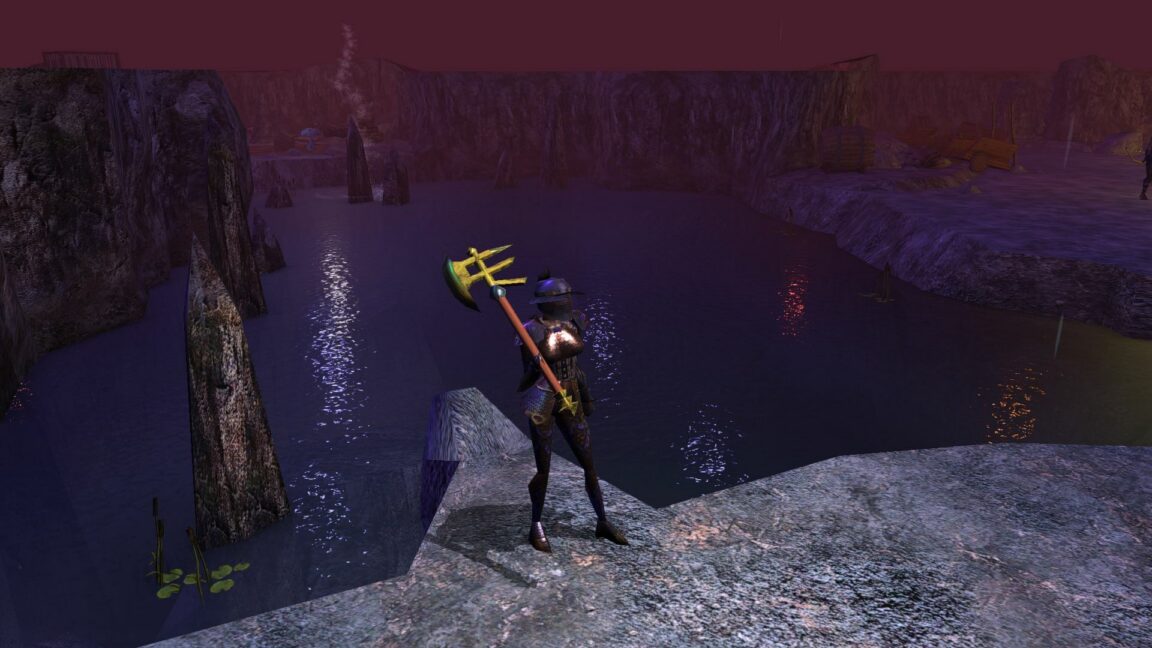
Today you would expect this to be a calculated attempt to bring more long-term, always-on, multiplayer-as-a-service to an RPG franchise that has mostly appealed to solo players. You might imagine it would be about selling cosmetics, a subscription, or a battle pass, or maybe you would think it was about nabbing appealing engagement numbers.
But it’s clear from playing it today that Neverwinter Nights wasn’t primarily made for those reasons. Instead, it came from a passion for tabletop role-playing and a desire to get closer to that in video game form than ever before.
Yes, the BioWare team noted in some interviews that they saw this as a trial run for exploring the idea of making a massively multiplayer game (MMO)—something that, in the year 2000, was seen by many as the hot new business opportunity in gaming, and which was in many ways the precursor to the games-as-a-service we see today. They then indicated they realized that an MMO was harder to make than they had assumed and abandoned that ambition well before Neverwinter Nights shipped.


cross-posted from: szmer.info/post/16700674
cross-posted from: szmer.info/post/16700672
cross-posted from: szmer.info/post/16700674
cross-posted from: szmer.info/post/16700672

Fitzgerald’s is a rare case where an official employed by the state’s top law enforcement and legal office has been accused of making and distributing AI CSAM, although some cops have been arrested for the crime. Earlier this year, a Pennsylvania cop was arrested for making AI porn from photos on driver’s licenses, and more recently in Korea, a police officer was arrested for making AI porn, including CSAM, The Korea Times reported.
In New Jersey, the deputy attorney general has been charged with possession of CSAM, dissemination of photos or film of CSAM, and “criminal use of a communication facility,” detectives said.

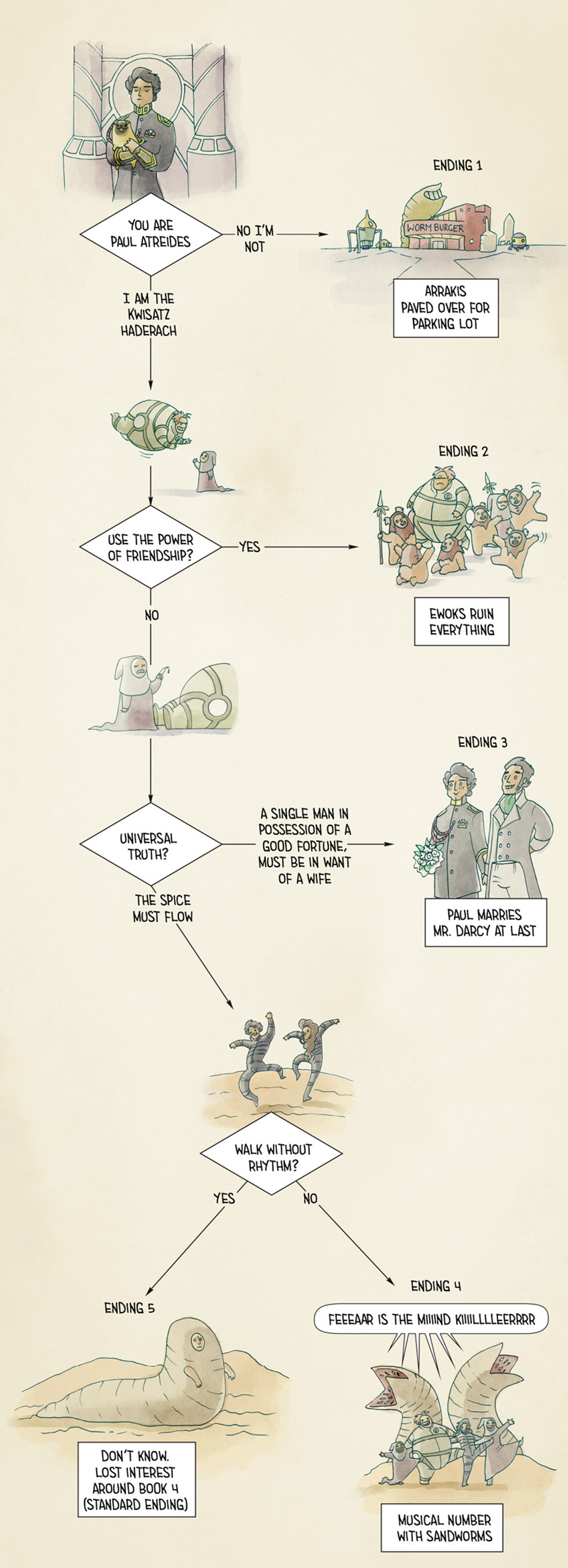



Well, I’d be freaked out, for one!
TBC– I understand a “standard” to usually denote a military battle flag, banner, or emblem used as a central power point.
The mahi-o-maratib or the fish and dignities insignia was one of the highest honours granted to Mughal nobles. Reserved for the most eminent courtiers, in 1719, the mahi o-maratib was presented to Maharaja Ajit Singh Rathore (r. 1707-24) by Emperor Farrukh Siyar (r. 1713-19). The face of the fish was made from copper and its body was formed by a textile streamer. The streamer became inflated, as seen in the painting, when wind blew through the fish’s mouth. Carried on an elephant in procession, the fish standard was accompanied by spherical balls representing power. –evil empire user

Bei der Tischtennis-EM in Ljubljana mischt die 63-jährige Luxemburgerin Ni Xia Lian den Wettbewerb auf. Erst gegen die Jüngste ist Schluss.
Bei der Tischtennis-EM in Ljubljana mischt die 63-jährige Luxemburgerin Ni Xia Lian den Wettbewerb auf. Erst gegen die Jüngste ist Schluss.


Mezametara Saikyou Soubi to Uchuusen-mochi datta node, Ikkodate Mezashite Youhei to shite Jiyuu ni Ikitai, episode 3
Saikyosoubi, めざめざ
- Info - AniList - Info - Kitsu - Info - MyAnimeList - Info - Official Site (Japanese) - Social - Twitter (Japanese) - Streaming - Crunchyroll
Reminder: Please do not discuss plot points not yet seen or skipped in the show. Failing to follow the rules may result in a ban.
All discussions
| Episode | Link |
|---|---|
| 1 | Link |
| 2 | Link |
| 3 | Link |
This post was created by a bot. Message the mod team for feedback and comments. The original source code can be found on GitHub.
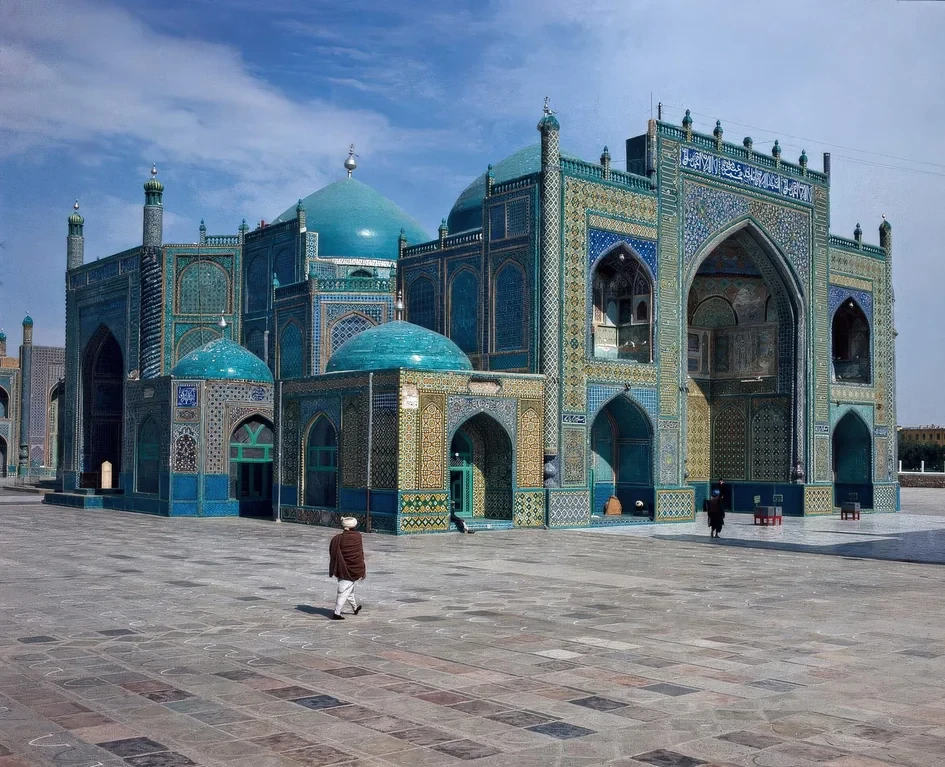
Shamelessly stolen from… 😁
Herat and Balkh have some of finest examples of Timurid architecture.
What are the elements that make Timurid architecture distinct from Persian architecture?
Heavy use of cobalt, tile-work and onion domes. You can see its examples at Registan square and Gur-i-Amir in Samarkand, and Gohar Shad mosque in Mashhad in Iran. In Afghanistan the greatest Timurid complex was that of Gwahar Shad in Herat, before Afghans blew it up in the 19th century to not let it being used by the Russians for military purpose (who ultimately never came).
That being said it’s named more for being style of the Timurid Empire than clearly distinct elements. You can say it is a fusion of Persian, wider Islamic and central Asian styles.
cross-posted from : lemmy.zip/post/73463122
One potential candidate is the new ID Unyx 09, an electric saloon co-developed with VW’s Chinese partner Xpeng, while the 4.8-metre-long ID Aura T6 SUV could sit above the smaller ID Tiguan in Europe, giving Volkswagen a Volvo EX60 rival.
cross-posted from : lemmy.zip/post/73463122
One potential candidate is the new ID Unyx 09, an electric saloon co-developed with VW’s Chinese partner Xpeng, while the 4.8-metre-long ID Aura T6 SUV could sit above the smaller ID Tiguan in Europe, giving Volkswagen a Volvo EX60 rival.
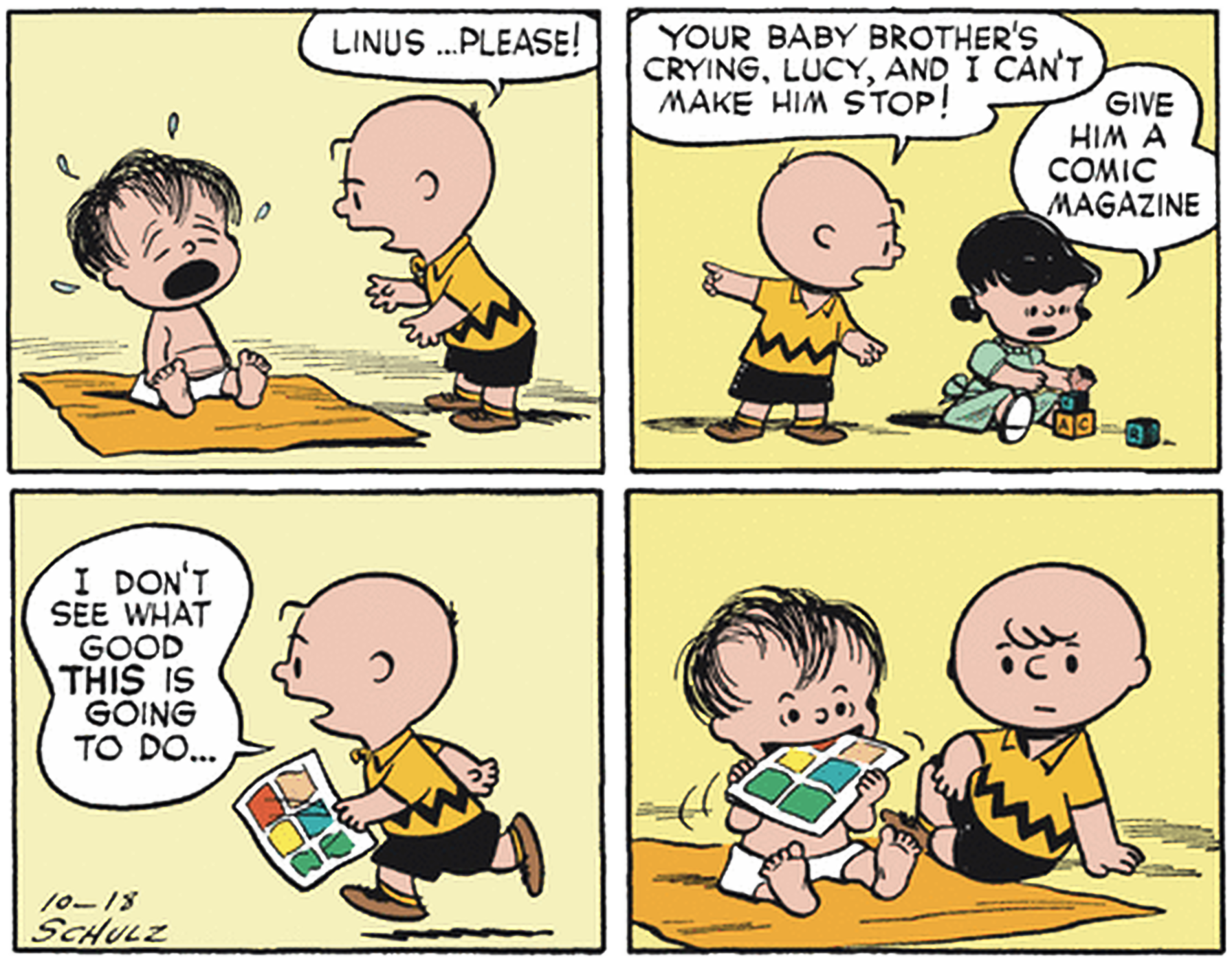
A pioneer of Winnipeg’s craft brewing scene has reopened under new ownership.
A pioneer of Winnipeg’s craft brewing scene has reopened under new ownership.

Today’s game is Sonic CD. I’ve been playing some more and just really tearing through it. I made it all the way through to Stardust Speedway which has some sick ass music. I did get stuck at a part in section 2 though where it kept flinging sonic into a wall though. So I gave it a rest there.

Wacky Workbench was interesting and I had a lot of fun but it felt like the central idea was slowing down which I didn’t really care for. I’m fully willing to admit I may be missing something. But as it stands the best part for me was the music and the name.

The water level wasn’t nearly as bad as I feared. I mentioned last time the distaste for water levels because of Chemical plant zone. Thankfully here it’s not that bad. I managed too clear the boss fight in one go. It’s honestly my favorite water level so far. And it’s a big plus I didn’t struggle.

I ended by checking out Sonic for The Game Gear. I wanted to try it out, and damn it’s a cool novelty, but I’m so glad I didn’t have to grow up on that. I imaging the slowdowns are legit, but when I push down on the d-pad and press circle it freezes my game so I have no clue what’s going on there. It was interesting to see but I’m not sure I’ll ever play it again except if I suddenly feel an urge to challenge myself to play it.
Today’s game is Sonic CD. I’ve been playing some more and just really tearing through it. I made it all the way through to Stardust Speedway which has some sick ass music. I did get stuck at a part in section 2 though where it kept flinging sonic into a wall though. So I gave it a rest there.
Wacky Workbench was interesting and I had a lot of fun but it felt like the central idea was slowing down which I didn’t really care for. I’m fully willing to admit I may be missing something. But as it stands the best part for me was the music and the name.
The water level wasn’t nearly as bad as I feared. I mentioned last time the distaste for water levels because of Chemical plant zone. Thankfully here it’s not that bad. I managed too clear the boss fight in one go. It’s honestly my favorite water level so far. And it’s a big plus I didn’t struggle.
I ended by checking out Sonic for The Game Gear. I wanted to try it out, and damn it’s a cool novelty, but I’m so glad I didn’t have to grow up on that. I imaging the slowdowns are legit, but when I push down on the d-pad and press circle it freezes my game so I have no clue what’s going on there. It was interesting to see but I’m not sure I’ll ever play it again except if I suddenly feel an urge to challenge myself to play it.