0
0
GitHub
Release Hollo 0.9.26 · fedify-dev/hollo
github.com
Not on this instance? Enter your own instance's domain to go straight to following c/fediverse@lemmy.zip there.
showing posts tagged #fediverse — clear

From the servers that participated in the survey (over 400 servers that together represent a third of all known accounts on the fediverse) 65% of the fediverse servers operate at a loss every month, of the servers that reported this data, and all these servers collectively have €85k in monthly costs, against €37k in revenue. The majority of the work is unpaid, with 58% of the servers with over 10 accounts have moderation teams that are entirely voluntary. The legal environment continues to grow into a bigger challenge, and IFTAS notes how difficult it is for servers to to navigate rules like the EU’s Digital Services Act, the UK’s Online Safety Act and the US Take It Down Act, especially when you do not have a compliance team or legal counsel. The report calls for modular policies and practical guidance, and alongside that for regulatory carve-outs which recognise what small, non-commercial communities can realistically provide.
The personal cost is visible in the survey as well: over the preceding year, 27% of the respondents had felt like they were close to burnout, and another 14% experienced burn-out currently or in the past year. Notably the question asked for regarding mental health challenges “due to your community responsibilities in the past 12 months?” That 40% of operators, largely volunteers, experience the toll that managing community takes, shows the cost of running this network. In the qualitative responses, operators describe that being able to step away, and to trust that somebody else will take over, is a crucial protection for them. There is a strong demand for shared capacity and collaboration between server operators, with 67% of respondents want tools that allow people they trust from other server to have some form of moderator access, and 60% want to be able to delegate bot and spam defence to shared services. There is a strong preference for opt-in and federated moderation so the work can be shared, while allowing communities setting their own rules and stay independent.
…
also interesting
Lula won Brazil’s presidential election over Bolsonaro, and the way that Lula came back to secure the victory in the second round of the elections gives a valuable perspective on political organising online. Garbage Day describes how André Janones had a WhatsApp channel called “Lula’s Army”, which turned Lula supporters into active distributors giving them concrete posting missions, instead of simply hoping theyd share the campaign material. Brazil is often at the fore-front of adoptions of digital networks, so I think its worth paying attention of how Brazilians are thinking about political organisation on commercial platforms. In that context, last month a group of Brazilian advocacy organisations (independent of the Lula campaign) published a Digital Contingency Plan, specifically about this dependency, and making sure organisations maintain control over their communications. Alquimídia, one of the driving organisations behind the plan, is an active promoter of the fediverse, and Thiago Skárnio, who helps to organise that outreach, says :”The strategy comes down to three movements: occupy closed platforms, preserve content in open media, and organise through secure networks. This means being present where the public is, but never depending exclusively on those spaces.” The fediverse is a practical part of that strategy, and Brazilian instance admins coordinated to temporarily open registration across four Brazilian instances of Comuna, Orgânica, Ursal and Bolha, to prevent all newcomes being concentrated on a single server alone.

**Please use upvotes and downvotes to reflect relevance, not whether you like or dislike a post. If you disagree, share your opinion instead of downvoting. That’s not what downvotes are for. **
I’ve been thinking about a forum built around shared subjects, not popularity.
Spaces and subjects would both work as reusable tags. A space called History could be associated with a History subject, as well as narrower subjects like Ancient History or Oral History. They can share a name without being the same thing. A thread could carry multiple space and subject tags, and both kinds of tags could be reused across the network. Nobody would own “History” as a directory.
There’d be no karma or vote-based ranking. Likes and dislikes could be cosmetic, but they wouldn’t affect scores or visibility. The goal is to avoid vote brigades and keep popularity from being mistaken for quality.
Lemmy uses upvotes and downvotes to score and sort posts, which can create some of the same popularity dynamics as Reddit. This design would try to make thoughtful discussion easier to find by removing that mechanism, though no system can guarantee quality on its own.
Federation would work at two levels. Nodes could choose what to receive, and spaces or subjects could also isolate themselves from selected sources. No one would control what can exist across the whole network, but each node or community could choose what it sees.
I’m also considering optional paid moderators. For the node I host, I’d choose moderators for their ability to judge discussion on its merits, using clear rules rather than popularity or agreement with a majority. Other nodes could choose a different moderation approach. My node’s approach would be merit.
That would need safeguards like public guidelines, explanations for important decisions, and appeals. Judging merit can be subjective, so the process should be open to scrutiny.
It probably wouldn’t appeal to everyone, and that may be fine. I’d rather have a smaller community that understands the ethos than chase growth at any cost.
What problems do you see, especially with moderation, discovery, and preventing communities from becoming echo chambers? Obviously “anti-echo-chamber” and federation don’t completely mesh with each other. but the idea here is that one competent node should be enough to carry the network, other nodes exist primarily as backups more so than being communities.
                         FEDERATED NETWORK
             shared protocol, content, and discovery
        ┌─────────────────────────────────────────────┐
        │                                             │
   ┌────▼─────┐                                  ┌────▼─────┐
   │  NODE A  │◄──────── federation ───────────►│  NODE B  │
   │          │                                  │          │
   │ Chooses  │                                  │ Chooses  │
   │ what to  │                                  │ what to  │
   │ receive  │                                  │ receive  │
   └────┬─────┘                                  └────┬─────┘
        └──────────────────┬──────────────────────────┘
                           │
                    shared content graph
                           │
       ┌───────────────────┼────────────────────┐
       │                   │                    │
  ┌────▼─────┐        ┌────▼─────┐         ┌────▼─────┐
  │  SPACE   │        │  SPACE   │         │  SPACE   │
  │  History│        │  Books   │         │  Science │
  └────┬─────┘        └────┬─────┘         └────┬─────┘
       │                   │                    │
       │ contains          │ contains           │ contains
       ▼                   ▼                    ▼
  ┌──────────┐        ┌──────────┐         ┌──────────┐
  │  TOPIC   │        │  TOPIC   │         │  TOPIC   │
  │ History  │        │ Fiction  │         │ Biology  │
  ├──────────┤        └──────────┘         └──────────┘
  │Ancient   │
  │ History  │
  ├──────────┤
  │ Oral     │
  │ History  │
  └────┬─────┘
       │
       │ Topics are reusable tags.
       │ A space and topic can share a name,
       │ but they are different things.
       ▼
  ┌─────────────────────┐
  │       THREAD        │
  │                     │
  │ Tagged with multiple│
  │ topics and visible  │
  │ in relevant spaces │
  └──────────┬──────────┘
             │
       comments and replies


  FEDERATION AND FILTERING
  ┌──────────────────────────┐   ┌──────────────────────────┐
  │ Nodes can choose which   │   │ Topics can choose which   │
  │ nodes or topics to       │   │ sources to receive from  │
  │ receive from             │   │ or isolate from           │
  └──────────────────────────┘   └──────────────────────────┘

  PARTICIPATION
  ┌──────────────────────────┐   ┌──────────────────────────┐
  │ Cosmetic likes/dislikes │   │ No karma or vote-based   │
  │ do not rank content      │   │ ranking                  │
  └──────────────────────────┘   └──────────────────────────┘

  OPTIONAL MODERATION
  ┌──────────────────────────────────────────────────────────┐
  │ Nodes choose their moderation approach. The host node   │
  │ selects paid moderators for merit-based judgment, using │
  │ clear rules, explanations, and an appeals process.      │
  └──────────────────────────────────────────────────────────┘
PrivacyTools.io has a really nice review and thorough explanation/rundown of Lemmy!
In general this website is a great resource I just wanted to share what I think is a great review for a great software!
PrivacyTools.io has a really nice review and thorough explanation/rundown of Lemmy!
In general this website is a great resource I just wanted to share what I think is a great review for a great software!

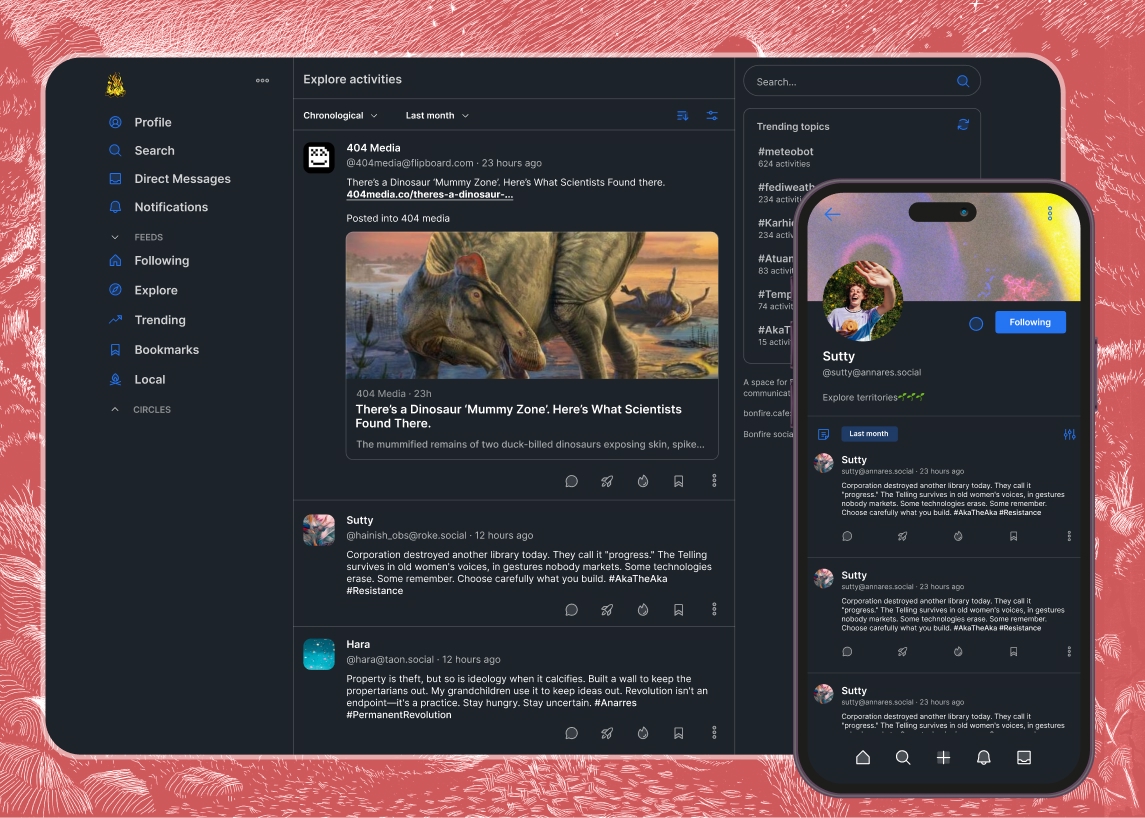
Crossposted from https://fedia.io/m/updates@kbin.melroy.org/t/4475005
As you all might know it, Mbin is a rather small project with a small team. In fact the current size of the team is 1.5 developers (0.5 for the ones which only have partially time). While our active devs do what they can in their free time, this leads to slow feature and security updates, sometimes slow support and increasing stress for the remaining devs.
That’s why I ask everyone who likes this project, has time of their own to donate and knows how to program with PHP (or is willing to learn it) to consider helping this project move forward.
You can start with simpler features and submit them as PRs or even just help review existing PRs if full commitment to maintaining the codebase is currently too much. We are aware that parts of our codebase contains more spagett than some Italian restaurants, but we will help every newcomer to find their way through the sources.
Every bit of support helps, as it also shows that we have a passionate userbase which does not want Mbin to wither away.Well … as I’m not very good at writing motivational texts, just comment anything which comes to mind for this issue :D If you have ideas how to improve the chances that this post reach the right people, I would also love to hear it.
At the same time I want to bring up another topic, as transparency is important for any public project.
Some of our devs use AI assistants for generating code for PRs and also to assist with PR reviews. Simply because without it, they would not have time to continue contributing to Mbin (which would bring our devs down to 1, making it impossible to merge new PRs). On thing here is important to know: I will not call it slop nor vibe-coding, as they are a competent developer capable of understanding and managing the outputs of the agents. Still, I am very aware of the issues of AI and the general opinion on it in the Fediverse. That is why I would like to know your constructive opinions on this matter.
Also, I guarantee you that every PR is reviewed by at least one human pair of eyes.
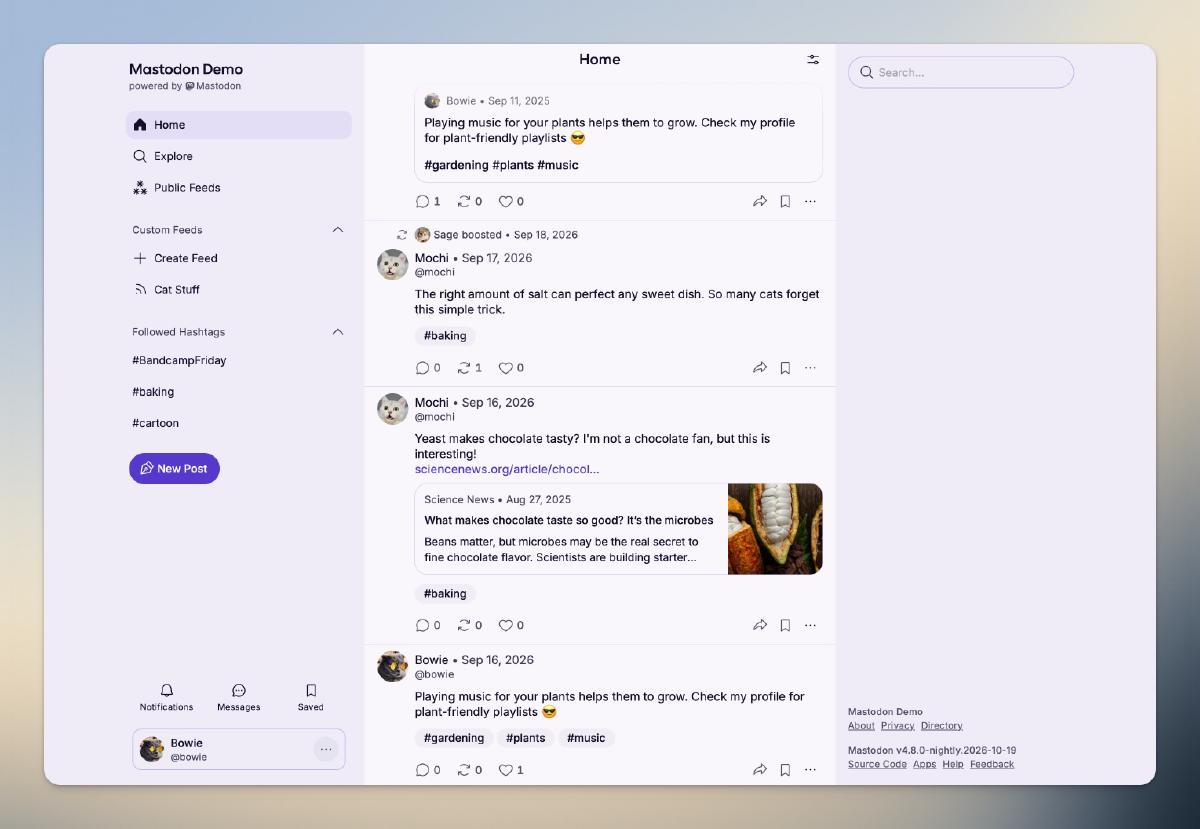




PyLova (Python+Pavlova) is a soft fork of PieFed, aimed at improving the user experience through UI overhauls, empowering users and admins with agency, improved administration and moderation functions, and general bug fixing.


PyLova (Python+Pavlova) is a soft fork of PieFed, aimed at improving the user experience through UI overhauls, empowering users and admins with agency, improved administration and moderation functions, and general bug fixing.