0
follow from another instance
Not on this instance? Enter your own instance's domain to go straight to following c/foss@lemmy.world there.
0


iX Magazin
OpenProject wins multimillion-dollar contract from ITZBund to replace Jira
www.heise.de
0

Security
Web server: nginx update fixes serious vulnerabilities
www.heise.de
0
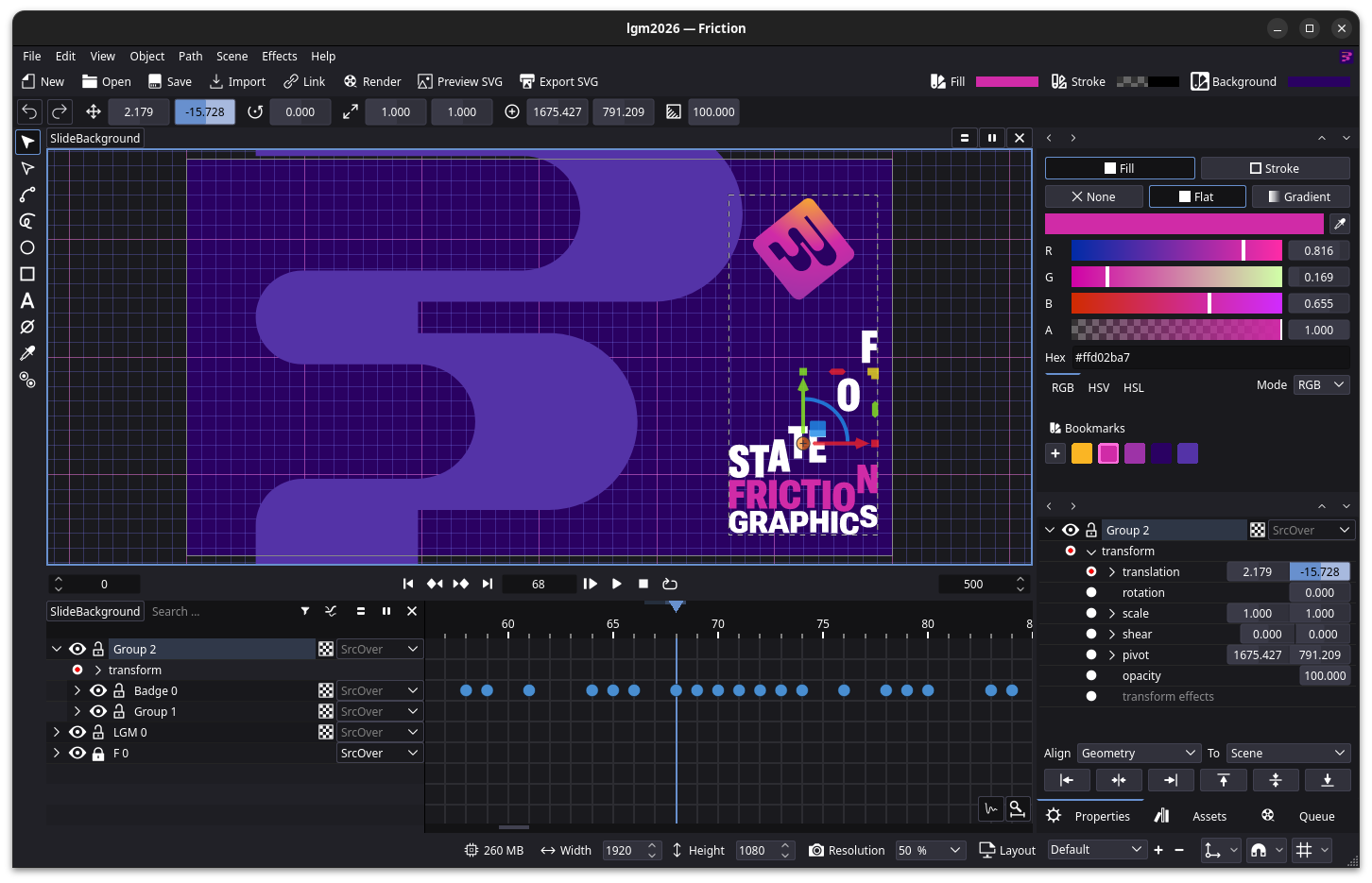
Friction 1.0.0
friction.graphics
0

GitHub
GitHub - aniruddhaadak80/OpenFile: Free, open source file toolkit that runs fully in your browser. 300+ tools for PDF, images, video, audio, docs, 3D, fonts, archives and dev work. No uploads, no sign up. Your files never leave your device.
github.com
preview
I built this and wanted to share it here because the privacy angle seems to matter to this crowd. OpenFile is a set of 360+ file tools (PDF, images, video, audio, fonts, archives, eBooks, data and code helpers) that run entirely inside the browser tab. Nothing is sent to a server, there is no account, no watermark and no limit. One example I use a lot is stripping EXIF and location data from photos before sharing them, and that happens on your own machine.
You can try it without installing anything: openfile-studio.vercel.app It also installs as an offline app, and the whole thing is static, so you can self host it on any web server.
Feedback on missing tools is very welcome.
0

Ars Technica
Attackers have been exploiting critical Zimbra flaw to steal emails
arstechnica.com
0

preview
I just came across this, and was wondering if anyone out there in the Fediverse has given it a spin? It looks very interesting to me as a more private and secure alternative to Discord. I’d primarily be using it for my gaming group, and one question I can’t seem to find the answer to is whether or not the voice chat has push-to-talk. Beyond that, what does everyone think of this?
I just came across this, and was wondering if anyone out there in the Fediverse has given it a spin? It looks very interesting to me as a more private and secure alternative to Discord. I’d primarily be using it for my gaming group, and one question I can’t seem to find the answer to is whether or not the voice chat has push-to-talk. Beyond that, what does everyone think of this?
0
19th Nervous Breakdown
thebuild.com
preview
PostgreSQL 18 had its first release candidate on September 4, 2025, and went GA three weeks later. As I write this, on September 14, 2026, PostgreSQL 19 has no release candidate date. It has a fourth beta scheduled for September 24, a commit freeze for that beta on September 19, and a stated goal of GA “by the end of October.” In the last three weeks it has lost two of the features that headlined every “what’s new in 19” post written since June, including mine. On August 31, Bruce Momjian wrote on -hackers that “it feels we are in an unprecedented situation here.” A week later, Joshua Drake proposed moving the release to spring 2027. Nobody took him up on it. Nobody laughed, either.
This is not a “PostgreSQL is falling apart” post. The project reverts things late every year; the PostgreSQL 11 cycle had a scariest-patch tournament of its own, and WAIT FOR took a decade and three reverts to land. But 19 is different in degree.
0
preview
I responded to someone in comments on a post that may not get as much visibility, and wanted to share something that might help some others who are newer or unfamiliar.
I referenced Quad9 DNS as probably one of the best private DNS you can use, Swiss based, no log, no tracking, no data to sell, etc. They also implement DNSSEC, DoH, DoT, QUIC, ECS (which you may or may bot want), malware blocking, content filtering, and maybe something else I’m forgetting.
Many DNS sinkhole apps, OSes, or systems can actually utilize Quad9 for your resolver while those systems also block ads. Below is my functional list of systems that I’m aware of, though I haven’t tested everything. I believe all are considered FOSS, too. If you don’t have a spare Raspberry Pi laying around, try running in HomeAssistant, Yunohost, ZimaOS (previously CasaOS), or others.
DNS sinkhole (Adblocking) apps:
Feel free to comment and add your own I’m maybe not aware of. I’m no software engineer, but I can read through some code, though not an expert, nor have combed through these personally. Usually I’ve tested/run at the recommendation of others over the years before my ban on Reddit (for shitting on AI).
Hope this helps!!
0

brennan.day
Normalized Fascism in Open Source: $21.7 Million Given to DHH
brennan.day
preview
Speak up on this. Boycott aggressively. Let people know you don’t support Cloudflare, Shopify, 37signals, Dell, 1Password, Framework, Block, Coinbase, Dropbox, TapTap, and any other company enabling the spread of dangerous and harmful political ideologies that will continue to result in further violence and death. And let people know the harm these companies are actively doing.
We cannot allow this to continue; we must be far more proactive and assertive in our fight against the normalization of fascism and the far right. We must be willing to sacrifice ease and convenience, and we must be willing to sever all connections with these entities.
0
California Passes AB-1856 For Open-Source Relief Over Age Verification
www.phoronix.com
0
preview
A quick update on SSH Pilot, a free, opensource SSH, SFTP client I’ve been working on.

A new version is out with new features, aimed at meeting all your SSH/SFTP needs in a clean, user-friendly interface.
Just double-press the Shift key and all your hosts and management tools are at your fingertips. The tools include graphical frontends for SFTP, SCP, SSH-COPY-ID, Known Hosts, Authorized Keys as well as Docker containers.
Th app also supports backups to Bitwarden/Vaultwarden and restoring on other devices.
Downloads for Linux and macOS are available at github.com/mfat/sshpilot#download
Flatpak users can install from Flathub.
A quick update on SSH Pilot, a free, opensource SSH, SFTP client I’ve been working on.
A new version is out with new features, aimed at meeting all your SSH/SFTP needs in a clean, user-friendly interface.
Just double-press the Shift key and all your hosts and management tools are at your fingertips. The tools include graphical frontends for SFTP, SCP, SSH-COPY-ID, Known Hosts, Authorized Keys as well as Docker containers.
Th app also supports backups to Bitwarden/Vaultwarden and restoring on other devices.
Downloads for Linux and macOS are available at github.com/mfat/sshpilot#download
Flatpak users can install from Flathub.
0
0
0

Microsoft Open Source Blog
Microsoft Comic Chat is now open source | Microsoft Open Source Blog
opensource.microsoft.com
0

preview
cross-posted from: lemmy.ml/post/49607788
Hi everyone,
I wanted to share a project I recently started working on called Tend (Android app built to help you automate the scheduling of your social life).
The idea originally came from a discussion on r/fossdroid about how hard it is to keep in touch with friends and extended family without relying on bloated, cloud-based business CRMs.
Most “Personal CRM” apps require you to upload your contacts to a random server. I wanted something that was 100% offline, private, and simple.
What it does
You can think of it as setting up cron jobs for your relationships.
- Contact Cards: Create dedicated profiles for people you want to keep up with (Name, notes, phone, socials, etc.).
- Custom Frequency: Set a “check-in” schedule (e.g., every 14 days, monthly, quarterly).
- Smart Reminders: The app will notify you when it’s time to reach out.
- 100% Offline: Everything is stored locally on your device via SQLite/Room. No accounts, no telemetry, no cloud sync.
Since this is in the initial development phase, I’m looking for feedback on the features and the UI.
Repository
GitHub: github.com/jksalcedo/tend Codeberg: codeberg.org/jksalcedo/tend
0
0
preview
I like to create a list of top 10/5 for fun and I was trying to create a list of top 10 softwares.
Conditions are
- Foss
- No OS or compiler or any extremely low level.
- Also no languages, framework or library or anything which is used to develop software.
- Must work on desktop
my list so far is
- rclone
- yt-dlp
- keepaasxc
- ripgrep,
- Thunderbird
I already list some in my previous blogs so can’t repeat them so below ones are that good but cant include them in list
- git
- ffmpeg
- openssh
Note: These things are subjective so it can be confusing but we atleast we get to share what we like and it promotes healthy discussion
0

GamingOnLinux
Colorado and California age verification bills exempt open source operating systems
www.gamingonlinux.com
0

Ars Technica
Yearslong fight over users' right to tweak smart TV software heads to trial
arstechnica.com
0

preview
I am a member of a + 30 people team and most API clients we used felt like they were built for a different job than what we actually did (testing endpoints, maintaining API docs and making sure that new versions of the API matches with out docs). Our team lives in Git, and our docs always drift away from the actual requests inside Postman. The fear I kept hearing when discussing with the team and other devs was “I don’t need another bloated API tool”.
So we built and open sourced Voiden a few months ago: an offline API tool where requests live as executable markdown and are versioned in Git.
The original idea and inspiration is to combine the flexibility of Obsidian-style files with the simplicity of curl. The result is a tool in which everything can be composed with blocks (endpoint, auth, params, body) that can be added, reused, overridden, and stitched together across executable markdown files.
Results so far: Since open sourcing, we got +12K installs, +1K stars on guthub plus a lot of feedback and contributions.
What it does today:
- REST, GraphQL, gRPC, WebSockets (as plugins, install only what you need)
- Ability to compose Requests with API blocks. Reuse, Replace & Version everything just like code.
- Postman and OpenAPI import so you don’t redo years of work Built-in terminal
- Pre/post request scripting in JS, Python or Shell
- A batch runner for chaining .void files with env selection and stop-on-failure
- Agent-friendly CLI, works with Claude and Codex skills
- We have also a few features in early access, such as the (much anticipated) CLI runner +more
Looking for feedback and ideas from anyone interested.
Github: github.com/VoidenHQ/voiden
Download: voiden.md/download
0
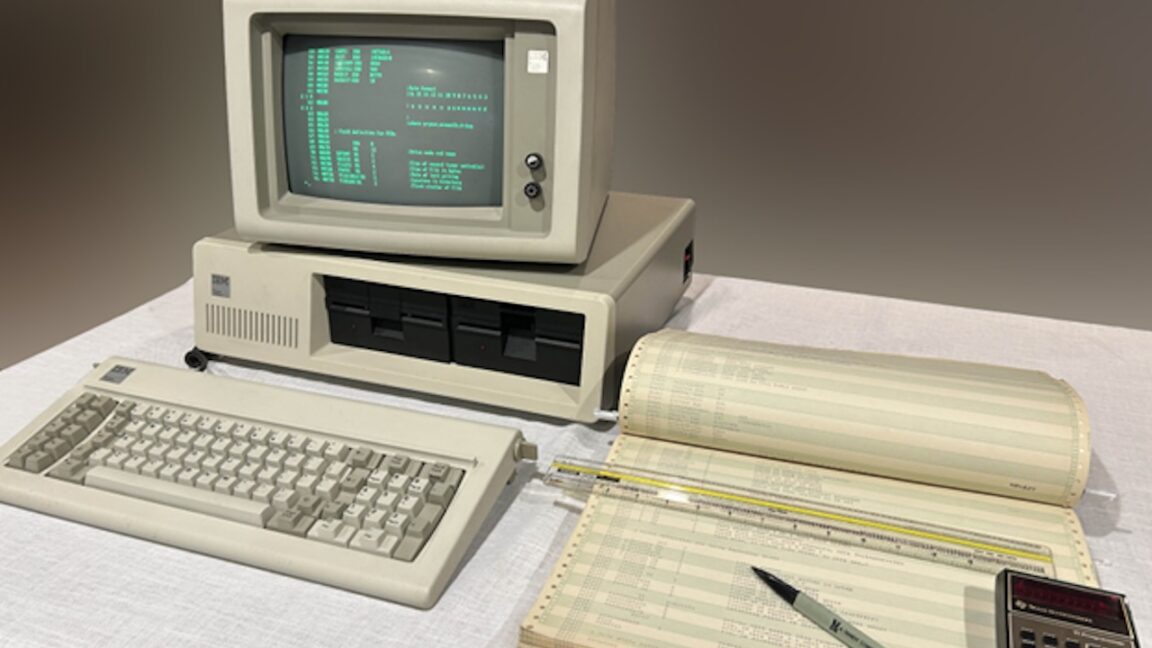
Ars Technica
Microsoft open-sources "the earliest DOS source code discovered to date"
arstechnica.com
0

netzpolitik.org
„Any dependency is a bad thing“
netzpolitik.org
0

GamingOnLinux
Colorado Age Attestation bill gets amendments to have open source excluded
www.gamingonlinux.com
0

GitHub
GitHub - crustyoldhuman/ProperDim: Dependable dimming utility for non-DDC screens (HD TVs, janky monitors, etc) for win10/11
github.com
preview
so i never had the money or home space for a proper office or computer desk, so i’ve always had to run my PC on my HDTV’s/etc. because of this, I have never had proper dimming because HDTVs usually disable screen settings for PC connections (at least mine have). So i’ve always had to choose between bloated/ad-supported/paid apps and smaller clunky apps to achieve screen dimming. well i finally got sick of it and made my own.
ProperDim is a lightweight program that lives in your system tray to manage your screens brightness. its standout features are:
-custom minimum brightness
-hotkeys
-quick-set buttons & a quickdim slider in the system tray
-scheduler for automation
-modern/old school mixed style with an intuitive and minimal design
this is the first program i ever made and to be honest i probably should have started with something more simple–but it’s finally finished and I am happy!
GitHub info + download here: https://github.com/crustyoldhuman/ProperDim
cheers
0

Open Rights Group
The case for Digital Sovereignty and the Digital Commons
www.openrightsgroup.org
0

Linux Magazine
UN Creates Open Source Portal » Linux Magazine
www.linux-magazine.com
0
0
TDF Community Blog
UPDATED Request to the European Commission to adhere to its own guidances - TDF Community Blog
blog.documentfoundation.org
0

Open Source Guy
California’s AB 1043 Could Regulate Every Linux Command, and the Open Source World Is Too Quiet
shujisado.org
0

blenderdumbass . org
Breaking Down the New Stupid Ageist Californian Law that Requires Age Verification at OS account setup
blenderdumbass.org
0
Ars Technica
With developer verification, Google's Apple envy threatens to dismantle Android's open legacy
arstechnica.com
0
An Open Letter to Google regarding Mandatory Developer Registration for Android App Distribution
keepandroidopen.org
0

Hong Minhee on Things
Histomat of F/OSS: We should reclaim LLMs, not reject them
writings.hongminhee.org
0
preview
0

GitHub
Release Important notice about the builds · yuliskov/SmartTube
github.com
preview
cross-posted from: lemmy.today/post/42851505
Slightly more detail in this GitHub issue, however much is still unknown, even after three or so days. The dev hasn’t revealed any further details. Some articles on this incident:
- bleepingcomputer.com/…/smarttube-youtube-app-for-…
- aftvnews.com/smarttubes-official-apk-was-compromi…
Note that the articles provide little detail on what’s happened, mostly just detail that a malicious library was found and Play Protect started removing the app if affected. It’s unclear which versions are specifically affected, how the dev got breached, and what the malware actually does. According to a user (who may or may not be using some sort of LLM, their comment sounds like one at least) in a separate, related issue, the malware may collect device info and send to a command & control server. It could (in theory) receive new instructions at any point if it’s a C2 server. Again, it does appear that they had an LLM of some sort generate their comment, so take it with a grain of salt.
I’m going to uninstall the app and revoke access on my Google account page. I see little reason to need to reset my password as of right now, since the app uses an API key and not my actual password. In my opinion, it’s possibly related to YT viewbotting and commenting, or to add your device to a botnet. It’s unclear to me how this botnet would work in practice, since even Android TV sandboxes apps (for the most part).
Update: it appears that this may be related to the Vo1d botnet:
DrWeb: Android.Vo1d.14.origin. If this is indeed the case, then the goal was to add devices to the botnet. It’s my understanding that previous versions of this botnet typically required cheap, pre-rooted Android TV boxes, in order to install other apps. I’m not sure if that means that you’re safe if your device is not rooted. It might be worth checking your installed apps for oddities.
0
preview
I (unfortunately) have to use PDFs a lot for my work. I’m on Windows 11 (for now) and I’m really sick of Xodo PDF: it has some features locked behind a paywall, and this week it keeps crashing for some reason. I would love to replace it but I haven’t found a fully-featured FOSS app for reading/editing PDFs.
What do I mean by "fully-featured?"
- Signing PDFs with my saved signature
- Editing page order / combining multiple PDF documents into one. (On MacOS, the Preview app does this BEAUTIFULLY)
- Annotating
- Highlighting
- Search
Is there a FOSS Windows app that can do all these things?
Thanks Lemmy!
0

preview
Seriously, I’m talking about the unsung heroes, the daily drivers, the stuff that makes you go ‘how did I ever function without this?’ For me, it’s gotta be Jellyfin. Freed myself from the proprietary shackles and never looked back. But i’m curious, what’s your ride-or-die FOSS? Gimme your best, your weirdest, your most indispensable!
Seriously, I’m talking about the unsung heroes, the daily drivers, the stuff that makes you go ‘how did I ever function without this?’ For me, it’s gotta be Jellyfin. Freed myself from the proprietary shackles and never looked back. But i’m curious, what’s your ride-or-die FOSS? Gimme your best, your weirdest, your most indispensable!
0
preview
I think this is a very common story in the foss world and we lose a lot of good devs and good projects to it.
I think this is a very common story in the foss world and we lose a lot of good devs and good projects to it.
0
preview
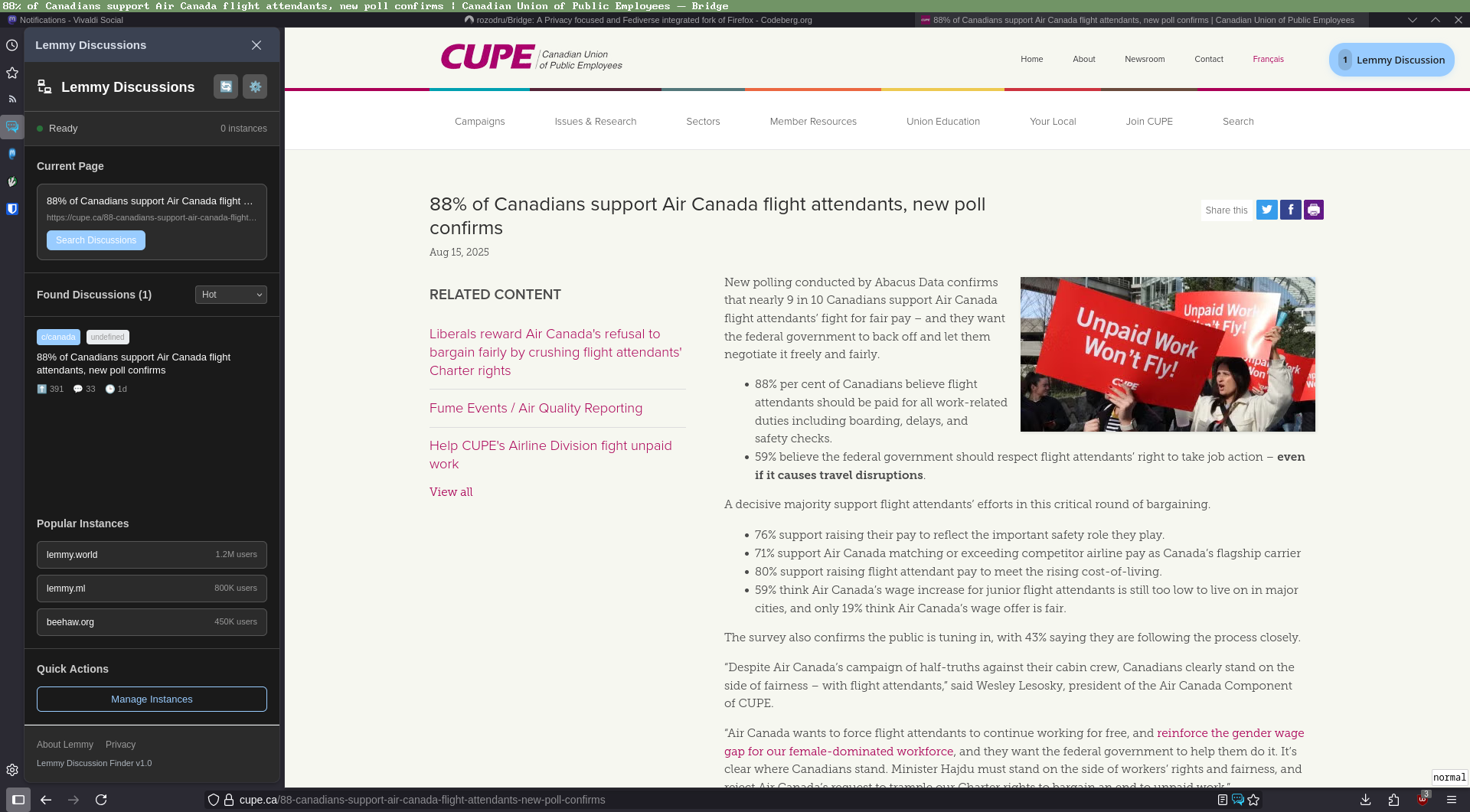
This is Bridge - a privacy focused, Firefox AI disabled, Fediverse integrated browser. It has vim navigation via Tridactyl, Bitwarden integration, as well as Ublock integration.
It has an old Firefox RSS feature where you can scan a site for RSS feeds and it will add them to the RSS feed reader.
But the highlight of this is the Mastodon and Lemmy integration. you can have your Mastodon feed displayed in the sidebar on the browser which will give you access to your home, local, and fediverse feeds. you can post, reply, boost, and favourite posts.
The Lemmy extension allows you to see and link directly to lemmy discussions on whatever instance you like (multiple even) if you’re on a site/news article/blog post/whatever. If the extension sees that this has been posted on Lemmy, it will provide you with a direct link to whatever discussions it finds based on the current URL you’re on.
This has been a hobby project of mine for a bit now, It’s very slow development as I have a job and can’t dedicate all the time in the world to this. I wanted to originally build a browser from scratch but realized that would probably take me years so I settled with a fork of firefox.
Currently I believe it only works on Linux and is in a very early alpha. It hasn’t crashed on me yet but visually is a bit rough around the edges.
I just wanted to share this little hobby project I’ve been working on. Thanks!
0
preview
cross-posted from: lemmy.world/post/33915876
This is a California state court case that could drastically change the landscape for Free and Open Source Software moving forward. And particularly that FOSS that is covered by Copylefted licenses like the GPL family of licenses.
The premise of the case is that by selling smart TVs with only the compiled version of GPL’d (and likely forked) code projects such as the Linux kernel, BusyBox, selinux, ffmpeg, etc, Vizio is blatantly violating the “Source Code Provision” of the GPL which requires that they provide along with this compiled code, also the source code or failing that a written offer of source code to any recipients of these compiled versions of these GPL’d applications and libraries.
(Now, of course, anyone can get the source code of the Linux kernel or BusyBox or any of the other applications at issue. But in the process, Vizio and their manufacturers have written kernel drivers for the hardware specifically on the TVs (which are derivative works of the Linux Kernel and therefore covered by the GPL), and probably made modifications to several of the other codebases in order to make them do novel things specifically for the smart TVs in question. Beyond that, the GPL requires Vizio to provide any programs/scripts/signing-keys/etc to compile and install the source code (or a, say, consumer-modified version of the source code) onto the TVs. It’s the Vizio-specific/chip-manufacturer-specific modifications/derivative works and compiling/installing code that’s most important.)
The “Software Freedom Conservancy v. Vizio Inc.” case is seeking to force Vizio to comply with the GPL. Assuming the SFC is successful and the courts rule in their favor, the eventual result is expected to be a fully FOSS OS “distribution” (of, basically, GNU/Linux) that end users can install on their Vizio TVs in place of the factory-installed OS. This FOSS OS distribution, of course, would allow users to remove ads and other antifeatures from the TVs in question. And over time, it’s highly probable that this FOSS OS smart TV distribution would expand to other models and brands of TVs. Roughly speaking, the goal of this lawsuit is to be able to create an “OpenWRT but for smart TVs.”
But this case could definitely affect the industry not just for smart TVs. Smart phones, game consoles, automobiles, robot vacuum cleaners, sex toys. So many consumer electronics devices run on, for instance, the Linux or Android kernel (both of which are covered by the GPL). And a lot of these devices also include many other programs and libraries covered by the GPL. There’s potential for lots of different “OpenWRT but for <insert smart device name>” sort of distributions. And if SFC v. Vizio succeeds, it could greatly increase the likelihood of all of these coming to fruition.
Vizio has been stalling for strategic reasons. But there’s a court date set for 2025-09-22. My understanding is that there will be options to watch a live stream of it via Zoom for Business. (Yes, it’s proprietary, unfortunately.) You can even apply for a grant to travel to California to attend the hearing in person (though I think that’s kinda mostly for bloggers and journalists and such). Also, a lot of court documents about the case are linked on the page I linked in this post.
Ok. Time for a bit of legal nerd stuff. (IANAL, not legal advice, etc.) Previous GPL enforcement cases have been copyright cases brought by the copyright holders. This case is novel in that it’s a contract case. There’s a legal concept of a “third-party beneficiary” to a contract. If Alice and Bob make a contract that requires Alice to pay Charlie $100, then Charlie is a third-party beneficiary and thus can bring a suit for enforcement against Alice. In this case, copyright holders of GPL’d code made a contract (the GPL) with Vizio that requires Vizio to make sure anyone they distribute compiled GPL’d code to can get the source code (and compiling/installing scripts etc), so anyone Vizio sells a TV to is a third-party beneficiary and therefore can bring a suit against Vizio to get the court to force Vizio to hold up their obligations under the GPL. At least that’s the legal theory under which SFC is bringing the suit.
If you want more info about this, this YouTube video is a panel of SFC folks doing a Q&A specifically about the Vizio case. It’ll have some interesting tidbits of info.
I’m hopeful, and the courts have been sympathetic to the SFC’s arguments so far. I’m crossing my fingers for sure.
0

GitHub
GitHub - LibreLingoCommunity/LibreLingo: 🐢 🌎 📚 a community-owned language-learning platform
github.com
preview
LibreLingo’s mission is to create a modern language-learning platform that is owned by the community of its users. All software is licensed under AGPLv3, which guarantees the freedom to run, study, share, and modify the software. Course authors are encouraged to release their courses with free licenses.
Course templates are fairly easy to make it seems. There are a handful more not listed in the linked URL (though I think you need to install a local copy for them to work; links here are hosted by an old version of LibreLingo).
Edit: I have twice now changed the link, as I keep linking either the old or broken web interface. apologies, that’s on me.
0

preview
I was using Wanderlog and they randomly delete things. It’s really annoying. I like to create a map for friends that are visiting so they can pick and choose what sounds interesting. If it all gets randomly deleted, what’s the use?
Nevermind: Found this- wiki.openstreetmap.org/wiki/Android
I was using Wanderlog and they randomly delete things. It’s really annoying. I like to create a map for friends that are visiting so they can pick and choose what sounds interesting. If it all gets randomly deleted, what’s the use?
Nevermind: Found this- wiki.openstreetmap.org/wiki/Android
0


iX Magazin
Twenty: The open source alternative to Salesforce is here
www.heise.de
preview
After two years of development, Twenty is ready for productive use. The open source CRM has already won many advance praises.
After two years of development, Twenty is ready for productive use. The open source CRM has already won many advance praises.
0
preview
cross-posted from: lemmy.world/post/31788491
Please see the cross-post as it is updated.
cross-posted from: lemmy.world/post/31788491
Please see the cross-post as it is updated.
0

preview
How a student fought to do their degree without submitting to proprietary (Microsoft, Google, Oracle etc) software and services that lecturers & admins demanded, and only use free software instead (like Jami, Jitsi Meet, PostgreSQL etc).
How a student fought to do their degree without submitting to proprietary (Microsoft, Google, Oracle etc) software and services that lecturers & admins demanded, and only use free software instead (like Jami, Jitsi Meet, PostgreSQL etc).