showing posts flaired Daily Life — clear

0

Ancient Ephesus brought to life via the "Cassio" series. (seven pages, artist: Henri Recul)

preview

I always enjoy history brought back to life with skill and verve. As mentioned last week in the “Vampire Boy” post, this series has to do with an …
I always enjoy history brought back to life with skill and verve. As mentioned last week in the “Vampire Boy” post, this series has to do with an …

0

Article: "Feudal Serfs Weren’t Slaves -- That Distinction Was Designed to Keep Them Plowing"

preview

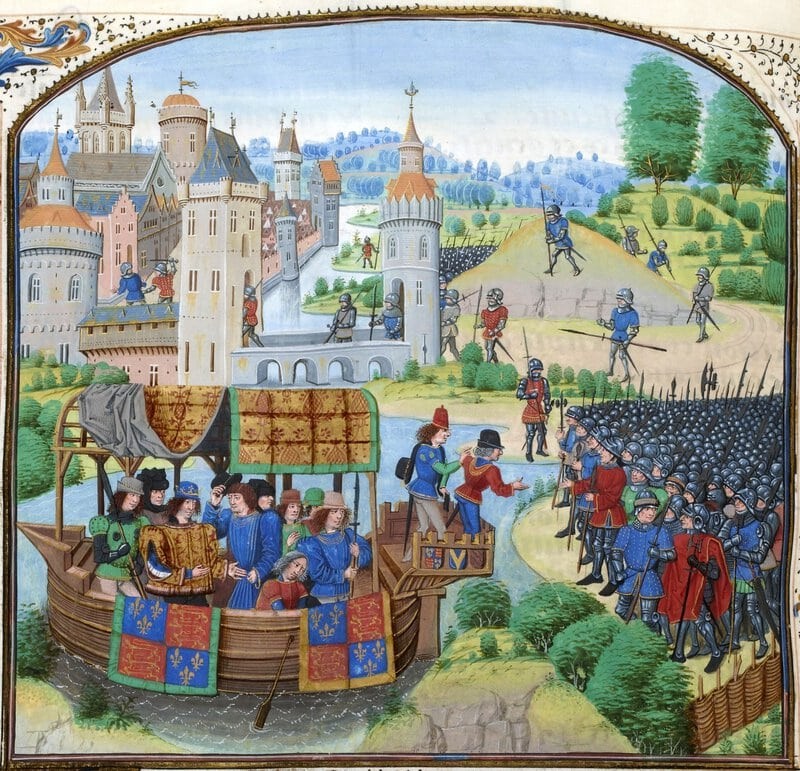
Image is a 14th-century illuminated manuscript from Froissart’s Chroniques depicting armored forces and castle life in medieval France. TBH I’m not sure that it relates to the theme very well, but it’s probably the most interesting art piece shared in the article. Right so, let’s share a bit of it:

The feudal system drew a careful line between serf and slave — not out of mercy, but as the mechanism that kept medieval peasants laboring in place without the moral scandal of outright bondage.


https://cdn.historycollection.com/wp-content/uploads/2026/08/medieval-serf-plowing-oxen-field-c4655db2-1536x735.jpg

Before the sun rose over the frozen fields of late tenth-century England, a plowman was already at work — driving his oxen through iron-hard ground, eating his single loaf, and laboring, as he told it himself, without rest “for fear of my lord.” He was not a slave. Everyone agreed on that. The distinction, it turns out, was the most important lie the Middle Ages ever told.

The Man Who Owned Nothing — Not Even Himself

Around 995 AD, an English abbot and scholar named Aelfric of Eynsham composed a Latin teaching text called the Colloquy. Its purpose was practical: give students dialogue to practice translating. But in casting a fictional plowman as one of his speakers, Aelfric produced one of the most revealing documents in feudal history — a first-person account of what it felt like to live at the bottom of a social order designed to keep you exactly there.


https://cdn.historycollection.com/wp-content/uploads/2026/08/aelfric-colloquy-manuscript-medieval-57a0ccf7.jpg

The plowman’s testimony is a portrait of crushing unfreedom. He rises before dawn. He drives oxen through ground that resists the plow like stone. He is never idle “for fear of my lord.” And yet, in the legal language of Aelfric’s England, this man was not a slave. He was a villein — a word derived from villa, the Latin for estate or village, carrying the warm suggestion of community rather than the cold truth of bondage. The naming was not accidental. The entire architecture of the feudal system rested on that single, carefully maintained distinction…

This to me is one of those pieces that’s both fascinating and heartbreaking. Indeed, if you have Euro ancestry, then you likely have ancestors caught up in this exploitative system, at least at some level. In the meantime I’ve been re-reading one of my books about the Lakota peoples, who believed that they belonged to the land far more than the reverse. Everything was sacred to them, altho in truth they could be rather brutal towards neighboring alien tribes, should need arise. Still… they lived in a notably healthy arrangement with their region and ecosystem that could have lasted indefinitely until Euro colonists eventually came along…

Sorry, enough moralising. Here’s the full article:
https://historycollection.com/feudal-system-serfs-vs-slaves-medieval-feudalism-explained/

(and yeah, I’m liking this site so far, but they use too much obvious AI for their imagery IMO)

0

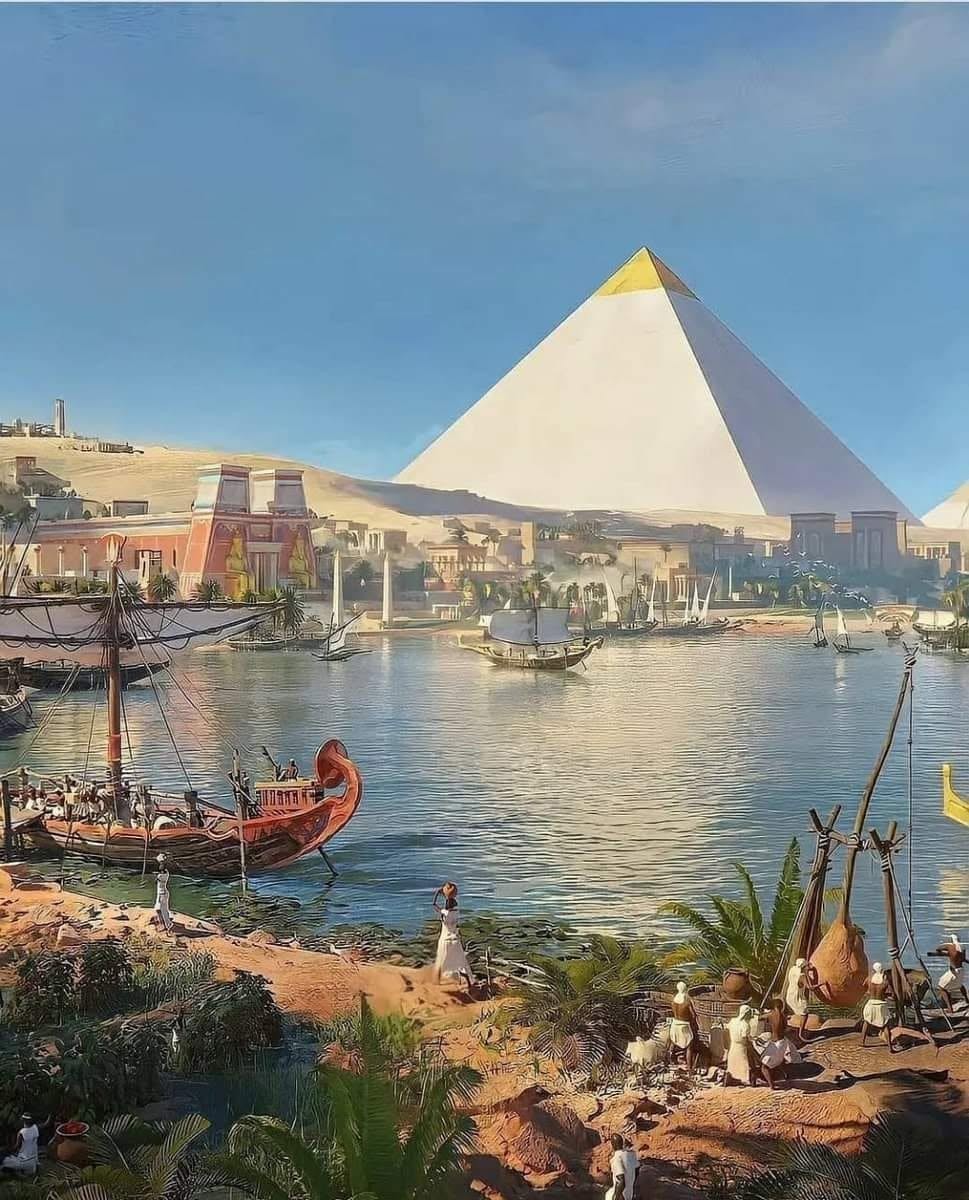
One more shot of a Great (Giza) Pyramid in its prime, as seen from the mighty Nile.

preview

Climates can change drastically across even just a few hundred years.

As I presently understand it, the initially fertile Nile-inundation that flooded the banks with precious crop-growing nutrients on a regular basis (for example in the time of Rameses II) slowed over the years, changing up certain equations upon many things. For example, once a jungle area slowly shifted to a desert area… that was arguably one of the long-form primary causes for the collapse of the once-mighty Egyptian Empire, after some thousands of years of primacy.

(later counterpart of sorts– The Mayan Empire?)

And yet the Egyptian Empire was monumentally impressive in its prime, I would argue.

0

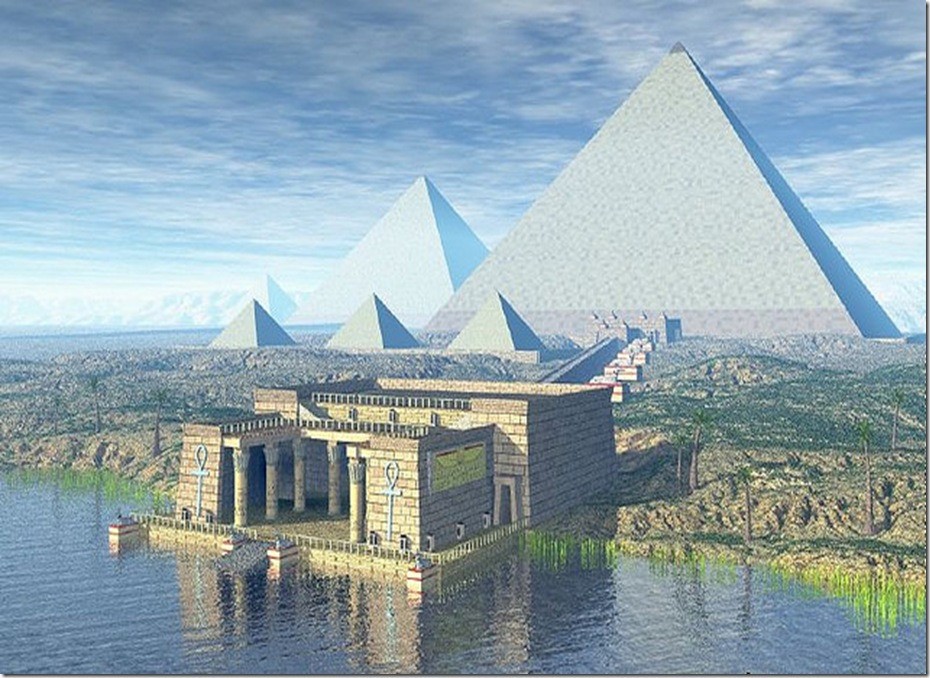
Oof. I'm not happy upon this post, but the basic idea is to convey the fact that the Great Pyramids looked *absolutely spectacular* before their limestone and marble casings got carried off and stripped upon multiple other building projects, later.

preview

Not sure, but I think these are credit to German artist Gabriel Nagypál upon a videogame they were developing around the aughts.

https://www.google.com/search?q=Gabriel+Nagyp%C3%A1l+Giza+pyramid+complex&udm=2

In any case, the original Giza-area pyramids were absolutely spectacular, IMO. We moderns see basically thousands-year old rubble and make judgements upon all that.

Au contraire, those suckers were absolutely unreal for the time. Truth. Facts & reality.

0

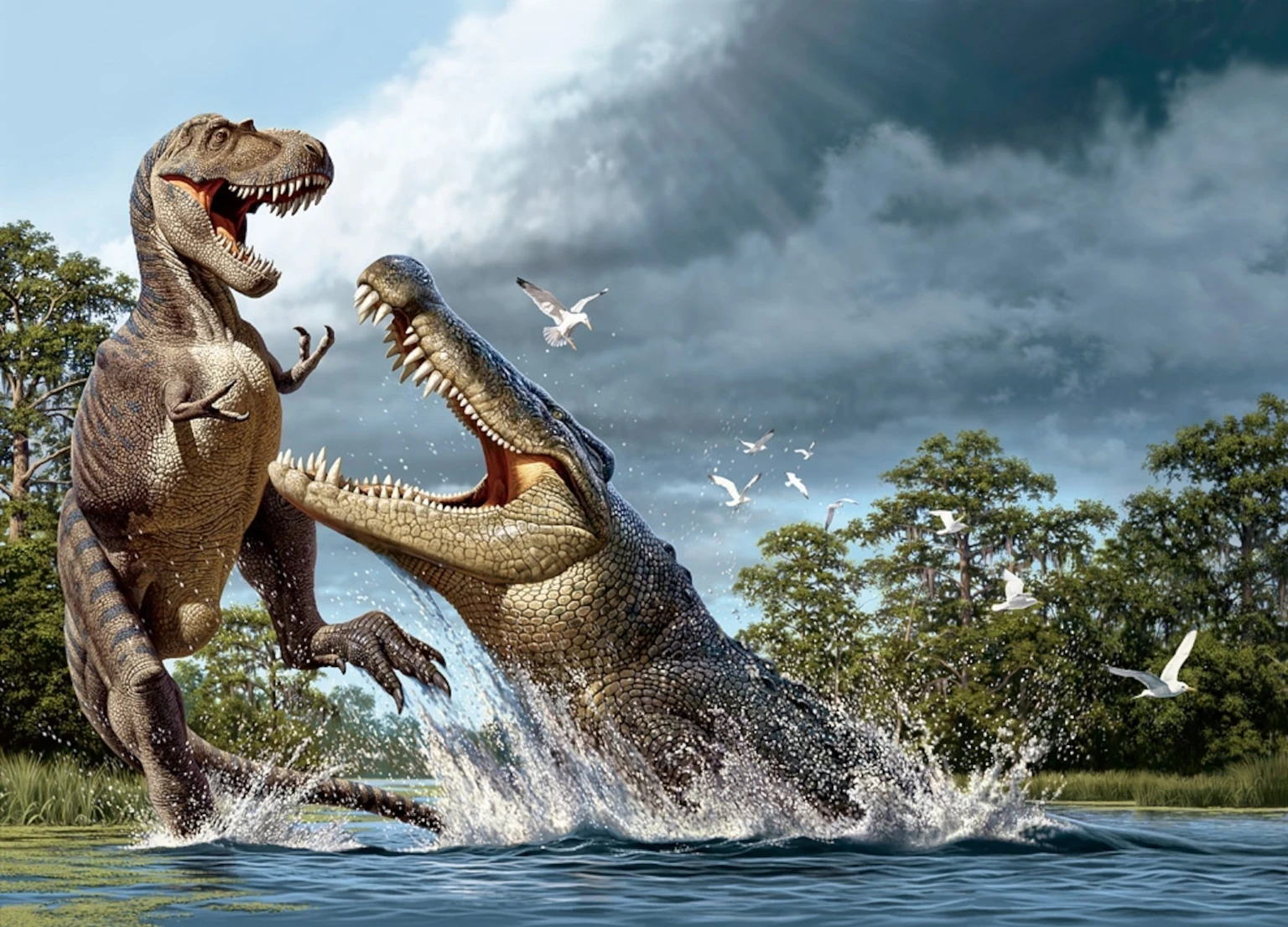
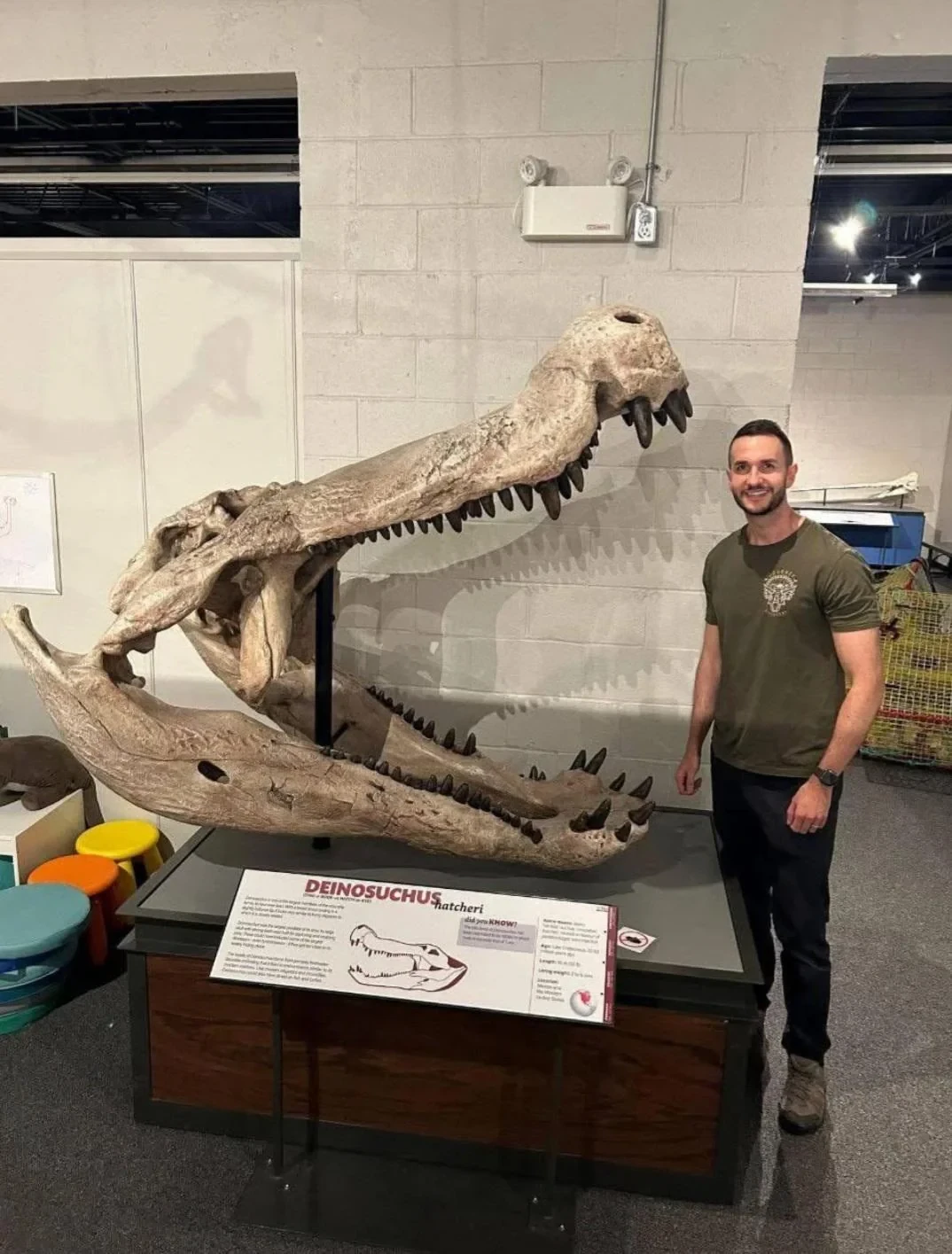
Deinosuchus (one of the largest crocodilians in history) lunges at an Albertosaurus [3 pics & 1 photo]

preview

Deinosuchus lived during the Late Cretaceous, ~82 - 73Myrs ago. The first remains were discovered in North Carolina in the 1850s, and the genus was first described in 1909. –WP

A modern comparison:
wqHtVDSZGEIZQle.webp

When Deinosuchus Ruled the Earth - Hakai Magazine:

https://hakaimagazine.com/wp-content/uploads/header-deinosuchus.jpg

Although Deinosuchus was far larger than any modern crocodile or alligator, with the largest surpassing 9m (30 ft) in length, its overall appearance was fairly similar to its smaller relatives, but with a proportionally longer skull than modern crocodilians. It had large, robust teeth built for crushing, and its back was covered with thick hemispherical osteoderms (bony scales). One study indicated Deinosuchus may have lived for up to 50 years, growing at a rate similar to that of modern crocodilians, but maintaining this growth over a much longer time.

Deinosuchus prehistoric crocodilian hunting illustration - Natty Geo:

https://i.natgeofe.com/n/3cfc5bfa-7366-4e7c-82b4-e721f0ac92b2/C0610330-Deinosuchus_prehistoric_crocodilian_hunting_illustration.jpg

I reckon you’re gonna need a bigger knoif, Mick!