
0

Recent finishes & Mini-Reviews

preview

Just finished reading something and want to share some thoughts, but don’t want to start a brand new thread? Feel free to post your mini-reviews here!

If you’d like to start a more dedicated discussion, you are still free to begin a stand-alone thread.

Please post any spoilers behind spoiler tags!

::: spoiler Title
Like so
:::
Title

Like so

0

What are you reading?

preview

Hey Beehaw (and friends)! What’re you reading?

Previously I had these thread labelled as monthly threads, but I have had an incredibly busy few months and had not been able to keep up with it. So this is now going to be a general sticky that will be replaced “every so often” when the previous thread gets overly full :)

Novels, nonfiction, ebooks, audiobooks, graphic novels, etc - everything counts!

0

How do you get your reading "spark" back?

preview

hi! I have the problem that I think quite a few people end up with, which is that I used to consume books at a concerning rate in high school, but once I graduated, I stopped reading. I don’t know if my somewhat brief stint in college knocked the want to read out of me, but I have a serious desire to go back to reading books and enjoying the stories in them. plus, I think it would help my writing if I would read actual books.

fanfiction is unfortunately a tough sell because I tend to not like how people write canons, but if by chance someone has any recs for Pokemon fanfic that is original character based, let me know! it’s like the one media that works for me in fanfic land. (I know AO3 is currently out of commission though.)

I now have a Kobo Libra Color, and I’ve read a little on it, but I feel like I’m not quite “committing” if that makes sense? I don’t sit down for an hour and read very easily, for example. I prefer the Kobo to physical books, mostly because I have nowhere to put physical books, and I would lose a library book.

I don’t know if it’s maybe cold feet or my attention span being poor?

what does everyone else do when they’re struggling to read? have you experienced losing your reading “spark”?

0

Sloane Murphy Is The Bard Of Chicago's Drunk Trans Women

Sloane Murphy Is The Bard Of Chicago's Drunk Trans Women | Defector defector.com
preview

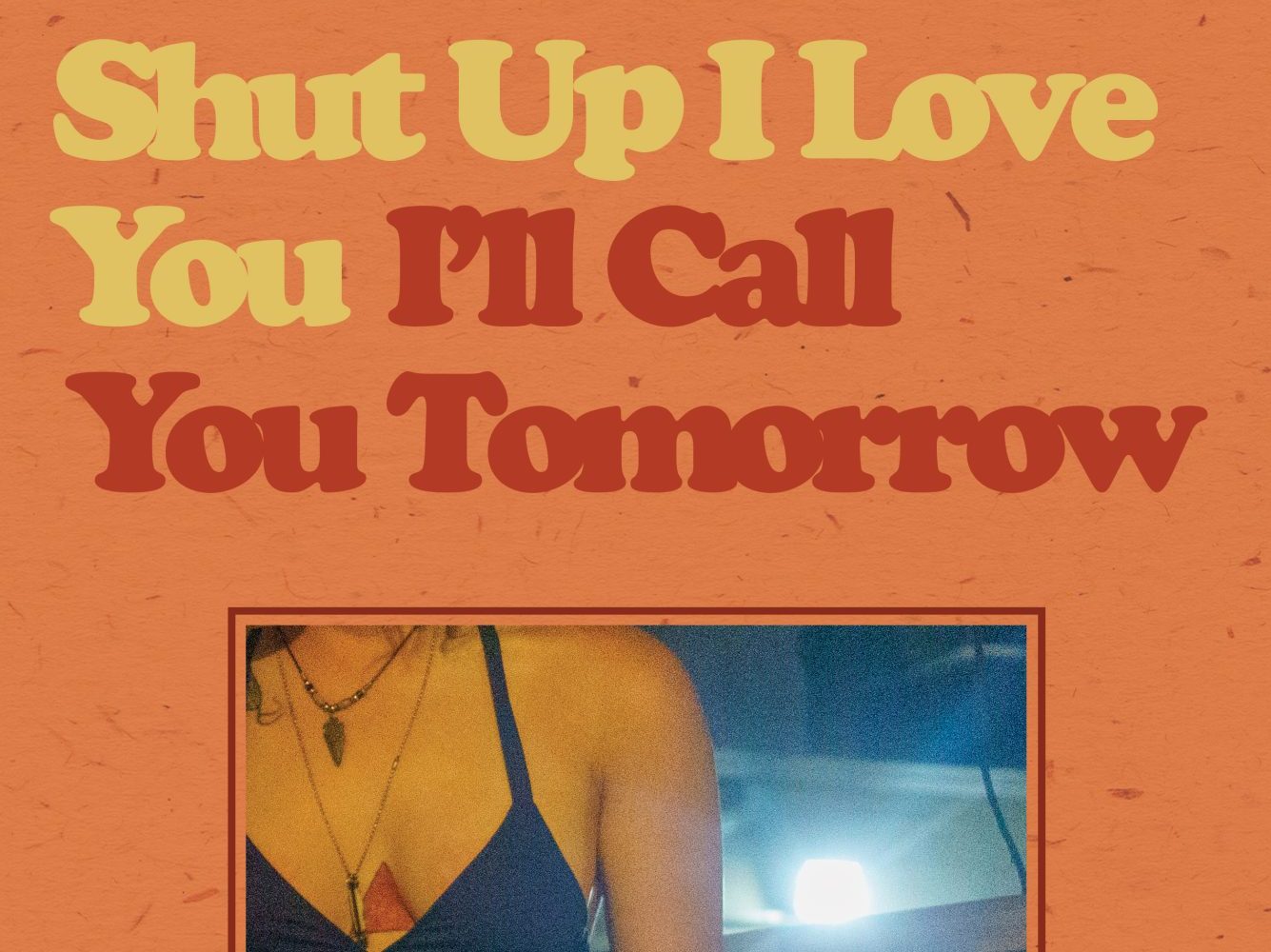
There are two recurring trans women named Carolina in Sloane Murphy’s short story collection, Shut Up, I Love You, I’ll Call You Tomorrow. One’s nicknamed North, and the other’s nicknamed South, but nobody can seem to keep track of which is which. “Most of the time she just responds when people call her South,” one…

There are two recurring trans women named Carolina in Sloane Murphy’s short story collection, Shut Up, I Love You, I’ll Call You Tomorrow. One’s nicknamed North, and the other’s nicknamed South, but nobody can seem to keep track of which is which. “Most of the time she just responds when people call her South,” one…

0

How Fiction Shows the Possibilities of Radical Environmental Activism

How Fiction Shows the Possibilities of Radical Environmental Activism www.currentaffairs.org
preview

By what mechanism did a work of fiction inspire a new form of climate activism?

Imagination. Or so argued Dr. Burak Sezer, Assistant Professor of American Literature and Culture at TU Dortmund, when I talked to him about radical environmental novels, one of his areas of expertise.

“We should never underestimate the power of literature to spawn these kinds of movements,” he said. “Coming into a book undecided is a good, affective state to be in. To be brought to a place that goes against your political project can bewilder you, make you shaky in your foundations, which is powerful because it shows you’re still protean enough to allow things to affect you enough to change. If there’s a protagonist I love and they’re committing violence that I’m not sure I agree with, and I’m asking myself, ‘Is this really the right way to go about it?’ Then boom—a universe explodes. Suddenly I’m thinking. That’s a wonderful state to be in.”

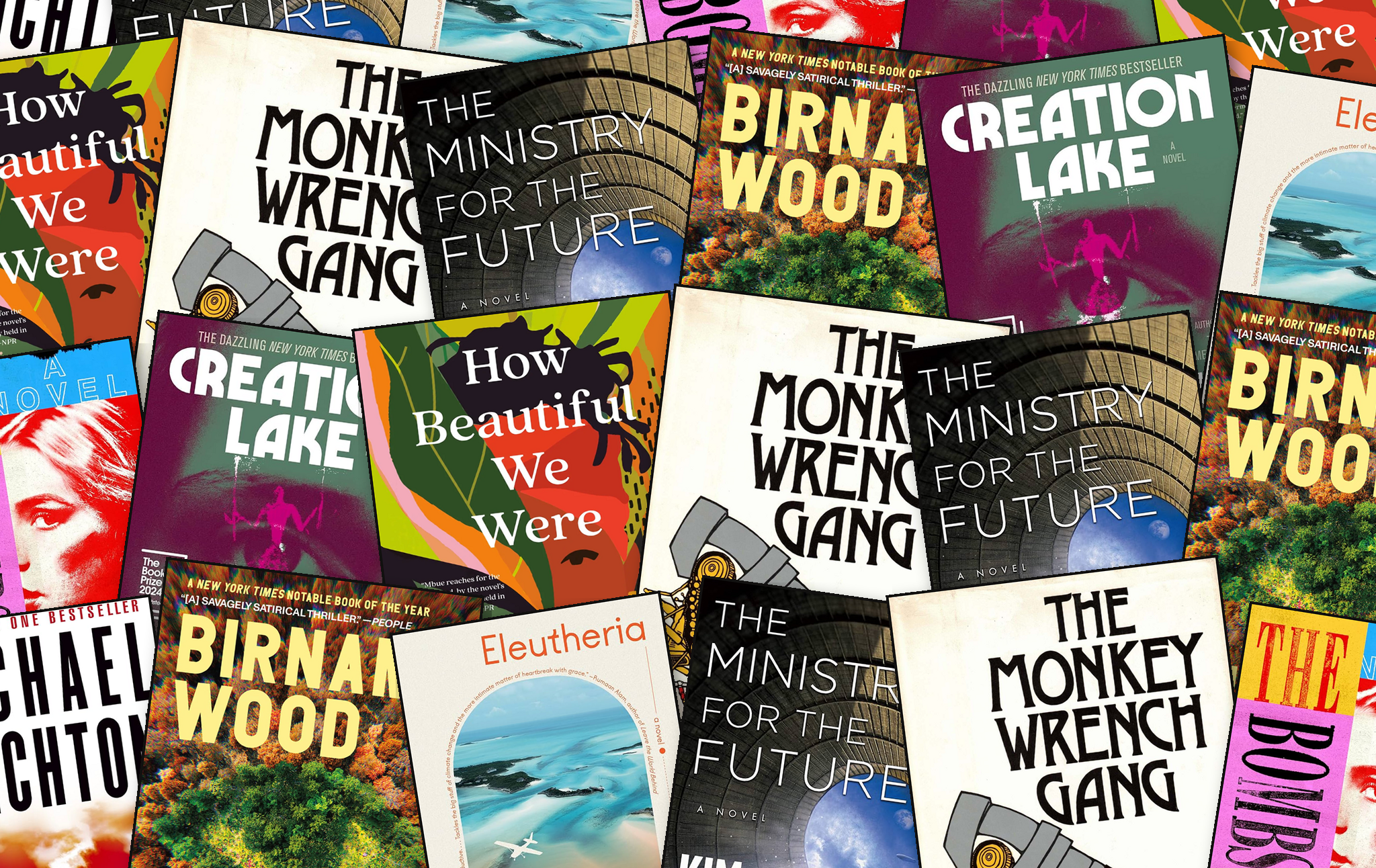
Novels, Dr. Sezer believes, have an imaginative power to expand what we think of as possible in the physical world. By presenting a radical group that rubs against readers’ conventional moral codes, Abbey helped birth an organized radical flank.

Yet strangely, while the existence of ELF and other sabotage groups proved the power of fiction, and as the environmental movement went global, literary novels explicitly addressing ecotage in the four decades after Monkey Wrench are few and not particularly inspiring. Perhaps novelists were satisfied with Abbey’s efforts, or perhaps they, too, were hiding from Operation Backfire.

0

A list Of Recommended Non-Western Classics | Amaliah

Amaliah The Best of Non-Western Classics | Amaliah www.amaliah.com
preview

Classic literature is considered classic for a reason: these texts have stood the test of time, finding new readers with every generation. The classics are also undoubtedly experiencing a huge surge in popularity, likely attributed to several recent high-profile screen adaptations, as well as the influence of online readers and social media trends. Some of the most frequently referenced classics are those written by authors from the West, but there is an entire world of classic literature that has existed for decades, if not centuries, and whose contribution to the literary canon and influence on contemporary literature is undeniable.

There is much debate around definitions of the Western world, and with people in constant motion and ideas slipping so easily past man-made borders, defining Western versus non-Western classics isn’t as straightforward as it might seem. However, I think it is fair to say that many of the most widely-read classics are those that belong, even very broadly speaking, to the Western literary tradition, whereas the books below are written by authors whose nationalities sit squarely outside of the West or who are less Eurocentric in their ideas. Regardless of any inevitable overlap, the themes they contain are universal and timeless, and their preoccupations remain relevant to this day.

A nice list, I absolutely LOVE Clarice Lispector…

0

Software Foundations: Seven free Volumes

preview

The Software Foundations series is a broad introduction to the mathematical underpinnings of reliable software.

The principal novelty of the series is that every detail is one hundred percent formalized and machine-checked: the entire text of each volume, including the exercises, is literally a “proof script” for the Rocq proof assistant.

The exposition is intended for a broad range of readers, from advanced undergraduates to PhD students and researchers. No specific background in logic or programming languages is assumed, though a degree of mathematical maturity is helpful. A one-semester course can expect to cover Logical Foundations plus most of Programming Language Foundations or Verified Functional Algorithms or Security Foundations, or selections from them.

  1. Logical Foundations
  2. Programming Language Foundations
  3. Verified Functional Algorithms
  4. Property-Based Testing in Rocq
  5. Verifiable C
  6. Separation Logic Foundations
  7. Security Foundations

Hosted by the faculty “Computer and Information Science” at the University of Pennsilvania

0

Nonfiction Is Struggling. Publishers Are Making It Worse: The industry faults readers for declining sales, but its own decisions are to blame

The Walrus Nonfiction Is Struggling. Publishers Are Making It Worse | The Walrus thewalrus.ca
preview

I DON’T MEAN TO SOUND like a conspiracy theorist. The obstacles to nonfiction’s flourishing are real, interlocking, and extensive: Decimated books coverage. Editorial layoffs. Artificial intelligence. Spiking book bans. Rising costs. And the most diffuse one: reader fatigue. There are too many competing places — podcasts, Substack, social media — where people get their news, and that news is so horrendous, people don’t even want it anymore.

“Are we falling out of love with nonfiction?” asked a much-circulated Guardian piece published late last year. Data from a NielsenIQ report found the UK’s nonfiction print sales had dipped by 6 percent. “Speaking to publishing insiders and readers,” wrote Emma Loffhagen, “one word that cropped up repeatedly was escapism.” Two weeks later, the New York Times confirmed that “Dragons, Sex, and the Bible” were the top categories that drove US book sales in 2025. The world is on fire; why not sit back and watch some mythical creatures—and also, I guess, cousins—get it on?


Fatigue with the news cycle is a big part of the picture, Broussard says, albeit not the whole one. Another thriving subcategory is books on democracy and civic engagement. A number of titles he names—Dean Spade’s Mutual Aid, Rebecca Solnit’s The Beginning Comes After the End—also appear on the Independent Press Top 40 bestsellers list, hinting at the broader persistence of readers’ desire for self-education. But in choosing what to order for the store, Broussard is currently being conservative with nonfiction. The sales reps—publisher’s representatives who pitch titles to retail accounts—have admitted to him that everyone is being conservative with nonfiction. “I think I hear a little bit of panic in their voices,” he says.

There seems to be a general consensus, or at least a hope, that this trend is cyclical. But, at publishing houses, there can be a tendency to treat declining sales as a foregone conclusion rather than a set of conditions publishers have the capacity to influence. The editor I spoke to—on the condition of anonymity—shared that, lately, when she and her colleagues bring nonfiction projects to acquisition meetings, she feels a chill in the room, with people “leaning back and looking away or not engaging” with what’s being pitched.

A common reason such books get turned down is that they feel “too small,” meaning they might not appeal to a big enough audience. But “we determine how big a project is,” she says. She has seen this attitude manifest in other ways, as when the press pulled publicity support from one of her memoirs right before its release, on the grounds that “memoir is just not selling right now.” (Not with that attitude!) For the industry to see a genre struggling and use that to justify gutting the infrastructure for supporting it does a disservice to countless readers, she says. It also puts the cart before the horse—“and we’re the horse.”

0

Have You Read: Beautiful Darkness/Jolies Ténèbres?

preview

cross-posted from: …blahaj.zone/…/have-you-read-beautiful-darkness-j…

Nature is a beautiful thing, but nature has never been caring. As humans, our entire history has seen our attempts to seperate ourselves from the reality of the natural world.

Perhaps then, we are not so different from the tiny people of Beautiful Darkness, written by Fabien Vehlmann, and wondrously illustrated in watercolour by the artist duo Kerascoët, Beautiful Darkness tells the story of a fairytale society, and their emergence into the real world, as their home; the decaying corpse of a little girl in the woods, begins to deteriorate, and the story of their survival in the aftermath.

At only 112 pages, primarily consisting of artwork, Beautiful Darkness is a great fit for a lazy evening, and my recommendation for you today. :)

Blurb attached:

Newly homeless, a group of fairies find themselves trying to adapt to their new life in the forest. As they dodge dangers from both without and within, optimistic Aurora steps forward to organize and help build a new community. Slowly, the world around them becomes more treacherous as petty rivalries and factions form.

0

Russian Literature Reccomendations?

preview

I’m new to Russian literature but have been enjoying it a lot so far. I finished Crime and Punishment by Dostoyevsky recently and it is one of my all-time favourite books, and I recently started Dr. Zhivago. Any recommendations for good Russian literature?

I’m new to Russian literature but have been enjoying it a lot so far. I finished Crime and Punishment by Dostoyevsky recently and it is one of my all-time favourite books, and I recently started Dr. Zhivago. Any recommendations for good Russian literature?

0

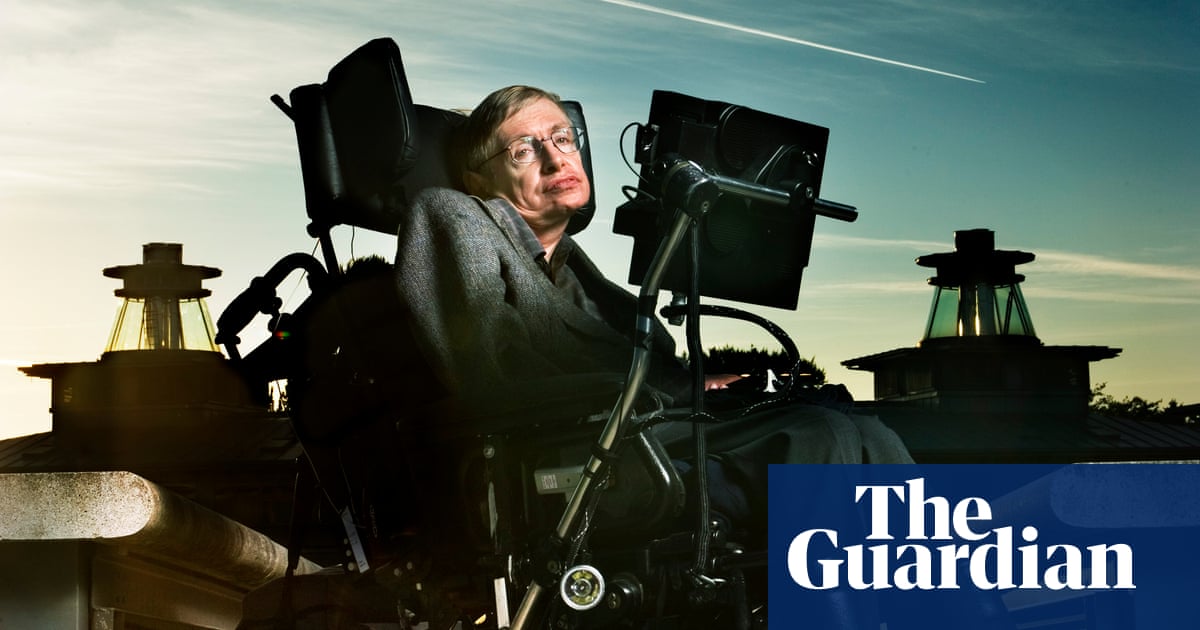
Hawking by Graham Farmelo review – the dark side of genius

the Guardian Hawking by Graham Farmelo review – the dark side of genius www.theguardian.com
preview

When I wrote an unadoring review of Stephen Hawking’s final book, a collection of essays published posthumously in 2018, New Scientist suppressed some of my criticisms on the grounds that it was “too early” to voice anything other than praise for the physicist who died, aged 76, that March. It was apparently still too early in 2021, when no British publisher would touch Charles Seife’s exposé of Hawking’s bullying and self-aggrandising behaviour, Hawking Hawking.

In this new biography, veteran science writer Graham Farmelo takes a different approach. It is a comprehensive and accessible portrait of a brilliant scientist and an extraordinarily determined man who also possessed deep personal flaws to which the scientific community and the public mostly turned a blind eye. The uncomfortable but unavoidable truth is that Hawking’s overweening ambition and self-promotion, his repeated failure to acknowledge the work of others, his sexism and controlling behaviour were largely ignored because of his disability. I think it is indeed going to take us years to process that.

As this book was authorised by the Hawking family, and as Farmelo (whose superb biography of Paul Dirac, The Strangest Man, won a Costa award in 2009) is a generous and kind writer, I had feared the warts would be omitted. But instead Farmelo handles them mostly by letting others’ words speak for themselves.


Which brings us to the problematic stuff. While professional colleagues mostly spoke about Hawking with reverence and affection, it is often those closest to him who speak of another side. His father, Frank, worried that the teenaged Stephen “was developing into a selfish character … like a small boy who took everything but gave little in return”. There was evidently no love lost with his sister Mary, who called him “one of the most self-centred people I’ve ever met”. At Oxford, some friends found him rather lazy and entitled, and at Cambridge “annoyingly haughty”. His youngest son recounted how his father was “hugely competitive” and never let him or his siblings win at board games.

His unsparing ridicule of his first wife Jane’s religious beliefs contributed to their marital tensions, and the sacrifices she made often went unremarked by him. The pressure of going from lover to carer would never have been easy, but Hawking’s “authoritarian” demands and indifference to Jane’s interests added to her isolation. His adoptive brother, Edward, admitted “I’ve never really felt close to Stephen … he seems very cold.” And his mother, Isobel, complained how he would ignore people when it suited him. “I suppose what in other people would just be bad manners is excusable great-mannishness in him,” she wrote bitterly in her diary.

Hawking was scandalously bad at giving due scientific credit to others, a trait evident from the outset when he failed to indicate his debt to Penrose. Worse was his treatment of physicist Jacob Bekenstein, whose idea about the connection between the area and the entropy of a black hole he mercilessly derided before discovering for himself that Bekenstein was right – and then essentially claiming the idea as his own, which Farmelo says “disappointed some of Stephen’s friends”. Hawking could clearly be a supportive and kind adviser to his own students, but when one discovered an argument for why Hawking was wrong about a conjecture concerning black holes, he tried to get him dismissed from the Cambridge PhD programme.

0

Book club suggestion?

preview

hej 👋🏼 I’d like to suggest a few books to the book club I’m part of. For the next month the keywords are “spooky, mysterious, suspenseful, dark, scary, ominous, gothic”, and since lately I’m discovering asian literature (mostly korean, chinese and japanese) but I’m not familiar with the forementioned genres, would you give me a few titles, perhaps also with your reasons why? I’d appreciate it a lot! thank you

hej 👋🏼 I’d like to suggest a few books to the book club I’m part of. For the next month the keywords are “spooky, mysterious, suspenseful, dark, scary, ominous, gothic”, and since lately I’m discovering asian literature (mostly korean, chinese and japanese) but I’m not familiar with the forementioned genres, would you give me a few titles, perhaps also with your reasons why? I’d appreciate it a lot! thank you

0

The End of an Era

Hugh Howey The End of an Era - Hugh Howey hughhowey.com
preview

We knew this day would come.

Some of us have known for decades, have been writing and pontificating about this since Ken Jennings lost at Jeopardy and Kasparov lost at chess. The writing was on the wall, and now the writing is everywhere. Literally. Artificial Intelligence is writing about as well as humans — at least well enough to cause confusion and speculation — and that’s creating an existential crisis among authors, confusion among readers, and legal action within the industry.


Which takes me back to my statement about lucky windows. We had less than 20 years of writing being hard and publishing being easy, and we will never get that window back. Ever.

I’ve always felt bad for authors who lived and worked before 2007. The choices unavailable to them made life harder than it needed to be. Getting their work out into the world was brutal. After KDP, that brutality became a choice, not a necessity.

I now feel awful for anyone who wants to tell a story post-2026. You will forever be doubted. If you love an em dash the way I do, or you like flowy run-on sentences like I do, if you grew up reading Proust to let the words flow over you in all their glory, if you memorized sonnets so the iambic pentameter would soak into your bones, you’re gonna sound like a fucking bot.

Less than 20 years. More like 10, honestly. You can argue that 2014-ish was when self-publishing became legit and 2024-ish was when the tools made AI writing viable. A decade where it was easy in the ways it should be and hard in the ways it should be. That’s insane. Ten years across the one-hundred-thousand years of language.

0

Do You Guys Ever Think About Dying?: Rachel Harrison on anxiety, horror, and coming to terms with her inevitable death.

Darker Times Do You Guys Ever Think About Dying? www.darkertimes.com
preview

I wrote my first horror novel, The Return, at twenty-eight. The original flicker of an idea was: what if The Shining took place somewhere uber-kitschy like The Madonna Inn. From there, the book surprised me. It became about the things that kept me up at night—primarily, my anxiety around my friendships and how they were unfolding in my twenties. I feared losing my friends, I feared my own aimlessness, my dismal finances, my inability to trust myself. Those fears seeped into the writing. It was a thrilling, cathartic experience. Horror allows you to be messy and mean, to be raw and ugly, things I never felt permitted to be in my everyday life. From there, I went on to write six more novels that all dealt with some facet of my anxiety, my angst.

Over the last several years, I’ve found immense solace in the genre (and Lexapro! I’d be remiss not to mention the Lexapro). As a scaredy-cat latecomer to horror, immersing myself fully in it has been the greatest adventure. I discovered the bloody fun adrenaline rush of slashers when I read Clown in a Cornfield by Adam Cesare and Cirque Berserk by Jessica Guess. The delicious, righteous anger in The Year of the Witching by Alexis Henderson and Such a Pretty Smile by Kristi DeMeester. I fell in love with finding random movies on Shudder on a Friday night, going to genre film festivals like the Telluride Horror Show and Anomaly in my beloved Rochester, eating popcorn for dinner and hiding my eyes behind buttery fingers during gory scenes. Discovering new horror through podcasts like Books in the Freezer and She Wore Black and Talking Scared.

The joy and release I’ve found in horror—in writing it, in consuming it—is tangible. It’s real. It’s so redeeming as someone who always worries the worst is going to happen to see that, yeah, sometimes it does! What of it? That sucks! Deal with it! As someone who feels pressure to be pretty and polite, it’s freeing to see validity in being loud and vicious. Horror provides an escape from the harsh realities of the world with something harsher, a needed reminder that we might not have it so bad. Oh, you’re grumpy on the phone with the pharmacy trying to sort out a prescription, Rachel? You could be getting possessed by an ancient demon. How about that? There’s true value there, in that perspective, in participating in these exercises of extreme circumstance. We metabolize the art we engage with; it becomes part of us and informs how we move through the world.

0

Book on Truth in the Age of A.I. Contains Quotes Made Up by A.I.

preview

The author of a nonfiction book about the effects of artificial intelligence on truth acknowledged on Monday that he had included numerous made-up or misattributed quotes concocted by A.I.

The author, Steven Rosenbaum, whose book “The Future of Truth” was released this month to great fanfare, incorporated more than a half-dozen misattributed or fake quotes in sections of the book reviewed by The New York Times.

The Times asked Mr. Rosenbaum about the quotes on Sunday and Monday. On Monday night, Mr. Rosenbaum acknowledged in a statement that the book had “a handful of improperly attributed or synthetic quotes” and said that he had started his own investigation.

He said that the inclusion of the incorrect quotes was an accident and that he had “no intention of fabricating any viewpoints” while writing the book.

0

The Making of a Techno-Nationalist Elite

American Affairs Journal The Making of a Techno-Nationalist Elite - American Affairs Journal americanaffairsjournal.org
preview

archive.is link

By naming their new book The Technological Republic, Palantir executives Alexander Karp and Nicholas W. Zamiska gesture toward this heritage. The book comes at a unique juncture in Silicon Valley’s history. Its leaders have awoken to their status as a distinct social elite but remain uncertain as to what obligations that status carries. Their old “Californian Ideology,” half libertarian fantasy and half globalist prophecy, has collapsed. What creed will take its place is not clear.3 Few seem better placed to address these questions than Karp, a founder known as much for intellectual ambition as for entrepreneurial success. While leading a defense tech company, with close ties to the sitting administration, he and Zamiska are perfectly positioned to lay out a new civic philosophy for America’s technological elite.

Readers hoping for such a book, however, will be disappointed. The Technological Republic is not a serious exploration of the political foundations of technology, nor a study of the technological foundations of American power. It is not a sober forecast of technological trends or a reckoning with their implications for the American public. It is not even a business history of Palantir itself. The Technological Republic aims at something “substantial and ambitious,” inhabiting “the interstitial but we hope rich space between political, business, and academic treatises.”4 It reads like a collection of TED Talks. Its chapters are discrete and disconnected. The themes that tie them together are nowhere explicitly laid out but must be inferred by the reader.

The most persistent of these themes is a critique of Silicon Valley’s “engineering elite.” Karp and Zamiska insist that the fortunes and fame of this elite were not created ex nihilo. This class is, in fact, deeply indebted to the civilization that made their firms possible, one that most of them feel no kinship with or obligation to. At the center of that civilization is the United States. The American nation should demand the loyalty of those who prosper most from it. This loyalty should be freely given. Karp and Zamiska believe that tech leaders should focus their substantial talents on bettering this nation. Like Palantir, their firms should not shy away from the provision of public goods. Silicon Valley should boldly take part in the “articulation of the national project.”5 Alas, the instinct of the Silicon Valley founder is to move as the market lists. How does the market list? Toward “lifestyle technologies” whose main purpose is to “enable the highly educated . . . to feel as if they have more income than they do.” America’s engineering elite is brilliant, but their brilliance is wasted on baubles.6

These observations may be accurate, but the goal of The Technological Republic is to inspire American technologists to become American techno-nationalists. Regrettably, Karp and Zamiska offer no roadmap for accomplishing this. The two men invoke the technologists of genera­tions past as archetypes the modern engineering elite might aspire to, but they do not investigate the religious, social, political, or economic milieu that created these technologists. This is unfortunate: Karp and Zamiska’s sermonizing is not sufficient to make patriots out of a generation of engineers who have never been trained to think of themselves as stewards of a state. Elevating Silicon Valley’s engineering elite into a governing class would require much more: institutions, alliances, and traditions that root the wealth and expertise of our technologists in service to the nation.

The United States has had such a class in the past. They were the architects of the Second Industrial Revolution: engineers, industrialists, and entrepreneurs who believed that a technological revolution was needed to propel America toward greatness. They were, in this sense, America’s first governing class of techno-nationalists. In the mid-twentieth century, Americans would label their descendants the “Eastern Establishment.” This class did not materialize out of thin air. Examining their origins, and the reasons for their seventy-year dominance of American business and government, provides a useful corrective to Karp and Zamiska’s fragmented thinking and hazy wishcasting.

0

A Climate Change Novel That Questions Everything

The Nation A Climate Change Novel That Questions Everything www.thenation.com
preview

The Faustian myth warns us against making pacts with the devil. To trade something as invaluable as the soul for wealth, fame, and power, the story goes, is to diminish every facet of our existence, to suck the life out of our very core. But to sacrifice earthly glory, even our banal and temporary possessions—to humble ourselves in the eyes of God—for spiritual favor has been celebrated since the Old Testament and thought to restore, revive, and rejuvenate life. What, though, if your sacrifice provides neither earthly nor spiritual benefits?

Jon Raymond’s novel God and Sex hinges on a pact—a “bargain,” as the protagonist, Arthur, calls it—between him and a higher power. Arthur ventures to the Wy’East Resort in Oregon, where Sarah, the married woman he loves, is spending the next few days on a retreat, to tell her that her husband, Phil, suspects she’s having an affair. A writer who has only ever experienced mediocre book sales but feels on the brink of a bestseller with his new work, Arthur isn’t exactly happy to be giving up precious writing time to make the trip. Returning home, he sees “the fuzz of gray coming over the sky, and the sun going blood-orange,” and his phone alerts him that a forest fire is raging near the retreat. Sarah’s phone goes straight to voicemail numerous times, so he turns around, heading right into the eye of the fire to find her. As he scours the burning forest, he pleads with a God and prays, “I’ll give you the most important thing I can imagine if only you allow her to continue to exist.”

But Arthur can’t leave it at that. “I thought these new words over and over, in different formulations, honing the bargain,” he discloses, as if he can revise, control, and bend the pact to his whims the way he can revise, control, and bend the “Tree Book” he has set out to write and whose composition overlays Raymond’s novel. Or perhaps to revise is to revive. “It was a part of a writer’s job, I believed, to resuscitate,” Arthur asserts. This more self-serving idea about writing is in the service of a book that tries to explore much more: our responsibility in the face of climate change, the relationship between faith and love, and writing’s purpose in times of both global and personal crises.

0

What author/work did the "varying character viewpoints" narrative first?

preview

I feel like it’s pretty common in fiction these days, Game of Thrones being probably the most popular example with character viewpoint changing chapter-by-chapter and gradually weaving the different threads of plot into one connected whole. It’s used in movies and television constantly, too.

The oldest I’m personally aware of is Dune, more-so in Dune Messiah, which I’ve read for the first time recently. I presume Herbert wasn’t the first, though, and have been wondering how old the technique really is. Anyone have any insight (or even good guesses) on where it started?

0

You Are the Führer’s Unrequited Love by Jean-Noël Orengo review – Hitler, Speer and beyond

the Guardian You Are the Führer’s Unrequited Love by Jean-Noël Orengo review – Hitler, Speer and beyond www.theguardian.com
preview

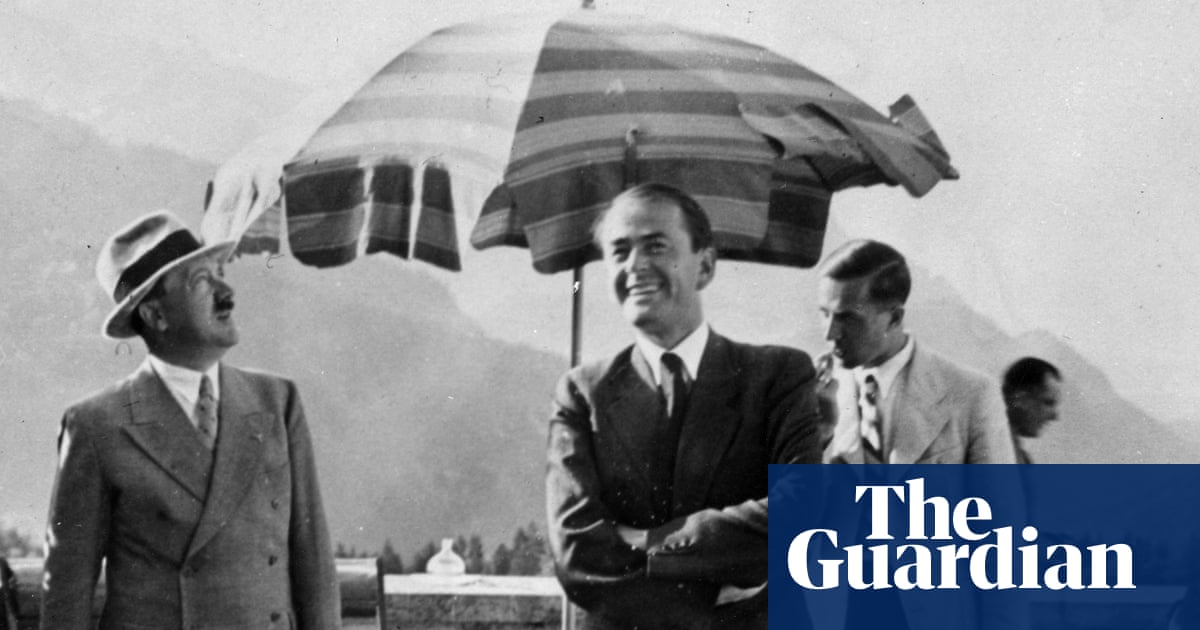
In April 1975, Simon Wiesenthal, the Holocaust survivor whose efforts to track down Nazi war criminals had earned him the title of “Nazi hunter”, wrote a letter to Albert Speer, the Nazi war criminal. Wiesenthal thanked him for a psychology book Speer had sent him, and forwarded a copy of the French edition of his own memoir. Their decade-long correspondence also includes holiday postcards and birthday wishes. It ends with a personal note from Speer’s widow Margarete on her husband’s death in 1981, telling Wiesenthal how important their friendship had been to him.

Wiesenthal’s friendship was a private echo of the extraordinarily warm international welcome that Speer received as a public intellectual after his release from Spandau prison in 1966. Speer had served as minister of armaments in wartime Nazi Germany, and was found guilty of crimes against humanity; yet when he died, he was in London to promote his new book on the BBC.

Speer’s rehabilitation was a masterpiece in duplicity. In his defence at the Nürenberg trials – and in later books and interviews – he was the only high-ranking official to take on full responsibility for the Nazi crimes; and this seeming moral clarity allowed him to credibly lie that he had not known about the extermination camps. The evidence for that would emerge only after his death, prompting Wiesenthal, among many others, to admit he had been duped. Until then, the lie allowed Speer to become an authority on the endlessly fascinating topic of Adolf Hitler’s personality and psyche.

0

‘Enough of this me me me’: Blake Morrison on memoir in the age of oversharing

the Guardian ‘Enough of this me me me’: Blake Morrison on memoir in the age of oversharing www.theguardian.com
preview

Every day I meet strangers who share intimate details with me. It’s called reading. In a newspaper piece a former sex addict recalls her need for BDSM (“when a sexual partner hurt me, I felt seen”) and how she conquered her dependency. On Substack an actor describes her grief on losing a baby (“After the miscarriage, I became convinced my daughter was backstage. I would push back the costumes on the rack and almost expect to find her”). And then there are the published memoirs, first-person stories of trauma, displacement and heartbreak. It’s not just women who unburden themselves, of course. As Martin Amis says in his memoir, Experience: “We are all writing it or at any rate talking it: the memoir, the apologia, the CV, the cri de coeur.”

Recent memoirs have upped the ante, though. What was once a geriatric, self-satisfied genre (politicians, generals and film stars looking back fondly on long careers) is now open to anyone with a story to tell – “nobody memoirs”, the American journalist Lorraine Adams has called them. Candour is the key, no matter how fraught the consequences. “Most writers I know,” Maggie Nelson writes in The Argonauts, “nurse persistent fantasies about the horrible things – or the horrible thing – that will happen to them if and when they express themselves as they desire”. But she takes that risk, addressing the book to “you”, her fluidly gendered husband Harry (who’s angry when she shows him a draft), while exploring identity, pregnancy, motherhood and sexuality.

“The words I love you come tumbling out of my mouth in an incantation the first time you fuck me in the ass, my face smashed against the concrete floor”; this appears in the first paragraph of The Argonauts in 2015. It’s hard to imagine an author volunteering that 30 years ago, or being allowed to be so passionately upfront (and violently facedown) at the start of the story. I remember the embarrassment I felt in the 1990s, walking into the office one morning, after a reviewer in the Sunday papers had noted a passage in the memoir of my father I’d written in which I describe masturbating in the bath around the time of his death. What possessed me to disclose that? What would my colleagues think of me? I wouldn’t need to be so blushingly shy about it today.
Every day I meet strangers who share intimate details with me. It’s called reading. In a newspaper piece a former sex addict recalls her need for BDSM (“when a sexual partner hurt me, I felt seen”) and how she conquered her dependency. On Substack an actor describes her grief on losing a baby (“After the miscarriage, I became convinced my daughter was backstage. I would push back the costumes on the rack and almost expect to find her”). And then there are the published memoirs, first-person stories of trauma, displacement and heartbreak. It’s not just women who unburden themselves, of course. As Martin Amis says in his memoir, Experience: “We are all writing it or at any rate talking it: the memoir, the apologia, the CV, the cri de coeur.”

Recent memoirs have upped the ante, though. What was once a geriatric, self-satisfied genre (politicians, generals and film stars looking back fondly on long careers) is now open to anyone with a story to tell – “nobody memoirs”, the American journalist Lorraine Adams has called them. Candour is the key, no matter how fraught the consequences. “Most writers I know,” Maggie Nelson writes in The Argonauts, “nurse persistent fantasies about the horrible things – or the horrible thing – that will happen to them if and when they express themselves as they desire”. But she takes that risk, addressing the book to “you”, her fluidly gendered husband Harry (who’s angry when she shows him a draft), while exploring identity, pregnancy, motherhood and sexuality.

“The words I love you come tumbling out of my mouth in an incantation the first time you fuck me in the ass, my face smashed against the concrete floor”; this appears in the first paragraph of The Argonauts in 2015. It’s hard to imagine an author volunteering that 30 years ago, or being allowed to be so passionately upfront (and violently facedown) at the start of the story. I remember the embarrassment I felt in the 1990s, walking into the office one morning, after a reviewer in the Sunday papers had noted a passage in the memoir of my father I’d written in which I describe masturbating in the bath around the time of his death. What possessed me to disclose that? What would my colleagues think of me? I wouldn’t need to be so blushingly shy about it today.
0

‘We’re losing accessibility’: America says goodbye to the mass-market paperback

the Guardian ‘We’re losing accessibility’: the US says goodbye to the mass-market paperback www.theguardian.com
preview

Shelly Romero has early memories of going to her local supermarket and picking pulp fiction off the shelves. “We were very working class; my mom was working two jobs sometimes,” she recalls. “The appeal of books being cheaper and smaller and able to be carried around was definitely a thing.”

For generations of readers, the gateway to literature was not a hushed library or a polished hardback but a wire spinner rack in a supermarket, pharmacy or railway station. There, amid chewing gum and cigarettes, sat the mass-market paperback: squat, roughly 4in by 7in and cheap enough to be bought on a whim.

But the era of the “pocket book” is drawing to a close. ReaderLink, the biggest book distributor in the US, announced recently that it would stop distributing mass-market paperbacks. The decision follows years of plummeting sales, from 131m units in 2004 to 21m in 2024, and marks the end of a format that once democratised reading for the working class.

Romero, who grew up in the working-class, Latino and industrial city of Hialeah, Florida, says: “I don’t remember a bookstore. I had the library in Miami Springs across the bridge but in Hialeah around us, what was in walking distance because we didn’t have a car, was the Publix [supermarket] and sometimes we would get books from Goodwill [thrift store] as well.

“They had that democratic aspect to them where you can just find them anywhere and it always felt like it was the pick ’n’ mix candy-type store where there is something here for everyone, whether it’s the Harlequin romance novel or something very pulpy like a sci-fi or horror novel that you could quickly get.”

0

Reading at Random with Virginia Woolf by Frances Lindemann

The Paris Review Reading at Random with Virginia Woolf by Frances Lindemann www.theparisreview.org
preview

In the book’s second chapter, “The Reader,” she observes that “it is equally important, to the understanding of the poem, not to read at all.” Why? What is the power of this empty space, this absence of mind, this not-reading that reading provokes in us?

For Woolf, what a reader attains by not reading is “that state of mind in which it seems possible to us to write the book, not to read it.”

0

Semantic ablation: Why AI writing is boring and dangerous

theregister Semantic ablation: Why AI writing is boring and dangerous www.theregister.com
preview

When an author uses AI for “polishing” a draft, they are not seeing improvement; they are witnessing semantic ablation. The AI identifies high-entropy clusters – the precise points where unique insights and “blood” reside – and systematically replaces them with the most probable, generic token sequences. What began as a jagged, precise Romanesque structure of stone is eroded into a polished, Baroque plastic shell: it looks “clean” to the casual eye, but its structural integrity – its “ciccia” – has been ablated to favor a hollow, frictionless aesthetic.

When an author uses AI for “polishing” a draft, they are not seeing improvement; they are witnessing semantic ablation. The AI identifies high-entropy clusters – the precise points where unique insights and “blood” reside – and systematically replaces them with the most probable, generic token sequences. What began as a jagged, precise Romanesque structure of stone is eroded into a polished, Baroque plastic shell: it looks “clean” to the casual eye, but its structural integrity – its “ciccia” – has been ablated to favor a hollow, frictionless aesthetic.

0

Char Adams Brings Hidden History Of Black-Owned Bookstores To Light

preview

Until last year, the history of Black bookstores in the United States had not been fully told.

Journalist Char Adams changed that.

In November, Adams published “Black-Owned: The Revolutionary Life of the Black Bookstore,” the first known full-length book to chronicle the history of Black bookstores and their role in political movements throughout U.S. history.


A surprising discovery in Adams’ research comes at the very beginning of the book with the story of David Ruggles, the first known owner of a Black-owned bookstore, who opened his shop in Manhattan in 1834. Ruggles also was a major abolitionist figure who helped free enslaved people through the Underground Railroad.

While studying Ruggles, Adams learned that the phrase “by any means necessary,” often attributed to Malcolm X, was first said by Ruggles more than a century earlier.

“I was really honored to be able to shine a light on him [Ruggles],” Adams says.

0

Burn Harry Burn: Reckoning With My Harry Potter Fandom as a Trans Person

Literary Hub Burn Harry Burn: Reckoning With My Harry Potter Fandom as a Trans Person lithub.com
preview

What motivates a seemingly once-brilliant person who appeared to share my values (as an artist, a writer, a thinker), to double, triple down on intolerance? Then of course there are the likeminded so-called leaders who build brands off of persecuting trans kids (and adults), amongst other vulnerable minorities. That some bigoted “leaders” will literally sacrifice certain groups of seemingly less-powerful people for their own benefit isn’t itself surprising, if one has read history (or Harry Potter).

As another example, I’ve often contemplated those once-beloved comedians who are so apparently fixated on bullying trans people that they’re willing to sacrifice their careers to it. (Just the other night, I couldn’t make it more than a few seconds into the Eddie Murphy doc when I saw Chappelle and had to stop.)

I do (still) fantasize about Rowling one day just waking up and saying, Hey you know what? I was wrong and I’m sorry. I felt backed into a corner and it made me say some really terrible stuff. I hope I can work to learn better and to put my resources to good use.

Imagine how people would celebrate Harry Potter, if she just got real with us, said, whoops, mea culpa.

Cynically, one hopes she realizes it’d be great for business, if she just surrendered. These days I do sense even cis people are pretty tired of her crap. I read this summer about a bookstore back home in San Francisco that at long last stopped selling her titles, given she now publicly donates and coordinates anti-trans persecution campaigns. Given how much her evil’s already affected her country—and beyond.

0

When do you read? How often?

preview

How and when do you all find time to read?

I’ve always read on and off but now have come to a realization that it should be done daily.

For me, I try to read for 30m-1h but I usually run out of time and haven’t scheduled a time dedicated for reading, maybe it’s just that. I don’t see reading as part of my personality, but I see the power that one has when it comes to acquiring knowledge and experiences through books.

What are your thoughts? And restating the main question:

How and when do you all find time to read?

How and when do you all find time to read?

I’ve always read on and off but now have come to a realization that it should be done daily.

For me, I try to read for 30m-1h but I usually run out of time and haven’t scheduled a time dedicated for reading, maybe it’s just that. I don’t see reading as part of my personality, but I see the power that one has when it comes to acquiring knowledge and experiences through books.

What are your thoughts? And restating the main question:

How and when do you all find time to read?

0

Giant of the Attic: On the Majesty of Alan Moore

Giant of the Attic www.metropolitanreview.org
preview

Alan Moore is 72 years old now. Since the 1980s, he’s been celebrated as the greatest writer in comics history. But he’s done with all that. Full-time novelist now. Finally. Spends his days at home just writing, reading, and smoking “frightening,” “staggering,” “saturating” amounts of weed.

“I use it to work,” as he told Alex Musson. “Always have done.”

Except these days he does it without the weekly deadlines, the phone always ringing, questions and chitchat with illustrators, coauthors, publishers, press — none of it.

Life of a novelist now. Solitude.

And he’s embarked on something new: a five-novel series called The Long London. It might not seem like a huge venture, given that Book One, The Great When (2024), reads as a fairly straightforward fantasy story, just about 300 pages, self-contained, quick-moving, irreverent.

But it marks a big change for Moore.

There’s no illustrator for this series. No coauthor. No photos to pair with the text. It’s got none of the postmodern hijinks that defined his debut, Voice of the Fire (1996), nor the cosmic 1,200-page sprawl of his follow-up, Jerusalem (2016). Those freshman and sophomore books, in their complexity, were insulated from the general readership. In order to judge them, you first needed the patience and brainpower to read them. You needed, in other words, to be a fan already.

It’s a book-length work of ambitious, conventional, commercial prose. Nothing to show except Alan Moore’s words.

For the first time in his 45-year career, Alan Moore is alone on the page.


He’s picky about biscuits. Amenable to the Nice brand, “which I find admirable in its unassuming stoicism.” Doesn’t care for glam in a biscuit. Party Rings, for instance — shortbread cookies with multicolored neon glaze, squiggles of icing on top — “the upper-class call girl of the biscuit world.”

Opinions about everything, really, but you oughta be careful what you ask, because one thing that’s happened with age is he’s lost his grip on “linear time,” as he puts it. He’ll tell a story, some random thing from 30 or 40 years ago, and the telling, itself, is like brain surgery with chopsticks: effortless, fluent, eloquent, detailed, well-paced. It’s got an arc. Inflections are measured. He remembers every detail. Every bliss and triumph. Every resentment.

Just don’t ask Moore what decade it was. And be ready to step in, too. Folks’ll show up for an interview, ask a question, and if nobody stops him, he’ll just — it’s like a frog across lily pads — start with a word about the weather and then boom. We’re talking about Einstein. Fourth dimension. Nietzsche’s theory of eternal recurrence, which Moore quite likes, though of course, if we’re just playing this out over and over, it means he shall have to endure Margaret Thatcher again. Incidentally, since you’ve brought her up, go watch the original Toho Godzilla movies in chronological order, he says, and you’ll see a subtextual narrative arc about Japan’s nuclear trauma, the way that they go from being terrorized by this giant radioactive lizard (a metaphor for the bombs dropped on Nagasaki and Hiroshima) toward a point, some dozen years later, where they’ve successfully harnessed its energy, via nuclear plants, and that’s when Godzilla becomes a good guy. Hey actually: he wrote a song about Godzilla being depressed. “Trampling Tokyo.” Says that, after a few installments, he could see the lizard’s “heart wasn’t in it anymore.” Good movies, though. Y’know he probably never told you about the time he got approached by Malcolm McLaren, did he? Sex Pistols manager. Yeah: Malcolm McLaren gets in touch with him, mid-1980s, says he’s got a financier, he’s ready to make a film, he just needs a script. What he’s got in mind, he says, is a modern retelling of Beauty and the Beast, except it’s set in the fashion world, and here’s what we call it: Fashion Beast. Based partly on the life of Christian Dior. Alan says, Yeah, I can write that. Especially once he’d got some books together about Dior’s actual life and thought, This is quite gothic, isn’t it? And so he starts working on the screenplay (“which [McLaren] was very approving of”) and then one day McLaren calls and says, “Can you make it a bit more like Chinatown?”

Alan says, “Um . . . yeah.”

McLaren said, “And Flashdance?”

Alan says yeah: “So it’s a kind of Christian Dior-Chinatown-Flashdance-Beauty and the Beast sorta thing?”

Science, philosophy, Godzilla, film. Eventually Moore will pause to re-light his joint. By and by he’ll ask his interviewer what time it is, and the answer lands with audible horror.

0

100 Notable Small Press Books of 2025

Literary Hub 100 Notable Small Press Books of 2025 lithub.com
preview

The idea of 100 Notable Small Press Books was born November 2024, after The New York Times’s annual 100 Notable Books list featured eighty-two books from the Big Five publishing houses (Penguin-Random House, Hachette, Harper Collins, Simon & Schuster, and Macmillan) and their imprints. Many of these books had the marketing might of these publishers behind them and had already made their way onto the front tables of chain bookstores and the front pages of dwindling book review sections in print and online. The Notable list then, with all its esteem and future marketing power, served largely as a retrospective of the year’s biggest literary books.

Of the eighteen independently published books on the 2024 list, nearly a third were released by Grove/Atlantic, a mid-sized indie that publishes around 100 combined frontlist and paperback books per year, or W.W. Norton, which publishes even more than that. This meant only 11% of the New York Times‘s “notable books” were released by small, independent publishers, which we are defining here as independently owned US publishers with roughly 50 or fewer titles per year, and not imprints of the Big Five publishing houses. A thriving ecosystem of books from publishers taking risks, publishing from the margins, operating on few resources, with small distribution and even smaller marketing budgets, were largely being ignored.

For 2025, The New York Times Notable list tipped slightly toward the indies, featuring 14 books published by small, independent publishers. Hurrah for those publishers and authors! In the meantime, forty reviewers across thirteen genres spent the year reading small press books. Our efforts, like small presses themselves, were low on resources but high on resourcefulness. Reviewers had to search out, request, and read at least nine books across a chosen genre from small publishers before making their recommendations. We limited ourselves to books published in December 2024 through November 2025.

Our guiding principles were “read a lot, recommend a few” and “seek out a diverse array of authors and publishers.” We were especially interested in BIPOC and LGBTQ authors and publishers, who have an even steeper climb to mainstream recognition.

Within these guidelines, our reviewers were free to read any small press books they chose, and as a result you’ll find this list dappled with well-known presses, such as Tin House and Europa Editions. But for every Graywolf, we feature presses that are not household names, like LittlePuss and Publication Studio and Kallisto Gaia.

There were times our definition of “small press” was tested. Was Tin House still a small press after it was acquired by Zando in March? Yes, we decided, since Zando was not a big five publisher. Were university presses that published well over 50 books yearly small presses? We decided they were so long as their creative offerings fell under that number. We tried to stay nimble and responsive, while sticking to the project’s principles.

There are a few important things this list is not: This is not a best of list. This is not a comprehensive survey of all small presses. This is not a juried selection of books. This is instead the product of a group of enthusiastic, committed reviewers reading hundreds of small press books from the past year and choosing the few they heartily recommend.

Ours is not the first list to highlight small press books. One of the joys of this project was finding the many other venues already doing this work. If our list interests you, find more small press books highlighted at CLMP, Foreword Reviews, and Necessary Fiction, to name a few.

Without further ado, 100 Notable Small Press Books of 2025:

0

Libraries Scramble for Books After Giant Distributor Shuts Down

404 Media Libraries Scramble for Books After Giant Distributor Shuts Down www.404media.co
preview

One of the largest distributors of print books for libraries is winding down operations by the end of the year, a huge disruption to public libraries across the country, some of which are warning their communities the shut down will limit their ability to lend books.

“You might notice some delays as we (and more than 6,000 other libraries) transition to new wholesalers,” the Jacksonville Public Library told its community in a Facebook post. “We’re keeping a close eye on things and doing everything we can to minimize any wait times.”

The libraries that do business with the distributor learned about the shut down earlier this month via Reddit.


Baker & Taylor has been in the book business just short of 200 years. Its primary focus was distributing physical copies of books to public libraries. The company also provided librarians with tools that helped them do their jobs more effectively related to collection development and processing.

But the company has spent decades being acquired by and divested from private equity firms, served as a revolving door for senior leadership, and was sued by a competitor earlier this year for alleged data misuse and was almost acquired again in September, this time by a distributor that works with mass-market retailers like Walmart and Target. That deal fell through.

On October 7, Publishers Weekly reported B&T let go of more than 500 employees the day the internal announcement was made. At least one law firm is currently investigating B&T for allegedly violating the federal Worker Adjustment and Retraining Notification (WARN) Act, and it took the company weeks to let account holders know.

Since the internal announcement, Kennedy says customer service staff at B&T have not received guidance on how to respond to inquiries from libraries, leaving them on the frontline and in the dark on issues ranging from whether existing orders would be fulfilled to securing refunds for materials they may have already paid for.

0

A book vending machine provides an outlet for D.C.-area authors after funding cuts

NPR A book vending machine provides an outlet for D.C.-area authors after funding cuts www.npr.org
preview

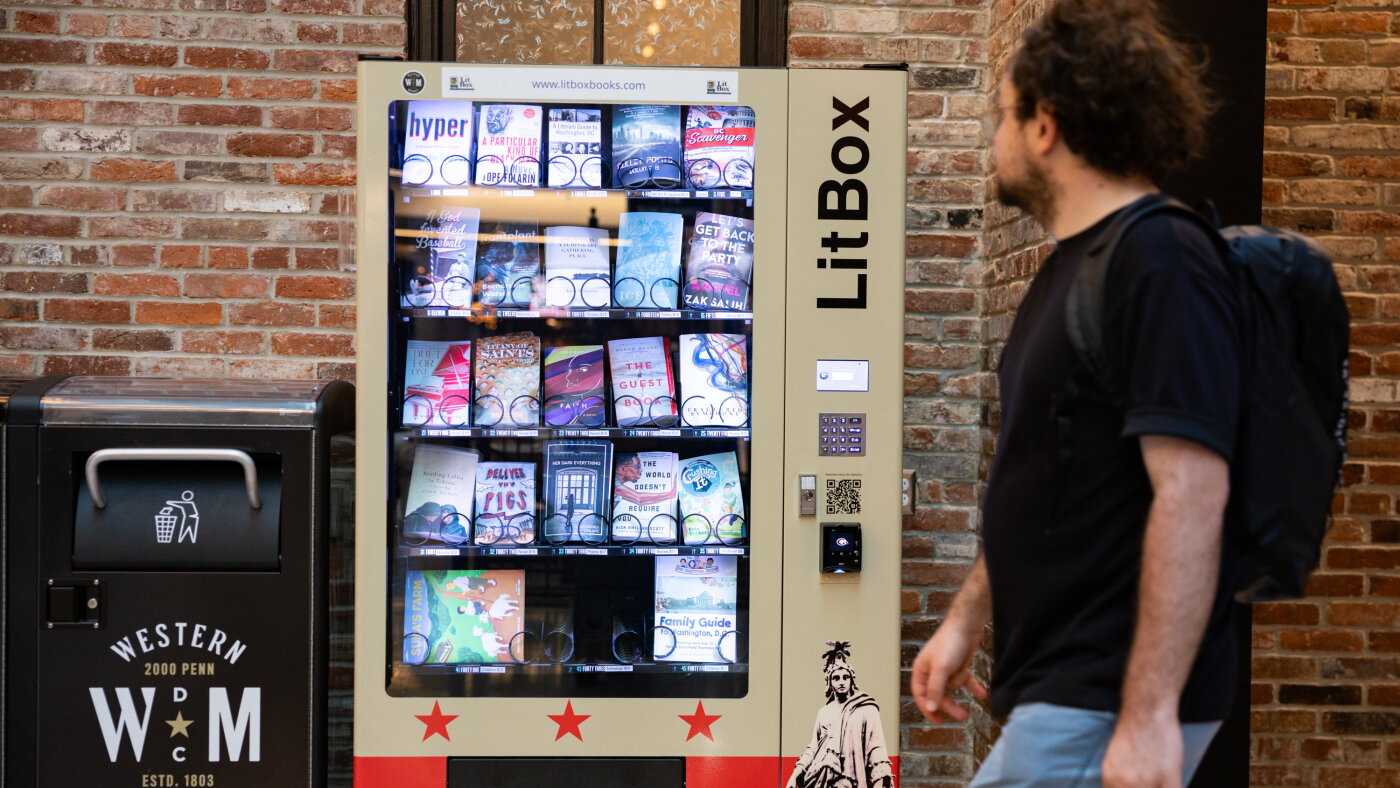
A vending machine in Washington, D.C., is providing nourishment — for the mind. LitBox is filled with books by local authors, just steps from the White House, World Bank and International Monetary Fund.

Lauren Woods launched the project in May after growing frustrated with what she saw as some publishers’ focus on sensationalism and the lack of bookstores focused on local authors in the area. “I had friends who wrote award-winning books and couldn’t get their books into D.C. bookstores because they were smaller presses, or they didn’t have a mass appeal, or the book buyer didn’t think they would be profitable,” Woods said. “And that always seemed wrong to me.”

Inspired by a European book vending machine, she set about planting one in the nation’s capital to try to market books more equitably and see how they sell. The hypercompetitive publishing industry makes it challenging for some books to get into stores, and Woods wants those she still finds excellent to get to readers. “Although those bigger books are going to be marketed differently, when they are marketed equally, they sell pretty equally,” Woods said.

Her experiment seems to have worked out so far. People are buying from the vending machine almost as many smaller press books as those from the “Big Five” publishers — Penguin Random House, Hachette Book Group, HarperCollins, Macmillan and Simon & Schuster.

0

E-Book Contracts Are a Big Cost for Public Libraries. One Harvard Librarian Is Fighting to Change That.

E-Book Contracts Are a Big Cost for Public Libraries. One Harvard Librarian Is Fighting to Change That. | The Harvard Crimson www.thecrimson.com
preview

Most e-books have digital rights management software that means, like print books, they can only be checked out by one person at a time. But unlike print books, which can sit on library shelves for decades, e-books are often sold on time-limited contracts — meaning public libraries must buy them again after several years or, in some cases, several months. The costs can add up quickly.

Courtney, a lawyer by trade, believes that the strict contract terms are “undermining every library’s mission across the United States.”

“We can’t own our books. We can’t preserve them. We can’t keep them. We can’t check them out without having to pay for the same book over and over and over,” Courtney said. “And that’s problematic for collection development, for access, for budget, for all sorts of things.”

Courtney leads a nonprofit called the eBook Study Group that lobbies state governments to adapt e-book contract regulations to reflect existing consumer and contract law. Since its 2020 inception, it has successfully lobbied the Connecticut state legislature to prohibit libraries from buying e-books whose contracts limit both time and number of checkouts. The goal is to drive down demand for short-term e-book contracts and force publishers to offer e-books to libraries on better terms.

0

How to Be a Good Literary Citizen (in Seven Easy Steps)

Literary Hub How to Be a Good Literary Citizen (in Seven Easy Steps) lithub.com
preview

Last Sunday I spent hours at the Brooklyn Book Festival, a too rare occasion for me to pull myself away from the internet for an entire afternoon. As I looked around at the crowd on their way to panels or checking out indie press booths, I was reminded that, even if it doesn’t always seem apparent from looking at news headlines, there are many, many of us out there: people who care about books and culture and their community in general.

The previous weekend I had gone to Cleveland to give a talk about literary citizenship. It’s an amorphous kind of concept, often changing with the moment, but needed more than ever today when corporate interests have a stranglehold on the arts, literary institutions are being devastated by the cancellation of NEA grants, and the freedom to read is under attack. As people who care, and if you’ve read this far I suspect you care, I figured we could all use a refresher on how to be a good literary citizen. Below you’ll find my top seven tips on how you can help make a difference.

0

The 25 Greatest Picture Books of the Century

Slate Magazine The 25 Greatest Picture Books of the Century slate.com
preview

On Oct. 8, 2010, the New York Times ran a story on its front page: “Picture Books No Longer a Staple for Children.” As we interviewed children’s publishing professionals while compiling this list, several told us they remembered exactly where they were when they read this death knell for their industry. The Times wasn’t wrong: Sales were down, especially of new books. Once upon a time, an adult shopping for a child might have bought a classic they remembered from their own childhood, and also a new book, recommended by a bookseller. More and more, buyers just went for the classic—almost always Seuss or Sendak—and new books languished on the shelves.

But, feared a number of ambitious authors and illustrators, the art form’s struggles couldn’t simply be blamed (as the Times suggested) on achievement-obsessed adults pushing chapter books too early. Picture books were struggling artistically too. The next year, a group of 21 creators issued a picture-book manifesto. “WE BELIEVE,” the manifesto read, “we must cease writing the same book again and again.” Books for children should be “fresh, honest, piquant, and beautiful,” and unafraid to be odd: “Even books meant to put kids to sleep should give them strange dreams.” And, added the document, “WE CONDEMN … the amnesiacs who treasure unruly classics while praising the bland today.”

This call to arms had a ring of truth to it. When we became parents, we too initially gravitated toward the unruly classics we loved as children, while shying away from new picture books. There were just so many of them! The ones we saw on the front tables in bookstores all seemed to be authored by celebrities—or, worse, were branded tie-ins promoting movies and TV shows. How could any of them be as good as the books of our youth, let alone better?

But picture books have undergone a revolution in the past 25 years—one that was already underway before that Times obit, but which that manifesto helped spur along. The art form is now remarkably different from what it was when we were little.

To start with, a dramatically more varied cast of characters both stars in picture books and makes them. The industry, encouraged by activist organizations like We Need Diverse Books, has belatedly come to understand the value of making books that, in the words of the influential academic Rudine Sims Bishop, offer young readers not only “mirrors” of their own experience but “windows” into the lives of others. Stories by and about nonwhite, nonstraight people are now much more likely to appear in libraries and bookstores, become bestsellers, and win awards.

But other, less obvious changes have swept the art form as well. A turn-of-the-millennium boom in animation, led by Pixar, gave rise to more illustrators making a living as storytellers—and, frustrated by the machinations of Hollywood studios, telling their own stories in a simpler, more personal form. Creators, including many signatories to the 2011 manifesto, have become more interested in innovating within, and subverting, the picture-book form: shortening the text, breaking the fourth wall, and fostering reader interaction—encouraged, perhaps, by the success of a certain argumentative pigeon. Picture-book nonfiction has grown in popularity, becoming especially useful in classrooms—where older elementary and middle school students, often fans of now-commonplace graphic novels, find it crucial in accessing difficult historical topics. And, of course, celebrities have flocked to the picture book—with mostly lukewarm results, although at least one TV star has published an unalloyed work of ridiculous genius. You’ll find it on our list.

To make this guide, we surveyed more than a hundred authors, illustrators, librarians, booksellers, academics, and publishing pros. We ended up reading more than 200 books, for which we must fulsomely thank our local libraries. Our goal: to find the books that represent the best of these transformations, and to tell the story of an art form that responded to a front-page crisis with a new wave of inventive stories that respect the intelligence, playfulness, and widely differing experiences of young readers.

0

Why Are So Few Kids Reading for Pleasure?

Why Are So Few Kids Reading for Pleasure? www.the74million.org
preview

Over the course of two generations, from 1984 to 2023, the proportion of 13-year-olds who said they “never or hardly ever” read for fun on their own time has nearly quadrupled, from just 8% to 31%.

During that time, the percentage of middle-schoolers who read for fun “almost every day” has fallen by double digits, according to surveys conducted for the National Assessment of Educational Progress, the test widely known as “the nation’s report card”: In 1984, 35% of middle school kids read for fun almost every day. By 2023, it was just 14%.

The phenomenon is part of a larger shift away from reading, research suggests. A new study from the University of Florida and University College London found that daily reading for pleasure has dropped more than 40% among all age groups over the last two decades, “a sustained, steady decline” of about 3% per year.

Findings like these have sparked fears that, after more than a century of steadily expanding literacy, reading is devolving into an act relegated to a small group of elites, a “reading class” that enjoys books while the rest of us see them as, in the words of scholar Wendy Griswold, “an increasingly arcane hobby.”

It’s a strange and thorny problem that in some sense seems contradictory: If you followed around a young person for a day, you’d likely see that she is reading constantly, but often in tiny fragments. In addition to school assignments, she’s taking in a ton of atomized content: alerts, text messages, memes and social media posts. All those bits add up for sure — one study found that the typical American reads the equivalent of a slim novel every day — but it isn’t the same as sitting down to read a book.


For many young people, school is what gets in the way of books.

Julia Goggin, 15, grew up reading books and loving them. She consumed the first few Harry Potter books unassisted in second grade and finished the series by fourth grade. She read a lot in middle school.

In high school? Not so much.

Like Baez, she’s heavily scheduled, running cross country in the fall and track and field in the winter. She’s in her school’s theater group, which means after-school rehearsals. Then homework. All of it leaves little time for reading anything aside from school assignments.

“If a school is too overbearing about forcing kids to read a lot, it makes them not want to read for fun because it’s not fun anymore,” she said. “Because school isn’t fun.”

0

Is It Time to Move On From Dr. Seuss?

Literary Hub Is It Time to Move On From Dr. Seuss? lithub.com
preview

August 12th marks the 65th anniversary of Dr. Seuss’s Green Eggs and Ham, a book whose orange cover fills me with delicious nostalgia. Svetlana Boym defines nostalgia as “a longing for a home that no longer exists or has never existed.” What imaginary home do I miss so much? And why do so many of us miss this same place?

As a children’s librarian who also teaches a graduate course on the History of Children’s Literature, I struggle with the question of how to present Dr. Seuss, aka Theodor Geisel. It is now widely known that Geisel’s political cartoons during WWII and early children’s books contained offensive depictions of Asian, Arctic Indigenous, Middle Eastern and African people.

My students of all ages devour Seuss. In my library in Queens, NY, kindergarteners through second graders clamor for Green Eggs and Ham after binge-watching the 2019 Netflix series of the same title (and all the Grinch and Lorax movies too). I will confess: when Random House offered my school the loan of a free Grinch costume of Broadway production quality, I jumped at the chance to host a holiday event where students could help grow the Grinch’s heart through acts of kindness. Geisel isn’t my students’ role model, but the Grinch is a fun cultural symbol that unites a variety of people. The event stirred up Seussmania, and library checkouts soared.

So while I do continue to read Dr. Seuss, I also reject Geisel as a cultural ambassador for children’s literature. For over two decades, schools have celebrated the National Education Association’s Read Across America Day on Dr. Seuss’s birthday, March 2, with children dressing up in red and white striped hats to represent their commitment to reading—as if Seuss were representative of all children’s books. In 2017, Katie Ishizuka-Stephens, Director of the Conscious Kid Library, asked the NEA to reevaluate their approach.

Ishizuka-Stephens’s report emerged the same year that Cambridge, MA librarian Liz Phipps Soeiro made headlines for rejecting First Lady Melania Trump gift of ten Dr. Seuss books, including Green Eggs and Ham, to her top-performing school in 2017. She described Seuss as a “cliche” and “tired and worn ambassador of children’s literature,” and recommended a list of ten diverse books instead. The ten books Soerio recommends are excellent additions to any library, but I wished for the inclusion of a silly, Mo Willems text or, better yet, a wacky book by a non-white author. Kids need to have belly laughs and almost pee their pants when reading—which is something that few other authors besides Seuss can do without invoking potty humor. I’m eager for more silliness.

0

A Portrait of the Artist as a Young Man

preview

I had a strange mood today and started and finished this in one 10 hour sitting. It was excellent, but simultaneously not as excellent as I had hoped. I enjoyed lots of the short stories in Dubliners more, I think. The “avant garde” structure often felt superfluous - although not always. The color symbolism was interesting, but I felt it fell away in the second half of the book. In fact, the entire middle portion (those gigantic sermons, my god!) was a bit rough to get through. But I do appreciate that it really evoked the sensation of being in a washed out, weary, hypnosis sort of state - and it did leave a psychological impression in the following sections, like you really “remembered” that part of Stephen’s life. The discussion on Stephen’s philosophy of art was the highlight for me, along with a bunch of tiny little fragments of test that felt like beautiful lucid clear thoughts. It did evoke the feeling of going through life in a largely automatic blur, with a few powerful moments sticking out. I especially enjoyed that the powerful moments were often completely mundane events made powerful only via Stephen’s feelings in the moment. His struggles with expressing and capturing this elusive sensation were beautifully portrayed. And the switch to first-person at the end felt delightful in its regressive irony (according to Stephen’s point of view), as it represented the “lyrical form” in some rough sense.

Anyways, curious if anyone else has thoughts on it to share. I couldn’t find any discussion online about the red/white color symbolism. I interpreted it as a representation of cold lifeless religiosity vs hot vivacious “mundanity”. But I’m not sure if the York/Lancaster origination of the symbols is meant to lend more to it, etc., or if maybe I’ve missed that entirely. The green and maroon were clearly political and I found lots of discussion on that. I’d love to hear what anyone else’s favorite/least favorite aspects were.

0

A Refuge From Censorship: Why Independent Bookstores Will Save Us

Literary Hub A Refuge From Censorship: Why Independent Bookstores Will Save Us lithub.com
preview

The stores I’ve stopped in are all different, with their own stock and their own personalities. There are stores on tree-lined streets, and in urban centers, strip malls, old homes, and refurbished warehouses. Once, I pulled into a dirt parking area convinced I was lost, until I saw a bright awning confirming there was indeed a bookstore there. Yet no matter where I went or how far from home I traveled, I felt welcomed every time I stepped inside. I was reminded that I’m part of a community that transcends geography and countless divisions—a community of people who read. Regardless of our favorite books or chosen genres, we believe in the value of language, creativity, and communication.

At Bookery Cincy in Ohio, Sierra told me about an annual bookstore crawl across the city, and how what had started with just a few stores now has two dozen places participating. At Joy and Matt’s, also in Cincinnati, Joy and I swapped book recs (she told me to read Amor Towles, I said I couldn’t stop thinking about The Safekeep). At The Novel Neighbor in Webster Grove, Missouri, I discussed with three booksellers who should read Greenwich first, based on the shelves of staff picks (shout out to Haley—I hope the ARC got to you!). I talked horror with Stevie at Foxing in Louisville, and Liz Moore with Jessica at Subterranean Books in St. Louis.

At Skylark in Columbia, Missouri, I got to tell Matthew behind the register that my editor grew up nearby, and then check out her favorite childhood ice cream spot, Sparky’s. (It was eleven AM, raining, and sixty degrees, and no that didn’t stop me. Get the mango if you’re in town.) At Rainy Day Books in Fairway, Kansas, I felt the bookseller’s excitement when I said I was publishing my first novel. “You’re a real author!” Tom at Trident exclaimed once I’d made it to Boulder. Over and over, I had the thrill of hearing that my book was already in stock at some stores, and the excitement of introducing it to others. I took home notecards, T-shirts, novelty socks. I bought a lot of books. When I asked a pink-haired bookseller at Left Bank Books in St. Louis how long the store had been around, they proudly said it had been founded in 1969 by “hippies and queers,” and that today the store is keeping up the legacy. That’s what I kept thinking about after every mile and every new stop. This fight for free speech isn’t new, and independent bookstores have been fighting it for a long time.

Capitalism isn’t going to save us. But supporting independent bookstores isn’t just about personal consumer choice—it’s civic engagement. For every book that’s banned, and every library that loses its autonomy over curation, we’re going to need community action and mutual aid to get books into readers’ hands. Buy books from indie stores, gift books to those who can’t access them, show up at local meetings, and speak against censorship. None of us can afford to look away, even if it isn’t our library, our county, or our book that’s on the chopping block.

0

Spec Fic and the Politics of Identity: Finding the Self in Other

Strange Horizons Spec Fic and the Politics of Identity: Finding the Self in Other strangehorizons.com
preview

I am African Australian—the one is not exclusive from the other. I am a daughter of the Wajita people of Tanzania, and now I live in Melbourne, Australia. I am a daughter of the land that belongs to the Wurundjeri and Boon-Wurrung people of the Kulin Nation. The creative space where I tell stories is literary speculative fiction: I write and perform short stories, novels, novellas, prose poetry, creative nonfiction. I write across genres.

The road to publication has, for me, been fraught because I was not always at ease with the self and other—until I realized the power of fiction. Speculative fiction is a safe space that can, like any fiction, help us understand other perspectives. It allows for a different kind of writing with foundations to cultivate inclusive worlds.

0

Inside prison walls, here's how a book program is changing lives

NBC News Inside prison walls, here's how a book program is changing lives www.nbcnews.com
preview

Maria Montalvo speaks with emotion, her eyes shining as she recounts her reading experiences. She says she especially enjoys books by Isabel Allende, Octavia Butler, Toni Morrison, Erika L. Sánchez and John Grisham because, in her words, “reading makes you wiser and you learn how people live in other countries. It takes your mind to other places you can’t travel to.”

Montalvo isn’t an ordinary reader. During her incarceration at Edna Mahan Correctional Facility, a prison in New Jersey, she has participated in the activities of Freedom Reads, a nonprofit organization that has been promoting reading in U.S. prisons since 2020.

“Freedom Reads has brought books on different topics, and it’s very important to read because it makes you wiser,” Montalvo, 60, said in an interview with Noticias Telemundo. “Books change the prison climate; they change the way people think about themselves. This opens your mind and makes you want to change.”

0

The real Salt Path: how a blockbuster book and film were spun from lies, deceit and desperation

The Observer The real Salt Path: how a blockbuster book and film were spun from lies, deceit and desperation observer.co.uk
preview

When I first call Ros Hemmings, I expect her to be surprised. A widow in her 60s living in rural North Wales, she has never received a call from an investigative journalist in London. But instead she tells me: “Oh no, I have a very good idea why you are ringing.” She has been waiting for this call for years.

Hemmings rightly suspected that I wanted to ask her about a woman she knows as Sally Walker. Millions of people around the world know Sally by a different name: Raynor Winn. She is the author and protagonist of one of the most successful British non-fiction books in recent years. The Salt Path traces Raynor and her husband Moth’s 630-mile journey along the sea-swept South West Coast Path.

A heartbreaking “true” story of two people in their early 50s forced out of their rural home in Wales and weighed down by a sudden diagnosis of Moth’s terminal illness, The Salt Path went straight to the top of the bestseller charts, selling more than 2m copies worldwide since its publication in 2018.

Winn has since written two sequels and has a lucrative publishing deal with Penguin to produce at least one more. Five weeks ago The Salt Path reached new audiences when it was released in the UK as a film, starring Gillian Anderson and Jason Isaacs, and Winn is a co-producer.

Standing proudly on the red carpet outside the Lighthouse Cinema in Newquay, Raynor, 60, told TV cameras at the film’s UK premiere that the experience was “almost unbelievable”. In that moment, she and Moth seemed like the ultimate examples of British grit and perseverance.

Back in Wales, Hemmings saw a very different picture. Because she knew something about Winn that almost everyone – her publishers, her agents, the film producers – had missed. She knew that Raynor Winn wasn’t her real name and that several aspects of her story were untrue. She also believed she was a thief.

0

A Rant About “Technology”.Ursula K. Le Guin

Ursula K. Le Guin Ursula K. Le Guin — Ursula on Writing: A Rant about "Techonolgy" www.ursulakleguin.com
preview

Anybody who ever lighted a fire without matches has probably gained some proper respect for “low” or “primitive” or “simple” technologies; anybody who ever lighted a fire with matches should have the wits to respect that notable hi-tech invention.

Anybody who ever lighted a fire without matches has probably gained some proper respect for “low” or “primitive” or “simple” technologies; anybody who ever lighted a fire with matches should have the wits to respect that notable hi-tech invention.

0

Ted Chiang on Superintelligence and Its Discontents in J.D. Beresford’s Innovative Work of Early 20th-Century Science Fiction

Literary Hub Ted Chiang on Superintelligence and Its Discontents in J.D. Beresford’s Innovative Work of Early 20th-Century Science Fiction lithub.com
preview

Nowadays we associate the word “prodigy” with precocious children, but in centuries past the word was used to describe anything monstrous. Victor Stott clearly qualifies as a prodigy in the modern sense, but he qualifies in the older sense too: Not only does he frighten the ignorant and superstitious, he induces a profound terror in the educated and intellectual. Seen in this light, the first novel about superintelligence is actually a work of horror SF, a cautionary tale about the dangers of knowing too much.

Nowadays we associate the word “prodigy” with precocious children, but in centuries past the word was used to describe anything monstrous. Victor Stott clearly qualifies as a prodigy in the modern sense, but he qualifies in the older sense too: Not only does he frighten the ignorant and superstitious, he induces a profound terror in the educated and intellectual. Seen in this light, the first novel about superintelligence is actually a work of horror SF, a cautionary tale about the dangers of knowing too much.

0

Against AI: An Open Letter From Writers to Publishers

Literary Hub Against AI: An Open Letter From Writers to Publishers lithub.com
preview

We are standing on a precipice.

At its simplest level, our job as artists is to respond to the human experience. But the art we make is a commodity, and our world wants things quickly, cheaply, and on demand. We are rushing toward a future where our novels, our biographies, our poems and our memoirs—our records of the human experience—are “written” by artificial intelligence models that, by definition, cannot know what it is to be human. To bleed, or starve, or love.

AI may give the appearance of understanding our humanity, but the truth is, only a human being can speak to and understand another human being. Every time a prompt is entered into AI, the language that bot uses to respond was created in part through the synthesis of art that we, the undersigned, have spent our careers crafting. Taken without our consent, without payment, without even the courtesy of acknowledgment.

In our writing, we drew on our lives: the losses of our parents, the births of our children, every love affair we’ve lived or imagined. Stories of human heroism and human depravity. These stories were stolen from us and used to train machines that, if short-sighted capitalistic greed wins, could soon be generating the books that fill our bookstores. Is this the end goal—to fully remove us from the equation so that those at the very top of the capitalist structure can profit even further off our labor than they already do? Rather than paying writers a small percentage of the money our work makes for them, someone else will be paid for a technology built on our unpaid labor.

The writing that AI produces feels cheap because it is cheap. It feels simple because it is simple to produce. That is the whole point. AI is an enormously powerful tool, here to stay, with the capacity for real societal benefits—but the replacement of art and artists isn’t one of them.

0

The Book Cover Trend You’re Seeing Everywhere

preview

Like fashion trends, fads in book covers come and go. One year, the backs of women’s heads might be all the rage; the next, soft focus photography. And who can forget the exploding flower craze? Or the proliferation of flames on jackets, from thrillers to science fiction to self-help?

But the look that’s commanding today’s runways — a.k.a. bookshelves — is not so incendiary. It tends to lay blaringly bright type in a sans-serif font atop a painting, usually a few centuries old but not always. Facial expressions are baleful or dyspeptic; an aggressive burst of spray paint can change the tone entirely.

These covers are the new signifiers of stylish literary fiction, telegraphing gravitas, wit and cool. They make a bid for a certain kind of reader — more city than suburb, more pét-nat than chardonnay. They wouldn’t be caught dead alongside a volume decked out in pop art or, god forbid, metallic lettering.

Thomas Haggerty, a senior account manager at Bridgeman Images, which licenses paintings for commercial projects, credits the trend to “the power of juxtaposition.” Gregg Kulick, executive art director at Hachette Book Group, agrees: “Poppy type” reads as fun, he says, while the paintings “hint at the academic.”

So how did this ripped-from-the galleries craze get off the ground? After all, paintings have graced the covers of novels since “The Picture of Dorian Gray,” but it appears that “My Year of Rest and Relaxation” (2019) might be the trailblazer for this century’s spate.

Here’s the story behind that one, plus eight descendants out — or soon to be — this year.