showing posts tagged #right_to_unplug — clear

0

Tor-hostile entities who are also snail-mail-adverse can be fought in certain niche scenarios where a business violates consumer protection law. Extra perk: we help offline ppl by doing this

preview

cross-posted from: infosec.pub/post/54313984

There are opportunies to penalize businesses that try to impose a tor-hostile website on consumers. For example, a bank has a legal obligation to furnish account statements and tax docs. Some tor-hostile banks outright refuse to give a statement on paper. Other tor-hostile banks charge an extra fee for receiving paper statements.

In these cases, I have had good results with reporting them to a regulator or ombudsman. The bank is generally forced to send you a gratis paper statement. Not by a judge… this is not court-tested. But for them it’s not worth a court battle so they can be pursuaded to give paper docs at their own expense. Side-perk: it helps feed the postal service.

It’s also a fight against opacity. They push a vague 403 error, or worse: just quietly drop packets. It’s an assault on our dignity. I have used this against them by simply playing dumb: “Other websites work for me… your website just gives me this screen: <pasted screenshot that omits a session ID>”. Their abusive and disrespectful vagueness rightfully backfires. They always say “we have had no other complaints”, but then what? Not my problem.

It’s not just banks. There are countless gov institutions arbitrarily blocking Tor. In every such case where they have an obligation to furnish info, Tor users should be forcing them to produce paper as if we are offline. This also helps the people who are actually offline. They need our support and we need theirs.

cross-posted from: infosec.pub/post/54313984

There are opportunies to penalize businesses that try to impose a tor-hostile website on consumers. For example, a bank has a legal obligation to furnish account statements and tax docs. Some tor-hostile banks outright refuse to give a statement on paper. Other tor-hostile banks charge an extra fee for receiving paper statements.

In these cases, I have had good results with reporting them to a regulator or ombudsman. The bank is generally forced to send you a gratis paper statement. Not by a judge… this is not court-tested. But for them it’s not worth a court battle so they can be pursuaded to give paper docs at their own expense. Side-perk: it helps feed the postal service.

It’s also a fight against opacity. They push a vague 403 error, or worse: just quietly drop packets. It’s an assault on our dignity. I have used this against them by simply playing dumb: “Other websites work for me… your website just gives me this screen: <pasted screenshot that omits a session ID>”. Their abusive and disrespectful vagueness rightfully backfires. They always say “we have had no other complaints”, but then what? Not my problem.

It’s not just banks. There are countless gov institutions arbitrarily blocking Tor. In every such case where they have an obligation to furnish info, Tor users should be forcing them to produce paper as if we are offline. This also helps the people who are actually offline. They need our support and we need theirs.

0

Tokyo residents sue Japan capital over app-based point handout

The Mainichi Tokyo residents sue Japan capital over app-based point handout - The Mainichi mainichi.jp
preview

TOKYO – A group of 13 Tokyo residents who do not own smartphones or Japan’s My Number identification cards sued the Tokyo Metropolitan Government in the Tokyo District Court on Oct. 28, seeking approximately 110,000 yen (about $700) in damages per plaintiff over an app-based points program.

The dispute centers on a cost-of-living assistance initiative under which the Tokyo Metropolitan Government issues points worth 11,000 yen (about $70) to residents aged 15 and older who download the official “Tokyo App” and verify their identity using a My Number card.

According to the complaint, residents who do not possess smartphones or My Number cards are unable to receive the points, which the plaintiffs argue violates the principle of equal access to public services guaranteed under Japan’s Local Autonomy Act and related laws.

The metropolitan government provides guidance on how to apply for the points, including in-person assistance. It also plans to allow proxy applications for people who have difficulty operating smartphones, such as those with disabilities. However, the plaintiffs said, “The government should allow applications at service counters or provide cash benefits so that all Tokyo residents are covered.”

The metropolitan government said, “We would like to review the contents of the complaint once it arrives and respond appropriately.”

Speaking at a press conference after the filing, plaintiffs’ representative Kiyoshi Enomoto, 77, said, “It is wrong that living support does not reach people without smartphones and My Numbers cards.”

One of the plaintiffs, a 77-year-old unemployed woman living in the Tama region of western Tokyo, said she has not obtained a My Number card because she “does not want to be managed by the national government.” She has also been unable to receive the points. Her smartphone use is limited to calls, email and the like, and she did not know the Tokyo App existed. At a meeting of the plaintiffs she attended after Enomoto invited her, she learned that a My Number card was needed to use the app and receive the points. “When everyone else is receiving the benefit, why am I the only one left out?” she said.

For the woman, whose monthly pension income is 65,000 yen (approx. $410), the 11,000-yen benefit is a significant amount. “Owning a smartphone or a My Number card is optional. The program should accommodate residents who do not have them,” she said.

TOKYO – A group of 13 Tokyo residents who do not own smartphones or Japan’s My Number identification cards sued the Tokyo Metropolitan Government in the Tokyo District Court on Oct. 28, seeking approximately 110,000 yen (about $700) in damages per plaintiff over an app-based points program.

The dispute centers on a cost-of-living assistance initiative under which the Tokyo Metropolitan Government issues points worth 11,000 yen (about $70) to residents aged 15 and older who download the official “Tokyo App” and verify their identity using a My Number card.

According to the complaint, residents who do not possess smartphones or My Number cards are unable to receive the points, which the plaintiffs argue violates the principle of equal access to public services guaranteed under Japan’s Local Autonomy Act and related laws.

The metropolitan government provides guidance on how to apply for the points, including in-person assistance. It also plans to allow proxy applications for people who have difficulty operating smartphones, such as those with disabilities. However, the plaintiffs said, “The government should allow applications at service counters or provide cash benefits so that all Tokyo residents are covered.”

The metropolitan government said, “We would like to review the contents of the complaint once it arrives and respond appropriately.”

Speaking at a press conference after the filing, plaintiffs’ representative Kiyoshi Enomoto, 77, said, “It is wrong that living support does not reach people without smartphones and My Numbers cards.”

One of the plaintiffs, a 77-year-old unemployed woman living in the Tama region of western Tokyo, said she has not obtained a My Number card because she “does not want to be managed by the national government.” She has also been unable to receive the points. Her smartphone use is limited to calls, email and the like, and she did not know the Tokyo App existed. At a meeting of the plaintiffs she attended after Enomoto invited her, she learned that a My Number card was needed to use the app and receive the points. “When everyone else is receiving the benefit, why am I the only one left out?” she said.

For the woman, whose monthly pension income is 65,000 yen (approx. $410), the 11,000-yen benefit is a significant amount. “Owning a smartphone or a My Number card is optional. The program should accommodate residents who do not have them,” she said.

0

Designing cloud apps for offline use is a lost art. Bringing it back would bring quality back to software — and offline ppl would experience less discrimination

preview

cross-posted from: infosec.pub/post/53934640

Two serious problems with web apps such as Lemmy clients:

① The JavaScript conflict of interest —

The app is dynamically pushed from the server for every execution. The code is controlled by the webmaster, and therefore the app is designed to primarily serve the webserver. The interests of the user running it have a lower priority. The app was designed in a way that is oblivious to the fact that users have multiple accounts on different nodes, for example. The app conceals moderator and admin actions from the user, because that is what’s in the webmaster’s interest.

② Unrealistic expectation of a working uplink —

As we can see from !isitdown@infosec.pub, the Lemmy nodes that are the least repressive and most respectful of our digital rights are up and down. They run on a shoestring budget. Client apps that are dependent on the server having 99.99% availability are themselves fragile and flimsy; helpless and useless when the server goes offline.

In the 1990s, we had newsreaders that would fetch usenet posts and store them locally, similar to email. We could read and take actions offline, then sync up whenever there was a connection. A notable motivator was the fact that many users had dial-up modems that shared a voice landline. There are still people with no Internet, who get their connection occasionally from a public library. They have been left behind.

Little consideration is given to how it’s a shitty quality client that becomes helpless and dysfunctional when the uplink is severed even for a few minutes. As I write this post, the infosec.pub server could fall offline spontaneously. Then what? The submission form stays open. It will let me type as long as I want without telling me that my manual human labor is being wasted. I will get a nasty surprise when clicking the submission button – a nonsense error pop-up “Type Error”.

A good quality app does not need the server to be online. It would launch a good editor like emacs or vi. When composing a post or comment is finished, it would store the message locally no matter what because it’s wise to have your own copy and so there is no data loss when the server glitches out. The app would have a separate activity to post the message if (and only if) there is an uplink and the Lemmy server is reachable.

Users should not be slaves to the servers’ uptime schedules

③ Anubis / proof of work enshitification —

This is really the same point as ② but in the context of anti-bot tech. Some Lemmy nodes are highly bot-hostile. They let you take just one or two actions, then scrap your session. Usually while typing. Then you must reload the site in another tab (so you don’t lose what you typed), in order to satisfy the proof of work demand over and over throughout your session. A good client would only have to go through that once, then it would submit all your actions quickly.

cross-posted from: infosec.pub/post/53934640

Two serious problems with web apps such as Lemmy clients:

① The JavaScript conflict of interest —

The app is dynamically pushed from the server for every execution. The code is controlled by the webmaster, and therefore the app is designed to primarily serve the webserver. The interests of the user running it have a lower priority. The app was designed in a way that is oblivious to the fact that users have multiple accounts on different nodes, for example. The app conceals moderator and admin actions from the user, because that is what’s in the webmaster’s interest.

② Unrealistic expectation of a working uplink —

As we can see from !isitdown@infosec.pub, the Lemmy nodes that are the least repressive and most respectful of our digital rights are up and down. They run on a shoestring budget. Client apps that are dependent on the server having 99.99% availability are themselves fragile and flimsy; helpless and useless when the server goes offline.

In the 1990s, we had newsreaders that would fetch usenet posts and store them locally, similar to email. We could read and take actions offline, then sync up whenever there was a connection. A notable motivator was the fact that many users had dial-up modems that shared a voice landline. There are still people with no Internet, who get their connection occasionally from a public library. They have been left behind.

Little consideration is given to how it’s a shitty quality client that becomes helpless and dysfunctional when the uplink is severed even for a few minutes. As I write this post, the infosec.pub server could fall offline spontaneously. Then what? The submission form stays open. It will let me type as long as I want without telling me that my manual human labor is being wasted. I will get a nasty surprise when clicking the submission button – a nonsense error pop-up “Type Error”.

A good quality app does not need the server to be online. It would launch a good editor like emacs or vi. When composing a post or comment is finished, it would store the message locally no matter what because it’s wise to have your own copy and so there is no data loss when the server glitches out. The app would have a separate activity to post the message if (and only if) there is an uplink and the Lemmy server is reachable.

Users should not be slaves to the servers’ uptime schedules

③ Anubis / proof of work enshitification —

This is really the same point as ② but in the context of anti-bot tech. Some Lemmy nodes are highly bot-hostile. They let you take just one or two actions, then scrap your session. Usually while typing. Then you must reload the site in another tab (so you don’t lose what you typed), in order to satisfy the proof of work demand over and over throughout your session. A good client would only have to go through that once, then it would submit all your actions quickly.

0

When an office worker sends you a hard-copy document (on paper) with “click here” underlined

preview

I get this often enough that it really needs some exposure. Not even the EU is competent enough to at least print URLs and/or QR codes on paper documents that they send as postal mail. Large orgs are the biggest culprits of this variety of incompetence.

I get this often enough that it really needs some exposure. Not even the EU is competent enough to at least print URLs and/or QR codes on paper documents that they send as postal mail. Large orgs are the biggest culprits of this variety of incompetence.

0

🇧🇪 Cost of the right to have analog access to banking in Belgium: €88.10¹/yr (as of 2026)

Febelfin Universal banking service | Febelfin febelfin.be
preview

The linked page shows that Belgium cares just enough about preventing the forced digital transformation down our throats to pressure banks to offer an analog means of access. But Belgium is okay with banks fleecing offline consumers to the tune of €62.50 €88.10¹/yr above and beyond the normal service costs, plus a bit more to pay for printed bank statements.

One disgusting side-effect is that there is no pressure on banks to avoid enshitification of their digital services. Normally when a digital mechanism is enshitified, we can use the analog mechanism instead. And rightly so if that costs the bank more – they should factor that into their enshitification plans. But since analog customers must pay substantially more to offset the costs, there is no incentive not to enshitify the service.

Perhaps the greatest injustice is that analog consumers get no refund for the cost of the digital infrastructure that they do not use. It’s comparable to being forced to pay for an MS Windows license on a PC that will only run linux anyway.

So the shitty choices are:

  • get enshitified access at a normal price; or
  • accept less convenient low-tech but non-enshitified service and pay €88.10¹+/yr more

It seems as if banks are in fact encouraged to enshitify their digital access because driving people to go analog is just an extra bonus revenue.

The original thread is here.

¹ Update: Originally posted €62.50, but that was in 2022. There is an index increasing the cost by €6.40 every year.

The linked page shows that Belgium cares just enough about preventing the forced digital transformation down our throats to pressure banks to offer an analog means of access. But Belgium is okay with banks fleecing offline consumers to the tune of €62.50 €88.10¹/yr above and beyond the normal service costs, plus a bit more to pay for printed bank statements.

One disgusting side-effect is that there is no pressure on banks to avoid enshitification of their digital services. Normally when a digital mechanism is enshitified, we can use the analog mechanism instead. And rightly so if that costs the bank more – they should factor that into their enshitification plans. But since analog customers must pay substantially more to offset the costs, there is no incentive not to enshitify the service.

Perhaps the greatest injustice is that analog consumers get no refund for the cost of the digital infrastructure that they do not use. It’s comparable to being forced to pay for an MS Windows license on a PC that will only run linux anyway.

So the shitty choices are:

  • get enshitified access at a normal price; or
  • accept less convenient low-tech but non-enshitified service and pay €88.10¹+/yr more

It seems as if banks are in fact encouraged to enshitify their digital access because driving people to go analog is just an extra bonus revenue.

The original thread is here.

¹ Update: Originally posted €62.50, but that was in 2022. There is an index increasing the cost by €6.40 every year.

0

How paper cheques are critically important to our human right to autonomy. Belgians will lose this right soon.

preview

Crossposted from https://fedia.io/m/humanrights@crazypeople.online/t/4433054

Belgium plans to do away with paper cheques. Apparently no one is fighting this. The eagerness to do away with paper cheques can only be attributed to addiction to convenience without regard to the consequences.

Once paper cheques are gone, there will be no way to survive without banks. Even if you walk away from your job and go on social aid, the social aid has no way to reach you without a bank account. Paper cheques are the sole means having personal autonomy from banks.

Some pensioners still receive their pension payment as a paper cheque, which they can cash without having a bank account. Belgium is taking this away.

Crossposted from https://fedia.io/m/humanrights@crazypeople.online/t/4433054

Belgium plans to do away with paper cheques. Apparently no one is fighting this. The eagerness to do away with paper cheques can only be attributed to addiction to convenience without regard to the consequences.

Once paper cheques are gone, there will be no way to survive without banks. Even if you walk away from your job and go on social aid, the social aid has no way to reach you without a bank account. Paper cheques are the sole means having personal autonomy from banks.

Some pensioners still receive their pension payment as a paper cheque, which they can cash without having a bank account. Belgium is taking this away.

0

Complaint filed against Belgium for digital inequality

European Disability Forum Organisations file complaint against Belgium for deepening digital inequality - European Disability Forum www.edf-feph.org
preview

I don’t have a link to the full complaint but I heard it’s around 80 pages.

I don’t have a link to the full complaint but I heard it’s around 80 pages.

0

Asshole instance name has emerged in our free world: lemmy.pleasestopfaxing.social

preview

There is a fucking annoying “s” in that name. If the name were lemmy.pleasetopfaxing.social, it would be sensible because there would be nothing wrong with asking for improvement over faxing.

But until something comes along that actually improves on faxing, this whole instance is inherently a stain of ignorance.

(edit) we need a counter domain: lemmy.plzstoplickingboots.social for fax users who refuse to feed gmail, MS, and other surveillance advertisers who have converted email into a technofeudal network of oppressive fiefdoms.

There is a fucking annoying “s” in that name. If the name were lemmy.pleasetopfaxing.social, it would be sensible because there would be nothing wrong with asking for improvement over faxing.

But until something comes along that actually improves on faxing, this whole instance is inherently a stain of ignorance.

(edit) we need a counter domain: lemmy.plzstoplickingboots.social for fax users who refuse to feed gmail, MS, and other surveillance advertisers who have converted email into a technofeudal network of oppressive fiefdoms.

0

Italian provider of email and blogs “Autistici/Inventati” is shutting down on 25 September amid US bullying -- could be a reason for taking the analog path

Nineteen Days Before the Deadline, Autistici/Inventati Is Shutting Down sabot.media
preview

cross-posted from: infosec.pub/post/51989792

from systemli.social/@anneroth/117228668085415636

“20,000 mail accounts. 20,000 blogs. 5,000 mailing lists. 1,500 websites.

In Europe.

Run by volunteers of @cavallette, perfectly legal, and decidedly antifascist, feminist, queer.

Destroyed and shut down by Trump’s administration, extra legally.”

If you ever need to give a reason for refusing to use email, add this to the list of possible reasons.

cross-posted from: infosec.pub/post/51989792

from systemli.social/@anneroth/117228668085415636

“20,000 mail accounts. 20,000 blogs. 5,000 mailing lists. 1,500 websites.

In Europe.

Run by volunteers of @cavallette, perfectly legal, and decidedly antifascist, feminist, queer.

Destroyed and shut down by Trump’s administration, extra legally.”

If you ever need to give a reason for refusing to use email, add this to the list of possible reasons.

0

(US) A stock broker gives extra privileges to online customers by withholding some tax disclosures from offline customers

preview

If you download your tax forms from the shitty tor-hostile website of the stock broker, they give you worksheets and extra reports for dividends and FX to use for tax preparation.

Offline customers get nothing, automatically. To get a 1099 in the mail, you must call every year and request it specifically. If you ask for the worksheets and other docs, they refuse. Apparently they only legally have to give you a 1099, so offline people get the bare legal minimum.

I suppose the question is: is it legal that we must call every year to requst the 1099? Shouldn’t a 1099 be sent automatically?

If you download your tax forms from the shitty tor-hostile website of the stock broker, they give you worksheets and extra reports for dividends and FX to use for tax preparation.

Offline customers get nothing, automatically. To get a 1099 in the mail, you must call every year and request it specifically. If you ask for the worksheets and other docs, they refuse. Apparently they only legally have to give you a 1099, so offline people get the bare legal minimum.

I suppose the question is: is it legal that we must call every year to requst the 1099? Shouldn’t a 1099 be sent automatically?

0

Fax service forces me to supply an email address which it then discloses to the fax recipient. What’s my fix for this?

preview

cross-posted from: libretechni.ca/post/2163451

The fax service demands an email address for confirmation purposes. I give a disposable address using a service that lets me choose the username portion. So I choose an address like dysfunctionaladdress@disposablebox.xyz. Then I use that disposable acct to confirm the fax.

The fax service discloses the email address to the recipient. I would expect my email address wording would make it loud and clear to the recipient that it is unfit for sending email. But motherfuckers use it anyway! I suppose they are too lazy to send snail mail to the address I provided. So then their response to dysfunctionaladdress@disposablebox.xyz is publicly shared with the world. And not me, generally, because I don’t return to the disposable box.

It’s such a shit-show. How can I control for this? I need a fax service that does not force exposure of email address to recipients. I don’t mind paying to send a fax so long as it’s a pyg (pay-as-you-go) service. I can only find fax services that require a plan with monthly payments.

Any suggestions? The whole point in using a fax is to prevent the recipient from reaching me over email.

cross-posted from: libretechni.ca/post/2163451

The fax service demands an email address for confirmation purposes. I give a disposable address using a service that lets me choose the username portion. So I choose an address like dysfunctionaladdress@disposablebox.xyz. Then I use that disposable acct to confirm the fax.

The fax service discloses the email address to the recipient. I would expect my email address wording would make it loud and clear to the recipient that it is unfit for sending email. But motherfuckers use it anyway! I suppose they are too lazy to send snail mail to the address I provided. So then their response to dysfunctionaladdress@disposablebox.xyz is publicly shared with the world. And not me, generally, because I don’t return to the disposable box.

It’s such a shit-show. How can I control for this? I need a fax service that does not force exposure of email address to recipients. I don’t mind paying to send a fax so long as it’s a pyg (pay-as-you-go) service. I can only find fax services that require a plan with monthly payments.

Any suggestions? The whole point in using a fax is to prevent the recipient from reaching me over email.

0

Cannot buy tickets for a Bob Dylan concert without cloud access

preview

cross-posted from: slrpnk.net/post/40597815

WTF Bob Dylan? A friend who is offline is blocked from buying tickets to Bob Dylan in Antwerp, Belgium. The concert is effectively exclusively for online people. Most likely cash payers must fuck off.

It’s exactly the kind of shit Bob Dylan should be bitching about in his songs. WTF, Bob Dylan?

cross-posted from: slrpnk.net/post/40597815

WTF Bob Dylan? A friend who is offline is blocked from buying tickets to Bob Dylan in Antwerp, Belgium. The concert is effectively exclusively for online people. Most likely cash payers must fuck off.

It’s exactly the kind of shit Bob Dylan should be bitching about in his songs. WTF, Bob Dylan?

0

Situations where analog is better than digital

preview

Digital is always better in some ways, but of course not in every aspect. There are some cases where the analog mechanism still has merit because it does /something/ that digital cannot – yet it is being phased out anyway because of this naive attitude that digital is wholly superior.

VOIP vs POTS

  • POTS phone lines are powered. When you have a power outtage, that is when it is most important to have POTS. Yet as a society, we are not smart enough to figure this out. We will all be helpless sitting ducks in power outages, unable to communicate.

  • POTS phone lines serve modem and fax transmissions reliably. VOIP is fragile shit. Sure, modems and faxes /sometimes/ /somewhat/ work over VOIP, if conditions are just right… certain codecs must be in play as well as netneutrality (low latency) and QoS. VOIP is ultimately an enshitification.

  • Perhaps we could argue that voice quality is better over POTS than VOIP.

FM radio vs. DAB

  • Advertising is a reality and channel surfing a shit-show on DAB. Every receiver takes a different amount of time to decode the AAC or whatever is in the digital signal. This means when you hear an ad or some garbage, you must wait 5 or so seconds for every single channel change. In principle, a receiver could incorporate 2 tuners to make this quicker. But I don’t think any do this.

  • A bad signal results in silence, which means a lot of people who use clock radios will wake up later than planned. Could also be fixed in receivers, but still all those without such a (currently nonexistent) feature will show up to work late.

fax vs. email

  • Although it’s theoretically possible to have an email service that does not expose your email address to the recipient, such a thing does not currently exist. Email forces us to share our email address w/recipients who we do not trust.

  • Faxes are universally accepted. But e-mail is a shit-show of Google and Microsoft and others being fussy about how a msg is sent, and rejecting on a whim whatever the fuck they want to reject. Faxes do not have this problem. Faxes just work.

Digital is always better in some ways, but of course not in every aspect. There are some cases where the analog mechanism still has merit because it does /something/ that digital cannot – yet it is being phased out anyway because of this naive attitude that digital is wholly superior.

VOIP vs POTS

  • POTS phone lines are powered. When you have a power outtage, that is when it is most important to have POTS. Yet as a society, we are not smart enough to figure this out. We will all be helpless sitting ducks in power outages, unable to communicate.

  • POTS phone lines serve modem and fax transmissions reliably. VOIP is fragile shit. Sure, modems and faxes /sometimes/ /somewhat/ work over VOIP, if conditions are just right… certain codecs must be in play as well as netneutrality (low latency) and QoS. VOIP is ultimately an enshitification.

  • Perhaps we could argue that voice quality is better over POTS than VOIP.

FM radio vs. DAB

  • Advertising is a reality and channel surfing a shit-show on DAB. Every receiver takes a different amount of time to decode the AAC or whatever is in the digital signal. This means when you hear an ad or some garbage, you must wait 5 or so seconds for every single channel change. In principle, a receiver could incorporate 2 tuners to make this quicker. But I don’t think any do this.

  • A bad signal results in silence, which means a lot of people who use clock radios will wake up later than planned. Could also be fixed in receivers, but still all those without such a (currently nonexistent) feature will show up to work late.

fax vs. email

  • Although it’s theoretically possible to have an email service that does not expose your email address to the recipient, such a thing does not currently exist. Email forces us to share our email address w/recipients who we do not trust.

  • Faxes are universally accepted. But e-mail is a shit-show of Google and Microsoft and others being fussy about how a msg is sent, and rejecting on a whim whatever the fuck they want to reject. Faxes do not have this problem. Faxes just work.

0

(USA) The Better Business Bureau (BBB) pulls the plug on analog consumers

preview

Several years ago BBB’s website became Tor-hostile. This forced privacy-minded people to rely on analog methods for complaint submissions.

Fax was our refuge, until just recently. BBB agencies have been dropping their fax numbers. So we are increasingly forced to resort to snail mail, which is slow and increasingly costly particularly for anyone abroad.

What’s left? I won’t touch Yelp. Fuck those incompetent anti-tor motherfuckers. Yelp cannot be taken seriously with the massive sewer of false reports they publish without regard to credibility.

Several years ago BBB’s website became Tor-hostile. This forced privacy-minded people to rely on analog methods for complaint submissions.

Fax was our refuge, until just recently. BBB agencies have been dropping their fax numbers. So we are increasingly forced to resort to snail mail, which is slow and increasingly costly particularly for anyone abroad.

What’s left? I won’t touch Yelp. Fuck those incompetent anti-tor motherfuckers. Yelp cannot be taken seriously with the massive sewer of false reports they publish without regard to credibility.

0

Digital ID in the UK: The Government Says It Is Voluntary, But Your Employer Might Not Give You a Choice

International Business Times UK Digital ID in the UK: The Government Says It Is Voluntary, But Your Employer Might Not Give You a Choice www.ibtimes.co.uk
preview

cross-posted from: lemmy.today/post/52990902

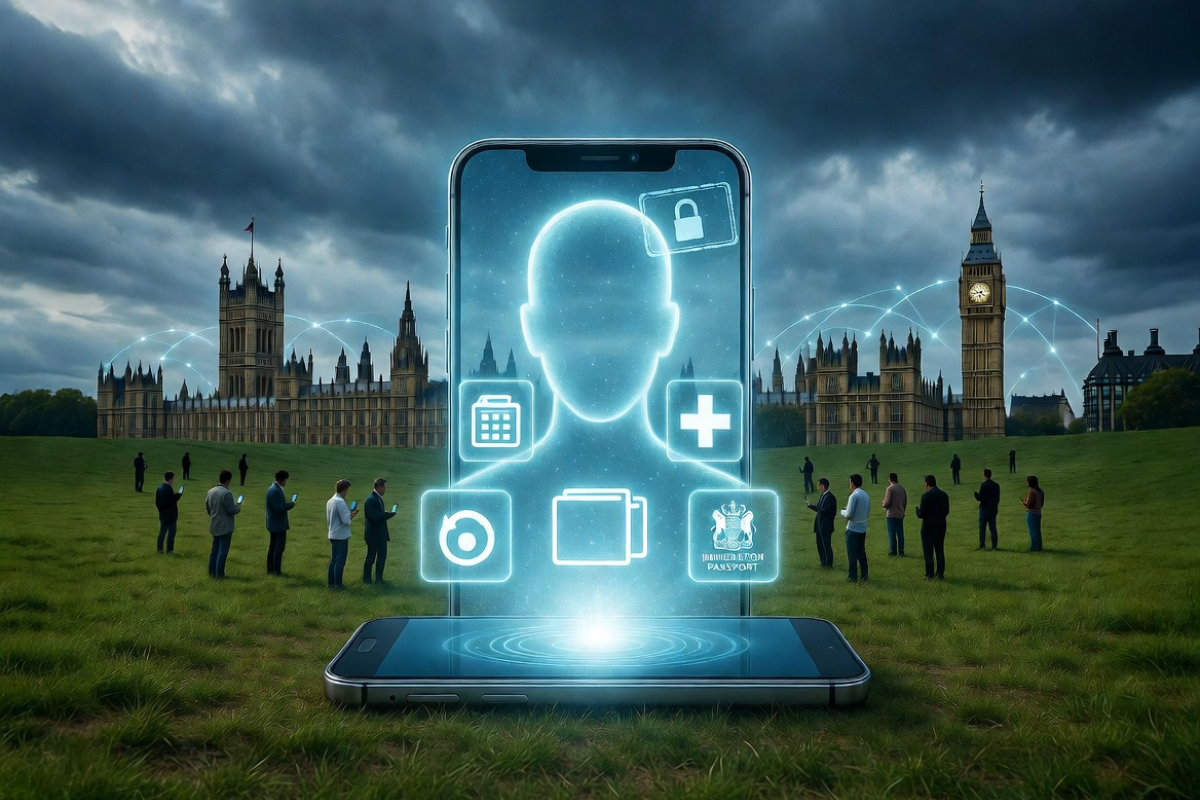
Even if an employer doesn’t require the new ID, remember the UK government said that all IDs will soon have to be verified digitally. That suggests the employer will send the ID image or data to a government server which will respond with whether the person is allowed to work. So all IDs will essentially be turned into digital IDs and the government can make individuals unemployable if they do something the government doesn’t like.

cross-posted from: lemmy.today/post/52990902

Even if an employer doesn’t require the new ID, remember the UK government said that all IDs will soon have to be verified digitally. That suggests the employer will send the ID image or data to a government server which will respond with whether the person is allowed to work. So all IDs will essentially be turned into digital IDs and the government can make individuals unemployable if they do something the government doesn’t like.

0

29% of employees admit to sabotaging their company's AI strategy

AI Gen Z workers who fear AI will take their job are actively sabotaging their company’s AI rollout - AI | EUROPESAYS.COM www.europesays.com
preview

The concept of “sabotage” here appears to include simply refusing to use AI.

The concept of “sabotage” here appears to include simply refusing to use AI.

0

Cannot play games b/c Internet is needlessly required. Starcraft, Age of Empires, Civilization..

preview

After decades of living in a linux-FOSS world, I noticed these games at a 2nd-hand street market:

  • Starcraft (few different versions/themes)
  • Age of Empires (few different versions/themes)
  • Civilization

They were a dollar each, so why not. I grabbed. Got home, installed win7 on a machine someone dumped on a curb, but could not install any of the games b/c I live offline. Fucking hell.

When I last played Starcraft well over a decade ago, I lived online and probably thought nothing of it. But it seems clear this shitty requirement is an anti-sharing policy because these games do not inherently need Internet. You can play against the machine or on a LAN. It’s not just the elitist exclusive WAN requirement that pisses me off… there’s a privacy issue too. And what happens when I enter the product key of a used CD? They probably have a tolerance on how many times that can happen, perhaps dependant on whether the hardware changes. Fuck the nannying.

Also consider that Blizzard and Microsoft servers are not going to run forever. They can pull the plug at any time and then no one can install their game. Should be illegal to make installation needlessly dependant on a service. Forced obsolescence.

Some of these games also require a CD to be inserted, which means you must have a fucking noisey CD drive attached at all times. Back when these games were made it was no big deal because all laptops and desktops had CD drives. Not anymore. I’m mostly annoyed by having to insert the disc, wait for it to spin, then I have to hear the loud spin as I play which also wastes power. So I installed Alcohol 120 to image the Warcraft 3 disc (which I still had from yrs past). It has 3 different versions of the crack for the particular shitty scheme used on WC3. None of the images work.

Obviously if I want to play these games I will need warez versions. How good are those dodgy distros these days? I can imagine some are just the original content but you still enter a product key (which I have anyway). But if they still need a WAN that won’t cut it for me. Do the warez versions overcome all these issues? Are they still in circulation?

Alternatively, I should ask, have there been any versions of these games repackaged and re-released for the retro gamers which don’t impose the shitty protections and server dependencies?

If not, I must say unlicensed cracked versions would be the most ethical ones:

  • designed obsolescence thwarted
  • privacy kept
  • more inclusive (offline ppl and those without CD drives)
  • better UX (no fiddling with discs and hearing the spin)

After decades of living in a linux-FOSS world, I noticed these games at a 2nd-hand street market:

  • Starcraft (few different versions/themes)
  • Age of Empires (few different versions/themes)
  • Civilization

They were a dollar each, so why not. I grabbed. Got home, installed win7 on a machine someone dumped on a curb, but could not install any of the games b/c I live offline. Fucking hell.

When I last played Starcraft well over a decade ago, I lived online and probably thought nothing of it. But it seems clear this shitty requirement is an anti-sharing policy because these games do not inherently need Internet. You can play against the machine or on a LAN. It’s not just the elitist exclusive WAN requirement that pisses me off… there’s a privacy issue too. And what happens when I enter the product key of a used CD? They probably have a tolerance on how many times that can happen, perhaps dependant on whether the hardware changes. Fuck the nannying.

Also consider that Blizzard and Microsoft servers are not going to run forever. They can pull the plug at any time and then no one can install their game. Should be illegal to make installation needlessly dependant on a service. Forced obsolescence.

Some of these games also require a CD to be inserted, which means you must have a fucking noisey CD drive attached at all times. Back when these games were made it was no big deal because all laptops and desktops had CD drives. Not anymore. I’m mostly annoyed by having to insert the disc, wait for it to spin, then I have to hear the loud spin as I play which also wastes power. So I installed Alcohol 120 to image the Warcraft 3 disc (which I still had from yrs past). It has 3 different versions of the crack for the particular shitty scheme used on WC3. None of the images work.

Obviously if I want to play these games I will need warez versions. How good are those dodgy distros these days? I can imagine some are just the original content but you still enter a product key (which I have anyway). But if they still need a WAN that won’t cut it for me. Do the warez versions overcome all these issues? Are they still in circulation?

Alternatively, I should ask, have there been any versions of these games repackaged and re-released for the retro gamers which don’t impose the shitty protections and server dependencies?

If not, I must say unlicensed cracked versions would be the most ethical ones:

  • designed obsolescence thwarted
  • privacy kept
  • more inclusive (offline ppl and those without CD drives)
  • better UX (no fiddling with discs and hearing the spin)
0

Vandan Borre staff: “broadcast TV was eliminated in Belgium”

preview

Krefel and Electro Depot have TVs on display, but they have no ability to demo TV tuning ability. Electro Depot even sells indoor and outdoor antennas. Sales people said they actually are /not allowed/ to show anything on the screens other than the OEM demo video. WTF? Sales people are actually micromanaged by this constraint that prevents them doing their job.

I’m like: “sell me this TV… show me that it has a working tuner.”
Sales: “can’t do that”

Electro Depot should be embarassed because they sell antennas too. Yet they cannot show that they actually work in their showroom.

Then I went to Vandan Borre. Same situation, but even more embarrassing: their demo radios are not powered. So you cannot even see whether a DAB radio decodes the album art and shows it. You cannot even hear how it sounds.

Vanden Borre staff: go see the FNAC showroom.

LOL. Are you fucking kidding me?

Also Vanden Borre staff: “broadcast TV does not exist in Belgium. It was eliminated. You have to subscribe to a provider (Telenet, Proximus, etc).”

This seems to explain my problem. But then why is Electro Depot selling antennas? The antennas cover both TV and radio ranges, so it could be for radio, but it’s obviously a bit off that they have no sign posting or disclosure to say TV tuning is impossible in Belgium.

Krefel and Electro Depot have TVs on display, but they have no ability to demo TV tuning ability. Electro Depot even sells indoor and outdoor antennas. Sales people said they actually are /not allowed/ to show anything on the screens other than the OEM demo video. WTF? Sales people are actually micromanaged by this constraint that prevents them doing their job.

I’m like: “sell me this TV… show me that it has a working tuner.”
Sales: “can’t do that”

Electro Depot should be embarassed because they sell antennas too. Yet they cannot show that they actually work in their showroom.

Then I went to Vandan Borre. Same situation, but even more embarrassing: their demo radios are not powered. So you cannot even see whether a DAB radio decodes the album art and shows it. You cannot even hear how it sounds.

Vanden Borre staff: go see the FNAC showroom.

LOL. Are you fucking kidding me?

Also Vanden Borre staff: “broadcast TV does not exist in Belgium. It was eliminated. You have to subscribe to a provider (Telenet, Proximus, etc).”

This seems to explain my problem. But then why is Electro Depot selling antennas? The antennas cover both TV and radio ranges, so it could be for radio, but it’s obviously a bit off that they have no sign posting or disclosure to say TV tuning is impossible in Belgium.

0

Appropedia: Low tech and self-sustainable alternatives to modern systems

Appropedia, the sustainability wiki Welcome to Appropedia www.appropedia.org
preview

cross-posted from: lemmy.today/post/49434861

This wiki can be a good place to get instructions on building and using low tech systems that will make you more self-sufficient and less dependent on centralized systems that could fail or deny you service.

cross-posted from: lemmy.today/post/49434861

This wiki can be a good place to get instructions on building and using low tech systems that will make you more self-sufficient and less dependent on centralized systems that could fail or deny you service.

0

🛃🙊 The spread of travel authorisations (🇺🇸→🇬🇧→🇪🇺) has scrapped our visa-free travel rights. How do offline and unbanked people handle this? Or do they just have to pound sand?

Farside: “this is fine”
preview

(crossposted from !humanrights)

The US can be credited with starting the Orwellian idea of forcing all “visa-free” visitors to file an ETA¹. It’s not just a money grab for us$ 20. It’s a snooping mechanism to link people to social media accounts, and then perform a background check on travelers to look for any speech that’s critical of the US.

Someone from Lebanon got a scholarship for Harvard. Then he was blocked at the border by border control. The cause: a friend linked to him on social media said something critical of the US. Even though the aspiring student did not himself criticise the US, being associated with someone who did was sufficient to block his entry. (He eventually made it back after some hassle and back and forth on flights).

Then the UK decided decided to impose travel authorisations as well, thus doing a money grab of £16. Initially it seemed to just be a retaliation against the US. But recently the UK decided to target Europeans.

So now the EU has decided to follow suit. In 2027, the loss of visa-free travel hits Europe. Even those who merely have a connecting flight in Europe will have to pay €20 and pass the background check. You need not even leave the airport to be subjected to this.

Of course it’s bullshit to continue calling this “visa-free travel”. They hope a technical semantical spin will fool people into accepting unfunded background checks coupled with surcharges as still “visa-free”.

¹ Electronic Travel Authorisation

Human rights

Do we still have privacy and free speech, as guaranteed in the Universal Declaration of Human Rights, Article 12 and 19, which states (respectively):

  1. “No one shall be subjected to arbitrary interference with his privacy, family, home or correspondence, nor to attacks upon his honour and reputation. Everyone has the right to the protection of the law against such interference or attacks.”
    …
  1. “Everyone has the right to freedom of opinion and expression; this right includes freedom to hold opinions without interference and to seek, receive and impart information and ideas through any media and regardless of frontiers.”

?

Yes, those rights are protected – but only if you stay in your homeland. Only if you do not expect to simultaneously exercise your Article 13 rights, which states:

“1. Everyone has the right to freedom of movement and residence within the borders of each State.
2. Everyone has the right to leave any country, including his own, and to return to his country.”

What other UDHR-signatory countries have joined this ETA shit-show?

Is this also a loss of a right to be analog?

Cross-posting to !right_to_unplug because:

  1. the “E” in ETA is electronic, thus implying that there is no offline mechanism for unplugged people and unbanked people (correct me if I am wrong)
  2. those who declare not having a social media account are distrusted, presumed nefarious, and potentially denied entry (e.g. entering the US with a new/clean phone has triggered suspicion and ultimately entry refusals)

(crossposted from !humanrights)

The US can be credited with starting the Orwellian idea of forcing all “visa-free” visitors to file an ETA¹. It’s not just a money grab for us$ 20. It’s a snooping mechanism to link people to social media accounts, and then perform a background check on travelers to look for any speech that’s critical of the US.

Someone from Lebanon got a scholarship for Harvard. Then he was blocked at the border by border control. The cause: a friend linked to him on social media said something critical of the US. Even though the aspiring student did not himself criticise the US, being associated with someone who did was sufficient to block his entry. (He eventually made it back after some hassle and back and forth on flights).

Then the UK decided decided to impose travel authorisations as well, thus doing a money grab of £16. Initially it seemed to just be a retaliation against the US. But recently the UK decided to target Europeans.

So now the EU has decided to follow suit. In 2027, the loss of visa-free travel hits Europe. Even those who merely have a connecting flight in Europe will have to pay €20 and pass the background check. You need not even leave the airport to be subjected to this.

Of course it’s bullshit to continue calling this “visa-free travel”. They hope a technical semantical spin will fool people into accepting unfunded background checks coupled with surcharges as still “visa-free”.

¹ Electronic Travel Authorisation

Human rights

Do we still have privacy and free speech, as guaranteed in the Universal Declaration of Human Rights, Article 12 and 19, which states (respectively):

  1. “No one shall be subjected to arbitrary interference with his privacy, family, home or correspondence, nor to attacks upon his honour and reputation. Everyone has the right to the protection of the law against such interference or attacks.”
    …
  1. “Everyone has the right to freedom of opinion and expression; this right includes freedom to hold opinions without interference and to seek, receive and impart information and ideas through any media and regardless of frontiers.”

?

Yes, those rights are protected – but only if you stay in your homeland. Only if you do not expect to simultaneously exercise your Article 13 rights, which states:

“1. Everyone has the right to freedom of movement and residence within the borders of each State.
2. Everyone has the right to leave any country, including his own, and to return to his country.”

What other UDHR-signatory countries have joined this ETA shit-show?

Is this also a loss of a right to be analog?

Cross-posting to !right_to_unplug because:

  1. the “E” in ETA is electronic, thus implying that there is no offline mechanism for unplugged people and unbanked people (correct me if I am wrong)
  2. those who declare not having a social media account are distrusted, presumed nefarious, and potentially denied entry (e.g. entering the US with a new/clean phone has triggered suspicion and ultimately entry refusals)
0

📠 FAX service suggestions for Europe? (need a replacement for PDF24)

preview

PDF24 used to be a way to send a fax to European fax numbers. It was a gratis service. It’s still advertised as such but it’s broken now.

The US is covered by faxzero.com, but for faxing outside the US they charge an absurd $2.09 per fax (more than postage in a lot of places). They are also Paypal-only. Fuck paypal.

Any suggestions?

PDF24 used to be a way to send a fax to European fax numbers. It was a gratis service. It’s still advertised as such but it’s broken now.

The US is covered by faxzero.com, but for faxing outside the US they charge an absurd $2.09 per fax (more than postage in a lot of places). They are also Paypal-only. Fuck paypal.

Any suggestions?

0

What if a radio station jingle says something like “🎵KQRX- the feed that does not track you 𝄞”

preview

As someone who pulled the plug on residential Internet, I have naturally clung onto broadcast radio. It occurs to me that tuning into broadcast content gives a rare media source where you are not tracked. There is no digital footprint on your listening.

Tor (along with a couple even more obscure technologies like i2p) are the only viable cloud-sourced ways to escape consumption tracking. Tor is indispensible but it’s not as traceless as tuning broadcast signals. And Tor users are plagued with access discrimination.

Yet broadcast radio must be struggling. They likely lost copious listeners to the Internet. Seems like there is a missed opportunity to promote their stations and privacy along with it. Radio stations should inform people that tracking online is not just to advertise but it’s also used for personalised political manipulation.

Duckduckgo’s privacy theatre demonstrates that privacy promotion works. But DDG relies on trust and it’s rife with scandals. OTA¹ broadcasts do not rely on trust. Promoting privacy would have a long-term self-promotion effect. That is, as listeners come to develop their value of privacy more, their listenership becomes stronger.

Some (most?) stations likely also stream online. But they could still play a different jingle on the broadcast service, no?

¹ OTA: over the air

As someone who pulled the plug on residential Internet, I have naturally clung onto broadcast radio. It occurs to me that tuning into broadcast content gives a rare media source where you are not tracked. There is no digital footprint on your listening.

Tor (along with a couple even more obscure technologies like i2p) are the only viable cloud-sourced ways to escape consumption tracking. Tor is indispensible but it’s not as traceless as tuning broadcast signals. And Tor users are plagued with access discrimination.

Yet broadcast radio must be struggling. They likely lost copious listeners to the Internet. Seems like there is a missed opportunity to promote their stations and privacy along with it. Radio stations should inform people that tracking online is not just to advertise but it’s also used for personalised political manipulation.

Duckduckgo’s privacy theatre demonstrates that privacy promotion works. But DDG relies on trust and it’s rife with scandals. OTA¹ broadcasts do not rely on trust. Promoting privacy would have a long-term self-promotion effect. That is, as listeners come to develop their value of privacy more, their listenership becomes stronger.

Some (most?) stations likely also stream online. But they could still play a different jingle on the broadcast service, no?

¹ OTA: over the air

0

🕵 (for privacy & offgriders) We need a smartphone download manager (📲) that takes orders from a PC to fetch docs/websites, files, Youtube, etc. Perhaps Aria2 front-end needed.

preview

cross-posted from: beehaw.org/post/23925690

the problem

The web is littered with enshitified Tor-hostile resources generally deployed with the naive idea that Tor users are criminals. The Tor community can barely function. The web is broken in countless ways and it’s not always obvious whether Tor users are targeted by the marginalisation because firewalls never state why they are blocking. Sometimes they block based on geolocation or user-agent strings, and sometimes a resource is simply down for everyone. Tor users are left assuming their exit node IP is the culprit.

Also a problem: some people actually have no Internet at home. For some it is temporary and for others it is a permanent way of living a mostly analog life.

the solution (for many cases)

Use the clearnet at a cafe with open access. Of course it’s unreasonable to haul a desktop computer into a cafe or to carry a laptop at all times, so it would be useful to send fetch orders from your PC to your phone. When the phone connects to public Wi-Fi, you tap to execute the queue of fetch orders. Then when back at your PC you download the fulfilled orders from the phone.

This could even be useful within the home, since the block or malfunction can be a number of things. A smartphone could try to execute fetch orders over Orbot, which may or may not fail. And if it fails, it remains an unfulfilled order to retry in a cafe.

Aria2 would be perfect for the underlying heavy lifting because it supports many protocols (HTTP, FTP, bittorrent), and it exists on both the PC and Android. The Android code is apparently just a backend. It’s broken or useless on its own and needs a controller such as the app proposed here.

insufficient alternatives

The usual workarounds have compromises. A VPN may or may not work but it’s still a bit far from anonimity. The VPN provider is essentially like another ISP who can snoop on you.

Download managers already exist on smartphones, but there is no seamless PC interoperability. And (AFAIK) they are just for simple files, not for webpages or Youtube videos.

There is Newpipe but it has no PC interoperability. You must search YT using the Newpipe UI.

cross-posted from: beehaw.org/post/23925690

the problem

The web is littered with enshitified Tor-hostile resources generally deployed with the naive idea that Tor users are criminals. The Tor community can barely function. The web is broken in countless ways and it’s not always obvious whether Tor users are targeted by the marginalisation because firewalls never state why they are blocking. Sometimes they block based on geolocation or user-agent strings, and sometimes a resource is simply down for everyone. Tor users are left assuming their exit node IP is the culprit.

Also a problem: some people actually have no Internet at home. For some it is temporary and for others it is a permanent way of living a mostly analog life.

the solution (for many cases)

Use the clearnet at a cafe with open access. Of course it’s unreasonable to haul a desktop computer into a cafe or to carry a laptop at all times, so it would be useful to send fetch orders from your PC to your phone. When the phone connects to public Wi-Fi, you tap to execute the queue of fetch orders. Then when back at your PC you download the fulfilled orders from the phone.

This could even be useful within the home, since the block or malfunction can be a number of things. A smartphone could try to execute fetch orders over Orbot, which may or may not fail. And if it fails, it remains an unfulfilled order to retry in a cafe.

Aria2 would be perfect for the underlying heavy lifting because it supports many protocols (HTTP, FTP, bittorrent), and it exists on both the PC and Android. The Android code is apparently just a backend. It’s broken or useless on its own and needs a controller such as the app proposed here.

insufficient alternatives

The usual workarounds have compromises. A VPN may or may not work but it’s still a bit far from anonimity. The VPN provider is essentially like another ISP who can snoop on you.

Download managers already exist on smartphones, but there is no seamless PC interoperability. And (AFAIK) they are just for simple files, not for webpages or Youtube videos.

There is Newpipe but it has no PC interoperability. You must search YT using the Newpipe UI.

0

📠 How getting a FAX-only number can improve your privacy and control -- while pushing back against the loss of ℻ infra

preview

Every bank, shitty giant social media platform and countless websites demand a phone number. It’s foolish to give them a voice number (esp. mobile) unless you actually welcome calls from them, their partners, whoever they sell your data to, and whoever exfiltrates it. The best move with all these untrustworthy data-sharing-happy businesses is to give them a pure fax number which is answered only by a fax machine.

In the rare case where reaching you is so important that they would use the number to send you a fax, then it’s probably a message you want to receive anyway (and best to have it in writing). I kept a gratis fax number for decades and never got fax spam.

One extra perk to this is if customer files have fax-only numbers, it could give some pause before a company decides to ditch their fax line.

My unsolved problem:

J2.com no longer gives free fax numbers. I can only find providers who charge a flat subscription of ~$15—25/month (which includes an allowance on outbound faxes). I don’t really need a fax sending svc. I wouldn’t mind paying <$10/year just to have a number that emails faxes to me, even if there is some small measured rate when it actually gets used. A pay-per-fax service like that is hard to find. Any tips would be appreciated.

Every bank, shitty giant social media platform and countless websites demand a phone number. It’s foolish to give them a voice number (esp. mobile) unless you actually welcome calls from them, their partners, whoever they sell your data to, and whoever exfiltrates it. The best move with all these untrustworthy data-sharing-happy businesses is to give them a pure fax number which is answered only by a fax machine.

In the rare case where reaching you is so important that they would use the number to send you a fax, then it’s probably a message you want to receive anyway (and best to have it in writing). I kept a gratis fax number for decades and never got fax spam.

One extra perk to this is if customer files have fax-only numbers, it could give some pause before a company decides to ditch their fax line.

My unsolved problem:

J2.com no longer gives free fax numbers. I can only find providers who charge a flat subscription of ~$15—25/month (which includes an allowance on outbound faxes). I don’t really need a fax sending svc. I wouldn’t mind paying <$10/year just to have a number that emails faxes to me, even if there is some small measured rate when it actually gets used. A pay-per-fax service like that is hard to find. Any tips would be appreciated.

0

📠 FAX directory needed -- and the race condition to preserve ℻

preview

℻ numbers are dropping like flies. This is a disaster for the very few of us who will not lick the boots of Microsoft or Google, unlike the 99%¹ of the population who is happy to use email (which traverses MS or Google servers in a vast majority of non-p2p comms).

So FAX numbers are disappearing. Some are removed from websites and stationary (letterheads), but still exist. Some fax numbers persist in publications, but the plug has been pulled. Not enough people are using fax to say “please plugin your fax machine”.

the race condition

Corps, NGOs, and govs likely ditch the fax after it idles for a long time with no activity. It’s a use-it-or-lose-it scenario. Part of the problem is someone’s rare will to send a fax is hindered by lack of info. If we had reliable access to fax numbers, we could do our part to keep them active.

open data remedy?

When a gov has an open data policy, one possible solution is to make open data requests for the fax numbers of gov offices.

previous posts

¹ made-up figure obviously, but likely accurate enough nonetheless

℻ numbers are dropping like flies. This is a disaster for the very few of us who will not lick the boots of Microsoft or Google, unlike the 99%¹ of the population who is happy to use email (which traverses MS or Google servers in a vast majority of non-p2p comms).

So FAX numbers are disappearing. Some are removed from websites and stationary (letterheads), but still exist. Some fax numbers persist in publications, but the plug has been pulled. Not enough people are using fax to say “please plugin your fax machine”.

the race condition

Corps, NGOs, and govs likely ditch the fax after it idles for a long time with no activity. It’s a use-it-or-lose-it scenario. Part of the problem is someone’s rare will to send a fax is hindered by lack of info. If we had reliable access to fax numbers, we could do our part to keep them active.

open data remedy?

When a gov has an open data policy, one possible solution is to make open data requests for the fax numbers of gov offices.

previous posts

¹ made-up figure obviously, but likely accurate enough nonetheless

0

Decreasing visibility of physical addresses appearing on websites.. even public/government agencies and human rights NGOs

preview

It’s as if humanity is dying off. They don’t want to see you in person so physical addresses are being withheld from contact pages. I now must dig into the privacy policy or ToS to find an address. It’s really a shitshow because a data protection officer or whoever handles privacy requests could be entirely outsourced to someone who has nothing to do with an org.

It boils down to nannying. They don’t even want to enable people to write snail-mail letters – which is king for escaping enshitification and the digital transformation.

It’s as if humanity is dying off. They don’t want to see you in person so physical addresses are being withheld from contact pages. I now must dig into the privacy policy or ToS to find an address. It’s really a shitshow because a data protection officer or whoever handles privacy requests could be entirely outsourced to someone who has nothing to do with an org.

It boils down to nannying. They don’t even want to enable people to write snail-mail letters – which is king for escaping enshitification and the digital transformation.

0

📺 Should public libraries have a media room or closet-sized stalls with broadcast TV? Invidious too?

preview

The question can be broken into two parts:

  1. would people use it?
  2. is it appropriate for a library to have a media room?

I have no TV and I suspect with so many people subscribing to streaming services lately as their sole source (from surveillance capitalists), probably not many people even have antennas to pick up local broadcast TV anymore. Is that a safe assumption?

A couple years ago I setup a MythTV for someone. Their local broadcasts were completely different from what I recall from decades past-- mostly educational (documentaries and how-to shows) and mostly commercial-free. It seemed to be largely fed by tax-funded public broadcast service. It used to be rife with commercials but commercial interests seem to have abandoned it.

Where I live now, I am offline and also lack equipment to see what’s broadcast locally. Not sure it’s justified to buy gear just to see what there is. And I have never seen what free satellite signals are like anywhere.

On the one hand, I could see it turning into an entertainment/cinema type of space with people bringing in popcorn… which is perhaps a deviation from the library’s purpose. OTOH, it could be information focused to give access to locally aired educational broadcasts and to (perhaps more importantly) show people what content exists locally and to experience MythTV. Library users could even schedule shows to be recorded for them (as the library is not open 24/7). The MythTV PCs would of course be running Linux, which would be a covert way to promote the escape from proprietary OSs.

As I ask myself whether this is all crazy talk, a local library has Arduinos for people to experiment with… which has nothing to do with books or media.

A parallel mission could be to get the library to run an Invideous instance to try to liberate people from Google’s stranglehold and their ads. Google would probably block the library’s instance but the blockade would then serve to inform people about Google’s politics. I guess the question is whether Invidious is too much in the legal gray area for libraries to seriously consider.

The question can be broken into two parts:

  1. would people use it?
  2. is it appropriate for a library to have a media room?

I have no TV and I suspect with so many people subscribing to streaming services lately as their sole source (from surveillance capitalists), probably not many people even have antennas to pick up local broadcast TV anymore. Is that a safe assumption?

A couple years ago I setup a MythTV for someone. Their local broadcasts were completely different from what I recall from decades past-- mostly educational (documentaries and how-to shows) and mostly commercial-free. It seemed to be largely fed by tax-funded public broadcast service. It used to be rife with commercials but commercial interests seem to have abandoned it.

Where I live now, I am offline and also lack equipment to see what’s broadcast locally. Not sure it’s justified to buy gear just to see what there is. And I have never seen what free satellite signals are like anywhere.

On the one hand, I could see it turning into an entertainment/cinema type of space with people bringing in popcorn… which is perhaps a deviation from the library’s purpose. OTOH, it could be information focused to give access to locally aired educational broadcasts and to (perhaps more importantly) show people what content exists locally and to experience MythTV. Library users could even schedule shows to be recorded for them (as the library is not open 24/7). The MythTV PCs would of course be running Linux, which would be a covert way to promote the escape from proprietary OSs.

As I ask myself whether this is all crazy talk, a local library has Arduinos for people to experiment with… which has nothing to do with books or media.

A parallel mission could be to get the library to run an Invideous instance to try to liberate people from Google’s stranglehold and their ads. Google would probably block the library’s instance but the blockade would then serve to inform people about Google’s politics. I guess the question is whether Invidious is too much in the legal gray area for libraries to seriously consider.

0

Offline equity stock investors excluded from voting

preview

An equity or brokerage sent proxy voting forms which arrived 1 day before the deadline that they needed the filled ballot back in their hands. There is of course and electronic way of voting. E-voters are the only investors who can actually vote due to the schedule and mailing date. Impossible for offline investors to vote.

This is probably a boring post. I don’t vote anyway because I can’t be bothered to do the research. But it’s another instance of marginalisation of offline people. I thought it should be recorded somewhere that this is happening in case someone cares.

An equity or brokerage sent proxy voting forms which arrived 1 day before the deadline that they needed the filled ballot back in their hands. There is of course and electronic way of voting. E-voters are the only investors who can actually vote due to the schedule and mailing date. Impossible for offline investors to vote.

This is probably a boring post. I don’t vote anyway because I can’t be bothered to do the research. But it’s another instance of marginalisation of offline people. I thought it should be recorded somewhere that this is happening in case someone cares.

0

Is banking at the root of much of our tech-based oppression?

preview

I’ve been trying to work out how so many people got to be obsessed with smartphones to the point of using the tiny screens for tasks where it makes no sense. There are many Lemmy apps for smartphones but just a couple half-assed ones for the desktop.

It’s banks. Banks have been cattle-herding security-naive people onto smartphones designed for obsolescence with huge attack surfaces to push their closed-source app which requires licking Google’s boot to obtain. This seems to strike a parallel with Zuckerberg’s comment: “I don’t know why those dumb fucks give me all their data”.

The number of people willing to resist banks can probably be counted on one hand. From there, most people are easy enough to just say “fuck it, I’ll run the app”. This is what drives the “must have a recent phone at all times” brain malfunction. Most of the population is trapped on this shit like caged animals that can’t see the cage bars.

Many don’t bother owning a PC now. They want an all-in-one device. Then they read large amounts of text on that tiny display. So every industry has to cator for smartphone pawns to stay relevant.

Consumers wise enough to keep the GSM SIM slot empty and use smartphones just for innocuous tasks like offline navigation face this onslaught of app-pushers. Some public operations between ppl and government are becoming “app only”.

We are losing our human right to self-determination and autonomy. Normally we could let fools be fools and carry on. But there is a critical mass threshold by which the foolish consumption of many triggers oppression of the few who had enough sense to avoid it.

The offline alternatives and FOSS alternatives are being silently driven out of existence.

I was an early adopter (AOS 2.2). Thought: great, Android is linux based and under FOSS licensing. I am liberated. Got my update to AOS 2.3. Then I was abandoned. I saw right away the shit show I was baited into. Being at the vendor’s mercy for upgrades sent a stark msg to me that I learned from. And apparently not many others.

I wouldn’t care about the foolish decisions of consumers to keep buying new phones if it only affected them. But it’s fucking up the world.

I’ve been trying to work out how so many people got to be obsessed with smartphones to the point of using the tiny screens for tasks where it makes no sense. There are many Lemmy apps for smartphones but just a couple half-assed ones for the desktop.

It’s banks. Banks have been cattle-herding security-naive people onto smartphones designed for obsolescence with huge attack surfaces to push their closed-source app which requires licking Google’s boot to obtain. This seems to strike a parallel with Zuckerberg’s comment: “I don’t know why those dumb fucks give me all their data”.

The number of people willing to resist banks can probably be counted on one hand. From there, most people are easy enough to just say “fuck it, I’ll run the app”. This is what drives the “must have a recent phone at all times” brain malfunction. Most of the population is trapped on this shit like caged animals that can’t see the cage bars.

Many don’t bother owning a PC now. They want an all-in-one device. Then they read large amounts of text on that tiny display. So every industry has to cator for smartphone pawns to stay relevant.

Consumers wise enough to keep the GSM SIM slot empty and use smartphones just for innocuous tasks like offline navigation face this onslaught of app-pushers. Some public operations between ppl and government are becoming “app only”.

We are losing our human right to self-determination and autonomy. Normally we could let fools be fools and carry on. But there is a critical mass threshold by which the foolish consumption of many triggers oppression of the few who had enough sense to avoid it.

The offline alternatives and FOSS alternatives are being silently driven out of existence.

I was an early adopter (AOS 2.2). Thought: great, Android is linux based and under FOSS licensing. I am liberated. Got my update to AOS 2.3. Then I was abandoned. I saw right away the shit show I was baited into. Being at the vendor’s mercy for upgrades sent a stark msg to me that I learned from. And apparently not many others.

I wouldn’t care about the foolish decisions of consumers to keep buying new phones if it only affected them. But it’s fucking up the world.

0

New EU law allows train operators to discriminate against offline people

preview

Many train tickets in Europe are available exclusively online. In other cases the online price is lower. So to chase up why this happens, I found the following law:

Article 11 Availability of tickets and reservations

  1. Railway undertakings, ticket vendors and tour operators shall offer tickets and, where available, through-tickets and reservations.
  2. Without prejudice to paragraphs 3 and 4, railway undertakings shall sell, either directly or through ticket vendors or tour operators, tickets to passengers via at least one of the following means of sale: (a) ticket offices, other points of sale or ticketing machines; (b) telephone, the internet or any other widely available information technology; © on board trains. The competent authorities, as defined in point (b) of Article 2 of Regulation (EC) No 1370/2007, may require railway undertakings to offer tickets for services provided under public service contracts via more than one means of sale.

Key wording: “at least ONE of the following means of sale”

Since it’s easiest to sell tickets online, they are effectively encouraging train ticket vendors to marginalise offline people and unbanked people. Further down the statute it says people with disabilities get an exceptional option to buy tickets on the train at no extra cost if there is no ticket office or machine. But no one else is entitled to that option.

Many train tickets in Europe are available exclusively online. In other cases the online price is lower. So to chase up why this happens, I found the following law:

Article 11 Availability of tickets and reservations

  1. Railway undertakings, ticket vendors and tour operators shall offer tickets and, where available, through-tickets and reservations.
  2. Without prejudice to paragraphs 3 and 4, railway undertakings shall sell, either directly or through ticket vendors or tour operators, tickets to passengers via at least one of the following means of sale: (a) ticket offices, other points of sale or ticketing machines; (b) telephone, the internet or any other widely available information technology; © on board trains. The competent authorities, as defined in point (b) of Article 2 of Regulation (EC) No 1370/2007, may require railway undertakings to offer tickets for services provided under public service contracts via more than one means of sale.

Key wording: “at least ONE of the following means of sale”

Since it’s easiest to sell tickets online, they are effectively encouraging train ticket vendors to marginalise offline people and unbanked people. Further down the statute it says people with disabilities get an exceptional option to buy tickets on the train at no extra cost if there is no ticket office or machine. But no one else is entitled to that option.

0

Is there a threadiverse app that works offline?

preview

Folks— Most Lemmy client apps are on the phone. I am looking for a FOSS phone app that works offline. That is, the phone has no data plan and only occasionally connects to public wifi hotspots. I do not want to be entering login passwords and reading and writing posts when I am connected. Reading and writing posts interactively needs to happen offline. Typical workflow: when I meet people at a bar/cafe, I need the app to sync over the public wi-fi without using my attention. It should post my comments and fetch threads for which I am active, for offline access later. It needs to support multiple accounts spanning multiple instances.

Does anything like this exist? Or do all Lemmy/kbin/mbin phone apps demand your realtime attention when connected?

Folks— Most Lemmy client apps are on the phone. I am looking for a FOSS phone app that works offline. That is, the phone has no data plan and only occasionally connects to public wifi hotspots. I do not want to be entering login passwords and reading and writing posts when I am connected. Reading and writing posts interactively needs to happen offline. Typical workflow: when I meet people at a bar/cafe, I need the app to sync over the public wi-fi without using my attention. It should post my comments and fetch threads for which I am active, for offline access later. It needs to support multiple accounts spanning multiple instances.

Does anything like this exist? Or do all Lemmy/kbin/mbin phone apps demand your realtime attention when connected?

0

Transcend storage products require Internet - wtf… forced obsolescence dark pattern?

preview

cross-posted from: slrpnk.net/post/26435334

A Transcend Storejet external HDD has this software:

  • RecoveRx_v2.6.zip
  • RecoveRx_Win_4.3_setup.exe
  • SecureEraseTool_Win_v1.10_setup.exe
  • TranscendElite_Win_v4.28_setup.exe

I am offline, so I went to a public library to fetch the above files. Early in the installation process the piece of shit tries to connect to the Internet and craps out when it discovers there is no Internet connection. WTF?

It’s a nasty trend. I’ve seen other drivers and various hardware support tools pull this shit in recent years.

Is it legal? Seems questionable considering:

  • They use deception. The packaging for the harddrive probably does not have an “Internet required” disclosure, nor would any reasonable buyer expect Internet to be required to use a hard drive. Then they use deception again when you download the tools. I am led to believe I am downloading a “SecureEraseTool” and a “TranscendElite” software package, but in fact these are just proprietary download managers pretending to be tools.
  • (GDPR regions) By forcing you to needlessly access the cloud with their proprietary tool, they collect your IP address and whatever else that download manager collects to share with them. This does not seem compliant with data minimization.

:::spoiler Tech discussion unrelated to the forum topic Why are those tools needed (you might wonder). The drive is in a shitty state. It’s in a usb3 enclosure and was usb-attached to 3 different machines:

  • linux laptop with usb3 expresscard, attached both with and without supplemental power. The drive spins, LED on the enclosure blinks rapidly, it gets a device handle and /var/log/kern.log shows it was detected okay. Running fdisk on the unmounted drive just hangs for ~10—15′ before timing out. Reattaching and trying to mount it also causes a long ~10—15′ hang before it gives up.
  • win7 one two different machines: spins forever, LED blinking rapidly. Windows never gives up and it never gets recognized or mounted.

So I wanted to first try the official tools to see how they react to the drive. Since they turned out to be a piece of shit, I will probably try next:

  • Remove the drive from the enclosure and attaching directly to a real SATA bus (not one of those shitty SATA-USB adapters and not a SATA-PATA drive bay adapter, even though those would be easier. I will put it on a proper SATA bus because the SMART diag stuff is often crippled when going over a bus adapter of some kind.
  • Run the DOS Ultimate Boot CD, which (IIRC) is still the king of disk diagnostic tools.
  • See what smartctl does.
  • Try zero-filling with dd :::

⚠ Avoid Transcend products for being anti-consumer

Anyway, the main point of this thread is to expose the shit Transcend pulls by shipping download managers that masquerade as tools. It’s a shitty practice because:

  • The tools are forever dependent on the supplier keeping a host running. Not only to snoop on you but so to do a sneaky form of designed obsolescence. When your drive model is old enough to need the tools, that is when they will pull the plug. You only think you have the software, until it’s game over. You lose autonomy and control over your own product without knowing it.
  • Discriminates against offline people.
  • Discriminates against tech illiterates, who rely on the easy tools and cannot handle tools like dd, smartctl, and UBCD.
  • Assaults right to repair. No right to repair laws are good enough to think of this kind of dark pattern.
  • Obsolescence by design. If you cannot install the tools you need to keep the device running, they are effectively bullying you into buying your way out of the problem.

cross-posted from: slrpnk.net/post/26435334

A Transcend Storejet external HDD has this software:

  • RecoveRx_v2.6.zip
  • RecoveRx_Win_4.3_setup.exe
  • SecureEraseTool_Win_v1.10_setup.exe
  • TranscendElite_Win_v4.28_setup.exe

I am offline, so I went to a public library to fetch the above files. Early in the installation process the piece of shit tries to connect to the Internet and craps out when it discovers there is no Internet connection. WTF?

It’s a nasty trend. I’ve seen other drivers and various hardware support tools pull this shit in recent years.

Is it legal? Seems questionable considering:

  • They use deception. The packaging for the harddrive probably does not have an “Internet required” disclosure, nor would any reasonable buyer expect Internet to be required to use a hard drive. Then they use deception again when you download the tools. I am led to believe I am downloading a “SecureEraseTool” and a “TranscendElite” software package, but in fact these are just proprietary download managers pretending to be tools.
  • (GDPR regions) By forcing you to needlessly access the cloud with their proprietary tool, they collect your IP address and whatever else that download manager collects to share with them. This does not seem compliant with data minimization.

:::spoiler Tech discussion unrelated to the forum topic Why are those tools needed (you might wonder). The drive is in a shitty state. It’s in a usb3 enclosure and was usb-attached to 3 different machines:

  • linux laptop with usb3 expresscard, attached both with and without supplemental power. The drive spins, LED on the enclosure blinks rapidly, it gets a device handle and /var/log/kern.log shows it was detected okay. Running fdisk on the unmounted drive just hangs for ~10—15′ before timing out. Reattaching and trying to mount it also causes a long ~10—15′ hang before it gives up.
  • win7 one two different machines: spins forever, LED blinking rapidly. Windows never gives up and it never gets recognized or mounted.

So I wanted to first try the official tools to see how they react to the drive. Since they turned out to be a piece of shit, I will probably try next:

  • Remove the drive from the enclosure and attaching directly to a real SATA bus (not one of those shitty SATA-USB adapters and not a SATA-PATA drive bay adapter, even though those would be easier. I will put it on a proper SATA bus because the SMART diag stuff is often crippled when going over a bus adapter of some kind.
  • Run the DOS Ultimate Boot CD, which (IIRC) is still the king of disk diagnostic tools.
  • See what smartctl does.
  • Try zero-filling with dd :::

⚠ Avoid Transcend products for being anti-consumer

Anyway, the main point of this thread is to expose the shit Transcend pulls by shipping download managers that masquerade as tools. It’s a shitty practice because:

  • The tools are forever dependent on the supplier keeping a host running. Not only to snoop on you but so to do a sneaky form of designed obsolescence. When your drive model is old enough to need the tools, that is when they will pull the plug. You only think you have the software, until it’s game over. You lose autonomy and control over your own product without knowing it.
  • Discriminates against offline people.
  • Discriminates against tech illiterates, who rely on the easy tools and cannot handle tools like dd, smartctl, and UBCD.
  • Assaults right to repair. No right to repair laws are good enough to think of this kind of dark pattern.
  • Obsolescence by design. If you cannot install the tools you need to keep the device running, they are effectively bullying you into buying your way out of the problem.
0

DAB radio won’t do well in an EMF pulse; and Denmark would be screwed

preview

Solar events as well as nuclear can cause an EMF pulse that destroys all transistors, thus inherently all DAB radios. Or has someone managed to build an EMF-proof DAB transmitter and receiver using vacuum tubes?

Post-Internet, radio has surely lost listenership. From there, I think it’s fair to say that emergency/apolyptic scenarios that would kill both household Internet and TVs, essentially making analog radio quite important. If FM is decommissioned, do we compromise the option of broadcasting to survivalists who have tubes receivers?

Consider that in extreme events like an EMF pulse, Denmark is fucked. They eliminate their postal service this year and they will eliminate FM radio. They seem to have no concept of minimising points of failure for any sort of robust engineering, as they create apartment building laundry rooms with washing machines that cannot function without the cloud and electronic payment. Denmark apparently sets a good example of what /not/ to do in the face of digital transformation.

Solar events as well as nuclear can cause an EMF pulse that destroys all transistors, thus inherently all DAB radios. Or has someone managed to build an EMF-proof DAB transmitter and receiver using vacuum tubes?

Post-Internet, radio has surely lost listenership. From there, I think it’s fair to say that emergency/apolyptic scenarios that would kill both household Internet and TVs, essentially making analog radio quite important. If FM is decommissioned, do we compromise the option of broadcasting to survivalists who have tubes receivers?

Consider that in extreme events like an EMF pulse, Denmark is fucked. They eliminate their postal service this year and they will eliminate FM radio. They seem to have no concept of minimising points of failure for any sort of robust engineering, as they create apartment building laundry rooms with washing machines that cannot function without the cloud and electronic payment. Denmark apparently sets a good example of what /not/ to do in the face of digital transformation.

0

The hidden attack on people living analog lifestyles: they just ignore you. US and Europe compared; Europe has a fix for this, but the fix is broken.

preview

I write a lot of snail-mail paper letters. Why? Two primary drivers:

  • Enshitification. If the digital path has CAPTCHAs or dark patterns, I refuse to serve as an enabler. I don’t do CAPTCHAs.
  • Boycotts. I boycott both Microsoft and Google. When a recipient’s email provider is one of them, an honest boycott entails not feeding data to those surveillance advertisers who profit from the data.

Government offices sometimes just ignore the letters – letters which require a response.

:::spoiler The problem in the US Gov agencies have some “public access” databases such as courts that let you search past cases and state secretary’s business registries. But then they impose a CAPTCHA on queries. How does an offline analog person get the info? They put their request for info in writing, which is then simply ignored. You don’t even get enough dignity for an acknowledgement. :::

:::spoiler The problem in Europe As the “digital transformation” movement is shoved down people’s throats, they cattle-herd folks toward their enshitified web portals and their Microsoft-hosted email addresses. Regulators have an obligation to process complaints. E.g. when a transport carrier breaks a transport law or a telecom supplier breaks a telecom law, there is a national authority who must treat your complaint. But if the complaint comes by mail, they sometimes just ignore it. :::

The insideous nature of being ignored is you are also naturally blocked from knowing why you were ignored. Maybe the mail was trully lost - you don’t know. Or maybe they are ignoring paper letters because young workers (born with Internet) don’t know how to write paper letters, or can’t be bothered. Ignoring letters is common in the US because there is usually no oversight. That is, there is no easy escalation option when a state secretary ignores a request. You’re simply fucked unless you’re willing to sue them (and likely lose, but at least you’ll have a chance at getting an answer on why you were ignored).

Europe is structurally more competent. Most¹ NEBs² and other gov agencies have an oversight authority like an ombudsman, where you can complain that your complaint was ignored. Sometimes I strangely find that my complaint actually was being silently treated or investigated, but the agency was just not competent enough to acknowledge the complaint. Other times, they simply ignore. Nonetheless, it’s a shit-show. There is rarely an ultimate answer and the original non-compliance you were reporting goes uncorrected. You don’t even get an apology, generally.

European agencies and ombudsmen are competent as far as keeping stats on the data they process. Complaints get categorised, counted, and stats reported annually. But there is no stat on the number of submissions that get ignored.

We need a federal agency to simply take reports of ignored correspondence, and investigate why it was ignored.

:::spoiler The fix in the US (nothing practical) If the orignal reason for writing was to request public info, you can package your request as an official “Freedom of Information Act” request (FOIA), and they cannot ignore that. But it’s not gratis. You must pay them per page for their costs and effort.

Perhaps a FOIA solves your problem. But for me, it does not because my reason for using analog correspondence is often to punish them for enshitifying the digital platform or for trying to force me to expose info to the surveillance capitalist who handles their email. Paying them for analog info defeats that purpose because it compensates them more than your CAPTCHA-fiddling time is worth. Nevermind the human rights that forced GUI captcha puzzles violate.

If your original request was not for information but for action, then you’re fucked anyway unless you are happy to go to court with confidence in a successful lawsuit in a country where you do not have a right to an analog life. :::

:::spoiler The hack of a fix in Europe (and why it’s broken) The GDPR gives us a theoretically useful fix to being ignored: Article 15. You have a right to access your personal data and to know how your personal data was processed. When you hand-sign a paper letter, that signature satisfies the definition of “personal data” (EDPB confirms this fact). So when they ignore your letter, you can then send them a GDPR Art.15 request asking how your previous letter was processed. They then have a legal obligation to answer you as soon as possible and no later than 30 days later.

Why this fails: data controllers always ignore the Art.15 request asking how the previous letter was processed. Yes, they bluntly violate the GDPR because the GDPR is mostly just a prop to comfort people during the forced digital transformation. The GDPR is not enforced in most cases.

Sure, you can file an Art.77 complaint with the DPA. The DPA will not “ignore” it, per se. They will acknowledge the complaint, assign a case number, and then they will ignore the case which gets moth-balled (neglected) because all DPAs are severely under-staffed and buried in cases. Your attempt to use Art.15 as a hack for purposes it was not intended will have the absolute lowest of priorities and will never get treated. It will just rot.

Nonetheless, file it anyway so at least there is a record of the problem somewhere. :::

¹ Exceptionally, there is no effective oversight above the data protection authorities. You have no recourse when they ignore you. Same problem with federal ombudsmen.
² NEB: National Enforcement Body

I write a lot of snail-mail paper letters. Why? Two primary drivers:

  • Enshitification. If the digital path has CAPTCHAs or dark patterns, I refuse to serve as an enabler. I don’t do CAPTCHAs.
  • Boycotts. I boycott both Microsoft and Google. When a recipient’s email provider is one of them, an honest boycott entails not feeding data to those surveillance advertisers who profit from the data.

Government offices sometimes just ignore the letters – letters which require a response.

:::spoiler The problem in the US Gov agencies have some “public access” databases such as courts that let you search past cases and state secretary’s business registries. But then they impose a CAPTCHA on queries. How does an offline analog person get the info? They put their request for info in writing, which is then simply ignored. You don’t even get enough dignity for an acknowledgement. :::

:::spoiler The problem in Europe As the “digital transformation” movement is shoved down people’s throats, they cattle-herd folks toward their enshitified web portals and their Microsoft-hosted email addresses. Regulators have an obligation to process complaints. E.g. when a transport carrier breaks a transport law or a telecom supplier breaks a telecom law, there is a national authority who must treat your complaint. But if the complaint comes by mail, they sometimes just ignore it. :::

The insideous nature of being ignored is you are also naturally blocked from knowing why you were ignored. Maybe the mail was trully lost - you don’t know. Or maybe they are ignoring paper letters because young workers (born with Internet) don’t know how to write paper letters, or can’t be bothered. Ignoring letters is common in the US because there is usually no oversight. That is, there is no easy escalation option when a state secretary ignores a request. You’re simply fucked unless you’re willing to sue them (and likely lose, but at least you’ll have a chance at getting an answer on why you were ignored).

Europe is structurally more competent. Most¹ NEBs² and other gov agencies have an oversight authority like an ombudsman, where you can complain that your complaint was ignored. Sometimes I strangely find that my complaint actually was being silently treated or investigated, but the agency was just not competent enough to acknowledge the complaint. Other times, they simply ignore. Nonetheless, it’s a shit-show. There is rarely an ultimate answer and the original non-compliance you were reporting goes uncorrected. You don’t even get an apology, generally.

European agencies and ombudsmen are competent as far as keeping stats on the data they process. Complaints get categorised, counted, and stats reported annually. But there is no stat on the number of submissions that get ignored.

We need a federal agency to simply take reports of ignored correspondence, and investigate why it was ignored.

:::spoiler The fix in the US (nothing practical) If the orignal reason for writing was to request public info, you can package your request as an official “Freedom of Information Act” request (FOIA), and they cannot ignore that. But it’s not gratis. You must pay them per page for their costs and effort.

Perhaps a FOIA solves your problem. But for me, it does not because my reason for using analog correspondence is often to punish them for enshitifying the digital platform or for trying to force me to expose info to the surveillance capitalist who handles their email. Paying them for analog info defeats that purpose because it compensates them more than your CAPTCHA-fiddling time is worth. Nevermind the human rights that forced GUI captcha puzzles violate.

If your original request was not for information but for action, then you’re fucked anyway unless you are happy to go to court with confidence in a successful lawsuit in a country where you do not have a right to an analog life. :::

:::spoiler The hack of a fix in Europe (and why it’s broken) The GDPR gives us a theoretically useful fix to being ignored: Article 15. You have a right to access your personal data and to know how your personal data was processed. When you hand-sign a paper letter, that signature satisfies the definition of “personal data” (EDPB confirms this fact). So when they ignore your letter, you can then send them a GDPR Art.15 request asking how your previous letter was processed. They then have a legal obligation to answer you as soon as possible and no later than 30 days later.

Why this fails: data controllers always ignore the Art.15 request asking how the previous letter was processed. Yes, they bluntly violate the GDPR because the GDPR is mostly just a prop to comfort people during the forced digital transformation. The GDPR is not enforced in most cases.

Sure, you can file an Art.77 complaint with the DPA. The DPA will not “ignore” it, per se. They will acknowledge the complaint, assign a case number, and then they will ignore the case which gets moth-balled (neglected) because all DPAs are severely under-staffed and buried in cases. Your attempt to use Art.15 as a hack for purposes it was not intended will have the absolute lowest of priorities and will never get treated. It will just rot.

Nonetheless, file it anyway so at least there is a record of the problem somewhere. :::

¹ Exceptionally, there is no effective oversight above the data protection authorities. You have no recourse when they ignore you. Same problem with federal ombudsmen.
² NEB: National Enforcement Body

0

We have lost our right to boycott because we don’t have a right to be analog (everywhere, but Danish ppl in particular)

preview

The right to be analog is a critical intrinsic enabler to the power to boycott.

Suppose you boycott Microsoft and Google. If you need to reach a gov office who uses MS or Google for email, then you are writing a snail mail letter. Denmark has eliminated the national postal service. The loss of an important analog option forces Danes to use the digital mechanism. No one in Denmark can say: “hold on, I am boycotting Microsoft, so I cannot be obligated to correspond with your office”.

No country gives its people either rights. That is, there is no country that gives you a right to boycott or the right be analog. In principle, we could loosely claim to derive those rights through the human rights to autonomy, dignity, and self-determination. But that won’t hold up in court, as human rights are generally disregarded in court. Abstract human rights like that are really a long-shot as well. Even if a court were to concede to human rights, you’ve already lost if you have to go to court because in Europe you cannot generally recover all damages even if the judge takes your side.

I believe a window of opportunity is passing us by. If we do not establish a right to be analog hard and fast, it will be too late once mechanisms supporting our analog refuge are gone.

Europe is quietly removing the cash option. Europeans are boiling frogs. They don’t see that they have already lost the option to be free from banks. Forced banking is already in force. This enables banks to gradually force you onto their enshitified digital platforms.

What I find most disturbing is how a vast majority are blind to this.

The right to be analog is a critical intrinsic enabler to the power to boycott.

Suppose you boycott Microsoft and Google. If you need to reach a gov office who uses MS or Google for email, then you are writing a snail mail letter. Denmark has eliminated the national postal service. The loss of an important analog option forces Danes to use the digital mechanism. No one in Denmark can say: “hold on, I am boycotting Microsoft, so I cannot be obligated to correspond with your office”.

No country gives its people either rights. That is, there is no country that gives you a right to boycott or the right be analog. In principle, we could loosely claim to derive those rights through the human rights to autonomy, dignity, and self-determination. But that won’t hold up in court, as human rights are generally disregarded in court. Abstract human rights like that are really a long-shot as well. Even if a court were to concede to human rights, you’ve already lost if you have to go to court because in Europe you cannot generally recover all damages even if the judge takes your side.

I believe a window of opportunity is passing us by. If we do not establish a right to be analog hard and fast, it will be too late once mechanisms supporting our analog refuge are gone.

Europe is quietly removing the cash option. Europeans are boiling frogs. They don’t see that they have already lost the option to be free from banks. Forced banking is already in force. This enables banks to gradually force you onto their enshitified digital platforms.

What I find most disturbing is how a vast majority are blind to this.

0

Idea to reach the cloud without actually having Internet -- using wi-fi cold-spots (for lack of a better term)

preview

As some might recall, I am offline by choice. I still have to make periodic trips to public hotspots to send and fetch msgs, and to write this post herein for example.

I can theoretically improve on that using a Wi-Fi AP. I could run a webserver without Internet, which is only accessible to those in Wi-Fi range of my residence. They could connect via Wi-Fi and a captive portal kind of mechanism could force the traffic to a website that I run. The website could have a msg like:

“Please tell Alice@wherever that I like her idea and want to meet”

or something like:

“Please post to freecycle that I have an air fryer to give away if someone wants it”

Of course, that’s just a half-baked brainstorm to give an idea. That would not be a manual labor intensive procedure and a non-starter. But in principle I should be able to broadcast an encrypted personal msg to Alice and someone more connected should be able to run an app on their phone that automatically grabs their neighbor’s msgs and sends them.

I think there even already exists an Android app that exchanges msgs with other devices over wifi or bluetooth, which works without Internet. I forgot the name of it but I had the impression it was a system of its own that does not use other protocols like email or activitypub.

UPDATE: I need to look into some of these apps:

geckoandfly.com/…/chat-without-internet-connectio…

As some might recall, I am offline by choice. I still have to make periodic trips to public hotspots to send and fetch msgs, and to write this post herein for example.

I can theoretically improve on that using a Wi-Fi AP. I could run a webserver without Internet, which is only accessible to those in Wi-Fi range of my residence. They could connect via Wi-Fi and a captive portal kind of mechanism could force the traffic to a website that I run. The website could have a msg like:

“Please tell Alice@wherever that I like her idea and want to meet”

or something like:

“Please post to freecycle that I have an air fryer to give away if someone wants it”

Of course, that’s just a half-baked brainstorm to give an idea. That would not be a manual labor intensive procedure and a non-starter. But in principle I should be able to broadcast an encrypted personal msg to Alice and someone more connected should be able to run an app on their phone that automatically grabs their neighbor’s msgs and sends them.

I think there even already exists an Android app that exchanges msgs with other devices over wifi or bluetooth, which works without Internet. I forgot the name of it but I had the impression it was a system of its own that does not use other protocols like email or activitypub.

UPDATE: I need to look into some of these apps:

geckoandfly.com/…/chat-without-internet-connectio…

0

Proliferation of gatekeepers of /physical/ buildings in Brussels thwart access to lawyers, journalists, NGOs, etc…, often by imposing Microsoft or Google

preview

In Brussels we are increasingly reaching a point where we can no longer talk to people face-to-face without technical hurdles and blockades. It’s clear why the Gang of Angry Elders are angry.

I simply entered a law office as a prospective customer. The door man said all visitors must register on the touchscreen tablet they had mounted on the desk, which made email and phone number a required field in order to advance to the next screen before submitting the registration. This is in Belgium, where the GDPR has a data minimisation protection in Article 5. You must surrender an email address (likely to a Microsoft user) as a precondition to sitting in the same room with someone.

Law offices, press offices, banks, and NGOs (some of which protect human rights) have put these security gatekeepers in their lobbies to prevent people talking to people. You ask to talk to someone and the response is always “do you have an appointment”? When the answer is “no”, they are helplessly incapable of making an appointment then and there. It’s a new level of human dysfunctionality.

Some Dexia branches have a very narrow time slot for people without appointments. You must get there early in hopes to get a queing position that does not get cut off at the end of the time slot.

The concept of a supplier that is subservient to the customer’s needs has been lost. It has flipped because too many boot-licking consumers are simply willing to be a doormat.

The persistence of CAPTCHAs proves this. If enough people were wise enough to refuse to solve CAPTCHAs, the CAPTCHAs would natrually be discontinued. But CAPTCHAs remain because too many boot-lickers are serving their corporate masters.

In Brussels we are increasingly reaching a point where we can no longer talk to people face-to-face without technical hurdles and blockades. It’s clear why the Gang of Angry Elders are angry.

I simply entered a law office as a prospective customer. The door man said all visitors must register on the touchscreen tablet they had mounted on the desk, which made email and phone number a required field in order to advance to the next screen before submitting the registration. This is in Belgium, where the GDPR has a data minimisation protection in Article 5. You must surrender an email address (likely to a Microsoft user) as a precondition to sitting in the same room with someone.

Law offices, press offices, banks, and NGOs (some of which protect human rights) have put these security gatekeepers in their lobbies to prevent people talking to people. You ask to talk to someone and the response is always “do you have an appointment”? When the answer is “no”, they are helplessly incapable of making an appointment then and there. It’s a new level of human dysfunctionality.

Some Dexia branches have a very narrow time slot for people without appointments. You must get there early in hopes to get a queing position that does not get cut off at the end of the time slot.

The concept of a supplier that is subservient to the customer’s needs has been lost. It has flipped because too many boot-licking consumers are simply willing to be a doormat.

The persistence of CAPTCHAs proves this. If enough people were wise enough to refuse to solve CAPTCHAs, the CAPTCHAs would natrually be discontinued. But CAPTCHAs remain because too many boot-lickers are serving their corporate masters.

0

How addictive is Facebook? Is the addiction argument far-fetched?

preview

I’m working on a campaign against the use of Facebook by gov administrations. So far I have like 20 or so pages covering human rights violations by the gov when they impose the use of Facebook. But I have not yet written anything about addiction or mental health in this context.

I have never used Facebook myself, so I’m working somewhat blind. The question is whether Facebook is addictive and ultimately to what extent can it be faulted for mental health issues. I mean, of course it’s addictive to some extent, as is just about everything and anything. But the question is whether it can reasonably be argued that when a government pushes the use of Facebook onto people, is the gov significantly undermining people’s human right to living in good health? Or is that a far-fetched or crazy enough that it would actually dilute the campaign against gov-forced use of FB?

I’m working on a campaign against the use of Facebook by gov administrations. So far I have like 20 or so pages covering human rights violations by the gov when they impose the use of Facebook. But I have not yet written anything about addiction or mental health in this context.

I have never used Facebook myself, so I’m working somewhat blind. The question is whether Facebook is addictive and ultimately to what extent can it be faulted for mental health issues. I mean, of course it’s addictive to some extent, as is just about everything and anything. But the question is whether it can reasonably be argued that when a government pushes the use of Facebook onto people, is the gov significantly undermining people’s human right to living in good health? Or is that a far-fetched or crazy enough that it would actually dilute the campaign against gov-forced use of FB?

0

For All That Is Good About Humankind, Ban Smartphones

For All That Is Good About Humankind, Ban Smartphones jacobin.com
preview

geteilt von: slrpnk.net/post/23278154

Smartphones are making us unhealthy, miserable, antisocial, and less free. If we can’t yet nationalize the attention economy, maybe it’s time to abolish its primary tool — before it finishes abolishing us.

geteilt von: slrpnk.net/post/23278154

Smartphones are making us unhealthy, miserable, antisocial, and less free. If we can’t yet nationalize the attention economy, maybe it’s time to abolish its primary tool — before it finishes abolishing us.

0

Life unplugged -- offline by choice

preview

I’ve pulled the plug on the Internet. After a few months of being offline, these are my findings:

  • Love DAB radio; even in a region with only one English station, it’s enough to get my news. Very grateful for BBC!
  • Great to exercise the power of boycott and say “fuck you” to shitty ISPs. In the US, most ISPs support the republicans. And most ISPs worldwide do not accept cash payments (thus support the oppression of forced-banking).
  • Very grateful for some¹ public libraries with truly open and anonymous wi-fi. (¹ some is stressed b/c sadly most public libraries outsource Internet to shitty big corps and are elitist enough to deny wi-fi to those who lack a GSM subscription [i.e. those who most need wi-fi], and some libs also block egress Tor [indeed they are naïve about how liability and accountability works])
  • Web enshitification has less of an impact when just getting the web in small doses as a periodic library visit.
  • No more wasting time doom scrolling.
  • Money saving. Broadband costs are unreasonable in most parts of the world.
  • Sending postal mail instead of e-mail is liberating, as it cuts Microsoft out of the loop (almost all businesses and gov offices use MS email). Also fun to typeset letters in LaTeX.
  • ArgosTranslate enables offline people to machine-translate documents. This is great for privacy anyway, because it’s a bad idea to trust the cloud with translating personal docs you get in the mail.

Shortcomings – and what we need to make this lifestyle easier:

  • Severe lack of offline apps. In the 90s and 2000s when many people had spotty access, apps were more accommodating of that. There are no Mastodon, Lemmy, or Kbin apps to facilitate offline reading and writing, and periodic syncing.
  • Most websites are now designed to assume everyone has 24/7 access. Coupled with an unhealthy and short-sighted hostility toward bots, webpages are rich with JS. They are a shit-show to download and tend not to make content easily fetchable for later consumption.
  • Can be tedious to find open hotspots outside of libraries where you can make enough noise to make a VOIP call. (UPDATE: fortunately hospitals tend to have open wi-fi access and generally no noise constraints. Some libraries have a lobby where VOIP calls can be made)

I could really use a way to synchronize posts and messages (XMPP, Lemmy, Mastodon, e-mail) with a smartphone, and then to synchronize the phone with a PC. This would really cut down on having to lug a laptop around. An Android app would serve the most people, but it’d perhaps be easier to implement on a linux-based phone like PostmarketOS.

Advice if you want to try unplugging, in baby steps

A non-stop broadband contract with continuous billing setup is designed to be inconvenient to stop. Perhaps there is a threat of startup costs if you want to return to their service, and pains of returning equipment. Bear in mind they are exploiting your auto-pilot comfort by giving startup discounts to new customers but not to their loyal boot-lickers. You can probably save money if you’re willing to bounce around to other providers anyway.

Find a cheap prepaid mobile data package and make your phone a hotspot. Or if you are more advanced get an LTE USB modem that plugs into a router that supports a GSM uplink. “Cheap” in this case does not mean cheap per meg – it means cheaper per month if you can greatly reduce your consumption by doing things like killing the graphics on your web browser. If you have enough discipline you can get by on ~5gb/month for probably around $5—10. It’s enough for basic comms.

When your 5gb (or whatever) of mobile data runs out, don’t topup right away. See how long you can hold out. Use the library wifi. I would have a week of offline time after my data runs out before topping up. Then each cycle that timespan grew. Now I have been offline for months.

Prepaid mobile broadband is a good middle step because you are not pushed to stay on an auto-pilot plan. It’s actually the opposite… you have the inconvenience of topping up each time you need to continue your access, which is perfect for a progression into offlineness.

I’ve pulled the plug on the Internet. After a few months of being offline, these are my findings:

  • Love DAB radio; even in a region with only one English station, it’s enough to get my news. Very grateful for BBC!
  • Great to exercise the power of boycott and say “fuck you” to shitty ISPs. In the US, most ISPs support the republicans. And most ISPs worldwide do not accept cash payments (thus support the oppression of forced-banking).
  • Very grateful for some¹ public libraries with truly open and anonymous wi-fi. (¹ some is stressed b/c sadly most public libraries outsource Internet to shitty big corps and are elitist enough to deny wi-fi to those who lack a GSM subscription [i.e. those who most need wi-fi], and some libs also block egress Tor [indeed they are naïve about how liability and accountability works])
  • Web enshitification has less of an impact when just getting the web in small doses as a periodic library visit.
  • No more wasting time doom scrolling.
  • Money saving. Broadband costs are unreasonable in most parts of the world.
  • Sending postal mail instead of e-mail is liberating, as it cuts Microsoft out of the loop (almost all businesses and gov offices use MS email). Also fun to typeset letters in LaTeX.
  • ArgosTranslate enables offline people to machine-translate documents. This is great for privacy anyway, because it’s a bad idea to trust the cloud with translating personal docs you get in the mail.

Shortcomings – and what we need to make this lifestyle easier:

  • Severe lack of offline apps. In the 90s and 2000s when many people had spotty access, apps were more accommodating of that. There are no Mastodon, Lemmy, or Kbin apps to facilitate offline reading and writing, and periodic syncing.
  • Most websites are now designed to assume everyone has 24/7 access. Coupled with an unhealthy and short-sighted hostility toward bots, webpages are rich with JS. They are a shit-show to download and tend not to make content easily fetchable for later consumption.
  • Can be tedious to find open hotspots outside of libraries where you can make enough noise to make a VOIP call. (UPDATE: fortunately hospitals tend to have open wi-fi access and generally no noise constraints. Some libraries have a lobby where VOIP calls can be made)

I could really use a way to synchronize posts and messages (XMPP, Lemmy, Mastodon, e-mail) with a smartphone, and then to synchronize the phone with a PC. This would really cut down on having to lug a laptop around. An Android app would serve the most people, but it’d perhaps be easier to implement on a linux-based phone like PostmarketOS.

Advice if you want to try unplugging, in baby steps

A non-stop broadband contract with continuous billing setup is designed to be inconvenient to stop. Perhaps there is a threat of startup costs if you want to return to their service, and pains of returning equipment. Bear in mind they are exploiting your auto-pilot comfort by giving startup discounts to new customers but not to their loyal boot-lickers. You can probably save money if you’re willing to bounce around to other providers anyway.

Find a cheap prepaid mobile data package and make your phone a hotspot. Or if you are more advanced get an LTE USB modem that plugs into a router that supports a GSM uplink. “Cheap” in this case does not mean cheap per meg – it means cheaper per month if you can greatly reduce your consumption by doing things like killing the graphics on your web browser. If you have enough discipline you can get by on ~5gb/month for probably around $5—10. It’s enough for basic comms.

When your 5gb (or whatever) of mobile data runs out, don’t topup right away. See how long you can hold out. Use the library wifi. I would have a week of offline time after my data runs out before topping up. Then each cycle that timespan grew. Now I have been offline for months.

Prepaid mobile broadband is a good middle step because you are not pushed to stay on an auto-pilot plan. It’s actually the opposite… you have the inconvenience of topping up each time you need to continue your access, which is perfect for a progression into offlineness.

0

my complaint about DAB radio: no scheduling info, which makes it less useful for those those who unplug from the Internet

preview

cross-posted from: lemmy.sdf.org/post/36391484

Broadcast TV has their shit together, at least in the US. You can setup MythTV to fetch TV schedules without Internet access. It can grab the schedules from the broadcast signals. You can also subscribe to Internet services that give TV scheduling far into the future, but that’s a non-gratis frill. The in-band scheduling info goes a few days out which is good enough.

Radio listeners are screwed on this. FM and DAB+ both have no scheduling info. And worse, there is no Internet service that produces an aggregated radio schedule. You must find websites hosted by each radio station individually and navigate in their shitty user interfaces. Sometimes the programs are too vague to be useful.

Apparently it was completely overlooked in the drafting of the DAB specs. In principle, a clever broadcaster could embed schedule info into the album art using stegonography, or stego on the audio content, but then no appliances would decode such hacks.

I have no idea if satellite radio is on the ball. I think satellite radio is a US-specific option as DAB is nearly non-existent in the US. Vice-versa in Europe.

As someone who has pulled the plug on the residential Internet, I cling to the radio more than most. If DAB would were to include metadata and if there were a DAB-capable PC card, it would be great to have a MythTV-like setup to record radio programs. As it stands, we are driven to do a lot of channel surfing, which is worse on DAB than on FM because of the 2½ second delay with each channel change to decode a chunk of data (so surfing 10 channels has 25 seconds of silent timewaste).

I’m sure radio broadcasters would get more market share if DARs (digital audio recorders) were a thing. That sort of utility might even enable more people to be willing to experiment with unplugging from the Internet.

Update

The scheduling info is in fact part of a standard called SPI:

lemmy.sdf.org/post/36391484/20629029

It’s just that device makers are not bothering to implement it, apparently.

cross-posted from: lemmy.sdf.org/post/36391484

Broadcast TV has their shit together, at least in the US. You can setup MythTV to fetch TV schedules without Internet access. It can grab the schedules from the broadcast signals. You can also subscribe to Internet services that give TV scheduling far into the future, but that’s a non-gratis frill. The in-band scheduling info goes a few days out which is good enough.

Radio listeners are screwed on this. FM and DAB+ both have no scheduling info. And worse, there is no Internet service that produces an aggregated radio schedule. You must find websites hosted by each radio station individually and navigate in their shitty user interfaces. Sometimes the programs are too vague to be useful.

Apparently it was completely overlooked in the drafting of the DAB specs. In principle, a clever broadcaster could embed schedule info into the album art using stegonography, or stego on the audio content, but then no appliances would decode such hacks.

I have no idea if satellite radio is on the ball. I think satellite radio is a US-specific option as DAB is nearly non-existent in the US. Vice-versa in Europe.

As someone who has pulled the plug on the residential Internet, I cling to the radio more than most. If DAB would were to include metadata and if there were a DAB-capable PC card, it would be great to have a MythTV-like setup to record radio programs. As it stands, we are driven to do a lot of channel surfing, which is worse on DAB than on FM because of the 2½ second delay with each channel change to decode a chunk of data (so surfing 10 channels has 25 seconds of silent timewaste).

I’m sure radio broadcasters would get more market share if DARs (digital audio recorders) were a thing. That sort of utility might even enable more people to be willing to experiment with unplugging from the Internet.

Update

The scheduling info is in fact part of a standard called SPI:

lemmy.sdf.org/post/36391484/20629029

It’s just that device makers are not bothering to implement it, apparently.

0

How to support your national postal svc w/out spending your own money -- while fending off surveillance advertisers (Danes move along; this won’t work for you; perhaps not Americans either)

preview

Tl;dr: deliver snail-mail by hand

Most corporations and gov agencies have outsourced email service to a highly unethical corporation (Microsoft). Every time you send an email to a recipient who uses MS for email service, you feed profitable data to a surveillance advertiser who snoops on email payloads for profit. You also reveal to the recipient your email address which they can use to feed profitable data to the surveillance advertiser beyond your control for an indefinite time.

It’s baffling how many people think this is a good idea.

As a Microsoft boycotter, I have naturally reverted back to old-fashioned snail mail. If the recipient is in my city, I personally hand-deliver the letter to their mailbox. Costs me nearly nothing. The recipient who is typically a gov agency or corporation is generally forced to respond using the national postal service (as I withhold email addresses from the correspondence). And rightfully so. It’s an extra perk that they pay a built-in postage penalty for poorly choosing their email provider.

This has been working well for me¹. I spend nothing if the recipient is in cycling range, and the recipient helps fund the national postal service when they respond using an option that is increasingly under the threat of mass digitization by privacy adversaries (MS and Google). Case in point: Denmark ends postal service this year, so it’s already too late there.

To verify whether the recipient’s email traverses a surveillance advertiser:

torsocks dig @8.20.247.20 -t mx -q "$domain" +noclass +nocomments +nostats +short +tcp +nosearch

where $domain is the domain portion of their email address. This command will check whether their vanity address is Microsoft or Google in disguise – which is usually the case. It will usually output “yada yada outlook yada yada” to indicate Microsoft.

If you live remotely, can’t cycle, etc, then stop being cheap and buy stamps. They are cheaper than your Internet subscription which leaves you feeding surveillance advertisers.

¹ Exceptionally, one recipient went to the trouble of collecting my email address from a 3rd party without my consent in order to respond to my snail mail via email hosted by their surveillance advertiser. They naturally received an instant GDPR Article 17 request to erase my email address at that point along with a notice that they violated Article 5 (data minimisation).

Tl;dr: deliver snail-mail by hand

Most corporations and gov agencies have outsourced email service to a highly unethical corporation (Microsoft). Every time you send an email to a recipient who uses MS for email service, you feed profitable data to a surveillance advertiser who snoops on email payloads for profit. You also reveal to the recipient your email address which they can use to feed profitable data to the surveillance advertiser beyond your control for an indefinite time.

It’s baffling how many people think this is a good idea.

As a Microsoft boycotter, I have naturally reverted back to old-fashioned snail mail. If the recipient is in my city, I personally hand-deliver the letter to their mailbox. Costs me nearly nothing. The recipient who is typically a gov agency or corporation is generally forced to respond using the national postal service (as I withhold email addresses from the correspondence). And rightfully so. It’s an extra perk that they pay a built-in postage penalty for poorly choosing their email provider.

This has been working well for me¹. I spend nothing if the recipient is in cycling range, and the recipient helps fund the national postal service when they respond using an option that is increasingly under the threat of mass digitization by privacy adversaries (MS and Google). Case in point: Denmark ends postal service this year, so it’s already too late there.

To verify whether the recipient’s email traverses a surveillance advertiser:

torsocks dig @8.20.247.20 -t mx -q "$domain" +noclass +nocomments +nostats +short +tcp +nosearch

where $domain is the domain portion of their email address. This command will check whether their vanity address is Microsoft or Google in disguise – which is usually the case. It will usually output “yada yada outlook yada yada” to indicate Microsoft.

If you live remotely, can’t cycle, etc, then stop being cheap and buy stamps. They are cheaper than your Internet subscription which leaves you feeding surveillance advertisers.

¹ Exceptionally, one recipient went to the trouble of collecting my email address from a 3rd party without my consent in order to respond to my snail mail via email hosted by their surveillance advertiser. They naturally received an instant GDPR Article 17 request to erase my email address at that point along with a notice that they violated Article 5 (data minimisation).

0

The EU gives everyone a right to open a “basic” bank account, but some banks put the application exclusively online

preview

cross-posted from: slrpnk.net/post/12108012

The EU guarantees most people a right to open a “basic”¹ bank account. Superficially that sounds good, but of course having a right to open a bank account implies that you can then be expected to have an account. It’s an enabler for the #warOnCash. The right to a bank account is a masquerade of freedom from which oppression manifests.

Anyway, you have to ask: do you really have a “right” to open a basic bank account if the procedure for opening the account is inherently exclusive? That is, if a bank only offers a basic account to people who are online, doesn’t a problem arise when this right to an account then leads to an assumption that everyone has an account?

Some banks take the requirement to offer basic accounts seriously by making the application a static PDF which can also be obtained on paper form. So the only thing you need is a pen (to open the account and presumably to use it). But it’s bizarre some banks put the application for their basic account exclusively in an interactive online format. Are offline people just getting “lucky” if a bank happens to offer a basic account application on paper?

¹ “basic” is not just common language here. It refers to a specific type of account that fulfills specific legal criteria.

cross-posted from: slrpnk.net/post/12108012

The EU guarantees most people a right to open a “basic”¹ bank account. Superficially that sounds good, but of course having a right to open a bank account implies that you can then be expected to have an account. It’s an enabler for the #warOnCash. The right to a bank account is a masquerade of freedom from which oppression manifests.

Anyway, you have to ask: do you really have a “right” to open a basic bank account if the procedure for opening the account is inherently exclusive? That is, if a bank only offers a basic account to people who are online, doesn’t a problem arise when this right to an account then leads to an assumption that everyone has an account?

Some banks take the requirement to offer basic accounts seriously by making the application a static PDF which can also be obtained on paper form. So the only thing you need is a pen (to open the account and presumably to use it). But it’s bizarre some banks put the application for their basic account exclusively in an interactive online format. Are offline people just getting “lucky” if a bank happens to offer a basic account application on paper?

¹ “basic” is not just common language here. It refers to a specific type of account that fulfills specific legal criteria.

0

the wisdom of a Danish & German apartment buildings replacing coin-fed laundry machines with the cloud (yikes!)

preview

It used to be that you could insert a coin into a washing machine and it would simply work. Now some Danish and German apartment owners have decided it’s a good idea to remove the cash payment option. So you have to visit a website and top-up your laundry account before using the laundry room.

Is this wise?

Points of failure with traditional coin-fed systems:

  1. your coin gets stuck
  2. you don’t have the right denomination of coins

Points of failure with this KYC cashless gung-ho digital transformation system:

  1. your internet service goes down
  2. the internet service of the laundry room goes down
  3. the website is incompatible with your browser
  4. the website forces 3rd party JavaScript that’s either broken or you don’t trust it
  5. you cannot (or will not) solve CAPTCHA
  6. the website rejects your IP address because it is a shared IP
  7. the payment processor rejects your IP address because it is a shared IP
  8. the bank rejects your IP address because it is a shared IP
  9. the payment processor is Paypal and you do not want to share sensitive financial data with 600 corporations
  10. the accepted payment forms do not match your payment cards
  11. the accepted payment form matches, but your card is still rejected anyway for one of many undisclosed reasons:
    • your card is on the same network but foreign cards are refused
    • the payment processor does not like your IP address
    • the copy of your ID doc on file with the bank expired, and the bank’s way of telling you is to freeze your card
    • it’s one of these new online-only bank cards with no CVV code printed on the card so to get your CVV code you must install their app from Google’s Playstore (this expands into 20+ more points of failure)
  12. your bank account is literally below the top-up minimum because you only have cash and your cashless bank does not accept cash deposits; so you cannot do laundry until you get a paycheck or arrange for an electronic transfer from a foreign bank at the cost of an extortionate exchange rate
  13. you cannot open a bank account because Danish banks refuse to serve people who do not yet have their CPR number (a process that takes at least 1 month).
  14. you are unbanked because of one of 24 reasons that Bruce Schneier does not know about
  15. the internet works when you start the wash load, but fails sometime during the program so you cannot use the dryers; in which case you suddenly have to run out and buy hanging mechanisms as your wet clothes sit.
  16. (edit) the app of your bank and/or the laundry service demands a newer phone OS than you have, and your phone maker quit offering updates.

In my case, I was hit with point of failure number 11. Payment processors never tell you why your payment is refused. They either give a uselessly vague error, or the web UI just refuses to move forward with no error, or the error is an intentional lie. Because e.g. if your payment is refused you are presumed to be a criminal unworthy of being informed.

Danish apartment management’s response to complaints: We are not obligated to serve you. Read the terms of your lease. There is a coin-operated laundromat 1km away.

Question: are we all being forced into this shitty cashless situation in order to ease the hunt for criminals?

It used to be that you could insert a coin into a washing machine and it would simply work. Now some Danish and German apartment owners have decided it’s a good idea to remove the cash payment option. So you have to visit a website and top-up your laundry account before using the laundry room.

Is this wise?

Points of failure with traditional coin-fed systems:

  1. your coin gets stuck
  2. you don’t have the right denomination of coins

Points of failure with this KYC cashless gung-ho digital transformation system:

  1. your internet service goes down
  2. the internet service of the laundry room goes down
  3. the website is incompatible with your browser
  4. the website forces 3rd party JavaScript that’s either broken or you don’t trust it
  5. you cannot (or will not) solve CAPTCHA
  6. the website rejects your IP address because it is a shared IP
  7. the payment processor rejects your IP address because it is a shared IP
  8. the bank rejects your IP address because it is a shared IP
  9. the payment processor is Paypal and you do not want to share sensitive financial data with 600 corporations
  10. the accepted payment forms do not match your payment cards
  11. the accepted payment form matches, but your card is still rejected anyway for one of many undisclosed reasons:
    • your card is on the same network but foreign cards are refused
    • the payment processor does not like your IP address
    • the copy of your ID doc on file with the bank expired, and the bank’s way of telling you is to freeze your card
    • it’s one of these new online-only bank cards with no CVV code printed on the card so to get your CVV code you must install their app from Google’s Playstore (this expands into 20+ more points of failure)
  12. your bank account is literally below the top-up minimum because you only have cash and your cashless bank does not accept cash deposits; so you cannot do laundry until you get a paycheck or arrange for an electronic transfer from a foreign bank at the cost of an extortionate exchange rate
  13. you cannot open a bank account because Danish banks refuse to serve people who do not yet have their CPR number (a process that takes at least 1 month).
  14. you are unbanked because of one of 24 reasons that Bruce Schneier does not know about
  15. the internet works when you start the wash load, but fails sometime during the program so you cannot use the dryers; in which case you suddenly have to run out and buy hanging mechanisms as your wet clothes sit.
  16. (edit) the app of your bank and/or the laundry service demands a newer phone OS than you have, and your phone maker quit offering updates.

In my case, I was hit with point of failure number 11. Payment processors never tell you why your payment is refused. They either give a uselessly vague error, or the web UI just refuses to move forward with no error, or the error is an intentional lie. Because e.g. if your payment is refused you are presumed to be a criminal unworthy of being informed.

Danish apartment management’s response to complaints: We are not obligated to serve you. Read the terms of your lease. There is a coin-operated laundromat 1km away.

Question: are we all being forced into this shitty cashless situation in order to ease the hunt for criminals?

0

(EU,Brazil,Cali) If a company or gov ignores your analog correspondence (fax or snail mail), use the GDPR to force them to say why

preview

I’ve noticed that if you try to contact corp or gov offices the old fashioned way, they simply ignore you. They want to force you to use email or solve a CAPTCHA. The fix I have in mind is a tweak on this idea:

sopuli.xyz/post/12919557

but the first contact you make with an office need not even be GDPR¹ related. If you contact a gov or corp for any purpose and they ignore it, your next request can and should include an access request for records on how they handled your initial correspondence.

¹ GDPR isn’t the only game in town. Brazil and California supposedly have some privacy law similar to the GDPR which I assume includes a right of access. Hence why they were also mentioned in the title.

#fuckEmail

I’ve noticed that if you try to contact corp or gov offices the old fashioned way, they simply ignore you. They want to force you to use email or solve a CAPTCHA. The fix I have in mind is a tweak on this idea:

sopuli.xyz/post/12919557

but the first contact you make with an office need not even be GDPR¹ related. If you contact a gov or corp for any purpose and they ignore it, your next request can and should include an access request for records on how they handled your initial correspondence.

¹ GDPR isn’t the only game in town. Brazil and California supposedly have some privacy law similar to the GDPR which I assume includes a right of access. Hence why they were also mentioned in the title.

#fuckEmail

0

Plz, for me, send more faxes. Do it for privacy.

preview

I just had to send a msg to a gov office.

Email has been generally broken¹ the past couple decades. I prefer fax. It’s more reliable and I choose what I want to disclose to the recipient. Even in cases where part of the fax transmission routes over email, it’s still more reliable than pure email because those fax→email gateways are managed by recipients to ensure all-or-nothing (all faxes are delivered or none of them). Fax is immune to shenanigans like “mail server X accepts mail from Y but not Z”.

When I tried to send the fax, the fax machine did not answer. So I voice called the office. They said “we unplugged our fax machine”. WTF! So I said please plug it back in because I’m trying to send a fax. So a bit later I tried again and it worked.

Folks, we are losing fax because most of the population does not grasp the privacy compromise with email, and the compromise of netneutrality and reliability. If I am the only person in the world who keeps fax in use, fax will die fast because it’s easy to marginalise 1 person.

Footnote 1: Email is shit--

Even if the gov office mail server were to accept my msg, I face the problem of not wanting an email reply and not trusting them not to abuse whatever address I reveal to them. I don’t want to be forced to put Google and Microsoft in the loop on my conversations, to go through their hoops, solve their dkim CAPTCHA, and ultimately I don’t want to be forced to feed profitable data to those surveillance advertisers who have partnered with the oil industry. Google and SpamHaus broke email and the population accepted it. So email can fuck right off.

I just had to send a msg to a gov office.

Email has been generally broken¹ the past couple decades. I prefer fax. It’s more reliable and I choose what I want to disclose to the recipient. Even in cases where part of the fax transmission routes over email, it’s still more reliable than pure email because those fax→email gateways are managed by recipients to ensure all-or-nothing (all faxes are delivered or none of them). Fax is immune to shenanigans like “mail server X accepts mail from Y but not Z”.

When I tried to send the fax, the fax machine did not answer. So I voice called the office. They said “we unplugged our fax machine”. WTF! So I said please plug it back in because I’m trying to send a fax. So a bit later I tried again and it worked.

Folks, we are losing fax because most of the population does not grasp the privacy compromise with email, and the compromise of netneutrality and reliability. If I am the only person in the world who keeps fax in use, fax will die fast because it’s easy to marginalise 1 person.

Footnote 1: Email is shit--

Even if the gov office mail server were to accept my msg, I face the problem of not wanting an email reply and not trusting them not to abuse whatever address I reveal to them. I don’t want to be forced to put Google and Microsoft in the loop on my conversations, to go through their hoops, solve their dkim CAPTCHA, and ultimately I don’t want to be forced to feed profitable data to those surveillance advertisers who have partnered with the oil industry. Google and SpamHaus broke email and the population accepted it. So email can fuck right off.

0

The forced use of e-receipts in Europe (France, Belgium, Netherlands, Denmark, England, & Italy)

preview

So here’s a disturbing development. Suppose you pay cash to settle a debt or to pay for something in advance, where you are not walking out of the store with a product. You obviously want a receipt on the spot proving that you handed cash over. This option is ending.

It’s fair enough that France wants to put a stop to people receiving paper receipts they don’t want, which then litter the street. But it’s not just an environmental move; there is a #forcedDigitalTransformation / #warOnCash element to this. From the article:

In Belgium: since 2014, merchants can choose to provide a paper or digital receipt to their customers, if they¹ request it.

What if I don’t agree to share an email address with a creditor? What if the creditor uses Google or Microsoft for email service, and I boycott those companies? Boycotting means not sharing any data with them (because the data is profitable). IIUC, the Belgian creditor can say “accept our Microsoft-emailed receipt or fuck off.” If you don’t carry a smartphone that is subscribed to a data plan, and trust a smartphone with email transactions, then you cannot see that you’ve received the email before you leave after paying cash. Even if you do have a data plan and are trusting enough to use a smartphone for email, and you trust all parties handling the email, there is always a chance the sender’s mail server is graylisted, which means the email could take a day to reach you. Not to mention countless opportunities for the email to fail or get lost.

It’s such a fucked up idea to let merchants choose. If it’s a point of sale, then no problem… I can simply walk if they refuse a paper receipt (though even that’s dicey because I’ve seen merchants refuse instant returns after they’ve put your money in the cash register).

But what about creditors? If you owe a debt and the transaction fails because they won’t give you a paper receipt and you won’t agree to info sharing with a surveillance advertiser, then you can be treated as a delinquent debtor.

Google, Facebook, Amazon, and Microsoft must be celebrating these e-receipts because they have been working quite hard to track people’s offline commerce.

It’s obviously an encroachment of the data minimisation principle under the GDPR. More data is being collected than necessary.

¹ This is really shitty wording. Who is /they/? If it’s the customer, that’s fine. But in that case, why did the sentence start with “merchants can choose…”? Surely it can only mean merchants have the choice if they make a request to regulators.

So here’s a disturbing development. Suppose you pay cash to settle a debt or to pay for something in advance, where you are not walking out of the store with a product. You obviously want a receipt on the spot proving that you handed cash over. This option is ending.

It’s fair enough that France wants to put a stop to people receiving paper receipts they don’t want, which then litter the street. But it’s not just an environmental move; there is a #forcedDigitalTransformation / #warOnCash element to this. From the article:

In Belgium: since 2014, merchants can choose to provide a paper or digital receipt to their customers, if they¹ request it.

What if I don’t agree to share an email address with a creditor? What if the creditor uses Google or Microsoft for email service, and I boycott those companies? Boycotting means not sharing any data with them (because the data is profitable). IIUC, the Belgian creditor can say “accept our Microsoft-emailed receipt or fuck off.” If you don’t carry a smartphone that is subscribed to a data plan, and trust a smartphone with email transactions, then you cannot see that you’ve received the email before you leave after paying cash. Even if you do have a data plan and are trusting enough to use a smartphone for email, and you trust all parties handling the email, there is always a chance the sender’s mail server is graylisted, which means the email could take a day to reach you. Not to mention countless opportunities for the email to fail or get lost.

It’s such a fucked up idea to let merchants choose. If it’s a point of sale, then no problem… I can simply walk if they refuse a paper receipt (though even that’s dicey because I’ve seen merchants refuse instant returns after they’ve put your money in the cash register).

But what about creditors? If you owe a debt and the transaction fails because they won’t give you a paper receipt and you won’t agree to info sharing with a surveillance advertiser, then you can be treated as a delinquent debtor.

Google, Facebook, Amazon, and Microsoft must be celebrating these e-receipts because they have been working quite hard to track people’s offline commerce.

It’s obviously an encroachment of the data minimisation principle under the GDPR. More data is being collected than necessary.

¹ This is really shitty wording. Who is /they/? If it’s the customer, that’s fine. But in that case, why did the sentence start with “merchants can choose…”? Surely it can only mean merchants have the choice if they make a request to regulators.