0

Hardware for monitoring network

preview

Does anybody known of hardware that I could slap on to my ONT (one of its ports, just prior to my network traffic leaving the premises) that can gauge TX/RX speeds and amounts? I know I could probably do it with an SBC, but I’m worried about overhead from any OS that I’d deploy.

The purpose is silly. Just for fun.

0

Why is my phone beeping and should I turn on battery management?

preview

I have an android, moto g power. A year or two old.

My phone does this annoying thing when being charged, around 70% it’ll make a notification noise and vibrate. It’ll continue doing that every couple of minutes until I unplug it. There’s never any message or indication why it’s doing that. I can only assume it’s some kind of battery protection thing. Very annoying at night because I want my phone fully charged for the next day and can’t get to sleep with that stupid notification going off.

The weird thing is that it only does it every other time or so.

So, probably related, there are two relatively new options in the battery settings, one for battery health management that’s supposed to cap charging at 80% except for one day of the week it goes to 100%, the other for overcharge protection.

I’m not a big fan of bells and whistles if it adds unnecessary complexity but is battery health a legitimate concern or just bullshit extras?

I have an android, moto g power. A year or two old.

My phone does this annoying thing when being charged, around 70% it’ll make a notification noise and vibrate. It’ll continue doing that every couple of minutes until I unplug it. There’s never any message or indication why it’s doing that. I can only assume it’s some kind of battery protection thing. Very annoying at night because I want my phone fully charged for the next day and can’t get to sleep with that stupid notification going off.

The weird thing is that it only does it every other time or so.

So, probably related, there are two relatively new options in the battery settings, one for battery health management that’s supposed to cap charging at 80% except for one day of the week it goes to 100%, the other for overcharge protection.

I’m not a big fan of bells and whistles if it adds unnecessary complexity but is battery health a legitimate concern or just bullshit extras?

0

Relearn mathematics

preview

I have been studying electricity as a hobby, using a highschool textbook, partially documented here. I am trying to leave no stone unturned, meaning that I’m trying to understand any and all concepts and terminology that the book presents. I am now reading about generators and how they produce AC. The chapter also explains how the voltage can at any time/point in the cycle be calculated using sinus. While I understand the gist of it, I don’t understand the math behind it, because I simply suck at math. I almost failed math in highschool… I’m fairly confident I could go on without understanding the math behind why and how the voltage cycles between polarities, but my somewhat neurodiverse brain simply won’t let me. I want to, nay, I need to understand it.

So, should I:

  • grab a highschool math book and start from scratch until I reach the chapter on sinus?
  • only read up on sinus and whatever knowledge turns out to be a prerequisite to understand it (with a risk of cascading backwards…)?
  • other recommendations?

This is not a question about how generators work and I am not asking you to explain sinus to me here. I am asking for advise on how to (re)learn math at my age of 30+. I can invest about six hours per weekend. I am eager to learn! Please advise! 😊

0

Printer Status Report

preview

I am new to asking techy questions and it may be obvious or stupid… but my printer seems to be possessed !? It randomly throws out blank pages… and also prints ‘Printer Status Reports’ by the bucket loads… however many sheets are in the feeder. I have unplugged it, switched it off, taken the paper out (this works as a temporary fix haha), phone HP twice and spent over 2hrs talking through fixes… I asked my ai and she said, change to a USB cable… so I did and now I can’t see the bloomin thing. So I unplugged the cable and now it is still throwing out blank pages - and trying to when I remove the paper. Seriously… this printer can not be dead !? It still prints ! If its dead or been taken over by the print ghosts, just tell me straight and I will stop fighting. BUT… if it is the case - I don’t want another printer connected to HP… I don’t want instant ink or nosey manufacturers looking at what I am doing. I need recommendations for a printer that is OFF LINE and private… just on my network nice and peacefully doing it’s thing…Is that even possible nowadays ?

I am new to asking techy questions and it may be obvious or stupid… but my printer seems to be possessed !? It randomly throws out blank pages… and also prints ‘Printer Status Reports’ by the bucket loads… however many sheets are in the feeder. I have unplugged it, switched it off, taken the paper out (this works as a temporary fix haha), phone HP twice and spent over 2hrs talking through fixes… I asked my ai and she said, change to a USB cable… so I did and now I can’t see the bloomin thing. So I unplugged the cable and now it is still throwing out blank pages - and trying to when I remove the paper. Seriously… this printer can not be dead !? It still prints ! If its dead or been taken over by the print ghosts, just tell me straight and I will stop fighting. BUT… if it is the case - I don’t want another printer connected to HP… I don’t want instant ink or nosey manufacturers looking at what I am doing. I need recommendations for a printer that is OFF LINE and private… just on my network nice and peacefully doing it’s thing…Is that even possible nowadays ?

0

How do I jam a consumer grade drone's radio?

preview

The question is purely academic, so there is no need to discuss the legality of the matter. :)

The drone is probably an advanced model, judging from the high altitudes it was hovering at the other day.

Would I need to know the exact make and model of the drone in order to know what band and exact channels its radio uses?

Followup question 0: would it be possible to make the jamming signal something legible, such as a song, for trolling reasons? Or does the signal have to be of a certain periodic kind? A certain sine wave?

Followup question 1: is the signal encrypted between the controller and the drone? If it is, I suppose there is no way to hijack the drone. Is it still possible to create noise that the drones receiver must pick up?

Followup question 2: if there was an old, unused 20 meter tall TV antenna within a 500 meter radius of said drone, would hooking my transmitter up to it help amplify the jamming signal? Or would the power requirements be ridiculously large in such an antenna, with all the added resistance? I never knew the technical specs of those.

0

Dell Latitude 7320 Detachable won't boot after battery replacement

preview

Hey everyone,

I’m having a weird issue with a Dell Latitude 7320 Detachable after replacing the battery.

Here’s what happened:

After installing the replacement battery, the device stopped booting.

The charging/power LED lights up when connected to USB-C power.

When pressing the power button, the keyboard and stylus light up.

After a few seconds, the power LED blinks twice and the device shuts down.

I switched back to the original battery, and the device actually managed to boot into Dell Diagnostics once.

After that, it stopped booting properly again.

At one point, the screen stayed black except for a thin horizontal white line across the entire top of the display. It remained powered on.

Now even that white line has disappeared.

I’m wondering if this could be a broken BIOS, maybe some controller issue.

The fact that it managed to enter Dell Diagnostics once with the original battery makes me think the motherboard might not be completely dead.

Is there a way to force BIOS recovery or reset it on this specific model?

Any ideas?

Thanks!

0

How do I set up Catch2 for C++?

preview

I’m so utterly flabbergasted. The tutorial page says to use the CMake integration and includes a link, but the link sends me to a page with a ton of hyper specific information that doesn’t exactly walk me through set up, and I actually cannot find any real guides to help with this. I tried copy pasting the Cmake snippet into the CMakeLists.txt and running cmake -B build but it broke, with 3 errors: Cannot find source file: test.cpp, No SOURCES given to target: tests, and No SOURCES given to target: custom-main-tests. When I comment out the offending line (add_executable(tests test.cpp)) I end up with the error Cannot specify link libraries for target “tests” which is not built by this project. I’ve already installed Catch2 as a system package via my software manager (Linux Mint). Is this a directory issue? Am I supposed to clone a git repo or copy-paste libraries in somewhere? I don’t understand and the CMake integration link on Catch2’s tutorial page is seemingly of no help.

Not using any IDEs, just my default text editor and Xed. I am also not at all versed in CMake whatsoever, like, at all. No real understanding of what it is or what it does or how it works, it’s basically magic to me.

0

Why did the breaker trip?

preview

I was relaxing in my sofa when I heard a pop. Then a clack. Then a beep.

I had forgotten to turn off the stove when removing a pot from it and my rice cooker’s power cable dropped onto it. I suppose the first pop was the cable igniting. The clack was the breaker tripping and the beep was my UPS turning on. Nobody was hurt.

Resistance increases with heat. My power outlets supply 220~240 volts. Since I = V / R, the increased heat and resistance in the rice cooker’s power cable should have decreased the current, if the outlet voltage is constant. Or, is it so that the system actually tries to compensate with more voltage within some range set by my electricity supplier? Or, was it something else entirely that tripped the breaker?

Please teach me! 😊

0

Choosing the right computer for basic self-hosting : any other factor than power consumption ?

preview

A few month ago, i used my old gaming laptop (HP Omen 15 (2016)) to start a small home server with Yunohost. I recently got an old PC for a few bucks, with a Intel Pentium D 820 as CPU. I thought that as its specs were closer to my hosting needs (just a bunch of files for archives and collaboration with Trilium, no media streaming or anything), I could use the old PC as the server and use my laptop for something else, or give it to someone.

But I tried to check the power consumption of the Pentium D 820, and found 148W idling and 233W under load, while the Omen 15 is probably around 20W idling and 120W under load. So apparently the gaming laptop has both better performances and lower consumption (i guess the fact it’s a laptop and the better efficiency of more recent tech are two of the main reasons).

If i’m correct on that, does it make sense to stay with the laptop just because it’ll probably consume less ? Or is there any reason to choose the old PC ?

:::spoiler Both machines specifications details

HP Omen 15 (2016) Old PC
CPU i7-6700HQ 3.5GHz Pentium D 820 2.8GHz
RAM 16Gb 1Gb
GPU GTX 965M None
PSU 120W adapter ? H280P-00 280W
:::
0

Finally got my soldering equipment 🥰 but... is the flux going to kill me? 💀

preview

I have never seen this many warning signs on anything that I have ever bought. I know that I’m supposed to suck away the soldering fumes, even if I use lead free solder, which I’m going to do with a 12 volt computer fan fitted with a carbon filter. But what the heck is in the flux that will damage my nervous system… 💀 putting my mask back on… 😷

o7ljacOteNY34fG.jpg

HXe8jjSm95Zk5rd.jpg

Uap7IbkvstMg6co.jpg

4ibJ0aFHkA6fCh6.jpg

bPKWwEJUO6pMF6p.jpg

O7KLlZjhTNt44nU.jpg

0

how can I use an USB-c hub on android

preview

I have a family member, whose phone screen broke, and they want to get their data off it. Developer tools are not enabled, so i fear I can’t do anything with ADB, so i guess a hub is my best option (I have been meaning to buy one for myself anyway)

Having googled for a bit i noticed that i need something that is OTG compatible, but none of the hubs seem to mention anything OTG related.

Thank you in advance.

edit: the phone is an OnePlus, will ask what yhe model is

edit2: OnePlus 6

0

Ersatz-TV: why does my show not play?

preview

I’ve spent so many hours on this. I’m trying to get Star Trek TNG to play at 7:30pm on Mondays and Fridays (all seven seasons, sequentially). But my player still just shows “Channel is Offline”.

I’ve scanned local media and the show is detected. I created a channel and a schedule, and set the collection type to the entire series. The playout is paired with the channel. The m3u link shows “Channel is Offline” in IINA (like VLC but for macOS).

Any help appreciated. I’m a bit overwhelmed by the breath of options and documentation.

0

Can I let the wires rest on these caps?

preview

I just swapped a brushless DC 12V fan on my LG RC185 VCR. Please excuse the abomination that is the MacGyvered contacts. Forgot to order new these: btf6s5fjda072uG.jpg
So that’s my excuse. Anyway…

Is it okay to let the cord lean/rest against capacitors and whatnot?

I just swapped a brushless DC 12V fan on my LG RC185 VCR. Please excuse the abomination that is the MacGyvered contacts. Forgot to order new these: btf6s5fjda072uG.jpg
So that’s my excuse. Anyway…

Is it okay to let the cord lean/rest against capacitors and whatnot?

0

Are there any privacy-preserving fitness trackers?

preview

I’m constantly worried that I didn’t get enough sleep, so I’m hoping to prove to myself that that is not the case. How could I do that without sending all of my health-related data to Google or some other company?

I’m constantly worried that I didn’t get enough sleep, so I’m hoping to prove to myself that that is not the case. How could I do that without sending all of my health-related data to Google or some other company?

0

[VHS/VCR] Is this tape degradation or a faulty VCR?

preview

Edit4: there seems to be a correlation between whether the VCR’s timer is counting (meaning it’s able to read data on the tape) and whether there is any visual noise.
f5V3eBzyO44TpGL.gif

Edit3: I cleaned the whole pathway that the tape travels within the VCR, to no avail, but I experimented with extremely lightly giving the “tension arm” (it’s called something else for Walkmans…) a little more tensions, and lo and behold, at the very least it influenced the duration of each individual noise occurrence. Push to hard and the noise in the attached video above disappears, but then other artifacts are introduced. On another Sharp VCR that I had, rest in peace, you could actually adjust the tension belt by hooking it further “back”, giving it more tension, but not on this LG. Here is the part in talking about:
6mIXXa4oy9BsUAU.png

18wBK7Pex9gi9Zl.png

Edit2: As stated by @voodoo3dfx@retrolemmy.com the creases on the tape seem to be a huge contributing factor. Interestingly, the noise seems to temporarily improve if I manually, with my fingers, spin the two wheels/gears in opposite directions to give the tape a bit more tension. It soon degrades again though.

Edit: The VCR is an LG RC185 and the make of the tape is unknown. The underside of the tape lid say P-55. Also, I noticed these fairly evenly distributed physical lines/indentations on the tape: DYoaTINnGIww6qg.gif

This phenomenon, in which noise appears at the top, slowly travels downwards and disappears at the bottom happened all through the tape, from start to end, at quite regular intervals, perhaps every ten seconds.

I have cleaned the read/write head of the VCR, which already looked fine regardless. By clean I mean shiny, because I’m a layperson…

0

Recommendations for Wi-Fi mesh router/AP that can be configured from a browser

preview

I’m looking for a new set of router/APs to cover a whole house in a mesh setup, that doesn’t involve using an app, or creating an account with the manufacturer. It has to work locally, with the configuration accessible from a browser. I repeat, no app and no online accounts. Just devices that can act as a router + repeaters, that can be configured from a browser. A bonus would be to have SMA ports so that antennas can be connected to them.

The current setup consists of only two Asus RT-AC66U, and the range sucks. They’e getting old, I don’t want more of these, and the one serving as a mesh repeater often stops responding for a few seconds. I made the mistake of buying a pack of TP-Link Deco and I ended up returning them because they require an app and online account to configure.

Any suggestion meeting those requirements will be appreciated.

0

Digitizing VHS

a stack of analog media equipment, from the top and downwards, a vinyl record player, a VCR and DVD player combo and a cassette deck
preview

I have noticed on the handheld cameras and on this VCR, which I use for digitization, that they are quite smart in the way that (even) if I fast forward the tape, the counter stops as soon as there is no video/data, which is really useful when setting up bash scripts for the recording. However, some tapes display video and audio when monitored - in my case with mpv on Linux - while the VCR’s counter is still. The video and audio signals are perceivably degraded with a lot of noise and distortion.

Does this mean that VHS tapes lose magnetic charge over time? Does it mean that all ferromagnetic media lose charge over time?

I hope my ungrateful colleague (see this post) will still be happy for the little I was able to recover without professional equipment. 🥲

0

[appreciation post] Thank you a HUNDRED times over!!!

preview

This community has helped me in so many fields, I don’t even know how to begin expressing my appreciation for your help! I’ll just pick out one example of the many. That’ll have to do.

THANK YOU FOR THE ADVICE ON CLEANING A POTENTIOMETER BEFORE ATTEMPTING A SWAP

My audio cassette deck is now outputting evenly on both channels! 🥰🥰🥰

RFdIBVRR0UdfPjs.jpg
Pictured here, taping Cyndi Lauper’s She’s So Unusual 🥰🥰🥰

0

[photography] How do I calculate the new focal length and aperture?

preview

I bought these possibly Kenko cfe auto extension tubes (26 + 12 + 11 [mm]) with Canon FD mounts. I’m using them on a really sweet Canon FD 135/f2.5. Normally, I simply input those values into the digital camera’s “manual lens info” slot in order for the in body image stabilization to work better, but I’m not sure what to input here. Should I simply add the above tube lengths to the total focal length (135 + 49)? And what about the visually obvious loss in light/aperture. What would the new value be there?

Bredit (brag edit): CDUMRxi2czpbVzU.png

0

[CPU/fan speed] Why do my chassi and CPU fans go crazy immediately?

preview

I have fine tuned my fan curves in the BIOS and normally, even when I used to game, the fans wouldn’t speed up unless there was actual heat to dissipate. Now, I’m digitizing analog tapes using ffmpeg on Linux with the encoder h.246. This smart little thing auto detects the number of CPU cores available - 18 in my case - and uses them all. As soon as I hit ENTER (“start” or the likes for Windows users), my fans blast at full speed. Not that I’m trying to determine CPU temps by hand feel, but the air coming out of the chassi doesn’t feel hot at all - at least compared to when I used to game, but maybe that was more the heat from the GPU? Even so, how could the CPU heat up to temps requiring maximum fan speed in an instant? Or is it so that the fans (or their controller or the likes) anticipate high temps and spin up preemptively?

I have fine tuned my fan curves in the BIOS and normally, even when I used to game, the fans wouldn’t speed up unless there was actual heat to dissipate. Now, I’m digitizing analog tapes using ffmpeg on Linux with the encoder h.246. This smart little thing auto detects the number of CPU cores available - 18 in my case - and uses them all. As soon as I hit ENTER (“start” or the likes for Windows users), my fans blast at full speed. Not that I’m trying to determine CPU temps by hand feel, but the air coming out of the chassi doesn’t feel hot at all - at least compared to when I used to game, but maybe that was more the heat from the GPU? Even so, how could the CPU heat up to temps requiring maximum fan speed in an instant? Or is it so that the fans (or their controller or the likes) anticipate high temps and spin up preemptively?

0

Identify ADC chip

preview

Edit2: There seems to be an “M” in the top left corner, but I’m not sure:
QJLoIfZsmMDfsnA.jpg

Did some fucktard for any reason scrape off the part numbers? I can just make out some symbols and shapes if I illuminate the chip from the side and shadow is cast on the miniscule deformities.

uEYtlkLk1OIU4IL.jpg

gqkJItDe2k0svSo.jpg

Edit: could I perhaps dust/brush some white powder on its surface to make it more visible?

0

Bad contact of panning (left/right) knob

preview

My audio cassette deck has a panning knob (left/right), which I assume regulates the strength of the two channels of a stereo signal. When I turn the knob, there is a rustling sound and the sound is intermittent. I have to manually push the knob in some direction to have both channels make contact.

Is such a knob a simple potentiometer that I could replace? Or is there some sort of maintenance to be done on it? I have already used compressed air in various angles directed at the base of the part and at the small openings around knob itself.

Edit: description of the knob in question
bnH6OKP4UsZGERS.png

Edit: view of the PCB on which the “potentiometer” in question rests
sntTm351Qbmqf4N.png

0

Do I need a quantizier with higher than 8-bit resolution?

preview

I am digitizing analog PAL video from VHS, VHS-C, Hi8 and Mini DV cassettes. I recently learned that analog to digital conversion is done by sampling and quantizing the continuous analog signal into discrete snapshots and values. See for instance: www.monolithicpower.com/…/fundamental-concepts

In light of this, I decided to open up my video ADC in order to get the name of the IC that does the job, because there was just no way that I’d be able to read the IC’s resolution off of Linux, considering that the signal had gone through a capture card and ffmpeg’s filters after the conversion.

I learned that the IC is an MS1858E by Macro Silicon, which quantizes with an 8-bit resolution (not to be confused with image size resolution!) and samples at 54 MHz sampling rate, although my Chinese is a bit rusty, so take this with a grain of salt… Here: www.lcsc.com/datasheet/C42374496.pdf

Question: the 8-bit quantizing resolution means that my little ADC can output at most 256 (2^8) video values. That probably includes not only the color space, but all other information too… If I just let this all go and ask myself whether I’m satisfied by the end results of my digitizing, then yes, I am satisfied. But it also makes me wonder whether paying $200 for a professional ADC is worth it (as opposed to $20 for my current one) if it comes with greater resolution? Like 16-bit? I can’t even know what I get before buying and opening up the product, because the retailers don’t exactly write that in the product description…

Edit: I’m asking whether investing in an ADC that can work with more bits would make a significant improvement in subjective video quality, considering that the analog signal is at most early 2000’s PAL.

0

Which collaborative, real-time, preferably self-hostable note app (kinda like Obsidian with the Relay plugin or the Logseq DB version) would you recommend?

preview

Me and a few classmates are hoping to set something like this up for shared class notes.

Obsidian with the Relay plugin seems perfect, but sadly even if you self host it you have to pay to have more than 3 users, and even if you do, you’re limited to 6 users. The Logseq DB version also seems nice, but it’s in alpha, so I don’t trust it with important data.

0

[rsync,I/O] How is the hardware handling multiple I/O jobs?

preview

All drives are HDDs. I am backing up drive A on host A to drive B on host B and drive C on host C. The hosts are connected via a LAN with a star topology. I started two consecutive rsync processes without considering whether that would be too taxing for drive A. Is that even a thing? Like, mechanically. Is the needle needlessly (sorry) jumping back and forth more than what’s good for it? Maybe I’m being too empathetic towards the machine. Please enlighten me. :3

All drives are HDDs. I am backing up drive A on host A to drive B on host B and drive C on host C. The hosts are connected via a LAN with a star topology. I started two consecutive rsync processes without considering whether that would be too taxing for drive A. Is that even a thing? Like, mechanically. Is the needle needlessly (sorry) jumping back and forth more than what’s good for it? Maybe I’m being too empathetic towards the machine. Please enlighten me. :3

0

Just bought an audio cassette deck. Now, tell me why to keep it. 🤣

preview

Update: aight, I’m keeping it. Check out my new next gen audio rig 3000:
n0KzxU5jdAjfFDj.jpg

I cleaned it out and it seems to work fine. The drive belts seem okay: not dry, but maybe a little loose, although the BPM of the music sounds about right. I paid $50 for it.

I have no bloody idea why I’d need it or would want to keep it. I just wanted to try it out, knowing that the store’s policy is “no questions asked” if I return it within 30 days. Also, retro is fun…?🤣

kU5XN19hQfQKr2y.jpg

2EJ2RKkPMo0USUM.jpg

0

What video container should I use?

preview

Edit: I encode to/with(?) the codec h246. This question is about containers/filename extensions.

I am digitizing old video mediums, such as VHS, VHS-C and Mini DV. A few colleagues have asked me to do it for them, which is awesome and feels great. Now, for personal use, I encode save video with the .mkv container out of habit. I have no idea why that is bad or good. However, the question is, which container should I use to ensure maximum compatibility with my colleagues’ phones, computers, possibly TVs? Is, for instance, .mpeg the way to go?

0

Can't install Linux without BIOS password

preview

Hi, I was hoping someone may be able to advise me. I have an old Acer laptop that’s a bit delapidated but I thought this would be an ideal chance to try out Linux as the laptop is basically of little value anyway so if I mess something up, nothing will be lost.

I’ve backed up everything I want to keep and I’ve written the Linux Mint image to a USB stick. I can get into the BIOS screen by pressing F2 but I’ll be dammed if I know what my password is. I’m not sure if I ever did.

I read that updating the BIOS driver should allow me to remove the BIOS password but after a somewhat risky decision to run a driver I found on the internet (Acer refuses to recognise my old laptop so won’t provide me any driver files), the BIOS still requires a password to open. Is there anything I can do with this old laptop? Is there any way to remove the BIOS password?

Edit: should have pointed out that the laptop uses UEFI rather than BIOS.

0

HP Printer: How to connect to local network BUT not to internet?

preview

I’m using an HP printer and currently am using the USB cable to connect to my PC to print. I’m running out of USB ports and (for some reason) when I use a USB hub with it, my PC fails to read it.

Instead, I wish to connect the printer to my local network, BUT I don’t want it connected to the internet. I’ve seen how dangerous it is to expose your printer to the internet, so I wish to prevent that (plus I don’t want the printer to auto-update).

How can I connect my printer to my local network so I can print wirelessly without allowing internet access to it?

If it’s important:

  • My PC is ArchLinux
  • My printer is a HP ColorJet Pro MFP (I dont know the model #/what series it is)
  • I do have cups and hp-lip installed on my system

Also: A guest network does not work on my network for some reason, but that’s a separate issue unrelated to this.

0

[audio cassette player] Are both or only one "axis" supposed to drive the tape?

preview

I finally bought myself and old audio cassette player. The insides look crazy clean and the drive belts seem neither loose nor dried out.

But!

It’s only the left “axis” - or whatever it’s called - that’s spinning and thus “driving/forwarding” the tape. With “left”, I mean the one that rolls up the tape as it’s being played. Looking inside, the right axis is not even actuated. It’s just a “dead”/unmoving part. Is this how they all work?

0

Any recommendations on laptop cooling pads?

preview

The link is just an example. I have no knowledge of that particular product.

My laptop screams a littbe bit sometimes when playing heftier video files and I would like to show it some luv.

The link is just an example. I have no knowledge of that particular product.

My laptop screams a littbe bit sometimes when playing heftier video files and I would like to show it some luv.

0

What am I not understanding regarding headphone impedance and compatibility?

preview

I have just ordered one of these cool looking cassette players. The specs say, regarding in-ear headphones and type 1 cassettes, that:

oEPP9TEUjrB7EqN.png

So I asked their chatbot why this is, because I got worried, since I naturally intend to listen to music with my PortaPros and my Sennheiser IE900s. This is what it says:

chatbot conversation

Can I not listen to type 1 cassettes with wired headphones on your cassette player?
The Cassette Player does support wired headphones via its 3.5mm jack for Type I cassettes—so yes, you can listen.
In that case, what does it mean that it’s “not compatible with in-ear phones”?
Good question. The Cassette Player has a headphone output that delivers 2 × 2 mW of power at 32 ohms. In-ear earbuds typically have higher impedance or different audio characteristics that don’t work well with this output level—the sound would be too quiet or not perform properly.
Wired over-ear or on-ear headphones like PortaPros work fine because they’re designed for this type of output.
Does this apply to wired in-ears or wireless in-ears or both?
The incompatibility applies to both wired and wireless in-ear earbuds. The issue is the design of in-ears themselves—their impedance and audio characteristics don’t match well with the Cassette Player [Keith]'s headphone output, regardless of whether they’re wired or wireless.
Over-ear and on-ear headphones work reliably with the player.
But the portapros have 60 ohm impedance.
You’re right—PortaPros have 60 ohm impedance, which is higher than the 32 ohms the Cassette Player [Keith] is rated for. However, the player should still work with them since they’re over-ear headphones designed for portable devices.
If you want optimal performance, I’d recommend testing them first or contacting contact@wearerewind.fr for specific compatibility details with your PortaPros.
How much power would the cassette player be able to output at 60 ohms?
That’s a good technical question, but I don’t have the detailed power output specifications for the Cassette Player [Keith] at 60 ohms—only the rating at 32 ohms (2 × 2 mW).
For precise power calculations at different impedance levels, please reach out to contact@wearerewind.fr and they can help you determine if your PortaPros will perform optimally.
Could you make a text or PDF file out of our conversation or send it to [masked] ?
I’m not able to generate files or send emails directly. For requests like this, please contact contact@wearerewind.fr and they’ll be happy to help you with a transcript of our conversation.

How come they’re “complaining” about having weak output at 30 ohms, but at the same time tell me they’ll be able to drive my 60 ohm over-ears?

0

Noticed every 5 minutes there’s a ping to “apay-cash-wdp-device-prod- pci.apay.apple.com”

preview

Along with a second, “shield-apay-cash-wdp-device-prod.pci.prod.apay.apple.com.v.aaplim g.com”. Seems strange and didn’t notice it in my NextDNS logs until recently.

So went into “Wallet & Apple Pay” in Settings and turned off, Live Activities, assuming it’s there’s a possible connection. No new cards in it, same old same old stuff.

Has anyone else experienced this before and can comment? Appreciate any feedback as I’m sick as a dog today.

0

Did newer Android versions sabotage the bottom navigation bar?

preview

I never used to have issues with this bar, but when I got my current phone it’s using a version of Android that defaults to that newer bar-less gesture based control scheme. I hate that new system so I changed it back to the bar.

But now I have this problem where I frequently get accidental presses on the nav bar while typing. It’s a daily occurrence that I will accidentally hit the home button while typing anything, which is annoying as hell. This never used to happen before.

Is it maybe just the particular phone I have, or has anyone else noticed the same issue? It’s obnoxious enough that I keep looking into getting a device with physical keyboard.

0

[UPDATE] I just had to use another HDMI port. Why?

preview

Follow the link to read the background.

I had recently done an update on my TV, which I am using as a “dumb” monitor, connected to my laptop with an HDMI cable. The TV has three HDMI ports, each with a corresponding entry under the “sources” menu (HDMI1, HDMI2, HDMI3). While troubleshooting the issue, I noticed that - after the above mentioned update - one of the HDMI entries had changed name from “HDMI1” to “COMPUTER”. I guess I should’ve read Panasonic’s change logs or whatever, because - just for fun - I tried one of the two remaining ports that are still called “HDMI*” and voilà, the flickering/strobing/any artifacts whatsoever, were gone!

For now, I am just happy that I can watch Angela bang two guys behind their backs, but it does make me wonder… What configuration changes did Panasonic make to the port…

0

Why are dark parts flickering?

preview

I’m using mpv to play some FHD Bluray Remuxes on a 4K TV with all “smart” enchantments turned off (smoothing and whatever). Any darker colors flicker. Let me know if the uploaded video doesn’t clearly show what I mean. Is there a fix for this?

I’m using mpv to play some FHD Bluray Remuxes on a 4K TV with all “smart” enchantments turned off (smoothing and whatever). Any darker colors flicker. Let me know if the uploaded video doesn’t clearly show what I mean. Is there a fix for this?

0

What are all these "security certificates"?

preview

This is a screenshot of settings/security and privacy/more security settings/view security certificates on my Samsung Galaxy S23 running One UI 7.0 on Android 15.

I won’t even bother to take screenshots of all the certificates, since it’s a list of at least 50 entries, according to my estimation.

  1. What are these?
  2. Why are there so many?
  3. Do they all have to be turned on?
  4. Any further reading you can point me to?

Much appreciated!

0

How to connect a PCI or PCIe card to a laptop?

preview

I’d like to be able to connect a PCI or PCIe to FireWire expansion card to my laptop on the outside in order to be able to connect six pin IEEE 1394a connectors to it. I’m digitizing Mini DV cassettes. Is this even feasible?

I’d like to be able to connect a PCI or PCIe to FireWire expansion card to my laptop on the outside in order to be able to connect six pin IEEE 1394a connectors to it. I’m digitizing Mini DV cassettes. Is this even feasible?

0

Why does some repos say "No contributors" when there are?

preview

Some repos like Cromite, Ceno browser does not show any contributors on their main page despite a huge list of even recent contributors found at the insight>contributors graph.

Whereas, I’ve seen other repos that proudly display their top contributors (Searxng, IronFox etc). Why is this so? Do the owners toggle off a button that should show off the people contributing to the project

Ceno: github.com/ceno-app/ceno-android/…/contributors?a…

Cromite: github.com/uazo/cromite/graphs/contributors?all=1

0

[VCR] Why aren't the roller units and tension arm moving?

preview

I have an old Hitachi VT-MX805EVPS that won’t lift the tape all the way up to the far side of the head disc (“read head”).

I have linked to a repair manual for the VT-700 series, but they are quite similar in regards to the parts in question. According to the mechanical parts list (4-1) on page 33, it seems to be parts number 15 (tension arm), 23 (roller arm left) and 26 (roller arm right) that are not working. Why is that? I have cleaned them with IPA and regreased them them with Vaseline (petrolatum).

RY79W49zZabGGdD.jpg

69ooNNPJJxgMzAO.jpg

ybSkYvcbQXqn84b.jpg

aHll5Vg7pQsSt89.jpg

The symptoms are that it doesn’t read video or audio and it isn’t able to track location on tape.

0

My brother has to replug his mouse every time he boots his PC or it doesn't work

preview

cross-posted from: gregtech.eu/post/36291960

His PC runs Ubuntu 24.04 and the mouse is a Razer Basilisk V3 35K. I tested it on my Ubuntu PC and it had the same problem.

Here’s the fastfetch output:

....              marko@markubuntu
              .',:clooo:  .:looooo:.           ----------------
           .;looooooooc  .oooooooooo'          OS: Ubuntu 24.04.4 LTS (Noble Numbat) x86_64
        .;looooool:,''.  :ooooooooooc          Host: A620M GAMING X (-CF)
       ;looool;.         'oooooooooo,          Kernel: Linux 7.0.0-31-generic
      ;clool'             .cooooooc.  ,,       Uptime: 58 mins
         ...                ......  .:oo,      Packages: 2282 (dpkg), 19 (flatpak-system), 29 (flatpak-user), 15 (snap)
  .;clol:,.                        .loooo'     Shell: fish 4.8.1
 :ooooooooo,                        'ooool     Display (Odyssey G40B): 1920x1080 in 27", 240 Hz [External]
'ooooooooooo.                        loooo.    DE: GNOME 46.0
'ooooooooool                         coooo.    WM: Mutter (X11)
 ,loooooooc.                        .loooo.    WM Theme: Yaru-dark
   .,;;;'.                          ;ooooc     Theme: Yaru-dark [GTK2/3/4]
       ...                         ,ooool.     Icons: Yaru [GTK2/3/4]
    .cooooc.              ..',,'.  .cooo.      Font: Sans (11pt) [GTK2/3/4]
      ;ooooo:.           ;oooooooc.  :l.       Cursor: Yaru (24px)
       .coooooc,..      coooooooooo.           Terminal: GNOME Terminal 3.52.0
         .:ooooooolc:. .ooooooooooo'           Terminal Font: Ubuntu Sans Mono (13pt)
           .':loooooo;  ,oooooooooc            CPU: AMD Ryzen 5 7600X (12) @ 5.46 GHz
               ..';::c'  .;loooo:'             GPU 1: AMD Radeon RX 6600 [Discrete]
                                               GPU 2: AMD Raphael [Integrated]
                                               Memory: 5.41 GiB / 14.77 GiB (37%)
                                               Swap: 0 B / 4.00 GiB (0%)
                                               Disk (/): 878.47 GiB / 934.80 GiB (94%) - ext4
                                               Local IP (enp8s0): 192.168.64.111/24
                                               Locale: en_US.UTF-8

It has a GIGABYTE A620M GAMING X motherboard.

0

[C64] Trying to LOAD and RUN floppy disks from 1990-1995.

preview

I have disassembled and dedusted the disk drive and still get this error on an Commodore 64. Is it probable that the floppy diskettes are simply demagnetized by now? I am trying to recover some of dad’s old essays and poems.

Edit: the error channel says READ ERROR

c8eiyKfeMEkJNX4.jpg

Edit2: the read head is not rusted. In fact, it looks like new. 😅 Tried both LOAD"*",8 and LOAD"$",8 on another ten or so disks, with the same file not found error.

0

How does DNS over https work?

preview

I have two routers. One of them encrypts everything with a wireguard interface and routes all traffic through my VPN provider. The other one is “plain”, unencrypted, and it is used for services that need a public IP. If all these services need is a public IP address that leads to the router’s wan port, I can still encrypt my DNS traffic, I thought, so I set up DNS over https (DoH), using my VPN provider’s servers. To do this on OpenWRT, which is my router’s operating system, I needed to download any one package that provides this functionality. I couldn’t just configure ports, firewall rules, NAT or whatever and be happy… Of the settings that this DoH package came with lets you choose a “bootstrap DNS”. It was configured to Google’s and Cloudflare’s servers by default, but I changed it to Quad9’s. Everything works fine. My VPN provider confirms that I am using their DNS servers and that my DNS traffic is encrypted.

What is going on under the hood? What is this “bootstrap DNS”? Why isn’t it as easy as exchanging public keys, as with regular traffic that goes through my VPN router’s wireguard port?

0

Music streaming... any tricks to filer out AI slop? Or a good service that outright bans it?

preview

I’m a fan of symphonic metal, and something about that is telling YouTube Music that I must fucking love repetitive, soulless AI slop featuring guitar sounds.

It’s probably just time to set sail, but I do appreciate the convenience of streaming. Seeding a playlist with a single song has let me to a lot of music that would have otherwise flown under my radar, but every fucking time it plays something I haven’t heard before nowadays, it’s just more AI slop. Thumbs-downing them doesn’t seem to do shit.

Youtube Music is the only service I’m aware of that work doesn’t block (which… honestly why would they disallow Pandora, but leave Youtube?? I digress…) so that’s what I’ve been using. But I do have my phone, so I could run an alternative off of that.

The obvious answer would be YT with filters, but… I don’t actually see a way to set a filter - you just search a song and it does its thing. If I could just block every channel made after… idk, 2022, that would pretty well solve the issue… Is there a way to do that? That’d definitely be the easiest option.

Otherwise, is there better streaming service (which for me means decent selection of metal / actually categorizes its subgenres, and active ban of AI slop)?

The convenience of running this from my workstation just isn’t worth the amount of garbage flooding YouTube.

0

How much data is retreivable form one disk in a raid 5 array

preview

If i would, hypothetically, have a few different drives in a raid5 array in different physical locations, and one was seized, how much data could be reconstructed from that drive?

(I was reading about A/I and their R* system a bit, and this semi-related idea came to mind)

If i would, hypothetically, have a few different drives in a raid5 array in different physical locations, and one was seized, how much data could be reconstructed from that drive?

(I was reading about A/I and their R* system a bit, and this semi-related idea came to mind)

0

[Linux/browser] Can I extract a session token/cookie to use with wget or curl?

preview

A cloud provider’s web GUI eats all my RAM when downloading big files. I would like to download the files using wget or curl instead, but I assume I’m going to need some cookie or token in the argument URL that authenticates the request?

Is there any browser add-on or other means to extract said information so that I can copy paste it into the terminal?

0

off brand analog to digital video capture card: yay or nay?

preview

I have just dedusted (compressed air in spray can), relubricated (Vaseline) and cleaned the read head(s?) of (cleaning tape cassette) my VCR and now I would like to start digitizing mom’s collection of VHS tape cassettes.

I just learned that the ports of a modern GPU - a 3080 in my case - cannot be “reversed” and used for input. Which leaves me with those USB dongles, right? Or are there PCIe solutions that are more robust? I can only imagine such a little USB device heating up almost instantly…

Any and all advice is welcome. 😊

I know Linux and I have experience with recording audio. I know a little Shotcut and even less OBS.

0

CD-RW drive (BENQ 4816A) only fully works on Windows, not at all on Linux, and to various degrees on other OSs. (Test results for: Windows, Linux, BSD, Solaris, OS/2, Haiku, React, Android)

preview

Is this just a weirdly unsupported piece of hardware, or does it seem partially broken?

Notes

Images are hosted on Catbox.
The drive is connected via USB. ID 152d:2338 JMicron Technology Corp. / JMicron USA Technology Corp. JM20337 Hi-Speed USB to SATA & PATA Combo Bridge
Information provided is from memory as I wasn’t noting down results. It took several days to do the tests, often due to unrelated software issues, and my lack of knowledge regarding the different OSs.

Logs

Below are filtered kernel log messages - some messages were repeated way too much

Linux

<> [303803.821623] usb 1-4: new high-speed USB device number 62 using xhci_hcd [303803.953712] usb 1-4: New USB device found, idVendor=152d, idProduct=2338, bcdDevice= 1.00 [303803.953735] usb 1-4: New USB device strings: Mfr=1, Product=2, SerialNumber=5 [303803.953745] usb 1-4: Product: USB to ATA/ATAPI bridge [303803.953752] usb 1-4: Manufacturer: JMicron [303803.953758] usb 1-4: SerialNumber: 622222222222 [303803.956959] usb-storage 1-4:1.0: USB Mass Storage device detected [303803.957727] scsi host0: usb-storage 1-4:1.0 [303804.972734] scsi 0:0:0:0: CD-ROM ATAPI CD-R/RW 48X16 9.GH PQ: 0 ANSI: 0 CCS [303809.784518] sr 0:0:0:0: [sr0] scsi3-mmc drive: 48x/48x writer cd/rw xa/form2 cdda tray [303818.737158] usb 1-4: reset high-speed USB device number 62 using xhci_hcd [303826.573935] usb 1-4: reset high-speed USB device number 62 using xhci_hcd [303838.238333] sr 0:0:0:0: Attached scsi CD-ROM sr0 [303838.238795] sr 0:0:0:0: Attached scsi generic sg0 type 5 [303845.622418] usb 1-4: reset high-speed USB device number 62 using xhci_hcd [303918.801647] usb 1-4: reset high-speed USB device number 62 using xhci_hcd [303936.512741] usb 1-4: reset high-speed USB device number 62 using xhci_hcd [303941.673166] usb 1-4: reset high-speed USB device number 62 using xhci_hcd [303950.281142] sr 0:0:0:0: [sr0] tag#0 FAILED Result: hostbyte=DID_OK driverbyte=DRIVER_OK cmd_age=1s [303950.281164] sr 0:0:0:0: [sr0] tag#0 Sense Key : Illegal Request [current] [303950.281176] sr 0:0:0:0: [sr0] tag#0 Add. Sense: Illegal mode for this track [303950.281186] sr 0:0:0:0: [sr0] tag#0 CDB: Read(10) 28 00 00 05 5d ec 00 00 02 00 [303950.281192] blk_print_req_error: 80 callbacks suppressed [303950.281198] I/O error, dev sr0, sector 1406896 op 0x0:(READ) flags 0x80700 phys_seg 1 prio class 2 REMOVED LINES [303961.227527] I/O error, dev sr0, sector 0 op 0x0:(READ) flags 0x0 phys_seg 2 prio class 2 [303961.227544] Buffer I/O error on dev sr0, logical block 0, async page read [303961.227559] Buffer I/O error on dev sr0, logical block 1, async page read [303961.408769] Buffer I/O error on dev sr0, logical block 14, async page read [303961.497219] Buffer I/O error on dev sr0, logical block 15, async page read [303965.403967] scsi_io_completion_action: 46 callbacks suppressed

GhostBSD

<> ugen0.2: <JMicron USB to ATA/ATAPI bridge> at usbus0 umass0 on uhub0 umass0: <JMicron USB to ATA/ATAPI bridge, class 0/0, rev 2.00/1.00, addr 1> on usbus0 umass0: SCSI over Bulk-Only; quirks = 0x4000<NO_SYNCHRONIZE_CACHE> umass0:2:0: Attached to scbus2 cd1 at umass-sim0 bus 0 scbus2 target 0 lun 0 cd1: <ATAPI CD-R/RW 48X16 9.GH> Removable CD-ROM SCSI device cd1: Serial Number 622222222222 cd1: 40.000MB/s transfers cd1: 0MB (1 2048 byte sectors) cd1: quirks=0x10<10_BYTE_ONLY> (cd1:umass-sim0:0:0:0): READ(10). CDB: 28 00 00 00 00 00 00 00 01 00 (cd1:umass-sim0:0:0:0): CAM status: SCSI Status Error (cd1:umass-sim0:0:0:0): SCSI status: Check Condition (cd1:umass-sim0:0:0:0): SCSI sense: ILLEGAL REQUEST asc:21,0 (Logical block address out of range) (cd1:umass-sim0:0:0:0): Error 22, Unretryable error (cd1:umass-sim0:0:0:0): cddone: got error 0x16 back REMOVED LINES pid 3525 (xfburn), jid 0, uid 1001: exited on signal 11 (core dumped) (cd1:umass-sim0:0:0:0): READ CD. CDB: be 00 00 00 00 00 00 00 01 f8 00 00 (cd1:umass-sim0:0:0:0): CAM status: SCSI Status Error (cd1:umass-sim0:0:0:0): SCSI status: Check Condition (cd1:umass-sim0:0:0:0): SCSI sense: ILLEGAL REQUEST asc:24,0 (Invalid field in CDB) (cd1:umass-sim0:0:0:0): Error 22, Unretryable error (cd1:umass-sim0:0:0:0): cddone: got error 0x16 back REMOVED LINES (cd1:umass-sim0:0:0:0): READ(10). CDB: 28 00 00 02 71 16 00 00 01 00 (cd1:umass-sim0:0:0:0): CAM status: SCSI Status Error (cd1:umass-sim0:0:0:0): SCSI status: Check Condition (cd1:umass-sim0:0:0:0): SCSI sense: ILLEGAL REQUEST asc:64,0 (Illegal mode for this track) (cd1:umass-sim0:0:0:0): Error 6, Unretryable error (cd1:umass-sim0:0:0:0): cddone: got error 0x6 back REMOVED LINES (cd1:umass-sim0:0:0:0): READ(10). CDB: 28 00 00 02 71 16 00 00 01 00 (cd1:umass-sim0:0:0:0): CAM status: CCB request completed with an error (cd1:umass-sim0:0:0:0): Retrying command, 3 more tries remain (cd1:umass-sim0:0:0:0): READ(10). CDB: 28 00 00 02 71 16 00 00 01 00 (cd1:umass-sim0:0:0:0): CAM status: SCSI Status Error (cd1:umass-sim0:0:0:0): SCSI status: Check Condition (cd1:umass-sim0:0:0:0): SCSI sense: UNIT ATTENTION asc:29,0 (Power on, reset, or bus device reset occurred) (cd1:umass-sim0:0:0:0): Retrying command (per sense data) (cd1:umass-sim0:0:0:0): READ(10). CDB: 28 00 00 02 71 16 00 00 01 00 (cd1:umass-sim0:0:0:0): CAM status: SCSI Status Error (cd1:umass-sim0:0:0:0): SCSI status: Check Condition (cd1:umass-sim0:0:0:0): SCSI sense: UNIT ATTENTION asc:28,0 (Not ready to ready change, medium may have changed) REMOVED LINES (cd1:umass-sim0:0:0:0): PAUSE/RESUME. CDB: 4b 00 00 00 00 00 00 00 00 00 (cd1:umass-sim0:0:0:0): CAM status: SCSI Status Error (cd1:umass-sim0:0:0:0): SCSI status: Check Condition (cd1:umass-sim0:0:0:0): SCSI sense: ABORTED COMMAND asc:b9,0 (Vendor Specific ASC) (cd1:umass-sim0:0:0:0): Retrying command (per sense data)

Haiku OS

<> KERN: usb_disk: got device name “ATAPI CD-R/RW 48X16 9.GH”: No error KERN: Media changed from /dev/disk/usb/3/0/raw KERN: DMAResource@0xffffffff95066028: low/high 0/ffffffff, max segment count 16, align 1, boundary 0, max transfer 524288, max segment size 18446744073709551615 KERN: usb_disk: got device name “ATAPI CD-R/RW 48X16 9.GH”: No error KERN: usb_disk: unhandled ioctl 10102 KERN: Last message repeated 3 times. KERN: usb_disk: sending or receiving of the data failed: No error KERN: identify(110, 0xffffffff955a3978) KERN: usb_disk: sending or receiving of the data failed: No error KERN: usb error control pipe 38: timeout waiting for queued request to complete Last message repeated 2 times REMOVED LINES KERN: usb_disk: unhandled ioctl 10102 KERN: usb_disk: sending the command block wrapper failed: No error KERN: usb error control pipe 38: timeout waiting for queued request to complete Last message repeated 2 times REMOVED LINES KERN: usb_disk: sending the command block wrapper failed: No error KERN: usb error control pipe 38: timeout waiting for queued request to complete Last message repeated 2 times

Testing methods

Operating systems were installed and set up in Oracle VirtualBox on Arch Linux host. CD-RW drive was passed to VMs via USB passthrough.

Usability summary

Operating system Status
Linux Fully broken
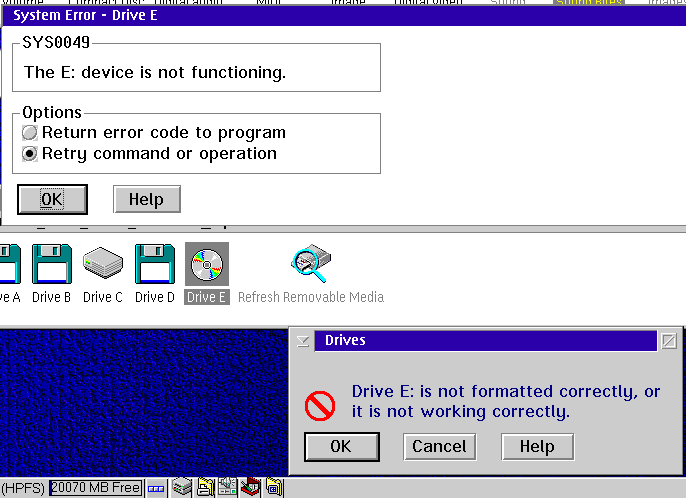
OS/2 Warp 4.52 Fully broken
Haiku OS Disc size detection, eject/load
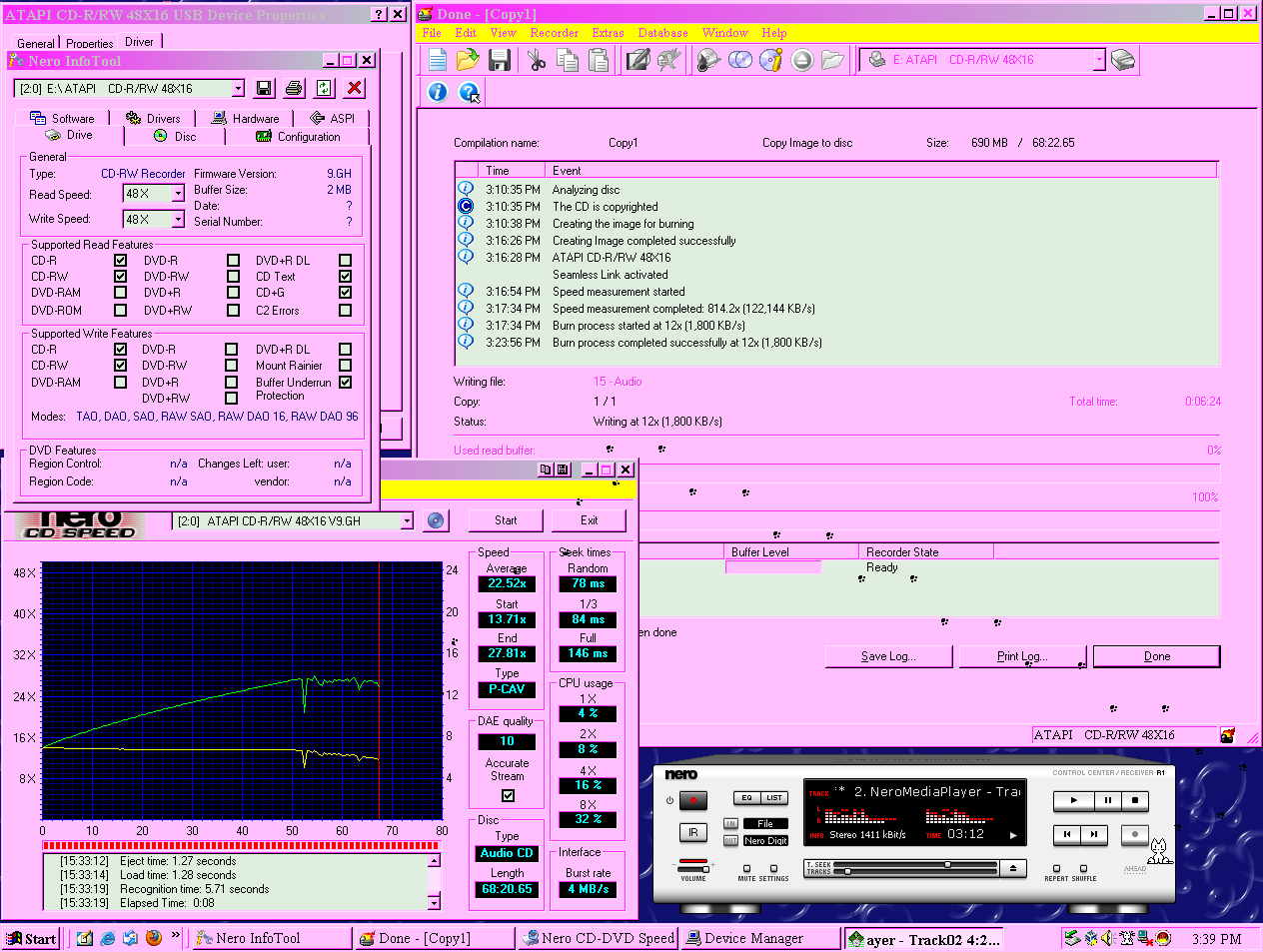
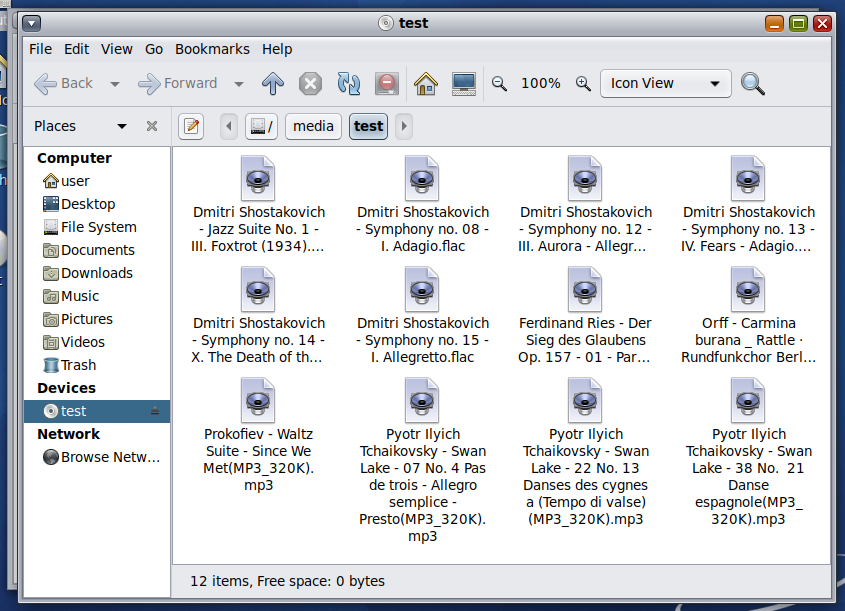
OpenIndiana (Solaris) Data read, analog audio playback
ReactOS Data read - same as known good drive
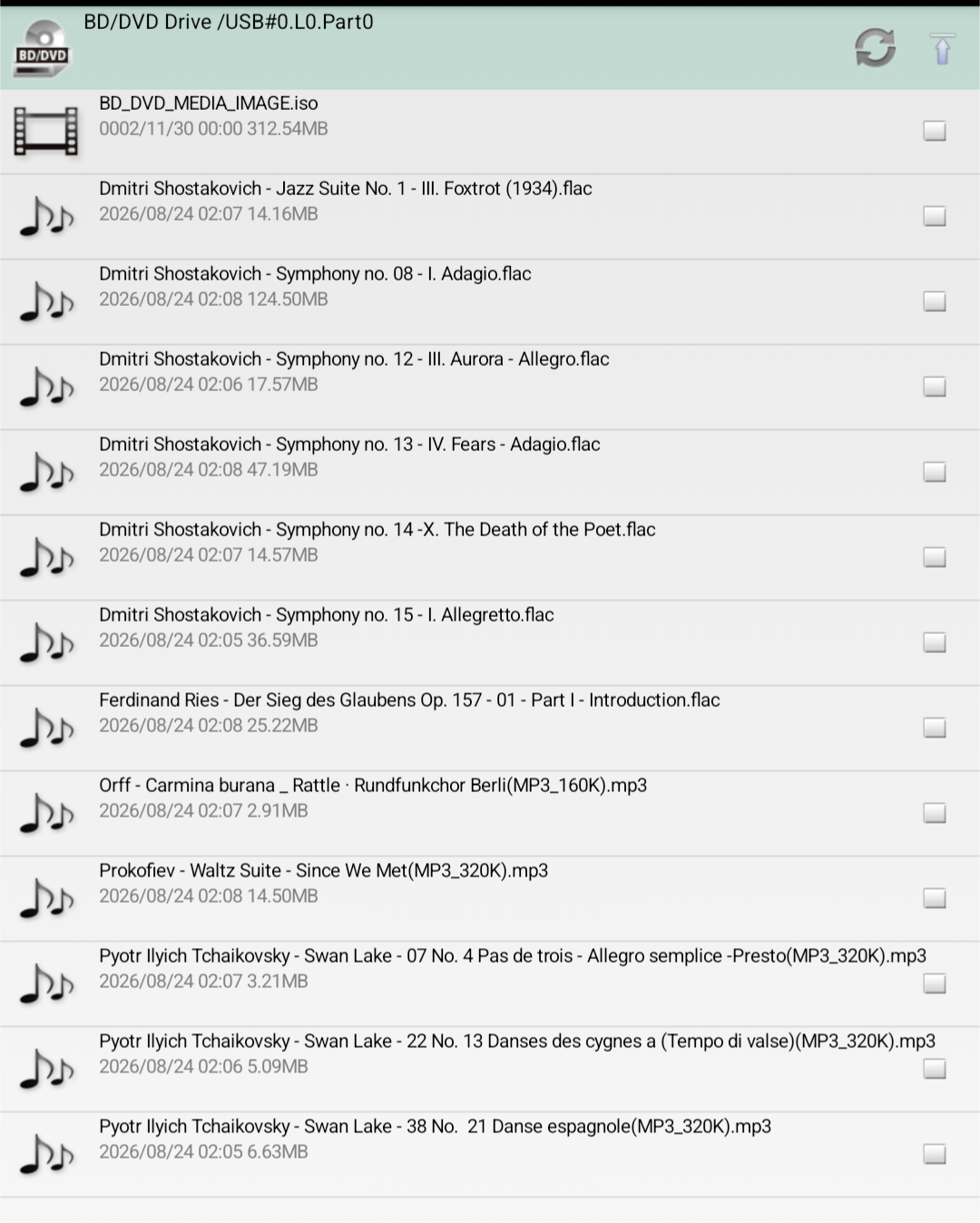
Android Data read via 3rd party app - limited by app feature set
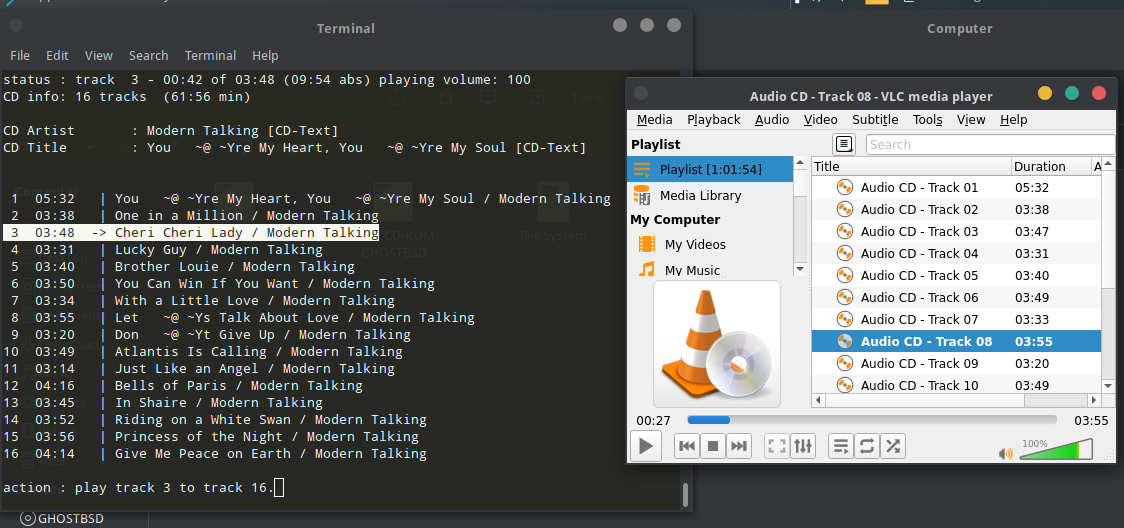
GhostBSD (FreeBSD) Digital and analog audio playback (incl. CD-Text)
Windows Full functionality

Test results

I’ll start with common OSs first.

Linux

Detects the drive when it’s empty. Otherwise it just keeps resetting it over and over, as can be seen in logs.
It might eventually load disc info after several minutes, as well as initiate disc blanking over cdrecord, but that will also take several minutes of waiting, if it ever happens.
There’s also a small chance of full system freeze-up until the drive is physically disconnected.
This has been tested with other distributions inside a VM, with the same results.

Windows

Mostly used under Windows 2000, but it also worked on Windows 10.
Everything fully works.
image

GhostBSD (based on FreeBSD)

Analog (left) and digital (right) audio playback work just fine.
Image
Data discs do not load.
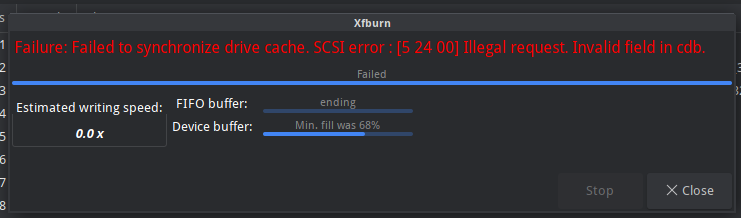
Burning has started randomly on one occasion, but eventually failed.
image

OpenIndiana (fork of OpenSolaris)

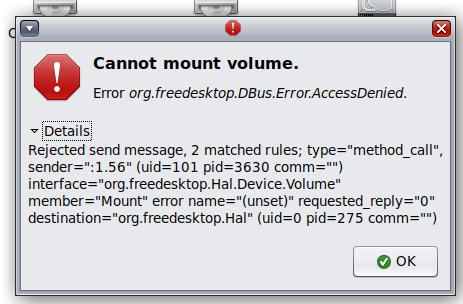
Loading data discs works, despite (probably unrelated) error being shown first.
image image
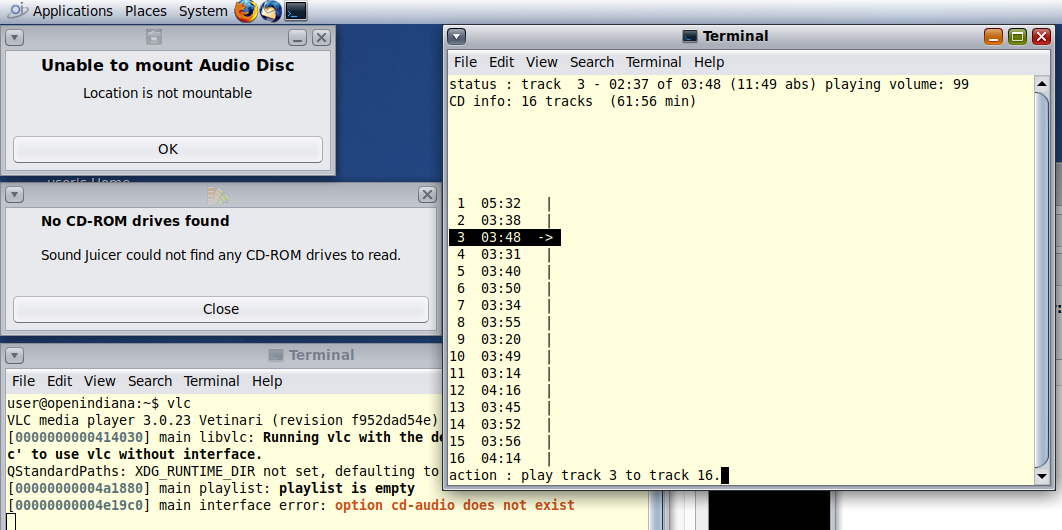
When it comes to audio playback, I don’t know what to use. VLC doesn’t support audio CDs over there, and sound-juicer appears broken. It is however possible to use analog playback, though CD-Text isn’t being displayed like it was on BSD (cdda-player).
image
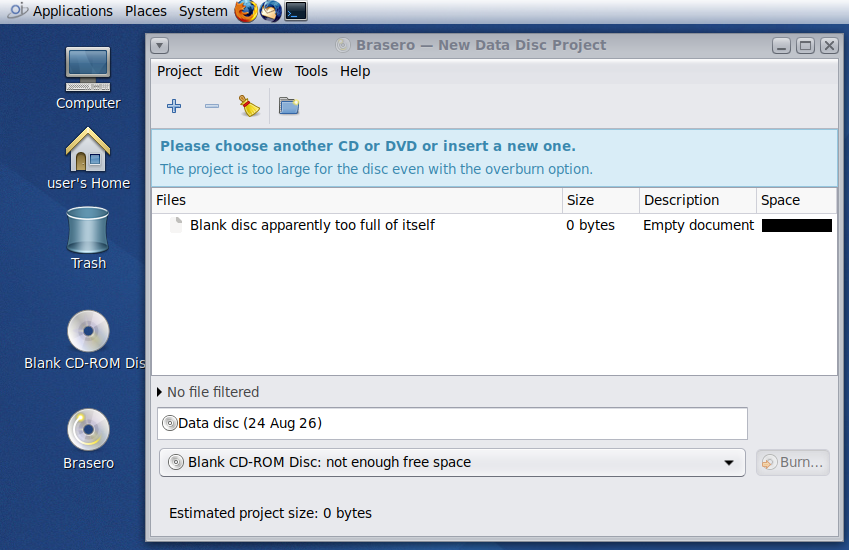
Burning discs did not work. Brasero always reports the disc as full, even when blank.
image

OS/2 Warp 4.52

This one was a bit painful to set up as I had to install and set up (in CONFIG.SYS) USB and USB CD drivers. Former I had to download, latter was already provided in CP2 (but disabled by default).
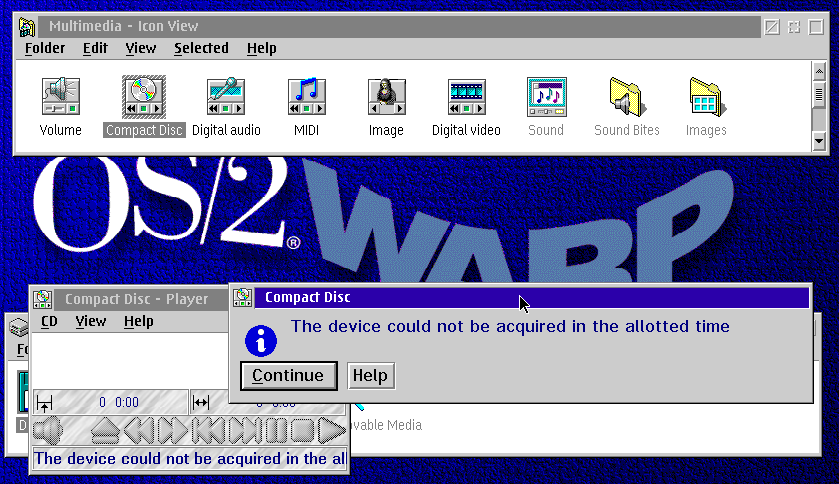
Audio CDs cause a time-out.
image
Data discs won’t load either.
image

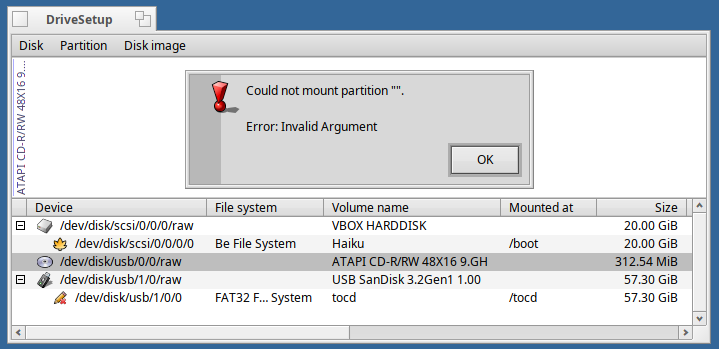
Haiku OS (Beta)

Disc drive is recognized, as well as formatted size of the disc, but that’s it.
image
Eject/load works.
Other software (SMPlayer and BurnItNow) did not see the drive.

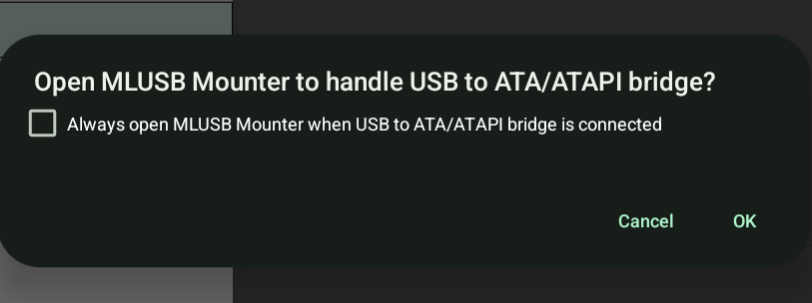
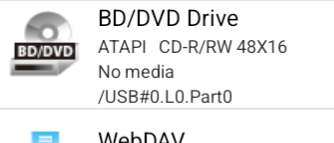
Android (using MLUSB mounter)

It may be based on Linux, but it acts so dumb someone had to make an app that acts as a USB device driver.
image
It gets recognized just fine.
image
And it loads data from the disc. That’s all this app can do.
image
Everything this does works here.

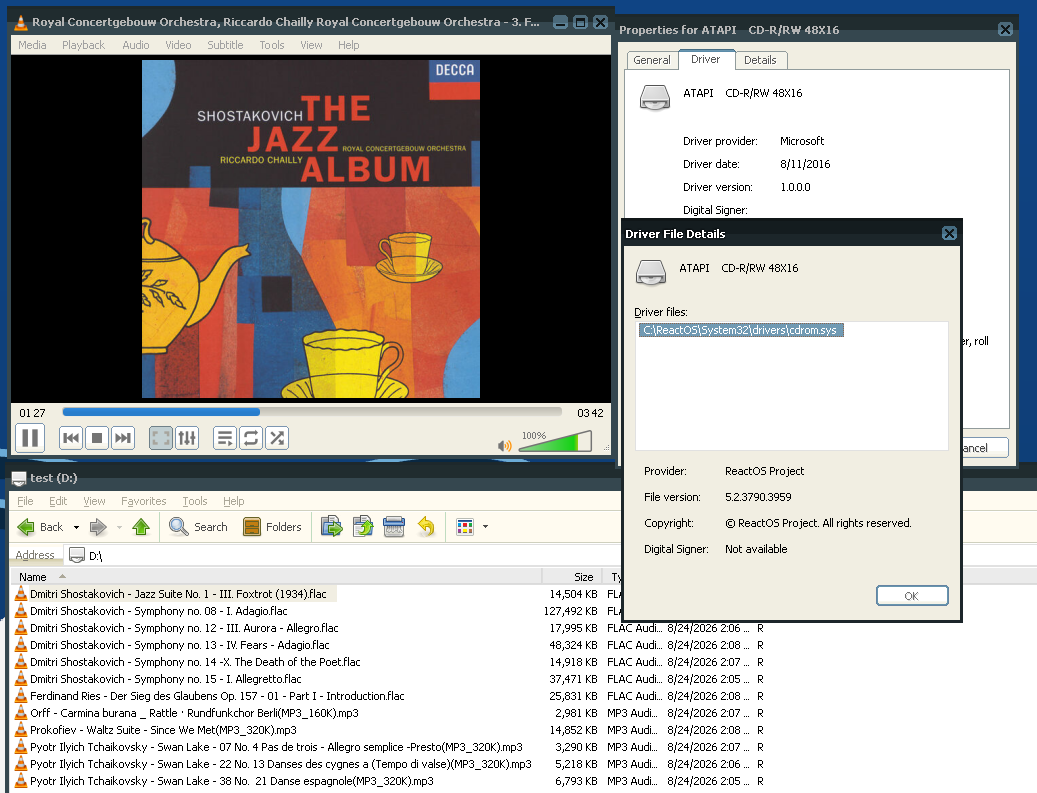
ReactOS (open-source clone of Windows) (Alpha)

Data reads quickly and reliably, just as well as in Windows.
image
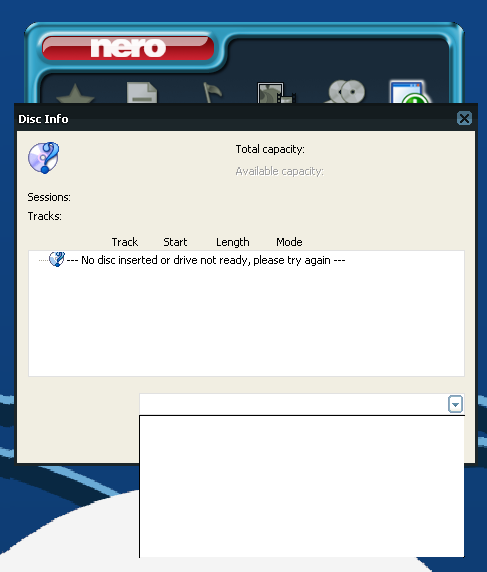
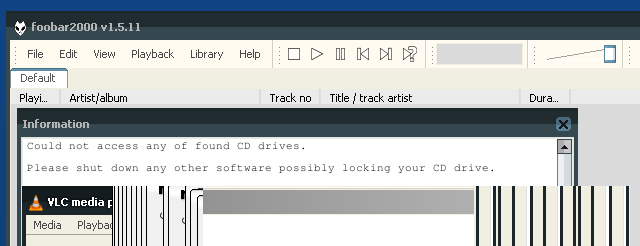
When it comes to audio and other software, it either isn’t recognized at all, or causes a freeze-up.
image image
Opening audio CD with file explorer only shows 1KB .cda files which are of no use.
Bittersweet news: it behaves exactly the same with a known-good drive. So maybe once those issues are fixed, it will be just as good as in Windows.

Conclusion

I have no idea whether this is a drive issue, or it’s just doing something really non-standard.
I have also tried it with a different controller, making a chain of IDE -> SATA -> USB, but this was equally broken.


Edit 1: :::spoiler -> ::: spoiler to fix formatting outside of Lemmy-UI