#libre_hardware

posts tagged #libre_hardware

0

Squid (Simplifying Quantitive Imaging Development and Deployment) microscopes

Prakash Lab Squid — Prakash Lab prakashlab.stanford.edu
preview

cross-posted from: slrpnk.net/post/43551913

After reading the article about 31 New species discovered in 2 weeks of exploration, it was mentioned that they used a microscope, known as Squid,which is an open-source, confocal microscope

From their site:

What is Squid?

Squid is a quantitative imaging platform with a full suite of hardware and software components and configurations for deploying facility-grade widefield microscopes at a fraction of the cost of commercial solutions. Developed with the goal of helping translate the rapid advances in the field of microscopy and microscopy-enabled methods, including those powered by deep learning, we envision Squid will simplify roll-out of microscopy-based applications - including at point of care and in low resource settings, make adoption of new or otherwise advanced techniques easier, and significantly increase the available microscope-hours to labs.

Significance

Manual microscopy has served as a bedrock for the diagnostics of various infectious diseases, although at a cost of tedious labor and human errors. Imagine looking for 1 to 5 parasites amongst 5 million red blood cells. Currently, microscopists can take up to 10-15 minutes to review a single slide. Automated robotic microscopes are poised to enable a new era of smart field microscopy but current platforms remain cost prohibitive and largely inflexible, especially for resource-poor and field settings.

github repos
CAD models linked available here (a lot of google links there (docs, drive, etc))

tags frugal science microscopy tracking fluorescence excitation patterned illumination instrumentation frugal science malaria

0

Zilog Z80 turns 50 as an open-source replacement heads to drop-in DIP40 silicon — iconic 8-bit CPU launched in July 1976 and was discontinued in 2024

Tom's Hardware Zilog Z80 turns 50 as an open-source replacement heads to drop-in DIP40 silicon — iconic 8-bit CPU launched in July 1976 and was discontinued in 2024 www.tomshardware.com
preview

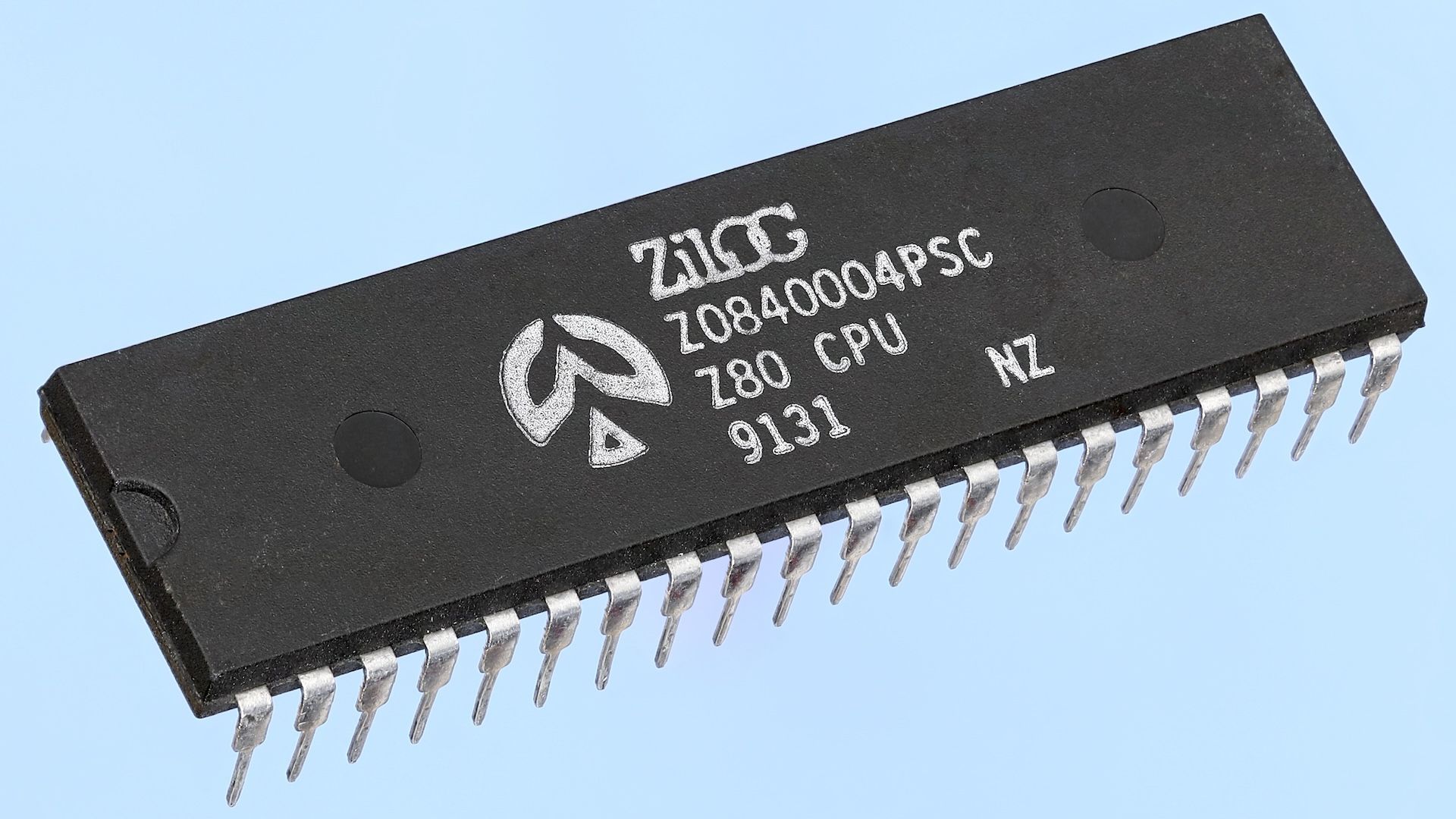
The Zilog Z80 has just turned 50 years old. This iconic 8-bit processor first went on sale in July 1976 and stayed in production for 48 years until Zilog, now a Littelfuse subsidiary, stopped accepting orders in June 2024. However, there’s an open-source replacement closer than ever to shipping in the chip’s original 40-pin DIP package thanks to community-funded fabrication.

The original Z80 packed 8,500 transistors on a 4μm process and typically ran at 2.5 MHz, with later CMOS variants reaching 20 MHz. Binary compatibility with the Intel 8080 let it absorb the existing CP/M software base, with an on-die DRAM refresh counter that cut the number of support chips a system needed. Development of working prototypes cost roughly $400,000 against $500,000 in funding from Exxon, per the Computer History Museum.

The chip powered the ZX Spectrum, TRS-80, MSX machines, Nintendo’s Game Boy, Sega’s Master System, the Pac-Man arcade cabinet, and Texas Instruments’ graphing calculators, then shipped in industrial controllers for decades after home computing moved on to more powerful successors. Zilog’s end-of-life notice, dated April 15, 2024, told customers its wafer foundry was discontinuing support for the Z84C00 family, and last-time-buy orders closed that June.

Renaldas Zioma’s FOSS Z80 project, launched shortly after the end-of-life notice, now has working silicon. The first version, fabbed on SkyWater’s 130nm node through Tiny Tapeout 7 on a die of just 0.064mm2, has been confirmed as functional via the project’s GitHub repository. A QFN64 version with all 40 pins exposed followed on the Efabless CI2406 shuttle, two further runs then went through IHP’s 130nm process, and the current run targets the classic DIP40 form factor using chip-on-board assembly on GlobalFoundries’ 180nm GF180MCU node via Wafer.Space. The end goal here is to fab a drop-in replacement for machines like the ZX Spectrum and RC2014 kits.

The design is built around Guy Hutchison’s TV80 Verilog core, and the project’s Tiny Tapeout page says the 130nm CMOS implementation should support clocks up to 50 MHz, against 4 MHz for the original NMOS part.

github.com/rejunity/z80-open-silicon

0

moskitOS - A recumbent trike you can make mostly from wood

preview

cross-posted from: slrpnk.net/post/37376302

Full construction and details at moskitos.org

Source: mas.to/@meganL/116471791500973082

This is one of the people/teams competing for an innovation prize at #Spezi2026. A recumbent trike you can make mostly from wood. “Open source” (I put it in quotes because I know definitions vary and I’m not clear which one this uses).

I’m told the cost was about 1,200, but that is a lot less than a similar recumbent trike with a metal welded frame would cost for materials (not to mention the labor time, skills).

Front wheel drive and the whole rear moves with the handlebars.

“Based on a concept invented more than 10 years ago by two brothers, the moskitOS tilts and turns thanks to the clever use of an articulated trapeze that allows the whole front section, including the rider, to lean when cornering! This solution also has the advantage of driving the front wheel directly, avoiding the classic long transmission chain used on almost all similar vehicles.”

0

Motorcycle Based Inter Row Cultivator for Small Farm Efficiency

preview

cross-posted from: slrpnk.net/post/36451816

non YT link: inv.nadeko.net/watch?v=7ktbVxsL2XI

After some digging, the designs for this device are actually open source, albeit I could only find it in portuguese here

You can still use the motorcycle as usual, as it only takes 3 bolts to secure it to the cultivator

Seen that tractors and their implements are still expensive, this seems like a good alternative for small farmers

Even though I personally prefer syntropic farming systems, at least now other folks can make use of this open source hardware

From the video description:

How It Works: The motorcycle is modified with cultivation wheels positioned to align between crop rows. As the rider drives forward, the rotating tines loosen compacted soil and uproot weeds without damaging the main crops. Adjustable spacing allows adaptation to different planting layouts, ensuring precise inter row cultivation.

Advantages:

Faster than manual hoeing  
Reduces labor intensity  
Improves soil aeration  
Low fuel consumption compared to tractors  
Suitable for small and medium farms  

Disadvantages:

Requires skilled handling to avoid crop damage  
Not ideal for very narrow spacing  
Limited to relatively flat terrain  
Engine maintenance required  

Impact on Productivity: This innovation significantly boosts efficiency in crop maintenance. By mechanizing inter row cultivation, farmers can manage larger fields in less time, improve root oxygen supply, and reduce weed competition, ultimately supporting healthier crop growth and higher yields.

Suitable For:

Small scale farmers  
Vegetable and row crop cultivation  
Rural agricultural operations  
Medium sized farms seeking cost efficient mechanization  

___

0

Tadpole Tilting Cargo Trike

preview

Google alert: CAD files and build playlist are hosted on google services

powercircuits.nl/…/open-source-tadpole-tilting-ca…

Fully Built, Open Source Design

This is an image of the final build. It looks cool and it’s great to ride (but still needs a few improvements).

The build videos playlist: yewtu.be/playlist?list=PL3uwHLwN7YKrodkpyXISvayLd…

CAD drawings - v7 - Feb-2026

There is a donation button on the source page as well

0

The long, long road to a Free Printer

preview

I don’t have to tell anyone that commercial printers suck (with the possible exception of Brother, but how long will this last?). I’ve read people on Lemmy talk about the viability of making a FOSS printer. I’d like to keep these thoughts going.

From what I remember, there are four main challenges, listed descendingly by their apparent difficulty:

  1. Handling ink
  2. Meeting legal regulations
  3. Moving the moving parts
  4. Patents

Patent difficulties indeed should be avoidable, since decent printers have been out there for way more than 20 years, the usual duration of a patent.

Moving the moving parts with the high precision necessary does at first glance seem daunting, but I’ve read people say that this is a problem many people know how to solve.

Meeting the legal obligations may ne trickier: Printer fingerprints? Aerosols? Other health and environmental hazards?

Handling ink: From what I remember, this would be the main difficulty (unfortunately I can’t find that post or comment anymore). One should avoid the problem of creating an own cartridge & nozzle production by designing the printer such that it can use an existing cartridge model (one for which there are good third-party offers). Still, one would have to solve the apparently very difficult problem that the ink/toner has to be handled under very precise conditions, regarding things like flow velocity, drying rate, and perhaps temperature.

In view of these challenges, I’ve started to think that maybe the best approach would be to try our best to find ex-employees of printer companies and convince them that they would be doing humanity a huge service if they were to contribute with whatever they legally can towards developing a FOSS printer.

Also, I’ve wondered whether the time to do this may be running out: If even Brother one day starts to crack down on third-party ink/toner, all the producers for third-party ink/toner could eventually go out of business; so that one may successfully develop a FOSS printer, only to have no other ink in the stores than the price-gouged one, which was the reason to do all this in the first place.

Do you have any corrections, specifications, or further thoughts? I’d love to hear them.

0

MNT Reform laptop ordered

preview

You might recall that I was considering a MNT Reform laptop to replace my crappy HP laptop a few months ago.

Well, I got no answer or information of any kind anywhere (not just here on Lemmy), but the idea kept going round and round in the back of my head. And now, 5 months later, I find myself having to upgrade Mint to Wilma on my hateful HP laptop soon, and I already dread rebooting to the console because Xorg is dead again, having to downgrade to a working version of the kernel again, fighting the AMDGPU driver again, making the super-flaky and completely terrible wifi-cum-bluetooth Realtek 8821CE adapter work halfway decently again…

I hate this laptop. In fact, I hate it so much that I finally pulled the trigger on the MNT Reform laptop. Hopefully it’ll get here before the need to upgrade becomes too pressing.

Stay tuned 🙂

0

Talk about The Beijing institute of Open-Source Chip , details work about open source RISC-V cores for phones and servers (xiangshan), work on open source EDA , enabling verification of chips using pr

0

Any MNT Reform laptop owner out there for a few questions?

preview

I have a terrible el-cheapo 14" HP laptop that I bought from a big-box store a few years ago as an emergency replacement for a laptop that died on me on the road while visiting a customer. I literally went to the store 5 minutes before it closed, bought any laptop they had, loaded Linux on it at the hotel and transferred my files from the dead laptop overnight, then did my presentation the next morning.

The trouble is, that laptop is VERY Linux unfriendly. I’ve put up with it for years because I don’t like to throw things away, but I just can’t stand the regular AMDGPU driver crashes and the broke-ass wifi-cum-bluetooth Realtek chipset anymore.

So I’m on the market for a good Linux laptop. I’m not a demanding user - I use that HP laptop to edit videos and do CAD and I’m okay with it - I’m very comfortable with anything Linux and I can code my way around problems.

I’m really tempted to get a MNT Reform laptop: I like the LiFePo4 battery cells a lot, it’s solid, it’s open hardware, it has a trackball and I love trackballs, it’s highly hackable, and I’d like to support the MNT Research guys. And I’m old enough and the kids have been out of the house long enough that money is no object.

But a couple of things are holding me back. Maybe there are MNT Reform owners here who could shed some light on the following questions:

  • I don’t know much of the ARM ecosystem, and what to expect from what processor / SoC. So I’m thinking of going with the highest end RK3588 32GB / 256GB CPU module offered by MNT. Would this at least match the performances of my stupid HP laptop’s Ryzen 5 CPU in terms of real-world performances?

    Or put another way: should I expect to take a hit when encoding my videos or doing big CAD models compared to this already slow laptop, or can I reasonably expect the MNT Reform to at least not be a regression.

    Side question (yes, I know it should be obvious, but asking is better than guessing): I assume the “32GB / 256GB” in the CPU module’s denomination is for 32GB of RAM and 256GB of onboard flash. Meaning I’d have that much disk space without needing to add a NVMe SSD card. Correct?

  • The keyboard layout looks all shades of terrible. I’m flexible with anything but not keyboard layouts - and especially those keyboard that don’t put the left SHIFT and CTRL at the bottom where they belong, or have a split space bar.

    The Reform’s keyboard ticks all the wrong boxes for me in that respect: I can tell rightaway that it’s going to fight my typing muscle memory all the time and forever, because I sure ain’t gonna get used to it.

    Can I remap the keys so I can at least I can swap CTRL and whatever that key is at the bottom left, and make the 3 buttons that replace the space bar act as a space bar? Then it’s just a matter of putting a sticker on the keys and gluing the space bar keycaps together somehow.

  • I seem to recall some years ago that if the laptop was left off and unplugged for long enough - like 2 weeks IIRC - it would drain the cells and kill them because there was no under-voltage protection. Less dramatically but equally annoyingly, you couldn’t leave it unplugged for a few days and expect to find it fully charged when you needed it most.

    Does it still do that? Or has the hardware been fixed - or maybe there’s a “Turn really off” option in the little side computer that runs the mini OLED display?

    Mind you, I can always drill a hole and add a physical switch to disconnect the cells, but I’d rather not do that.

  • Is there an option to limit the charge? Keeping Li-ion cells constantly at 100% (or worse, charging all the time) when the laptop is plugged in isn’t ideal. I’d rather it kept the cells charged around 80% . And I mostly use my laptops plugged in.

  • Can I remove the cells and use the laptop plugged in? I might eschew the cells altogether, because I really never need them: I’m plugged in at home, I’m plugged in on the train, I’m plugged in at the hotel, I’m plugged in at the customer’s. I can’t remember a time when I needed to run this particular laptop on battery. If I can use the laptop as a luggable computer, I wouldn’t need to carry the weight of the cells around.

  • Has anybody tried to install Cinnamon? Does it work well on Debian ARM? I see no reason why it shouldn’t, but maybe there are issues.

Well that’s pretty much it. Sorry for the long post 🙂 There’s precious little information about the MNT Reform out there - probably a good indication that there are precious few such machines in the wild, sadly - so I would welcome any real-world user feedback!

0

RFS - Linux-capable OtS chip for learning HW and FW design

preview

Hello folks. I’m wanting to learn a bit about computer hardware and firmware design, the ultimate goal will be a fully open-source hardware computer (I don’t expect that any time soon). I’m familiar with PCB layout and design already as well as MCU and general programming.

Does anyone have suggestions for Off-the-Shelf CPUs that are supported well-enough by Linux and have useful documentation and datasheets available? I’m not looking for high performance, running a GUI, or anything like that. I’m literally just interested in practicing the board layout and figuring out how to extend core/libreboot to support it (out implement my own firmware) and get a terminal session.

0

Firmware developers needed: A new kind of synth with strum pad, algorithmic just intonation.

preview

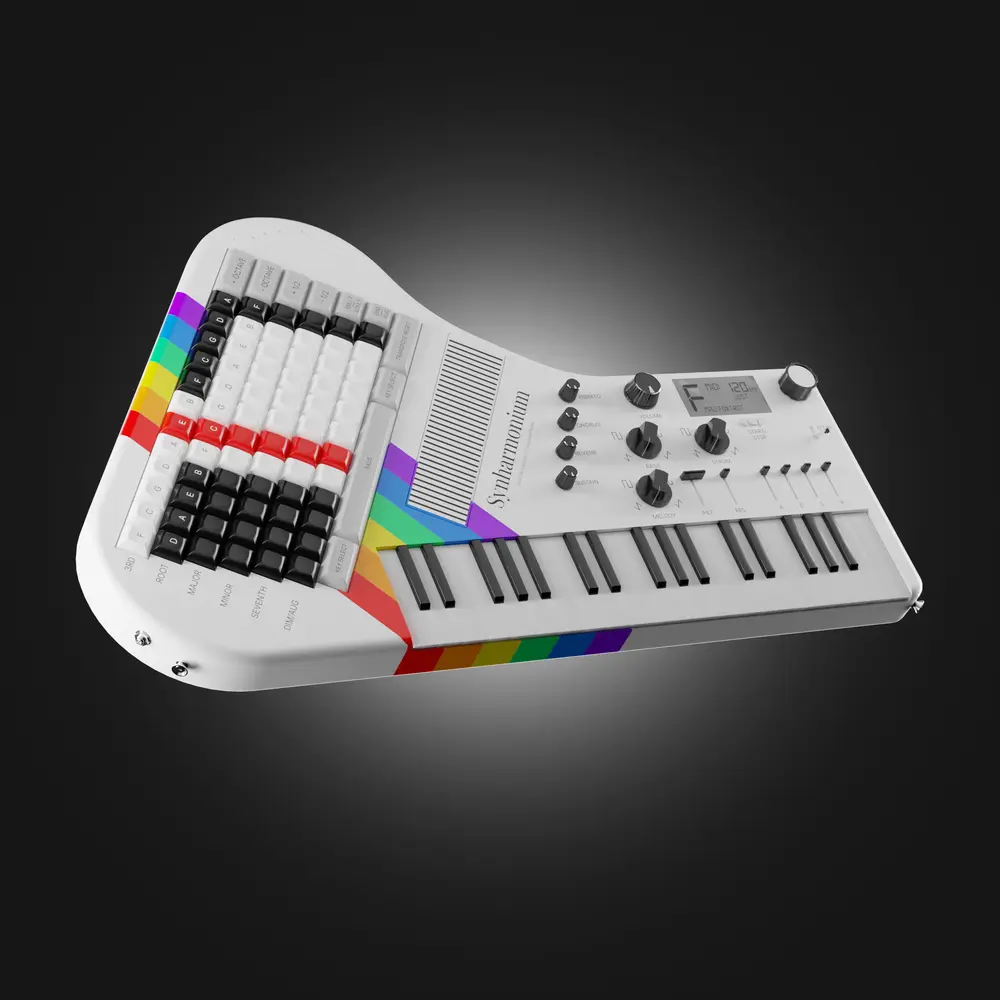
Hello all! My name’s Evan, and I’m starting development on an idea I had a few years ago. The Synharmonium is a microcontroller-based synthesizer with control elements based on the accordion and the Suzuki Omnichord, and an algorithm to solve the centuries old musical problem of versatile just intonation. Best case, this could have a huge impact on how western music is written and performed. Worst case, its a fun and easy synthesizer you can build at home.

But right now its not much more than an idea and a janky keyboard prototype. I am a student of computer engineering, and I have a non-zero amount of programming skill, but I tend to make stupid mistakes that I can’t easily spot. I need someone who’s good at programming, has some spare time, and finds this idea interesting, to help me get the software side of the instrument going. If you can become a major contributor, I’d love to have you, but if you can just help me find one boneheaded mistake I will be extremely grateful, because I’m pretty stuck at the moment.

0

German investment in open-source chip design

preview

The German Federal Ministry of Education and Research announces to fund the development of an open-source chip design ecosystem. This includes also design software.

The German Federal Ministry of Education and Research announces to fund the development of an open-source chip design ecosystem. This includes also design software.

0

Free Silicon Conference 2023, Paris, July 10-12

F-Si wiki FSiC2023 wiki.f-si.org
preview

The most difficult thing about hardware to have ‘libre’ are the silicon chips. But times start changing. Hopefully.

The program of FSiC2023 contains diverse talks about chip design with open-source CAD tools open-source hardware (FPGA, ASIC).

The most difficult thing about hardware to have ‘libre’ are the silicon chips. But times start changing. Hopefully.

The program of FSiC2023 contains diverse talks about chip design with open-source CAD tools open-source hardware (FPGA, ASIC).

0

Linux System Store in Africa; Russia; or Latin America ?

preview

I had a person ask me the other day if I knew of any stores that sell hardware with Linux preinstalled in Africa; Latin America or Russia and I couldn’t think of any. I know plenty in Europe; U.S.A. and Canada but none for those places. Do any of you know of any ? They didn’t mean stores that will ship there but stores that are based there.

I had a person ask me the other day if I knew of any stores that sell hardware with Linux preinstalled in Africa; Latin America or Russia and I couldn’t think of any. I know plenty in Europe; U.S.A. and Canada but none for those places. Do any of you know of any ? They didn’t mean stores that will ship there but stores that are based there.

0

Dasharo Update Question

preview

I recently received my MSI PRO Z690-A DDR4 motherboard from Dasharo. It came with version 1.0 which from what I understand has a different update process than later versions. Am I correct in understanding that I need to open a Terminal and type in “flashrom -p internal -w [path] --ifd -i bios” substituting the path bit there with the actual path to the file I downloaded ? Figured I would ask first before diving in.

I recently received my MSI PRO Z690-A DDR4 motherboard from Dasharo. It came with version 1.0 which from what I understand has a different update process than later versions. Am I correct in understanding that I need to open a Terminal and type in “flashrom -p internal -w [path] --ifd -i bios” substituting the path bit there with the actual path to the file I downloaded ? Figured I would ask first before diving in.